

Pollinator Post 6/19/23 (2)

A female Snakefly, Agulla sp. (family Raphidiidae) is perched on the flower buds of California Bee Plant, Scrophularia californica.
Snakeflies are a group of predatory insects comprising the order Raphidioptera. They are a relict group, having reached their apex of diversity during the Cretaceous before undergoing substantial decline. Adult Snakefly has a notably elongated thorax which, together with the mobile head, gives the group their common name of snakily. The body is long and slender and the two pairs of long membranous wings are prominently veined. The head is long and flattened and heavily sclerotized. The mouthparts are strong and relatively unspecialized, being modified for biting. The large compound eyes are at the sides of the head. Females have a large and sturdy ovipositor which is used to deposit eggs into crevices or under bark. Snakeflies are holometabolous insects with four-stage life cycle consisting of eggs, larvae, pupae and adults. Both adults and larvae are predators of soft-bodied arthropods such as aphids and mites.
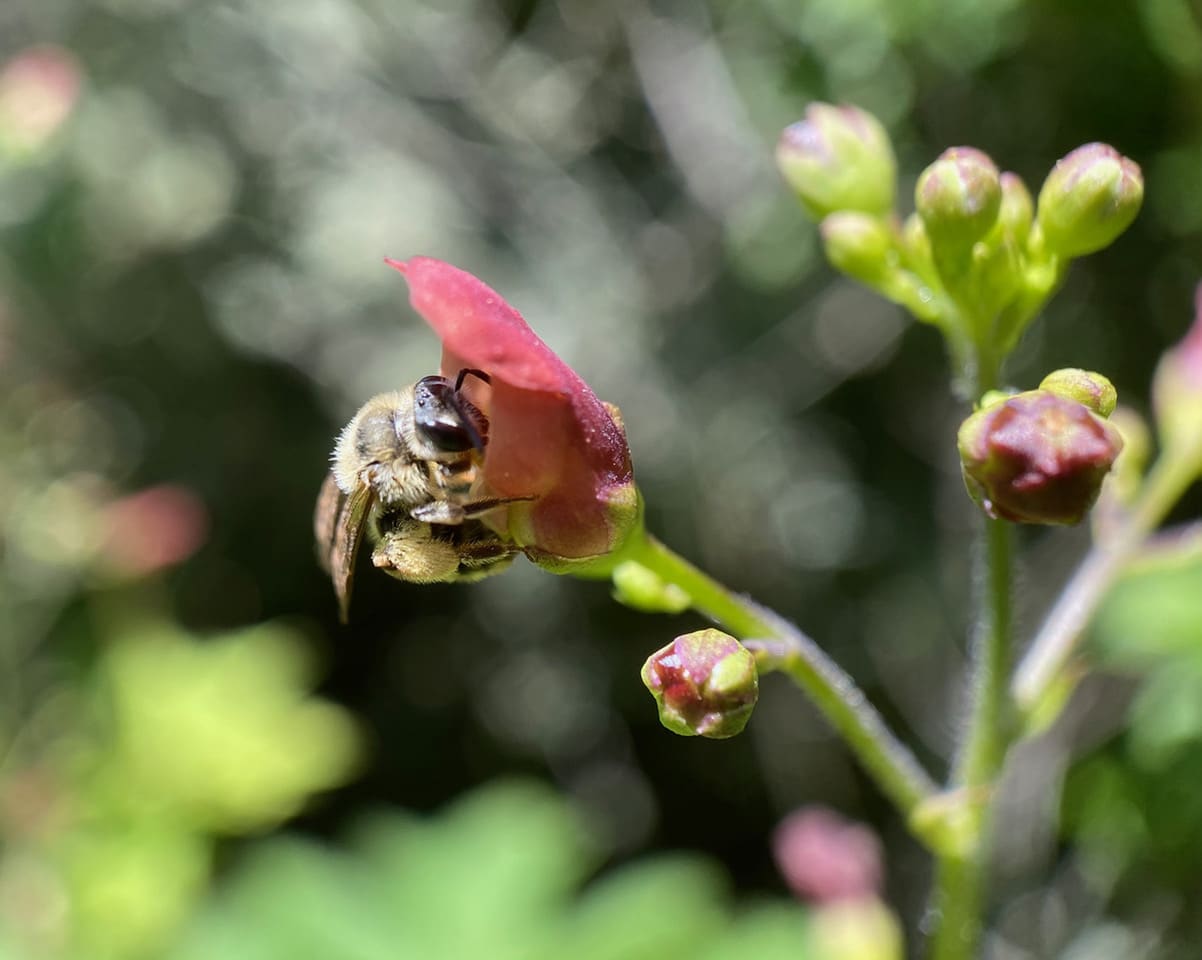
A small bee about the size of a Bee Plant flower is often seen foraging on the flowers.
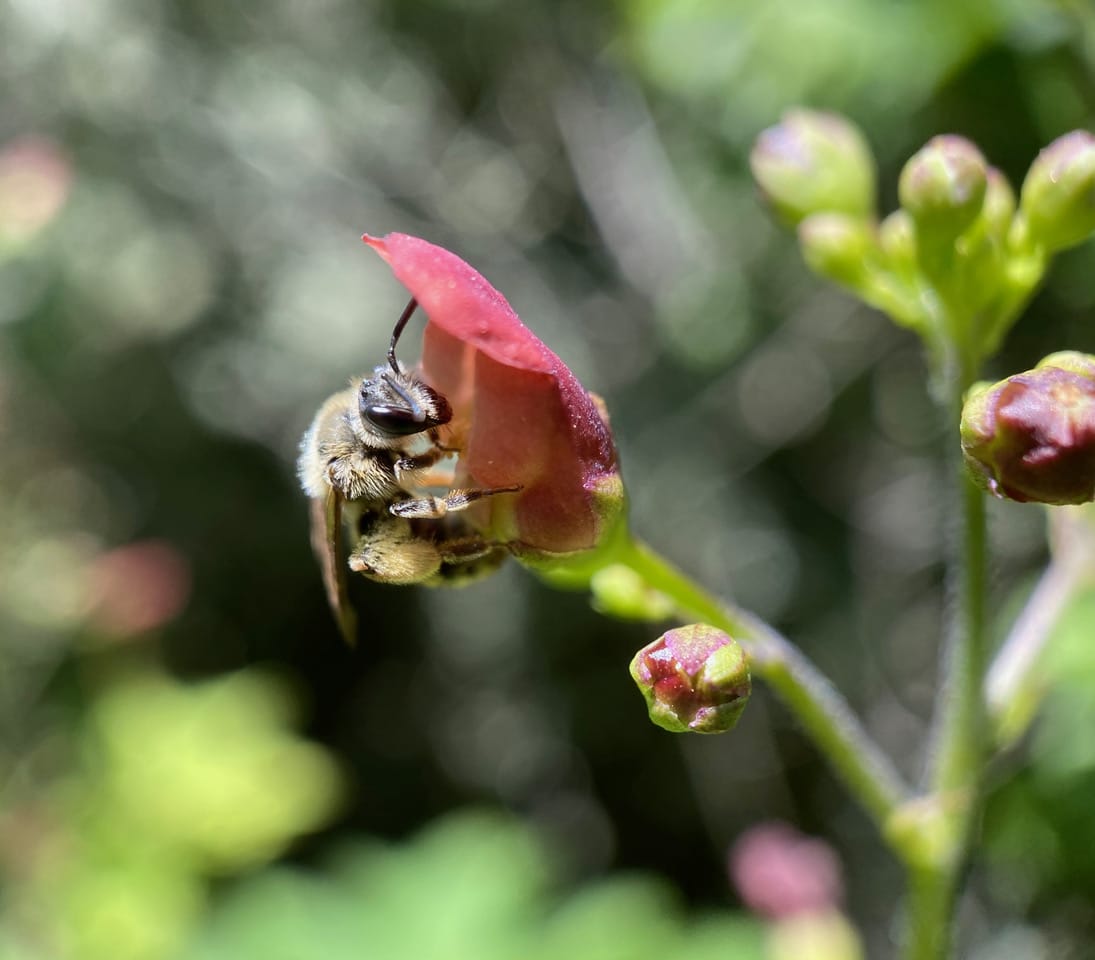
It is a female, as evidenced by the presence of a scopa on her hind leg. The hairs on her face hint of a facial fovea, characteristic of the Mining Bee in the genus Andrena (family Andrenidae).
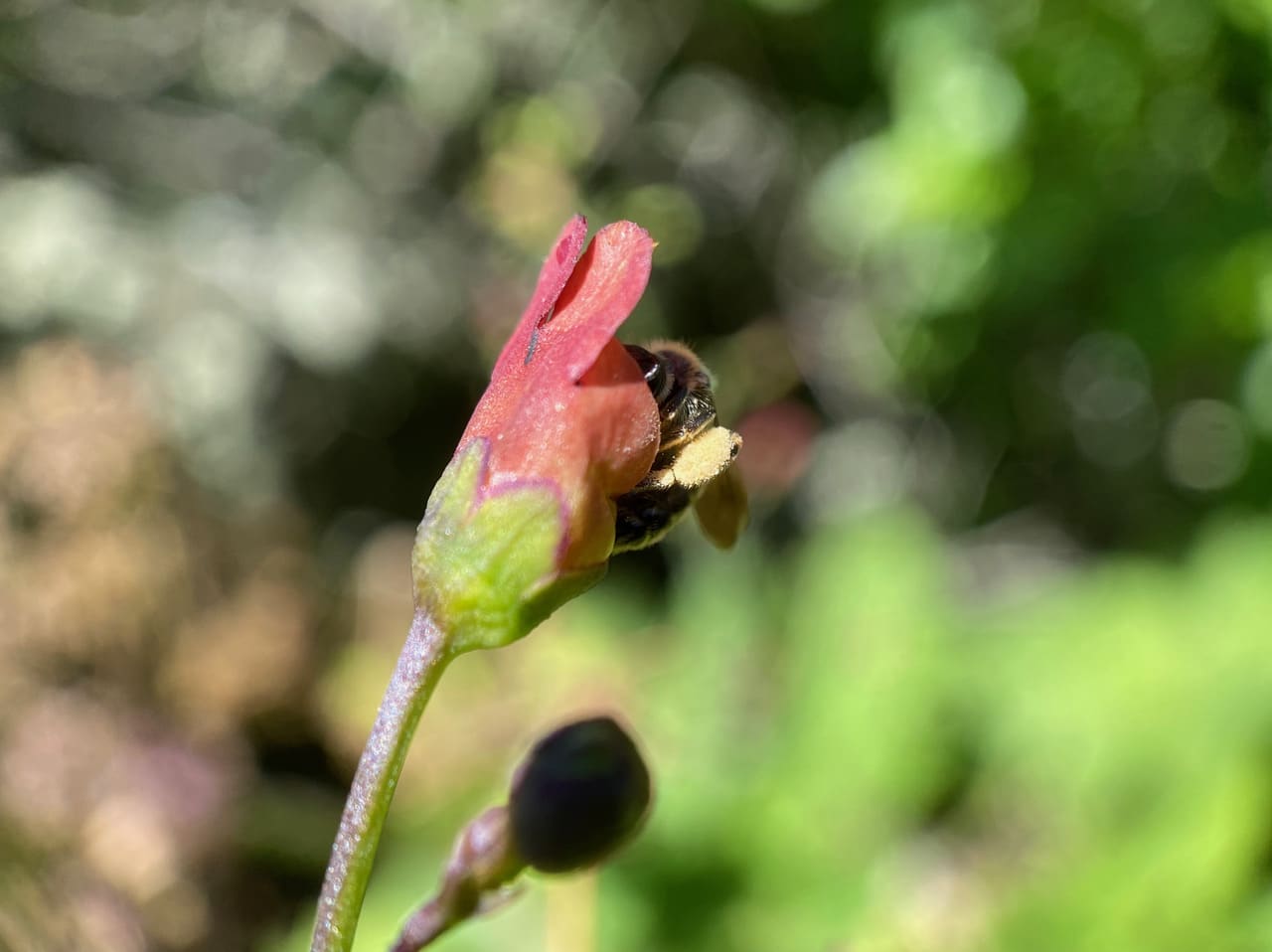
I manage to record her pollen collecting behavior in a short video. Note how she uses her middle leg to secure the pollen onto the scopa of her hind leg. All the work is done at the entrance of the corolla, the bee never actually entering the flower.

When not busy foraging, Mining Bees in the genus Andrena are often seen resting on sunny plant surfaces. Are they trying to warm up in the sun?
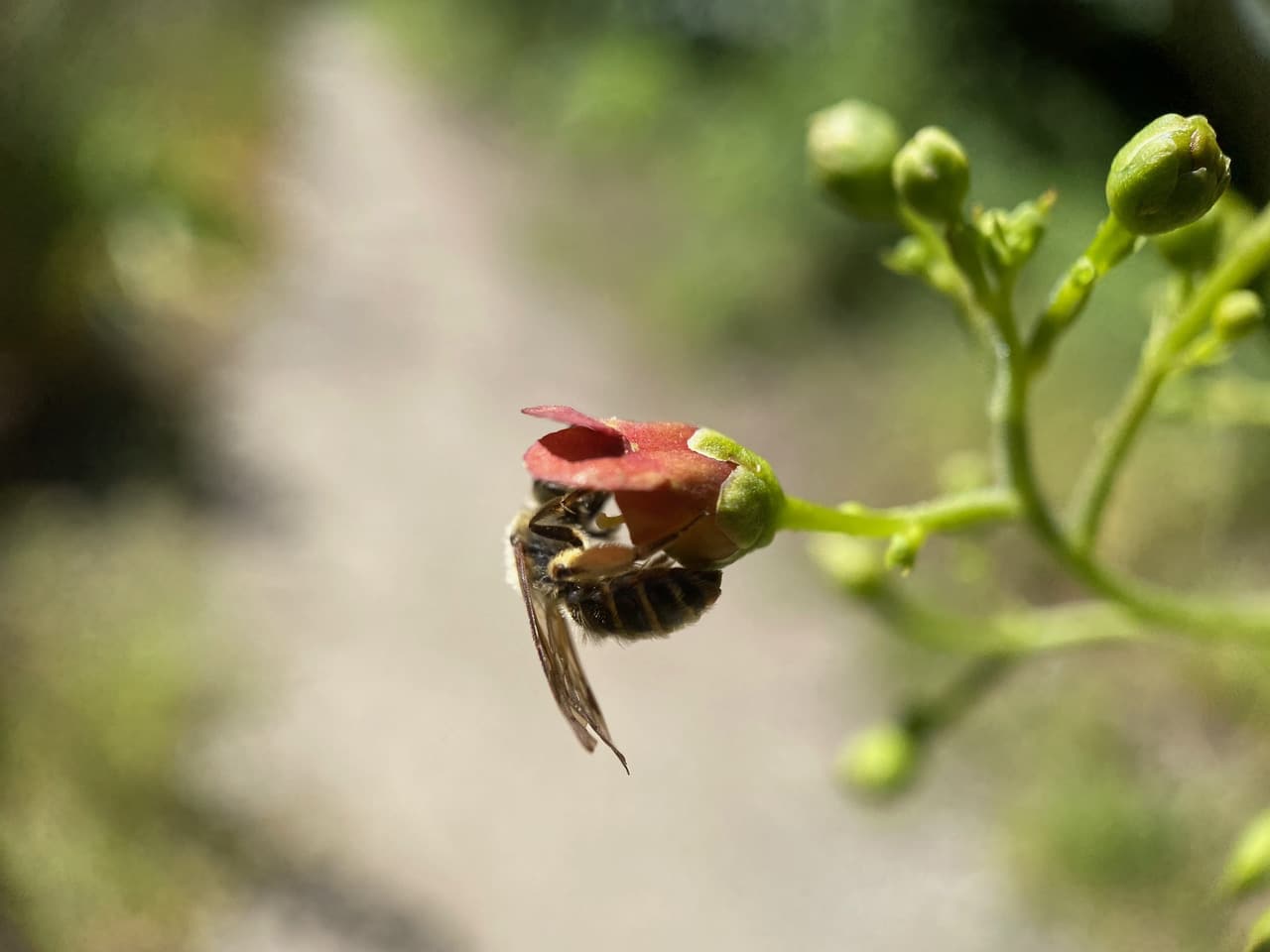
Here’s another view of Andrena’s stunt on the Bee Plant flower.
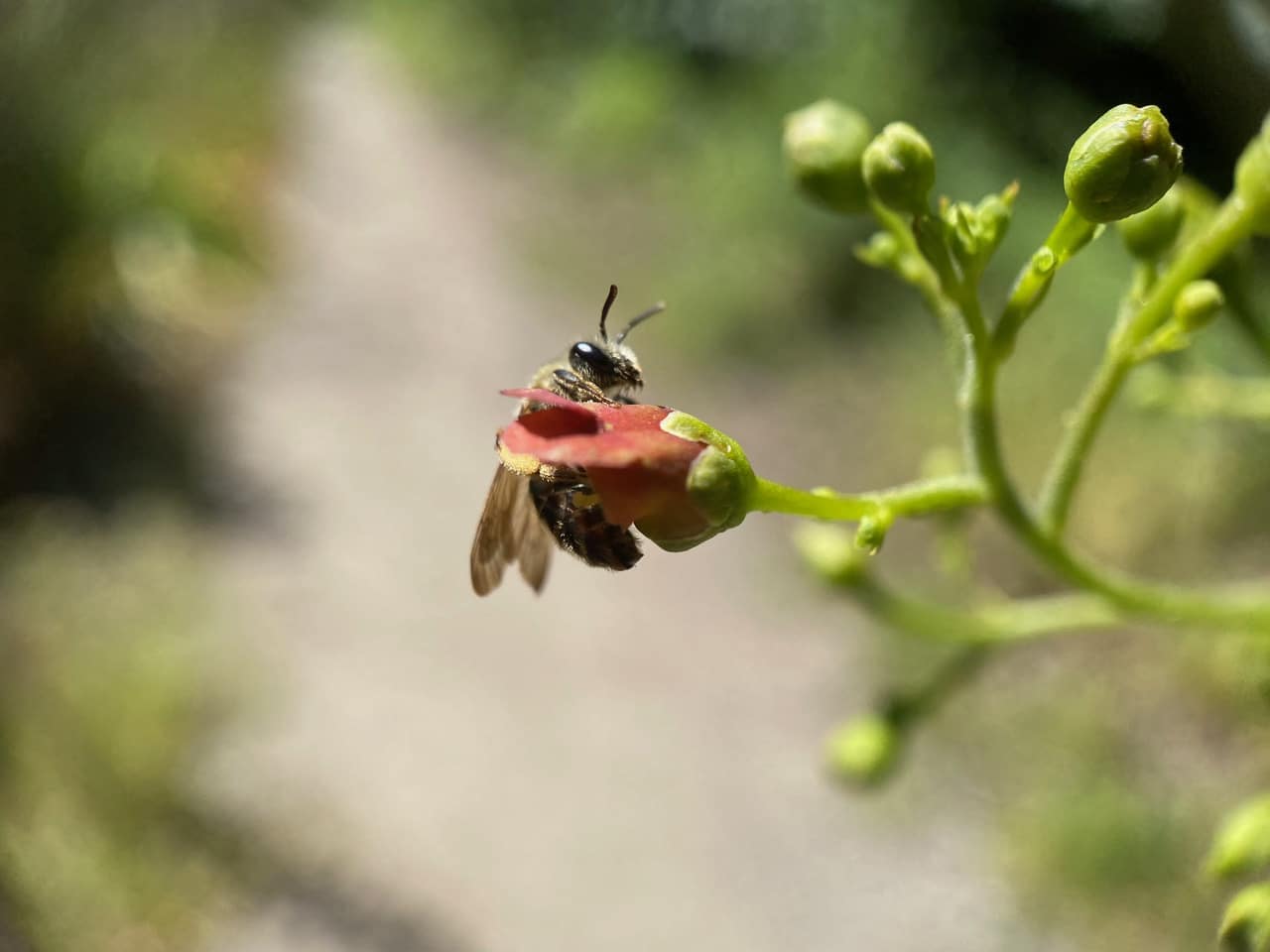
One never tires of watching the bee’s antics.
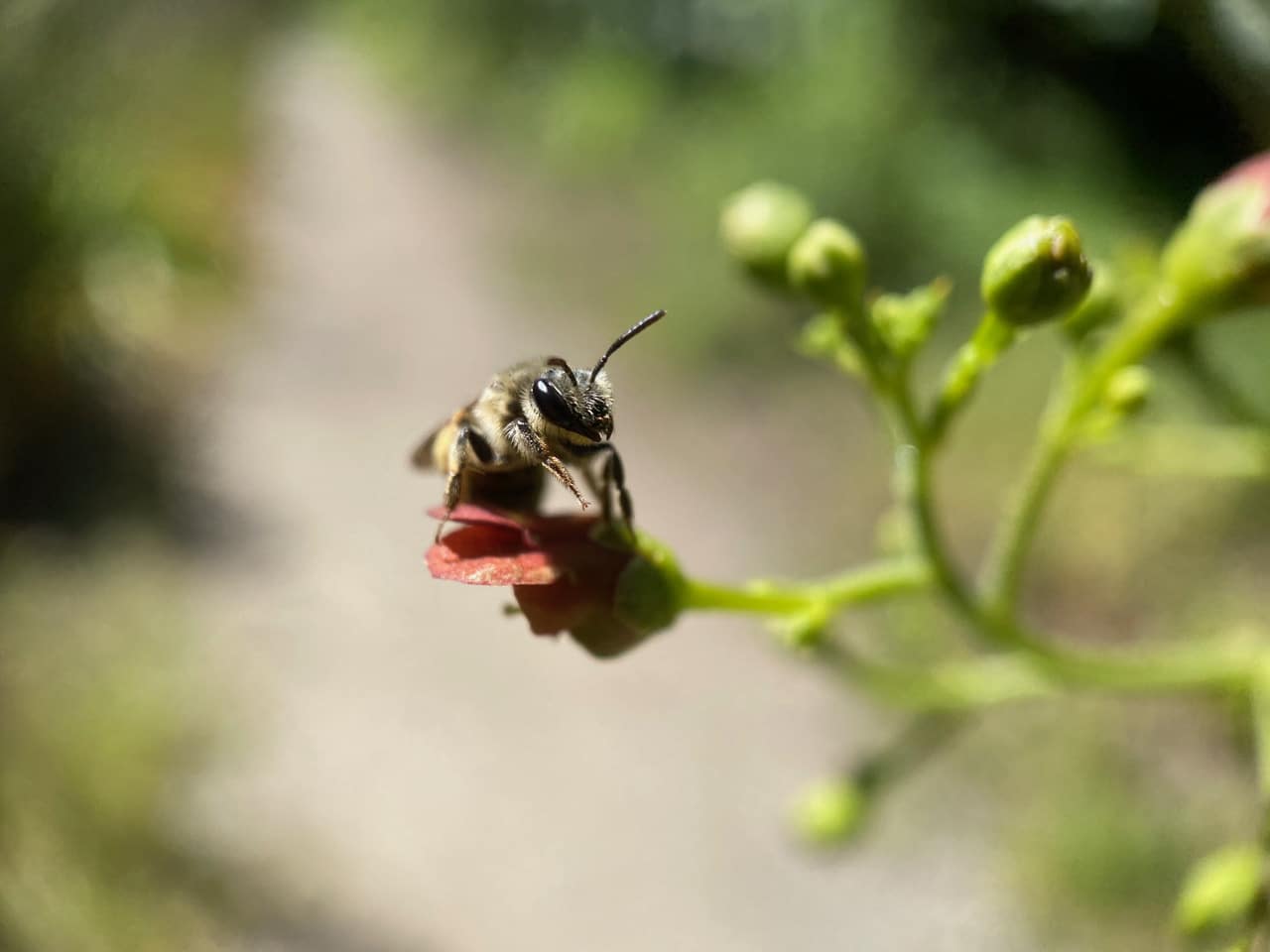
Sometimes the Mining Bee would groom itself on the flower before flying off. I believe these bees are one of the major pollinators of the Bee Plant flowers.

Ooh, a tiny parasitoid wasp in the superfamily Ichneumoidea has landed on a Blackberry leaf. I wonder what she has been inserting her long ovipositor into?
The superfamily Ichneumonoidea comprises the two largest families within Hymenoptera: Ichneumonidae and Braconidae, both with a cosmopolitan distribution. Members of the two families are distinguished by wing venation. Ichneumonoids are solitary wasps, and the vast majority are parasitoids; the larvae feed on or in another insect, eventually killing it. In general, ichneumonoids are host specific, and only attack one or few closely related host species. Many species use polydnaviruses to suppress the immune systems of their host insects.
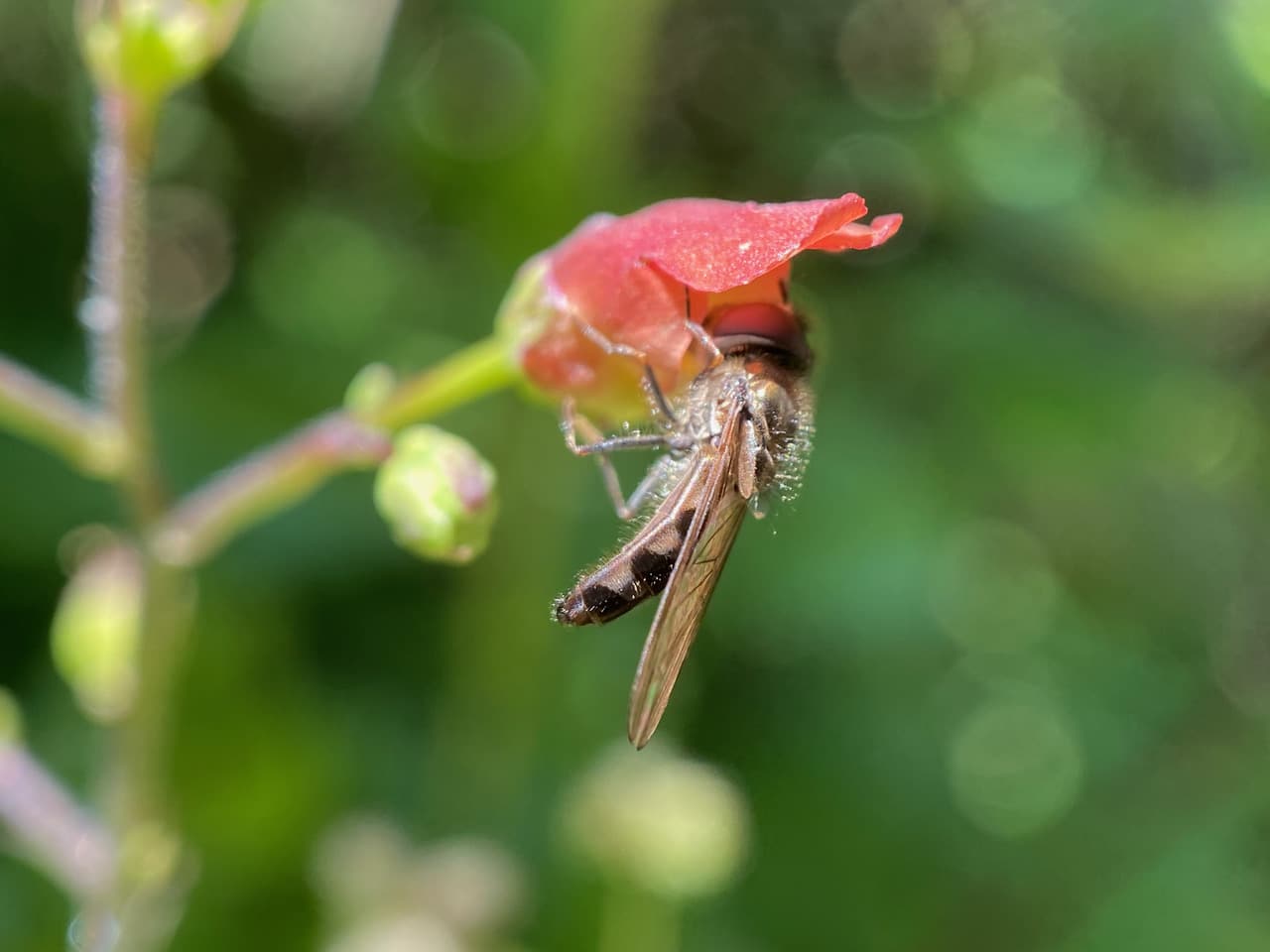
Another opportunity to observe a Sedgesitter feeding at the Bee Plant flower.
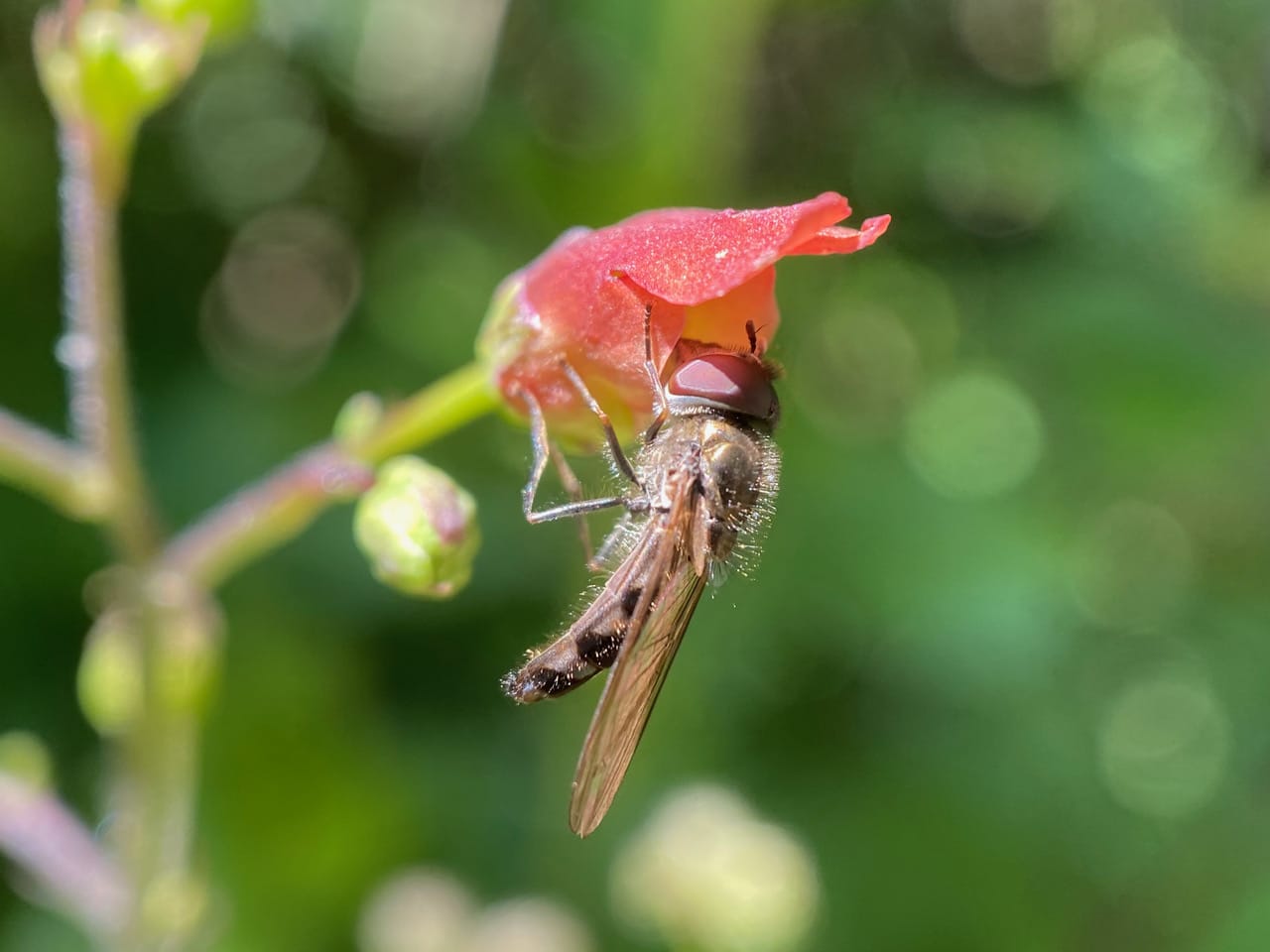
I didn’t know that the Sedgesitter is so hairy! The light is not ideal for photography, but it sure shows up the anatomical details I wouldn’t otherwise see.
 See the mouthpart extending from the accordion face? Why is the hover fly angling its mouthparts upwards, instead of downward into the base of the corolla where one would expect the nectary to be located. I have been wondering about this, having seen similar behavior in other insect visitors to the flower. Recall that the Bee Plant flower has 5 stamens. Four are fertile (producing pollen) while the fifth one, located on the upper petal and colored similarly as the petals is considered a sterile stamen, serving no function. Maybe the sterile stamen offers a reward to the pollinators?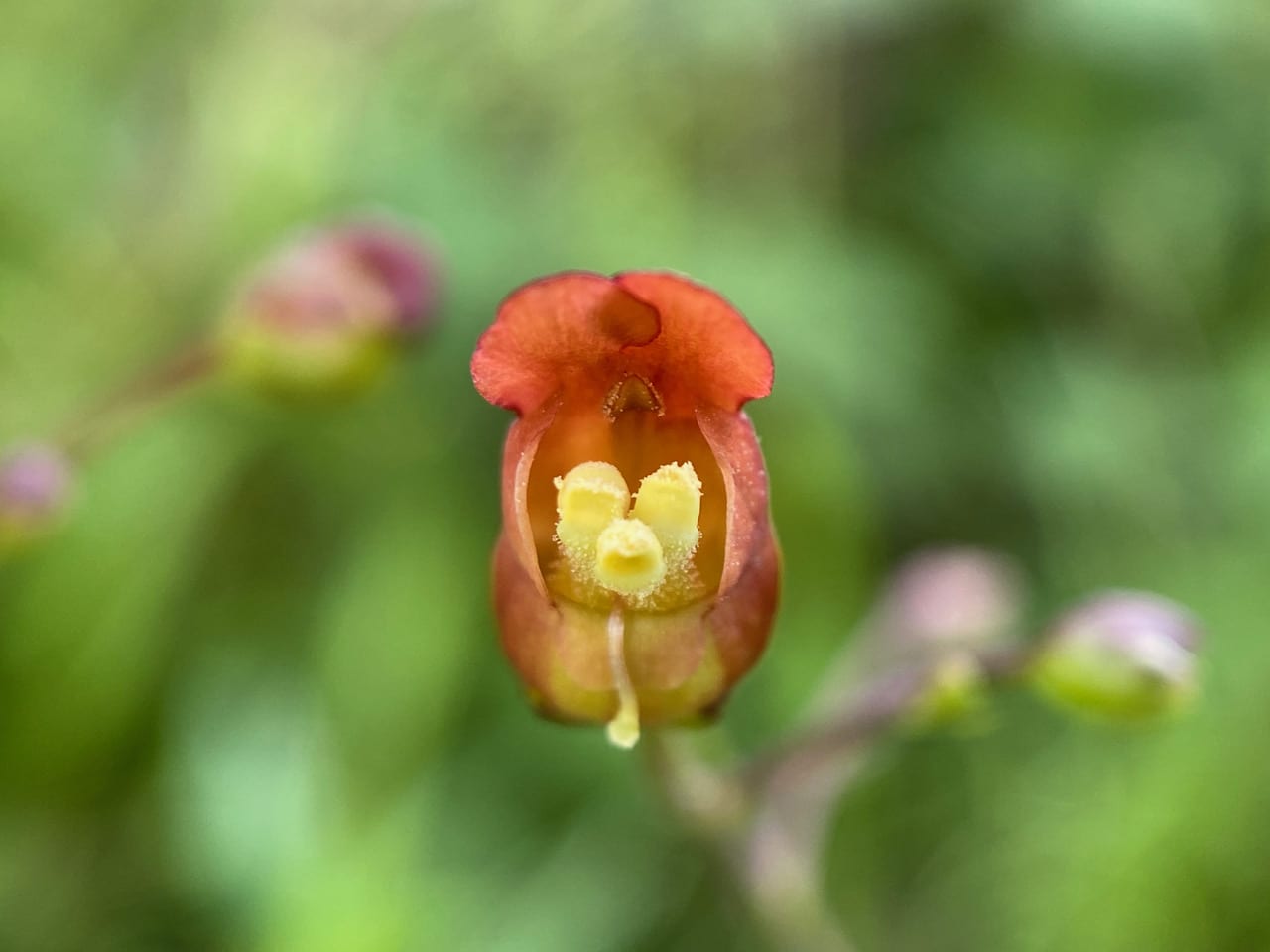
Posted on 6/3/23 (1) Here are two pictures of the Bee Plant flower showing the sterile stamen…


A female Coppered White-cheeked Jumping Spider, Pelegrina aeneola (family Salticidae) is roaming the surface of a Cow Parsnip leaf. Her abdomen is so huge she must be loaded with eggs.

It must be difficult for the gravid female with such a huge load to jump. She does not attempt to leap away as I take a series of pictures of her.
Salticids are free-roaming hunting spiders. They do not weave a web to catch prey. They stalk, then pounce on their prey. Just before jumping, the spider fastens a safety line to the substrate. It can leap 10-20 times their body length to capture prey. Their movement is achieved by rapid changes in hydraulic pressure of the blood. Muscular contractions force fluids into the hind legs, which cause them to extend extremely quickly.
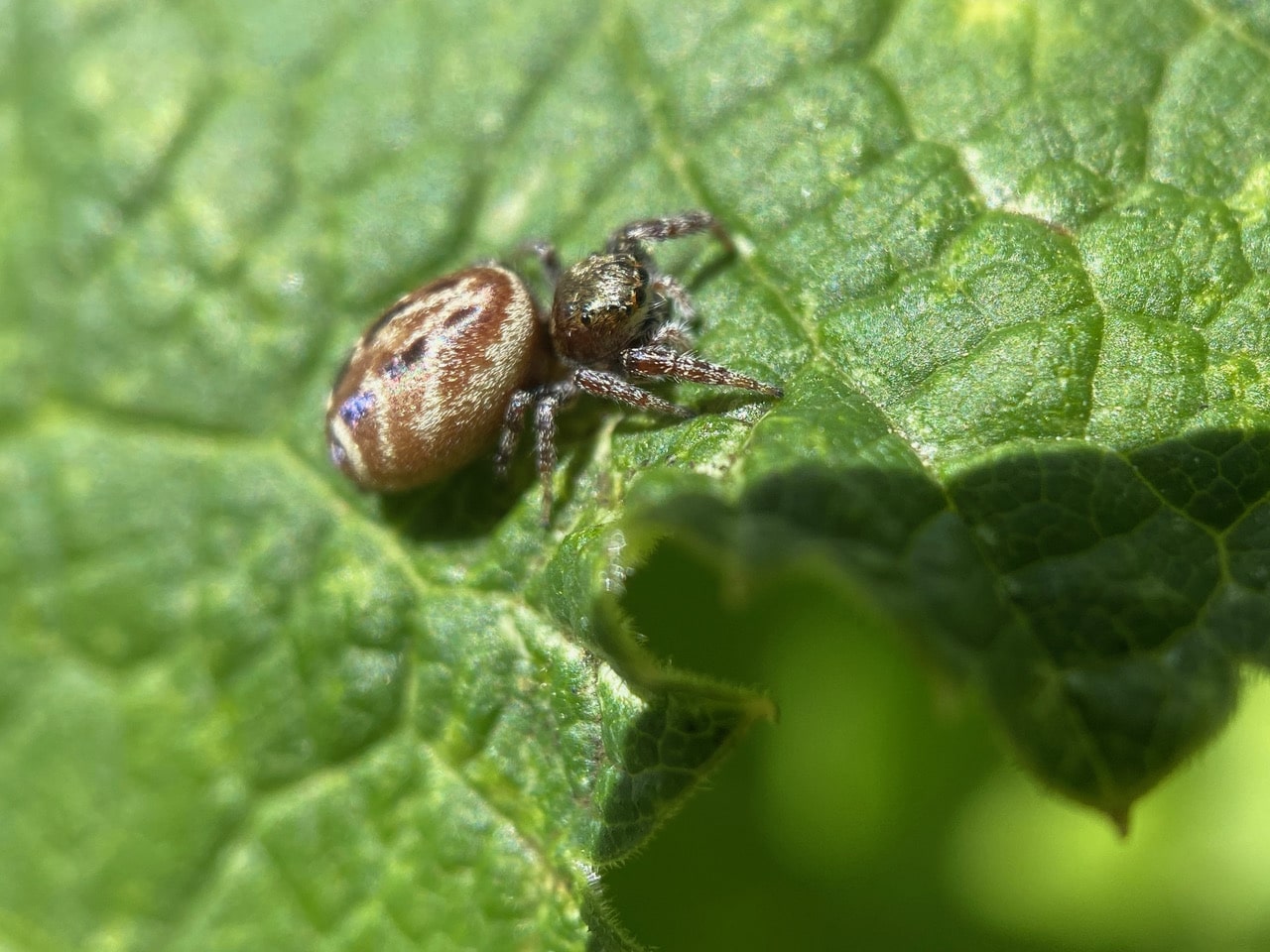
Like all Jumping spiders, Pelegrina aeneola is sexually dimorphic. The males and females have distinct coloration and patterns.

Jumping spiders have excellent vision, with among the highest acuities in invertebrates. The 8 eyes are grouped four on the face (the two big Anterior Median Eyes in the middle, and two smaller Anterior Lateral eyes to the side), and four on top of the carapace. The anterior median eyes provide high acuity but small field of view, while the other six eyes act like our peripheral vision, with lower resolution but broad field of view. Since all eight eyes are fixed in place and can’t pivot independently from the body like human eyes can, jumping spiders must turn to face whatever they want to see well. This includes moving their cephalothorax up and down, an endearing behavior.

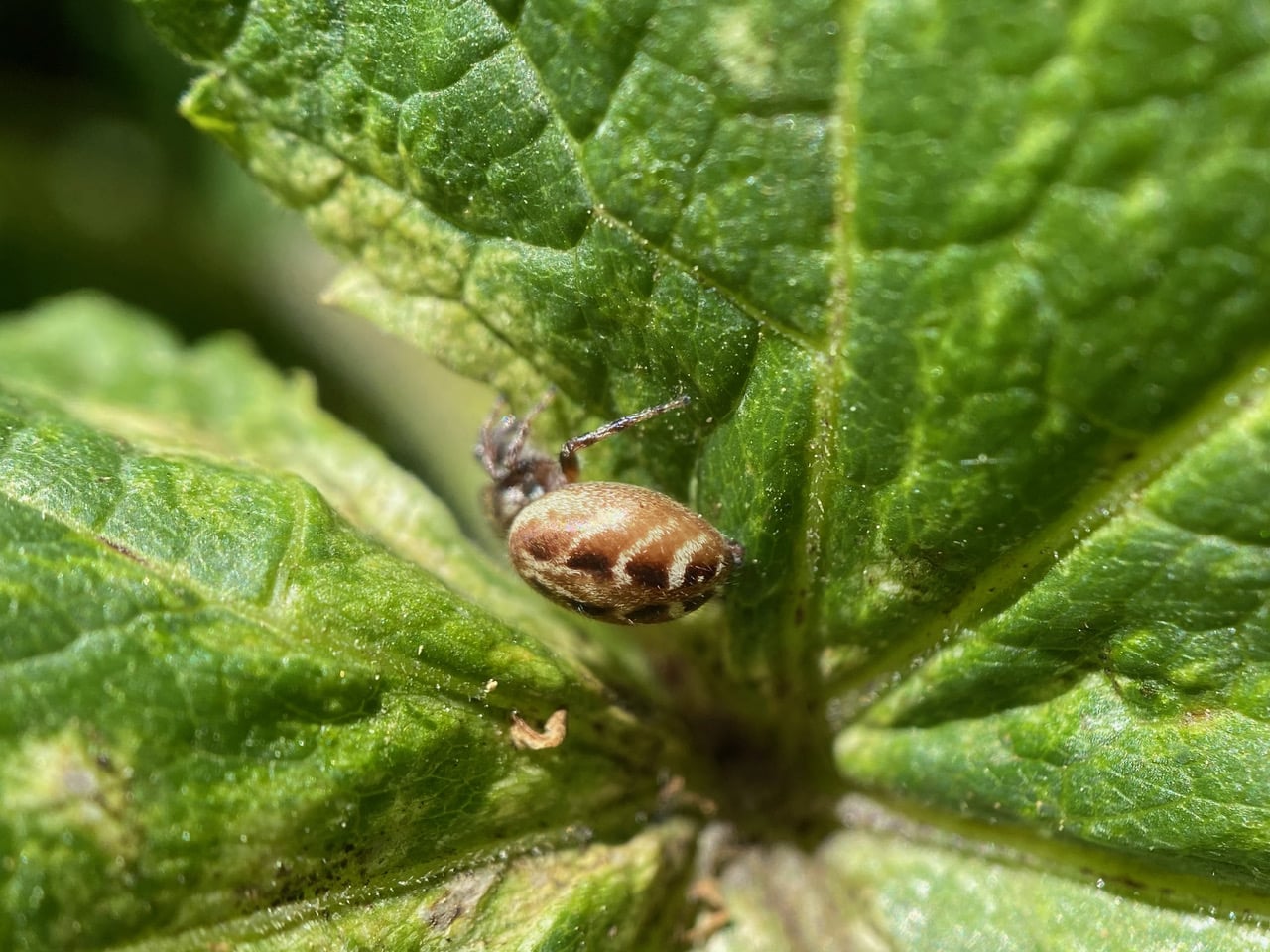
One last look at the spider’s abdomen as she disappears behind the leaf.

A Soft-bodied Plant Beetle, Dascillus davidsoni (family Dasciilidae) is perched in the weedy underbrush. The species is found in North America.
Dascillidae is a family of beetles found worldwide. Adults are 4.5-25 mm long with elongate body that is somewhat convex in cross-section. They are covered in dense gray/brown hairs. The adults can be found on grass during the springtime. The larvae occur in moist soil or under rocks. The larvae are thought to feed on roots or decaying plant matter.
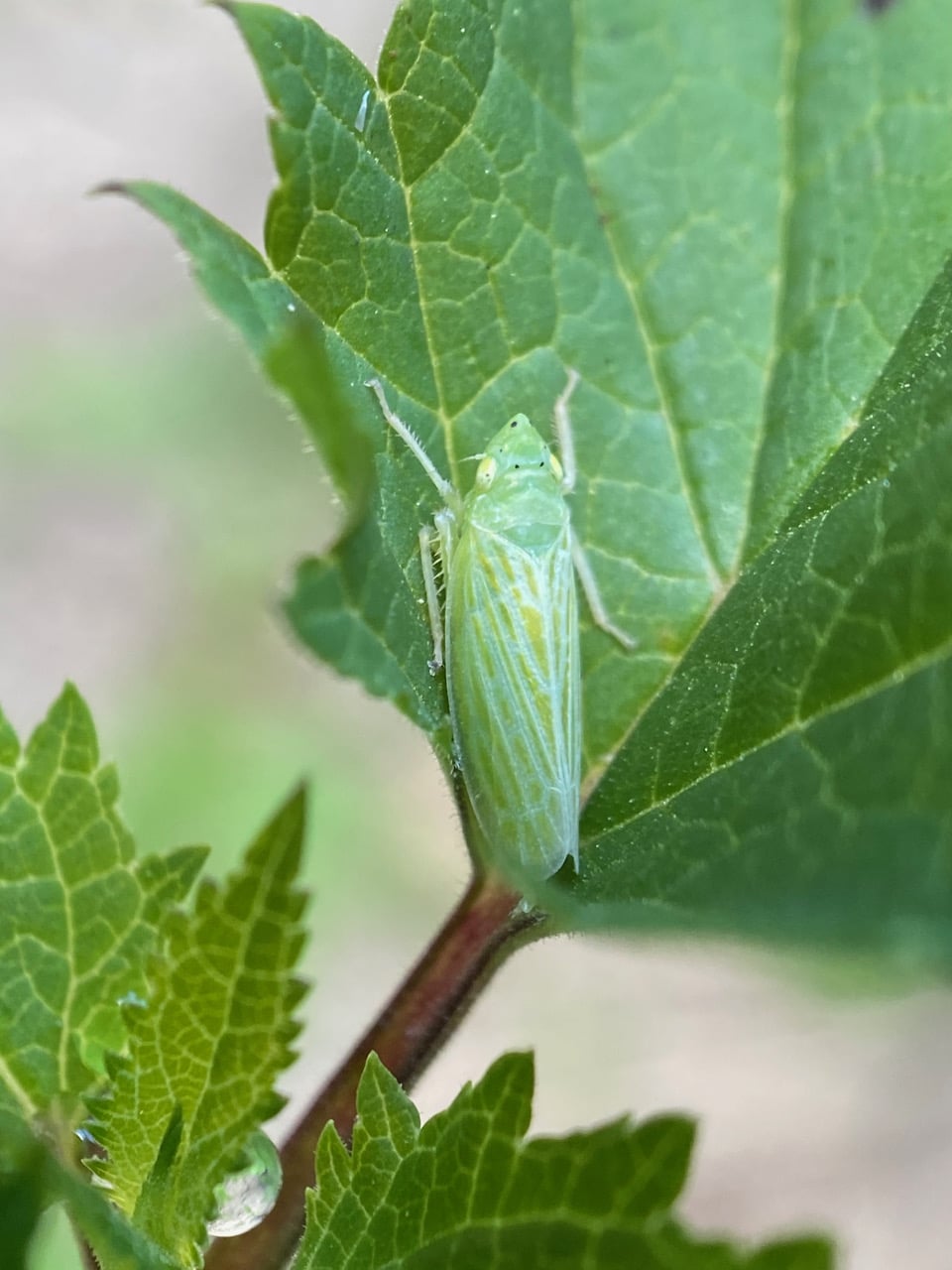
A tiny green Leafhopper (family Cicadellidae) is hiding on a leaf of California Bee Plant.
Leafhopper is the common name given to true bugs in the family Cicadellidae. The bugs are plant feeders that suck plant sap from grass, shrubs, or trees. Their hind legs are modified for jumping, and are covered with hairs that facilitate the spreading of a secretion over their bodies that act as a water repellent and carrier of pheromones. They undergo partial metamorphosis, and have various host associations, varying from very generalized to very specific.
While sucking the sap of plants, these insects excrete any extra sugar as a sticky liquid commonly called honeydew. This is a serious hazard for small insects, possibly sticking the insect to a leaf, or gluing its body parts together. Some bugs deal with this problem by shooting the waste away from their bodies at high speed. Leafhoppers have a unique solution – they make brochosomes, a proteinaceous material within a special gland in their guts, and secrete them by the billions in a milky anal fluid, and spread them over their bodies using their legs. When the fluid dries, the brochosomes form a powdery coating, and the leafhoppers spread them even further using comb-like hairs on their legs. The brochosomal coat is superhydrophobic, and acts as a water-repellent, non-stick coating protecting the leafhoppers from their own sticky exudates.

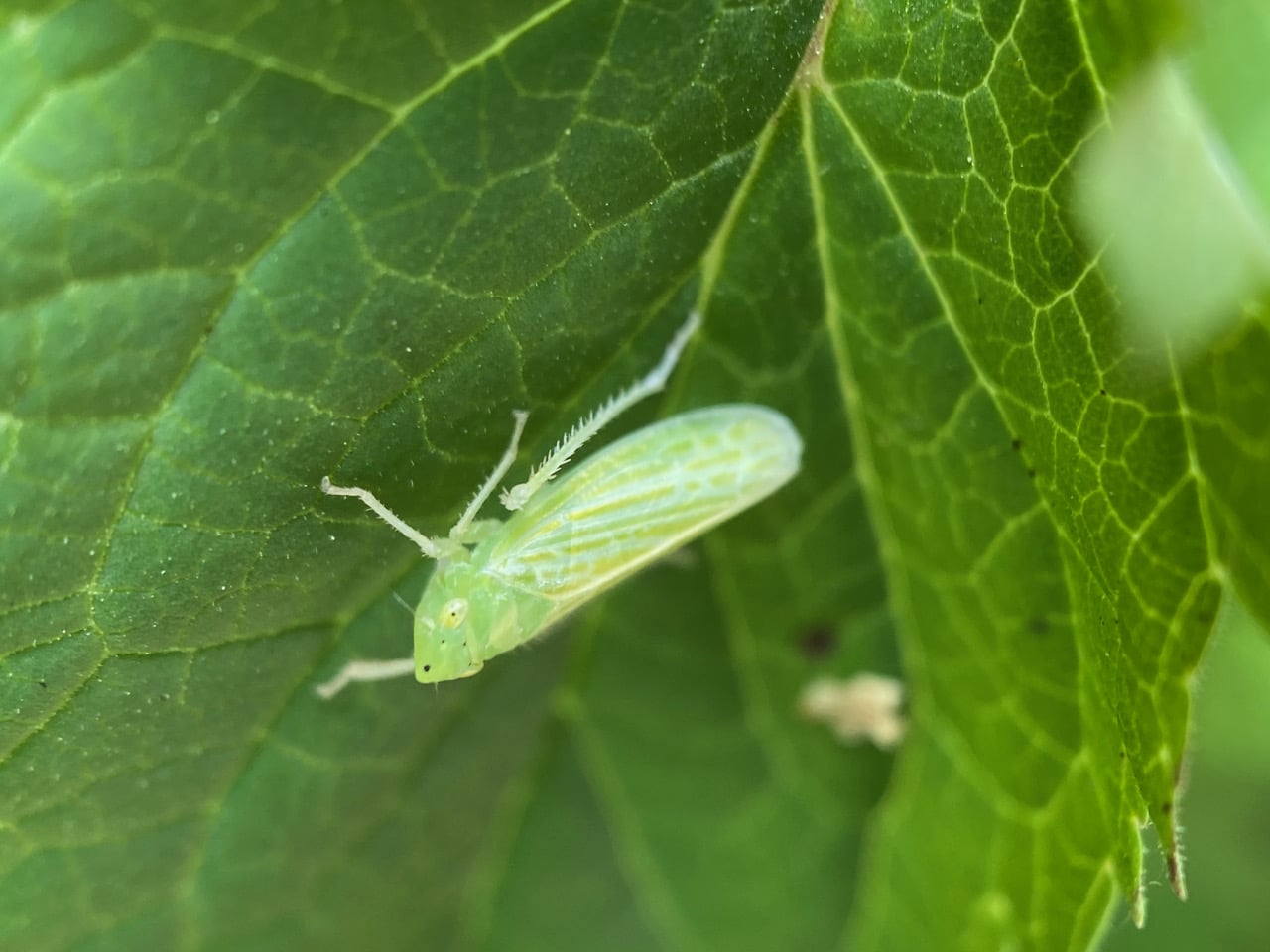
As the Leafhopper runs away, I get a clear view of the rows of comb-like small spines on its hind tibia (“shin”) which is the diagnostic feature of the family Cicadellidae.