

Pollinator Post 6/19/23 (1)
 Entering Skyline Gardens from the Steam Train entrance this sunny morning, I am greeted by a blooming Cobweb Thistle, Cirsium occidentale by the steps. There seems to be some small insects in the flowerhead.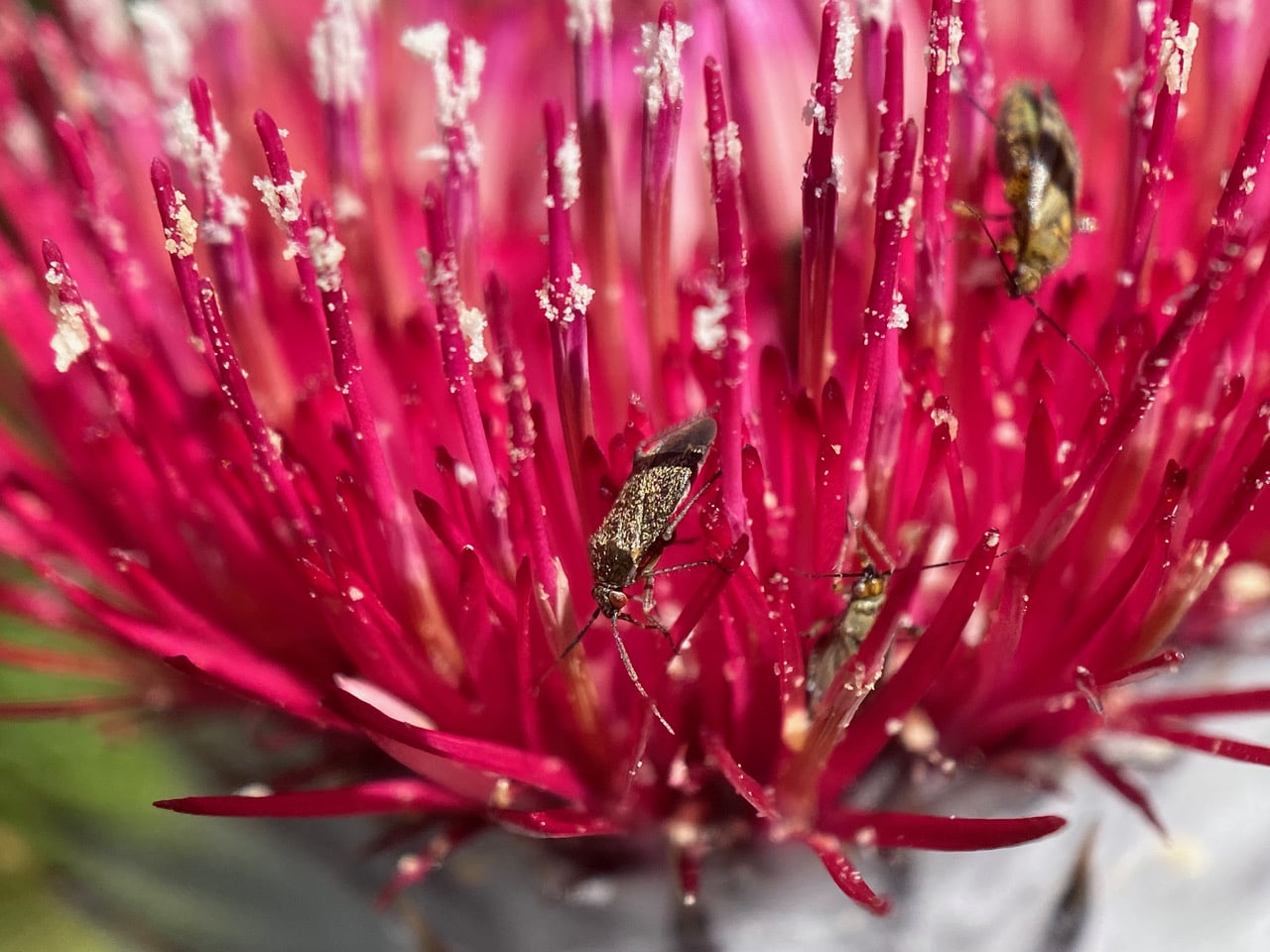
That’s a Black Grass Bug, Irbisia sp.(family Miridae). The scales on the Plant Bug’s wings reflect a bronze sheen in the sunlight.
Mirid bugs are also referred to as plant bugs or leaf bugs. Miridae is one of the largest family of true bugs in the order Hemiptera. Like other Hemipterans, Mirids have piercing, sucking mouthparts to extract plant sap. Some species are predatory.







There’s another bug in the thistle flowerhead. It appears to be a different species of Miridae.
One useful feature in identifying members of the family is the presence of a cuneus; it is the triangular tip of the corium, the firm, horny part of the forewing, the hemielytron. The cuneus is visible in nearly all Miridae.

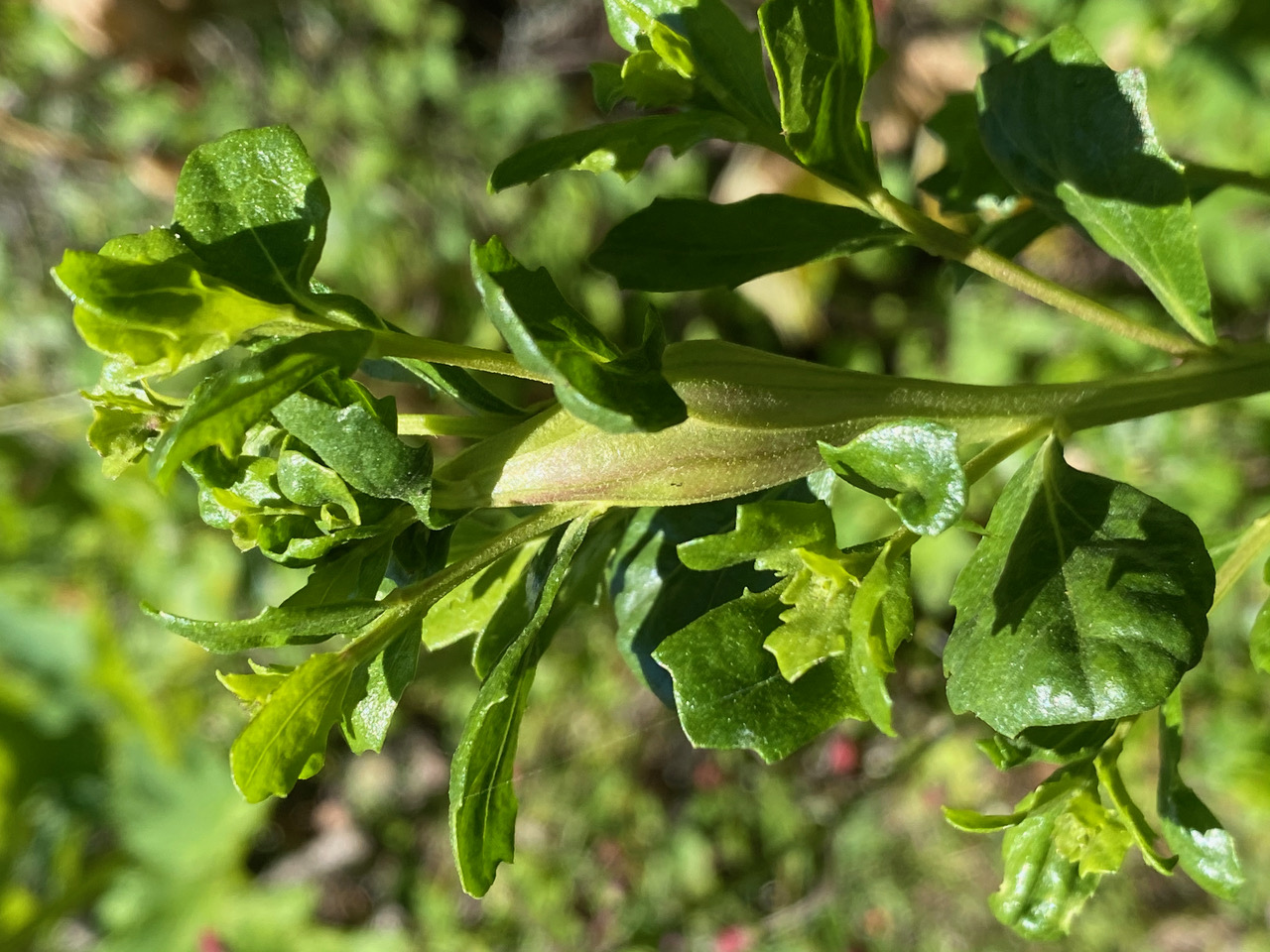
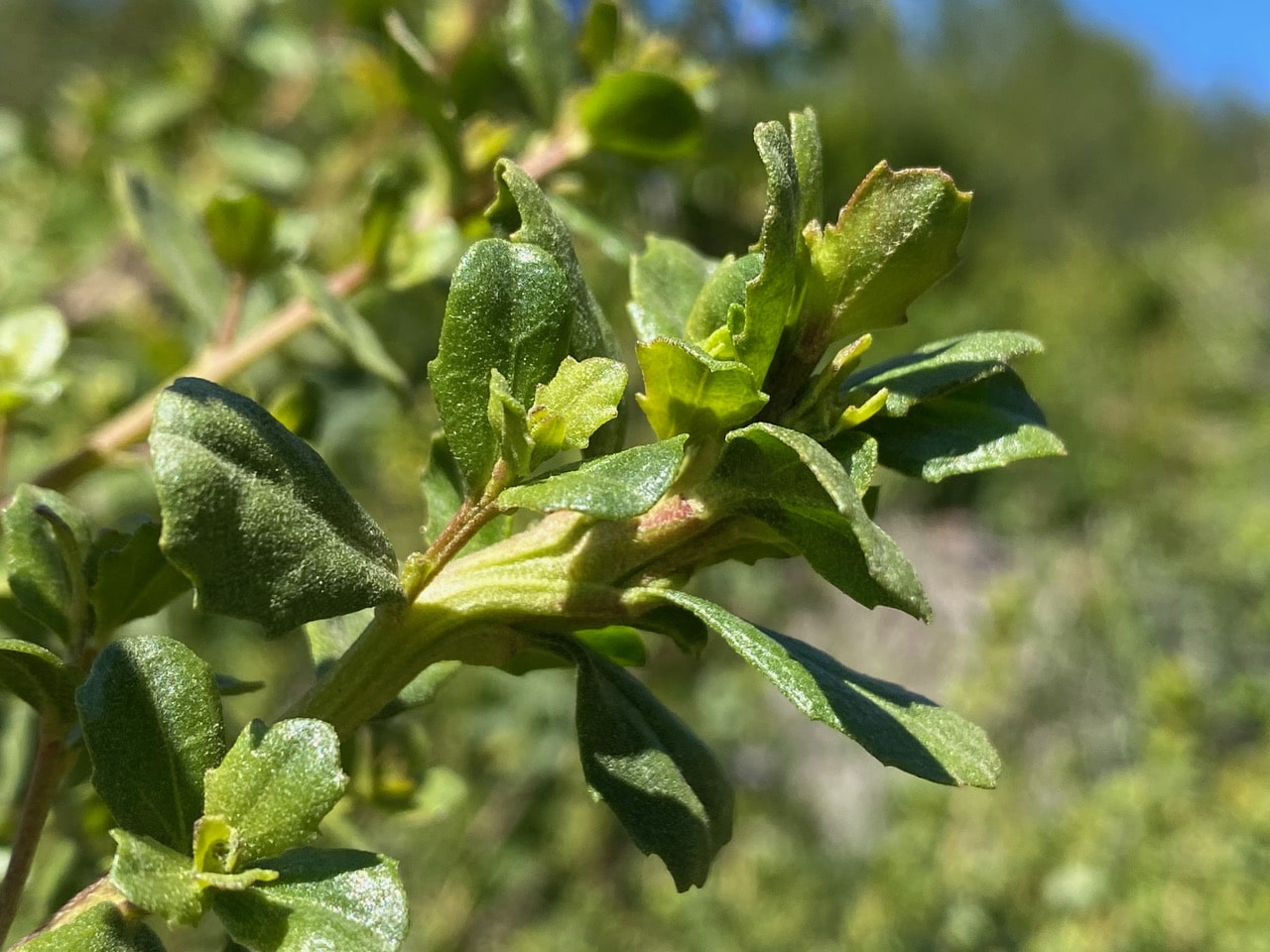
The Coyote Brush, Baccharis pilularis along the trail is vibrant with fresh new leaves. There are also new galls developing on many of the stem tips.
Galls are tumor-like growths of plant tissue produced by the host plant in response to the chemical and/or mechanical stimuli of invading organisms (insects, mites, fungi). The galls of many insects are specific to their species in size, shape, and color. The insect larvae feed on the gall tissues from within, hence the galls are essentially “edible nurseries” for the young.
This spindle-shaped gall on the Coyote Brush stem is made by a small moth, Gnorimoschema baccharisella (family Gelechiidae). Each gall holds only a single larva. Gall development begins after overwintering eggs hatch in the spring and the larvae burrow into new terminal shoots. The occupied stems swell around the larvae, leaving large cavities within which the larvae feed. When mature the larvae cut exit holes through the gall walls and drop to the ground to pupate. The galls are often parasitized or lost to predators, creating a complex food web on the plant.
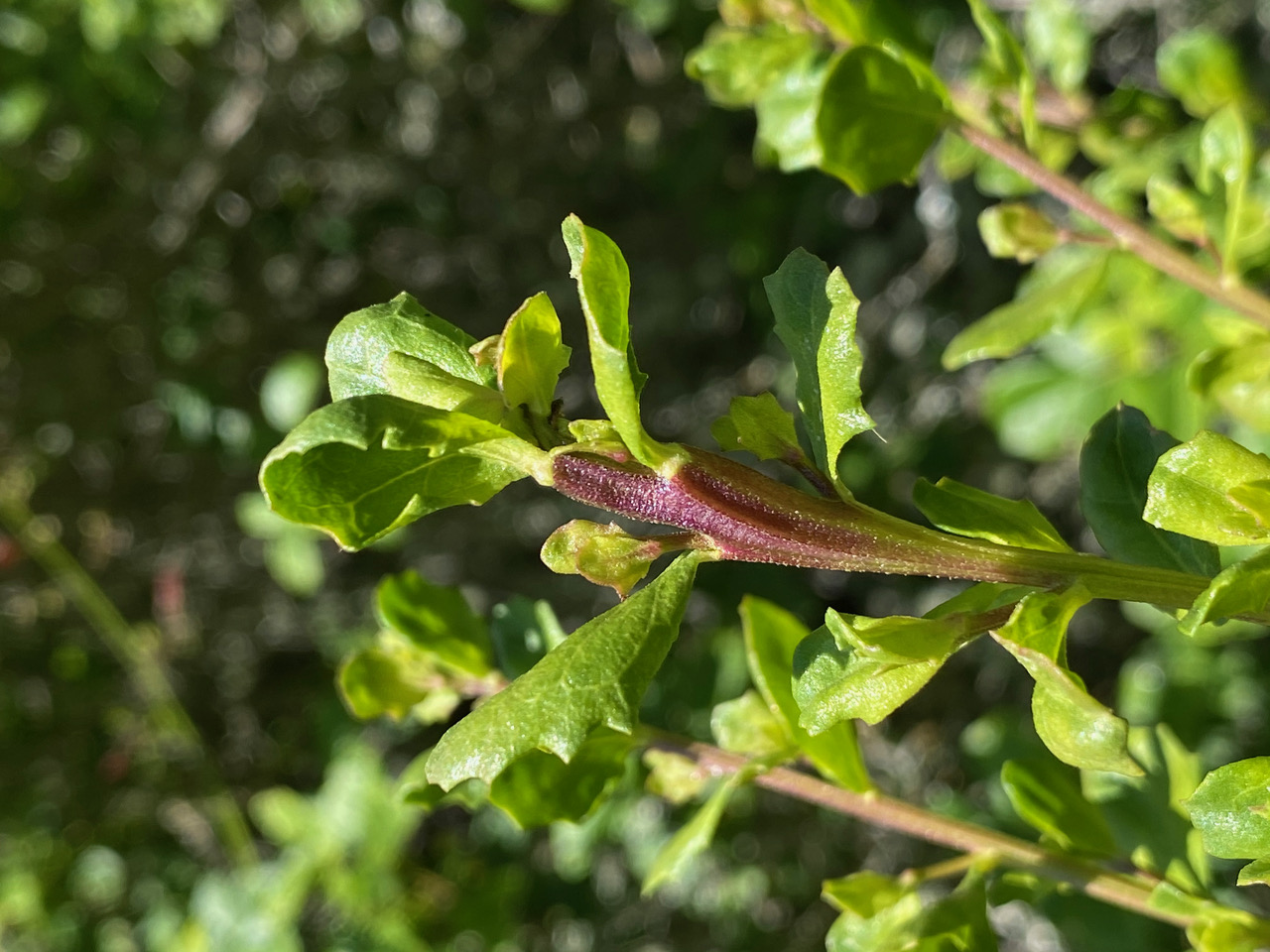
This is yet another common gall on the Coyote Brush, induced by the Coyote Brush Stem Gall Midge, Rhopalomyia baccharis (family Cecidomyidae, order Diptera).
This midge induces twisted and bent, striated stem galls. The galls are green in the spring, but look similar to older bark by midsummer. Each gall can contain several individual larval chambers, which are usually located just below each of the bends in the gall. There can be two or more generations per year. Elliptical holes appear after the larvae stop feeding. Pupation occurs inside the galls, and the adults emerge through the openings in November and December.
Galls exposed to full sun often develop a reddish-purple pigment, anthocyanin as a sun-screen.
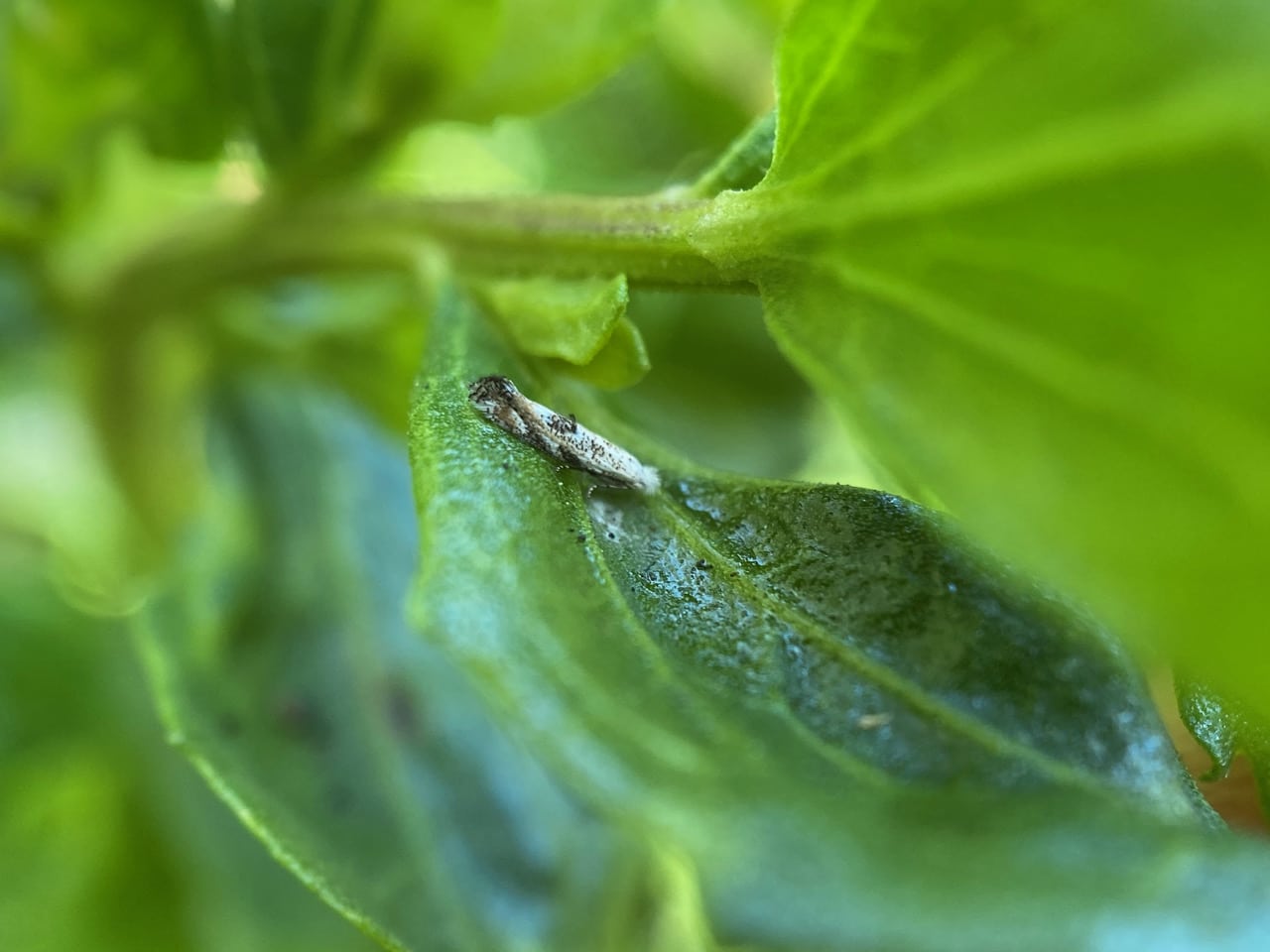
A tiny linear moth, less than 10 mm long is running around on the branch tips of a Coyote Brush. Might it be Gnorimoschema baccharisella, the Coyote Brush Stem Gall Moth looking for a place to lay eggs?

The tiny moth belongs to the family Gelechiidae. It has a tuft of white hairs on its head.
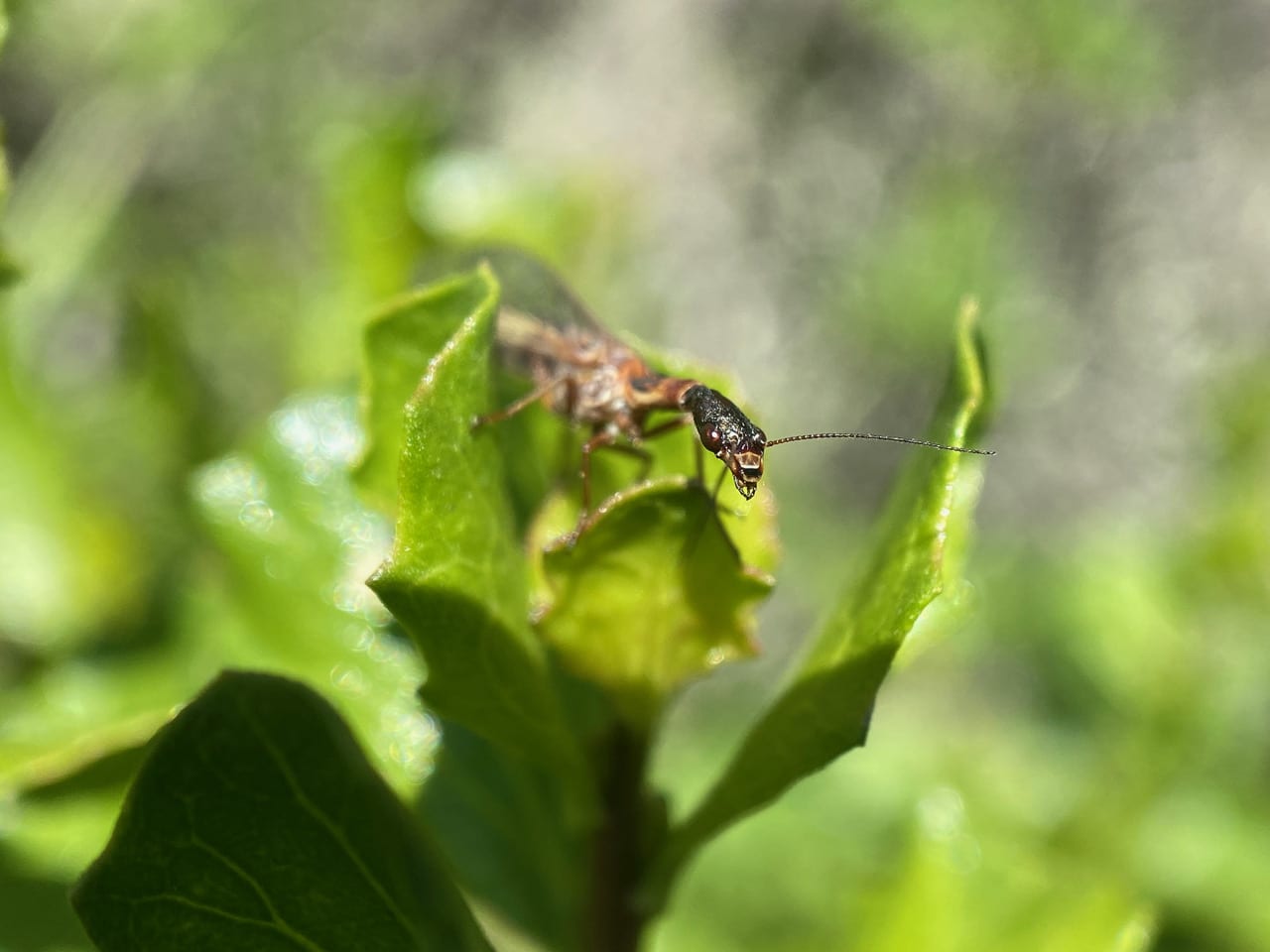
Snakeflies abound on the Coyote Brush lately. Perhaps these predators are here to take advantage of the abundance of gall insects?
Snakeflies are a group of predatory insects comprising the order Raphidioptera. They are a relict group, having reached their apex of diversity during the Cretaceous before undergoing substantial decline. Adult Snakefly has a notably elongated thorax which, together with the mobile head, gives the group their common name of snakily. The body is long and slender and the two pairs of long membranous wings are prominently veined. The head is long and flattened and heavily sclerotized. The mouthparts are strong and relatively unspecialized, being modified for biting. The large compound eyes are at the sides of the head. Females have a large and sturdy ovipositor which is used to deposit eggs into crevices or under bark. Snakeflies are holometabolous insects with four-stage life cycle consisting of eggs, larvae, pupae and adults. Both adults and larvae are predators of soft-bodied arthropods such as aphids and mites.
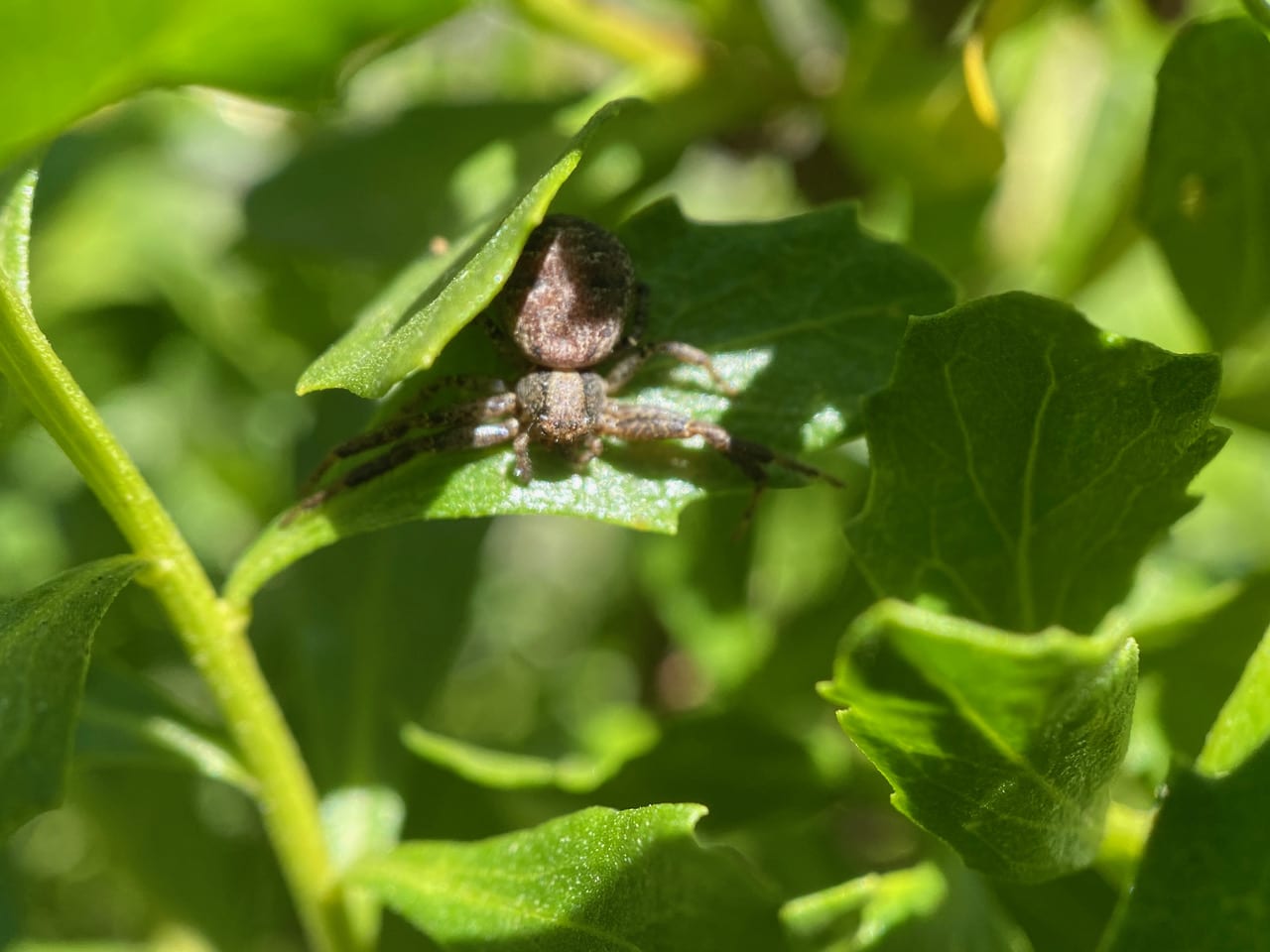
Here’s another predator lurking in the shadows among the Coyote Brush foliage – a Ground Crab Spider, Xysticus sp. (family Thomisidae).
Disguised in earthy browns/grays , these spiders tend to be found on the ground or on low vegetation. While similar to the “flower spiders”, they tend to have shorter, sturdier legs. Like most Thomisidae, Xysticus do not build webs. They are ambush predators that prefer to hunt near the ground. They move slowly, and commonly hunt by stationing themselves in high-traffic area and grabbing whatever arthropod passes close enough. Also like most other Thomisidae, they seize prey with their enlarged front two pairs of legs and kill it by a venomous bite.
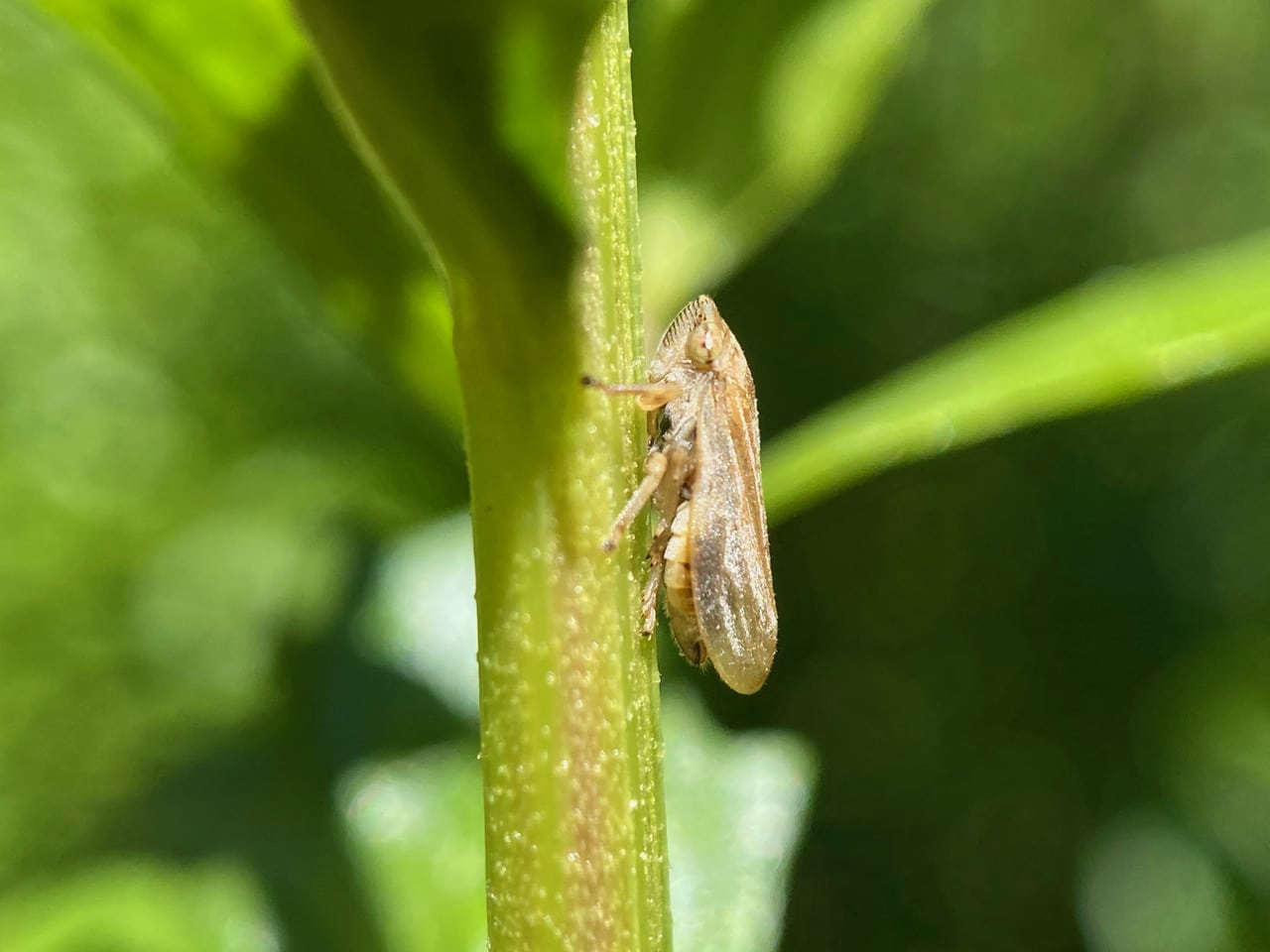
A Froghopper or adult Spittlebug, Philaenus sp. (family Aphrophoridae) is perched stock still on a Baccharis stem.
Instead of leaping away, the Froghopper runs along the stem to evade the camera.
The Froghopper is a “true bug” in the order Hemiptera, family Aphrophoridae. Froghoppers are champion jumpers among insects, out-performing even the fleas. The bug can leap the human equivalent of a skyscraper without a running start! The muscles in its hind legs act like a “catapult” to release energy explosively. Its athletic prowess not withstanding, the Froghopper is better known for its young, the “spittle bugs”. The nymphs produce foamy white masses on plants within which they feed on plant sap. Froghoppers have piercing-sucking mouthparts, and feed on plant sap as both nymphs and adults. A recent report claims, “Froghoppers are the super-suckers of the animal world. The tiny insects produce negative pressures equivalent to people sucking a 100-meter-long straw.” So the little bug has two titles under its belt – champion jumper, and super-sucker!
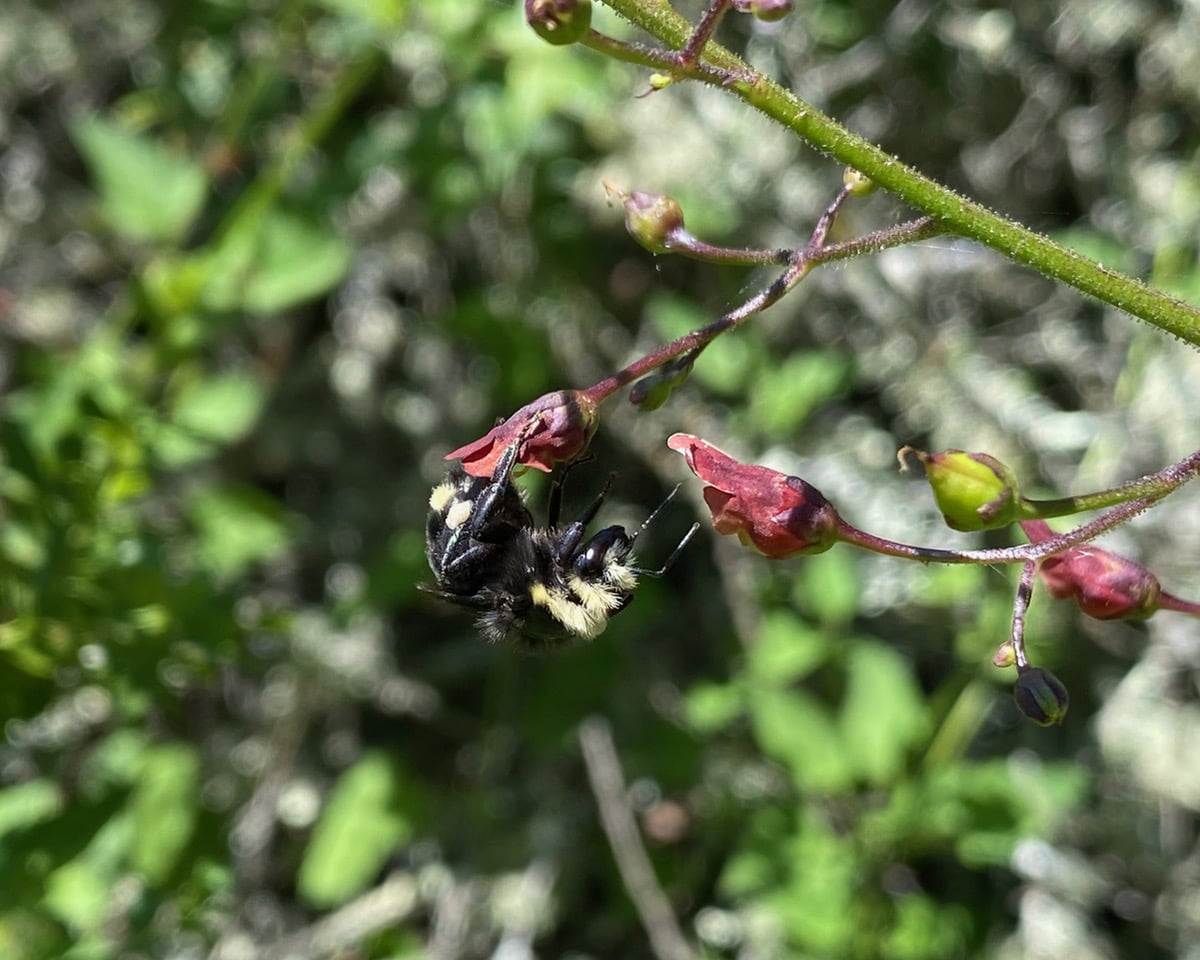
A Yellow-faced Bumble Bee just finished sipping nectar from a flower of the California Bee Plant, Scrophularia californica, and is reaching for an adjacent flower.
The bee climbs onto the next flower and continues to feed there without having to fly! Bumble Bees are the most frequent visitors to the Bee Plant flowers at Skyline Gardens.
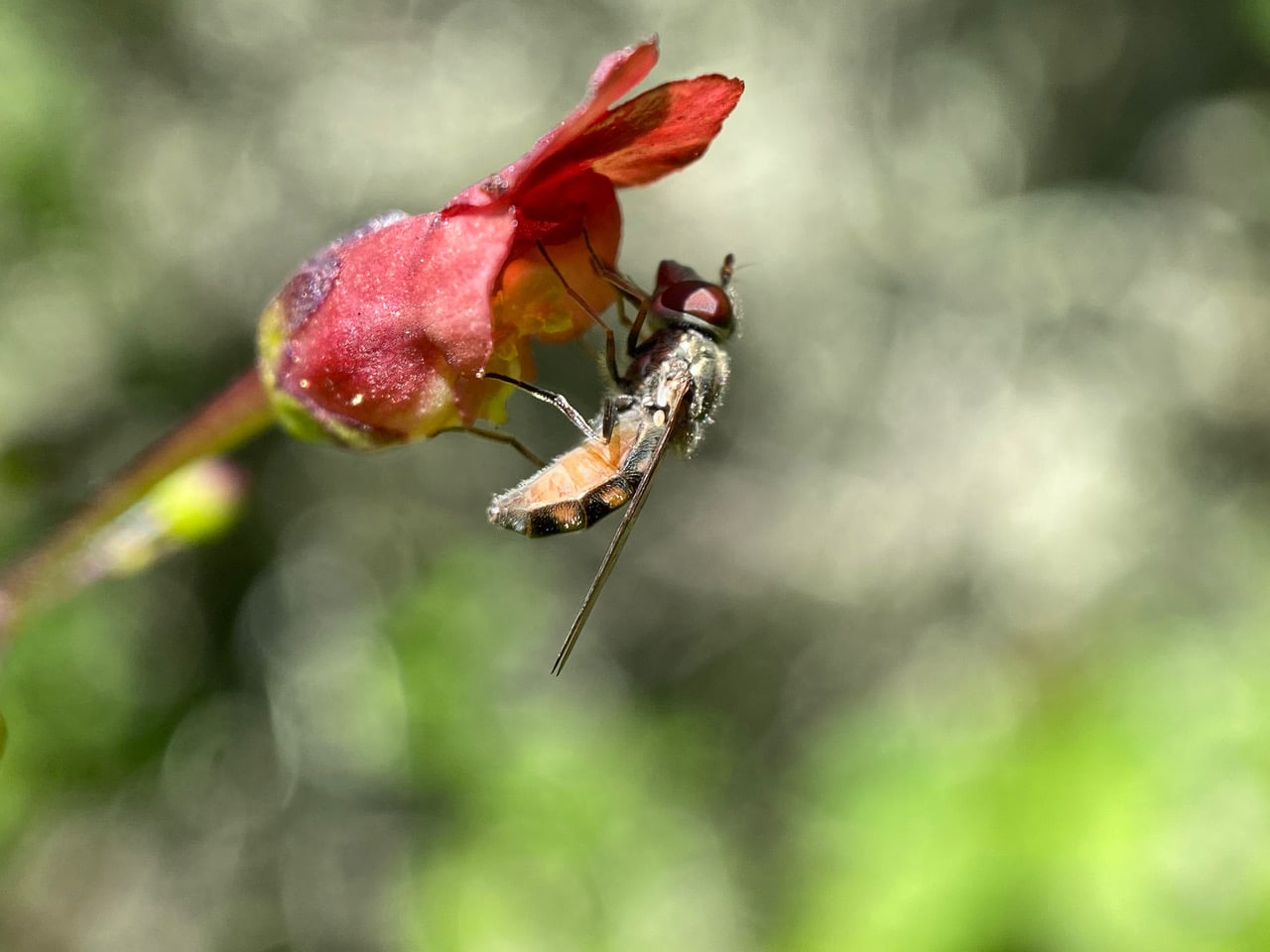
More quiet and subtle, the hover flies also visit the Bee Plant flowers. This one is a Sedgesitter, Platycheirus sp. (family Syrphidae).
Platycheirus is found in grass and herb vegetation. Adults of many species feed on pollen of wind-pollinated plants, such as Salix, Plantago, Poaceae, Cyperaceae, but they visit other flowers also. Many stay active during cold and rainy weather. Larvae feed on aphids
Whoa, I didn’t know the Sedgesitter can extend its face like an accordion!
The Sedgesitter rests for a moment to steady itself on the Bee Plant flower. The extruded “beak” is retracting into its face.
On to the next flower!