

Pollinator Post 6/17/23 (1)
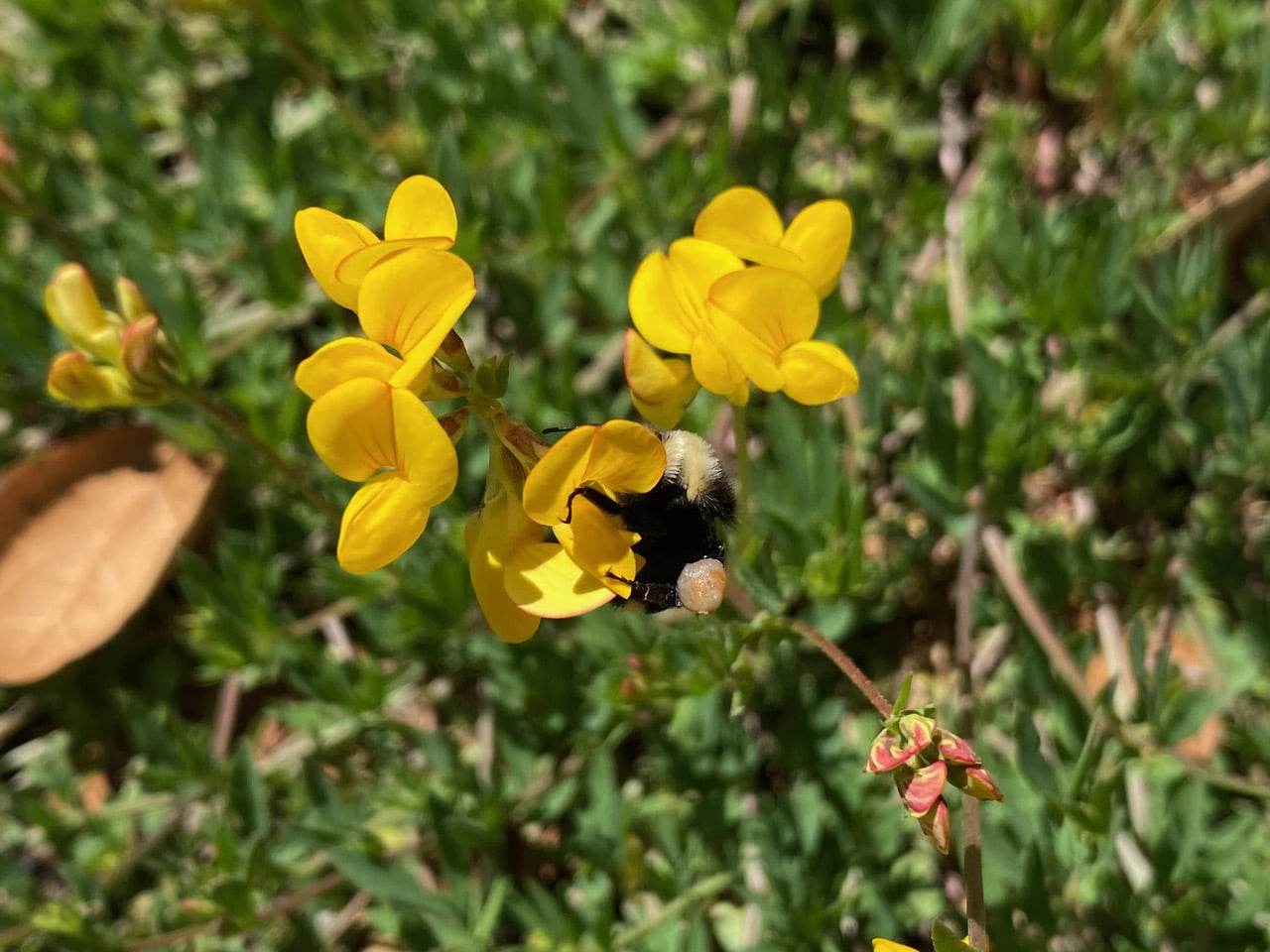
A robust Deervetch, Lotus corniculatus (family Fabaceae) that has grown through the asphalt of the road near Siesta Gate is blooming gloriously. A Yellow-faced Bumble Bee, Bombus vosnesenskii is working through the flowers with gusto. The bee is much bigger than the flowers. What can she be doing?
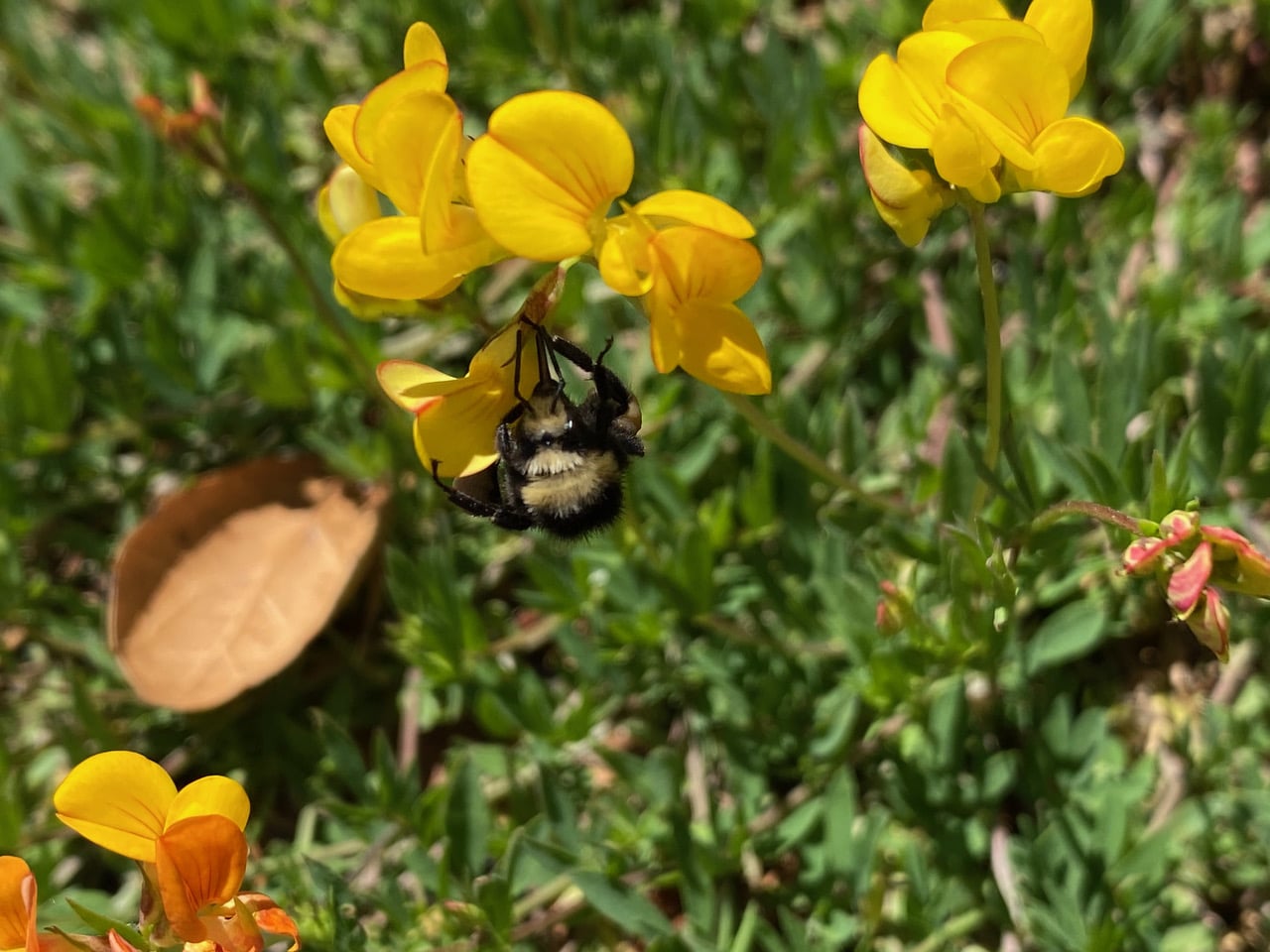
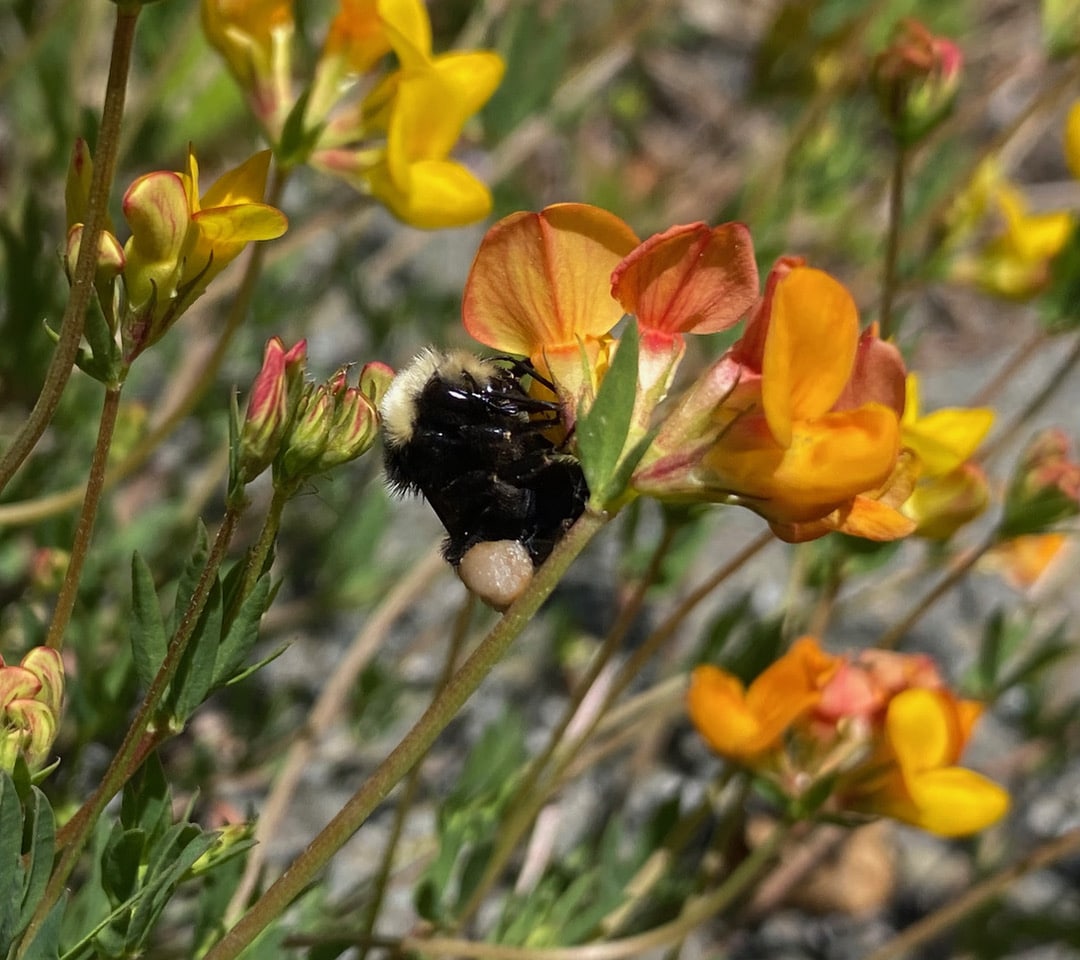


Robbing nectar, of course! Some large bees, notably Carpenter Bees (genus Xylocopa) and Bumble Bees (genus Bombus) are notorious nectar thieves. When they are faced with flowers they can’t access from the front, such as tubular flowers, they often use the back door. With their mandibles, they cut a slit in the base of the flower, usually near the calyx, and access the nectar directly. Because they bypass the reproductive structures of the flower and thus do not contribute any pollination services, their behavior is considered robbery.
Here’s another view of the nectar thief, her long tongue inserted into the base of the flower behind the calyx.
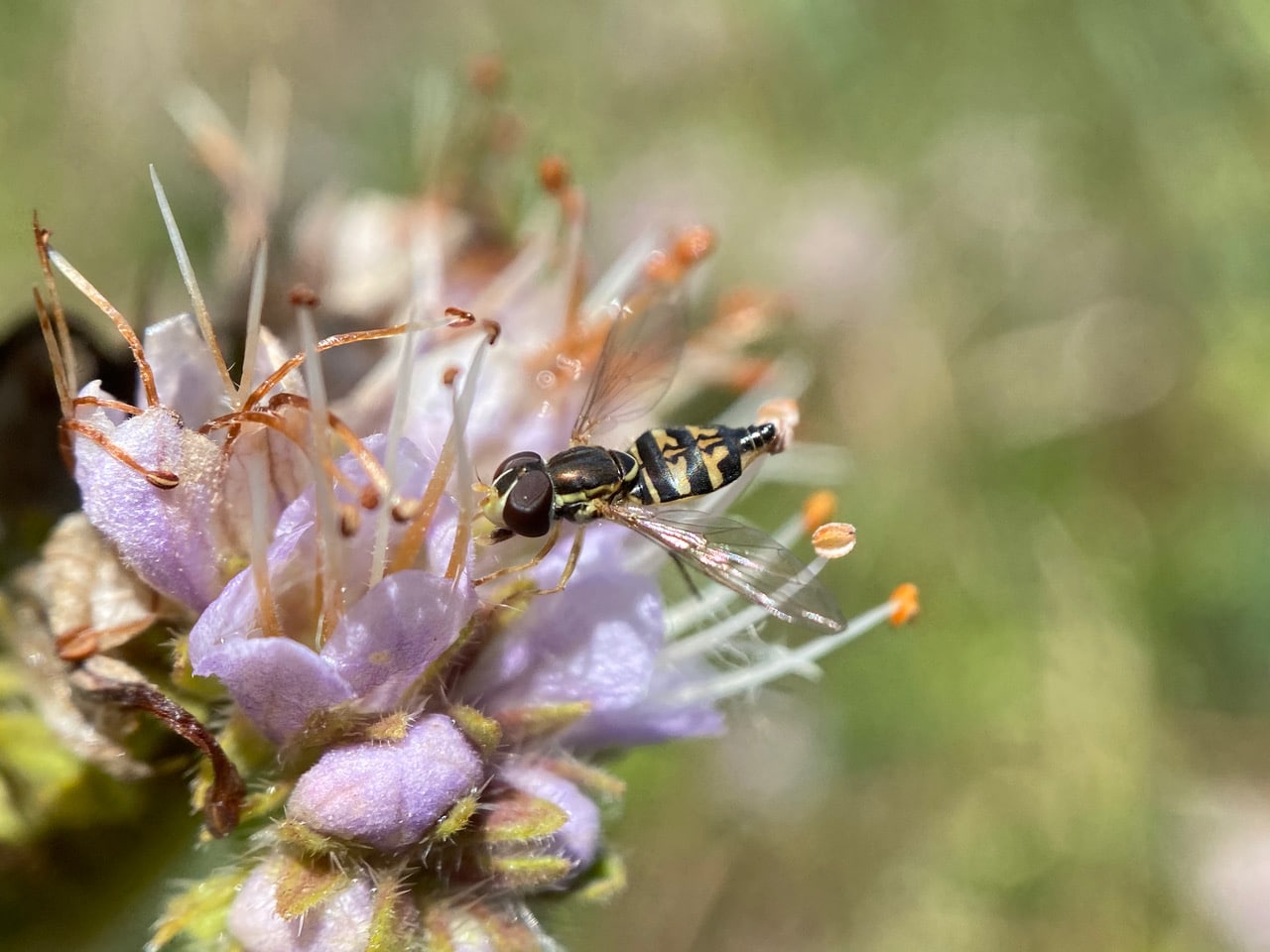
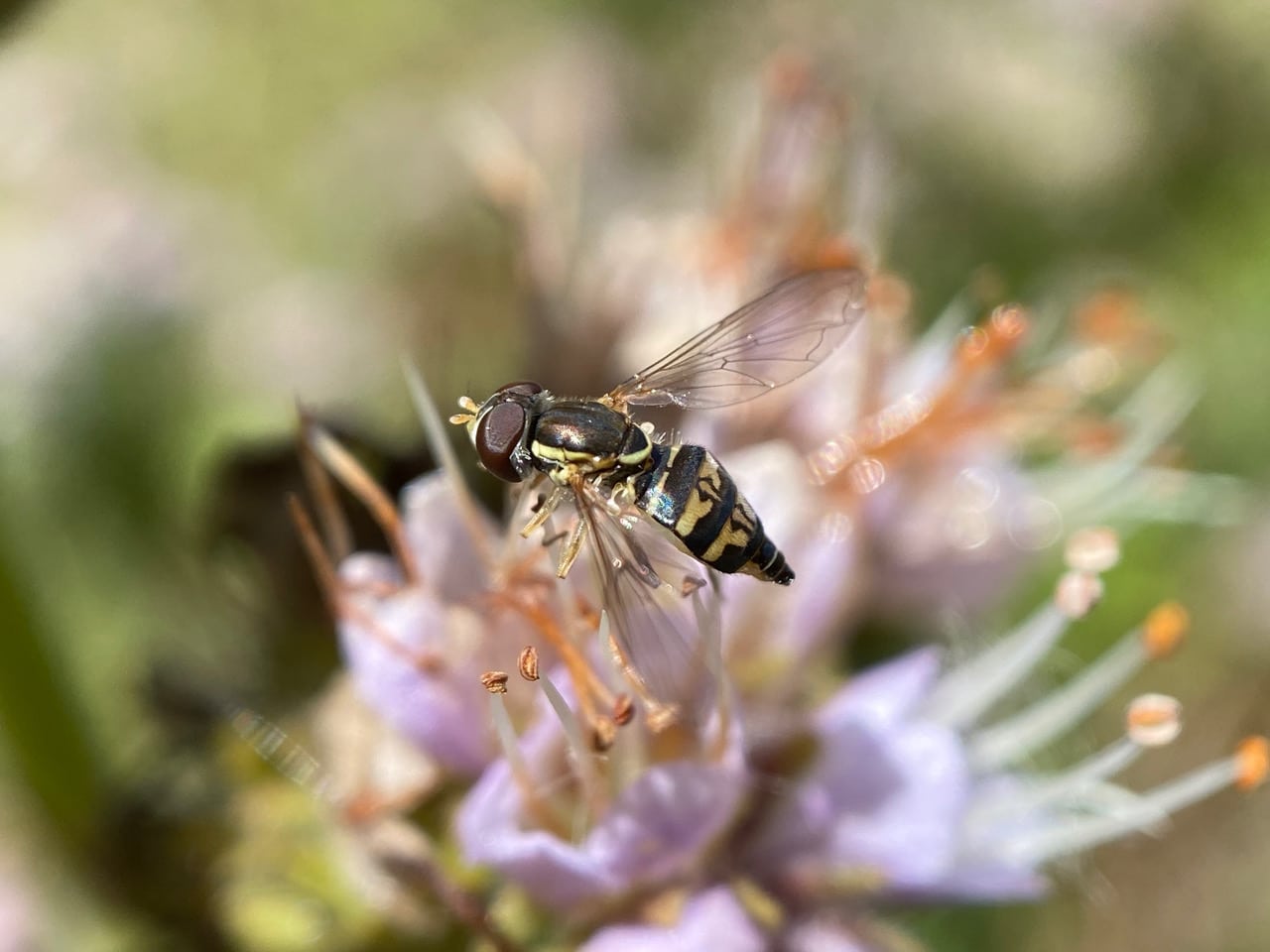
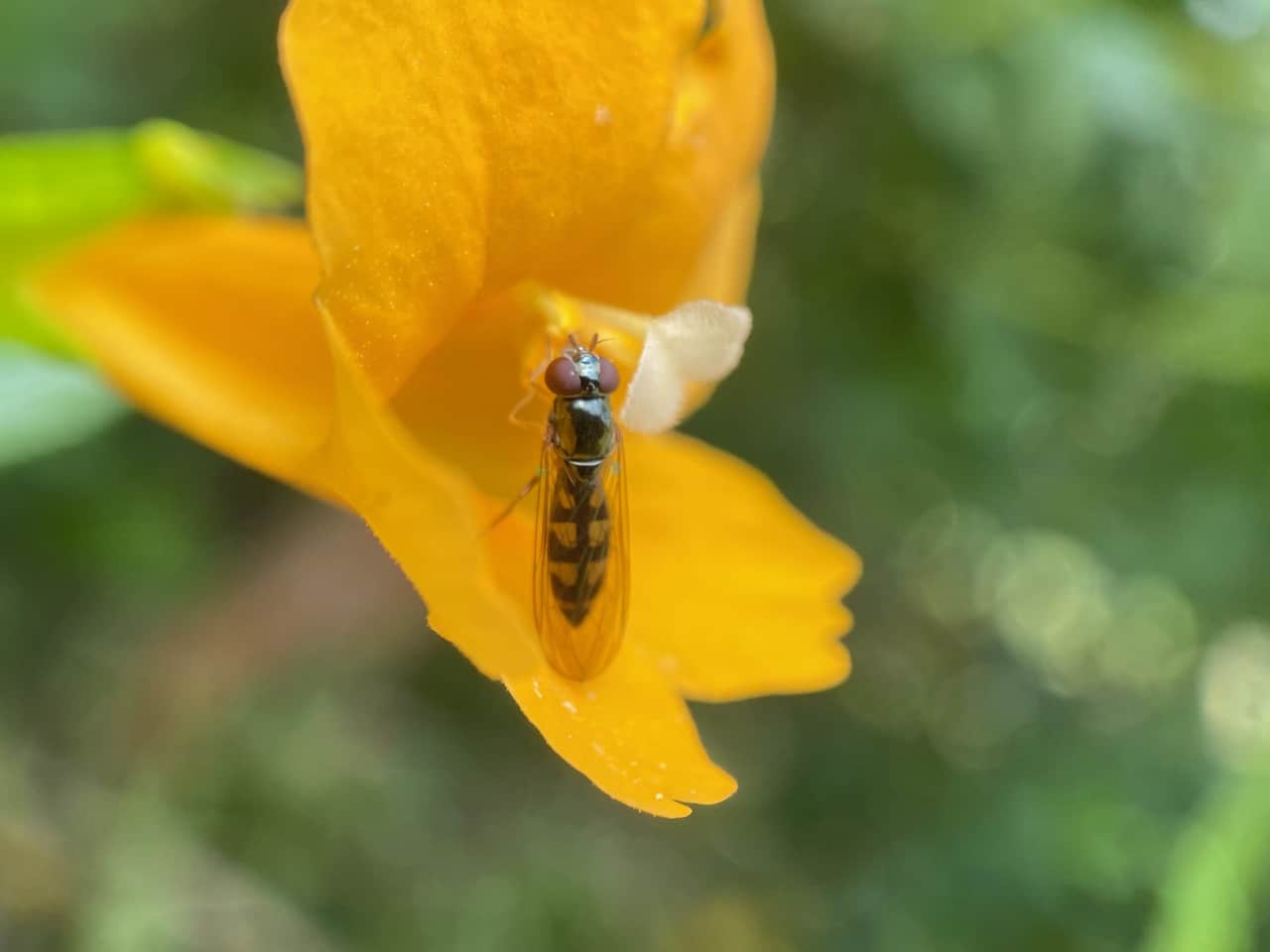
The Western Calligrapher, Toxomerus occidentalis (family Syrphidae) is a delightful little hover fly to meet, as it is instantly recognizable by the distinctive abdominal pattern.
The Western Calligrapher is foraging on the flowers of California Phacelia, Phacelia californica. The hover fly is female. The males of the species have a much narrower abdomen.
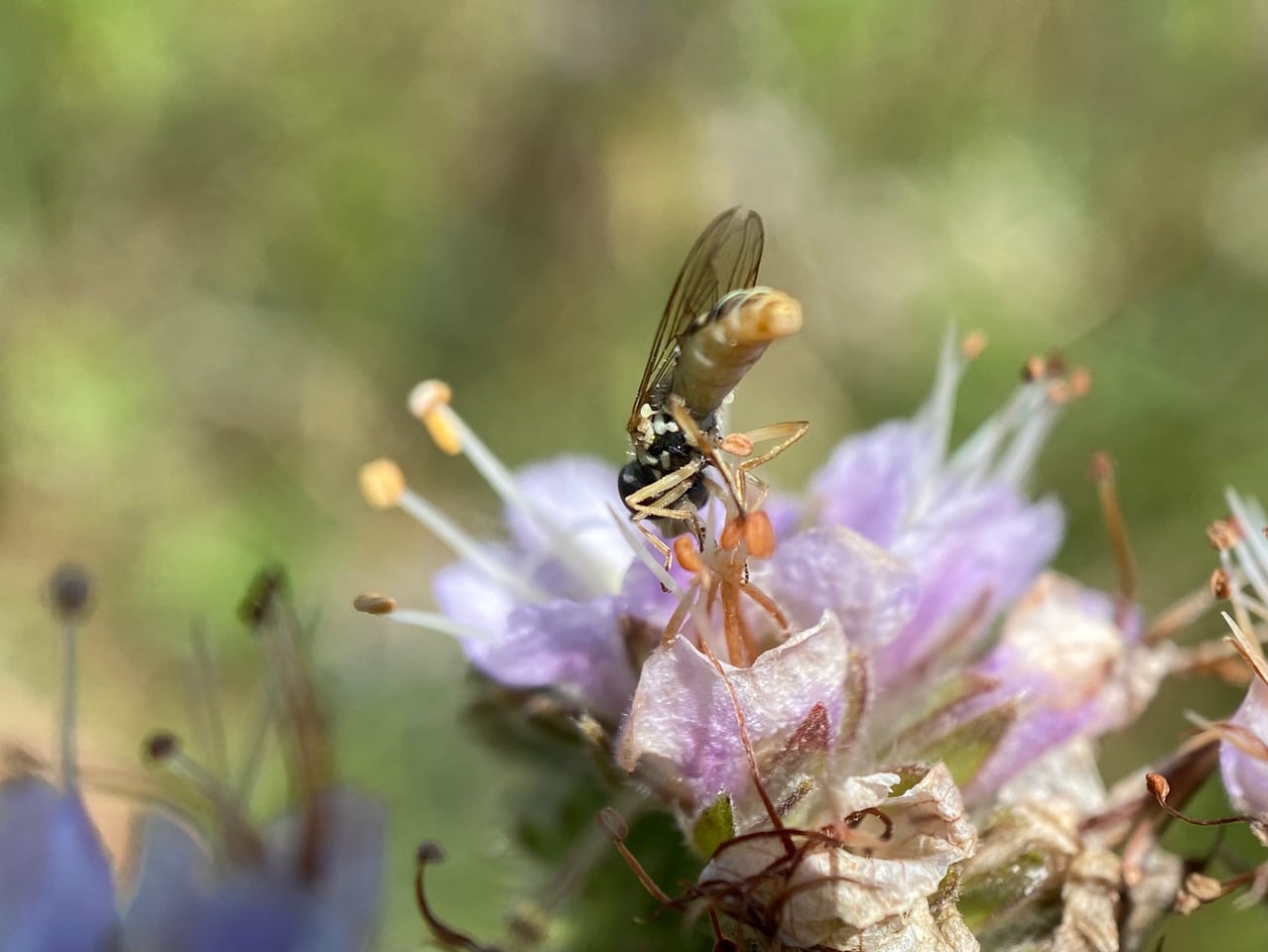
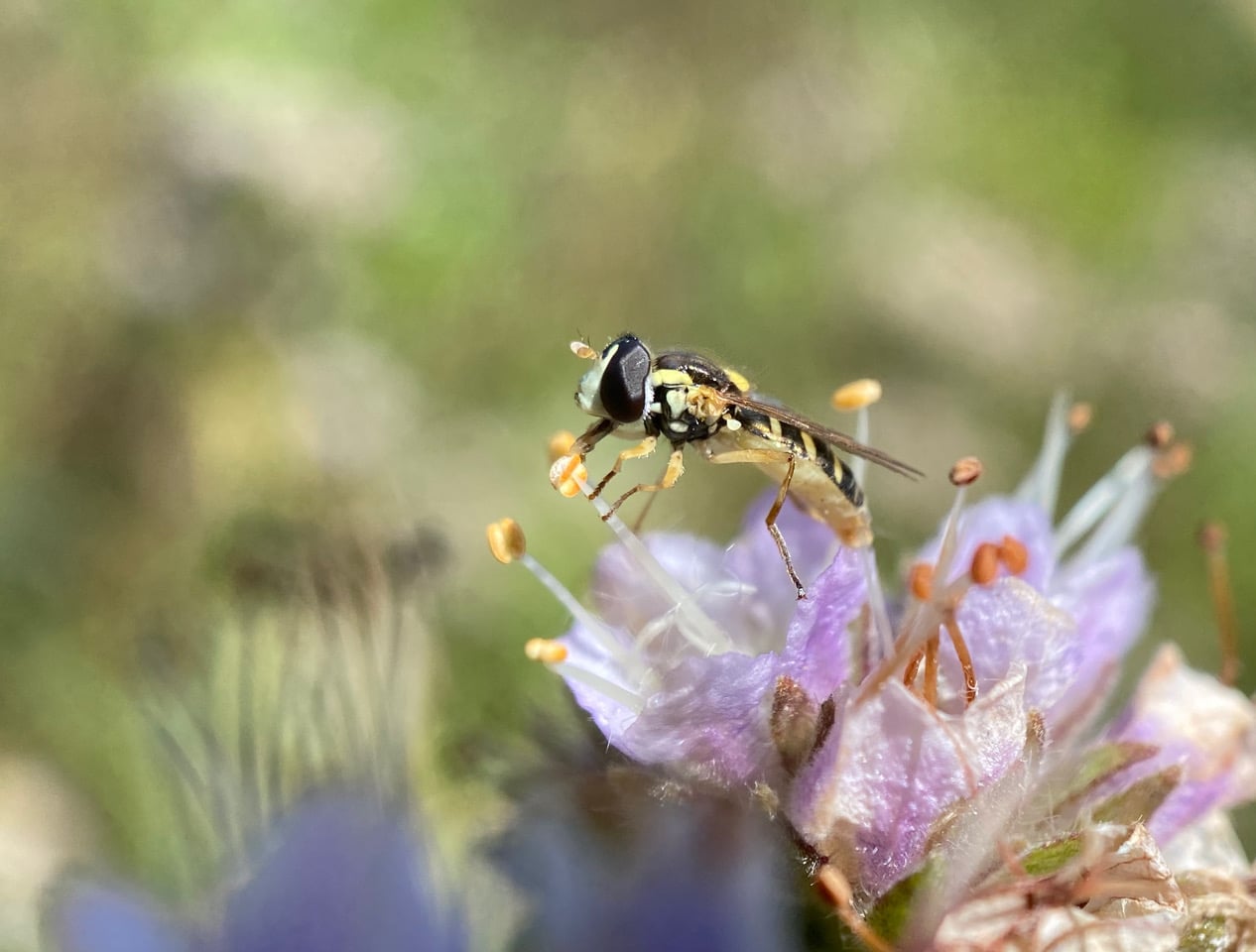
This other Hover Fly is stooping deep to reach the nectar of a phacelia flower.
It is also feeding on phacelia pollen.
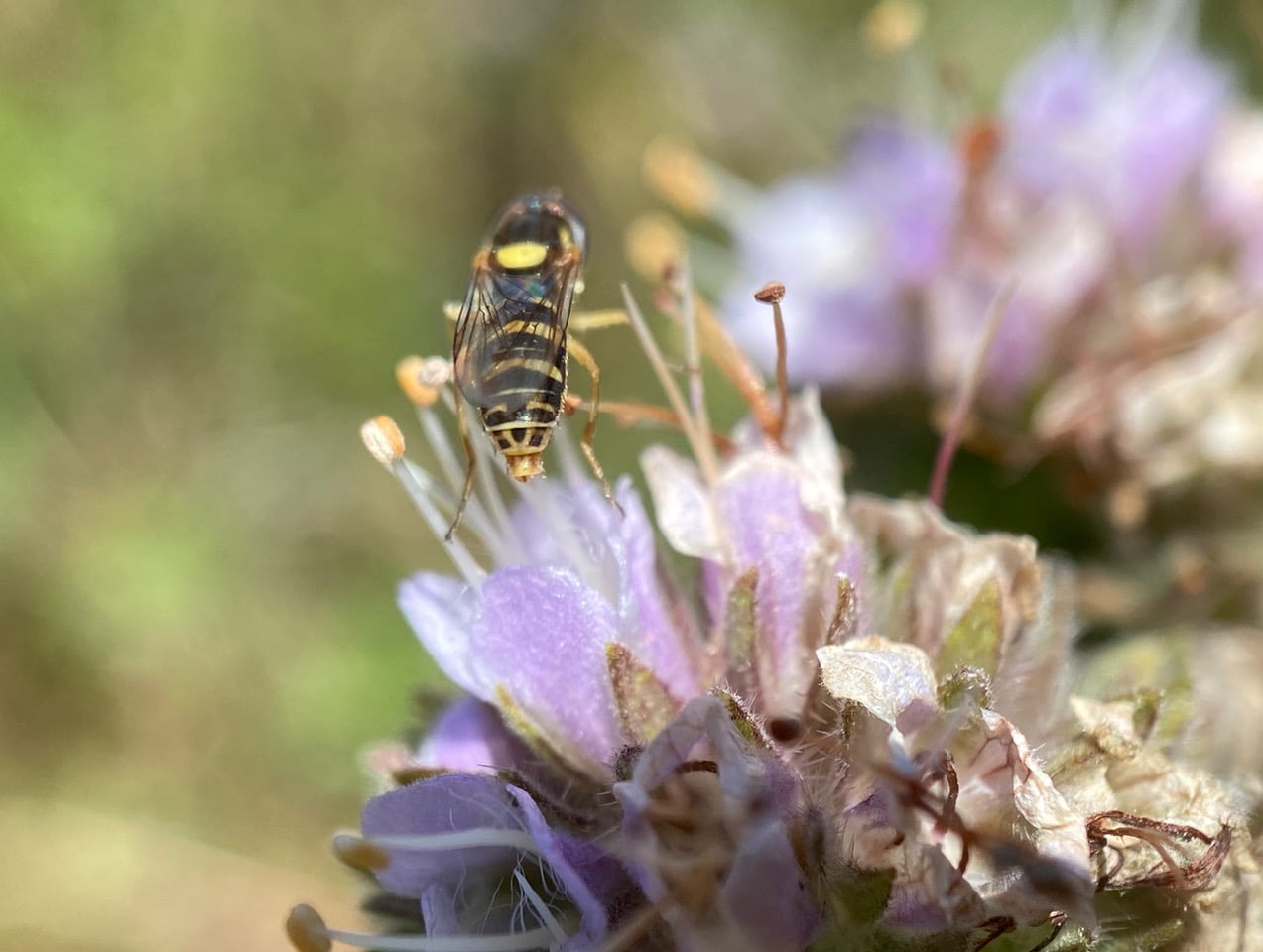
Hmmm….
I have to wait for this view of its rear end to make a positive identification. It is a female Forked Globe Tail, Sphaerophoria sulphuripes. It is very similar in appearance to the females of the Diamond Spottail, Fazia micrura.
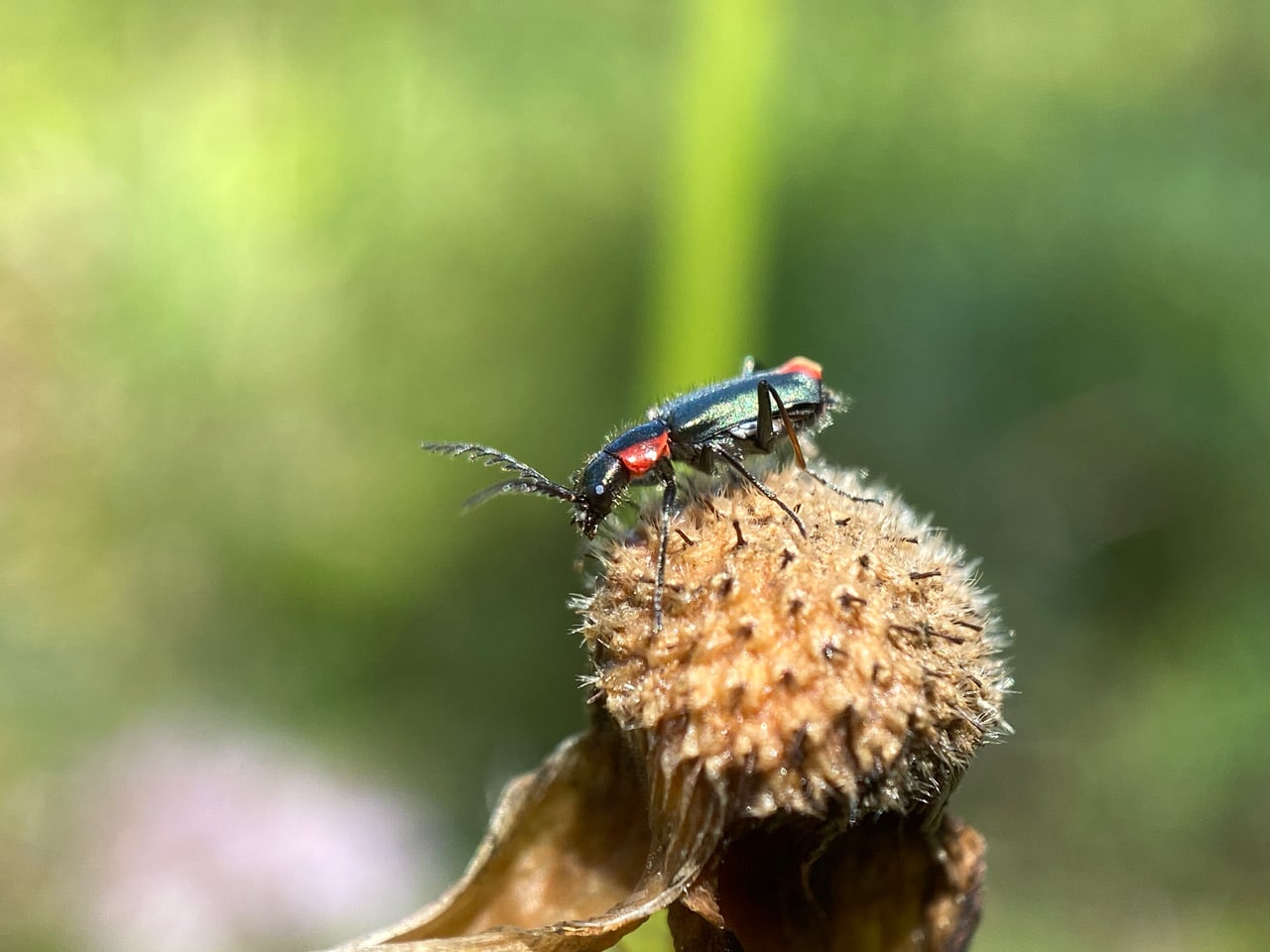
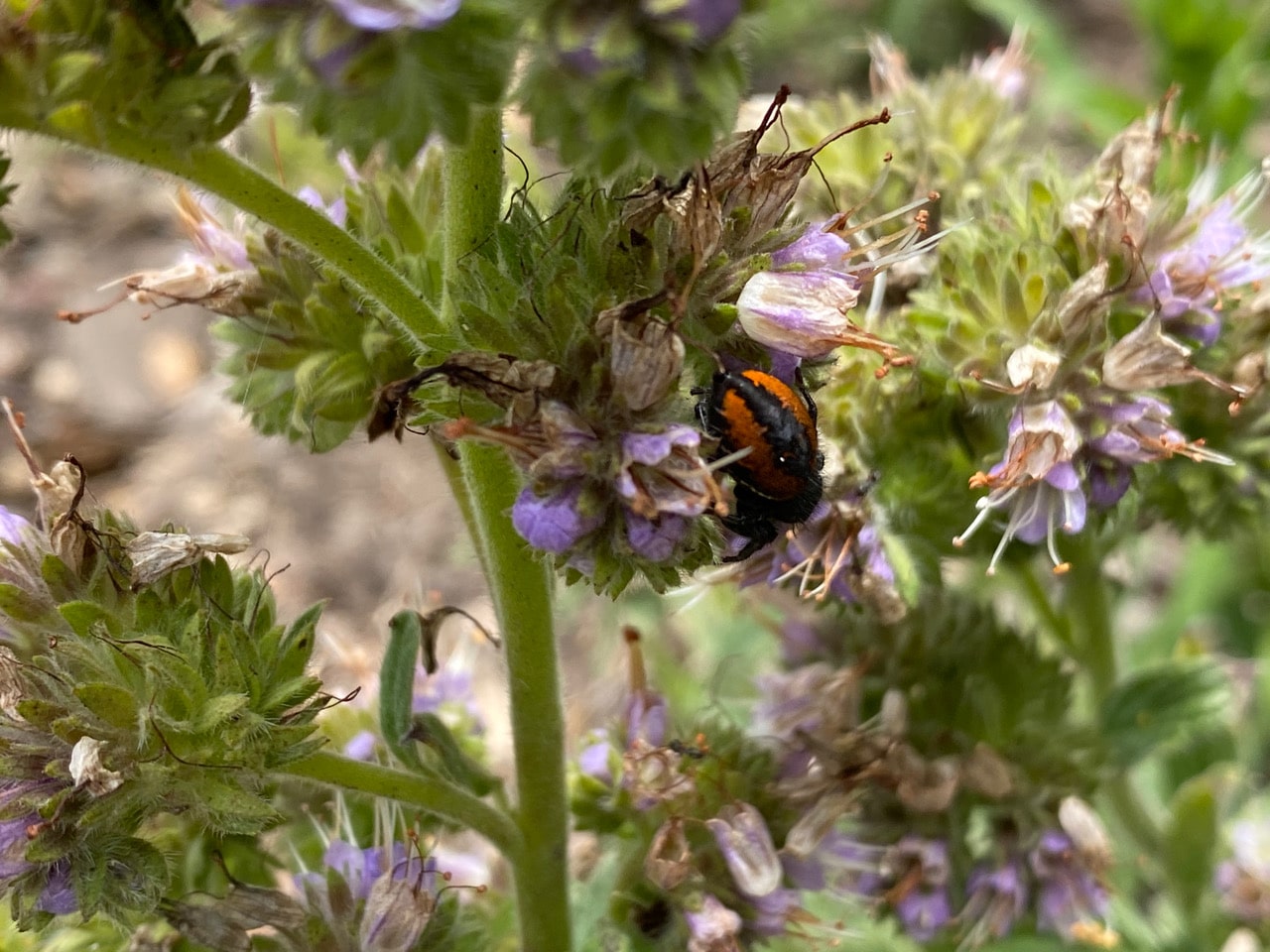
A Malachite Beetle, Malachius auritus (family Melyridae, subfamily Malachiinae) is posing on a bald seed head of a weed. I have never known the beetle to be so hairy all over.
The Malachite Beetle (subfamily Melachiinae) is a member of the family of Soft-winged Flower Beetles (family Melyridae). Most Melyrids are elongate-oval, soft-bodies beetles 10 mm or less in length. Members of the subfamily Malachiinae have peculiar orange structures along the sides of the abdomen which can be everted, but usually kept hidden. Most adults and larvae are predaceous. Omnivorous adult Melyrids are often found on flowers out in the open, where they feed on pollen, insect eggs, and flower-loving insects that land within their grasp. The larvae generally stay concealed under tree bark or leaf litter or soil, where they prey on other invertebrates.
Note the beetle’s pectinate antennae. The segments of pectinate antennae are longer on one side, giving the antenna a comb-like appearance. The term pectinate derives from the Latin pectin, meaning comb. Pectinate antennae are found in some beetles and sawflies. Insect antenna forms – BugGuide.Net
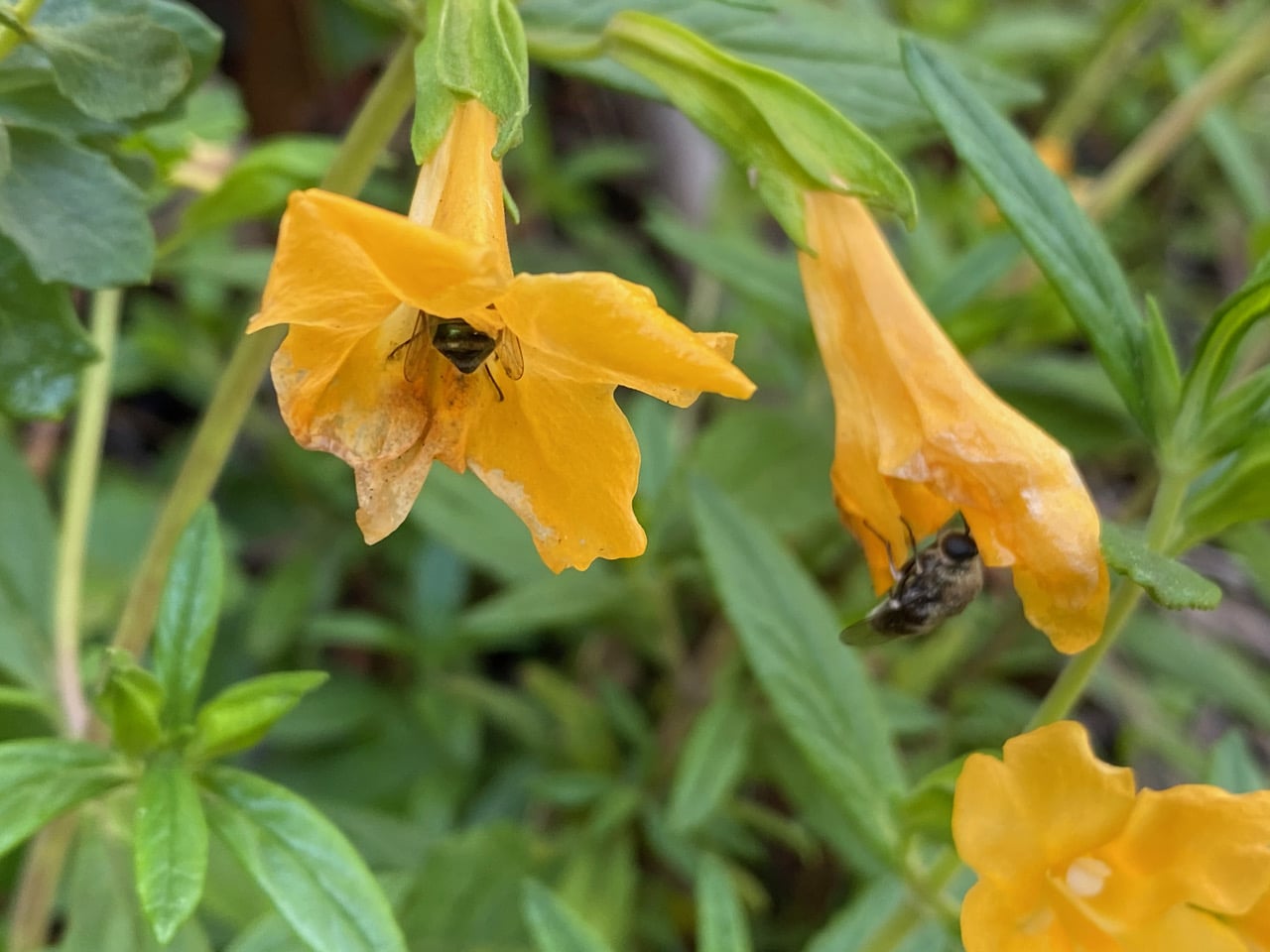
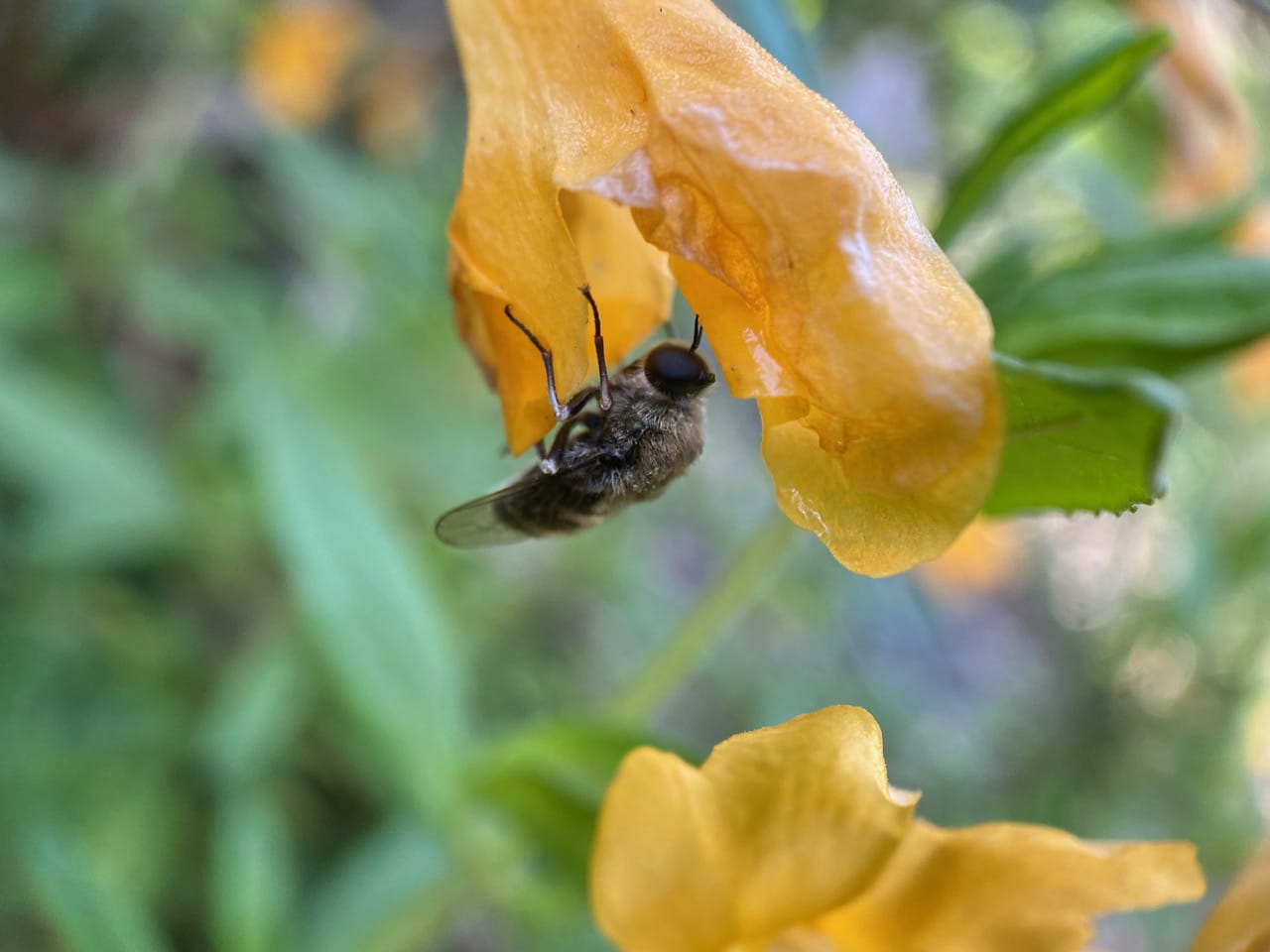
Arriving at the Sticky Monkeyflower and its occupant that I have been keeping track of since 6/6/23, I am saddened to see that both have expired. It’s the flower on the right. Apparently an adjacent fading flower to the left now has a Small-headed Fly, Eulonchus sp. (family Acroceridae) roosting in it.
I am amazed that the Small-headed Fly is still on the spent flower. Why aren’t the ants scavenging on it? I have known that the life of this Eulonchus species revolves around the Sticky Monkeyflower – they feed on the nectar with their long probosces, they sleep in the flower at night, they court and mate around the flowers. Now I know they even die in the flower.
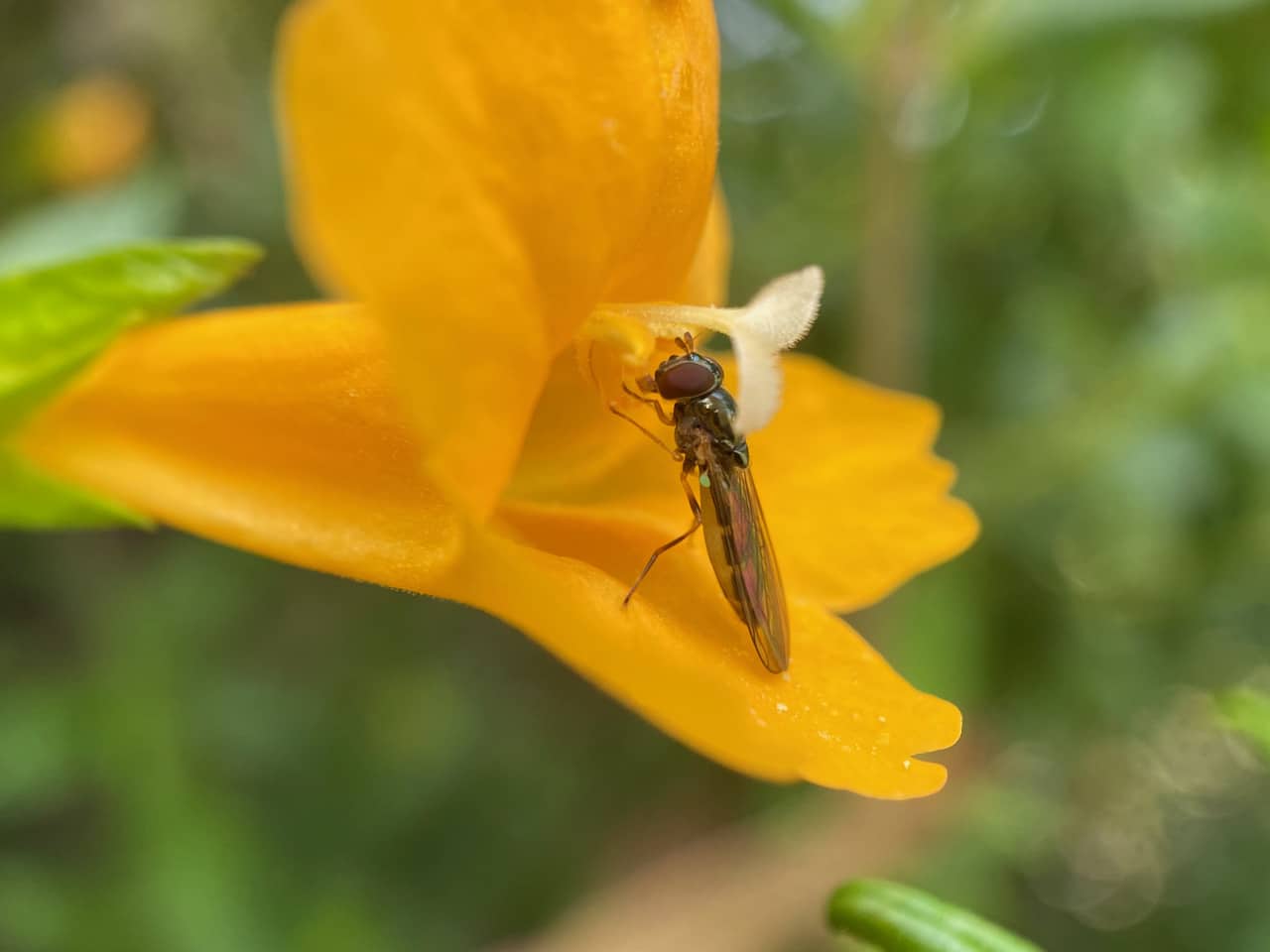
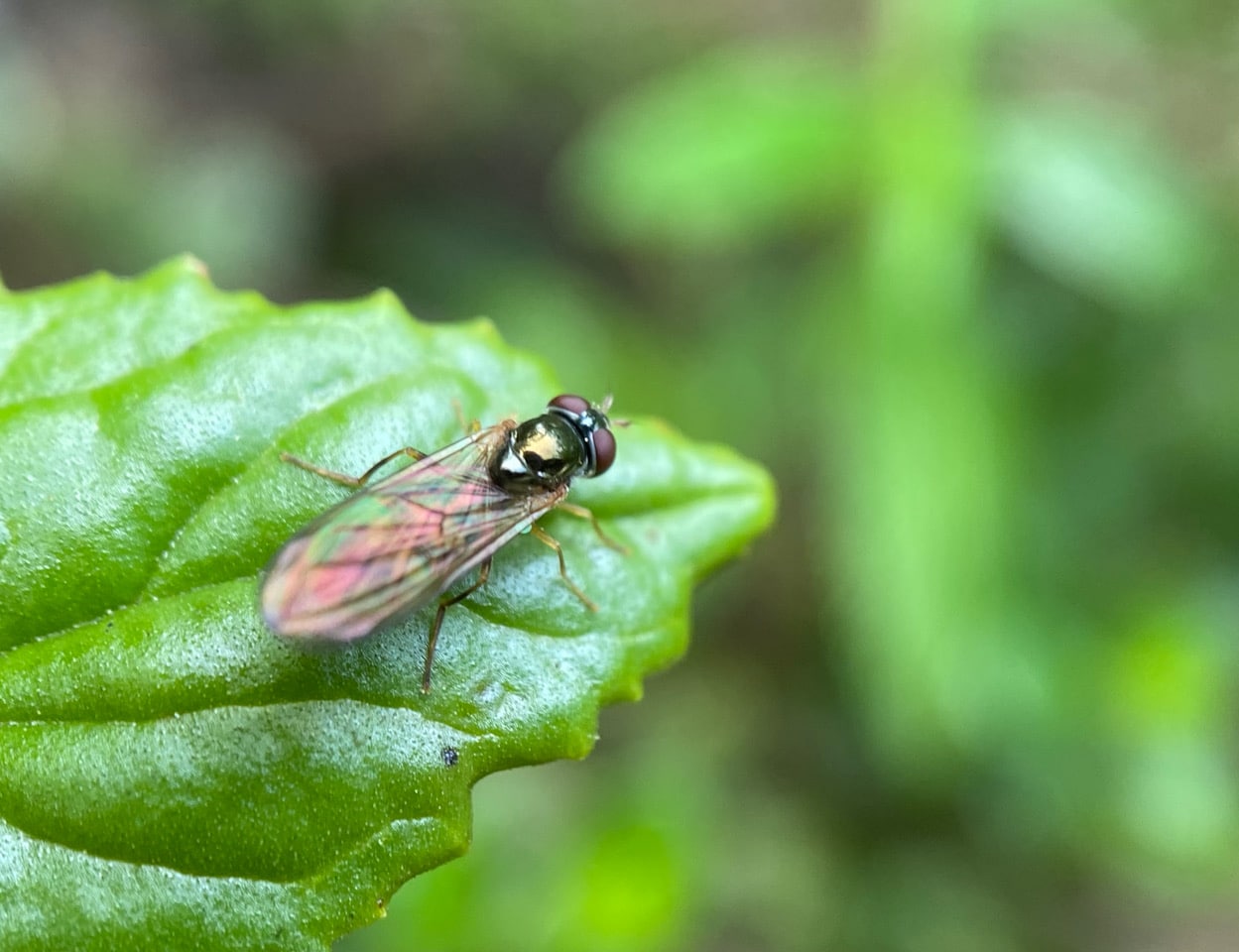
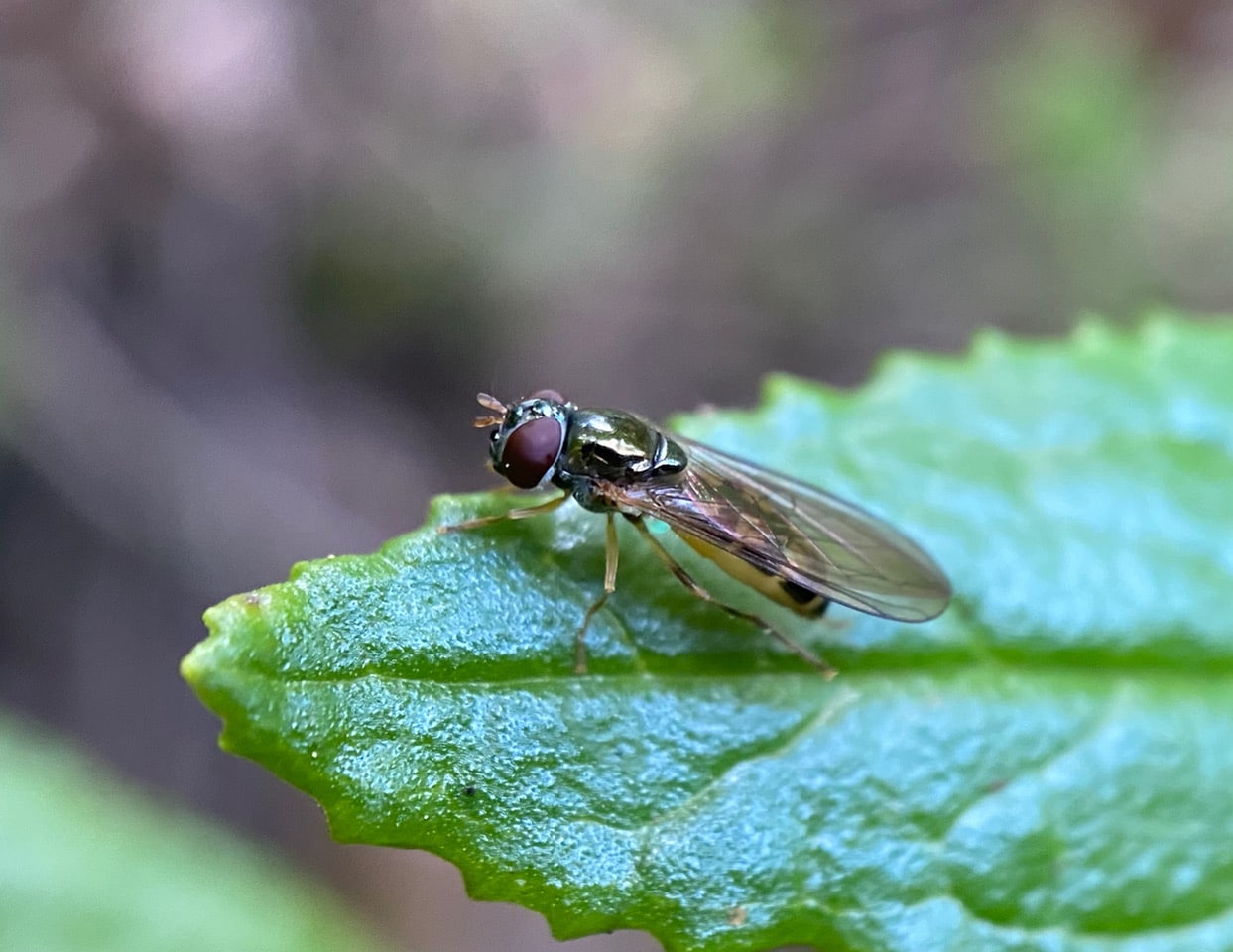
A small metallic Hover Fly is feeding on the pollen of a Sticky Monkeyflower. See the green haltere under its folded wings? Haltere – Entomologists’ glossary – Amateur Entomologists’ Society (AES) The fly is a gravid female Variable Duskyface Fly, Melanostoma mellinum (family Syrphidae).
Melanostoma mellinum is a very common species of hover fly found in many parts of Europe including the Mediterranean basin and North Africa, the East Palearctic, and North America. A small species, their wingspan between 4.7 and 7.0 mm. Very similar to Platycheirus, but can be distinguished by fine details. In M. mellinum, the normally pale halteres turn bright blueish-green in females about to lay eggs.
The species’ preferred habitat include grasslands and moorlands, including those in hilly and mountainous regions. Adults can be found feeding on pollen of grasses and other wind-pollinated plants. Little is known of their biology, but the larvae are suspected to be a general predator of small insects in the leaf litter.
The abdominal pattern on the fly further confirms its identity.
The Variable Duskyface Fly’s green haltere is again visible in this angle as she reaches for the anthers behind the stigma.
As the Variable Duskyface Fly flies over to perch on a Sticky Monkeyflower leaf, her metallic thorax lights up in high gloss.
Another view of the same fly. The metallic fly is an optical chameleon depending on incident light.
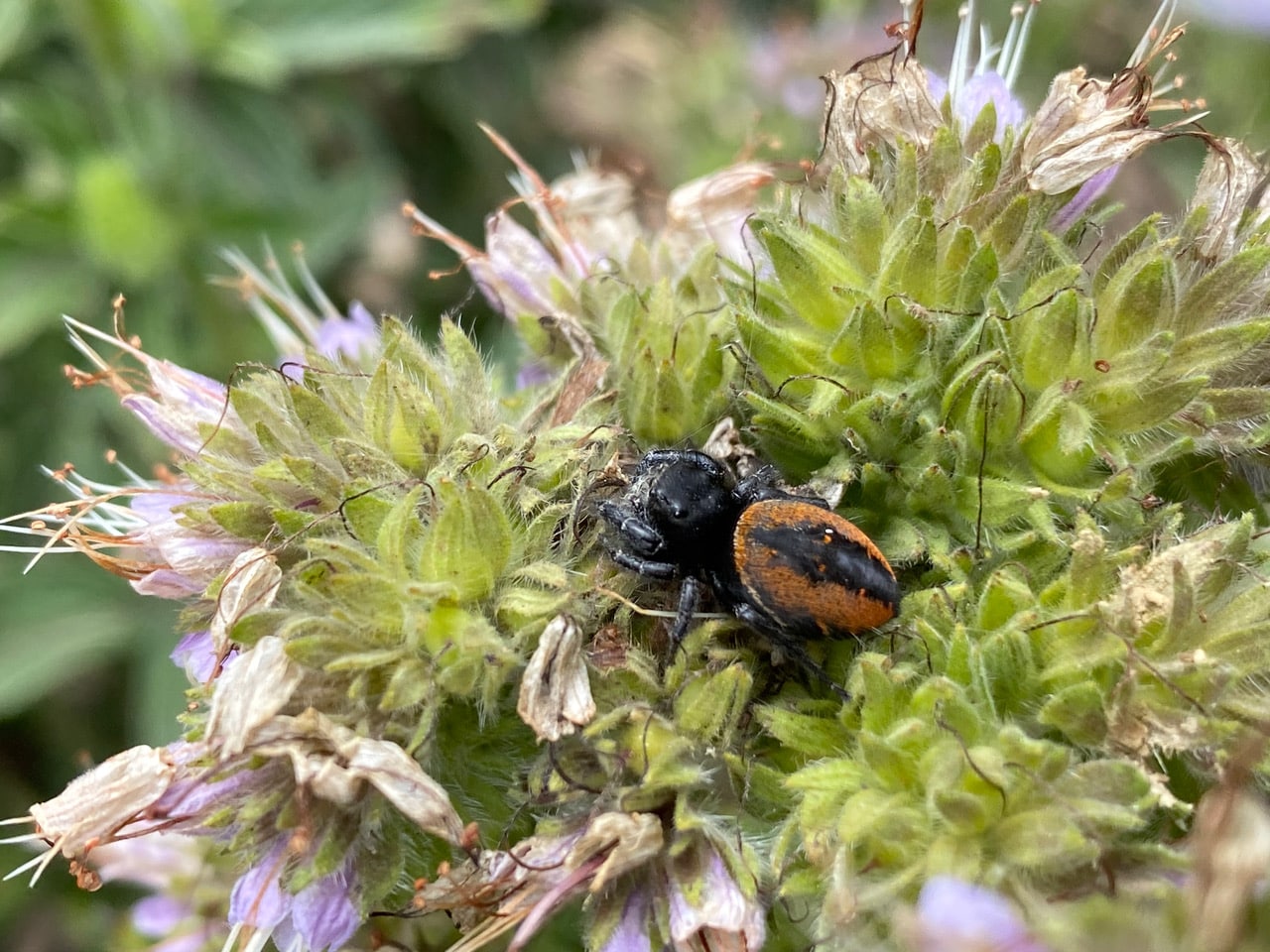
Sensing my approach, the female Red-backed Jumping Spider ducks for cover under the California Phacelia inflorescence she was on – the same spot from which she has been hunting for days that I have been tracking her. Spidey is definitely a creature of habit.
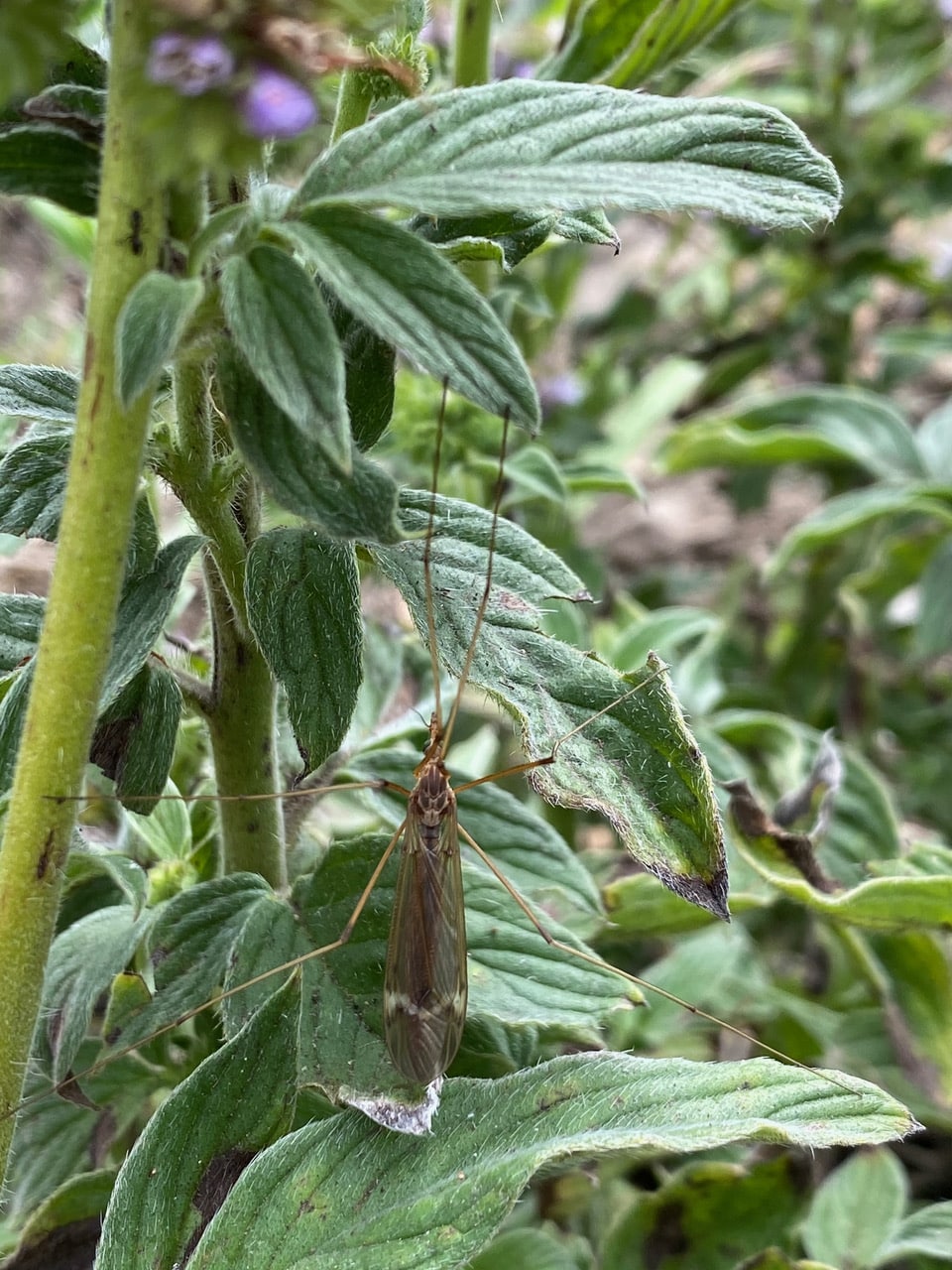
Lower down on the same California Phacelia a large Crane Fly (family Tipulidae) hangs lifeless from the foliage. Is it one of Spidey’s victims?
When I look up again, Spidey is back on her old hunting spot on top of the inflorescence! She doesn’t flinch as I approach for this picture. Maybe she has learned to recognize and trust me?