

Pollinator Post 6/16/25 (1)
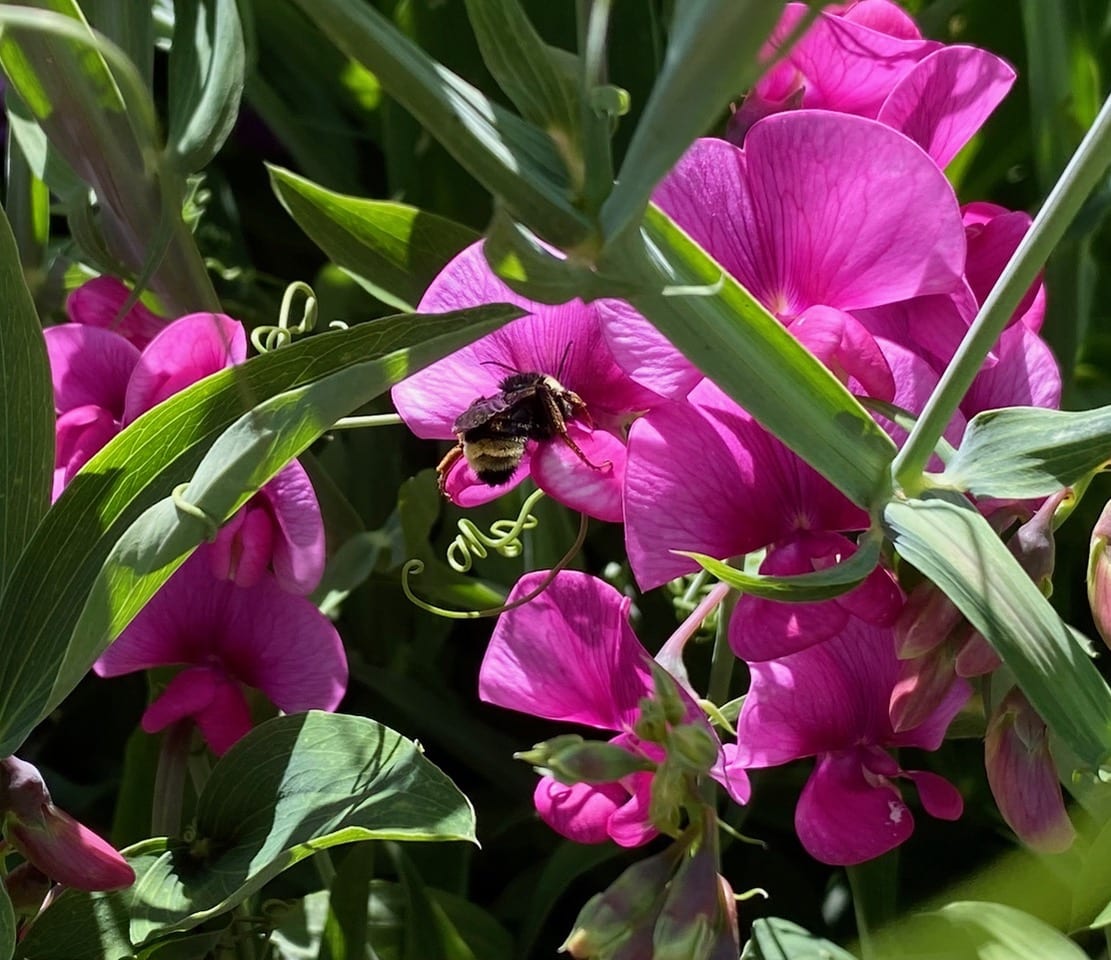
As air quality is questionable in the lowlands today, I opt to take a late morning walk at Inspiration Point in the Berkeley hills.
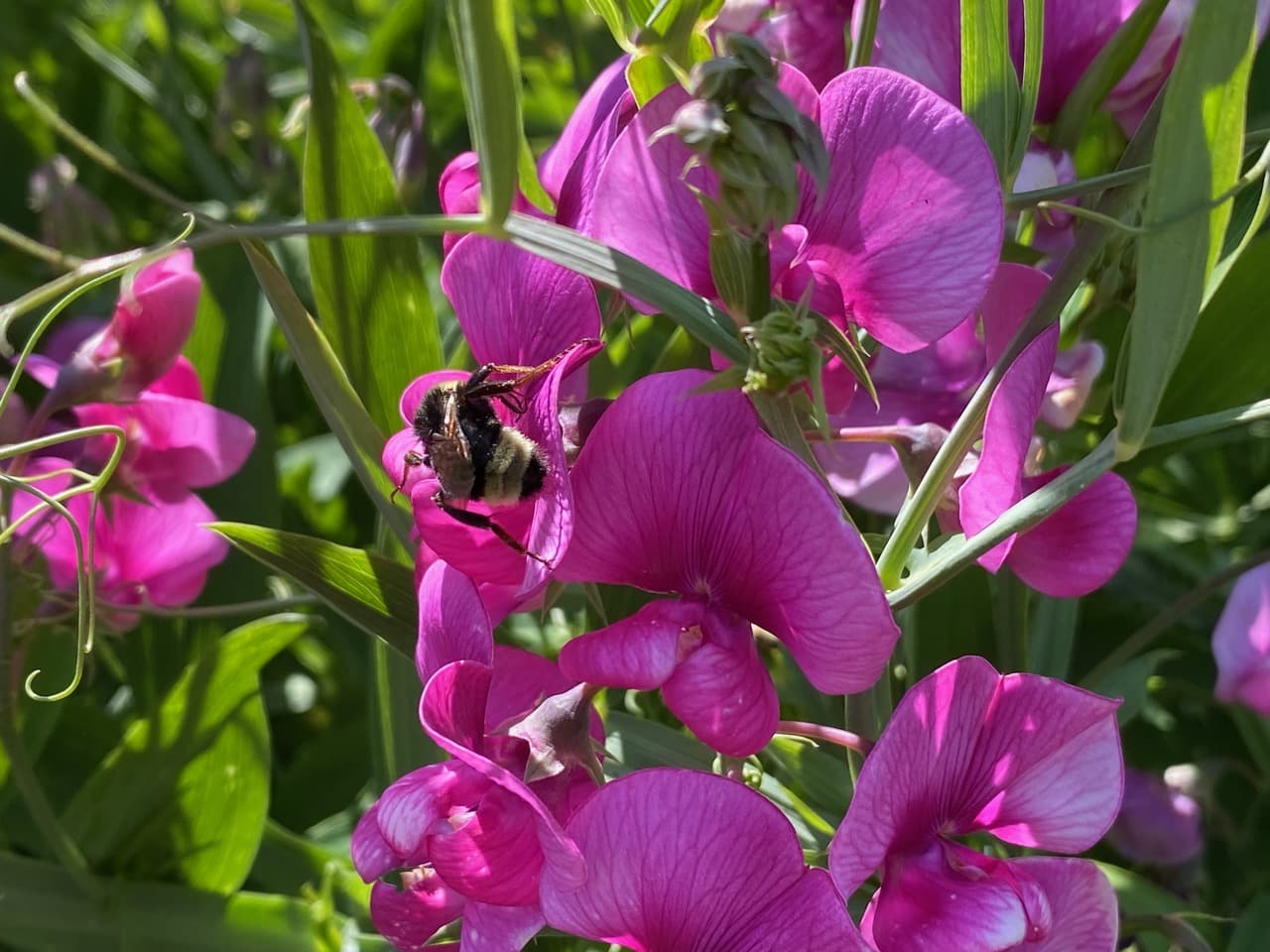

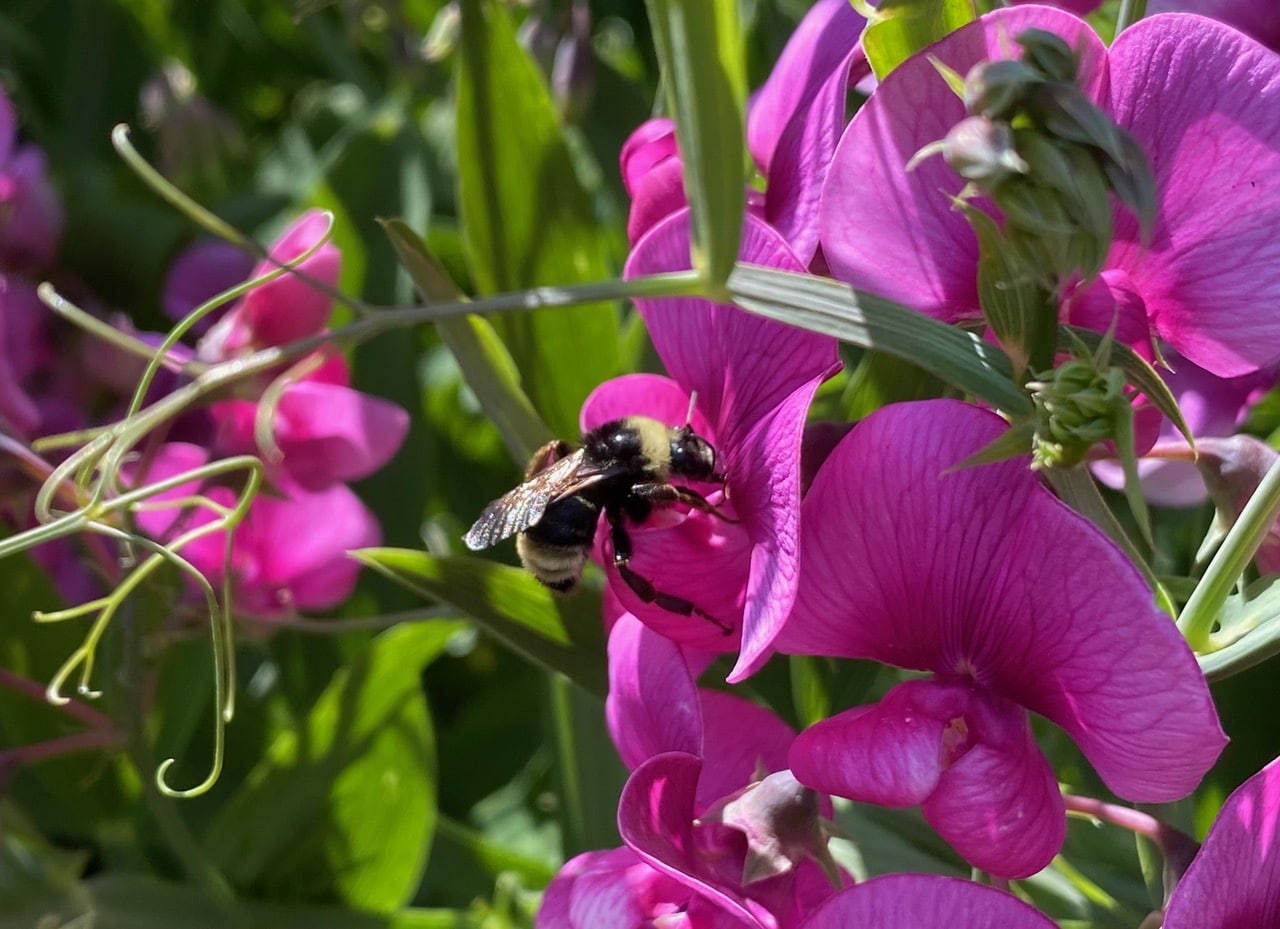





Near the gate to the Nimitz trail, a vibrant patch of the non-native Everlasting Pea, Lathyrus latifolius is blooming in profusion. Wait, that’s a male Bumble Bee taking nectar from one of the large, flamboyant flowers – note the extra band of yellow hairs on his abdomen, and the extra long antennae.
I track the bumble bee as he visits several of the pea flowers. Note his skinny hind legs that lack a corbicula (“pollen basket”). Male bees do not collect pollen to provision the nest, neither do they have the equipment for the job.
Does he have a black head?
Yes, he does have a black head. He is not a Yellow-faced Bumble Bee, but a California Bumble Bee, Bombus californicus (family Apidae)!
Bombus californicus, the California Bumble Bee, is found in Central and the western half of North America. The species is now classified as Vulnerable by the IUCN. It was the most common bumble bee in California until about the 1990s when its numbers and distribution began to decline. Many factors may have contributed to its decline, including invasive species, pesticide use, commercial bumble bee rearing, habitat destruction, and climate change.
Although morphologically the species is quite variable, the “typical” color pattern of female B. californicus is black with only a single strong yellow band anteriorly on the thorax, and another single yellow band near the apex of the abdomen. Males exhibit considerably more variation.
The California Bumble Bee is an important pollinator in alpine environments in its native range. They are social bees having a queen and workers. Their colonies last for one year. New queens overwinter, usually underground, and found new colonies from scratch the following year. Queens emerge from April through mid July. Workers are present from April to September. The species is known to pollinate sage, blueberry bushes, red clover, California poppies, and many other species of flowers.
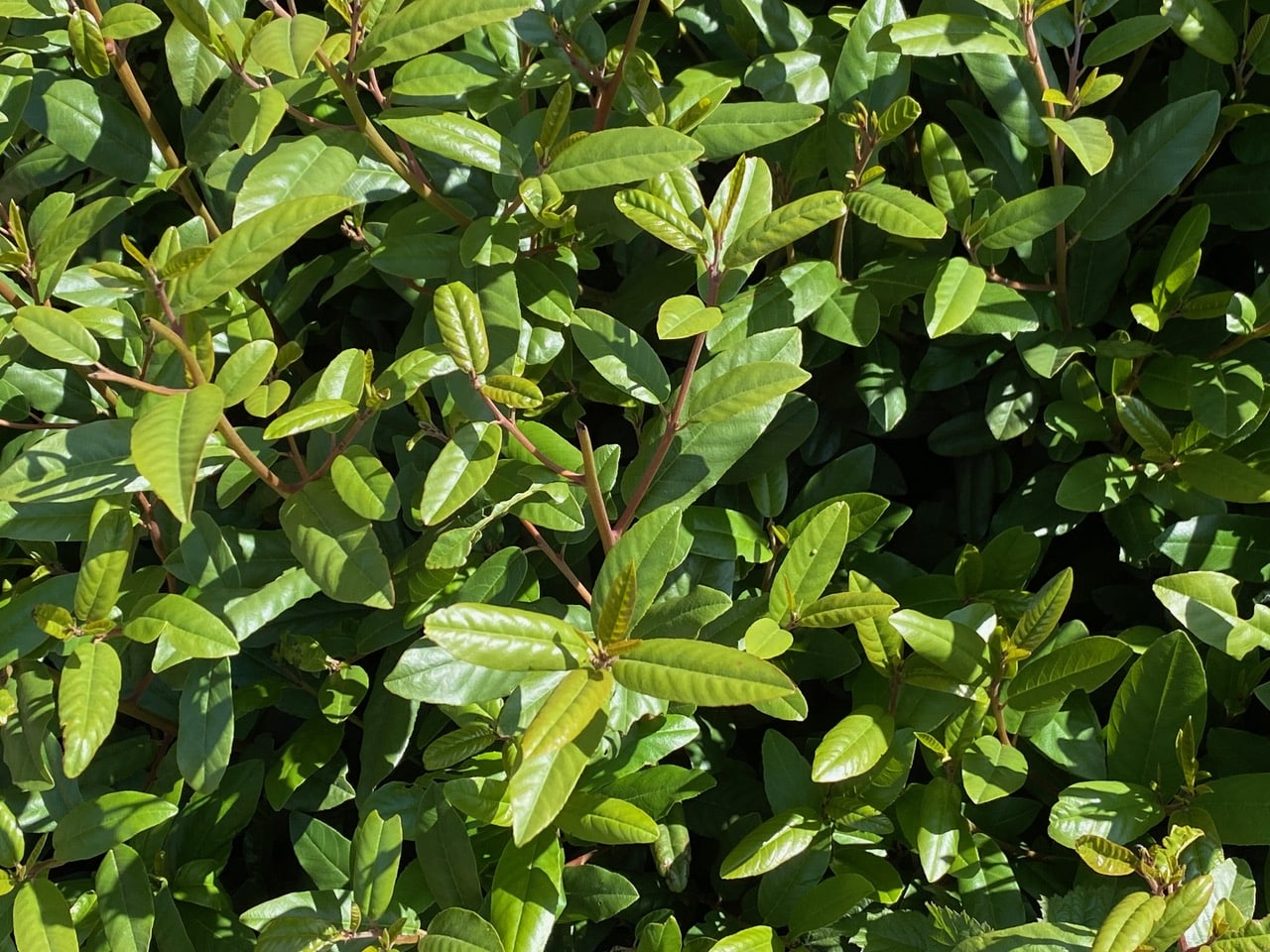
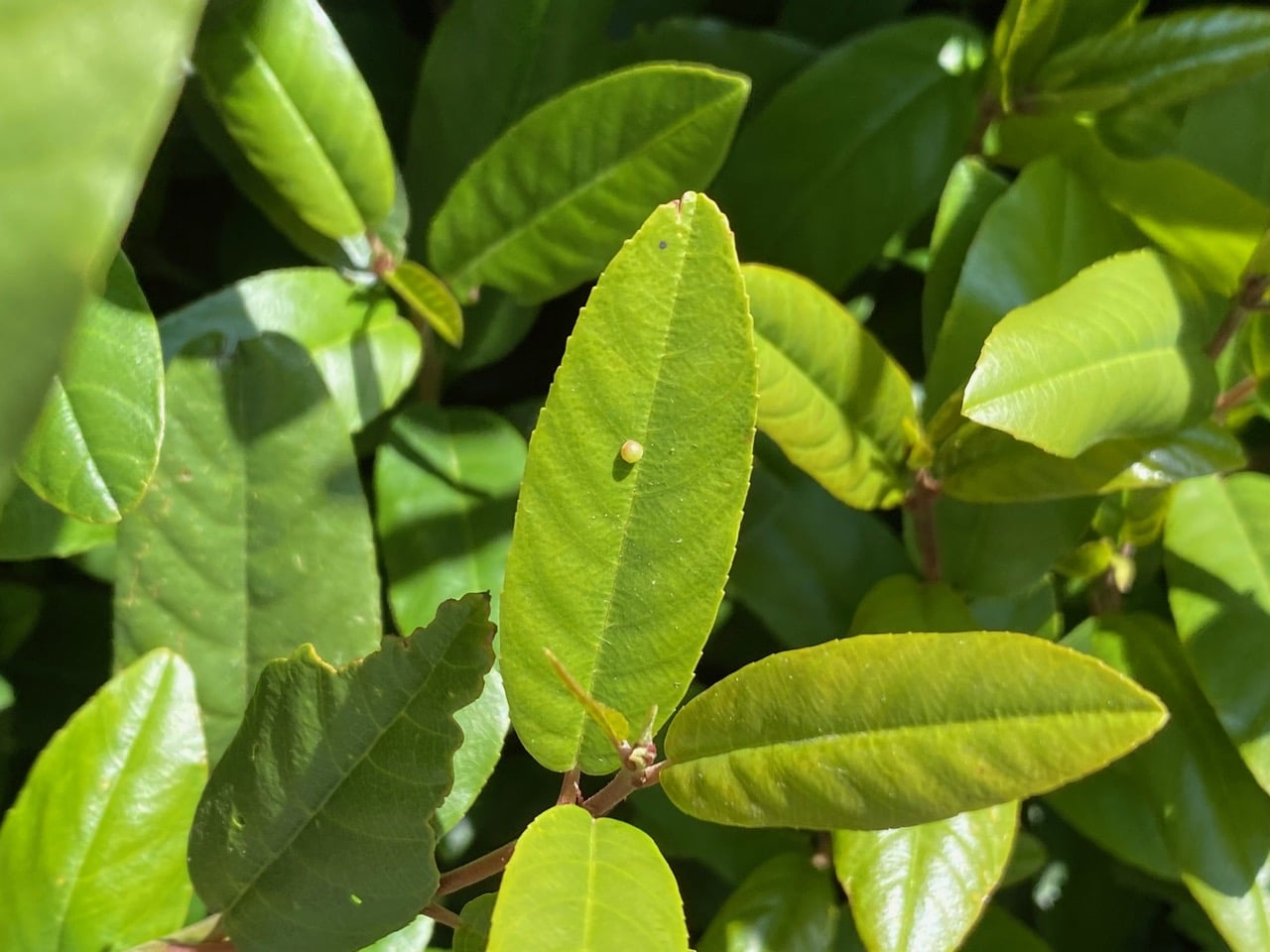
After severe pruning in the fall last year, the big shrub of Coffeeberry, Frangula californica (family Rhamnaceae) next to the trail has grown back with a vengeance.
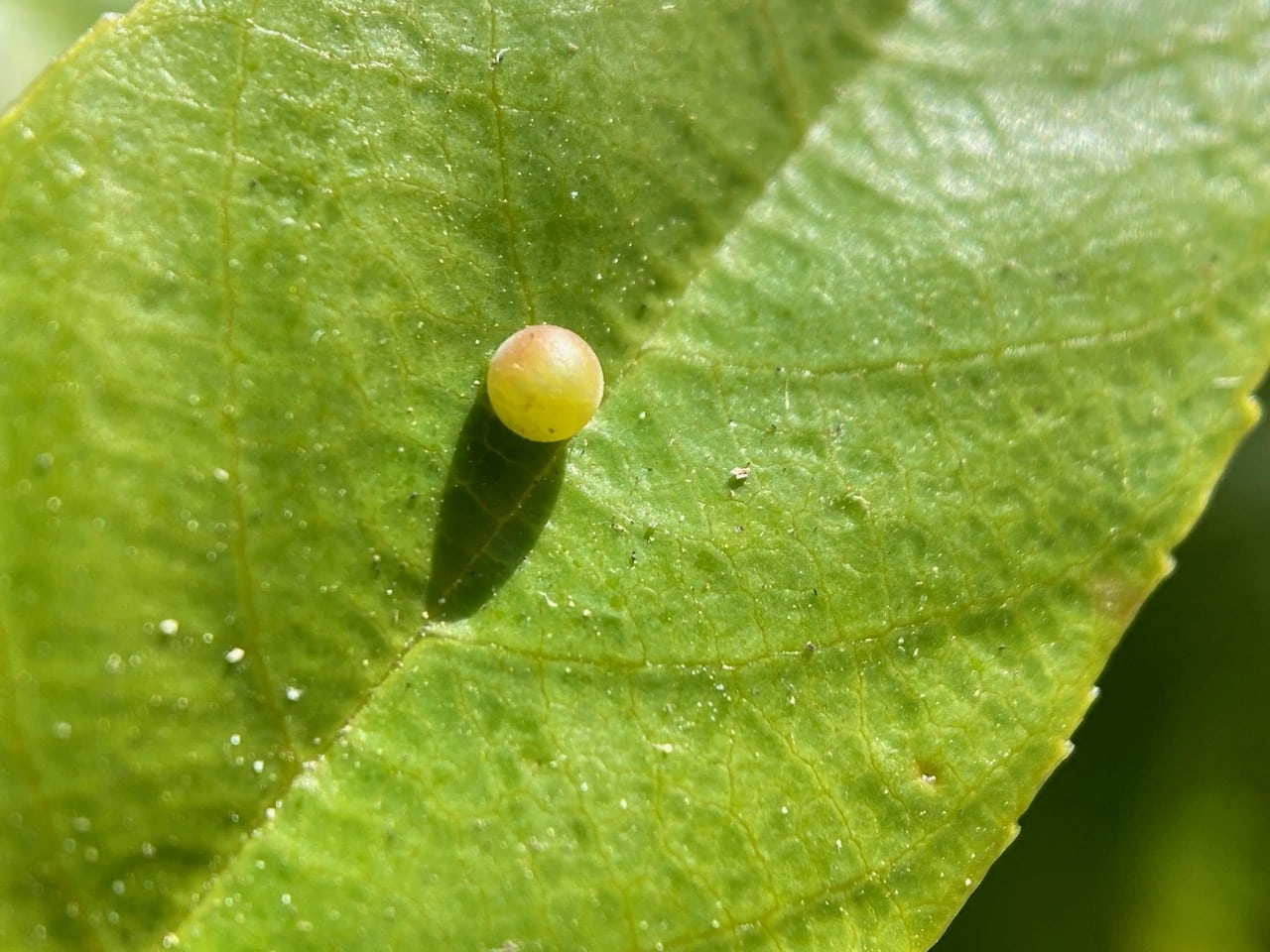
I scan the young Coffeeberry foliage for caterpillars, or feeding scars from caterpillars of the Pale Swallowtail but come away with nothing. Maybe still too early? Hey, isn’t that an egg?
Yep, I am almost sure that a mama Pale Swallowtail has laid this egg on the leaf. Yay!
The Pale Swallowtail butterfly, Papilio eurymedon (family Papilionidae) uses trees and shrubs in the Rhamnaceae, Rosaceae and Betulaceae families as caterpillar food plants.
A Red-shouldered Stink Bug, Thyanta pallidovirens (family Pentatomidae) is standing stock still on a leaf of Stinging Nettle, seeming to enjoy the sunlight on its back.
Pentatomidae is a family of insects belonging to the order Hemiptera or “true bugs”. As hemipterans, the pentatomids have piercing-sucking mouthparts, and most are phytophagous, including several species that are severe pests on agricultural crops. Stink Bugs feed on plant fluids by inserting their needlelike mouthparts into stems, leaves or seed pods. While feeding, they inject materials into the plant to aid in digestion and sap removal. Penetration by the mouthparts can cause physical damage, much like stabbing the plant with a fine needle.
All Pentatomids have 5-segmented antennae (hence their family name, Penta – five and tomos – section.) They generally have a large triangular scutellum in the center of the back. The adult is generally shield-shaped when viewed from above. The common name of Stink Bug refers to their ability to release a pungent defensive spray when threatened, disturbed, or crushed.
#/media/File:Heteroptera_morphology-d.svg)
Thyanta pallidovirens is a common relatively small stink bug (10-12 mm in length) found in Central and North America. It is predominantly green with a narrow red band across the shoulder; sometimes the band is absent. There is also a brown-colored phase, usually found in overwintering bugs. Eggs are laid in clusters, are barrel-shaped, and have pop-tops. Immature stages of this species range widely in coloration, often marked brightly with red, yellow, green and black or brown, different from the adult stage and changing as the nymphs develop. Adults are found from May to October in open meadows and at the borders of agricultural fields. They feed on the foliage of plants from a wide variety of species in 14 plant families. They are a minor pest on a variety of agricultural crops, including beans, corn, peaches, wheat and nuts.
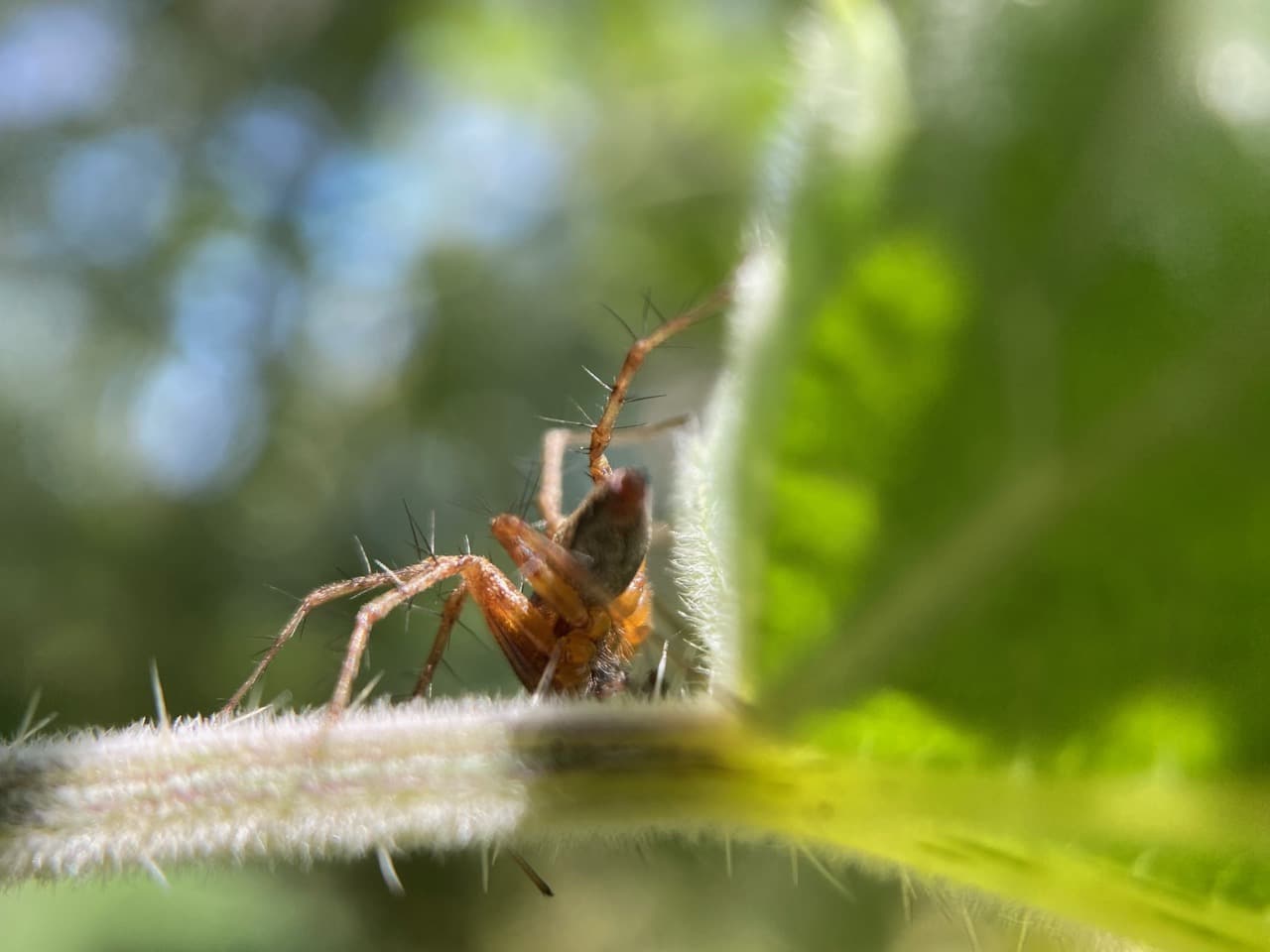
The shape of this Western Lynx Spider so confused me that I didn’t realize that it was a spider until I look closer.
I only get a glimpse of the Lynx Spider’s spiny legs as it scuttles away. Sigh!
Lynx Spiders (family Oxyopidae) can be distinguished from other families by their distinctive hexagonal eye arrangements and the prominent spines on their legs. Most species make little use of webs, instead spending their lives as hunting spiders on plants. Many species frequent flowers in particular, ambushing pollinators. They are active during the day hunting insects sometimes larger than themselves. Their long, spiny bristles form a “basket-like” cage that may assist in capturing prey and providing the spider with some protection. Lynx spiders are fast runners and leapers with good vision. Females fasten their egg sacs to twigs or leaf or suspended in a web in grass tufts. The females fiercely guard their egg sacs – they hold the sac between their legs, protecting it from predators, until the spiderlings hatch, often for up to several weeks. Some species even help the young emerge by tearing open the egg case.
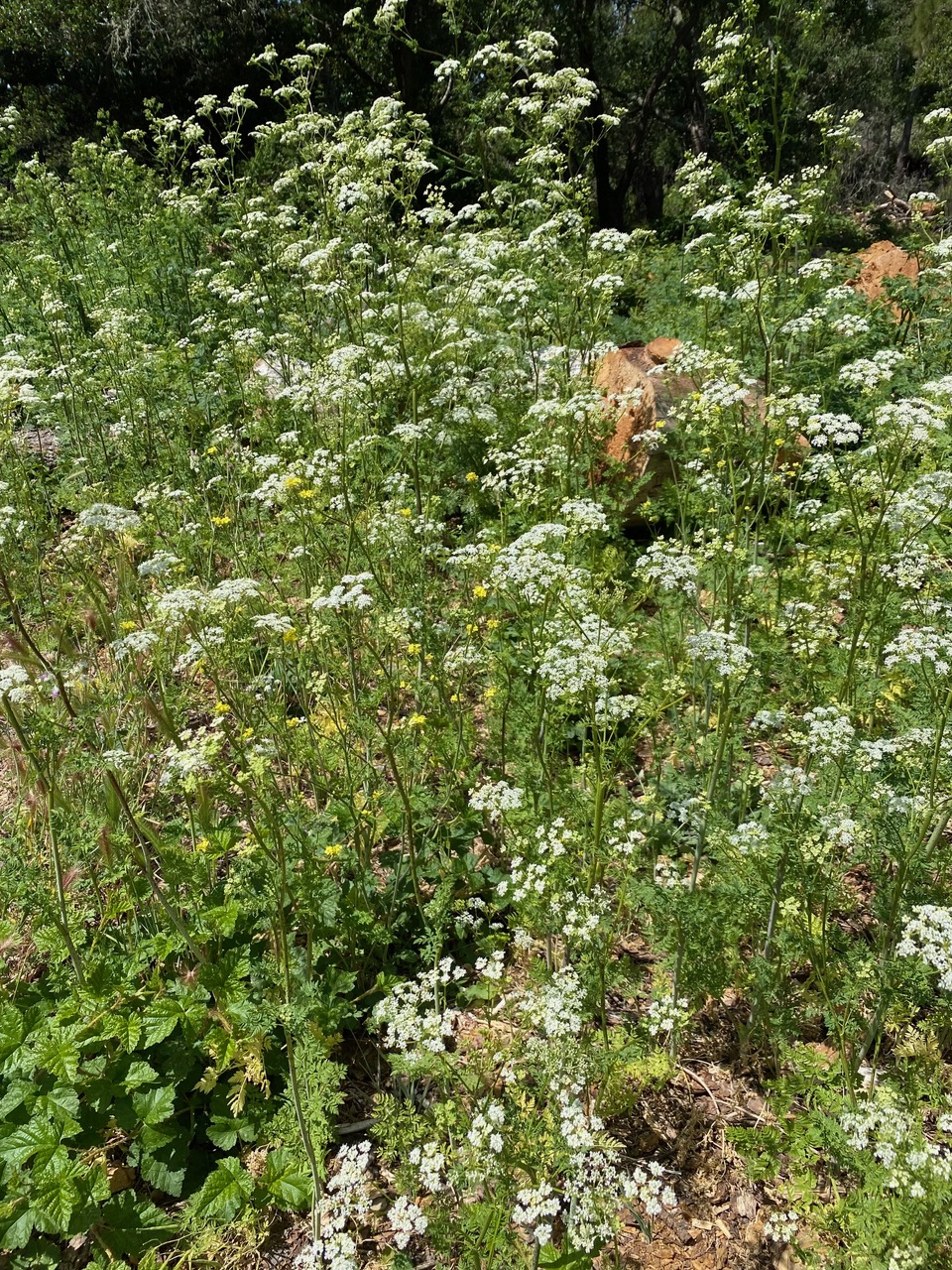
Ever since the park system has cleared the brushes near the trail, huge swathes of non-native invasives have replaced the original vegetation – Poison Hemlock, Wild Mustard, Wild Radish, Thistles, Catsear, Bristly Oxtongue. Since there is nothing native in bloom as far as I can see, I am resigned to looking at these “weeds” to see if they do support our local insects in this time of scarcity.
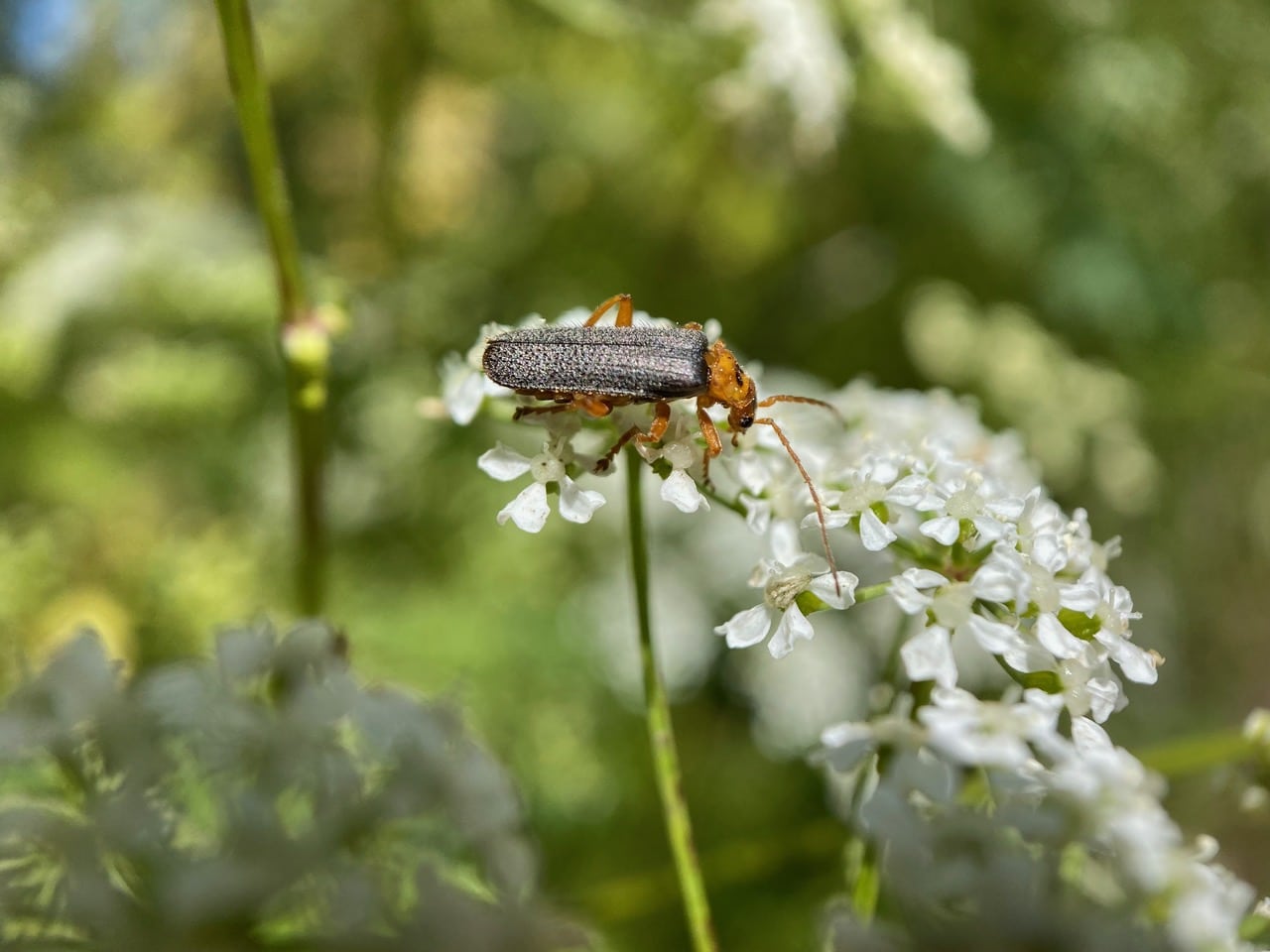
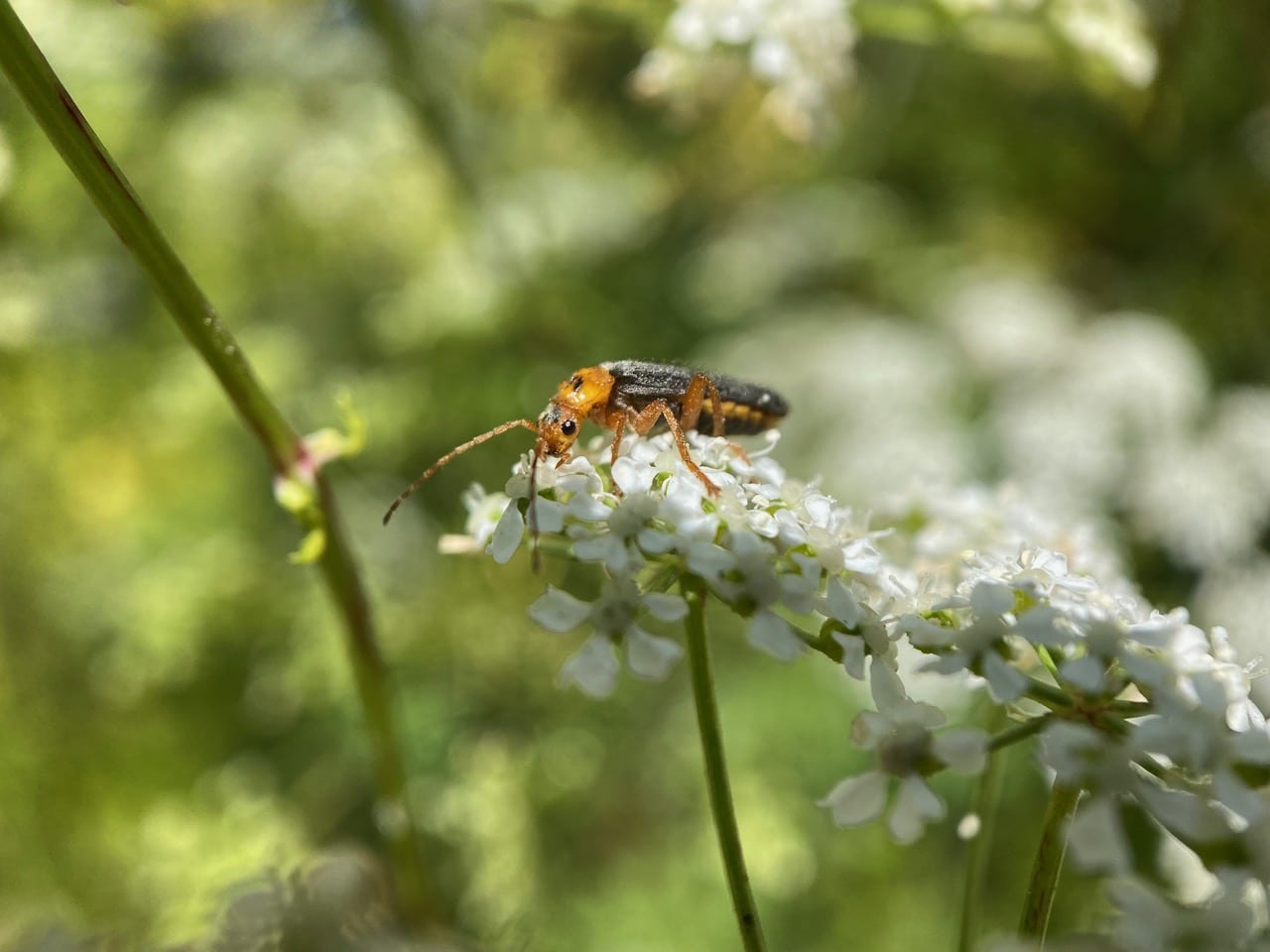
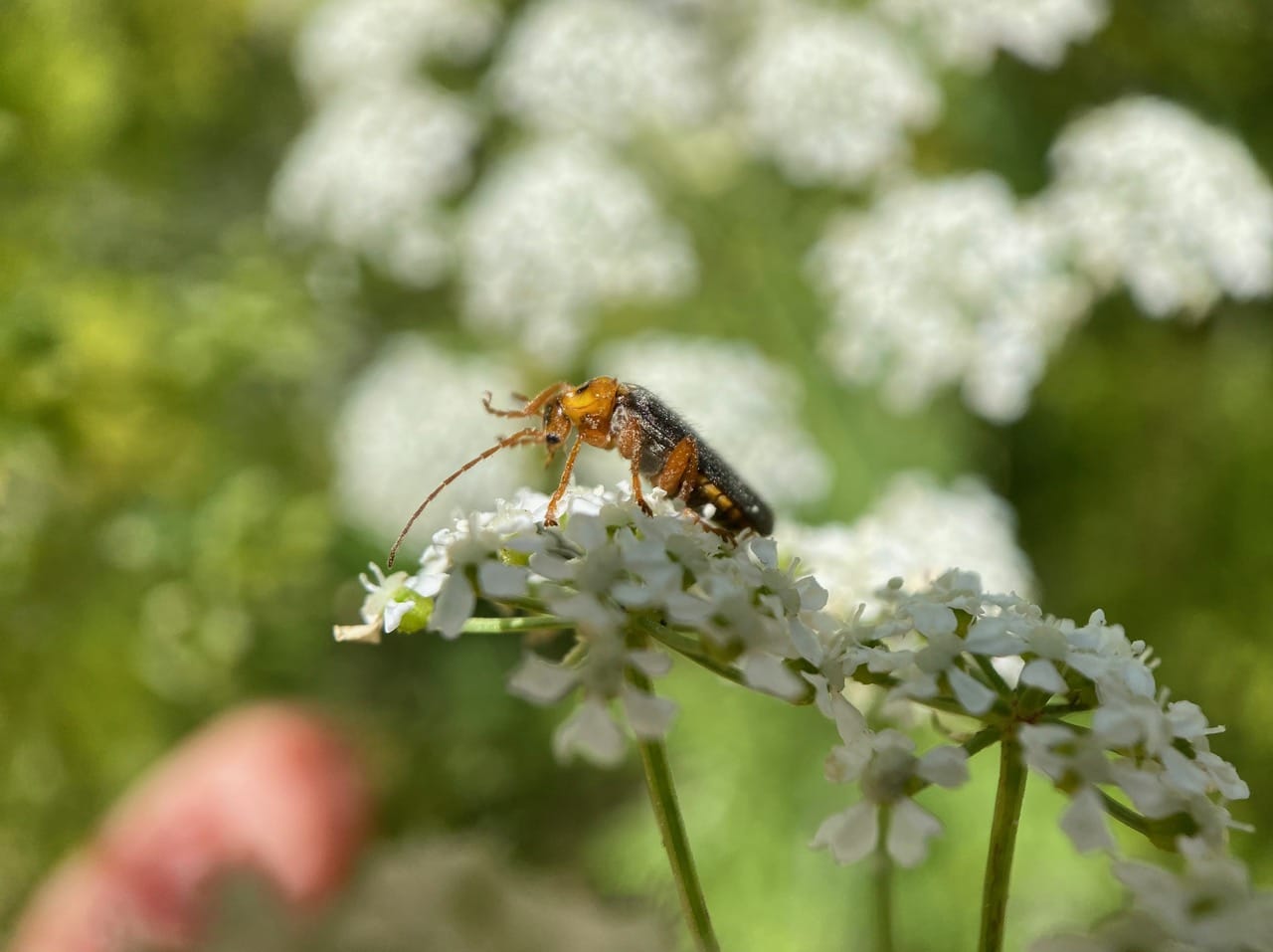
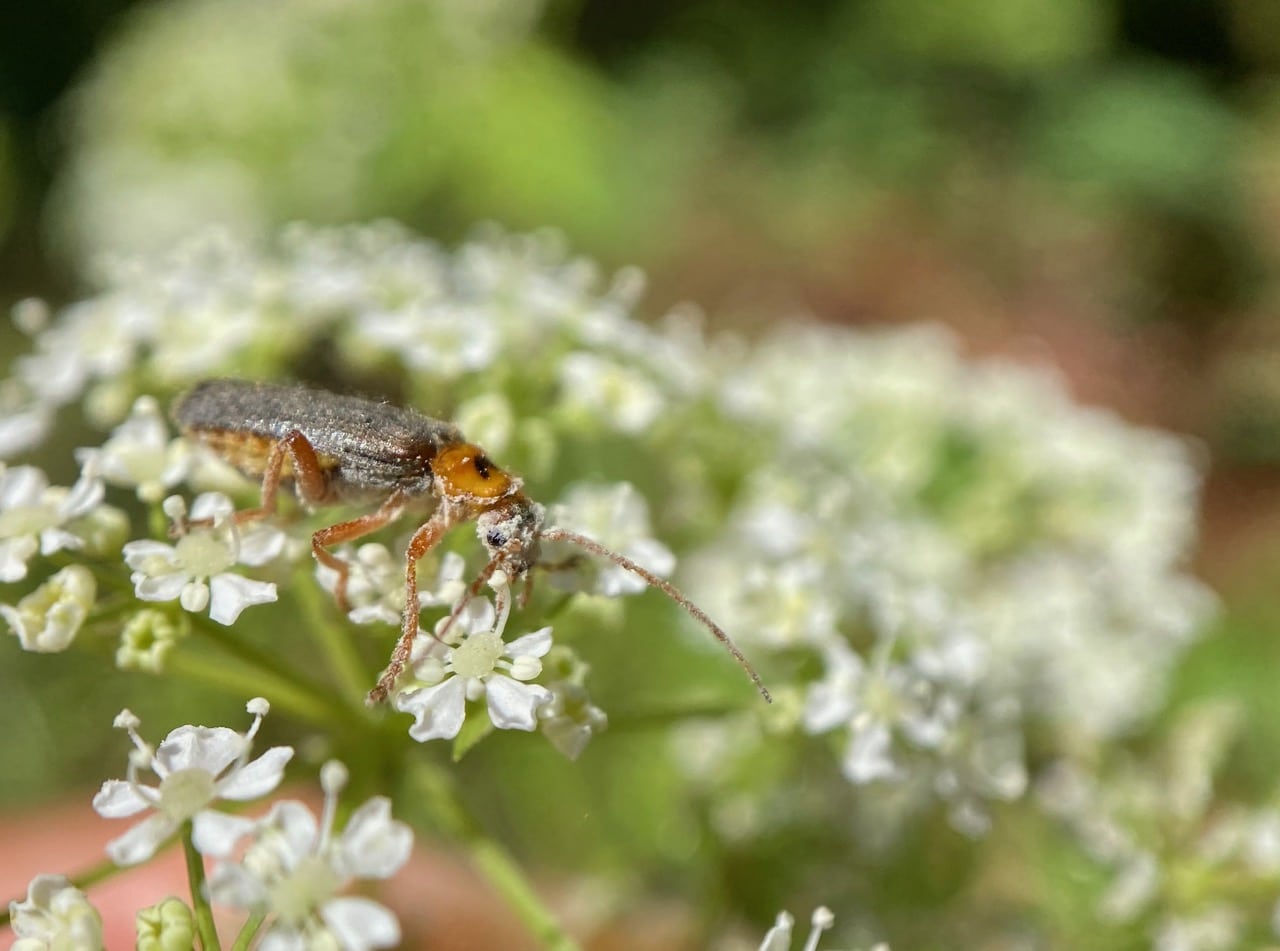
A Soldier Beetle, Cutellunguis americanus (family Cantharidae) is foraging on an umbel of Poison Hemlock flowers.
The Soldier Beetles, family Cantharidae are relatively soft-bodied, straight-sided beetles. One of the first described species has a color pattern reminiscent of the red coats of early British soldiers, hence the common name. They are also known commonly as Leatherwings because of their soft elytra.
Soldier beetles often feed on both nectar and pollen as well as predating on other small insects. The larvae are often active, and feed on the ground, hunting snails and other small creatures. Adult beetles also contribute to pollination as they feed on nectar and pollen. Soldier beetles are generally considered beneficial insects by gardeners.
The Soldier Beetle rears up to groom itself thoroughly. Many have their faces covered with the sticky pollen as they forage on these flowers.
Wow, I wonder if this Soldier Beetle is ever going to be able to clean all that sticky cream-colored pollen off its face, eyes, and antennae.
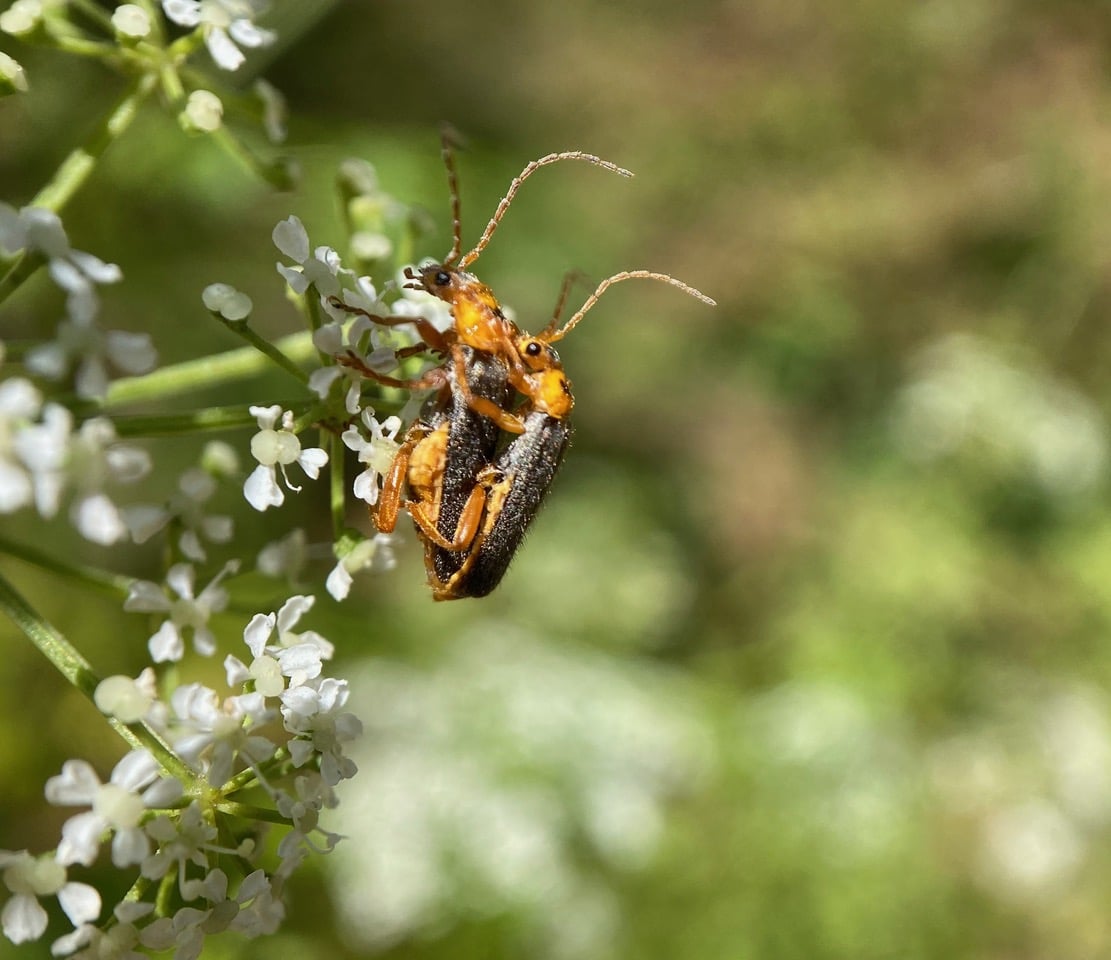
Buffeted by the wind, a pair of mating Soldier Beetles hang on tight to the cluster of Poison Hemlock, their long antennae waving wildly.
As the wind abates, I find the male holding his own antennae down with his front legs. I have often seen male Soldier Beetles engage in this behavior when being dragged around in copula by the female. This male is not in danger of injuring his antennae in this situation. Is he trying to stabilize the couple so they won’t be blown off their perch? Such adorable behavior!
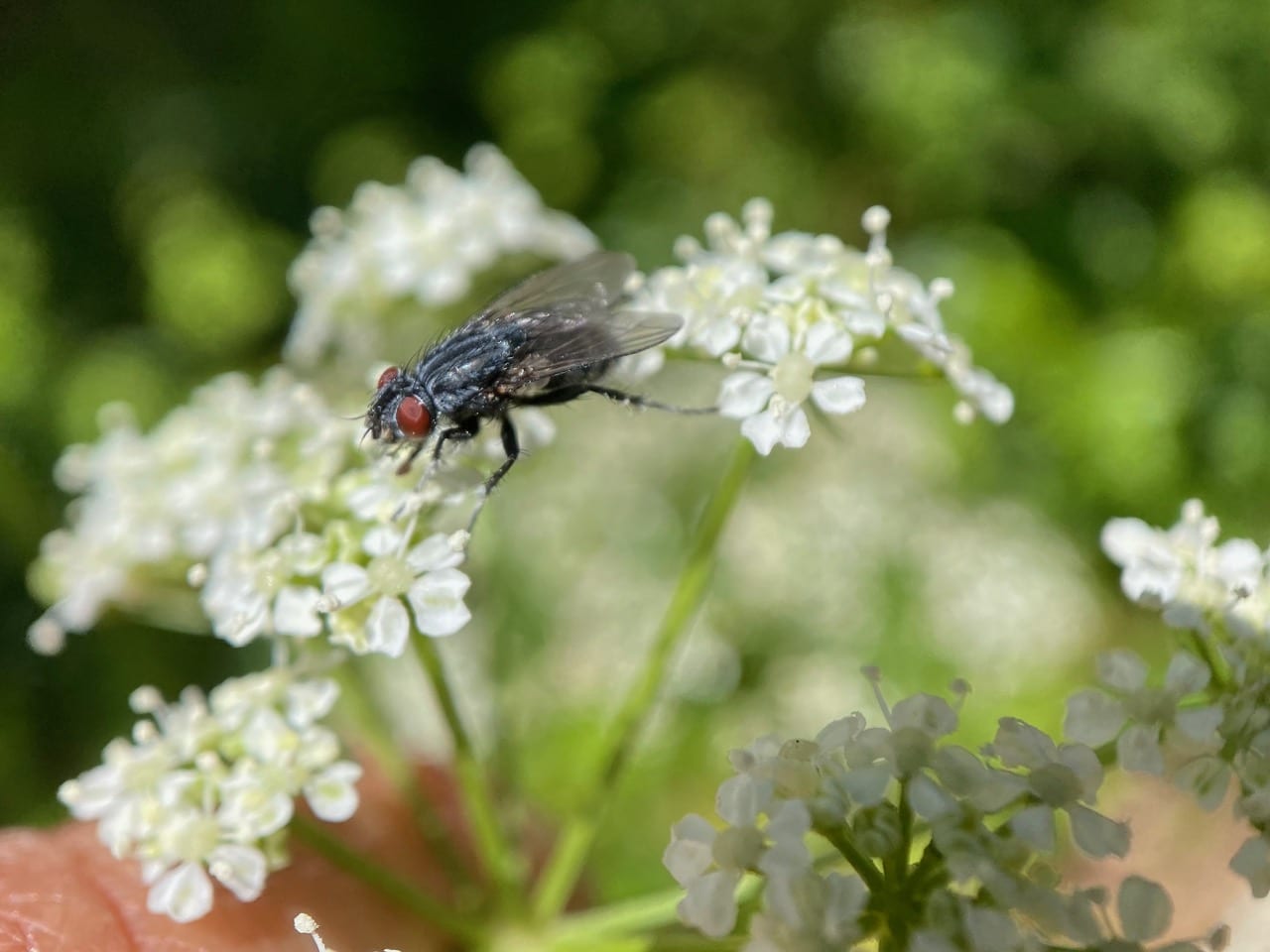
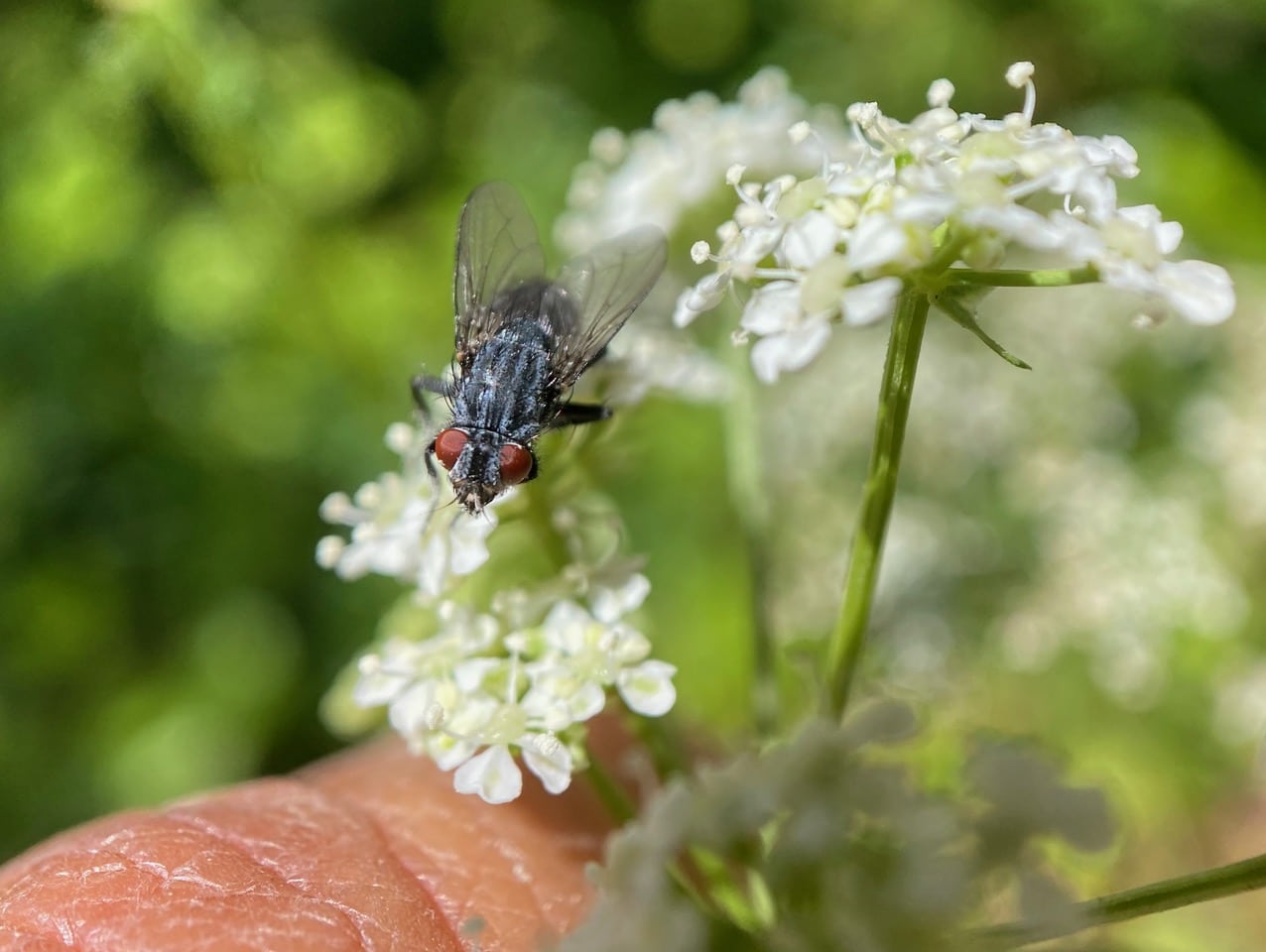
A bluish fly with striped thorax is running around on the Poison Hemlock flowers. I can’t get a reliable identification from iNaturalist. This seems to be the case with Dipterans. They are a very diverse group and difficult to identify simply from photos.
Numerous dark gray aphids are clustered around the base of a Poison Hemlock flower umbel. Interestingly they are not present anywhere else on the plant. What is the attraction here? This plant is the only one I can see aphids on. Almost all the Poison Hemlock seem to be aphid-free.
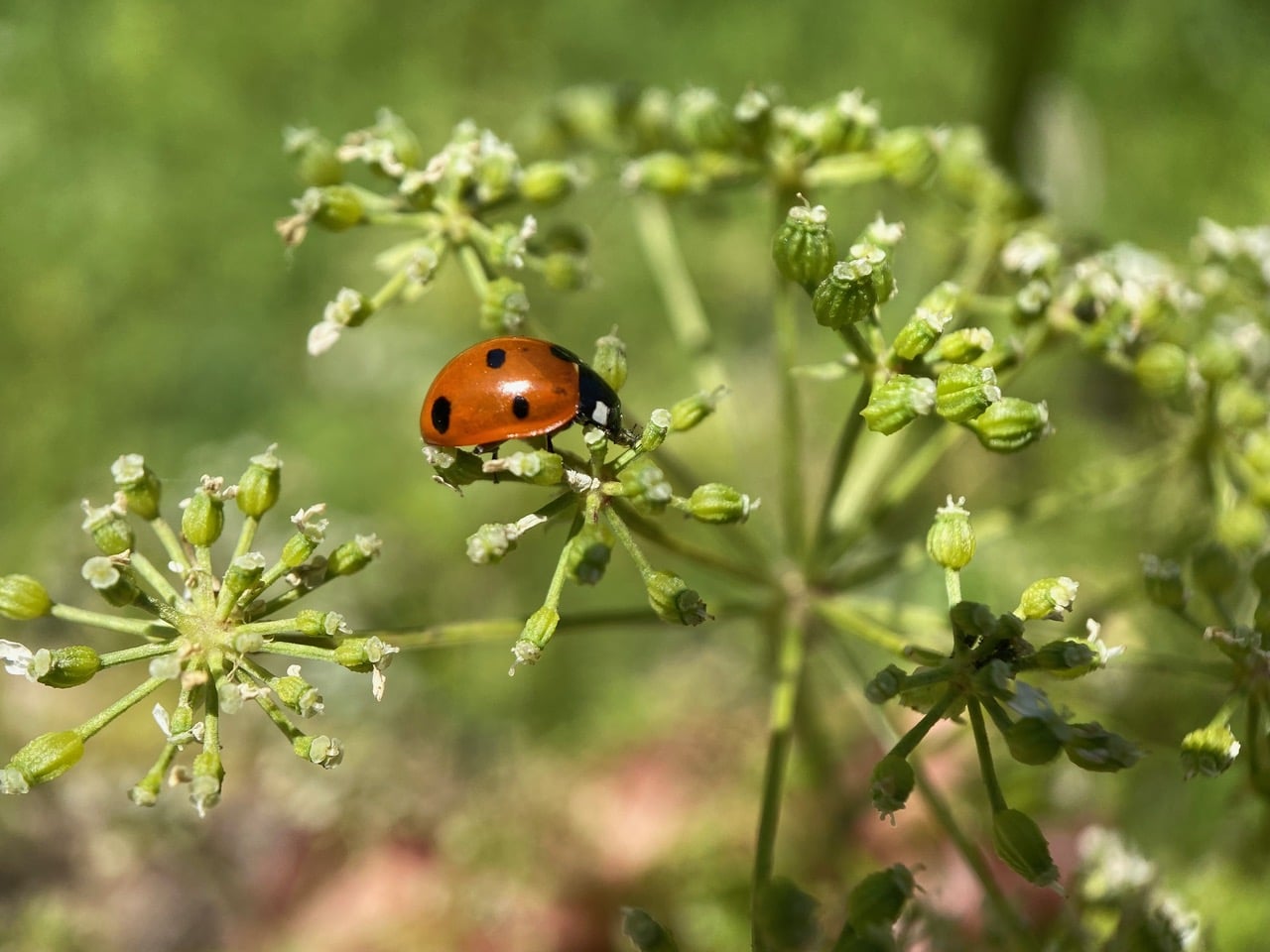
A Seven-spotted Lady Beetle, Coccinella septempunctata (family Coccinelidae) is resting on an umbel of developing fruits of Poison Hemlock.
Native to Europe, the species has been repeatedly introduced to North America as a biological control agent to reduce aphid numbers. It has since spread to many states, where it has outcompeted some native species, including the Coccinella. The Seven-spotted Ladybeetles are large; adults may reach a body length of 0.5 in. Their distinctive spots and conspicuous colors warn of their toxicity, making them unappealing to predators. When threatened, the beetles can secrete a fluid from joints in their legs which gives them a foul taste.
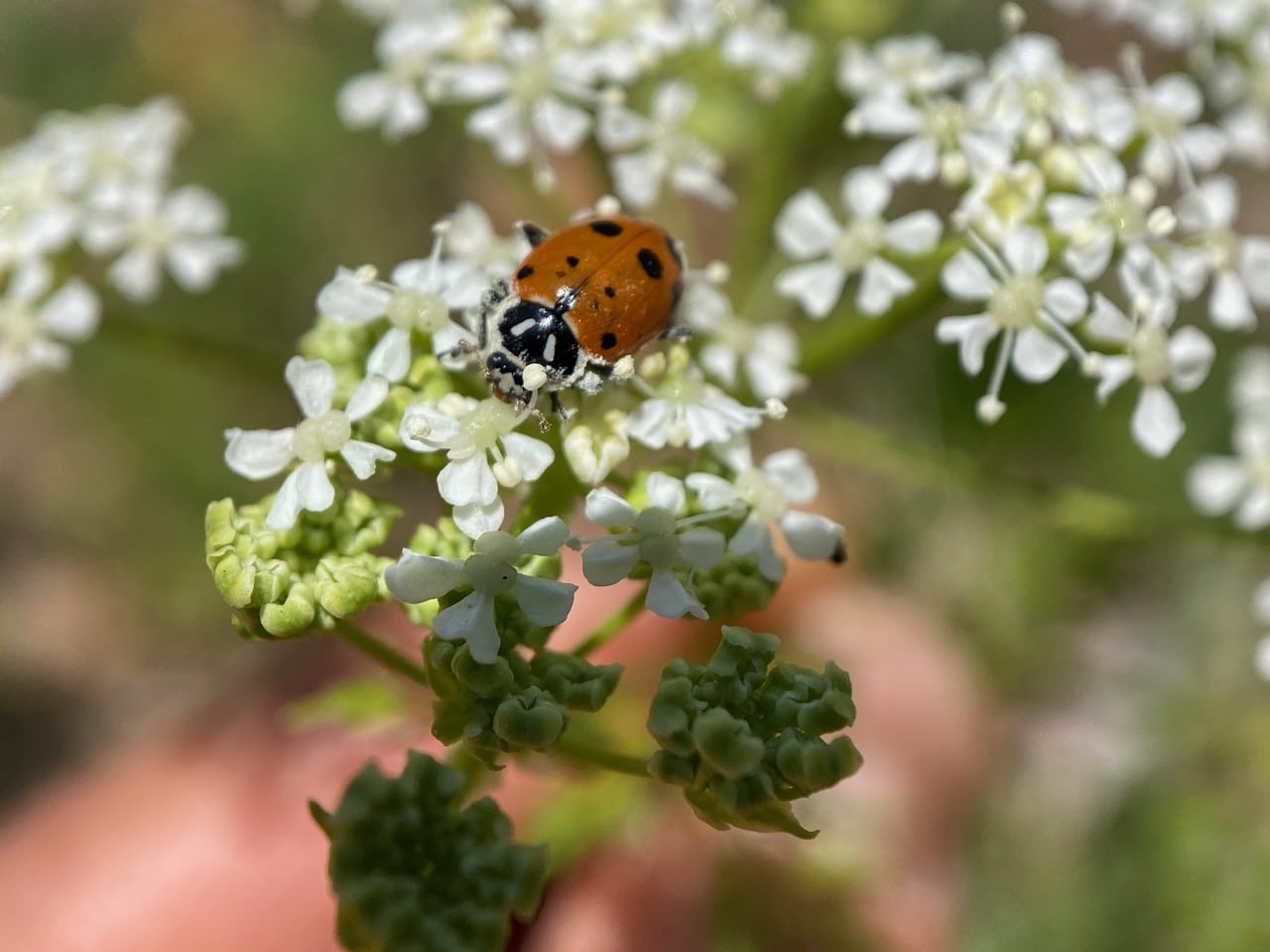
Smeared with sticky pollen on its lower body, a Convergent Lady Beetle, Hippodamia convergens (family Coccinellidae) is foraging among Poison Hemlock flowers. Is it hunting for aphids, or is it feeding on pollen? Although better known as predators of aphids, Lady Beetles actually feed on pollen when prey is scarce.
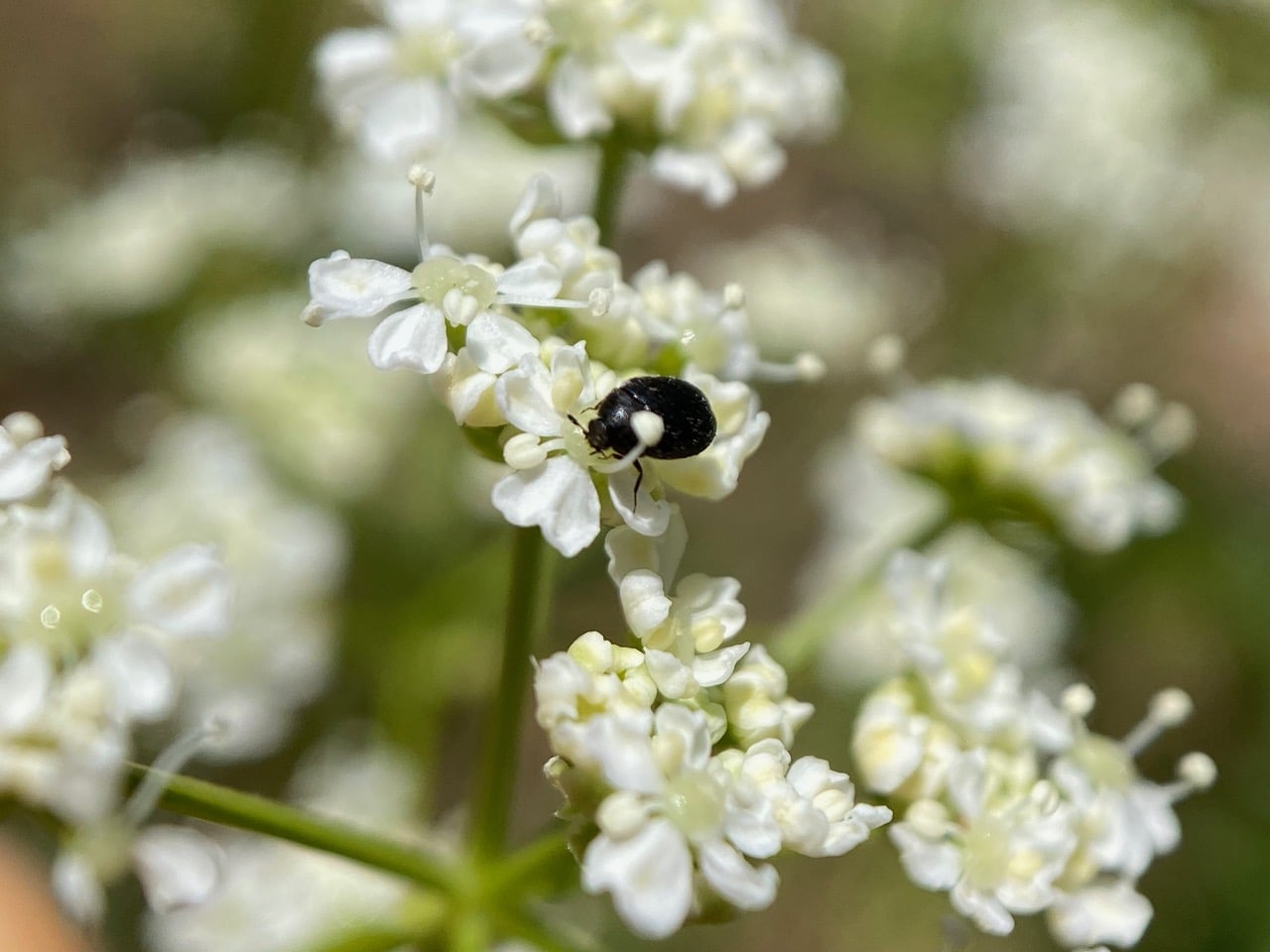
A tiny Skin Beetle, Cryptorhopalum sp. (family Dermestidae) is foraging on a cluster of Poison Hemlock flowers.
Dermestidae are a family of Coleoptera (beetles) that are commonly referred to as skin of carpet beetles. Ranging in size from 1 to 2 mm, the beetles typically have clubbed antennae that fit into deep grooves. Most Dermestids are scavengers that feed on dry animal or plant materials, such as skin or pollen, animal hair, feathers, dead insects and natural fibers. The larvae are used in taxidermy and by natural history museums to clean animal skeletons. The genus Cryptorhopalum is known only from North to South America.