

Pollinator Post 6/14/24 (2)
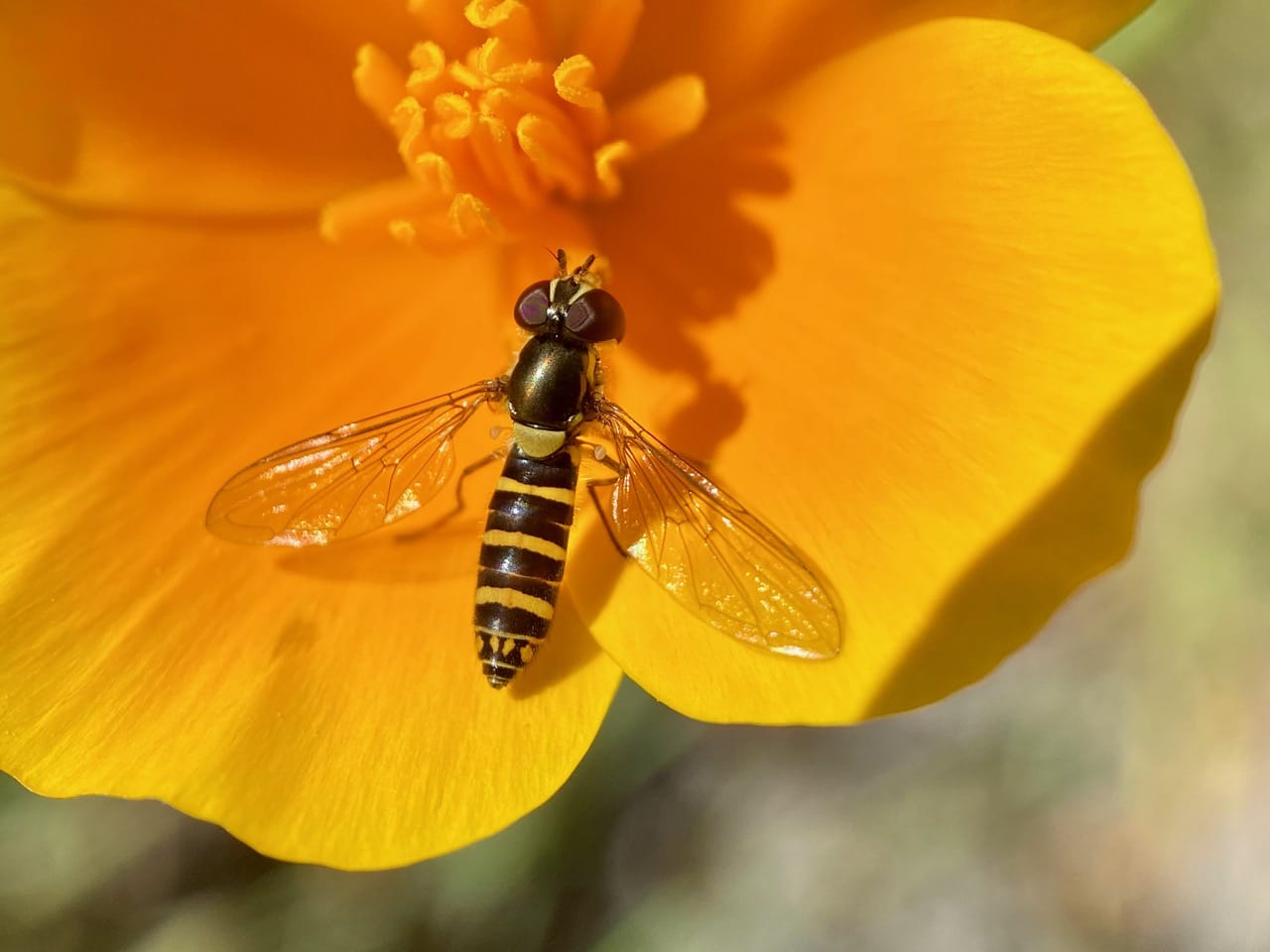
A Diamond Spottail, Fazia micrura (family Syrphidae) lands on a California Poppy, Eschscholzia californica. The species is easily identified by the four diamond-shaped yellow markings near the tip of the abdomen.
Hover Flies, also called flower flies or Syrphidae flies, make up the insect family Syrphidae. The adults of many species feed mainly on nectar and pollen, and are often seen hovering and nectaring at flowers. They are important pollinators of flowering plants in many ecosystems worldwide. The larvae feed on a wide range of foods. In many species, the larvae are insectivores and prey on aphids, thrips, and other plant-sucking insects. In other species, the larvae are saprotrophs, eating decaying plant and animal matter in the soil or in ponds and streams.
Many species of Hover Flies exhibit Batesian mimicry; they are brightly colored, with bands of yellow resembling the bees and wasps. The mimicry provides the fly with some measure of protection from potential predators, although the flies are harmless and lack a sting.
The Diamond Spottail, Fazia micrura is a Nearctic species that occurs in western North America, from British Columbia south to California and Texas; and Mexico. The adult and larva feed on pollen. Females lay eggs on flowers. Larvae are often encountered in the field chewing through the calyx and corolla of unopened flower buds. They are known to feed on pollen in the anthers. Usually only one larva is found in each flower.
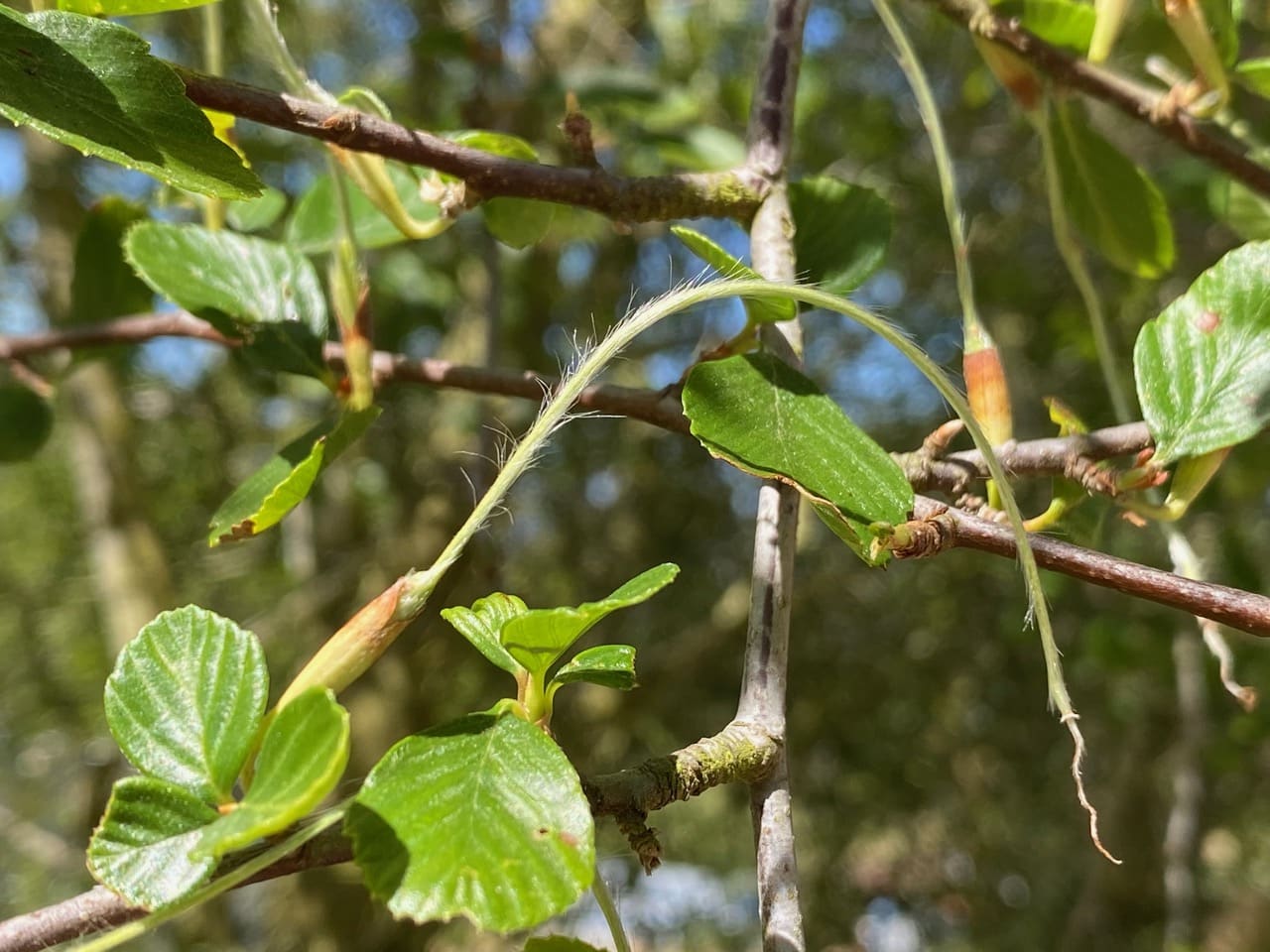
The Mountain Mahogany, Cercocarpus betuloides (family Rosaceae) by the fence of the FOSC Native Plant Nursery has given me much pleasure over the years. Backlit by the sun, the evergreen tree appears silvery in late summer through fall, due to the feathery fruits. The tree is undergoing the magical transformation now, with the fruits ripening and the attached plumes lengthening and opening. The plume is actually a persistent style that does not wither away when the flower senesces, but instead keeps growing to form the feathery plume.
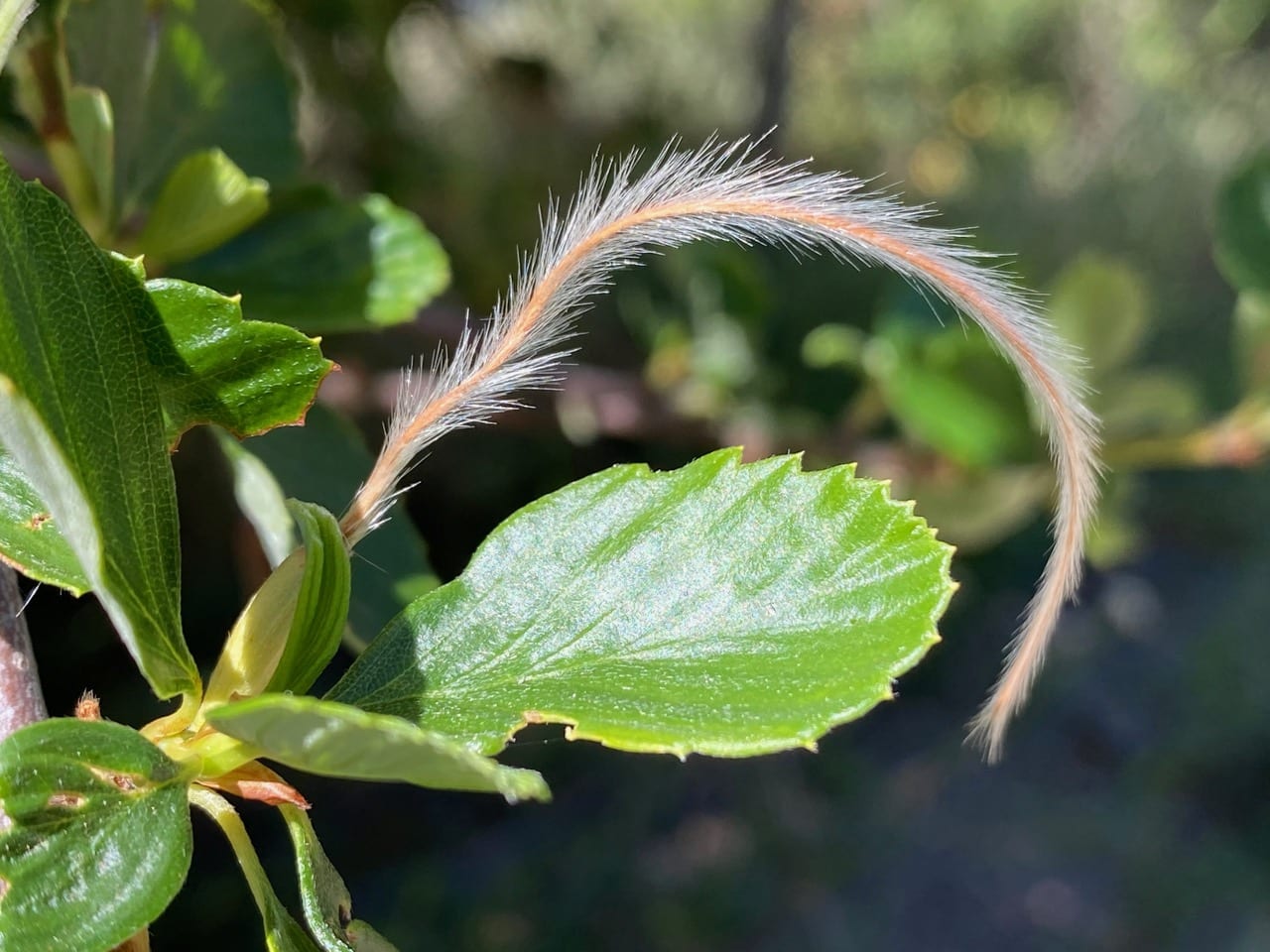
This is a more mature fruit of Mountain Mahogany. The attached plume has opened up, acquiring a twist to the shaft and a curvature. The plumes, as we might expect, are helpful in seed dispersal by the wind, but they are also responsible for planting the seed. The seeds are themselves quite heavy and pointed. They land point down, plume up. Repeated wetting and drying of the plume drills the seed into the soil. This same mechanism is variously employed by many grass seeds and Stork’s Bill seeds (Erodium sp.) – an amazing example of convergent evolution.
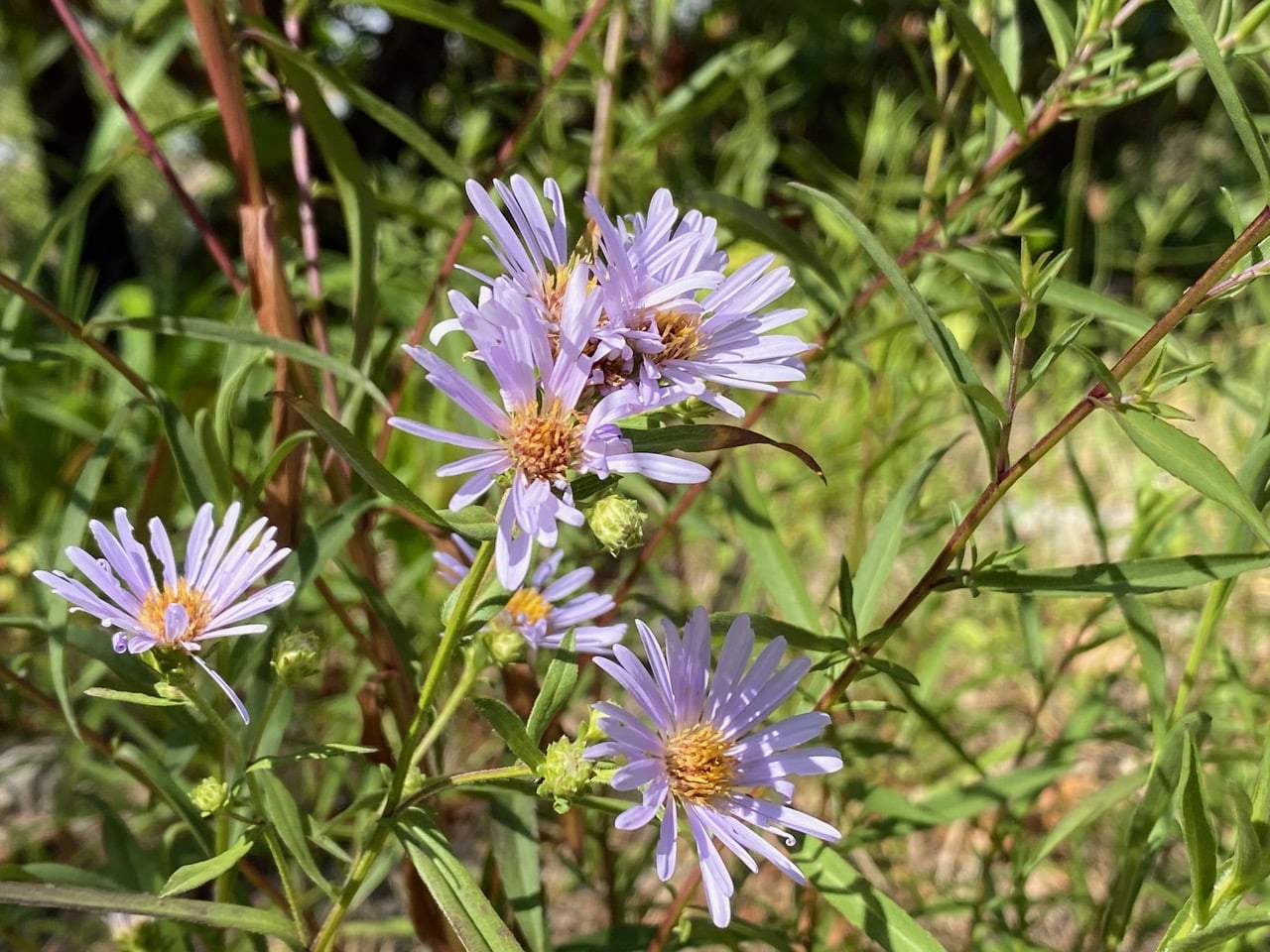
The Pacific Aster, Symphyotrichum chilense has started to bloom.

A hairy male bee with iridescent blue abdomen is resting on a leaf of Pacific Aster.
iNaturalist has identified it as the Cherry Plum Mining Bee, Andrena cerasifolii (family Andrenidae). The species is found in Central America and North America. It is larger than most other Andrena in western North America with a metallic blue integument. The bee is active early to late spring, and visits flowers of several families.
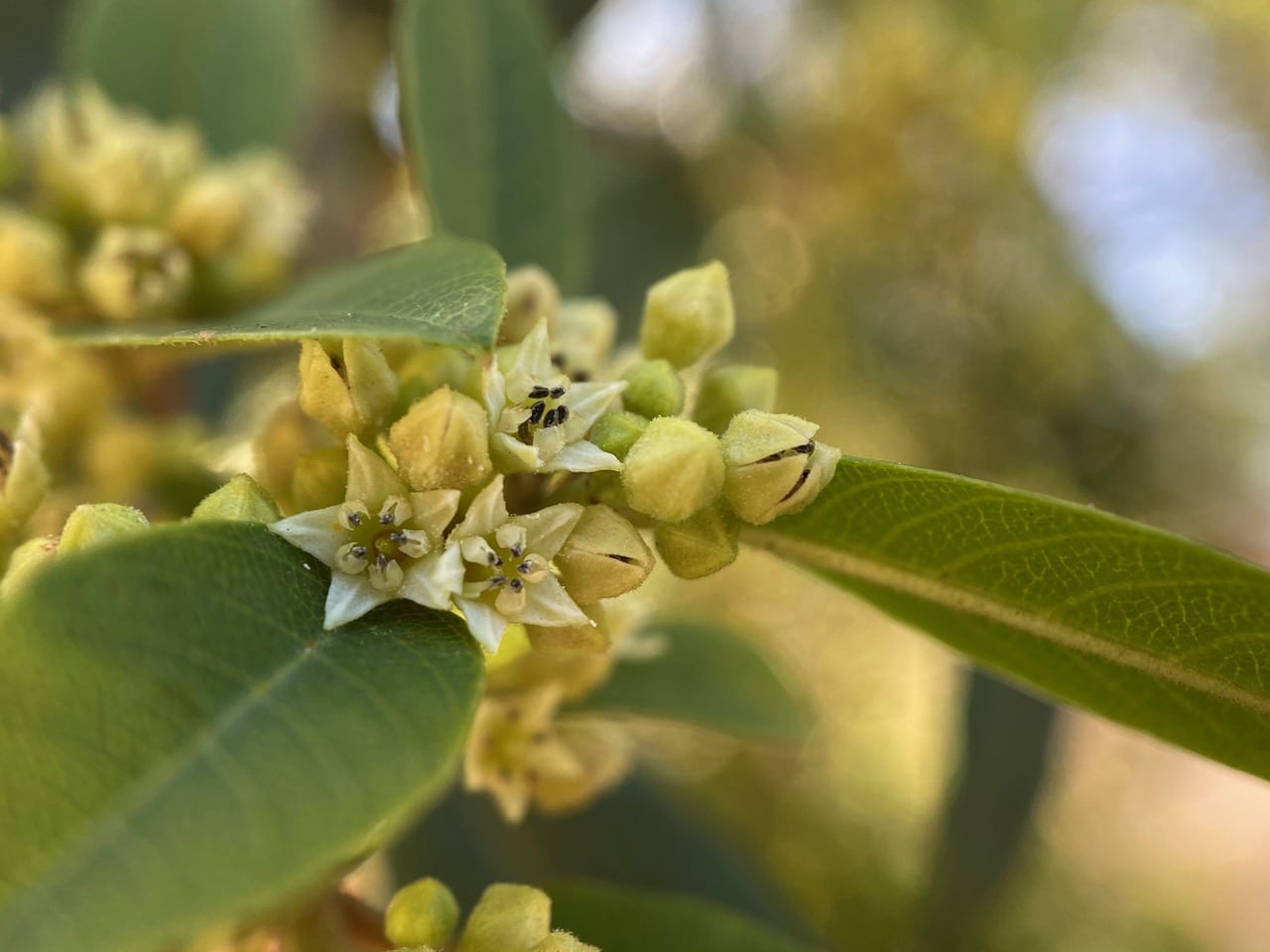
The large shrub of Coffeeberry, Frangula californica is blooming in front of the FOSC Native Plant Nursery. The small, greenish-yellow flowers are inconspicuous, but apparently offer nectar attractive to many insects.
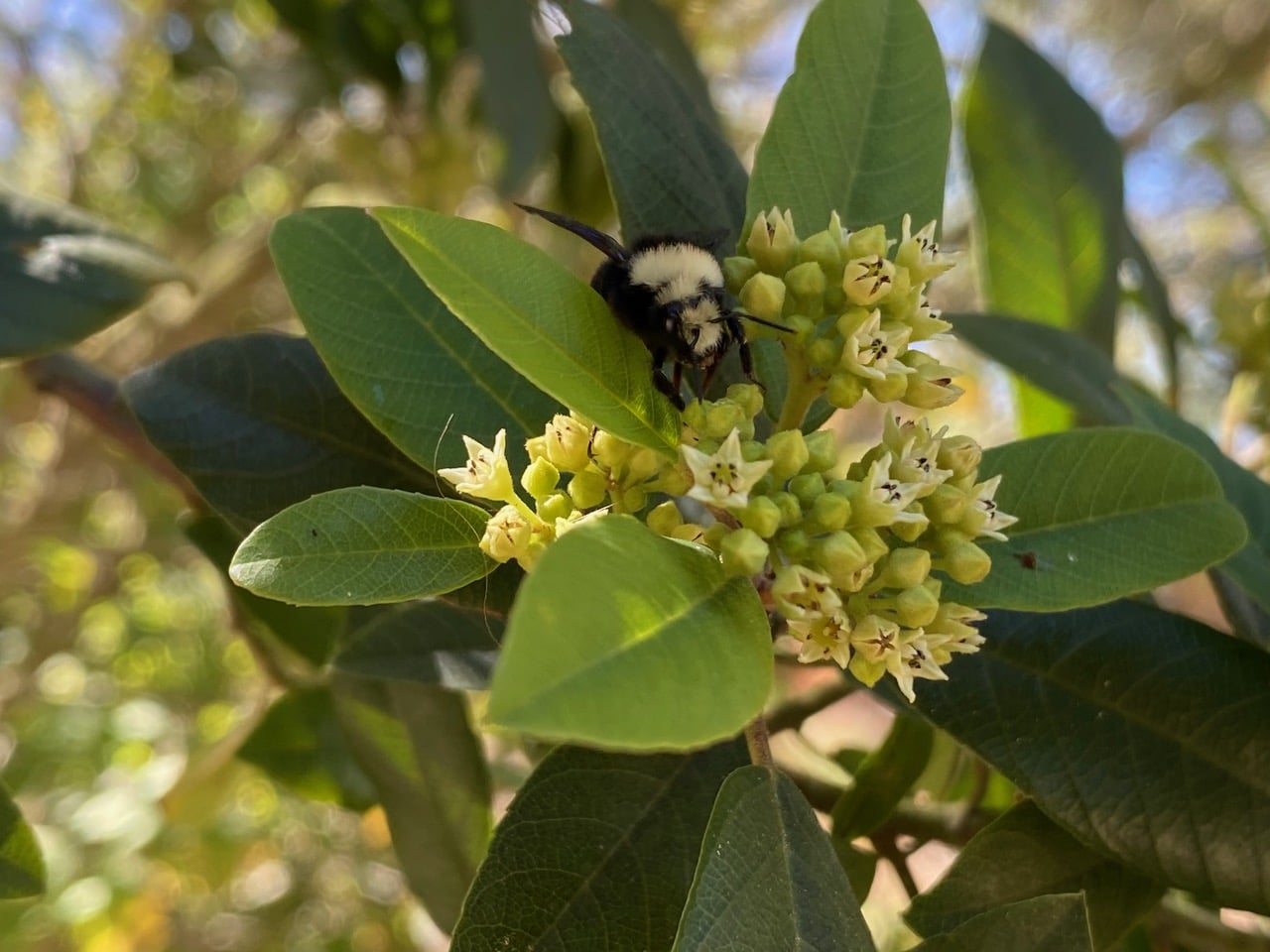
Yellow-faced Bumble Bees, Bombus vosnesenskii (family Apidae) buzz in and out of the large shrub to take nectar from the small flowers.
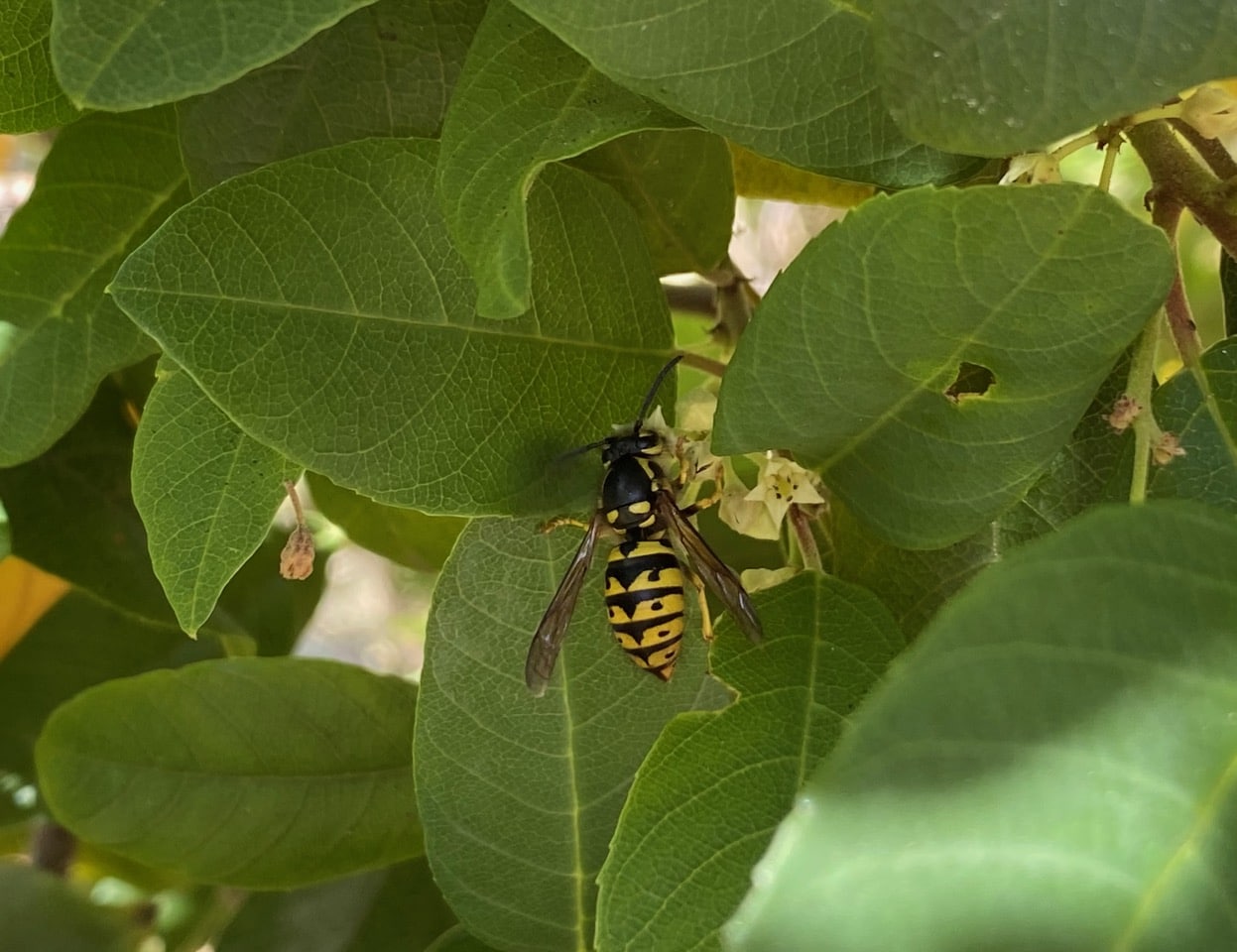
So do the Yellowjacket wasps.
Yellowjacket is the common name for predatory social wasps of the genera Vespula and Dolicovespula (family Vespidae). Yellowjackets are social hunters living in colonies containing workers, queens, and males (drones). Colonies are annual with only inseminated queens overwintering. Queens emerge during the warm days of late spring or early summer, select a nest site, and build a small paper nest in which they lay eggs. They raise the first brood of workers single-handedly. Henceforth the workers take over caring for the larvae and queen, nest expansion, foraging for food, and colony defense. The queen remains in the nest, laying eggs. Later in the summer, males and queens are produced. They leave the parent colony to mate, after which the males quickly die, while fertilized queens seek protected places to overwinter. Parent colony workers dwindle, usually leaving the nest to die, as does the founding queen. In the spring, the cycle is repeated.
Yellowjackets have lance-like stingers with small barbs, and typically sting repeatedly. Their mouthparts are well-developed with strong mandibles for capturing and chewing insects, with probosces for sucking nectar, fruit, and other juices. Yellowjacket adults feed on foods rich in sugars and carbohydrates such as plant nectar and fruit. They also search for foods high in protein such as insects and fish. These are chewed and conditioned in preparation for larval consumption. The larvae secrete a sugary substance that is eaten by the adults.
The Western Yellowjackets typically build nests underground, often using abandoned rodent burrows. The nests are made from wood fiber that the wasps chew into a paper-like pulp. The nests are completely enclosed except for a small entrance at the bottom. The nests contain multiple, horizontal tiers of combs within. Larvae hang within the combs.
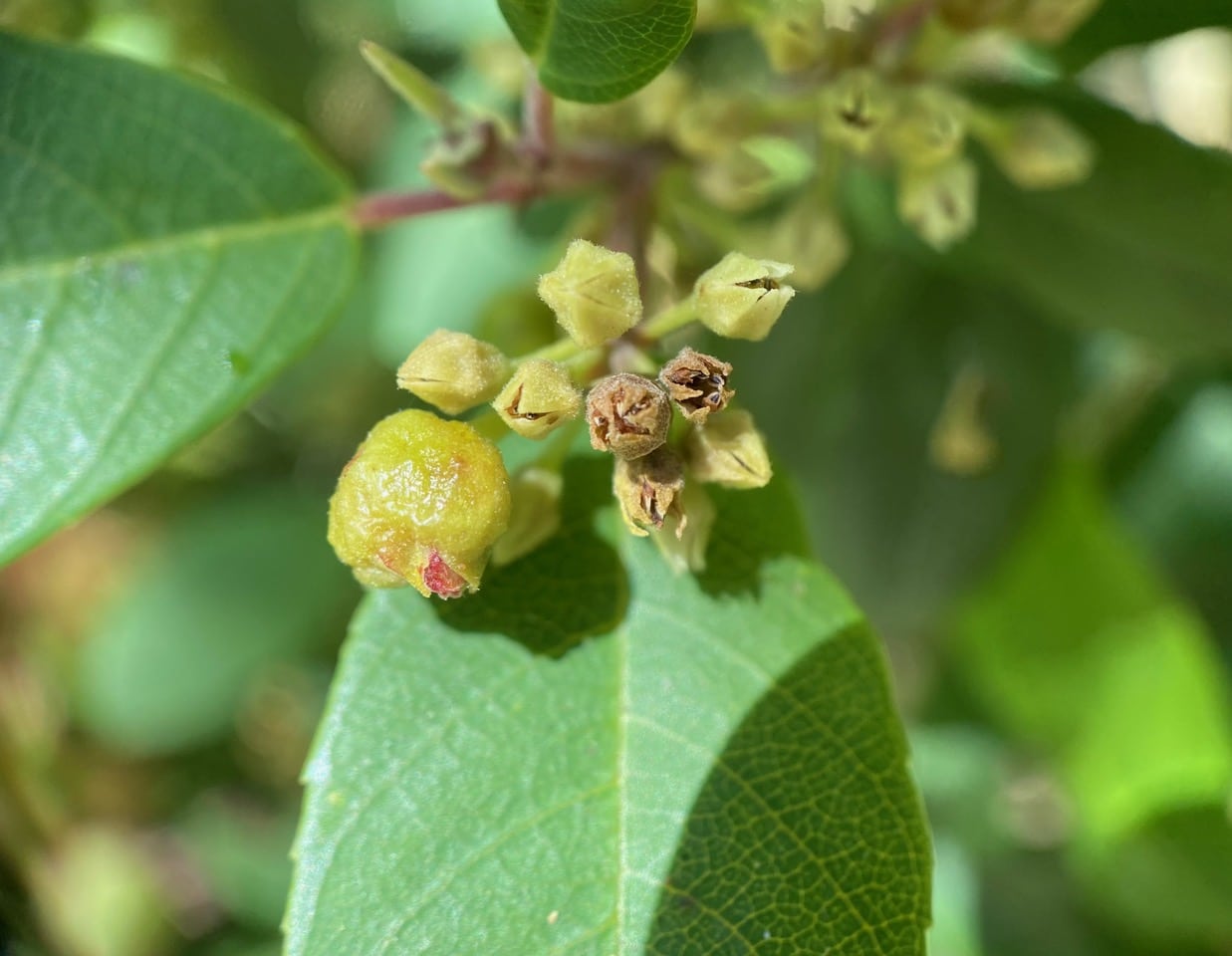
What’s this strange structure that looks like a bumpy, deformed fruit growing among a cluster of young and aborted flowers. It has an opening at the tip, showing some pink parts. My best guess is that it is a flower gall. Did an insect induce the development of the gall?
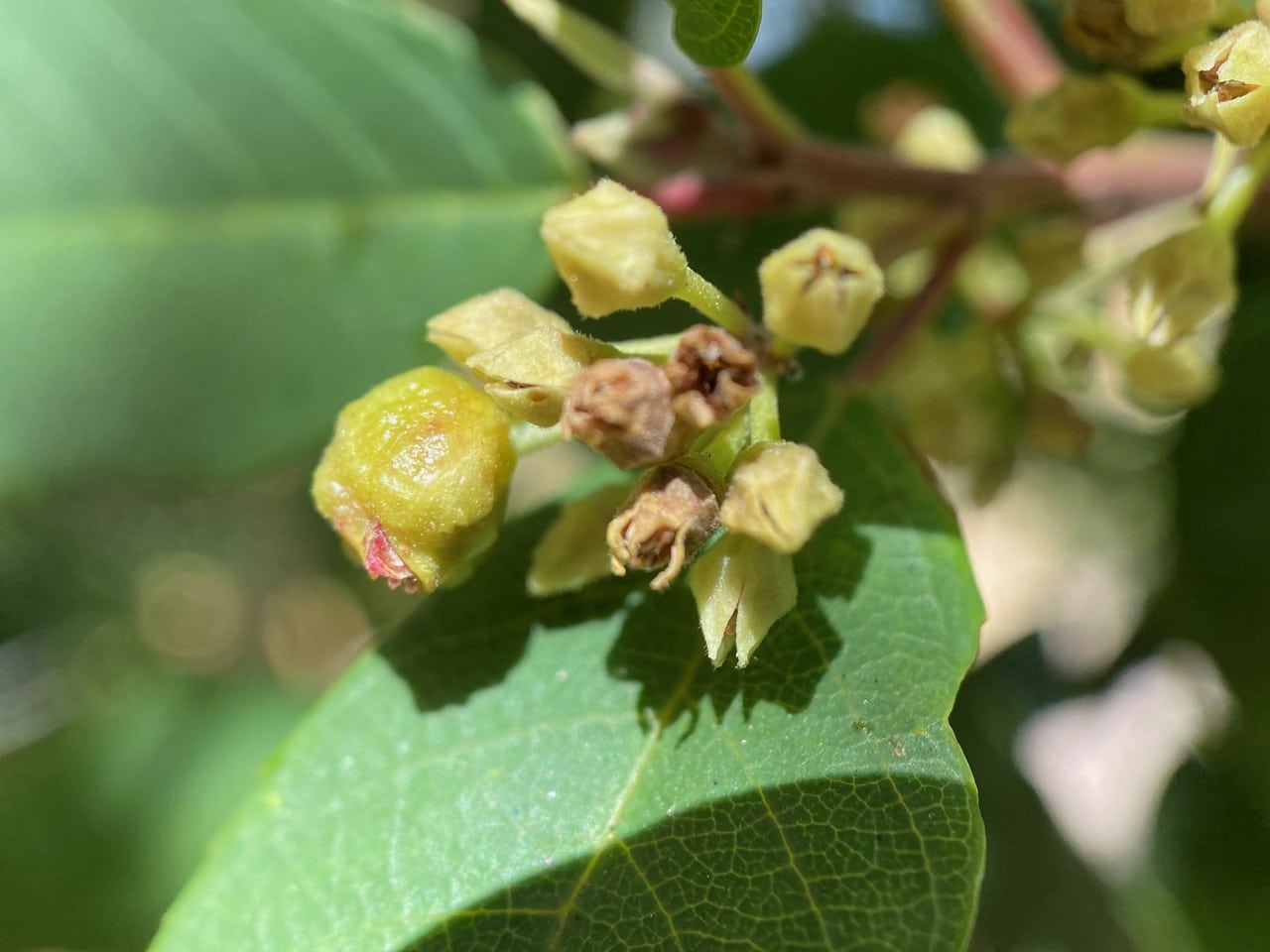
The same gall from a different angle.
Galls are tumor-like growths of plant tissue produced by the host plant in response to the chemical and/or mechanical stimuli of invading organisms (insects, mites, fungi). The galls of many insects are specific to their species in size, shape, and color. The insect larvae feed on the gall tissues from within, hence the galls are essentially “edible nurseries” for the young.

Close by on another branch is this other structure that looks like a fruit. It is smooth and has no opening.
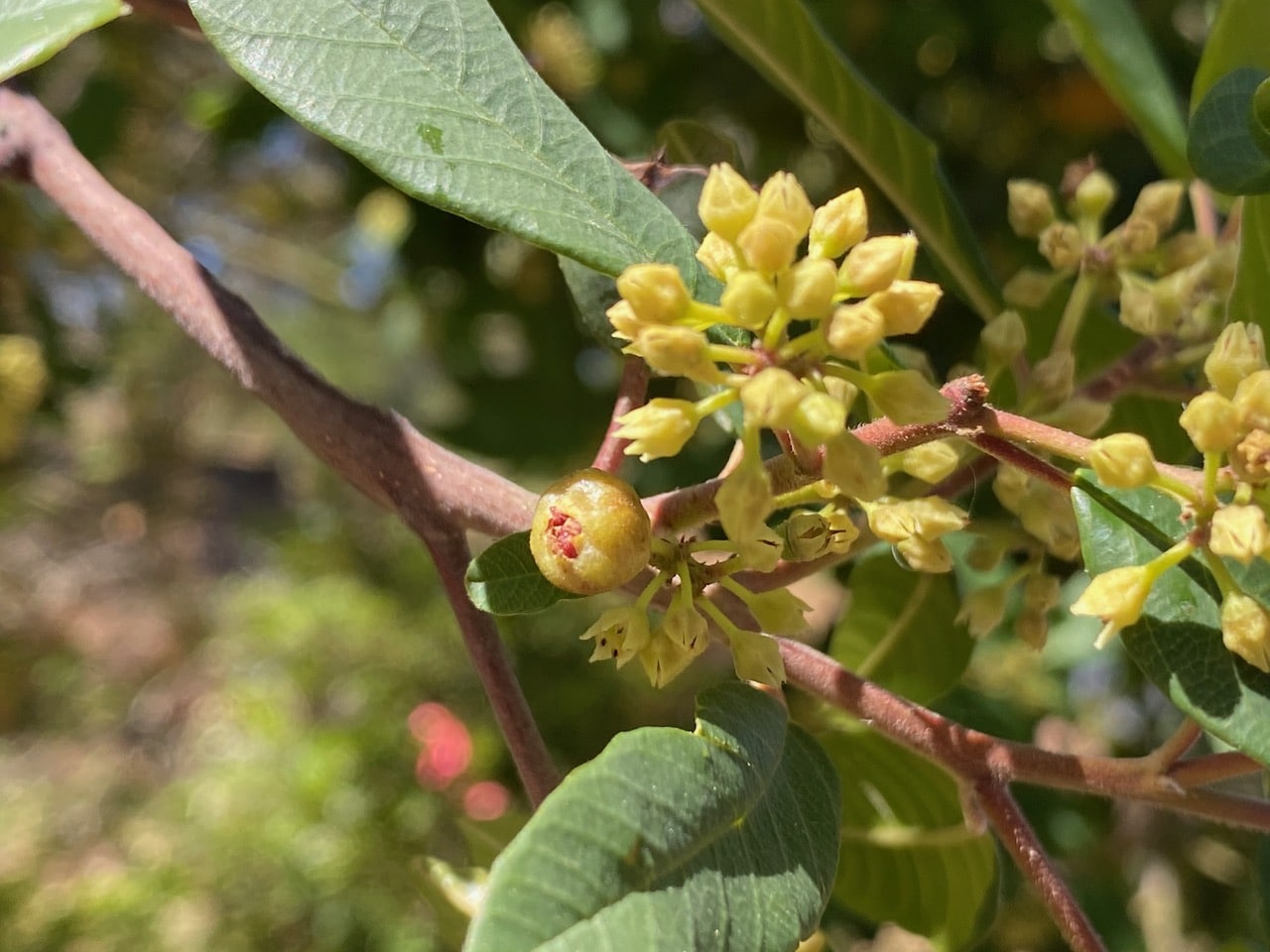
Ooh, here’s another flower gall, located on another branch, among a cluster of fresh Coffeeberry flowers. I can’t find any mention of this gall in Ron Russo’s “Field Guide to Plant Galls”. Searching the internet I came across these posts by Marc Kummel, a naturalist whose work I have long admired.
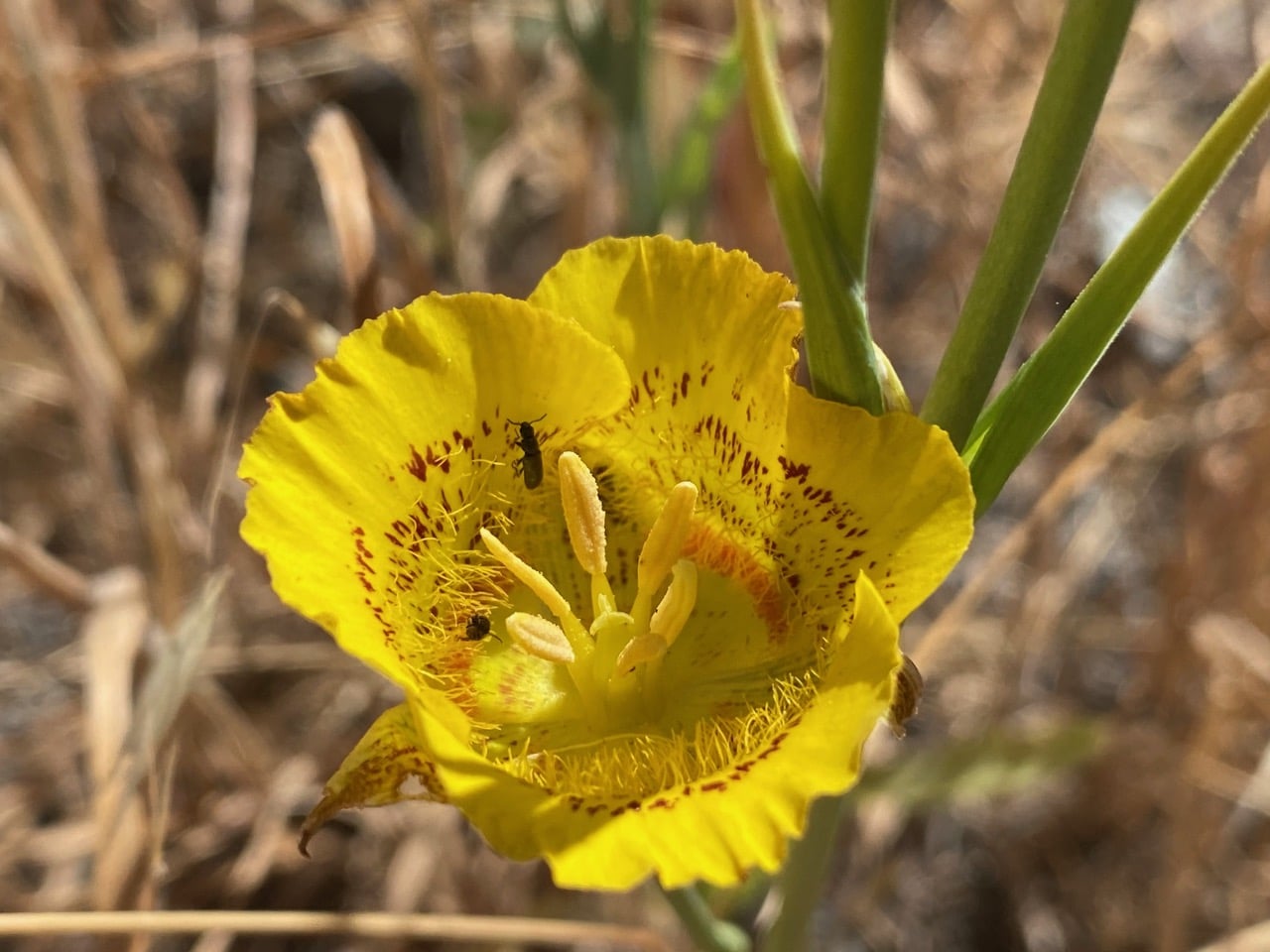
The Yellow Mariposa Lily, Calochortus luteus is blooming predictably in the little grassy triangle at the end of Sunburn Drive. The large, bright yellow flowers are not attracting any big insects today. Some Soft-winged Flower Beetles, Listrus sp. (family Melyridae, subfamily Dasytinae) can be seen feeding in the flowers. The orange, crescent-shaped patches near the base of the petals are the nectar glands.
Most species of Melyridae are various shades of brown or black and just 2 to 4 mm in length. They are sometimes very abundant in spring when there is an abundance of open flowers, particularly those with an abundance of pollen. In north America, dasytine beetles are hardly represented in the east, but are enormously diverse in the west, especially in California.
11 families of Coleoptera (beetles) are known to pollinate flowering plants. In western North America, the 300+ species of the beetle subfamily Dasytinae are commonly found on flowers, where adults feed on both nectar and pollen. Their dense setae (hairs) often trap pollen grains, which are transported to other flowers during the course of normal feeding. Many dasytine beetles form large feeding aggregations.

The Hairy Gumweed, Grindelia hirsutula is blooming gloriously among the dry grasses by the road.
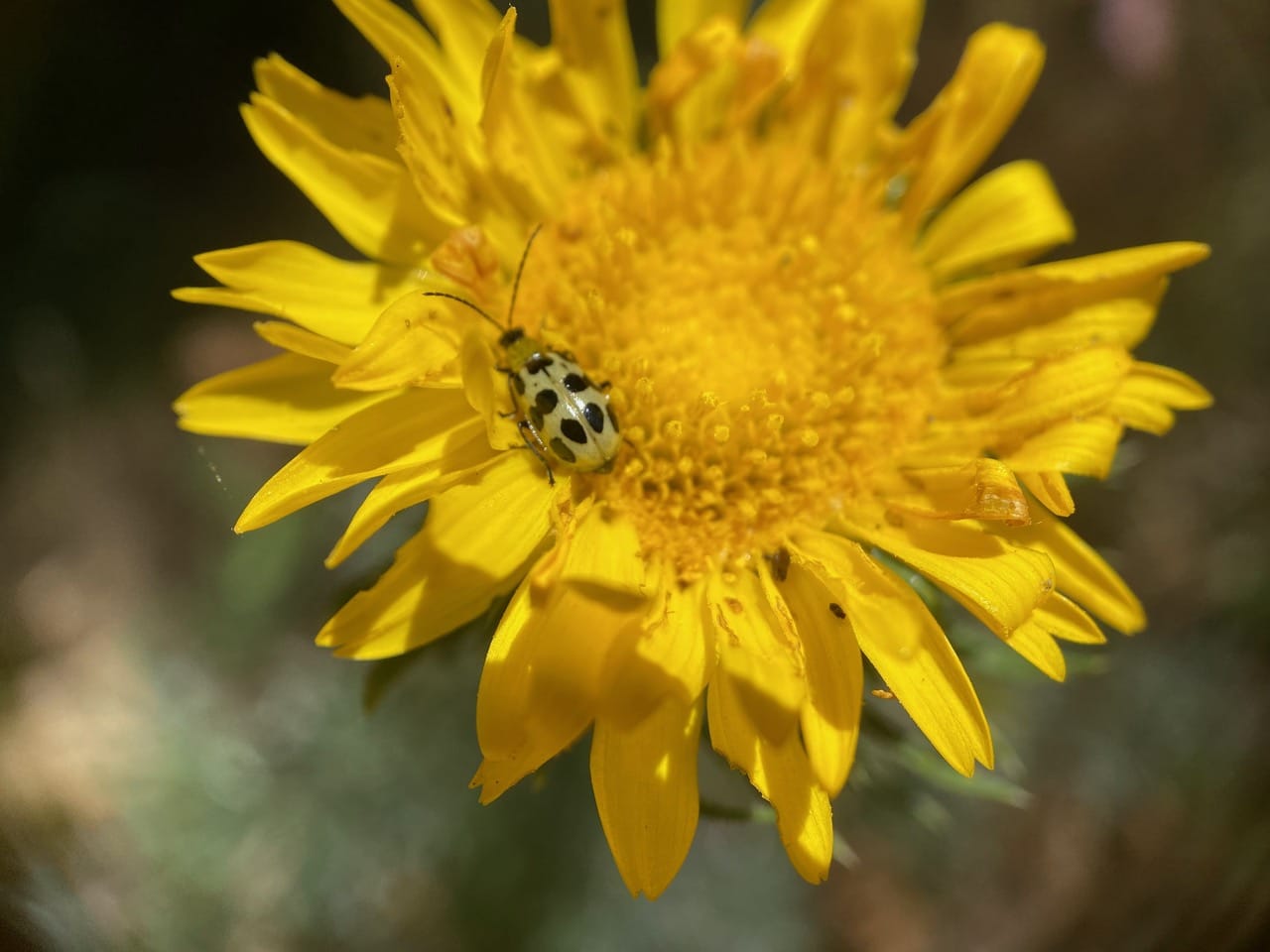
Not surprisingly, the Spotted Cucumber Beetle, Diabrotica undecimpunctata (family Chrysomelidae) has moved in. By my observation, these beetles are the first to find any plant in bloom, and they can be found on every plant in the garden.
Members of the family Chrysomelidae are commonly known as Leaf Beetles. Adults and larvae feed on all sorts of plant tissues, and all species are fully herbivorous. Many are serious pests of cultivated plants, including food crops. Others are beneficial due to their use in biocontrol of invasive weeds. Chrysomelids are popular among insect collectors, as many are conspicuously colored, typically in glossy yellow to red or metallic blue-green hues, and some have spectacularly bizarre shapes. Photos of Leaf Beetles (Family Chrysomelidae) · iNaturalist
Native to North America, the Spotted Cucumber Beetle can be a major agricultural pest, causing damage to crops in the larval as well as adult stages of their life cycle. Larvae, sometimes known as rootworms feed on the roots of emerging plants. In the adult stage the beetles cause damage by eating the flowers, leaves, stems and fruits of the plant.
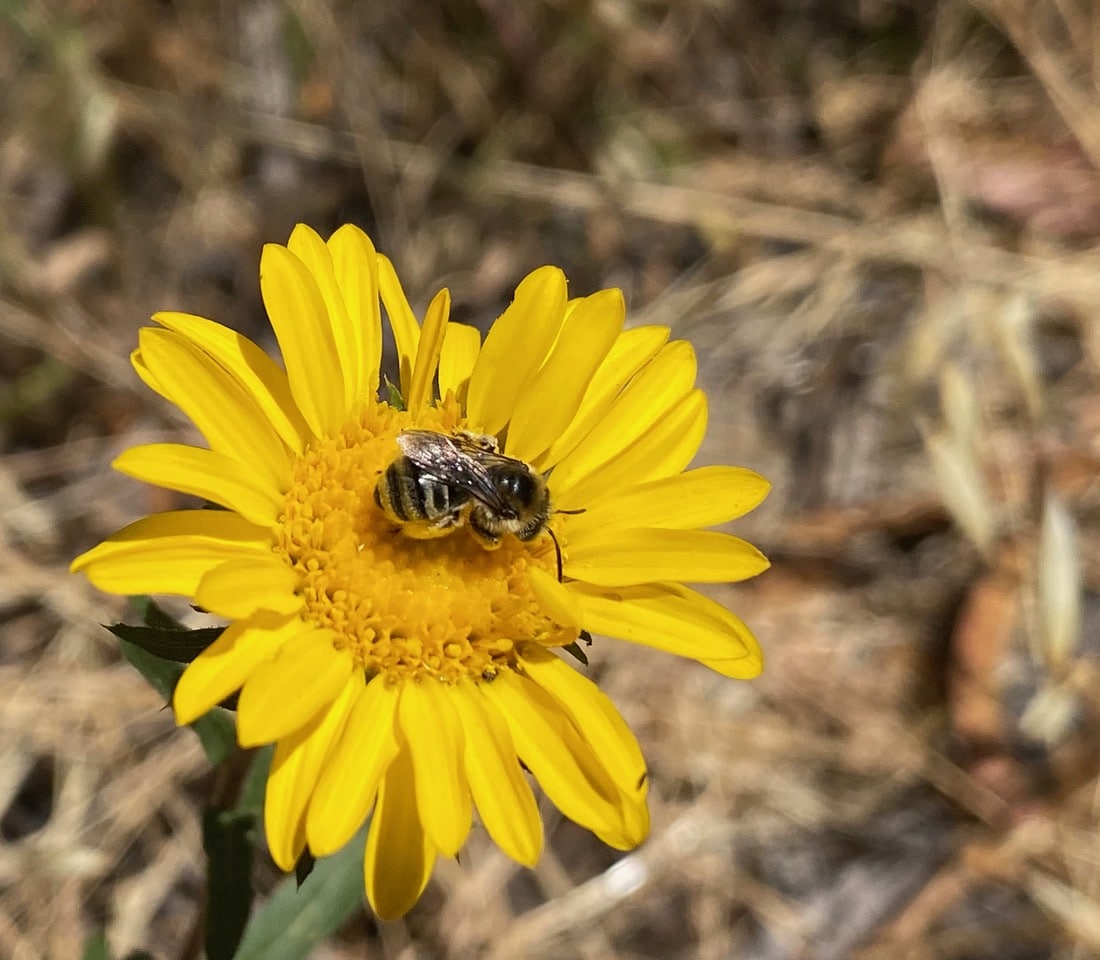
A robustly built bee is foraging on a Grindelia flowerhead. She has yellow pollen in the extensive scopae on her hind legs.

A similar bee has landed on another Grindelia flowerhead. Her scopae are empty.
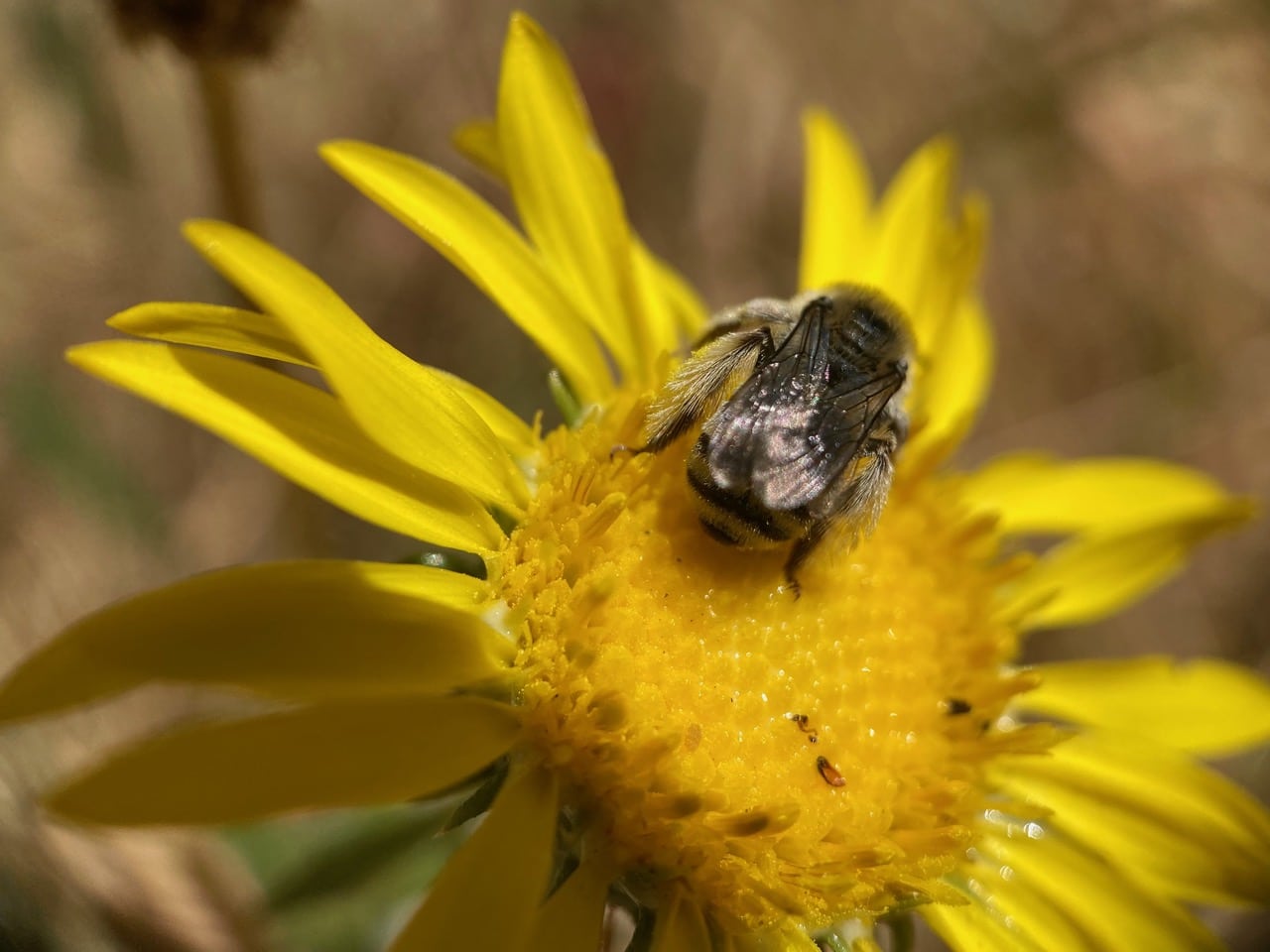 Wow, those are impressive scopae with long, shaggy hairs!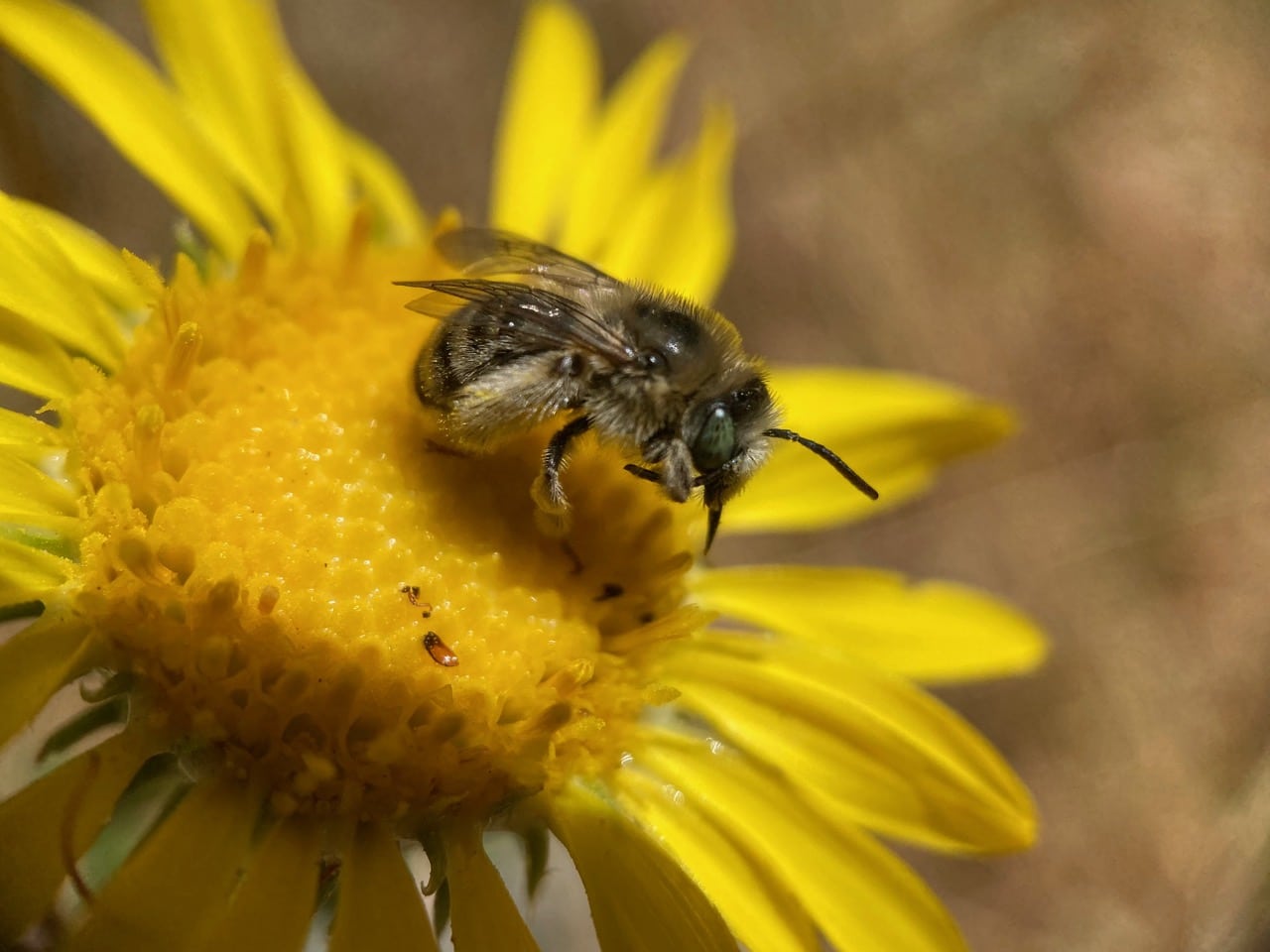
The bee gives her antenna a quick swipe before she leaves. I think she might be a Spring Longhorn bee, genus Eucera, or a Summer Longhorn Bee, genus Melissodes. Both belong to the family Apidae. They are so similar that it is impossible to distinguish them in the field.
Like other members of Apidae, long-horned bees are typically quite hairy and have long tongues, making them great at acquiring nectar and pollen resources. Females have particularly long and thick hairs on their hind legs for pollen collection, and males have long antennae, hence the common name “long-horn”. Long-horned bees can be both generalist and specialists in terms of their resource collection. In our area, there are two genera which we are most likely to find in our local gardens: Eucera and Melissodes.
The Eucera genus is made up of larger bees. Males have long antennae which are completely black in color. Most Eucera are generalist, and collect resources from a wide variety of flowering plants. Those that are specialists tend to favor plants in the Asteraceae family. Eucera are typically ground nesters, with incredibly small tunnels and inconspicuous burrow openings.
The Melissodes genus is almost exclusively found in North and South America. Generally, Melissodes fly later in the year and are smaller than Eucera bees. Melissodes and Eucera bees tend to prefer the same flower resources, and specialists in Melissodes also prefer plants in Asteraceae including Helianthus, Rudbeckia, and Solidago. Like the Eucera, Melissodes are also ground-nesters.
There you have it. Since we are entering summer, I will assume that the Longhorn Bees we encounter from now on belong to the genus Melissodes.
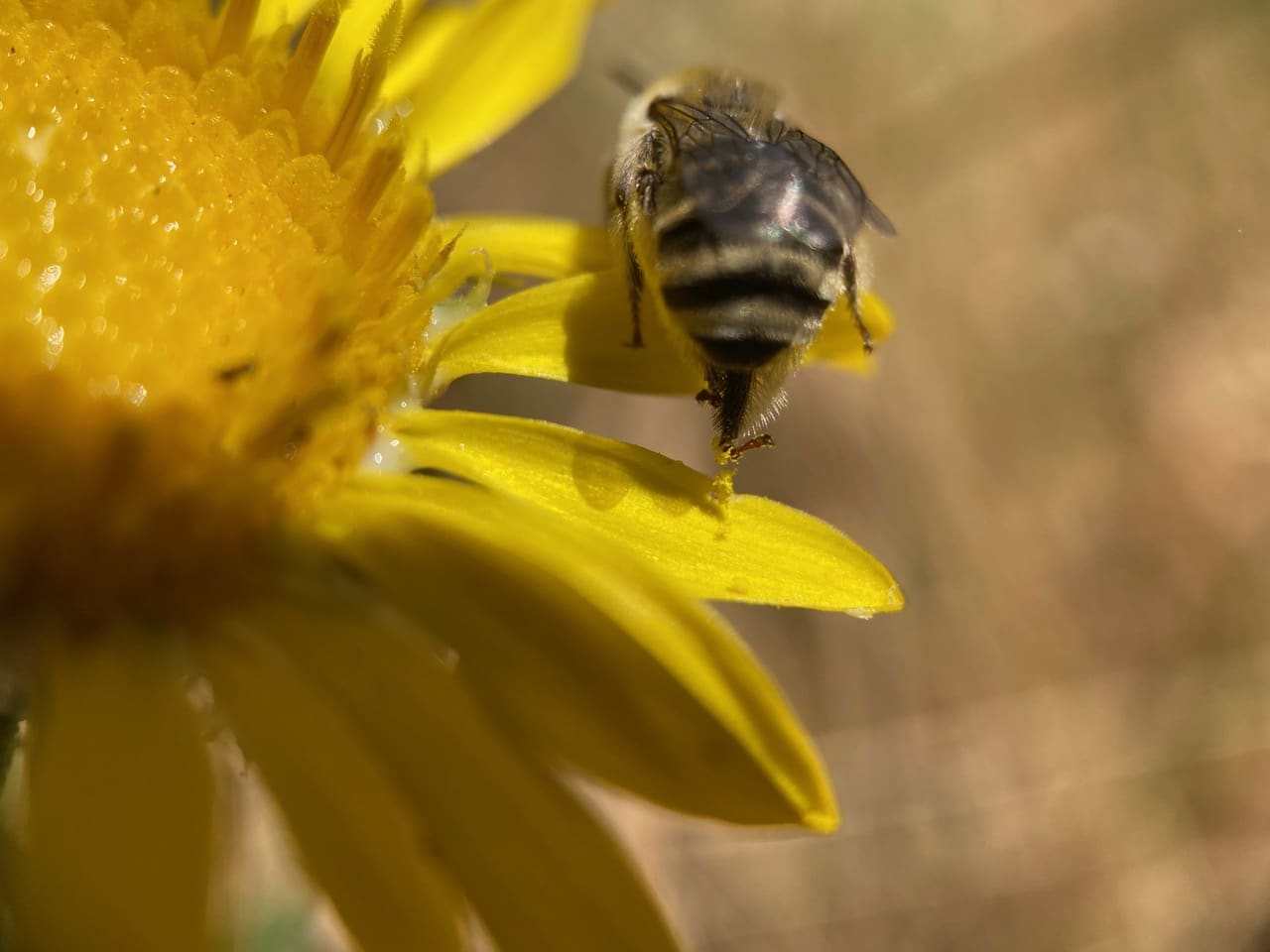
The bee is getting ready to fly off. Wow, what’s that at the tip of the bee’s abdomen? Her ovipositor? Her pygidial plate?
The pygidial plate is an unusually flat area (a plate) surrounded by a ridge or line and sometimes sticking well off the end of the bee. The pygidial plate is a digging/smoothing tool, used by ground-nesting bees to form and water-proof brood cells.
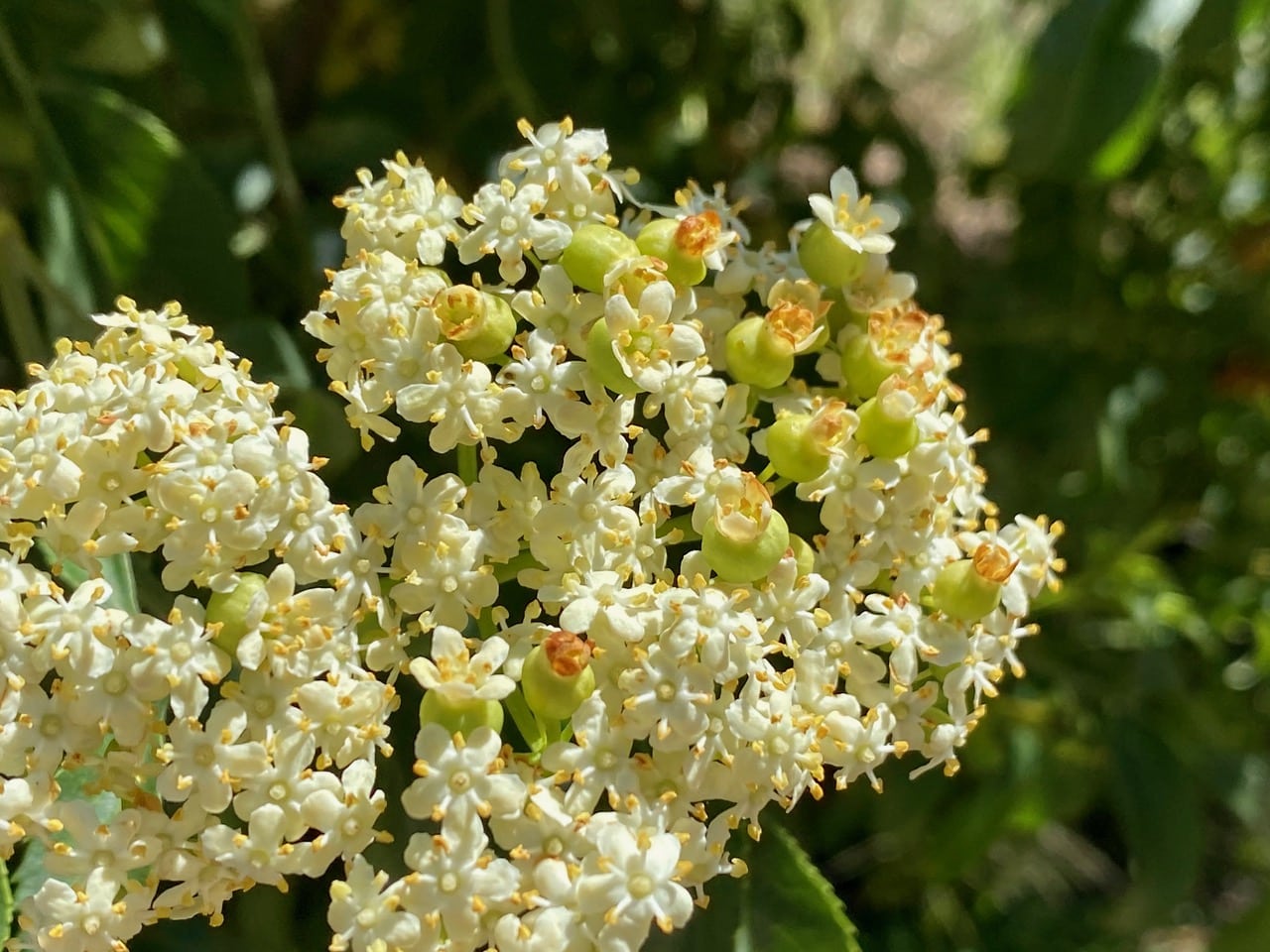 The small, cream-colored flowers of Blue Elderberry, Sambucus mexicana are beginning to develop into fruits,
I have almost never seen any insect visit the elderberry flowers. Imagine my surprise when this little bee lands on an Elderberry inflorescence.
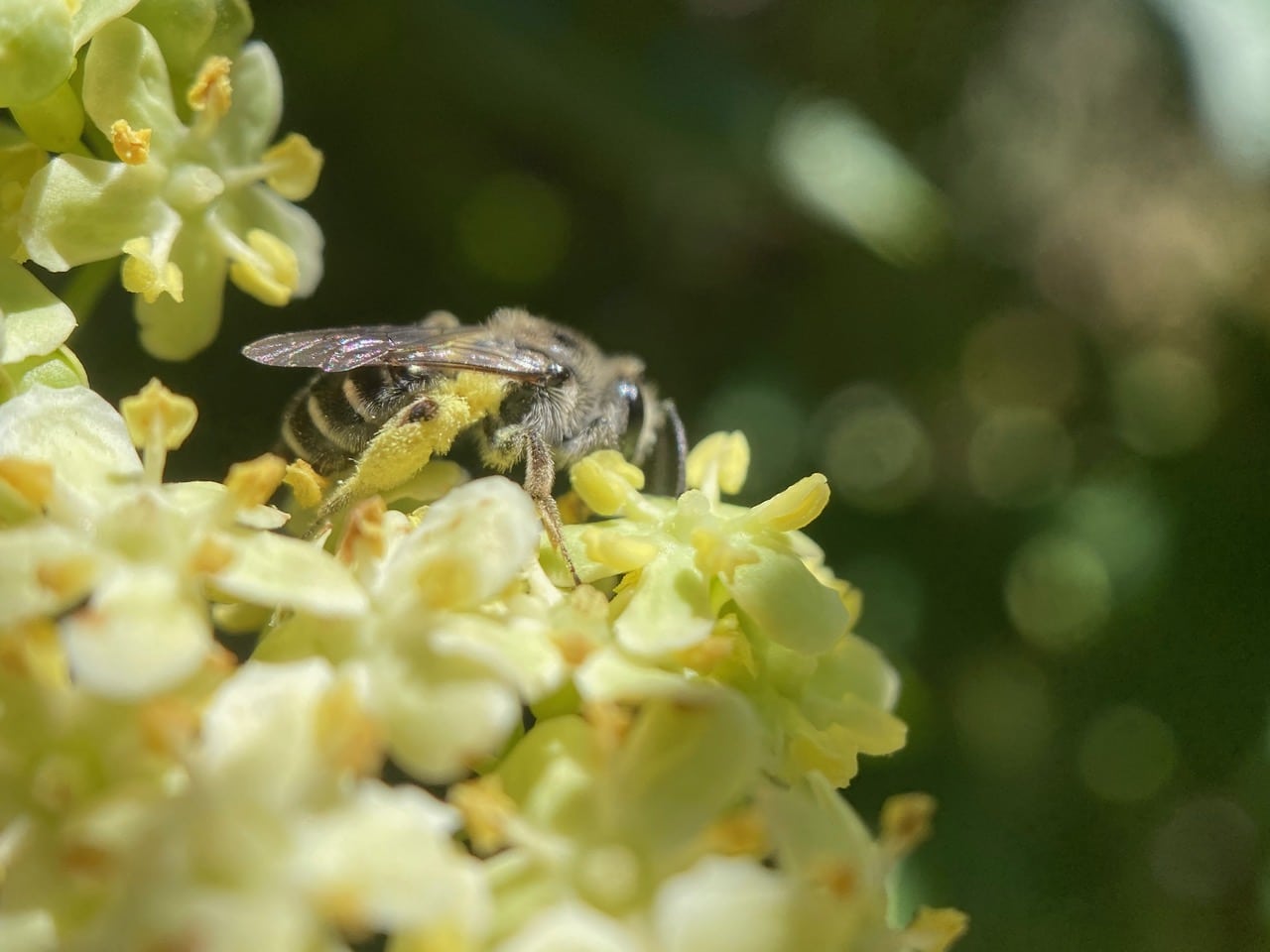
The bee has cream-colored pollen in the scopae that extend the full length of her hind legs.


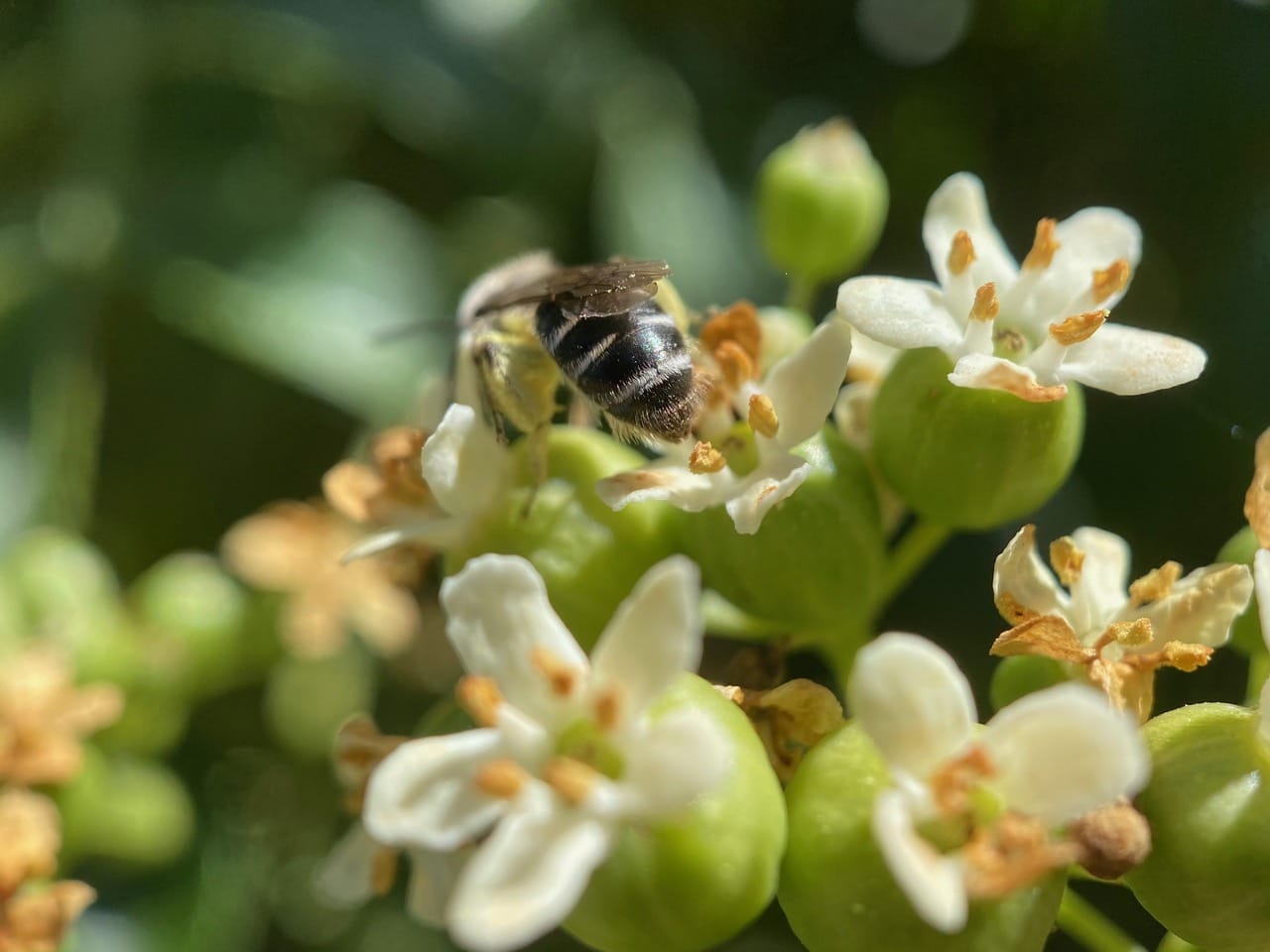
The bee is either a Sweat Bee, Halictus sp. (family Halictidae), or a Mining Bee (family Andrenidae). Her foraging activity on the Elderberry flowers is highly suggestive that the plant is pollinated by small bees, among other possibilities.