

Pollinator Post 6/14/24 (1)

I take a walk in Joaquin Miller Park this morning. The Hayfield Tarweed, Hemizonia congesta is blooming nicely among the dried grass along Sanborn Drive.
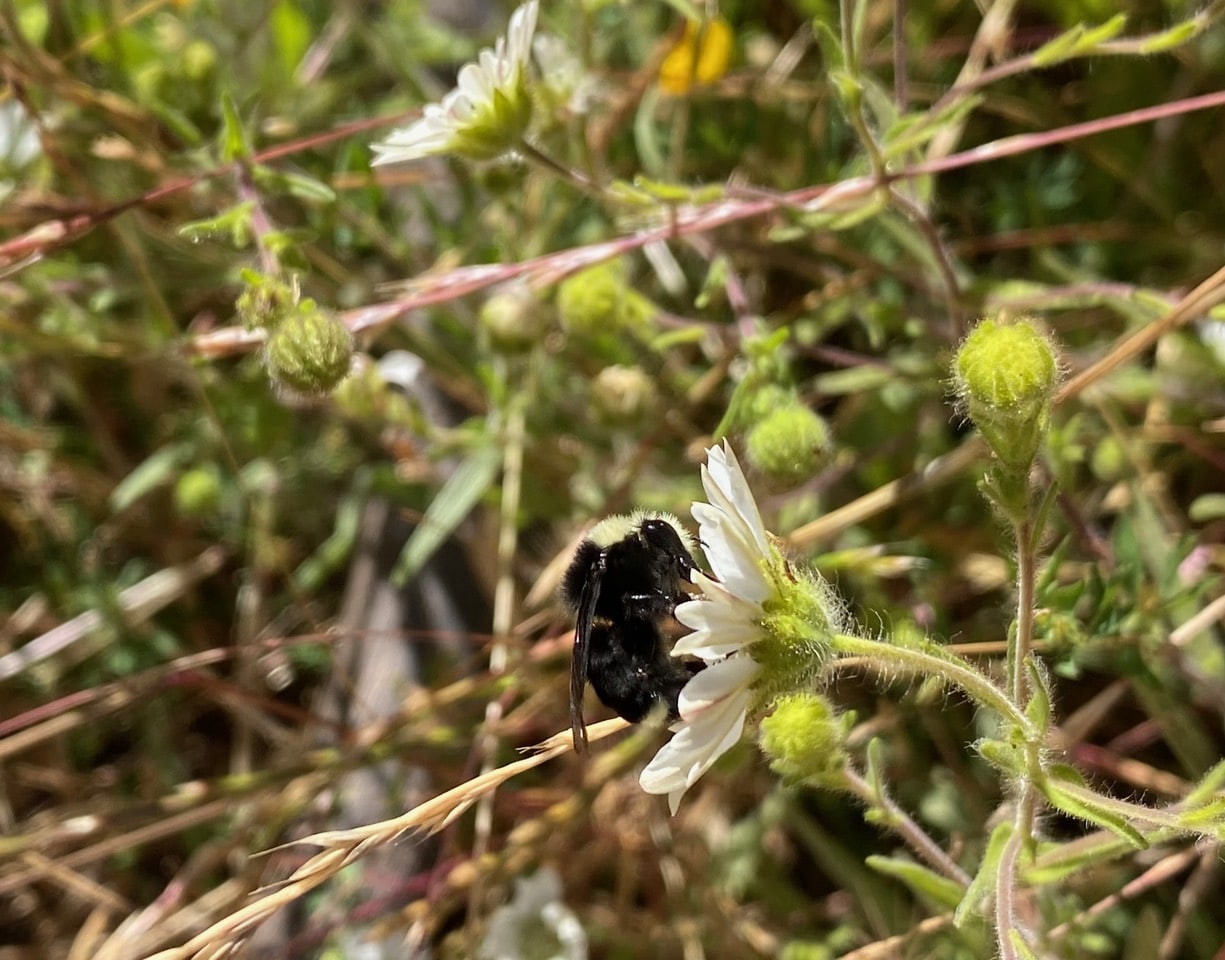
Several Yellow-faced Bumble Bees, Bombus vosnesenskii (family Apidae) are visiting the little white flowers for nectar. Every time the bee lands, it makes the flowerhead droop unsteadily from their weight..
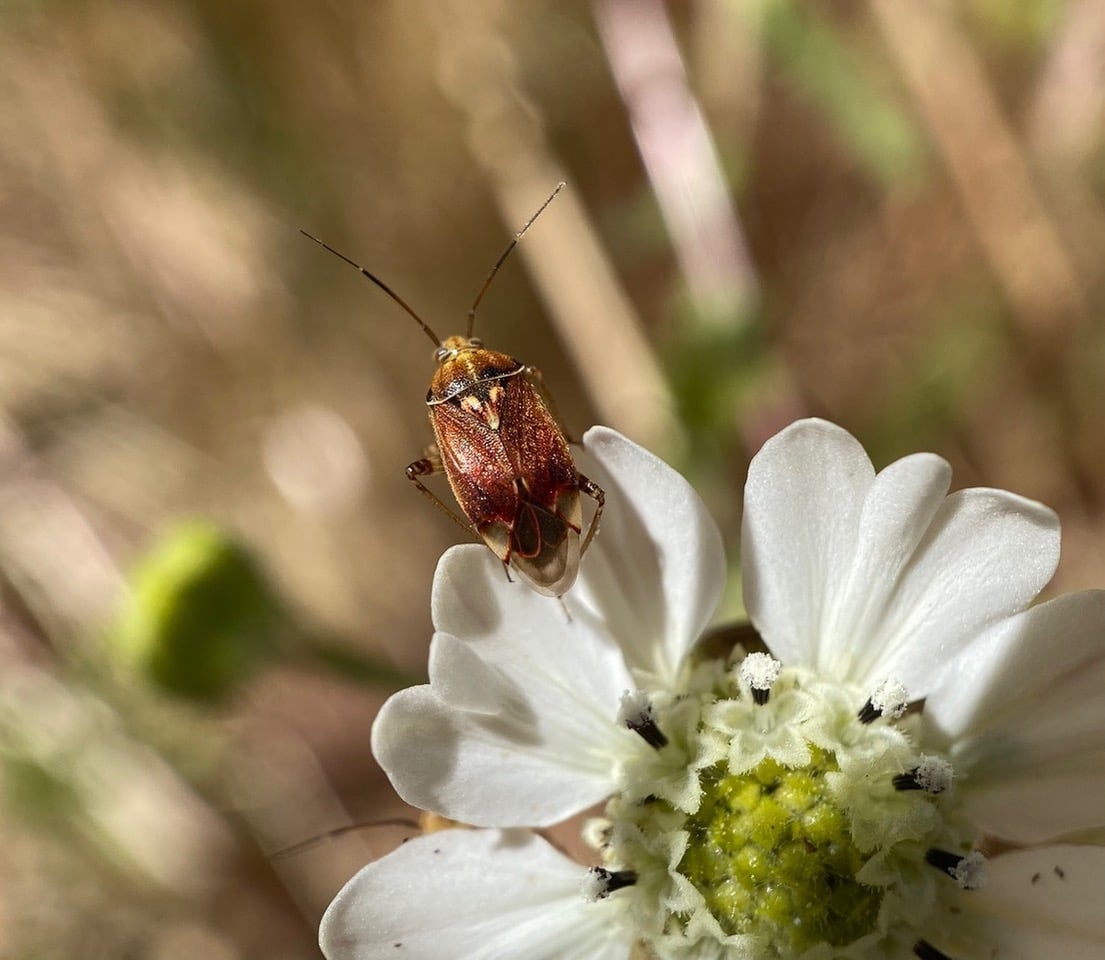


 Lygus Bugs, Lygus sp. (family Miridae) are commonly found on the tarweeds. Like other members of the order Hemiptera (“true bugs”) the bugs feed on plant tissues with their piercing-sucking mouthparts. Note the cuneus at the tips of its forewings. it is the triangular tip of the corium, the firm, horny part of the forewing, the hemielytron. The cuneus is visible in nearly all Miridae.
A Lygus Bug, Lygus sp. (family Miridae) is resting on the rim of a Hayfield Tarweed flowerhead.
The term lygus bug is used for any member of the genus Lygus, in the family of plant bugs, Miridae. Adult lygus are approximately 3 mm wide and 6 mm long, colored from pale green to reddish brown or black. They have a distinctive triangle or V-shape on their backs. Lygus bugs are known for their destructive feeding habits – they puncture plant tissues with their piercing mouthparts, and feed by sucking sap. Both the physical injury and the plant’s own reaction to the bug’s saliva cause damage to the plant. Many lygus bugs are well-known agricultural pests.
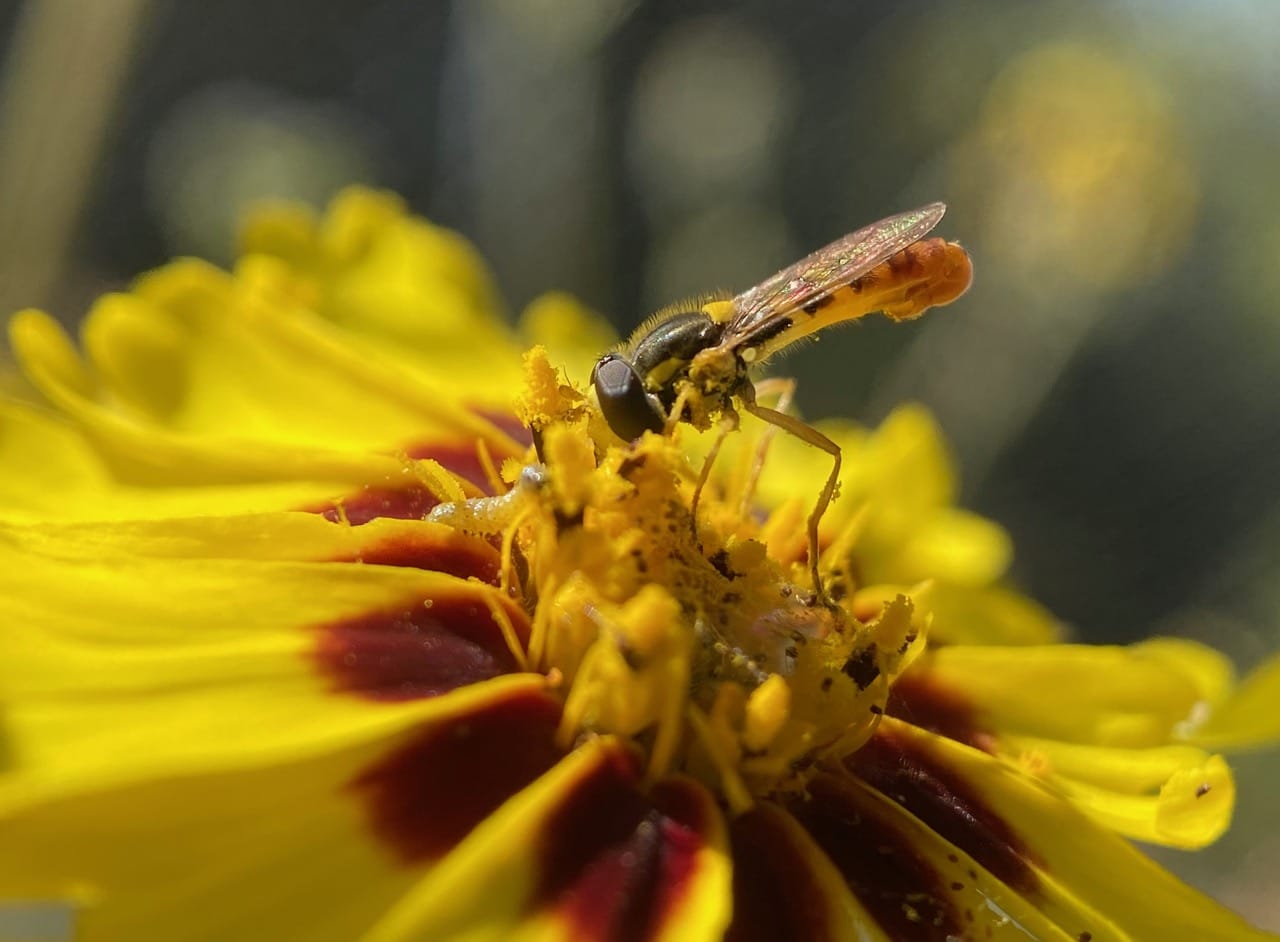
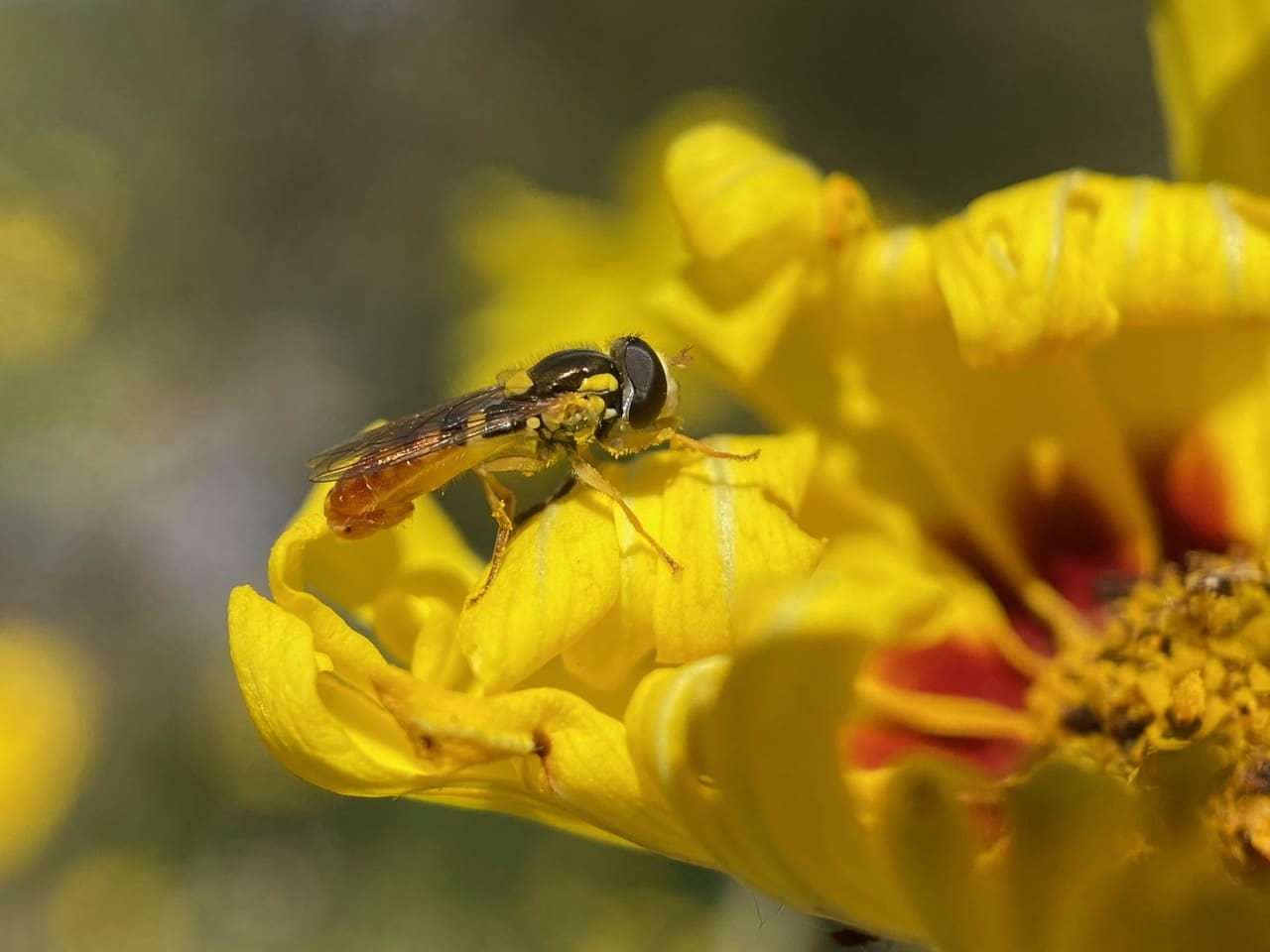
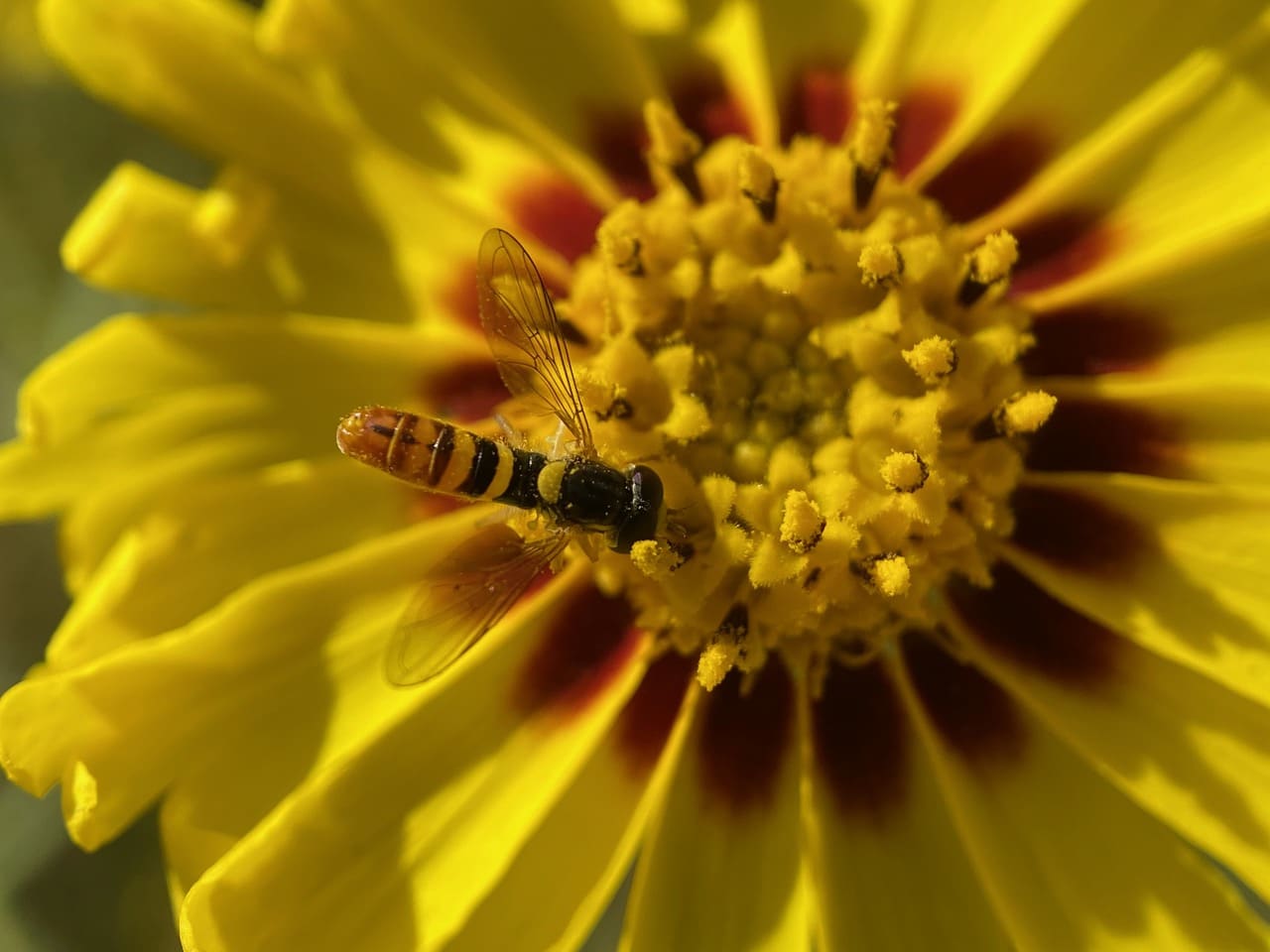
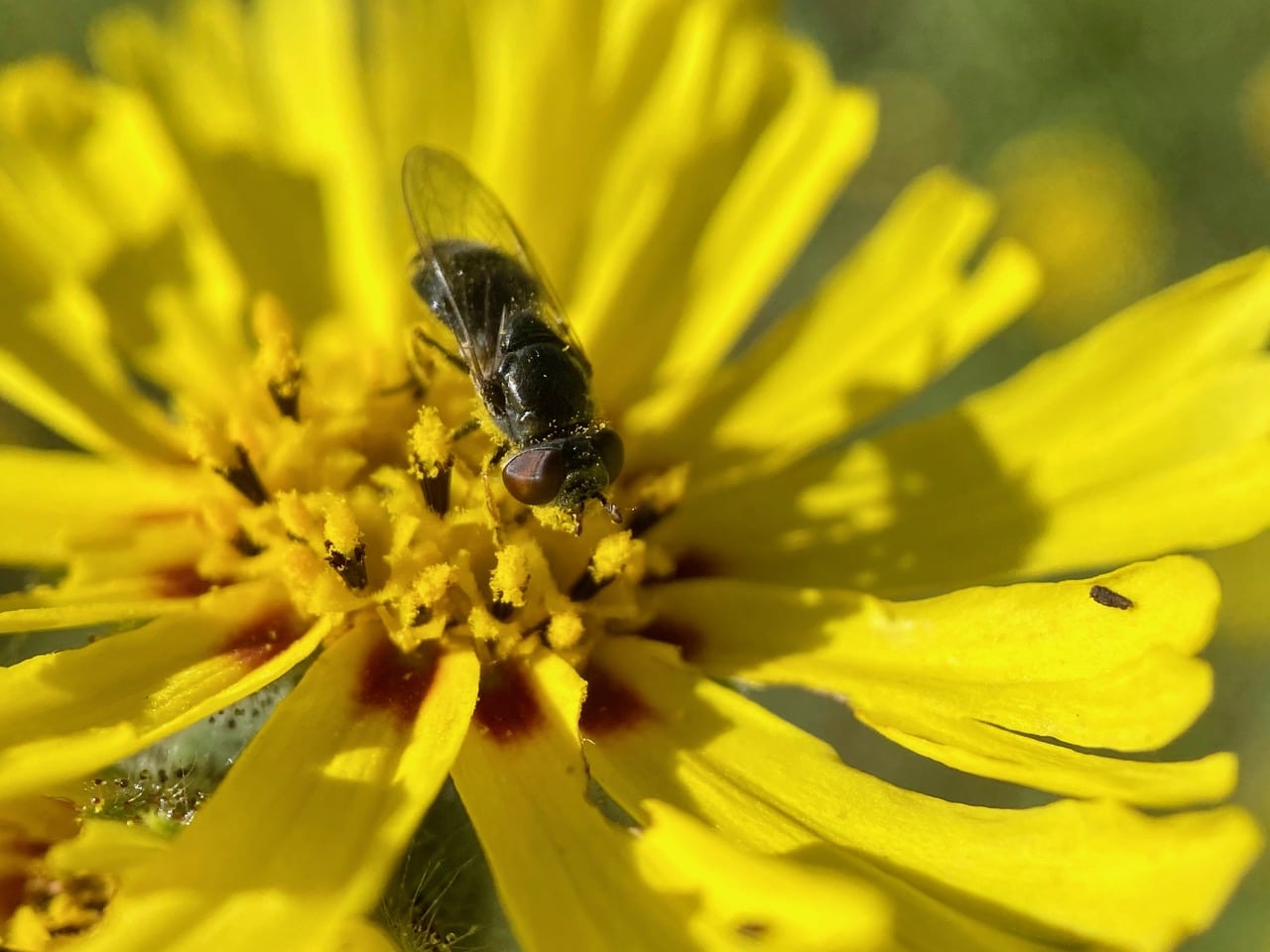
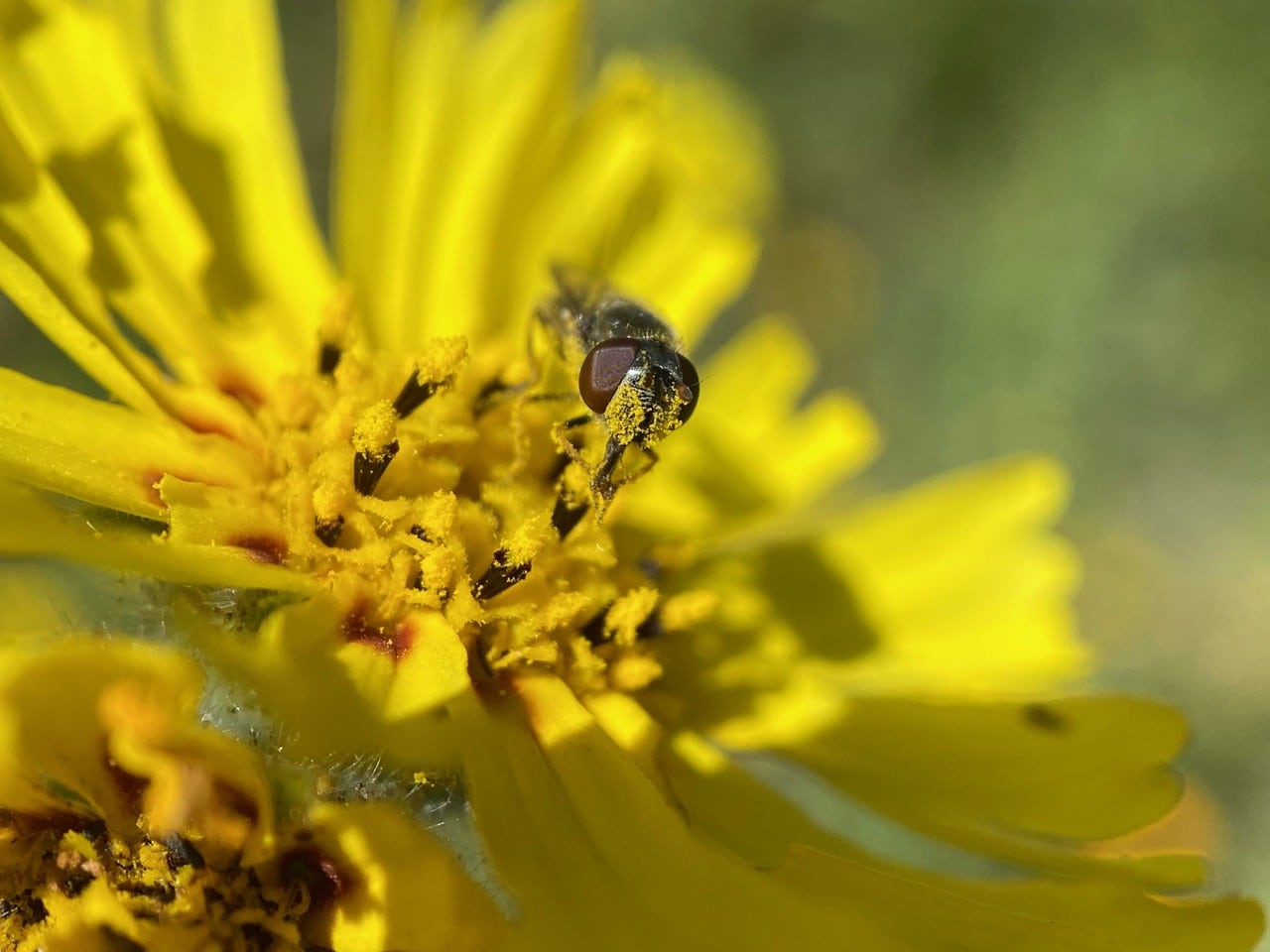
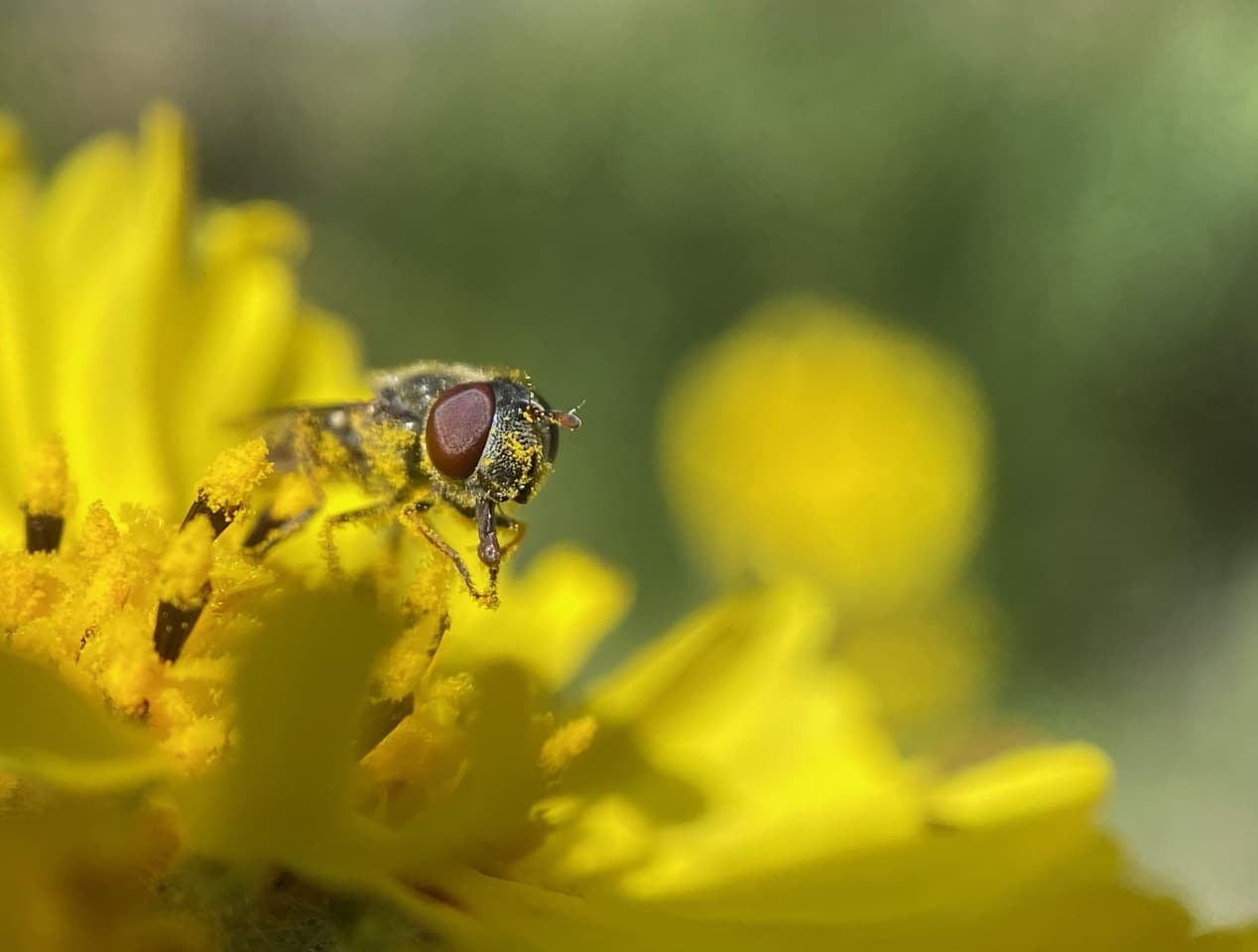
A Sedgesitter, Platycheirus sp. (family Syrphidae) is foraging on a Hayfield Tarweed flowerhead.
Platycheirus is found in grass and herb vegetation. Adults of many species feed on pollen of wind-pollinated plants, such as Salix, Plantago, Poaceae, Cyperaceae, but they visit other flowers also. Many stay active during cold and rainy weather. Larvae feed on aphids.
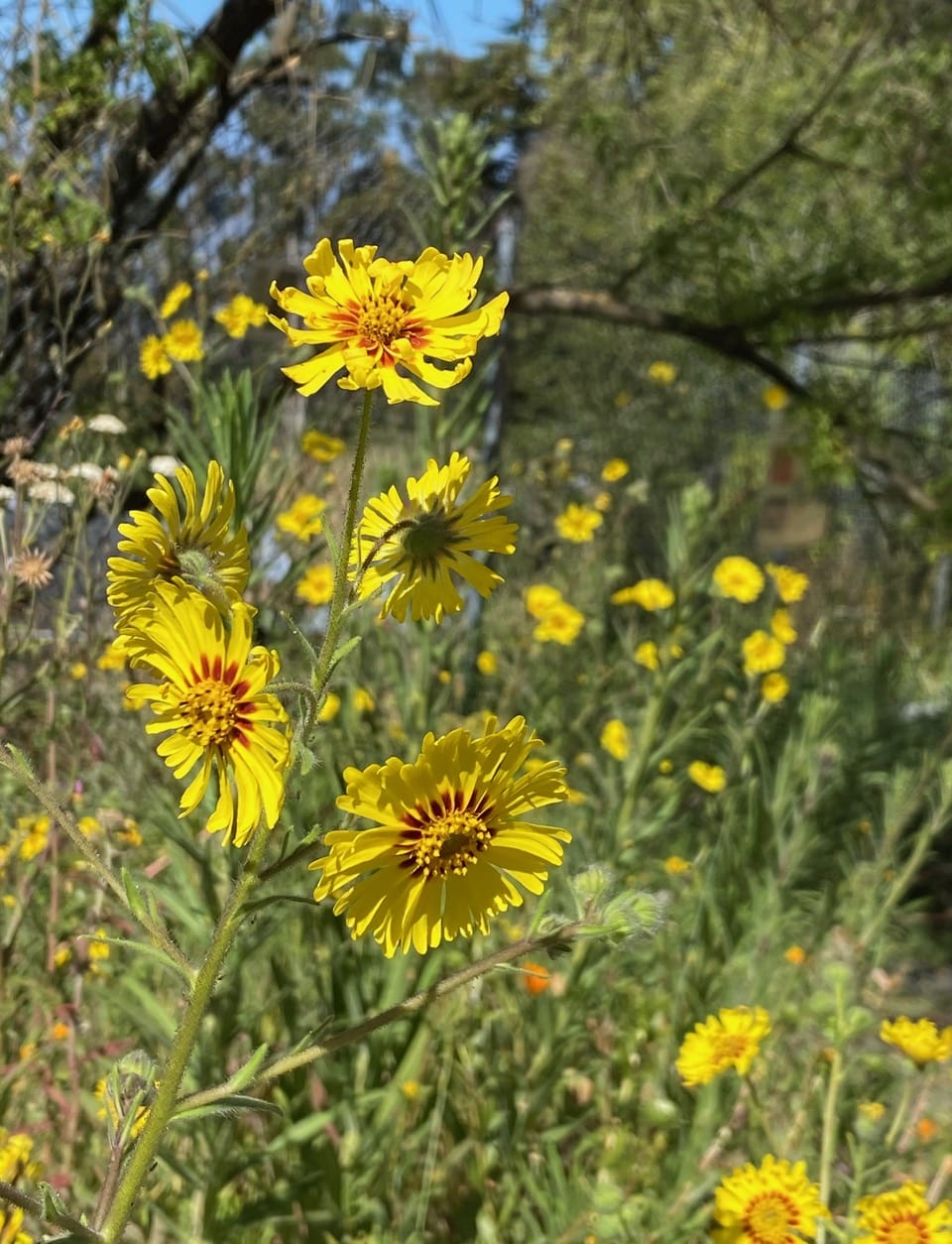
The Elegant Tarweed, Madia elegans is blooming gloriously along the fence of the FOSC Native Plant Nursery.
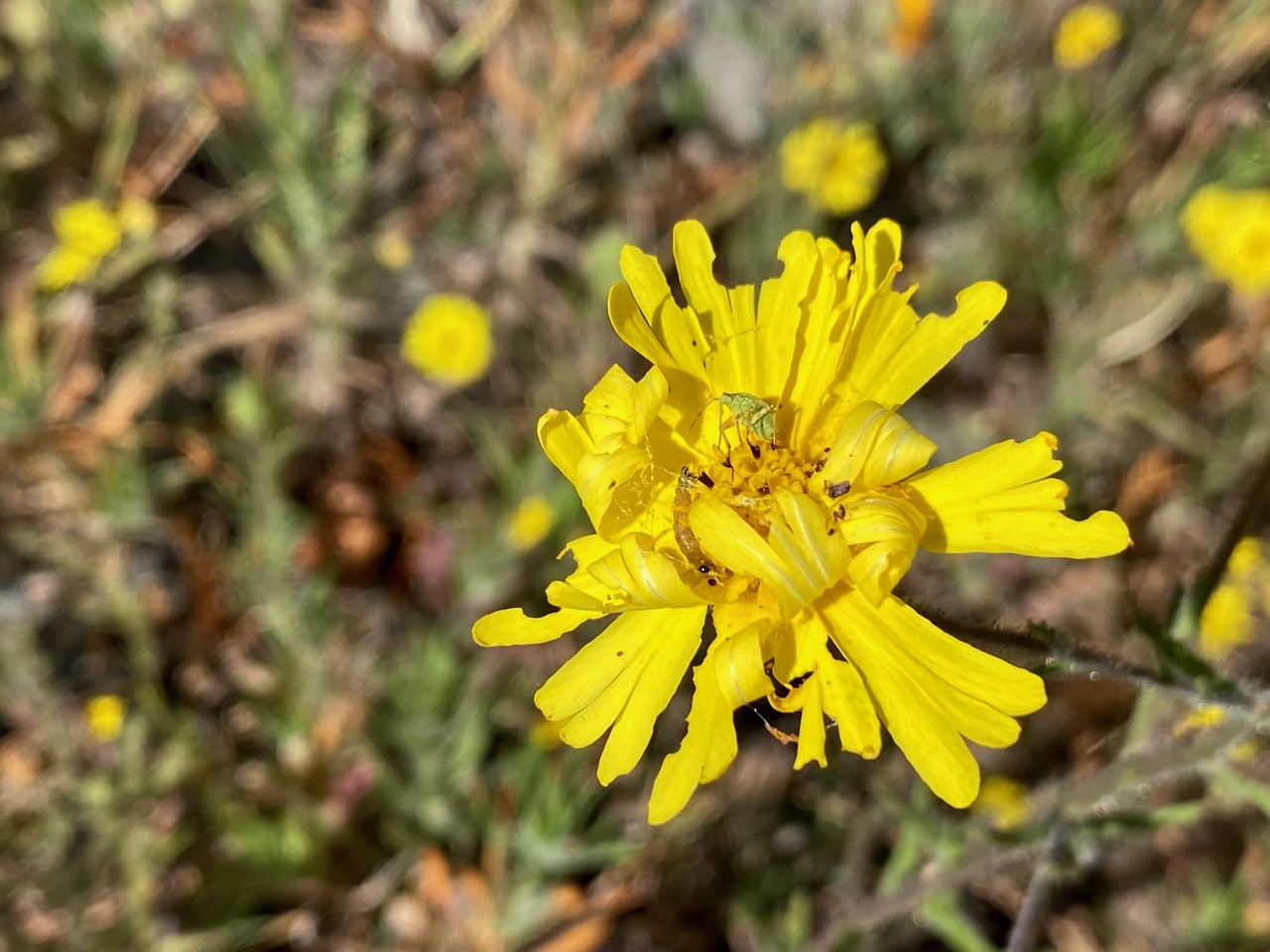
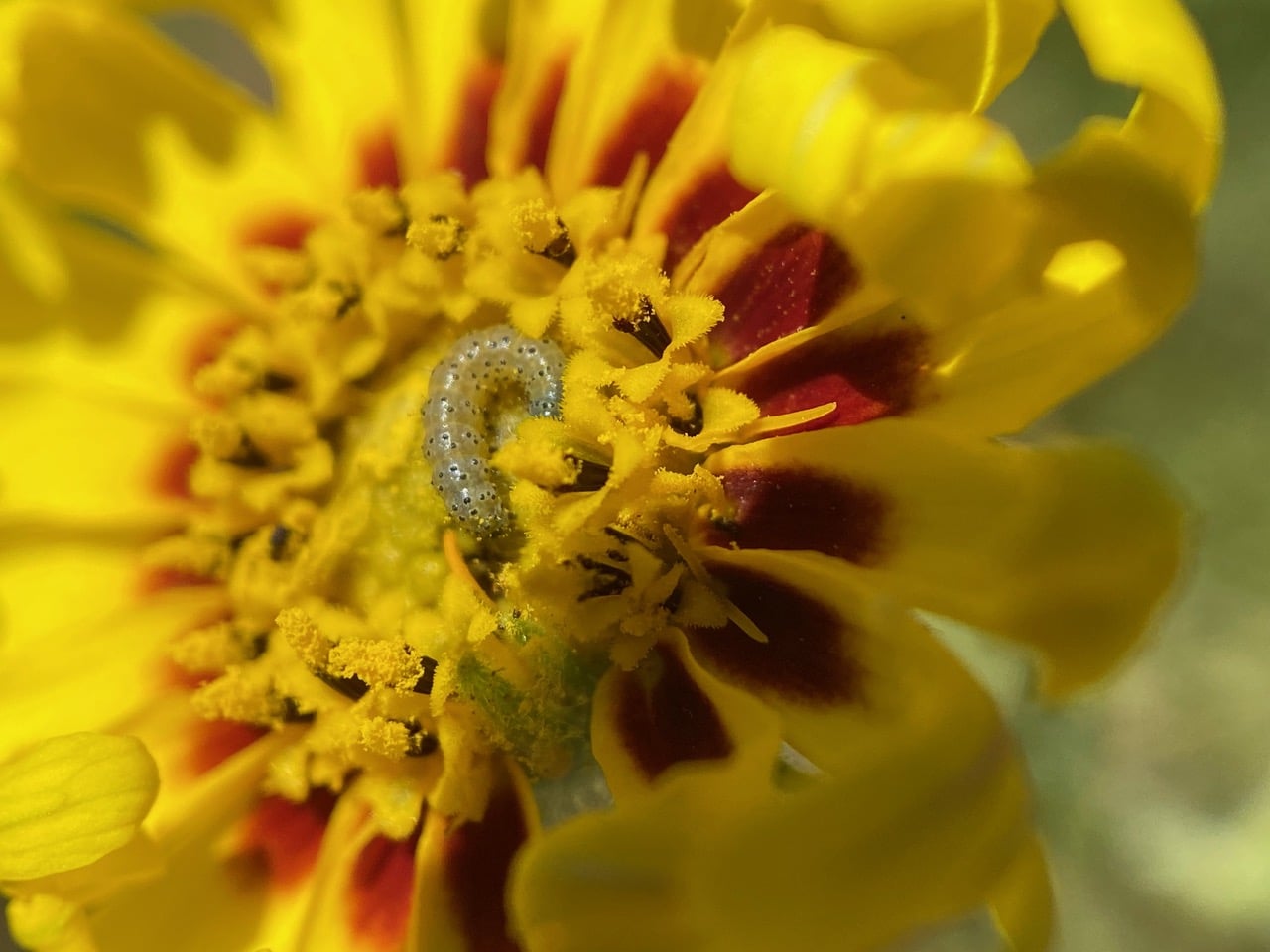
That Elegant Tarweed flowerhead looks like it’s been tempered with. Several of the ray petals have been loosely folded over. I see a green Lygus Bug nymph and a tiny caterpillar on the disc flowers.
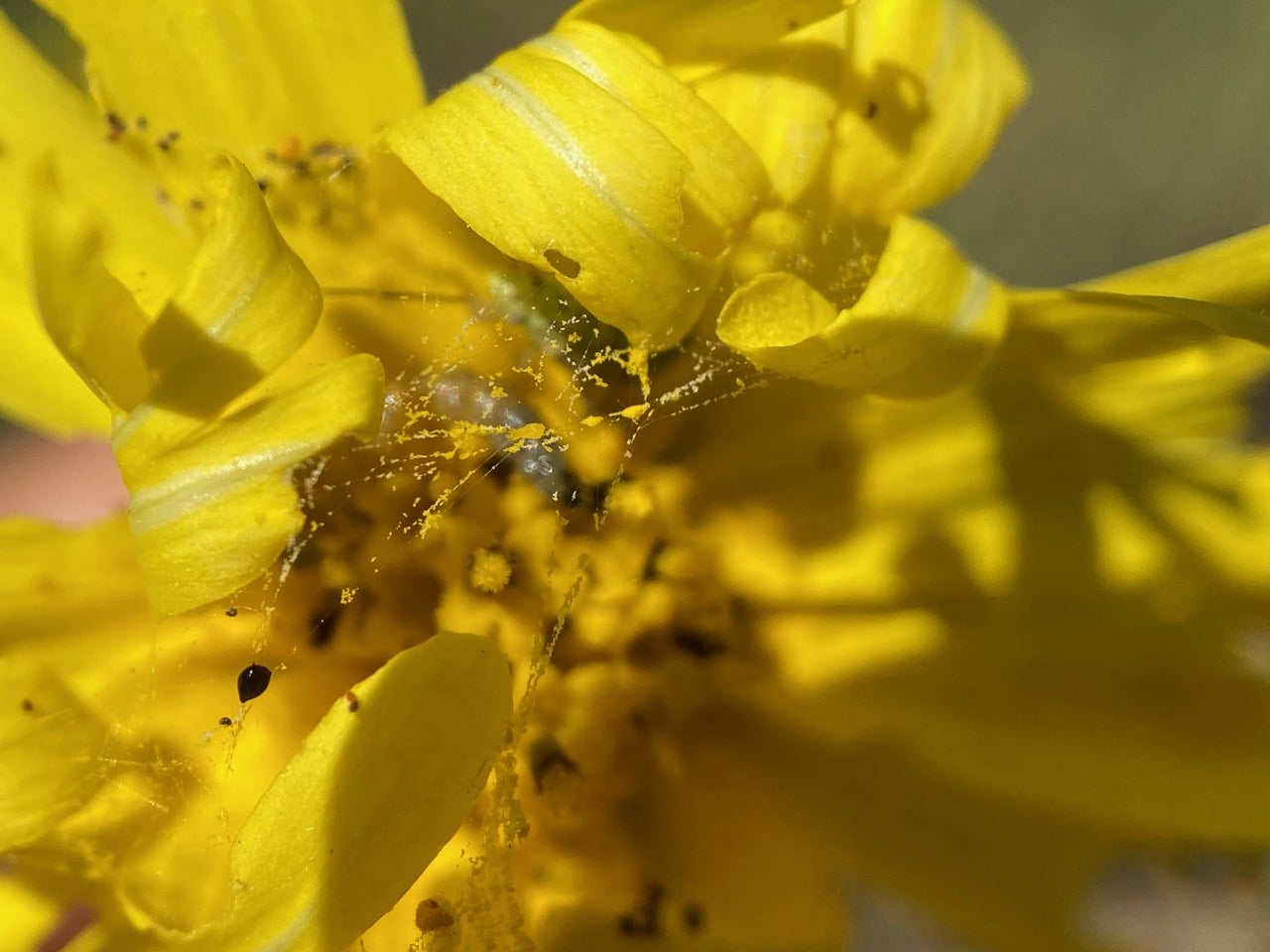
Closer examination of the flowerhead shows that the ray petals have been drawn together with silk strands that are now mired with yellow pollen. It is a work in progress – a little caterpillar is constructing a shelter within which it can feed safely.
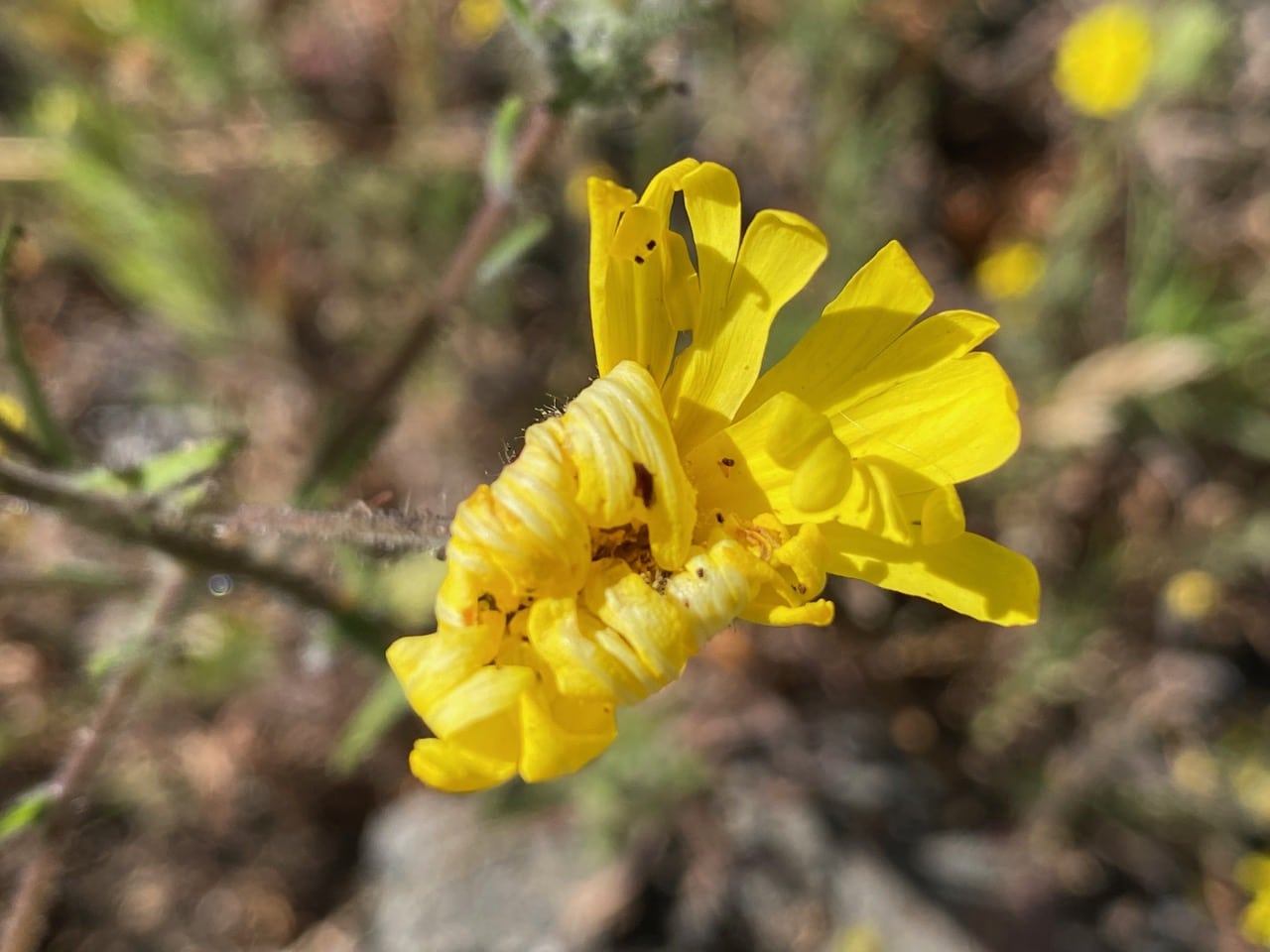
Here’s another flowerhead with the same signs.
This flowerhead is almost completely closed. Note caterpillar frass scattered over the flowerhead.
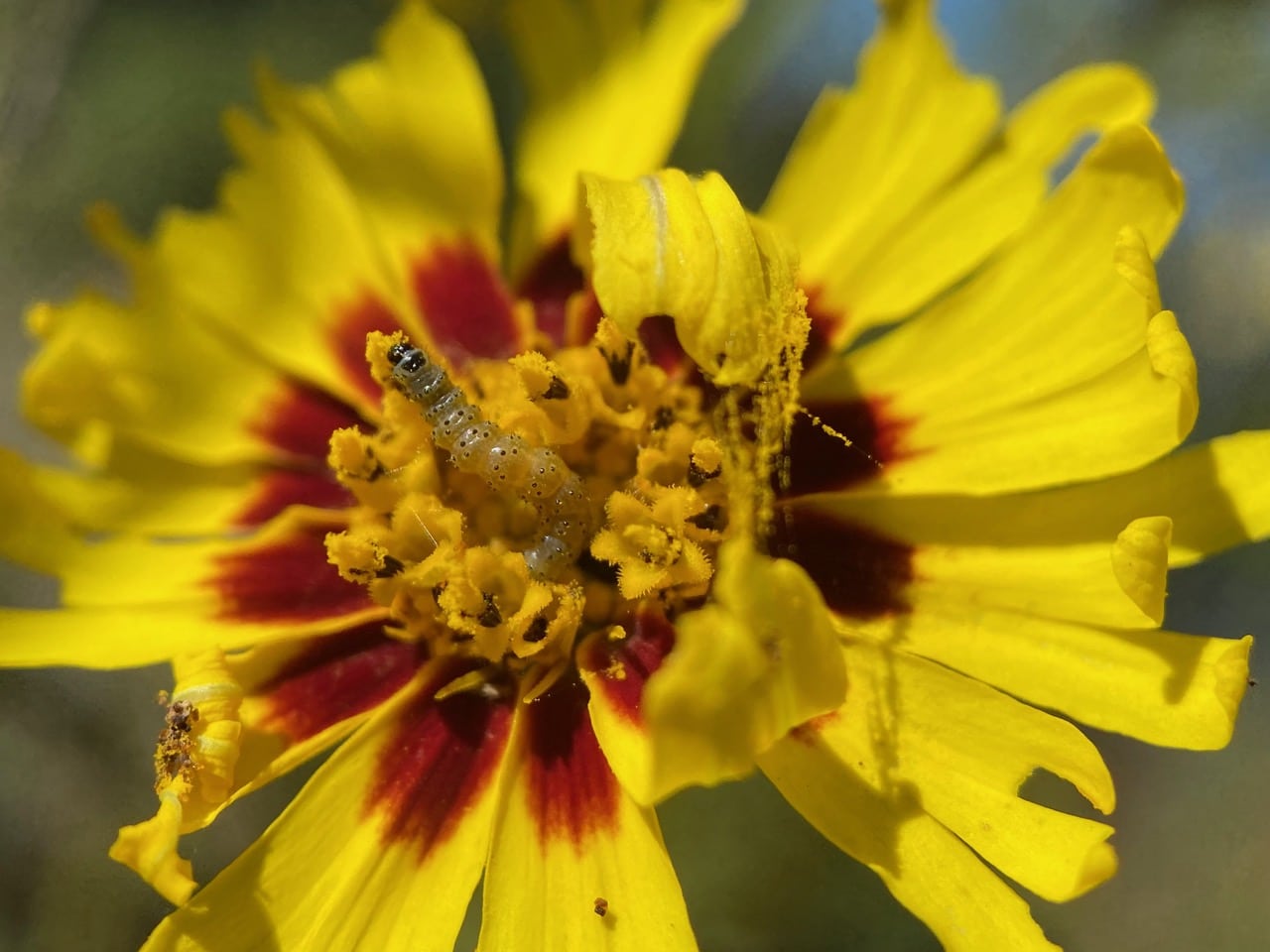
Ooh, we can actually see the young caterpillar at work on this Elegant Tarweed flowerhead. It is the larva of the Small Heliothodes Moth, Heliothodes diminutiva (family Noctuidae).
Heliothodes diminutiva is a very small (forewing length 7-10 mm) day-flying moth that is active late spring through summer. The species is found in dry grasslands at low elevations. The moth is distributed through most of California, extending to Baja California. Larvae feed mainly on native plants in the sunflower family Asteraceae. Adults are diurnal and visit flowers during the day. They are fond of yellow flowers.
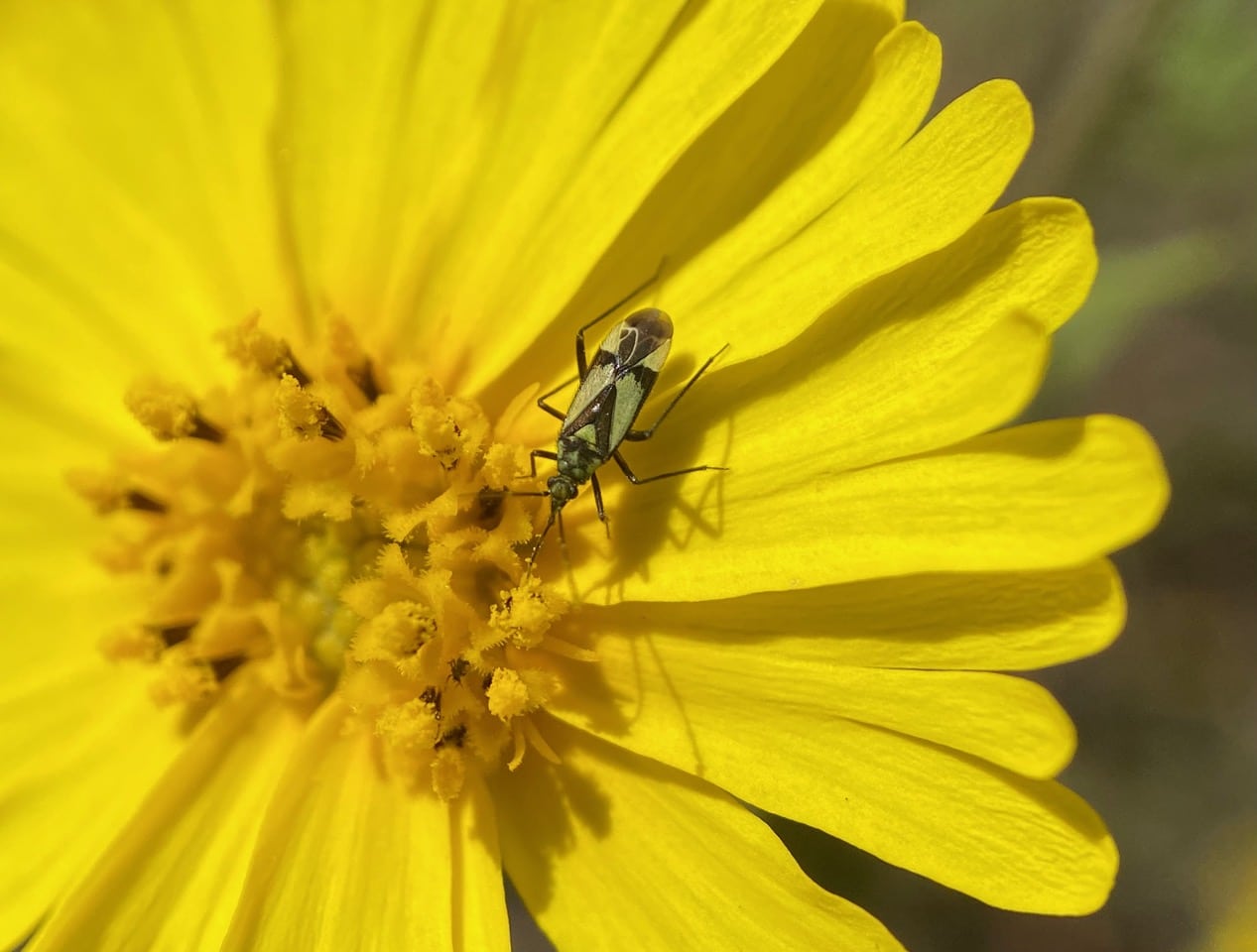
A tiny Plant Bug, Macrotylus essigi (family Miridae) is feeding on the flowers of Elegant Tarweed.
Mirid bugs are also referred to as plant bugs or leaf bugs. Miridae is one of the largest family of true bugs in the order Hemiptera. Like other Hemipterans, Mirids have piercing, sucking mouthparts to extract plant sap. Some species are predatory. One useful feature in identifying members of the family is the presence of a cuneus; it is the triangular tip of the corium, the firm, horny part of the forewing, the hemielytron. The cuneus is visible in nearly all Miridae.

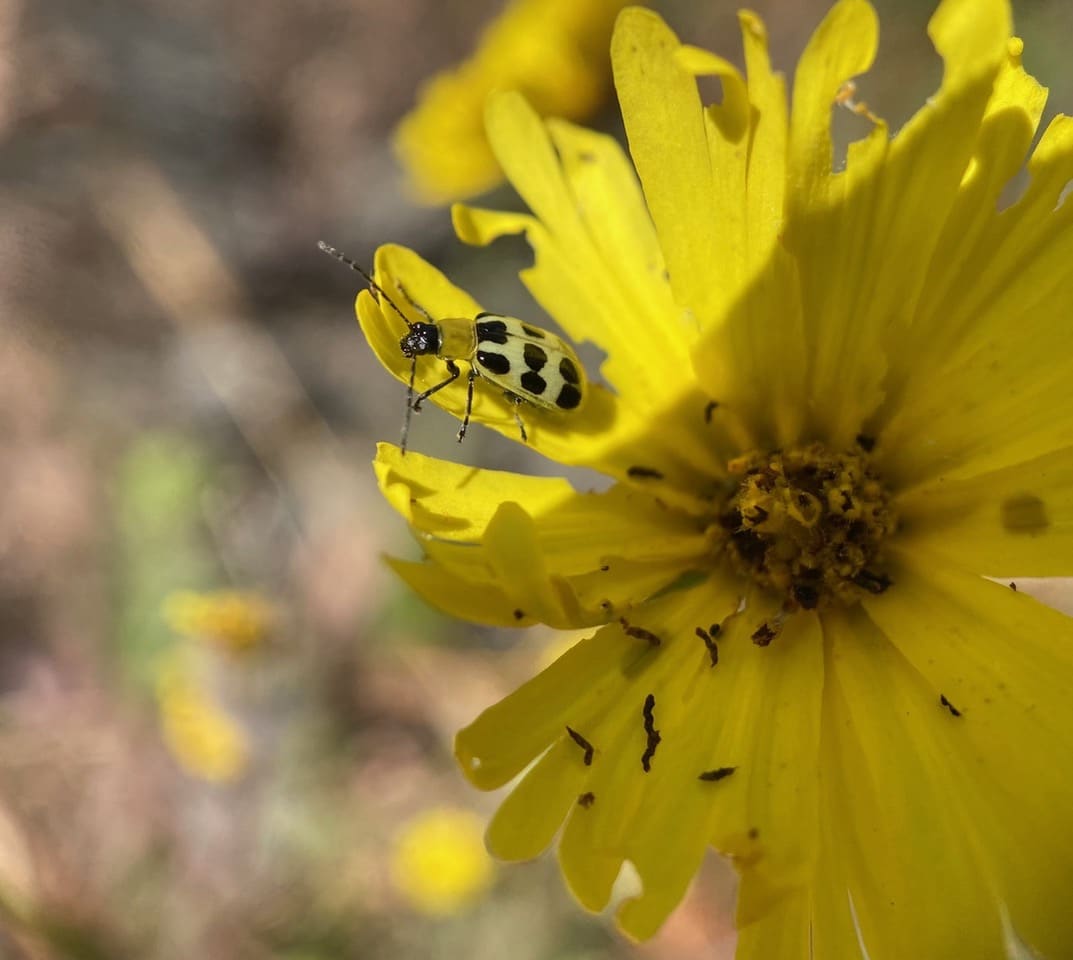
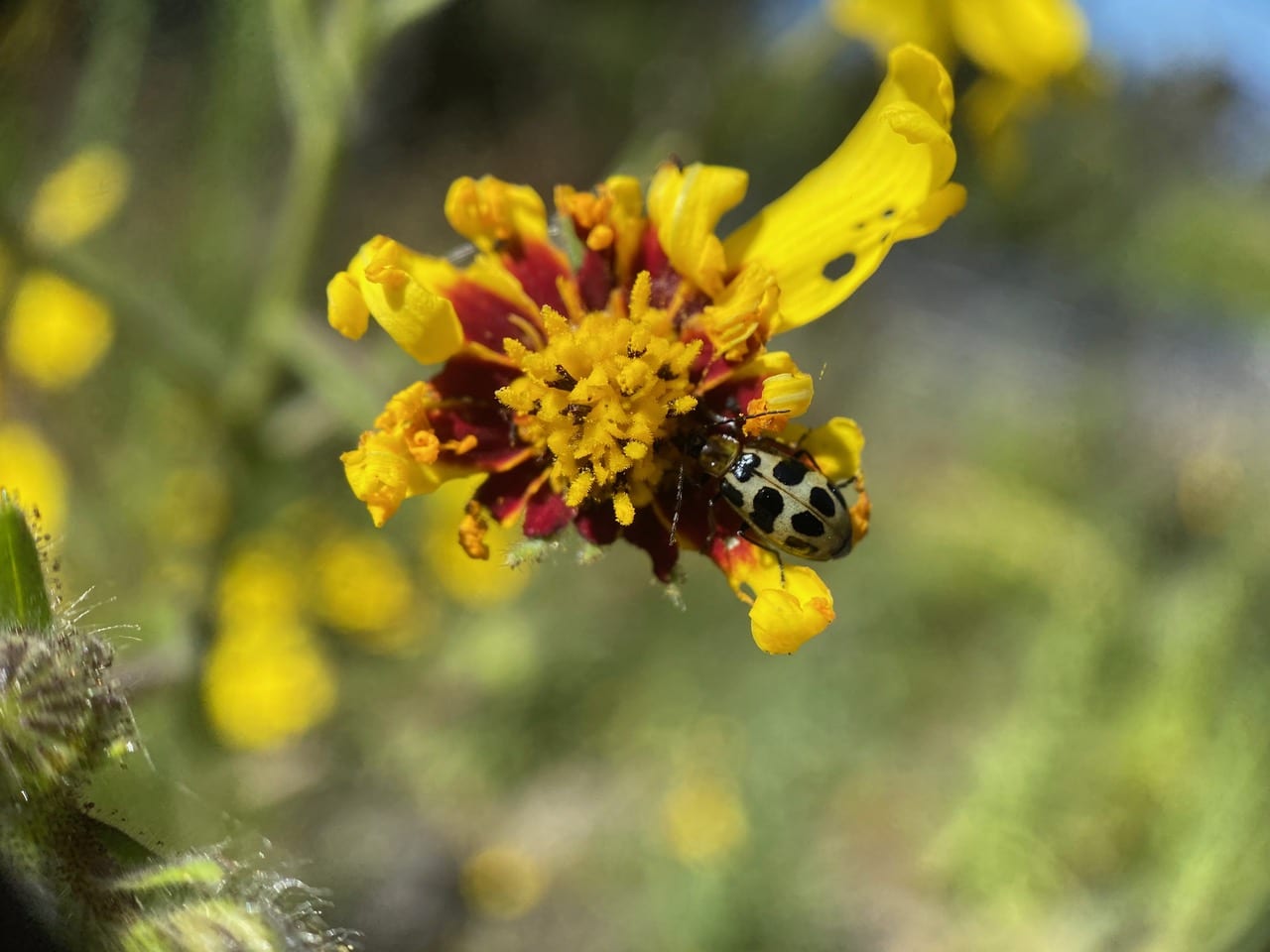
The Elegant Tarweed flowerhead shows the feeding scars and the scattered frass (insect poop) left by the Spotted Cucumber Beetle, Diabrotica undecimpunctata (family Chrysomelidae).
Members of the family Chrysomelidae are commonly known as Leaf Beetles. Adults and larvae feed on all sorts of plant tissues, and all species are fully herbivorous. Many are serious pests of cultivated plants, including food crops. Others are beneficial due to their use in biocontrol of invasive weeds. Chrysomelids are popular among insect collectors, as many are conspicuously colored, typically in glossy yellow to red or metallic blue-green hues, and some have spectacularly bizarre shapes. Photos of Leaf Beetles (Family Chrysomelidae) · iNaturalist
Native to North America, the Spotted Cucumber Beetle can be a major agricultural pest, causing damage to crops in the larval as well as adult stages of their life cycle. Larvae, sometimes known as rootworms feed on the roots of emerging plants. In the adult stage the beetles cause damage by eating the flowers, leaves, stems and fruits of the plant.
The Spotted Cucumber Beetle has done even more damage to this flowerhead, having decimated the ray flowers.
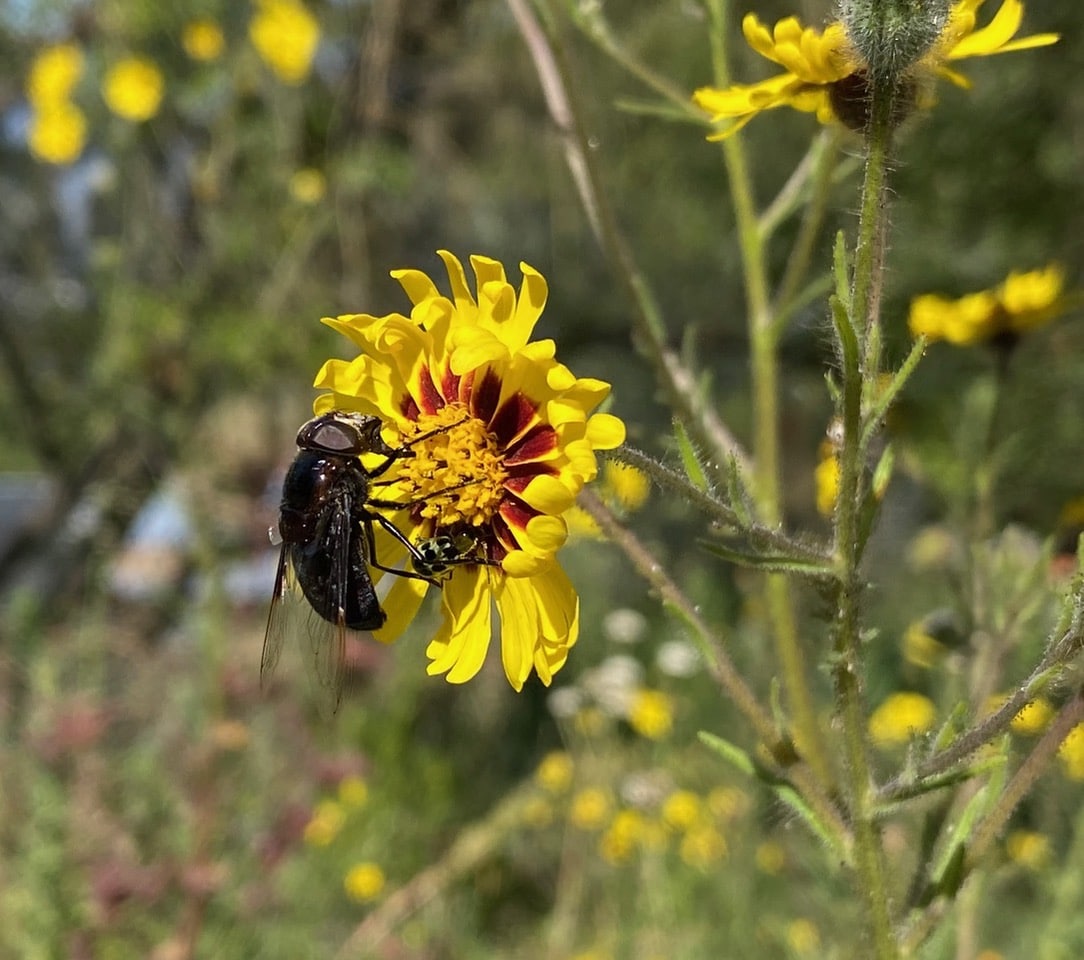
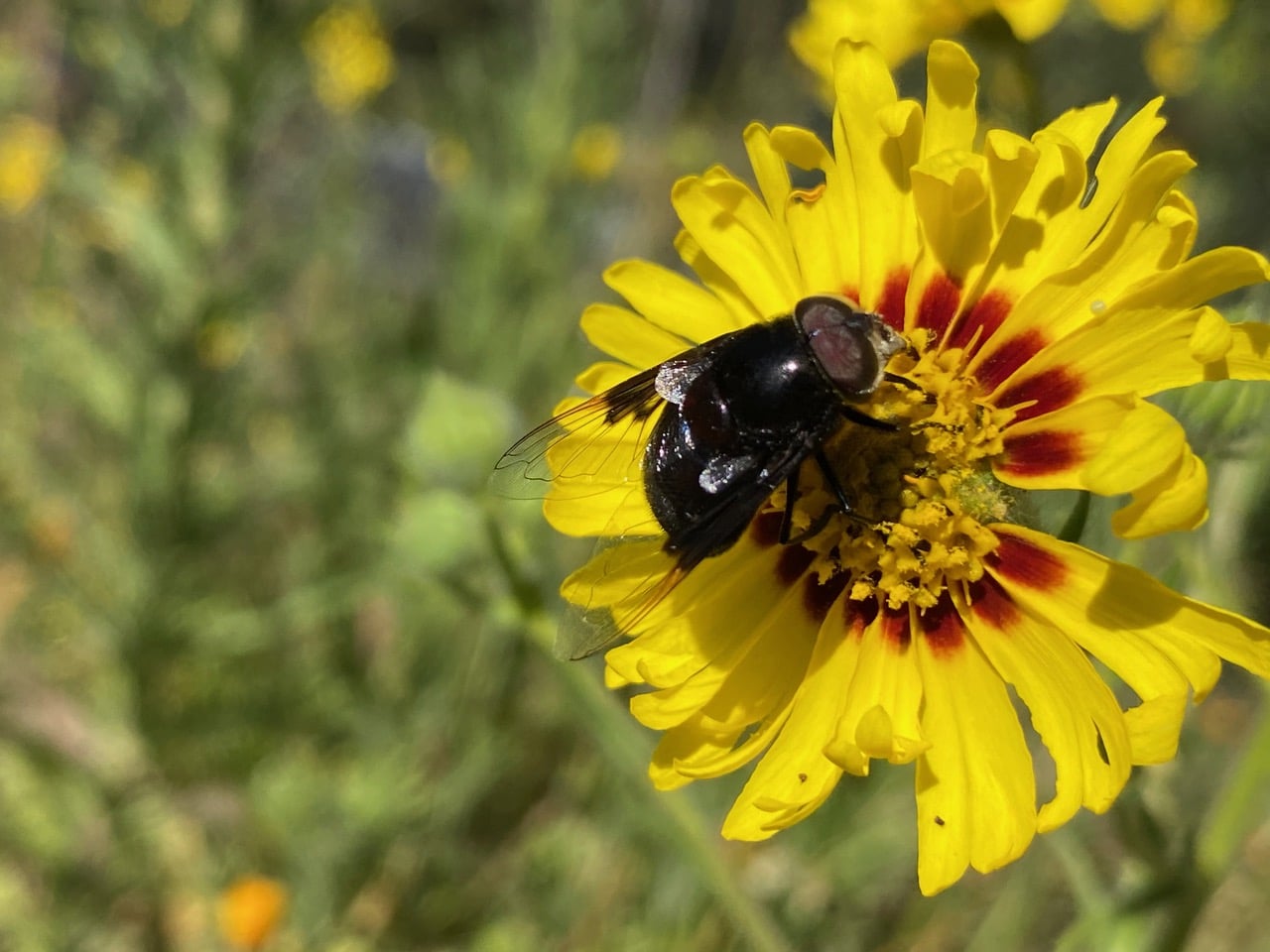
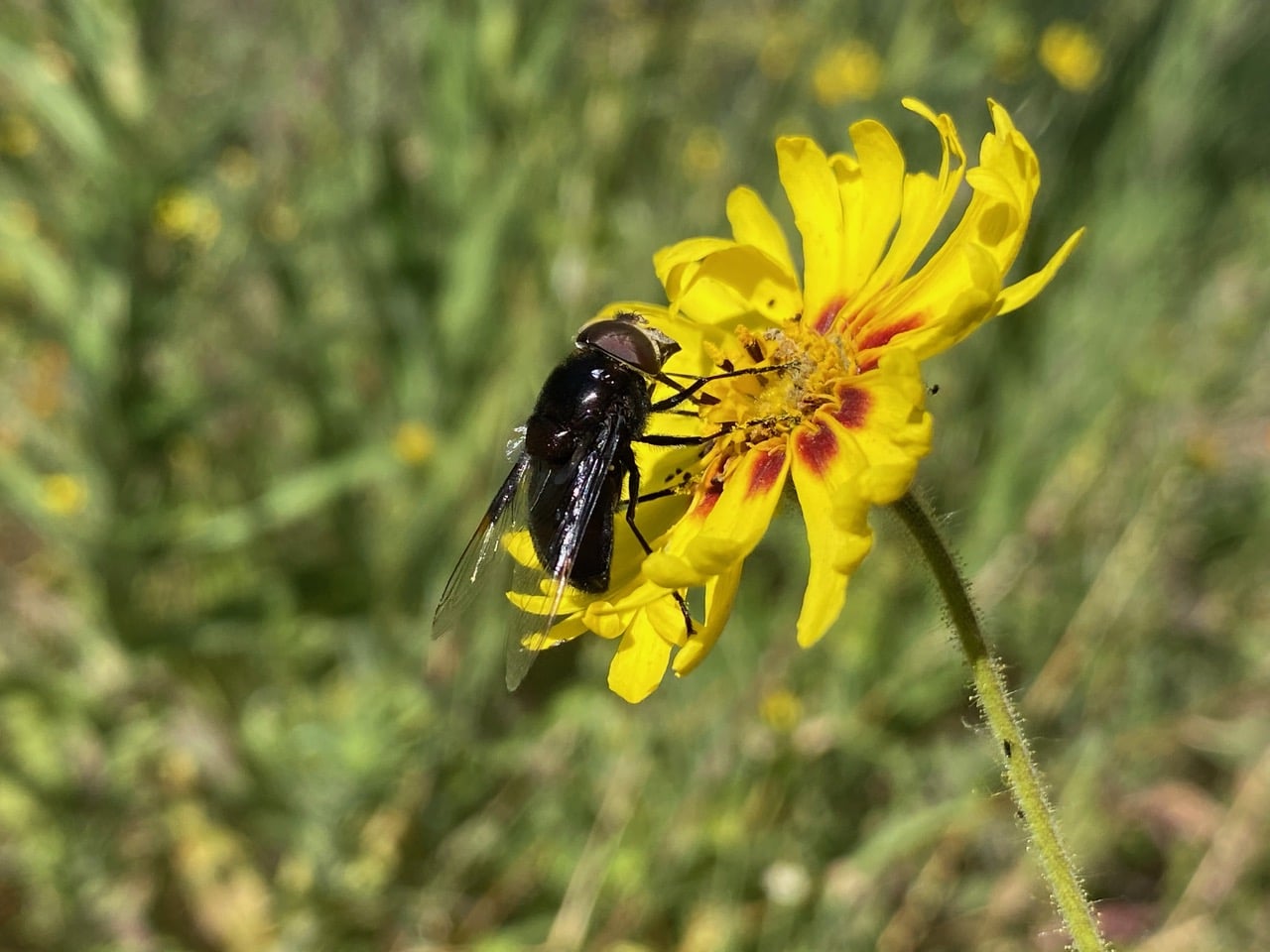
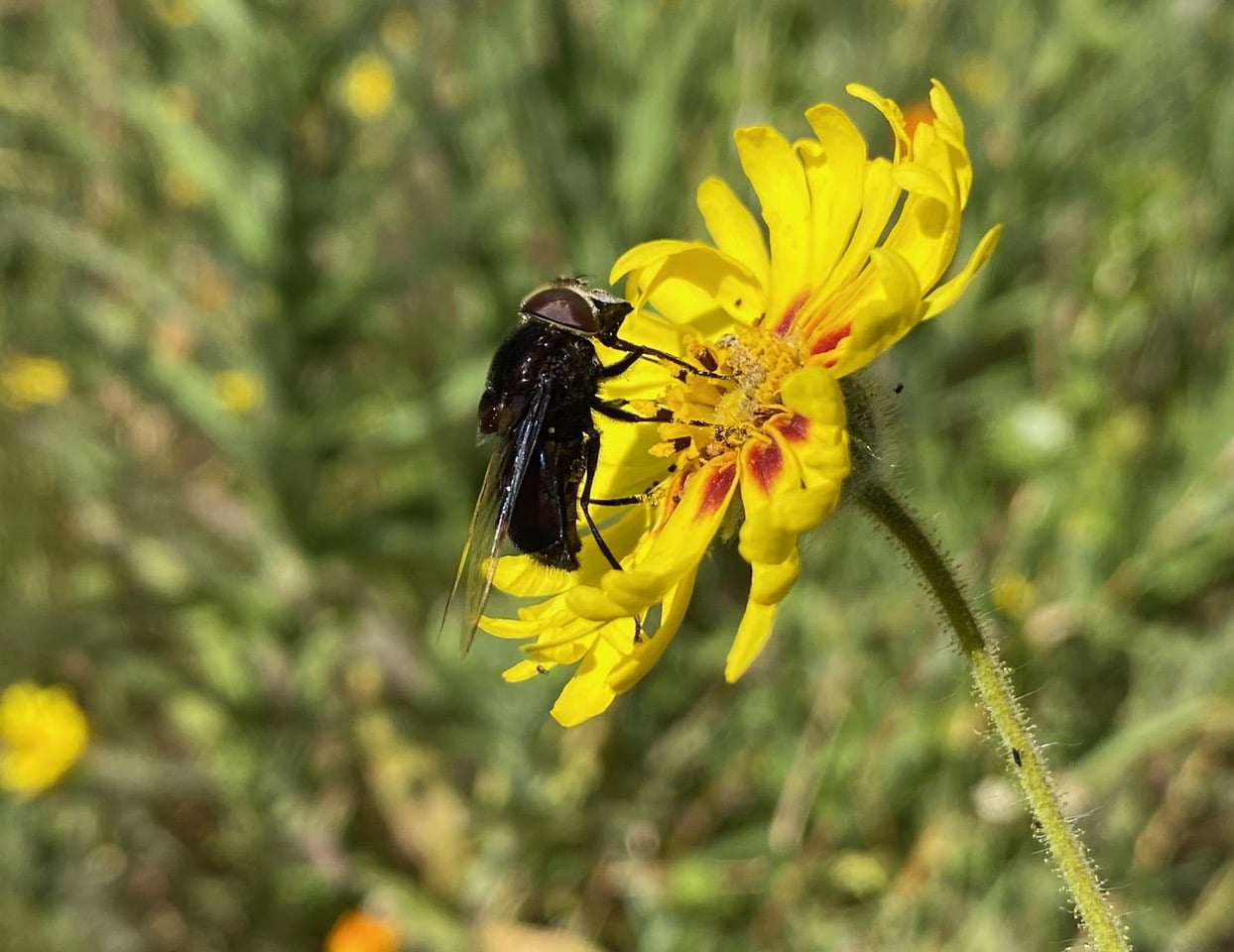
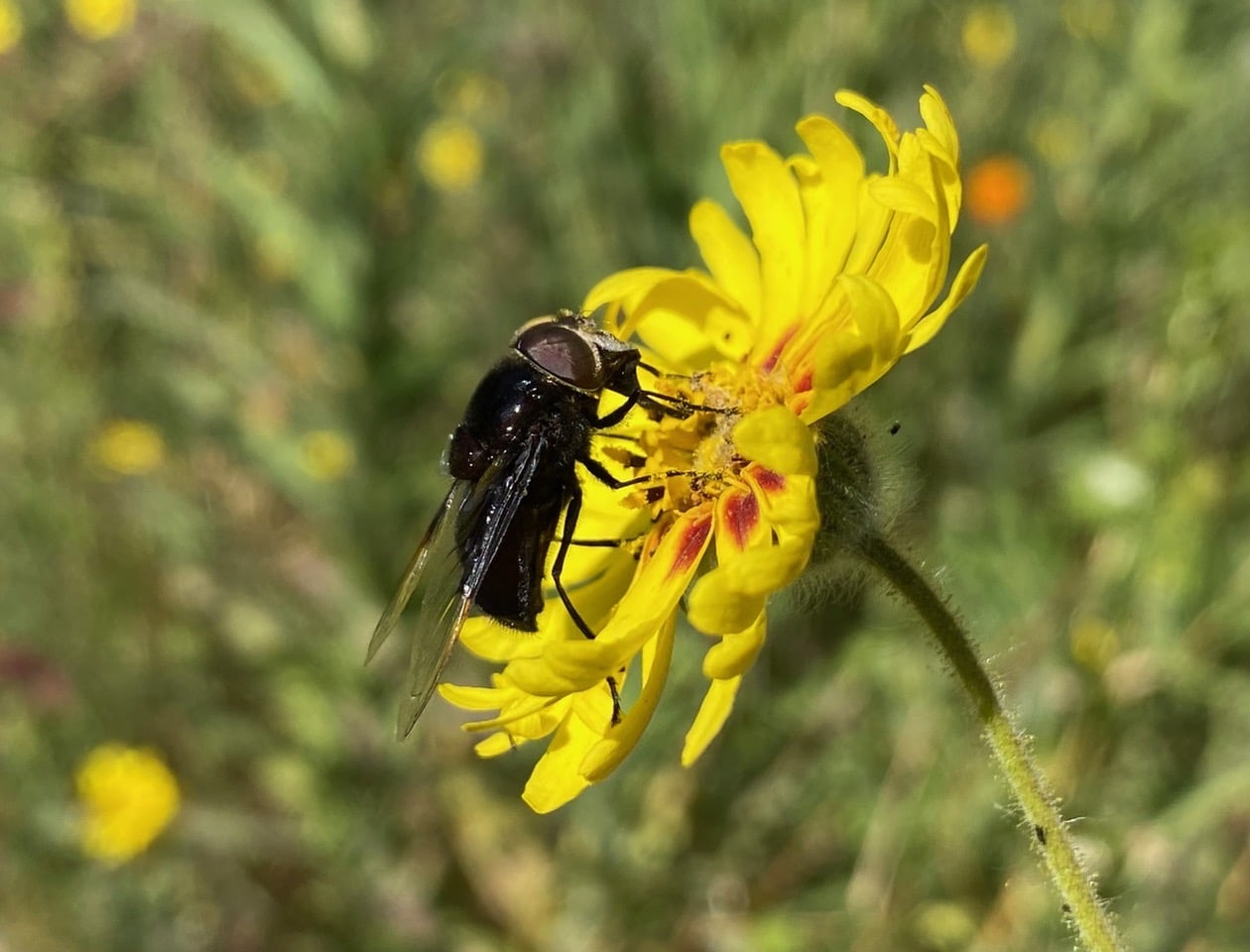
A large glossy, black insect is flying around noisily, then lands to take nectar from an Elegant Tarweed flowerhead. Easily mistaken for a Carpenter Bee, it is actually a Purple Bromeliad Fly, Copestylum violaceum (family Syrphidae). The hover fly is much less frenetic than the real bee – once it has found a good food source, it would feed for a long time without being distracted.
Note the unusual “snout” on the face of Copestylum. Copestylum females lay eggs in rotting plant materials. Adults visit a wide range of flowers for nectar and pollen. Not much else is known about the fly’s biology.
See those two white flaps under the smokey black base of its wings? Those are calypters. Calypters are small membranous flaps or lobes that are located at the base of the wing in some species of fly (order Diptera). The presence of calypters is an important diagnostic feature and is often used by entomologist to help identify different species of fly. It has been hypothesized that the calypters prevent wind turbulence from affecting haltere movements, allowing more precise detection of body position, but this idea has yet to be formally tested.
Since the fly is feeding quite contentedly, I close in to observe its bizarre mouthparts. Note the thin proboscis that is extended vertically into the flower.
As the fly probes deeper into the flower, a black membrane appears from the base of the “snout” to support and/or guide the movements of the proboscis.
Such bizarre mouthparts!
A Small Heliothodes caterpillar is feeding openly on a flowerhead of Elegant Tarweed. It is very vulnerable to predation. Yellowjacket wasps are patrolling these flowerheads rather diligently, hunting caterpillars.
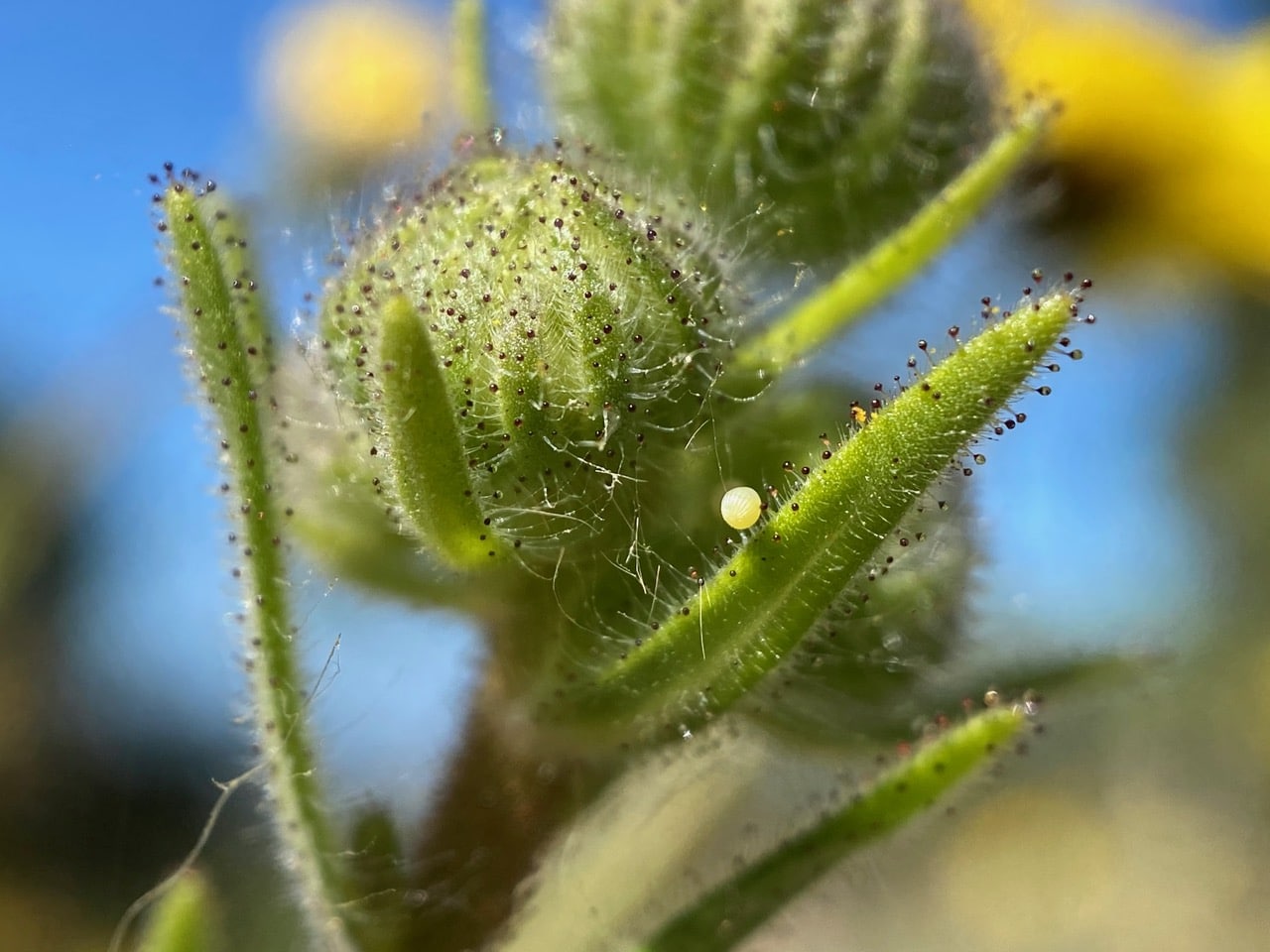
Ooh, a Heliothodes egg has been laid on a leaf of Elegant Tarweed! The moths lay their eggs on the tender young leaves and the immature flowerheads. Pretty soon there will be more caterpillars munching on the plant.
A Forked Globetail, Sphaerophoria sulphuripes (family Syrphidae) lands on a flowerhead of Elegant Tarweed and comes face to face with a tiny Heliothodes caterpillar. The hover fly is a male, as evidenced by its elongated reddish abdomen with the genitals curled under at the tip. The females look quite different in this sexually dimorphic species.

A male Forked Globetail cleans its mouthparts after feeding.
Sphaerophoria are small hoverflies, 5.9 – 10.8 mm long. They are usually associated with dry grassland, also around woodland paths or marshes. Larvae feed on aphids. Adults take nectar and pollen and may be pollinators.
I marvel at the match between the Globetail and the Elegant Tarweed flowerhead – they share the same color scheme!
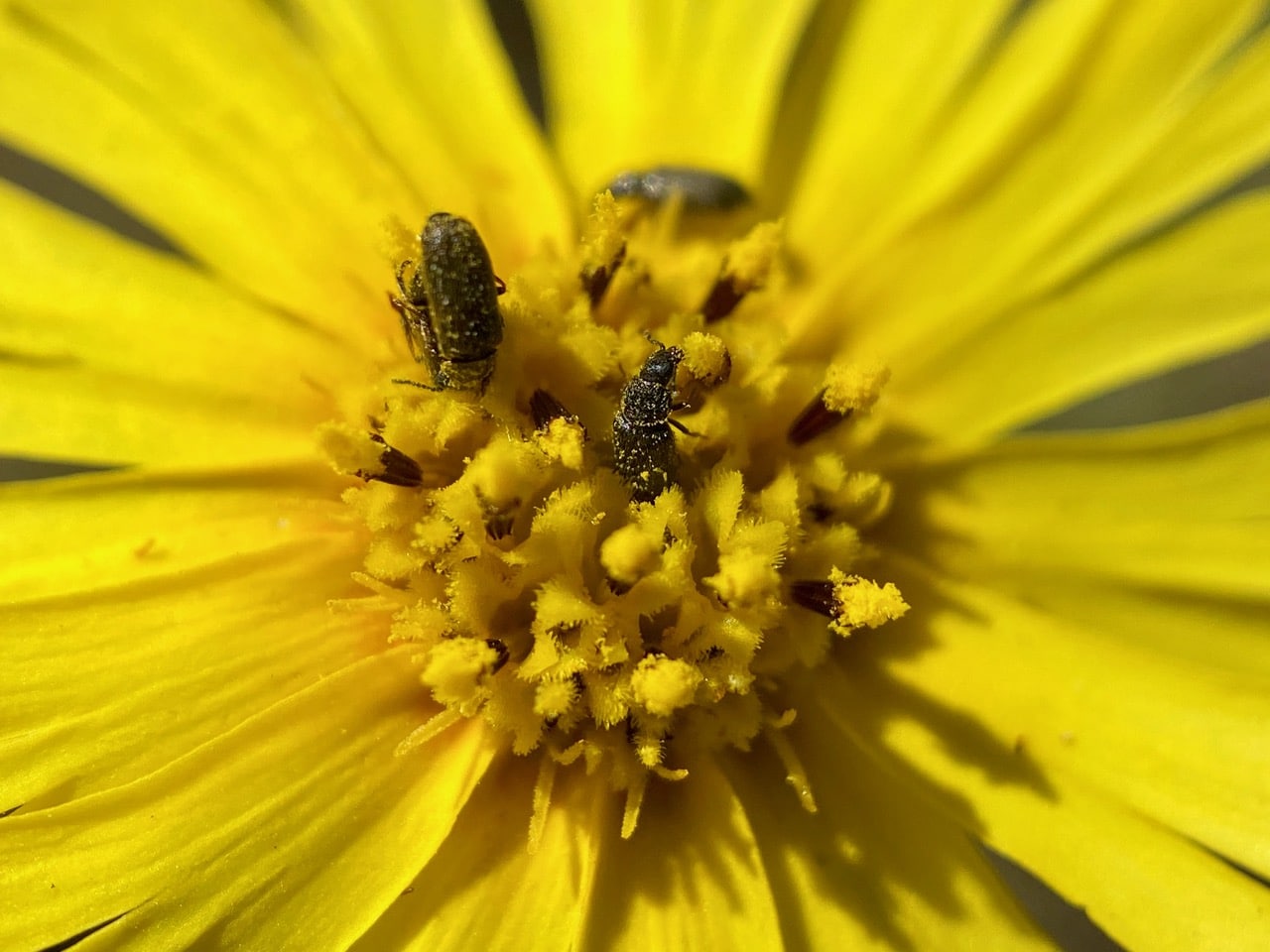
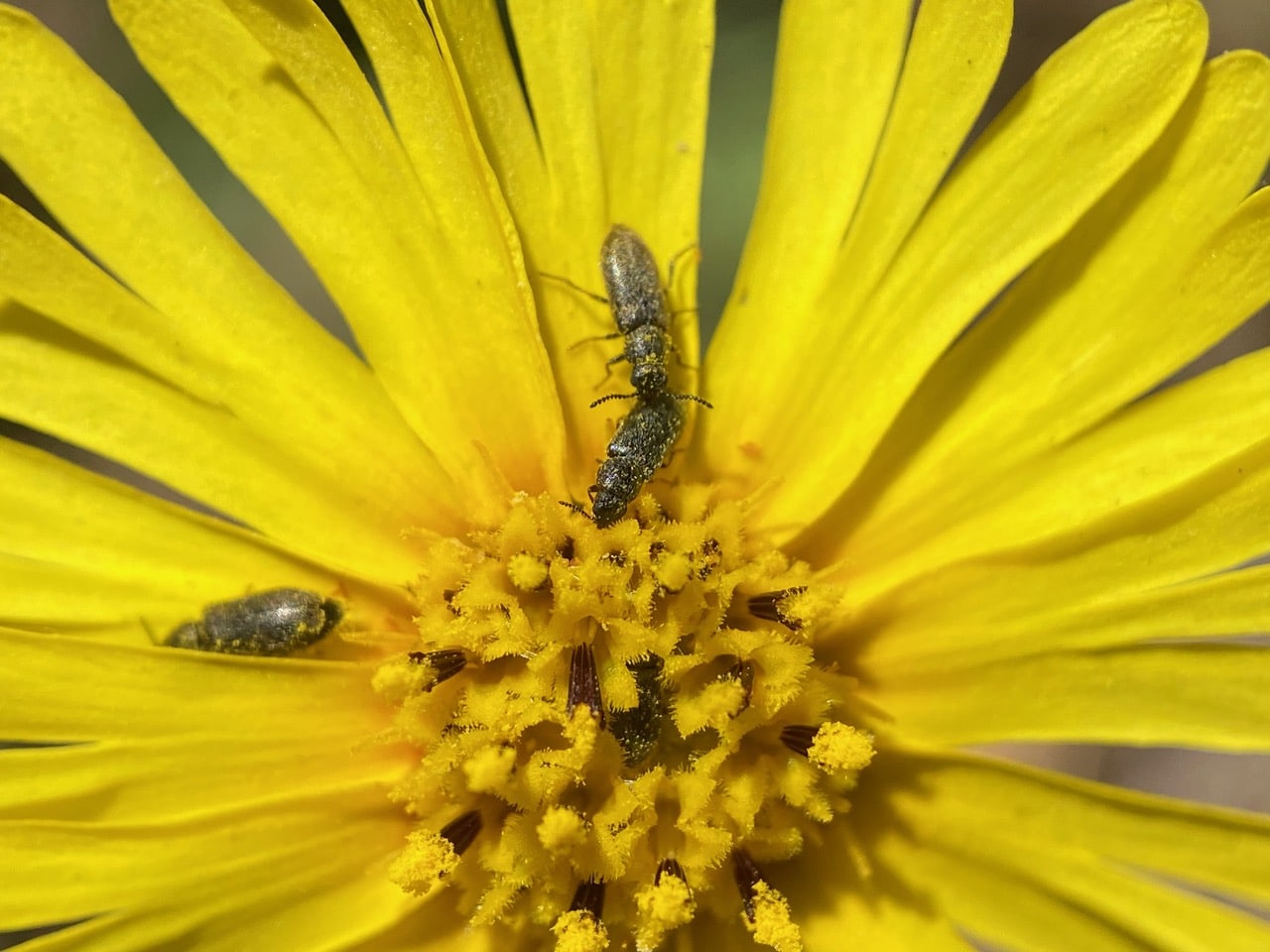
Soft-winged Flower Beetles, Listrus sp. (family Melyridae, subfamily Dasytinae) are feeding and mating among the flowers of Elegant Tarweed.
Most species of Melyridae are various shades of brown or black and just 2 to 4 mm in length. They are sometimes very abundant in spring when there is an abundance of open flowers, particularly those with an abundance of pollen. In north America, dasytine beetles are hardly represented in the east, but are enormously diverse in the west, especially in California.
11 families of Coleoptera (beetles) are known to pollinate flowering plants. In western North America, the 300+ species of the beetle subfamily Dasytinae are commonly found on flowers, where adults feed on both nectar and pollen. Their dense setae (hairs) often trap pollen grains, which are transported to other flowers during the course of normal feeding. Many dasytine beetles form large feeding aggregations.
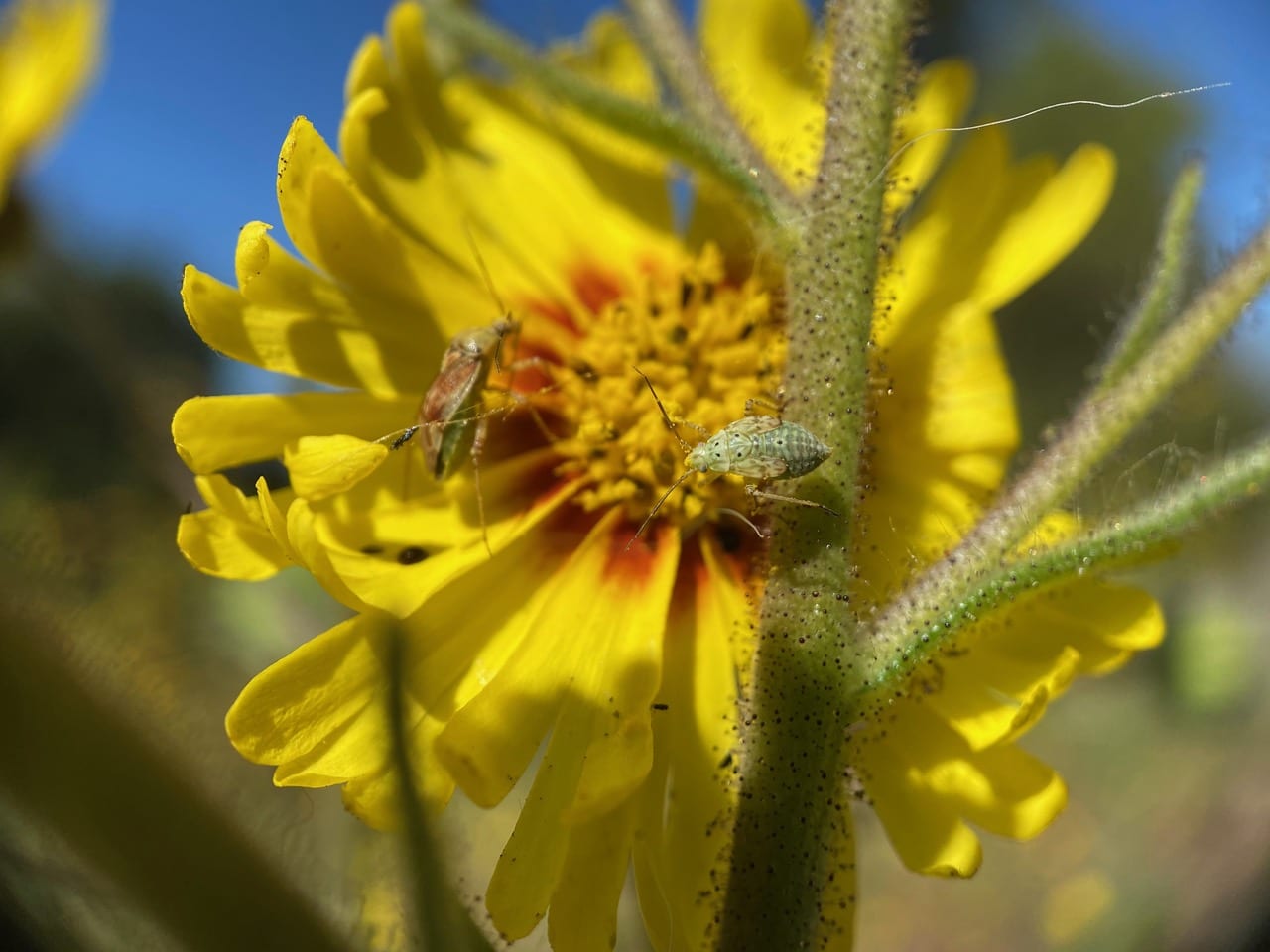
A Lygus Bug nymph moves almost undetected on the tar-spotted stem of Elegant Tarweed. The green nymph with fake tar spots is well protected by camouflage on their home plant. Further in the background is an adult Lygus Bug on the flowerhead.
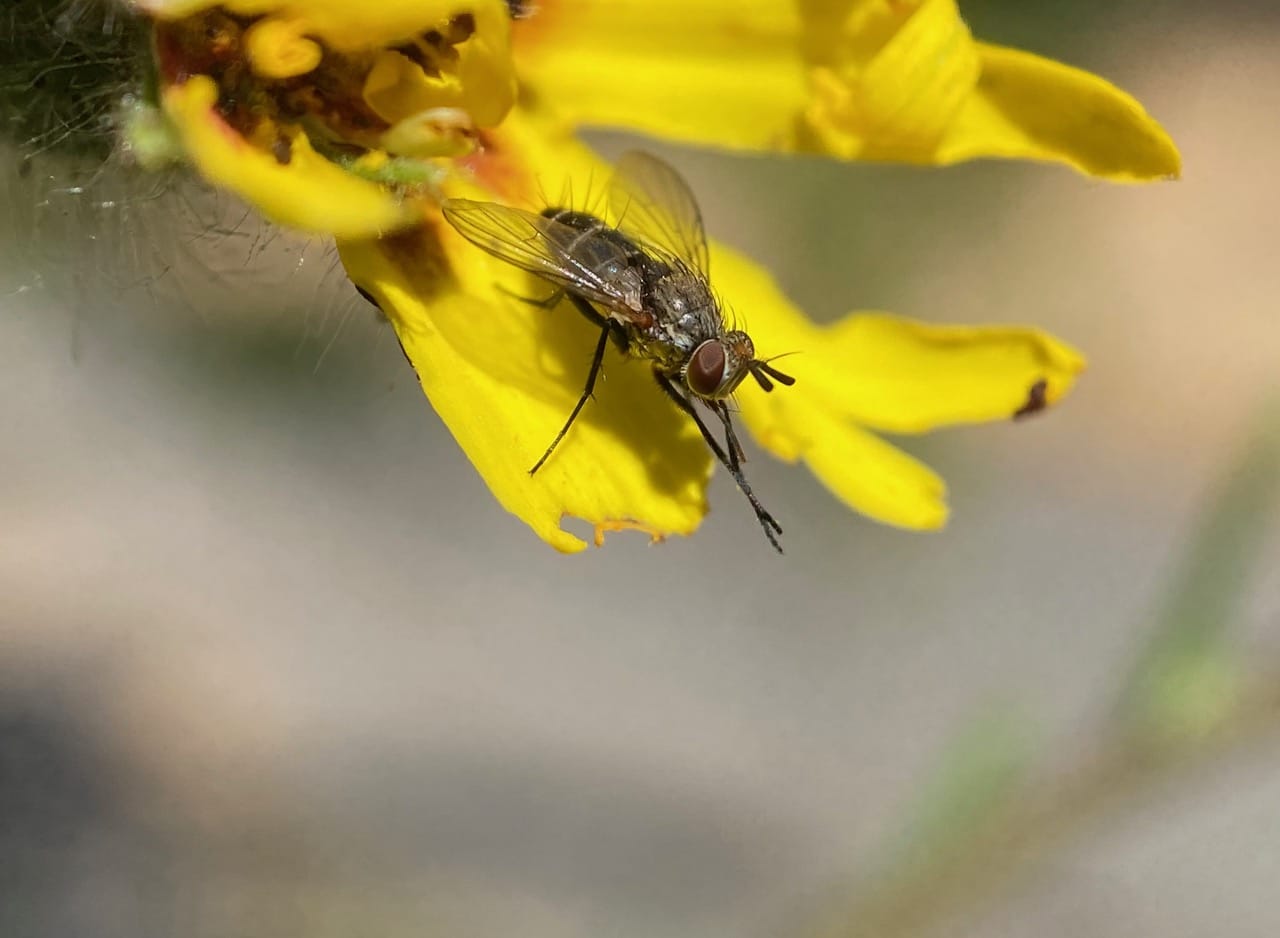
Lygus Bugs, Lygus sp. (family Miridae) are commonly found on the tarweeds. Like other members of the order Hemiptera (“true bugs”) the bugs feed on plant tissues with their piercing-sucking mouthparts. Note the cuneus at the tips of its forewings. it is the triangular tip of the corium, the firm, horny part of the forewing, the hemielytron. The cuneus is visible in nearly all Miridae.A Bristle Fly, Siphona sp. (family Tachinidae) is grooming itself on the flowers of Elegant Tarweed.
The family Tachinidae is by far the largest and most important group of parasitoid flies. All species are parasitic in the larval stage. Most adults have distinct abdominal bristles, hence the common name. Adults feed on liquids such as nectar and honeydew. They can be found resting on foliage, feeding at flowers or searching for hosts.
Most tachinids attack caterpillars, adult and larval beetles, true bugs, grasshoppers, and other insects. Females lay eggs in or on the host. Tachinid larvae live as internal parasites, consuming their hosts’ less essential tissues first and not finishing off the vital organs until they are ready to pupate. The larvae leave the host and pupate on the ground. Tachinids are very important in natural control of many pests, and many have been used in biological control programs.
Siphona is the only commonly encountered genus of Tachinidae with a long, thin, jointed proboscis. Most other genera have a straight or curved rigid proboscis. The fly is found worldwide. Where hosts are known, larvae are parasitoids of Lepidoptera. Is the fly here to lay eggs on the Heliothodes caterpillars?
A Sedgesitter, Platycheirus sp. (family Syrphidae) is foraging on an Elegant Tarweed flowerhead.
Platycheirus is found in grass and herb vegetation. Adults of many species feed on pollen of wind-pollinated plants, such as Salix, Plantago, Poaceae, Cyperaceae, but they visit other flowers also. Many stay active during cold and rainy weather. Larvae feed on aphids.
The hover fly’s face and legs are covered with the sticky pollen of Elegant Tarweed.
The pollen of Asteraceae tends to be sticky and clumpy, adhering easily to insects.
Pollenkitt is a sticky covering found on the surface of pollen grains. It is also sometimes called “pollen coat”. It is found in some plant families more often than others, but it is especially common in plants that are pollinated by insects. Because of this scientists believe that one of the major functions of pollenkitt is to help the pollen stick to the insect pollinators. The pollen from many wind-pollinated plants, such as grass, is much drier and not nearly so sticky. The insects benefit from lots of pollen that is easy to carry home. What’s more, pollenkitt contains lipids, proteins, and phenolic compounds that are important to bee health. For the plant, pollenkitt may prevent the pollen from blowing away or drying out, or it may protect the pollen from ultra-violet radiation and certain pathogens.