

Pollinator Post 6/14/23 (1)
1:07 pm.
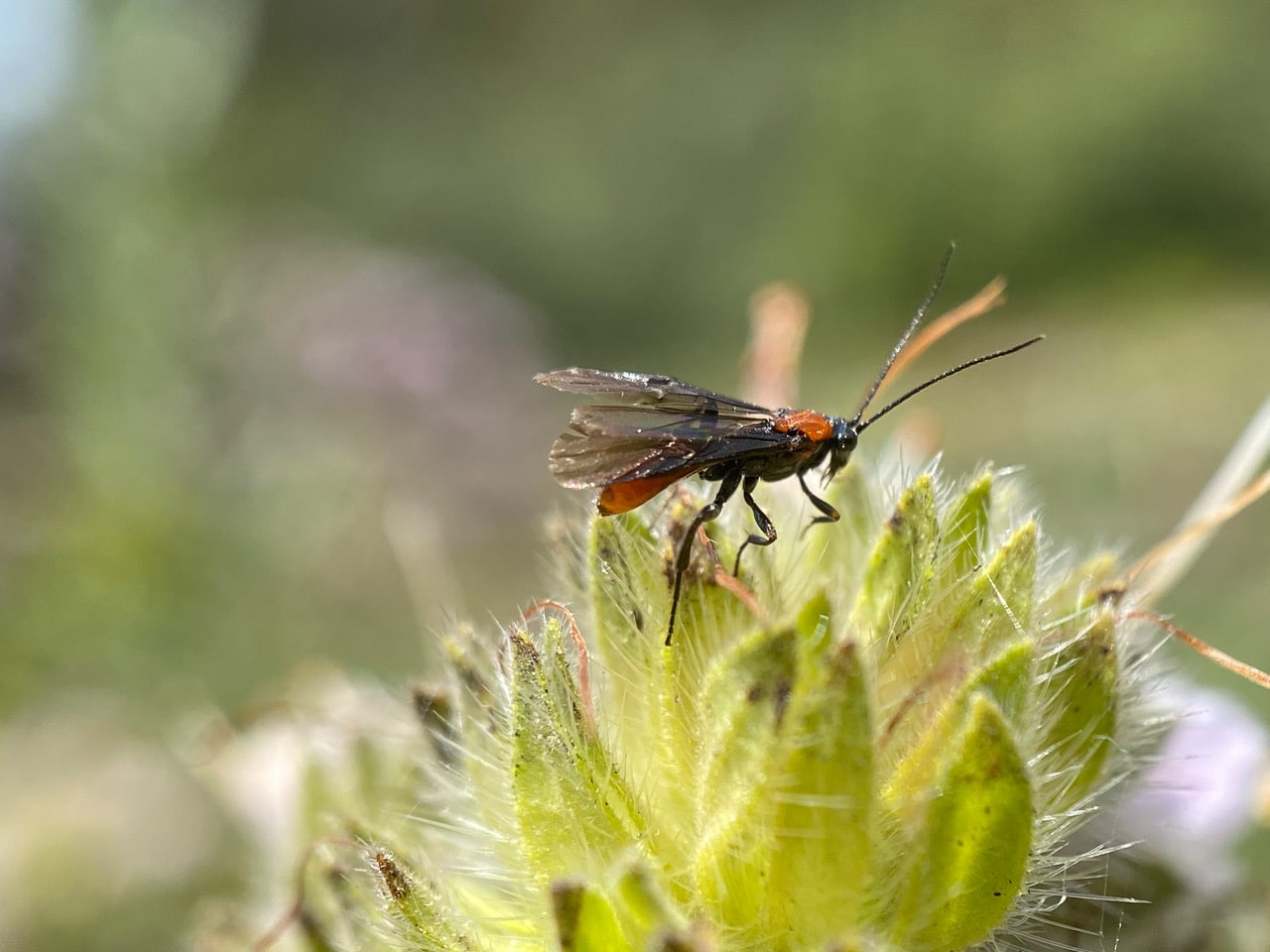
Just about 50 steps uphill from Siesta Gate, I spot a parasitoid wasp moving around on an inflorescence of California Phacelia, Phacelia californica. Having observed a female lay eggs only ten days ago, I recognize the wasp as a Braconidae, subfamily Agathidinae. But this one is a male, without the long ovipositor. I settle down next to the plant expecting another show.
The Braconidae are a family of parasitoid wasps. After the closely related Ichneumonidae, braconids make up the second-largest family in the order Hymenoptera, with about 17,000 recognized species. Females often have long ovipositors to lay eggs on or in their hosts. The larvae of most braconids are internal primary parasitoids of other insects, especially the larval stages of Coleoptera, Diptera, and Lepidoptera. Generally, the braconid life cycle begins when the female wasp deposits her eggs in the host insect, and the braconid larvae develop in the host body, eating it from the inside out. When the wasp larvae are ready to pupate, they may do so in or on the host insect. The new generation of adult braconid wasps emerges from their cocoons and begins the life cycle again.
Braconid wasps use a remarkable weapon to disable the defenses of their host insects – a virus. These parasitic wasps coevolved with polydnaviruses (read poly-DNA-virus), which they carry and inject into the host insects along with their eggs. The virus attacks the host’s immune system and renders it unable to encapsulate the wasp egg; it also halts the host’s development, so it can’t pupate and transform into an adult. Amazingly, the “bracovirus” also changes the host’s metabolism so that it can survive longer without food or water – thus ensuring a nurturing environment for all the young wasps to come.
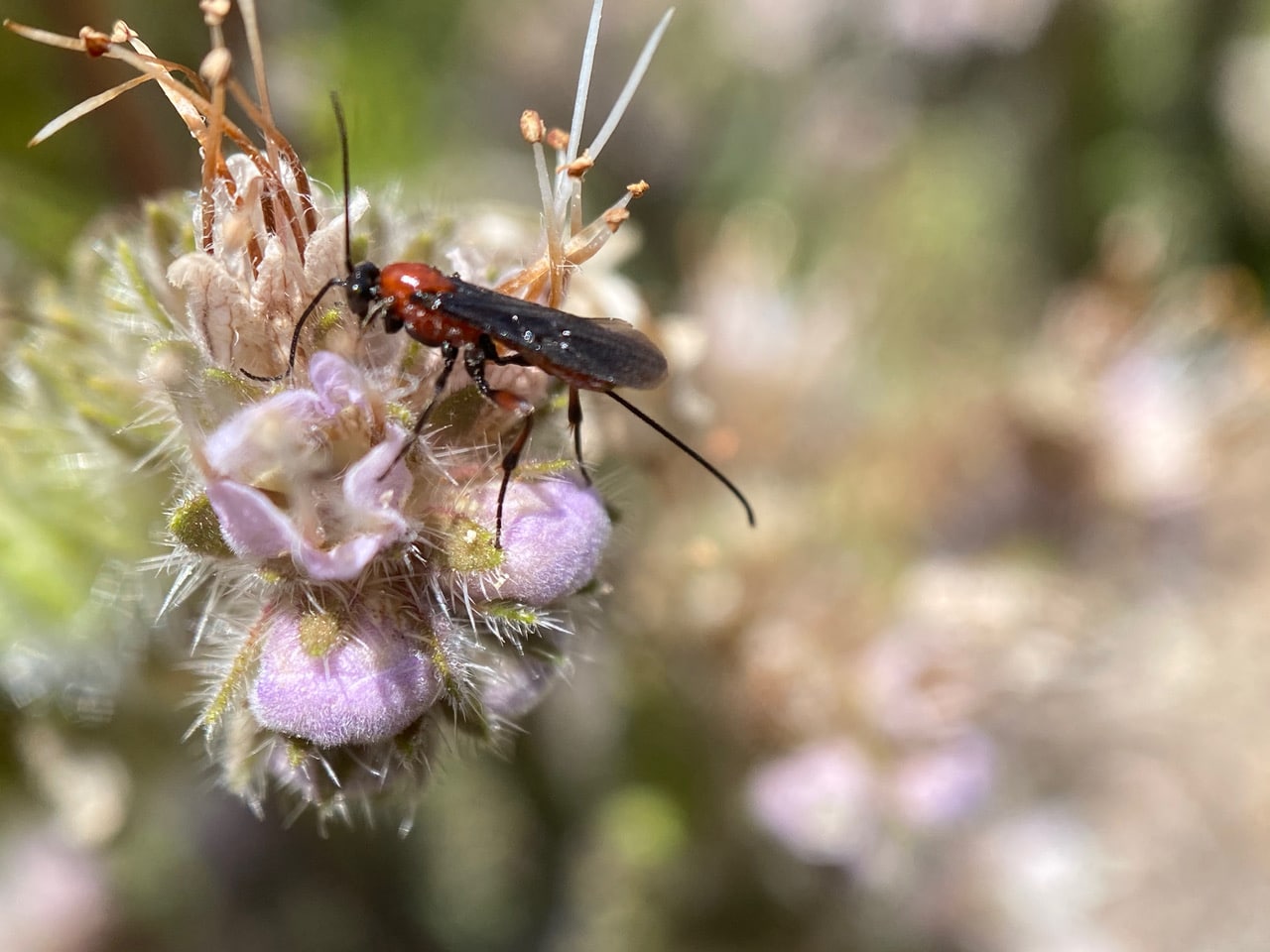
Soon I spot a female Braconid on an adjacent plant. Her attention is focused on a particular spot on an inflorescence.
Agathidinae is a subfamily of braconid parasitoid wasps. Some species have been used in biological control programs. Agathidines are among the larger and more colorful braconids. Diurnal members of this subfamily often possess aposematic (warning) coloration. All Agathidines are koinobiont endoparasitoids of caterpillars. Most attack concealed caterpillars, such as those that use silk to tie leaves together. Most are solitary, laying only one egg in each host caterpillar.

She proceeds to lay eggs. There’s a brisk breeze, and I find it hard to get a good focus, but you can see that she has lowered her ovipositor.
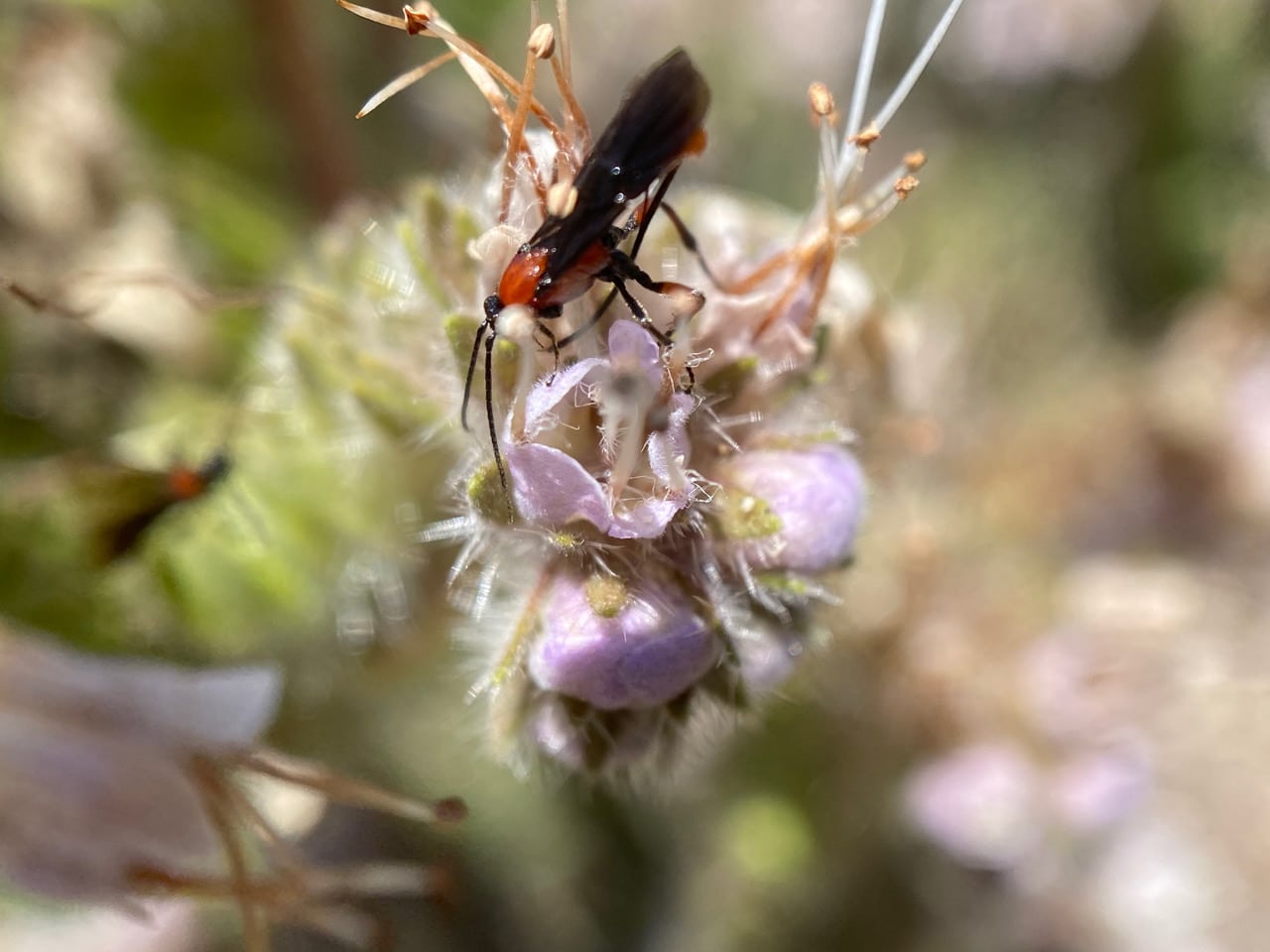
She has unsheathed her ovipositor. From the corner of my eye, I can see another wasp approaching from the left.
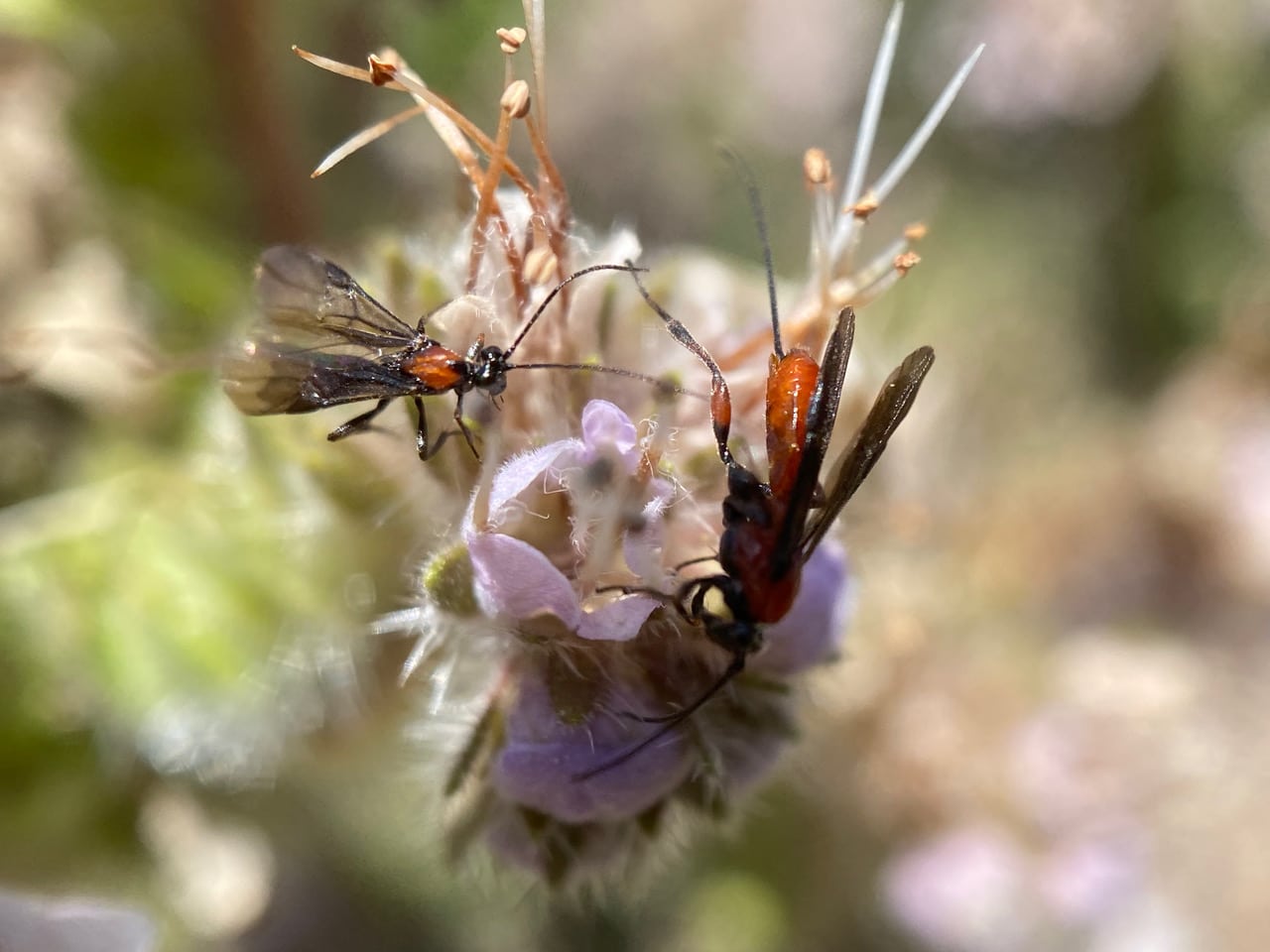
The male Braconid arrives just when the female has retrieved her ovipositor from the flowers.

The female does not seem to be thrilled by the male’s intrusion. In a flash, she’s outta there!
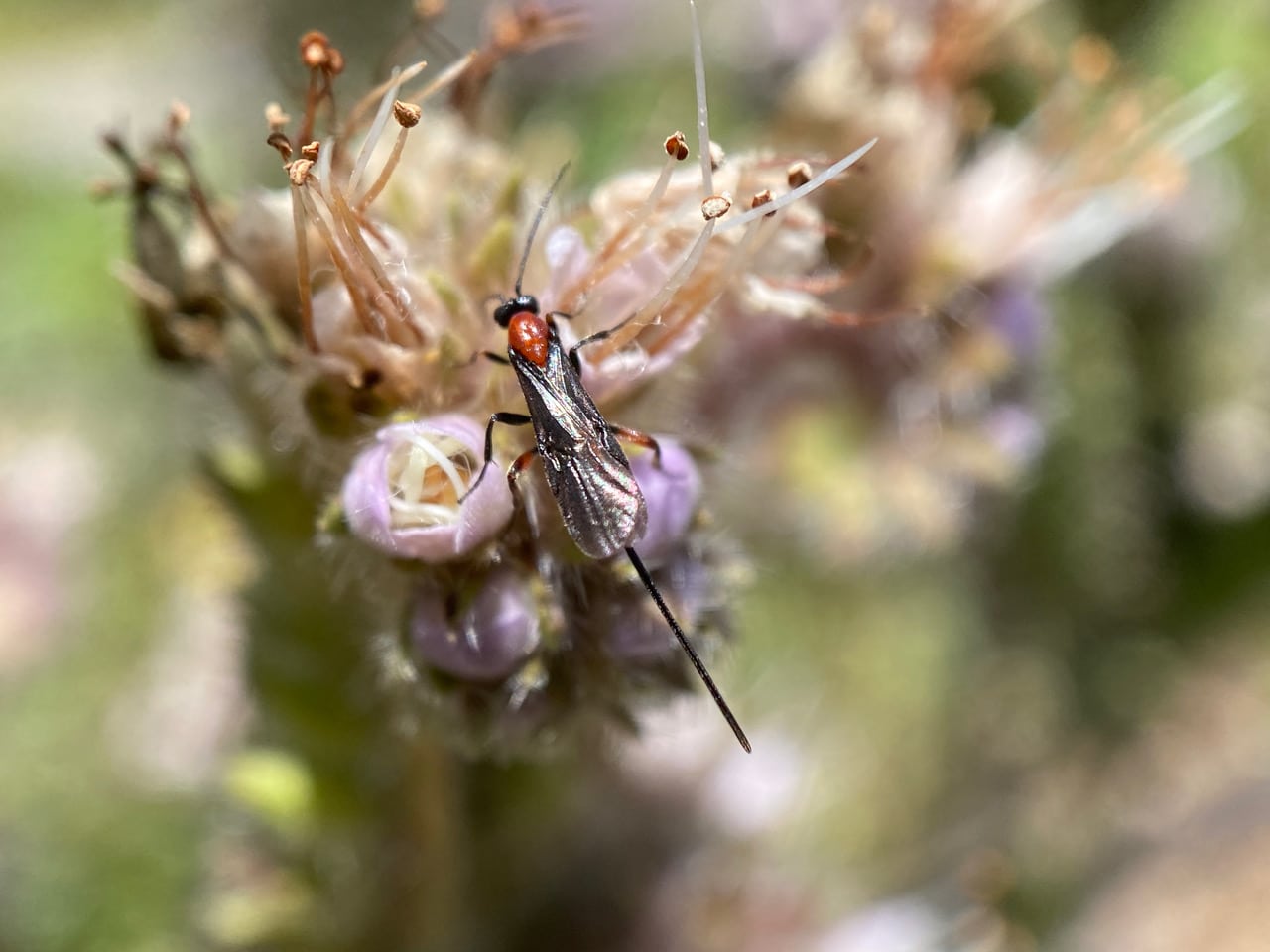
Soon I find myself in a three-ring circus, watching three Braconids at the same time on different Phacelia plants around me. This female keeps flying back to the same spot on an inflorescence. She must have detected a potential host!

The female is laying eggs. Note that her ovipositor (needle-like and reddish) has been unsheathed from the thick black sheath. The ovipositor actually exits her body anterior to the tip of the abdomen.
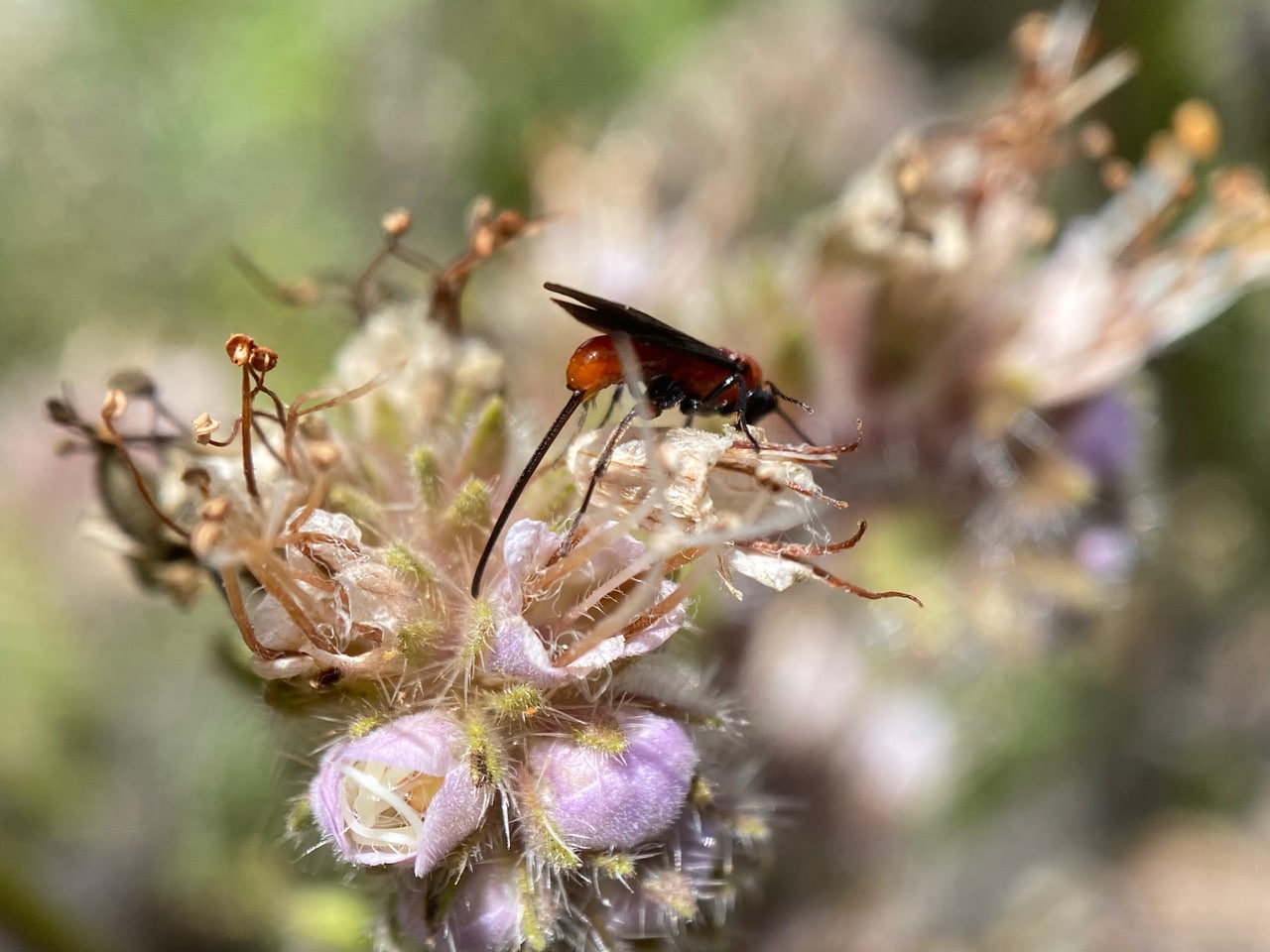
When the female is done ovipositing, the ovipositor slips back into the sheath and the wasp moves on.
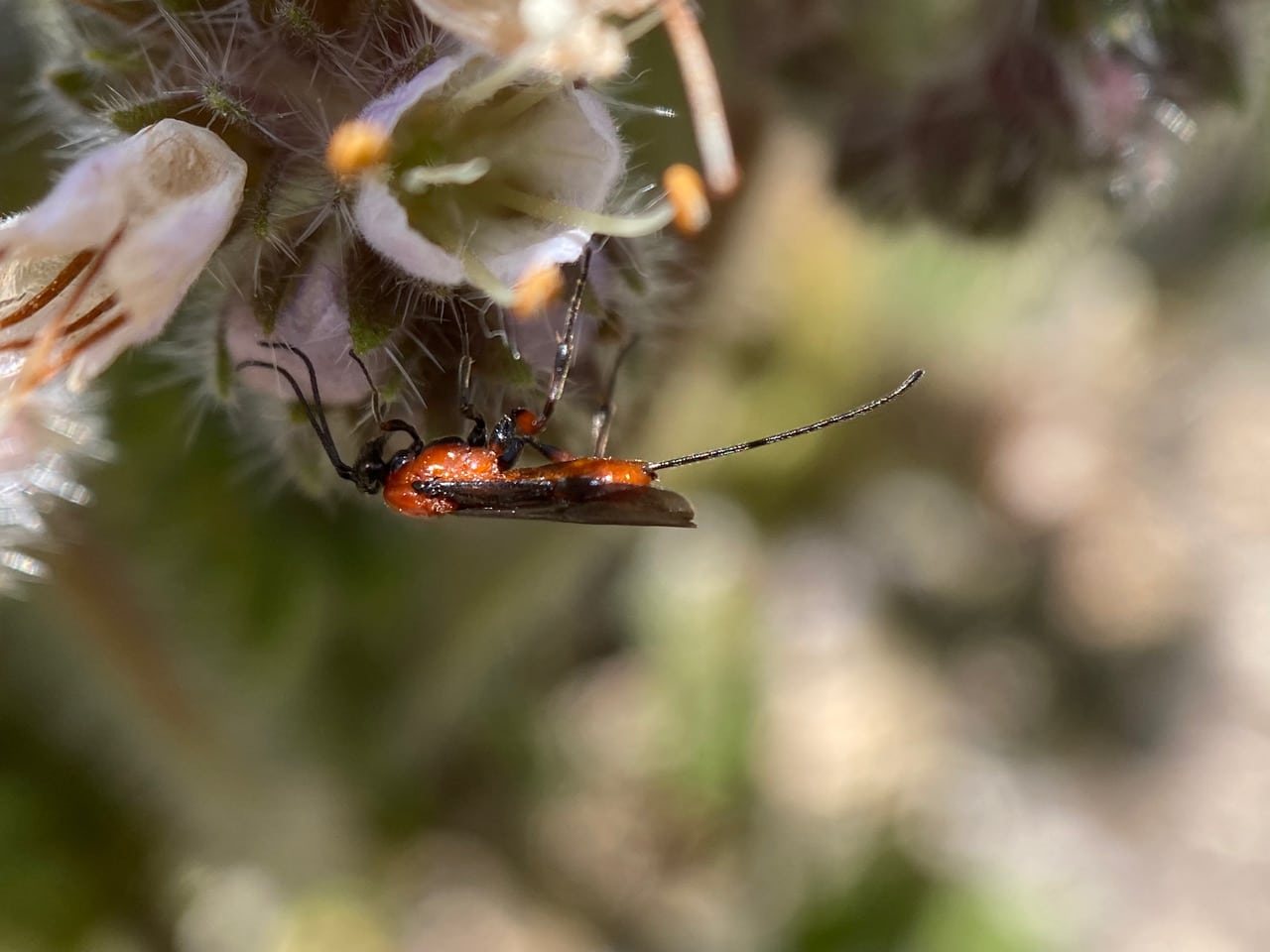
The female wasp goes tap-tapping with her long antennae in search of a host in every nook and cranny of the inflorescence.
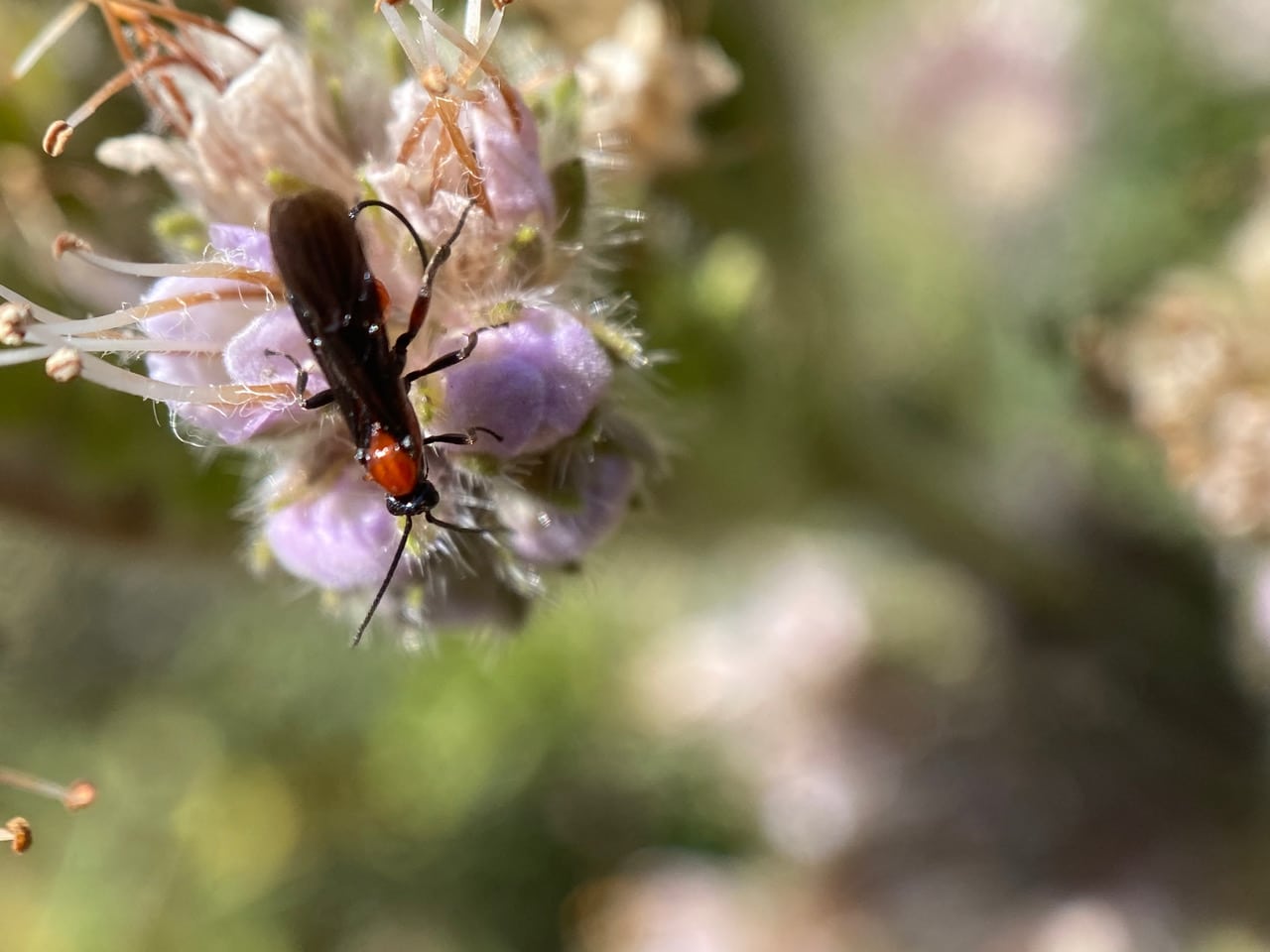
I watch as she oviposits multiple times at different spots…
 Here’s a view of the ovipositor from a different angle.
When the female is done ovipositing, her ovipositor slips back into the black sheath as she moves away.
The same sequence is repeated, with minor variations depending on the circumstances. Below is a complete sequence that I am very lucky to capture at close range.

A female Braconid Wasp detects a potential host among the phacelia flowers.

She curls her abdomen downward and frees her ovipositor from the black sheath. The reddish, hair-thin ovipositor exits her body anterior to the tip of her abdomen.

The female wasp lowers her body to drive the ovipositor into the host.

She raises her abdomen…
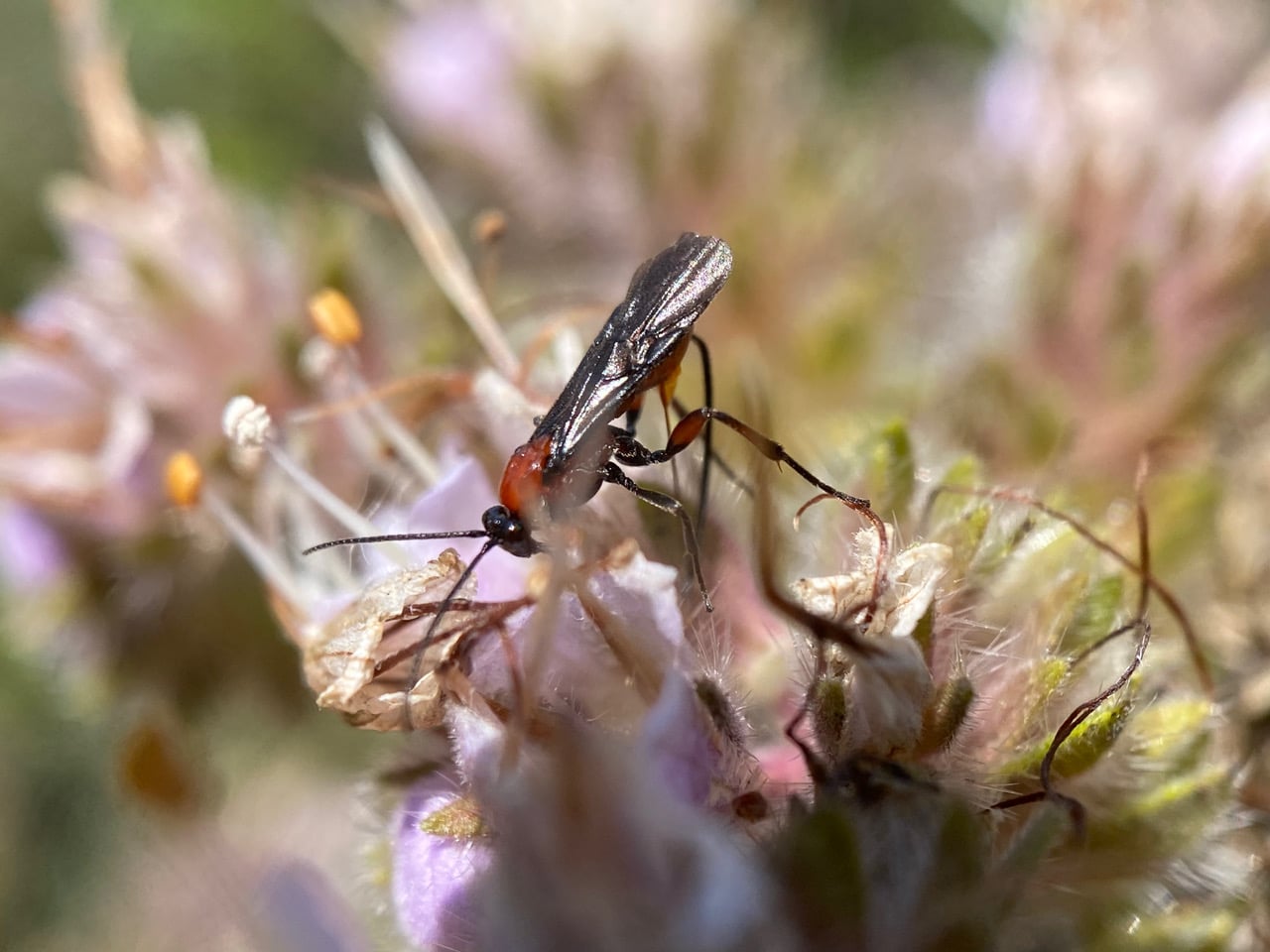
,,,, and repositions the ovipositor ever so slightly.
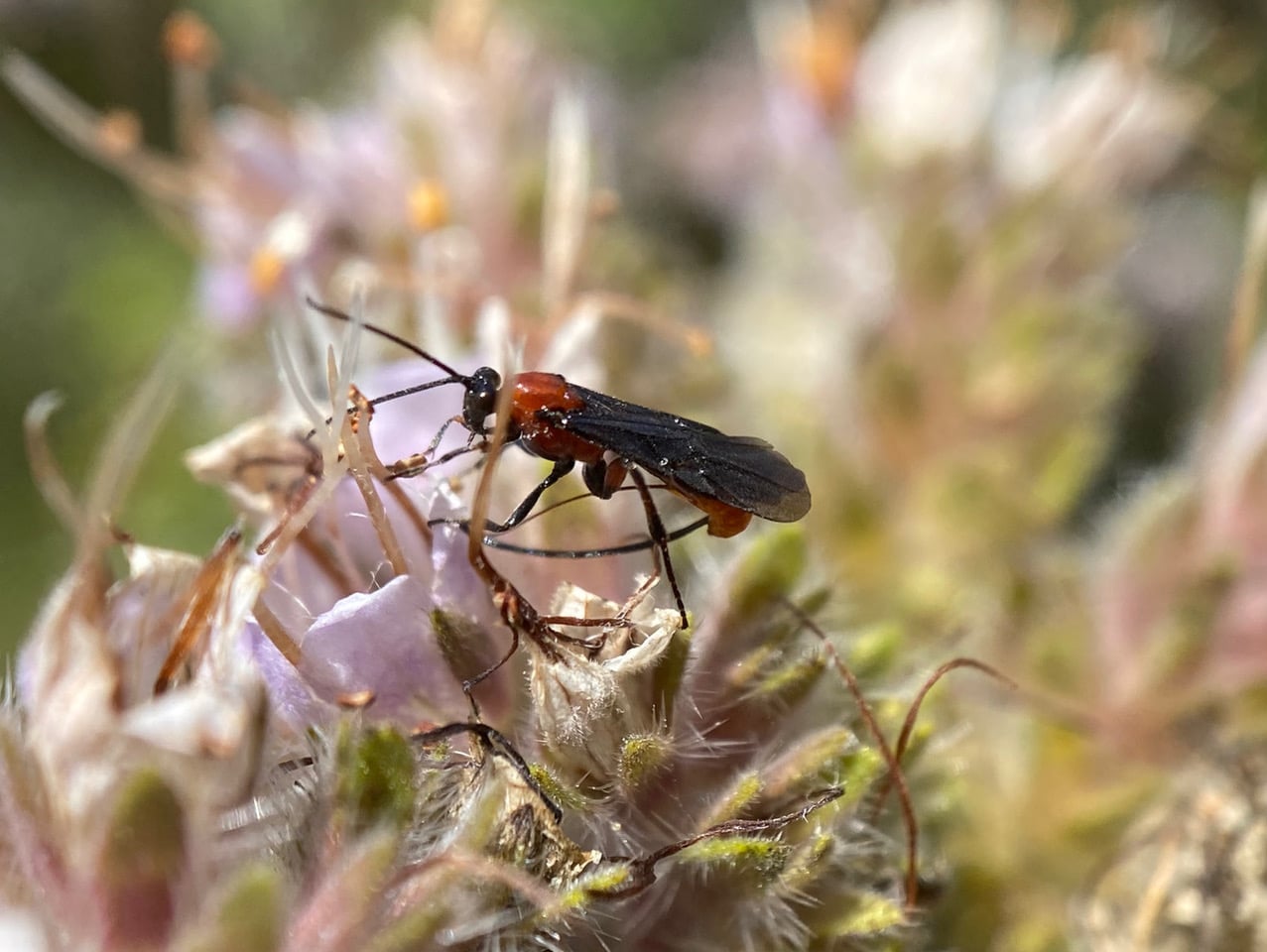
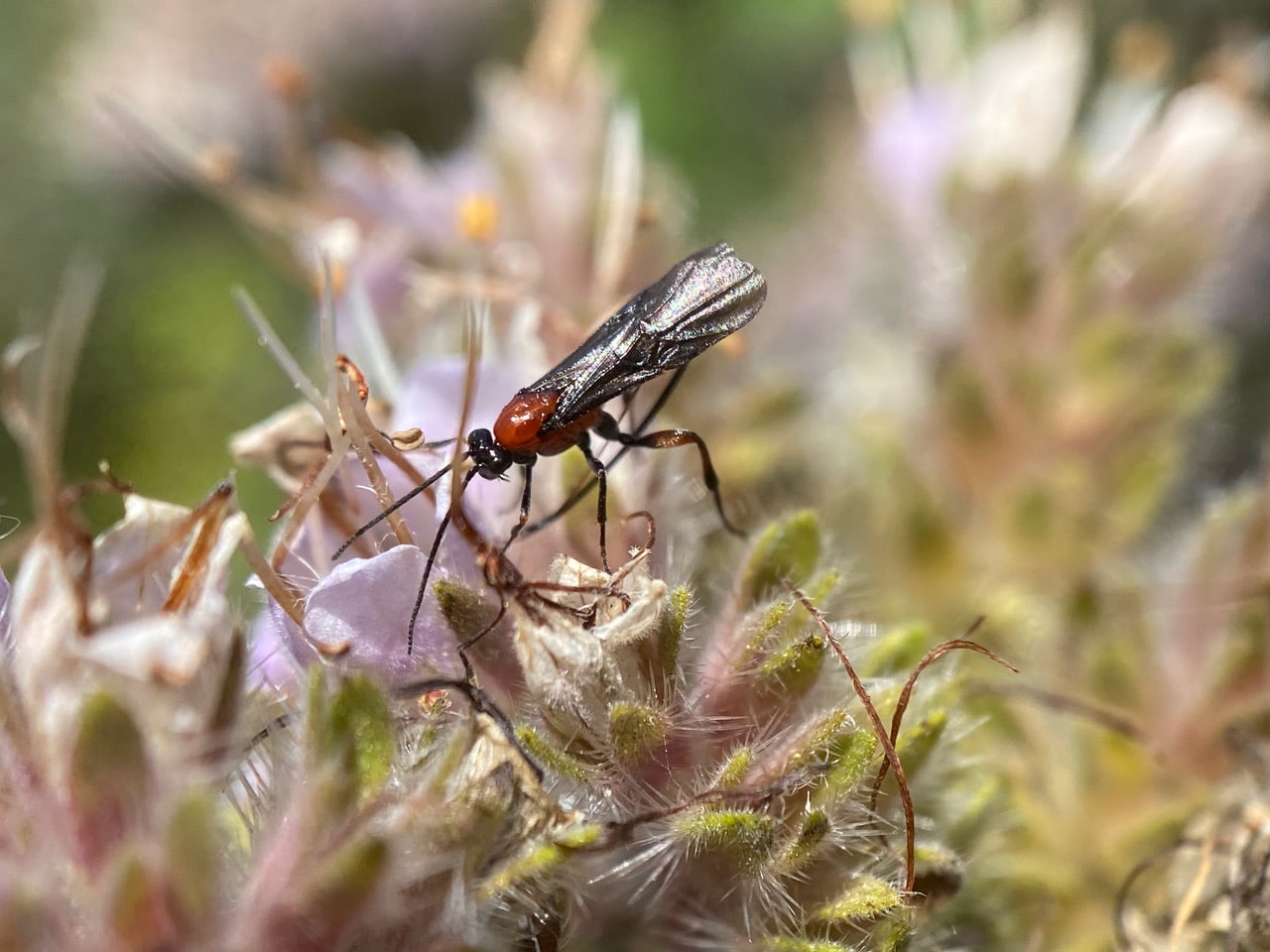
Occasionally the wasp has to adjust the angle of her ovipositor. Perhaps the host has moved, or she has missed her target, or maybe she’s laying more than one egg in the same host?


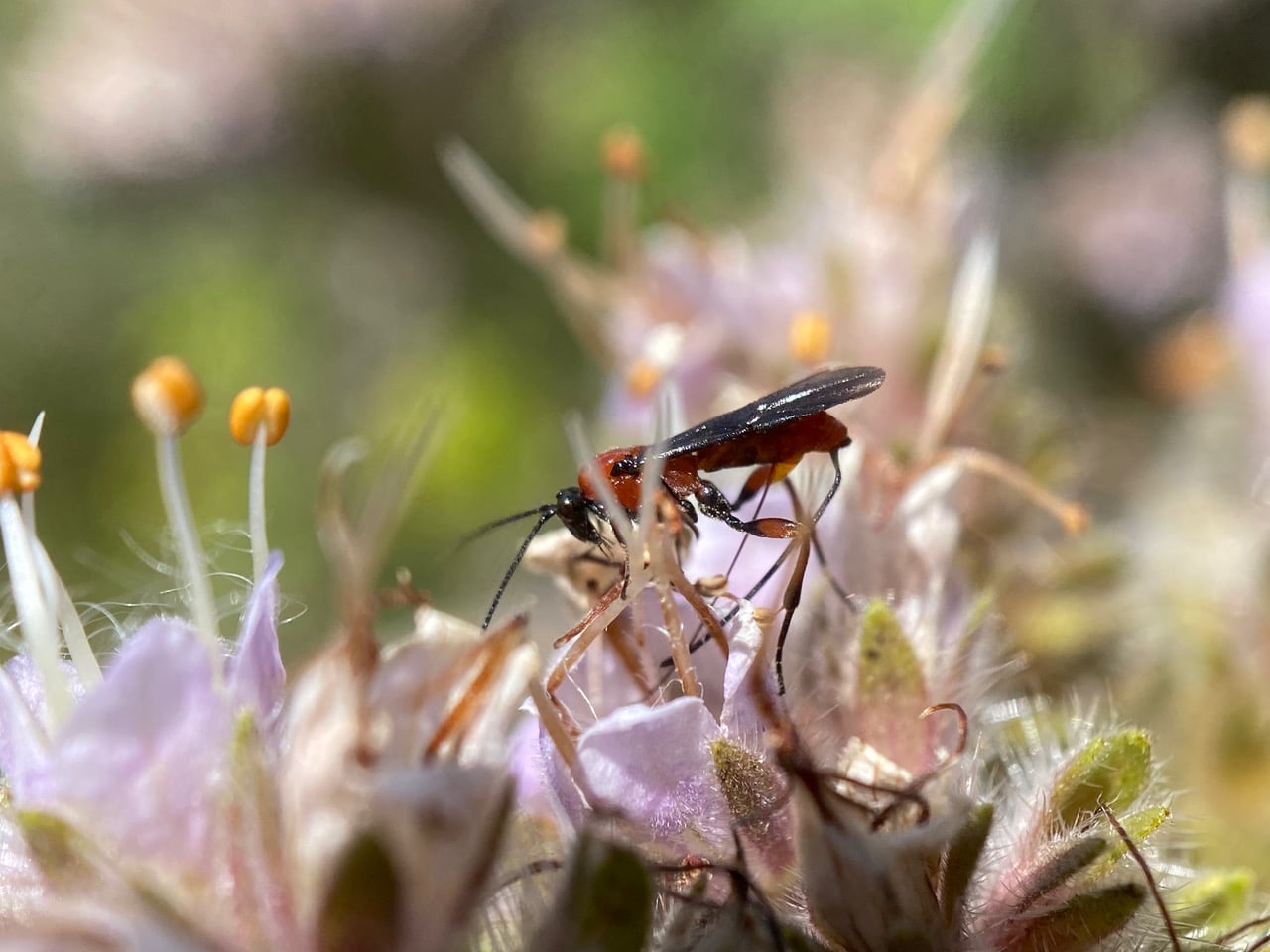
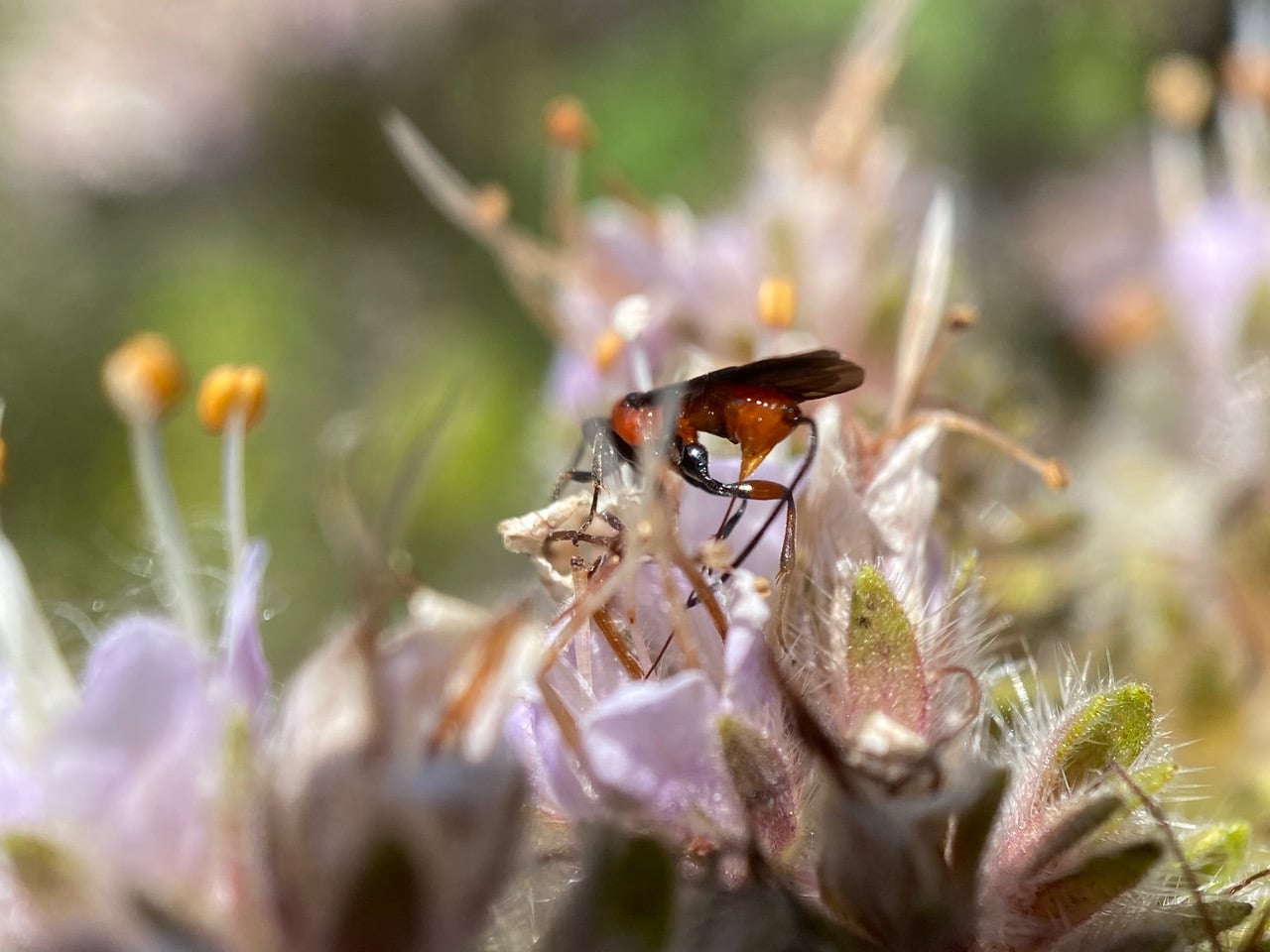
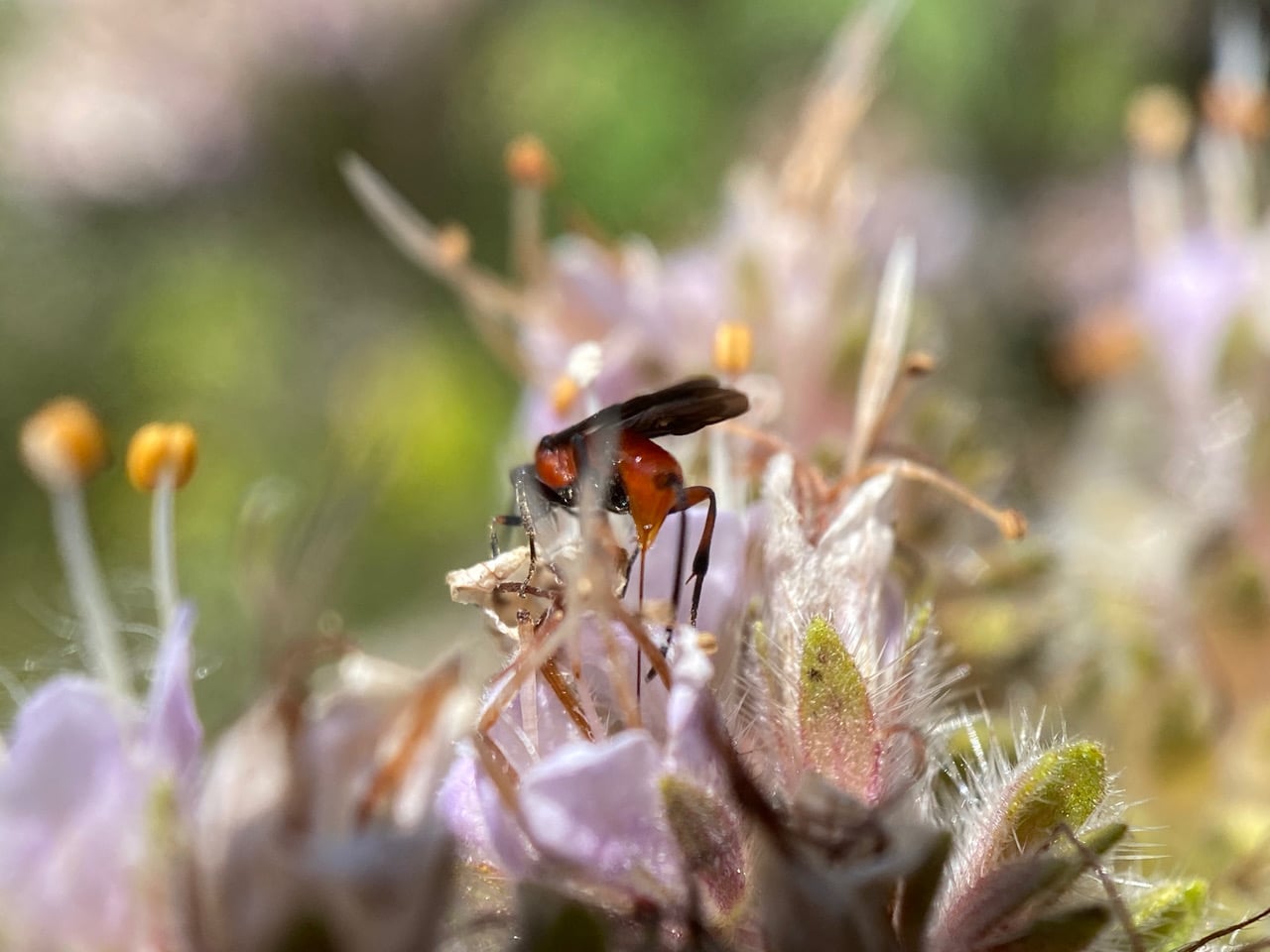
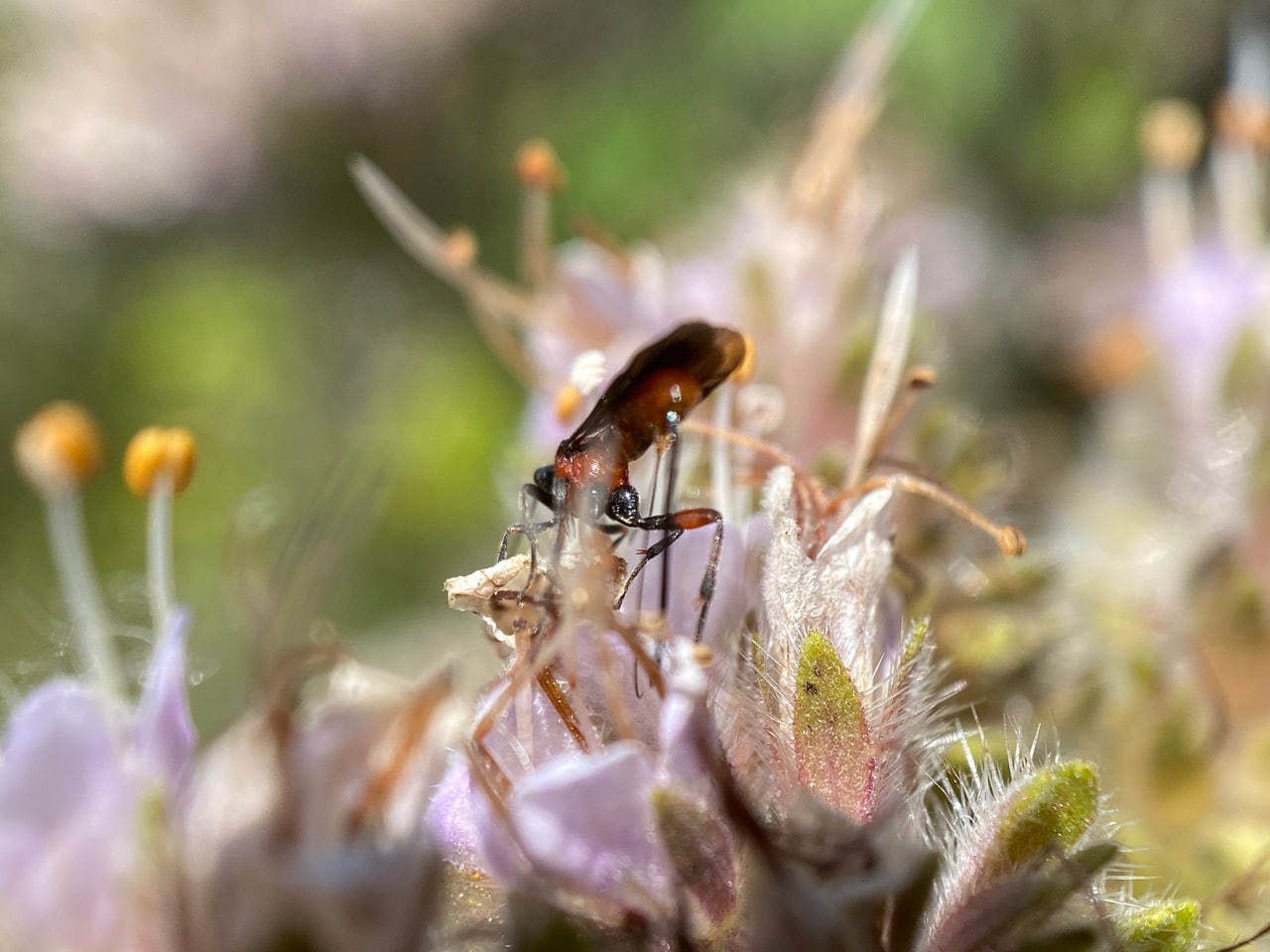
The wasp is moving away…
 She lifts and straightens up her abdomen, allowing her ovipositor to slip back into its black sheath.
All done!