

Pollinator Post 6/13/24 (3)
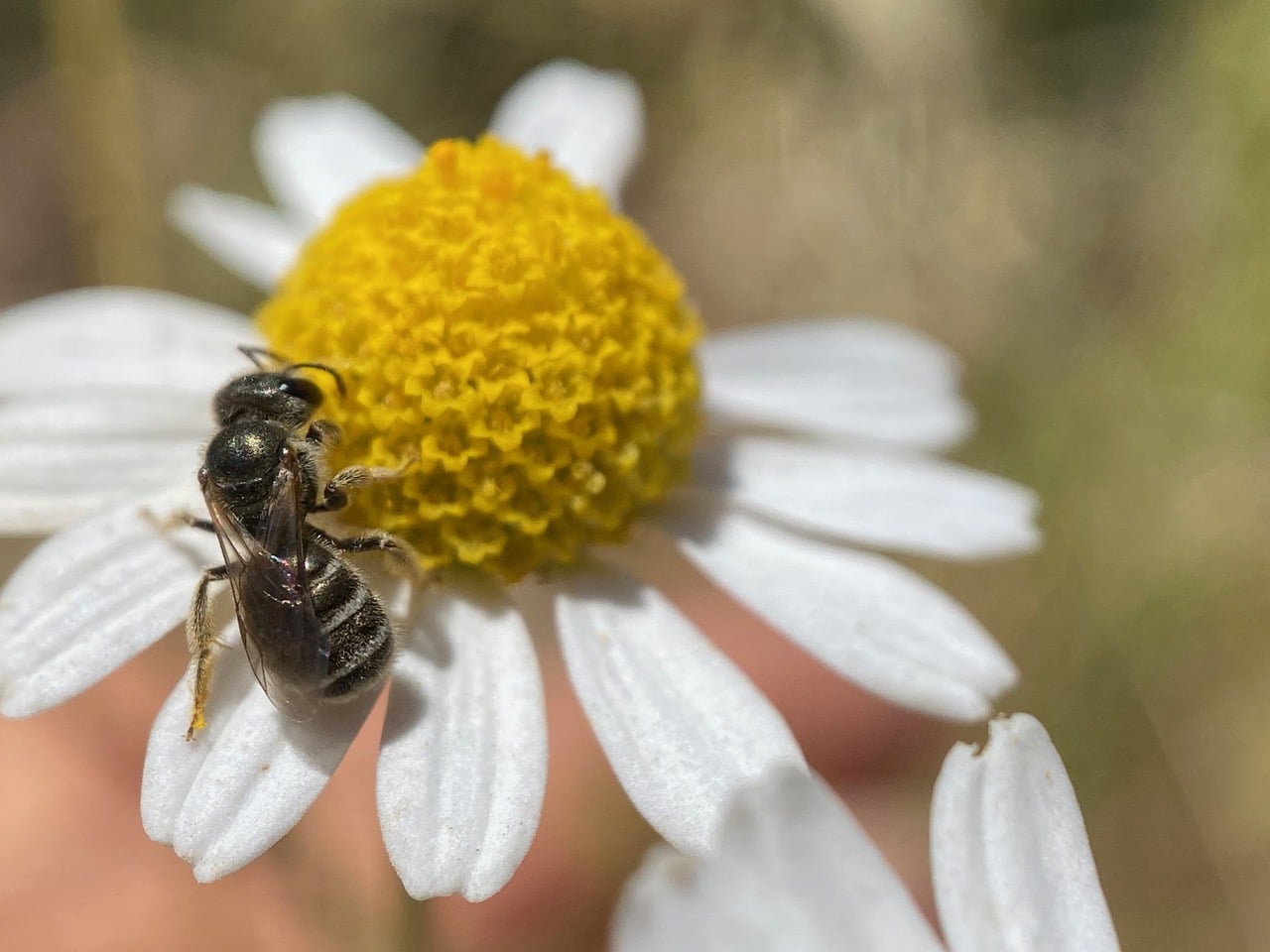
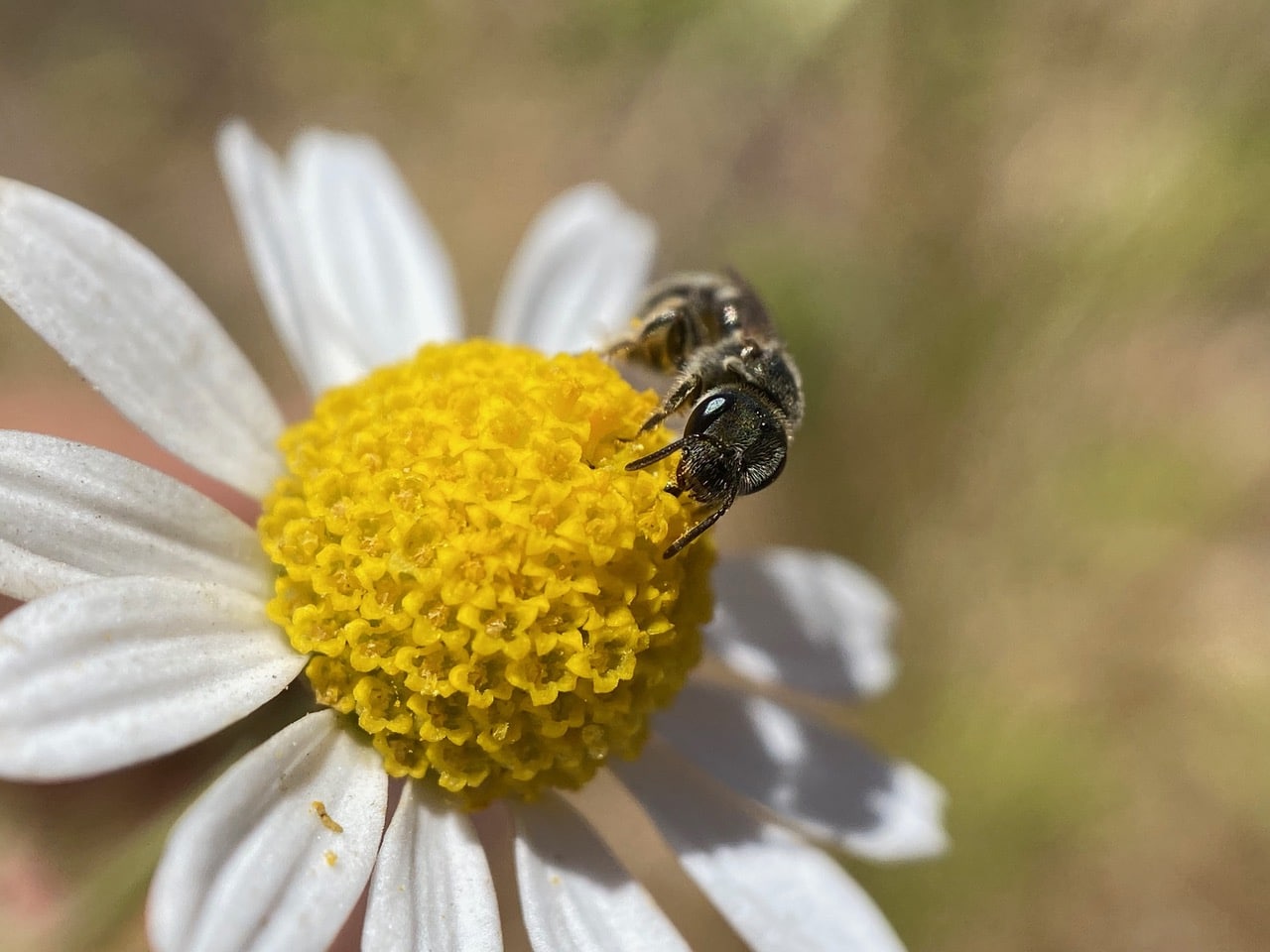
This appears to be another Sweat Bee, Halictus sp. (family Halictidae) foraging on a flowerhead of English Daisy.
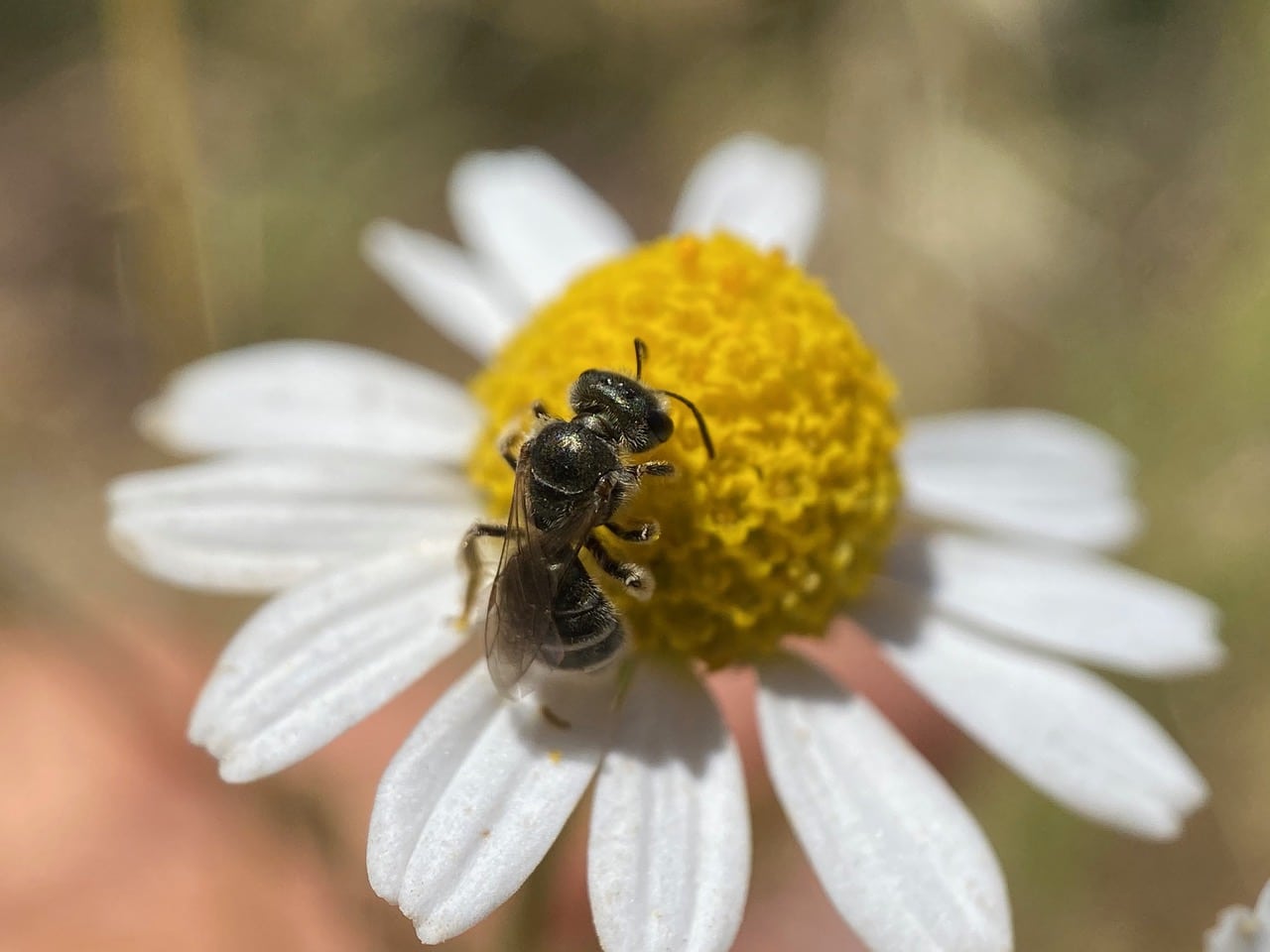
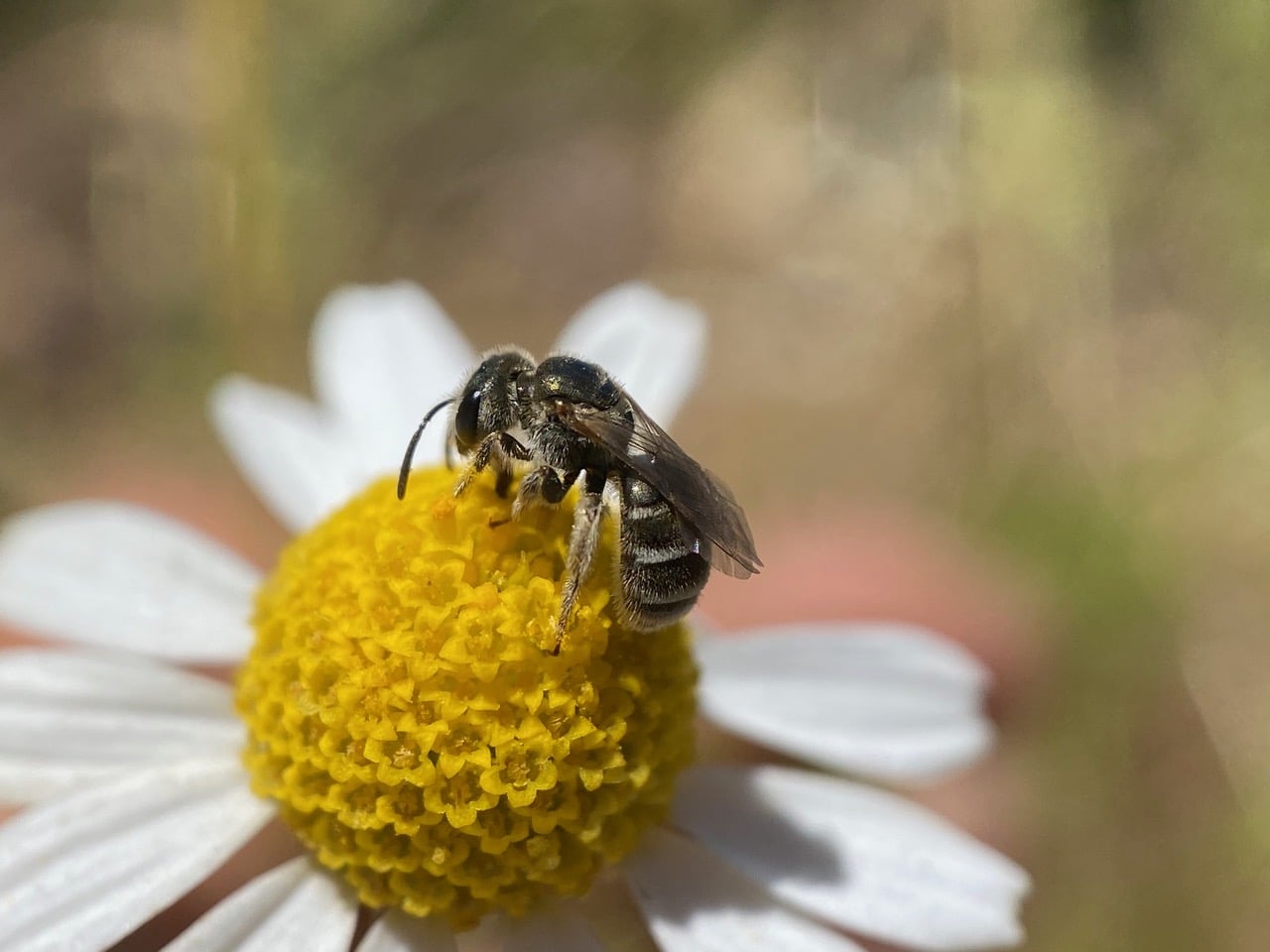
The bee has not been collecting pollen and the scopae on her hind legs are empty.
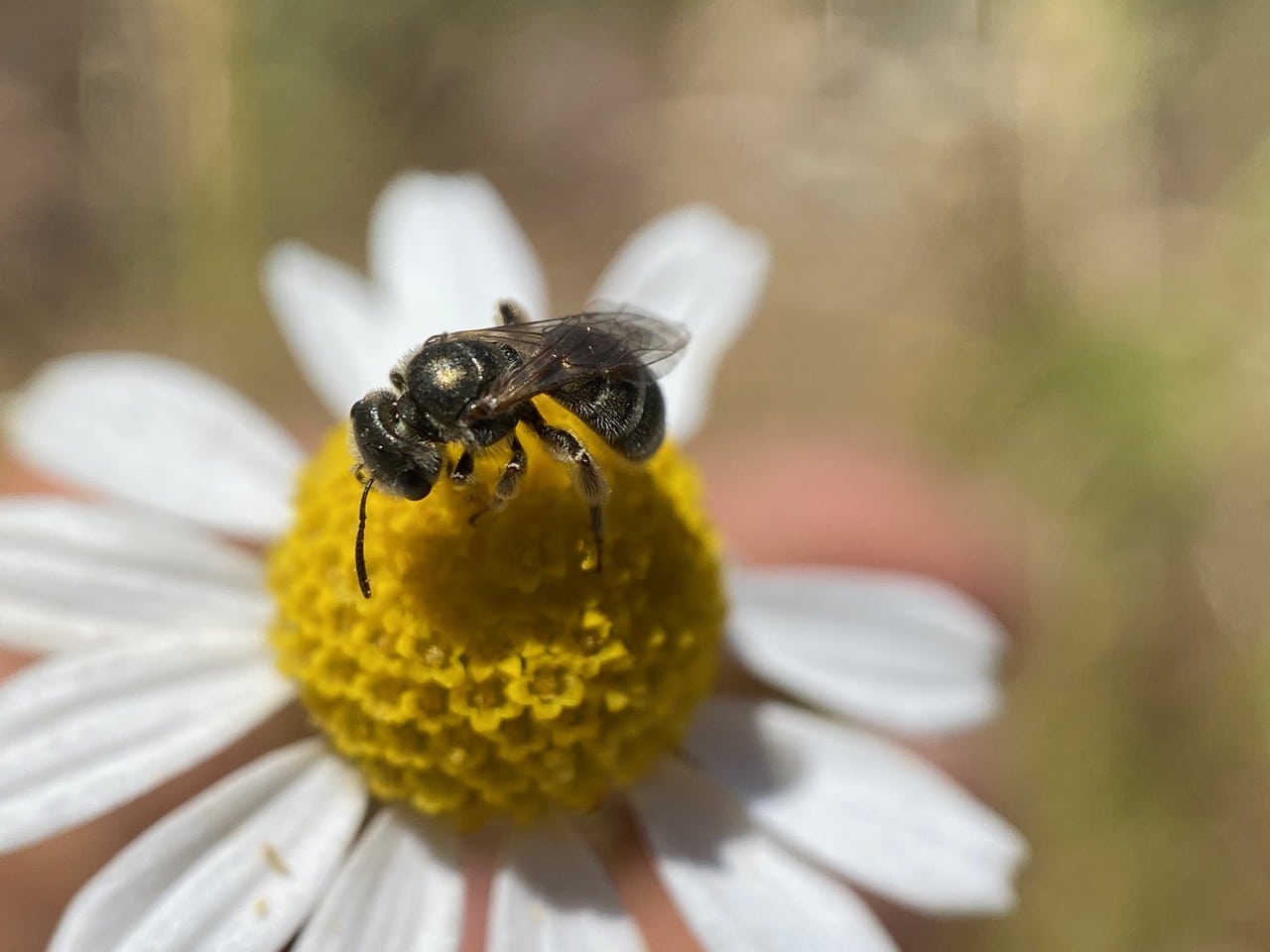
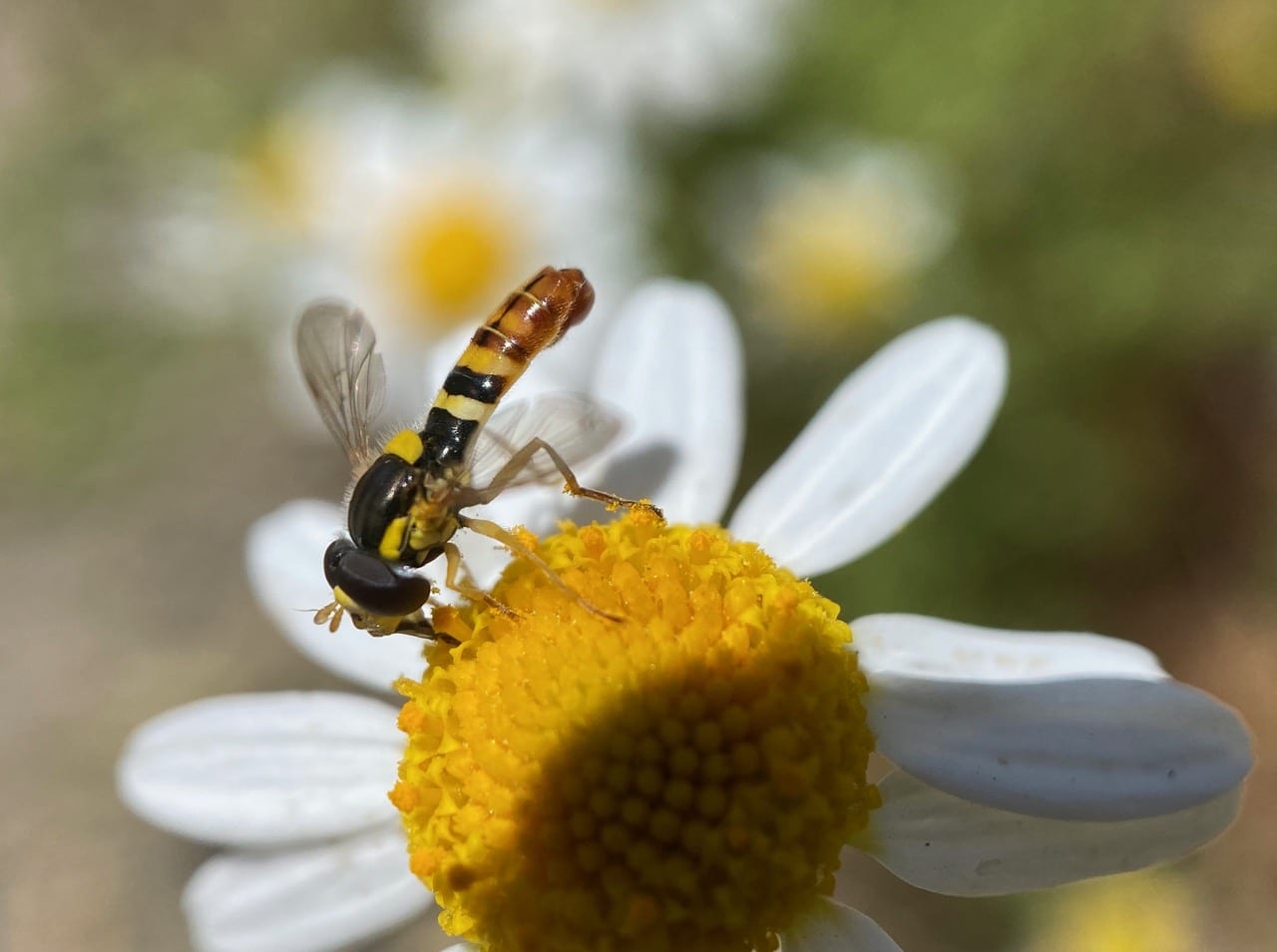
A Forked Globetail, Sphaerophoria sulphuripes (family Syrphidae) is feeding on the flowers of an English Daisy.
The species exhibits sexual dimorphism. The males are easily recognizable for the slim, cylindrical, black/yellow abdomen and the bulbous reddish genitalia that is curled under the tip of the abdomen. Females have rounder abdomen and no red coloration. The larvae of Sphaerophoria feed on aphids and other soft-bodied insects. Mating Hoverfly Sphaerophoria scripta pos | Seen on birch sa… | Flickr
Hover Flies, also called Syrphid Flies make up the insect family Syrphidae. They are often seen hovering or nectaring at flowers; the adults of many species feed mainly on nectar and pollen, while the larvae eat a wide range of foods. In many species, the larvae feed on aphids, thrips, and other plant-sucking insects. In some species, the larvae are saprotrophs, eating decaying plant and animal matter in the soil or in ponds and streams. Many Hover Flies are brightly colored, with spots, stripes and bands of yellow; due to this coloring, they are often mistaken for wasps or bees. They exhibit Batesian mimicry – the resemblance to stinging insects gives the hover flies some protection from predators.
Hover Flies are considered the second-most important groups of pollinators after wild bees. Most are generalists that visit a wide range of plant species. The feeding habits of Syrphid larvae further endear them to the gardeners, serving as pest control agents and recyclers of organic matter.

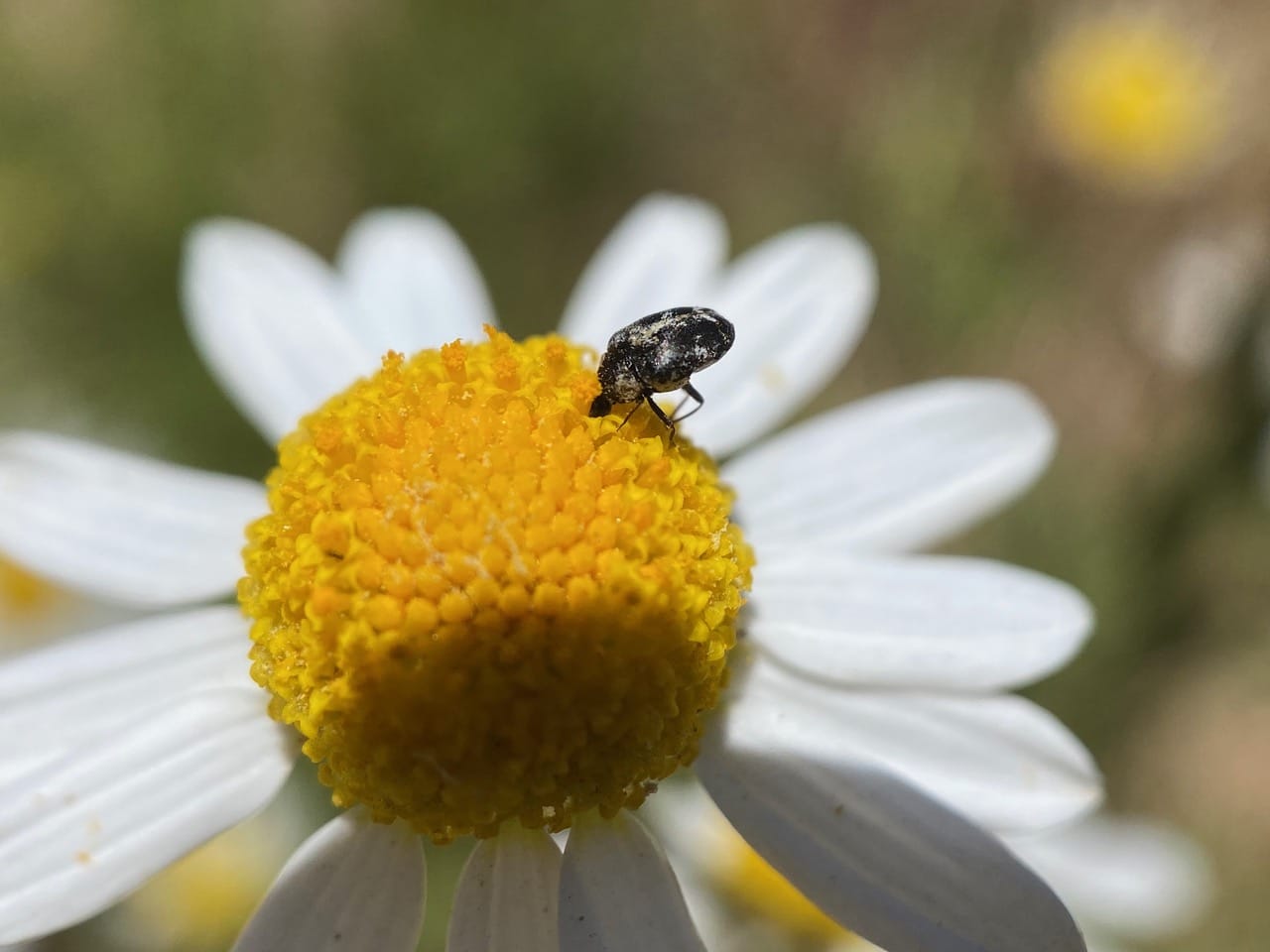
A Skin Beetle, Anthrenus lepidus (family Dermestidae) is feeding with its head in a flower of English Daisy.
Dermestidae are a family of Coleoptera (beetles) that are commonly referred to as skin of carpet beetles. Ranging in size from 1 to 2 mm, the beetles typically have clubbed antennae that fit into deep grooves. Most Dermestids are scavengers that feed on dry animal or plant materials, such as skin or pollen, animal hair, feathers, dead insects and natural fibers. The larvae are used in taxidermy and by natural history museums to clean animal skeletons.
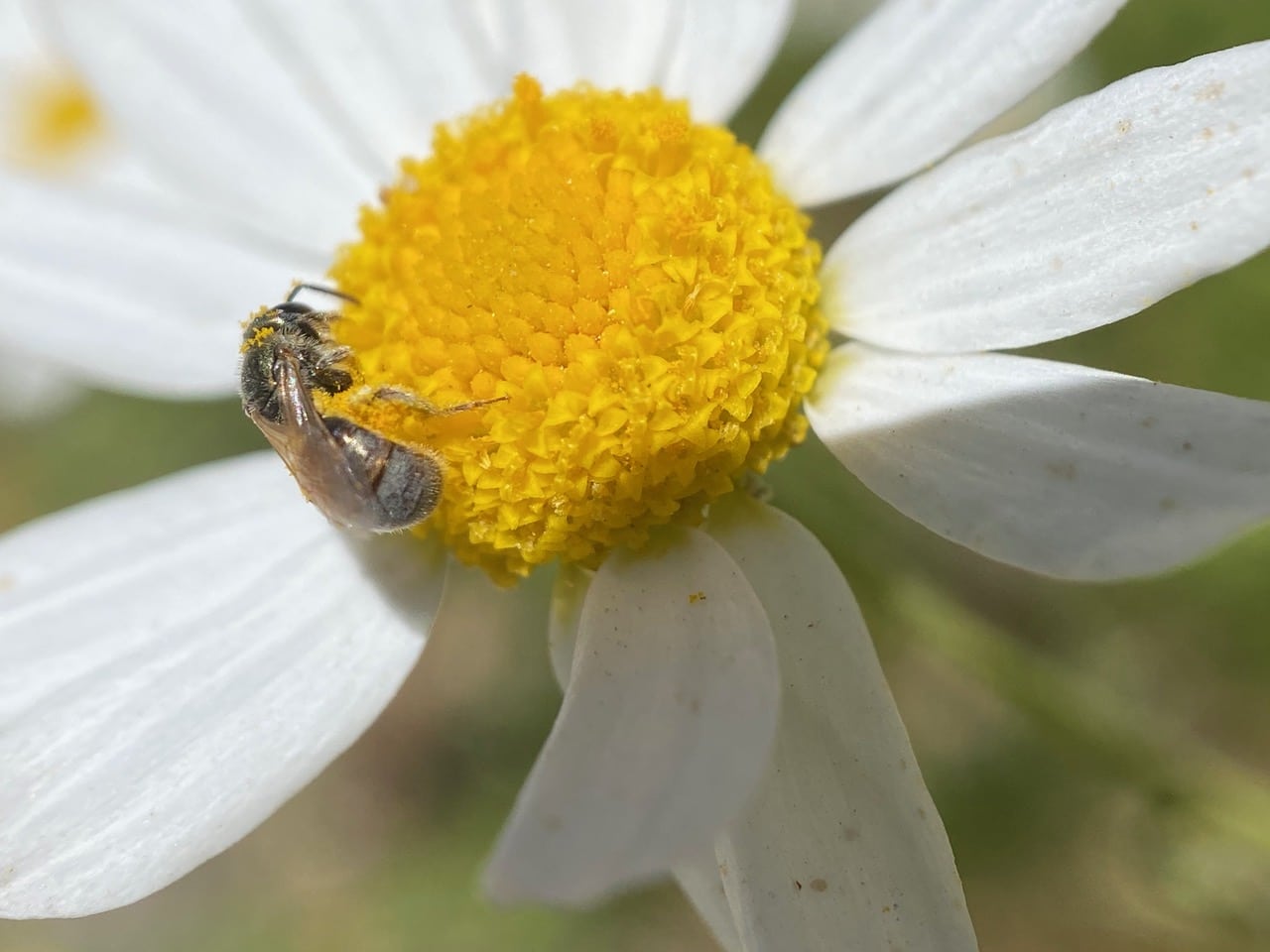
A small bee with a metallic sheen has landed to forage on a flowerhead of English Daisy. It is probably a Metallic Sweat Bee, Lasioglossum (Dialictus) sp. (family Halictidae).

Lasioglossum species are found worldwide, and they constitute the largest bee genus. The subgenus Dialictus are the most likely to be seen in the U.S., with over 300 species of these tiny metallic bees. The majority of Lasioglossum are generalists. Because they are so abundant throughout the flowering season, the bees are often important pollinators. Their sheer numbers are enough to achieve excellent pollination of many wild flowers, especially of plants in the Asteraceae, which have shallow floral tubes that are easily accessed by these minute bees.
Lasioglossum are closely related to the genera Halictus and Agapostemon. These genera are commonly called “sweat bees” because of their attraction to human sweat, which they drink for its salt content. Lasioglossum are dusky black to brown slender bees with bands of hair on their abdomen. Female Sweat Bees (family Halictidae) carry pollen in the scopae on their entire hind legs and underside of their abdomen.
Lasioglossum exhibit a range of social behaviors; the genus includes solitary, communal, semi social, primitively eusocial, and even parasitic species. Almost all Lasioglossum in the U.S. nest in the ground. Generally these nests are built in the spring by fertilized females (called foundresses) that spent the winter in hibernation. In social species, the foundresses behave much like the queen Bumble Bees – they lay the first batch of eggs that develop into the first generation of female workers. The nest grows with each additional generation of bees. Later broods may consist of both males and females. They mate, and at the end of the season the fertilized females hibernate til the following spring, repeating the life cycle of the colony.
Dialictus is a subgenus of sweat bees belonging to the genus Lasioglossum. Most of the members of this subgenus have a metallic appearance. They are commonly found in the Northern Hemisphere and are found in abundance in North America. Members of this subgenus also have very diverse forms of social structure making them model organisms for studying the social behavior of bees.
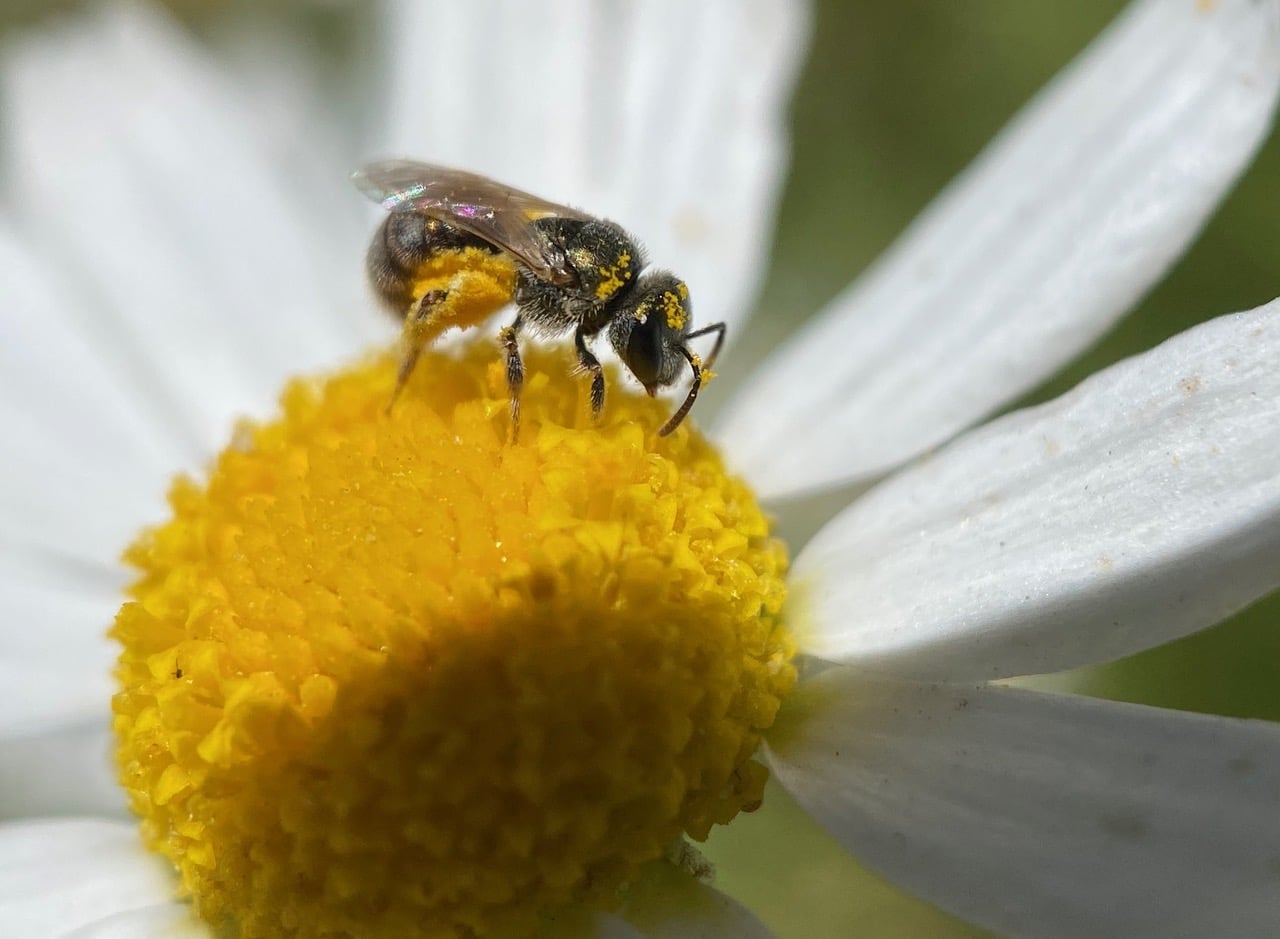
Besides the pollen that is intentionally gathered into the scopae of her hind legs, much of the sticky pollen has adhered to the bee’s body. Members of the Asteracea family tend to have sticky, clumpy pollen.
Pollenkitt is a sticky covering found on the surface of pollen grains. It is also sometimes called “pollen coat”. It is found in some plant families more often than others, but it is especially common in plants that are pollinated by insects. Because of this scientists believe that one of the major functions of pollenkitt is to help the pollen stick to the insect pollinators. The pollen from many wind-pollinated plants, such as grass, is much drier and not nearly so sticky. The insects benefit from lots of pollen that is easy to carry home. What’s more, pollenkitt contains lipids, proteins, and phenolic compounds that are important to bee health. For the plant, pollenkitt may prevent the pollen from blowing away or drying out, or it may protect the pollen from ultra-violet radiation and certain pathogens.


A stout little bee with a big pollen load on her hind legs is gathering pollen on a flowerhead of Dandelion.
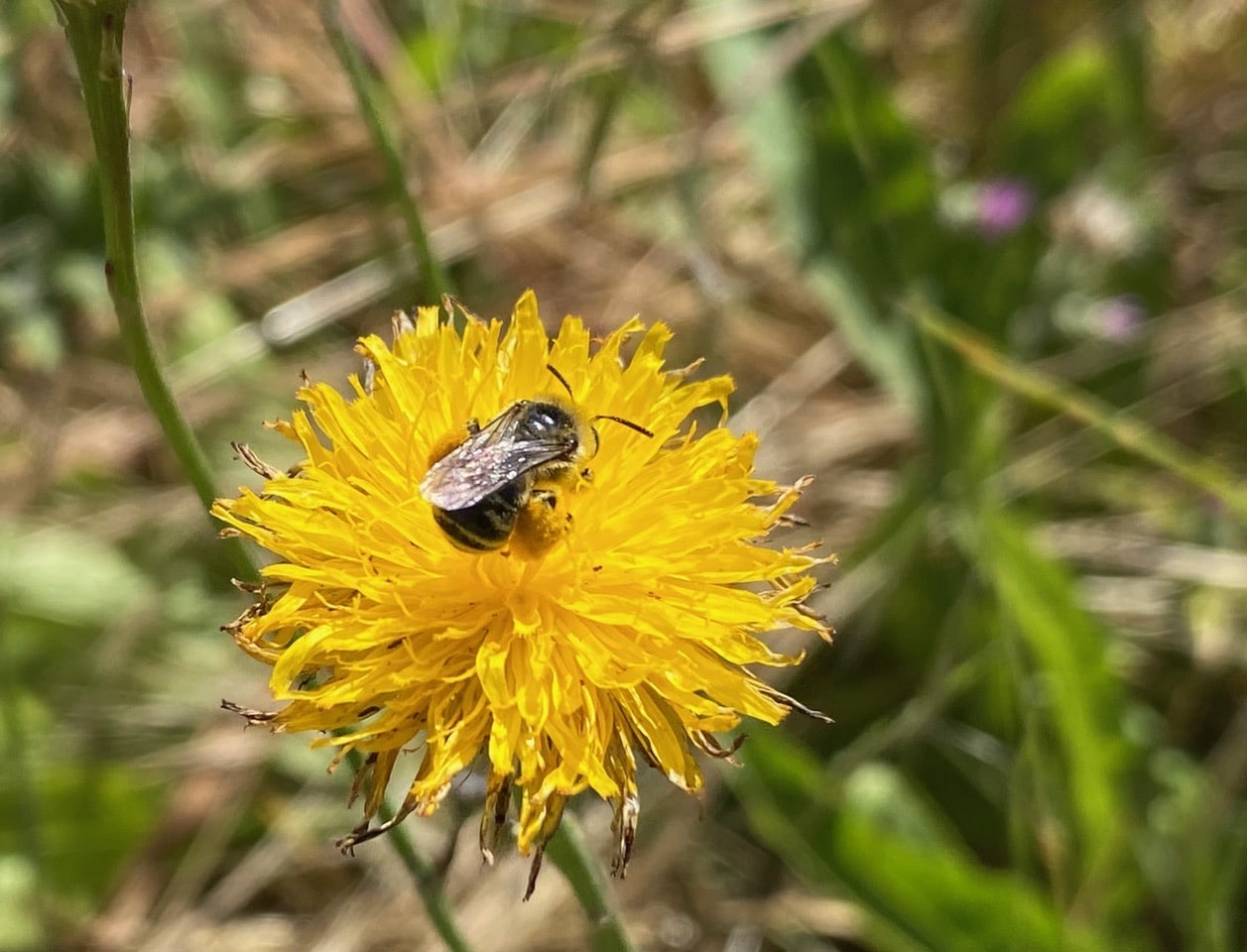
The bee is a female Spring Longhorn Bee (subgenus Synhalonia, genus Eucera, family Apidae).
The name Eucera is Greek for “well-horned”, a reference to the long antennae of the males. Abundant throughout the United States and Canada, especially in the west, these fast-flying bees are hairy and generally large. Only one subgenus (Synhalonia) occurs in the United States and Canada. Eucera includes both specialists and generalist bees. Specialists often limit themselves to flowers in the pea family (Fabaceae). Eucera are among the first bees to emerge in the spring and are rare by August. They nest in the ground and are mostly solitary. Nest entrances have a mound of excavated soil heaped symmetrically around them. When females emerge they are mobbed by several males who have emerged earlier. Competition among the males is often aggressive, resulting in tumbling “mating balls” of males clustered around a female. Once the female has been mated, however, her scent changes, and males leave her alone.
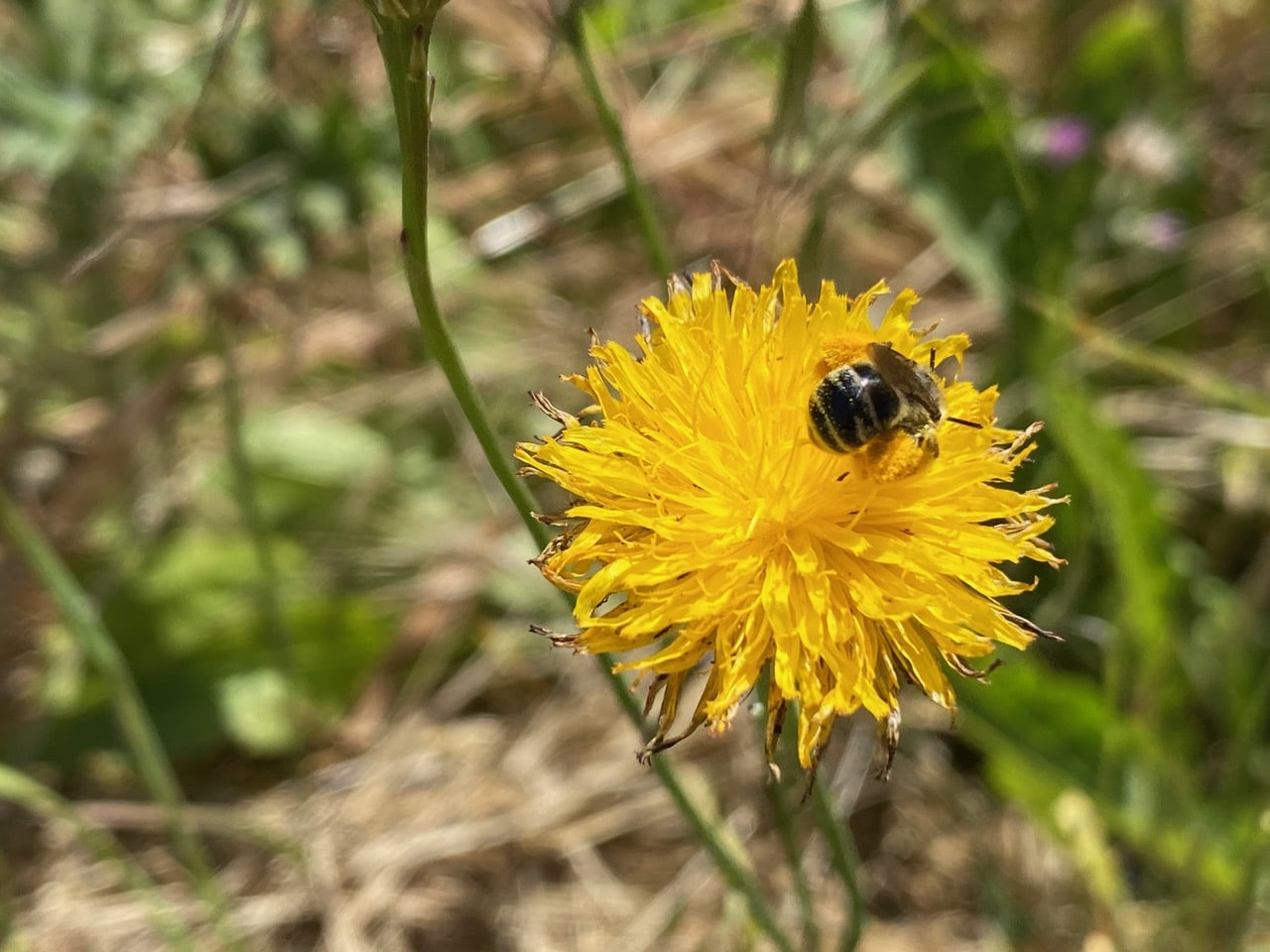
Female Longhorn Bees are best known for their scopae that can accommodate an astonishing amount of pollen.