

Pollinator Post 6/13/24 (1)
 At the Sibley Volcanic Regional Preserve, I venture off on a little-used side trail flanked by French Broom. Most of the plants are now in seed. A shiny little spider is resting on a seed pod. From the distinctive white markings on its chelicerae, I recognize it as the Oak Jumping Spider.
The Oak Jumping Spider, Metaphidippus manni (family Salticidae) is commonly found in oak woodlands of the Pacific Coast, stretching from British Columbia to Baja California, and east to central Arizona. Males are distinguished by dense white patches on chelicerae (paired structures in front of the face tipped with fangs) and cheek patches that contrast against a dark, shiny body.
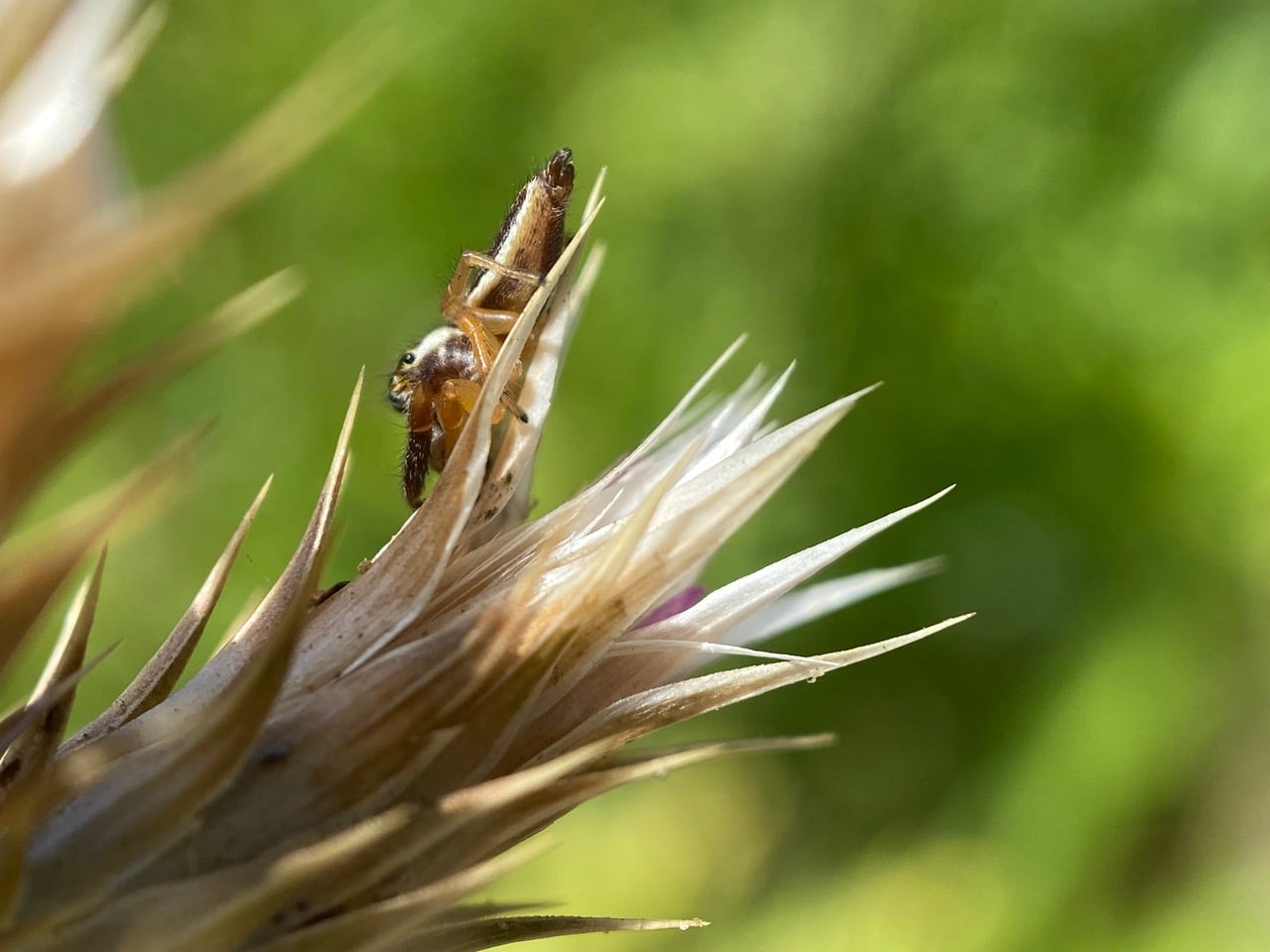
A small spider is resting on a sharp phyllary of an Italian Thistle.
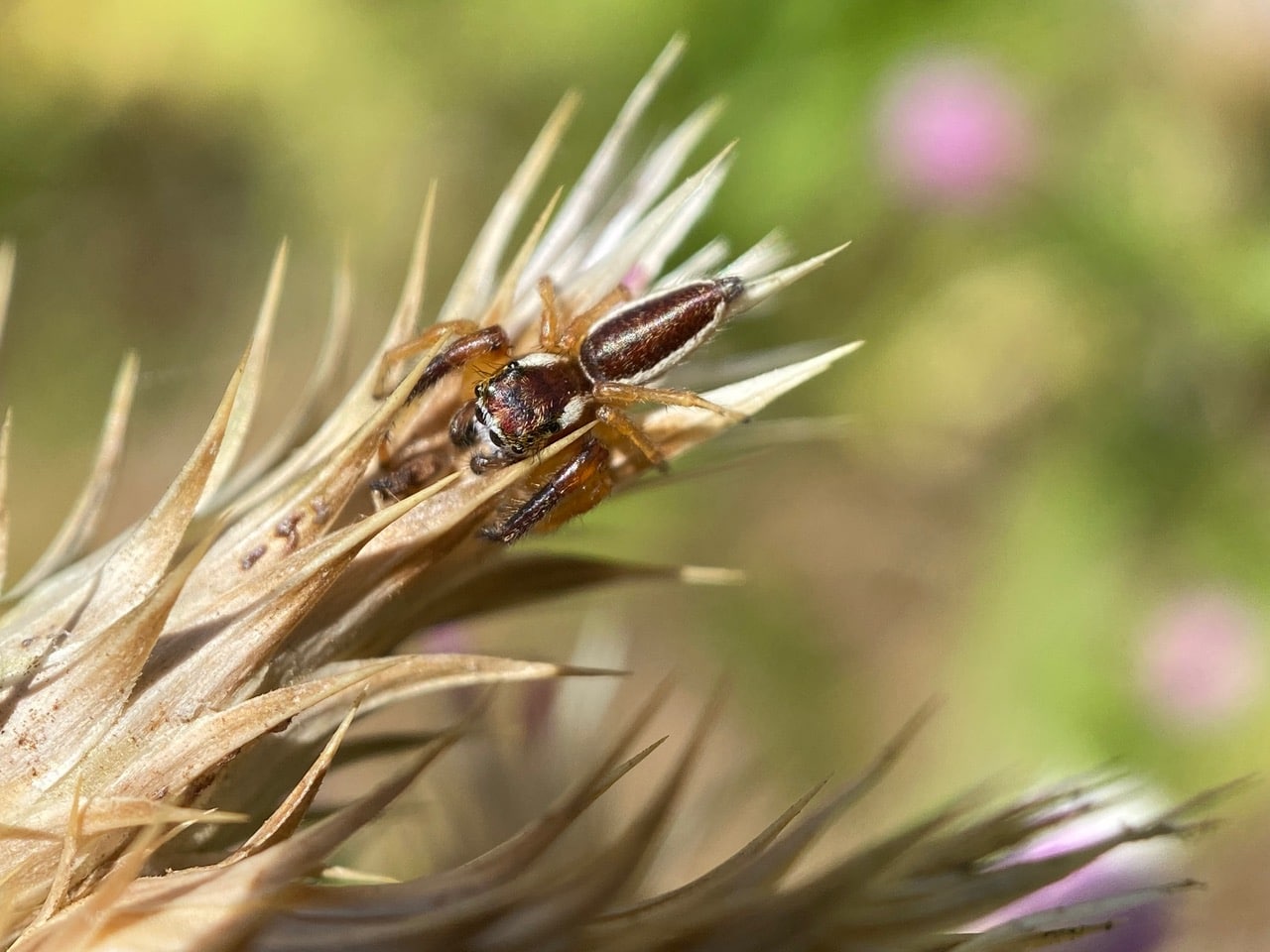
Looking at the spider from the top, I realize it is another Jumping Spider (family Salticidae). It has the typical boxy cephalothorax and eye arrangement of a jumper. This one just happens to have a rather elongated abdomen. iNaturalist has identified it as Phanias harfordi (family Salticidae).
Salticids are free-roaming hunting spiders. They do not weave a web to catch prey. They stalk, then pounce on their prey. Just before jumping, the spider fastens a safety line to the substrate. It can leap 10-20 times their body length to capture prey.
Jumping spiders have excellent vision, with among the highest acuities in invertebrates. The 8 eyes are grouped four on the face (the two big Anterior Median Eyes in the middle, and two smaller Anterior Lateral eyes to the side), and four on top of the carapace. The anterior median eyes provide high acuity but small field of view, while the other six eyes act like our peripheral vision, with lower resolution but broad field of view. Since all eight eyes are fixed in place and can’t pivot independently from the body like human eyes can, jumping spiders must turn to face whatever they want to see well. This includes moving their cephalothorax up and down, an endearing behavior.

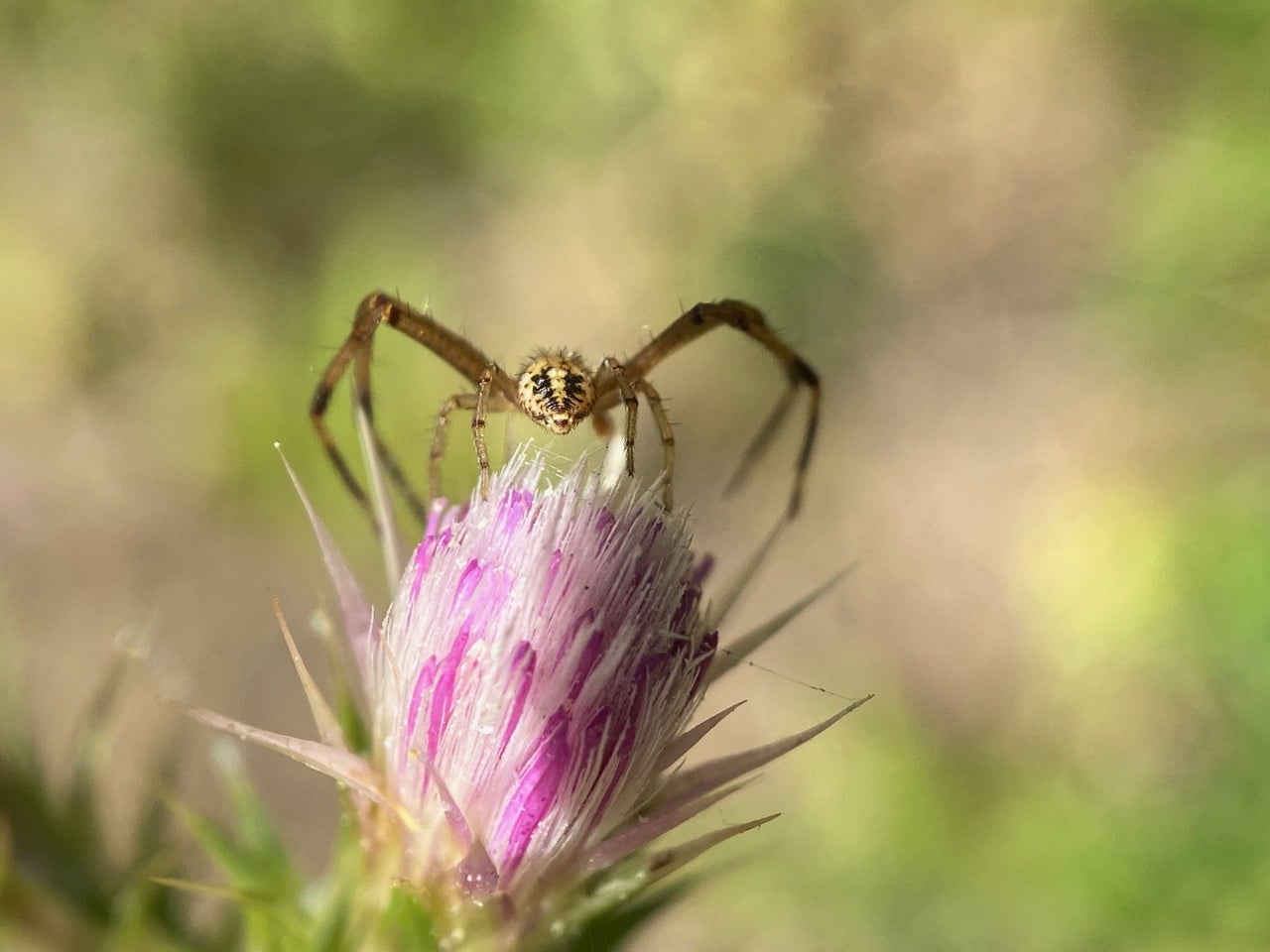
Ooh, here’s a tiny male Swift Crab Spider, Mecaphesa celer (family Thomisidae) on an immature flowerhead of Italian Thistle. He is all legs!

Crab Spiders (family Thomisidae) do not make webs to catch prey. They are ambush predators that silently wait in the flowers until the prey appears. The spider grabs the prey with the long front legs and delivers a deadly dose of venom using its slender fangs. Females are generally larger than males, sometimes many times larger. Males have more slender body and longer legs. They are darker in color and have brown markings on the abdomen. Females are more sedentary, while the males tend to wander in search of mating opportunities by following the silk threads laid down by the females.
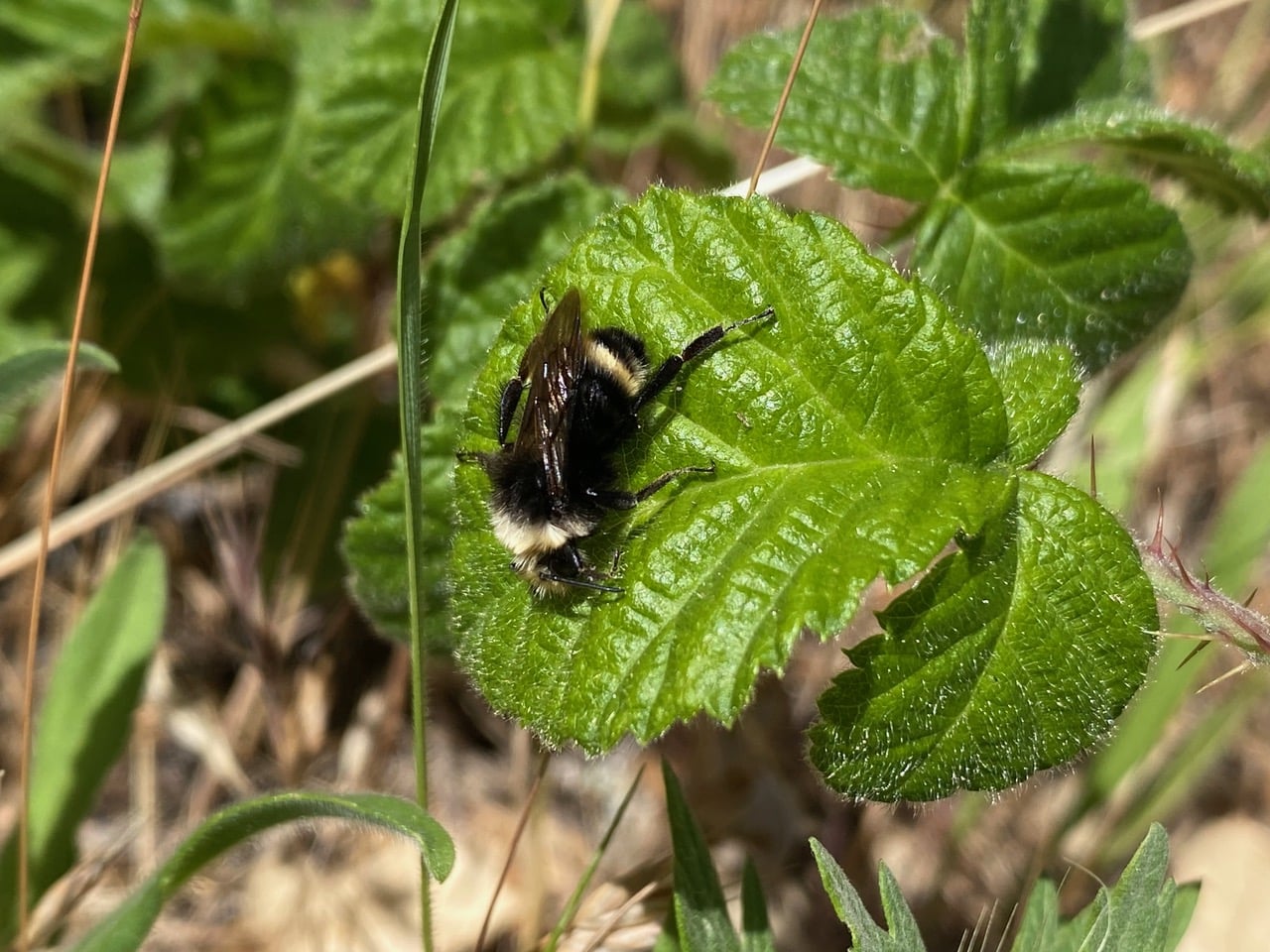
A large Yellow-faced Bumble Bee, Bombus vosnesenskii (family Apidae) is lying limp on a Blackberry leaf in the sun. As I stop to photograph it, the bee stirs and flies away. Was it just taking a break? I have been seeing this behavior a lot lately.
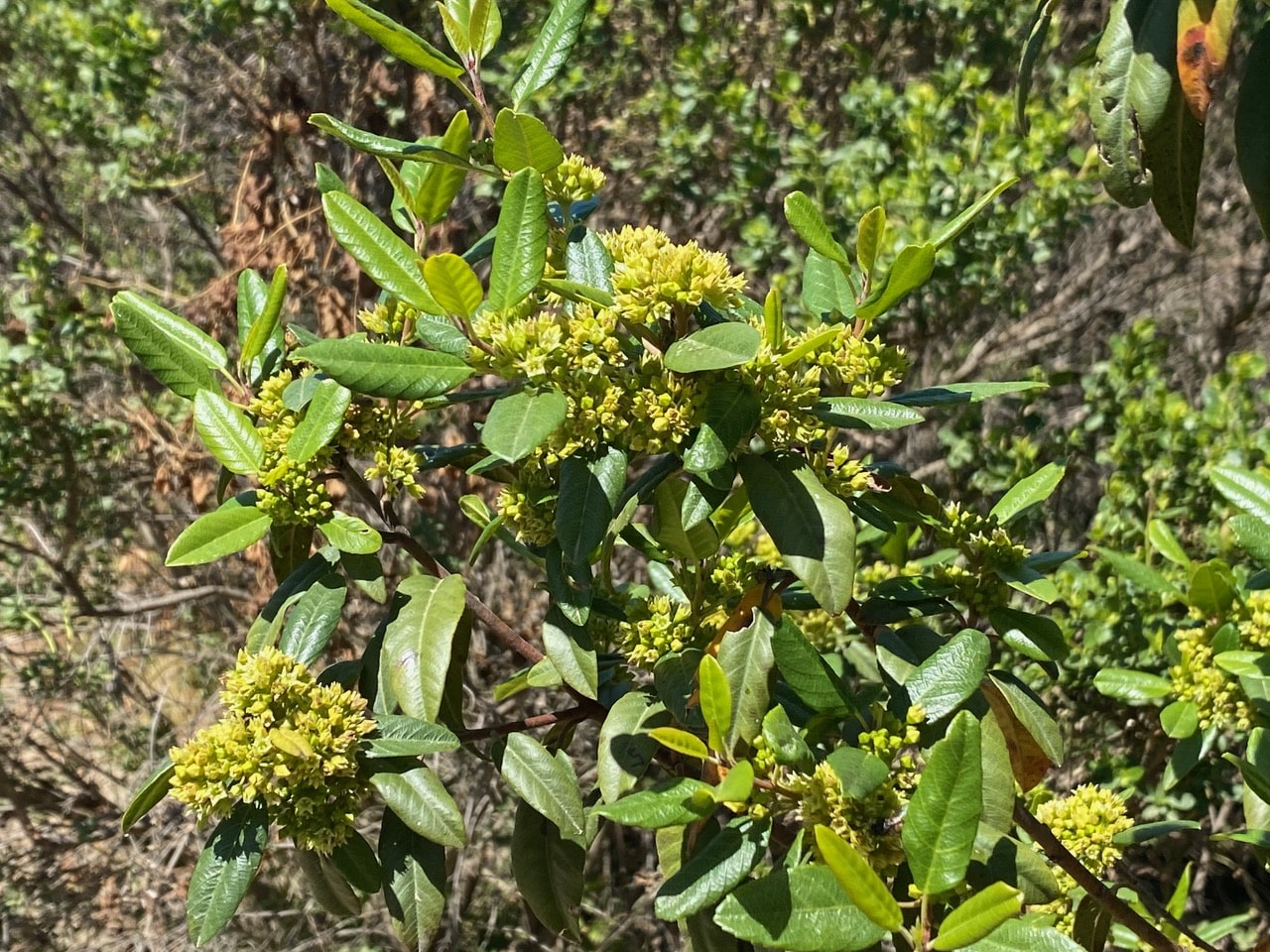
I am elated to finally come across a native plant is bloom. This small shrub of Coffeeberry, Frangula californica by the trail is full of tight clusters of small yellow-green flowers.
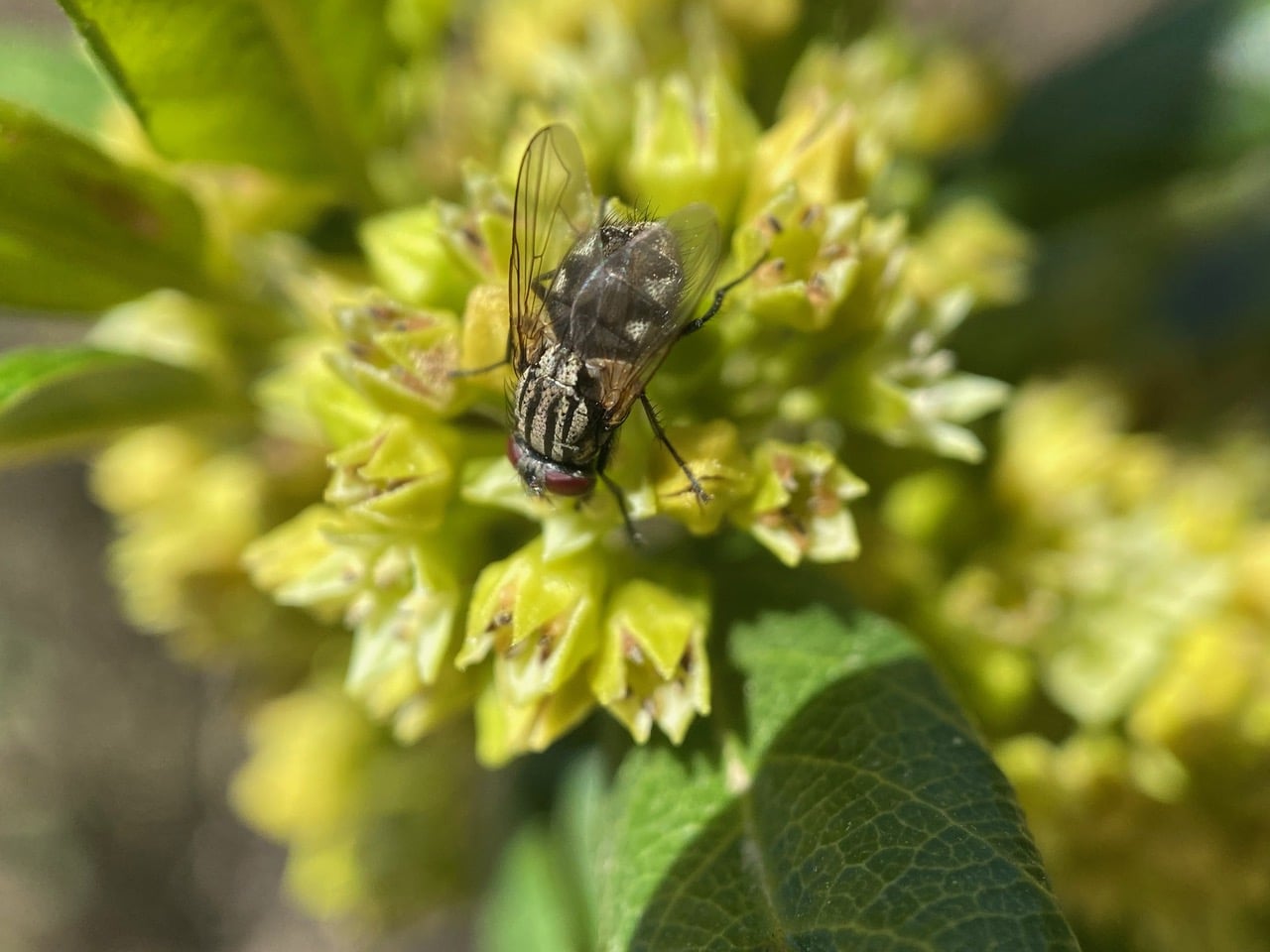
The flowers of the Coffeeberry are attracting many visitors, mostly flies. Some I recognize, many I don’t. This one has an interesting black-and-gray pattern on its abdomen. It is difficult to identify flies, and most of my requests for their ID receive little response from iNaturalist. There seems to be a general lack of interest or lack of knowledge in Diptera.
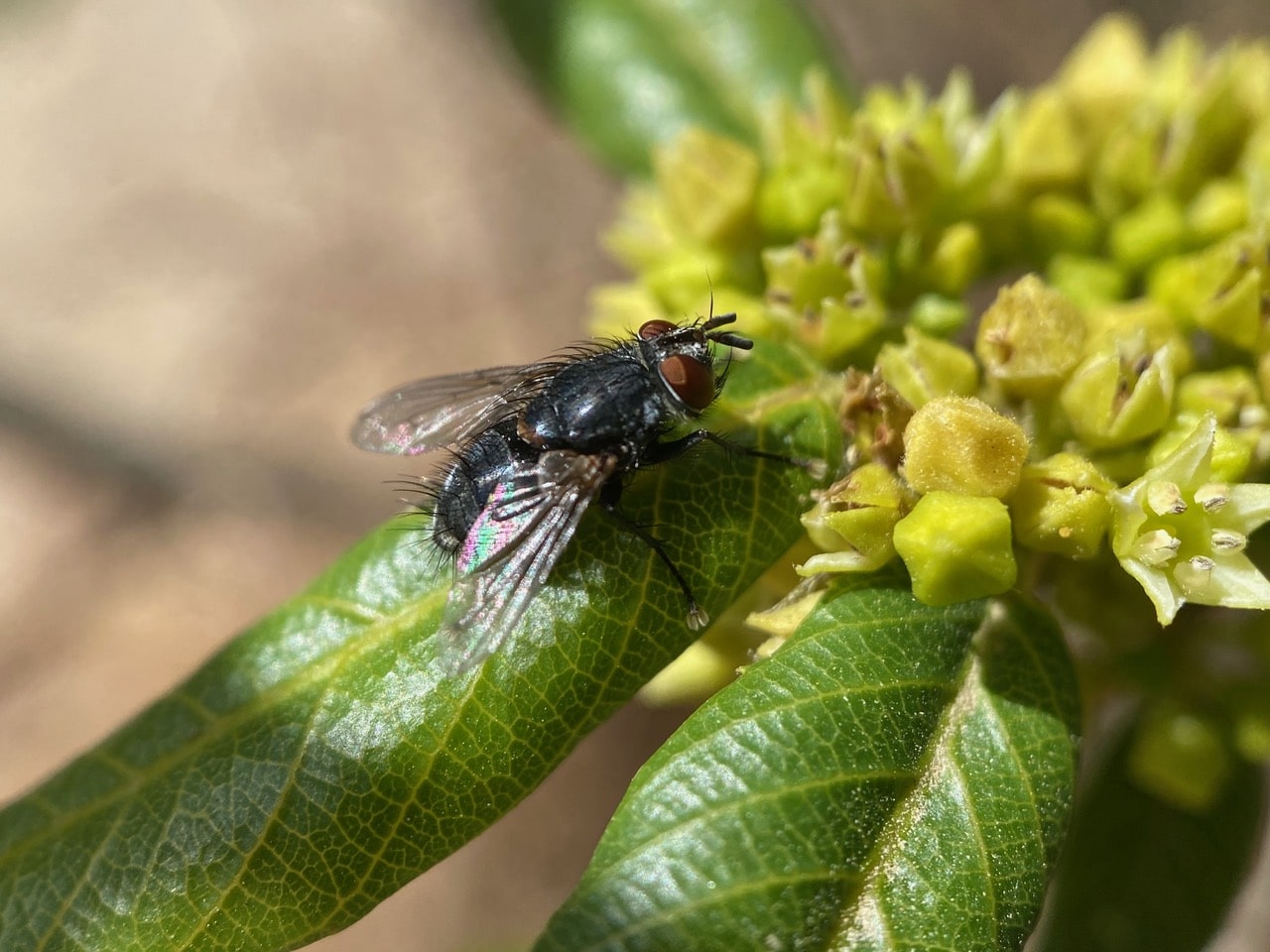
This one has been identified by a fly expert on iNaturalist as a Bristle Fly (family Tachinidae).
The larvae of all Tachinids are parasitoids. Most tachinidae are endoparasitoids, feeding within their hosts, and most are generalist, with a range of species they prey on. Parasitoids feed on the non-essential organs of its host first, and then the vital organs, timing the death of the host to correspond with the end of its larval stage.
Tachinid flies use a variety of strategies to plant its egg on its host. A common method is to lay an egg in a hard-to-reach spot on the outside of the host’s body, or to inject it directly into the host’s body. The egg hatches, and the larva burrows into the host. Plan B is ovoviviparity – the female deposits freshly hatched larvae instead of eggs onto the host. Plan C – Mama Tachinidae deposits eggs on vegetation frequented by host. A host may eat the egg while feeding, or the larvae may hatch out and go hunting on their own.
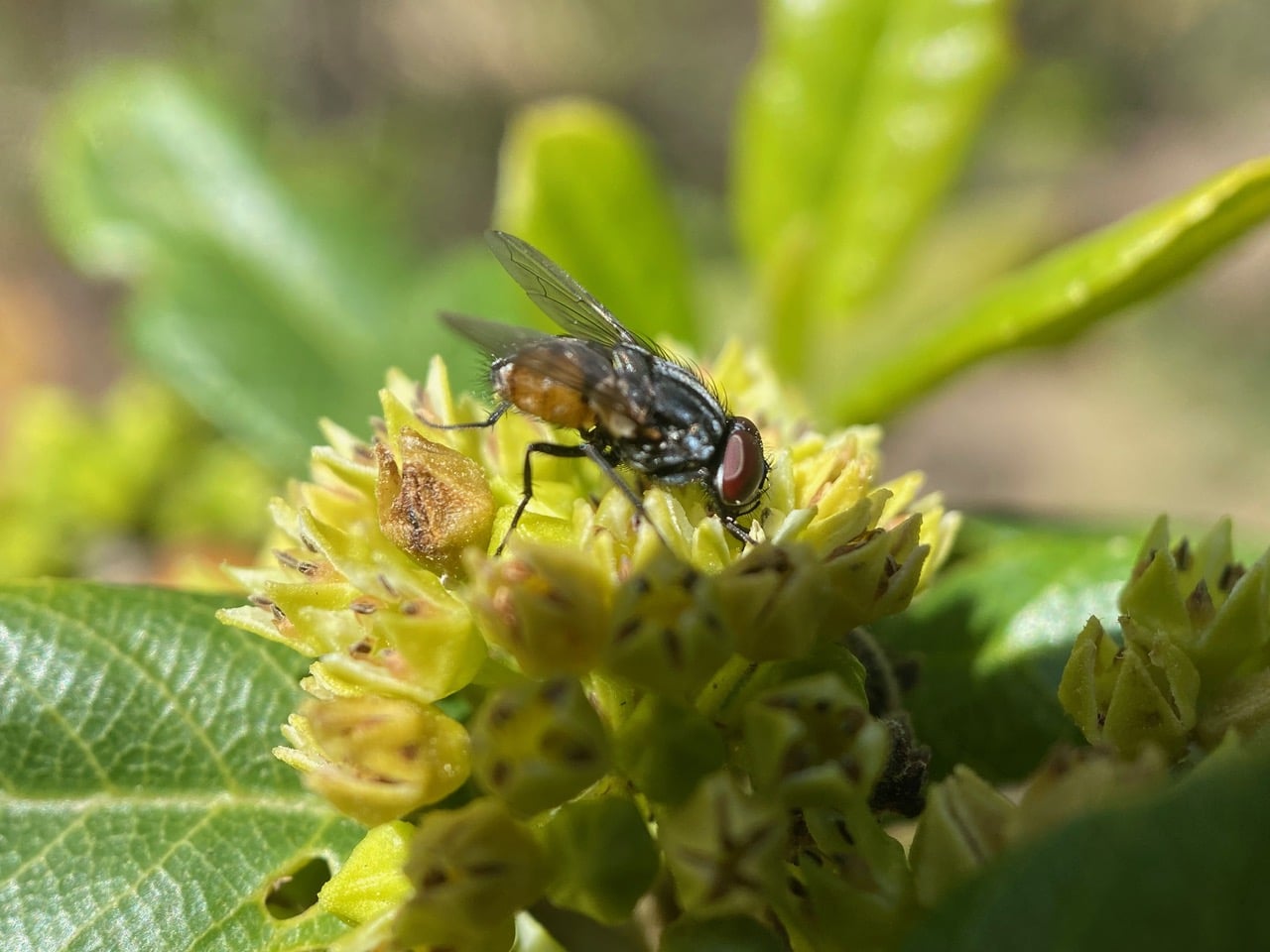
A Face Fly is foraging on a cluster of Coffeeberry flowers.
The Face Fly, Musca autumnalis (family Muscidae) is similar to the closely related housefly but is slightly larger, about 7-8 mm long, with a grey thorax with four dorsal longitudinal dark stripes. The yellowish abdomen has a single, dorsal longitudinal dark stripe.
Musca autumnalis is widespread throughout most of Europe, Asia and some parts of North Africa. It was introduced into North America around the 1940s and is now commonly found in most temperate parts of the United States.
Adult Face Flies emerge from winter hibernation in early spring. During the day, they feed on manure juices and plant sugars. On cattle and horses they feed on secretions around the eyes, mouth and nostrils. They will also feed on the hosts’ blood through wounds such as horse-fly bites. At night both sexes rest on vegetation. Females lay eggs on fresh cow manure where the maggots feed on microbes, developing through three instars and final pupation. Musca autumnalis is considered a pest species, as it transmits the eye worm to cattle and horses, and pinkeye to cattle.

A Bristle Fly (family Tachinidae)?

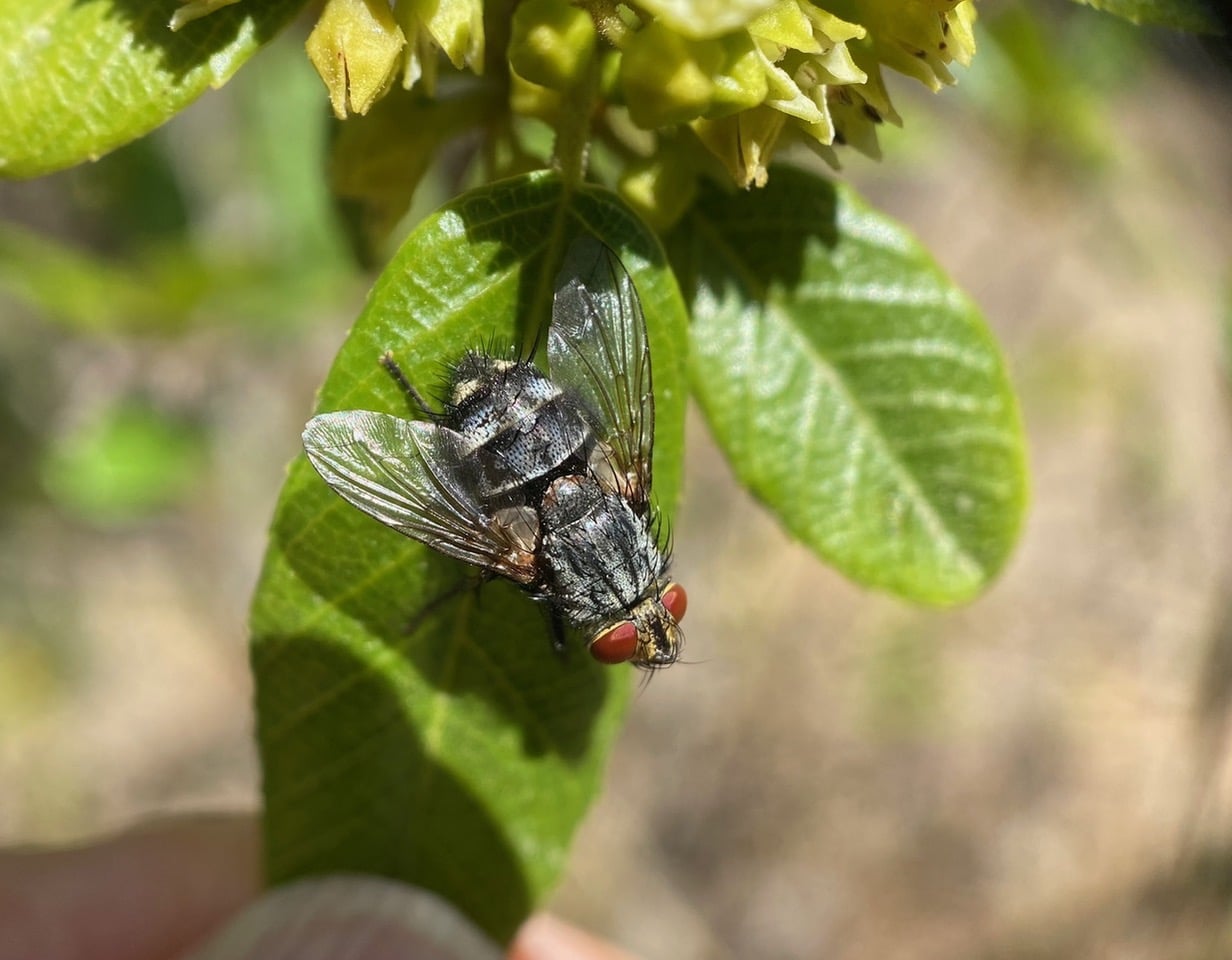
A Flesh Fly (family Sarcophagidae)?
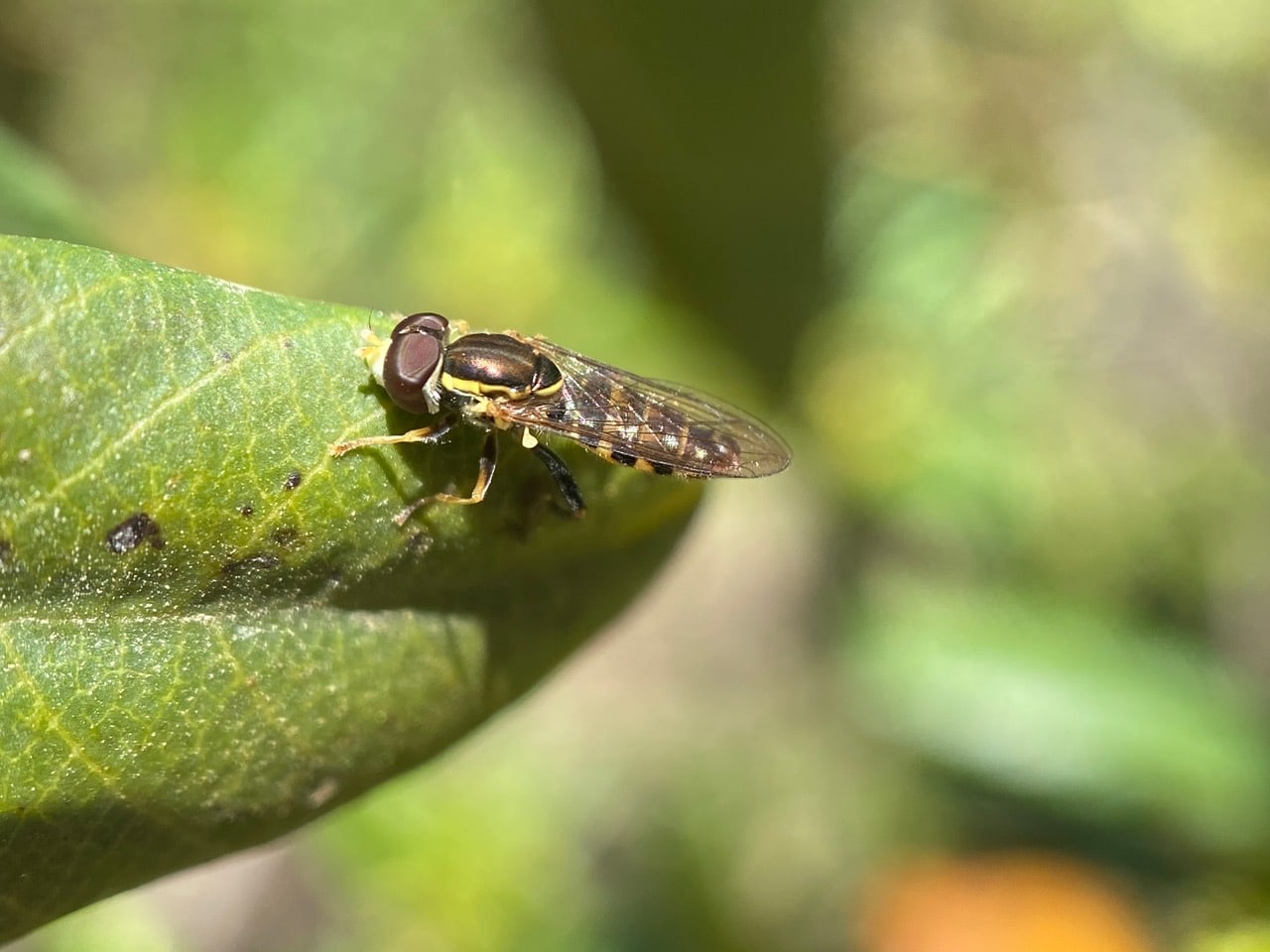
A Western Calligrapher, Toxomerus occidentalis (family Syrphidae) lands on a Coffeeberry leaf tip.
Toxomerus is a very large genus of Hover Flies. They are found in North and South America. The majority of species are only 6-9 mm in length. They are notable for their mimicry of stinging Hymenoptera to avoid predators. Their unique abdominal patterns are diagnostic at the species level within the genus. Most larvae feed on soft bodied insects, such as aphids; a few feed on pollen. Adults feed on the pollen of a wide range of flowers. A female can lay up to hundreds of eggs at a time and will place them where prey or pollen food sources are readily available. They can be found in a wide variety of habitats, often in dense ground cover.

A Soldier Beetle, Cultellunguis americanus (family Cantharidae) has its head in a Coffeeberry flower.
The Soldier Beetles, family Cantharidae are relatively soft-bodied, straight-sided beetles. One of the first described species has a color pattern reminiscent of the red coats of early British soldiers, hence the common name. They are also known commonly as Leatherwings because of their soft elytra.
Soldier beetles often feed on both nectar and pollen as well as predating on other small insects. The larvae are often active, and feed on the ground, hunting snails and other small creatures. Soldier beetles are generally considered beneficial insects by gardeners.

Pollen has adhered to the beetle’s head and thorax when it lifts its head from the flower.

Beetles can serve as a pollinators too! In fact, beetles were among the first pollinators, even predating flowering plants (angiosperms). They were initially associated with plants such as cycads, then, later, the early angiosperms.
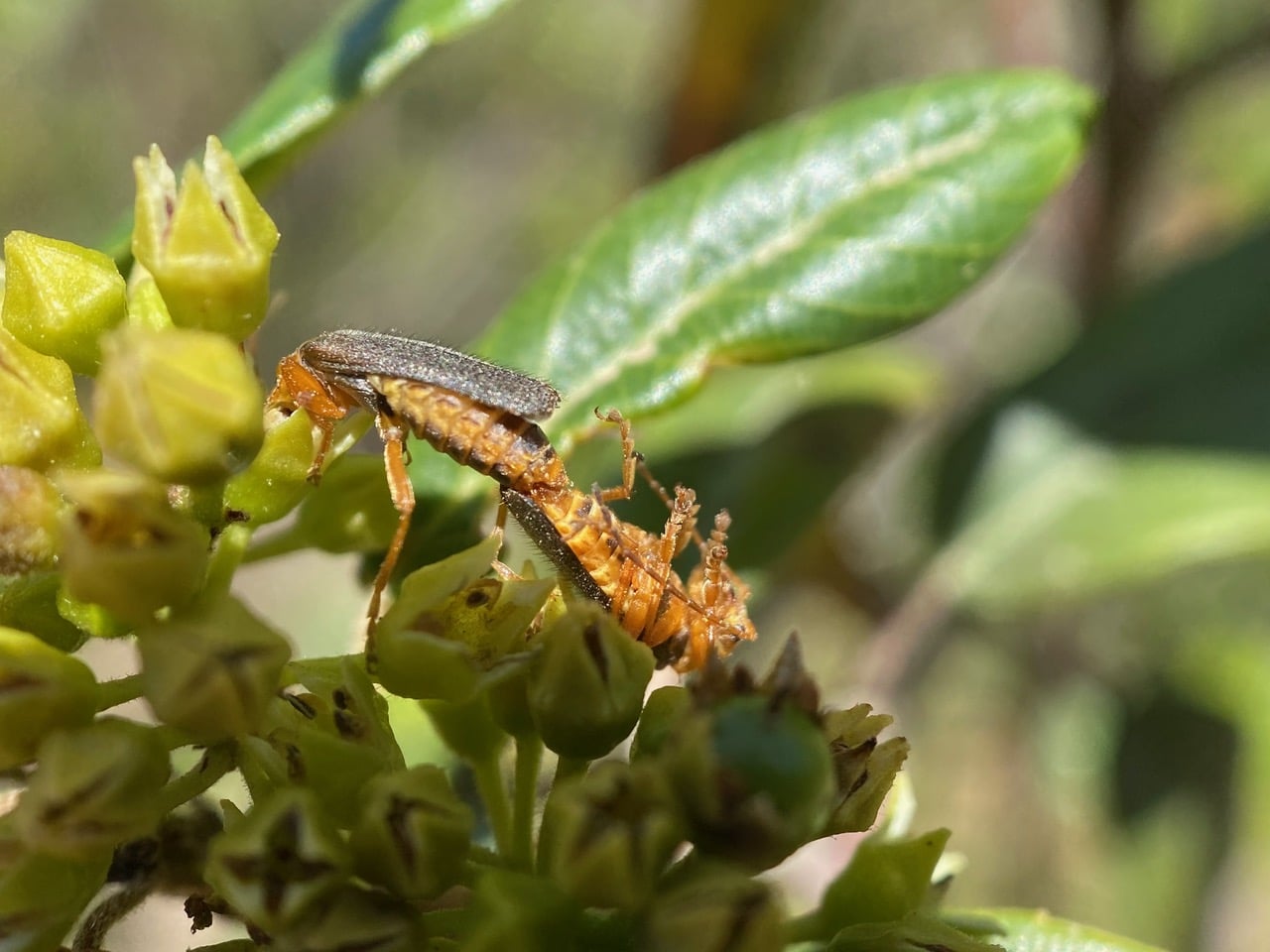
A pair of Soldier Beetles are mating on Coffeeberry flowers. The nonchalant female has her head in a flower, feeding, while the attached male is on his back.

The couple moves on. It’s a wild ride for the male!
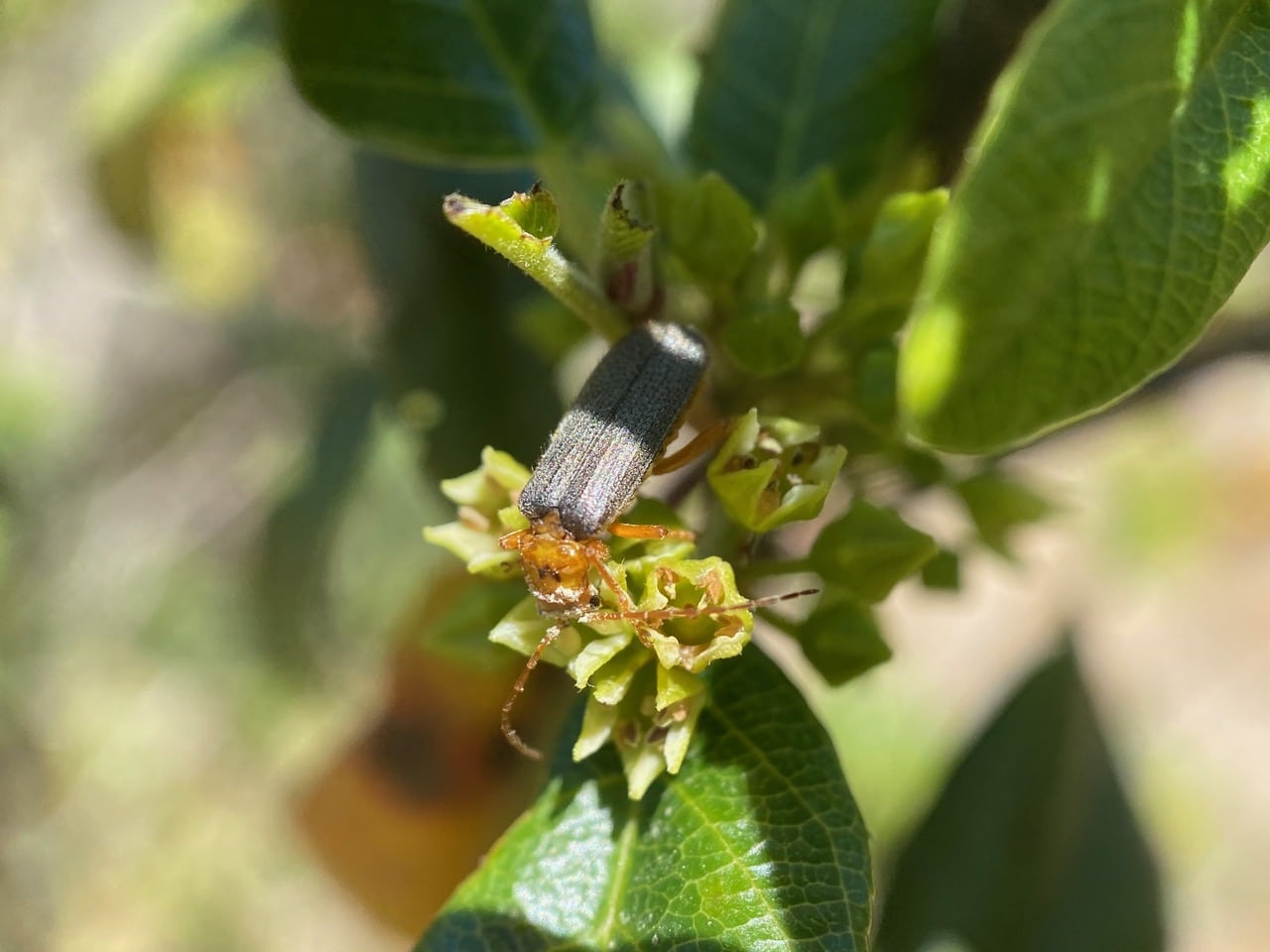
A Soldier Beetle sticks its head into a Coffeeberry flower to feed.

The beetle emerges with a head full of pollen.

The nectar is apparently irresistible – the beetle returns to the same flower for more.
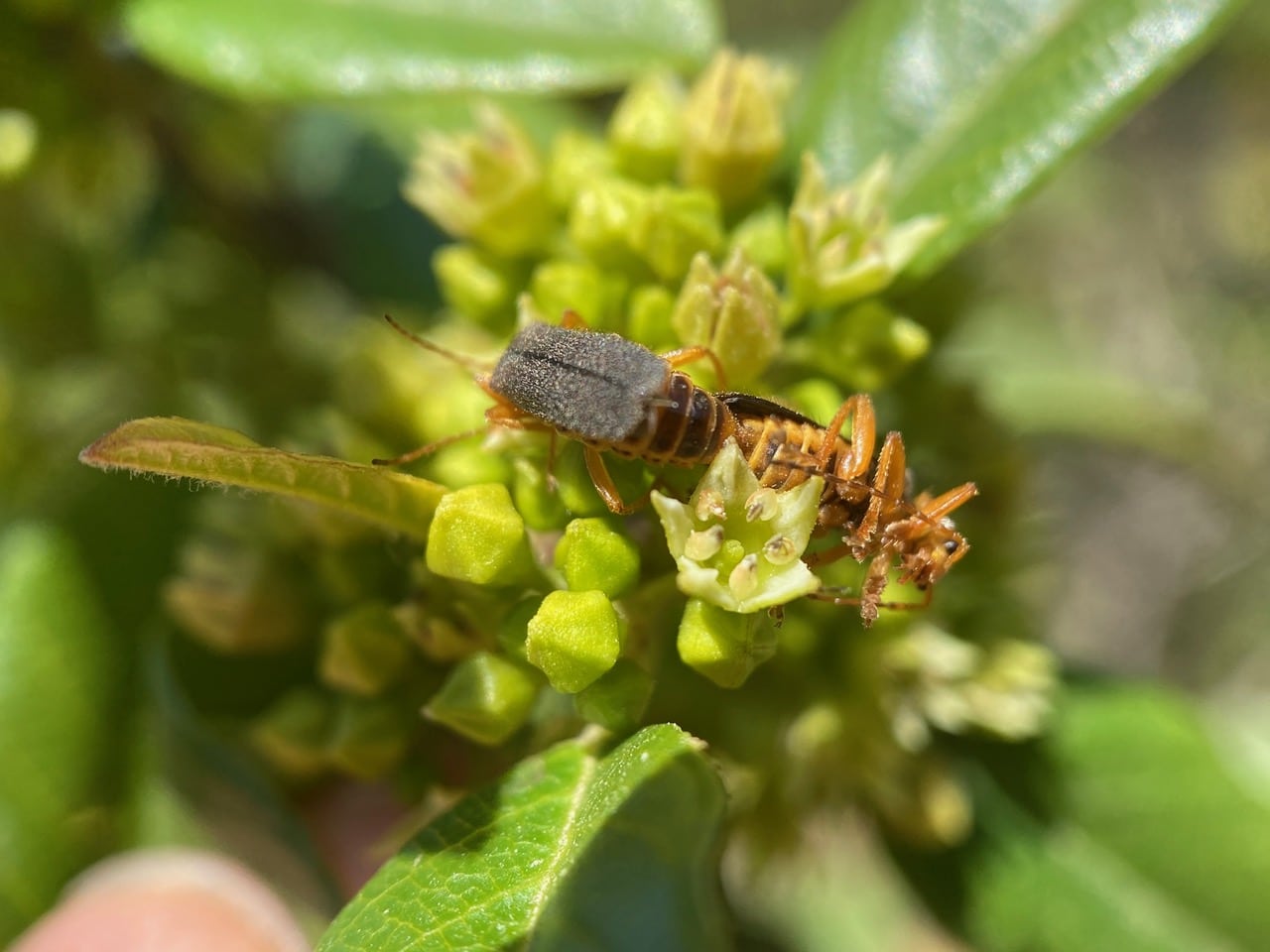
A mating pair of Soldier Beetles are moving around slowly on a cluster of Coffeeberry flowers. The male is on his back, being dragged around by his mate. The nonchalant female stops occasionally to stick her head in a flower to feed. Note that the male has carefully folded his antennae, holding them with his legs.

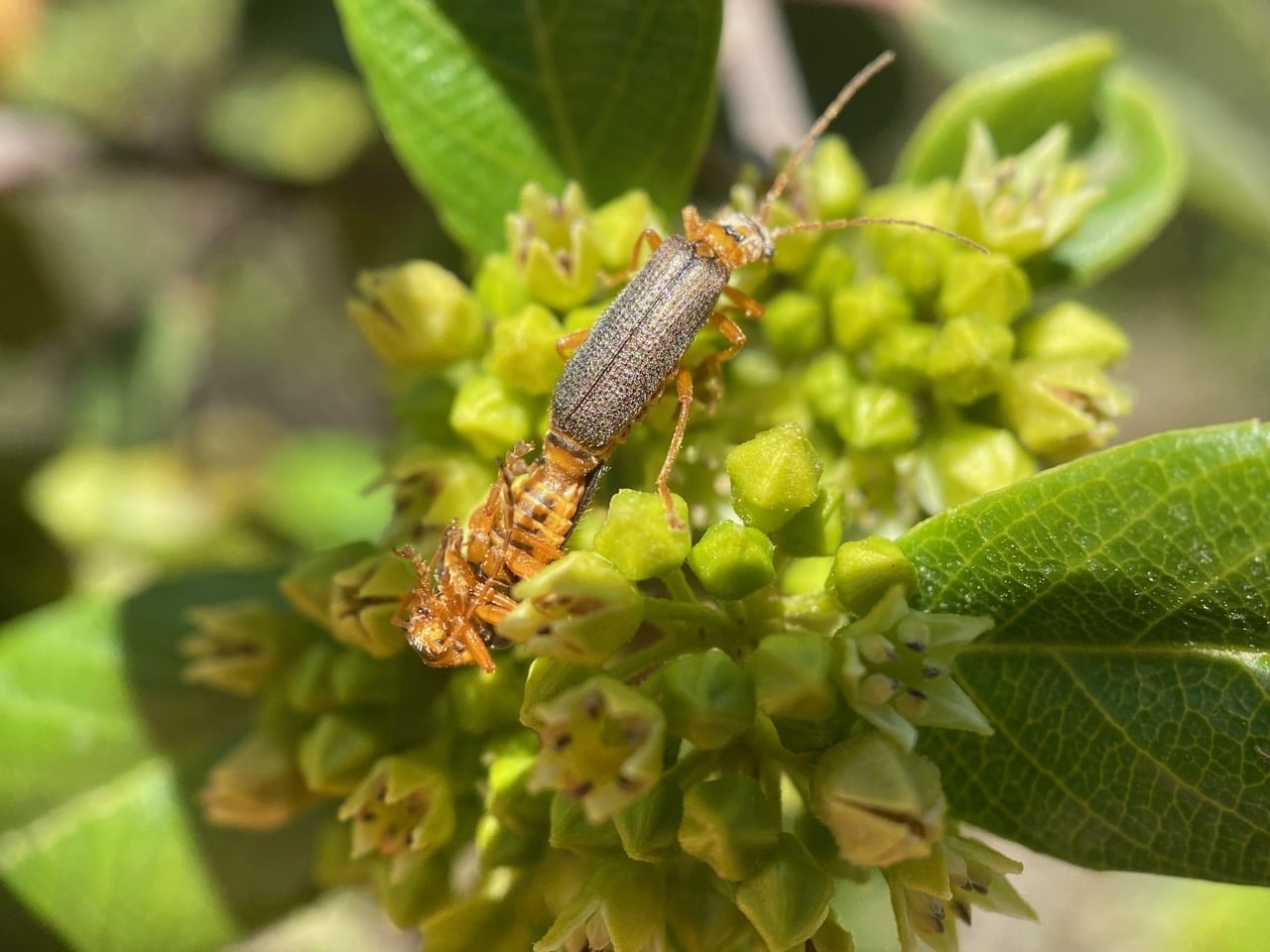
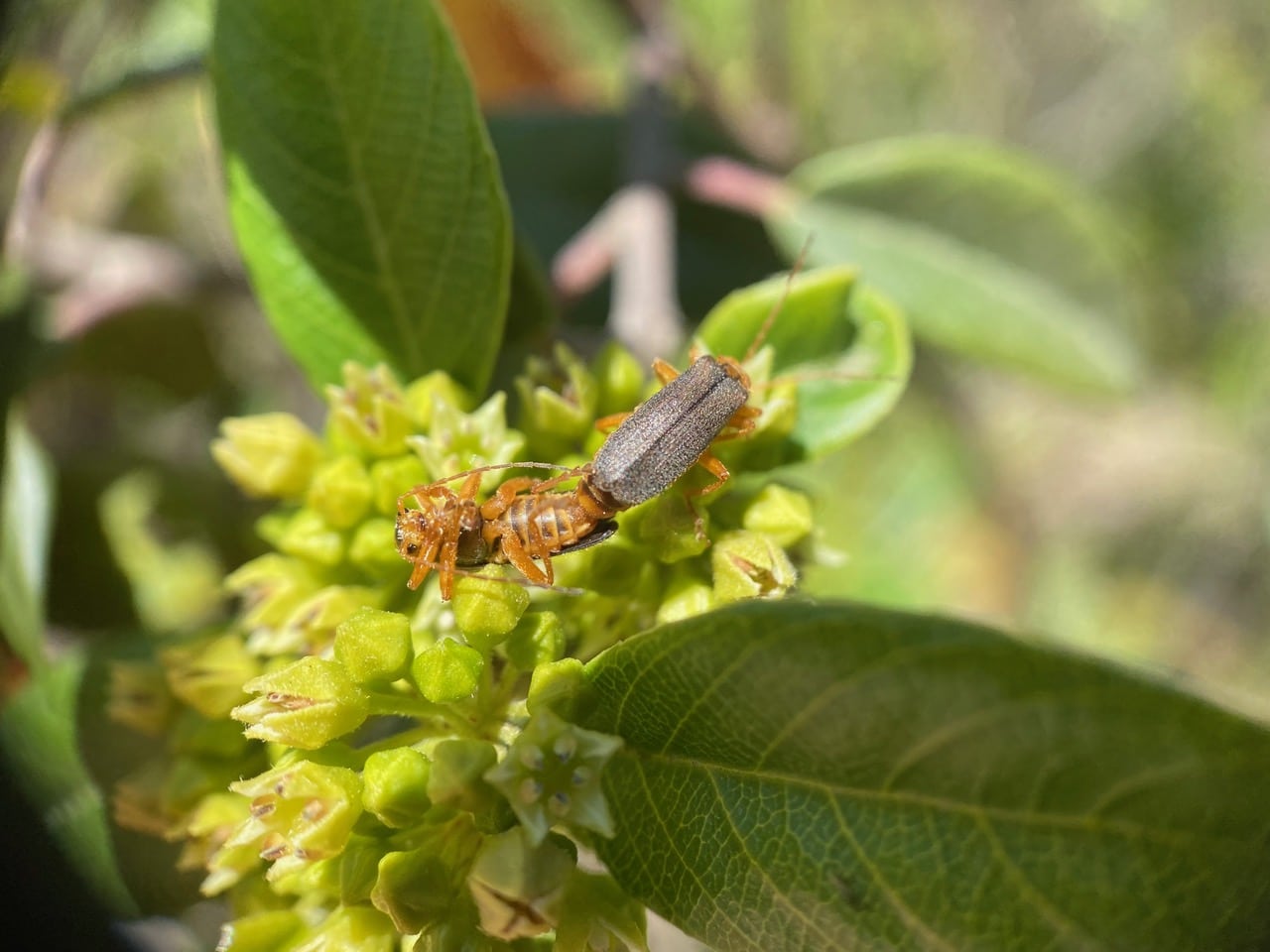

Ooh, another mating pair of Soldier Beetles hidden in the shadows. Note that the female has her head in a flower, feeding.

A tiny Inchworm has reached down from a leaf to stick its head into a Coffeeberry flower to feed.
Inchworms are also called loopers and measuring worms. They majority of the inchworms are the larvae of moths in the family Geometridae. The name comes from the Greek “geo” for earth and “metro” from measure, because the caterpillars seem to be measuring the surface on which they are walking.
All caterpillars have three pairs of jointed legs behind their heads. These legs are called true legs because they will become the six legs of the adult butterfly or moth. There are additional appendages, called prolegs, along their bodies. Prolegs are not true legs, they are just outgrowths of the body wall and will be lost at metamorphosis. They have little hooks on their soles to help the caterpillar walk and grip onto things.
Most caterpillars have five sets of prolegs, four in the middle of the body and one pair at the hind end. Inchworms have the normal six true legs but only two or three pairs of prolegs, all located at the tail end of the body, with none in the middle. When an inchworm walks, it moves its tail-end prolegs up behind its true legs, causing the center of its body to loop upward. Then it stretches its front end forward to take another step.