

Pollinator Post 6/13/23 (3)
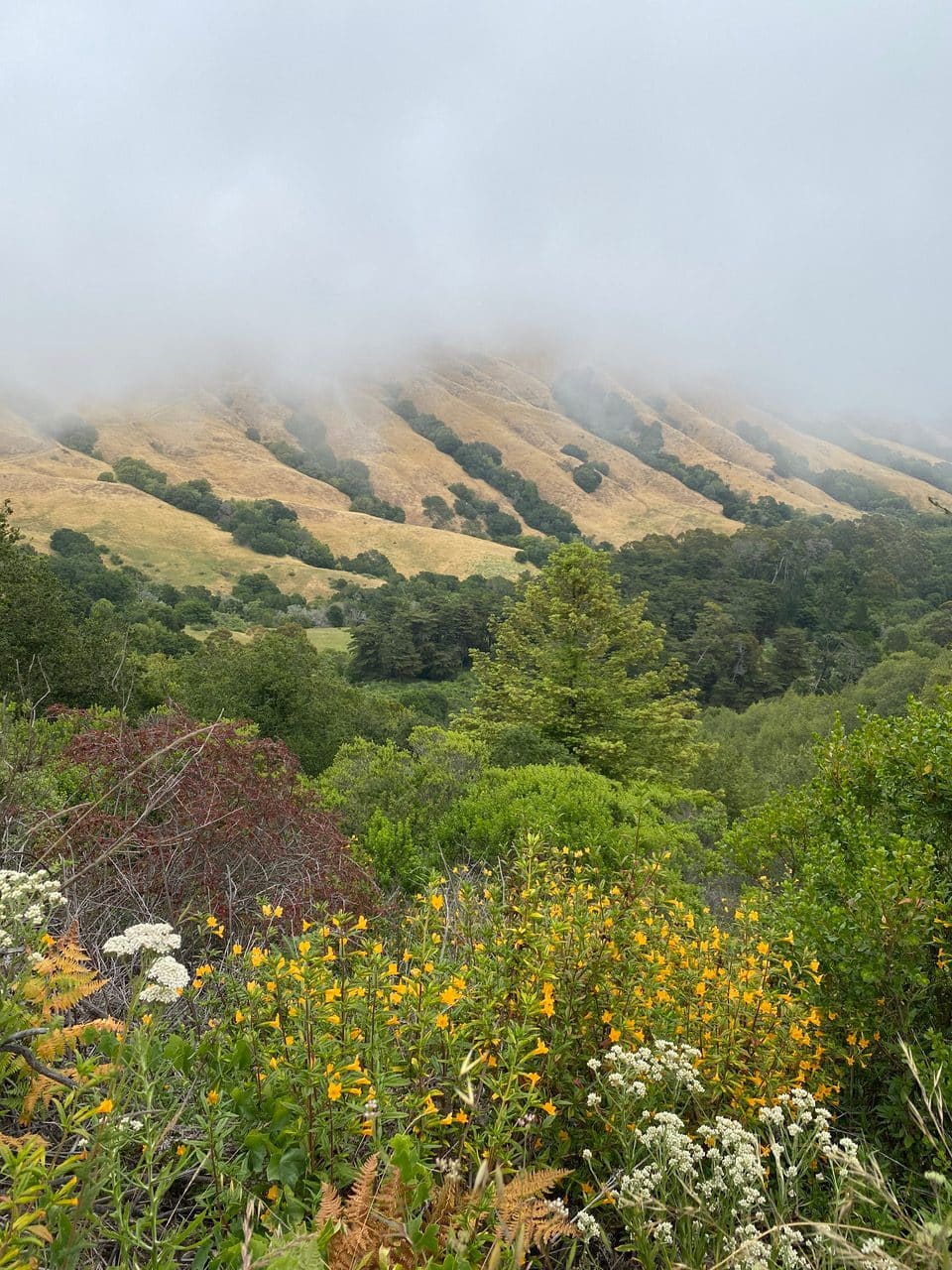

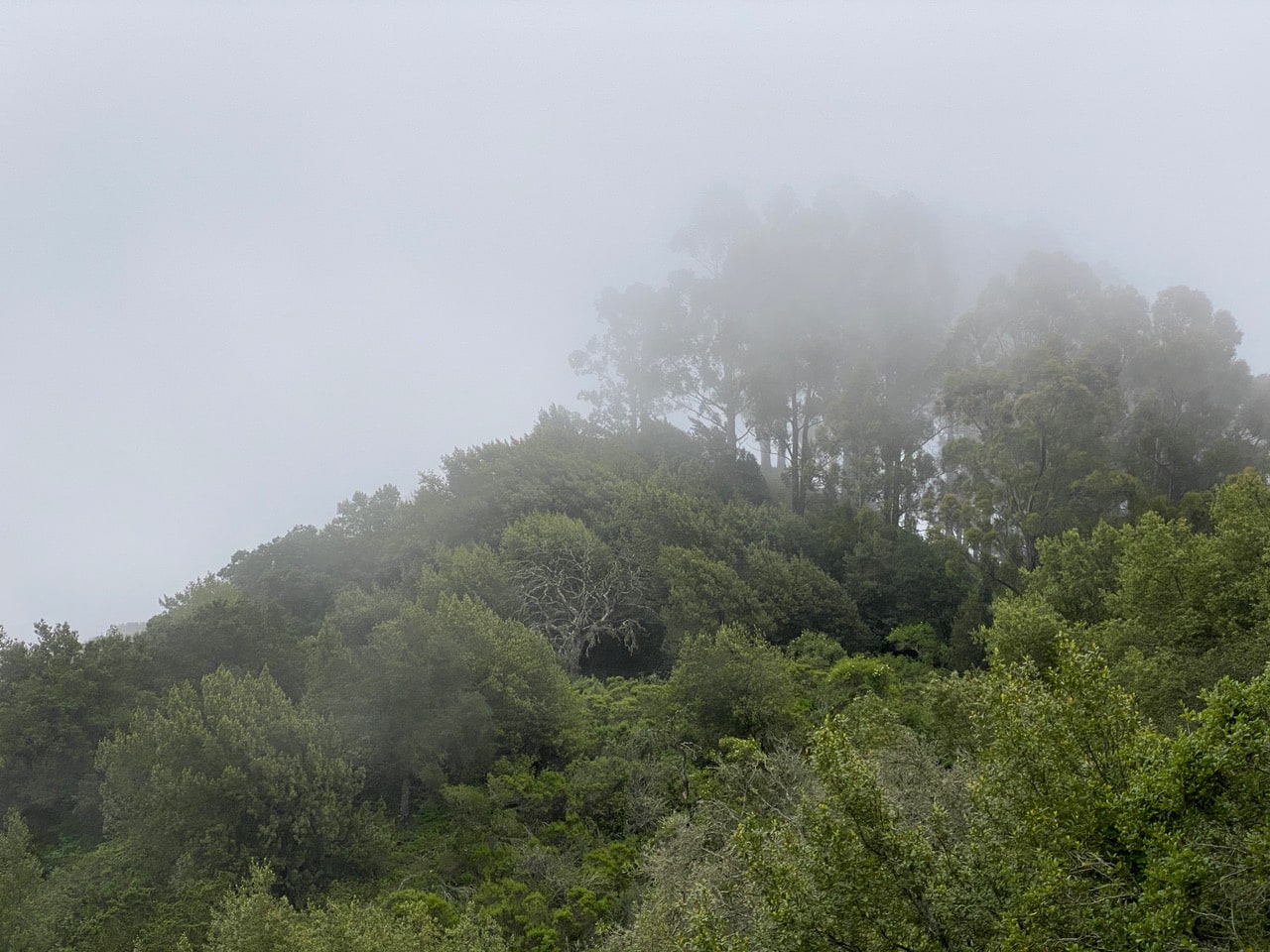
It is still foggy in the hills when I get to Diablo Bend around noon.
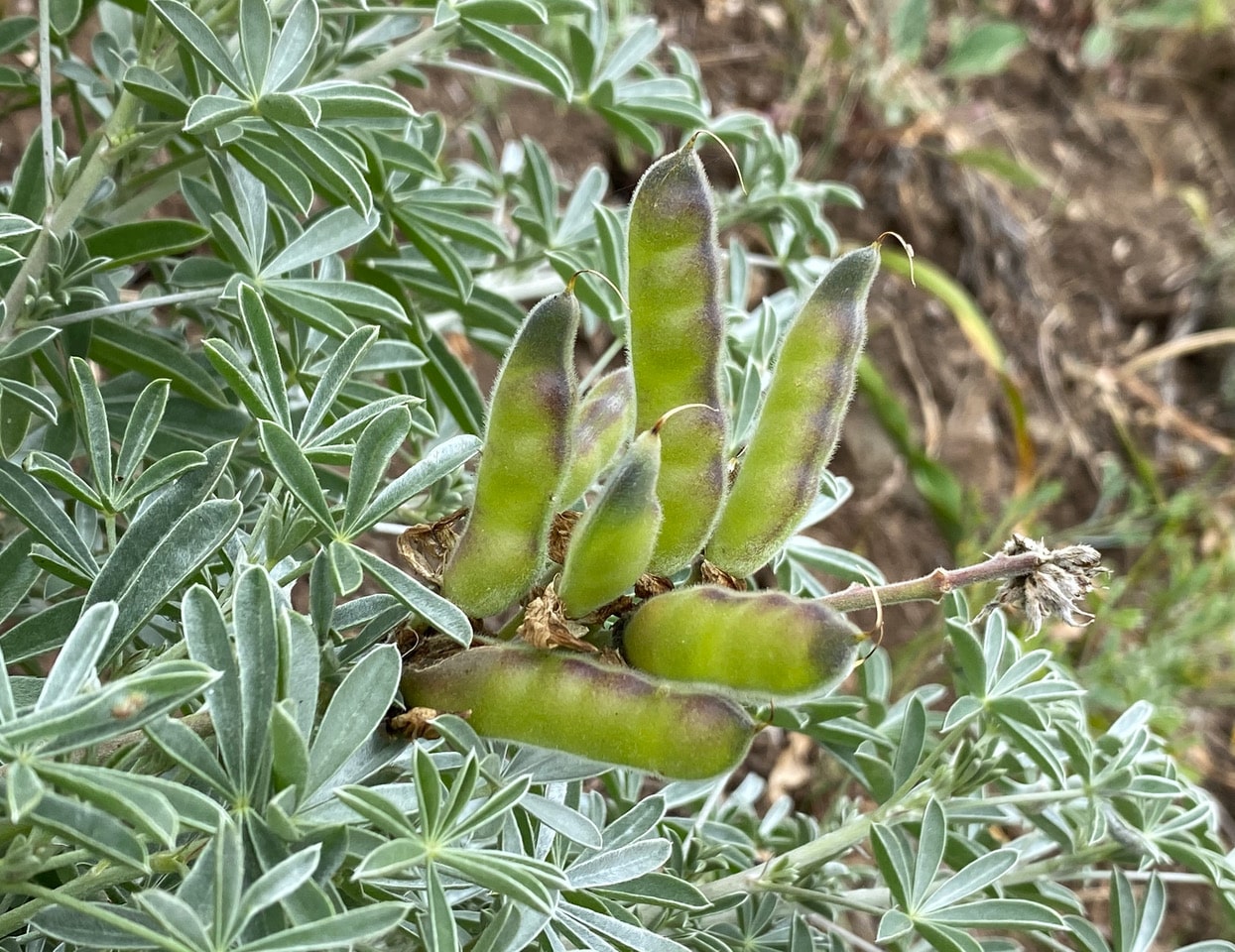
The Silverleaf Lupine, Lupinus albifrons is producing a healthy crop of pea pods, despite the low number of bumble bee pollinators while the plants were in bloom.

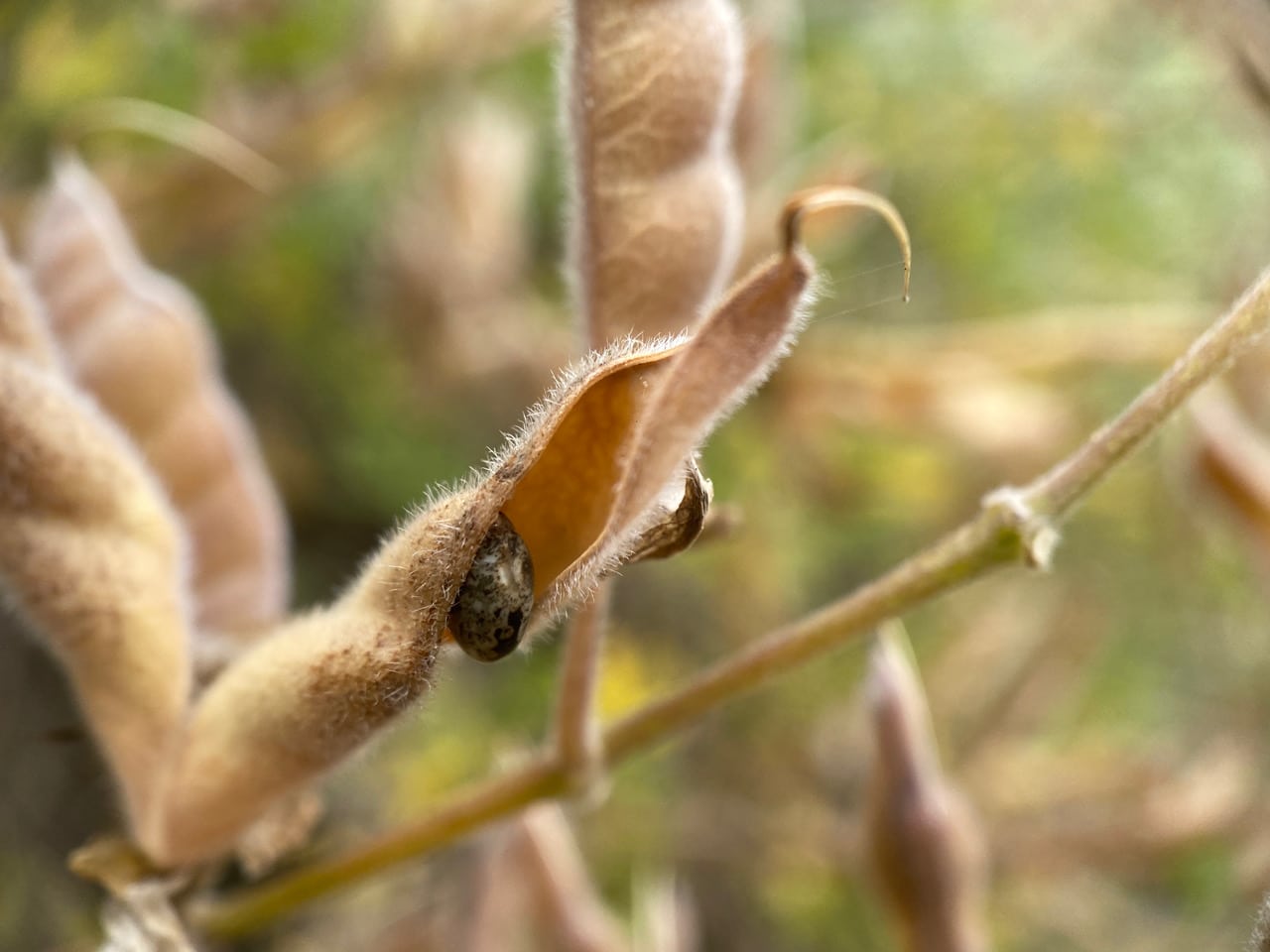
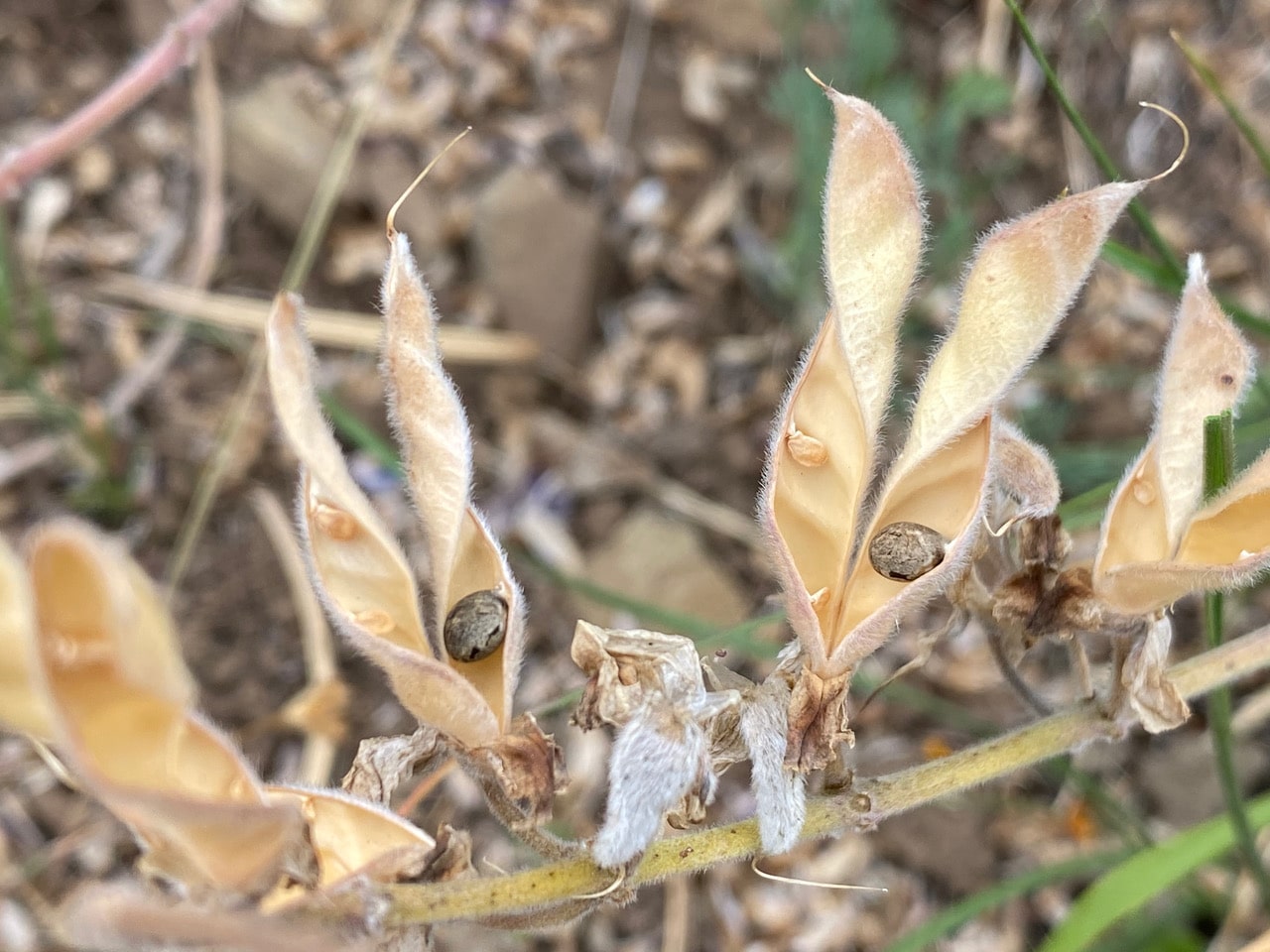 Like some adult children, the occasional seeds prefer to stay home, firmly attached to their pods by their umbilical cords.
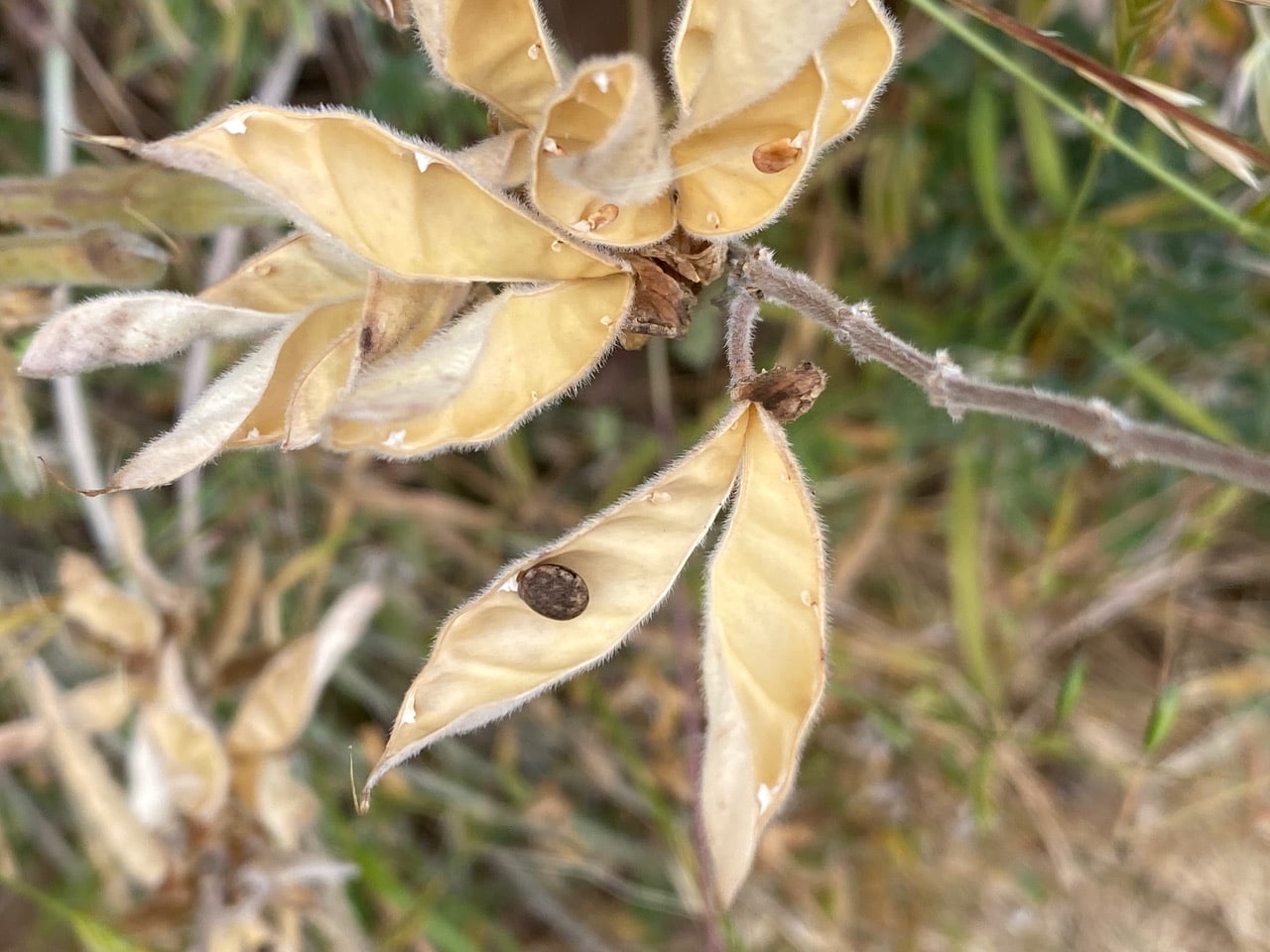




Many of the Silverleaf Lupine are dispersing their seeds in earnest. You can find their seeds on the trail near Diablo Bend, flung explosively from the seed pods.
Pea pods often use mechanical dispersal. When the seeds are ready, the pod dries up. The interior surface of the pod wall dries faster than the exterior surface. This makes the pod twist inward, suddenly splitting open violently, rolling into a little spiral. When this roll happens, the seeds are flung from the pod in all directions.
Like some adult children, the occasional seeds prefer to stay home, firmly attached to their pods by their umbilical cords. A Silverleaf Lupine seed has failed to be launched, caught between the edges of the pea pod.
I sit on the bench to enjoy the cool breezes and to my surprise, hear the hooting of Great Horned Owls coming from the trees yonder. Why are they hooting in the middle of the day?
A small Bristle Fly, Siphona sp.(family Tachinidae) lands on a cluster of Yarrow seed heads, Achillea millefolium.
The family Tachinidae is by far the largest and most important group of parasitoid flies, with over 1,300 species in North America. All species are parasitic in the larval stage. The appearance of Tachinid Flies varies considerably, but most have distinct abdominal bristles. Adults feed on liquids such as nectar and the honeydew of aphids and scale insects. They can be found resting on foliage, feeding at flowers or searching for hosts.
Most tachinids attack caterpillars, adult and larval beetles, true bugs, grasshoppers, and other insects. Egg laying varies considerably. In some species, eggs are deposited on foliage near the host insect. After the eggs hatch, the maggots are ingested during feeding by the host, and then develop within the host. In other species, the adult fly glues her eggs to the body of the host. After the eggs hatch, the maggots penetrate into the host body. Some adult female tachinids possess a piercing ovipositor that she uses to inject the eggs into the host body. Tachinid larvae live as internal parasites, consuming their hosts’ less essential tissues first and not finishing off the vital organs until they are ready to pupate. The larvae leave the host and pupate on the ground. Tachinids are very important in natural control of many pests, and many have been used in biological control programs.
Siphona is the only commonly encountered genus of Tachinidae with a long, thin, jointed proboscis. A few other genera have a straight or curved rigid proboscis. Larvae are parasitoids of Lepidoptera (butterflies and moths).
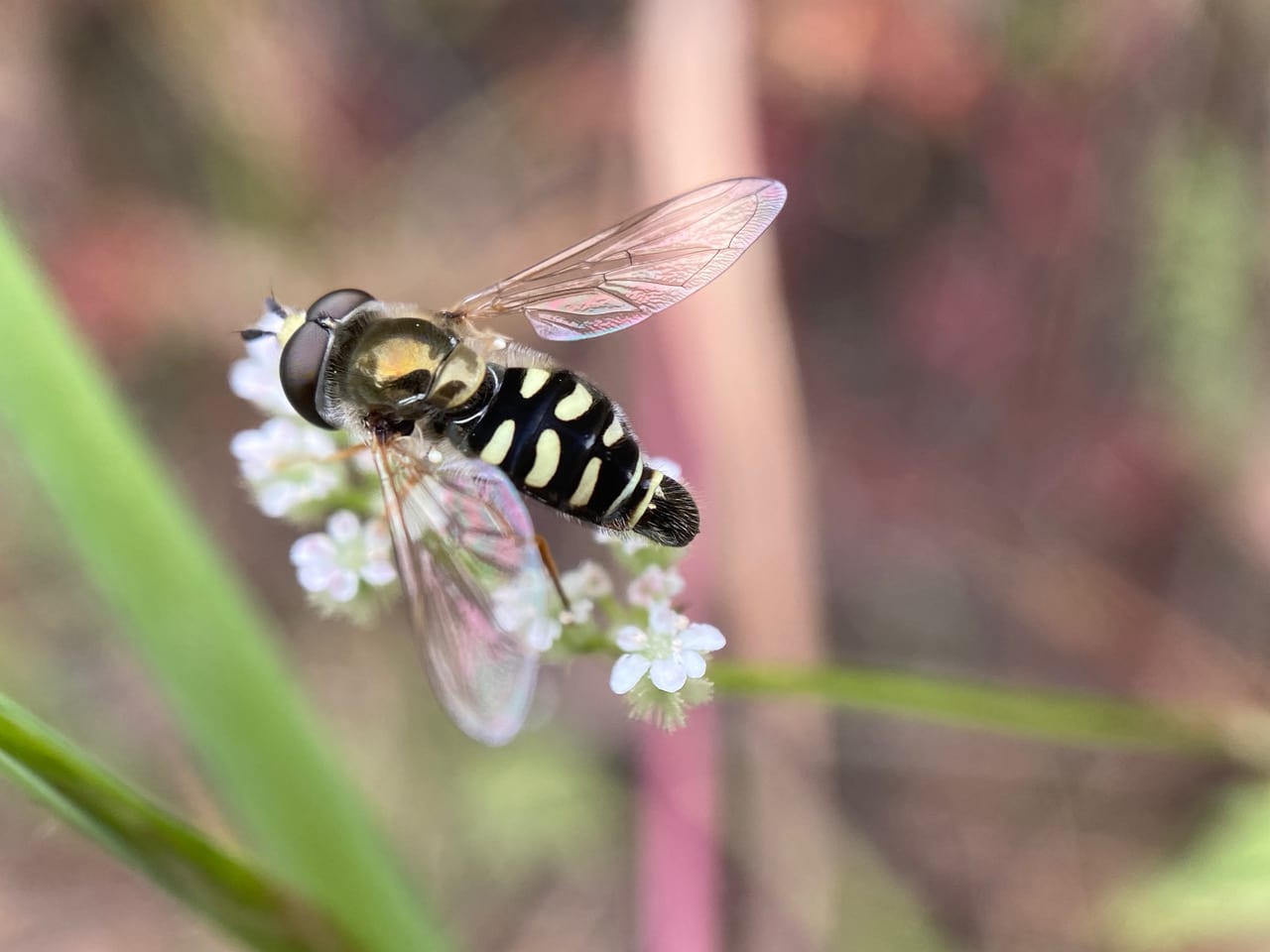
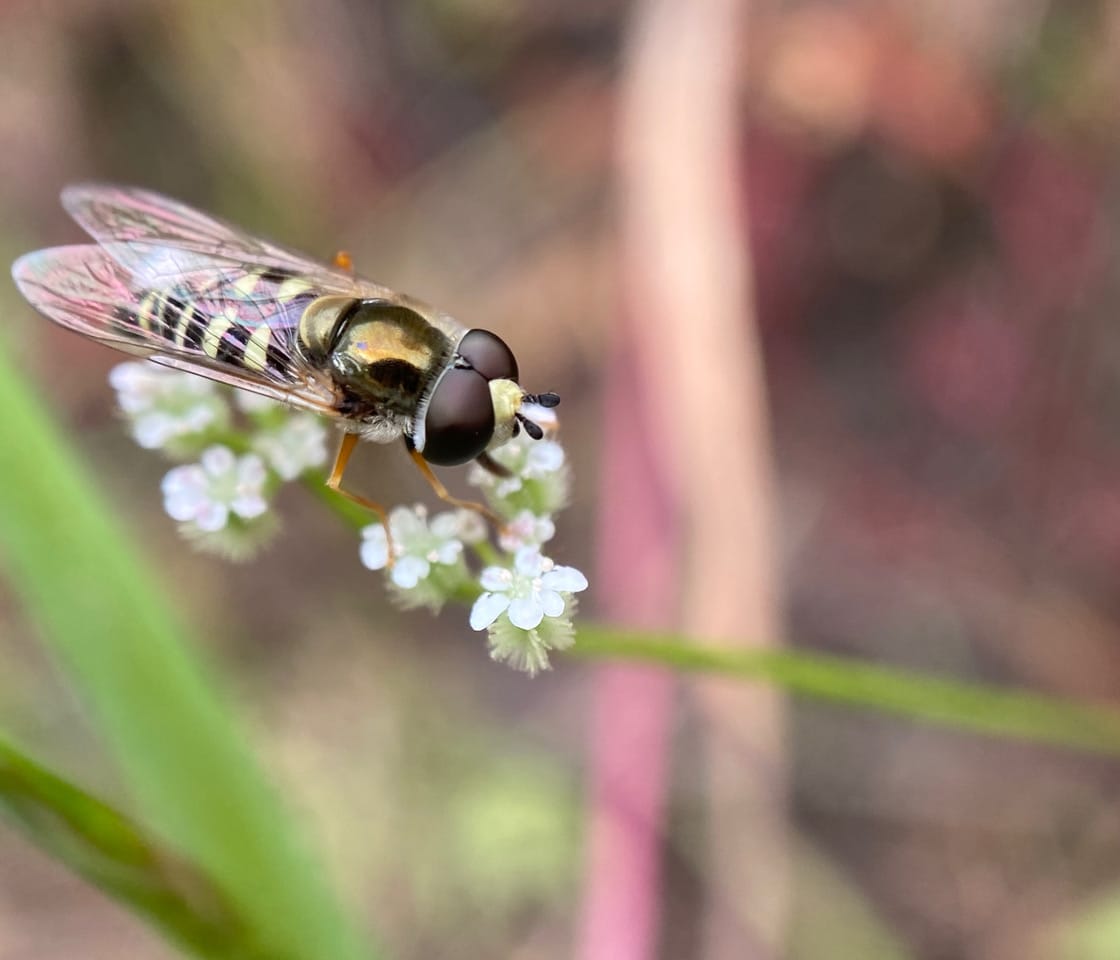
A male Large-tailed Aphideater, Eupeodes volucris (family Syrphidae) lands on a flower cluster of the weedy Torilis .
The black, projecting cylindrical abdomen of males in this species is rather distinctive. As the common name implies, the larvae feed on aphids. The species is found in western North America, and is active March through November.
You can also tell that the hover fly is male by looking at its front end. In Syrphid flies, males have holoptic eyes that meet along a central line on top of the head.
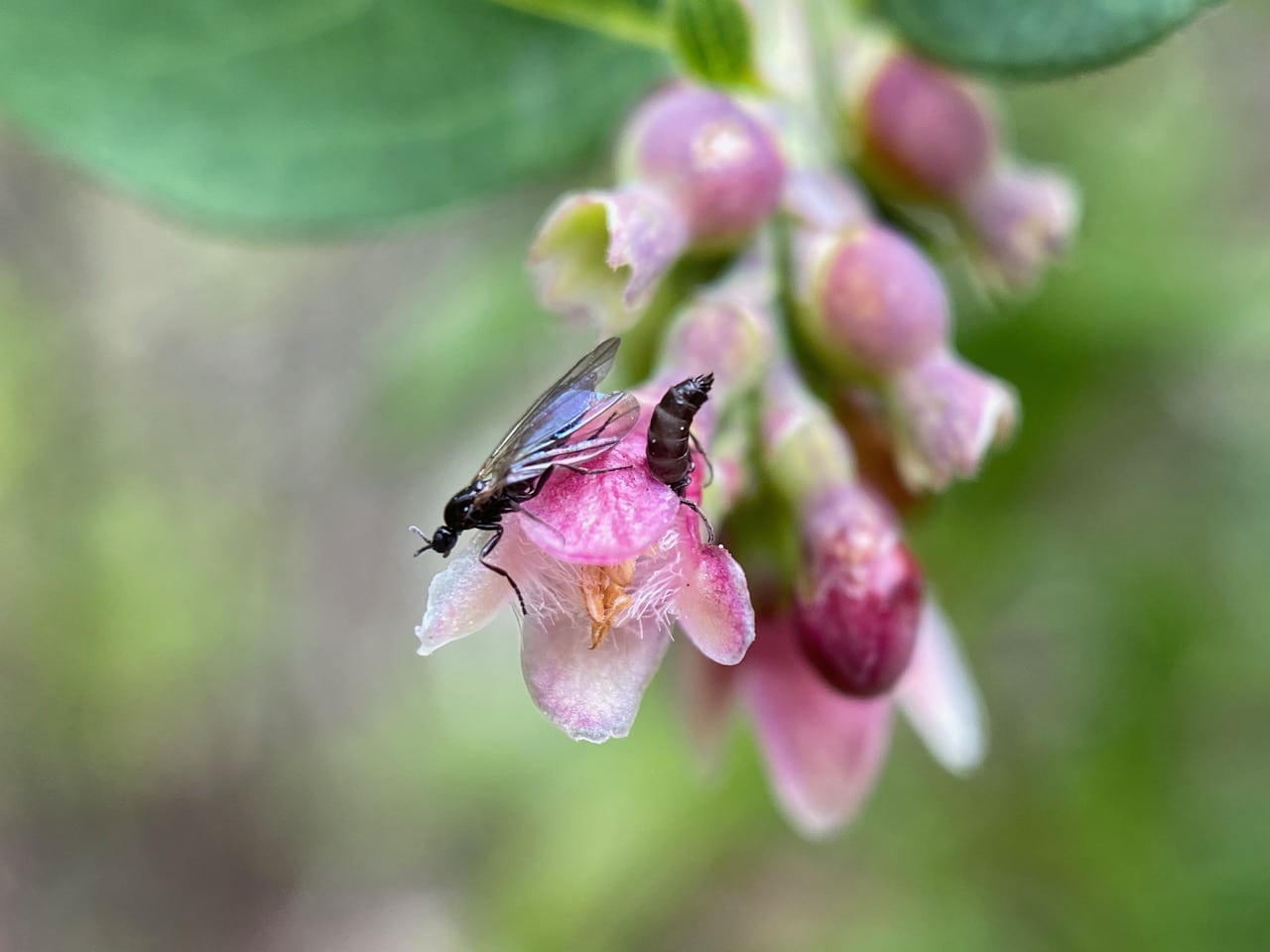
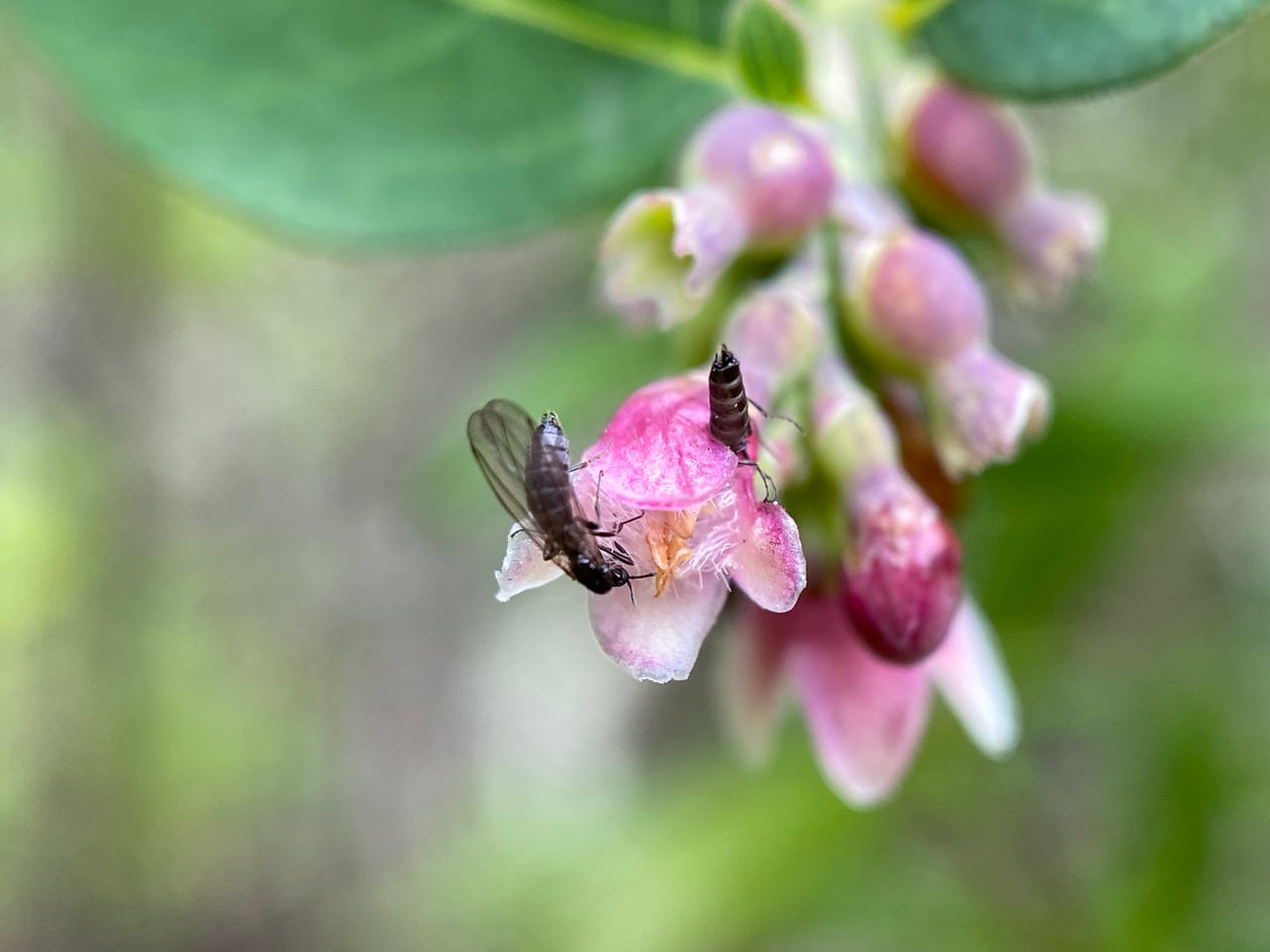
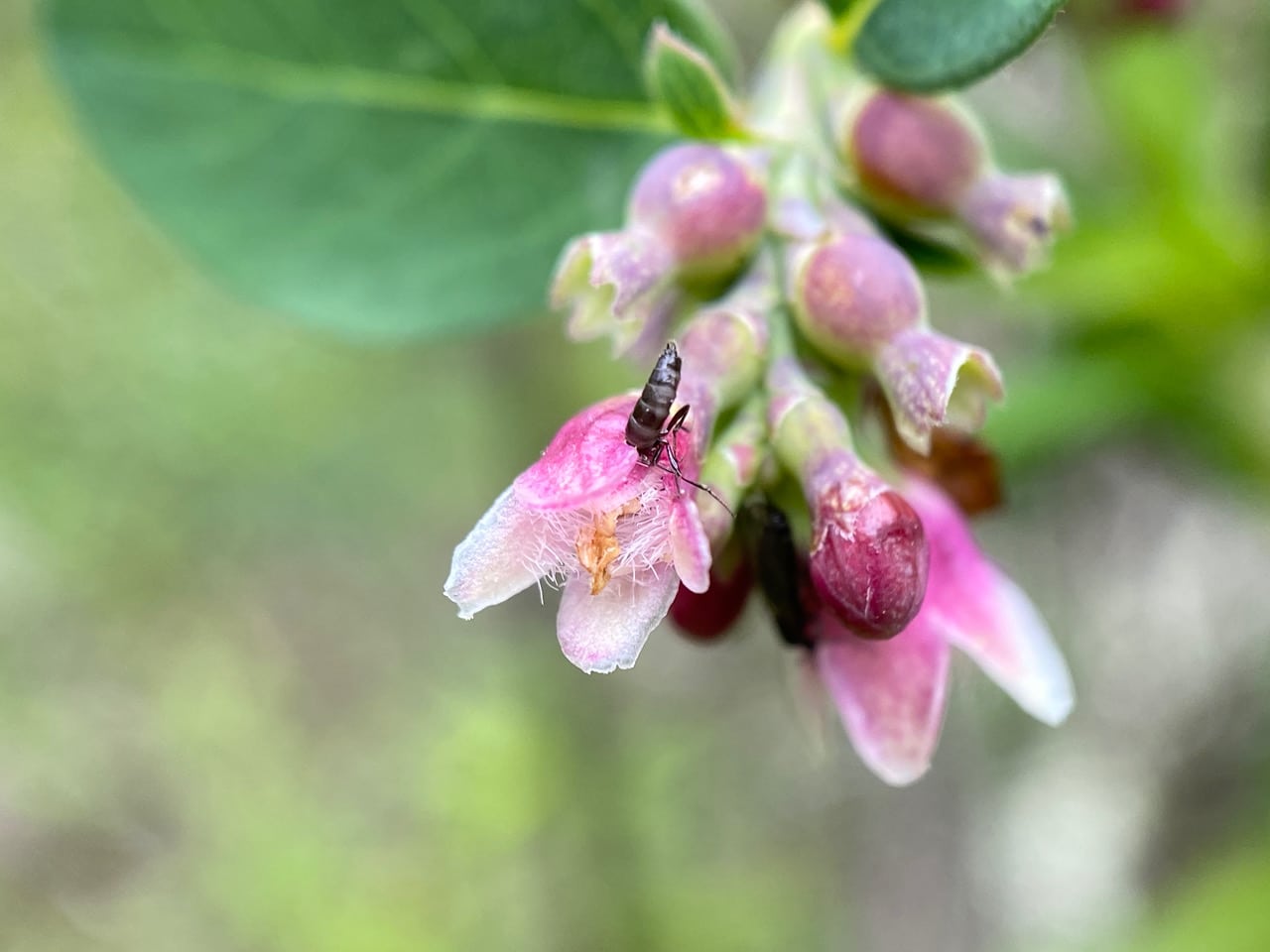
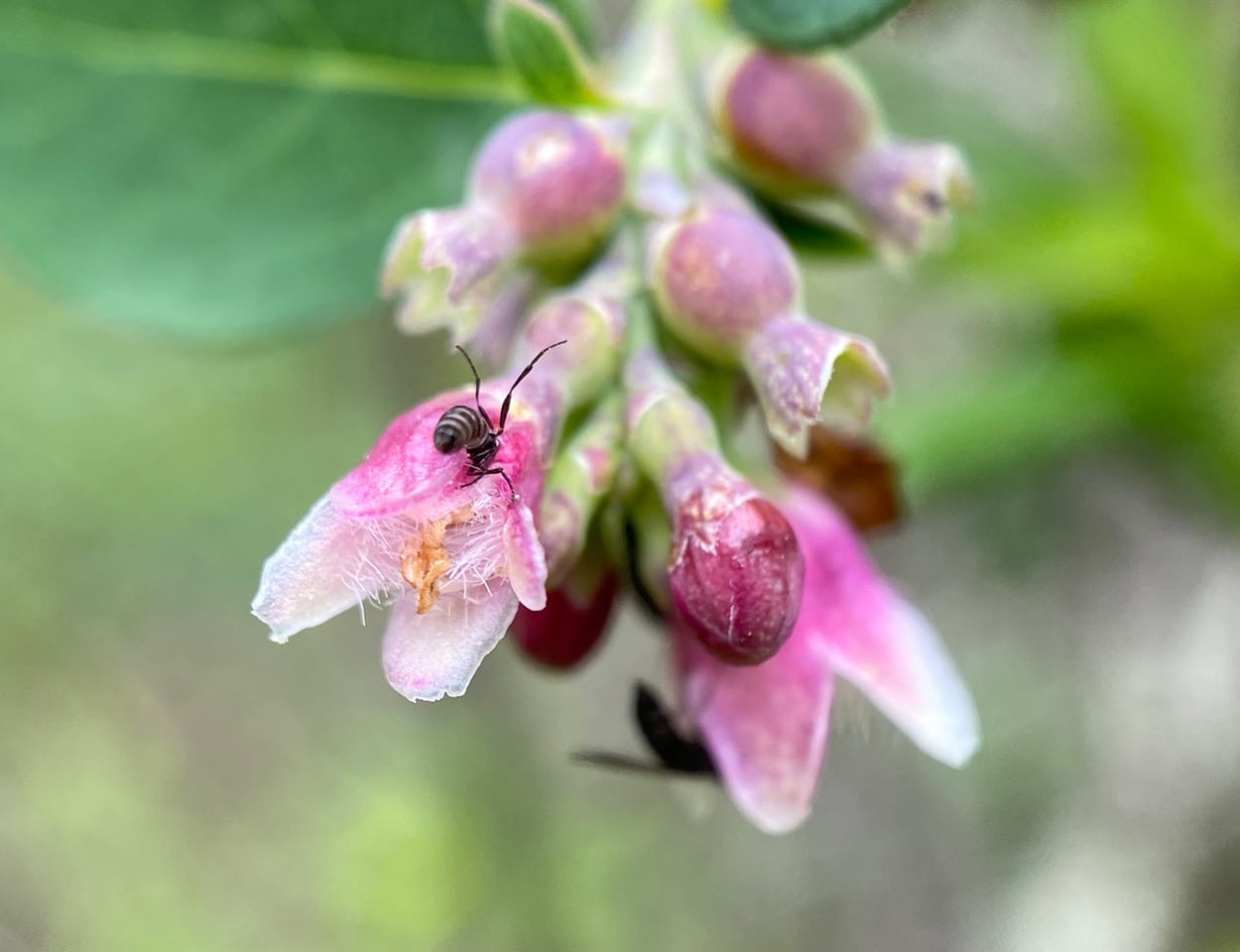
Two Minute Black Scavenger Flies (Family Scatopsidae) are on a Snowberry flower.
As implied by the family name, these flies are also called “dung midges”. They are generally small, sometimes minute, dark flies (from 0.6 to 5 mm) with short antennae. Adults are often found on flowers. The larvae of most species are unknown, but the few that have been studied have a rather flattened shaped and are terrestrial and saprophagous, feeding on decaying plant and animal matter.
The one on the left tries to enter the corolla, but quickly loses interest and leaves. The one on the right keeps its head in the corolla while wriggling its abdomen this way and that. It is probably stealing nectar at the base of the flower.
The wriggling and writhing goes on for a while and assumes a more frantic pace. I find it comical and entertaining….
… until I realize that the fly is probably stuck and can’t free its head. Perhaps that’s what the hairs in corolla of the Snowberry flowers are for – to discourage nectar thieves (insects that pilfer the sweet stuff without making contact with the flower’s reproductive parts and contributing to pollination.)