

Pollinator Post 6/13/23 (2)

Sticky Monkeyflower, Diplacus aurantiacus is blooming gloriously along Skyline Trail overlooking the fog-shrouded Siesta Valley down below.




 The flowers of Narrowleaf Mule Ears, Wyethia angustifolia are under attack! Those slippery Rove Beetles are still around, but I doubt if they are responsible for this level of damage.

Hey, a day doesn’t go by now when I don’t find an Ant-mimic Plant Bug nymph, Closterocoris amoenus (family Miridae) on the Sticky Monkeyflower. I think I finally have the search image down. The nymphs are about the size and coloration of our larger ants, the Field Ants in the genus Formica.
Ant mimicry or myrmecomorphy is mimicry of ants by other organisms. Ants are abundant all over the world, and potential predators such as birds and wasps normally avoid them as they are either unpalatable or aggressive. Spiders are the most common ant mimics. Additionally, many insects from a wide range of orders and families mimic ants to escape predation (protective mimicry), while others mimic ants anatomically and behaviorally to hunt ants in aggressive mimicry.
Mirid bugs are also referred to as plant bugs or leaf bugs. Miridae is one of the largest family of true bugs in the order Hemiptera. Like other Hemipterans, Mirids have piercing, sucking mouthparts to extract plant sap. Some species are predatory.
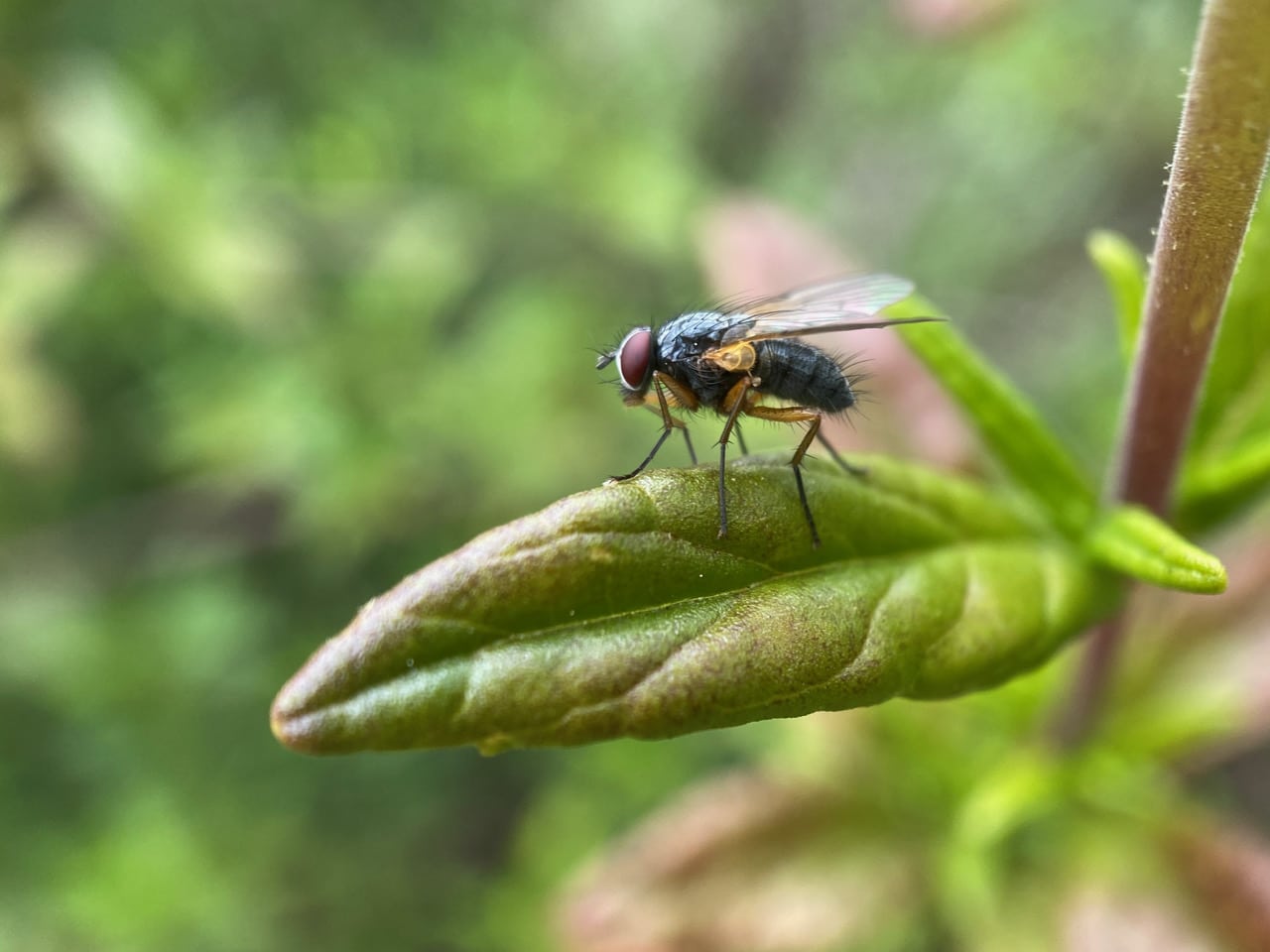
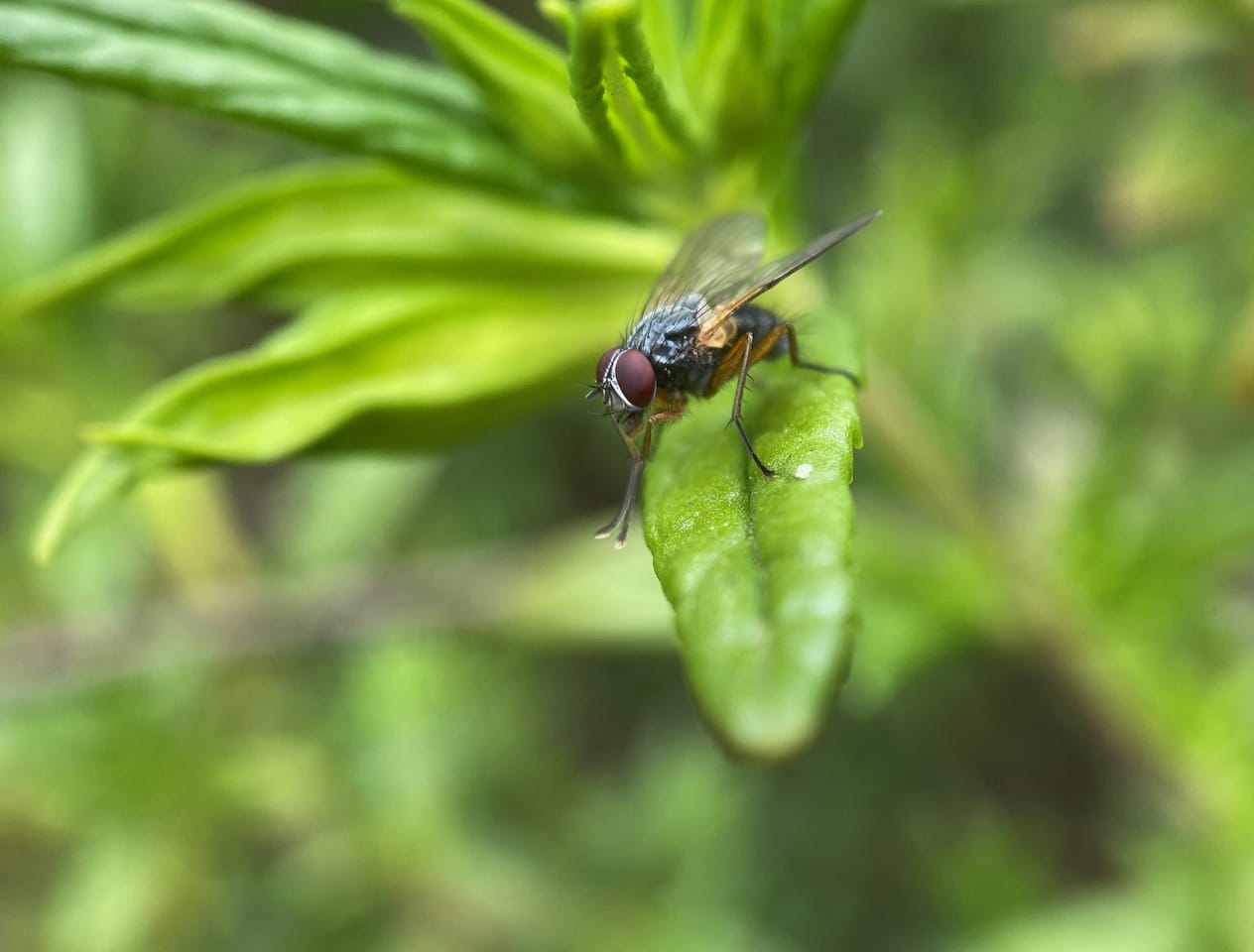
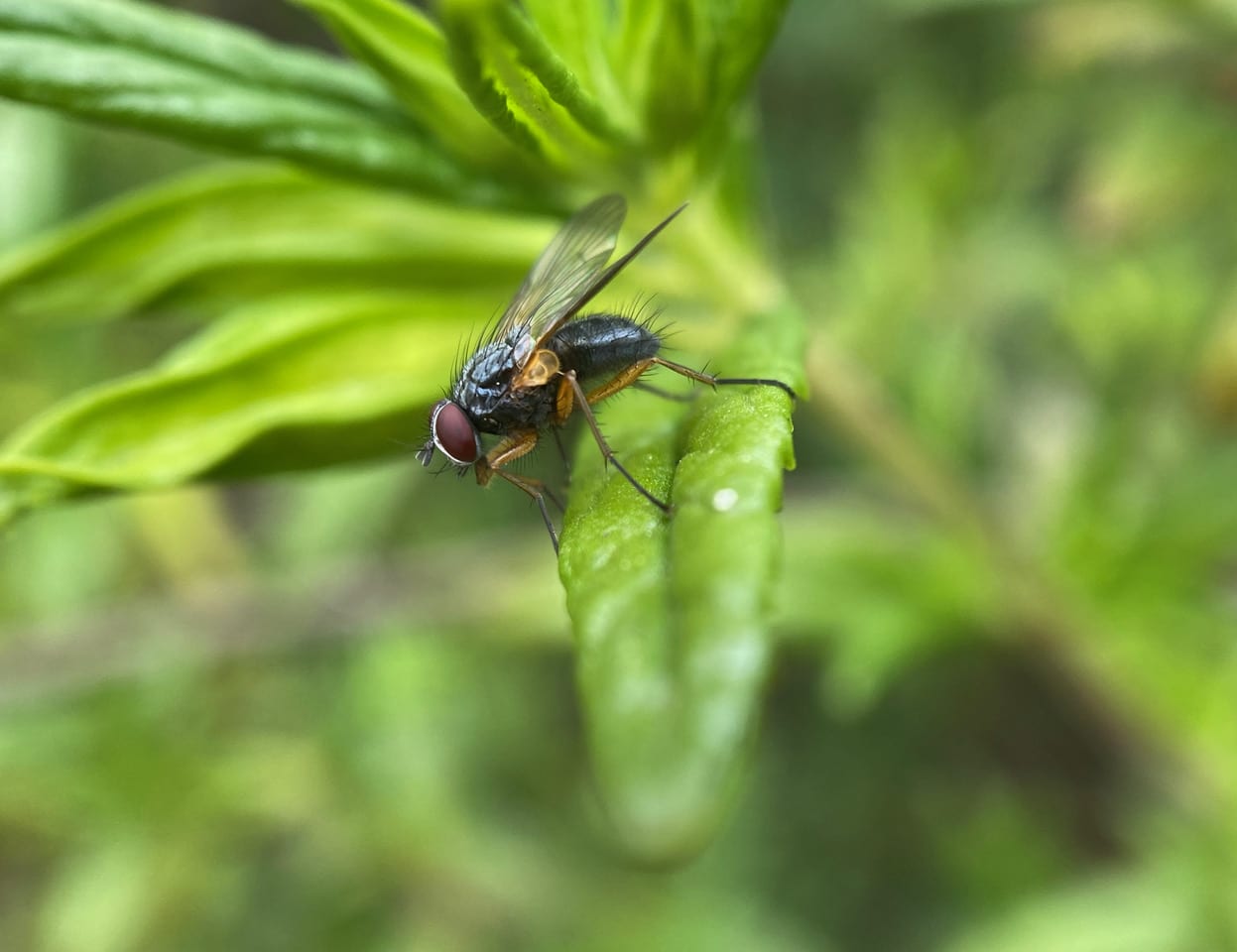
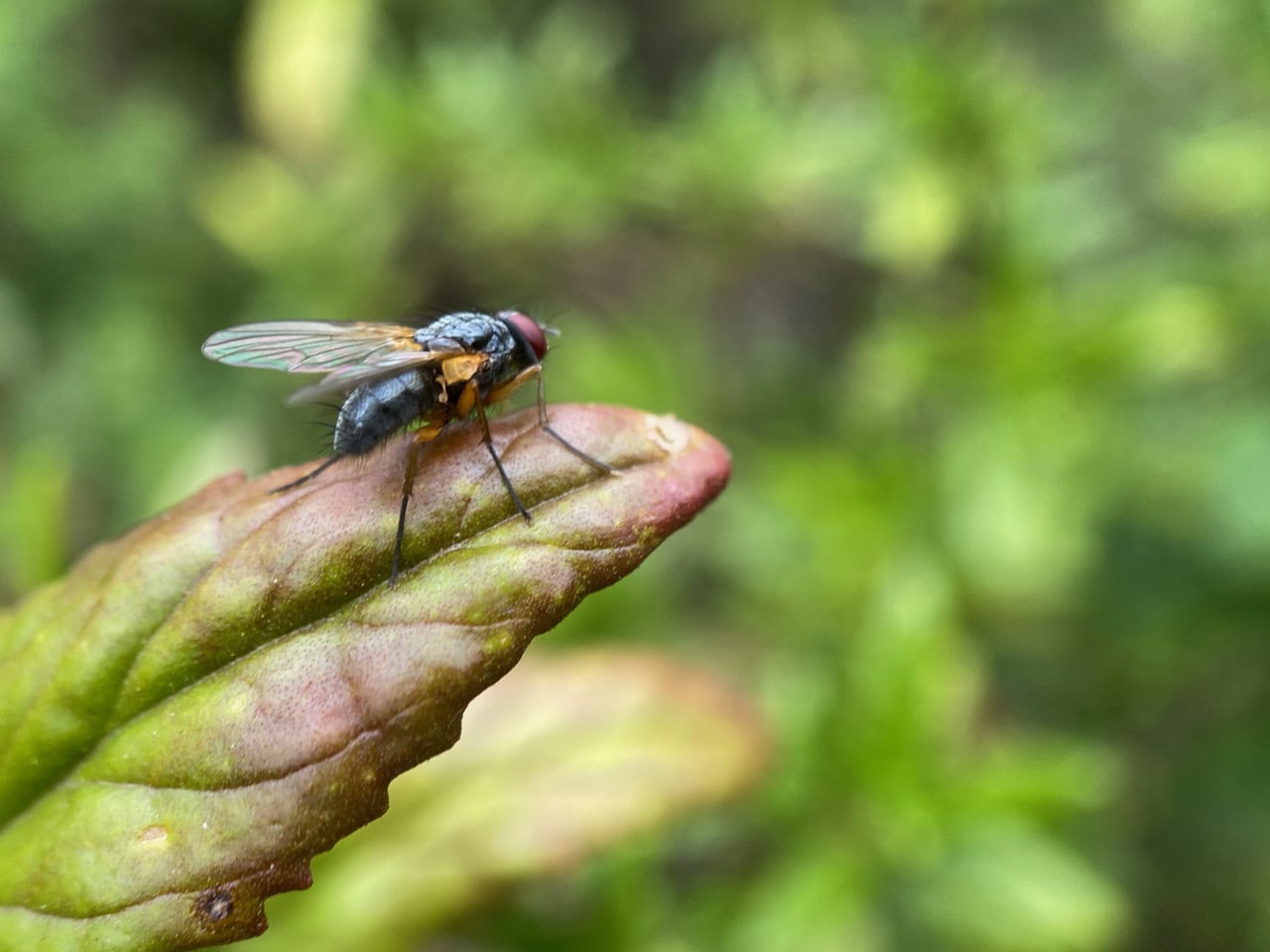
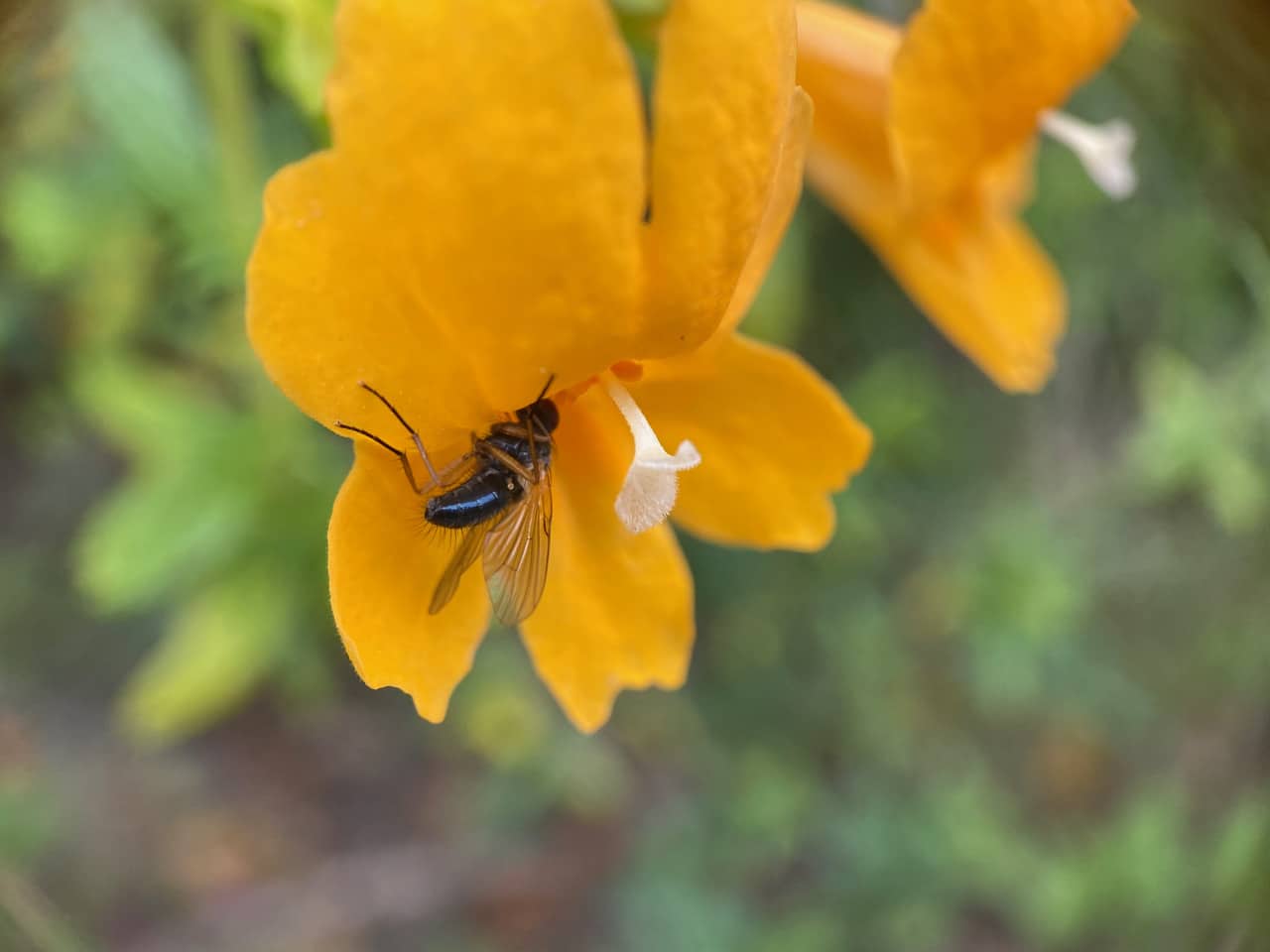
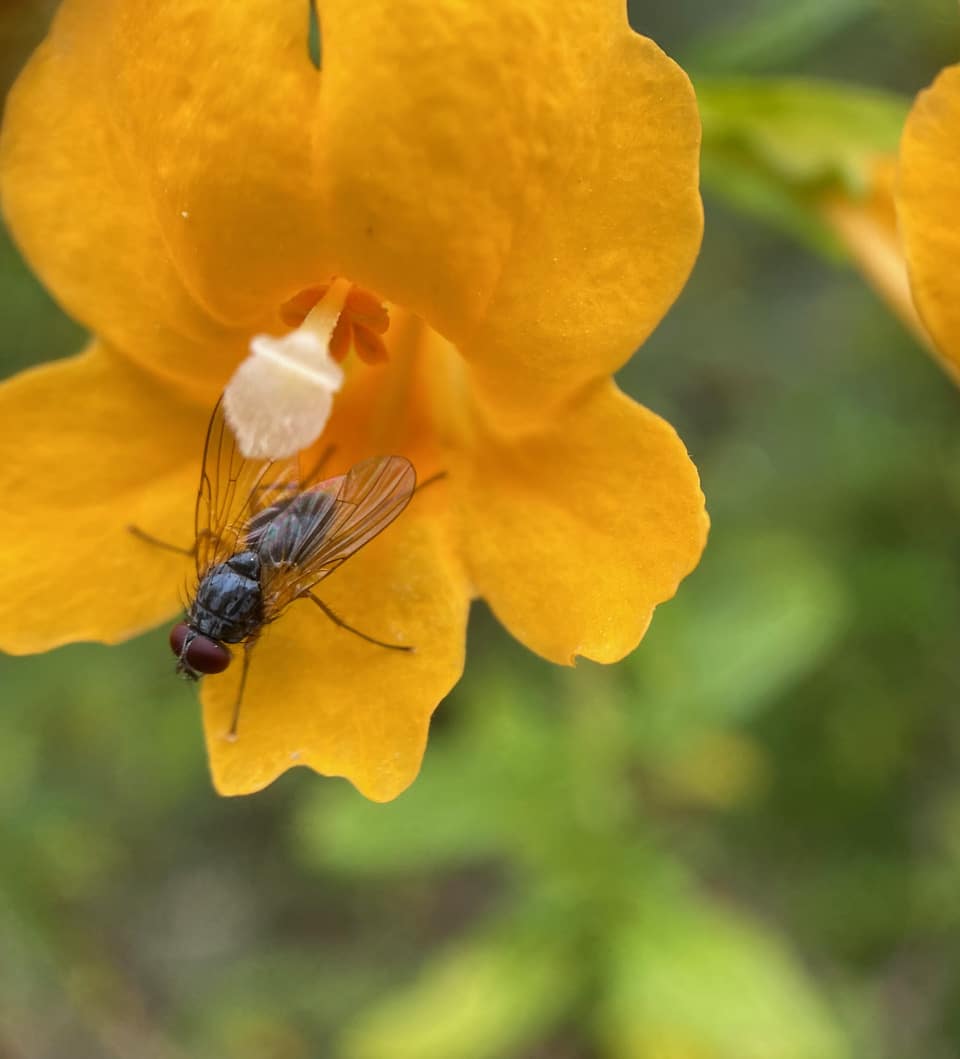
One species of flies is a frequent visitor to the Sticky Monkeyflowers today. They are small, fast and agile, with prominent orange-colored double calypters under the wings. Calypter – Entomologists’ glossary – Amateur Entomologists’ Society (AES)
A Woodlouse Fly (family Rhinophoridae)? I may never know if iNaturalist doesn’t respond. Diptera is a huge and diverse order of insects, many of which are identified by minute anatomical details not visible in photographs.
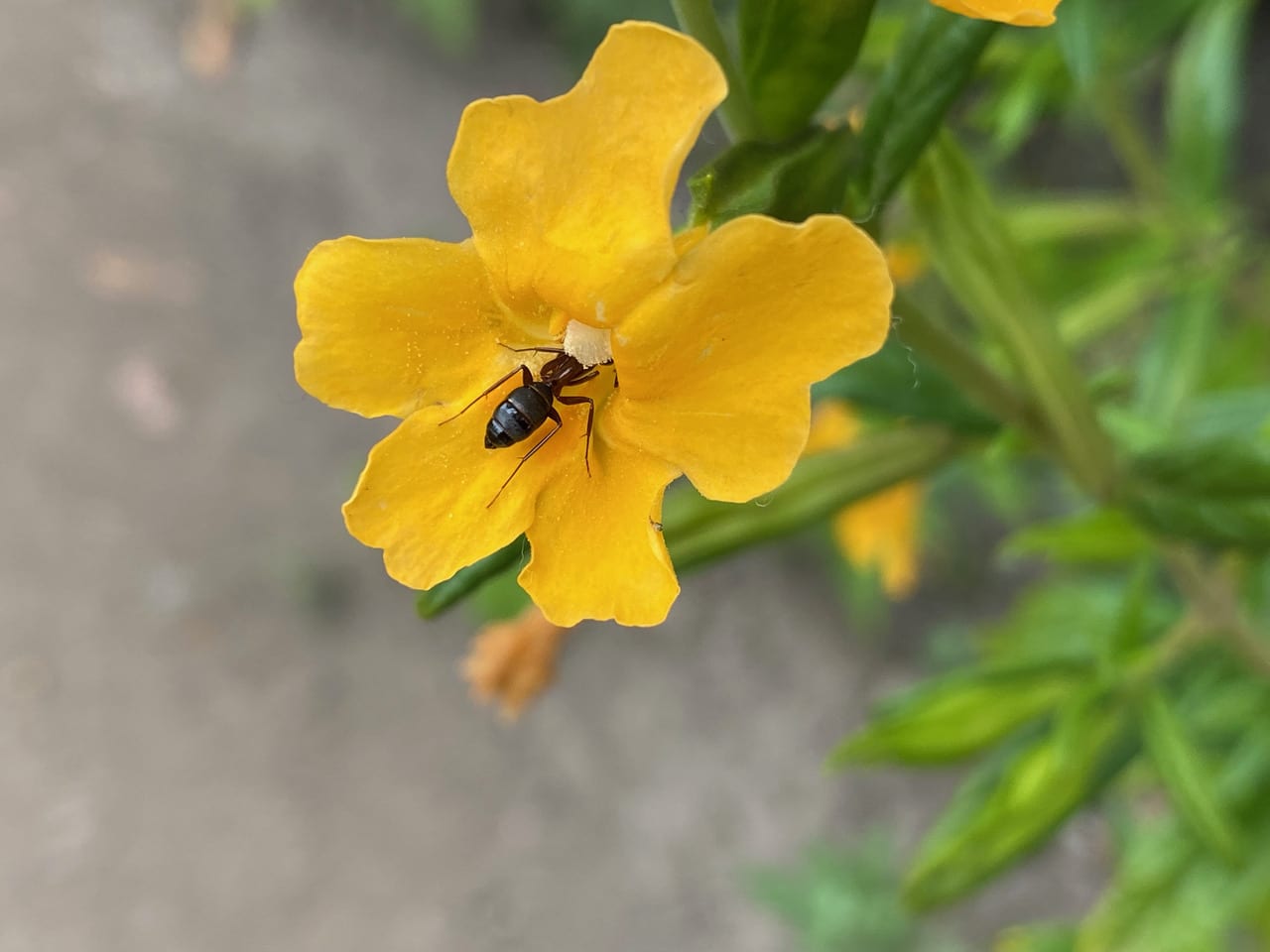
A few American Winter Ants, Prenolepis imparis (family Formicidae) have gathered on a Sticky Monkeyflower, probably for the nectar. Our cool and cloudy spring must be beneficial for these cold-tolerant ants.
The American Ant, Prenolepis imparis is a widespread North American ant. A dominant woodland species, it is most active during cool weather, when most other ant species are less likely to forage. This species is one of a few native ants capable of tolerating competition with the invasive Argentine Ant, Linepithema humile. They are also aggressive toward other ants and produce abdominal secretions that are lethal to Argentine Ants. Prenolepis imparis is a generalist omnivore. Foragers are known for tending to aphids or scale insects from which they consume excreted honeydew, aggregating on rotting fruit, and exploiting protein-rich sources such as dead worms. The colony enters estivation (a hibernation-like state) and becomes inactive above ground for the warmer months, during which time eggs are laid and brood are reared. Reproductives overwinter and emerge on the first warm day of spring for their nuptial flight.
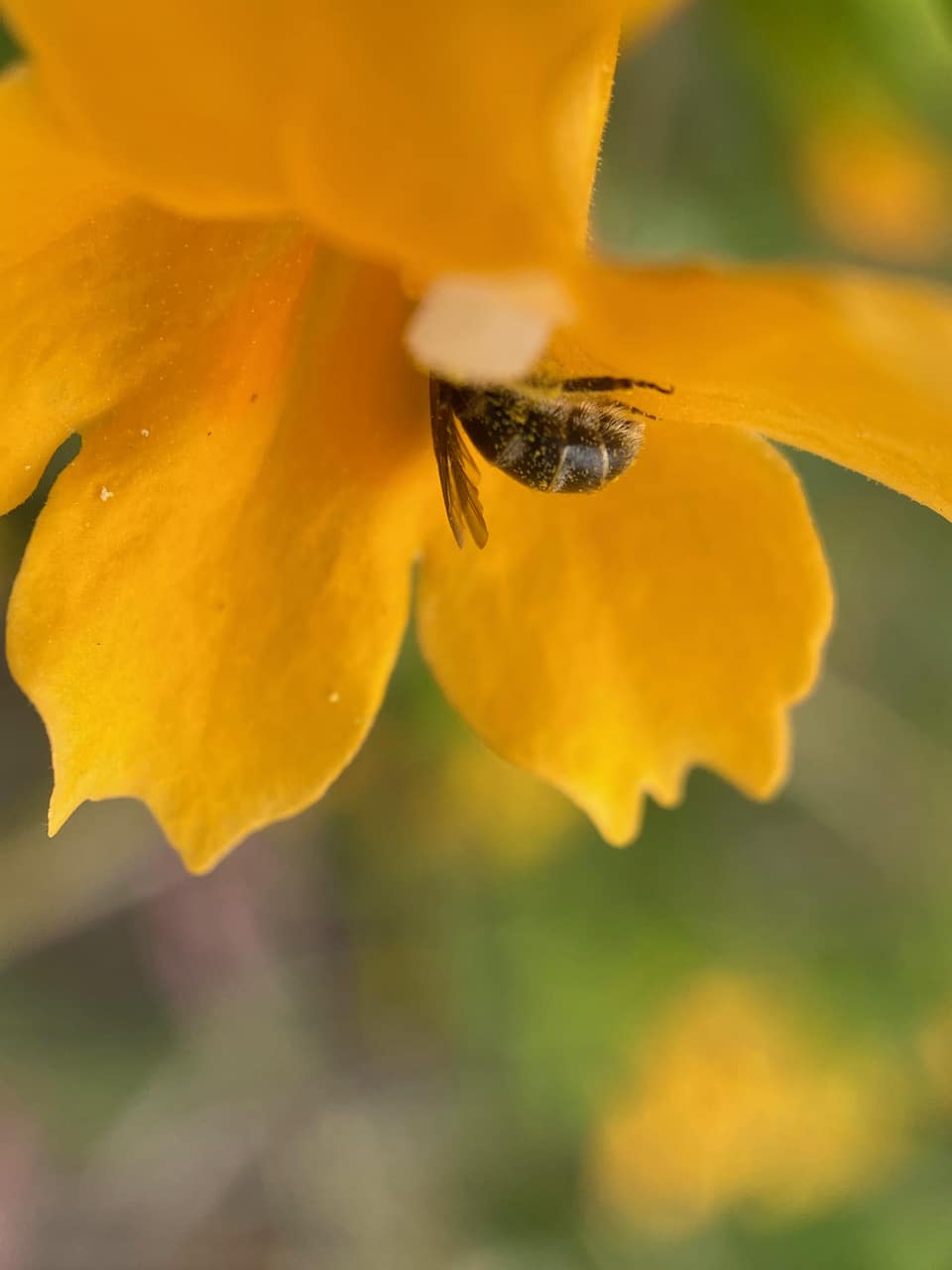
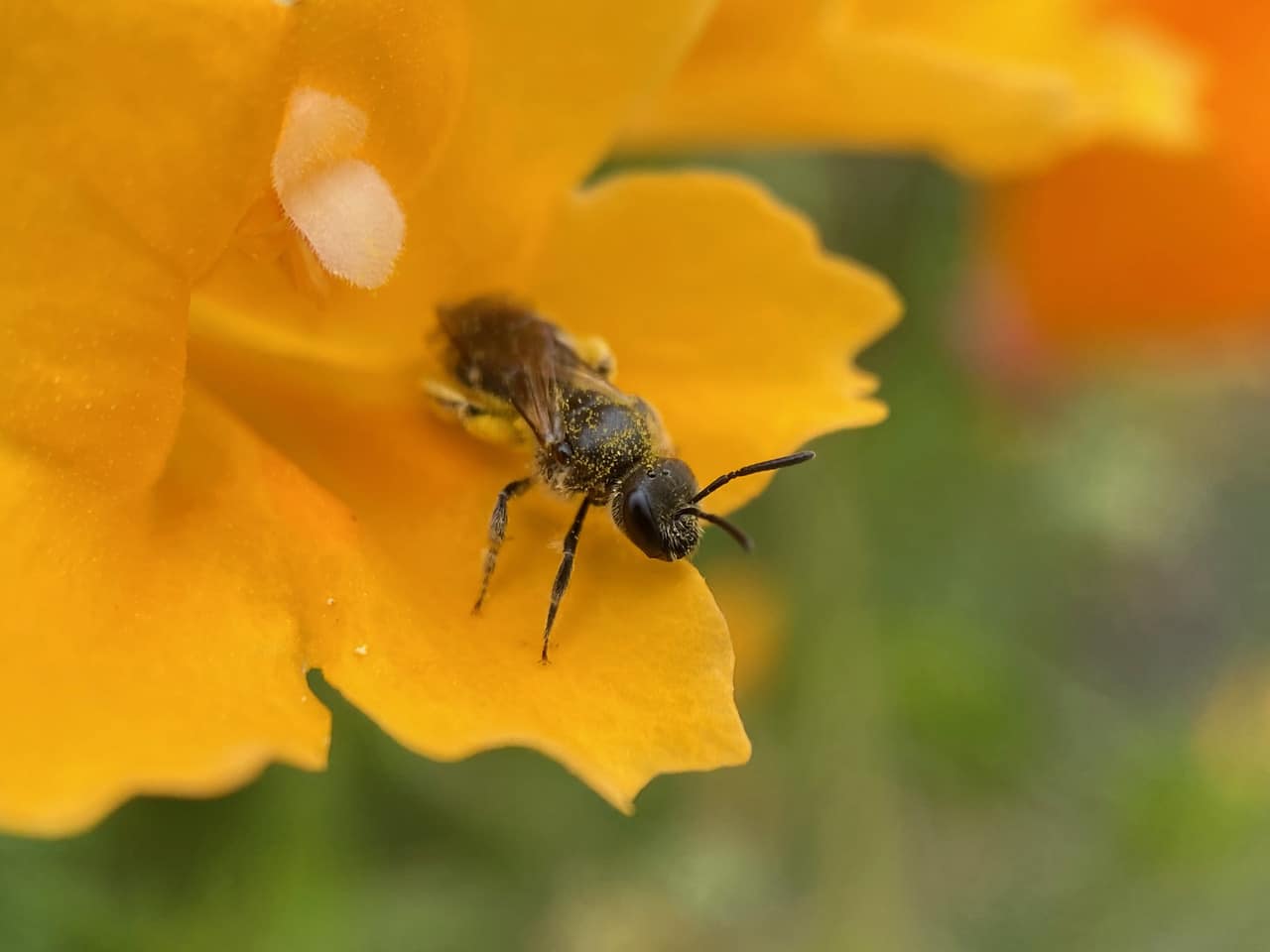
A bee is gathering pollen right behind the stigma of the Sticky Monkeyflower.
A Sweat Bee, Halictus sp. (family Halictidae)?
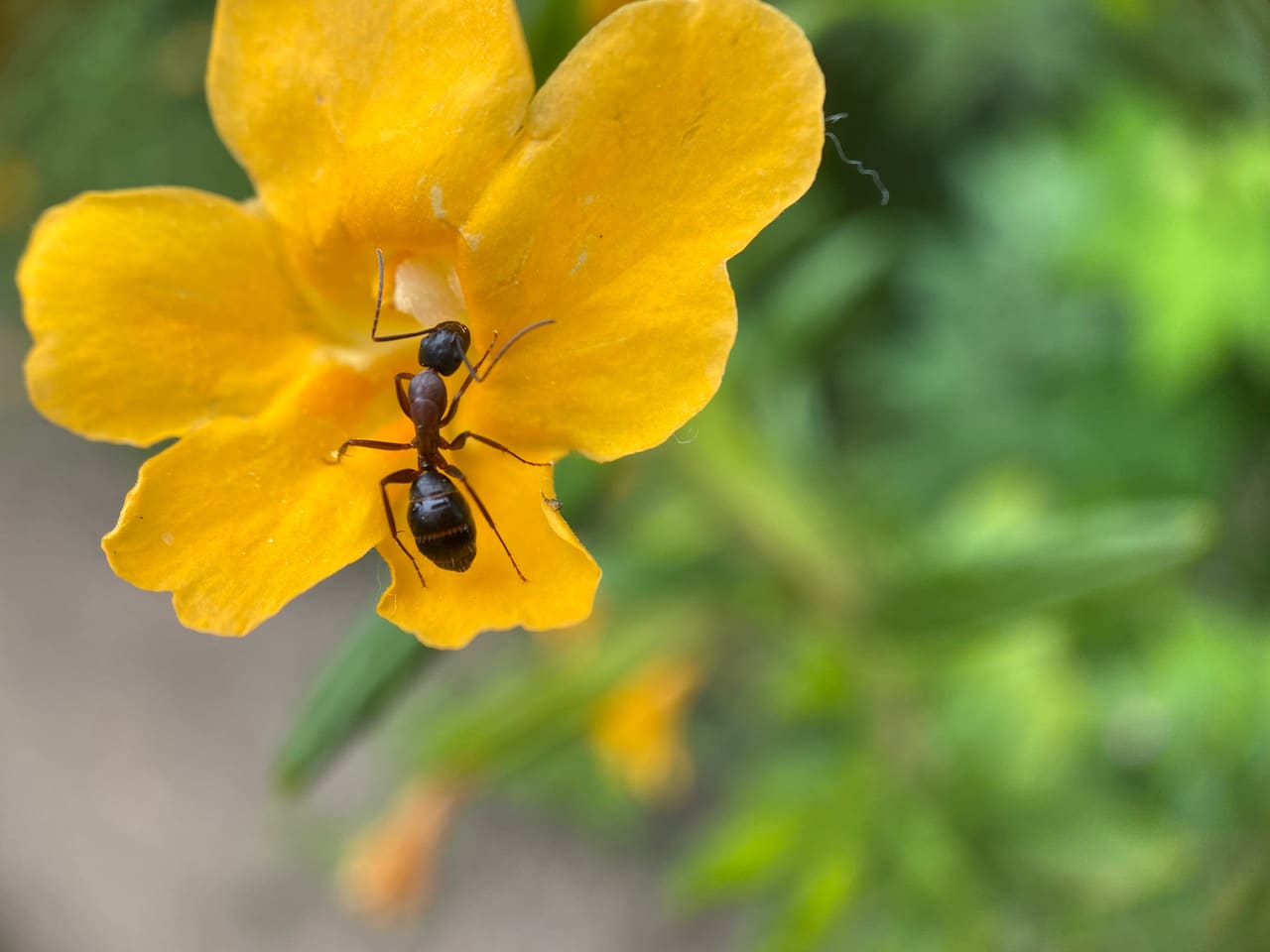
A large ant is entering a Sticky Monkeyflower.
It is a Field Ant, Formica sp. (family Formicidae).
Field Ants belong to the genus Formica (family Formicidae). In North America, the Fusca-group Field Ants, Complex Formica Fusca is the most diverse in western mountain ranges, with partially distinctive Pacific and Rocky Mountain species compositions. The ants occur in grasslands and open woodlands.
They actively gather honeydew from source insects, and extrafloral nectar. They also prey on insects and spiders; also scavenge small dead invertebrates, honeydew on leaf litter and plant surfaces, etc.
A male Masked Bee, Hylaeus sp. (family Colletidae) is coming out of a Sticky Monkeyflower. The little bee, about the size of a grain of rice, has probably gone in to take nectar from the base of the flower. Males do not collect pollen to provision the nest.
Hylaeus (family Colletidae) are shiny, slender, hairless, and superficially wasp-like bees. They are small, 5 to 7 mm long, usually black with bright yellow or white markings on their face and legs. These markings are more pronounced on the males. Hylaeus do not carry pollen and nectar externally, they instead store their food in the crop and regurgitate it upon returning to their nests. They are primarily generalist foragers. Hylaeus are short-tongued, but their small body size enables them to access deep flowers. Hylaeus nest in stems and twigs, lining their brood cells with self-secreted cellophane-like material. They lack strong mandibles and other adaptations for digging, using instead pre-existing cavities made by other insects.
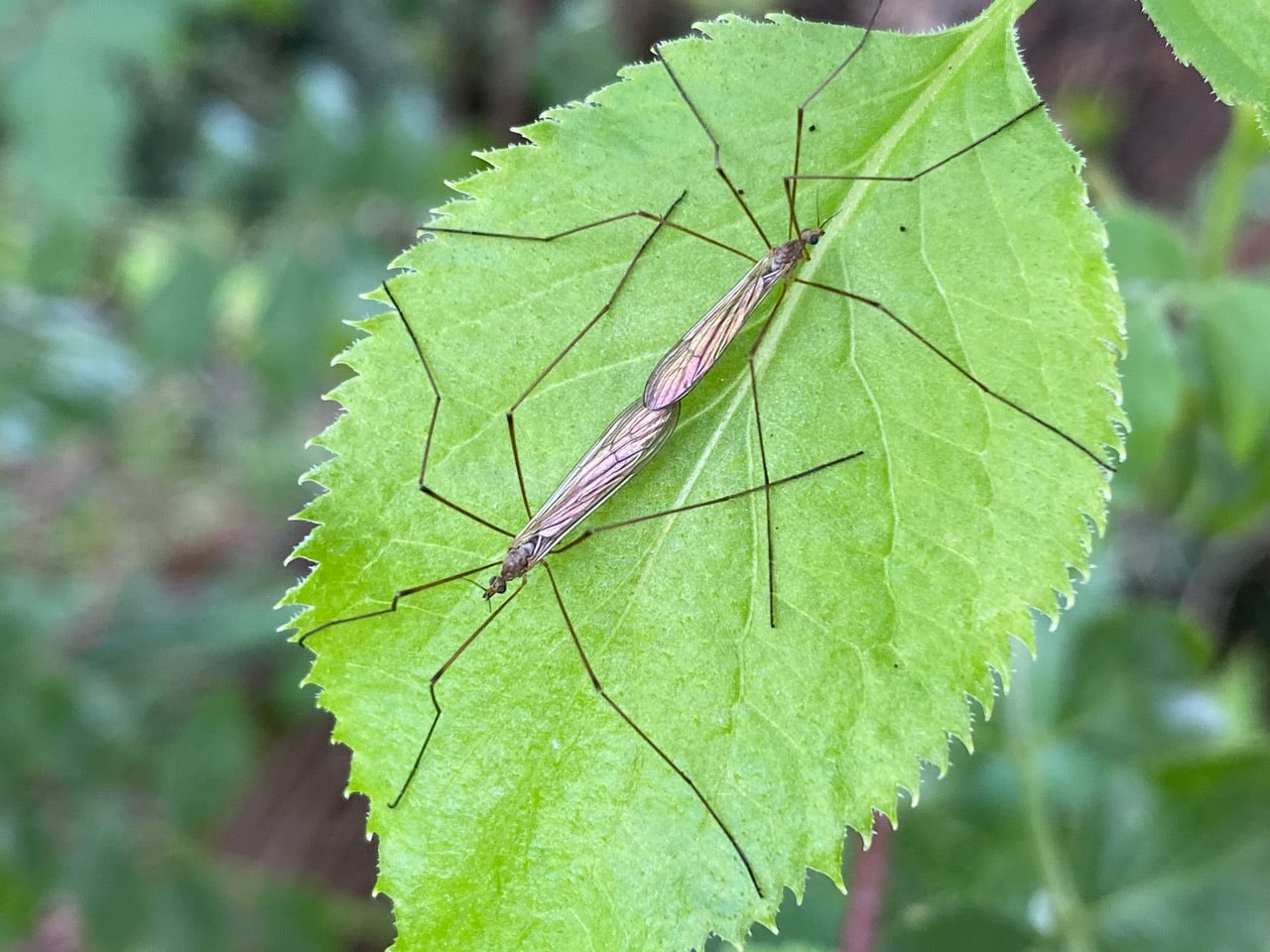
A pair of Limoniid Crane Flies (family Limoniidae) is mating on a tender leaflet of a Blue Elderberry, Sambucus nigra ssp. caerulea.
The Limoniidae were formerly treated as a subfamily of the Crane Flies (family Tipulidae). The two families can be distinguished by the way wings are held at rest.
Limoniids usually hold/fold the wings along the back of the body, whereas the tupulids usually hold them out at right angles. Limoniidae are medium or small-sized, rarely large. Larvae of most species are aquatic or semi-aquatic. Various species have evolved to feed on different food sources – some are phytophagous, others are saprophagous, still others are mycetophagous, feeding on fungus. Some predatory species occur. Limoniidae occupy a wide range of habitats and micro habitats: in earth rich in humus, in swamps and marshes, in leaf litter and in wet spots in woods. The adults usually do not eat, and spend their brief time mating and laying eggs. Females lay their eggs either under water or in soil near water.
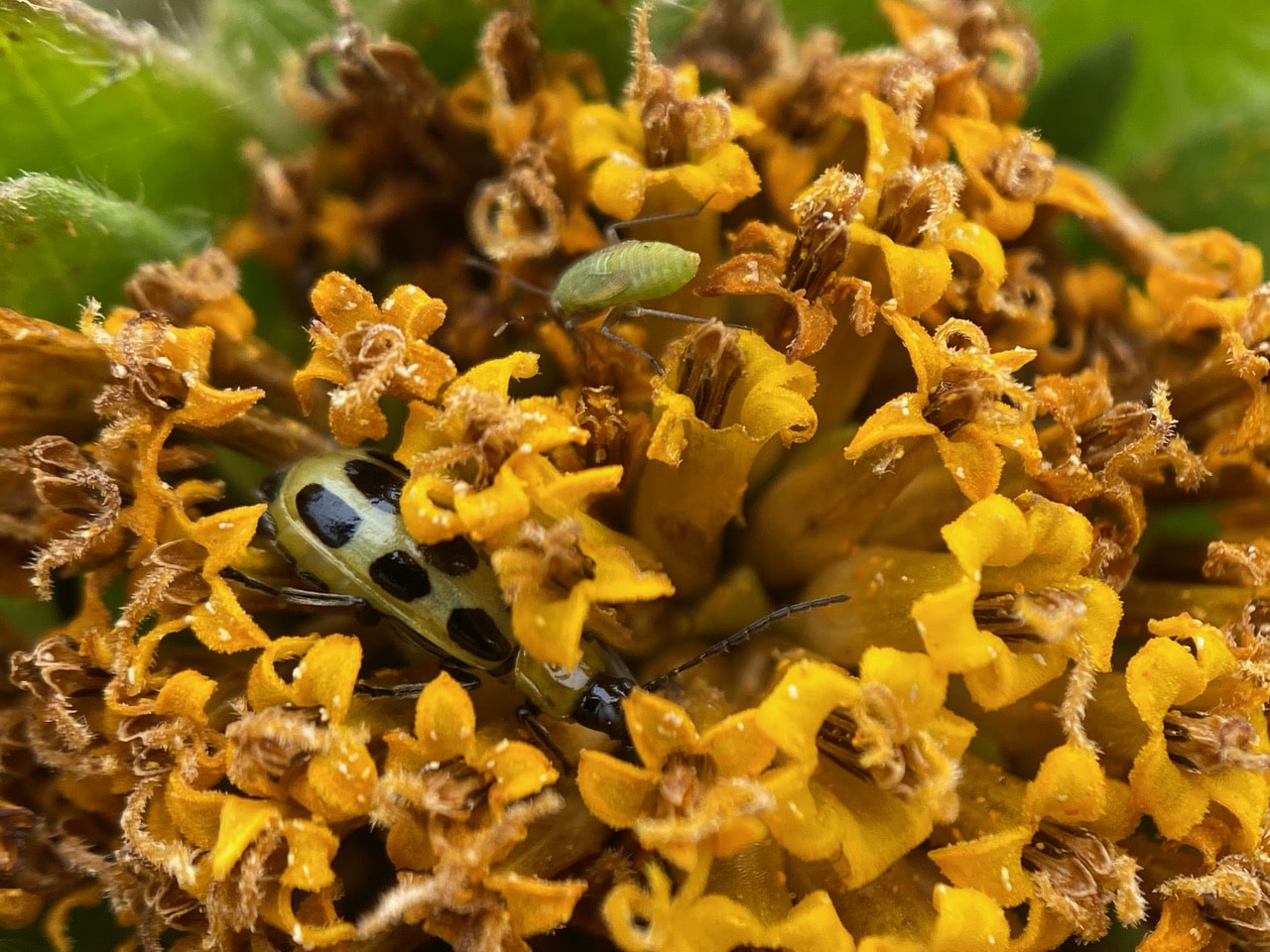
The flowers of Narrowleaf Mule Ears, Wyethia angustifolia are under attack! Those slippery Rove Beetles are still around, but I doubt if they are responsible for this level of damage.My macro lens reveals a green nymph of a “true bug” and a Spotted Cucumber Beetle, Diabrotica undecimpunctata (family Chrysomelidae) among the florets of the flowerhead. Adult and nymphal Hemiptera (“true bugs”) have piercing-sucking mouthparts, while the beetle has mouthparts for chewing.
The macro lens also reveals this tiny parasitoid wasp, a Chalcid Wasp in the superfamily Chalcidoidea.
Most of the species are parasitoids of other insects, attacking the eggs or larval stage of their host, though many other life cycles are known. These hosts are to be found in at least 12 different insect orders including Lepidoptera (butterflies and moths), Diptera (true flies), Coleoptera (beetles), Hemiptera (true bugs), and other Hymenoptera, as well as two orders of Arachnida. When the host is itself a parasitoid, the wasps are referred to as hyperparasitoids. Generally beneficial to humans as a group, chalcidoids help keep various crop pests under control, and many species have been used as biocontrol agents.