

Pollinator Post 6/13/23 (1)
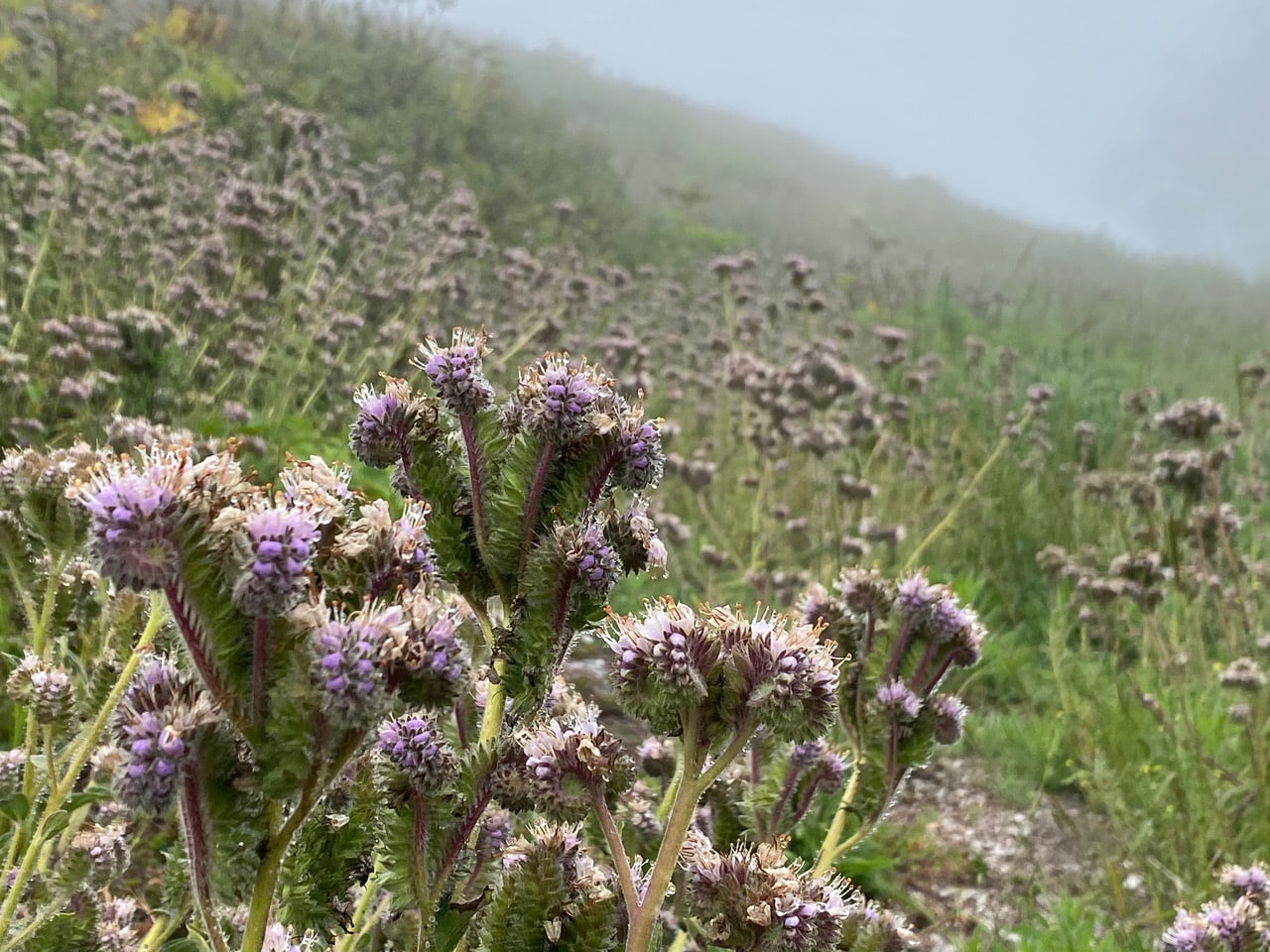
I have not expected the place to be so foggy and cold when I arrive at Siesta Gate at 9:30 am .
 Will I see anything in this fog? Will photography be possible?
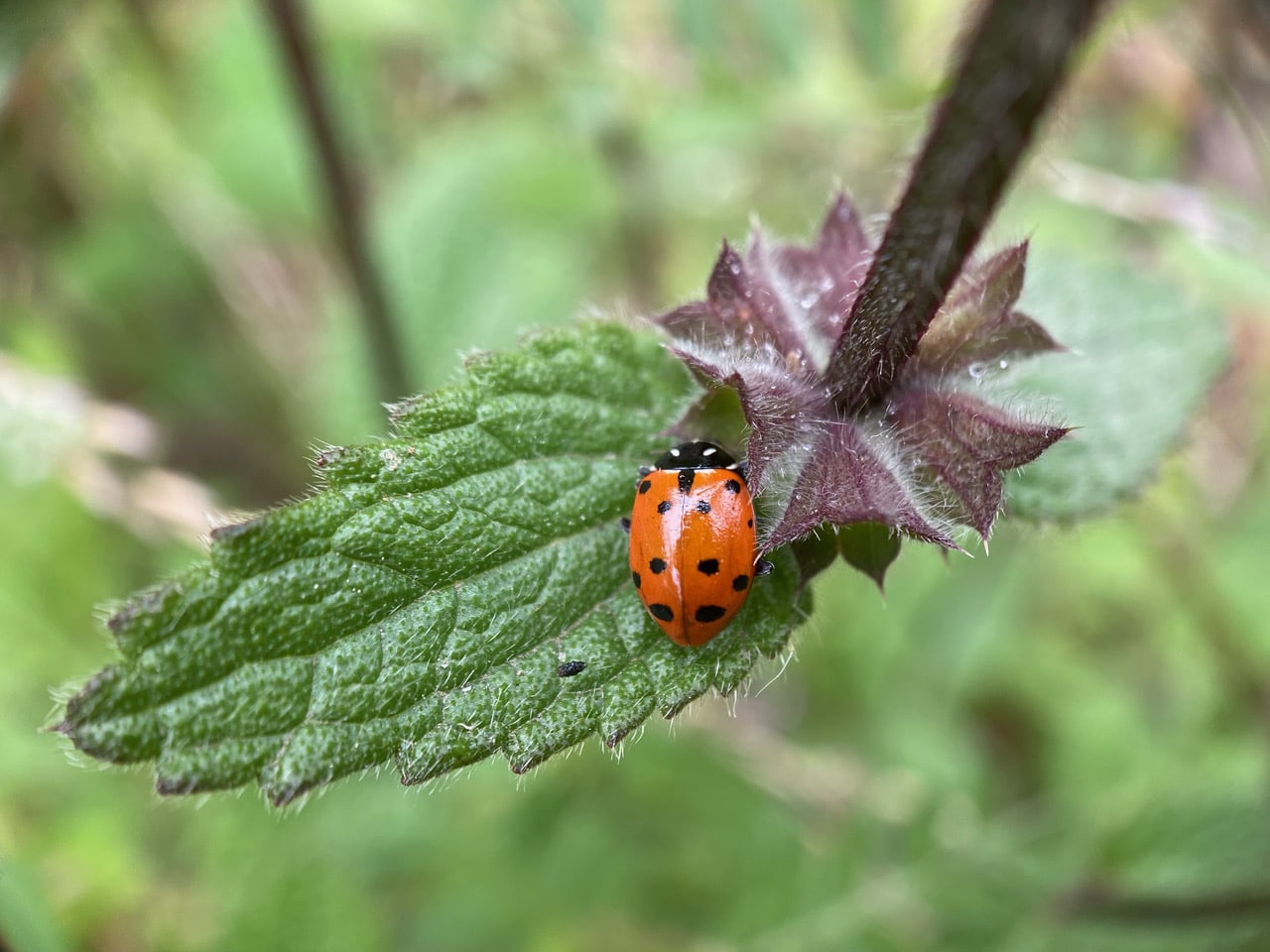




Will I see anything in this fog? Will photography be possible?A Convergent Ladybeetle is hunkered down on a leaf of Wood Mint, Stachys ajugoides next to a whorl of funnel-shaped calyces from which old flowers have fallen.
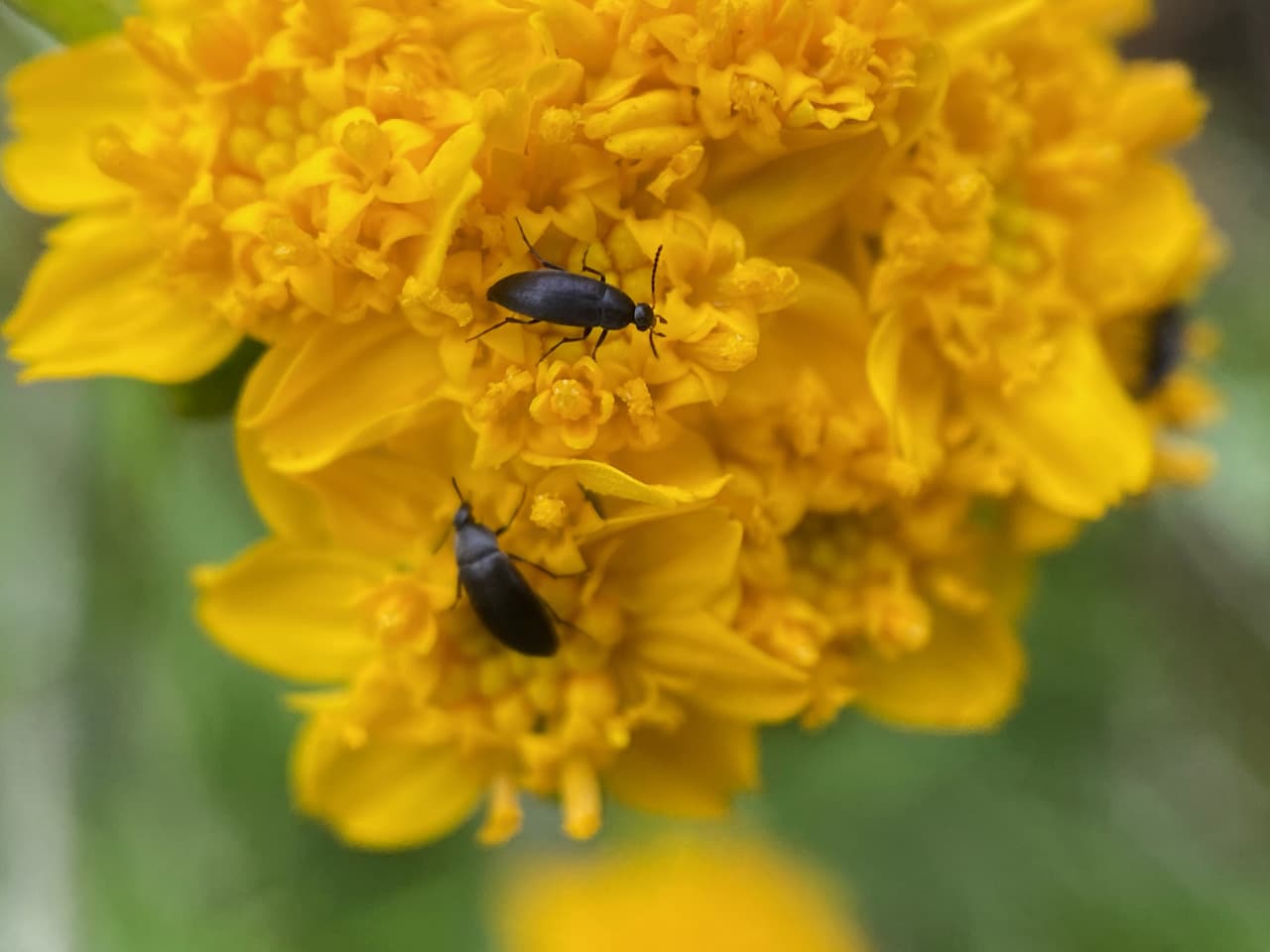
A few False Flower Beetles (family Scraptiidae) are foraging on an inflorescence of Golden Yarrow, Eriophyllum confertiflorum.
False Flower Beetles, Anaspis atrata (family Scraptiidae) are commonly found in western North America. The adults are found on flowers, sometimes in large numbers, but are also found on foliage. The larvae are typically found under the bark of dead trees.
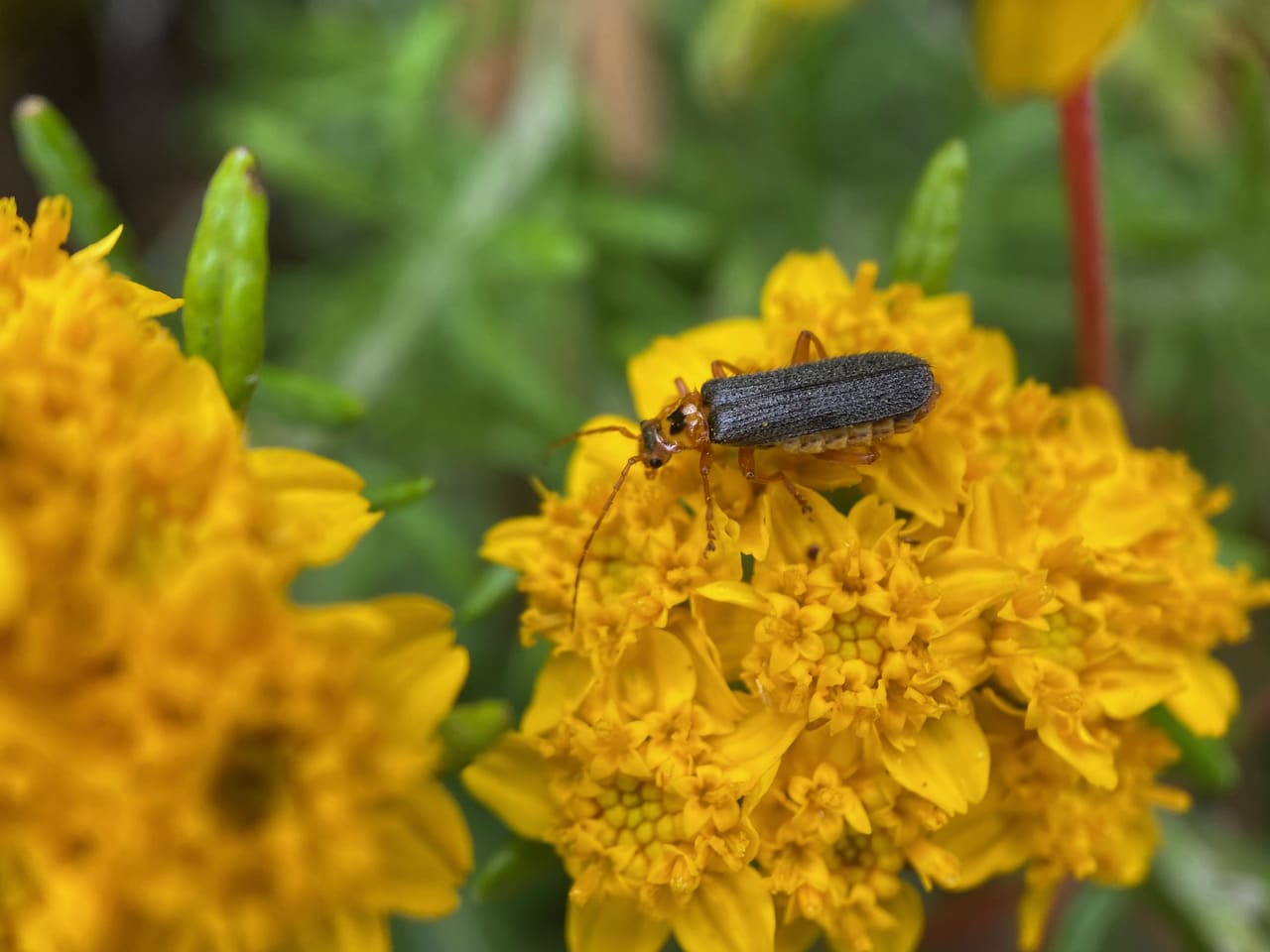
A Soldier Beetle, Cultellunguis americanus (family Cantharidae) is resting on an adjacent inflorescence of Golden Yarrow.
The Soldier Beetles, family Cantharidae are relatively soft-bodied, straight-sided beetles. One of the first described species has a color pattern reminiscent of the red coats of early British soldiers, hence the common name. They are also known commonly as Leatherwings because of their soft elytra.
Soldier beetles often feed on both nectar and pollen as well as predating on other small insects. The larvae are often active, and feed on the ground, hunting snails and other small creatures. Soldier beetles are generally considered beneficial insects by gardeners.
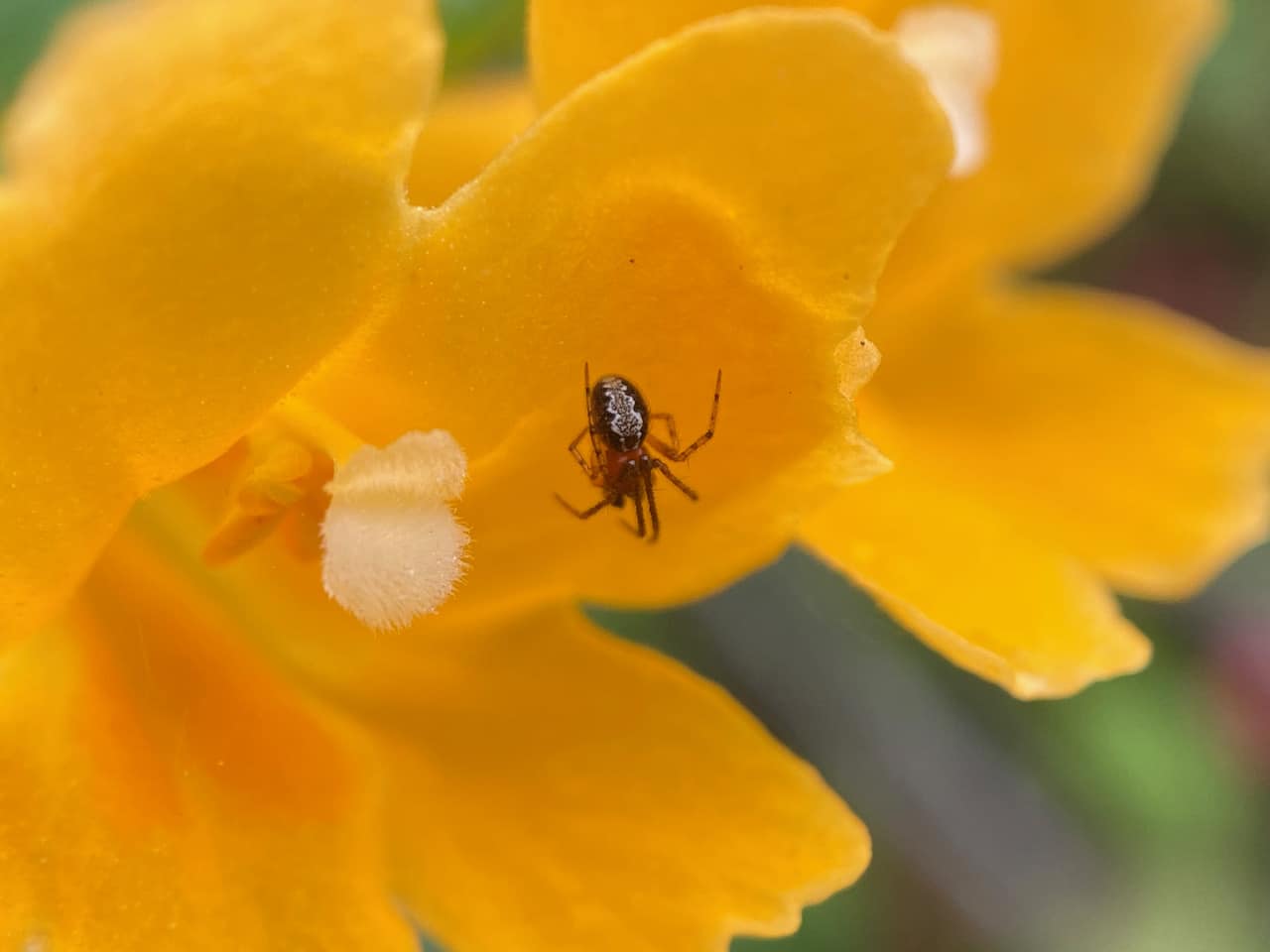
A tiny Tangle-web Spider (family Theridiidae) appears to be suspended in mid air at the entrance of a Sticky Monkeyflower. It is actually perched on an invisible tangled web that it has constructed to intercept insects that visit the flower. What a great spot for laying a trap!
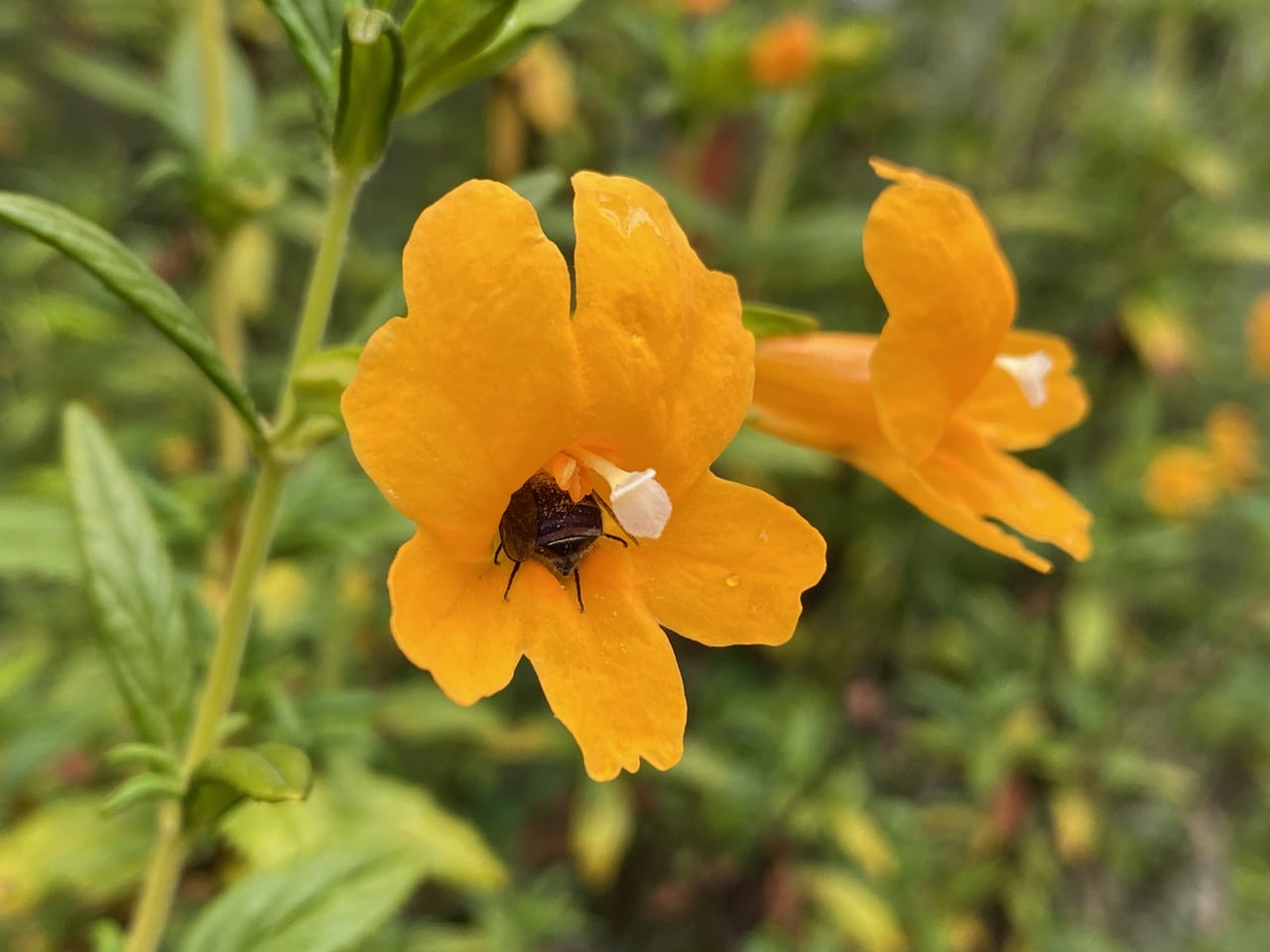
A Small-headed Fly, Eulonchus sp. (family Acroceridae) is cozily tucked within the corolla of a Sticky Monkeyflower, Diplacus aurantiacus. It’s a perfect fit – the flower and the fly seem to be made for each other.
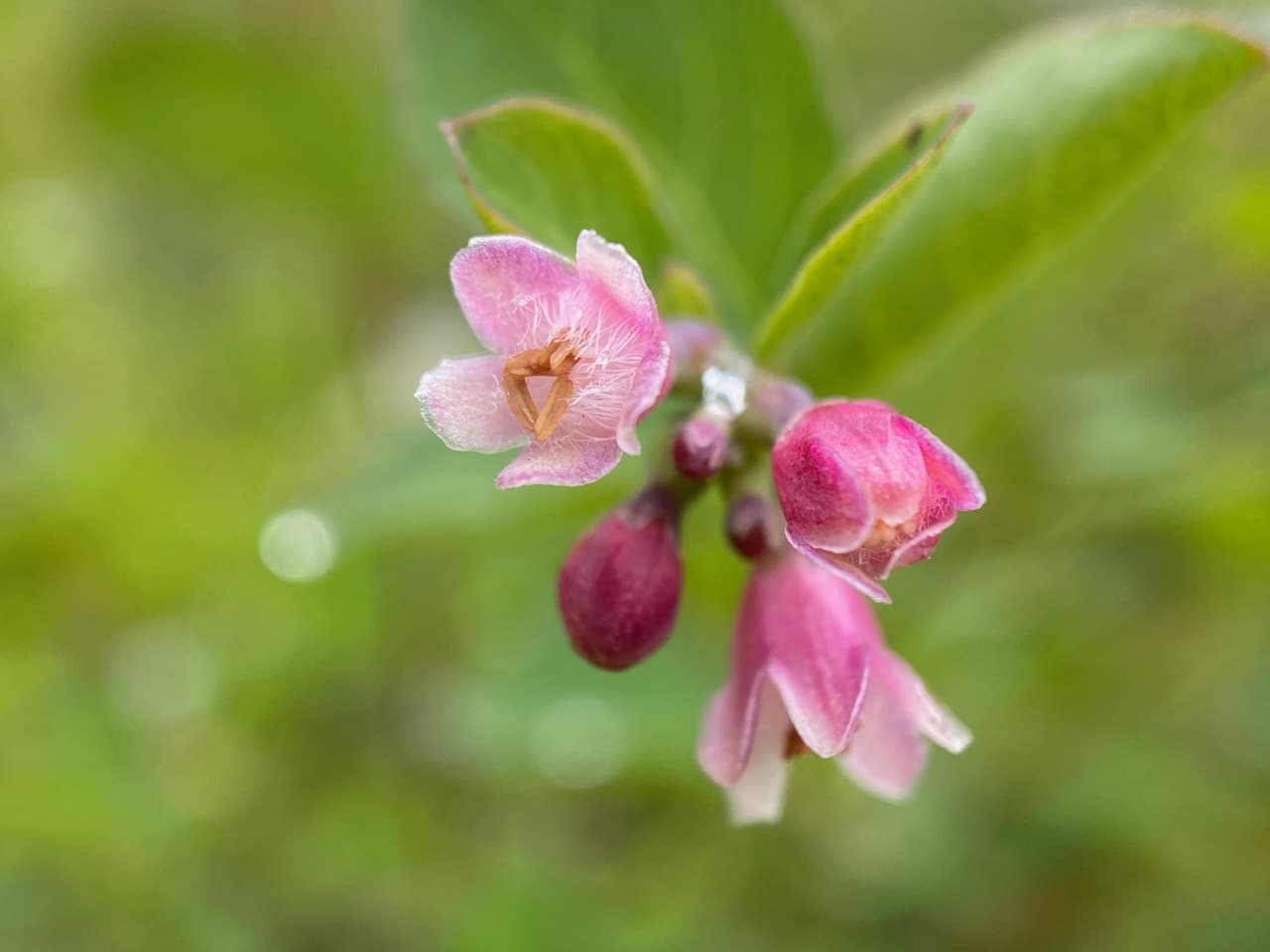
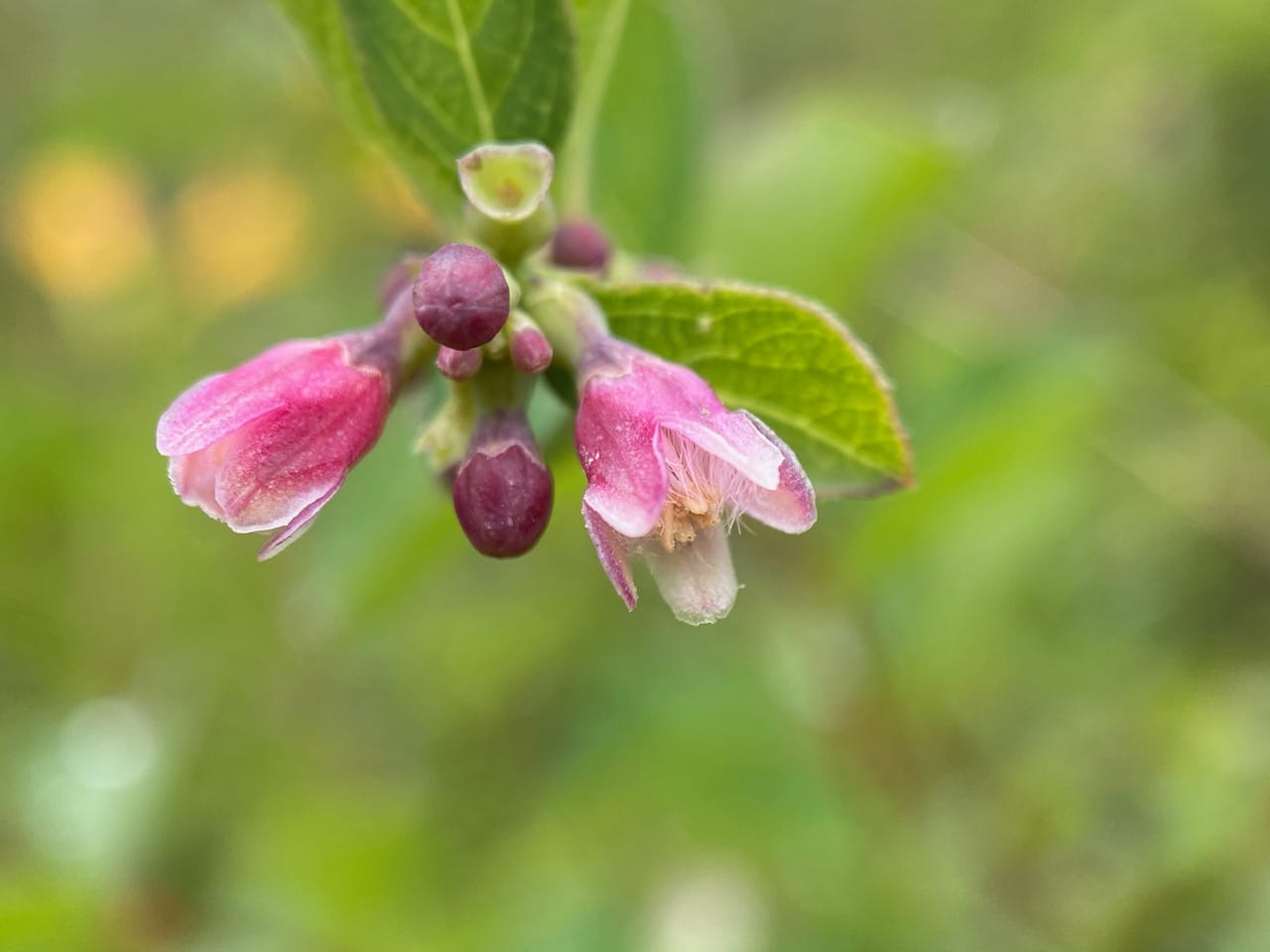
Since there’s hardly any insect activity, I settle down to take some close-ups of the Snowberry flowers in peak bloom along Skyline Trail. Ahh, I can see the five stamens behind the white hairs inside the corolla. What function do the hairs serve? To exclude certain insects?
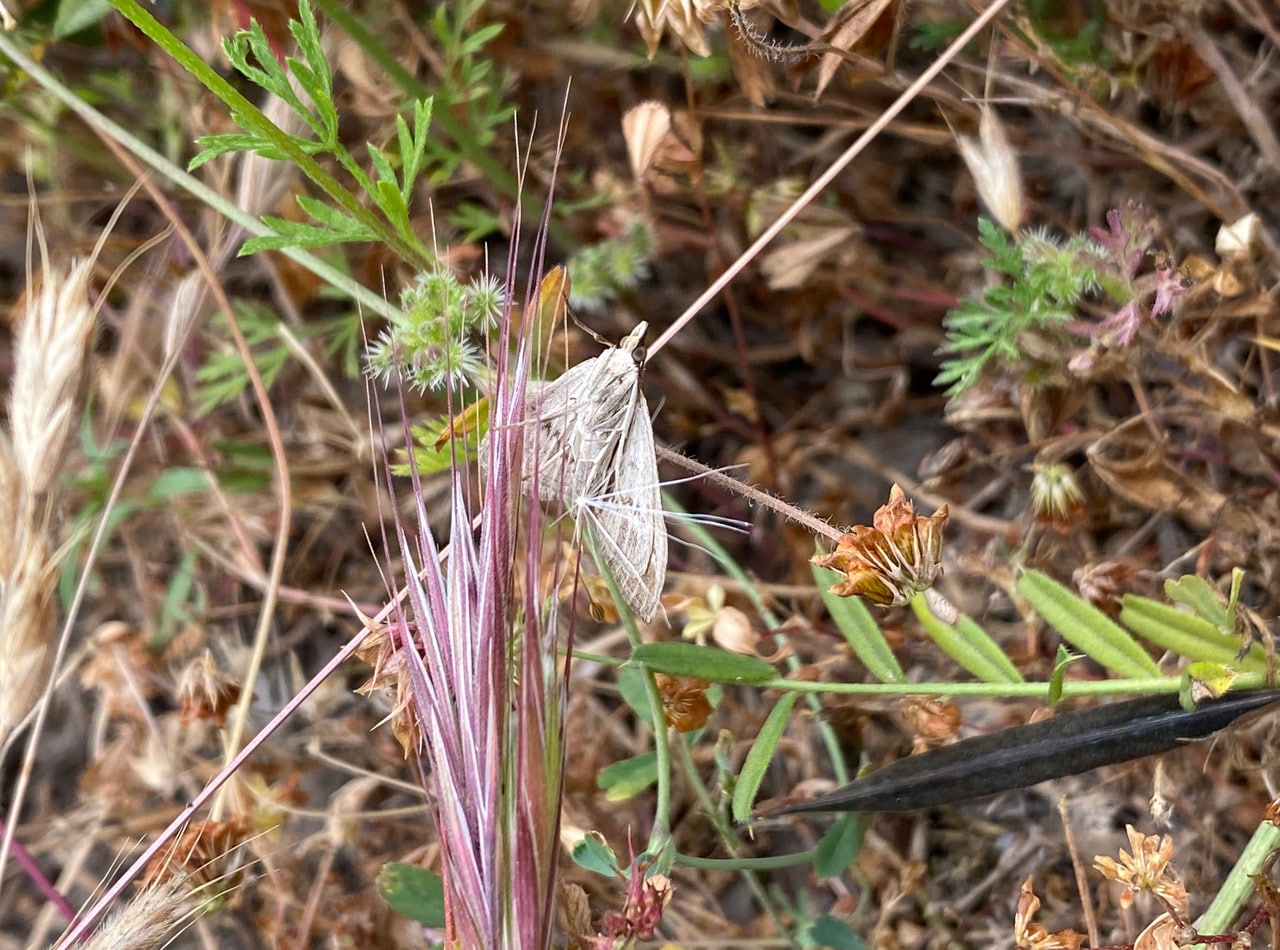
A moth flies past me and lands on a grass seed head in the undergrowth. I can only see its underside, and will probably never know its identity.
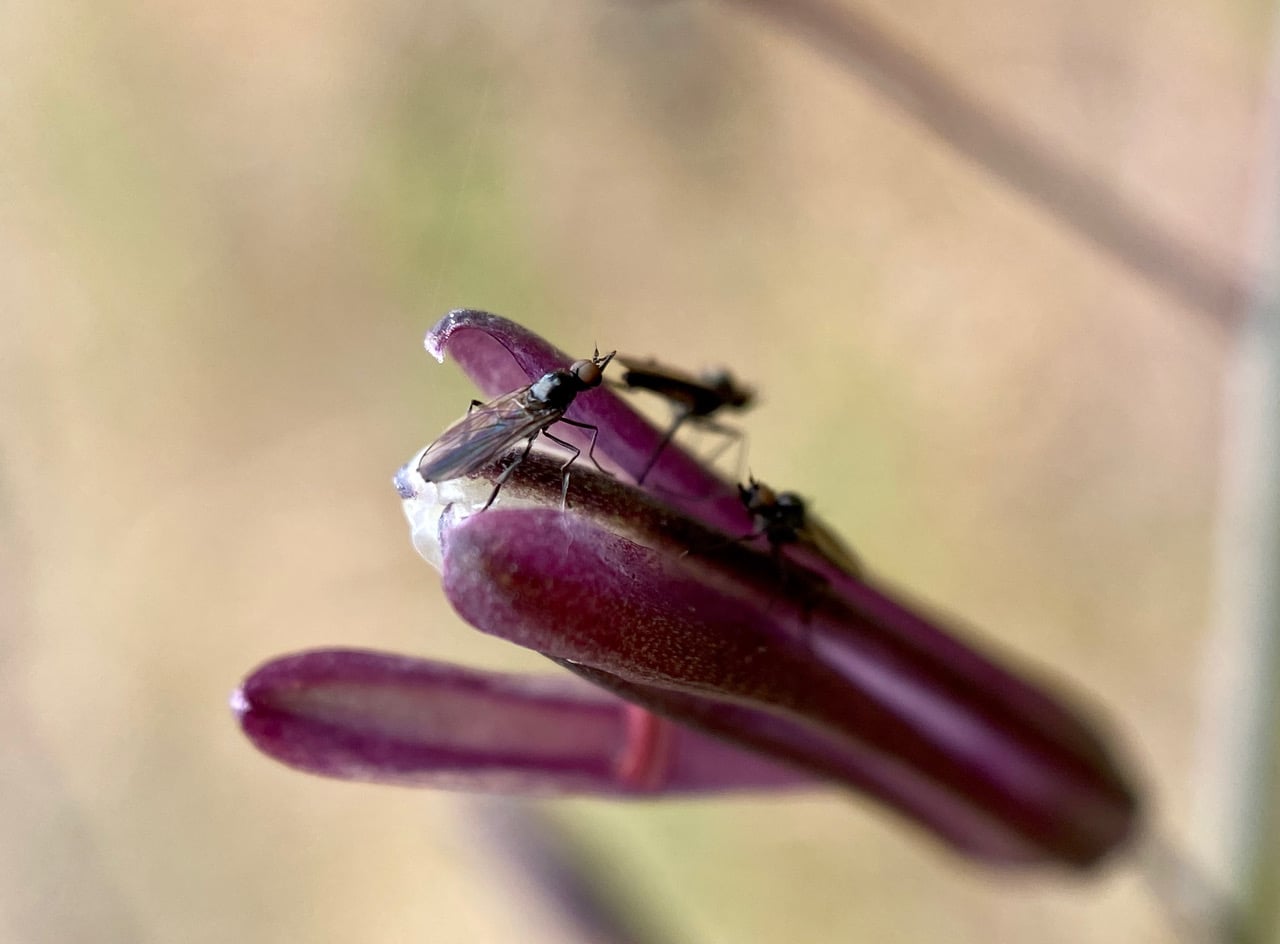
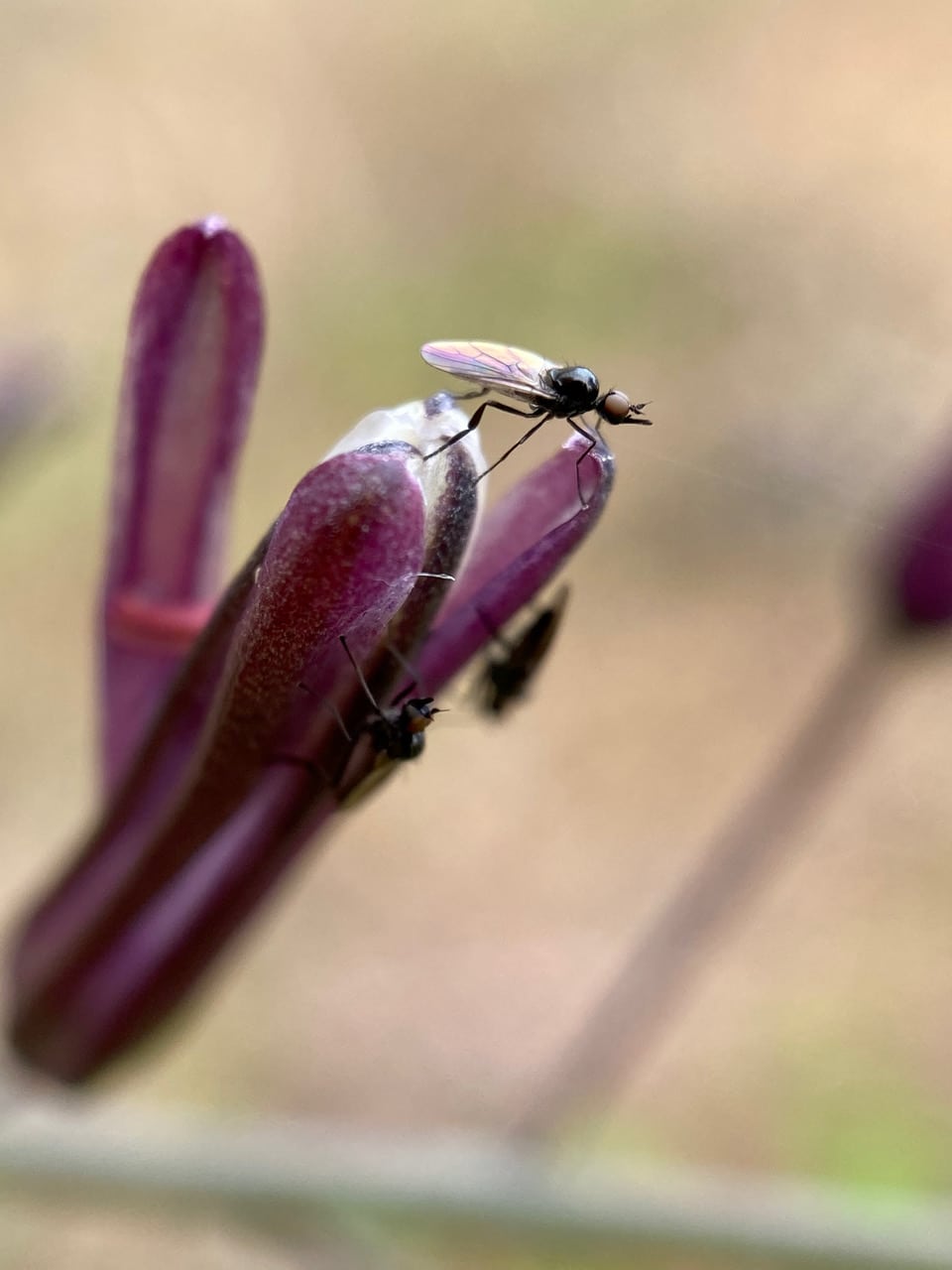
10:30 am. A few Dance Flies (family Empididae) are wandering on a spent flower of Soap Plant, Chlorogalum pomeridianum that is about to close up. These flowers open for only one night. Have the flies been bingeing on nectar through the night? Are they a nocturnal species?
Dance Flies, in the family Empididae, get their name from the habit of males of some species to gather in large groups and dance up and down in the air in the hopes of attracting females. They are predominantly predatory and they are often found hunting for small insects on and under vegetation in shady areas. Both genders may also drink nectar. Male dance flies give their sweeties a nuptial gift to eat while they mate. The gift is thought to enable her to complete the development of her eggs. Males may wrap their gifts in balloons of silk or spit, hence the other common name of Balloon Flies.
These tiny flies have to be cold tolerant to party all night here.
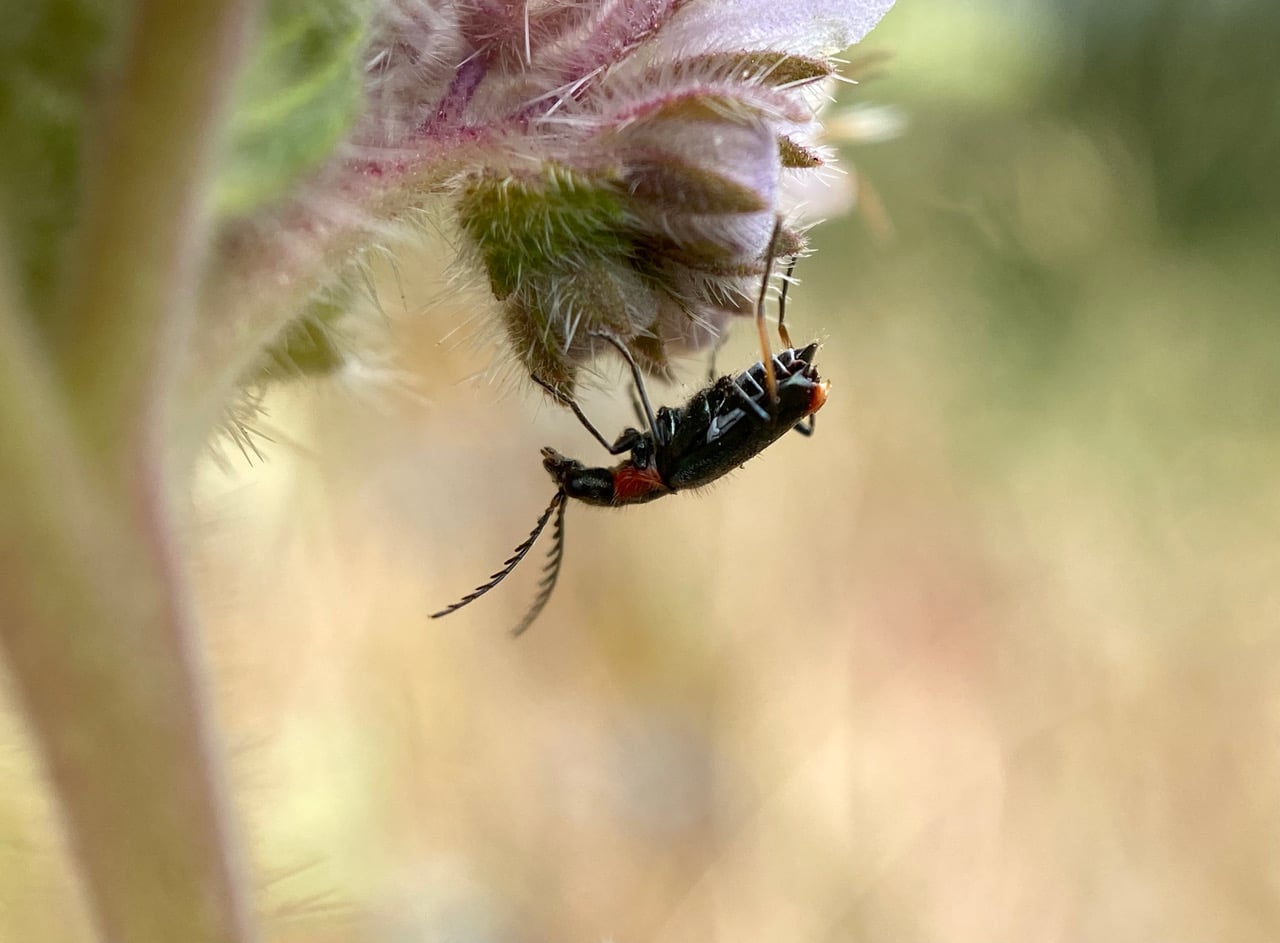
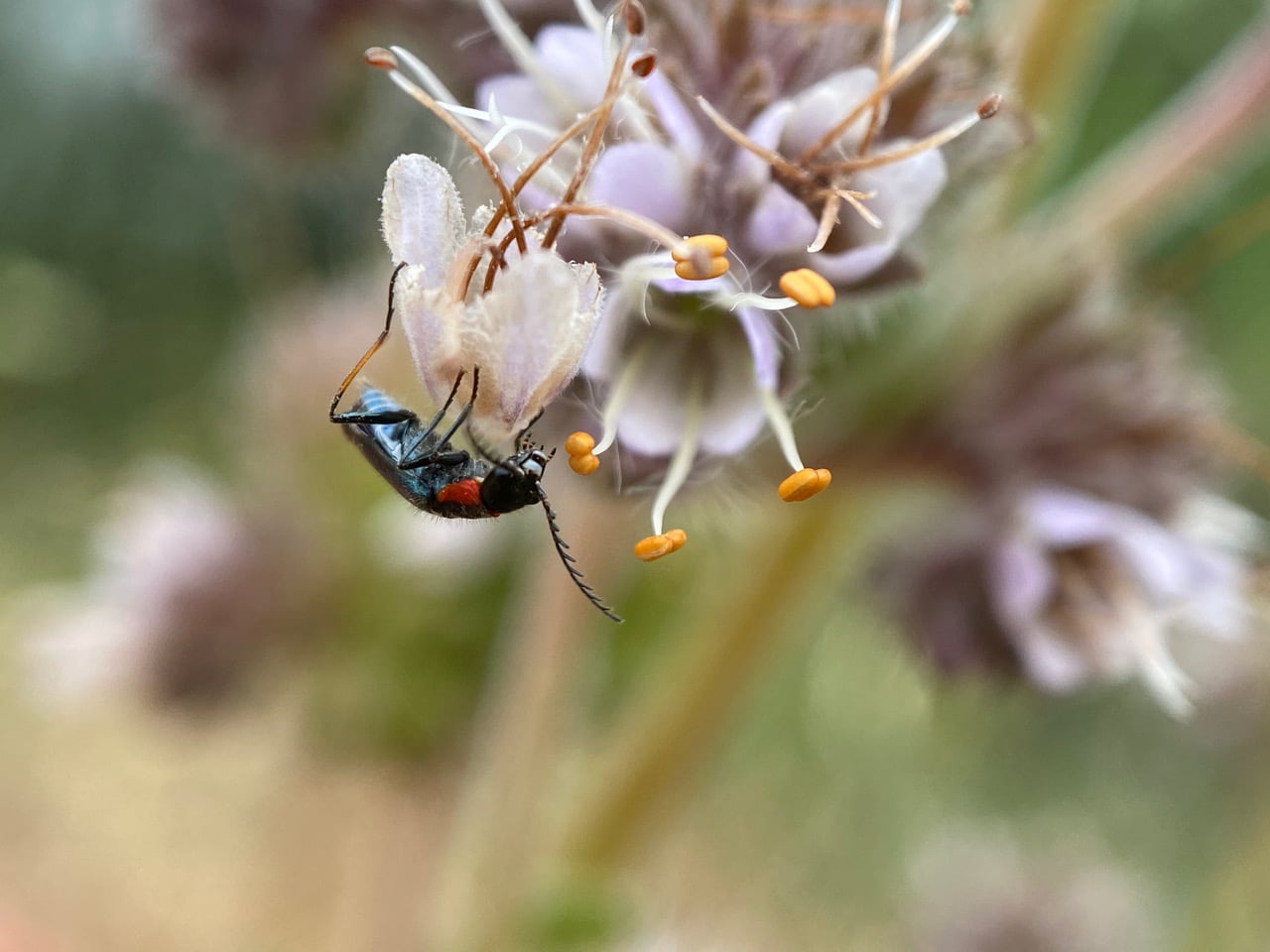
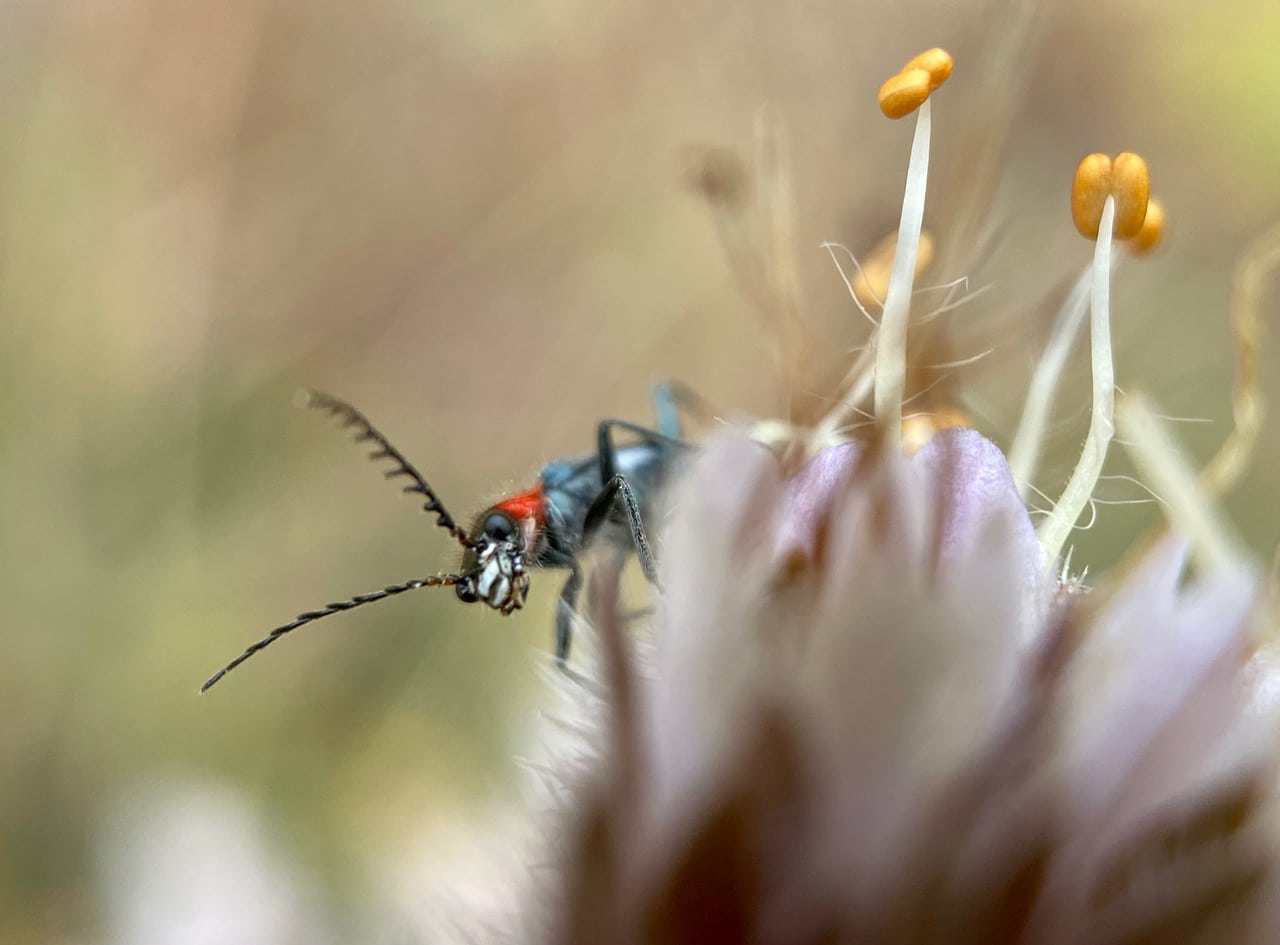
That’s a familiar silhouette of a Malachite Beetle, Malachius auritus (family Melyridae, subfamily Malachiinae) exploring an inflorescence of California Phacelia, Phacelia californica.
The Malachite Beetle (subfamily Melachiinae) is a member of the family of Soft-winged Flower Beetles (family Melyridae). Most Melyrids are elongate-oval, soft-bodies beetles 10 mm or less in length. Members of the subfamily Malachiinae have peculiar orange structures along the sides of the abdomen which can be everted, but usually kept hidden. Most adults and larvae are predaceous. Omnivorous adult Melyrids are often found on flowers out in the open, where they feed on pollen, insect eggs, and flower-loving insects that land within their grasp. The larvae generally stay concealed under tree bark or leaf litter or soil, where they prey on other invertebrates.
What an interesting face!
It appears pollen is on the menu today for this omnivore. Note the beetle’s pectinate antennae. The segments of pectinate antennae are longer on one side, giving the antenna a comb-like appearance. The term pectinate derives from the Latin pectin, meaning comb. Pectinate antennae are found in some beetles and sawflies. Insect antenna forms – BugGuide.Net
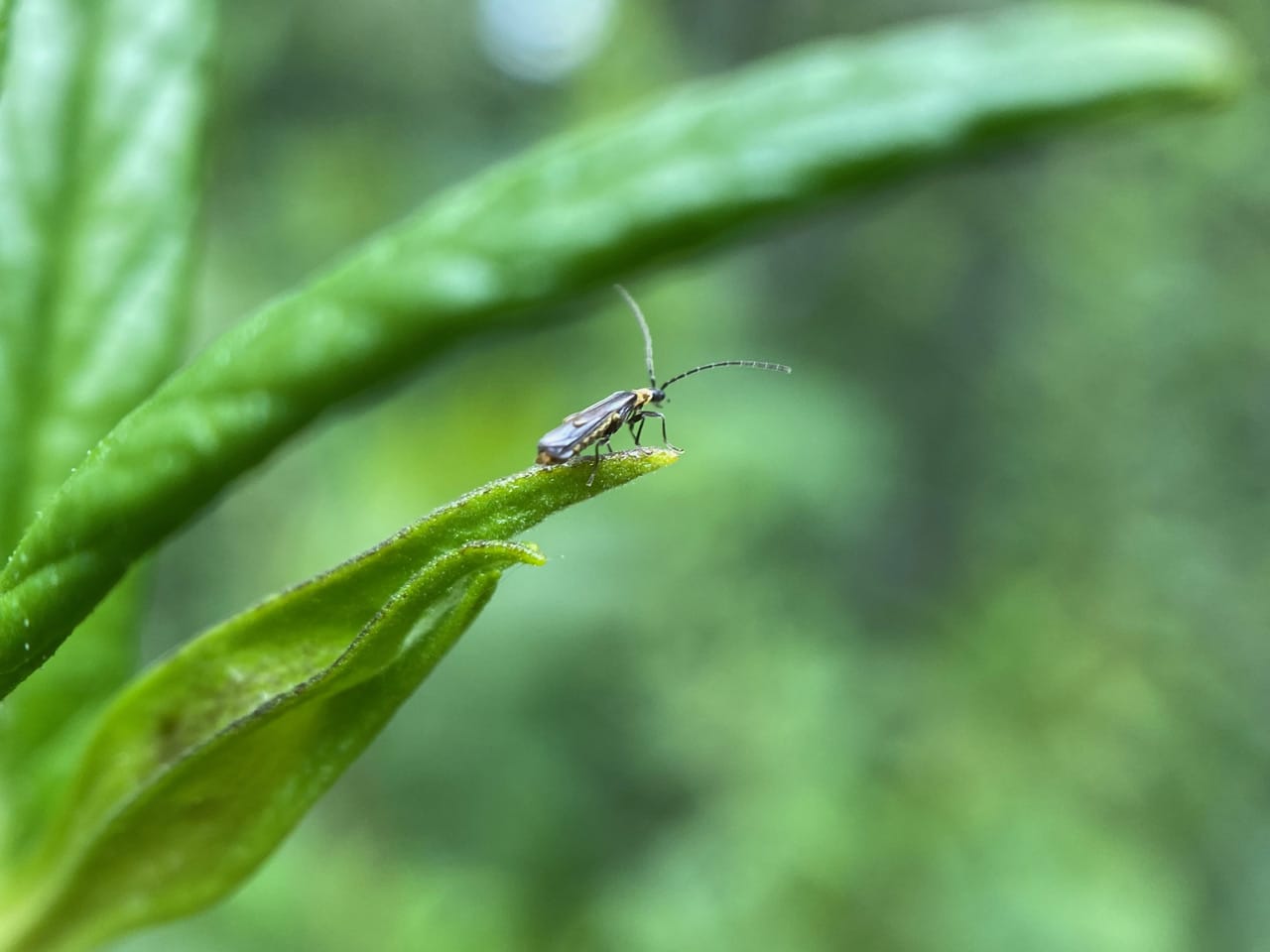
A tiny insect lands on the tip of a flower bud of Sticky Monkeyflower. It looks every bit like a miniature Soldier Beetle.
It is a Soldier Beetle in the genus Malthodes (family Cantharidae).
The Soldier Beetles, family Cantharidae are relatively soft-bodied, straight-sided beetles. One of the first described species has a color pattern reminiscent of the red coats of early British soldiers, hence the common name. They are also known commonly as Leatherwings because of their soft elytra.
Soldier beetles often feed on both nectar and pollen as well as predating on other small insects. The larvae are often active, and feed on the ground, hunting snails and other small creatures. Soldier beetles are generally considered beneficial insects by gardeners.
Malthodes is the most speciose Cantharidae genus, with about 130 ssp. in our area. It is distinguished by small size (1-4 mm) and having short elytra which leave the inner wings partly exposed and folded along the dorsal surface of the abdomen.
A small fly, Homoneura sp. (family Lauxaniidae) is perched on a leaf of Sticky Monkeyflower.
Lauxaniidae are small flies (2-7 mm in length). They are often rather plump and dull, the body color varying from yellow-brown to black, or with a combination of these colors. They are characterized by strong, backward pointing bristles on the front (top of the head right above the eyes). The larvae are mostly saprophages, feeding in leaf litter, soil, bird nests, etc. Larvae of some mine fallen leaves, others live in rotten wood.
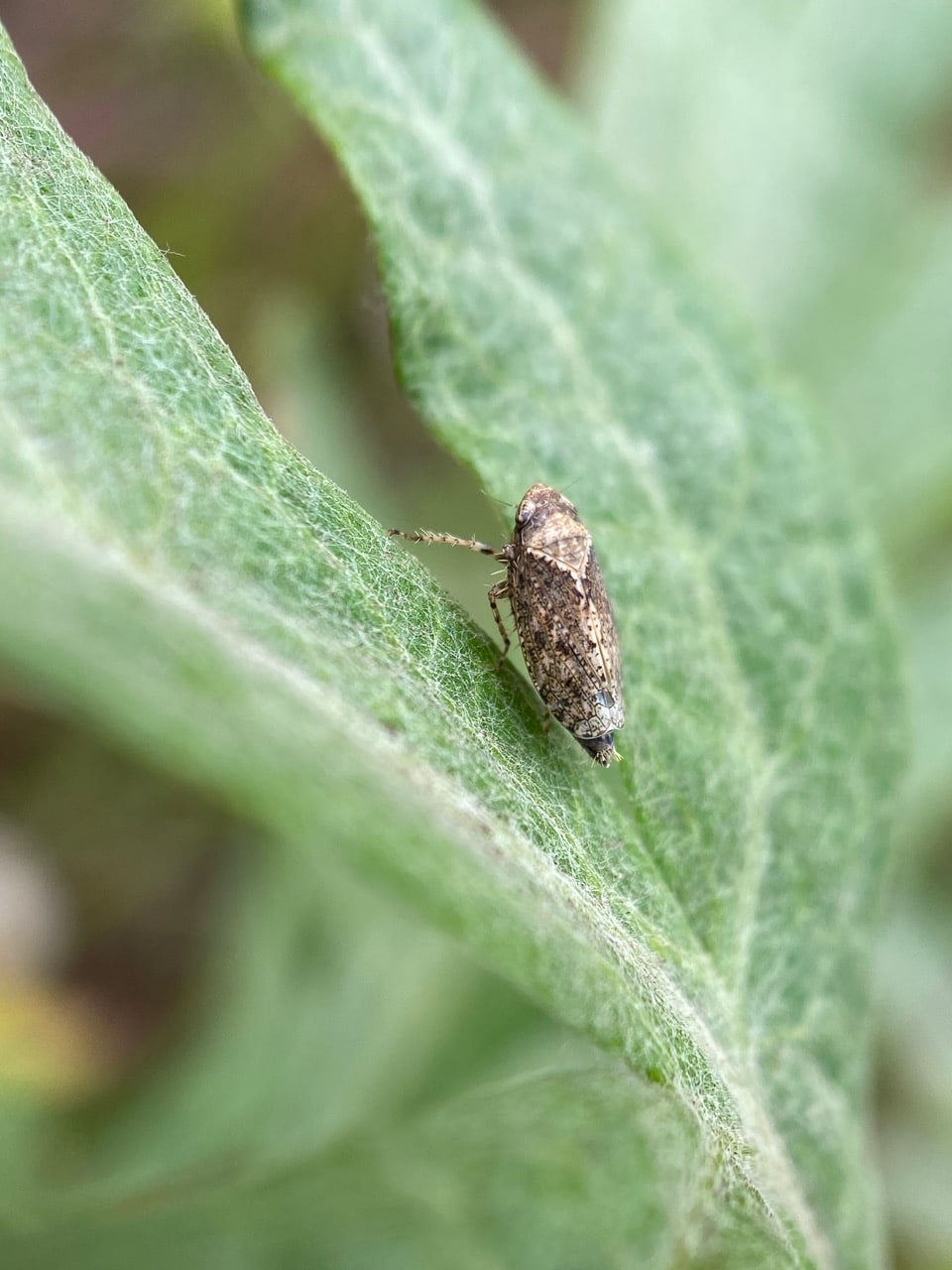
A bug is perched quietly on a leaf of California Mugwort, Artemisia douglasiana. The neat row of comb-like spines along its hind leg identifies the bug as a Leafhopper, family Cicadellidae. iNaturalist has identified the Leafhopper as belonging to the genus Texananus.
Leafhopper is the common name given to true bugs in the family Cicadellidae. The bugs are plant feeders that suck plant sap from grass, shrubs, or trees. Their hind legs are modified for jumping, and are covered with hairs that facilitate the spreading of a secretion over their bodies that act as a water repellent and carrier of pheromones. They undergo partial metamorphosis, and have various host associations, varying from very generalized to very specific.
While sucking the sap of plants, these insects excrete any extra sugar as a sticky liquid commonly called honeydew. This is a serious hazard for small insects, possibly sticking the insect to a leaf, or gluing its body parts together. Some bugs deal with this problem by shooting the waste away from their bodies at high speed. Leafhoppers have a unique solution – they make brochosomes, a proteinaceous material within a special gland in their guts, and secrete them by the billions in a milky anal fluid, and spread them over their bodies using their legs. When the fluid dries, the brochosomes form a powdery coating, and the leafhoppers spread them even further using comb-like hairs on their legs. The brochosomal coat is superhydrophobic, and acts as a water-repellent, non-stick coating protecting the leafhoppers from their own sticky exudates.
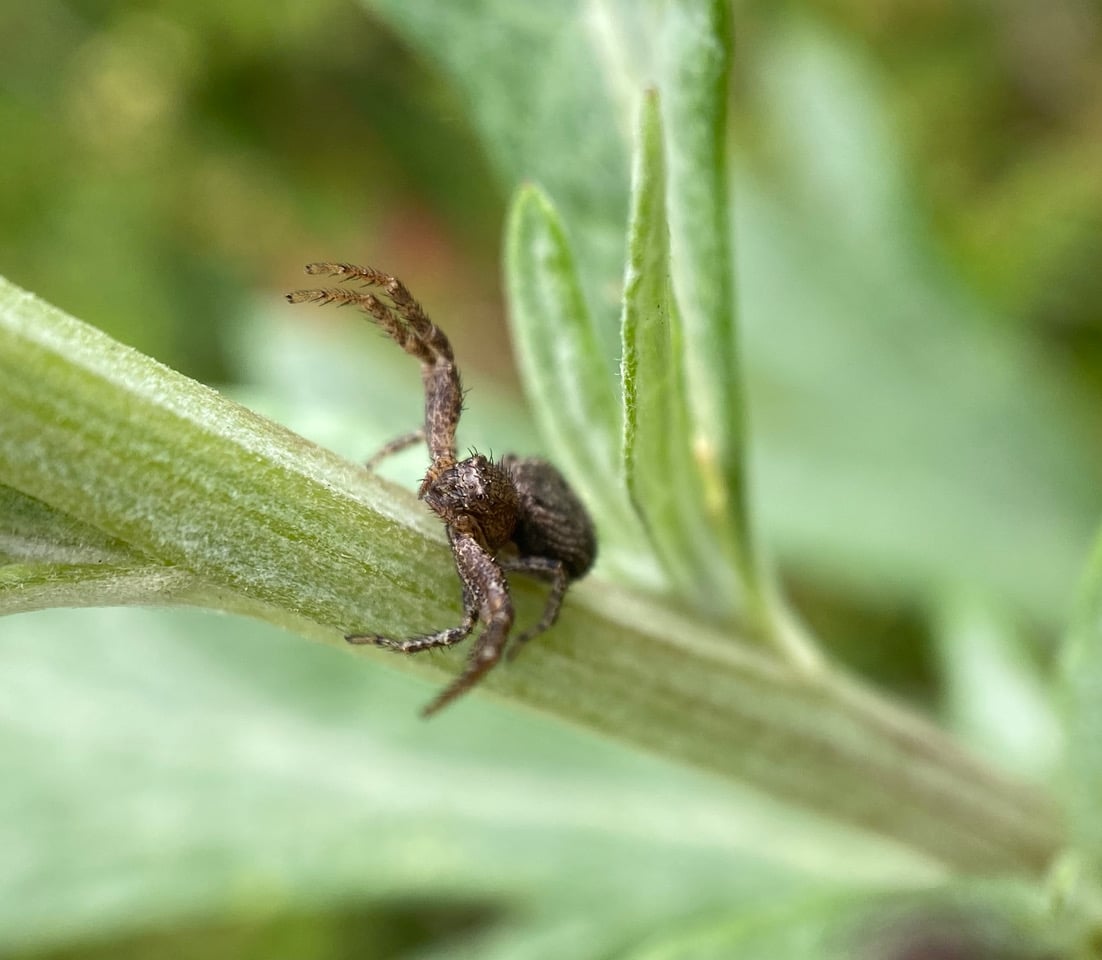
At the approach of my camera, a very dark Ground Crab Spider, Xysticus sp. (family Thomisidae) on the stem of California Mugwort raises its front legs in a defensive gesture.
Disguised in earthy browns/grays , these spiders tend to be found on the ground or on low vegetation. While similar to the “flower spiders”, they tend to have shorter, sturdier legs. Like most Thomisidae, Xysticus do not build webs. They are ambush predators that prefer to hunt near the ground. They move slowly, and commonly hunt by stationing themselves in high-traffic area and grabbing whatever arthropod passes close enough. Also like most other Thomisidae, they seize prey with their enlarged front two pairs of legs and kill it by a venomous bite.
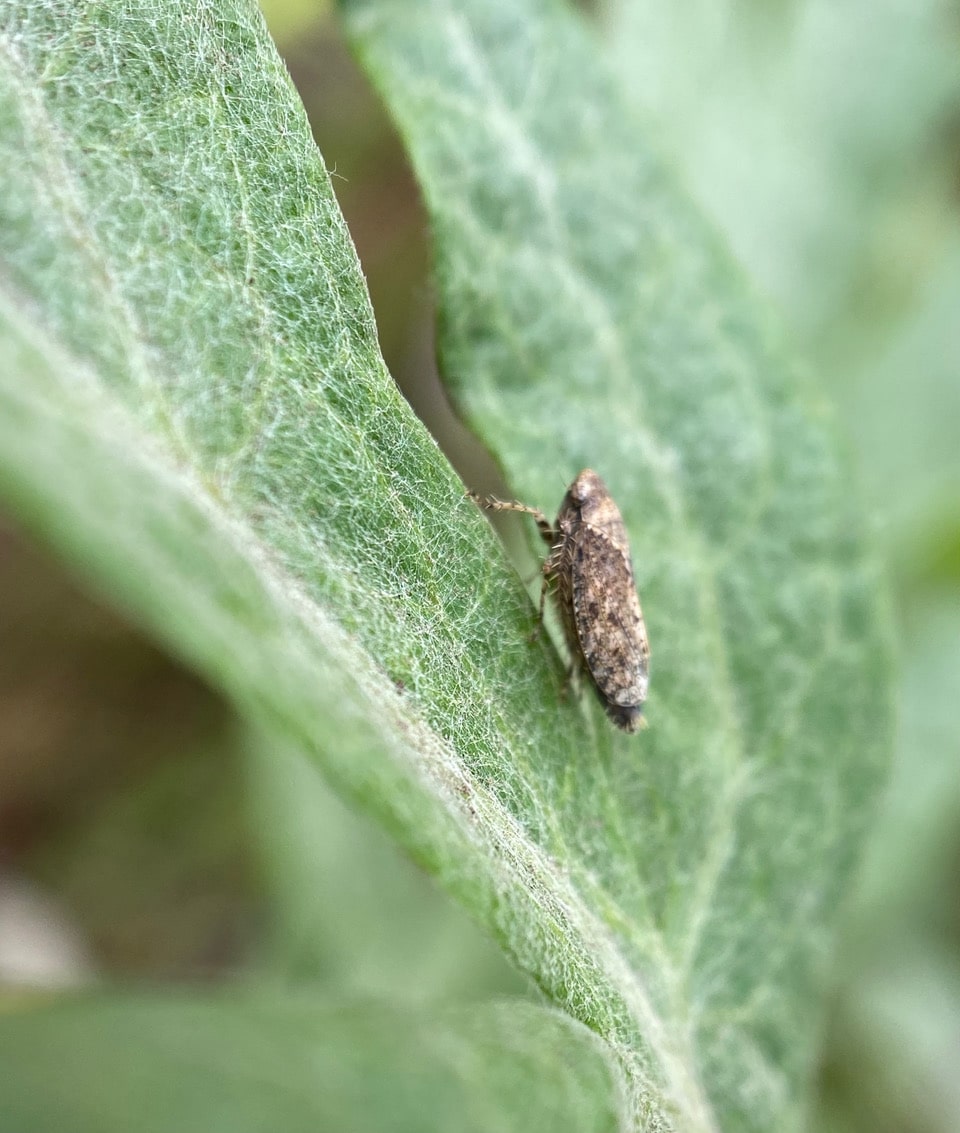
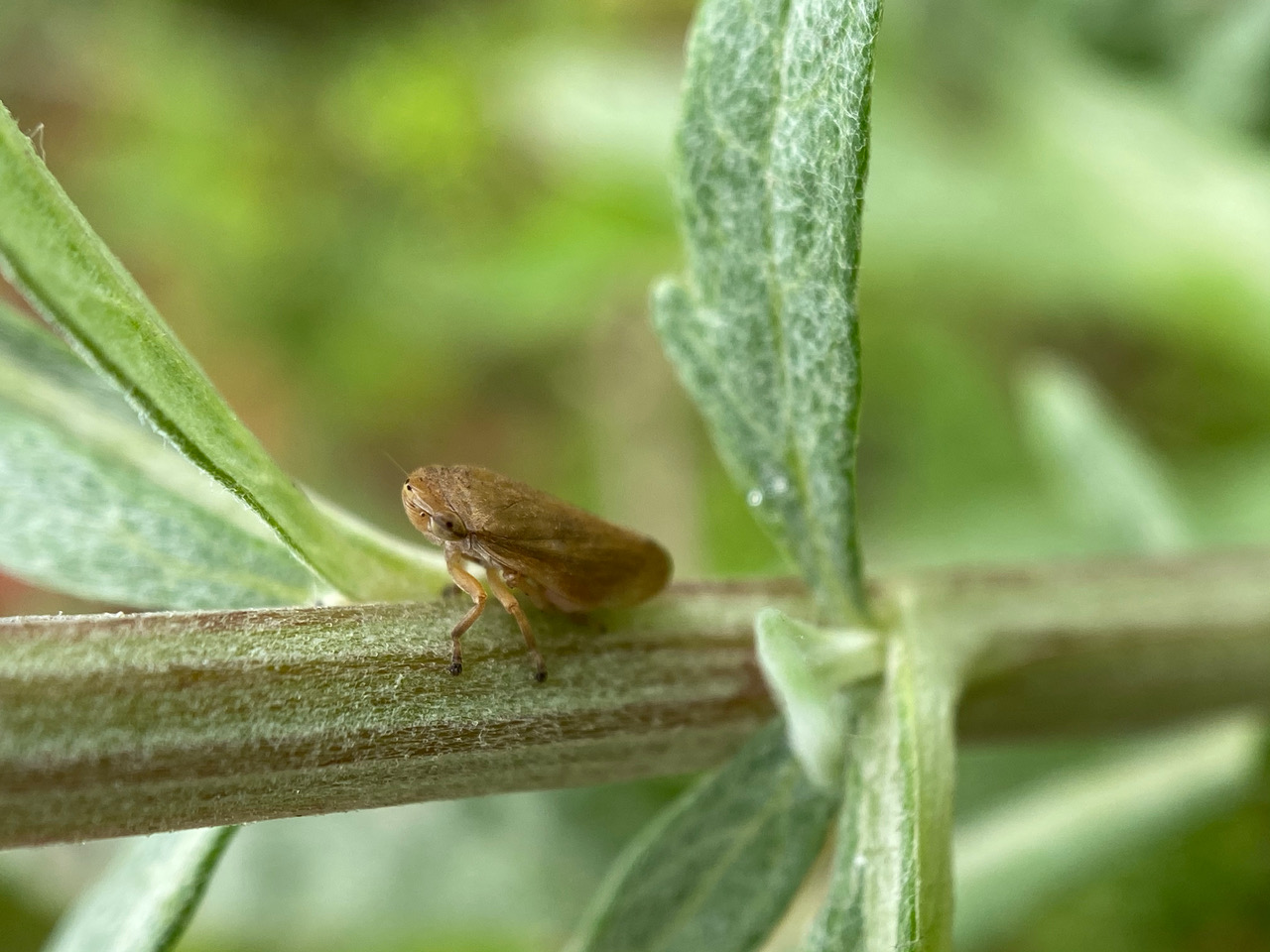
Hey, another cryptic creature on the California Mugwort – a Froghopper or Spittlebug! This one actually looks like a frog! iNaturalist has identified it to the genus Philaenus (family Aphrophoridae).
The Froghopper is a “true bug” in the order Hemiptera, family Aphrophoridae. Froghoppers are champion jumpers among insects, out-performing even the fleas. The bug can leap the human equivalent of a skyscraper without a running start! The muscles in its hind legs act like a “catapult” to release energy explosively. Its athletic prowess not withstanding, the Froghopper is better known for its young, the “spittle bugs”. The nymphs produce foamy white masses on plants within which they feed on plant sap. Froghoppers have piercing-sucking mouthparts, and feed on plant sap as both nymphs and adults. A recent report claims, “Froghoppers are the super-suckers of the animal world. The tiny insects produce negative pressures equivalent to people sucking a 100-meter-long straw.” So the little bug has two titles under its belt – champion jumper, and super-sucker!