

Pollinator Post 6/12/24 (1)

Before I enter the Tilden Regional Parks Botanic Gardens this morning, I am greeted by California Grape, Vitis californica blooming gloriously on the chainlink fence by the gate. Wow, all these flowers, and not a single insect. Why?

 One of the first sights that greet me as I enter the garden is this Yellow-faced Bumble Bee, Bombus vosnesenskii (family Apidae) nectaring on a pendent Western Columbine flower, Aquilegia formosa. Grabbing hold of the long stamens with its legs, the bee is reaching up to access nectar from the nectar spurs. The nectar spurs feature prominently on this unusual flower. Note the big load of pollen the bee is carrying in the pollen basket on its hind leg.












California Grape, Vitis californica is a species of wild grape that grows throughout central and northern California. Its grapes provide an important food source for a variety of wild animals, especially birds, and the foliage provides thick cover. According to Calscape, “Bees love the flowers, and it is one of the best plants for butterflies in fall.” The plant is dioecious, with the male and female flowers borne on separate vines. Cross-pollination is necessary for successful fruit set.
This vine here is obviously male, with a profusion of fully exserted stamens protruding from the tiny flowers. Is the pollen not attractive to insects? It is surprisingly silent around these flowers.
One of the first sights that greet me as I enter the garden is this Yellow-faced Bumble Bee, Bombus vosnesenskii (family Apidae) nectaring on a pendent Western Columbine flower, Aquilegia formosa. Grabbing hold of the long stamens with its legs, the bee is reaching up to access nectar from the nectar spurs. The nectar spurs feature prominently on this unusual flower. Note the big load of pollen the bee is carrying in the pollen basket on its hind leg.At first glance, a columbine flower looks like a Dr. Seuss creation. Closer inspection reveals it to possess the basic parts of a ‘standard flower’. Like all columbines, this species has a five-petalled flower with unusual “spurs” on the top. Each spur is formed by one of the five petals, curling into a cylinder as it rises. The lower ends of the petals join into a circle, within which are the yellow pollen-bearing stamens protruding beyond the corolla. Instead of being green as in most flowers, the sepals are red, and extend out at right angles when the flower opens. The filaments flex backwards as the anthers ripen to release pollen. The pistils (female parts) protrude beyond the anthers in older flowers to receive incoming pollen. Pollination of the flower requires long-tongued insects, such as a bumble bee. To access the nectar, the insect invariable makes contact with the stamens and pick up pollen on its body. Columbine flowers are also a popular source of nectar for the hummingbirds that can hover under the hanging flower without perching while nectaring. The birds can pollinate the flowers as pollen is often transferred from one flower to the next on their head and thorax.
It is not uncommon to come across nectar spurs on Columbine flowers that have been cut – a sign of “nectar robbing”. Some insects with strong mandibles (carpenter bees, bumble bees) engage in this behavior to get to the nectar directly without having to hang on the stamens and contribute to pollination.
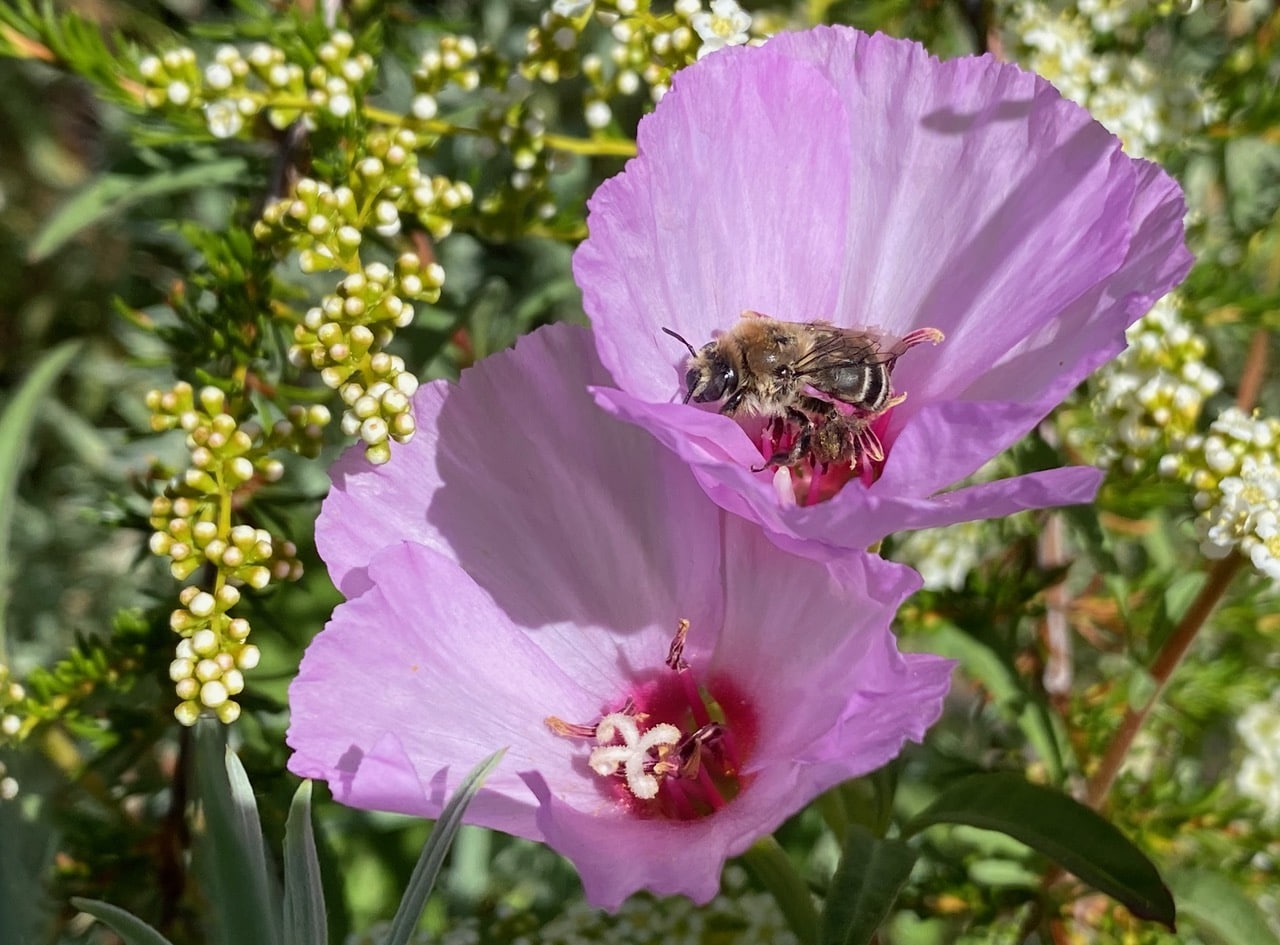
A Bindweed Turret Bee, Diadasia bituberculata (family Apidae) is foraging in a flower of Farewell-to-spring, Clarkia rubicunda.
Diadasia is a genus of bees in the family Apidae. Species of Diadasia are oligolectic, specialized on a relatively small number of plant species. Their host plants include asters, bindweeds, cacti, mallows, and willowherbs. Diadasia bituberculata, also known as digger bees or chimney bees, are specialists on bindweed, commonly known as Morning Glory. The females use pollen only from one plant species and are active through the late spring and early summer. Native to California, the Bindweed Turret Bees dig underground nests, many with structures called turrets at the nest entrance. The females provision the nests with pollen from Bindweed, and then lay their eggs inside.
Many smaller bees are visiting the Clarkia flowers, not all of them identifiable.
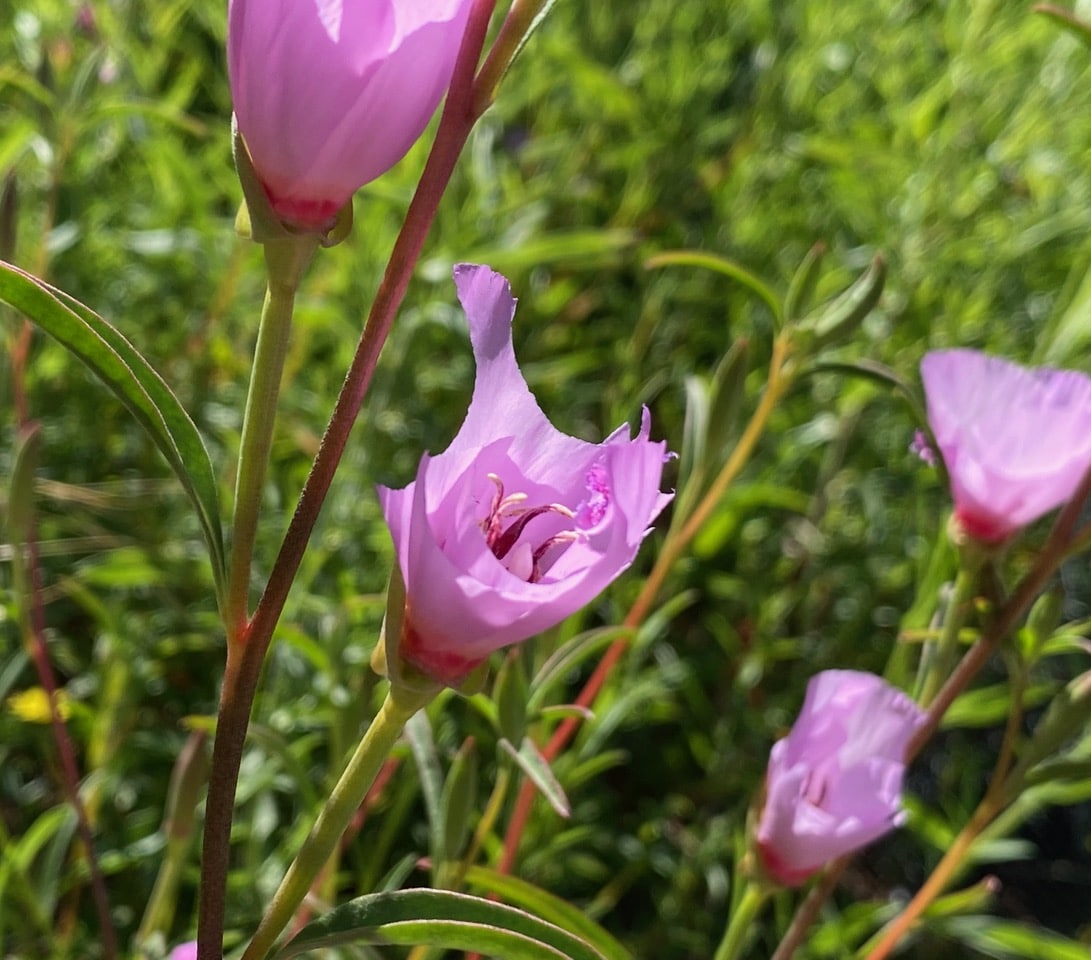
Do you see the big, round piece that is missing from one of the petals of the bottom Clarkia flower? Looks like the Leaf-cutter Bees, Megachile sp. (family Megachilidae) have been busy! Some are lining their brood cells with pieces cut from the Clarkia petals.
More signs of Leaf-cutter Bee activity. The amazing handiwork of the Leaf-cutter Bees makes them one of the most fascinating and endearing bees. With her powerful mandibles, the female snips a neat circle or oval from a leaf or flower petal. She will use these pieces to line and partition the nest cells in which her larvae will grow. They tend to favor rose leaves and Clarkia petals, maybe because these are soft and pliable. Pink floral wallpaper for their nurseries! The Leaf-cutter Bee always cuts extremely neat circles and ovals, unlike caterpillars which leave irregular holes in leaves. The bees fly with the pieces back to their nest which are burrows in the ground or in a narrow crevice. There they weave the leaf or petal pieces into a cylindrical brood cell for their young. She stocks the cell with nectar and pollen, before laying a single egg in the cell and sealing it up.
Every petal of this Clarkia flower has been cut !
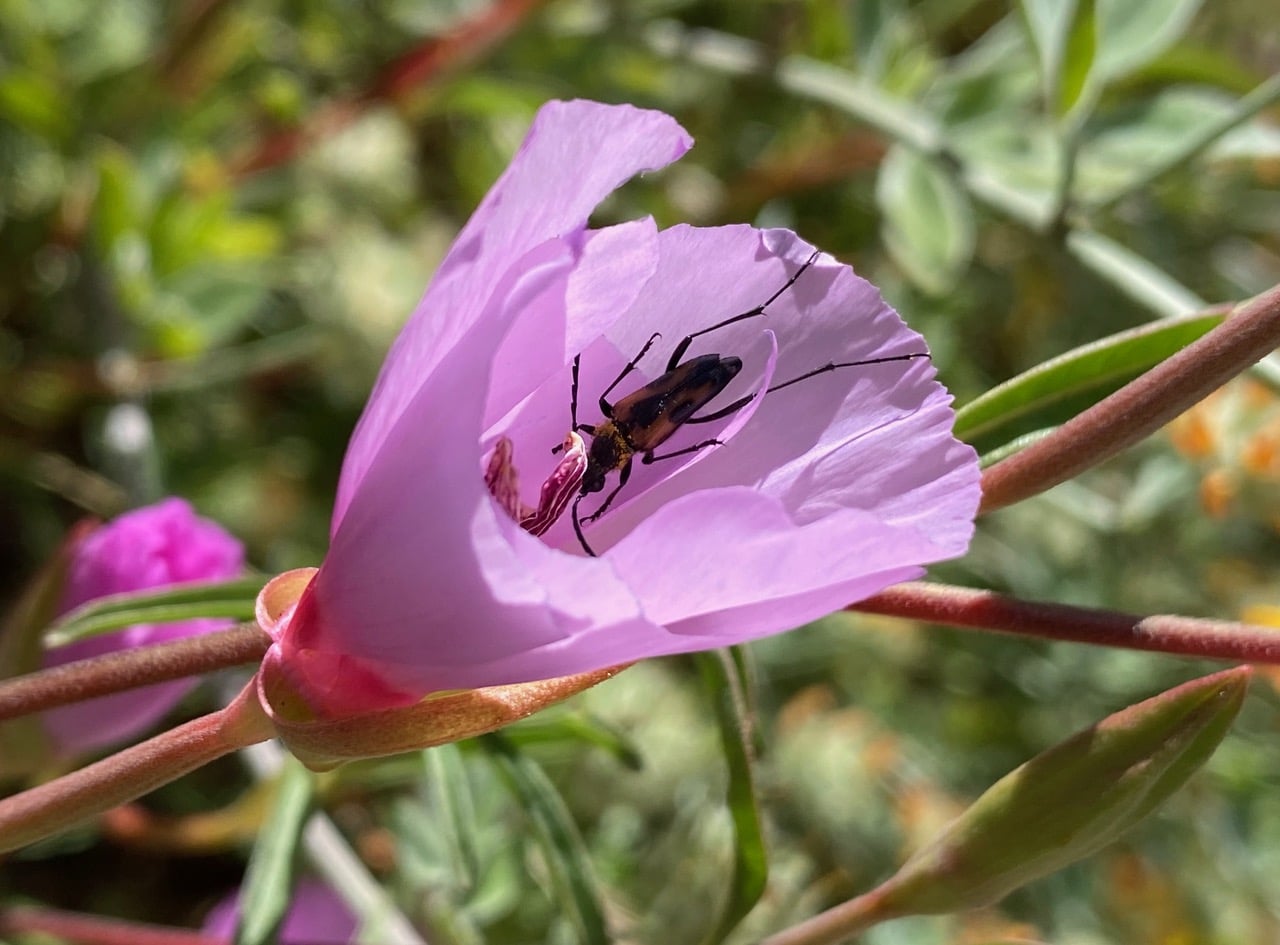
The cut petals on this flower give me a clear view of the interior, showing a Flower Longhorn Beetle (family Cerambysidae) foraging inside.
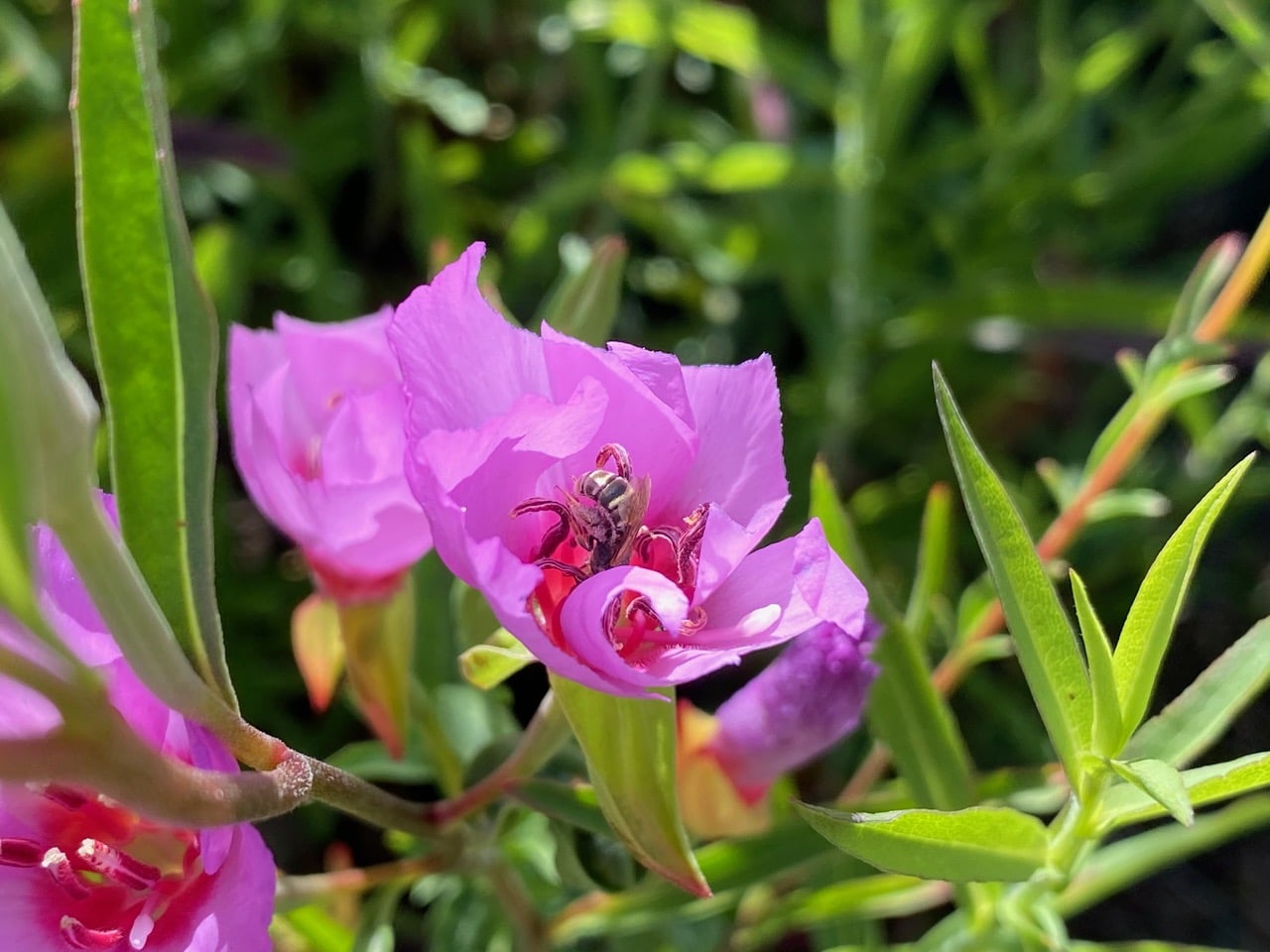
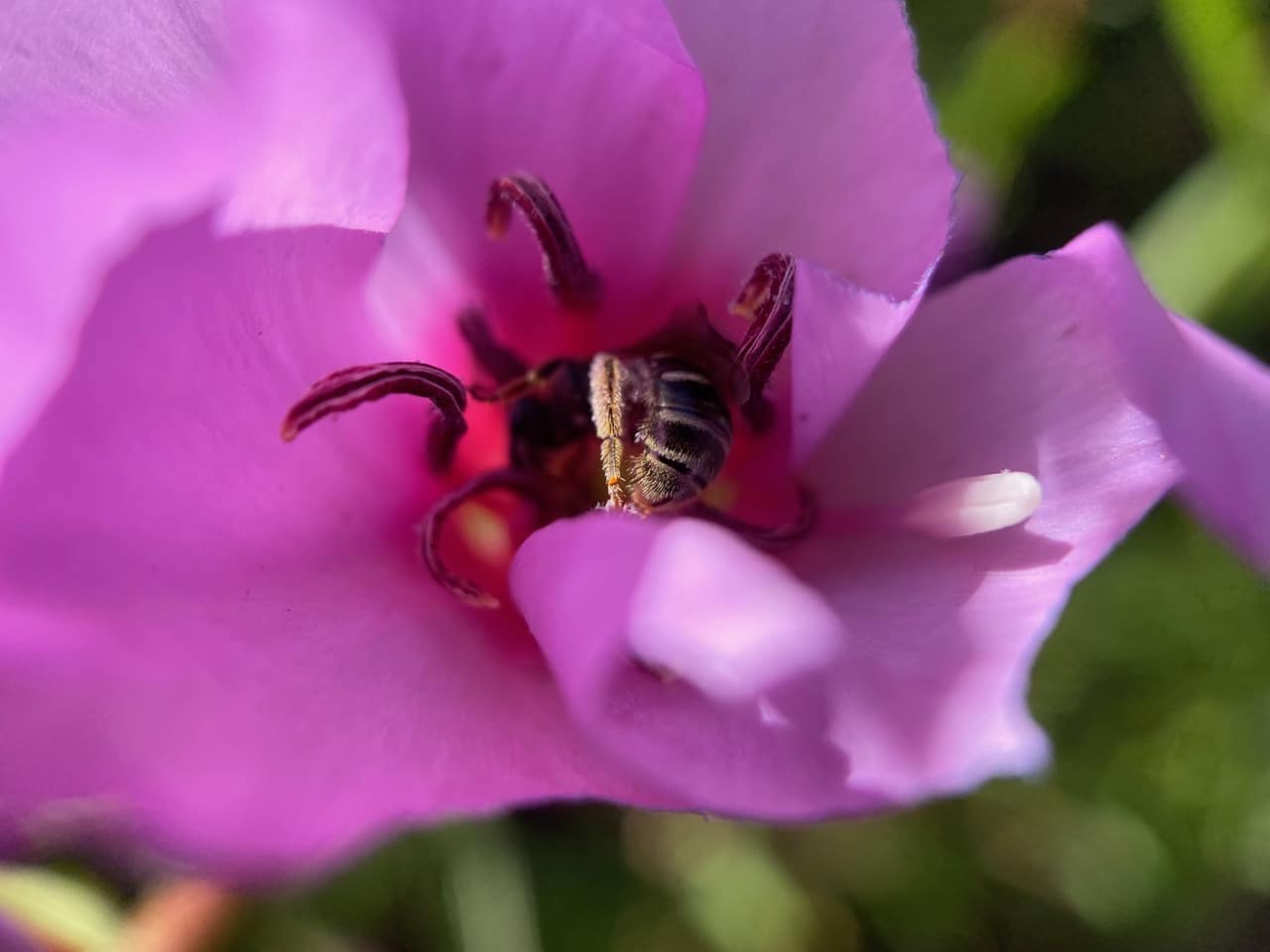
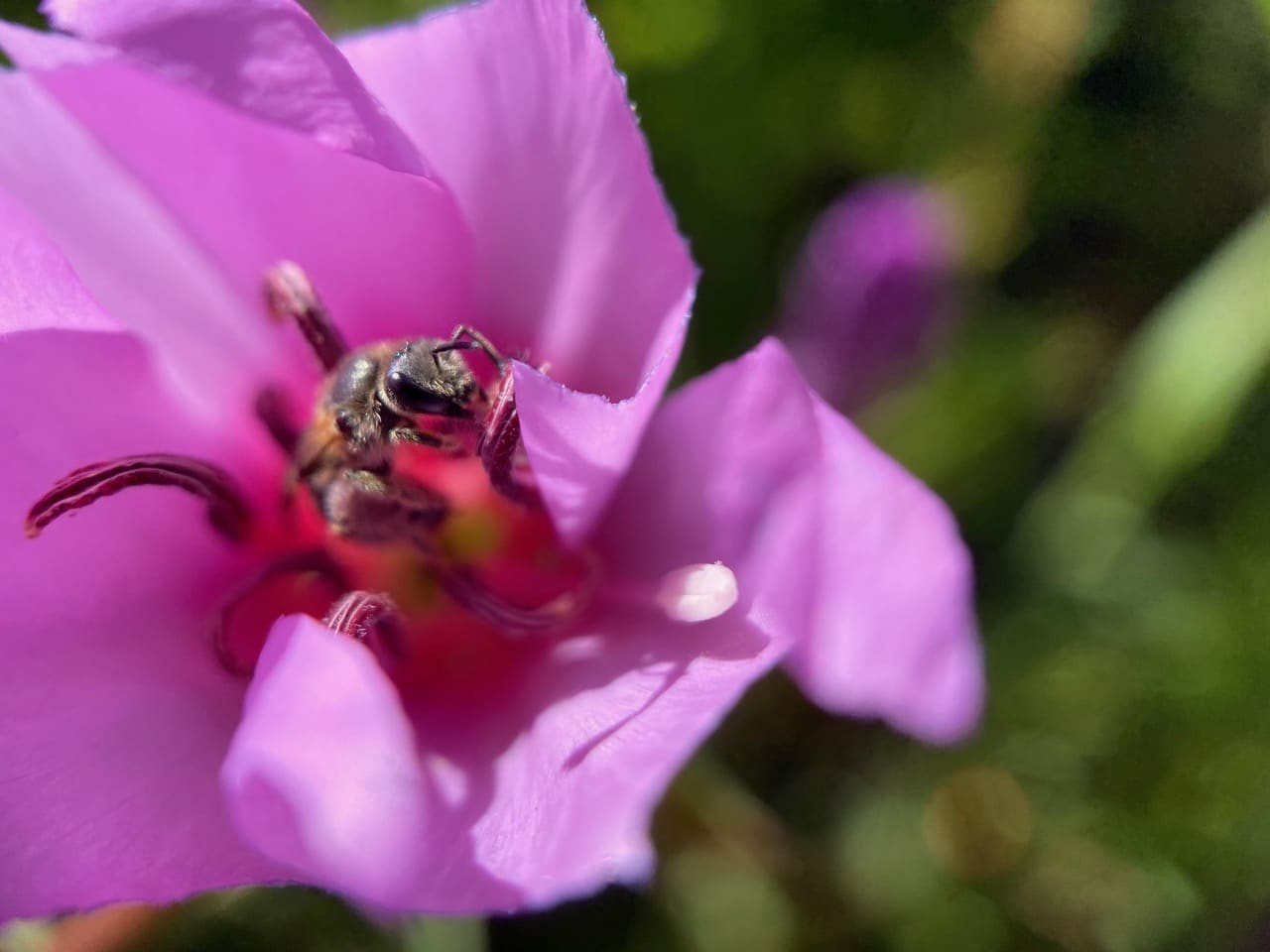
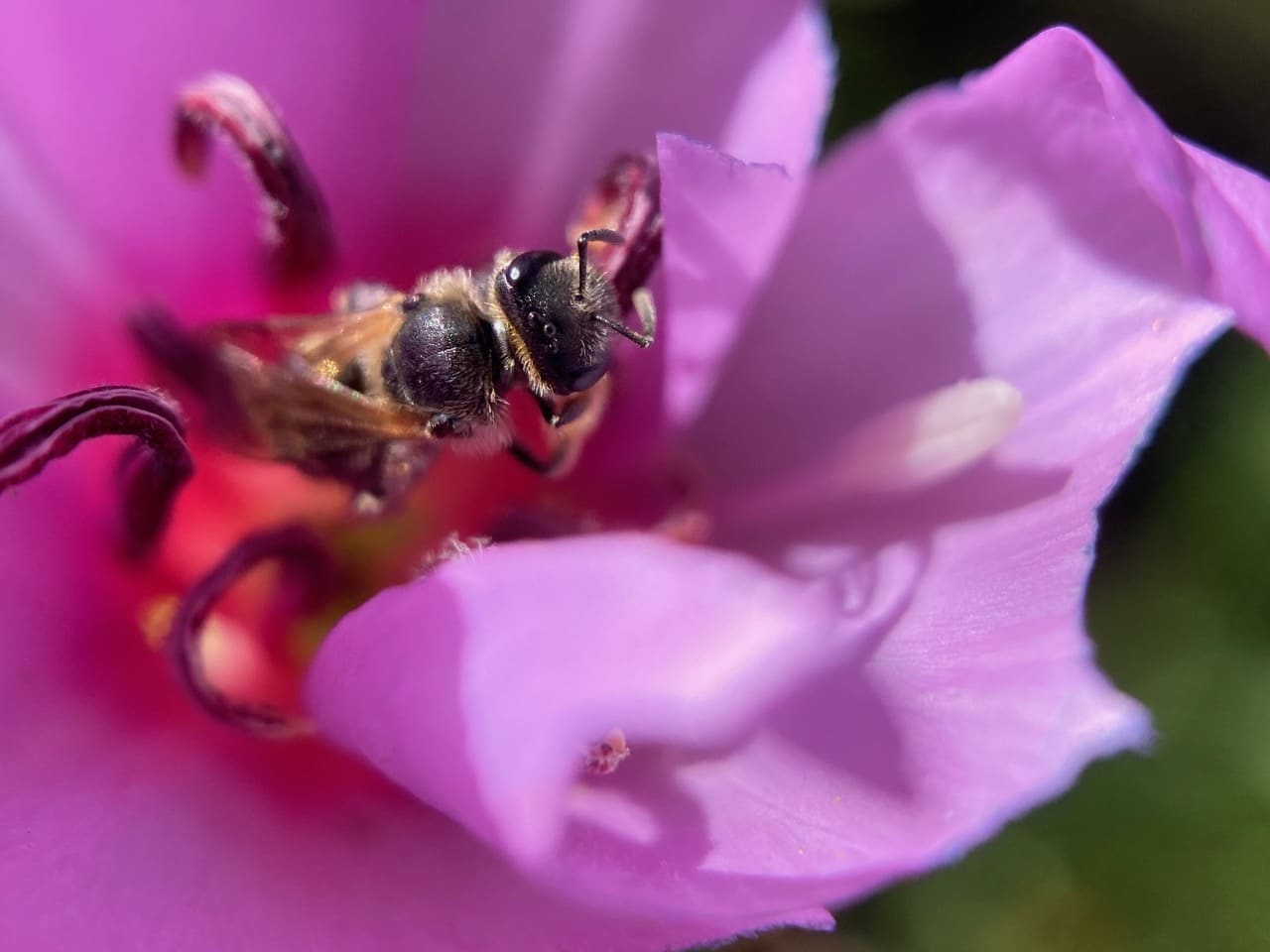
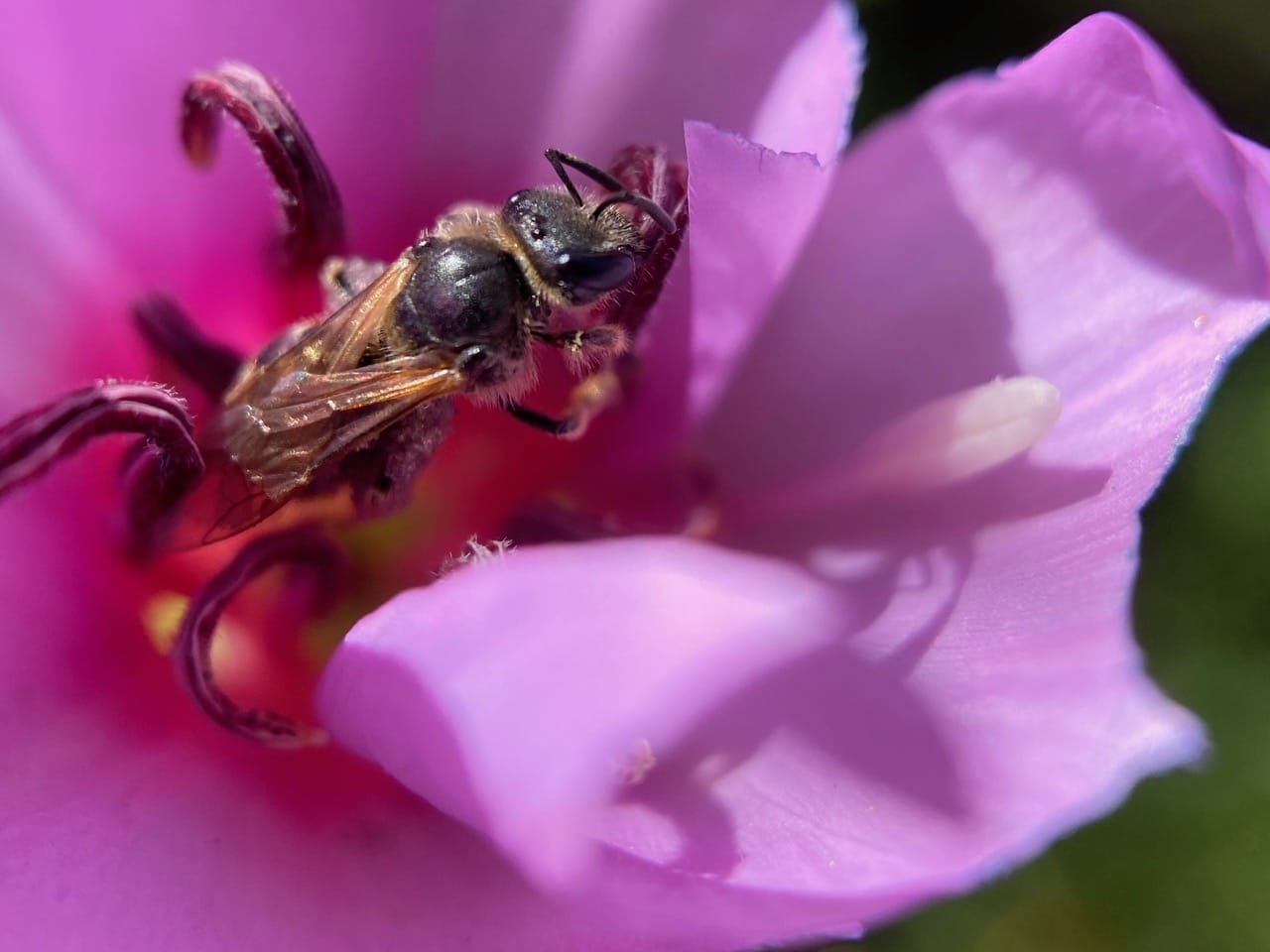
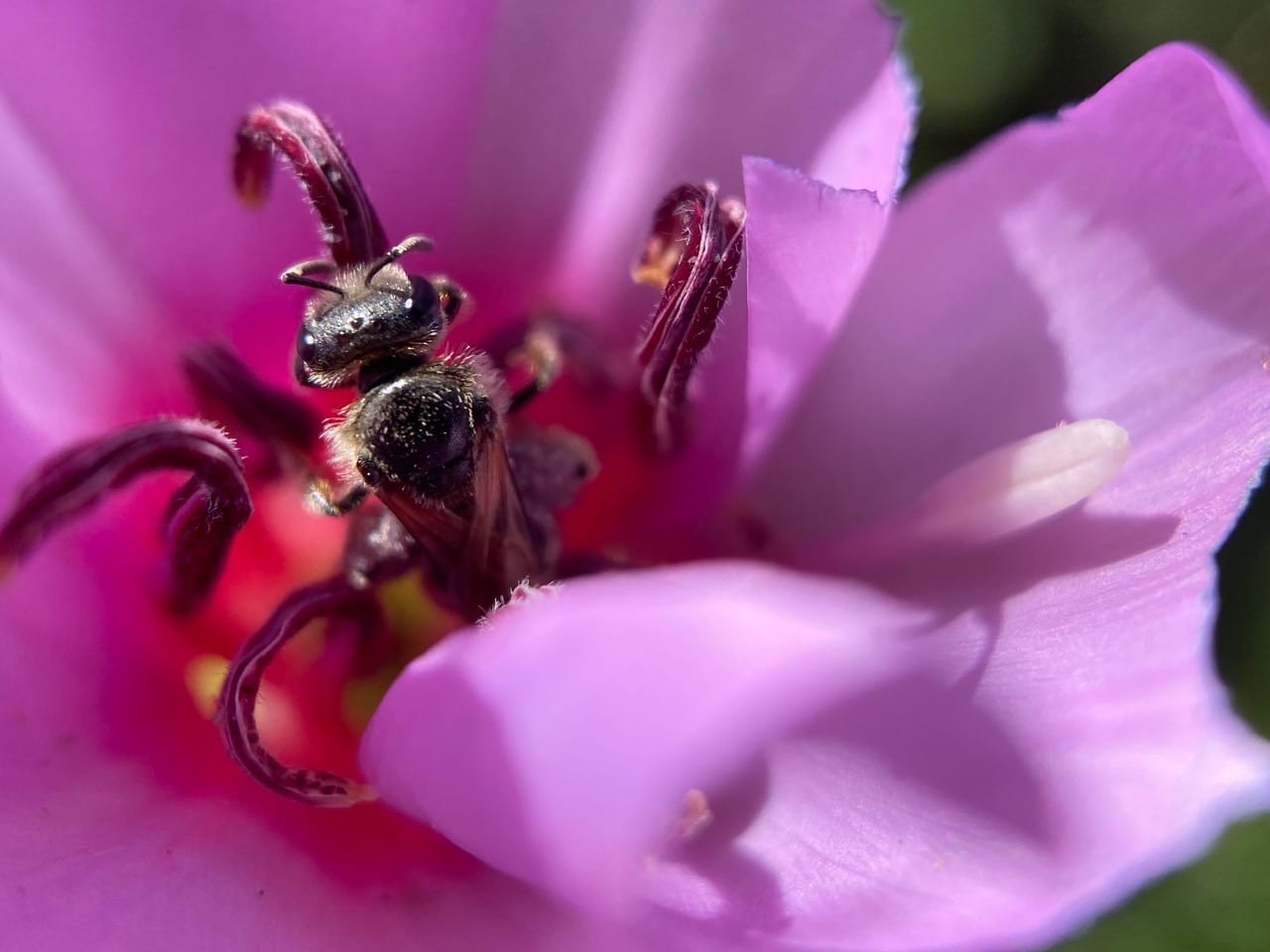
A little bee is busy foraging on a Clarkia flower. The cut petals allow me to see the action quite well.
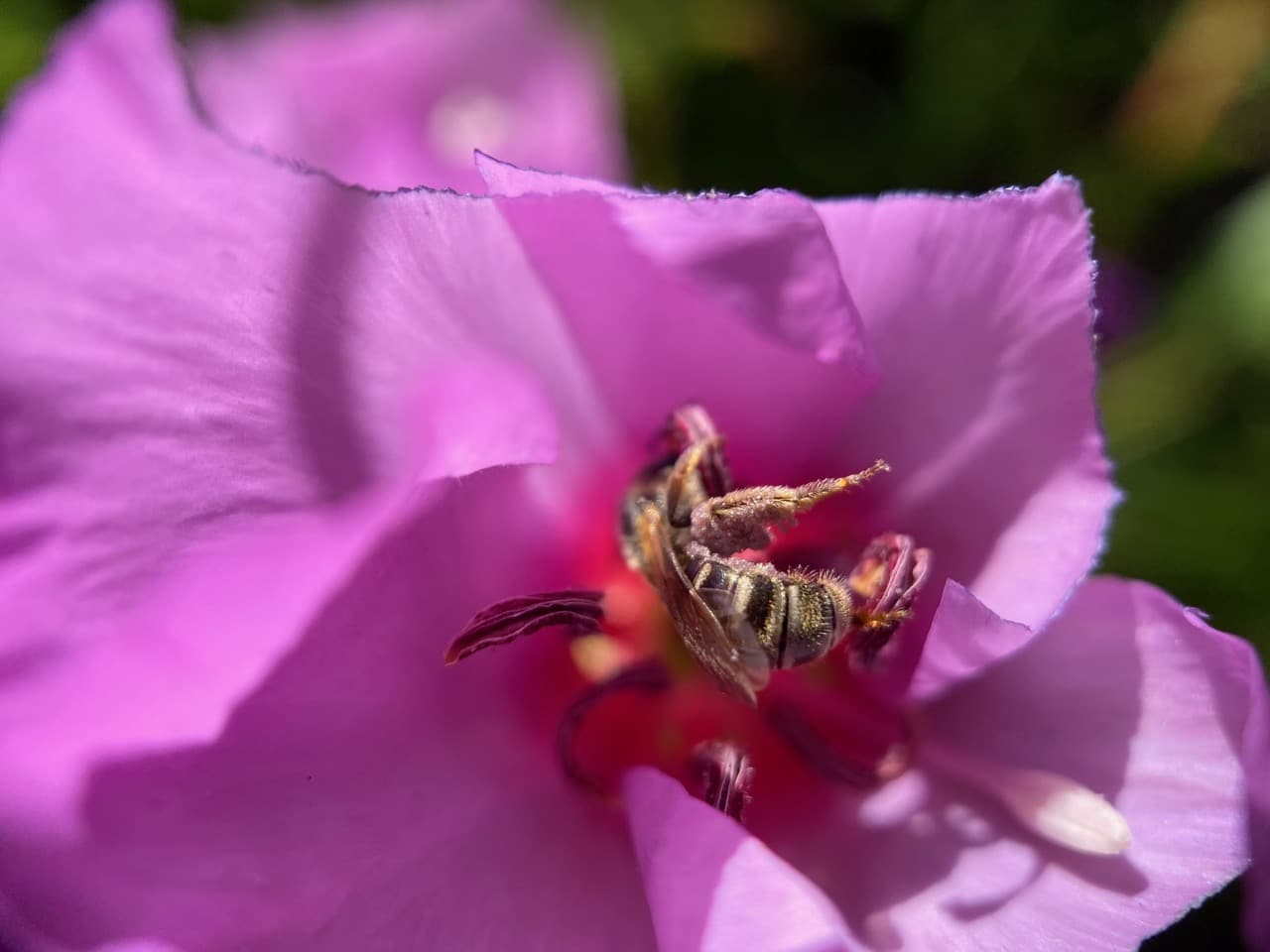
Zooming in, I discover that Clarkia has big, pinking-purple pollen grains. I can see the individual grains in the bee’s scopa on her hind leg.
The bee is using her mandibles to open up the anthers that have not dehisced.
Ooh, I see hints of a furrow on the bee’s last abdominal segment. She must be a Furrow Bee, Halictus sp. (family Halictidae).
Sweat Bees (family Halictidae) have scopae along the full length of their hind legs.
The little bee climbs from one anther to another to collect pollen.
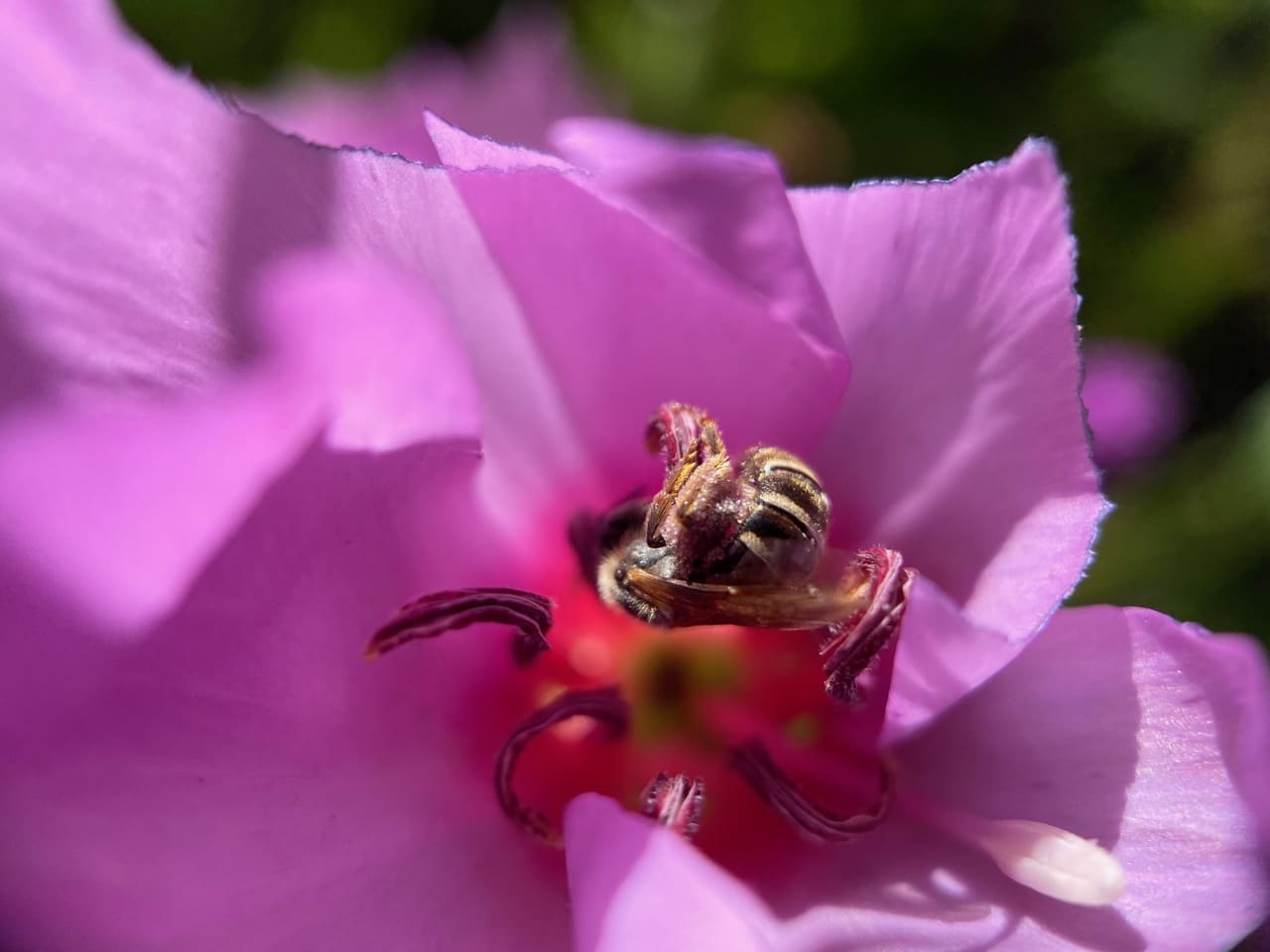
Upside-down or right-side-up, it’s a full body workout for the little bee.
After about a minute of working on the anthers, the bee has filled up her scopae to the brim.
Clarkia flowers are a real blessing for the bees at the time when other floral resources are dwindling in late spring. The nectar fuels the bee’s activity while they collect pollen to provision their nests. The flowers also provide construction material for the Leaf-cutter Bees that use the petals to line their nest cells. What’s not to love about these beautiful, drought-tolerant annuals that brighten up our parched landscape?