

Pollinator Post 6/10/24 (2)
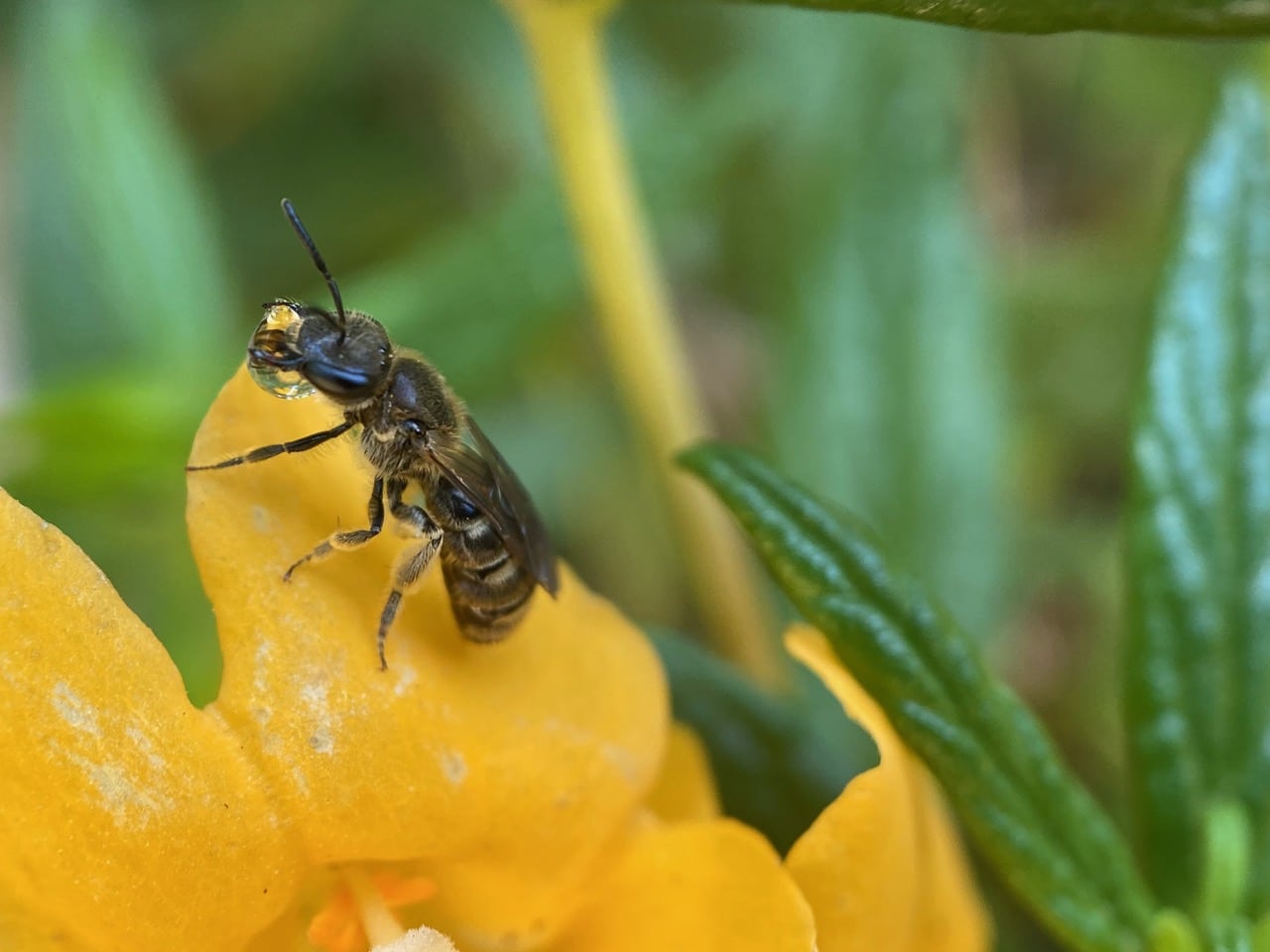 I spot something glistening on a Sticky Monkeyflower, Diplacus aurantiacus. Closing in, it is a bubble of liquid held in the jaws of a little bee. Is this a female Masked Bee, Hylaeus sp. (family Colletidae) known for “blowing bubbles”? No, the bee is larger than Hylaeus, and it has no yellow marking on its face. There appears to be an empty scopa on its hindleg. All these features preclude the ID of a Masked Bee.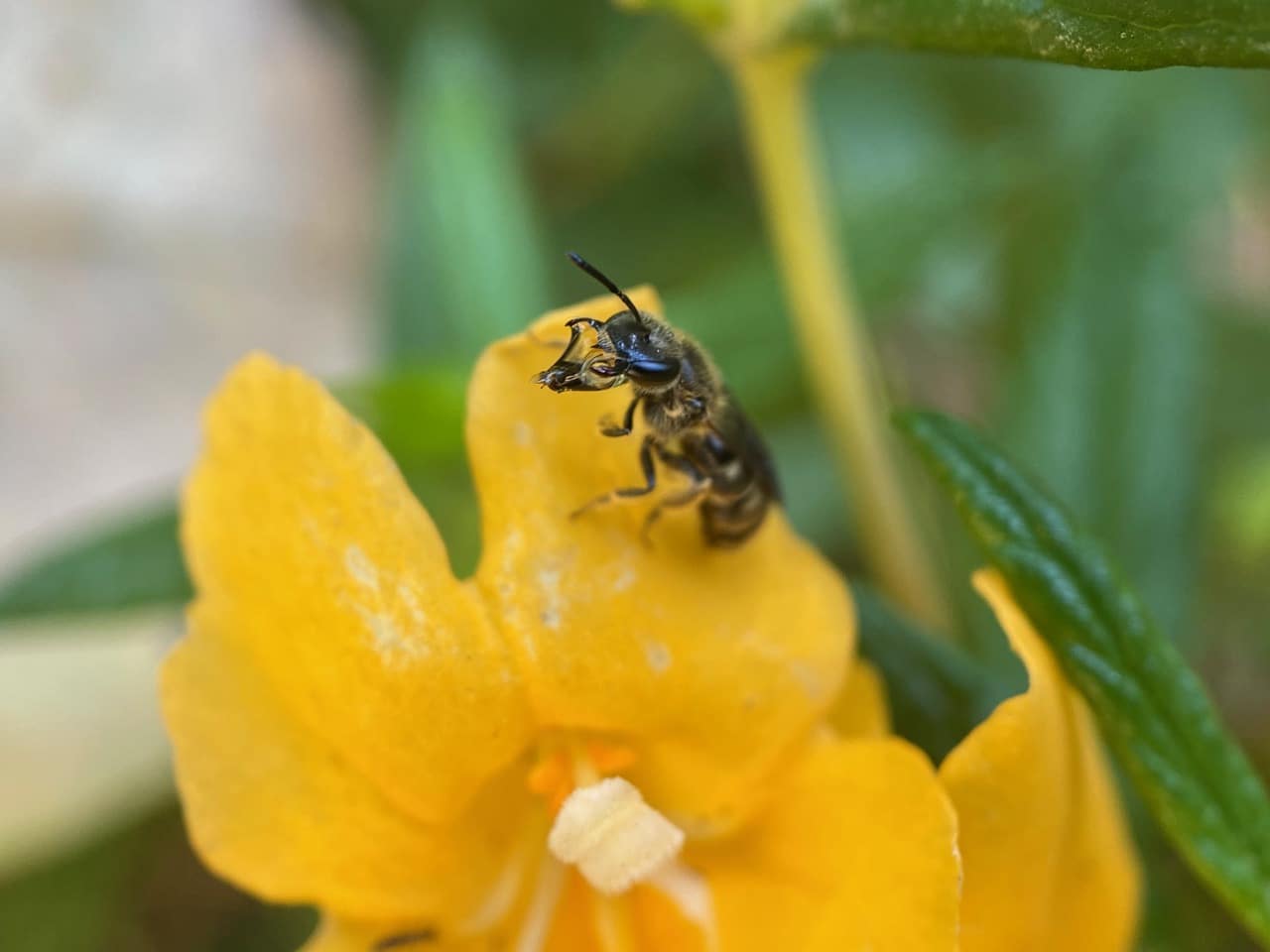
Standing still on the upper petal of the flower, the bee repeats the motion of her jaw at a fast clip for almost a full minute.
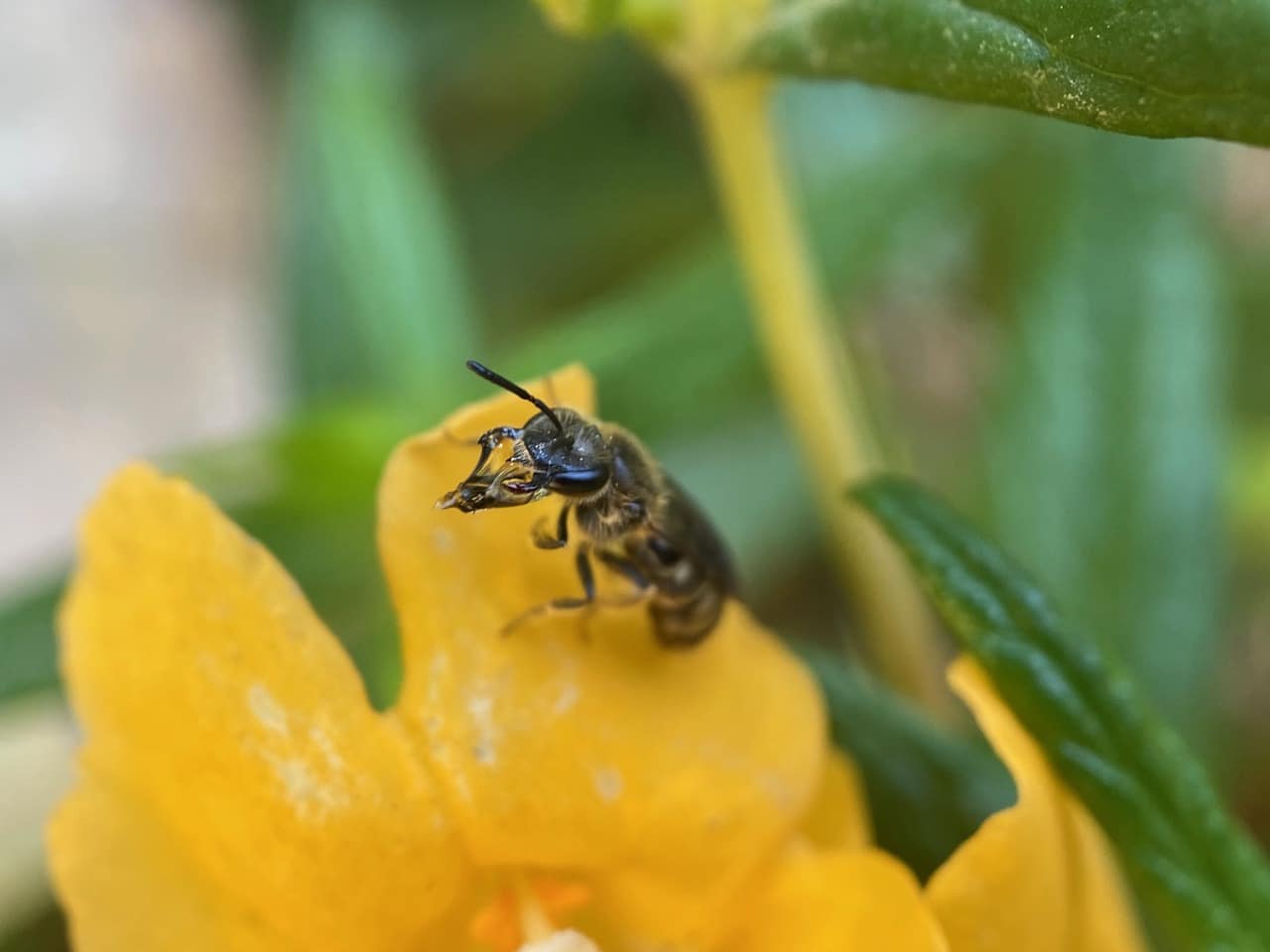
As I watch, the bee works on the bubble by extending and retracting its mouthparts. Rather bizarre how far her jaw can be extruded!
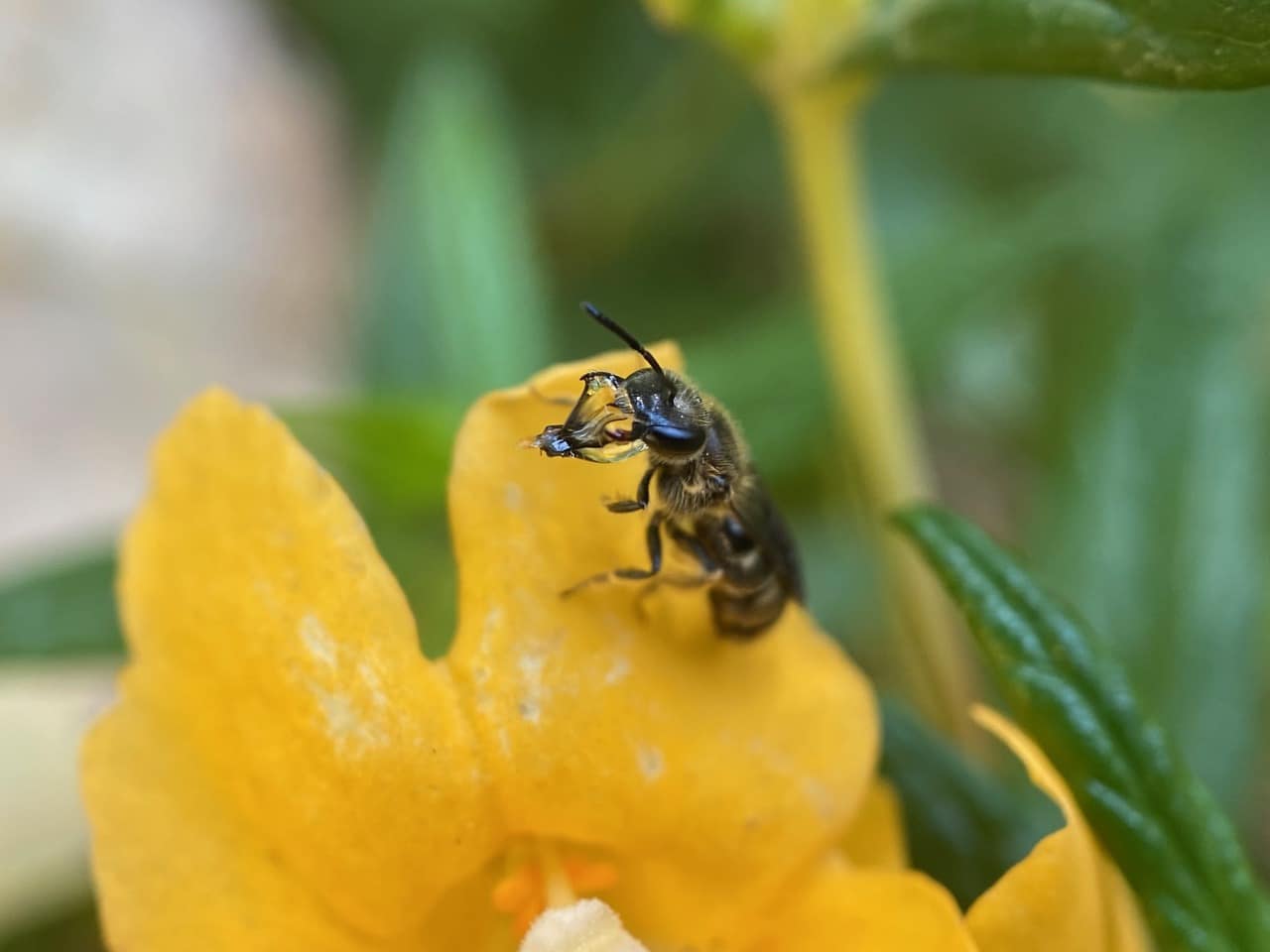
Back and forth, the bee works her mouthparts continuously.
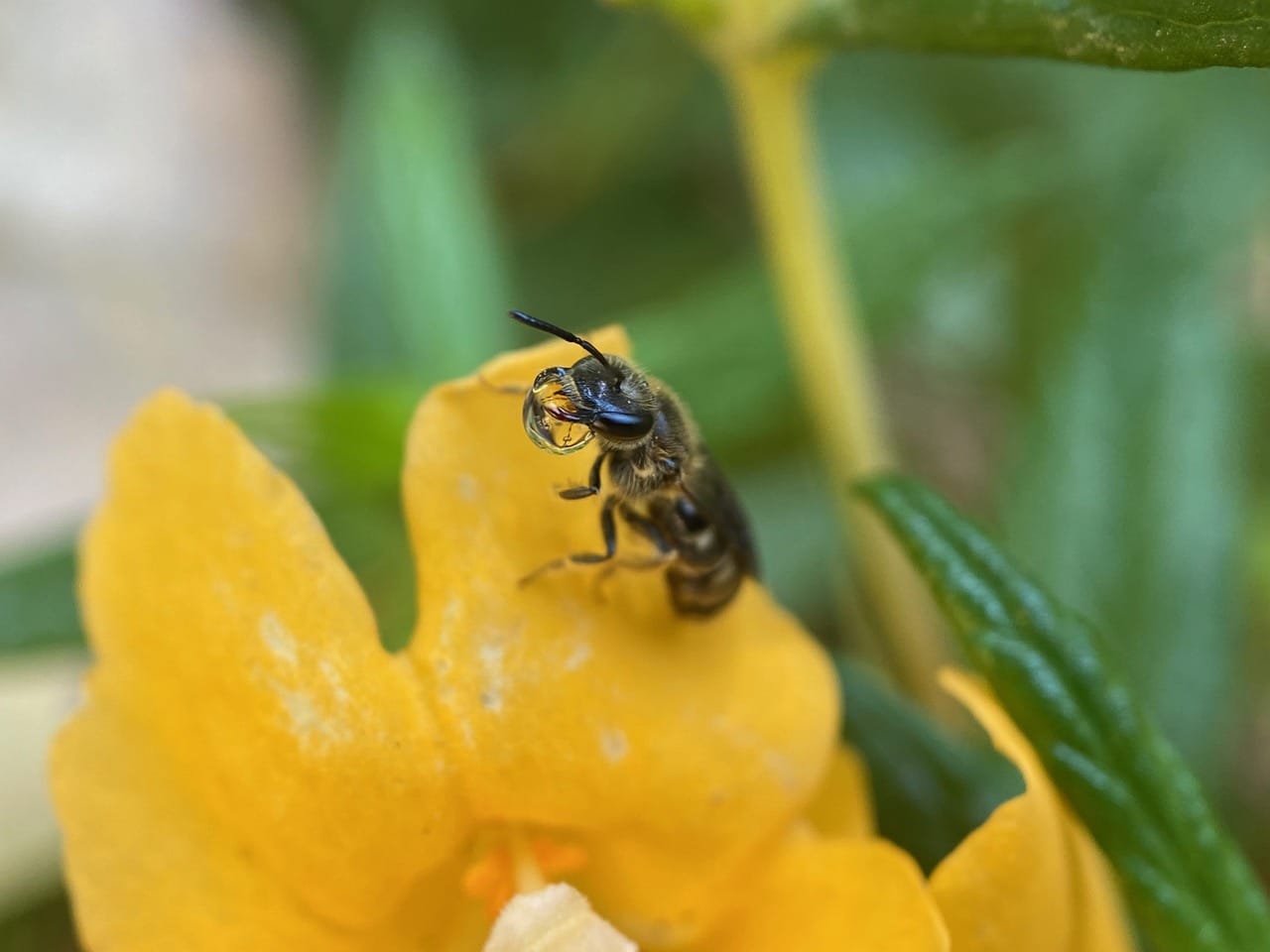
This is the most retracted position of her jaws, holding a round bubble. What’s the jaw activity about? Is the bee cleaning her mouthparts? There are speculations that bees blow bubbles to concentrate the nectar they have collected by exposing it to the air for evaporation.
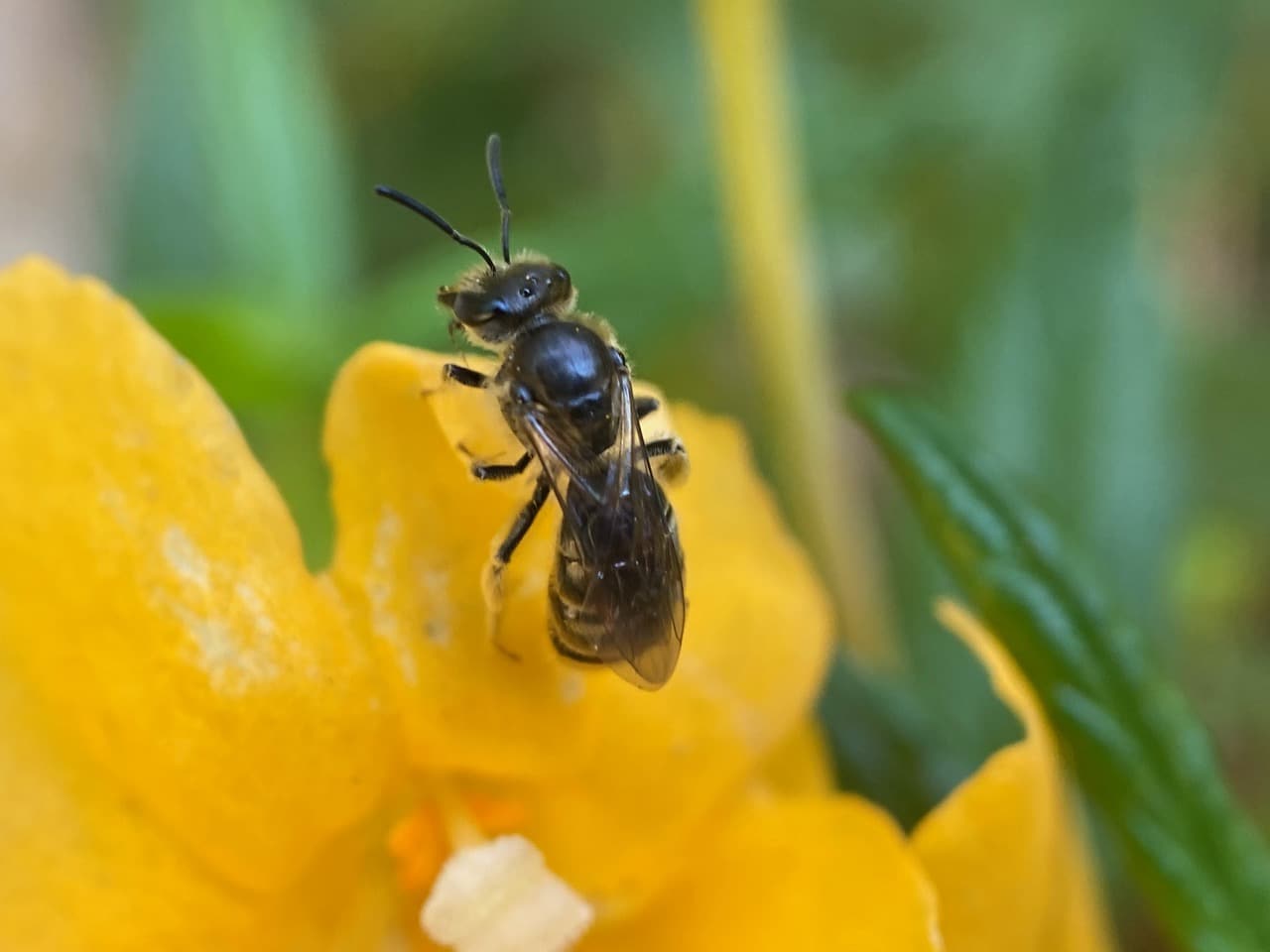
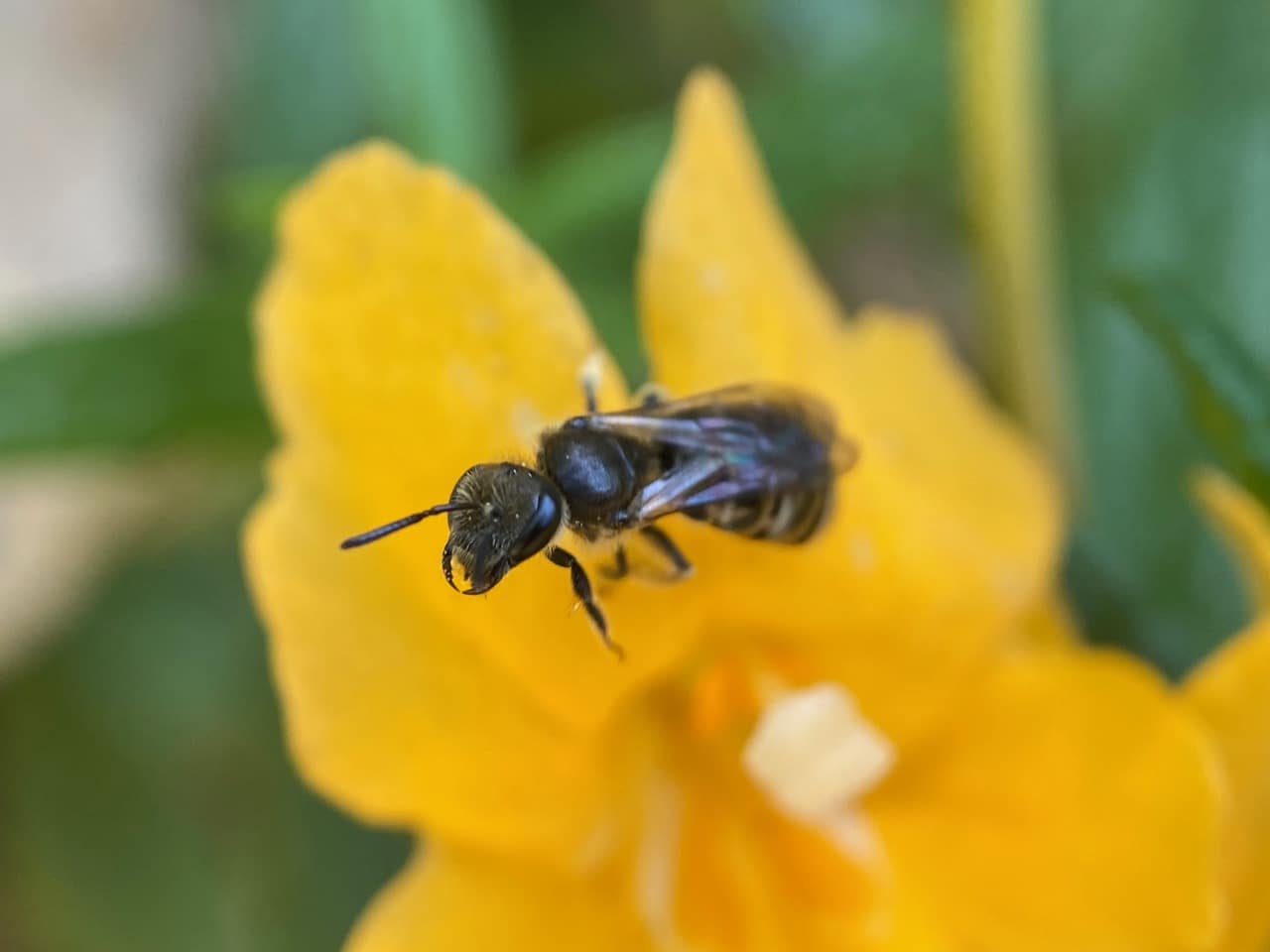

Note the scopa on her hindleg.
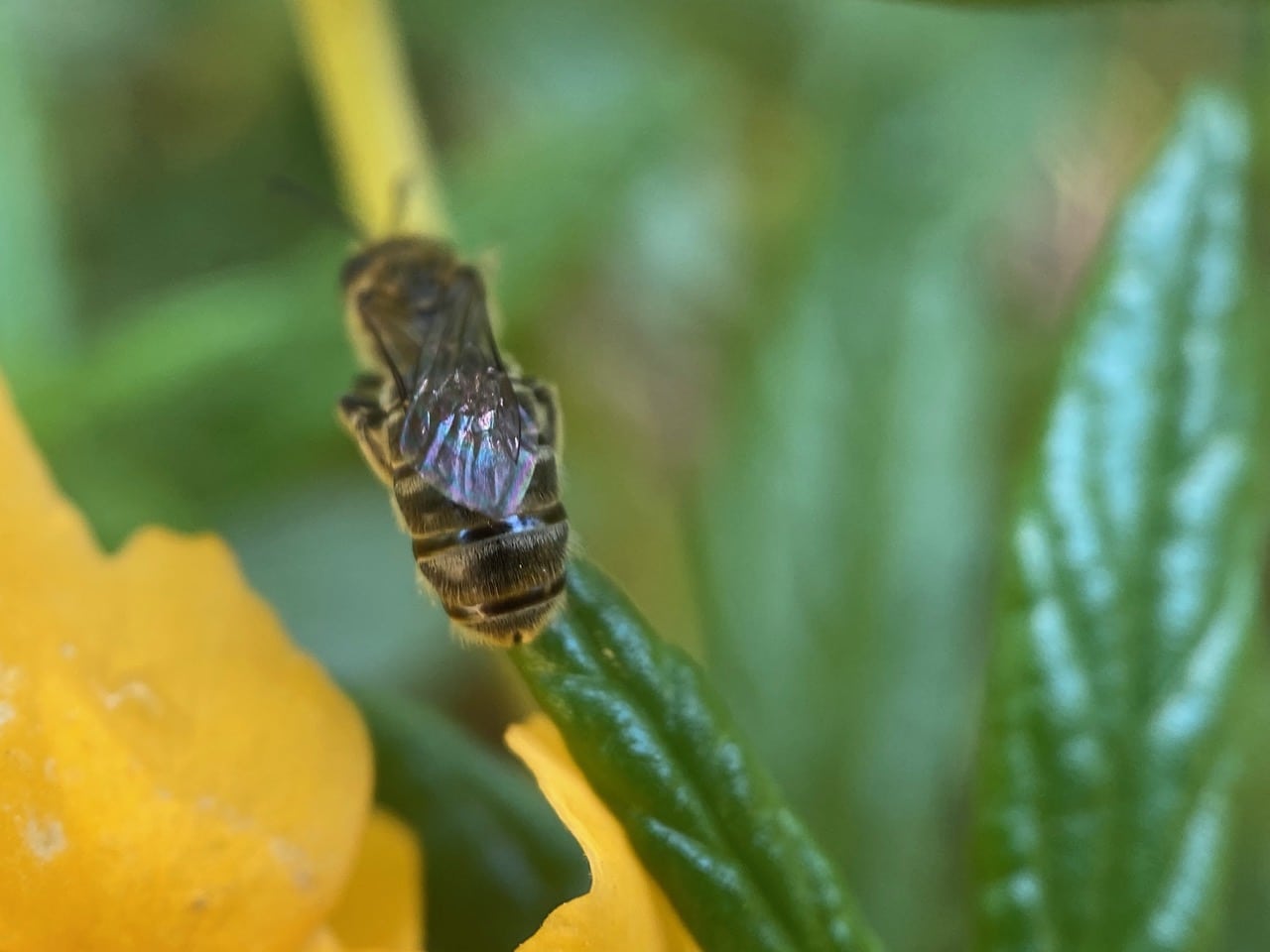
There seems to be a furrow on her last abdominal segment. A Furrow Bee, Halictus sp. (family Halictidae)?
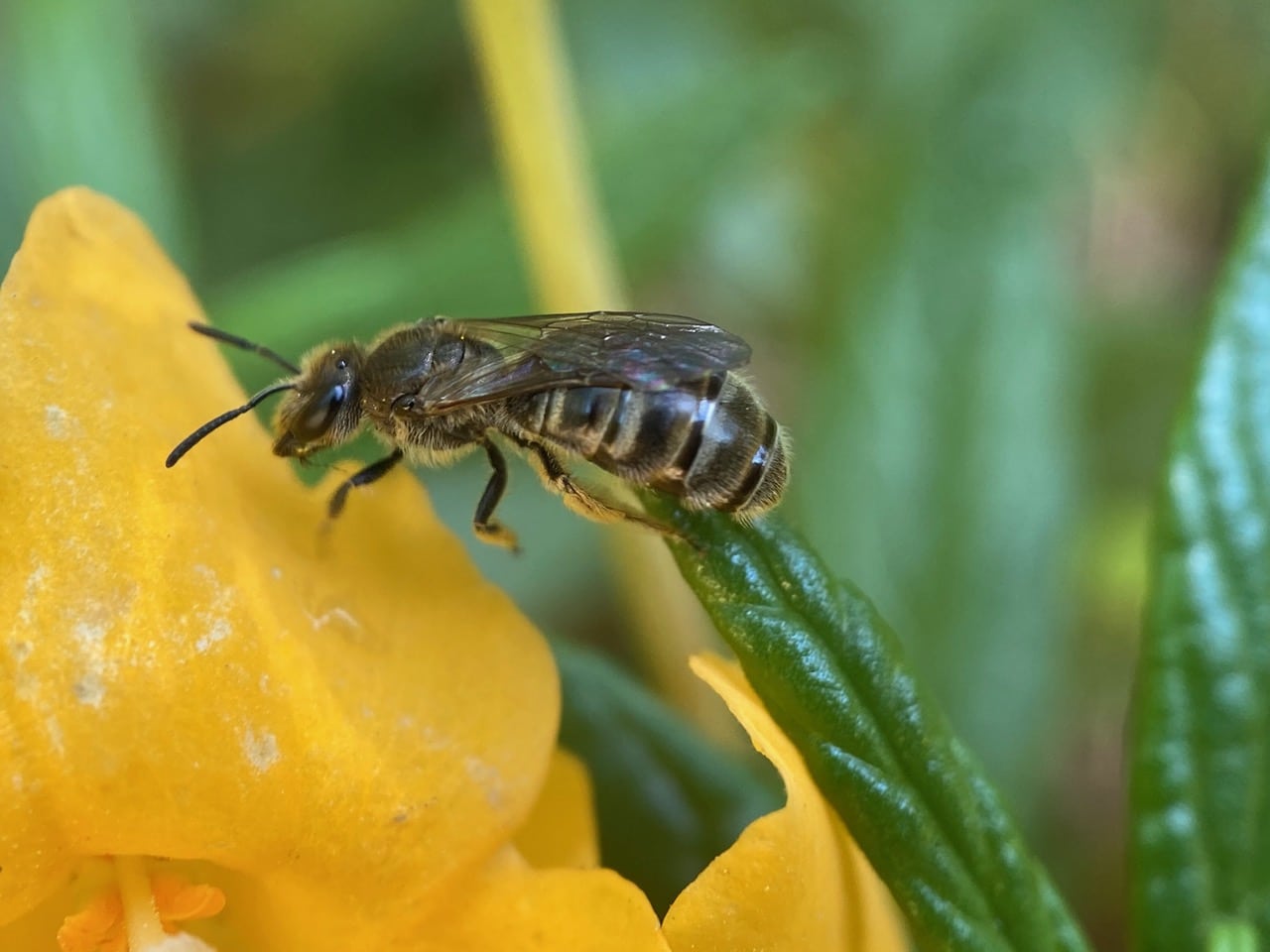
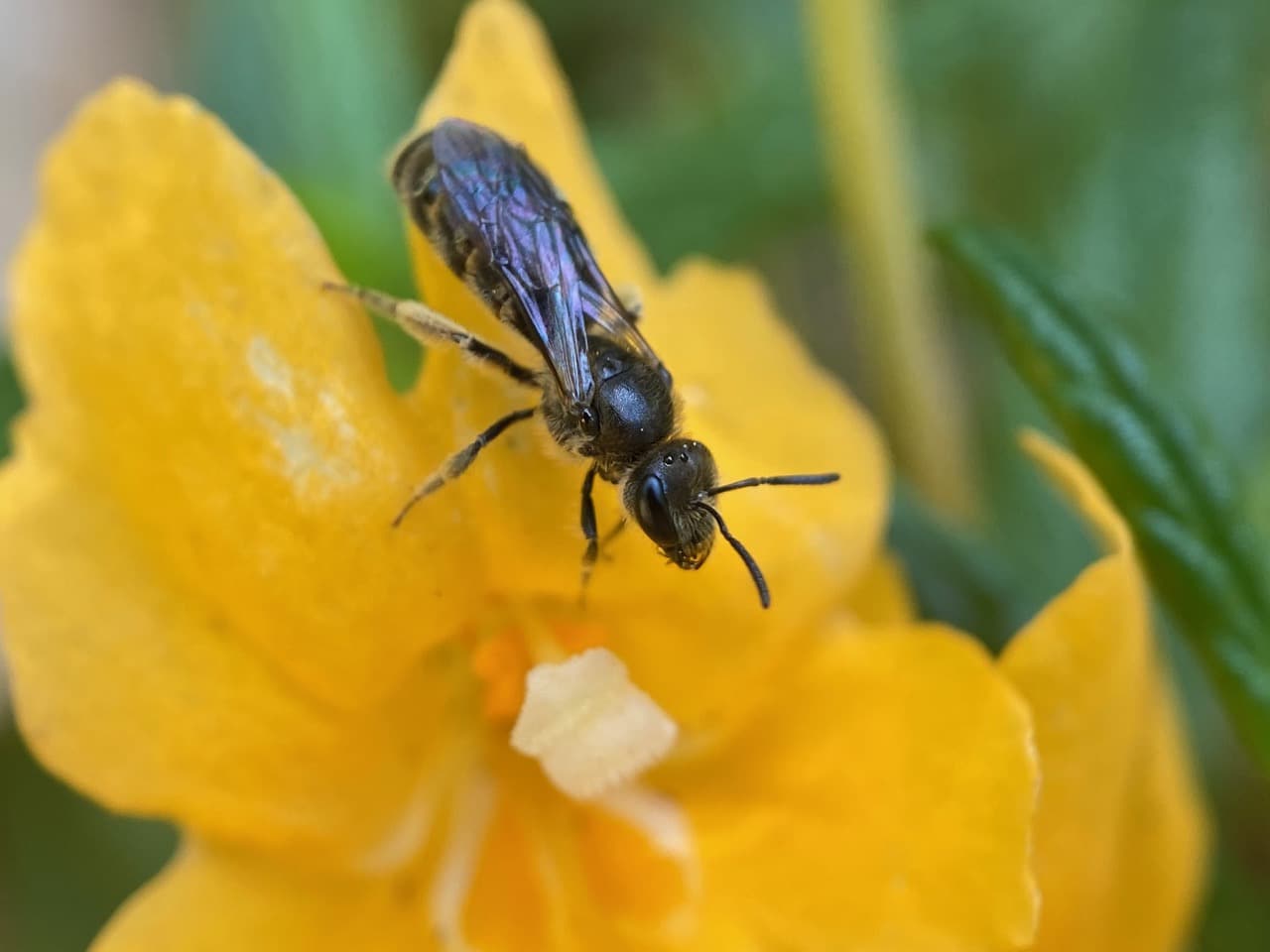

I take as many pictures of the bee as I can, hoping that someone on iNaturalist would help identify her. Searching online, I found some images and videos of Sweat Bees moving their long, articulated tongues:
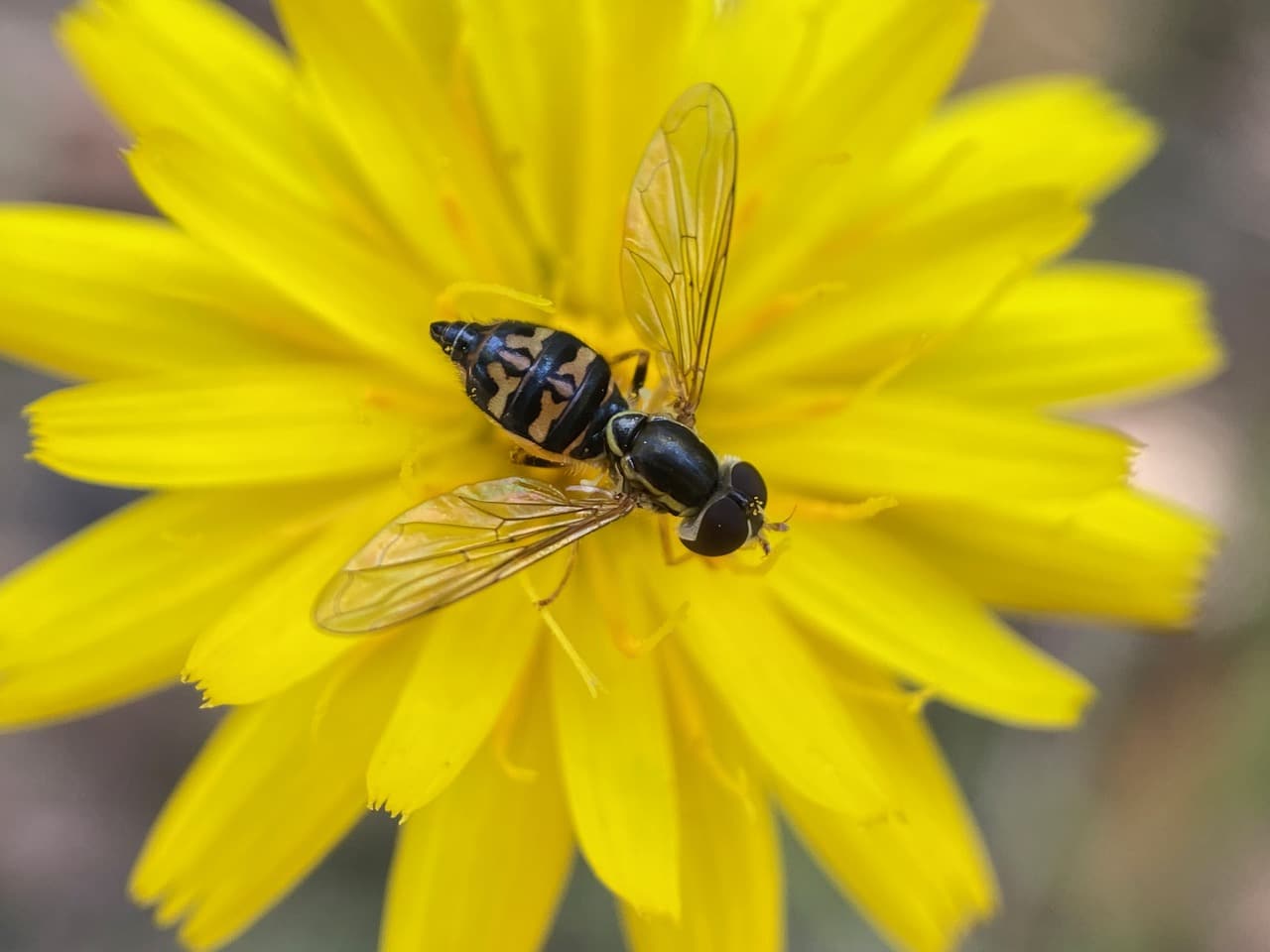
A female Western Calligrapher, Toxomerus occidentalis (family Syrphidae) is foraging on a flowerhead of Bristly Oxtongue. Because of the distinct pattern on the abdomen, it is one of the most easily recognizable hoverflies in our area.
Toxomerus is a very large genus of Hover Flies. They are found in North and South America. The majority of species are only 6-9 mm in length. They are notable for their mimicry of stinging Hymenoptera to avoid predators. Their unique abdominal patterns are diagnostic at the species level within the genus. Most larvae feed on soft bodied insects, such as aphids; a few feed on pollen. Adults feed on the pollen of a wide range of flowers. A female can lay up to hundreds of eggs at a time and will place them where prey or pollen food sources are readily available. They can be found in a wide variety of habitats, often in dense ground cover.

I come across more of the Ocean Spray, Holodiscus discolor with female Ocean Spray Fairy Longhorn Moths, Adela septentrionella (family Adelidae) on the flower buds.
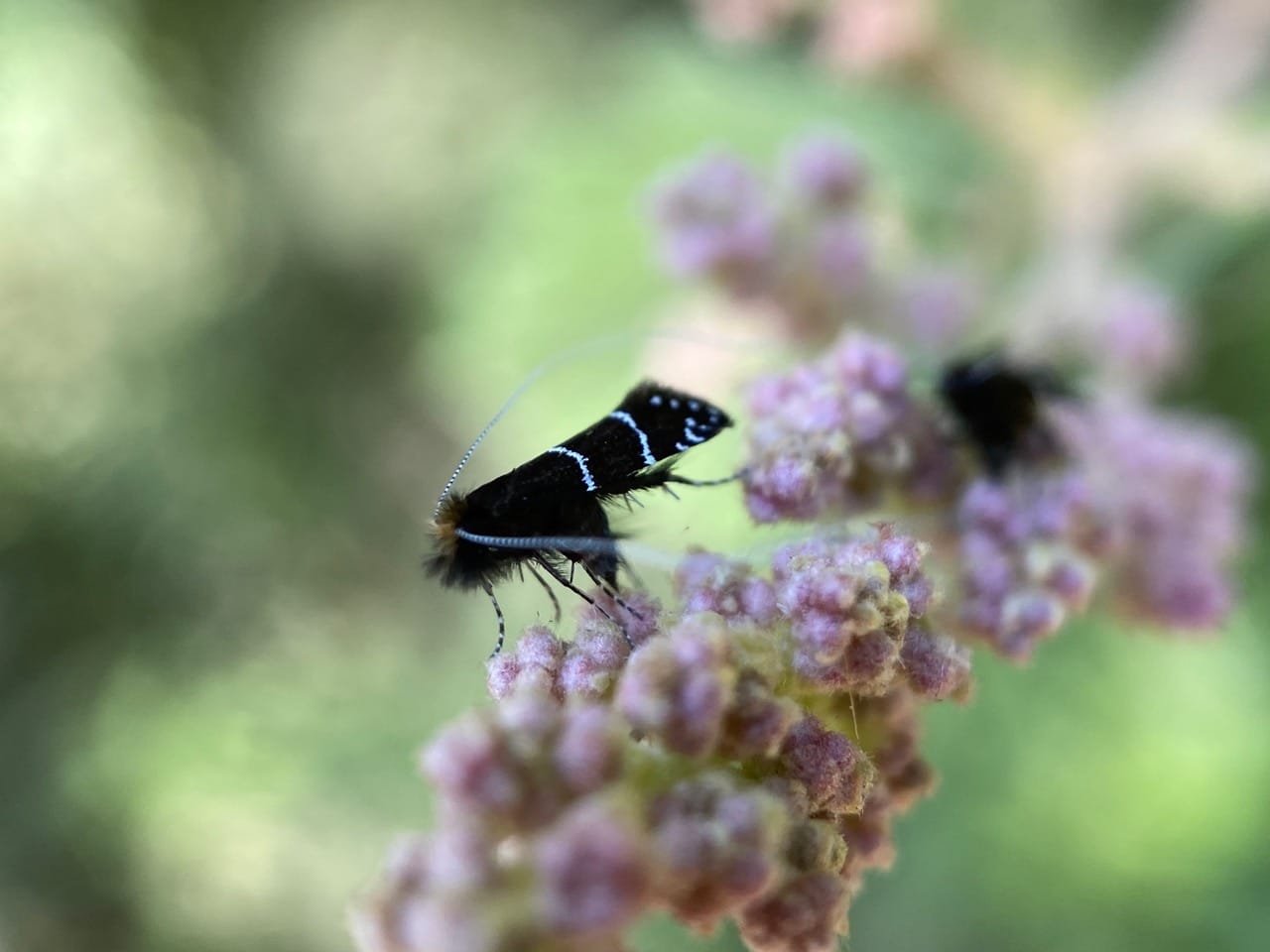
As their antennae wave in the wind, the females are busy laying eggs among the flower buds. The larvae that hatch out feed on the Ocean Spray, and the full-grown larvae will overwinter in cases in the ground. They will emerge next spring to court and mate, and repeat the cycle over again.
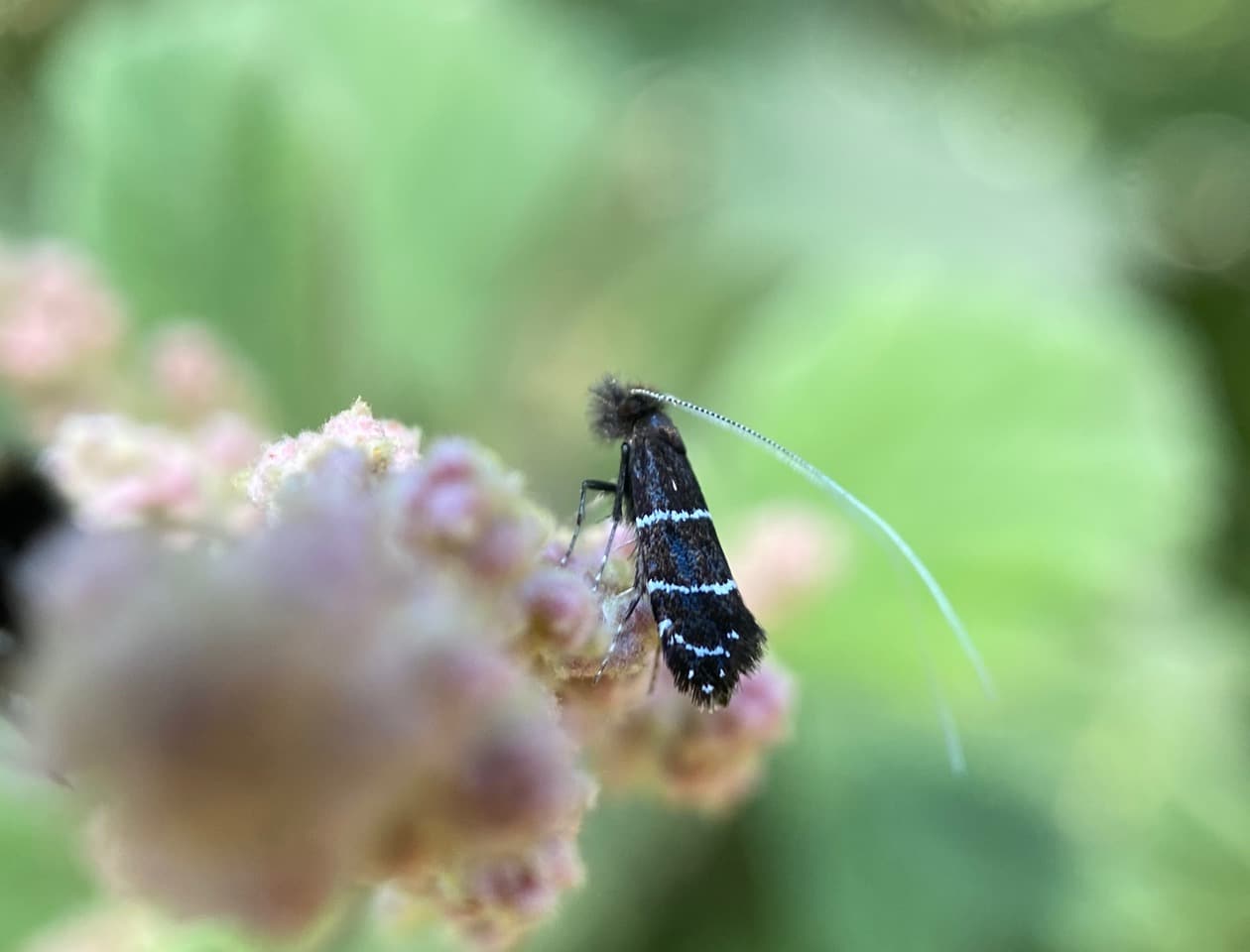
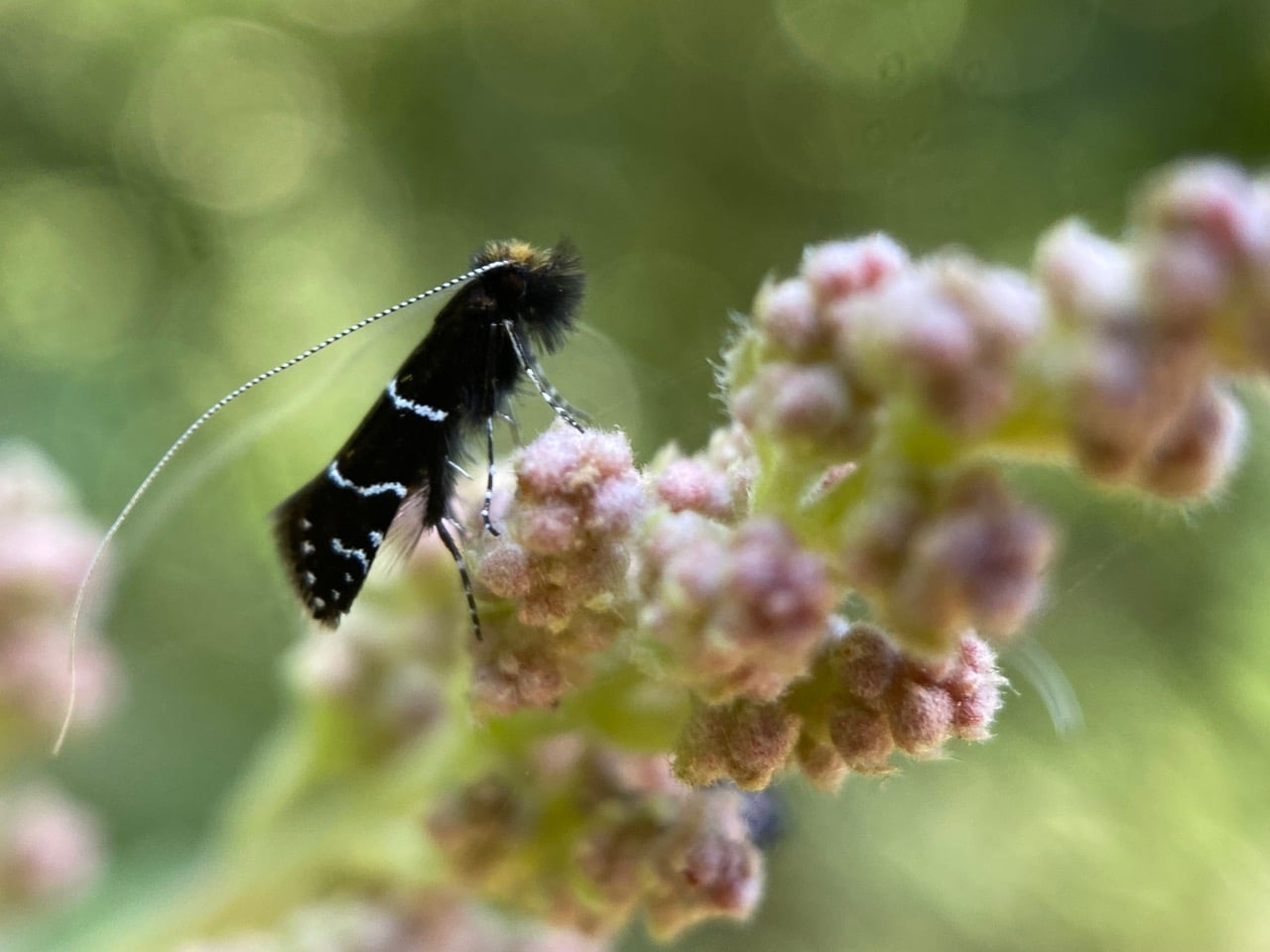
I have never seen the eyes of these moths through their dense mop of hair.
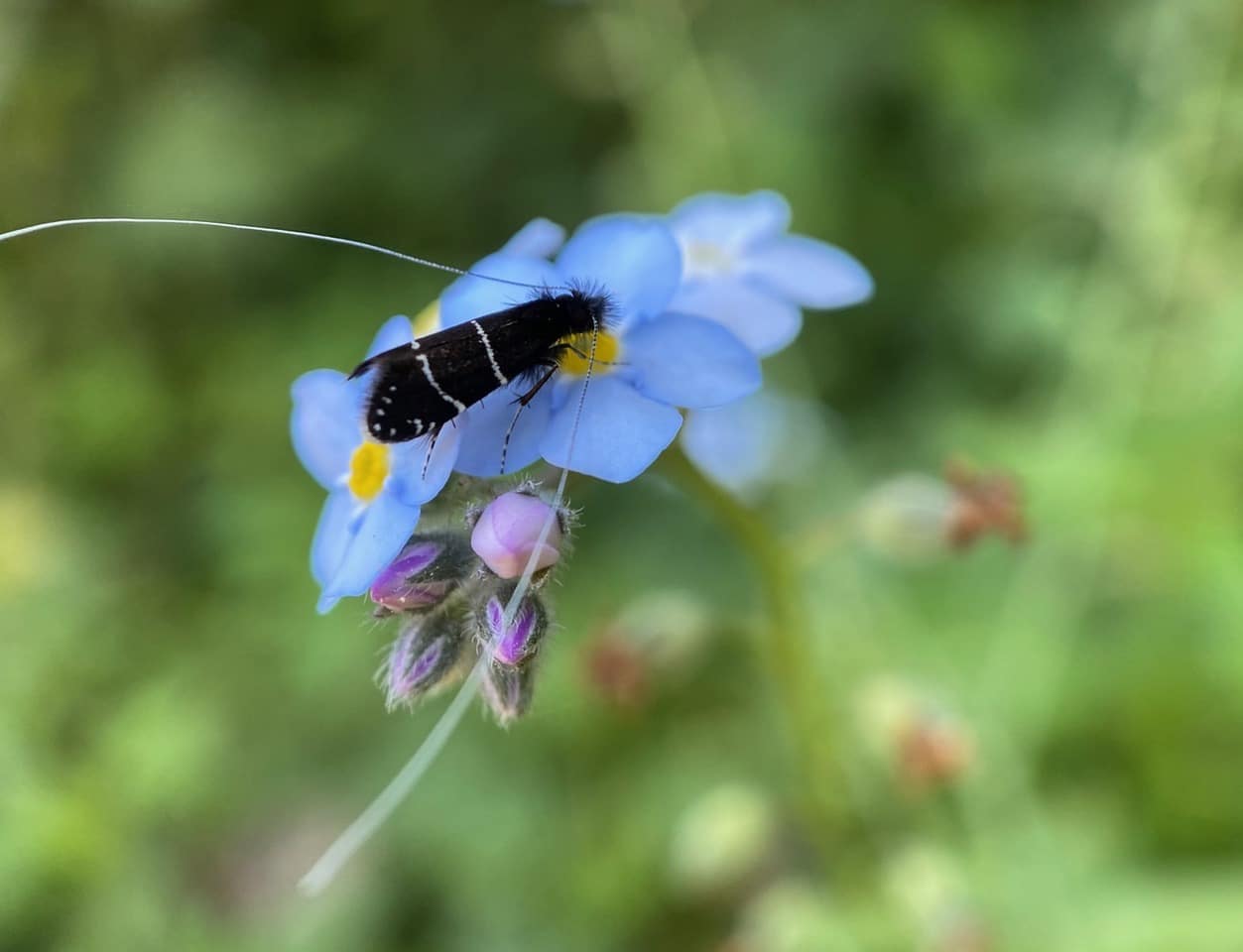
At around noon time, I come across a branch of Ocean Spray, Holodiscus discolor with about half a dozen Ocean Spray Fairy Longhorn Moths, Adela septentrionella (family Adelidae) bobbing up and down in their courtship flight over the flower buds. Ah, there are still some males doing the courtship dance, but they are not in the hundreds that I have seen in past years. Perhaps because of the desynchronized timing of the moths and their host plant this year, the lek gathering is not as elaborate as usual. This is one of the dangers that changing climate pose for the partners in a tight relationship, jeopardizing the reproduction of the insects in this case. I am happy to capture this picture of a male moth on a cluster of Forget-me-not flowers getting some nectar refreshments.
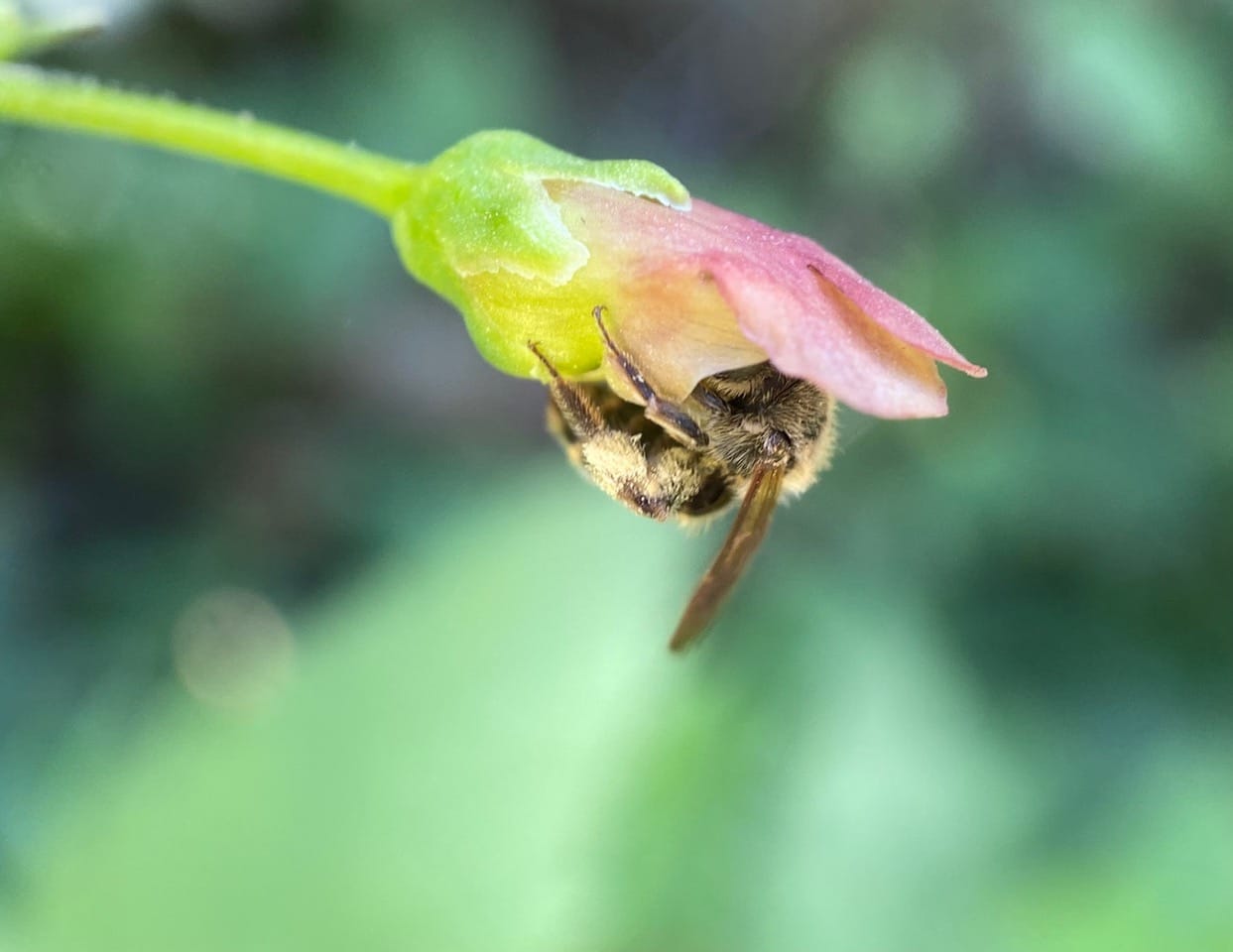
A Sweat Bee, Halictus sp. (family Halictidae) is foraging on a flower of California Bee Plant, Scrophularia californica. It is hanging on the entrance of the corolla, collecting pollen from the anthers.

The bee transfers the pollen swiftly onto the scopa on her hindleg using her middle leg.
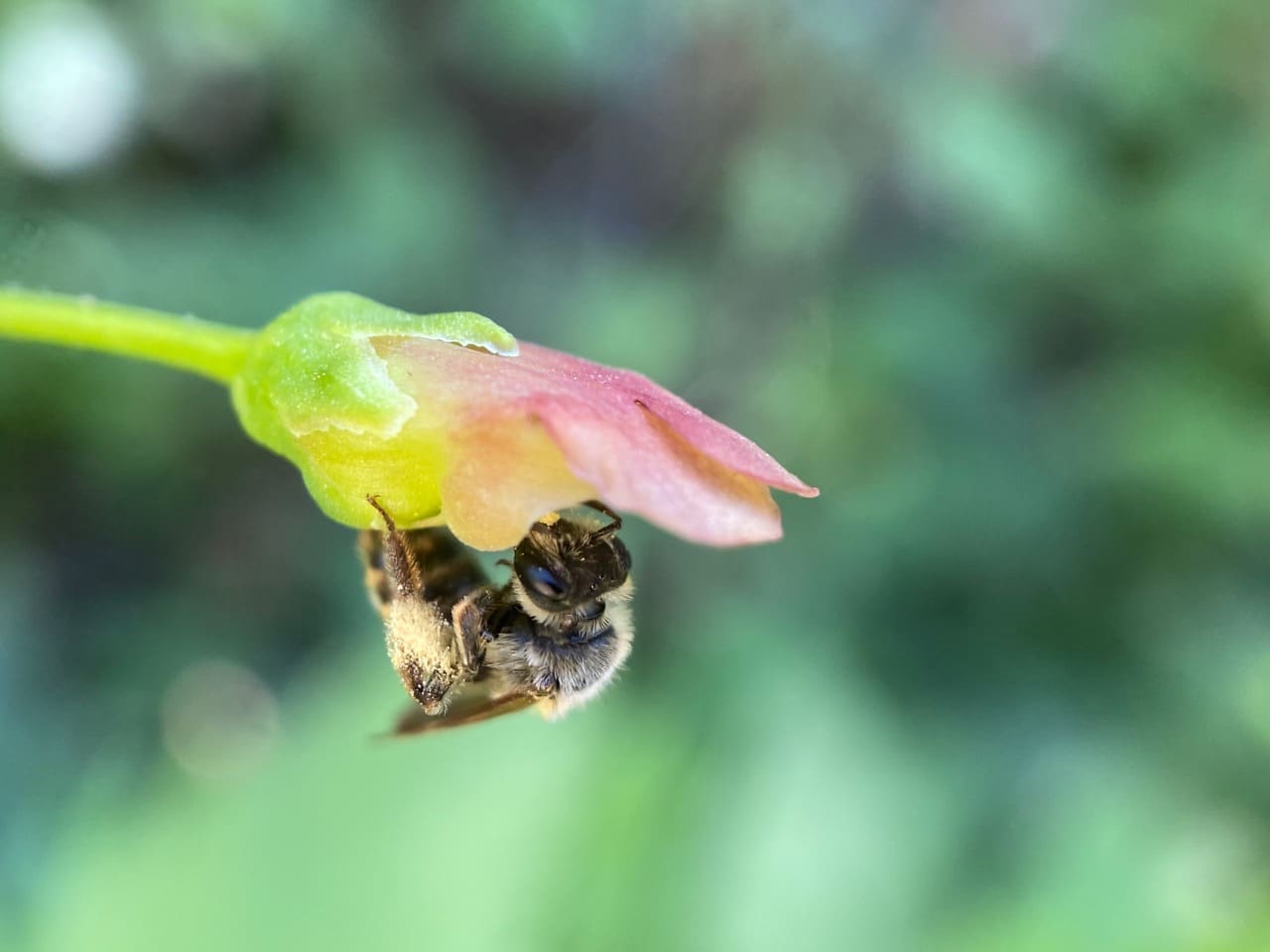
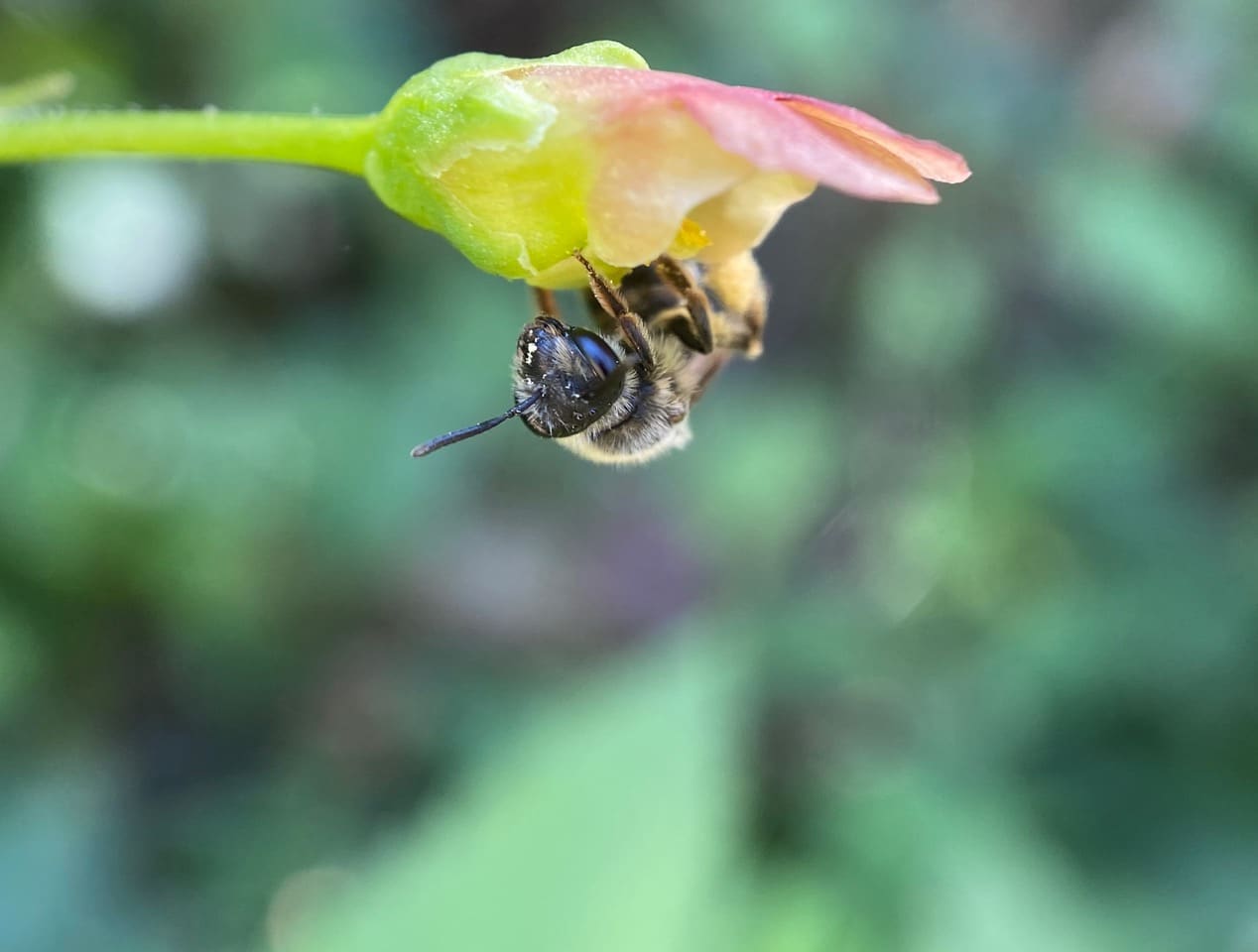
The bee appears to have facial fovea – note the hedgerows of hairs on the inner margins of her compound eyes. A Mining Bee, Andrena sp. (family Andrenidae)?
Bees in the family Andrenidae, commonly called miner bees or mining bees, are solitary ground-nesters. Andrenids are fairly small bees, usually dark-colored, and often banded. They are identified by the dense bristles (scopae) at the bases of the legs and the shin-like sections (tibias) of the legs, as well as by certain creases and grooves on the face and head and by unique wing venation. Many Andrenids resemble wasps – slender with long abdomen.
Most andrenids are specialist pollinators whose life cycle is timed to correspond precisely to the blooming of specific flowers.

The Stink Bug, Cosmopepla uhleri (family Pentatomidae) is an insect commonly found on the Bee Plant, its host plant.
Pentatomidae is a family of insects belonging to the order Hemiptera or “true bugs”. As hemipterans, the pentatomids have piercing-sucking mouthparts, and most are phytophagous, including several species that are severe pests on agricultural crops. Stink Bugs feed on plant fluids by inserting their needlelike mouthparts into stems, leaves or seed pods. While feeding, they inject materials into the plant to aid in digestion and sap removal. Penetration by the mouthparts can cause physical damage, much like stabbing the plant with a fine needle.
All Pentatomids have 5-segmented antennae (hence their family name, Penta – five and tomos – section.) They generally have a large triangular scutellum in the center of the back. The adult is generally shield-shaped when viewed from above. The common name of Stink Bug refers to their ability to release a pungent defensive spray when threatened, disturbed, or crushed.
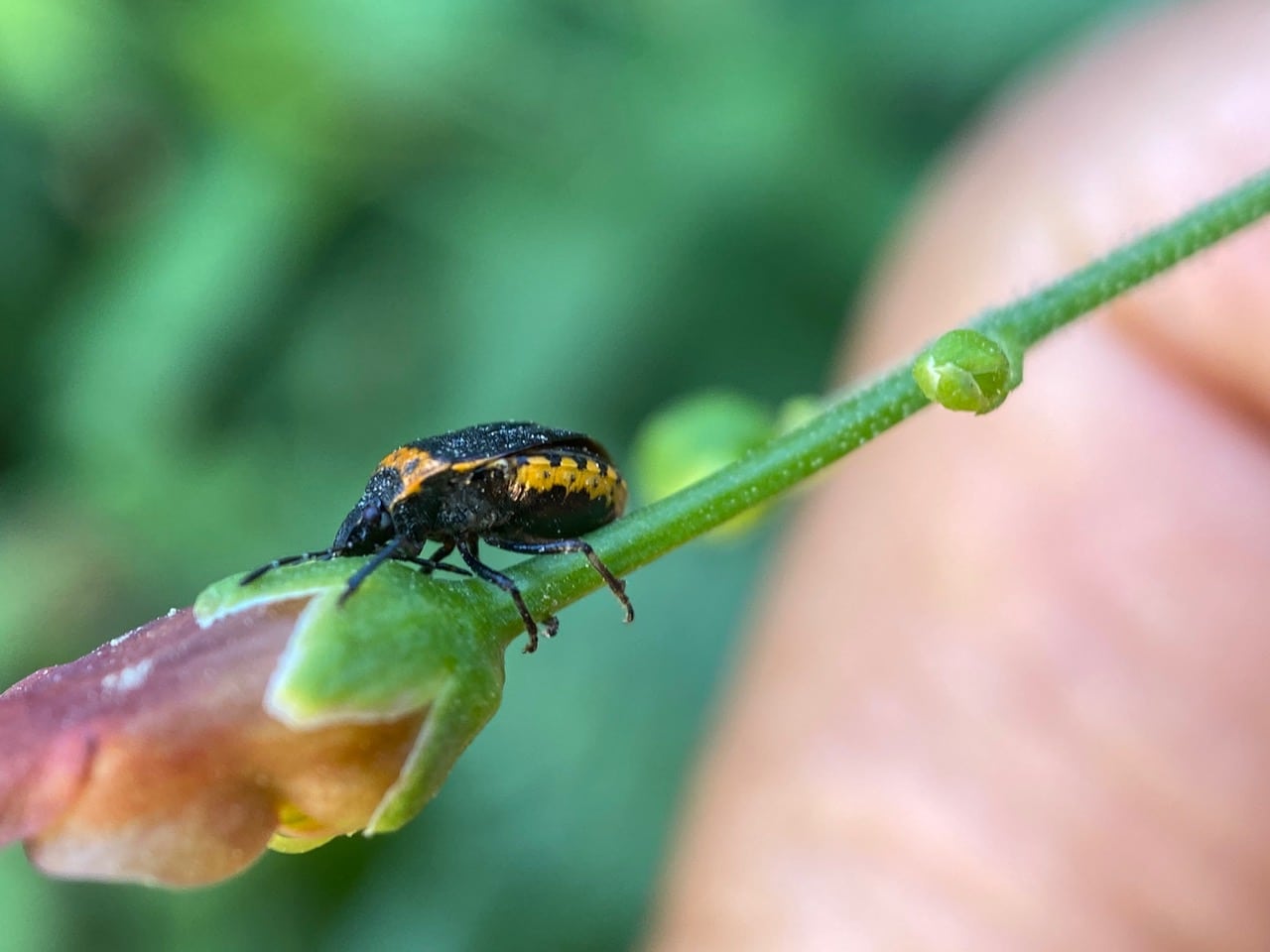
Here’s a good look at the bug’s rostrum, folded under the body when not feeding. Like all “true bugs” in the order Hemiptera, Stink Bugs have piercing-sucking mouthparts for extracting plant sap.
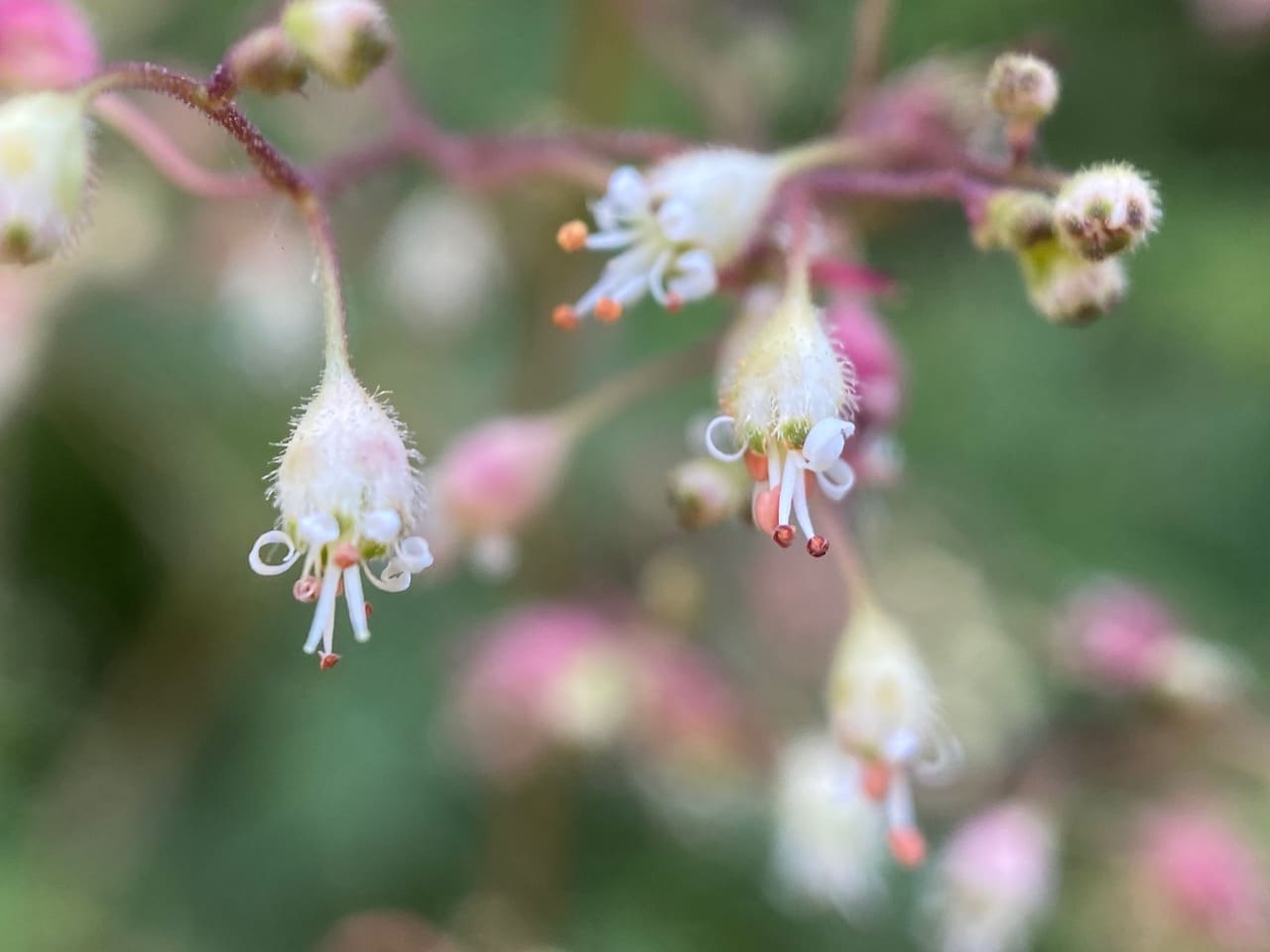
I am delighted to come across a small patch of Alum Root, Heuchera sp. in bloom. The tiny white flowers are held in pendulous loose sprays. The flowers are composed of a hairy bell-shaped calyx holding petals that emerge in curly straps. The protruding stamens with orange-pink anthers feature prominently in the center.

A tiny insect is perched on an Alum Root flower. For that size, barely 2 mm long, I immediately think of a Leaf-mining Fly. But closer inspection reveals a Micro Bee Fly (family Mythicomyiidae)!
Mythicomyiidae are very tiny flies (0.5-5.0 mm) found throughout most parts of the world, especially desert and semi-desert regions. Many have a humpbacked thorax and lack the dense hairs common in the Bee Flies (family Bombyliidae). They used to be treated as a subfamily of Bombyliidae. Larvae of some genera are gregarious parasites of solitary bees, while others are predators in ant nests; yet others prey on grasshopper egg pods.