

Pollinator Post 6/10/23 (2)
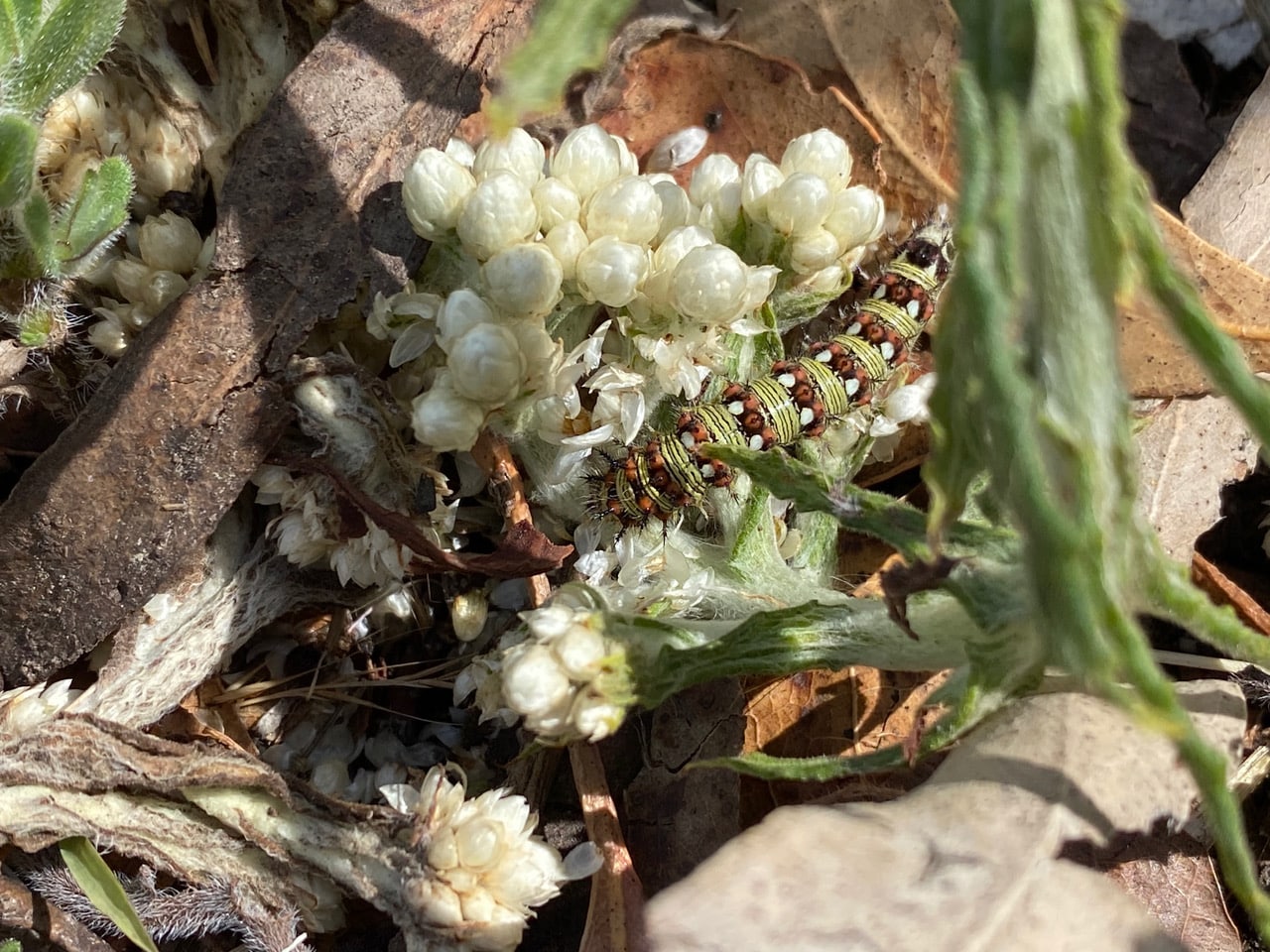
I check for the American Lady caterpillar that I found two days ago on the California Everlasting, Pseudognaphalium californicum. It is not on the plant. In fact, one major branches of the plant has collapsed, laying on the ground. There I find the caterpillar. It is draped over an inflorescence that has harbored an old caterpillar nest! Did the growing caterpillar’s weight cause the branch to break in the wind? Is the caterpillar alright? I can’t tell without prodding it, and decide to walk on.


A small Ladybeetle larva is hunting on an inflorescence of California Everlasting. I see signs that the inflorescence has once been a small nest site for an American Lady caterpillar. The Ladybeetle larva is probably feeding on the small insects that have moved in.

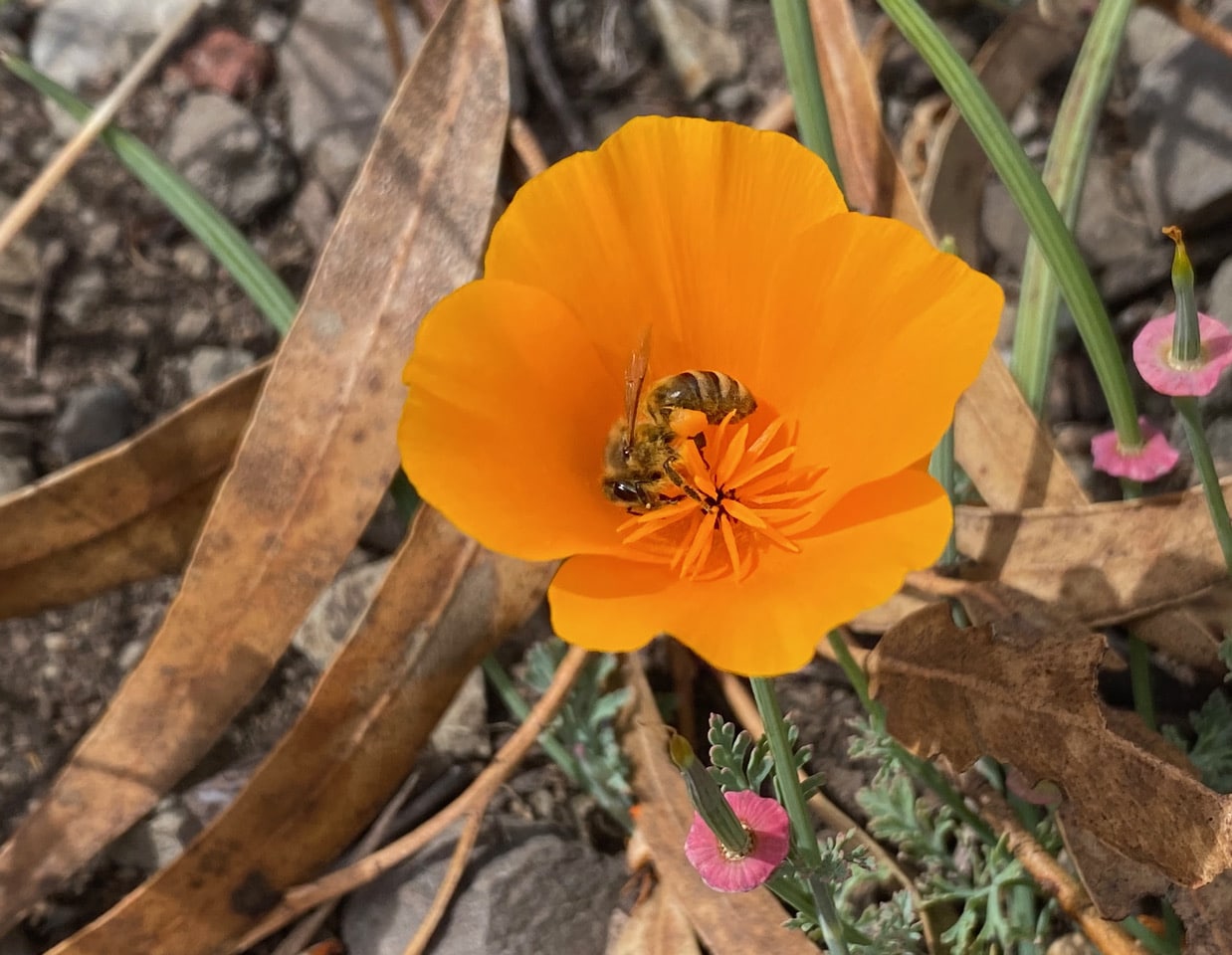
Ooh, is that a new bee in town? I follow the bee with the dark abdomen until it lands in a California Poppy, Eschscholzia californica.
It is actually a European Honey Bee, Apis mellifera (family Apidae)! She has gathered quite a load of pollen in her pollen baskets. Over the past few years, I have noticed these darker honey bees out foraging in the summer. I even had confused folks sending pictures of these darker bees for identification. The answers I found online are rather confusing. One source claims that the bees get darker when they get older because their hairs wear off due to rubbing against each other in the hive. Hmm…..
I have been checking on the bare patch of ground on the side of the paved road for wasp activity lately. Today I find several funnel-shaped pits on the ground where the soil is fine-grained, dry and loose. They are unmistakeable traps of Antlions (family Myrmeleontidae, order Neuroptera)! I lightly tickle the side of a pit with a fine piece of dry grass. A barrage of soil particles is hurled out from the bottom of the pit. What fun!
OK, the larvae of the Antlion get all the hype, but what about the adults? The adult antlions look like fragile, drab damselflies, with an elongate body, four intricately veined wings mottled with browns and black, and clubbed or curved antennae about as long as the head and thorax. Adult antlions fly during calm, late-summer sunsets and evenings, as they flutter about seeking mates and good places to lay eggs. Antlions spend only about a month in their adult form, feeding on nectar and pollen. Most of their lives are spent in larval stages, as voracious predators of ants and other small insects.
A black insect is draped over the anthers of a California Poppy missing a petal. On closer inspection, I find that it is a Mining Bee (family Andrenidae).
The bee finally stirs and flies away. It was probably sheltering from the wind in the bottom of the poppy flower.
As I pass the collapsed California Everlasting, I look for the American Lady caterpillar on the ground. It is no longer there! I’d like to think that it is on its walk-about seeking a good place to pupate. Good luck, little fella. See you as a butterfly, by and by!