

Pollinator Post 5/8/24 (2)

What I thought was a big insect on a Sticky Cinquefoil flower turns out to be a pair of Small Carpenter Bees mating!
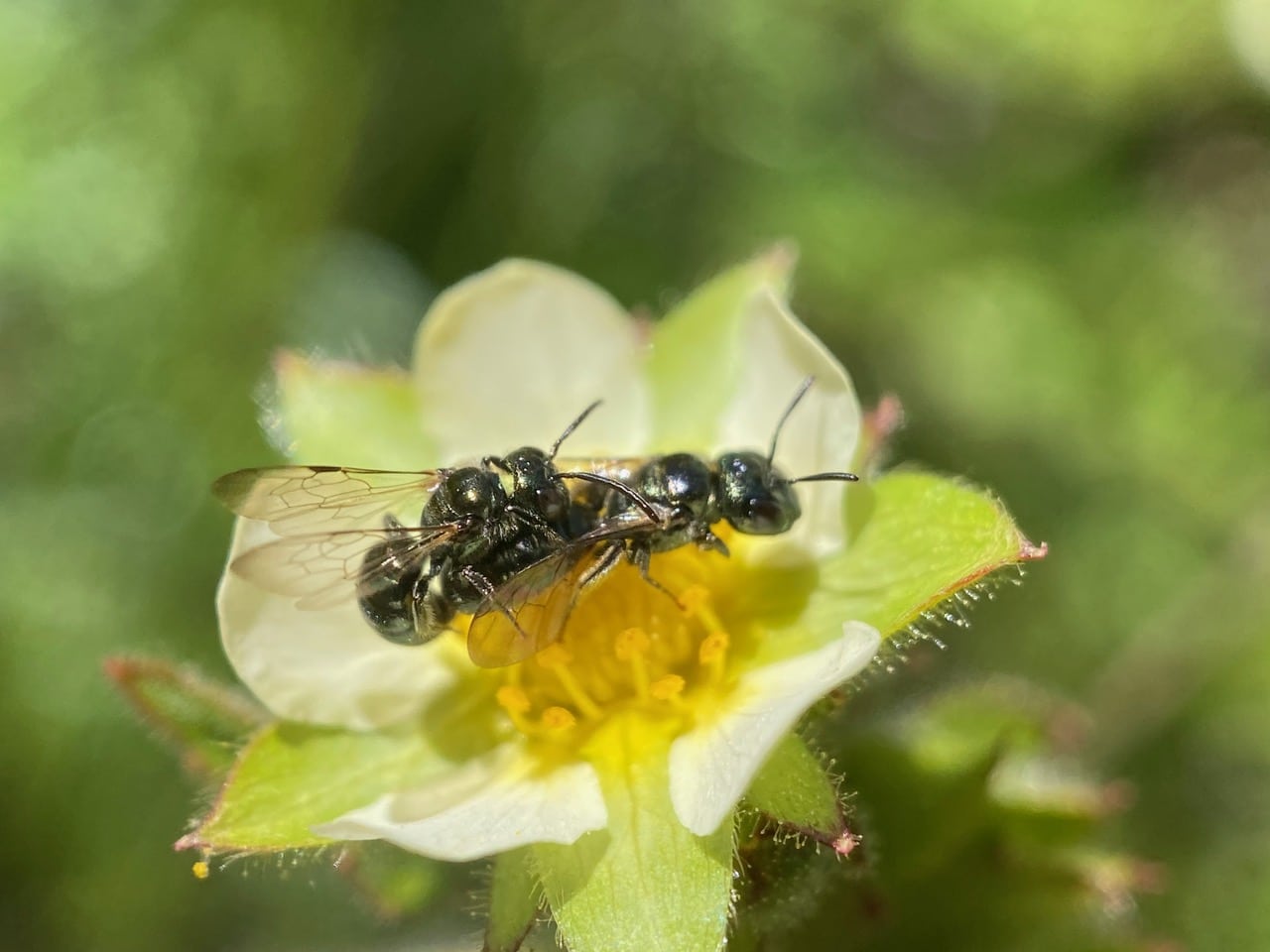
The male on the left is furiously fanning his wings the whole time.
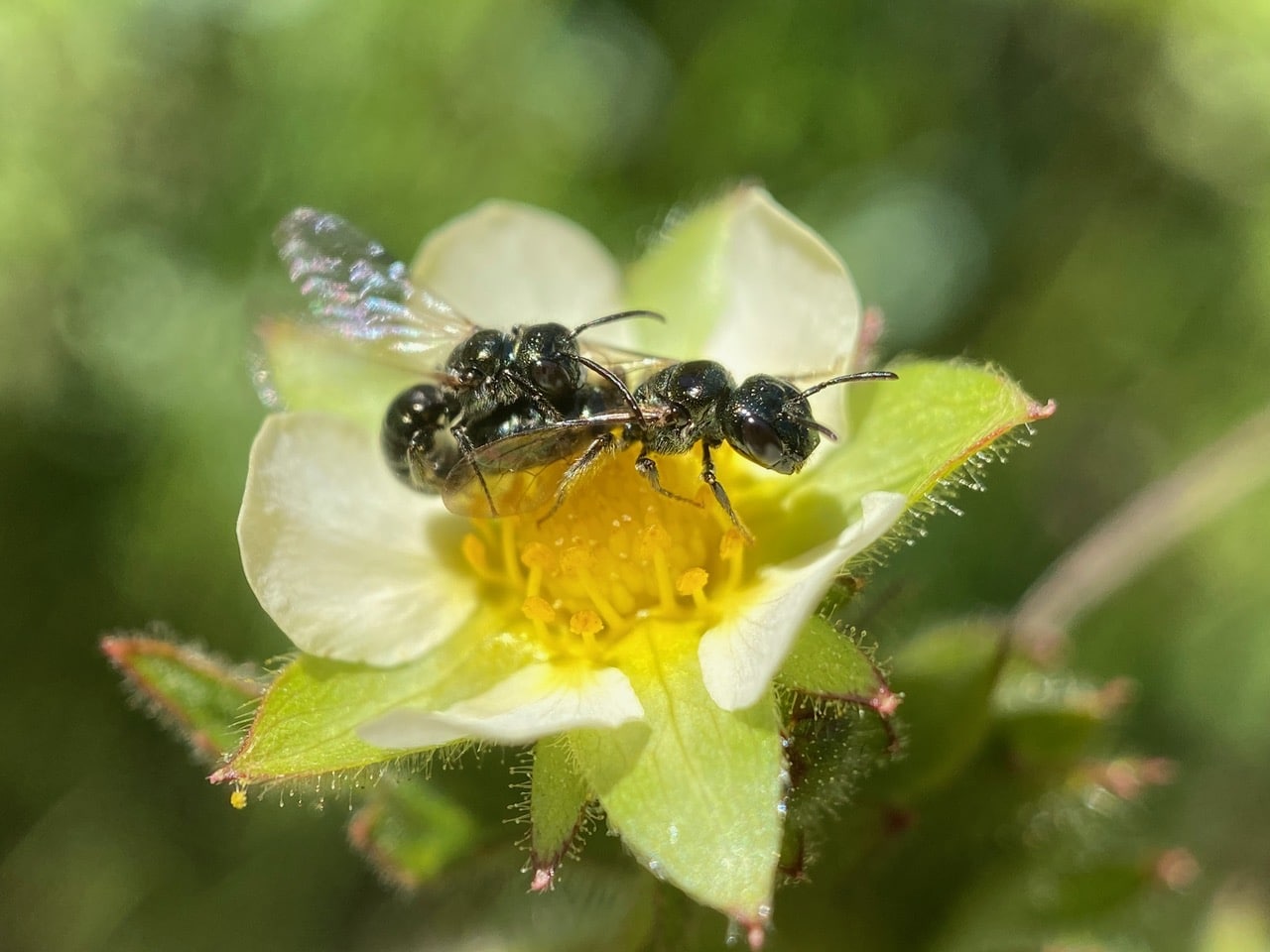

The pair pivots away from me….

And off they fly! Wow, what a privilege to see Ceratina mating two days in a row!
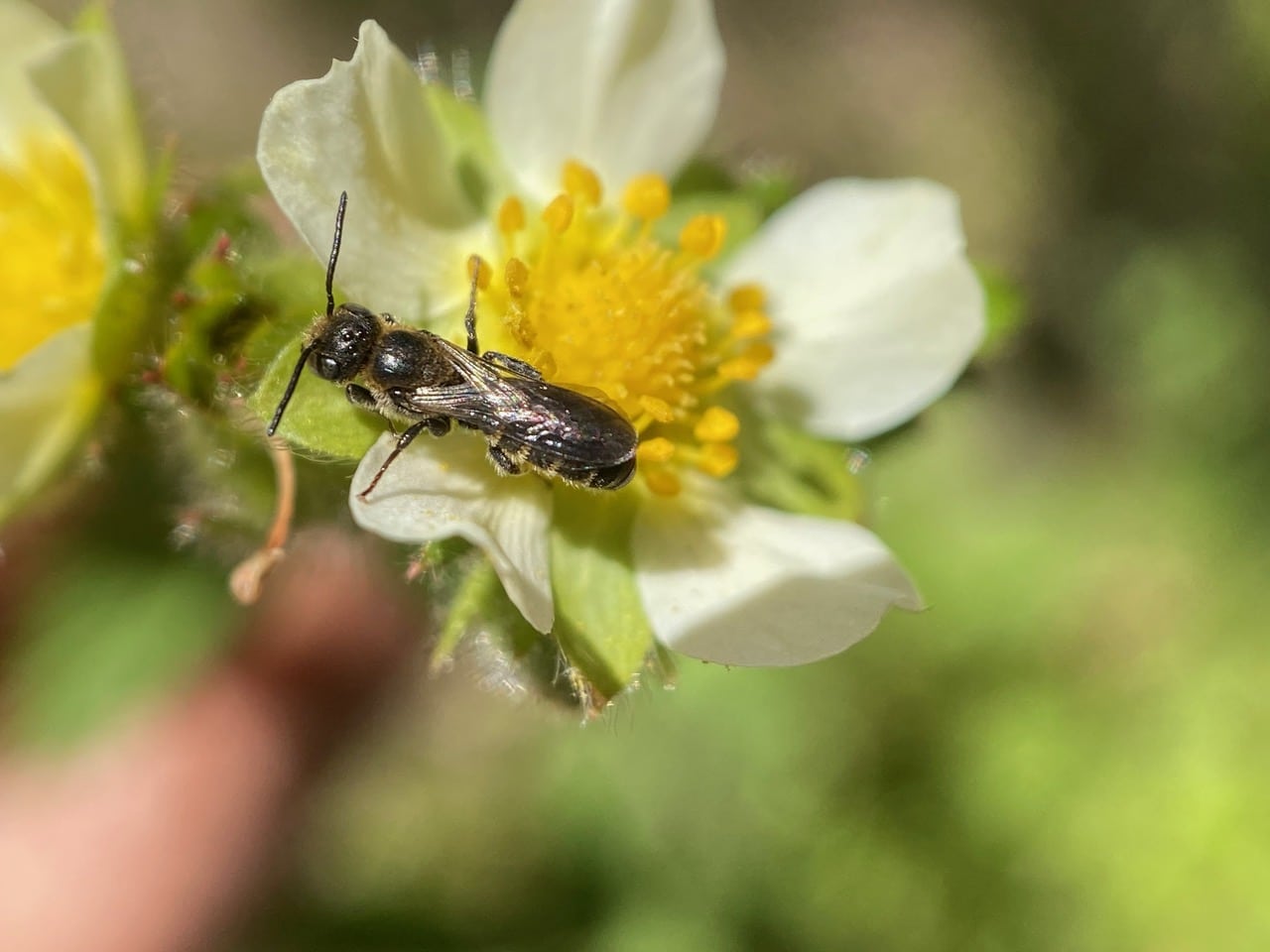
Here’s a newcomer. The bee looks unfamiliar to me. It appears to be a male, with long antennae and no scopae on the hind legs.
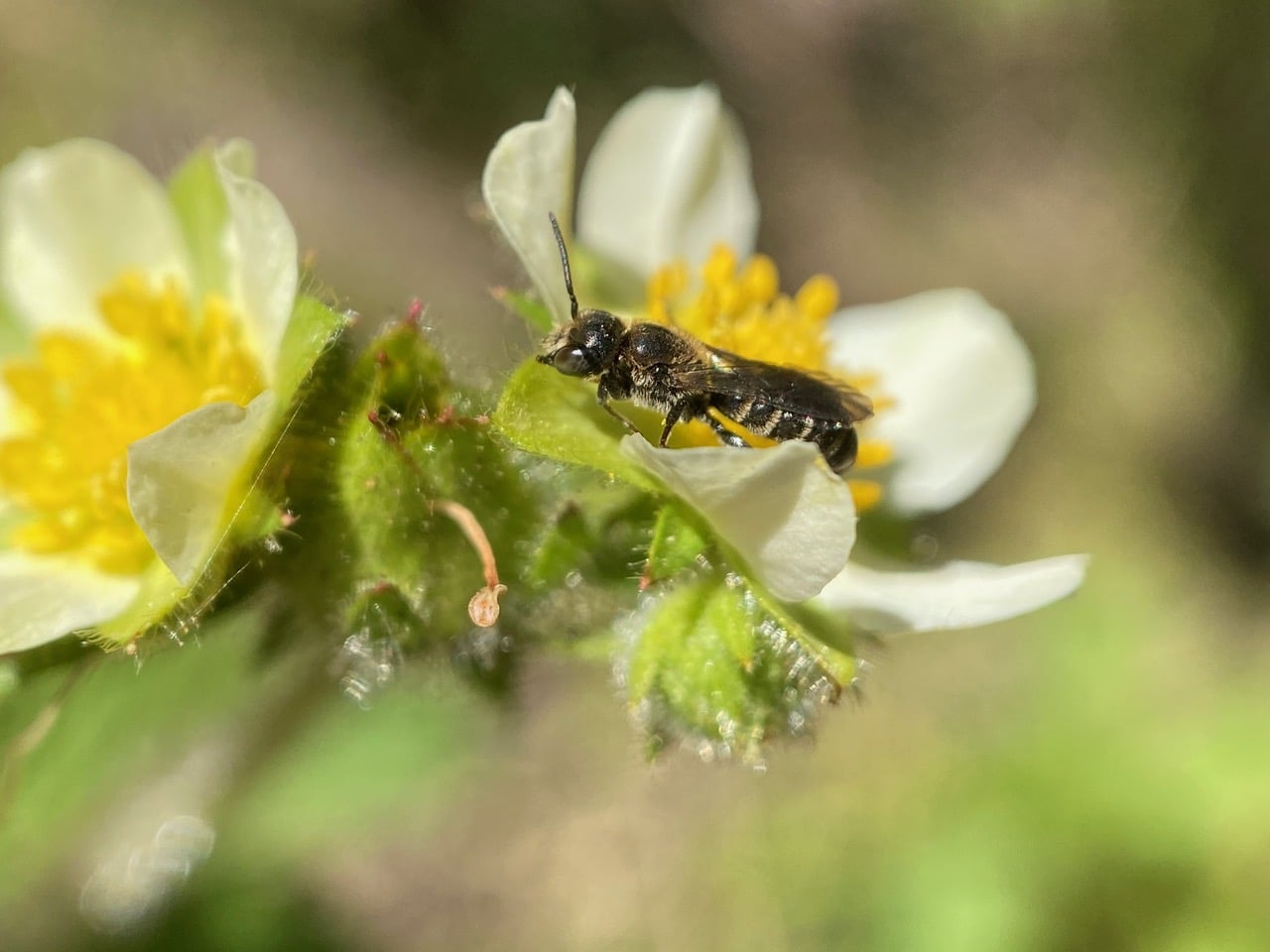


Wow, that’s an interesting face! Not only is the bee new to me, I can’t even place it in a family! iNaturalist’s AI places the bee in the subgenus Neochelostoma, genus Chelostoma (family Megachilidae).
Chelostoma are small to moderately sized bees with slender, elongated bodies, and overall black coloration. Species native to North America range in body length from 3.4 – 9 mm. Eight of the 11 native species occur in California. The prefix Neo- refers to the New World as this subgenus comprises all New World species. Chelostoma are solitary bees that nest in preexisting cavities such as dead wood, hollow stems, and holes made by wood-boring beetles. Nests are not lined, but partitions and nest plug are made with a mixture of mud or sand with nectar and saliva. Chelostoma species are known for their oligolectic behavior, specializing in pollen collection from specific plant families or genera. Most species are strict pollen specialists, with only a few being generalists that evolved from oligolectic ancestors.
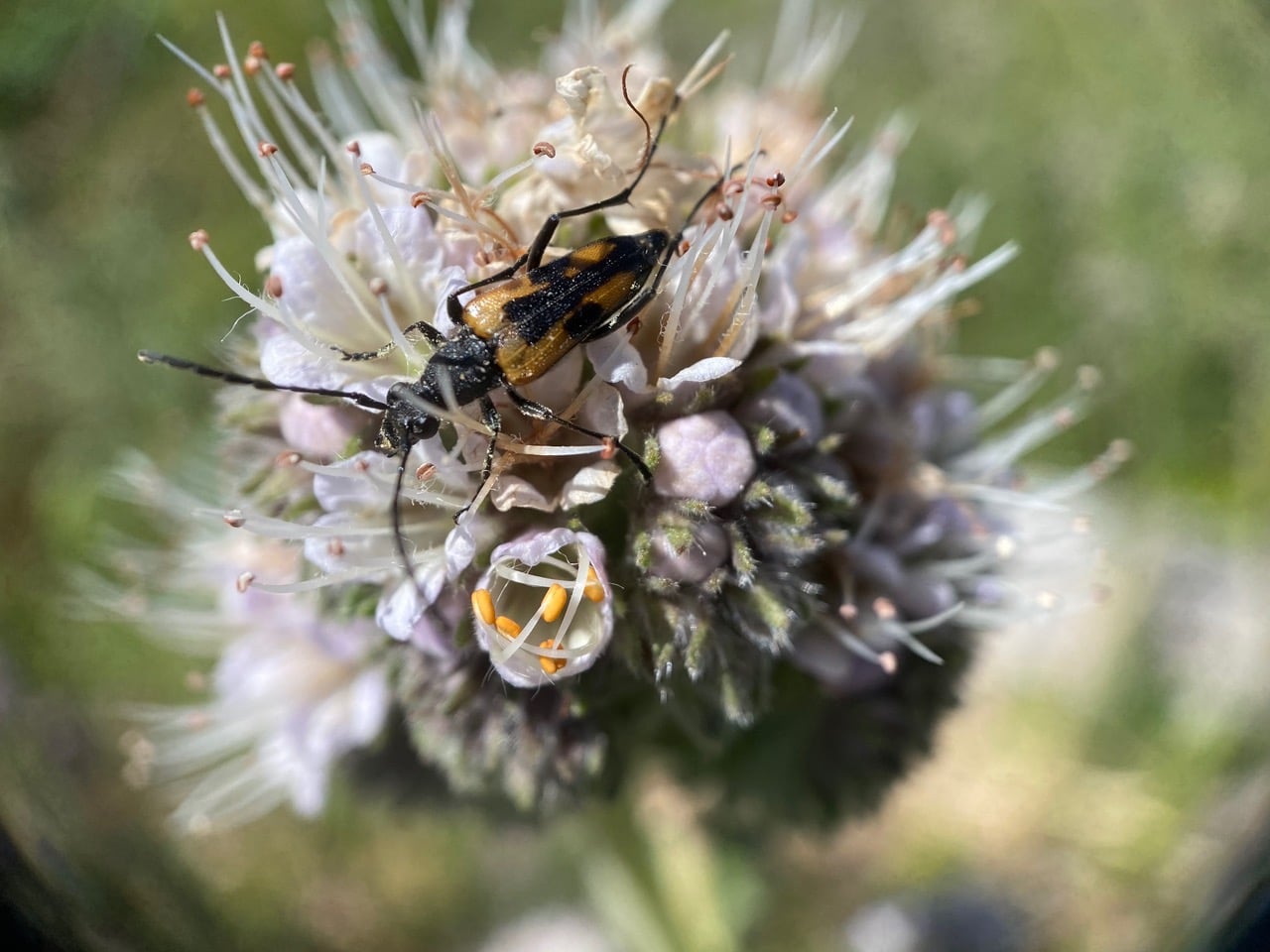
Waiting for my ride at Sieta Gate, I find this male Dimorphic Flower Longhorn Beetle, Anastrangalia laetifica (family Cerambycidae, subfamily Lepturinae) on an inflorescence of California Phacelia, Phacelia californica.
The flower Longhorn Beetles are usually found on flowers where they feed on pollen and nectar, and are considered pollinators. They have a particular affinity for the umbel flowers of the carrot family, Apiaceae. Most species of Flower Longhorn Beetles have a narrow body and very long legs. They also share the family trait with other Cerambycids of having very long antennae. The beetles spend their larval days as borers, just like other Cerambycids. However they are not considered pests, as they select trees that are stressed, dying, or dead.
The term “dimorphic” in the common name refers to the obvious visual differences between the sexes. Females are considerably larger, with 4 black spots on the bright red elytra, while the males are black or brown.