

Pollinator Post 5/7/24 (2)
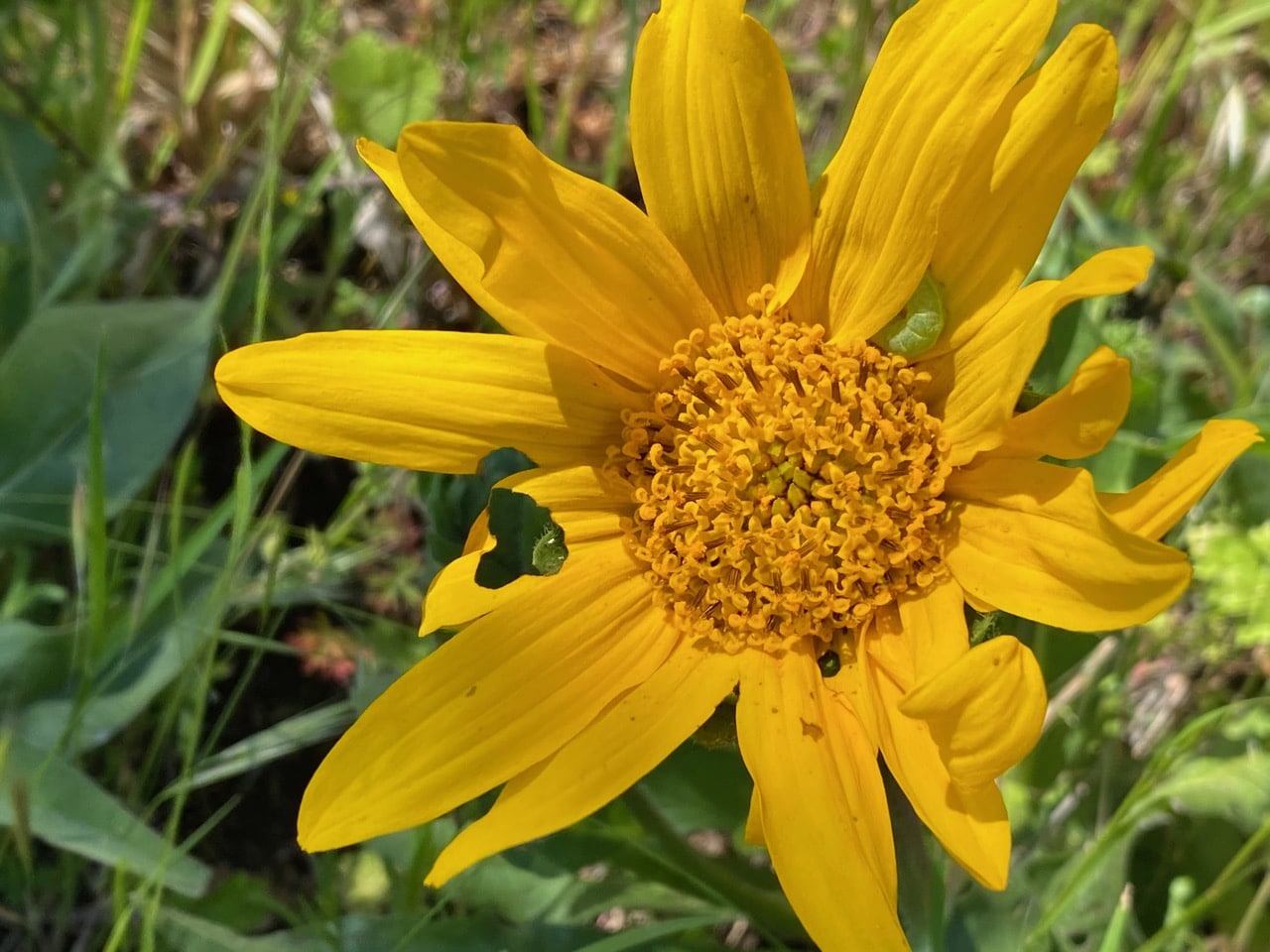
A second species of Mule Ears has come into bloom to replace the Woolly Mule Ears that have gone to seed on the same hillside. This is the Narrow Leaf Mule Ears, Wyethia angustifolia. The leaves of Narrow Leaf Mule Ears are not hairy, and are greener. Who has chewed that big hole in the ray petals? I see a green caterpillar half concealed between the ray petals across the flowerhead.

Lifting one of the ray petals, I find a fat green caterpillar. Not sure what it is, most likely a moth?
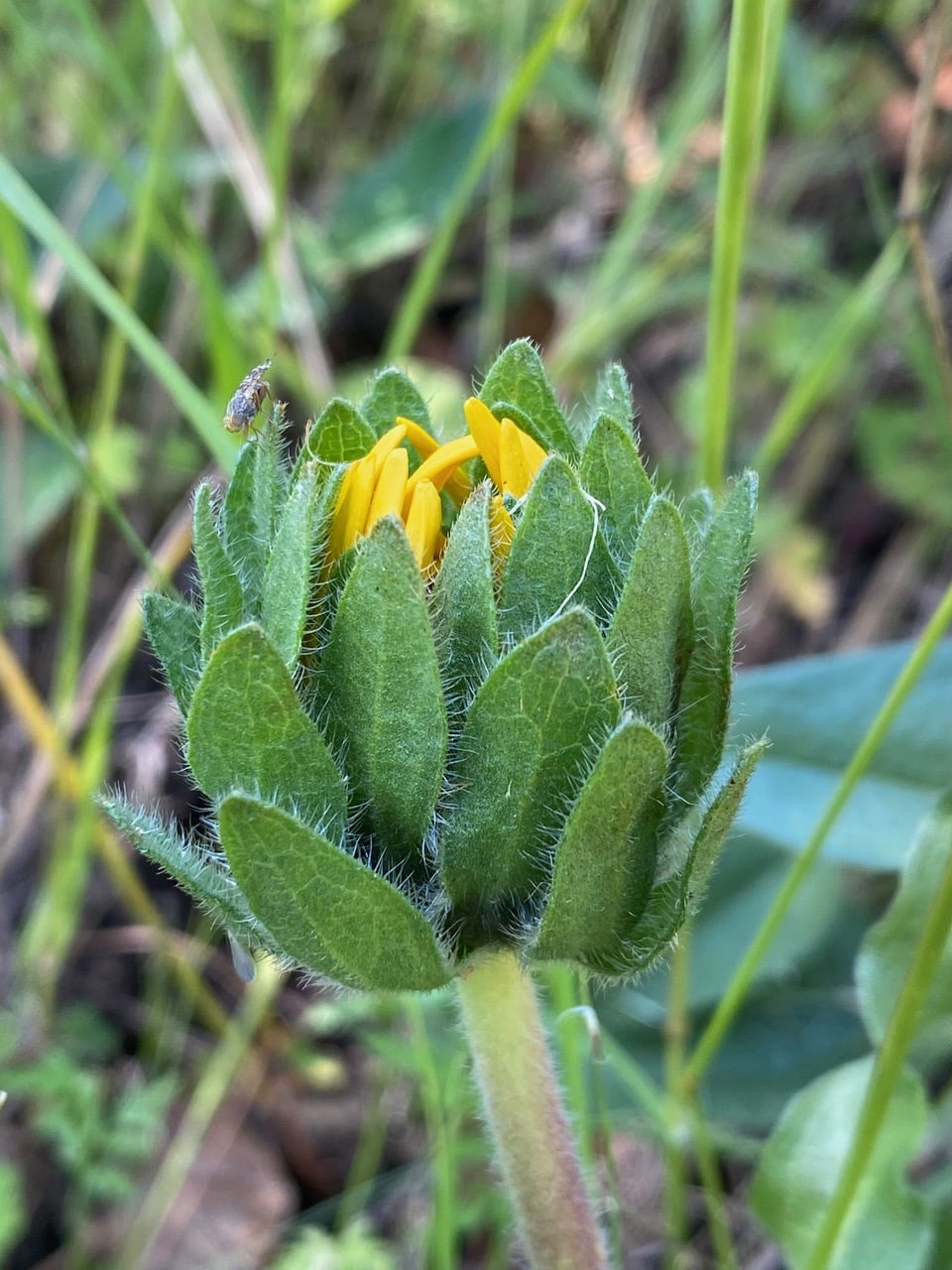
An immature flowerhead of the Narrow leaf Mule Ears is subtended by several tiers of large phyllaries. It appears the young flowerhead has already been claimed by a Sunflower Seed Maggot, Neotephritis finalis (family Tephritidae). See the male standing guard on an upper phyllary?
Commonly called Fruit Flies, Tephritids are small to medium-sized flies that are often colorful, and usually with picture wings. The larvae of almost all Tephritidae are phytophagous. Females deposit eggs in living, healthy plant tissues using their telescopic ovipositors. Here the larvae find their food upon emerging. The larvae develop in leaves, stems, flowers, seeds, fruits, and roots of the host plant, depending on the species. Adults are often found on the host plant and feeding on pollen, nectar, rotting plant debris, or honeydew. Tephritid flies are of major economic importance as they can cause damage to fruit and other plant crops. On the other hand, some Tephritids are used as agents of biological control of noxious weeds.
The Sunflower Seed Maggot is a sunflower specialist, found on over 20 species of Asteraceae. Larvae feed on immature seeds and pupate in flowerheads.
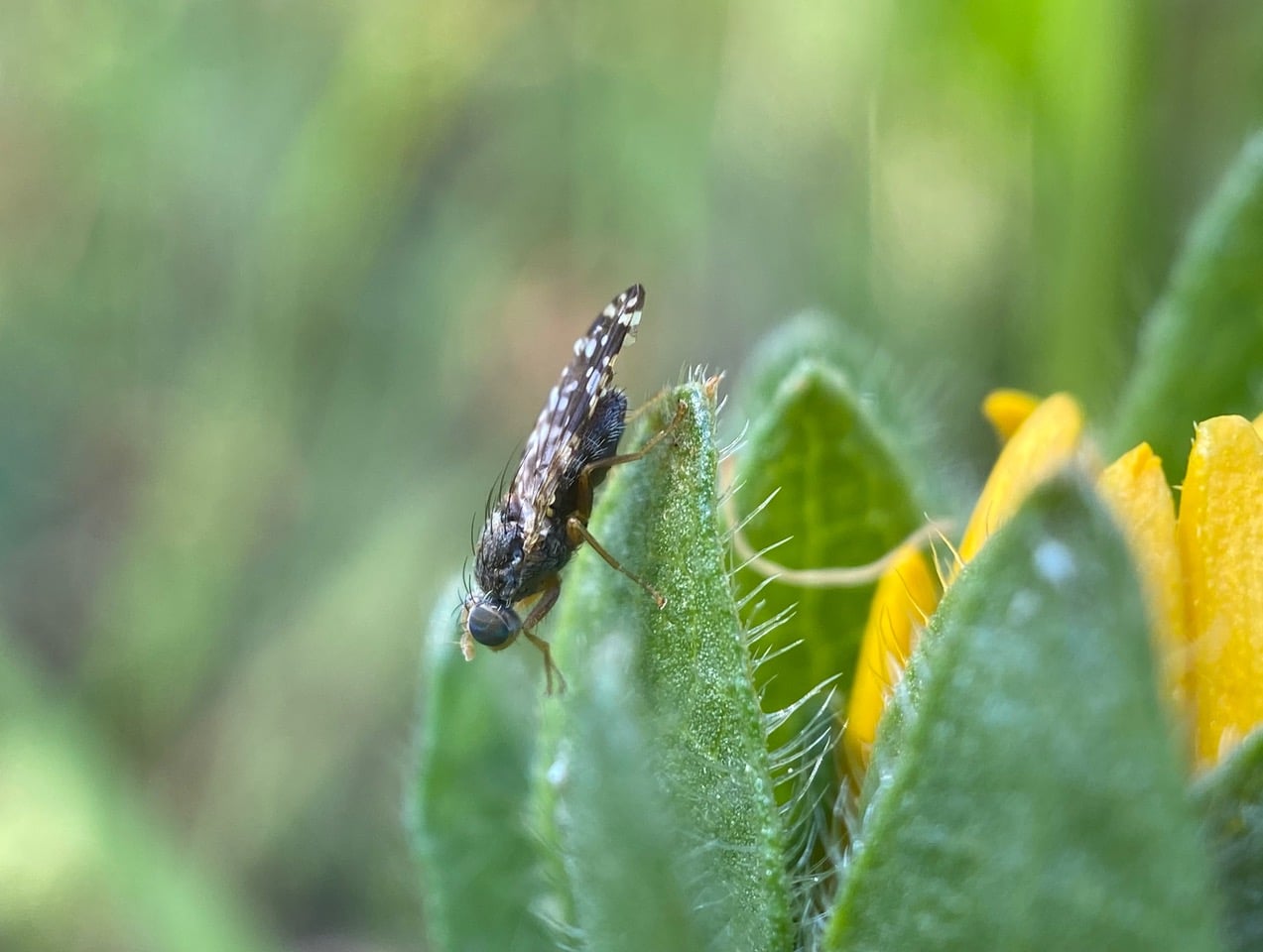
I am correct in guessing that the Fruit Fly is a male – he lacks the prominent pointed oviscape that females have on the tip of their abdomen. The male staunchly guards his territory, hoping to mate with a female who will come to lay eggs on the flowerhead. He communicates his intentions to rival males and to his sweetheart by signaling with his picture wings, moving them in ritualized movements resembling semaphores.
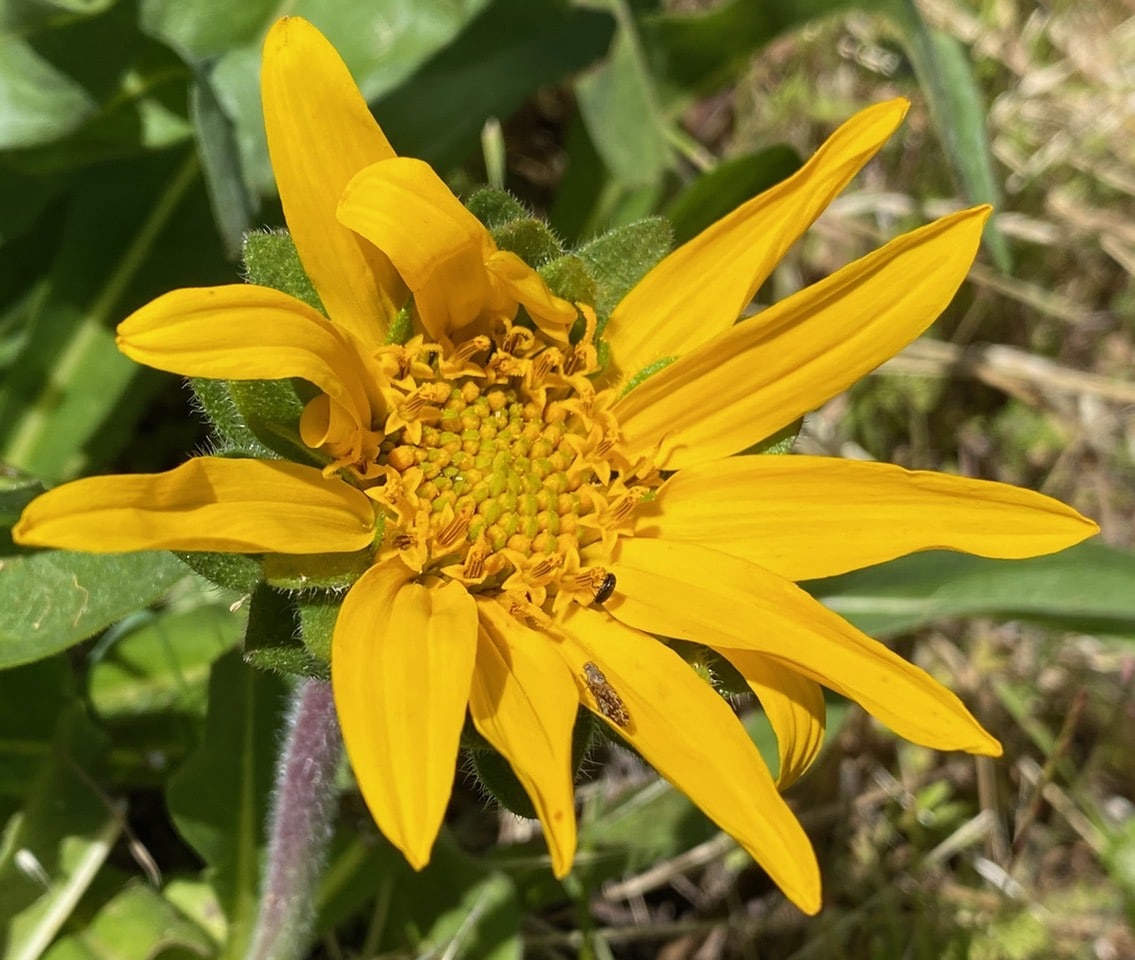 Here’s a fresh flowerhead of Narrow Leaf Mule Ears with a Fruit Fly in attendance on a ray petal.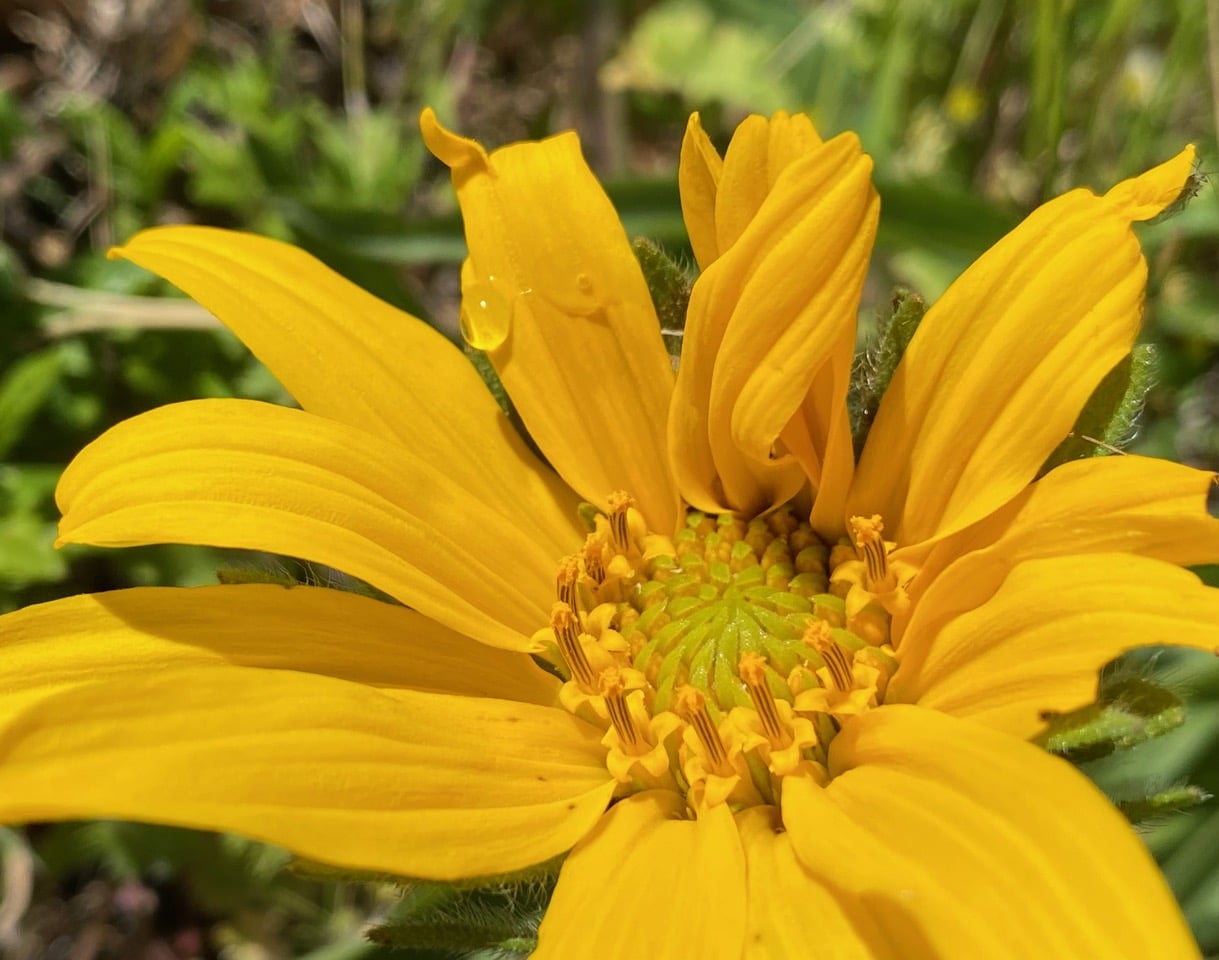
In Asteraceae, what is commonly mistaken as a “flower” is in fact not a single flower, but an inflorescence of numerous flowers, packed in the center of the flowerhead or capitulum. The individual flowers or florets are star-shaped, and made of 5 fused petals. The flowers clustered in the middle are called disc flowers, while the ones on the rim are called ray flowers. The latter have an irregular corolla – tubular at the base but elongated on the outside into a generally flat projection, the ray, or ligule. The rays are the petal-like parts. Asteraceae
Flowers in the sunflower family have another unusual feature: secondary pollen presentation. Each individual flower is roughly tubular in shape, and, the anthers are tucked inside the tube facing the interior of the flower. Members of the sunflower family are protandrous, meaning the male parts mature before the female parts. The flower relies on the female parts to bring the pollen out of the floral tube and into the environment where the pollinators can access it. In many cases, the style acts like a tiny piston, literally pushing the pollen out into the world. After some time, the style splits at the tip and each side curls back on itself to reveal the stigmatic surface. Only at this point are the female parts of the flower mature and ready to receive pollen. With luck, much of the flower’s own pollen would have been collected and taken away to other plants by pollinators. Self-pollination is thus avoided.
My naturalist/writer friend David Lukas has written an excellent article on this topic, with fascinating details. Assembling a Composite
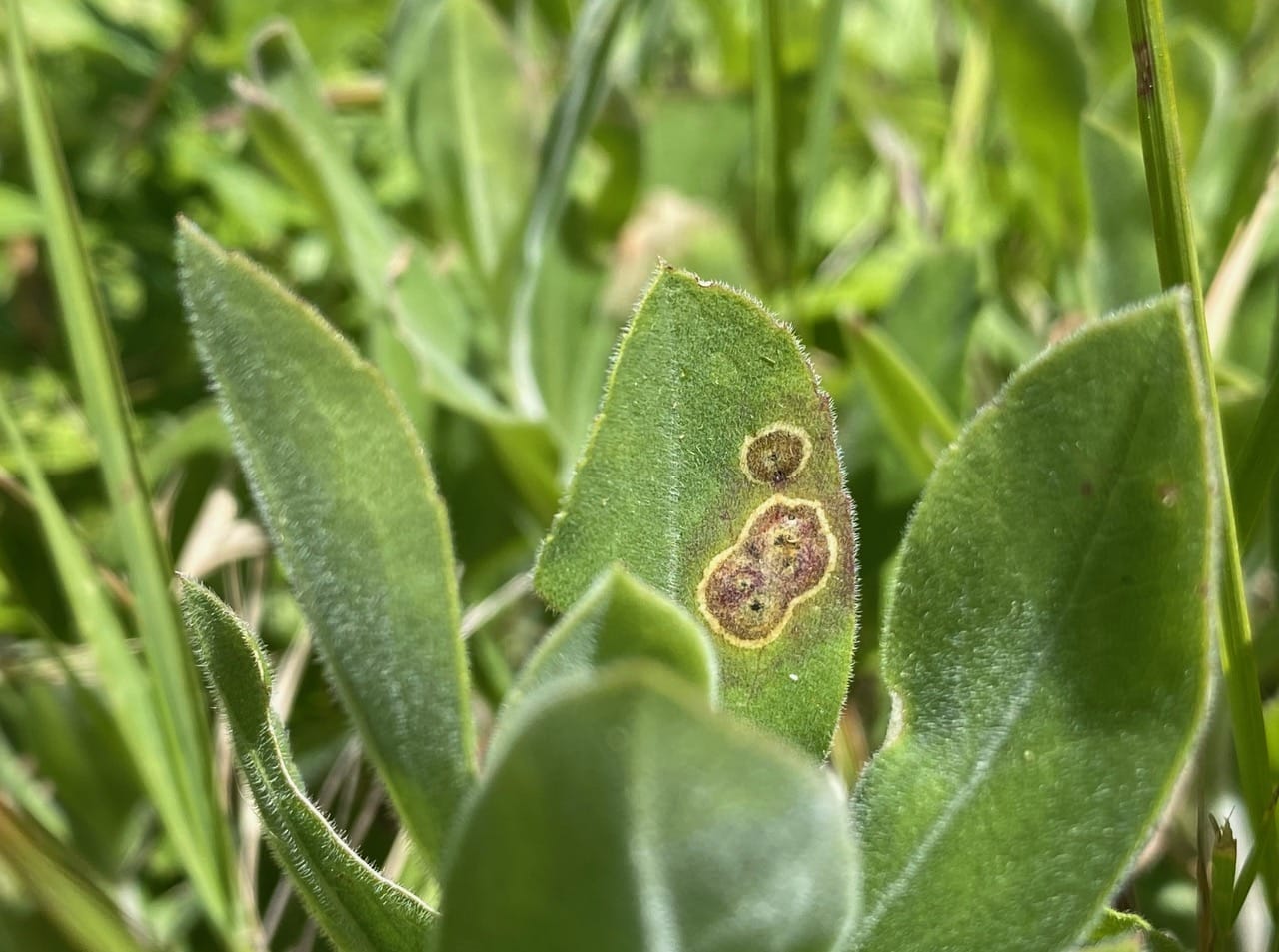
There’s a characteristic blister/discoloration on that leaf of California Goldenrod, Solidago velutina ssp. californica. These blisters are actually a well-known goldenrod gall, induced by the gall midge Asteromyia carbonifera (family Cecidomyiidae). The midge induces flat, circular galls in the leaves of various goldenrods (Solidago). One to ten or more larvae develop in each gall. Color and size of the gall vary by host species and number of larvae. The galls contain a symbiotic fungus, Botryosphaeria dothidea, which the larva apparently does not eat. The fungus seems to confer some protection against parasitoid wasps. Females carry spores of the fungus.
This patch of California Goldenrod just north of Diablo Bend was heavily impacted by these galls last year. So far this is the only leaf affected this year. We’ll see…
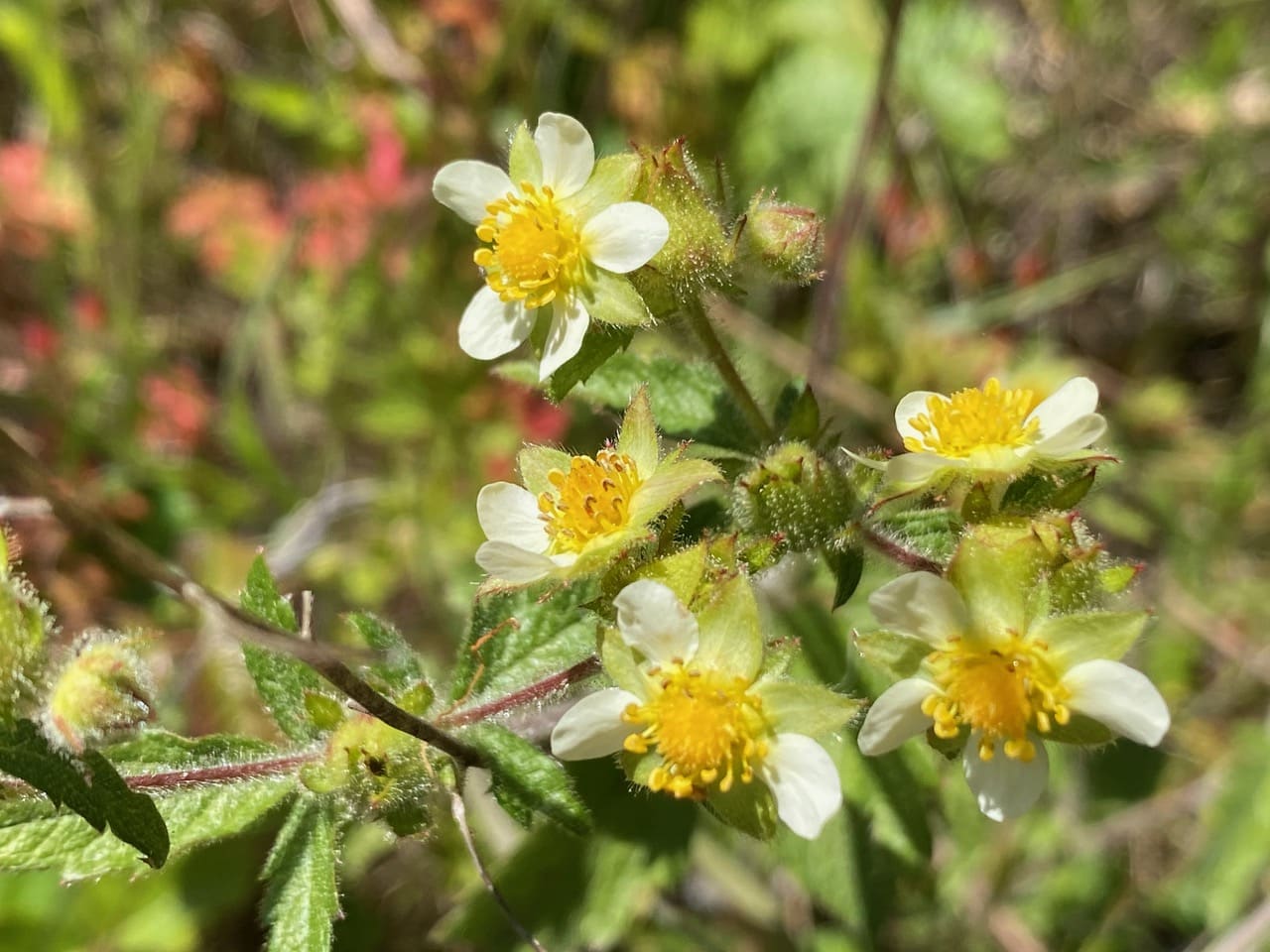 The Sticky Cinquefoil, Drymocallis glandulosa is in peak bloom now along Skyline Trail. Although the small white flowers are inconspicuous they are a good source of nectar and pollen, much loved by the small bees.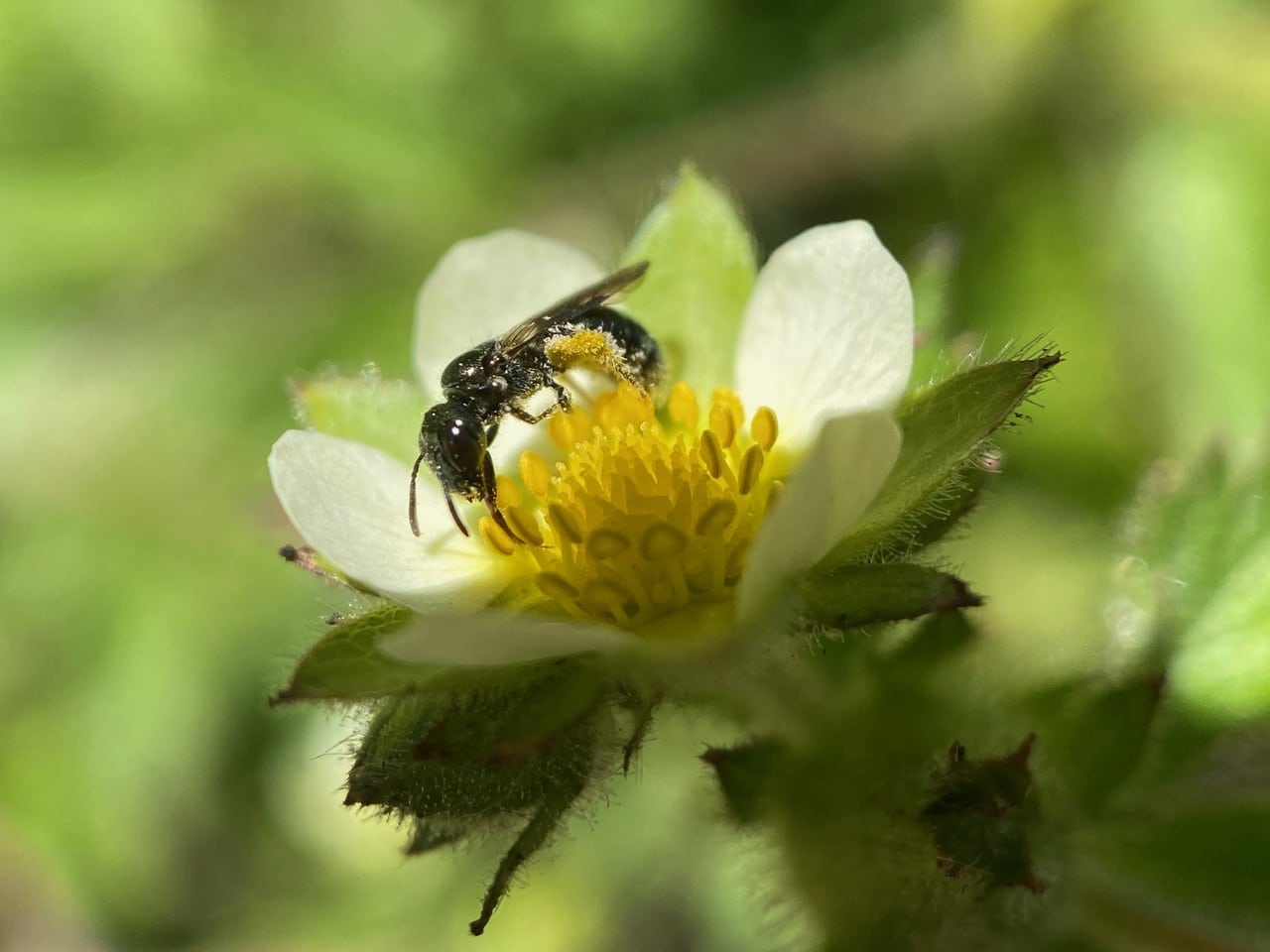
The glossy black Small Carpenter Bees, Ceratina sp. (family Apidae) are frequently visitors to the Sticky Cinquefoil flowers.
The Small Carpenter Bee genus Ceratina is closely related to the more familiar, and much larger Carpenter Bees (genus Xylocopa). Ceratina are typically dark, shiny, even metallic bees, with fairly sparse body hairs and a weak scopa on the hind leg. The shield-shaped abdomen comes to a point at the tip. Some species have yellow markings, often on the face.
Females excavate nests with their mandibles in the pith of broken or burned plant twigs and stems. While many species are solitary, a number are subsocial. Both male and female carpenter bees overwinter as adults within their old nest tunnels, emerging in the spring to mate. In the spring, this resting place (hibernaculum) is modified into a brood nest by further excavation. The female collects pollen and nectar, places this mixture (called bee bread) inside the cavity, lays an egg on the provision, and then caps off the cell with chewed plant material. Several cells are constructed end to end in each plant stem.

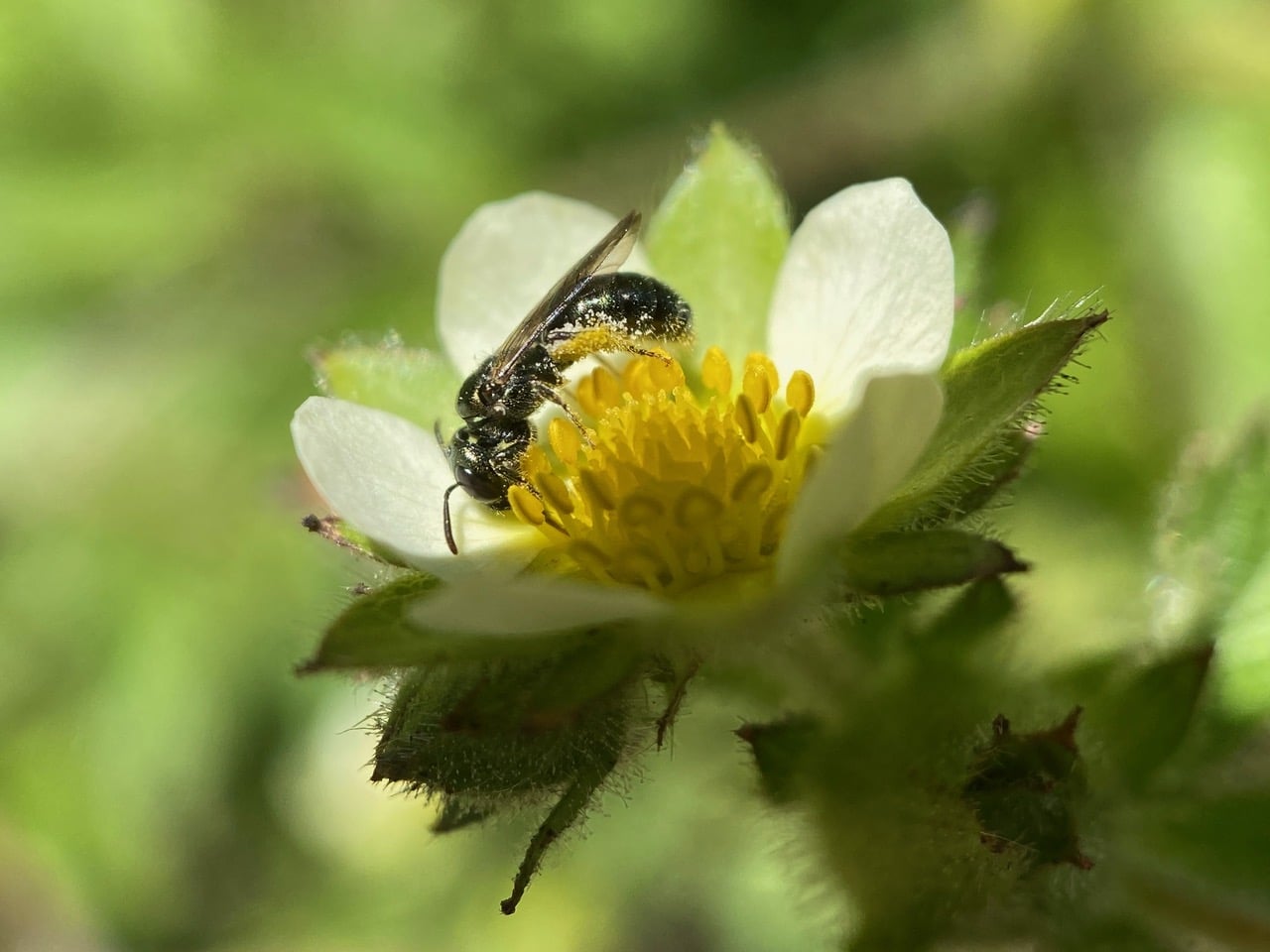
Female Ceratina have modest scopae on the hind legs.
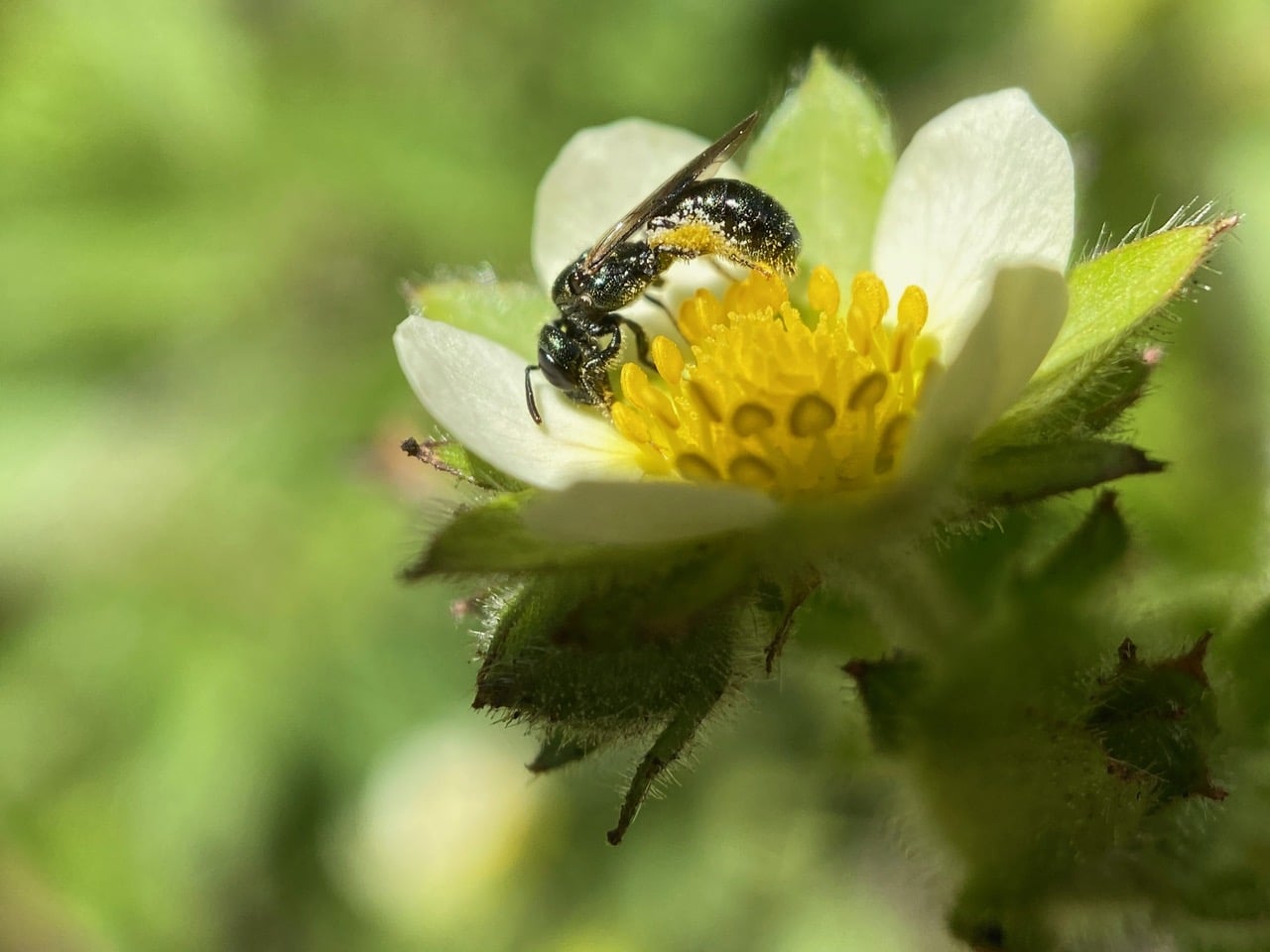
Sparse body hairs….

Shield-shaped abdomen that comes to a point at the tip.
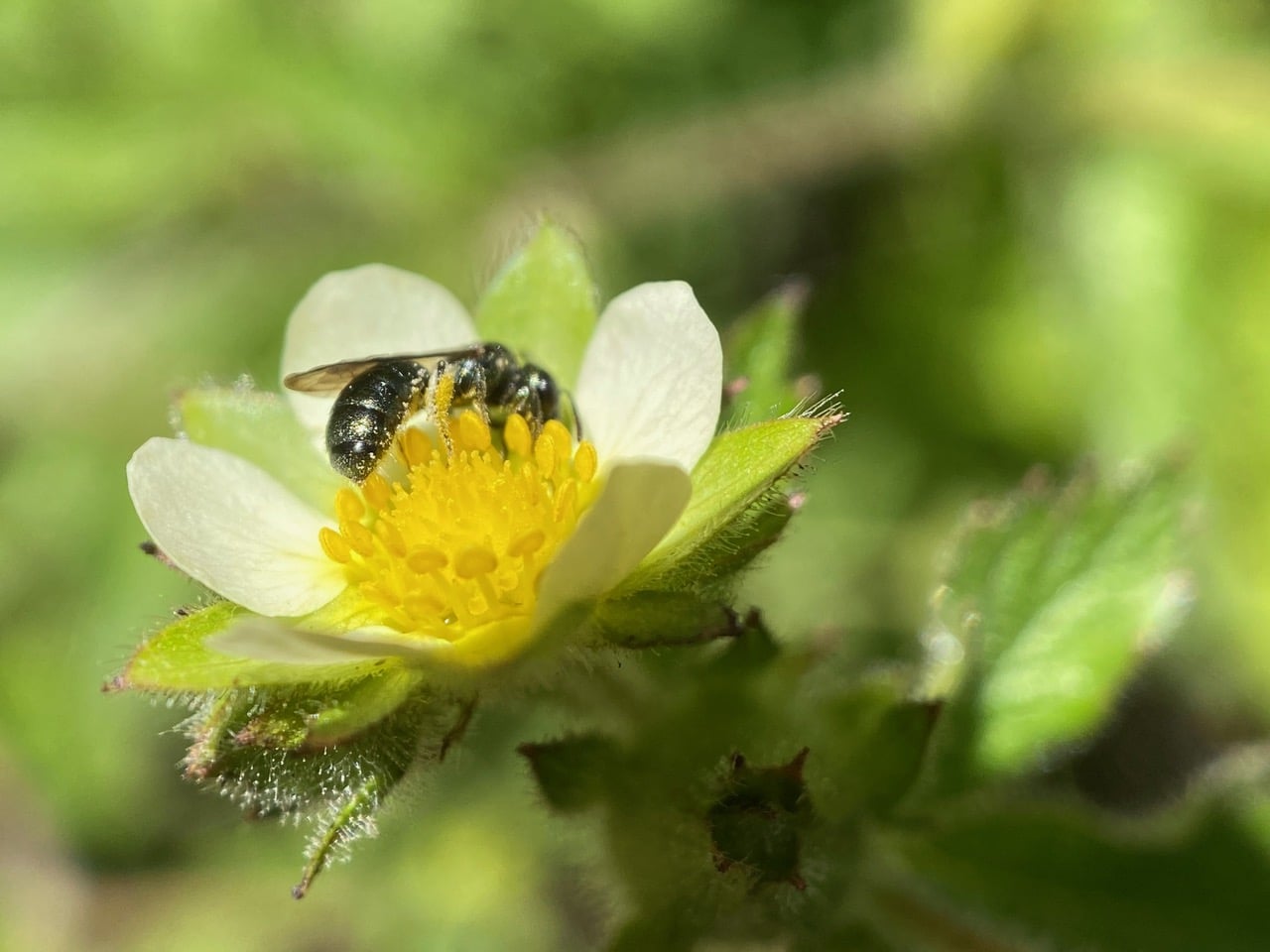
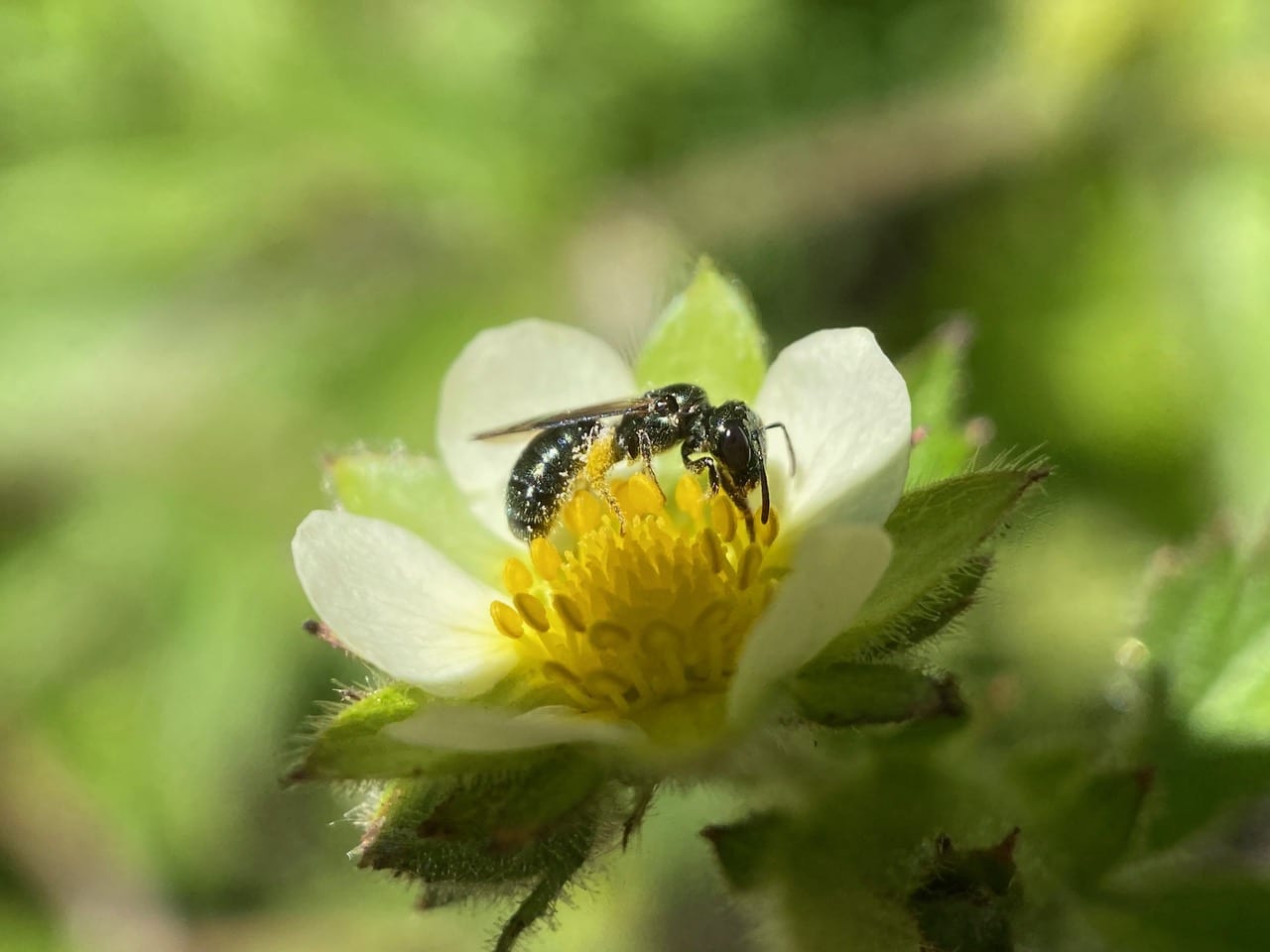
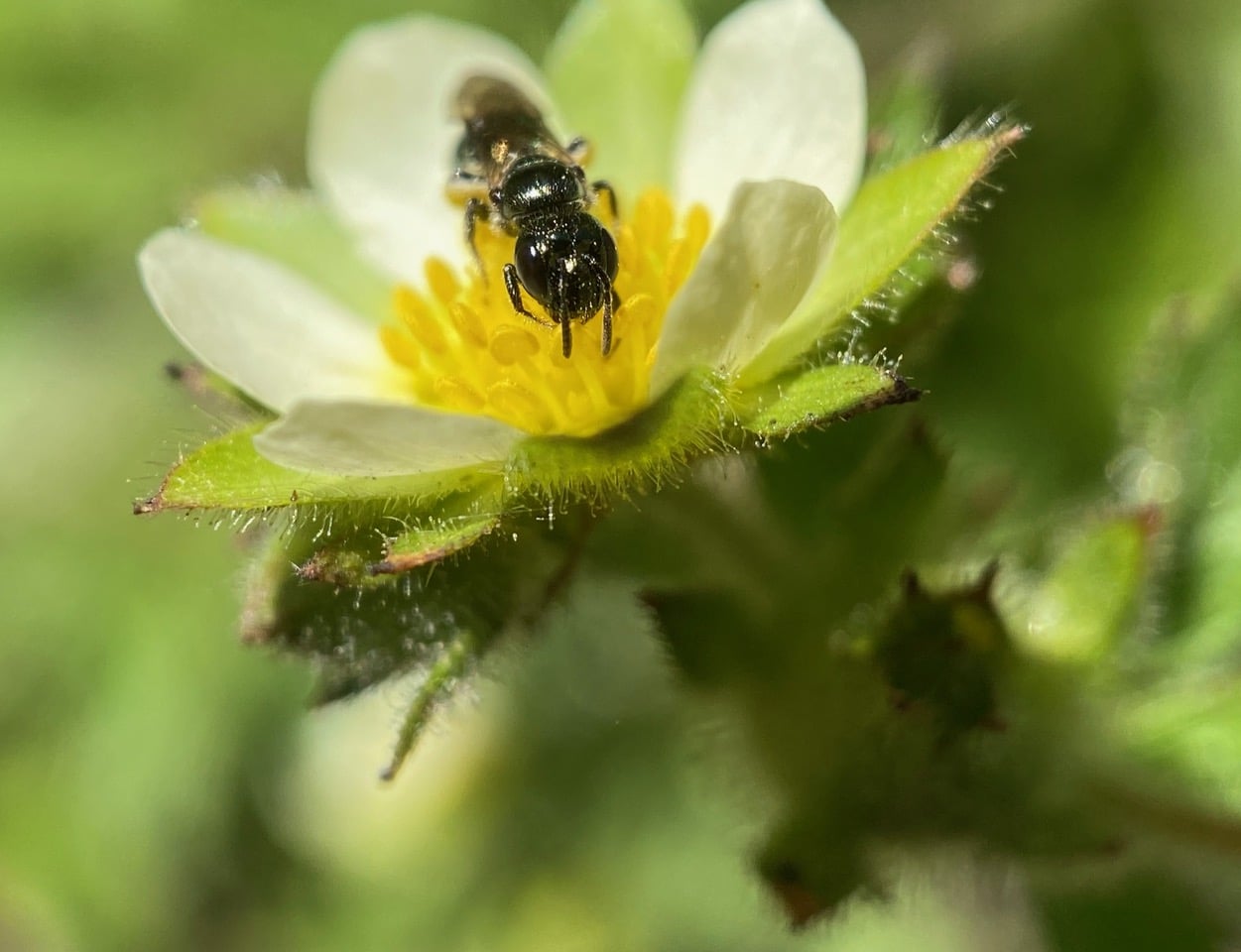
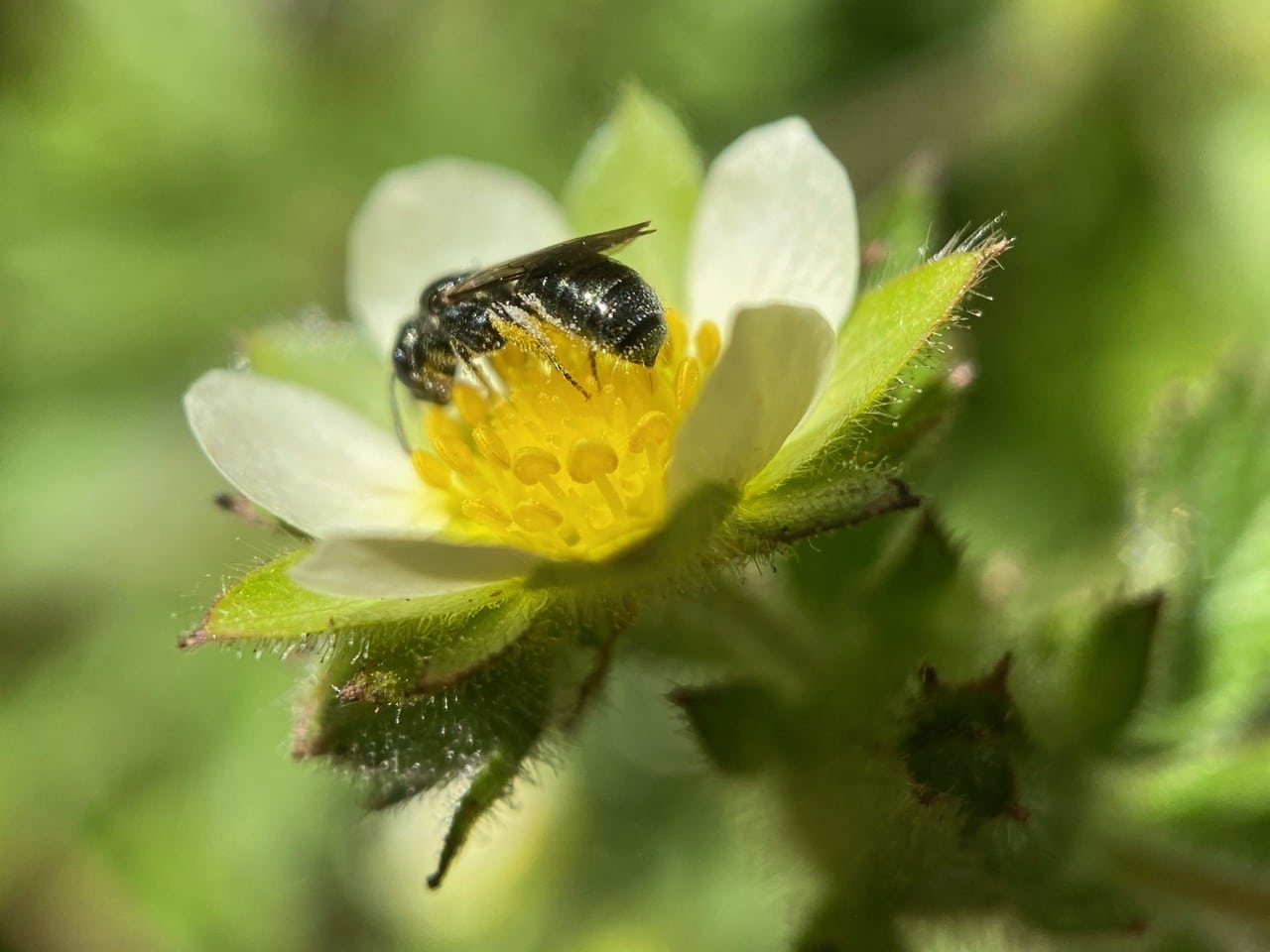
Again, that shield-shaped abdomen that comes to a point at the tip.
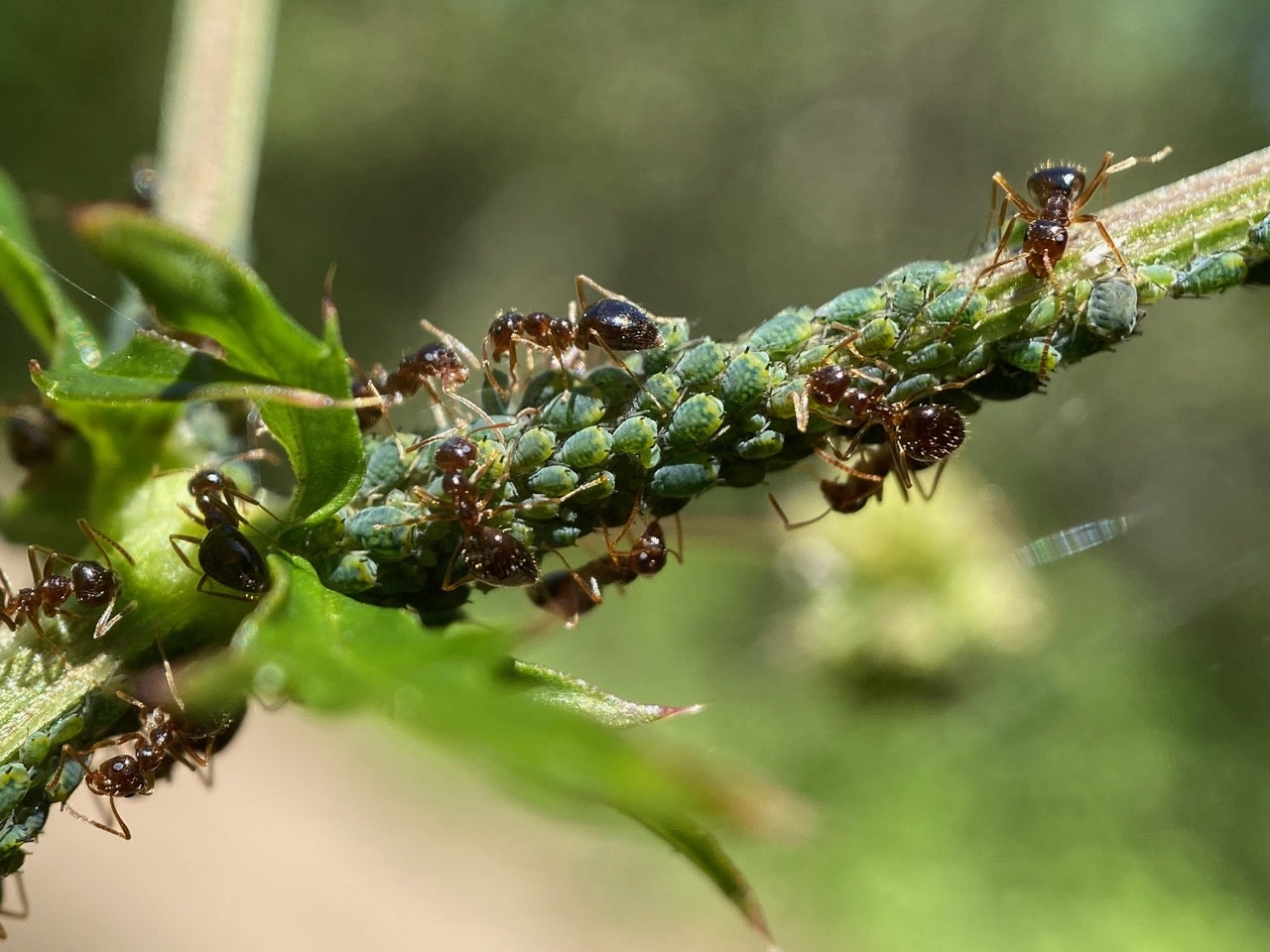
The colony of blue-green aphids on the Pacific Sanicle, Sanicula crassicaulis has grown markedly since I discovered it, so have the number of American Winter Ants that tend them.
Aphids are small sap-sucking insects in the order Hemiptera. A typical life cycle involves flightless females giving live birth to female nymphs – who may also be already pregnant, an adaptation called telescoping generations – without the involvement to males. Maturing rapidly, females breed profusely so that the number of these insects multiplies quickly. Winged females may develop later in the season, allowing the insects to colonize new plants. In temperate regions, a phase of sexual reproduction occurs in the fall, with the insect often overwintering as eggs.
Ants and aphids share a well-known mutualistic relationship. The aphids produce honeydew, a sugary food for the ants; in exchange, the ants care for and protect the aphids from predators and parasites. Some ants will “milk” the aphids to make them excrete the sugary substance. The ants stroke the aphids with their antennae, stimulating them to release the honeydew. Aphid-herding ants make sure the aphids are well-fed and safe. When the host plant is depleted of nutrients, the ants carry their aphids to a new food source. If predatory insects or parasites attempt to harm the aphids, the ants will defend them aggressively. Some species of ants continue to care for aphids during winter. The ants carry the aphids to their nest for the winter months, and transport them to a host plant to feed the following spring.
The American Ant, Prenolepis imparis is a widespread North American ant. A dominant woodland species, it is most active during cool weather, when most other ant species are less likely to forage. This species is one of a few native ants capable of tolerating competition with the invasive Argentine Ant, Linepithema humile. They are also aggressive toward other ants and produce abdominal secretions that are lethal to Argentine Ants. Prenolepis imparis is a generalist omnivore. Foragers are known for tending to aphids or scale insects from which they consume excreted honeydew, aggregating on rotting fruit, and exploiting protein-rich sources such as dead worms. The colony enters estivation (a hibernation-like state) and becomes inactive above ground for the warmer months, during which time eggs are laid and brood are reared. Reproductives overwinter and emerge on the first warm day of spring for their nuptial flight.

Hey, here’s a different bee on the Sticky Cinquefoil flower. It is even smaller than the small Carpenter Bee, only the size of a grain of rice.
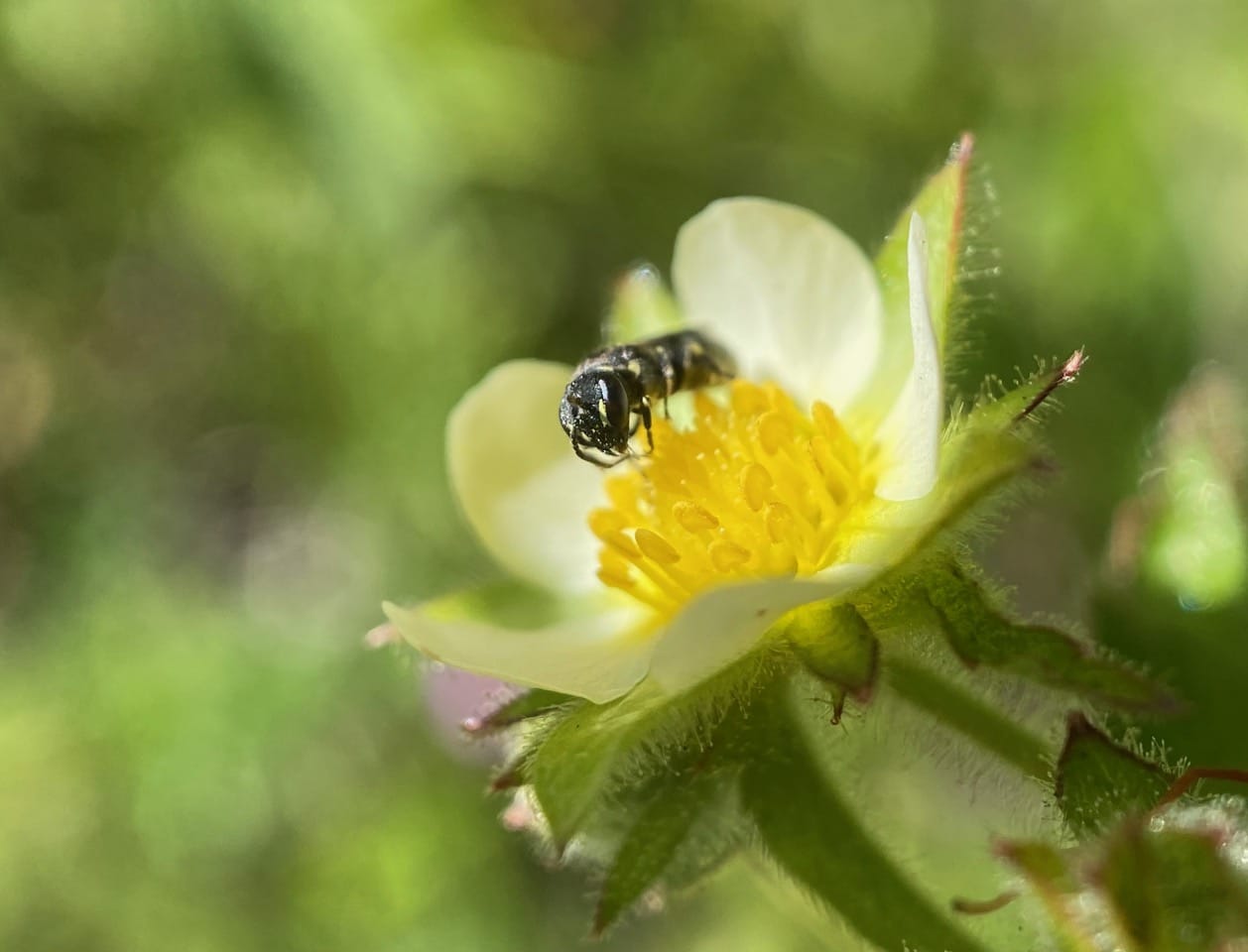
Ooh, see the yellow markings on the face, along the inner edge of the eyes? The bee is a female Masked Bee, Hylaeus sp. (family Colletidae). The males have more prominent markings on their faces.
Hylaeus (family Colletidae) are shiny, slender, hairless, and superficially wasp-like bees. They are small, 5 to 7 mm long, usually black with bright yellow or white markings on their face and legs. These markings are more pronounced on the males. Hylaeus do not carry pollen and nectar externally, they instead store their food in the crop and regurgitate it upon returning to their nests. They are primarily generalist foragers. Hylaeus are short-tongued, but their small body size enables them to access deep flowers. Hylaeus nest in stems and twigs, lining their brood cells with self-secreted cellophane-like material. They lack strong mandibles and other adaptations for digging, using instead pre-existing cavities made by other insects.

Here’s a closer look at her face.
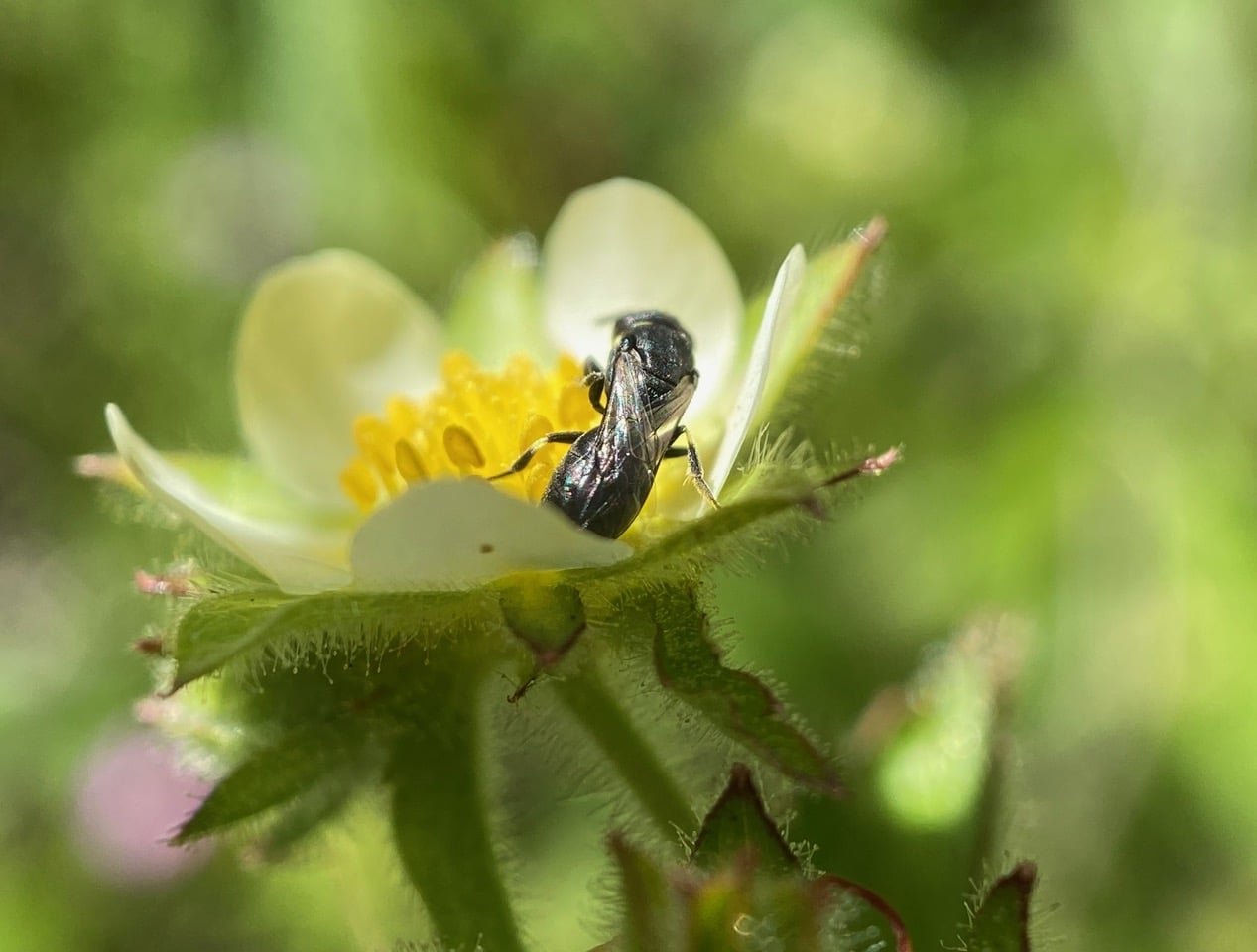
Look Ma, no scopa! Although this is a female bee, she does not have any external body parts for carrying pollen, unlike other bees. Both pollen and nectar that the Hylaeus females gather are temporarily stored in their crop and regurgitated when they return to their nest. Their larvae are fed a liquid diet.
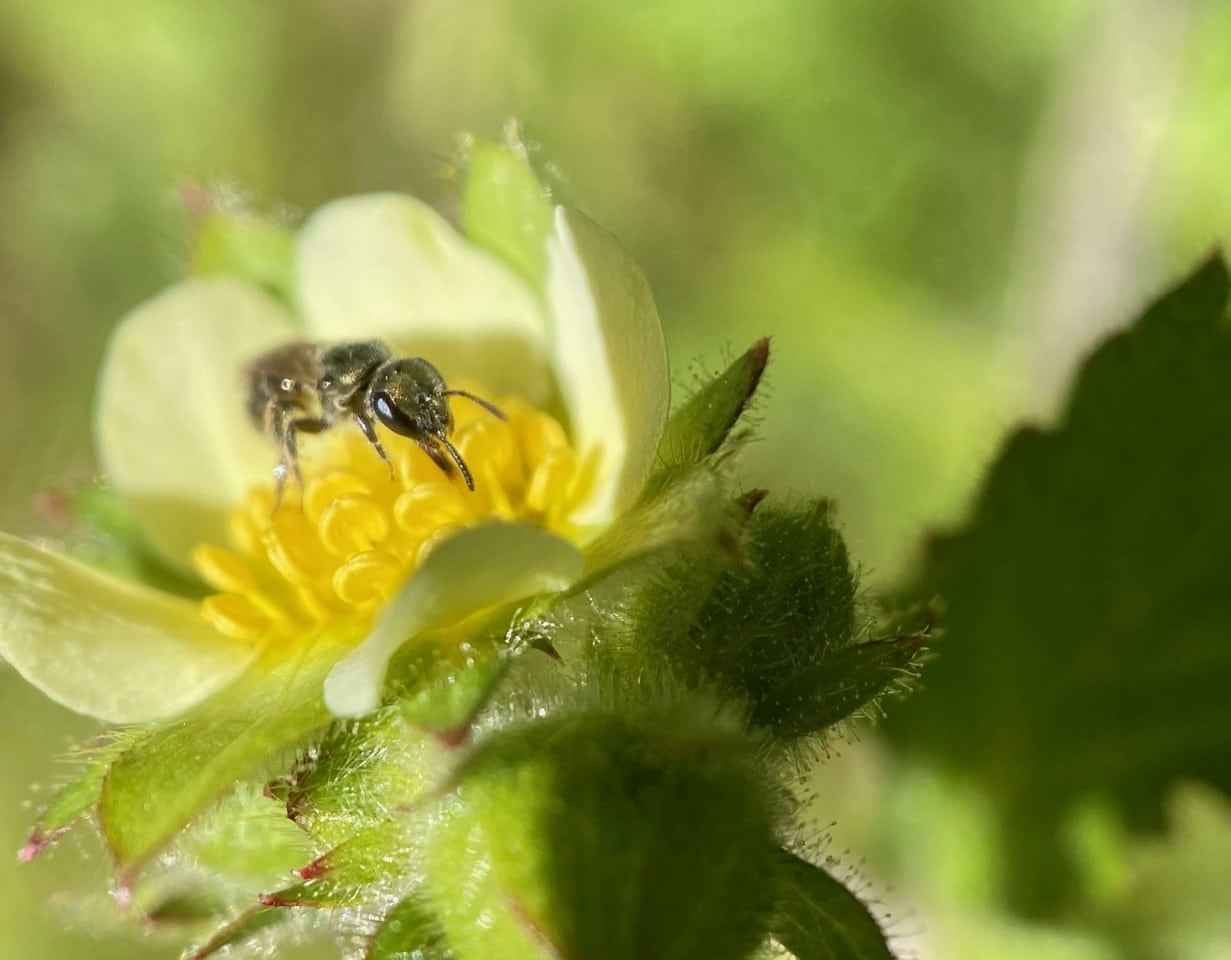
Yet another tiny bee on the Sticky Cinquefoil flower!
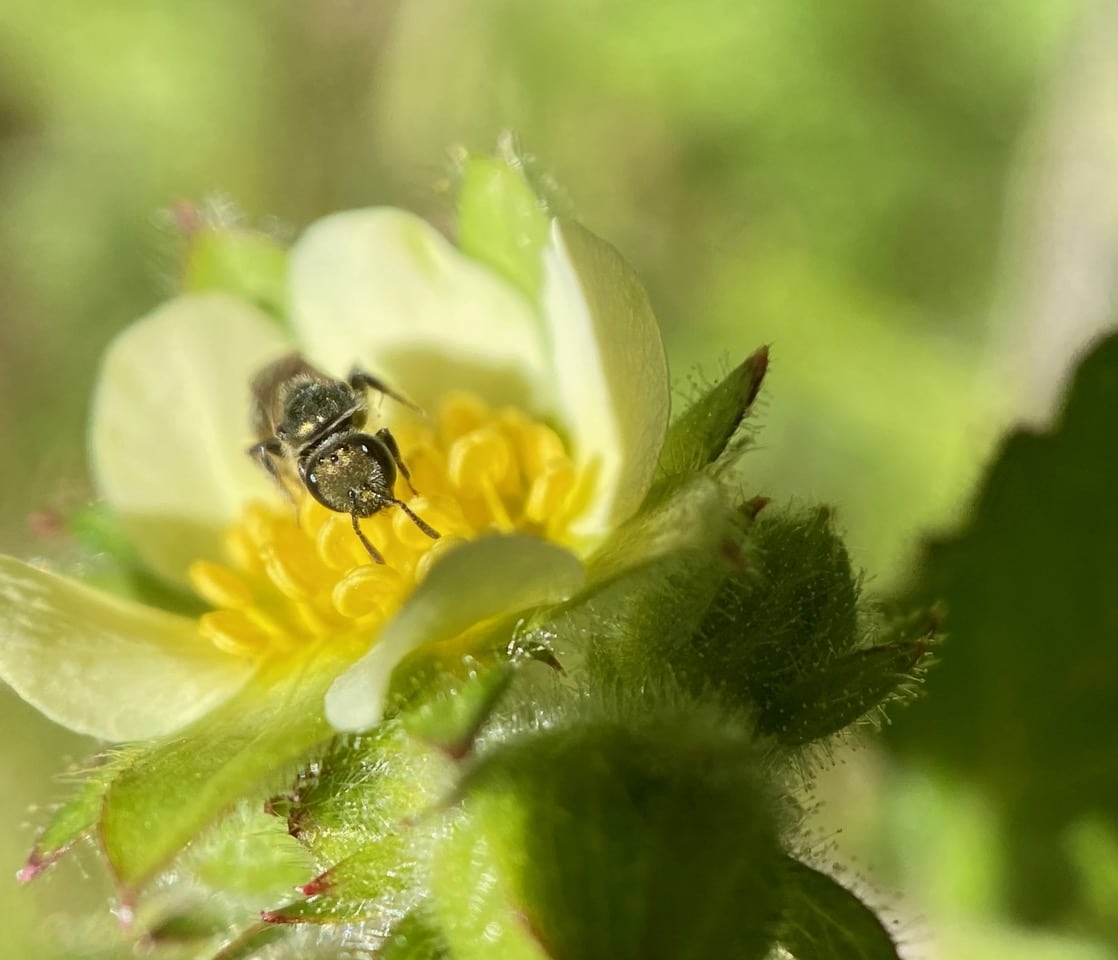
Its body reflects a metallic shine in the bright sunlight.

A Metallic Sweat Bee, Lasioglossum sp. (family Halictidae)?

A bee with a black-and-white striped abdomen lands on a Sticky Cinquefoil flower. It is female as evidenced by the pollen on her scopae. Male bees do not collect pollen.
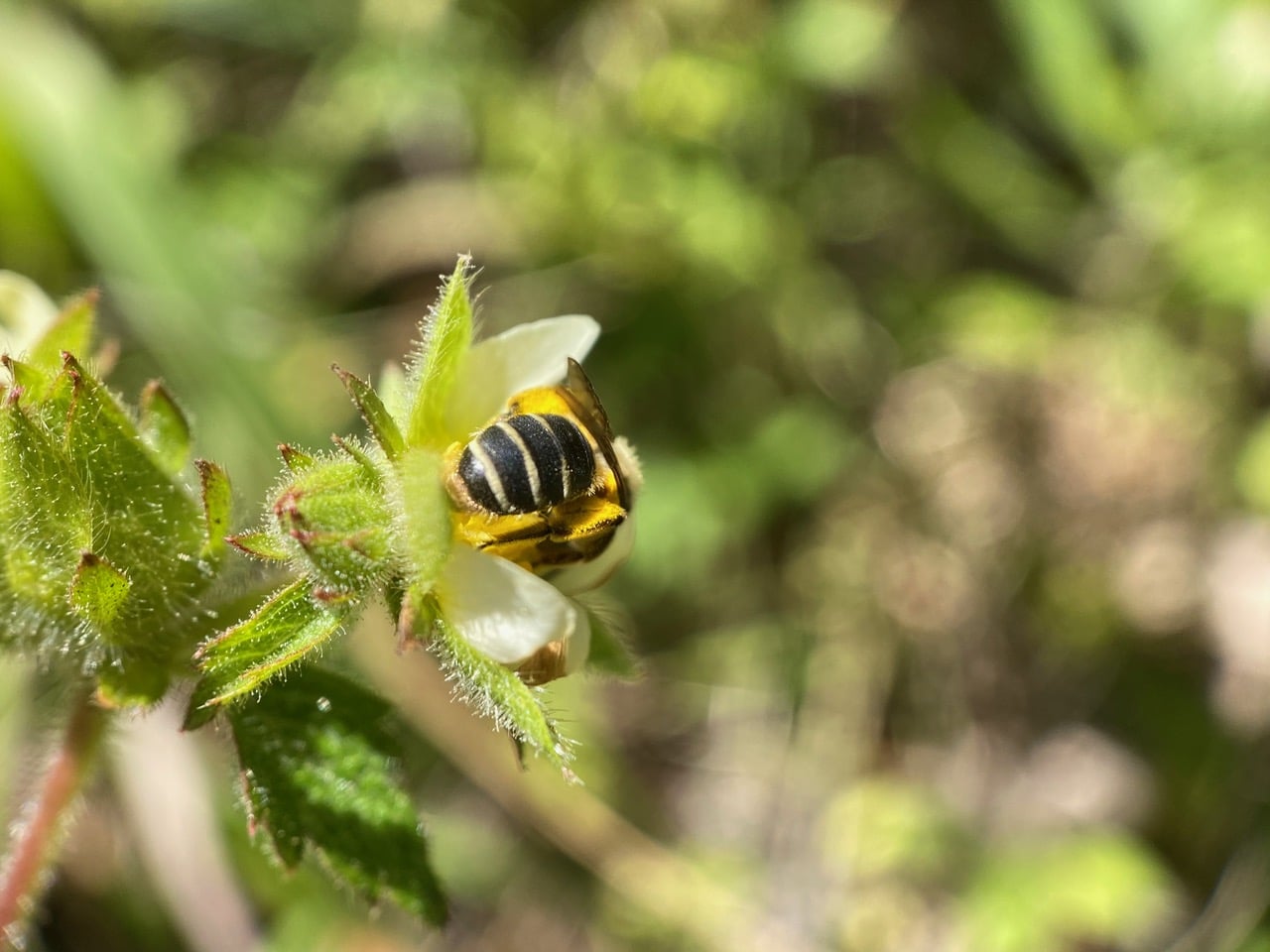
Her abdomen is long, and does not end with a “furrow”. So I think she is probably not a Sweat Bee, but a Mining Bee (family Andrenidae).
Bees in the family Andrenidae, commonly called miner bees or mining bees, are solitary ground-nesters. Andrenids are fairly small bees, usually dark-colored, and often banded. They are identified by the dense bristles (scopae) at the bases of the legs and the shin-like sections (tibias) of the legs, as well as by certain creases and grooves on the face and head and by unique wing venation. Many Andrenids resemble wasps – slender with long abdomen.
Most andrenids are specialist pollinators whose life cycle is timed to correspond precisely to the blooming of specific flowers. Because of this, andrenids are some of the first bees to emerge in spring, and many are active in March and April, as they visit early spring wildflowers.
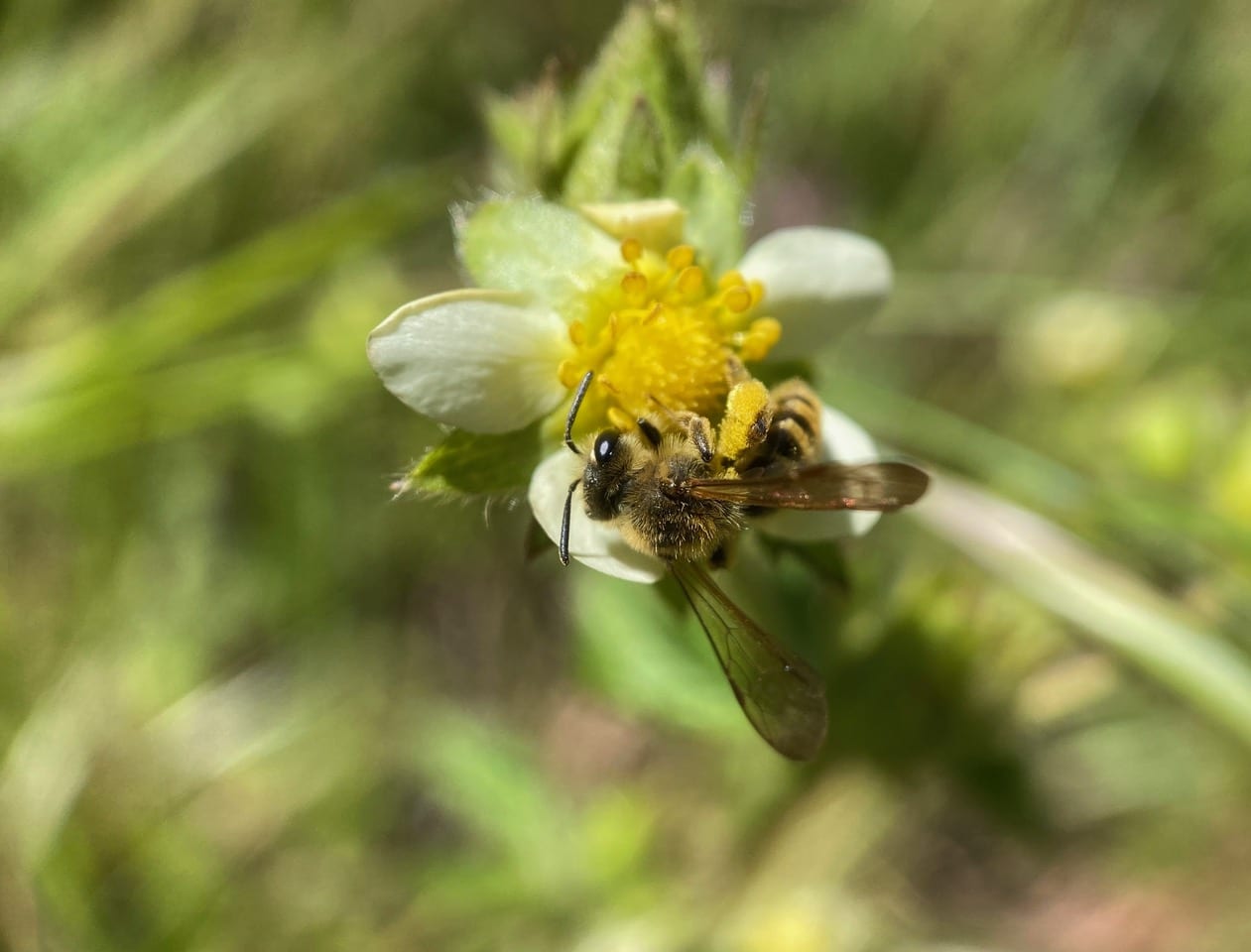 Here’s yet another little bee. She holds her wings up like a wasp, and has a good load of pollen on the scopae of her hind legs.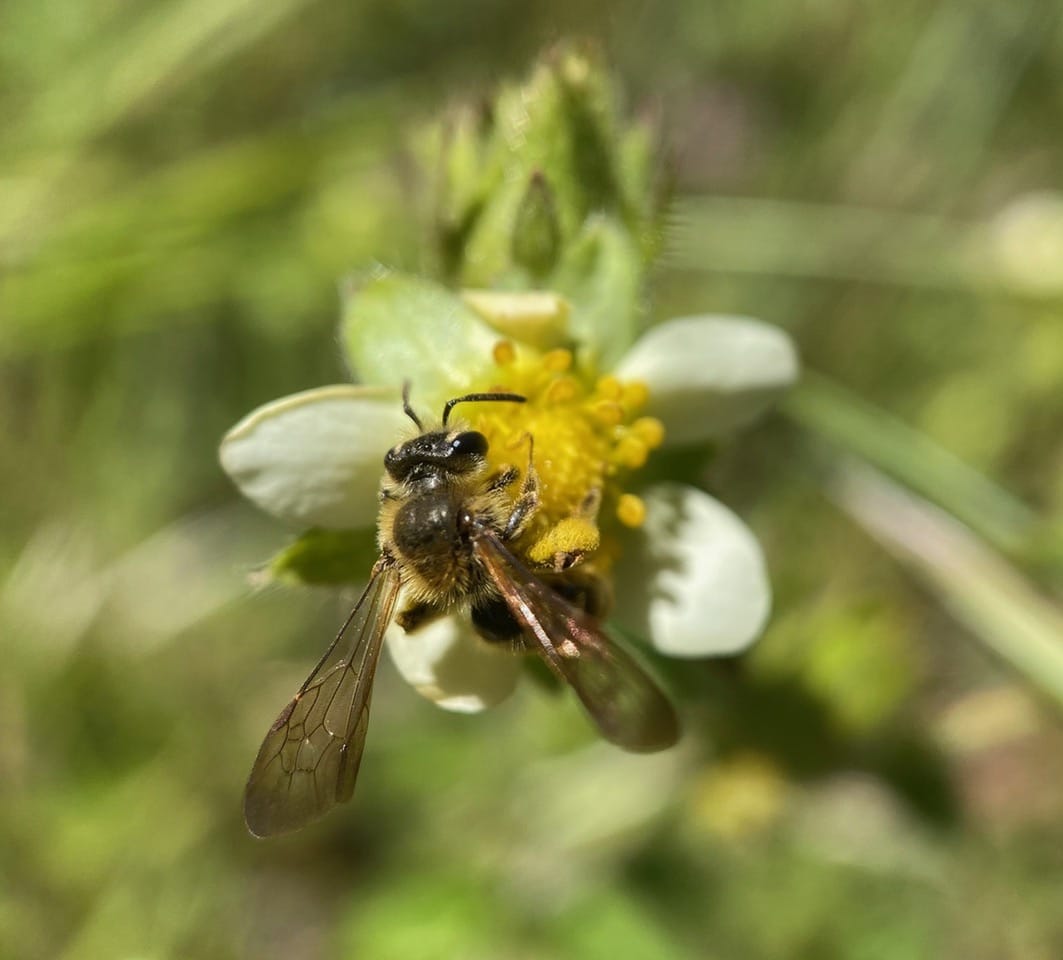
Hmmm… I see hints of a facial fovea – see the hedgerows of short hairs along the inner edge of her compound eyes? Facial fovea is a characteristic feature of Mining Bees in the genus Andrena (family Andrenidae).
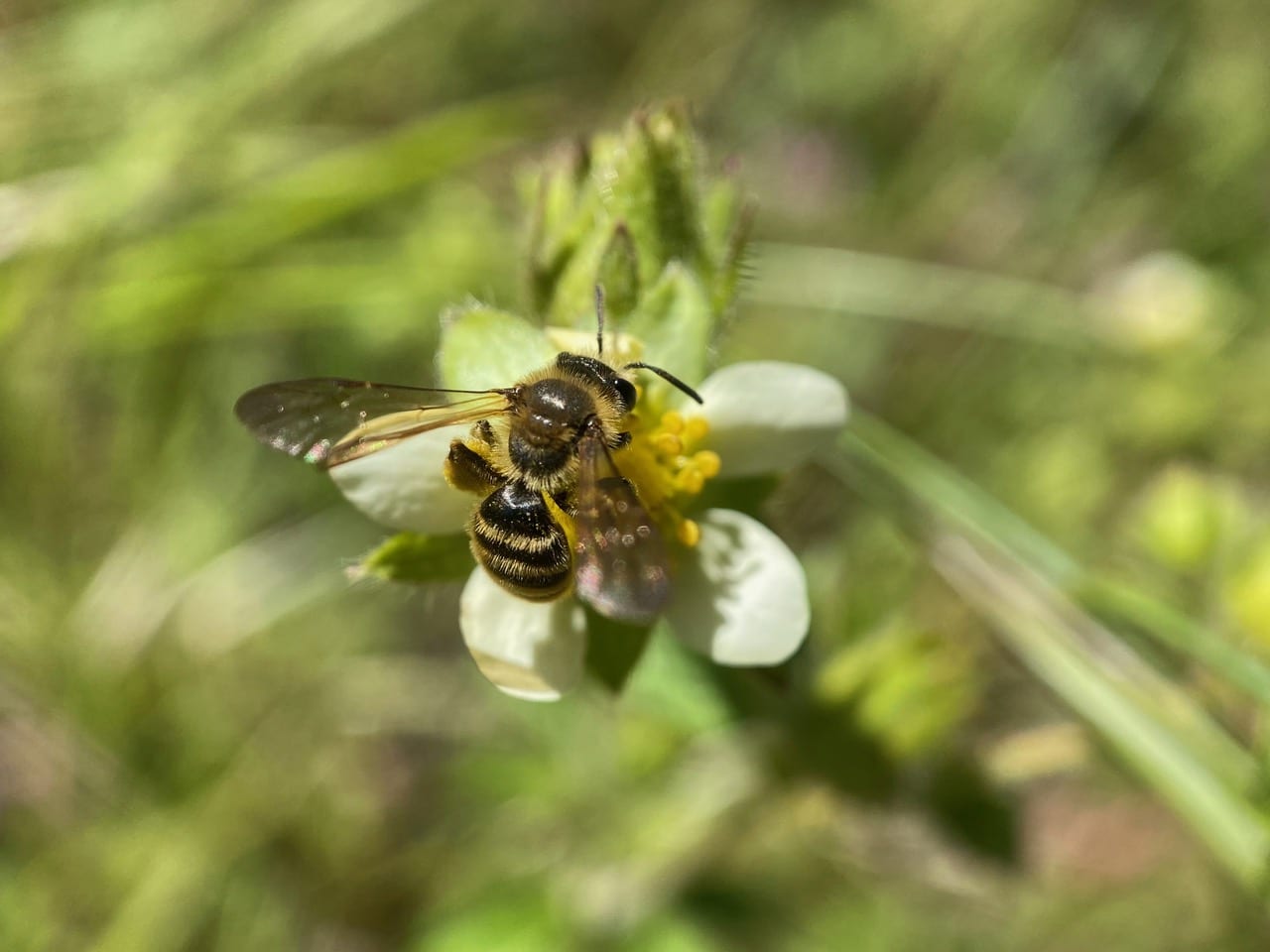
Viewed from this angle, her coarse golden hairs are obvious.


I think she is a Golden-haired Miner Bee, Andrena auricoma!
The Golden-haired Miner Bee, Andrena auricoma is a species of Miner Bees in the family Andrenidae. It is found in the western U.S., and is relatively rare outside California. The females are slightly larger, 8-10 mm long, compared to the males’ 6-9 mm. Females carry pollen in the scopae on their hind legs. They are generalist foragers, visiting flowers of several families. The flight season is from February into June with peak flight activity from March through May. A. auricoma are solitary bees that nest in the soil, usually in bare, flat ground.