

Pollinator Post 5/7/23 (3)
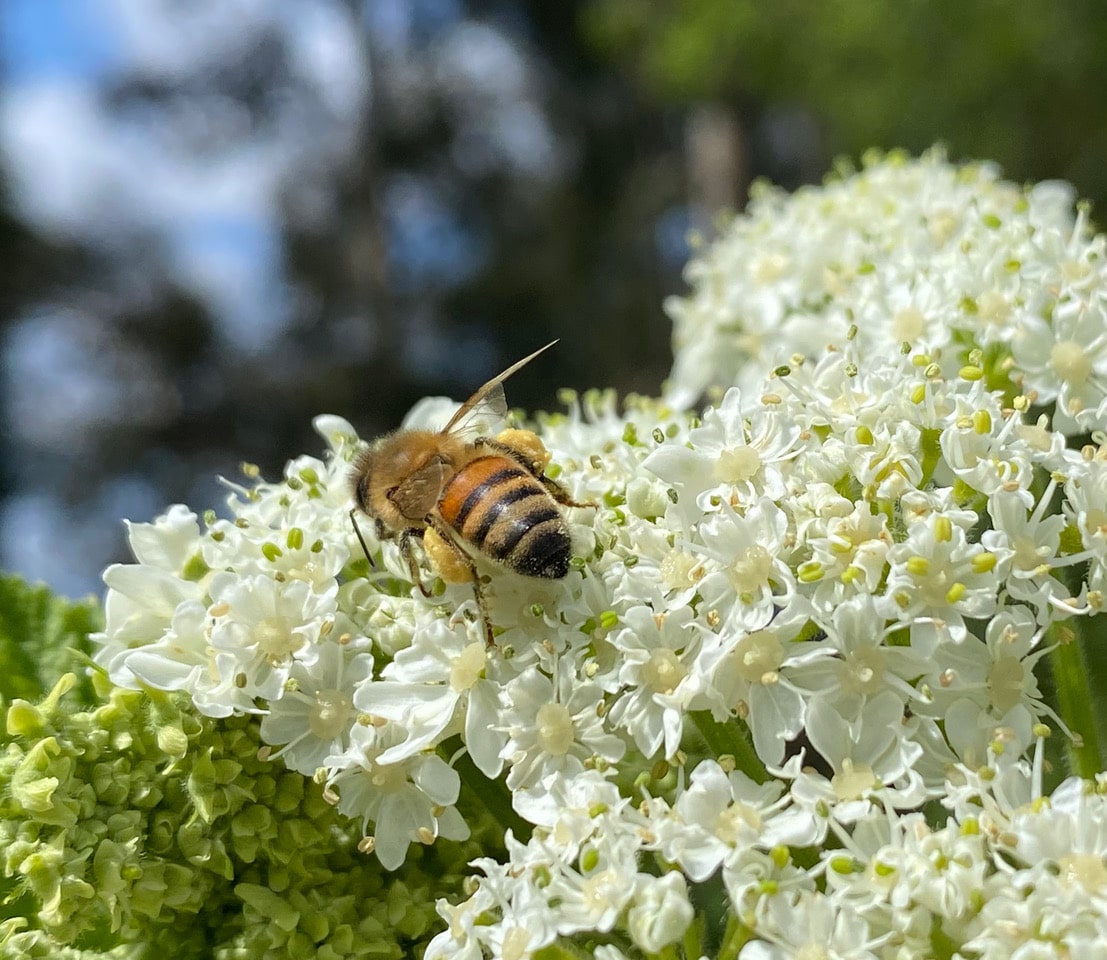
While the European Honey Bees, Apis mellifera (family Apidae) are commonly seen at the Skyline Gardens, they have yet to make a strong appearance this year. This worker has collected a sizable load of pollen in her pollen baskets. Note that the pollen masses are attached to the outside of her hind legs.
The pollen collecting apparatus in Apidae bees, which include honey bees and bumble bees, is commonly called a “pollen basket” or corbicula. This region is located on the tibia of the hind legs and consists of hairs surrounding a concave region. After the bee visits a flower, she begins to groom herself and brushes the pollen down toward her hind legs and packs the pollen into her pollen basket. A little nectar mixed with the pollen keeps it all together like putty, and the stiff hairs surrounding the pollen basket hold it in place. A honey bee can fly with a full pollen load that weighs as much as a third of her body weight.
.jpg)
Many years ago, a fellow docent at the Oakland Museum, a retired entomologist told me that every Honey Bee worker out foraging should be treated with respect – they are all little old ladies. Bud was absolutely correct. All Honey Bee foragers are female, and they are the oldest of their hive mates. How do honey bees get their job assignments within their social organization?
A bee’s job is, first of all, determined by its sex. Male bees, or drones, don’t do any work. Making up roughly 10% of the colony’s population, they spend their whole lives eating honey and waiting for the opportunity to mate with the queen. The queen mates with up to 20 drones and will store their sperm in her spermatheca for the rest of her life. That’s where male duties end. Female bees, known as worker bees, make up the vast majority of a hive’s population, and they do all the work to keep it functioning. Females are responsible for the construction, maintenance, and proliferation of the nest and the colony. When a worker bee emerges as an adult, she immediately starts cleaning the cell from which she hatched. Her first 3 days are spent cleaning cells to prepare them for the queen’s next round of eggs. Then her hormones kick in to initiate the next phase of work: nursing the young. The worker bee spends about a week nursing the brood, feeding larvae with royal jelly. Next, the worker bee enters the third phase, as a sort of utility worker, moving farther away from the nest’s center. Here she builds cells and stores food in the edge of the nest for about a week. A worker’s hormone shifts into the final phase of work at around 41st day: foraging. This work is the most dangerous and arguably the most important. It’s only done by older bees who are closer to death. As the worker bee approaches her fourth week of nonstop work, she senses her end of days, and removes herself from the hive, so as not the become a burden to the colony. If she dies in the hive, her hive mates would have to remove her corpse. Thus is the life of a female honey bee during the active seasons of spring and summer, compulsively working from the day she’s born until the day she expires.
So, don’t forget to tip your hat to the “little old ladies” you see in the garden!
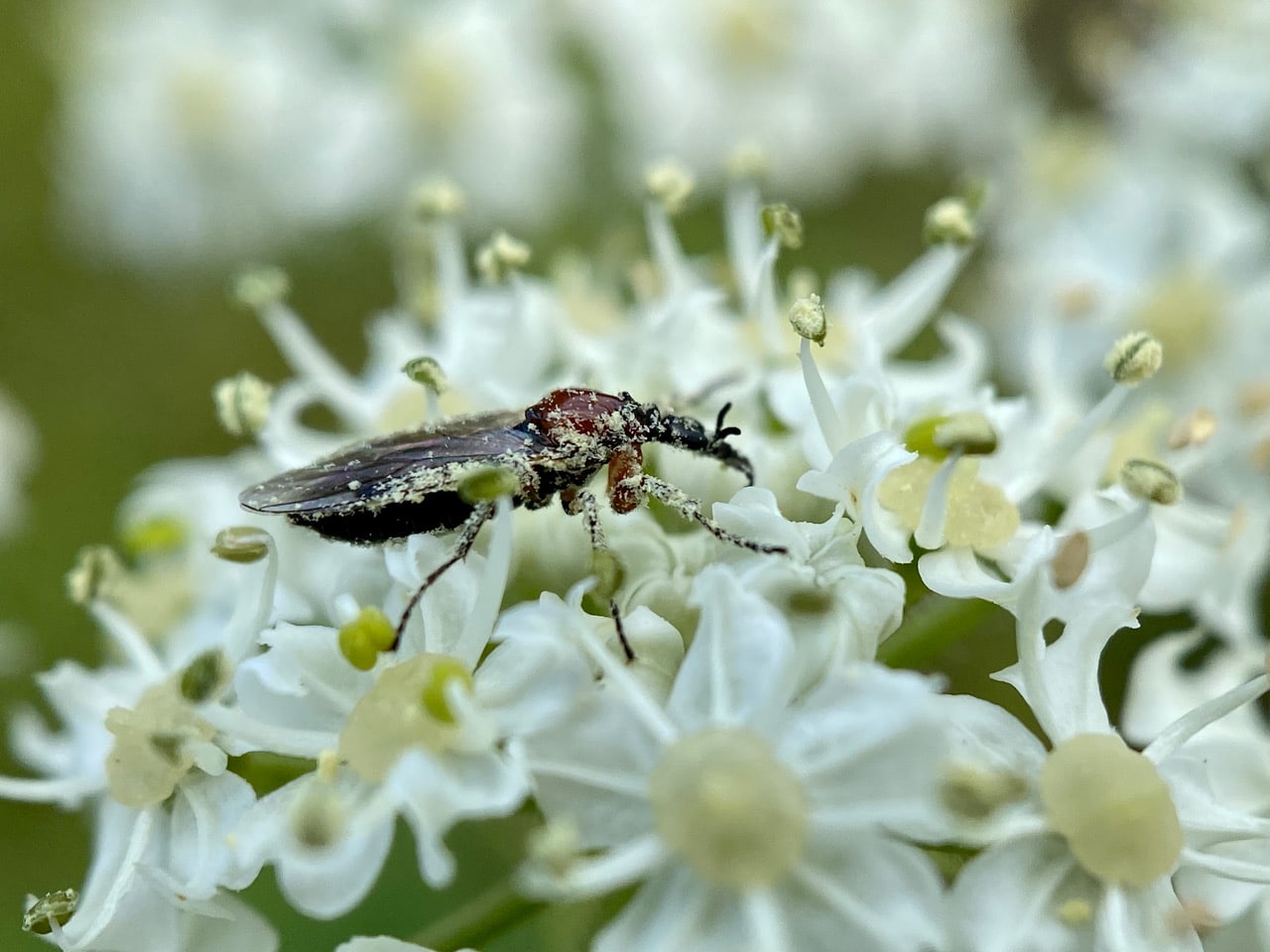
A female March Fly, Dilophus strigilatus (family Bibionidae) is covered with sticky pollen as she forages among the flowers of Cow Parsnip, Heracleum maximum. No wonder these little flies are considered good pollinators.
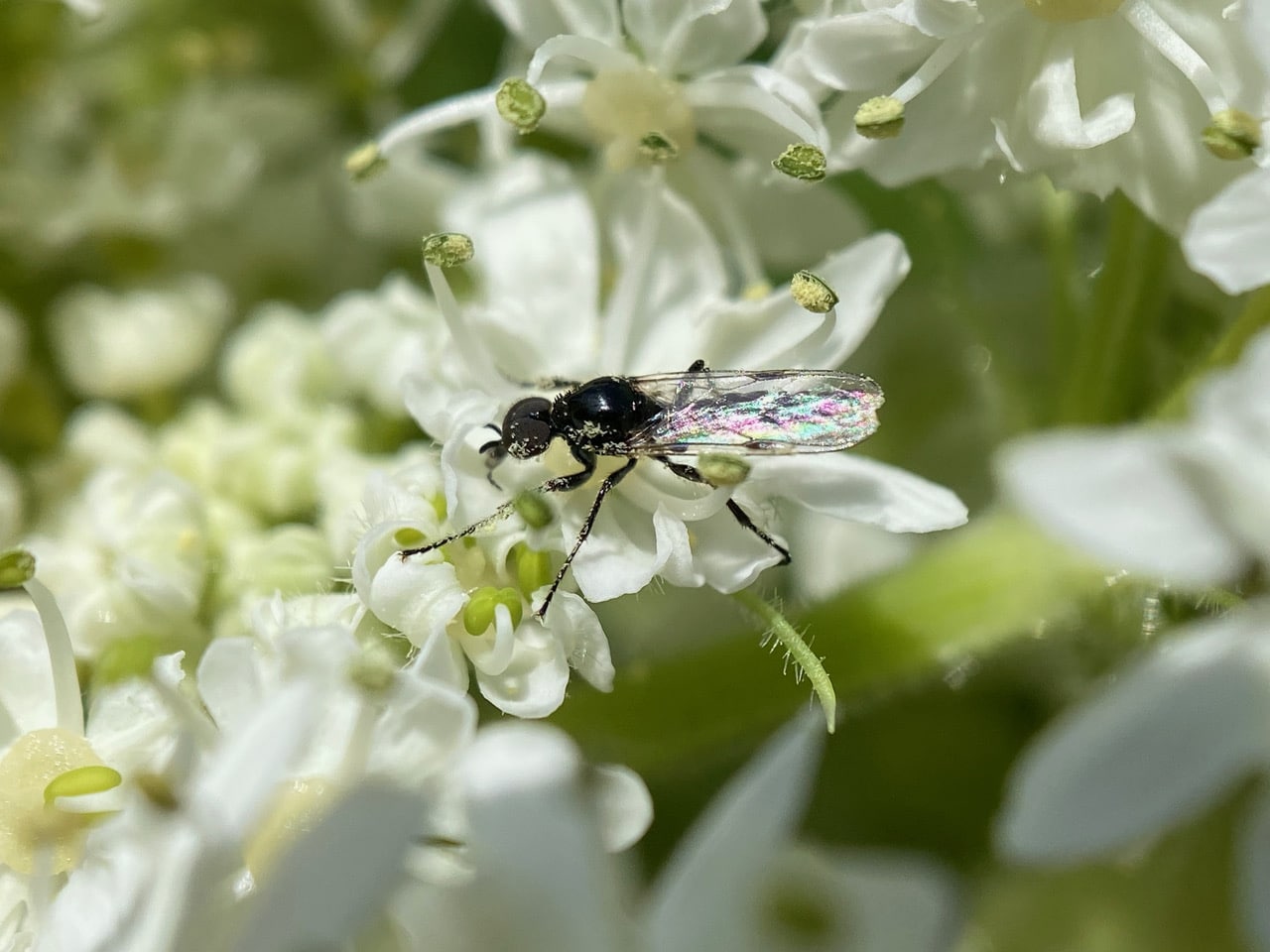
Ooh, here’s a Dilophus male!
March flies exhibit extreme sexual dimorphism – the sexes are morphologically distinct. The female is usually more colorful, has small eyes on the sides of long, narrow head, while the all-black males have huge eyes that touch in the middle and are split in half horizontally. Scientists speculate that the split makes it easier for them to see the other males that are above and below them in a mating swarm. Males gather in swarms that can blanket the ground and low vegetation. Female are attracted to the party and select mates in the frenzy of fly bodies.
I have just witnessed this well-known swarming behavior of the March Flies: March Flies swarming over a stand of California Mugwort – YouTube (The sound recorded is not produced by the flies, but from an airplane flying overhead!) Among the huge swarm I can see numerous pairs mating on the wing.
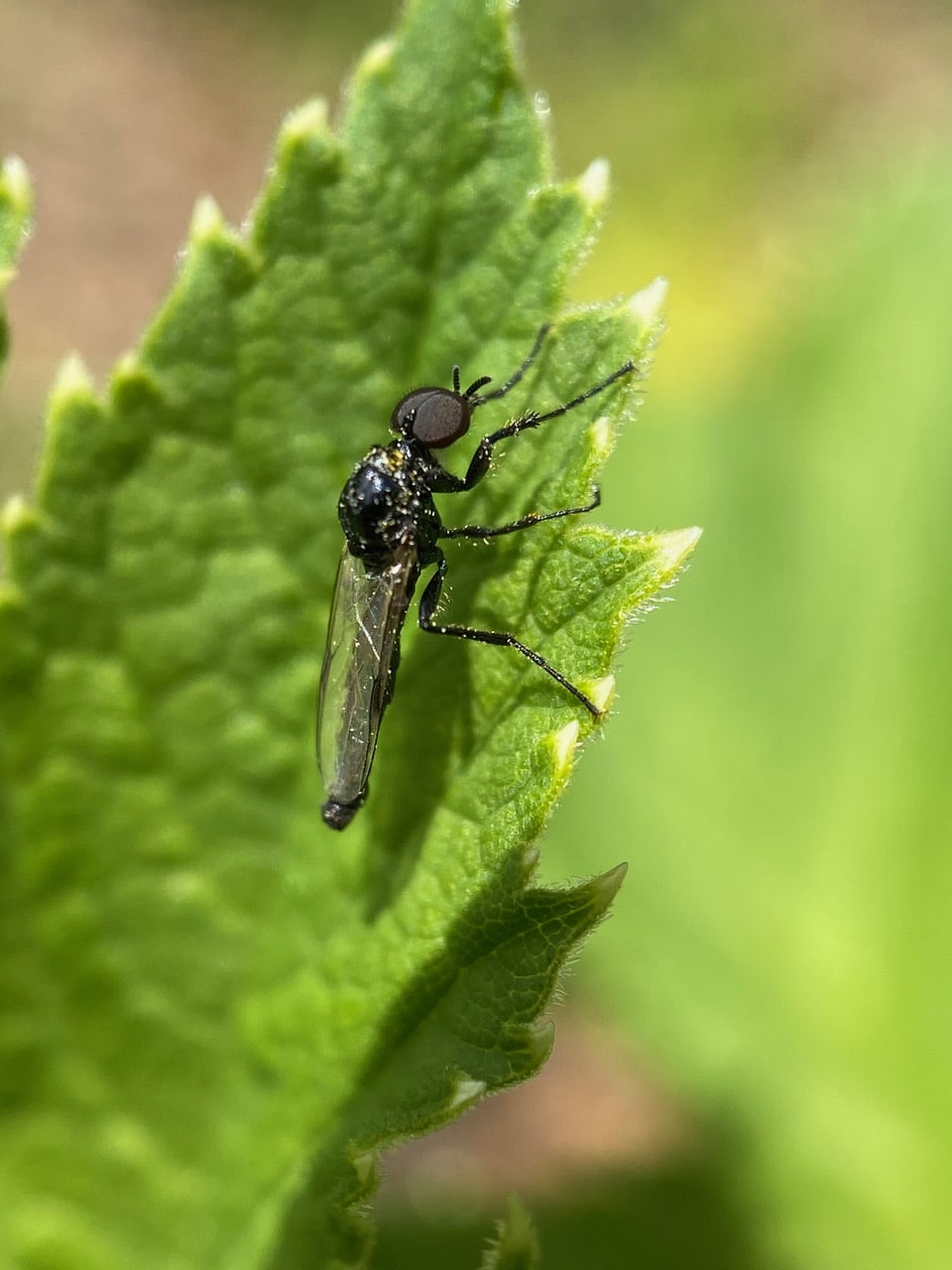
A close-up of a male March Fly, Dilophus sp. (family Bibionidae) showing his famously large, holoptic eyes. Holoptic eyes meet along a central line on the head, in many species nearly covering the exterior of the head. Holoptic eyes are typical of several Dipteran males. Not only are the Bibionid males’ eyes holoptic, they are also split in half horizontally. Scientists speculate that the split makes it easier for them to see the other males that are above and below them in a mating swarm.
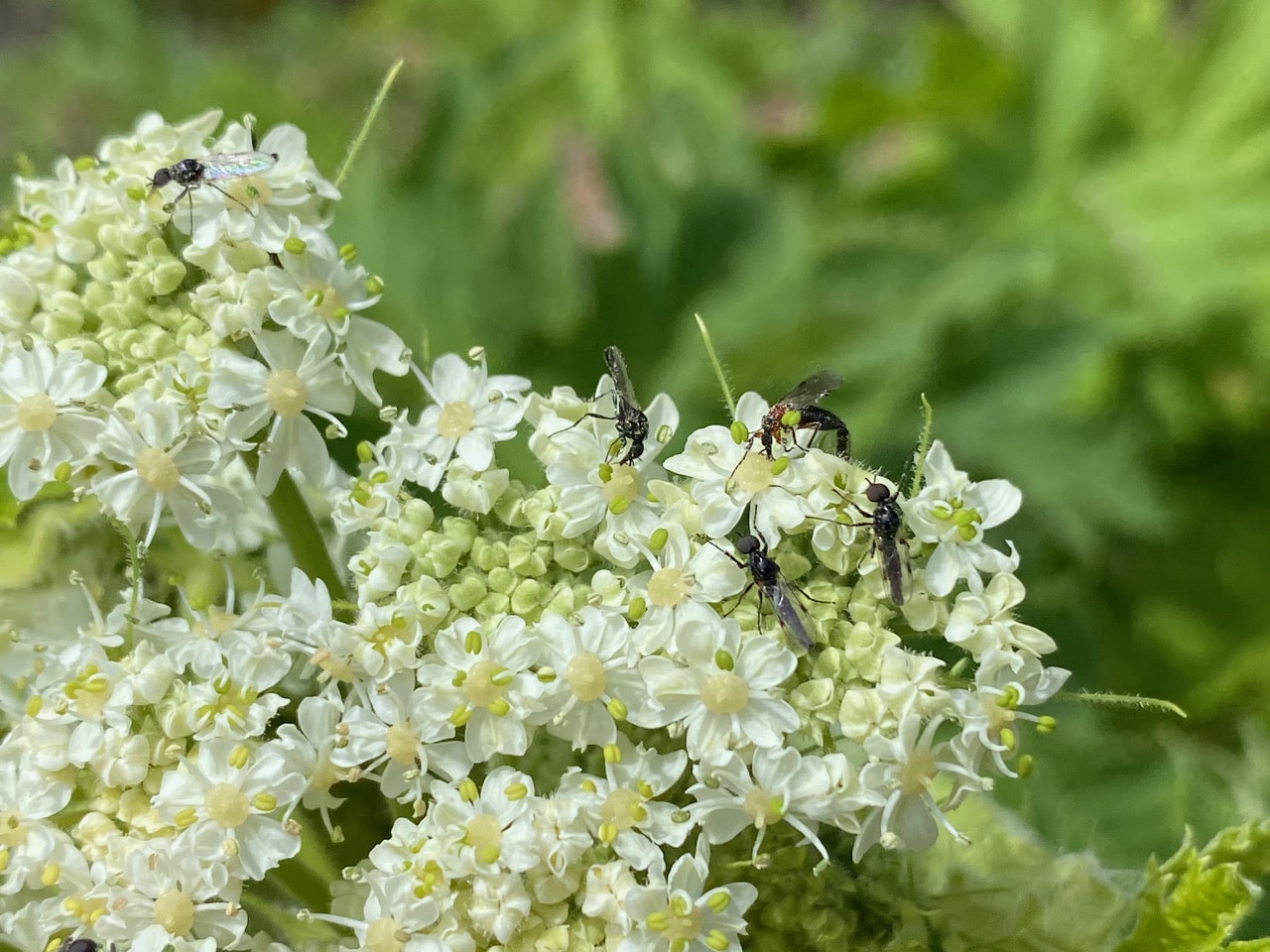
Some March Flies have alighted on an inflorescence of Cow Parsnip, some in copula. There seems to be a preponderance of males.
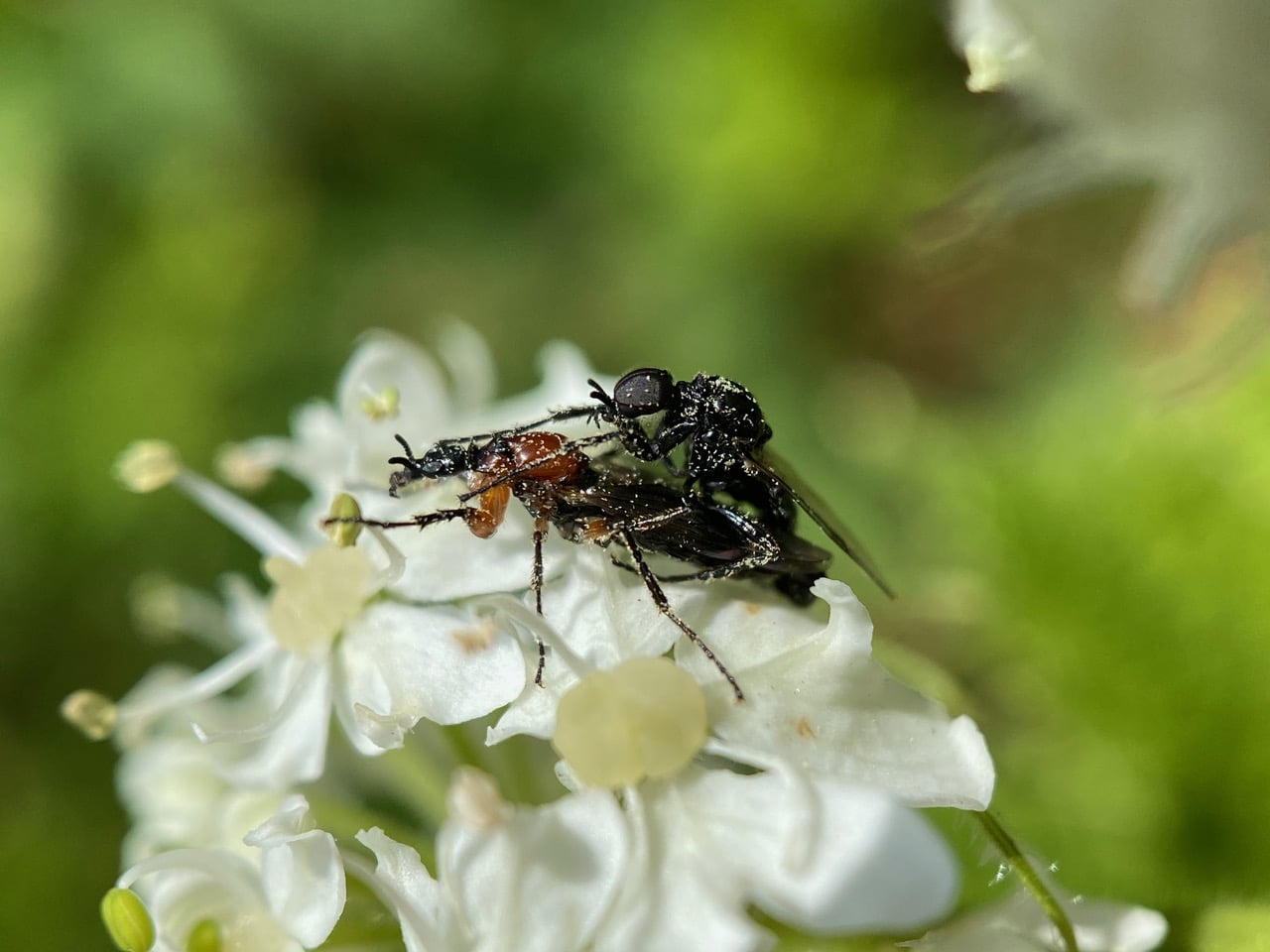
Here’s a mating pair. The all-black male is riding the female like an equestrian.
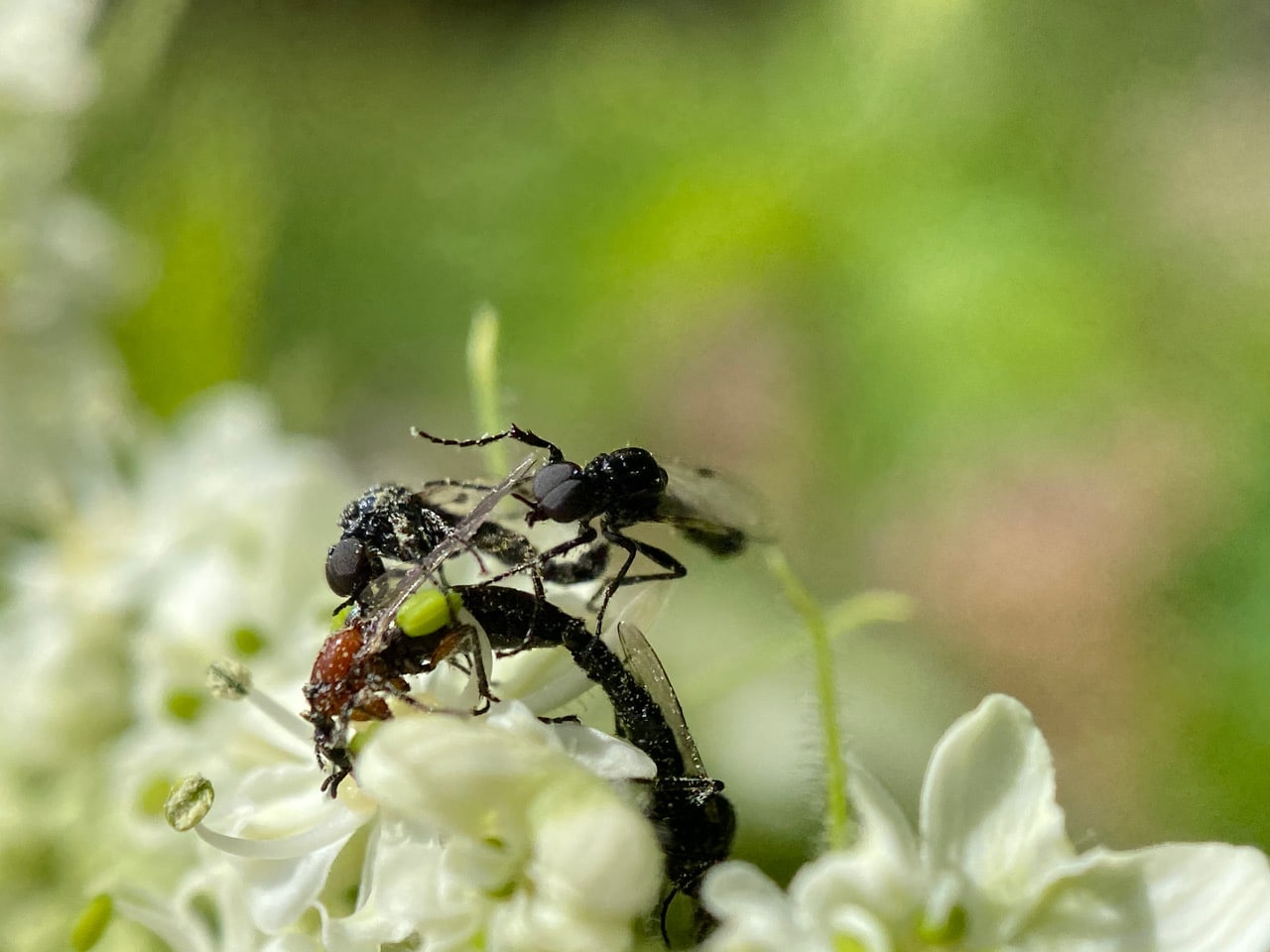
The nuptial bliss is disturbed by two other males trying to break up the mating pair. Competition for the female is fierce!
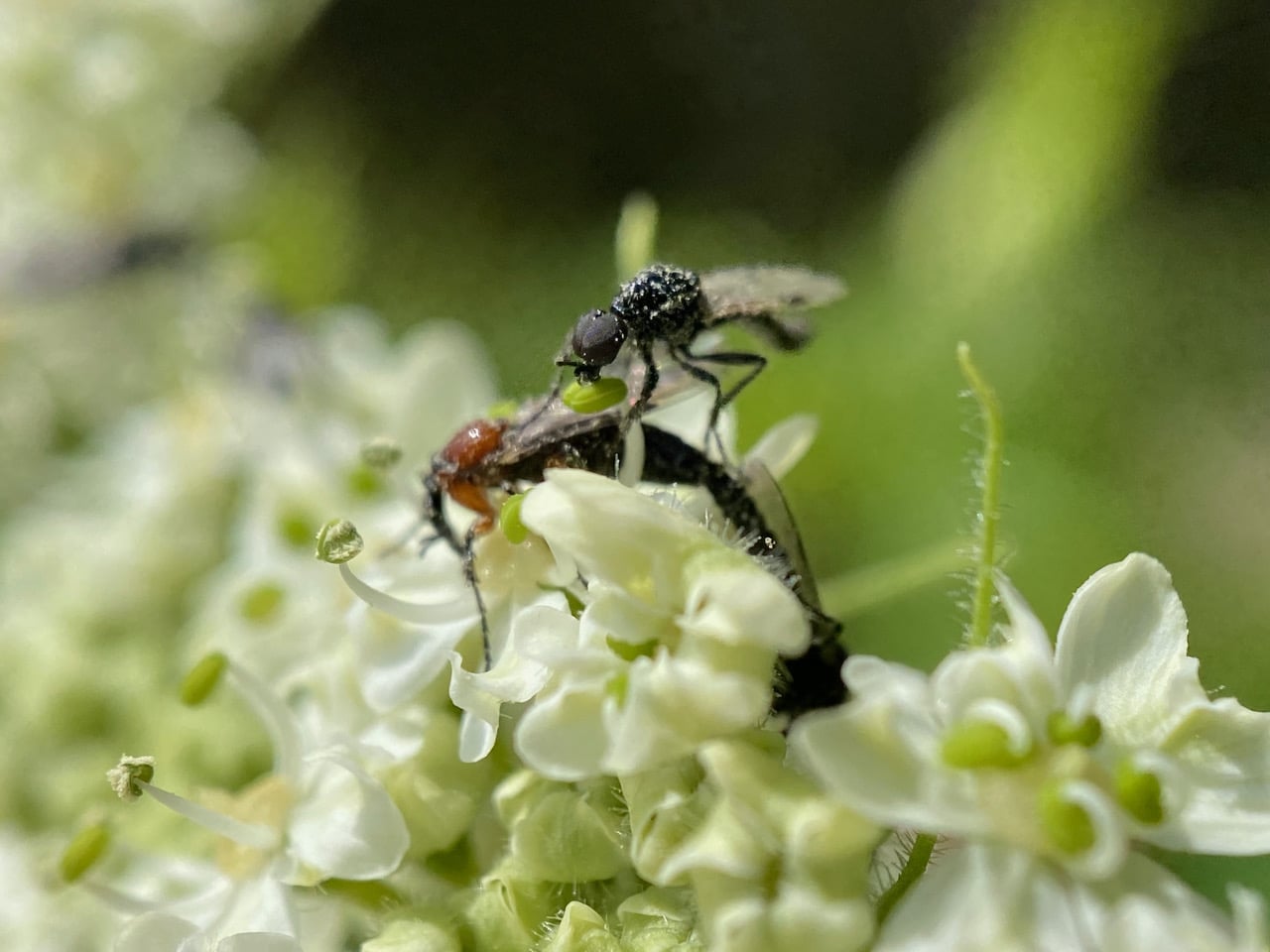
This interloper male has jumped on the female….
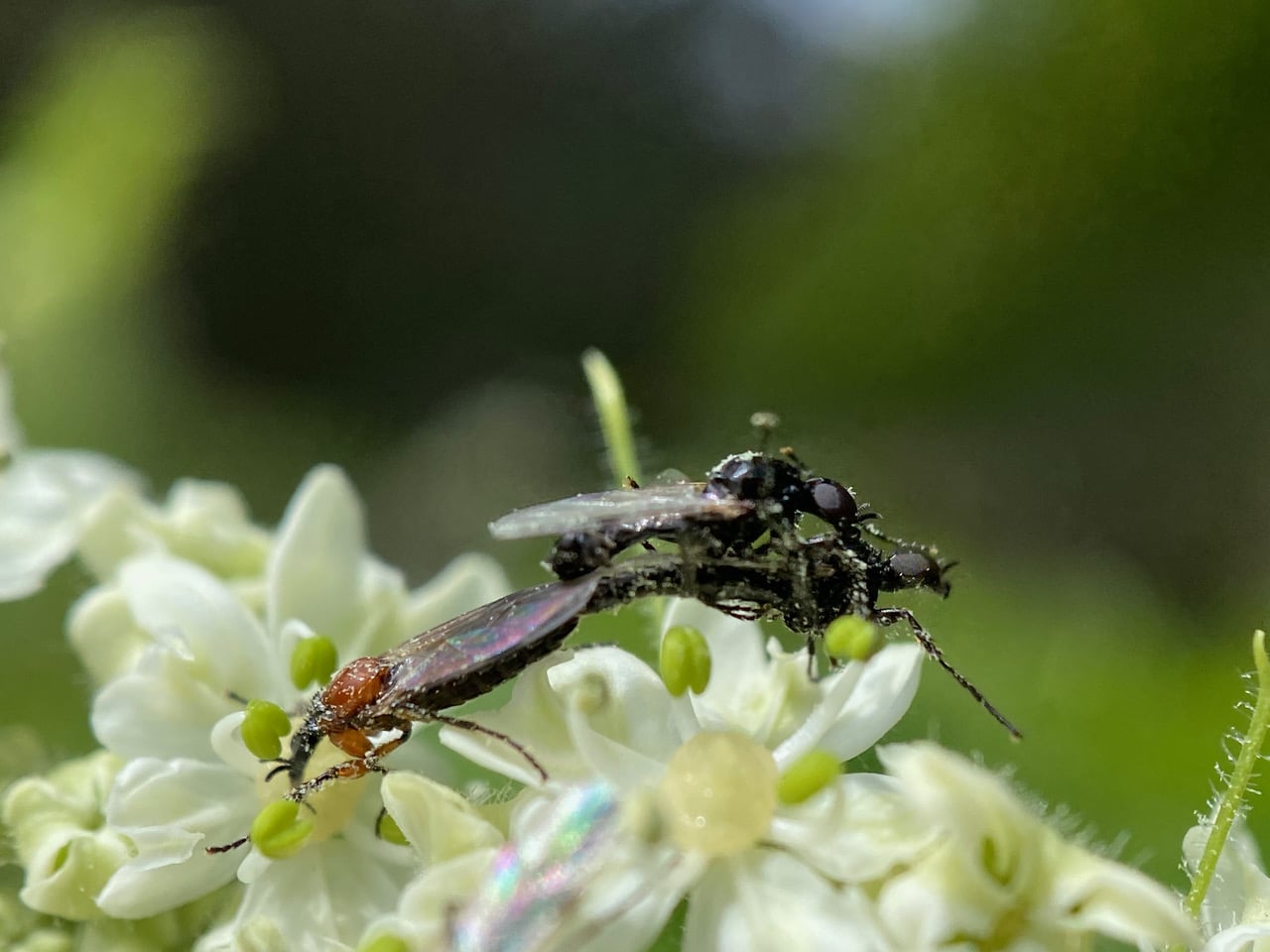
… then turns to attack the male.
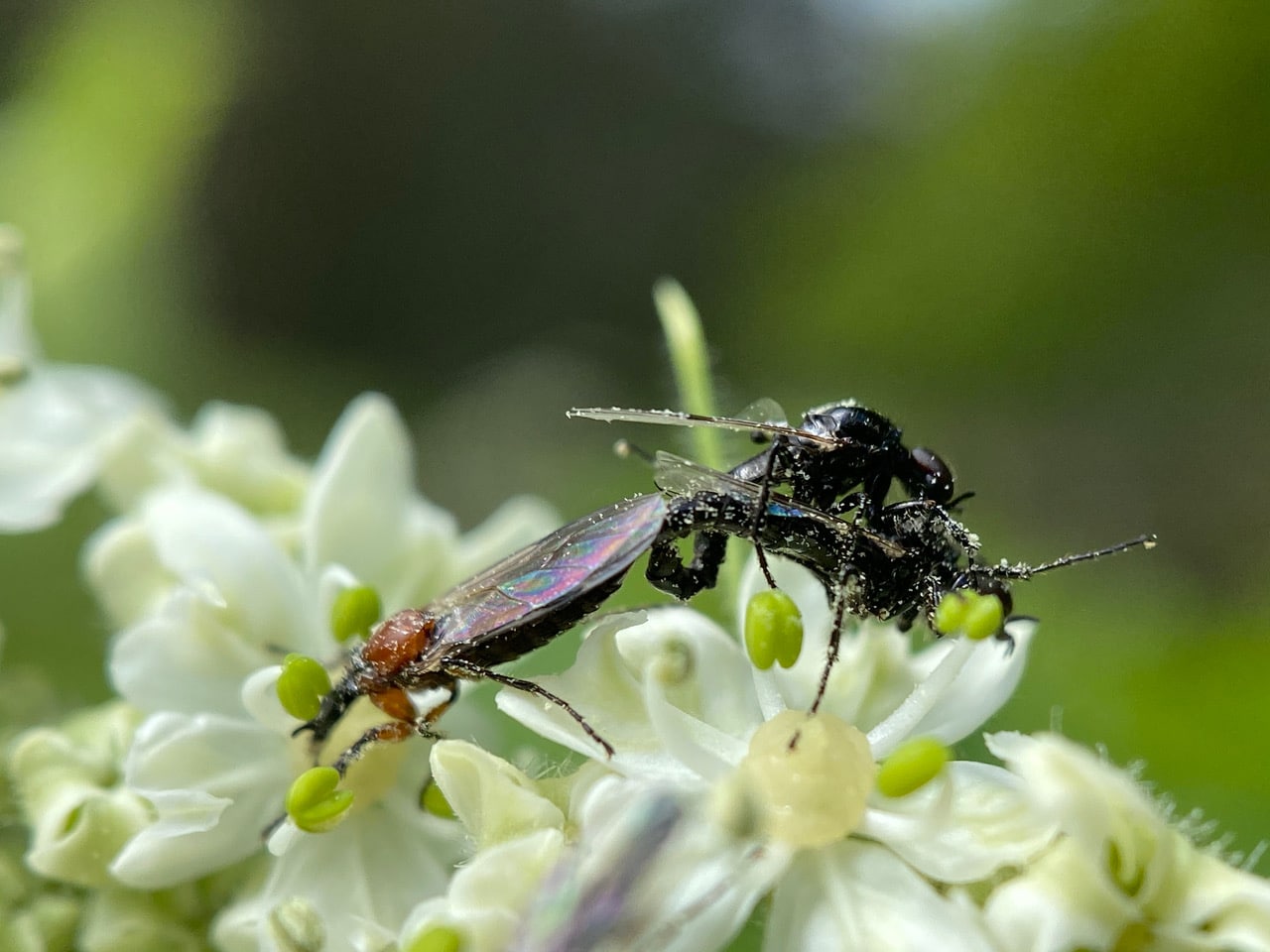
There seems to be some genitalia action in an attempt to pry the male off the female.
I capture on video the mating frenzy of another group: March Fly mating frenzy – YouTube
Two males fight viciously to dislodge a mating pair. In the confusion, the interloper males eventually leave, one riding on the other. LOL – despite their fancy four eyes, the males are still liable to make embarrassing mistakes!
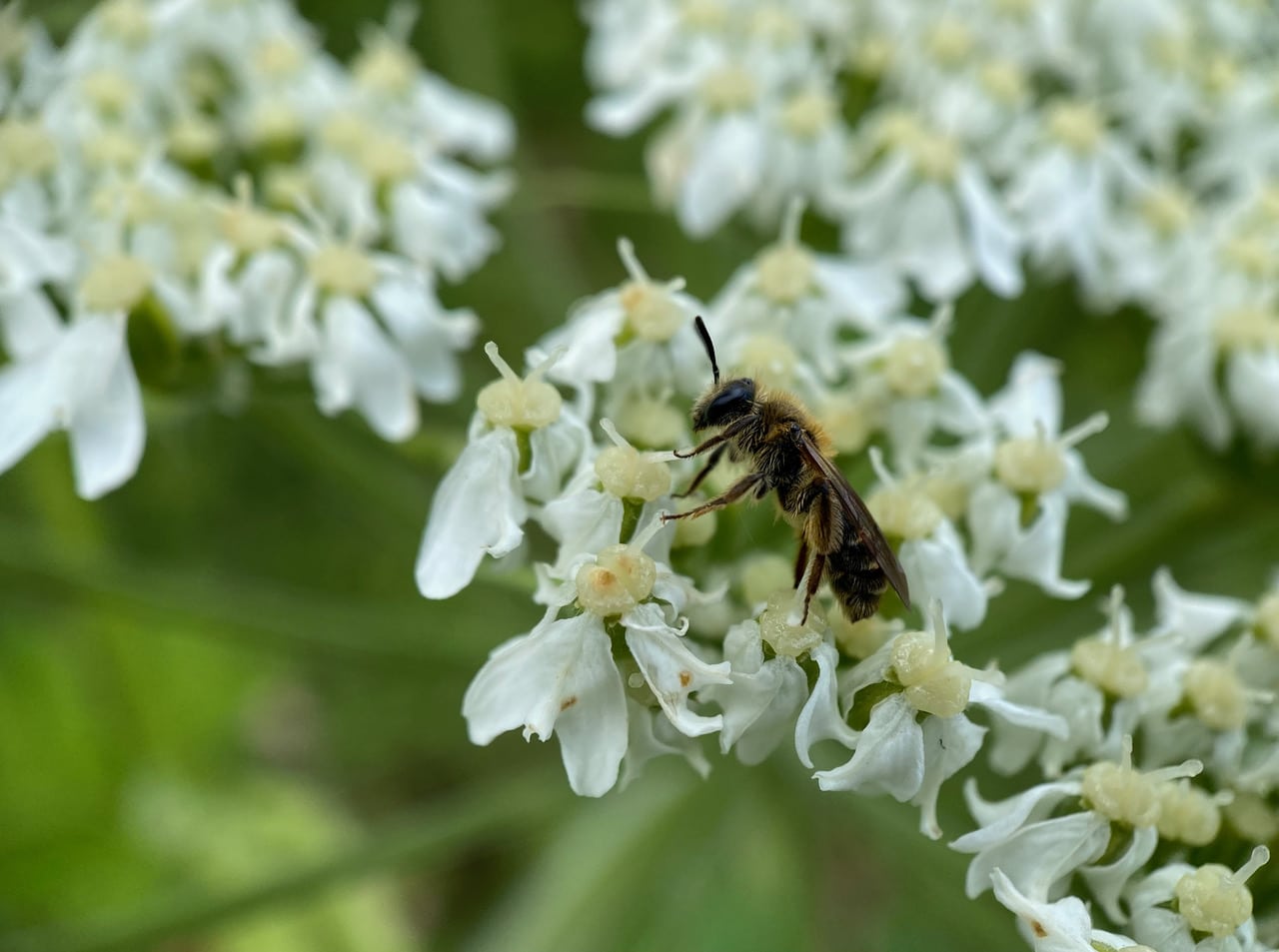
A little bee is moving slowly on an umbel of Cow Parsnip flowers. A Golden-haired Miner Bee, Andrena auricoma (family Andrenidae)? Without the sun, the hairs do not shine. See those long hairs on her hind legs? The bee is a female with empty scopae – she is not gathering pollen.
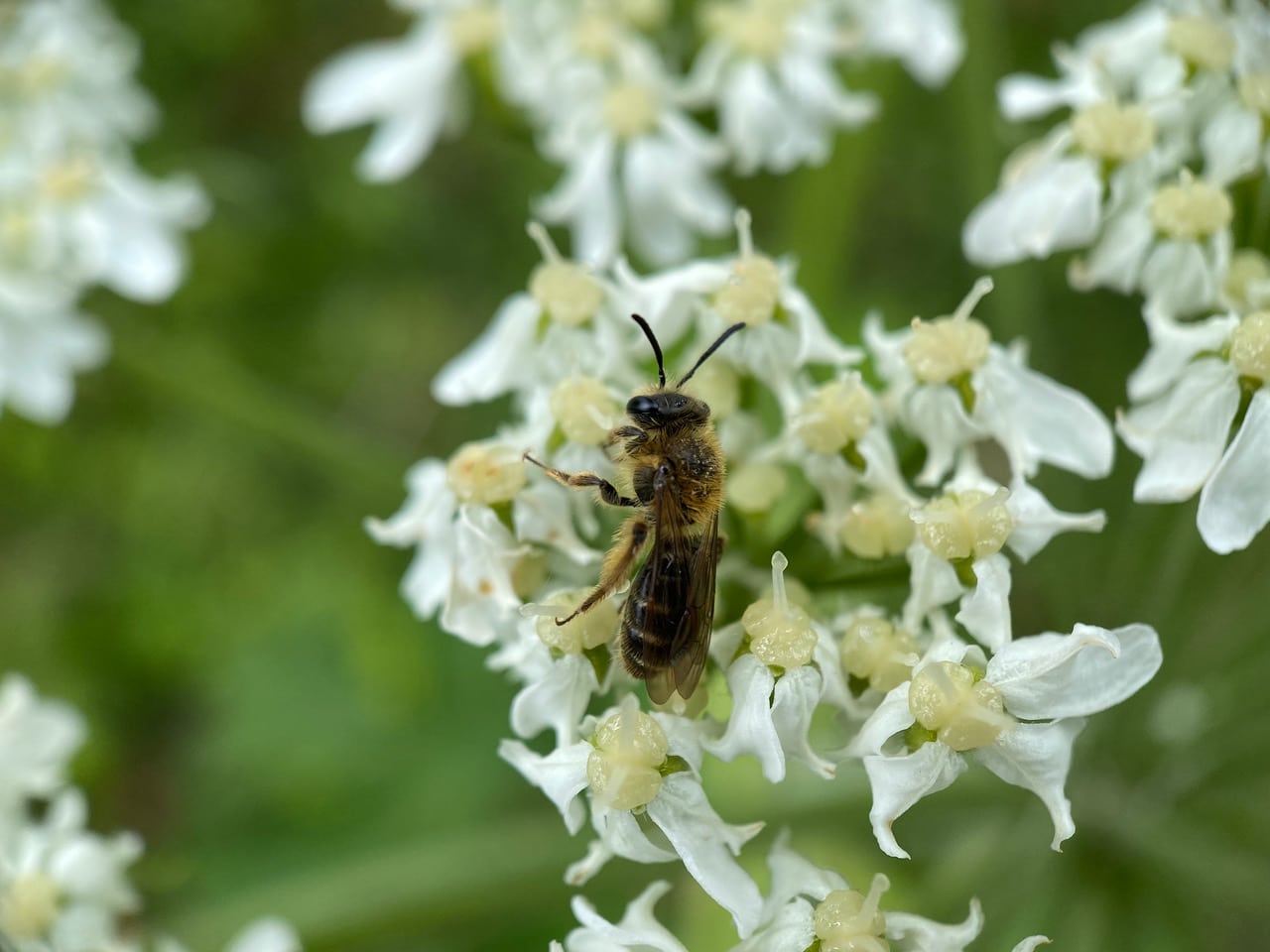
Another view of her empty scopa.
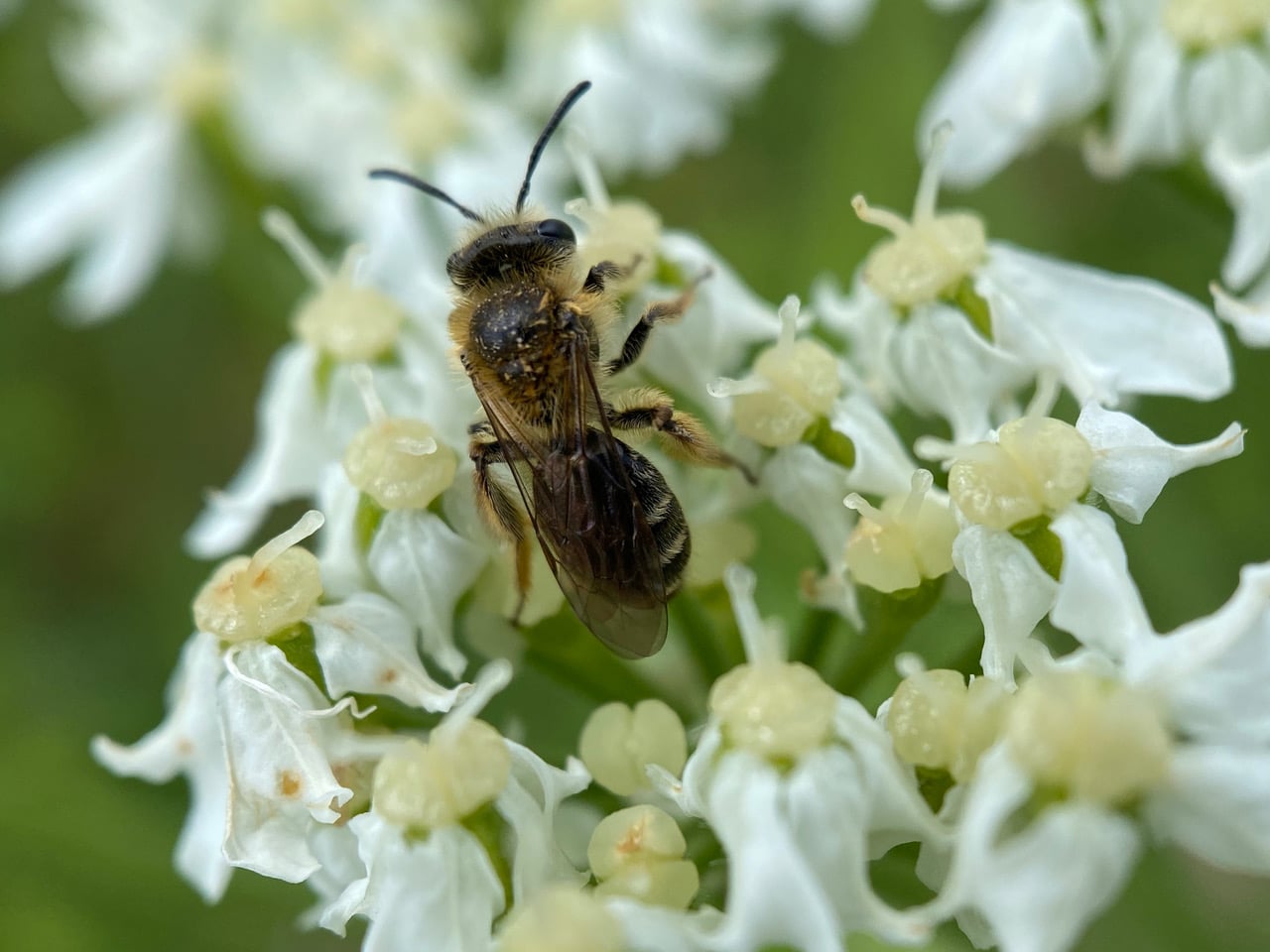
Her hairs are sparse…
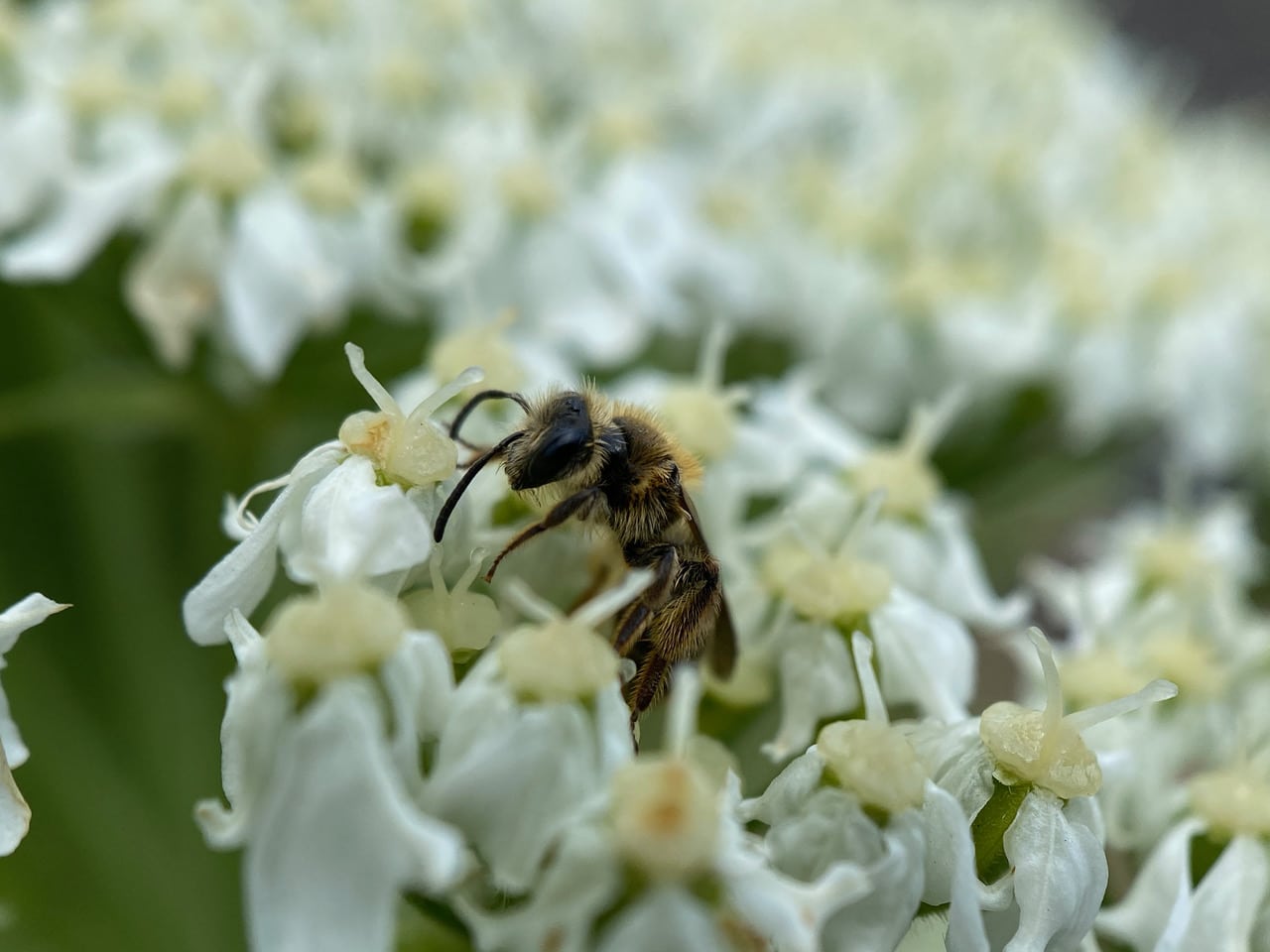
The bee’s ragged appearance and slow movements are suggestive of an old, tired individual.
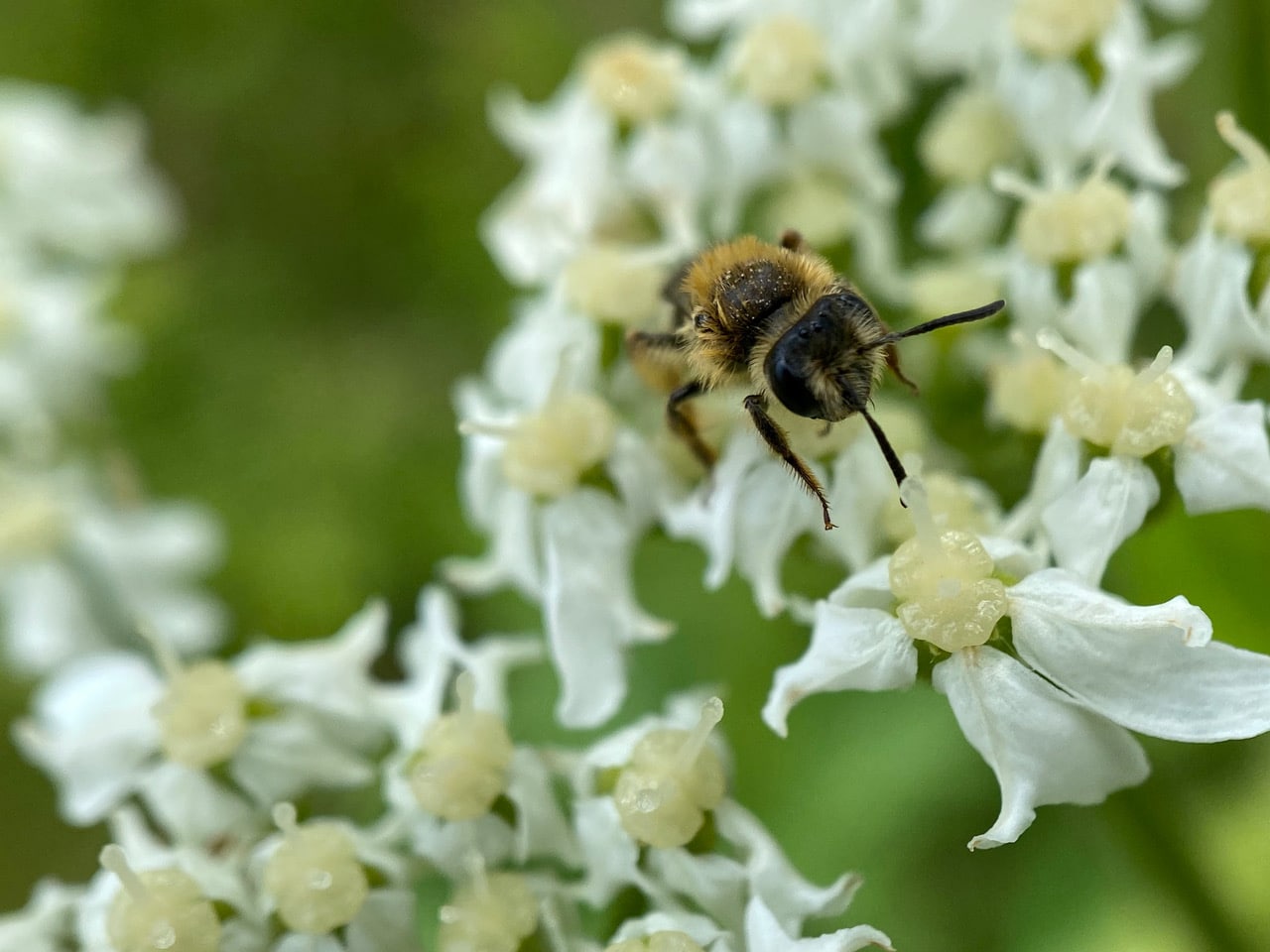
Not a very successful attempt at getting a clear shot of the bee’s face. But the hedgerows of hairs adjacent to the eyes hint of a facial fovea, a hair-lined depression between the eyes and antennae, characteristic of the genus Andrena.