

Pollinator Post 5/4/23 (1)
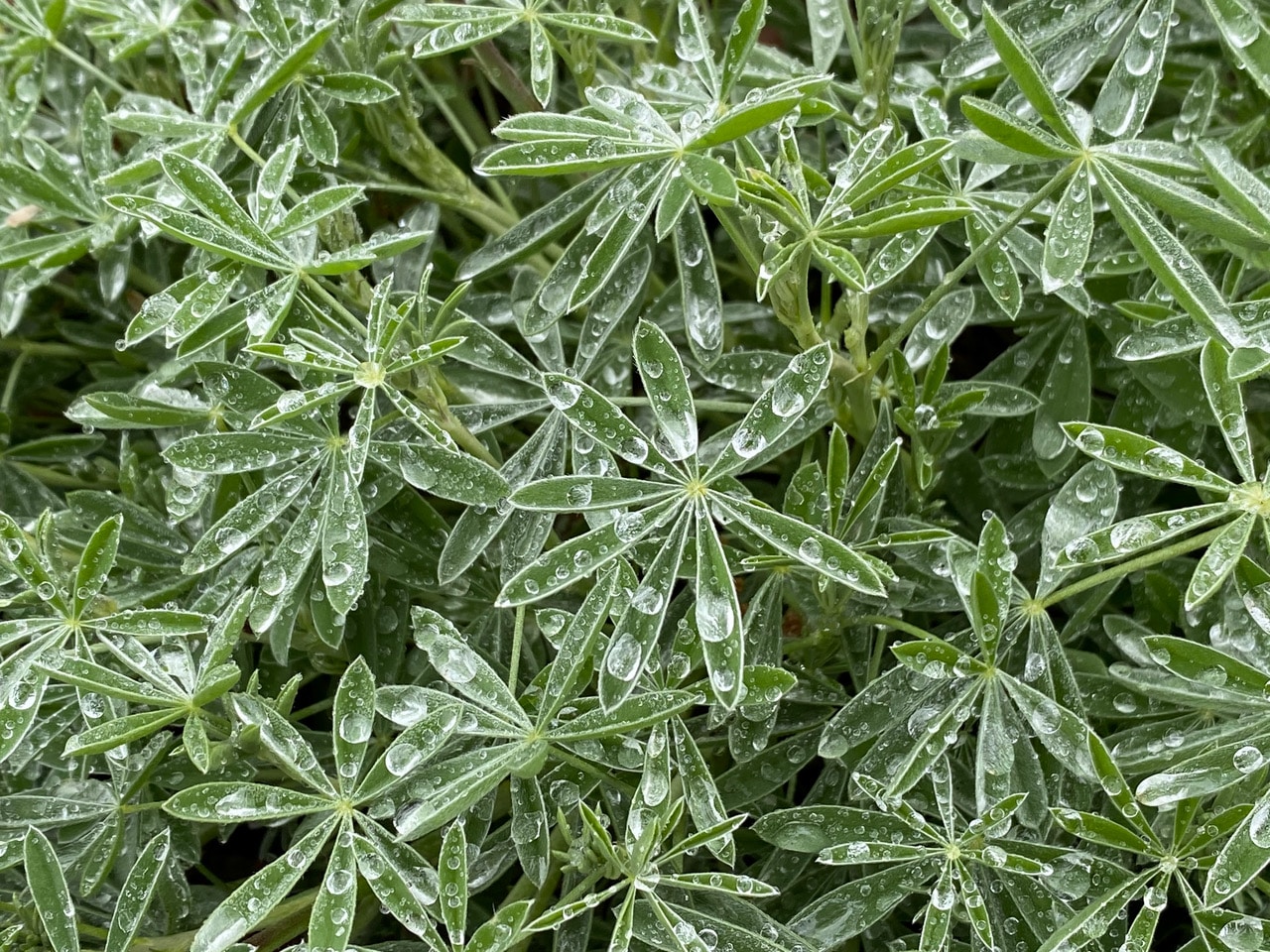
On my first opportunity to visit the Skyline Gardens this morning after two days of rain, I find everything drenched in raindrops. The Silverleaf Lupine, Lupinus albifrons has a knack for capturing water on its palmate leaves.
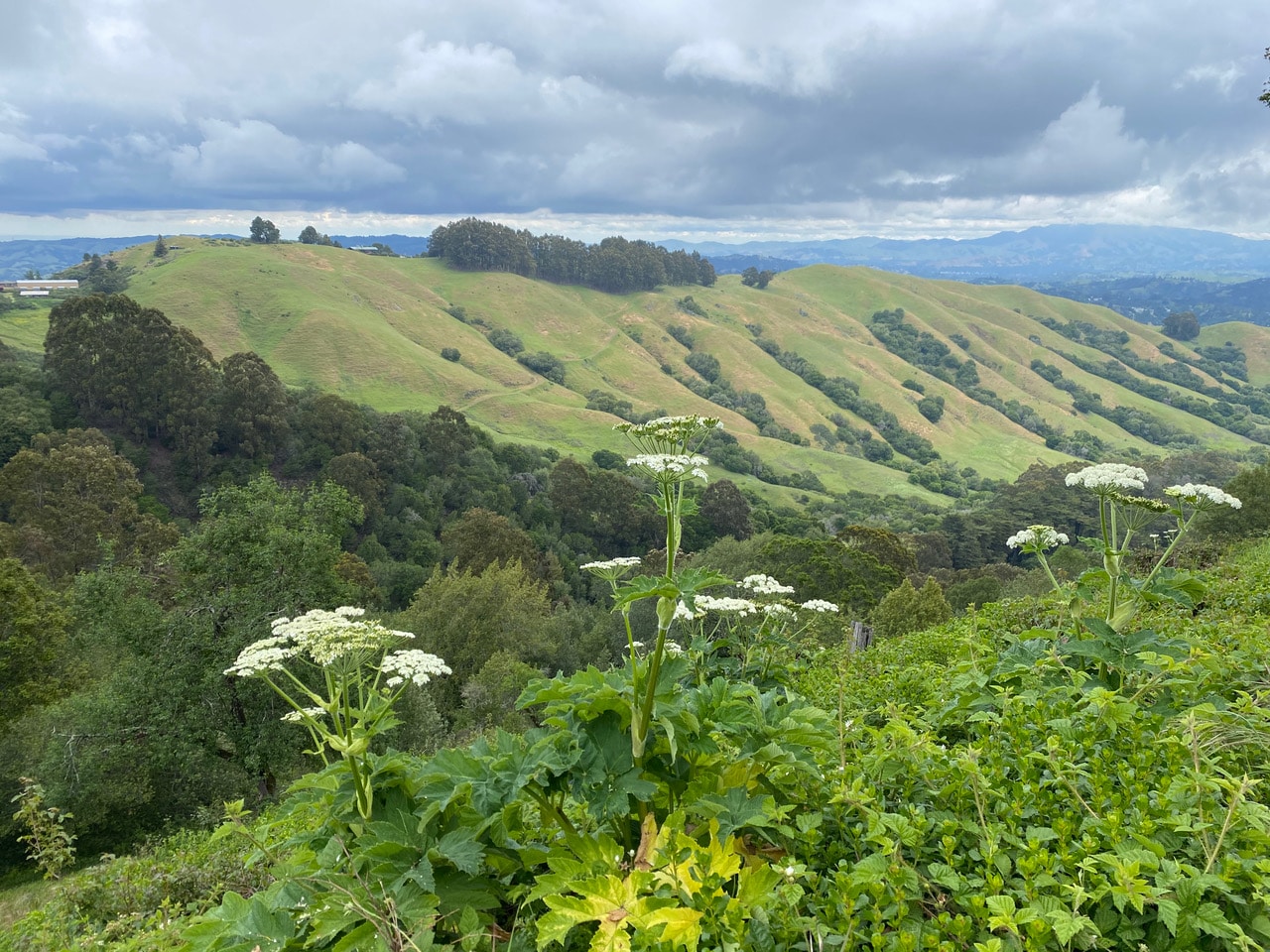
The sky is still moody with low, dark clouds that conceal the top of Mt. Diablo. I don’t expect to see many insects. Photography would also be challenging given the low light level.
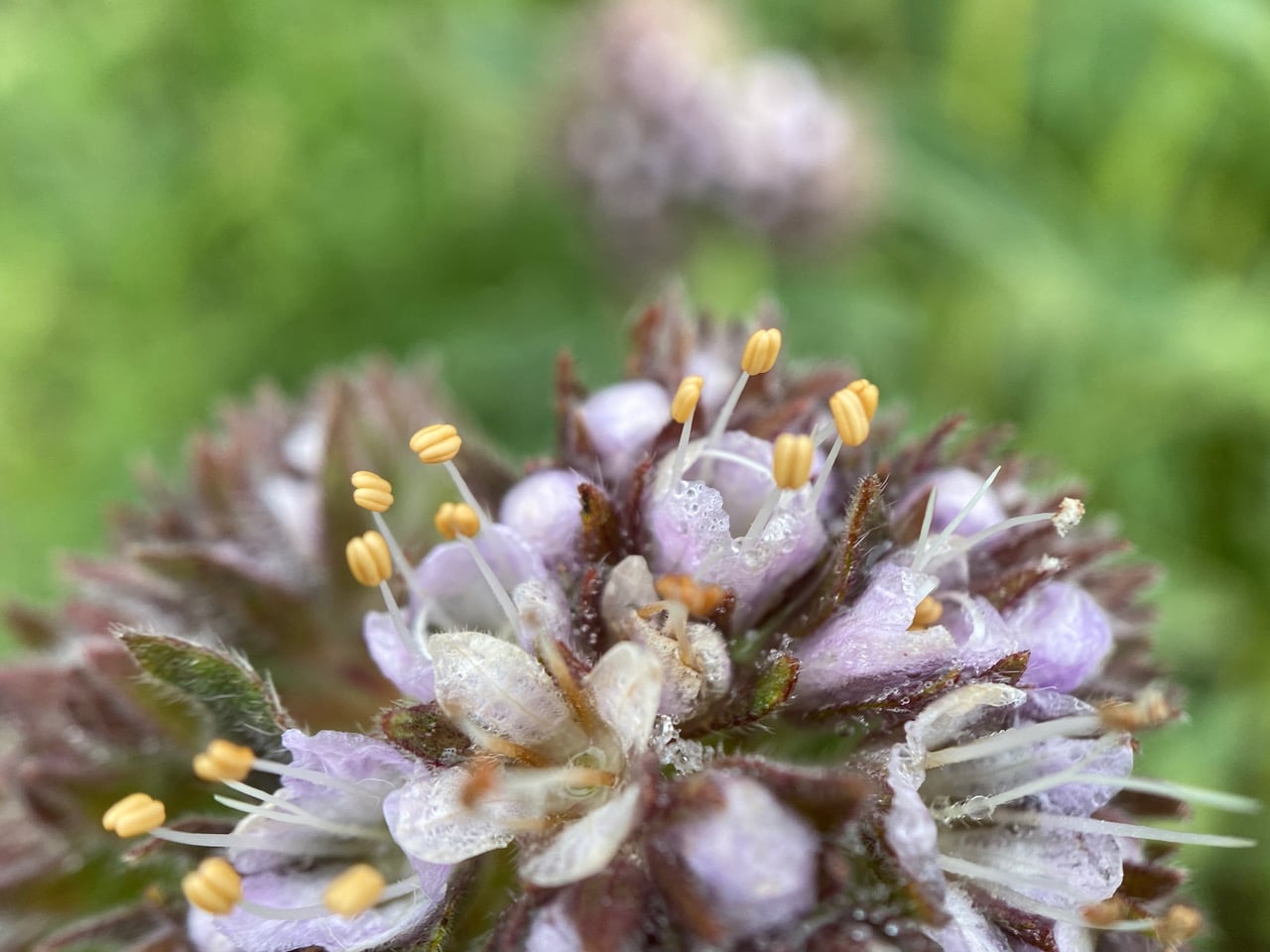
California Phacelia, Phacelia California has apparently continued to bloom through the rainy weather, sending out fresh yellow anthers above the corollas.





There is frass (insect poop) on a Phacelia inflorescence. These are large caterpillar droppings, but I don’t see any feeding damage on the plant.
Finally I find the culprit hidden under a Phacelia leaf. Surprisingly, it is a large caterpillar of the Variable Checkerspot Butterfly, Euphydryas chalcedona (family Nymphalidae). I have not known the species to feed on Phacelia. The caterpillars feed predominantly on the California Bee Plant and the Sticky Monkeyflower, deriving the defensive chemicals, iridoid glycosides from these plants. I learn that the species feeds on a wide range of plants, including penstemon, Indian paintbrush, snowberry, honeysuckle, and plants from several other families including Boraginaceae and Rosaceae. Aha, as a member of Boraginaceae, Phacelia is on the menu!
A disheveled little bee is perched motionless on an umbel of Cow Parsnip flowers. It is probably immobilized by the cold and wet.
I take a close look at the bee’s face. It has a facial fovea: hair-lined depressions between the eyes and antennae, that is characteristic of the Mining Bees in the genus Andrena (family Andrenidae). I hope the sun would come out soon to warm up the poor bee.
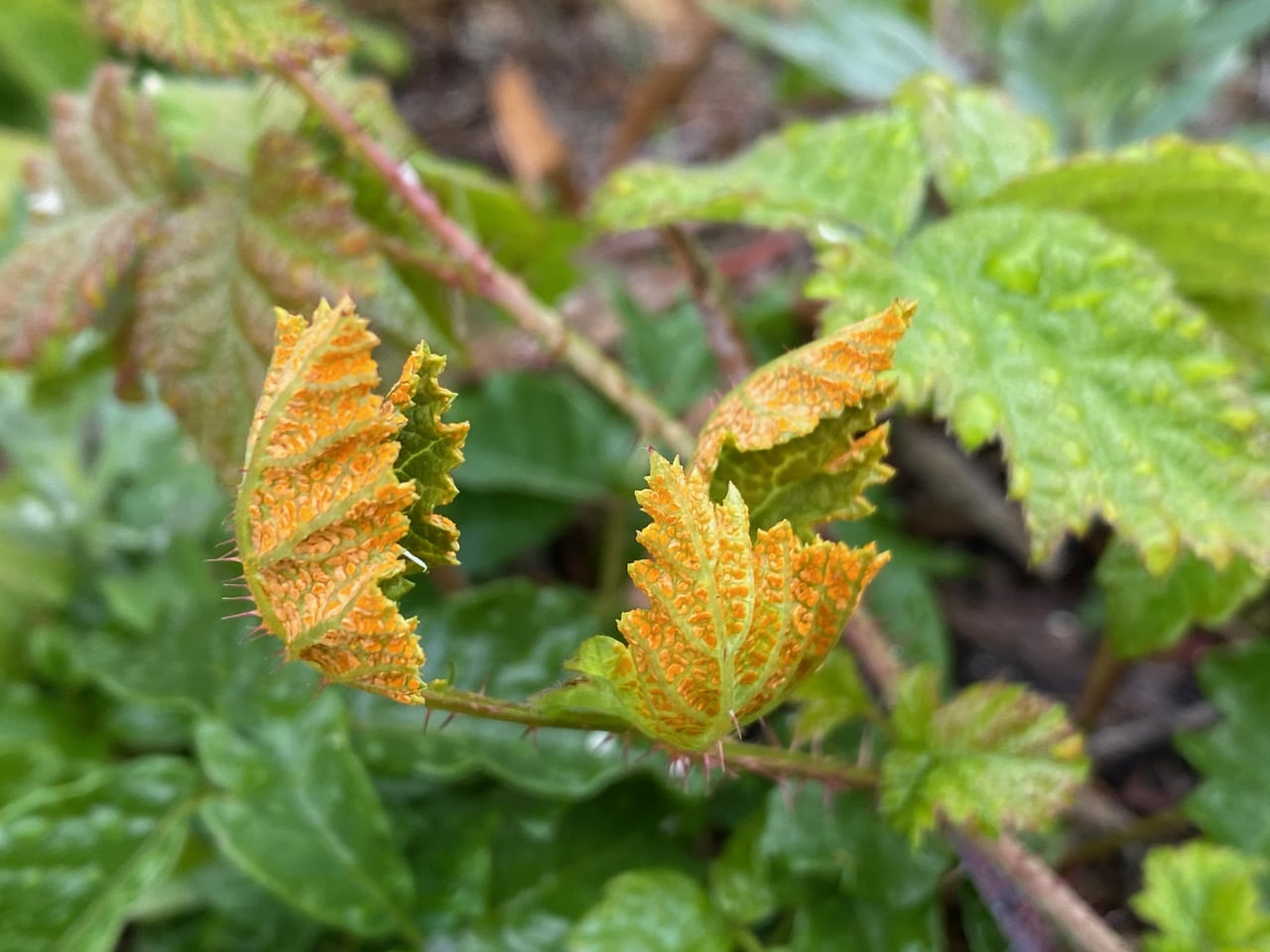
Wow, I didn’t see these infected leaves on the California Blackberry, Rubus ursinus the last time I pass this way 5 days ago! The cool and wet conditions must have enabled the explosive growth and spread of the Blackberry Orange Rust.
Blackberry Orange Rust is a systemic disease caused by the fungus Gymnoconia nitens. The infection is present throughout the plant for the rest of the plant’s life. Characteristic symptoms are spindly shoots with clustered, misshapen, pale green to yellowish leaves. The leaves are covered with bright orange, powdery blisters on the underside. Before the blisters burst open, they look waxy or shiny as if covered with lacquer. The orange pustules eventually release thousands of fungal spores which are carried on wind or water, and infect leaves of healthy plants during long periods of leaf wetness provided by rain or dew. Orange Rust is favored by relatively low temperatures (50-70 degrees F) and wet conditions. The fungus is systemic and overwinters in the crown and roots of infected plants.
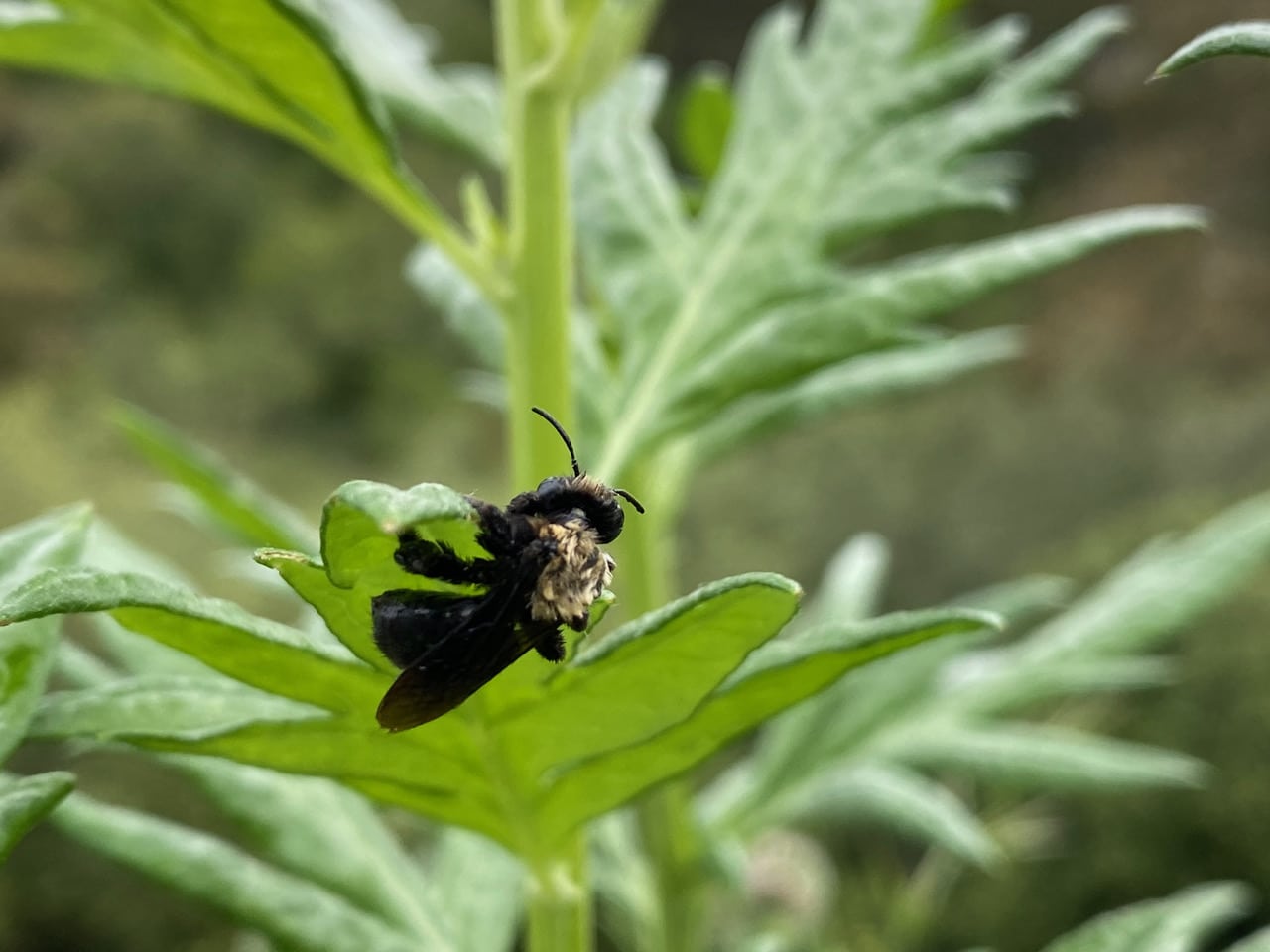
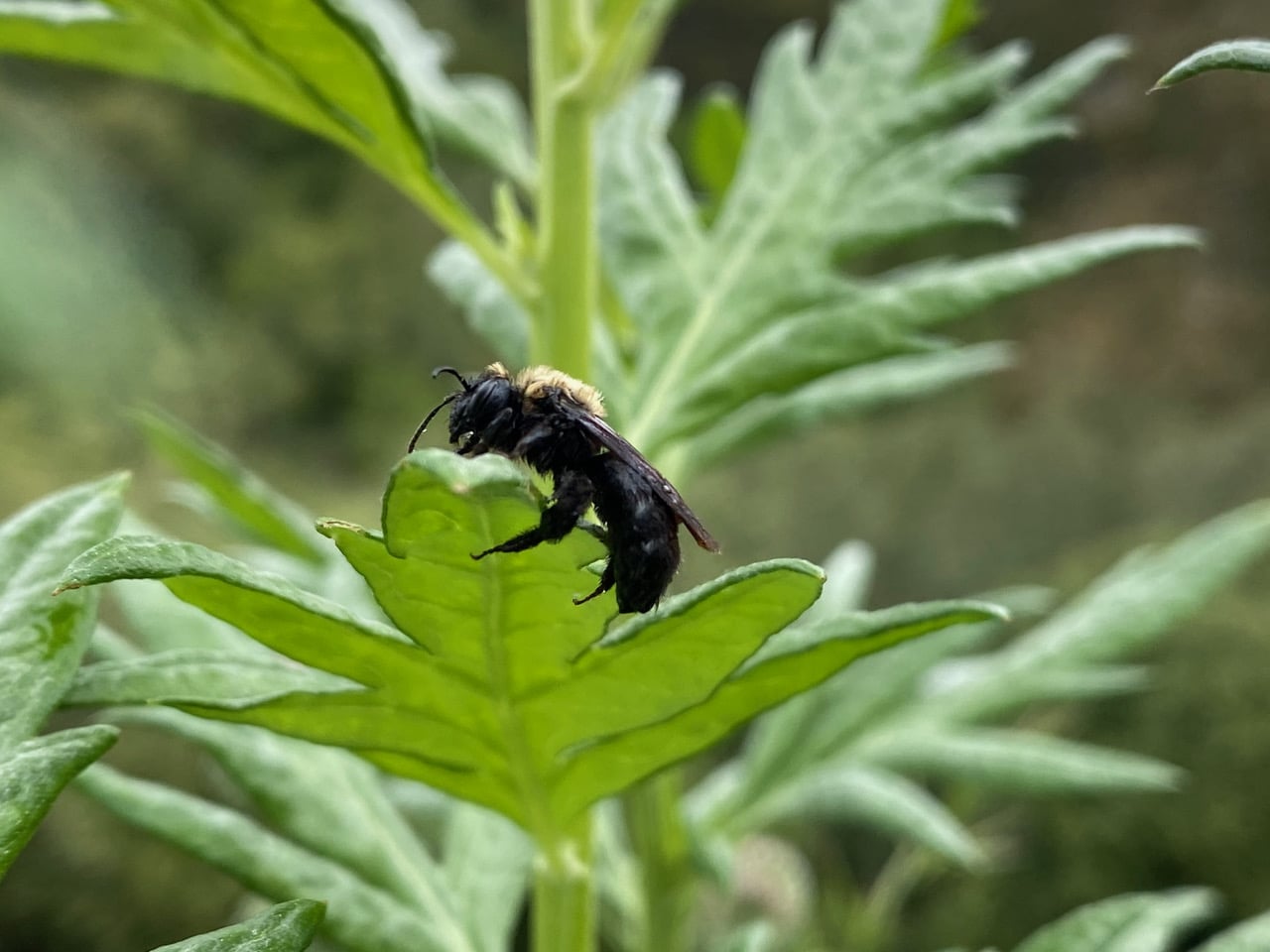
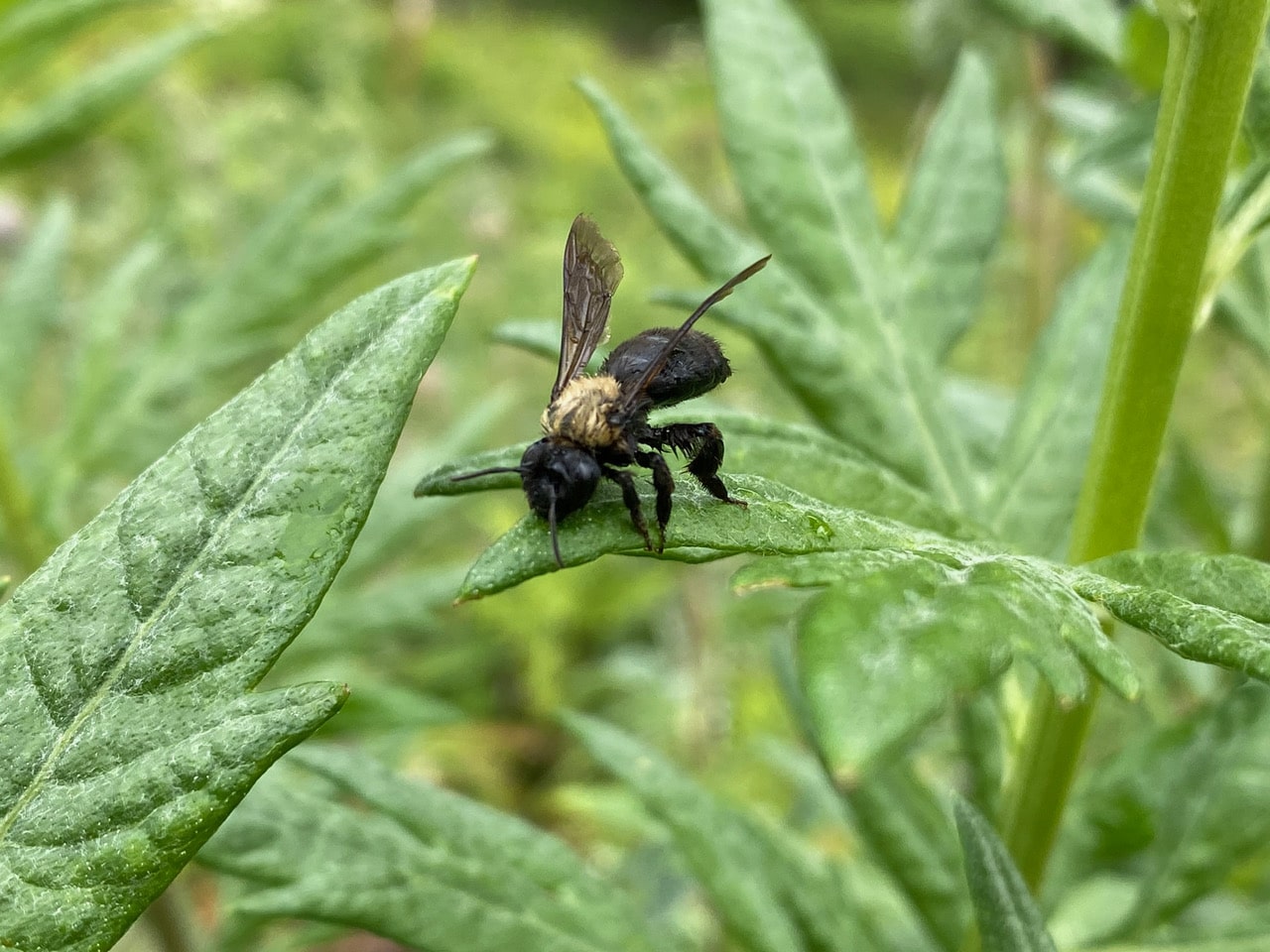
It hairs wet and matted, a little bee is hanging upside down under a leaf of California Mugwort, Artemisia douglasiana. It must have been caught unwittingly by the rain while out foraging and never made it home last night.
As I watch with concern, the bee comes alive and struggles to climb up on the leaf.
The hairy bee is soaking wet.
The poor bee makes an attempt to spread its wings and fly, but fails. It is simply too wet and weighted down.
It is heart breaking to witness the struggles of little insects. I can only pray for sunshine…
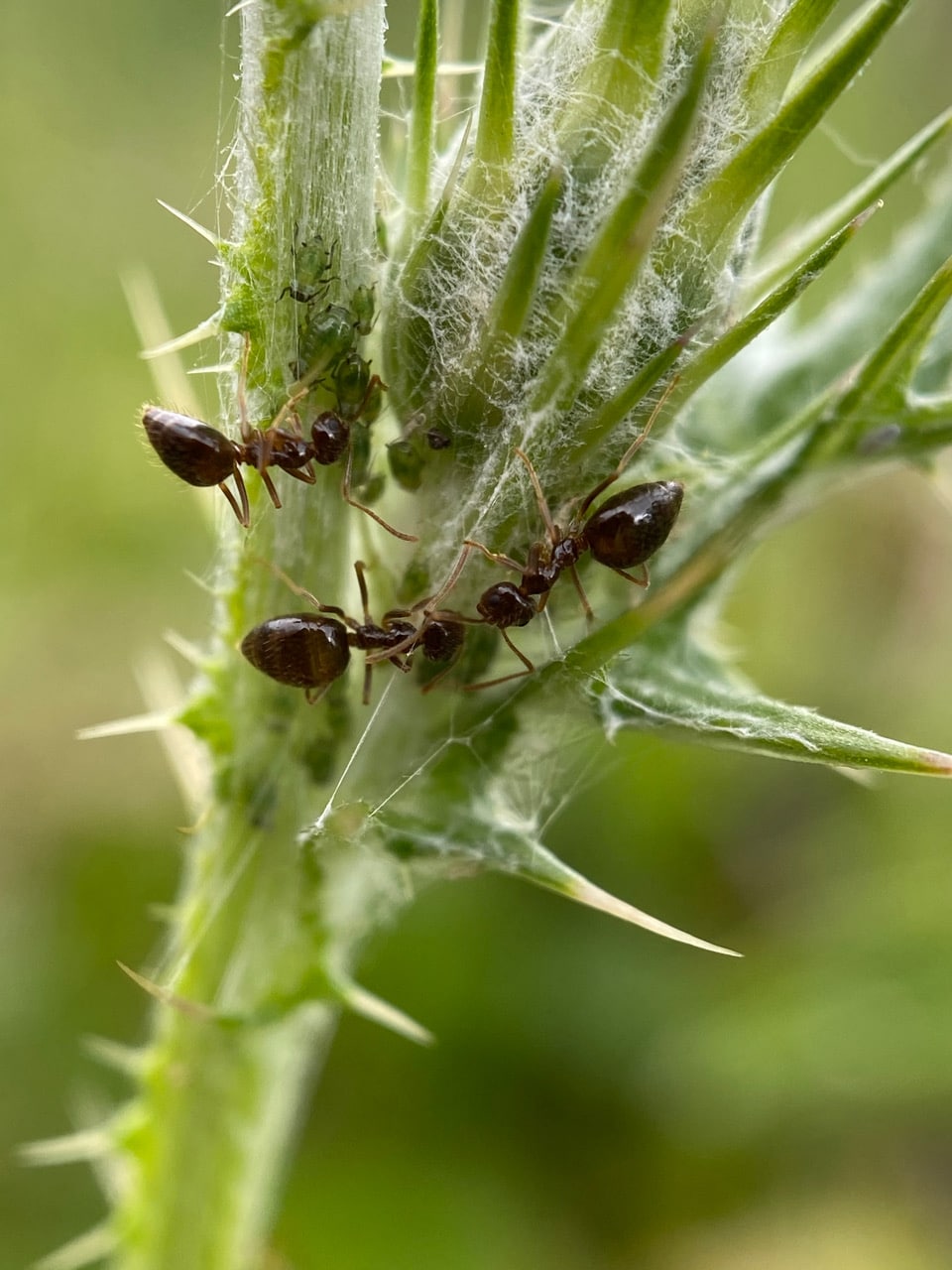
Some American Winter Ants, Prenolepis imparis are tending Thistle Aphids, Brachycaudus cardui on an Italian Thistle. These ants are in their elements in this cold weather.
Native to North America, the Winter Ants are generalist omnivores that nest deep within the ground. Unusual among ants, Prenolepis imparis prefers lower temperatures, including near freezing, and is only active outside the nest during winter and early spring. The colony enters estivation (a hibernation-like state) and becomes inactive above ground for the warmer months, during which time eggs are laid and brood are reared. Reproductives overwinter and emerge on the first warm day of spring for their nuptial flight. The queens are much larger and distinctly lighter in color than males.

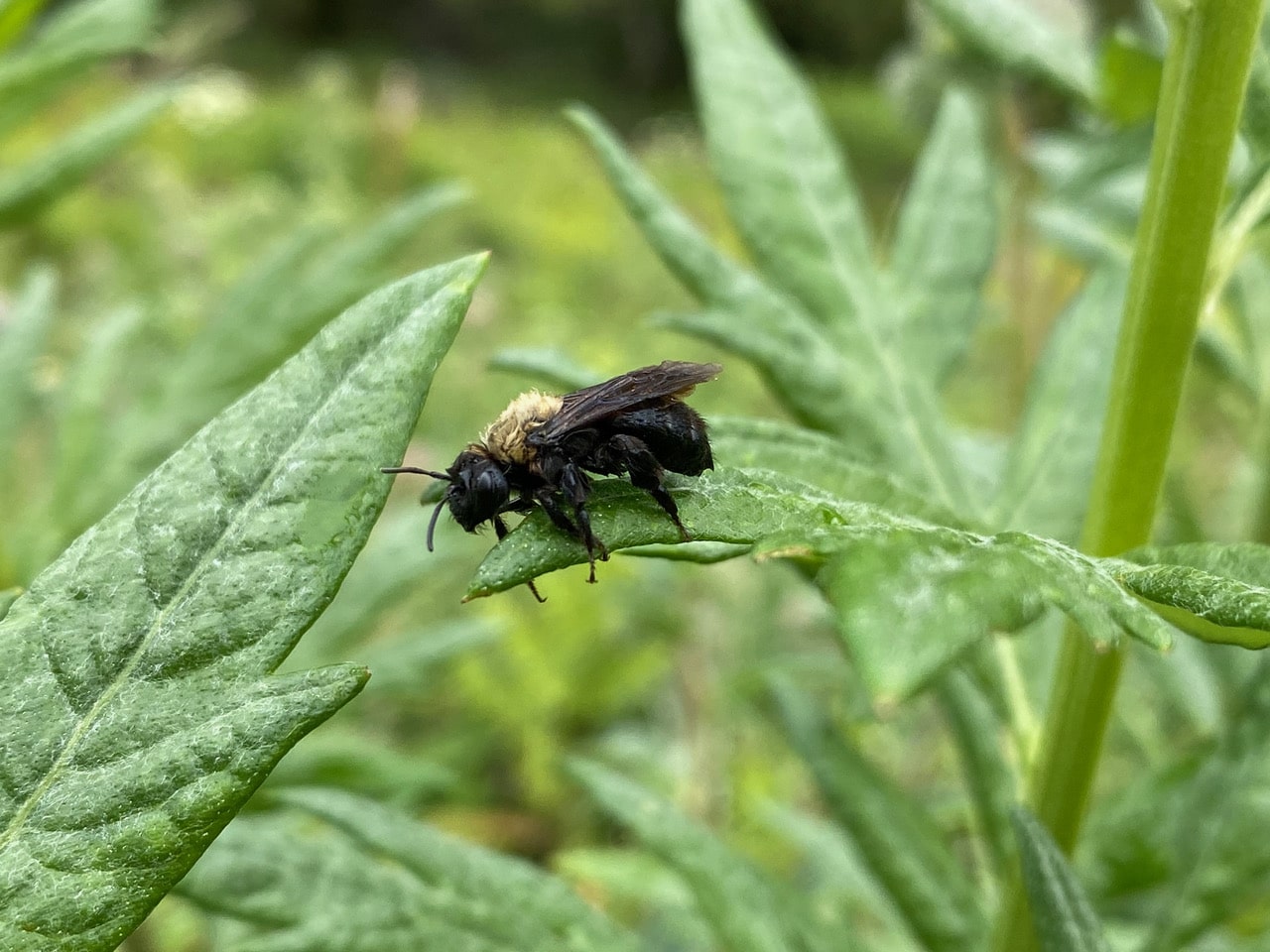
Oh no, another little bee immobilized by the cold and wet. This one is perched motionless on a leaf of California Mugwort, Artemisia douglasiana. I don’t have the heart to poke it to find out if it is alive.
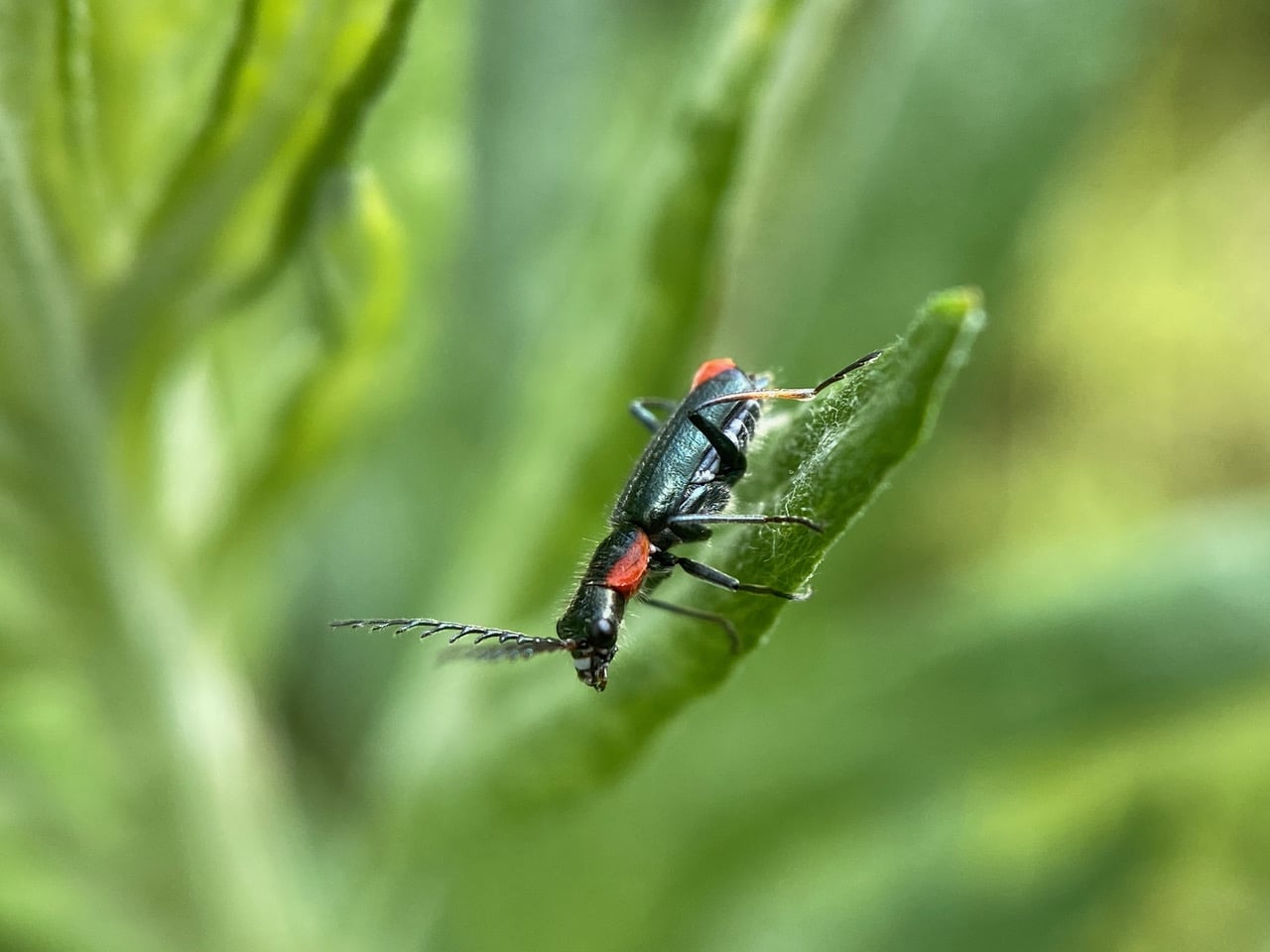
A Malachite Beetle, Malachius sp. (family Melyridae, subfamily Malachiinae) strikes a pretty pose on a Mugwort leaf.
Melyrids or Soft-winged Flower Beetles are elongate-oval, soft-bodied beetles 10 mm long or less. Most adults and larvae are predaceous, but many are common on flowers. Members of the subfamily Malachiinae have peculiar orange structures along the sides of the abdomen, which may be everted and saclike or withdrawn into the body and inconspicuous.
A little moth flies in front of me across the road and lands on the leaf litter. If I haven’t been watching where it lands, I wouldn’t be able to find it. Do you see it (lower, center)? It is a Geometer Moth in the family Geometridae.
The Geometridae are better known and named after their caterpillars, the whimsical “inchworms”. Common caterpillars have a series of true legs and fleshy “prolegs” that support movement from head to tail. In contrast, inchworms have true legs at the front and prolegs at the rear with a legless expanse in between. To travel forward, inchworms take it one end at a time, as though they are measuring their route (hence “geo-meter” or earth measurer). First, the rear moves forward, causing the legless midsection to arch or “loop” up. Then the inchworm lifts and extends its front end, and the rear begins to move again. Like most other caterpillars, the Inchworms feed on plant foliage, flower buds, and fruits.
Adult Geometer Moths have slender abdomens and broad wings which are usually held flat with the hind wings visible. As such, they appear rather butterfly-like, but in most respects they are typical moths; the majority fly at night. They tend to blend into the background, often with intricate, wavy patterns on their wings.