

Pollinator Post 5/31/26

It’s almost noon when Fred and I make it to Bay Farm on this sunny, calm day.
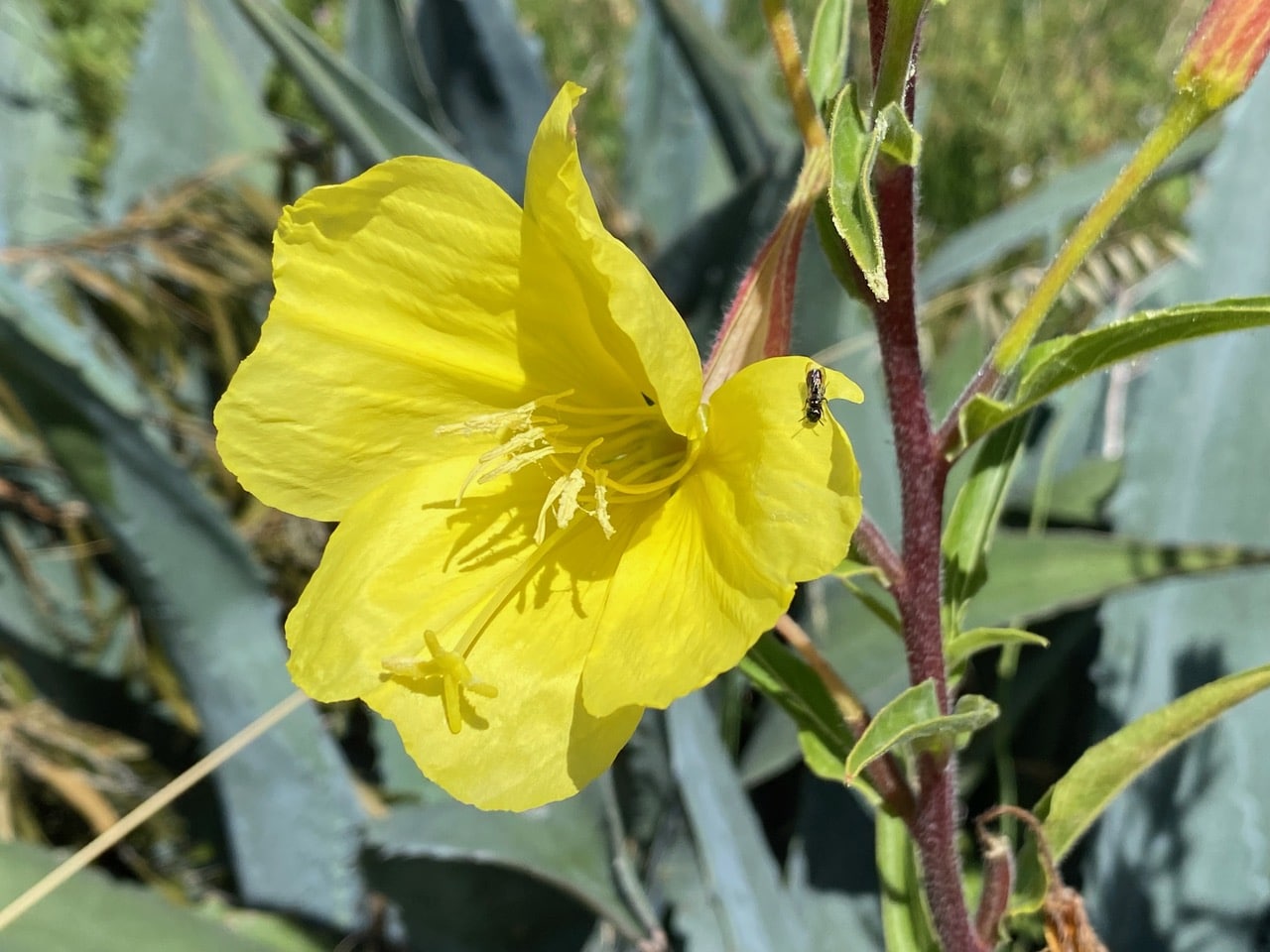
A glossy, black insect is perched on a petal of the Hooker’s Evening Primrose flower, Oenothera elata.

Closer inspection shows that it is a Small Carpenter Bee, Ceratina sp. (family Apidae). She does not have any pollen on the scopae on her hind legs. She’s probably visiting for nectar? Small bees like her can easily crawl down to the base of the flower to reach the nectar without making contact with the reproductive parts of the flower.
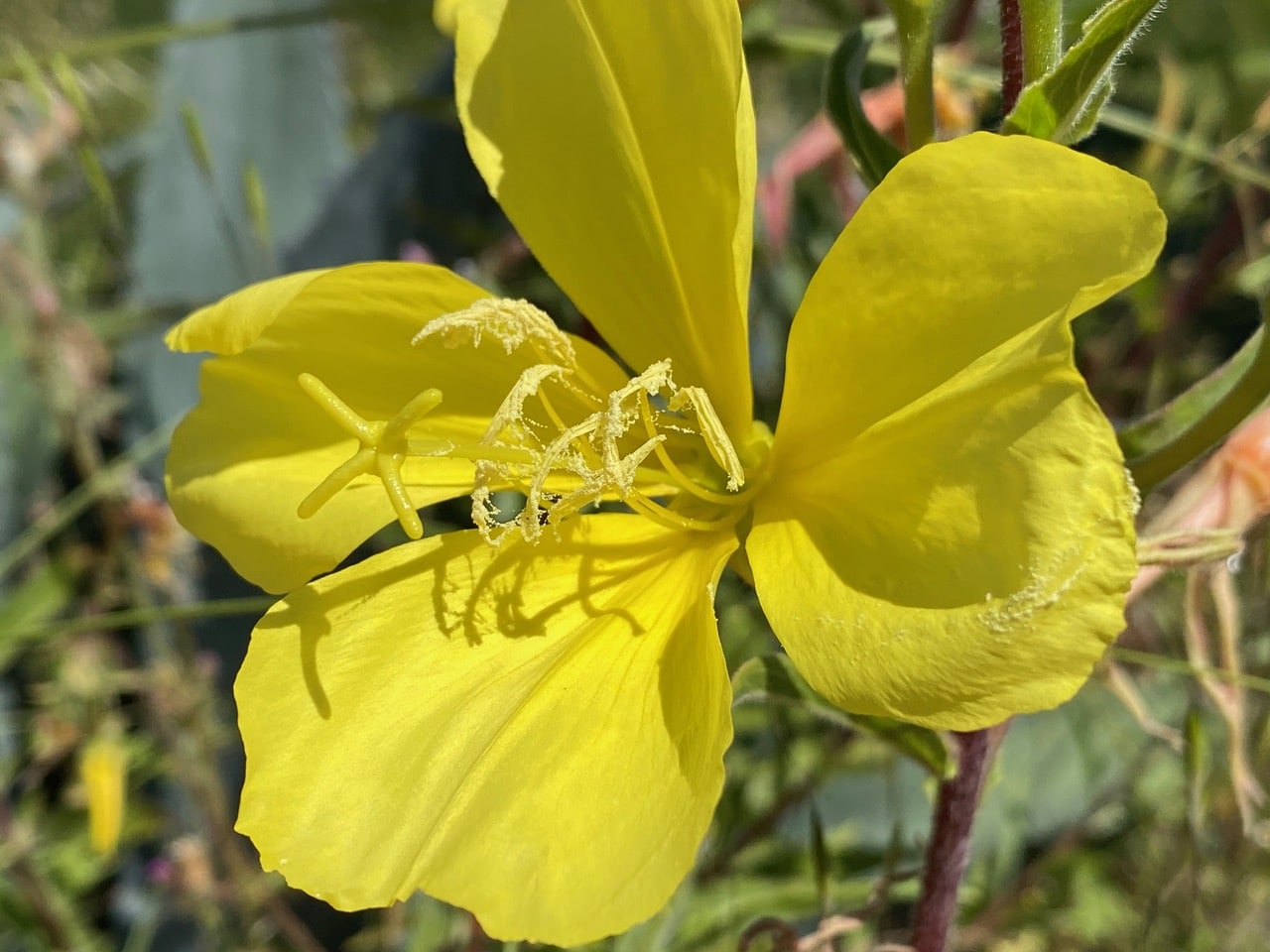
Few bees can deal with the sticky, stringy pollen of evening primrose flowers. Even bees as big as Honey Bees have difficulty flying if they are mired in the pollen strung together with viscin threads.
Hooker’s Evening Primrose, Oenothera elata (family Onagraceae) is usually biennial, completing its life cycle in two growing seasons. It can reach 6 feet in height. Native to California, it is found along roadsides, in moist meadows, or in woodland. At the top of reddish stems are open clusters of 2-4 inch wide yellow flowers with 4 large petals and protruding yellow stamens and 4-branched pistil. The fragrant flowers open at dusk and close up during mid-morning the next day, turning orange with age.
The flowers of Evening Primrose open at night and have most of the characteristics associated with night-pollination by moths: they are large with nectar glands at the bottom of a deep flower cup, and their reproductive parts extend beyond the petals. The pale flowers are visible to night-pollinators; they are also sweetly scented as an additional guide at night. Pollinators brush against the reproductive structures when they go into the base of the flower after nectar. Sphinx moths are the most significant pollinators for the evening primrose that bloom at night. Their long tongues enable them to reach the nectar deep within the flower. As they feed, pollen is transferred from one flower to another. Oenothera elata is also pollinated by specialist bees active at dawn and dusk such as the twilight-foraging Evening Primrose Sweat Bees. These bees have evolved specialized hairs on their legs to collect the distinctive stringy pollen.
Viscin threads are thread-like structures composed of sporopollenin, a tough, resilient material also found in the outer layer of pollen grains (exile). These threads are produced by some plants, notably within the Onagraceae and Ericaceae families, and they bind individual pollen grains together and also help them adhere to pollinators. The threads are not just sticky, but also exhibit a cobweb-like quality, making them difficult to handle.

Some tiny green aphids cover the base of a flower bud of Hooker’s Evening Primrose. iNaturalist has helped identify these as the Evening Primrose Aphids, Aphis oenotherae (family Aphididae). Scattered among the colony are occasional bloated black aphids. These are aphid mummies that have been parasitized by a parasitoid wasp in the family Aphelinidae.
The mother wasp uses her ovipositor to inject a single egg and symbiotic polydnaviruses into an aphid. The wasp larva hatches and slowly consumes the aphid’s non-vital organs while it is still alive. Right before the larva pupates, it kills the host aphid. The chemical interaction between the wasp and the aphid’s cuticle causes the aphid to swell into a balloon-like, shiny black “mummy”. The wasp pupates safely inside the black shell. Once mature, it chews a perfectly round exit hole in the rear of the mummy to escape and hunt for new aphids.
Not all aphid wasps turn their hosts black – wasps from the subfamily Aphidiinae (family Braconidae) tend to leave behind tan, gold, or brown mummies.
These wasps are highly effective natural pest control agents for gardens and agriculture.

A Potato Mirid (family Miridae) is perched on a Wild Radish flower.
The Potato Mirid, Closterotomus norwegicus (family Miridae) originated in the Mediterranean region, but is now widespread worldwide. It is an adventive, polyphagous species of bugs belonging to the family Miridae, subfamily Mirinae. This cosmopolitan insect feeds on a wide range of herbaceous plants and it is also partly predacious. In New Zealand it developed a taste for young potato plants, which probably accounts for its common name. Like other mirids, the bug possesses a sharp and hard needle-like piercing-sucking mouthparts capable of penetrating tough tissue and sucking nutrients. Its feeding activities threatens pistachio nut production in California. The female bugs prefer to lay their eggs on native or introduced legumes, or weeds such as wild mustard and wild radish.

As I approach the patch of Oregon Gumweed, Grindelia stricta with numerous white foamy masses, my eyes automatically search for the adult Spittlebugs that might have emerged from those frothy shelters they made when they were young. Hey, here’s a beautiful adult female Spittlebug, Complex Clastoptera lineatocollis (family Clastopteridae).
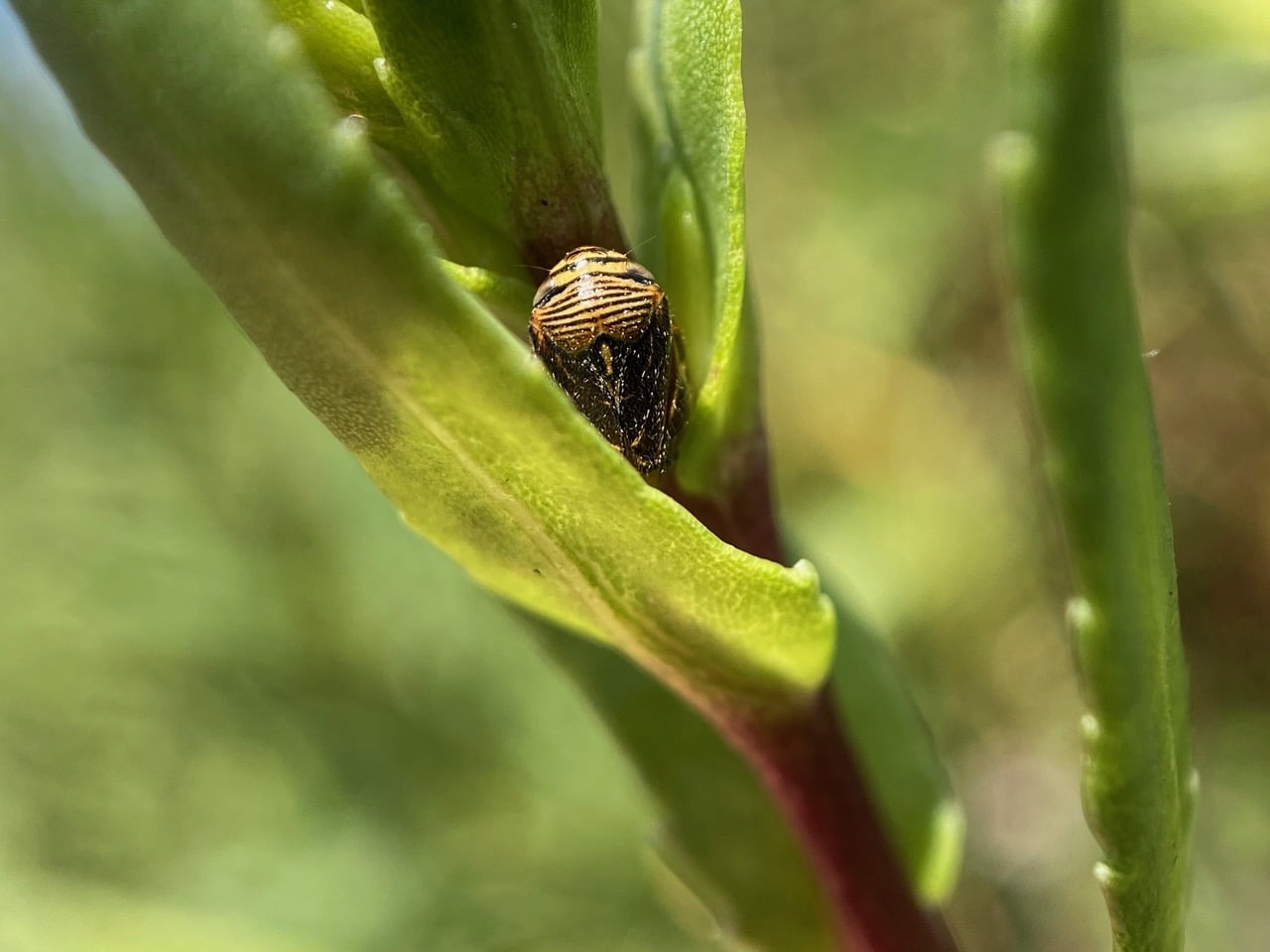
Dorsal view of another female.
Spittlebugs, also known as Froghoppers belong to the superfamily Cercopoidea within the order Hemiptera (true bugs). While sometimes generally referred to as the family Cercopidae, they are scientifically divided into several families, primarily Aphrophoridae (common spittlebugs), Cercopidae (froghopper), and Clastopteridae.
Why the common name of “spittlebug”? The nymphs (immatures) of these bugs create foam masses on plants in which they live and feed. Like the adults, the nymphs use their piercing, sucking mouthparts to feed on plant juices. The nymph produces a cover of foamed-up plant sap reminiscent of saliva, hence the common name of spittlebug. Whereas most insects that feed on sap feed on the nutrient-rich fluid from the phloem, Spittlebugs tap into the much more dilute sap flowing upward via the xylem. The large amount of excess water that must be excreted and the evolution of special breathing tubes allow the young spittlebug nymphs to grow in the relatively protective environment of the spittle. Symbiotic bacteria in the insects’ digestive system provides them with the essential amino acids that their diet lacks. The foam serves a number of purposes. It hides the nymph from the view of predators and parasites, and it insulates against heat and cold, and protects the delicate nymphs from desiccation. Moreover, the foam has an acrid taste that deters predators.
Unlike their young, adult spittlebugs (also known as Froghoppers) are efficient flyers and hoppers, feeding on diverse plant species. They pierce plant stems to feed on xylem. To get enough nutrients, they consume massive quantities of sap, drinking up to 280 times their body weight daily, resulting in high waste excretion. Froghoppers can cause damage by distorting plant leaves and causing shoot tips to die back.

This Spittlebug appears to be a male. It is smaller, darker, without the distinct striped thorax of the females.
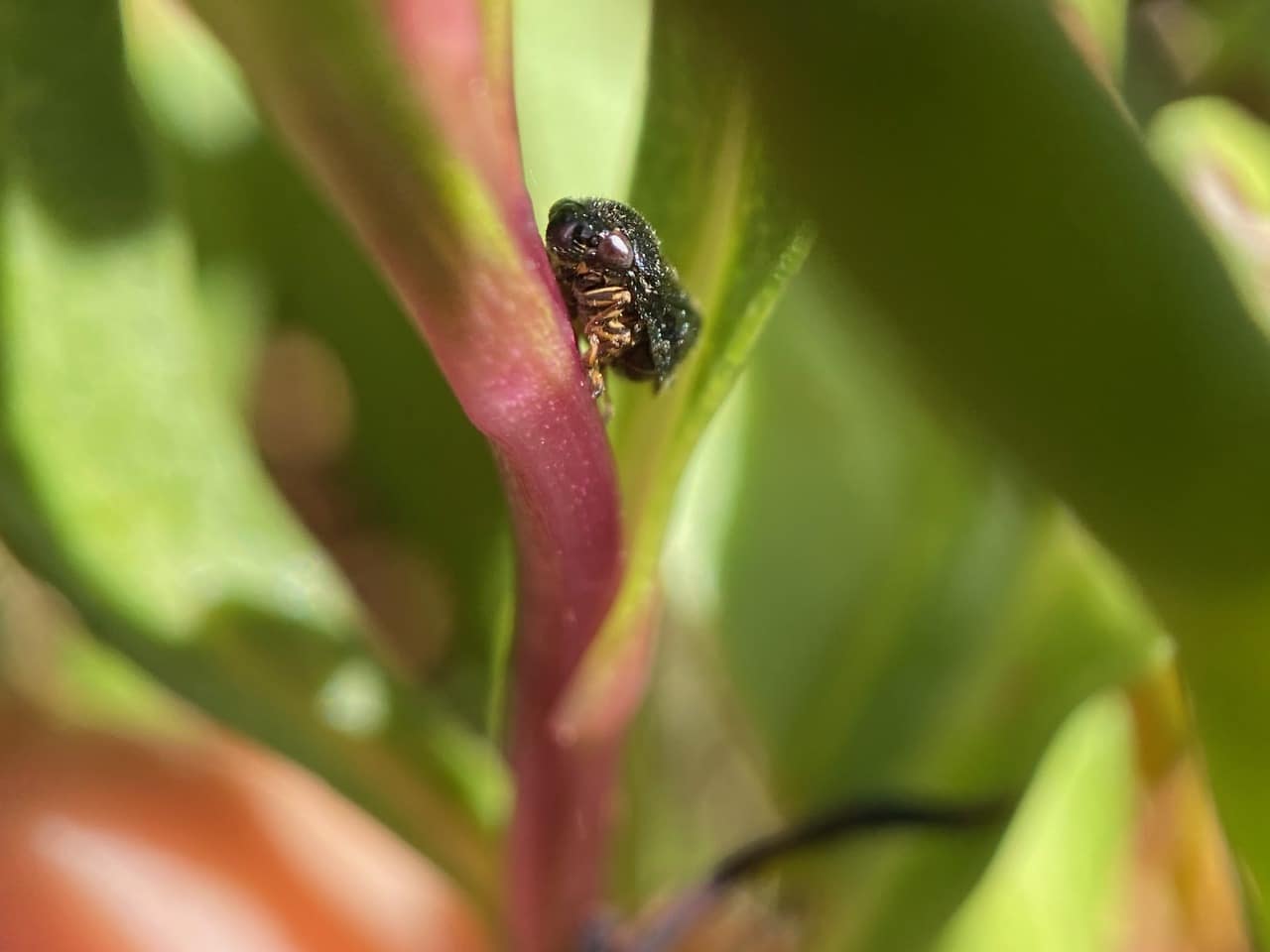
Here’s another male Spittlebug, Complex Clastoptera lineotocollis.

A Spittlebug exuvia (shed exoskeleton) is left clinging to the base of a Grindlia leaf. The nymph has crawled out from its foamy shelter to molt for the last time and emerge as an adult.
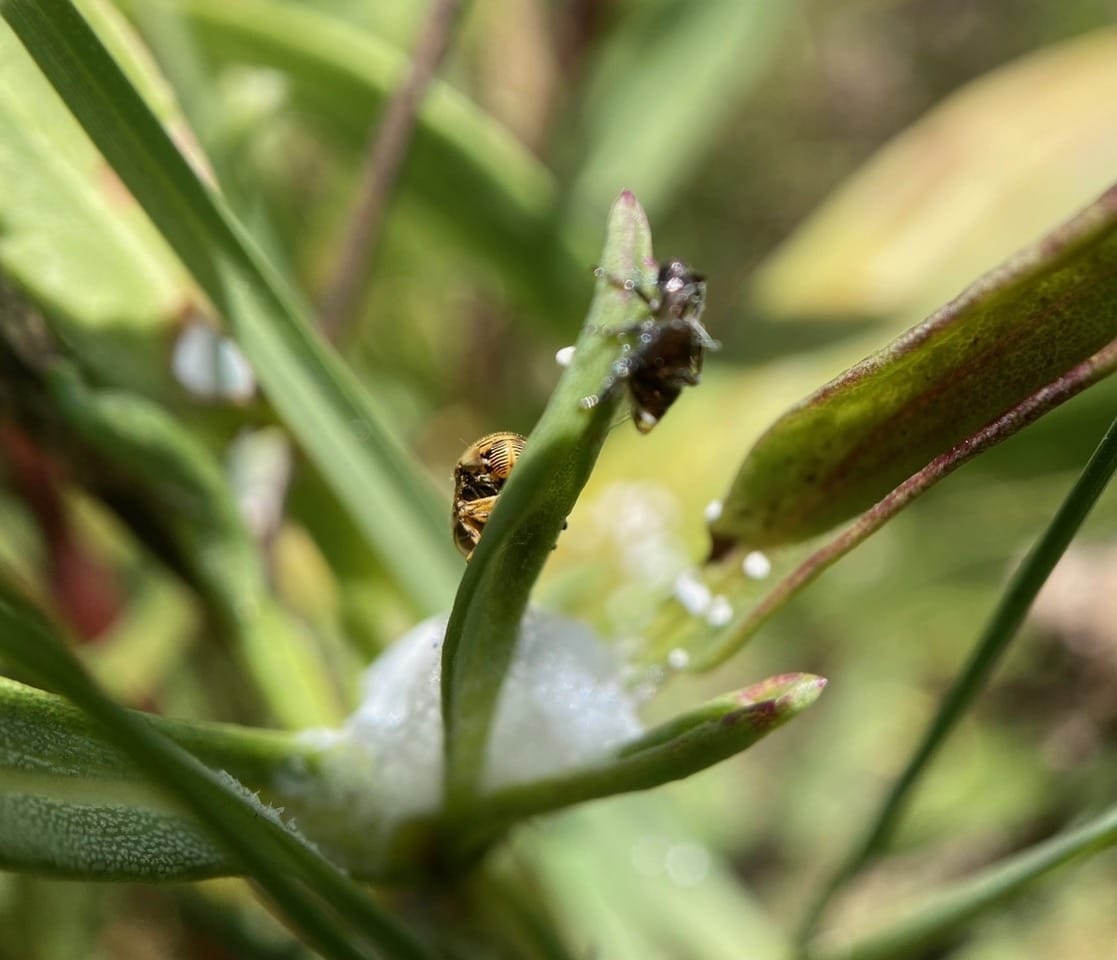
This female Spittlebug has not moved far away from her exuvia. These Spittlebugs are very sedentary creatures!

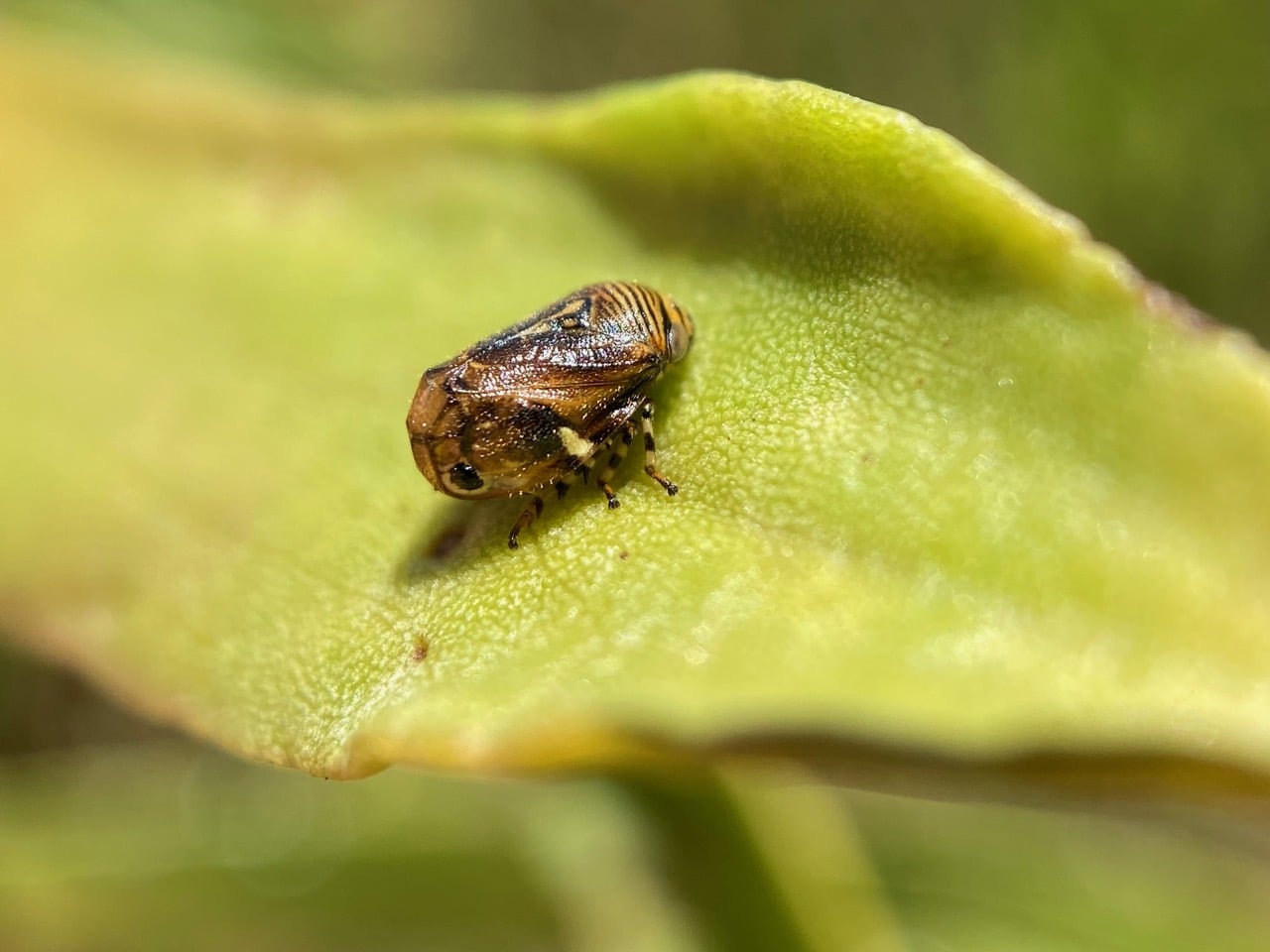
Here’s a beautiful female Spittlebug, Complex Clastoptera lineatocollis on a yellowing Grindelia leaf. Note the prominent white-rimmed black spot on the rear edge of her wings. The pair of spots on the wings serve as faux eyespots to distract and mislead potential predators. Her real eyes are clay colored and blend in with the rest of her body.
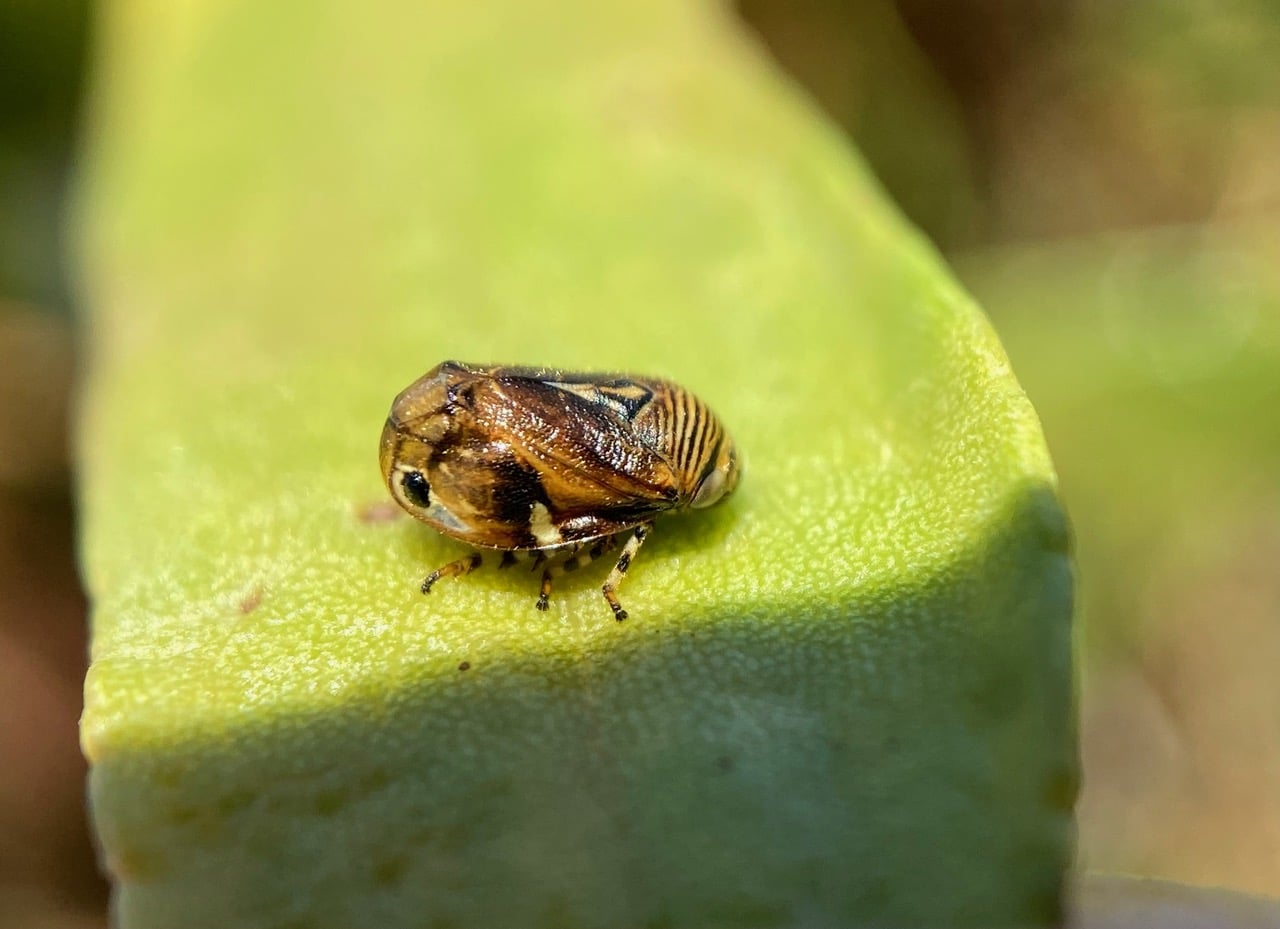

Ooh, here’s a female Spittlebug next to her exuvia above her foam mass. She has yet to develop her full adult coloration.

A female Spittlebug is hiding in the shadows of a Grindelia leaf axil.
The Spittlebug, Complex Clastoptera lineatocollis (family Clastopteridae) is found in western United States. The bugs feed mostly on Asteraceae, although other hosts have been reported. Females are brownish (3.3-3.8 mm), while the smaller males (3.0-3.2 mm) are mostly black.
The adult Spittle Bug is sometimes called a Froghopper. The Froghopper is a “true bug” in the order Hemiptera. Froghoppers are champion jumpers among insects, out-performing even the fleas. The bug can leap the human equivalent of a skyscraper without a running start. It is the highest jumping insect proportional to body size. The muscles in its hind legs act like a “catapult” to release energy explosively.
Athletic prowess aside, the Froghopper is better known for its young, the “spittle bug”. The nymphs produce foamy white masses on plants within which they feed on plant sap. Froghoppers have piercing-sucking mouthparts, and feed on plant sap as both nymphs and adults. A recent report claims, “Froghoppers are the super-suckers of the animal world. The tiny insects produce negative pressures equivalent to people sucking a 100-meter-long straw.” The sucking power is strong enough to suck the water out of a cup at the base of the Statue of Liberty while perched on its crown. To complement that, the Froghopper is also exceptional at urination, excreting the human equivalent of 2,500 gallons of urine a day.
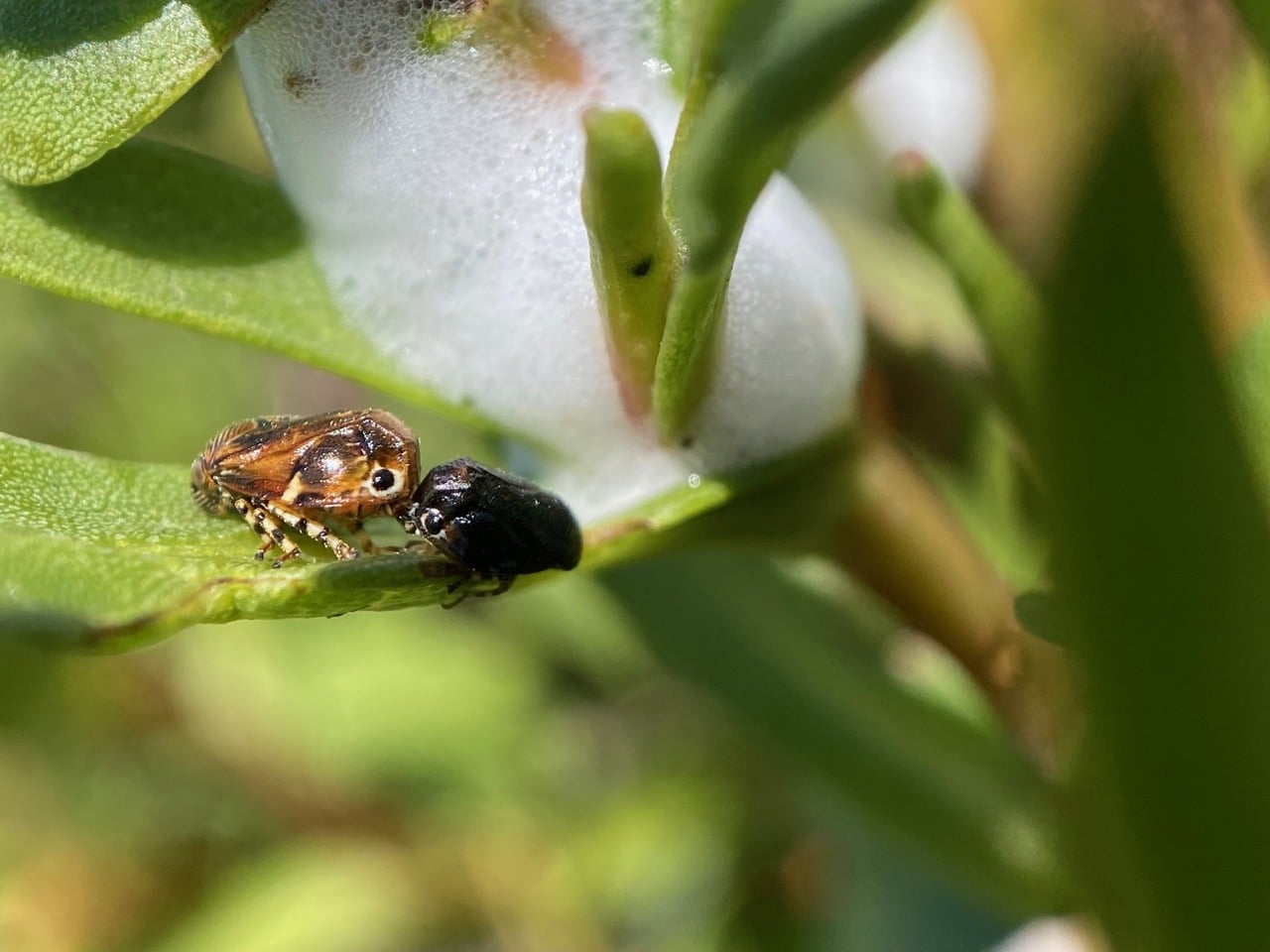
Hey, that’s a mating pair of Spittlebugs next to a foam mass! Their genitals locked, the partners are facing away from each other. The brown female is considerably larger than the mostly black male. Both sexes have the faux eyespots on the rear edge of their wings.
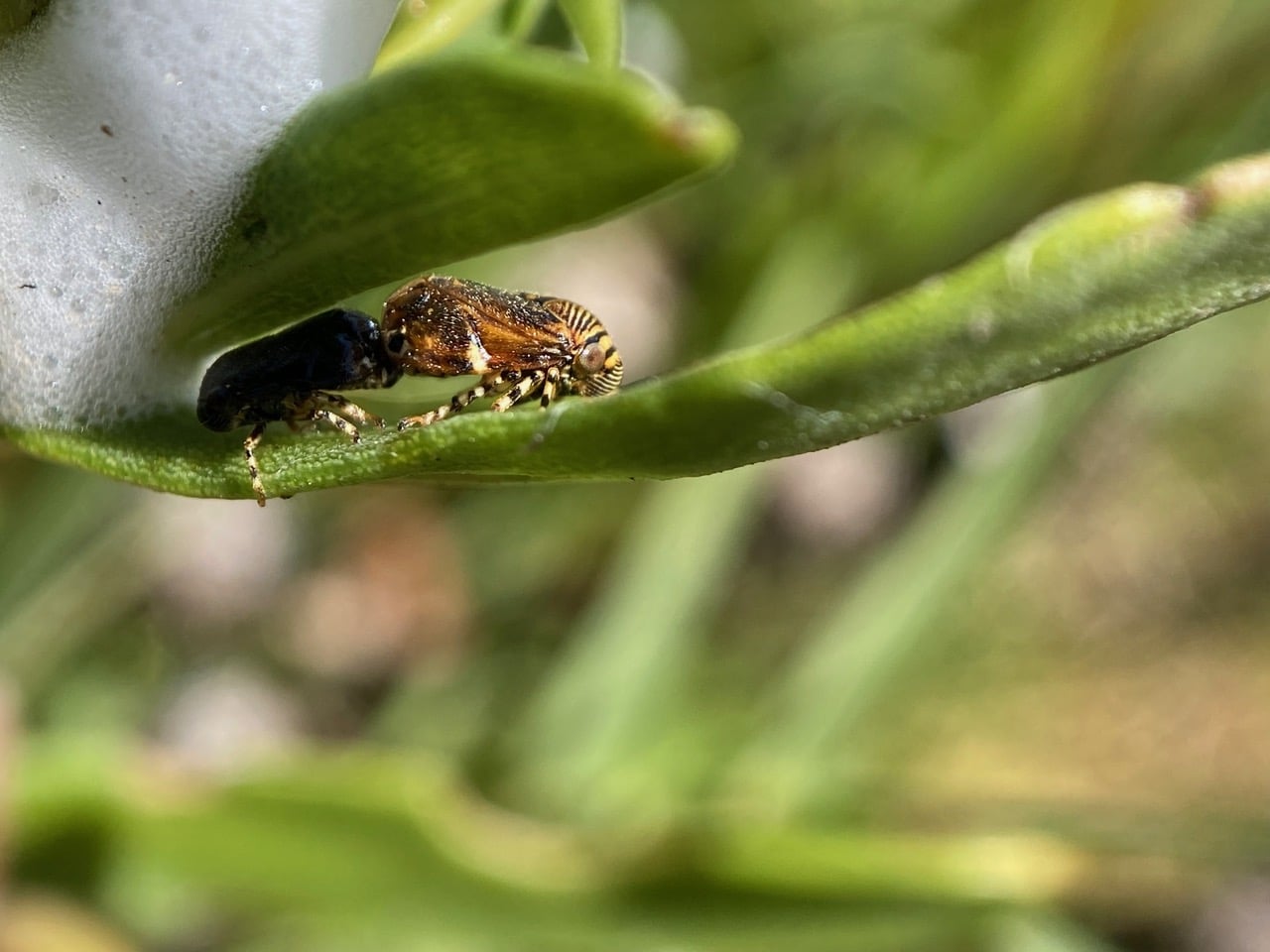
The lighting is difficult, but fortunately no matter how I tilt the branch for better light, the Spittlebugs do not jump off. They simply sidle in tandem to get away from the camera.
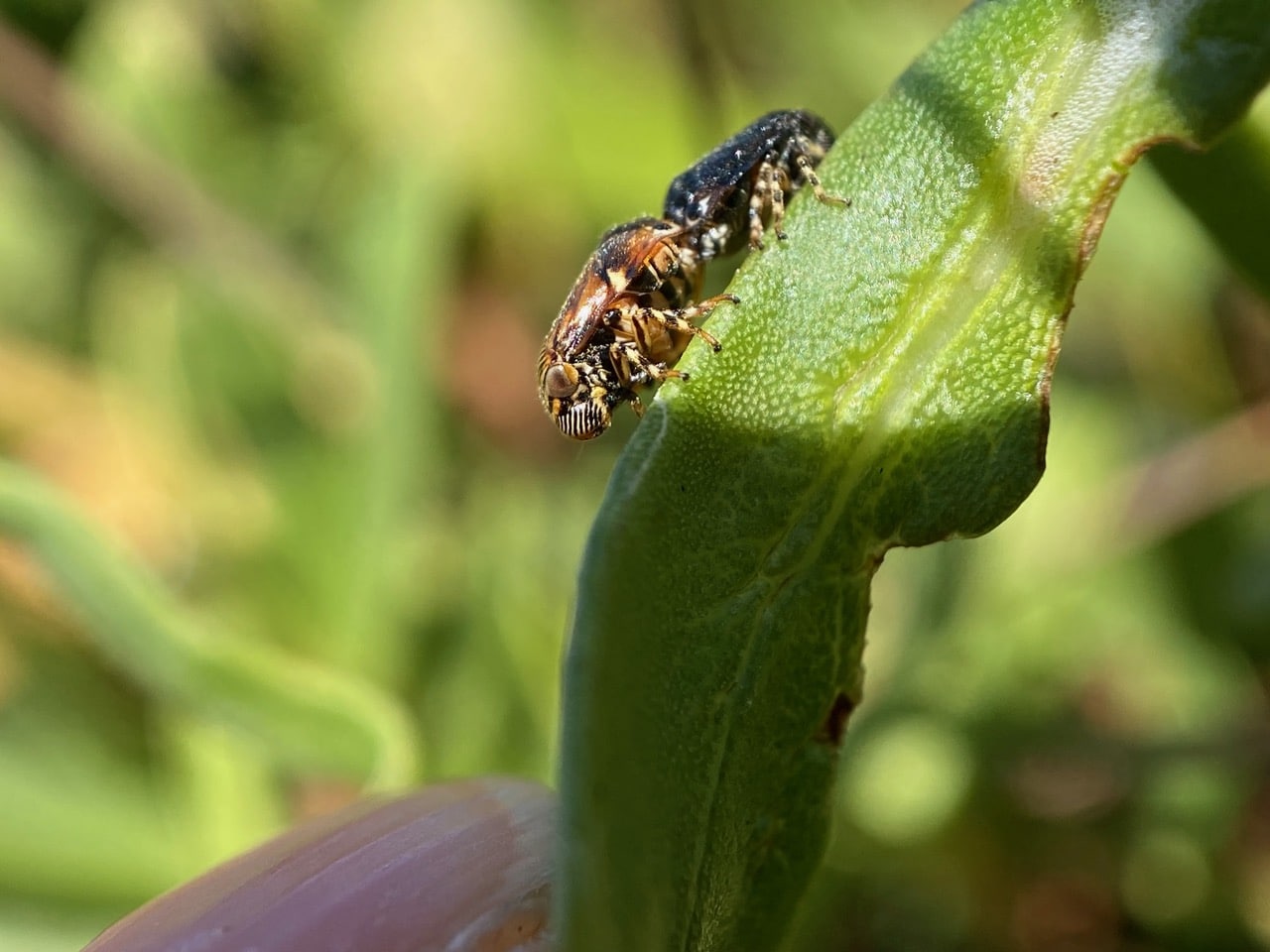

You can almost see the rostrum (piercing-sucking mouthparts) on the female Spittlebug at this angle. An extension from the “snout”, it is a short, stout black needle-like structure held at an angle under the body.
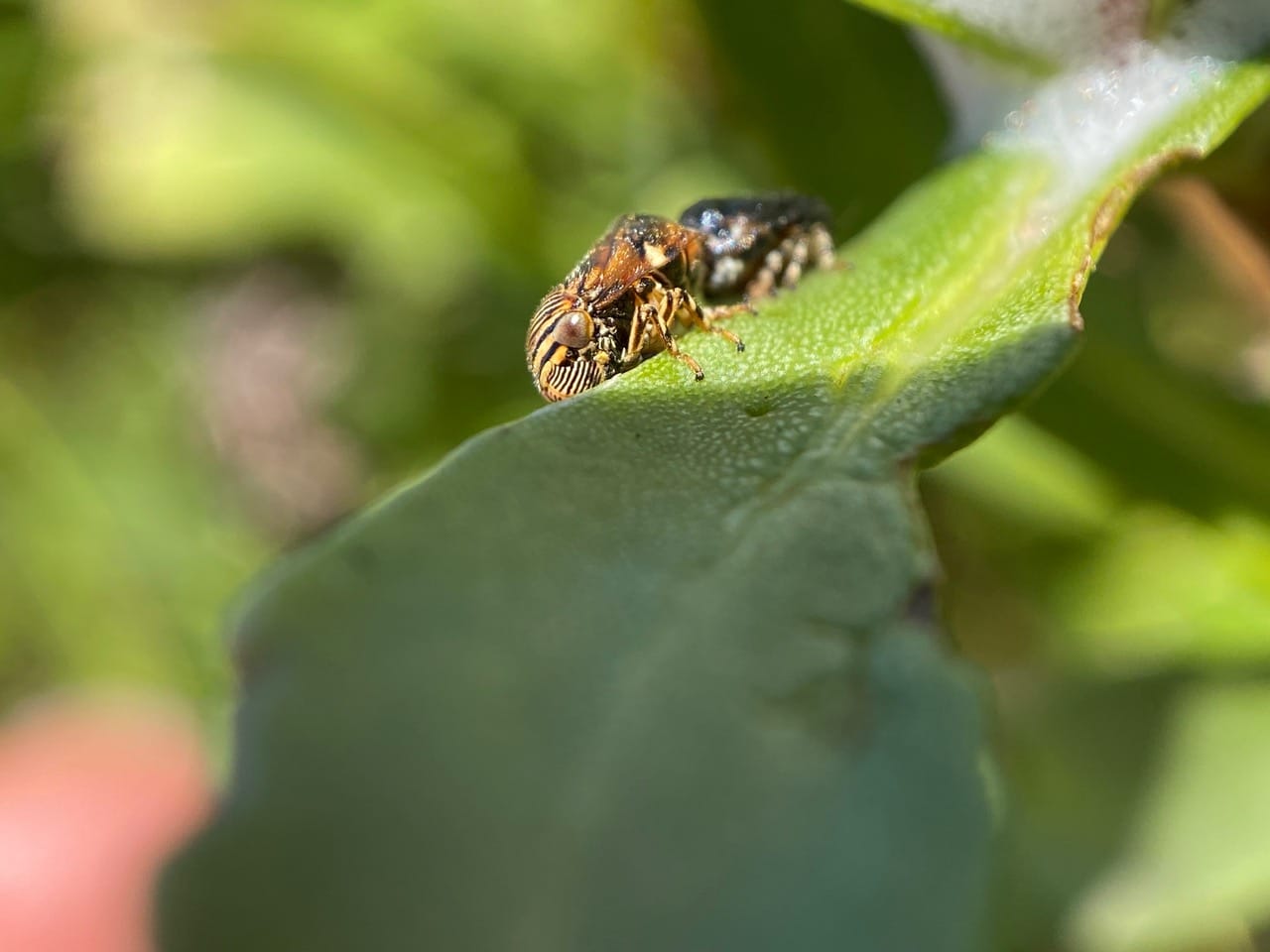


There’s nothing more satisfying than finding a mating pair of a sexually dimorphic species. It’s definitive proof that the morphologically distinct insects belong to the same species. Three years ago when I first found these Spittlebugs, I have wondered about the two distinct forms until I came across a pair in copula.

A pale teneral Spittlebug has moved away from its exuvia and is patiently waiting for its exoskeleton to dry and harden.
A teneral insect is a young insect that has just molted (emerged from its final nymphal skin) but has not yet hardened its exoskeleton or achieved its final coloration. Teneral insects typically have paler or different colors than their mature counterparts. Over a short period (often hours), the insect’s exoskeleton hardens and darkens, a process similar to the tanning of leather. This period allows the insect to expand its body and limbs. Being soft, and unable to move much, tenerals are more susceptible to injury and predation.
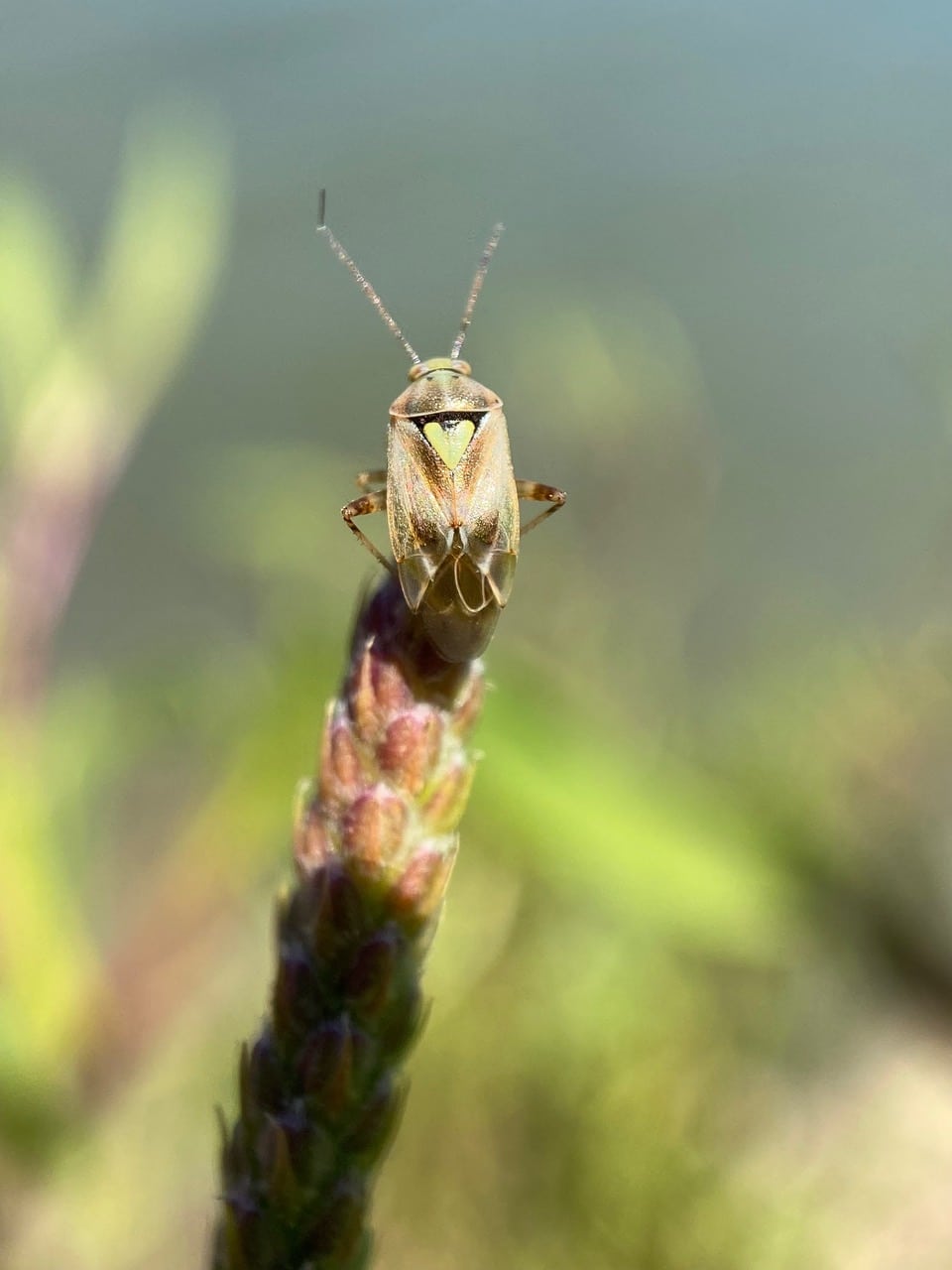
A Lygus Bug, Lygus sp. (family Miridae) is perched on the tip of a flower spike of Buck’s-horn Plantain, Plantago coronopus.
One useful feature in identifying members of the family Miridae or plant bugs is the presence of a cuneus; it is the triangular tip of the corium, the firm, horny part of the forewing, the hemielytron. The cuneus is visible in nearly all Miridae.

Lygus Bugs are small (about 0.2 inch long), oval-shaped plant bugs (family Miridae), ranging in color from pale green to yellowish-brown or dark brown. They feature a prominent, triangular “V” shape in the center of their back and have long, spindly antennae. Nymphs are wingless, generally pale green, and resemble aphids but lack the backward-facing tubes (cornicles) on their abdomen. They are fast-moving and larger nymphs often have five black spots on their backs. Lygus Bugs are major agricultural pests. Both adults and nymphs use piercing-sucking mouthparts to feed on new growth, buds, and seeds. Their feeding causes severe plant damage, including flower drop, discolored leaves, and deformed fruits or seeds.

A small, brownish Bee Fly, Lepidanthrax sp. (family Bombyliidae) lands on the tangled dried vegetation on the ground, and essentially disappears from view.
Lepidanthrax is a genus of bee flies (family Bombyliidae) consisting of at least 50 described species. They are primarily found in North and Central America, with notable diversity in the western United States and Mexico. These flies mimic bees and are important garden pollinators. Adults hover in mid-air to feed on nectar and pollen without landing, a strategy that helps them evade predators. Like many bee flies, the larvae are typically parasitoids of other insects, often targeting ground-nesting bees. The female bee fly hovers directly over the host’s burrow and rapidly flicks her abdomen, launching or dropping eggs directly into or near the nest entrance. After the egg lands, the first-stage larva hatches and actively crawls into the nest. It is an active searcher until it attaches itself to the host, becoming a sedentary, parasitic maggot that consumes the host’s food supply and the host larva itself.