

Pollinator Post 5/26/24 (1)
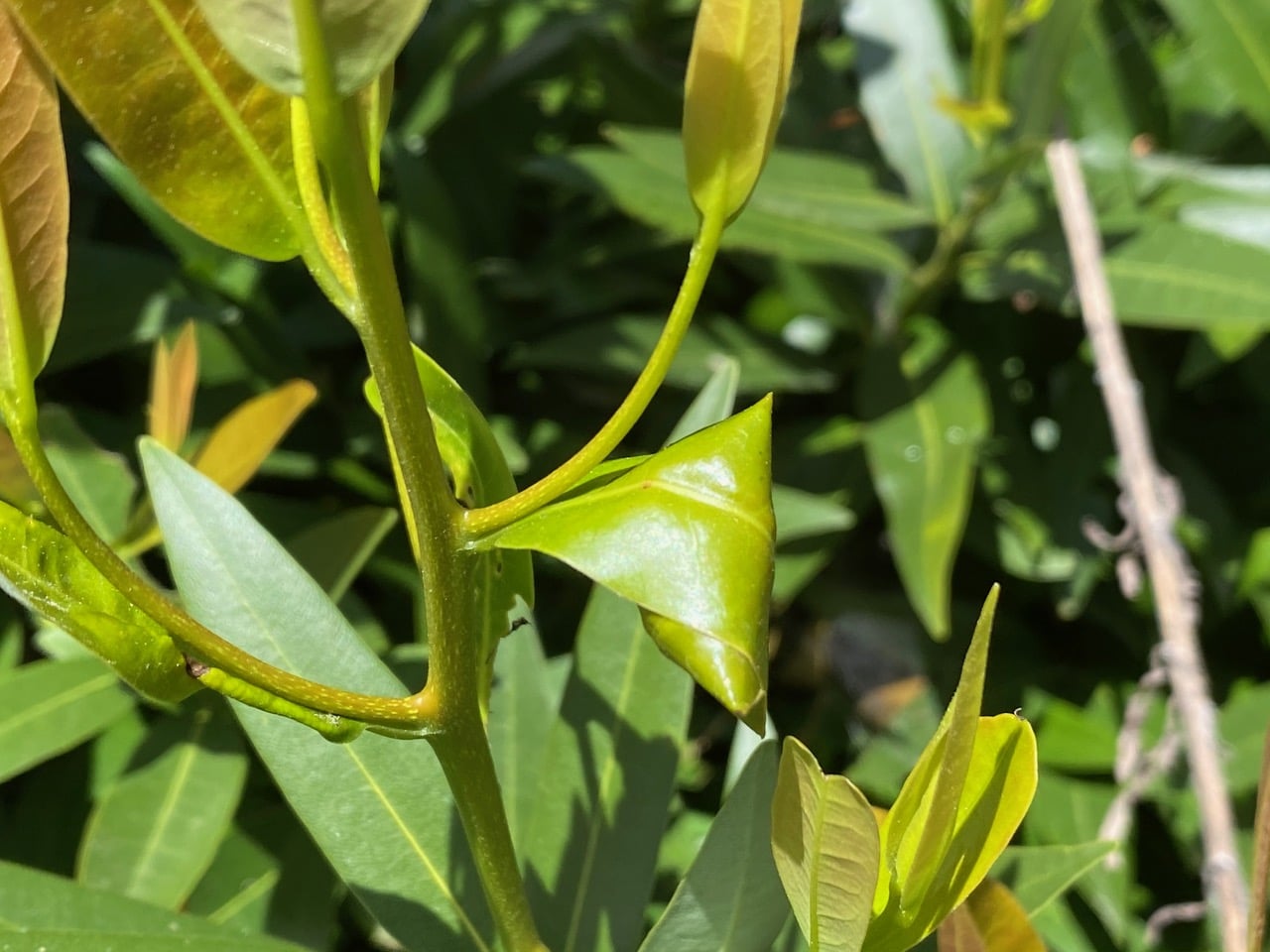
Before I enter the cattle gate at the Steam Train entrance to Skyline Gardens, I pause at the large bushy California Bay Tree, Umbellularia californica. It has put on many tender new leaves, some of which have been folded into these charming triangular boxes. I know from past observations that these are created by a small moth caterpillar.
Members of the family Tortricidae are commonly known as tortrix moths or leafroller moths. Many are economically important pests. The typical resting posture of the adult is with the wings folded back, producing a rather rounded profile. Tortricid moths are generally small, with a wingspan of 3 cm or less. Many species are drab and have mottled and marbled brown colors. Larvae of some species feed by boring into stems, roots, buds or seeds. Others feed externally and construct leaf rolls.
The Tortrix caterpillars feed inside their leaf shelters, safe from predators and parasites. Leaf shelter-builders, either leaf-tiers or leaf-rollers, do not manipulate leaves directly but use their silk to draw plant surfaces together. The caterpillars impart potential energy to their silk strands by stretching them beyond their equilibrium length as they are spun out. Axial retraction of the stretched strands then draws the bound plant surfaces together. Although a single stretched strand exerts only a minuscule force, the combined force generated by many such strands attached to the same opposable plant surfaces is substantial and allows the caterpillars to manipulate leaves many times their size and mass.

Then I notice a young leaf that has its tip loosely rolled. Might this be the beginning of a triangular box – a work in progress?

I bend the branch so I have a better look at the rolled tip. What a jaw-dropping sight! A tiny caterpillar is hard at work constructing a leaf shelter. Swinging its head up and down, it is alternately attaching silk to the upper surface of the roll and the flat undersurface of the leaf. And look at the radiating silk that it has created to roll the tip to start with! How can a little caterpillar produce so much silk?!
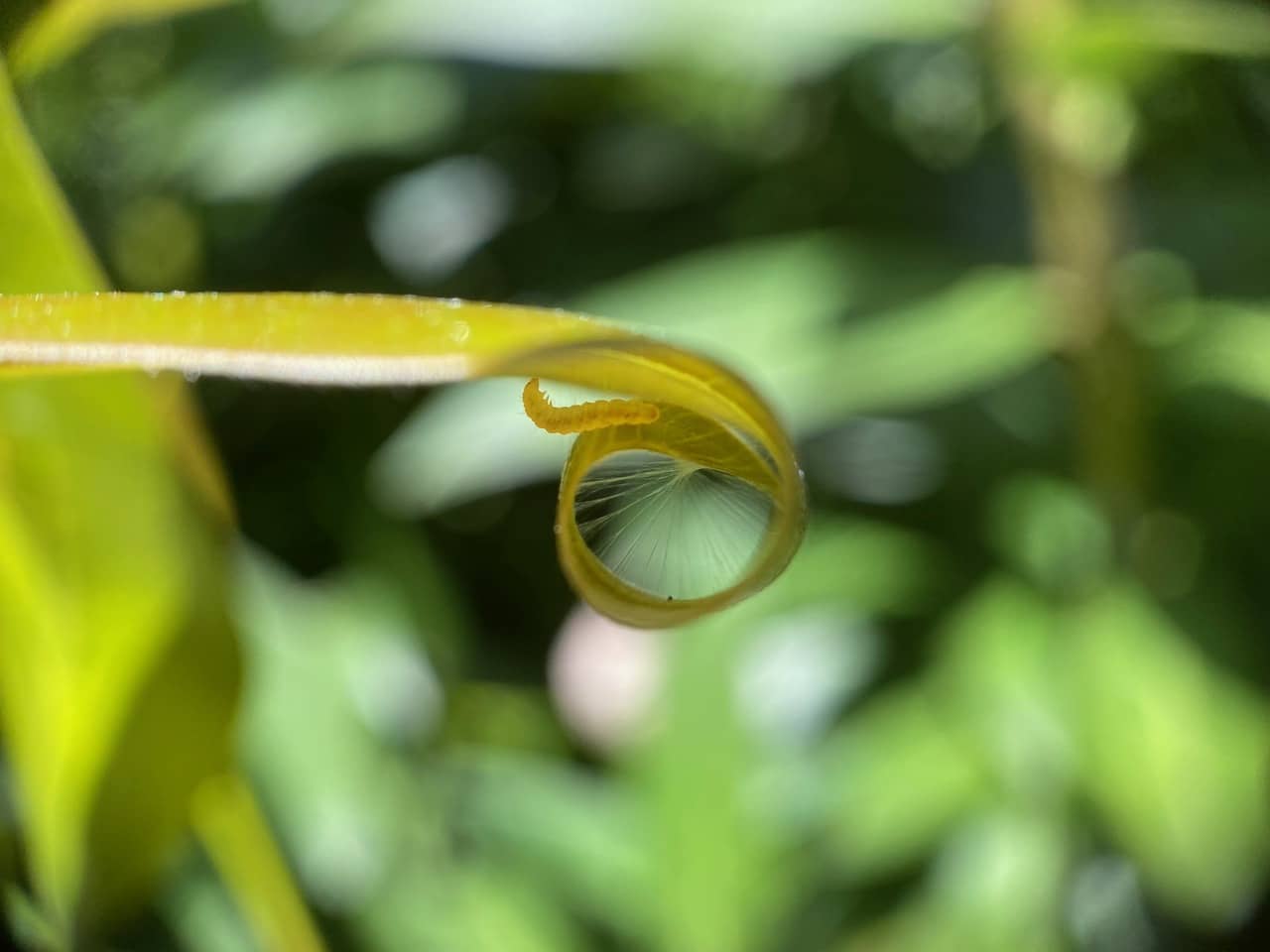

The caterpillar’s activity is captivating. I decide to capture it on video instead. The video is rather jumpy and not in good focus. It is difficult to do a one-handed video recording in high magnification. But you get the idea…
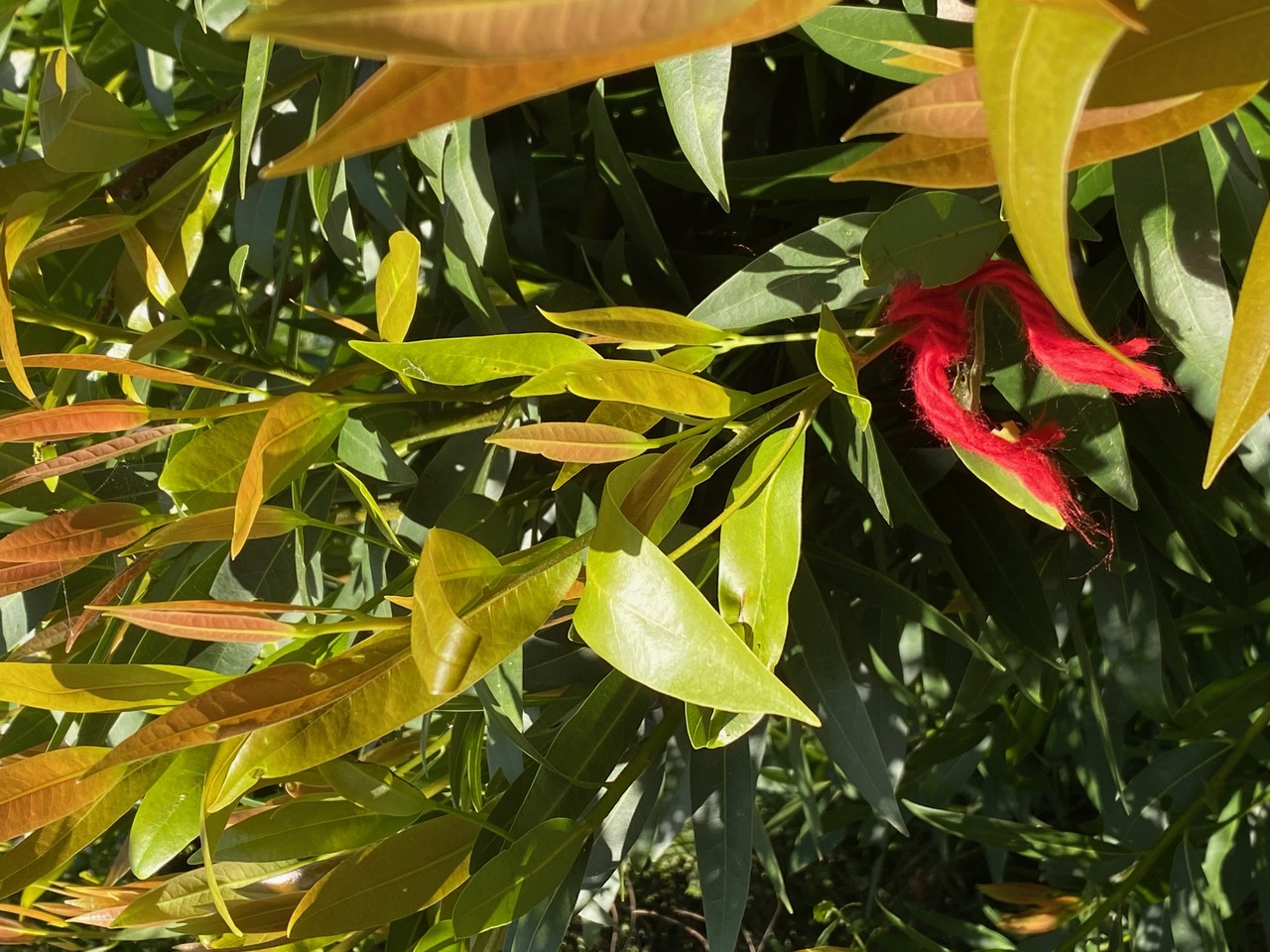
Someone ought to record this on time-lapse video as the action could go on for hours. Before I leave the spot, I mark the branch with a piece of red yarn. I’ll check back tomorrow – maybe the leaf will have turned into a triangular box then?
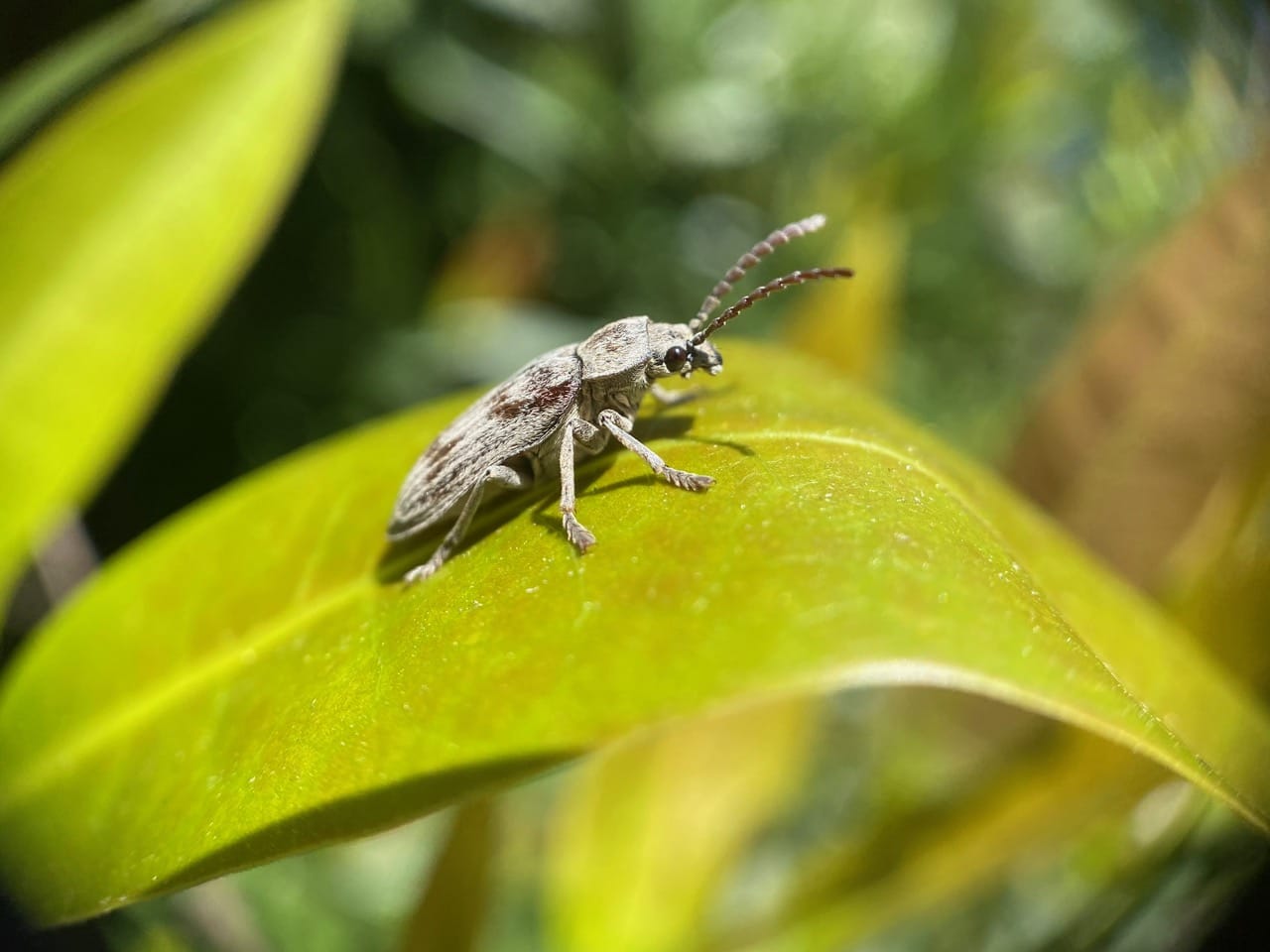
A Davidson’s Beetle, Dascillus davidsoni (family Dascillidae) is perched on a young California Bay leaf.
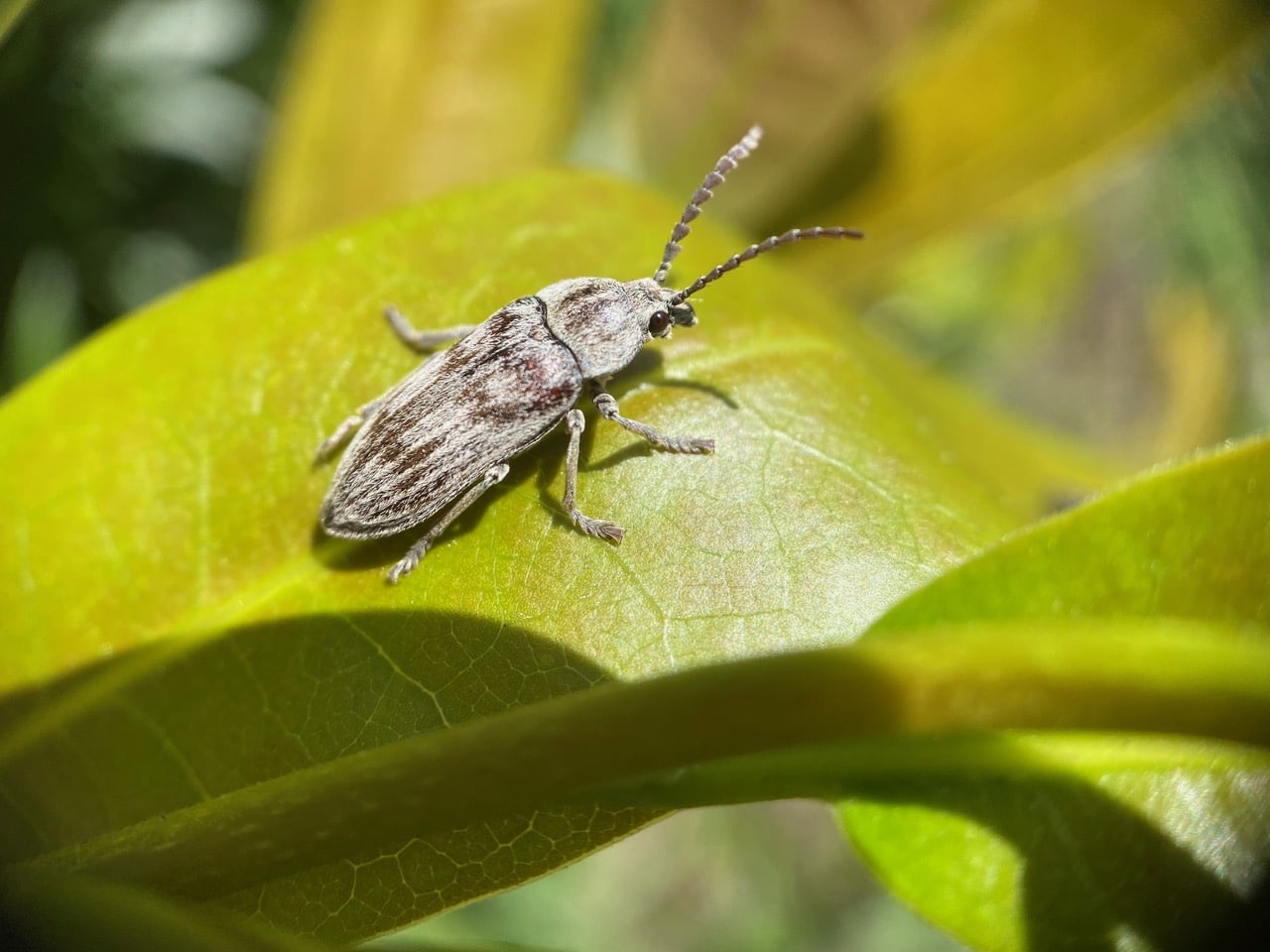
Members of the family Dascillidae are called Soft-bodied Plant Beetles. Adult Dascillidae are 4.5-25 mm long with elongate body that is somewhat convex in cross-section. They are covered in dense grey/brown hairs. The adults are found on grass during the springtime. The larvae occur in moist soil or under rocks. The larvae are thought to feed on roots or decaying plant matter.

Tall and conspicuous, the umbel-like inflorescences of Ithuriel’s Spear, Triteleia laxa have emerged from the short annual grasses along the trail.

In the early stages, the trumpet-shaped flowers dispense powder blue pollen from the six stamens.
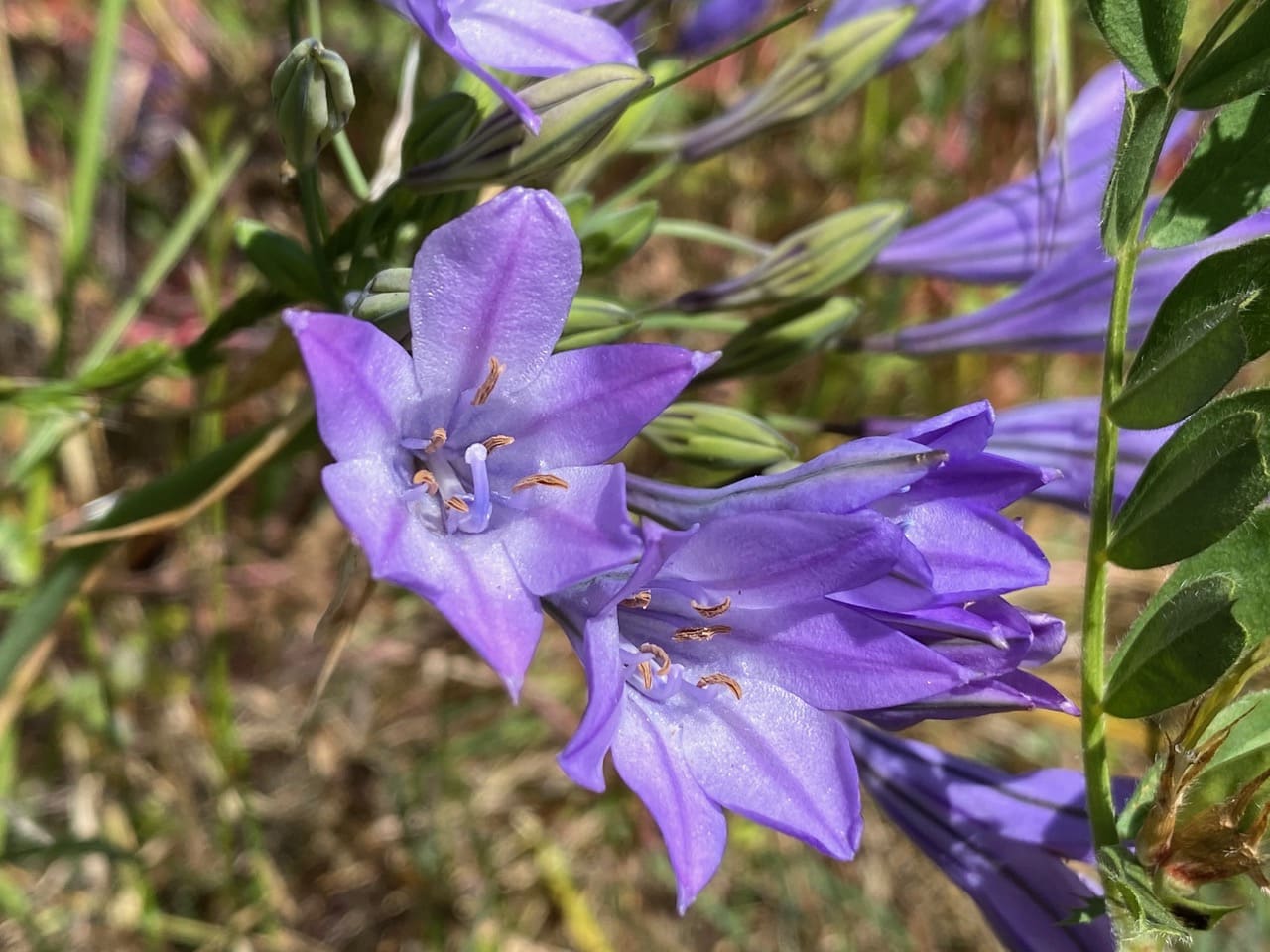
The flowers of Ithuriel’s Spear appear to be protandrous, the male parts maturing before the female parts. After the anthers have finished releasing pollen and have withered, the style lengthens, lifting the stigma into prominence in the middle of the corrolla. This is the female phase when the stigma is receptive to incoming pollen. Temporal separation of the sexes serves to prevent self-pollination.
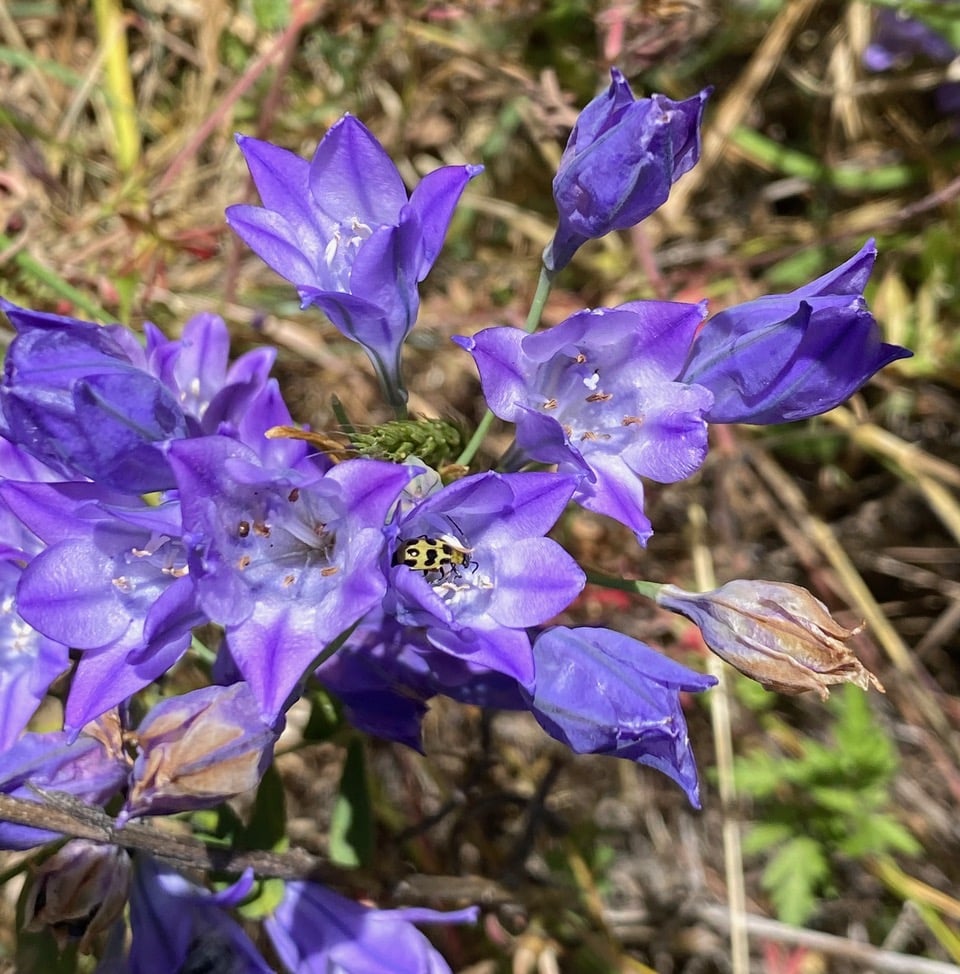
A Spotted Cucumber Beetle, Diabrotica undecimpunctata (family Chrysomelidae) is foraging inside an Ithuriel’s Spear flower.
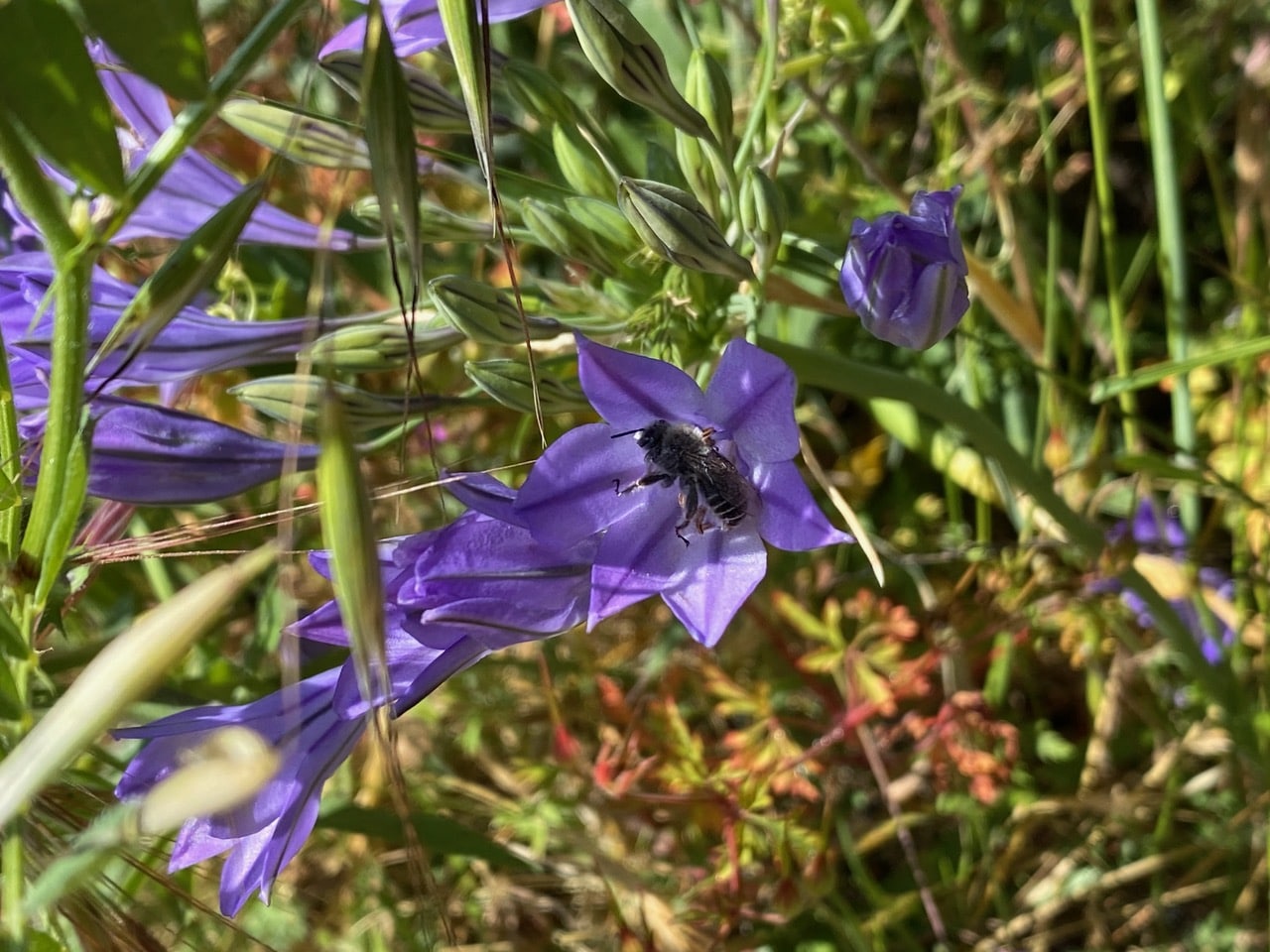
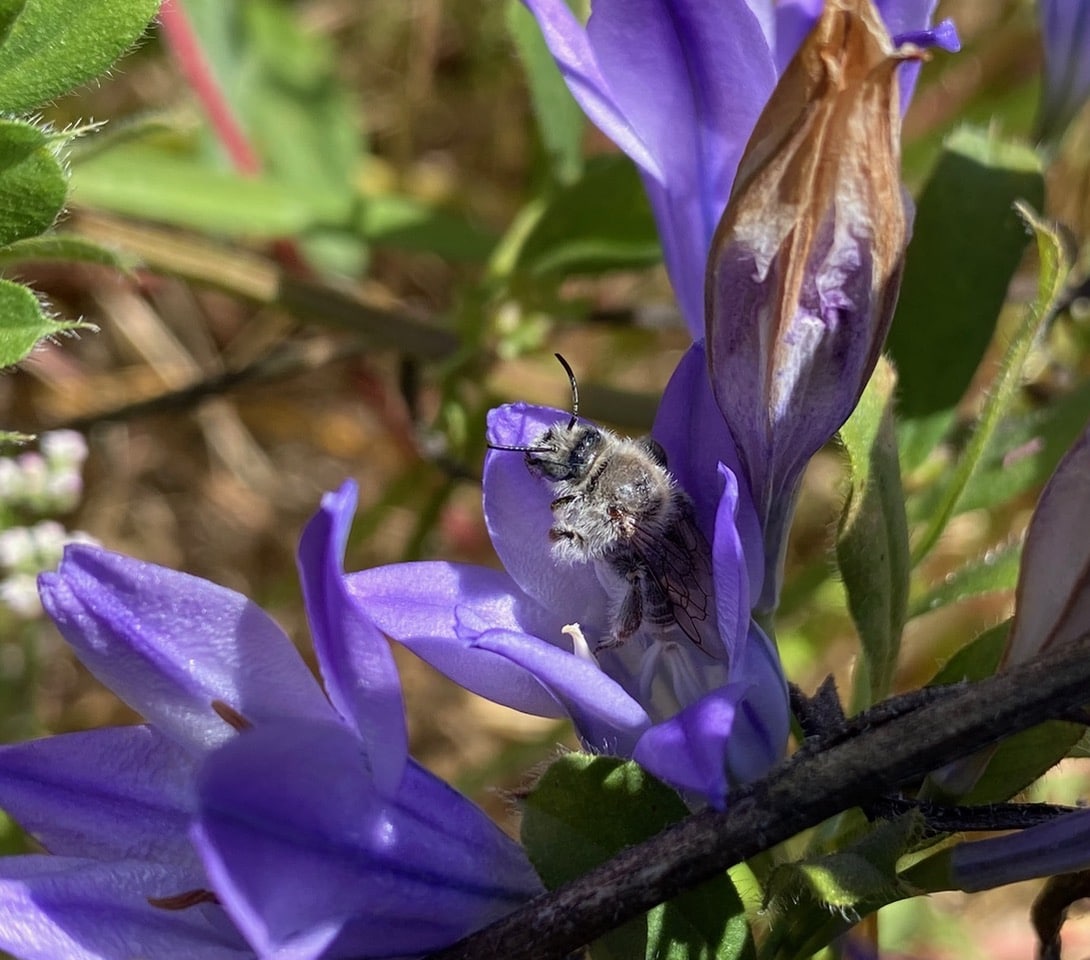
A bee is rummaging inside this flower in the shade.

The stocky bee finally ambles out of the flower into the light.
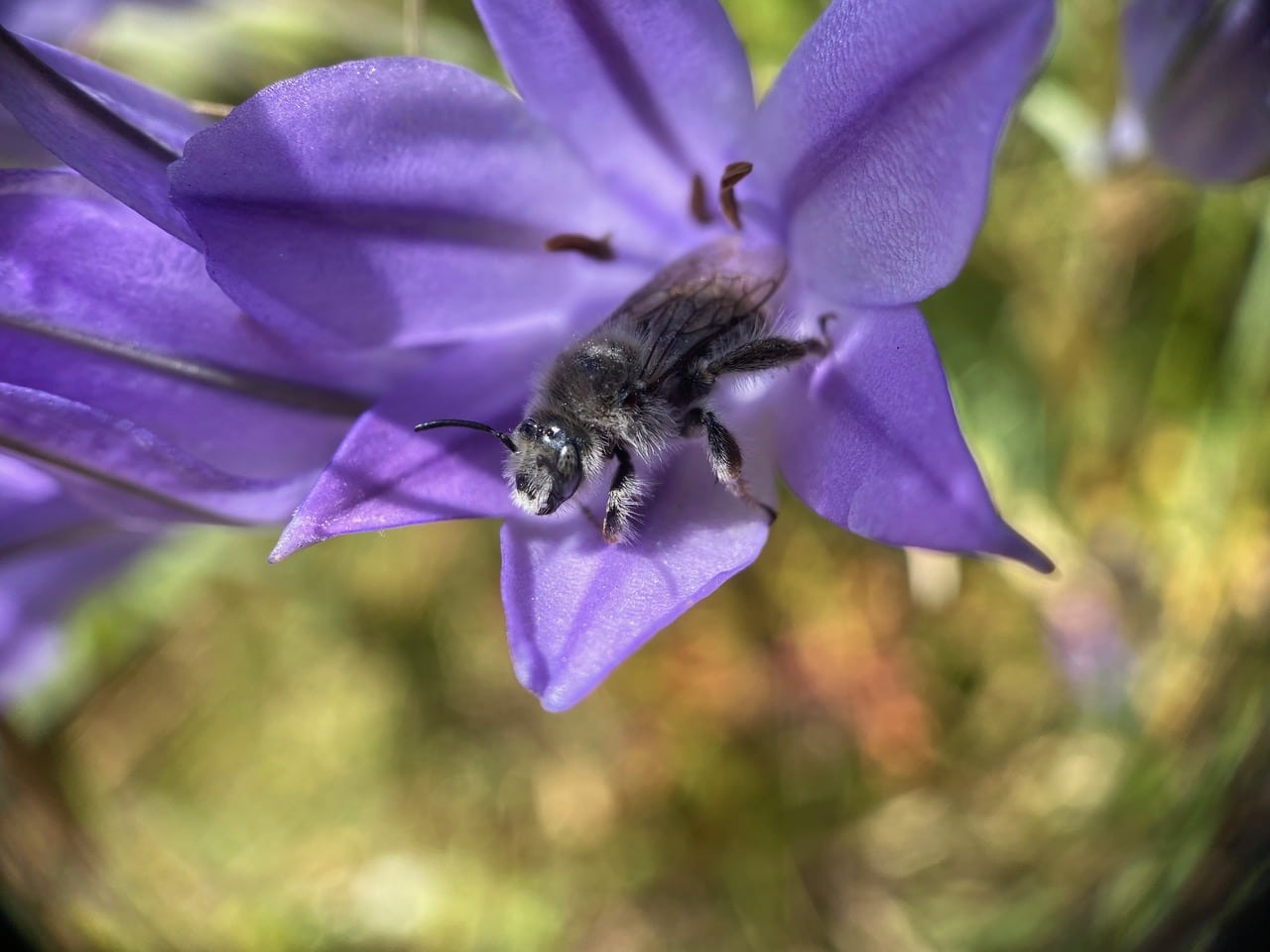
The bee hasn’t collected any pollen. In fact the flower is in its female phase, no longer dispensing pollen. The bee must have been taking nectar at the base of the flower.
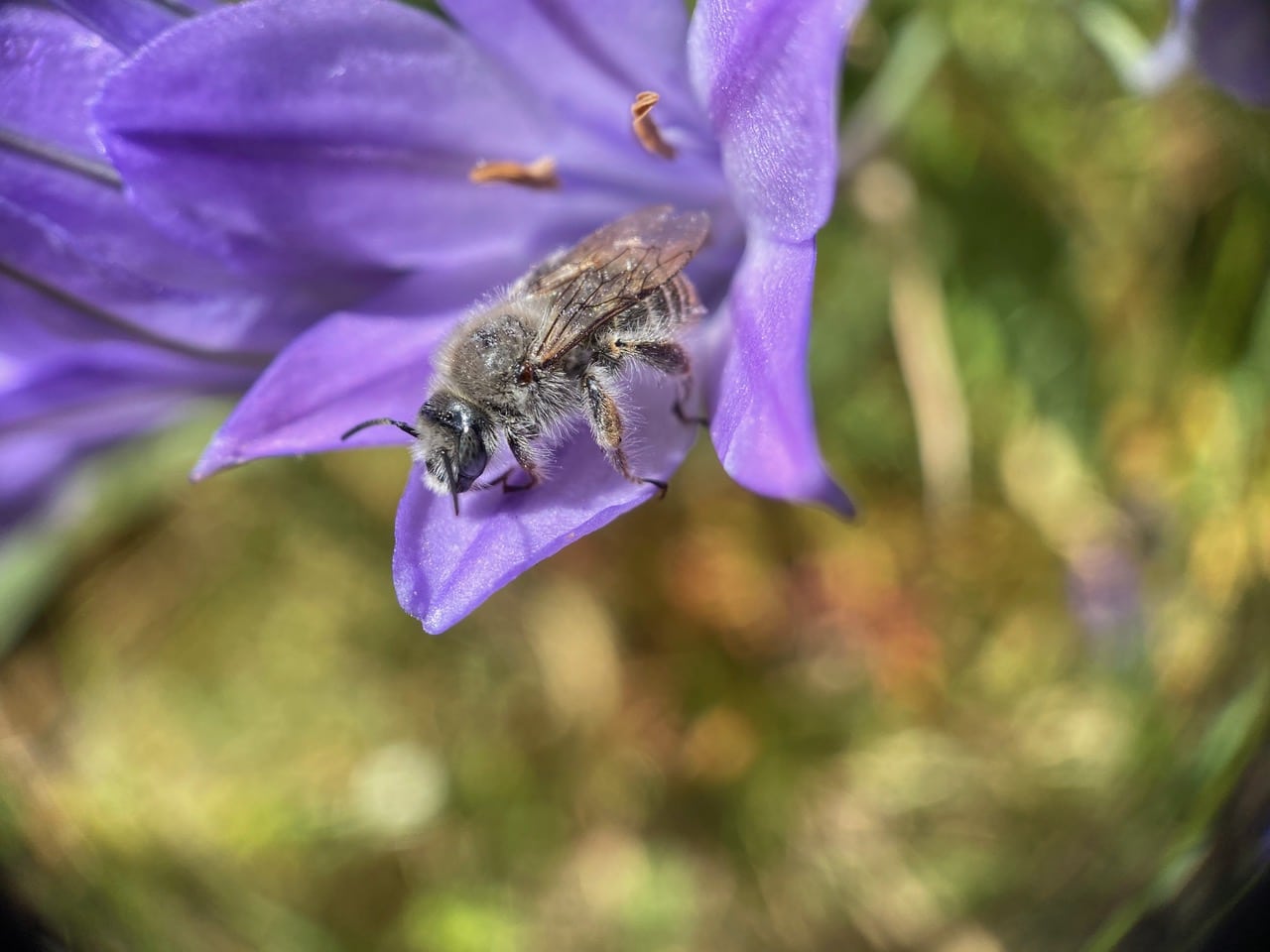
I wonder if this is a male bee. It doesn’t have much of a scopa on its hind legs. Yet its antennae are not long…
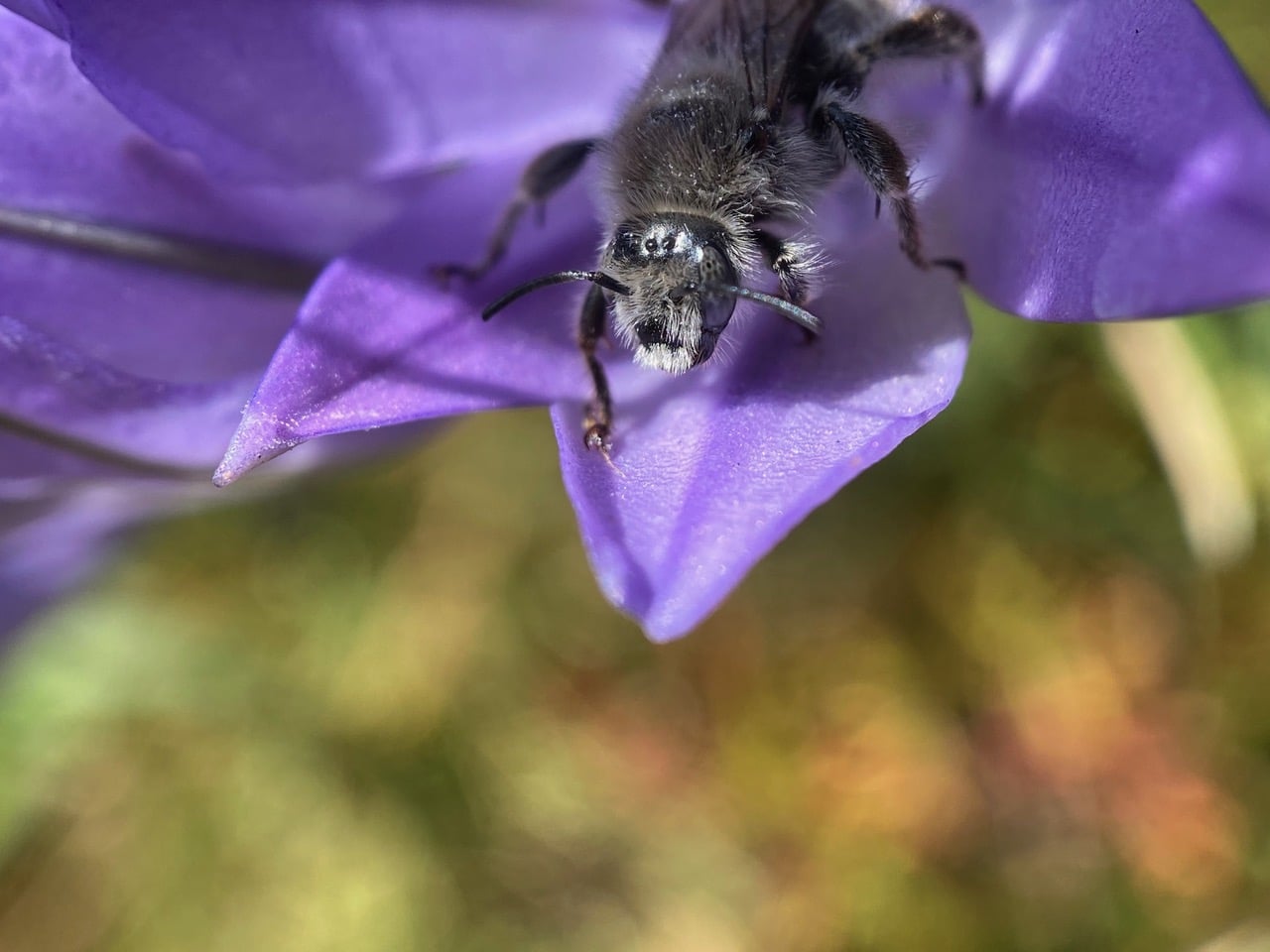
What an interesting face! The bee flies away and I can only hope that my photos have captured enough details to have the bee identified.
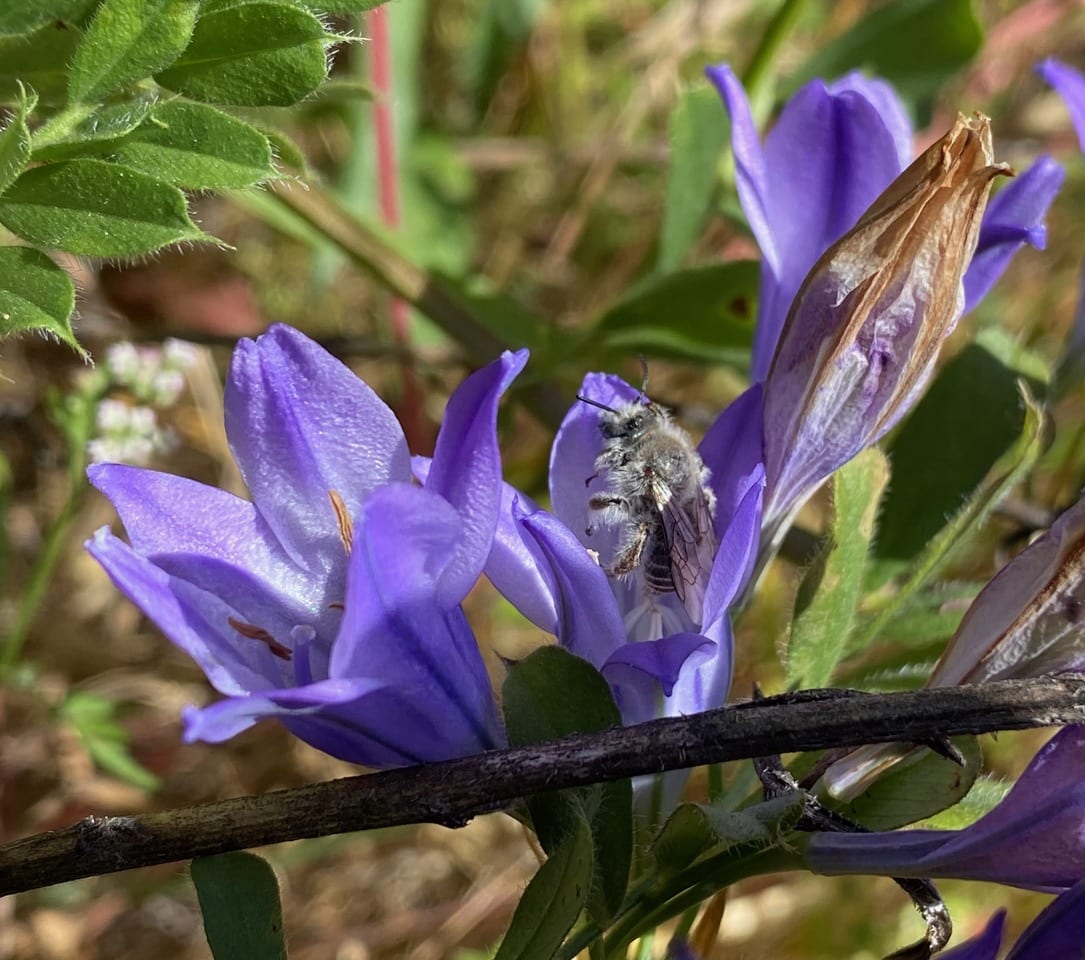
A few minutes later, I find the same bee crawling out of another Ithuriel’s Spear flower.

The bee extends and retracts its tongue repeatedly as if cleaning it.

Then it runs its antennae through the antenna cleaners on its front leg.
All bees have an antenna cleaner on each of their two forelegs. The antenna cleaners consists of two parts: a notch in the basitarsus, which is fitted with stiff hairs, and a corresponding spur on the tibia. To clean its antenna, the bee raises its foreleg over its antenna and then flexes it tarsus. The action allows the spur to close the notch, forming a ring around the antenna. The bee pulls each antenna through the bristles to clean it of debris such as pollen or dust which might interfere with the many sensory organs within the antenna. A bee’s antennae serve numerous functions: smell, taste, perceive humidity and temperature, feel, monitor gravity and flight speed and even detect sound waves to help guide the bee in its daily activities.
The bee proceeds to groom the rest of its body.
A Diadasia bee grooms itself after taking nectar from an Ithuriel’s Spear flower. – YouTube
iNaturalist has helped identify the bee as a Turret or Chimney Bee, Diadasia sp. (tribe Emphorini, family Apidae). Diadasia is a genus of bees in the family Apidae. Species of Diadasia are oligolectic, specialized on a relatively small number of plant species. Their host plants include asters, bindweeds, cacti, mallows, and willow herbs. The bees are solitary ground-nesters, although they tend to nest in aggregations. Each nest usually has a prominent turret atop the actual burrow entrance.

A Phacelia Plant Bug, Tupiocoris californicus (family Miridae) is roaming the immature flower buds of a California Everlasting, Pseudognaphalium californicum. Note the needle-like mouthpart that is folded under its body.
Despite its common name, I have never seen this bug on Phacelia. In past summers, I have often encountered these bugs on the Coast Tarweed. The bug appears to be well adapted for life on the sticky plant; it roams the sticky terrain with ease, feeding on the small insects, dead or alive, that are stuck on the plant. Like all other members of the order Hemiptera, it has a piercing-sucking mouthpart called the rostrum that is folded under the body when not in use.