

Pollinator Post 5/26/23 (1)
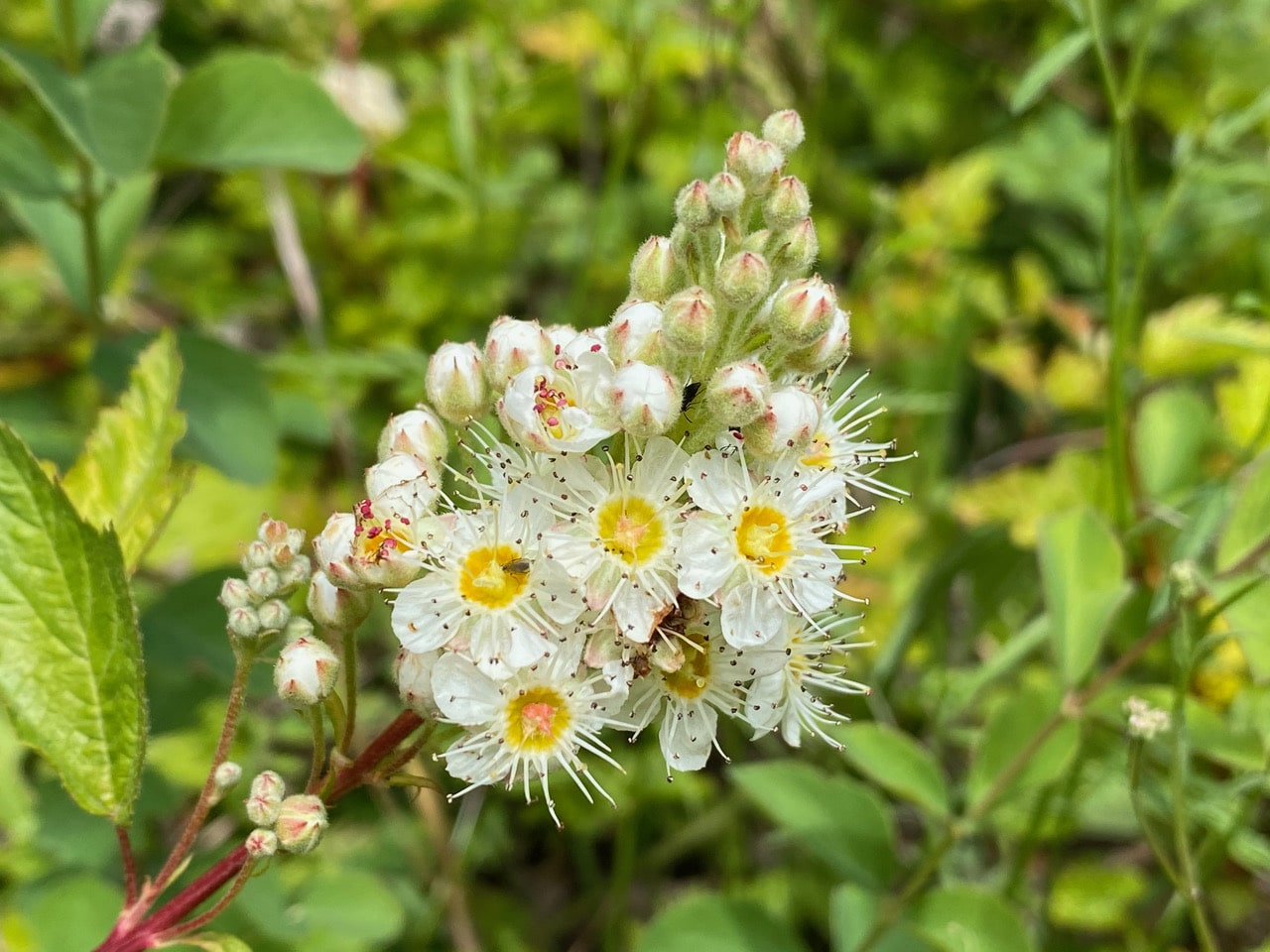
Near Siesta Gate, more clusters of white flowers have appeared on the patch of Pacific Ninebark, Physocarpus capitatus.
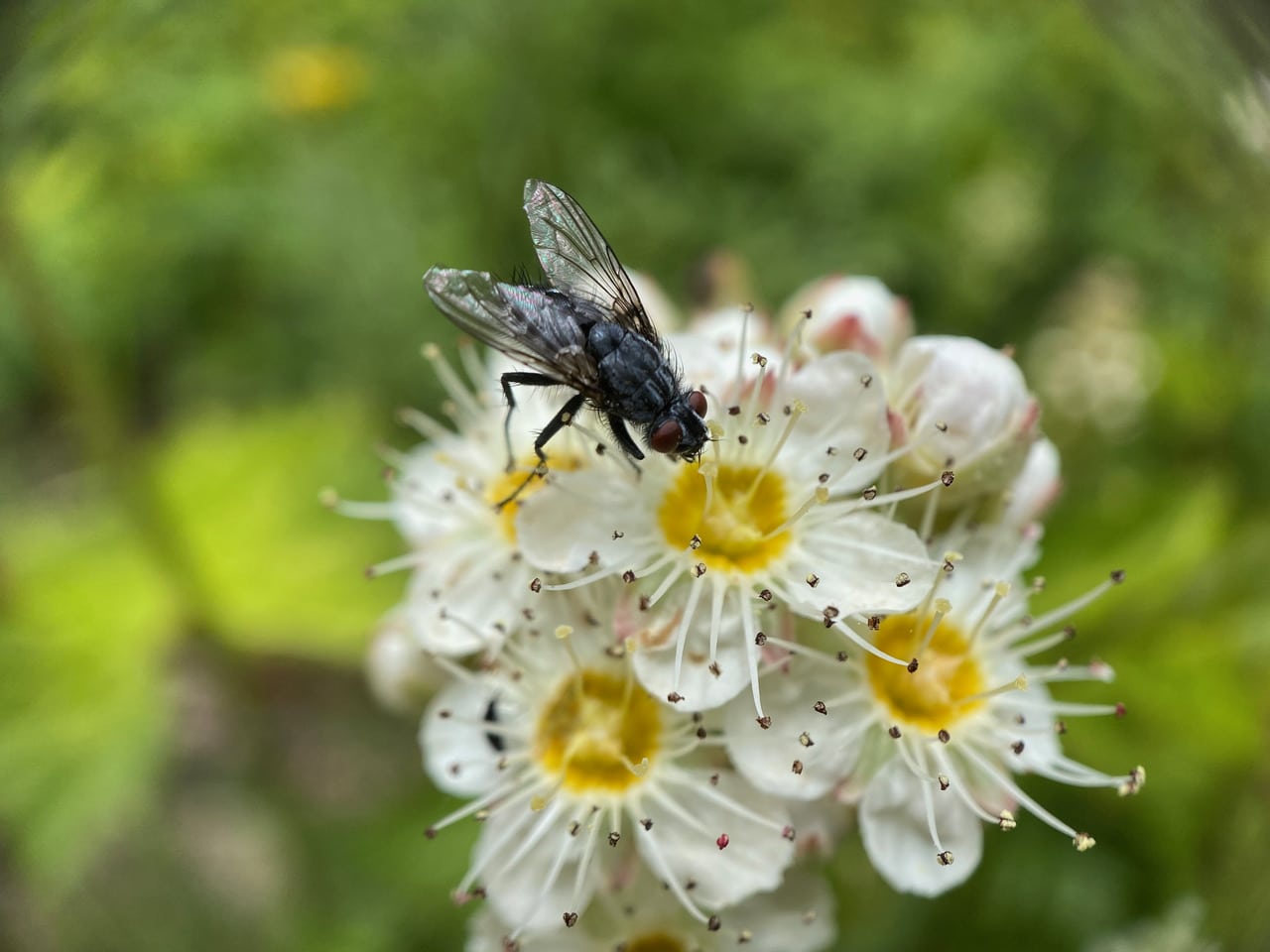
A dark, bristly fly is visiting the flowers of Pacific Ninebark. It is a Woodlouse Fly, Stevenia deceptoria (family Rhinophoridae). These small, black, bristly flies are somewhat related to the Tachinidae. The larvae are mostly parasitoids of woodlice (pill bugs), beetles, spiders and other arthropods, and occasionally snails.
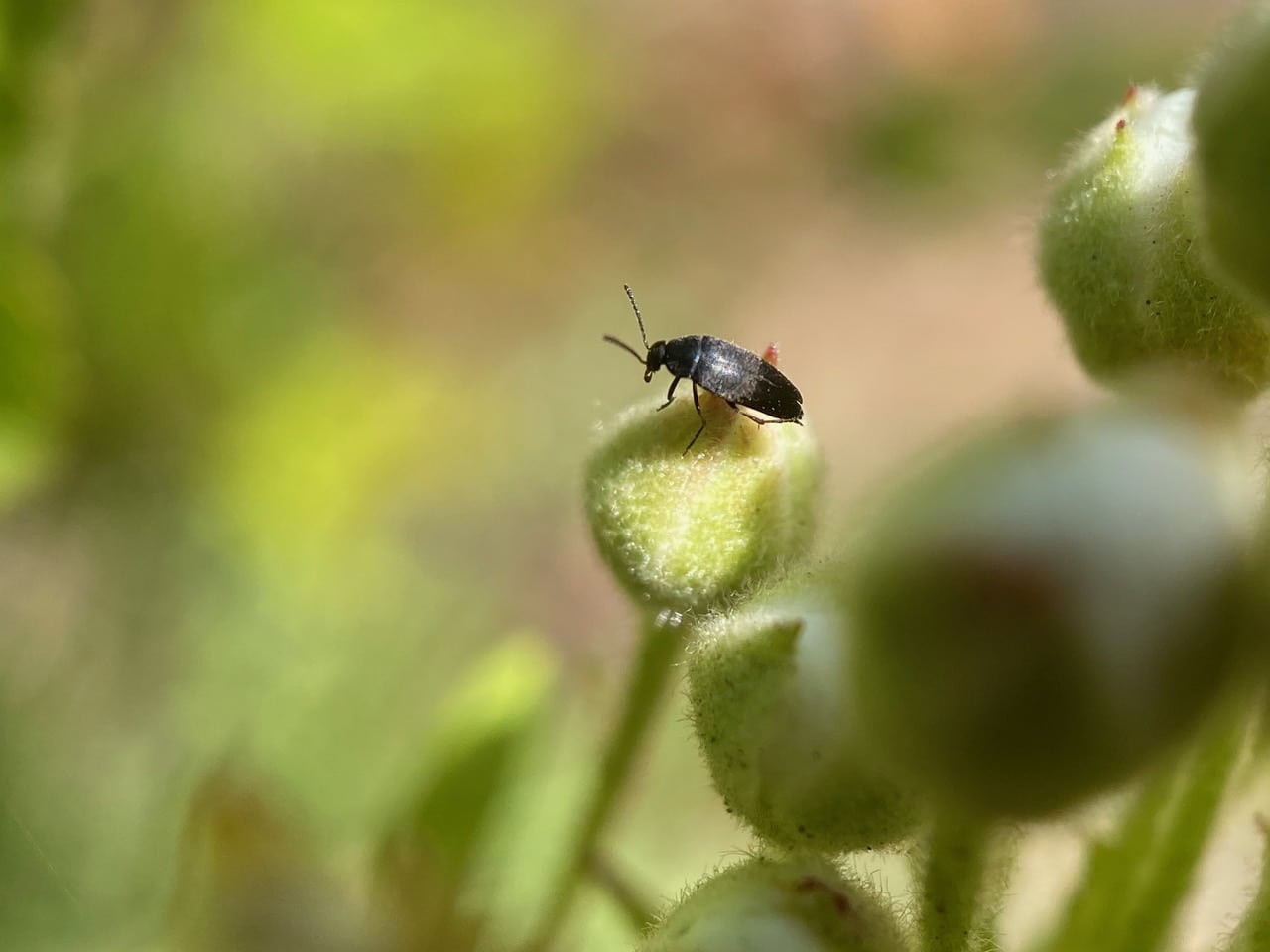




A False Flower Beetle, Anaspis sp. (family Scraptiidae) is grooming itself on a flower bud of Pacific Ninebark.
False Flower Beetles, Anaspis atrata (family Scraptiidae) are commonly found in western North America. The adults are found on flowers, sometimes in large numbers, but are also found on foliage. The larvae are typically found under the bark of dead trees.
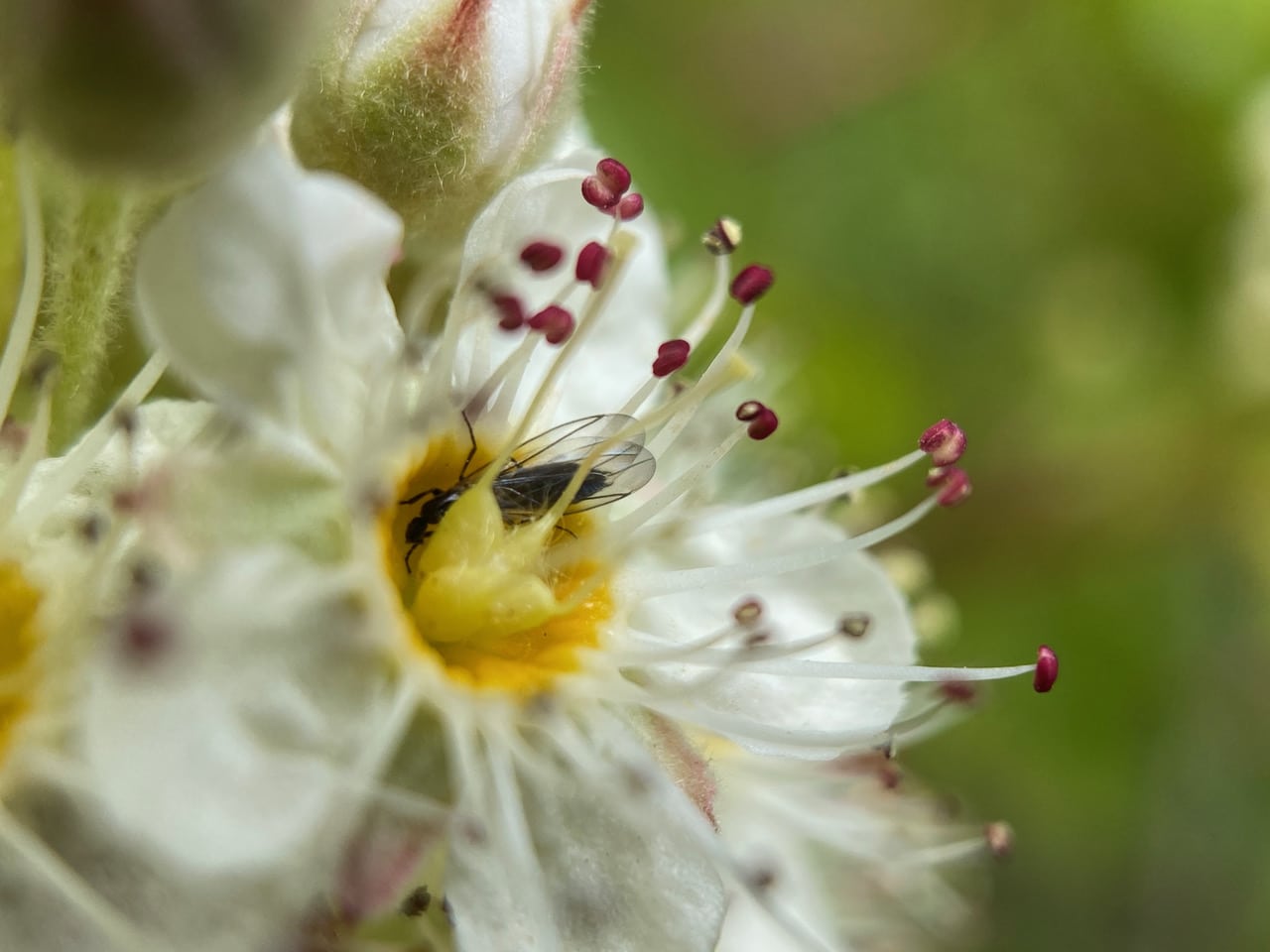
Numerous Minute Black Scavenger Flies (family Scatopsidae) are roaming the flowers of Pacific Ninebark, Physocarpus capitatus.
As implied by the family name, these flies are also called “dung midges”. They are generally small, sometimes minute, dark flies (from 0.6 to 5 mm) with short antennae. Adults are often found on flowers. The larvae of most species are unknown, but the few that have been studied have a rather flattened shaped and are terrestrial and saprophagous, feeding on decaying plant and animal matter.
A Minute Black Scavenger Fly descends the yellow bowl-shaped depression under the ovaries of a Ninebark flower, apparently seeking nectar.
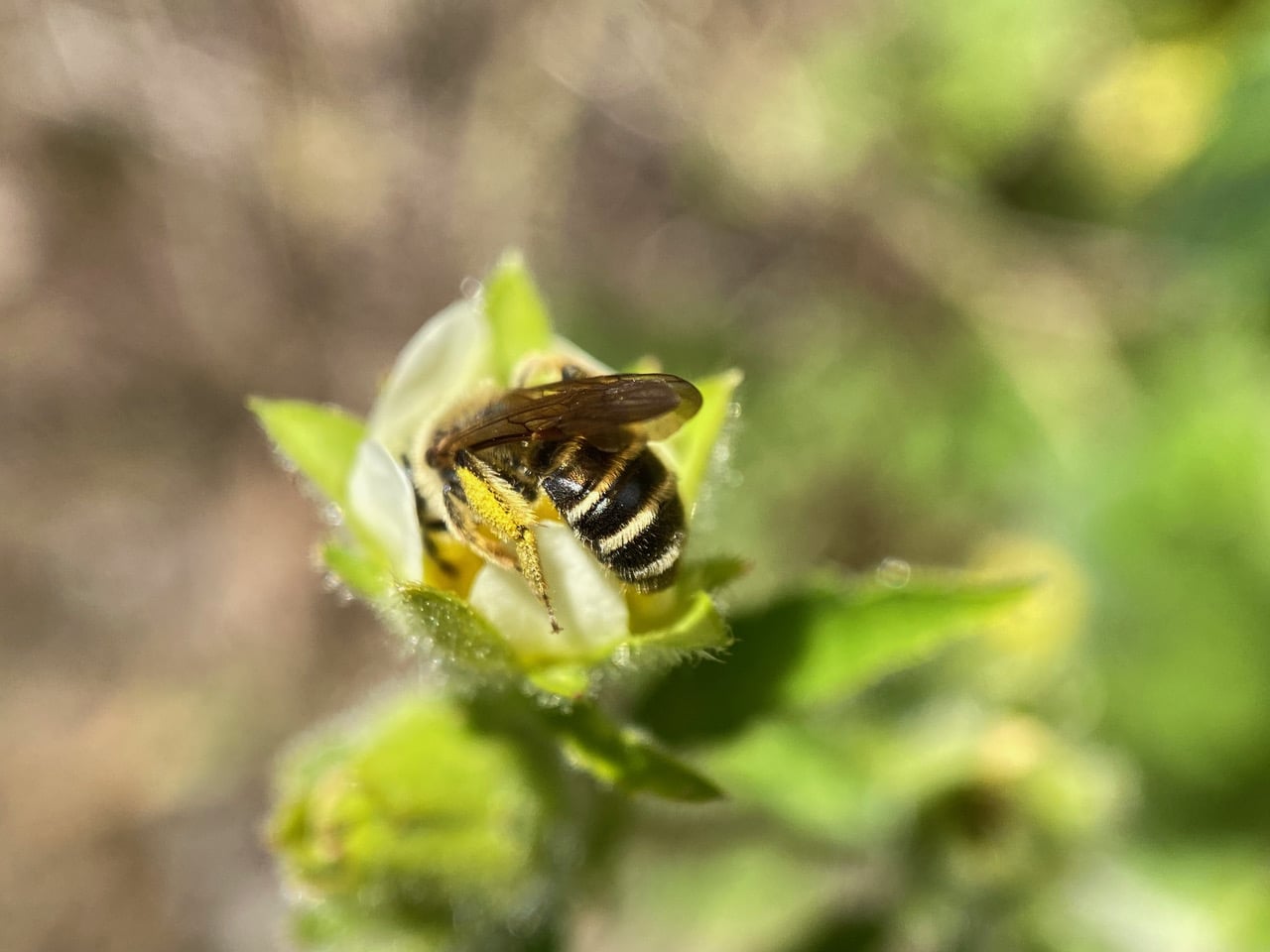
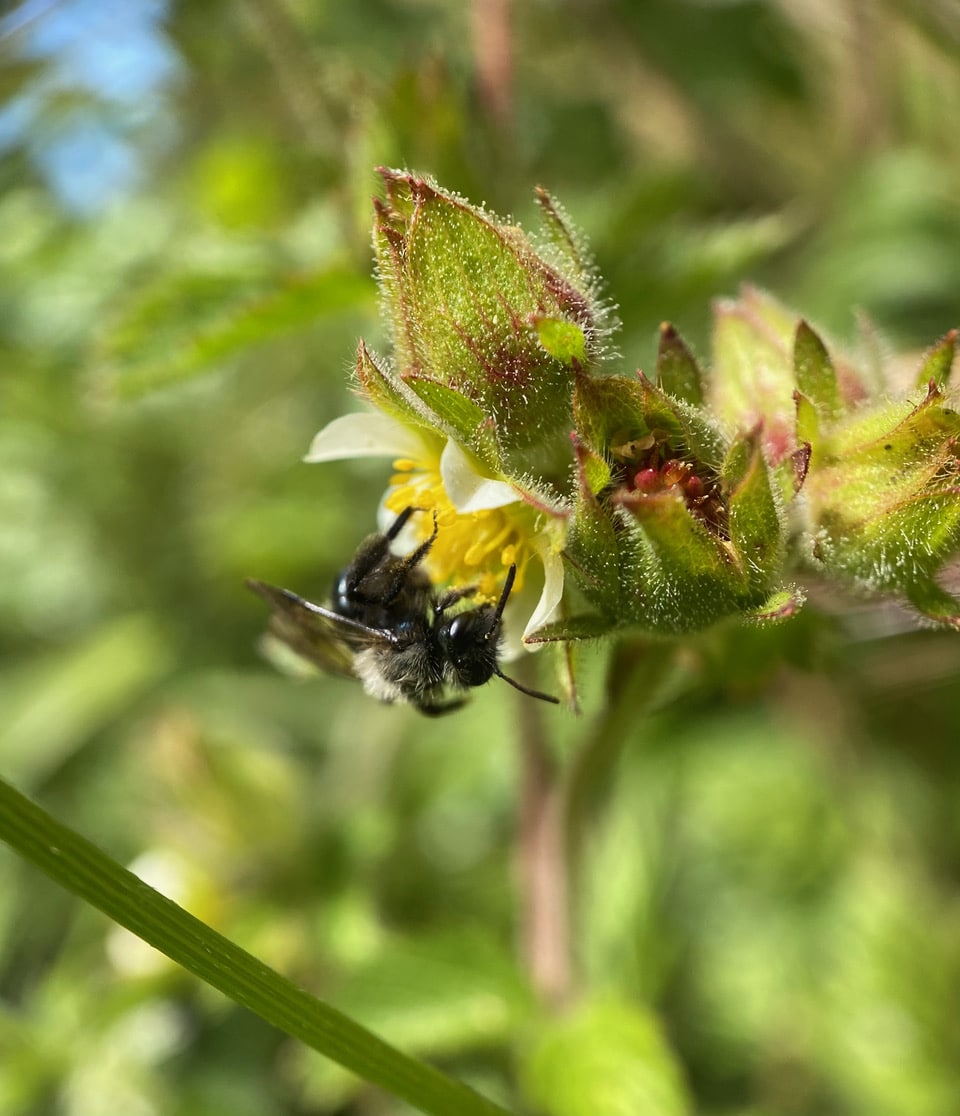
A bee with yellow hairs on the abdomen is visiting a flower of Sticky Cinquefoil, Drymocallis glandulosa. The extensive scopa (special pollen collecting hairs) that covers most of her hind legs suggests that she might be a Mining Bee.
The bee finally lifts its head from the flower. There, see the faint hairs that line a depression between her eyes? The facial fovea is indicative of a Mining Bee in the genus Andrena, family Andrenidae.
Andrena is likely the largest and most species-diverse bee genus in California. It is one of the largest bee genera in the world. The floral preferences of Andrena species span the range of bee diets; some are broad generalists, and a number are strict specialists. Andrena are among the first bees to fly in the spring; their ability to withstand the chill is still a puzzle to scientists. The bees can’t fly until their body temperatures reach 50-60 F. They rely on the warmth of the sun to get them to speed, and it is not uncommon to see them warming up on leaves or rocks. This cold-hardiness makes Andrena excellent pollinators of early spring wildflowers and cultivated crops.
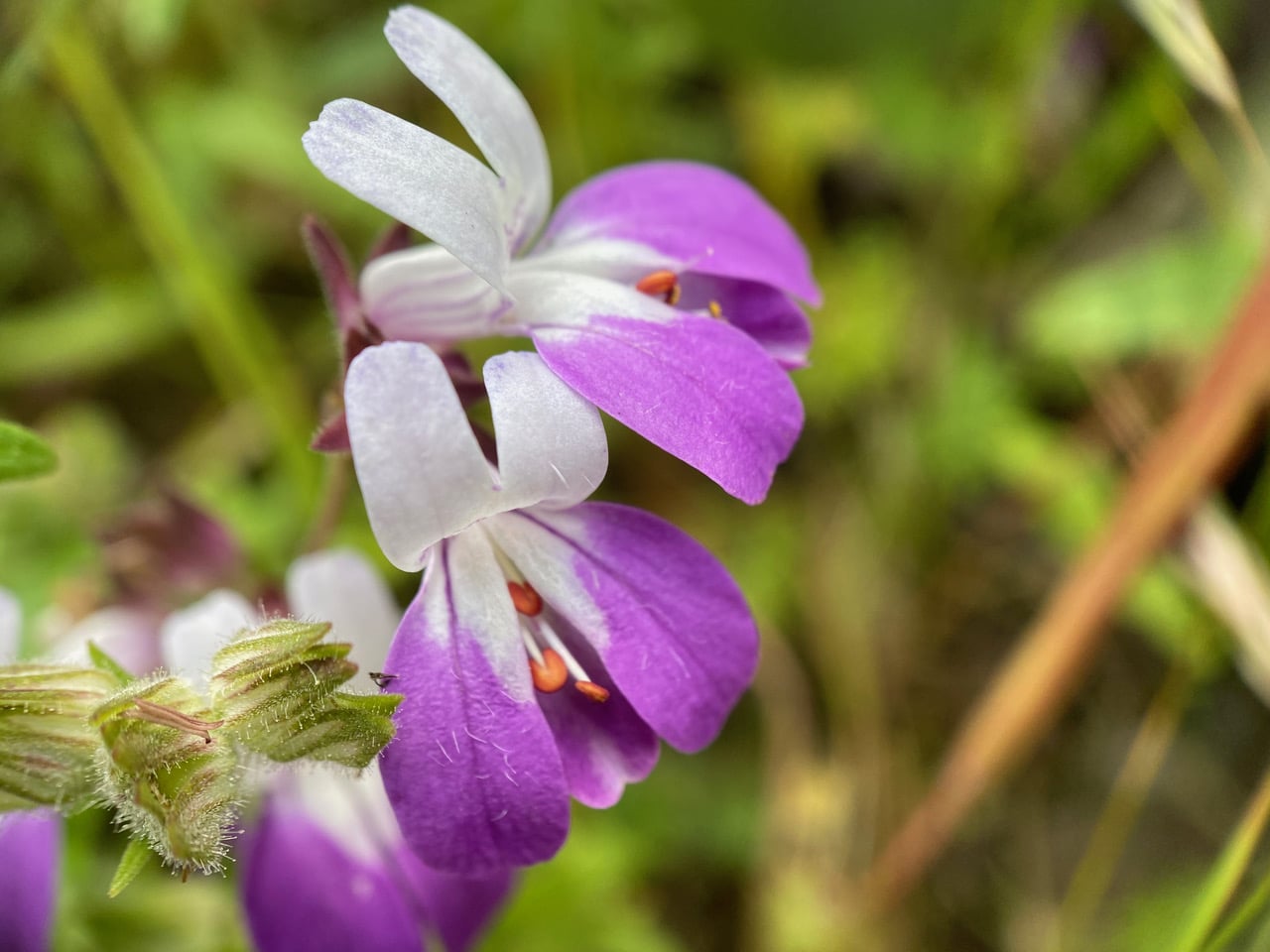
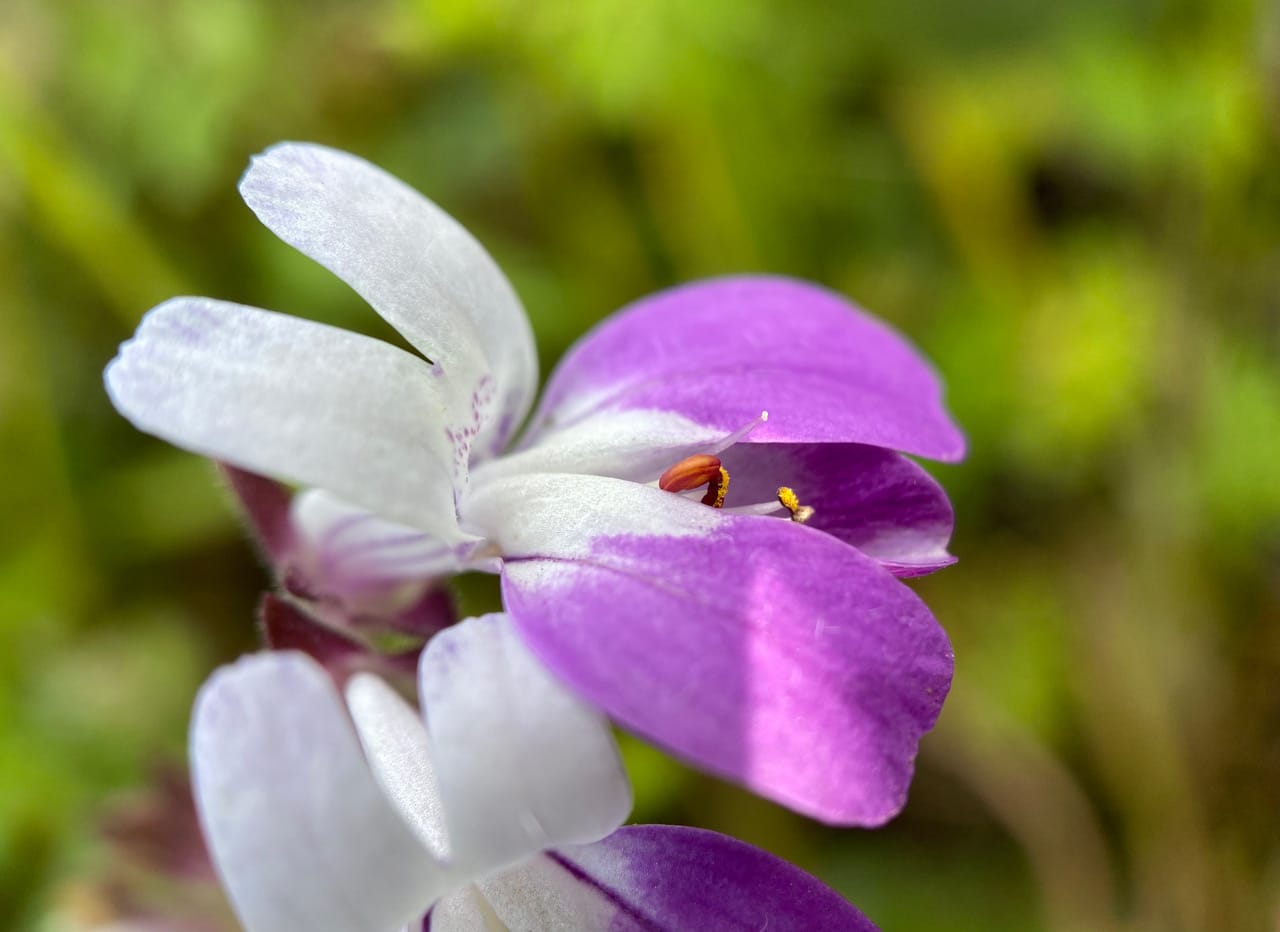
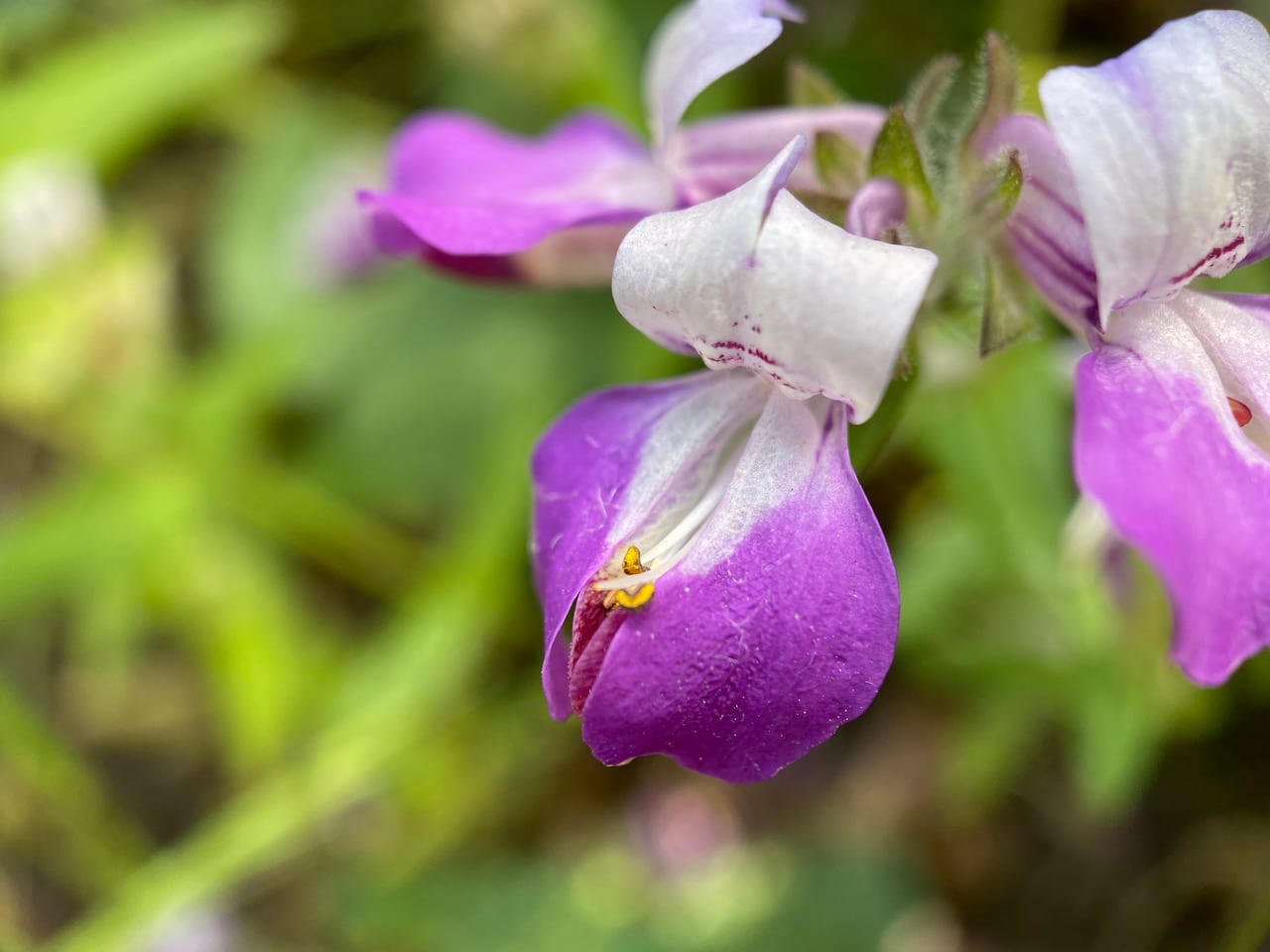
Two adjacent flowers on a Chinese Houses, Collinsia heterophylla have been tripped by bumble bees. The wing petals have been spread apart, opening the keel beneath and exposing the reproductive structures to the underside of the bee.
The Chinese Houses flower has four stamens, only one of which has dehisced to release pollen in this tripped flower. The bee was probably here to seek nectar located at the back of the flower, not pollen.
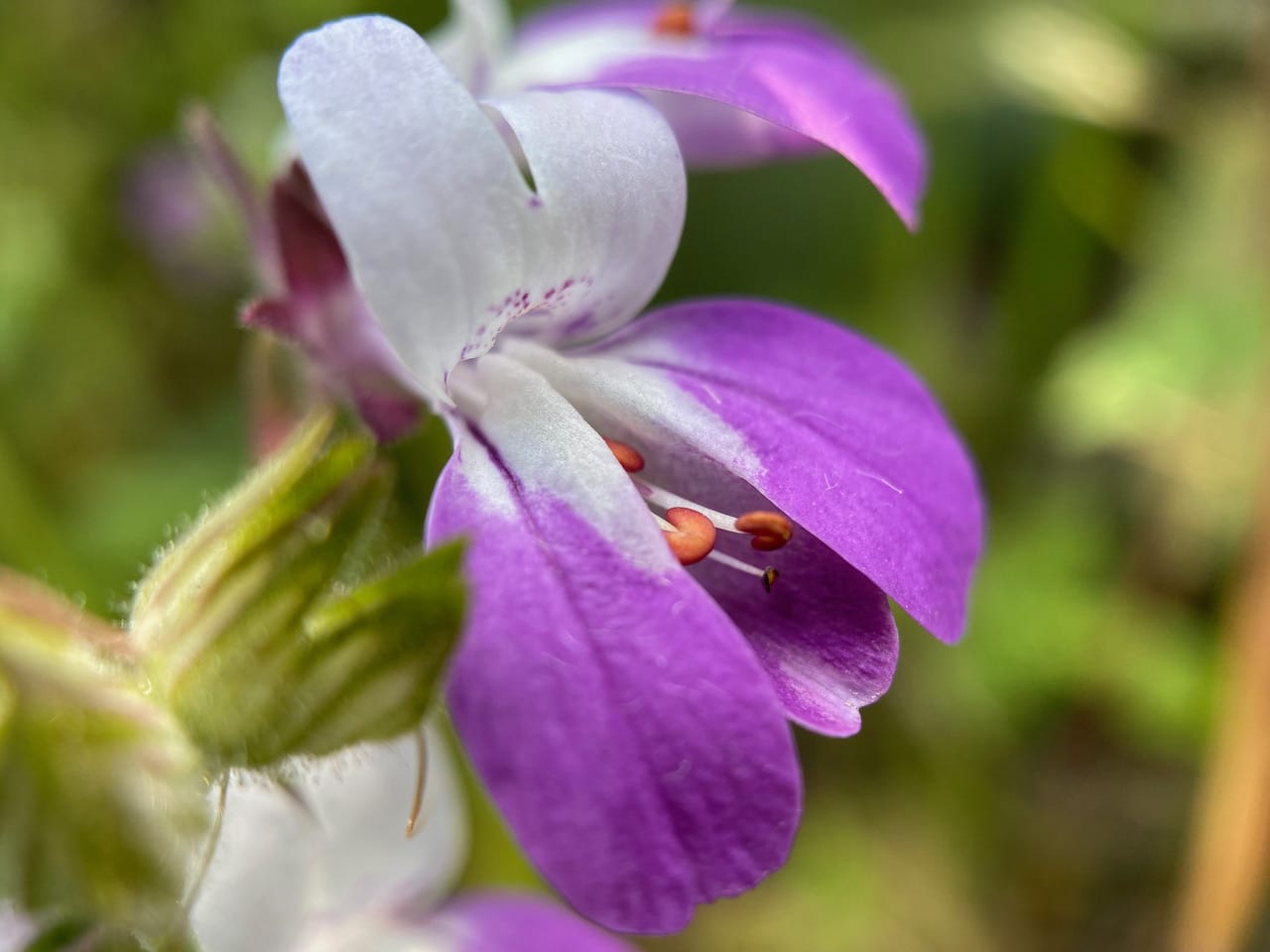
The adjacent flower shows the style and stigma, and all four stamens usually hidden in the keel beneath the wing petals. Three of the anthers have dehisced to release pollen .
Yet another tripped flower – what fun!
Along a sunny stretch of Skyline Trail, I come across a pile of fine soil particles next to a large rock. The soil appears as if it has been put through a sieve, with uniform particle size. Each a single mouthful from the ants that excavated the nest under the rock?
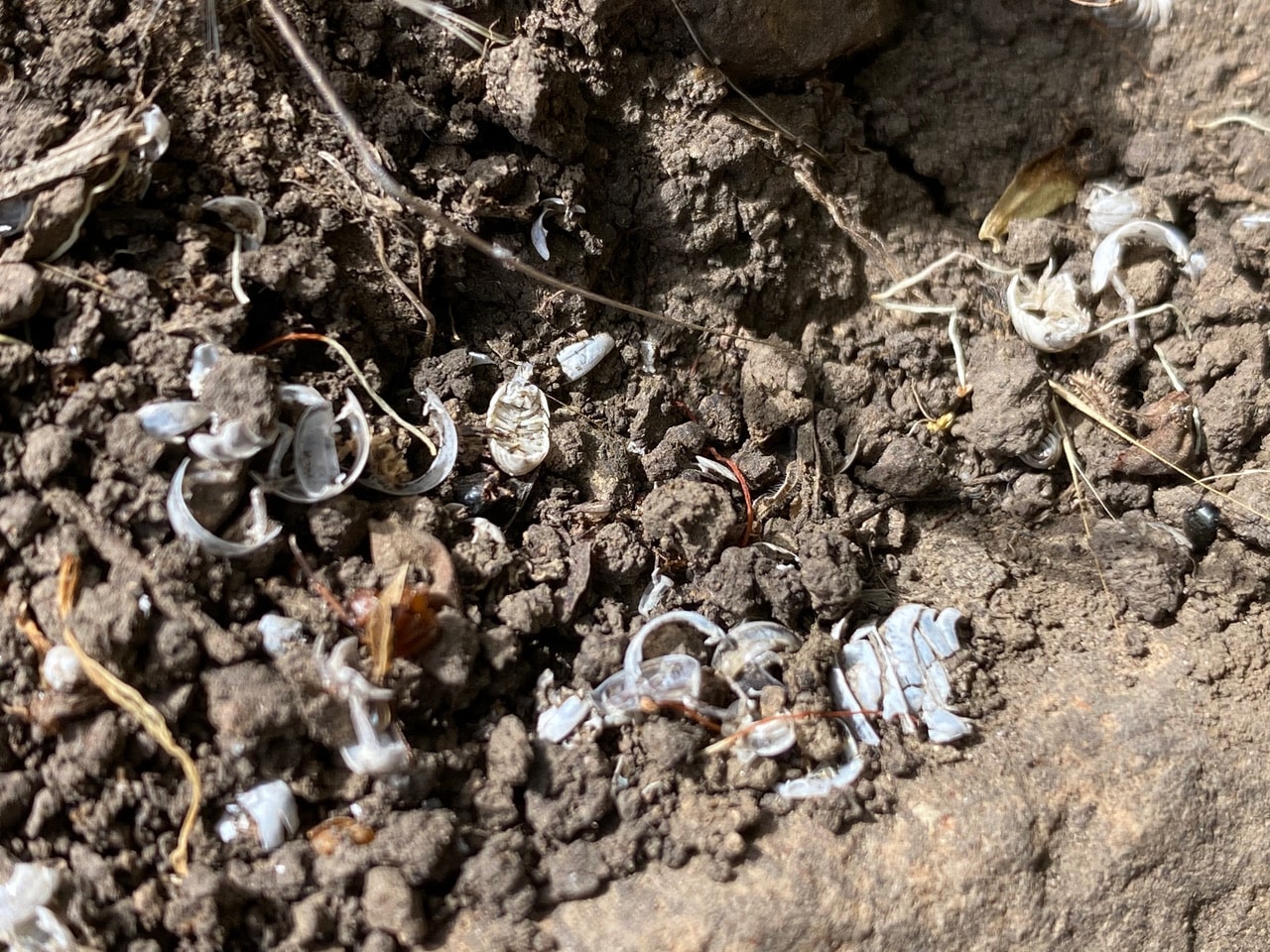
Zooming in at the base of the pile of excavated soil, I find the ants’ midden – mostly scattered body parts of pill bugs! Scanning the area around the nest, I find numerous black-and-reddish-brown ants running around. Unfortunately they are too fast and frantic to photograph.
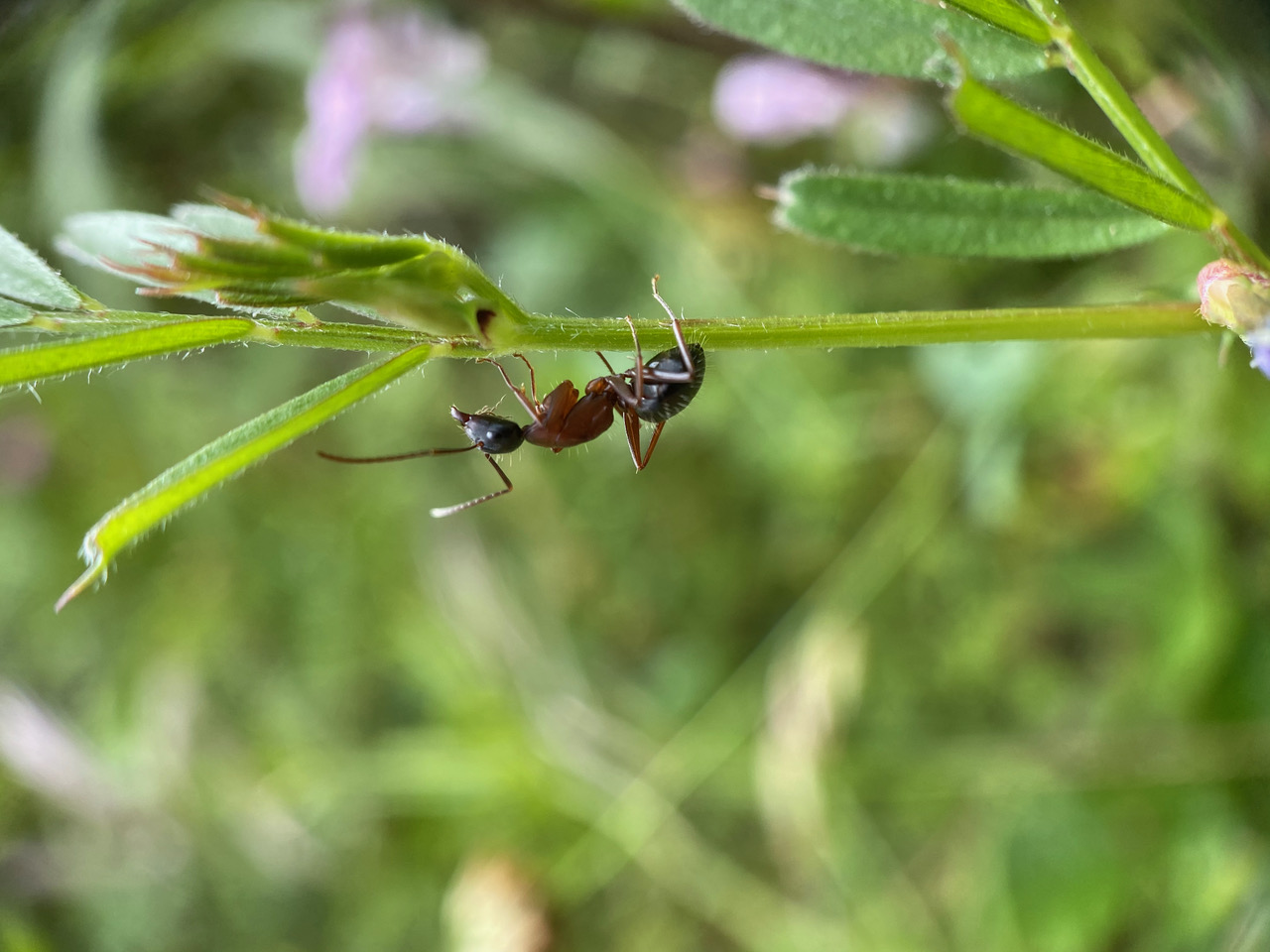
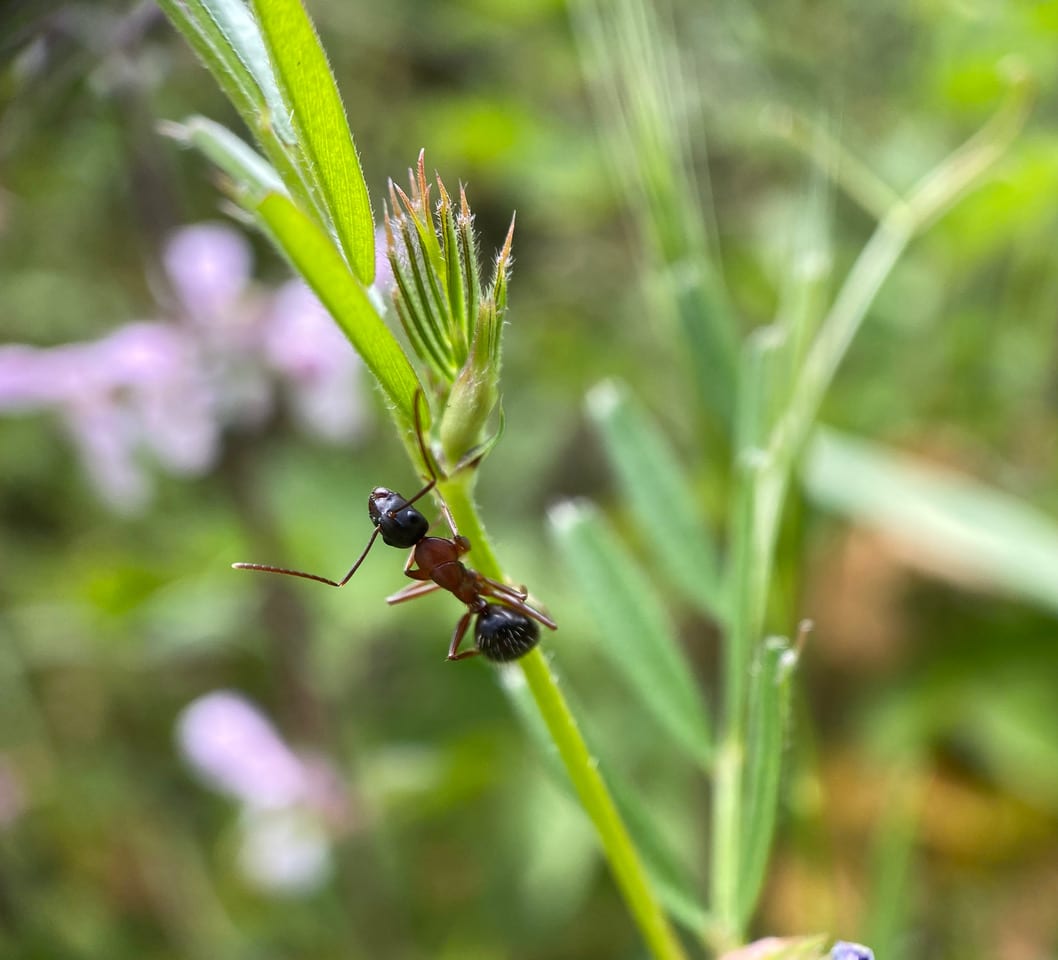
Then I spot an ant that is cooperative. It is calmly feeding on the extrafloral nectary of a Common Vetch, Vicia sativa.
iNaturalis has confirmed my identification of the ant: Carpenter Ant in the genus Camponotus.
As their common name implies, Carpenter Ants typically nest in the dead or decaying wood of trees, stumps, logs, and dead branches, though some species nest in the soil. Carpenter ants don’t actually eat the wood they excavate (unlike termites), lacking the digestive enzymes to break down cellulose. Instead, they forage on a wide variety of plant and animal materials, including sweet substances, such as honeydew produced by aphids. They also feed on the body fluids and proteins of both dead and live insects. Most of this foraging occurs at night. Carpenter Ants have a painful bite, but cannot sting.
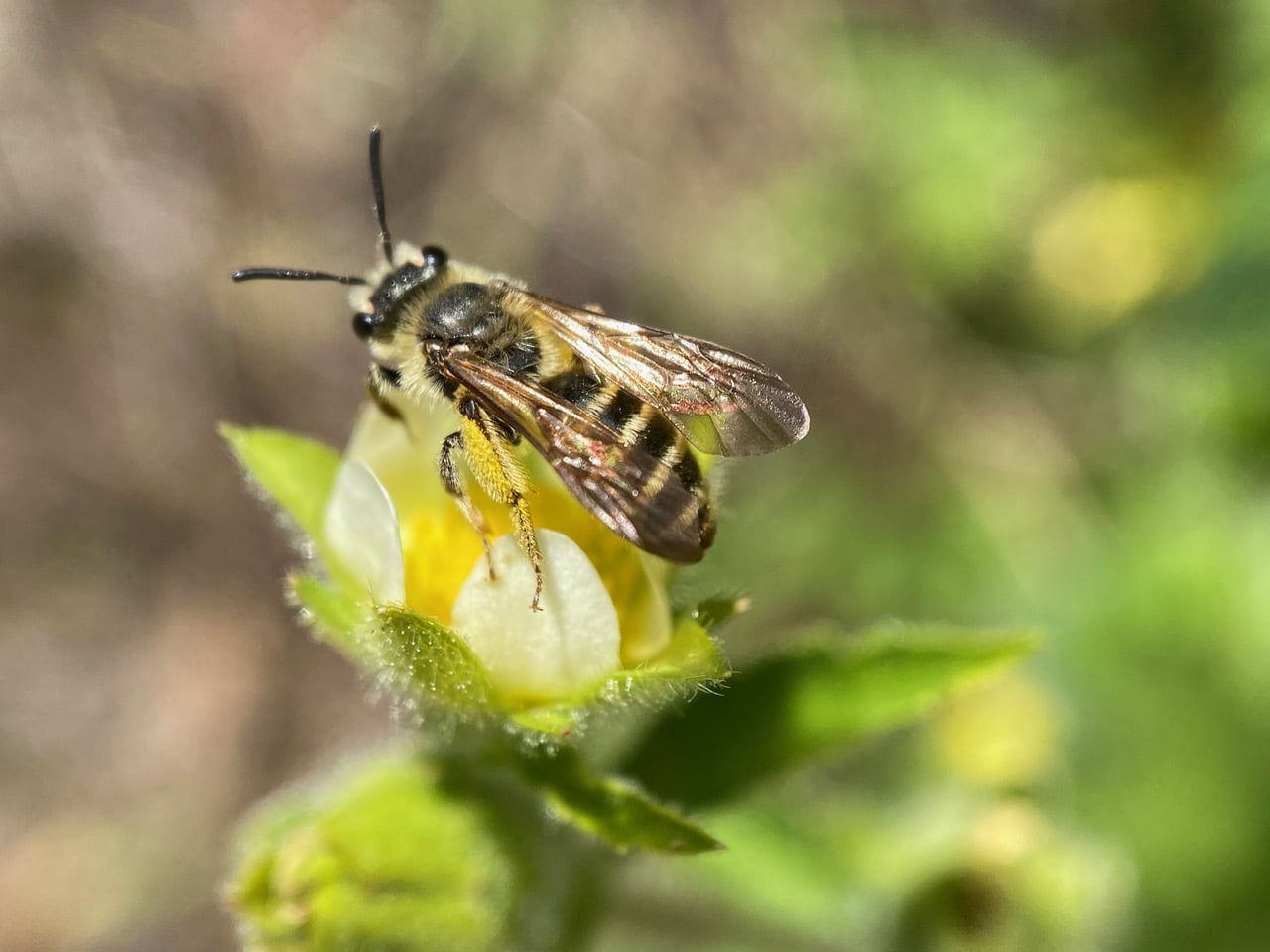
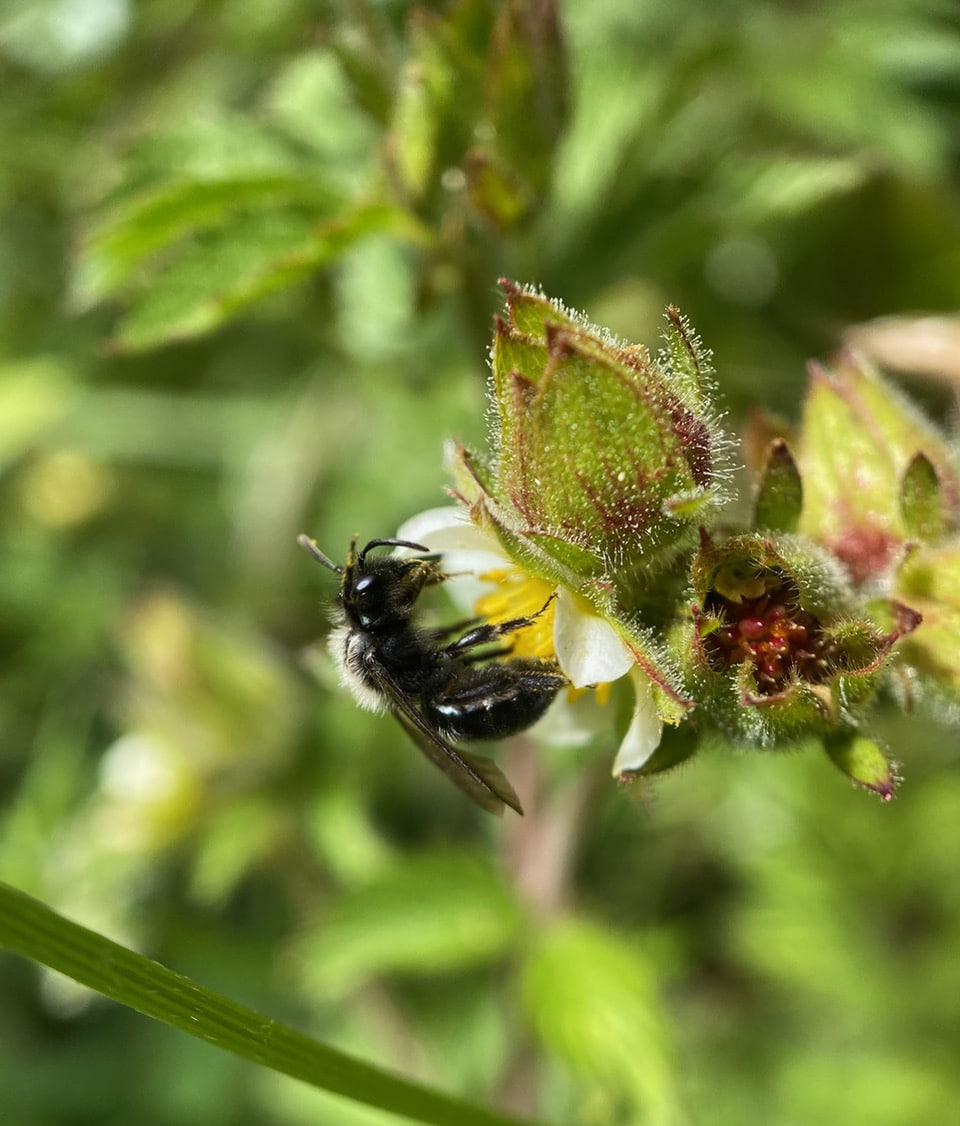
A bee visits a flower of Sticky Cinquefoil, Drymocallis glandulosa.
I think she might be a Mining Bee in the genus Andrena (family Andrenidae).
An adult female American Dog Tick, Dermacentor variabilis (family Ixodidae) is resting head-down on a grass seed head by the trail.
Capable of transmitting various diseases through their bite, ticks are a nuisance to those of us who spend time in the wilds. Surely they must serve a larger ecological role that eludes us? What good are tick?
The tiny blood-sucking parasites benefit the ecosystem in which they live by serving as food for other species such as reptiles, amphibians, and birds. Many Woodland animals feed on them, including wild turkeys and western fence lizards.
By transmitting diseases to their hosts, ticks contribute to their major evolutionary purpose of controlling the populations of various animals all around the globe. The diseases ticks transmit help weed out sick and infirm individuals in the host populations, giving more space and opportunities for younger and healthier animals to thrive, keeping host populations within the carrying capacity of the land. Like it or not, ticks are a leading participant in the natural selection process of a number of animal species. They are even used as an indicator of an ecosystem’s overall health and stability.
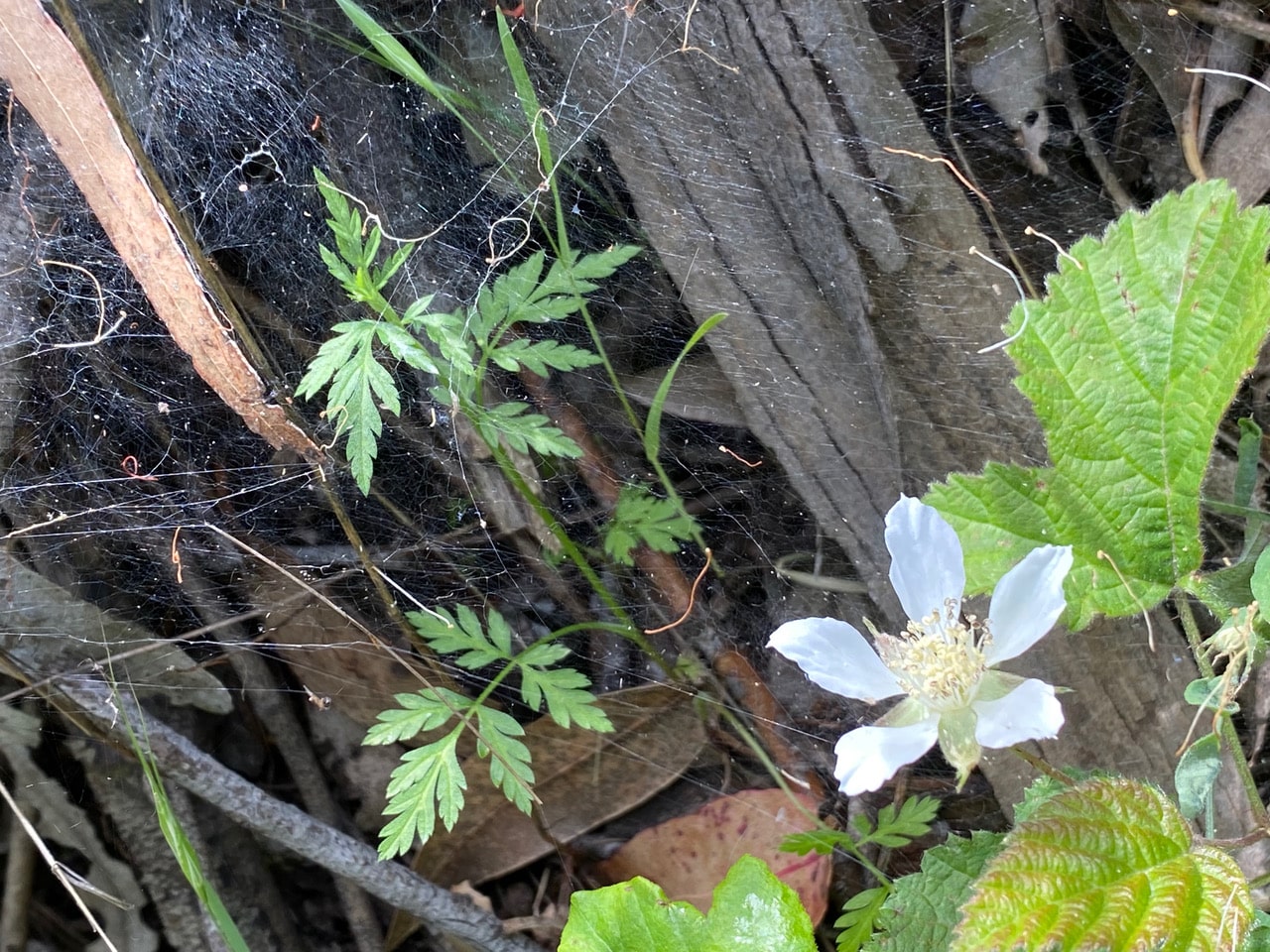
A Sheetweaver Spider (family Linyphiidae)? has woven an extensive web over the low vegetation and debris on the sloping bank along the trail. I am tickled to see that it has closely covered over a fresh flower of California Blackberry, Rubus ursinus. A few feet away along the same bank, another spider has done the same, covering another Blackberry flower with its web. Is this intentional? The flowers are attractive to many insects, and surely a web that is placed over a flower is more likely to ensnare prey than one that is not? Spiders never fail to impress me with their ingenuity.