

Pollinator Post 5/25/24 (2)
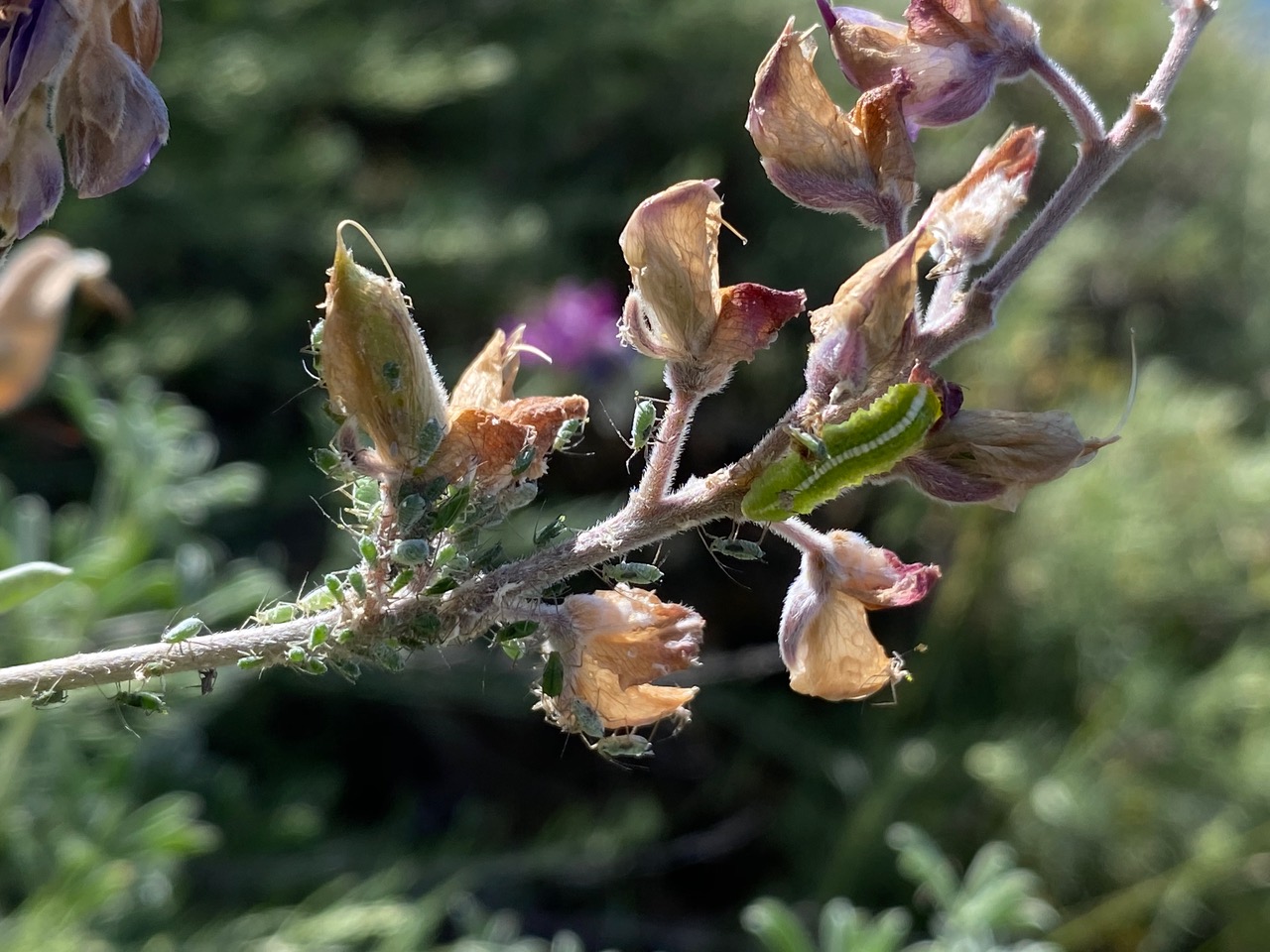
At Diablo Bend, the aphid infestation on the Silverleaf Lupine, Lupinus albifrons has calmed down. I notice a group of aphids waving their rear ends frantically on a dried up inflorescence. Then I see why the aphids are so nervous – a green hover fly larva (family Syrphidae) is approaching them!
Many species of hover flies have larvae that feed on aphids and other soft-bodied insects. The females seek out aphid colonies on plants to lay their eggs among them, to ensure that their offspring will have plenty to eat.
Syrphid larvae have no eyes and no legs. They swing their tapered head from side to side in search of prey. When they make contact with a prey, they grab hold of it with their mouthpart, then suck out the victim’s body contents. Depending on species, a Syrphid larva can feed on 100 to 400 aphids before it pupates.
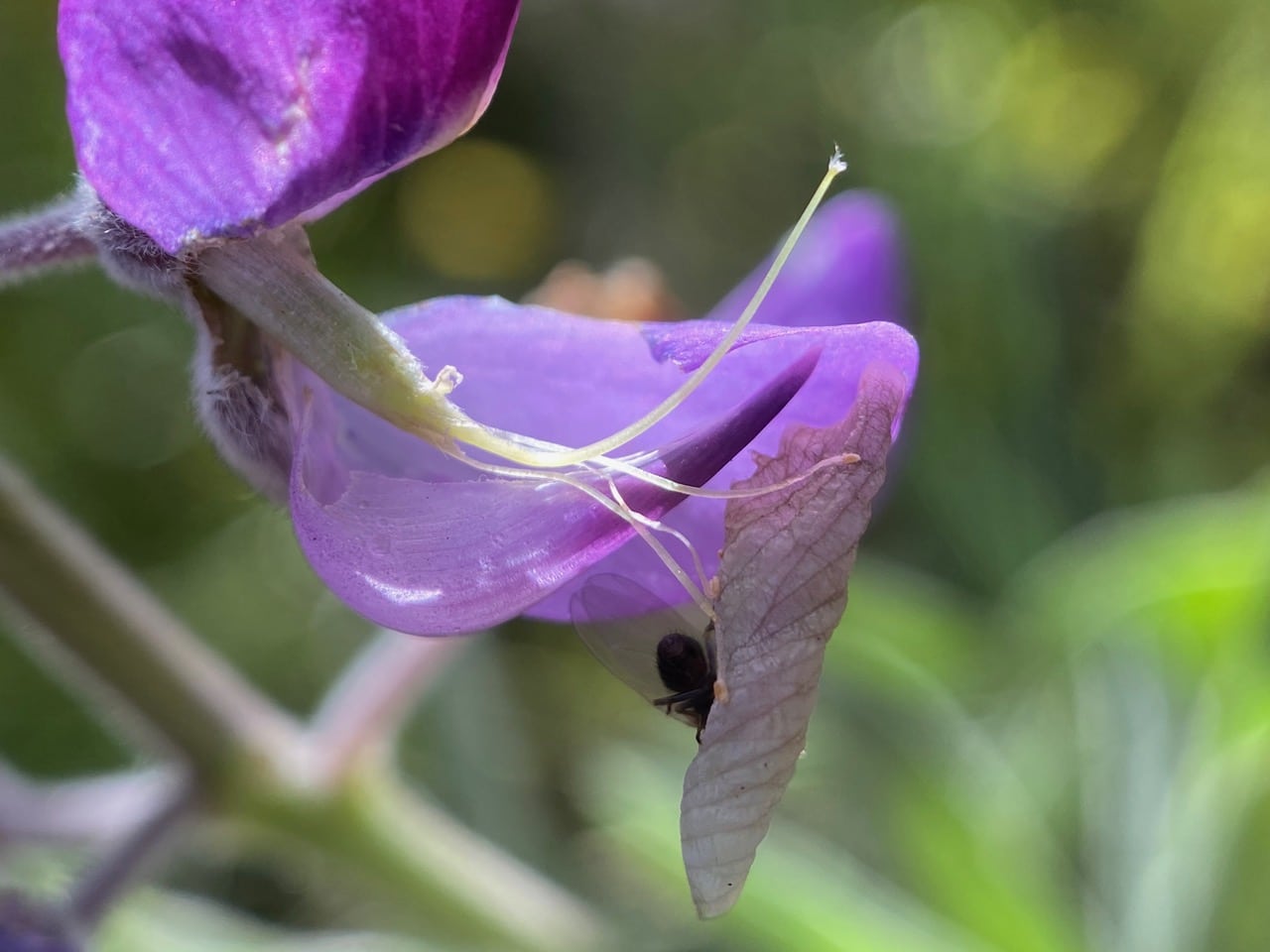
A wing petal on a “tripped” Silverleaf Lupine flower is falling off, exposing a detached sharp-tipped keel. How lucky to be able to see the reproductive structures without having to tear open a flower! The longest, upward-curving structure is the style with a stigma at the tip that will pick up pollen from a visiting bee’s belly, while the shorter stamens will dab pollen on the bee.
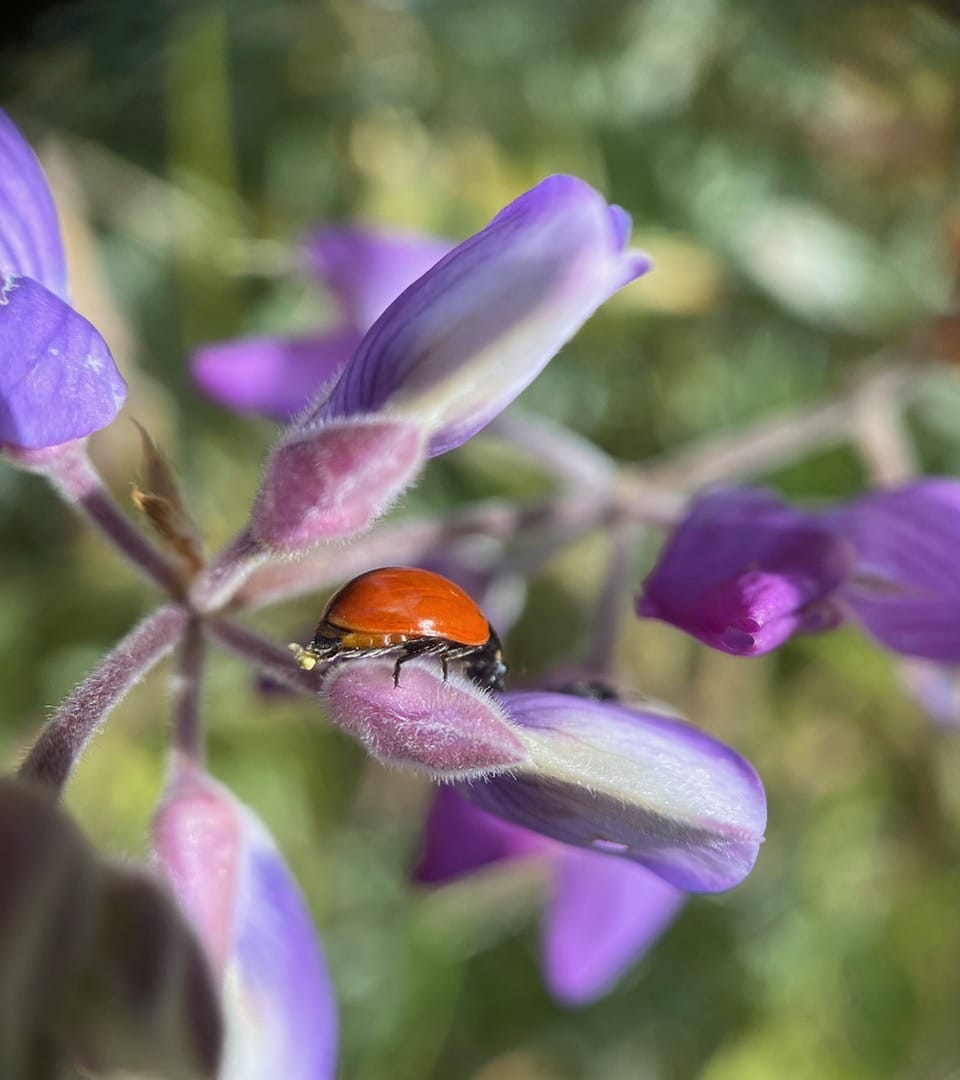
A Ladybeetle is defecating on a flower of Silverleaf Lupine. Has the beetle been feeding on pollen? Ladybeetles are known to feed on pollen when prey is scarce.
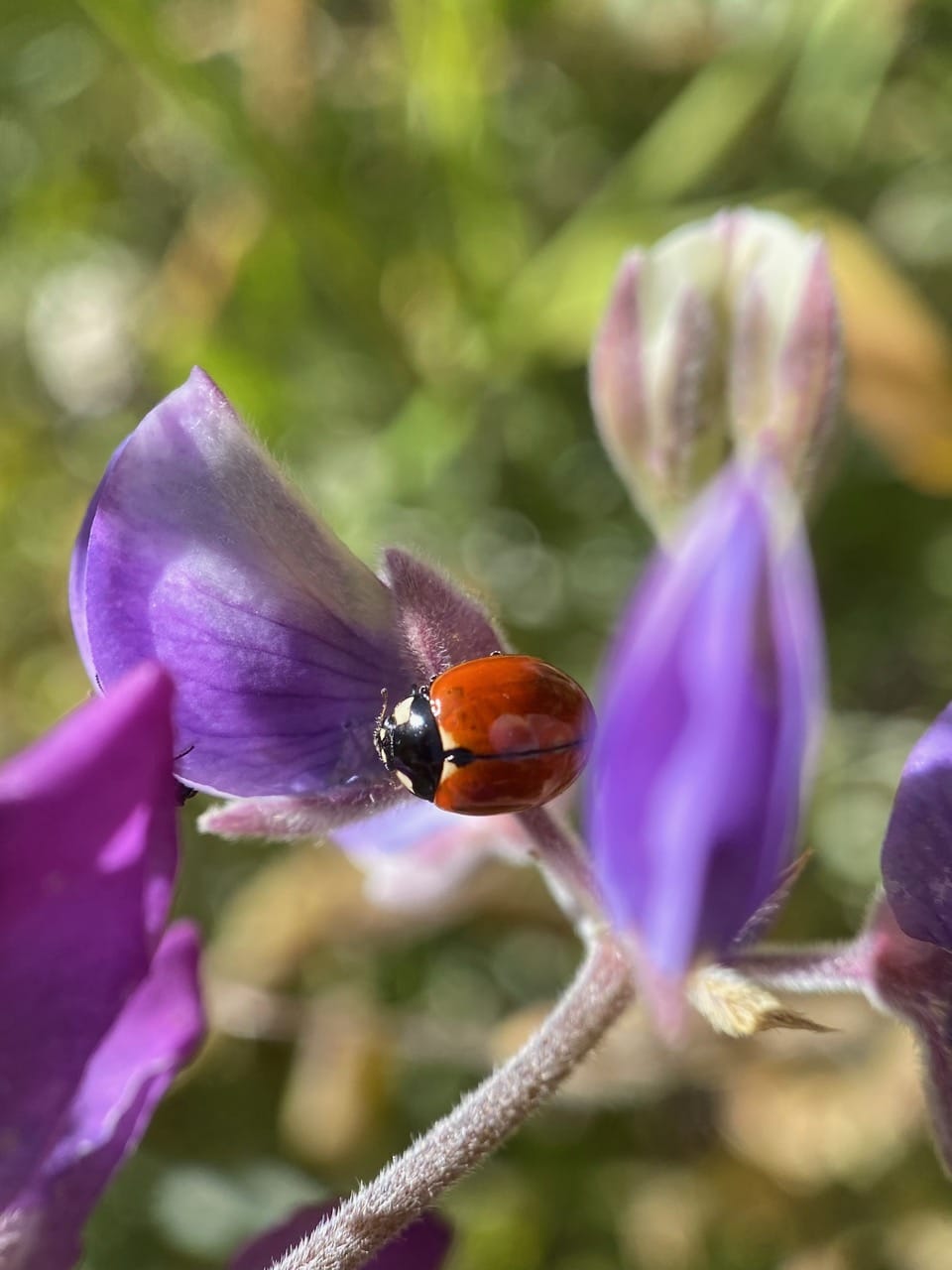
It is a California Ladybeetle, Coccinella californica (family Coccinellidae).
The species is found in California, mainly in the coastal counties north of the Traverse Ranges. It has a red elytra that is usually spotless, and a mostly black thorax with two large white markings. A longitudinal black line is usually visible along the seam where the elytra meet. Both adults and larvae are voracious predators of aphids and other soft-bodied insects.
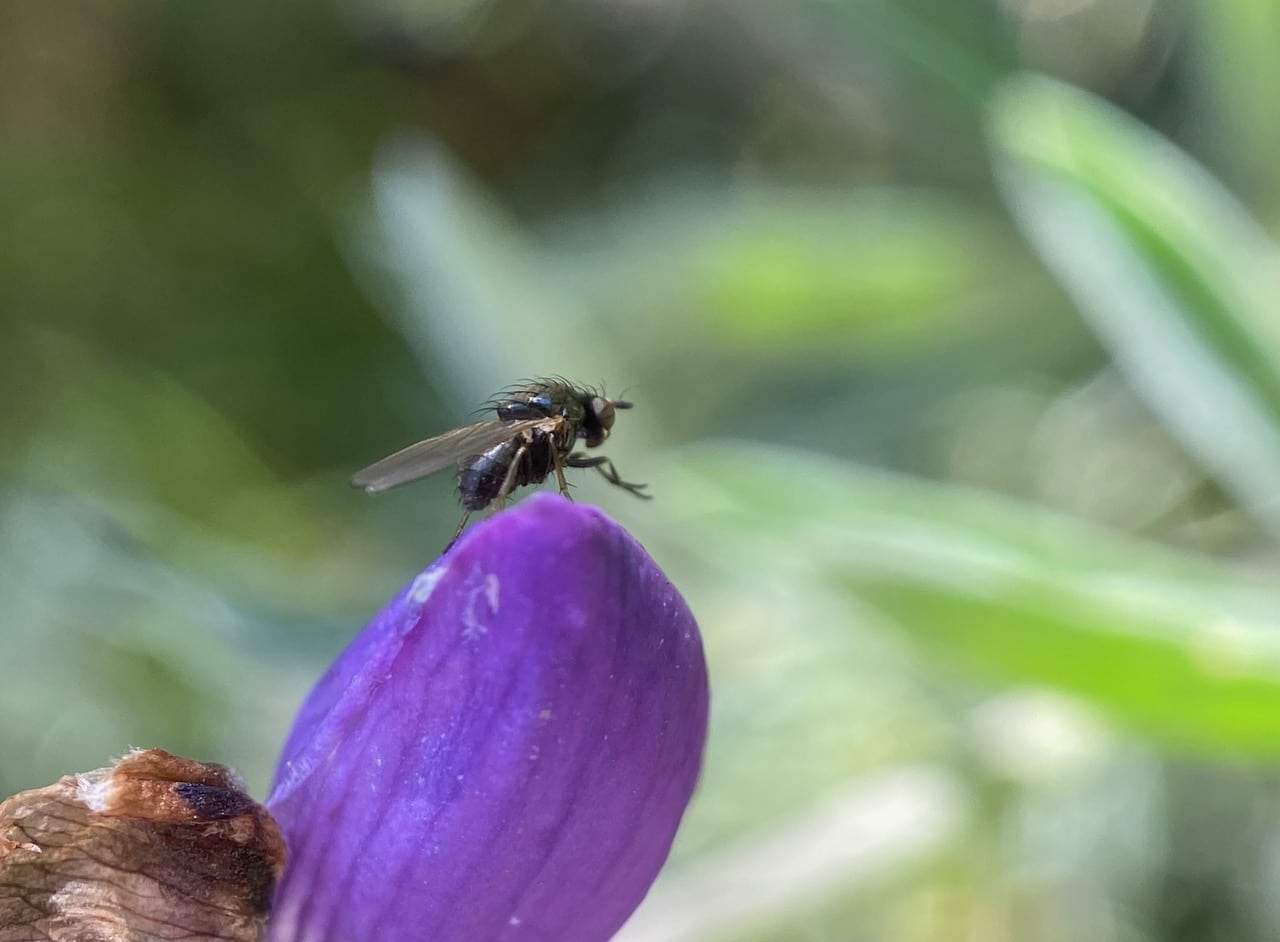
A tiny, unidentified fly is grooming itself on a flower of Silverleaf Lupine.
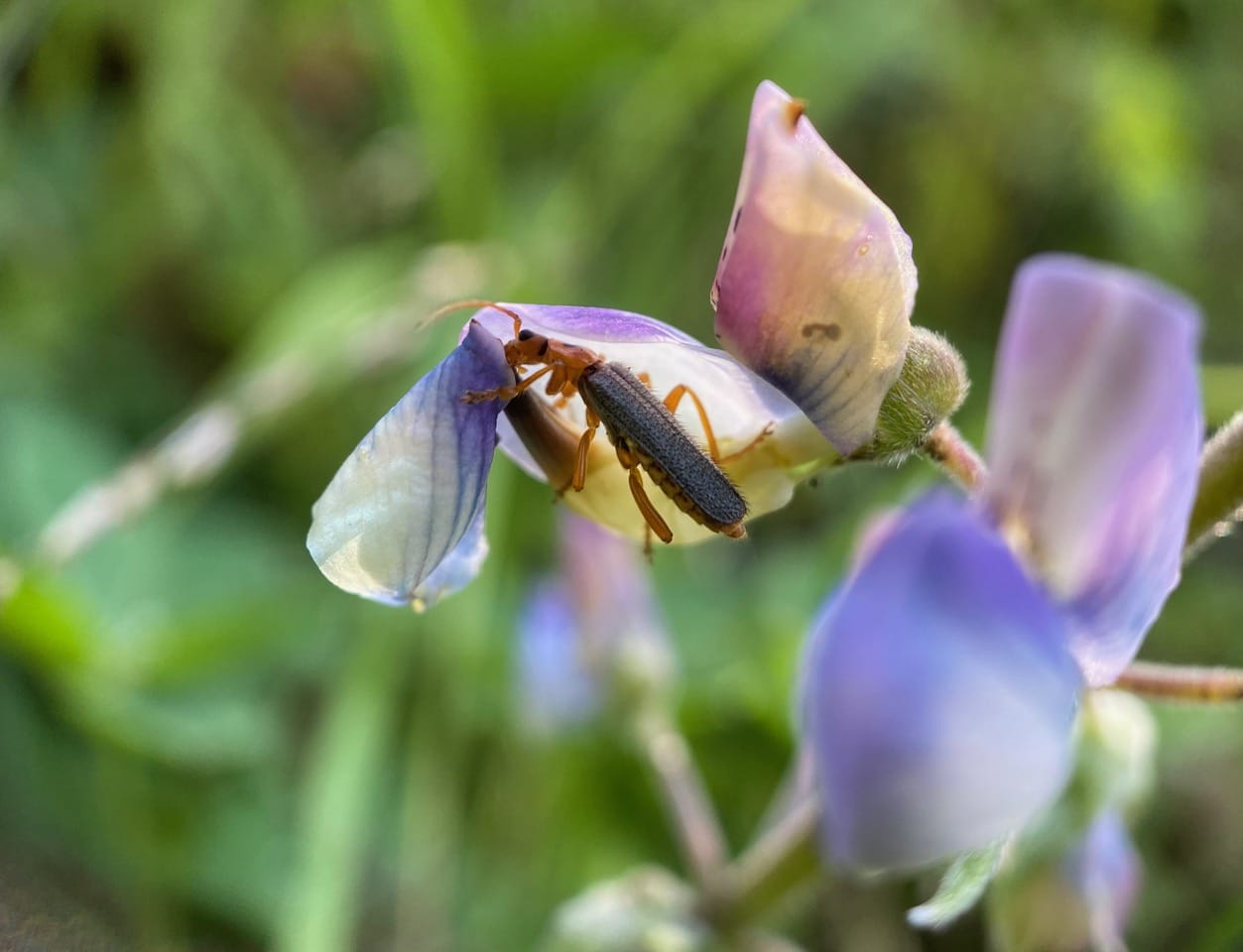
A Soldier Beetle (family Cantharidae) is foraging on a flower of Silverleaf Lupine that is falling apart. It might be feeding on exposed pollen, or it might be hunting small insects such as aphids.
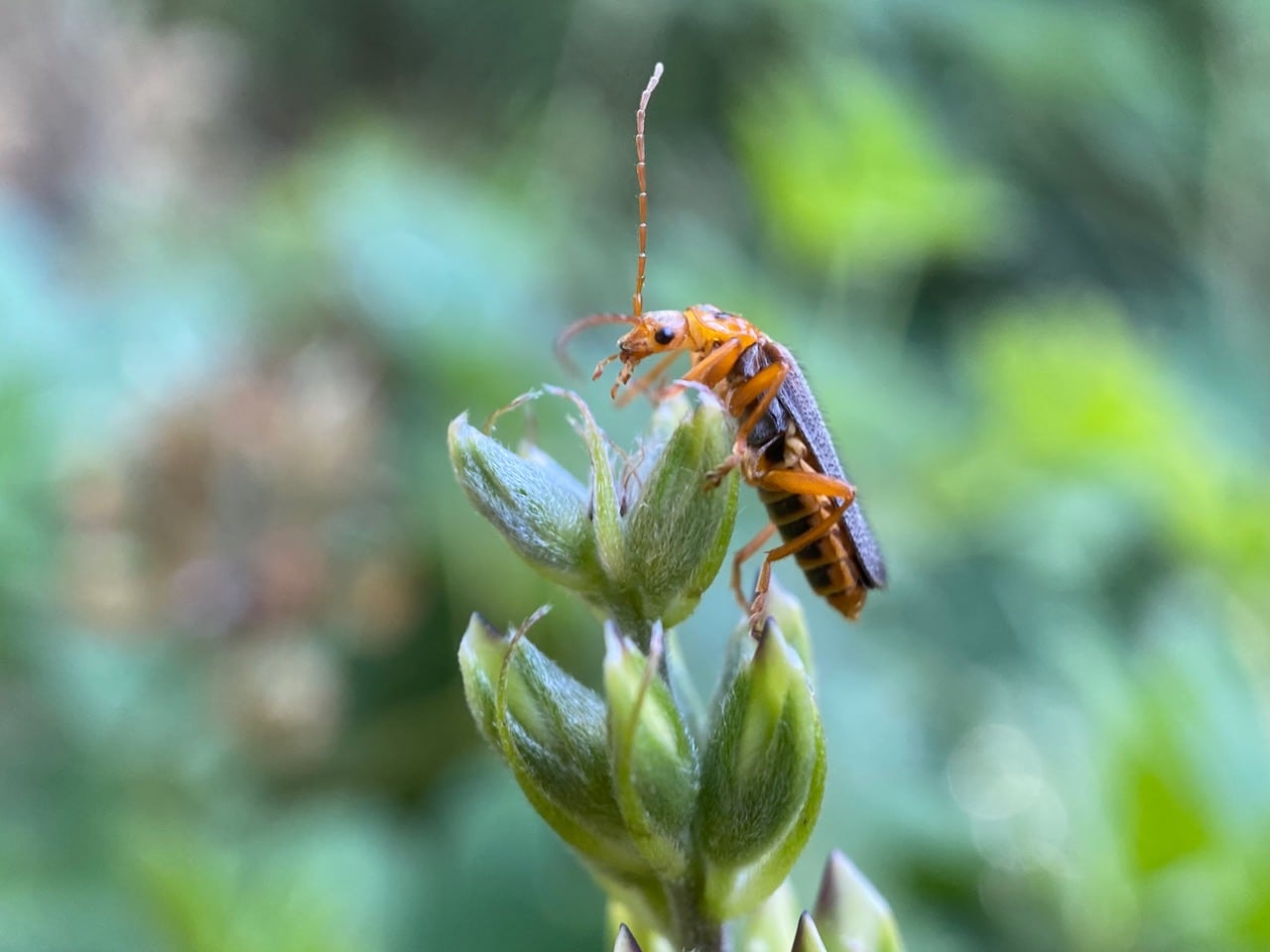
The Soldier Beetles, family Cantharidae are relatively soft-bodied, straight-sided beetles. One of the first described species has a color pattern reminiscent of the red coats of early British soldiers, hence the common name. They are also known commonly as Leatherwings because of their soft elytra. Soldier beetles often feed on both nectar and pollen as well as predating on other small insects. The larvae are often active, and feed on the ground, hunting snails and other small creatures. Soldier beetles are generally considered beneficial insects by gardeners.
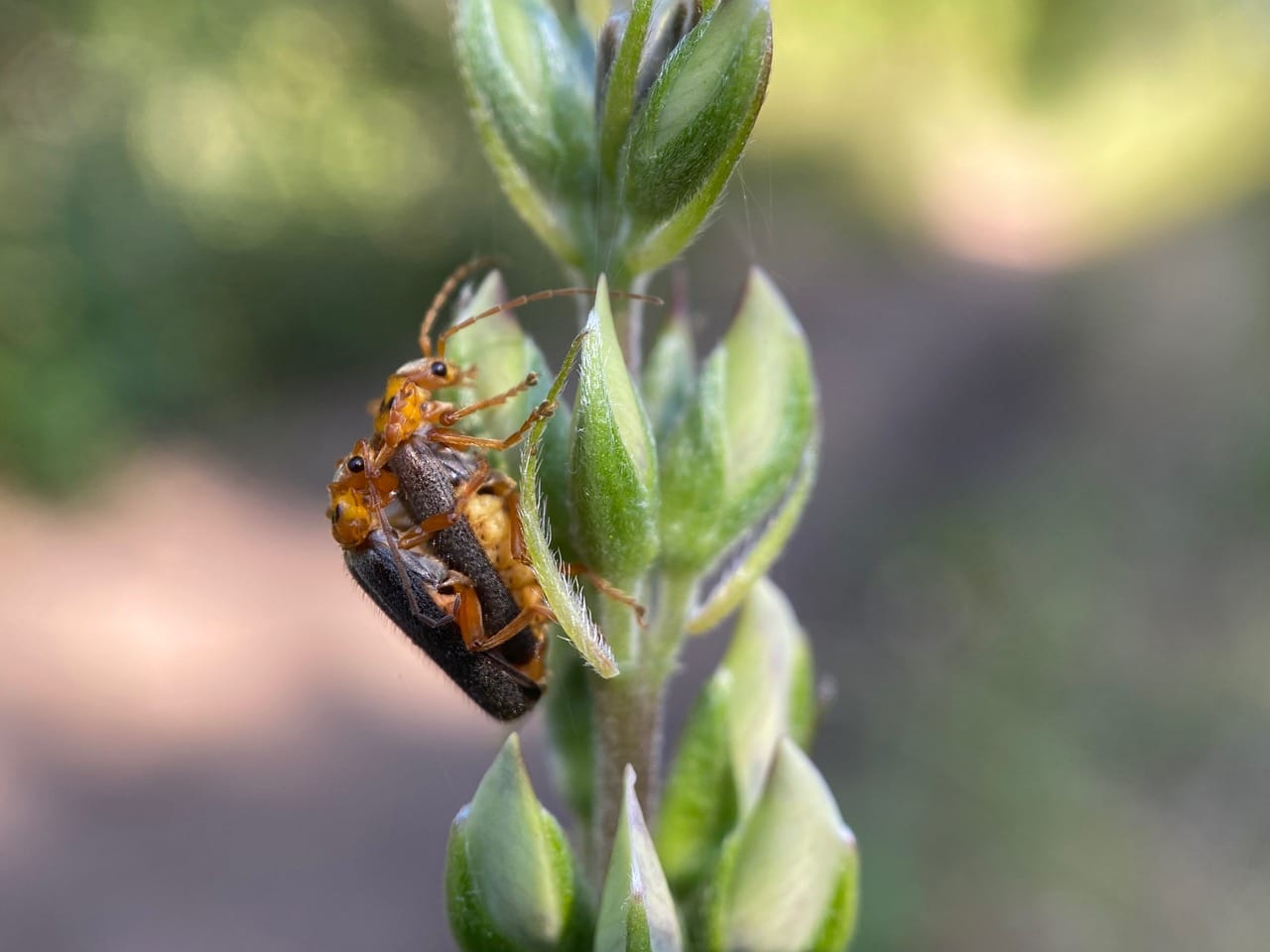
A pair of Soldier Beetles is mating on the flower buds of Broadleaf Lupine, Lupinus latifolius.
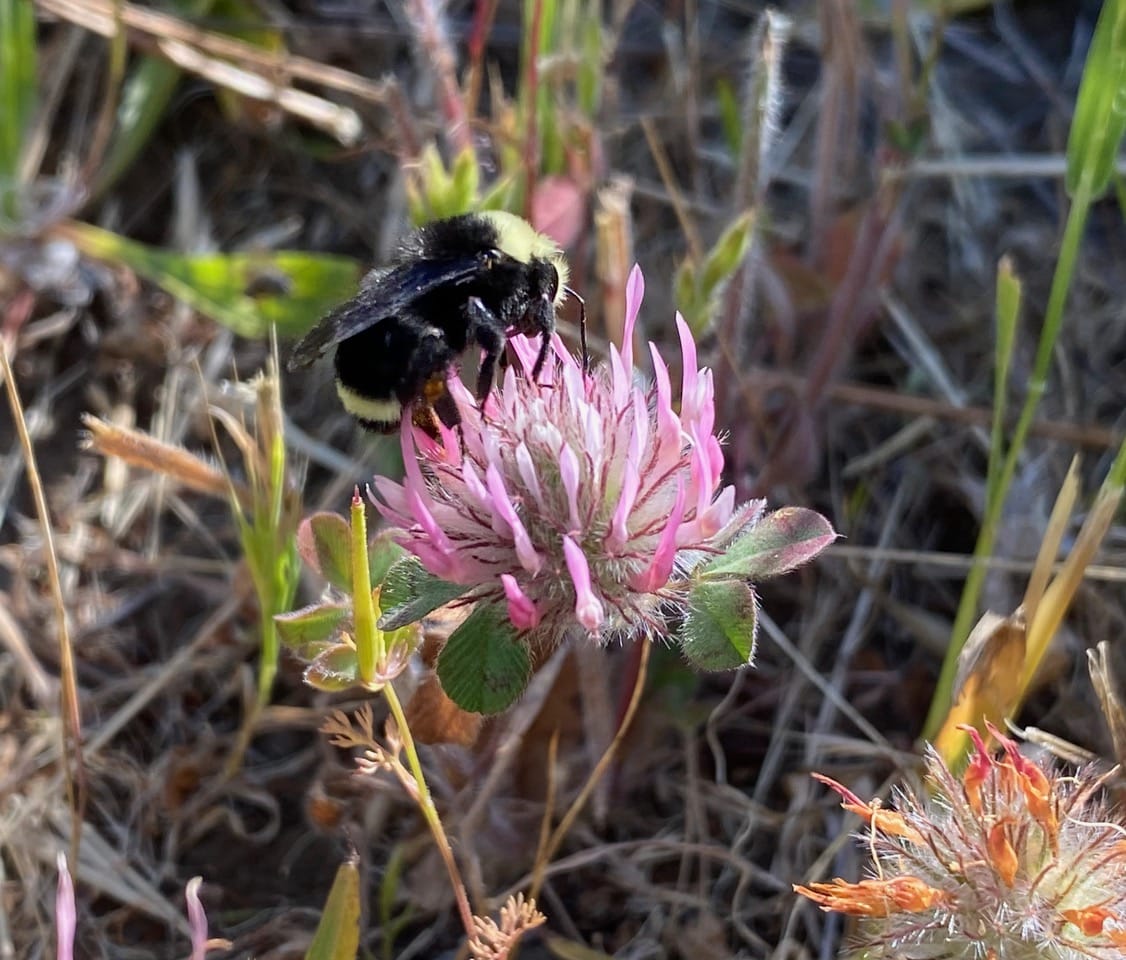
A Yellow-faced Bumble Bee, Bombus vosnesenskii (family Apidae) is taking nectar from a Rose Clover flowerhead.
Introduced from Turkey, Rose Clover, Trillium hirtum is commonly found in disturbed areas and roadsides. It is a freely-branching, winter growing annual legume. There are 20-30 small flowers in each head. The low-growing plant is used in vineyards as a winter cover crop where it increases the fertility of the soil. The principal use of rose clover in California is for dryland pasture seedings. The plant improves the quantity and quality of low-producing annual range sites and increases the protein content to harvested forage. Upland game and deer use the nutritious rose clover forage in mid-winter and early spring. Various birds eat the seeds.
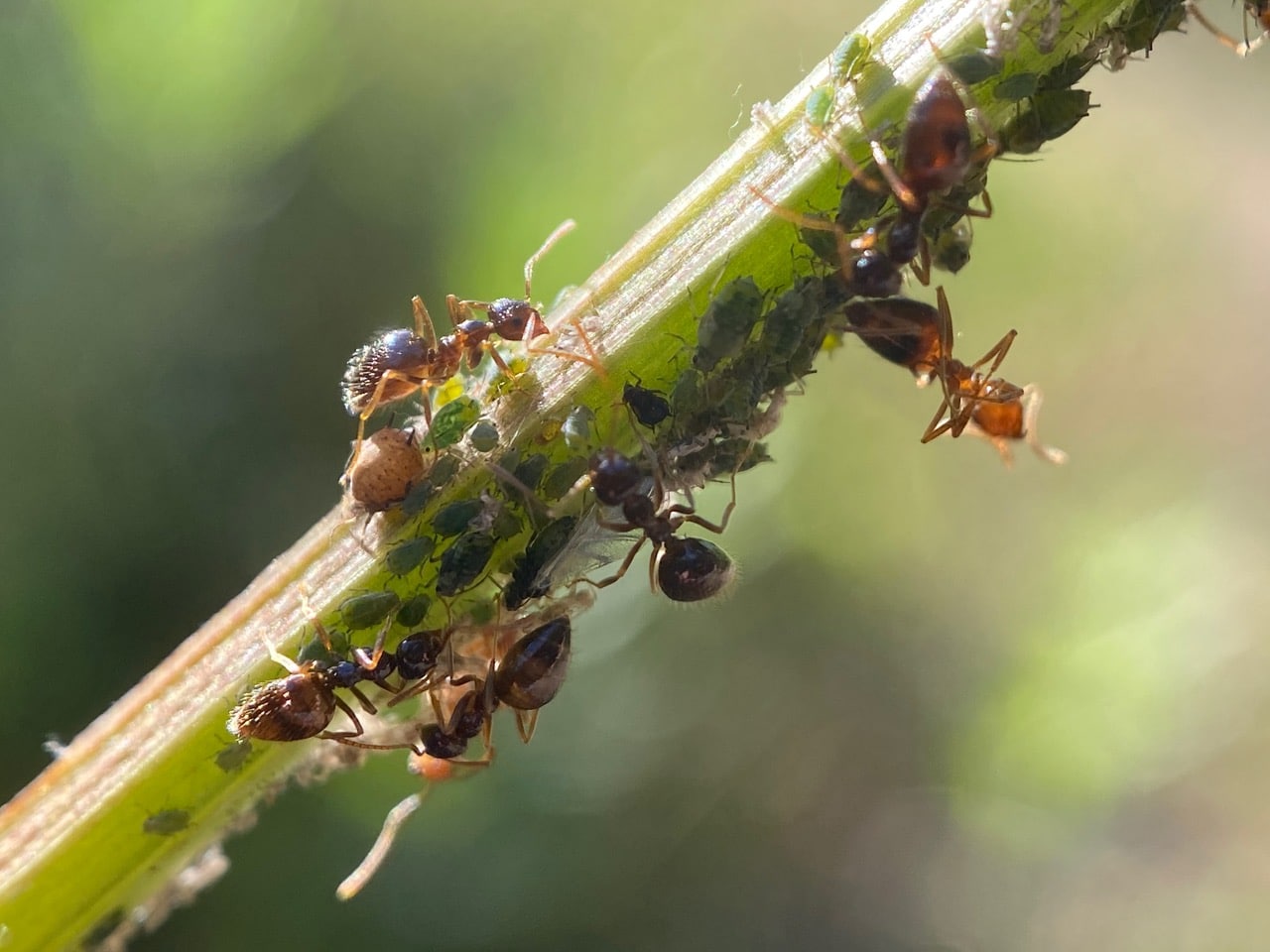
The population of aphids on the Pacific Sanicle, Sanicula crassicaulis has exploded. The colony is tended by numerous American Winter Ants, Prenolepis imparis. Note the bloated, discolored aphid under the ant to the left of the stem. It is an aphid “mummy” – an aphid that has been parasitized by a wasp. A female wasp has injected an egg into the aphid. The wasp larva that hatches out feeds on the aphid from the inside-out, eventually emerging as an adult wasp. Apparently the ants are not able to protect the aphids from the parasitoid wasps.
Ants and aphids share a well-known mutualistic relationship. The aphids produce honeydew, a sugary food for the ants; in exchange, the ants care for and protect the aphids from predators and parasites. Some ants will “milk” the aphids to make them excrete the sugary substance. The ants stroke the aphids with their antennae, stimulating them to release the honeydew. Aphid-herding ants make sure the aphids are well-fed and safe. When the host plant is depleted of nutrients, the ants carry their aphids to a new food source. If predatory insects or parasites attempt to harm the aphids, the ants will defend them aggressively. Some species of ants continue to care for aphids during winter. The ants carry the aphids to their nest for the winter months, and transport them to a host plant to feed the following spring.

Ooh, the crowded colony of aphids has produced numerous alates (winged aphids).
Generally adult aphids are wingless, but most species also occur in winged forms, especially when populations are high or during spring and fall. The ability to produce winged individuals provides the aphids with a way to disperse to other plants when the quality of the food source deteriorates, or when predation pressure is high.
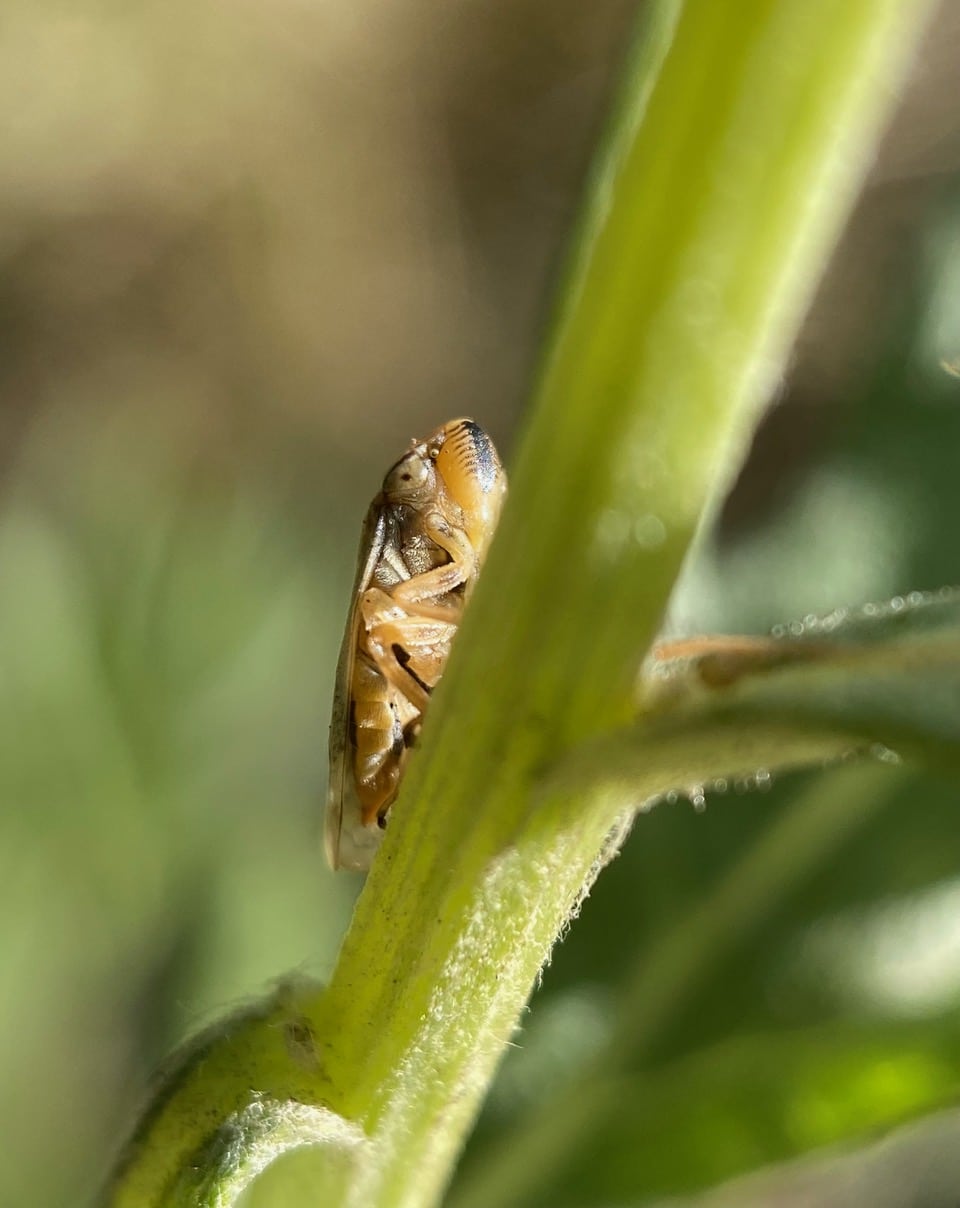
A Meadow Spittlebug, Philaenus spumarius (family Aphrophoridae) is resting on a stem of a California Mugwort, Artemisia douglasiana. Also known as a Froghopper, it is the adult form of the spittlebugs that made the foamy masses on the plant earlier in the season.
The Froghopper is a “true bug” in the order Hemiptera, family Aphrophoridae. Froghoppers are champion jumpers among insects, out-performing even the fleas. The bug can leap the human equivalent of a skyscraper without a running start! The muscles in its hind legs act like a “catapult” to release energy explosively. Its athletic prowess not withstanding, the Froghopper is better known for its young, the “spittle bugs”. The nymphs produce foamy white masses on plants within which they feed on plant sap. Froghoppers have piercing-sucking mouthparts, and feed on plant sap as both nymphs and adults. A recent report claims, “Froghoppers are the super-suckers of the animal world. The tiny insects produce negative pressures equivalent to people sucking a 100-meter-long straw.” So the little bug has two titles under its belt – champion jumper, and super-sucker!
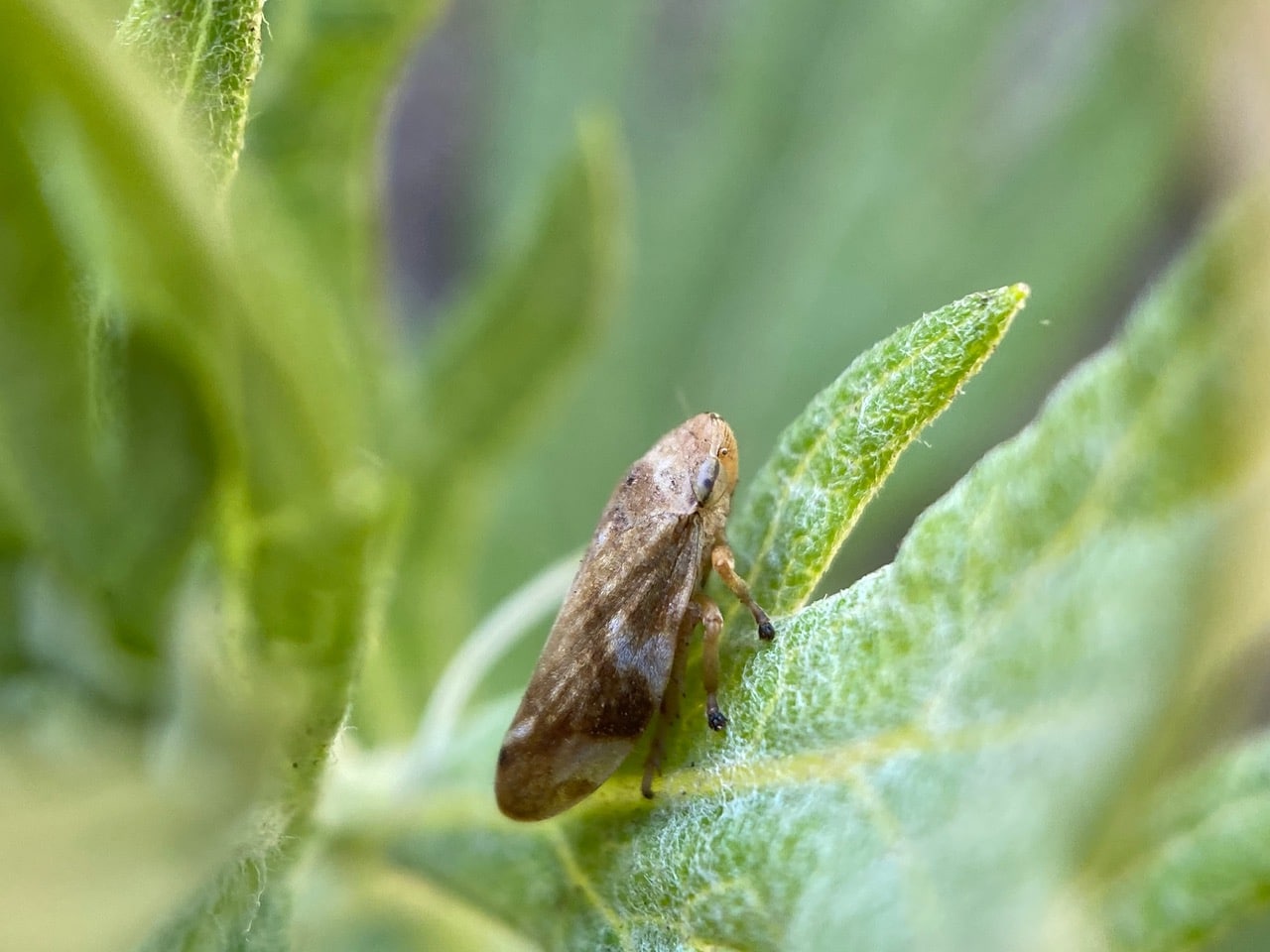
Another Froghopper on a Mugwort leaf. Why do I always find these bugs on the mugwort? Do they have a preference for the plant as a food source, or are they easier to spot on the mugwort foliage?
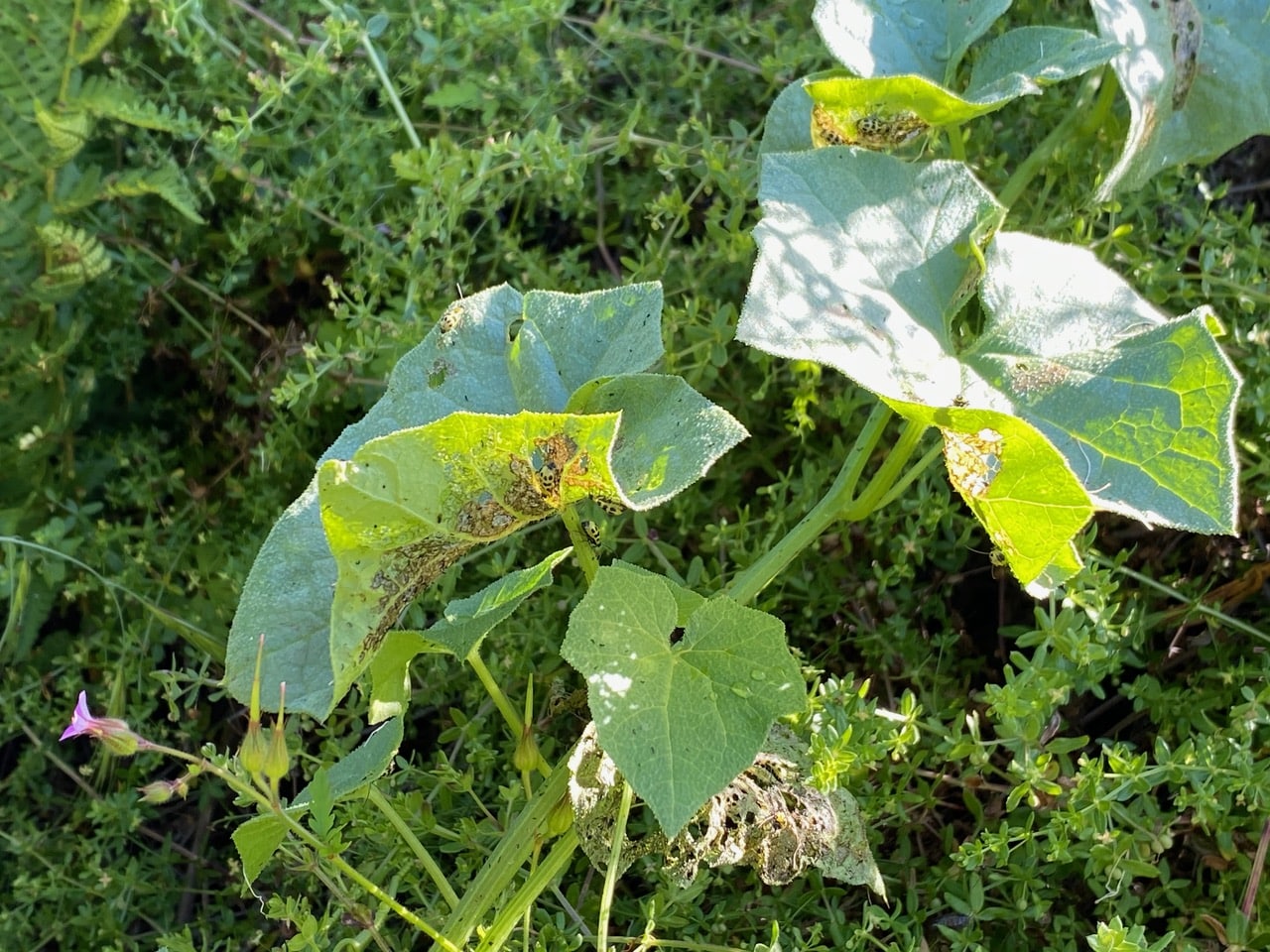
A Wild Cucumber vine, Marah sp. sprawling on the low vegetation on the trail bank looks sick, with many leaves browned and perforated. What is ailing the plant?
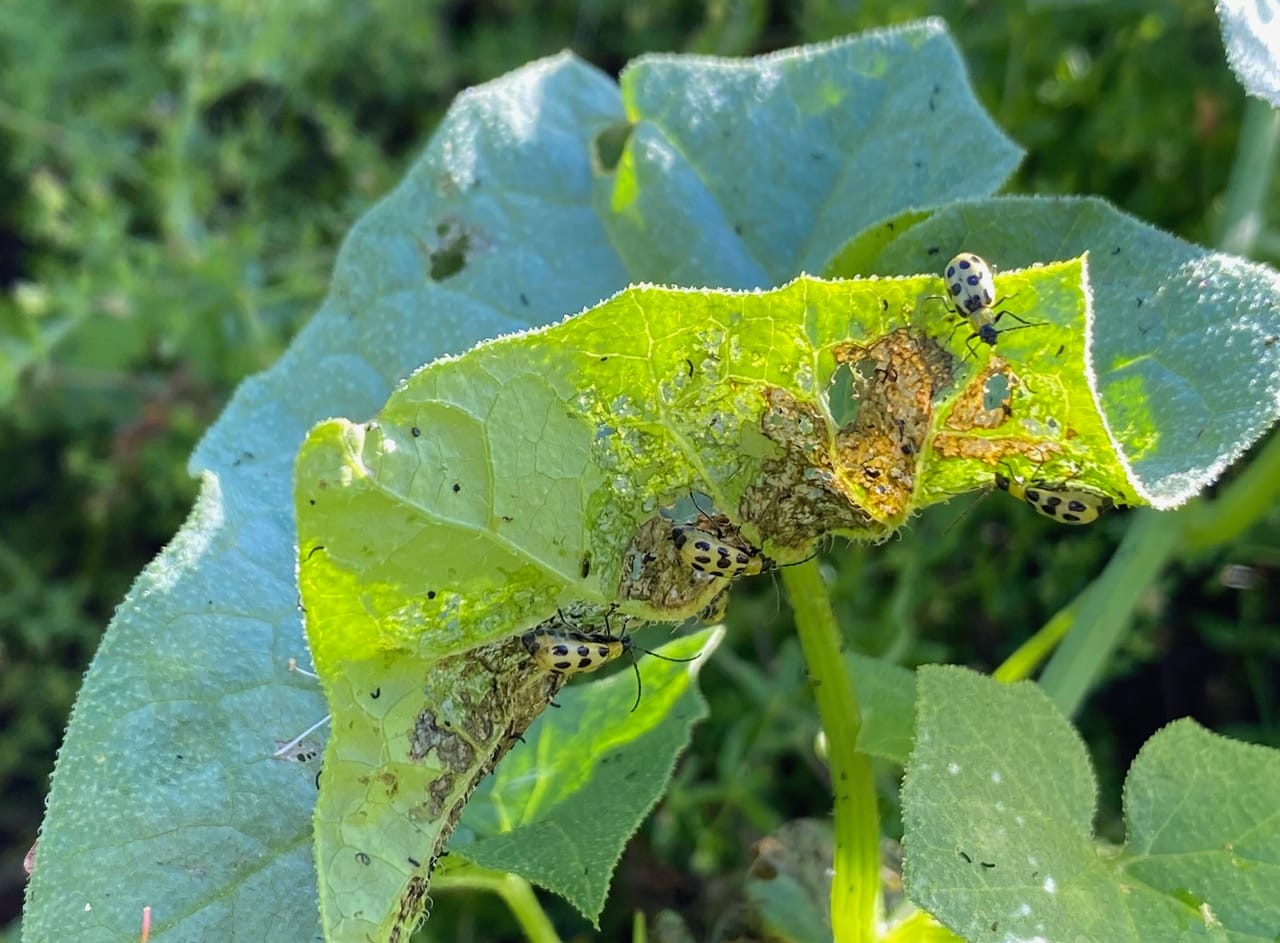
Closing in, I see dozens of Spotted Cucumber Beetles, Diabrotica undecimpunctata (family Chrysomelidae) feeding on the underside of the leaves. They are not called “cucumber beetles” for nothing!
Members of the family Chrysomelidae are commonly known as Leaf Beetles. Adults and larvae feed on all sorts of plant tissues, and all species are fully herbivorous. Many are serious pests of cultivated plants, including food crops. Others are beneficial due to their use in biocontrol of invasive weeds. Chrysomelids are popular among insect collectors, as many are conspicuously colored, typically in glossy yellow to red or metallic blue-green hues, and some have spectacularly bizarre shapes. Photos of Leaf Beetles (Family Chrysomelidae) · iNaturalist
Native to North America, the Spotted Cucumber Beetle can be a major agricultural pest, causing damage to crops in the larval as well as adult stages of their life cycle. Larvae, sometimes known as rootworms feed on the roots of emerging plants. In the adult stage the beetles cause damage by eating the flowers, leaves, stems and fruits of the plant.
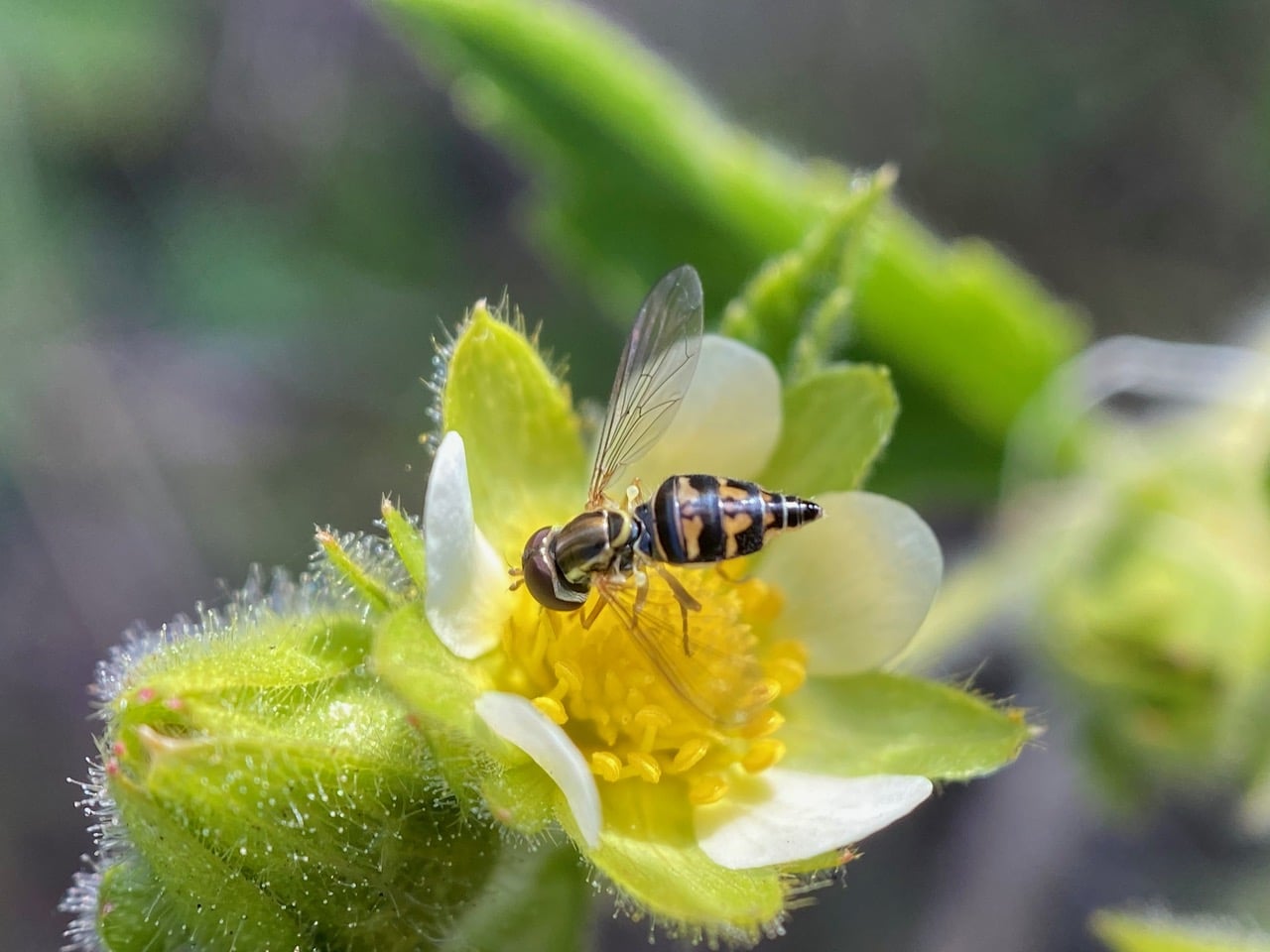
A female Western Calligrapher, Toxomerus occidentalis (family Syrphidae) is foraging on a flower of Sticky Cinquefoil, Drymocallis glandulosa.
Toxomerus is a very large genus of Hover Flies. They are found in North and South America. The majority of species are only 6-9 mm in length. They are notable for their mimicry of stinging Hymenoptera to avoid predators. Their unique abdominal patterns are diagnostic at the species level within the genus. Most larvae feed on soft bodied insects, such as aphids; a few feed on pollen. Adults feed on the pollen of a wide range of flowers. A female can lay up to hundreds of eggs at a time and will place them where prey or pollen food sources are readily available. They can be found in a wide variety of habitats, often in dense ground cover.
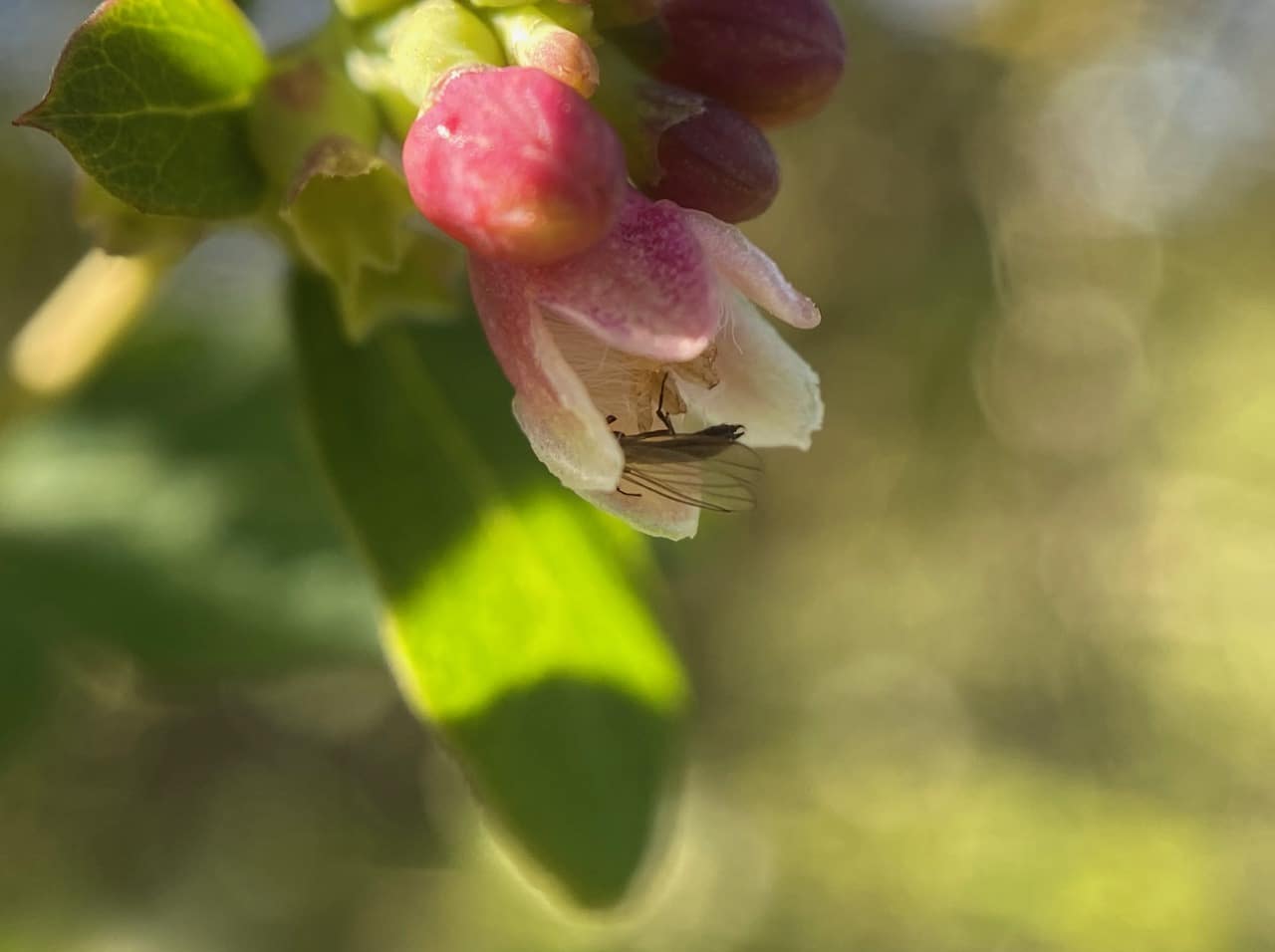
A tiny insect with elongated abdomen is moving around inside a Common Snowberry flower, Symphoricarpos albus.
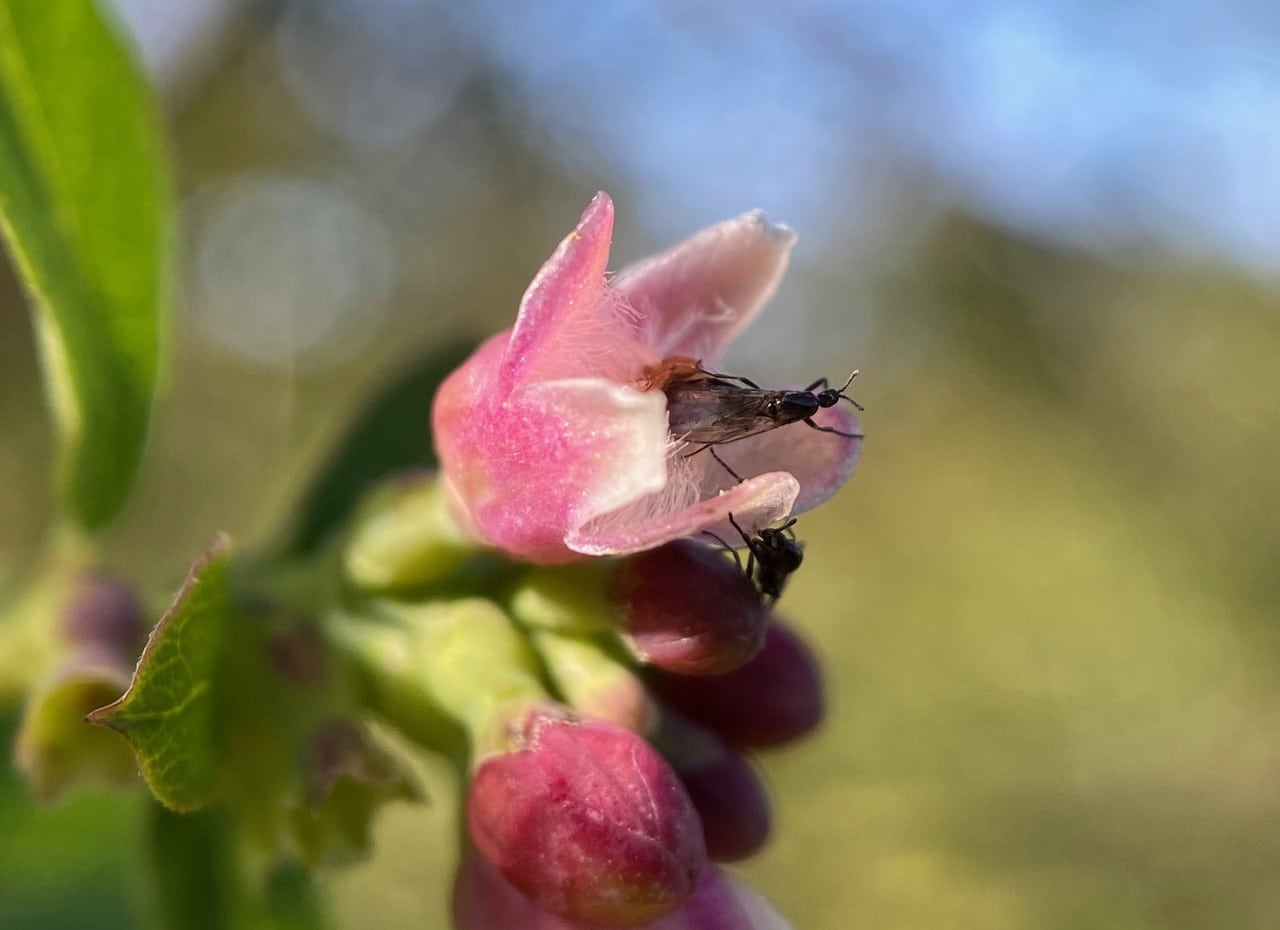
More of the same insects are visiting an adjacent cluster of Common Snowberry flower. They appear to have small heads and short antennae.
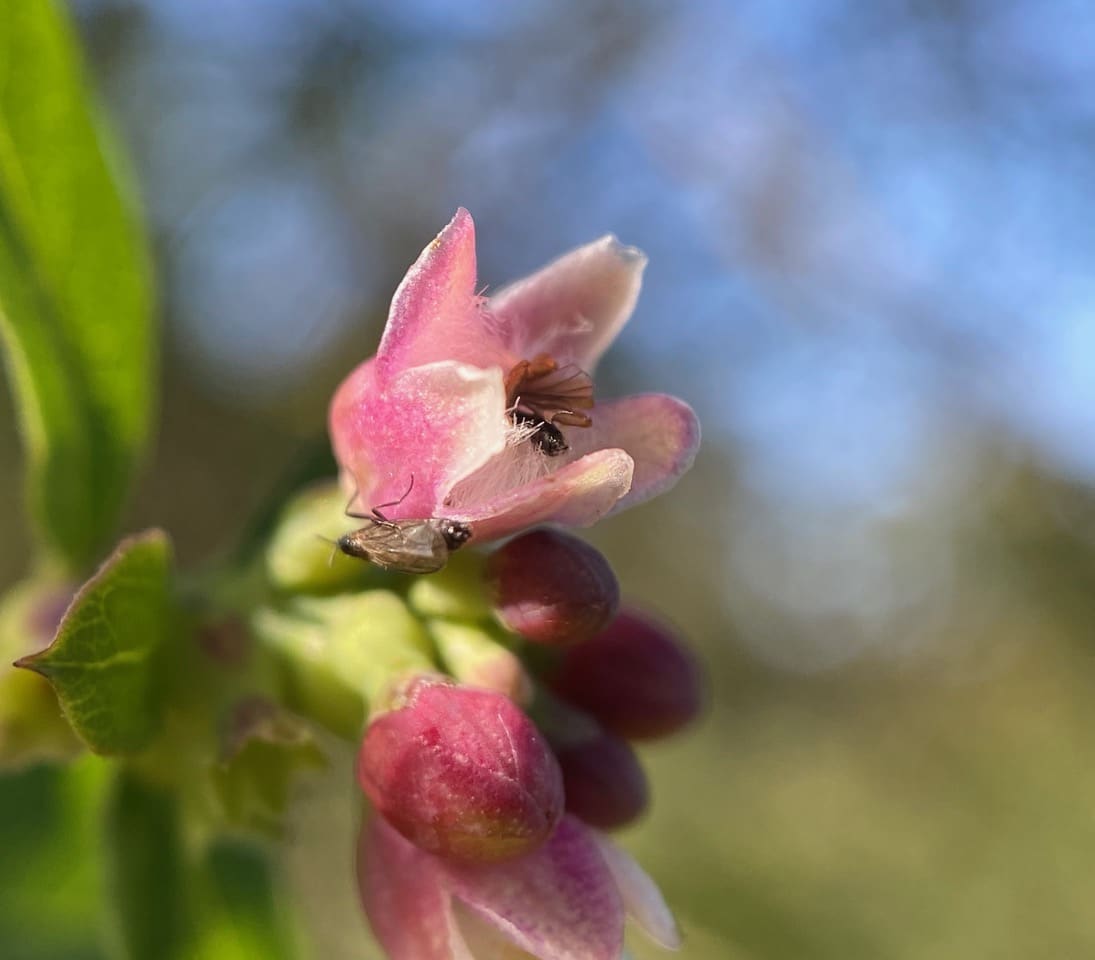
The insect in the corolla is forcing its way through the dense barricade of hairs, probably in search of nectar.

iNaturalist has helped identify the insects as Minute Black Scavenger Flies (family Scatopsidae).
As implied by the family name, these flies are also called “dung midges”. They are generally small, sometimes minute, dark flies (from 0.6 to 5 mm) with short antennae. Adults are often found on flowers. The larvae of most species are unknown, but the few that have been studied have a rather flattened shaped and are terrestrial and saprophagous, feeding on decaying plant and animal matter.
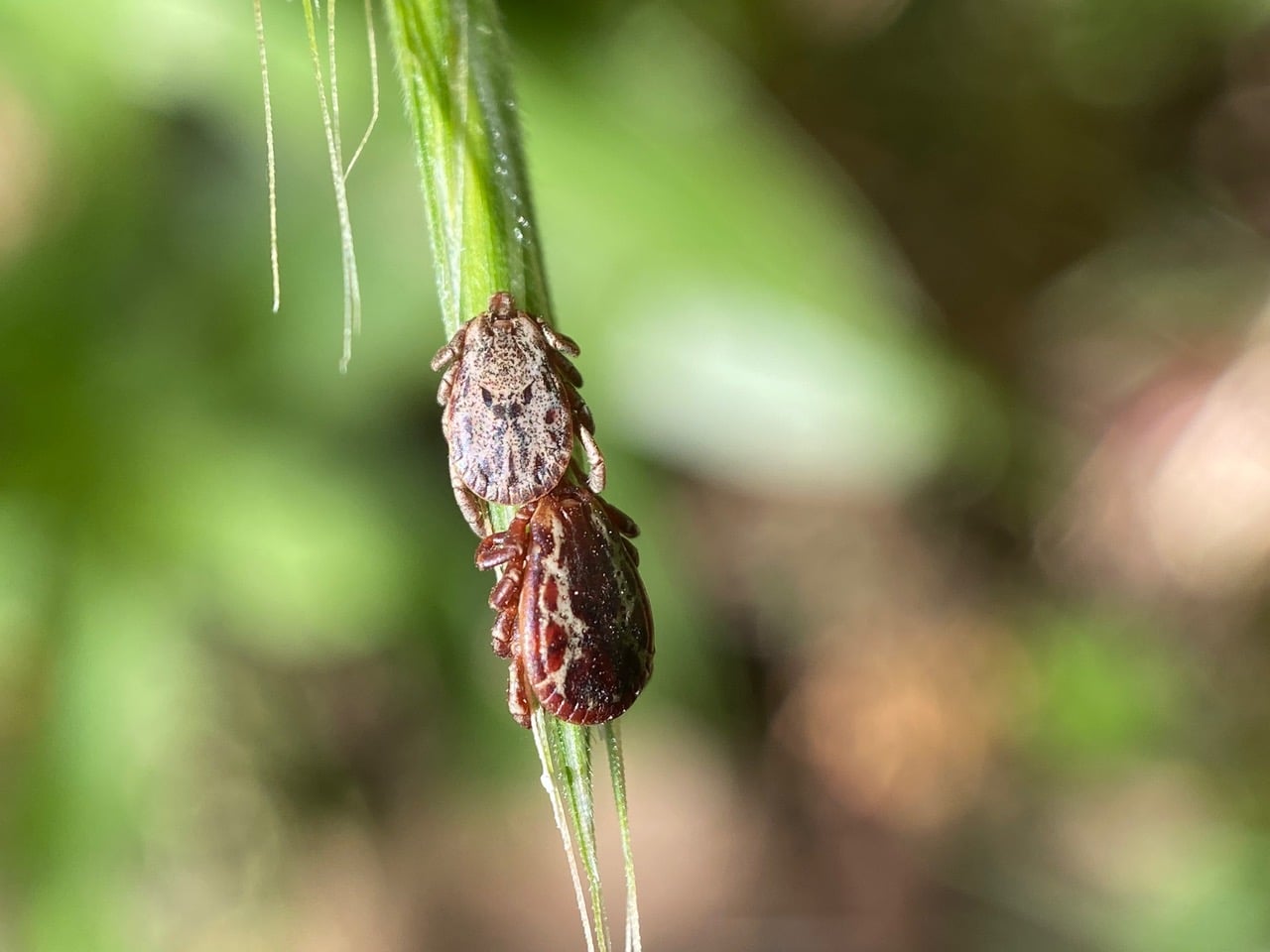
Two Pacific Coast Ticks, Dermacentor occidentalis cling to a grass seed head dangling over the trail. The smaller, gray one is a male. It is amazing how the ticks know where to wait to maximize their chances of getting on a host.
Ticks pick a place to wait by identifying well-used paths, resting on the tips of grasses and shrubs. They find their hosts by detecting animals’ breath and body odors, or by sensing body heat, moisture, and vibrations. Some species can even recognize a shadow. Ticks can’t fly or jump, but many species wait in a search position known as “questing”. Holding onto leaves or grass by their third and fourth pair of legs, they hold the first pair of legs outstretched, waiting to climb on to a passing host. When a host brushes the spot where the tick is waiting, it quickly climbs aboard.