

Pollinator Post 5/25/23
I have come to the Skyline Gardens in the afternoon, hoping it would be sunny and warm. Boy, am I wrong! It is cold and foggy up here in the hills, and the wind is blowing wildly. Unwilling to give up, I take a brief walk along the paved road to the Radio Tower. It would be interesting to see how the insects cope in this weather.
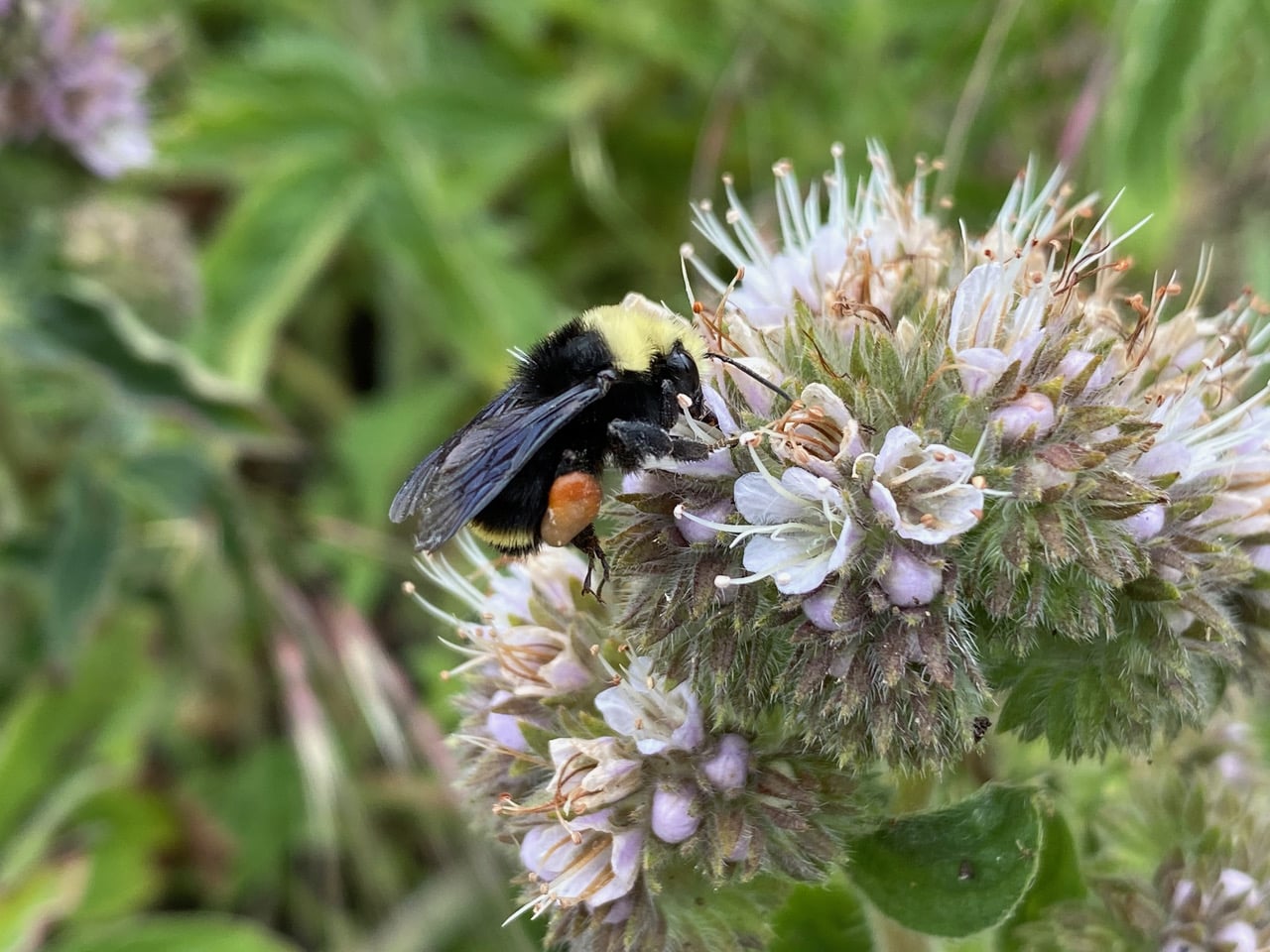
Not so well, apparently. Only a few hardy bumble bees are out foraging, battling the gusts. This large Yellow-faced Bumble Bee, Bombus vosnesenskii stops to refuel on an inflorescence of California Phacelia, Phacelia californica. From the candy corn-colored load in her pollen baskets, it is apparent that she has been visiting at least two different species of flowers on this foraging trip. Orange pollen from California Poppy and dirty cream-colored pollen from Phacelia? In the field I have observed that bumble bees do vary their flower choices as they go about foraging, but this picture is solid evidence that they do not practice “flower constancy” or Floral fidelity” as the Honey Bees, Apis mellifera are known for.
Over 2000 years ago, Aristotle observed that honey bee workers visit flowers of only one type during a foraging trip. Only when the floral resources are depleted do the bees shift to a different type of flower that is coming into bloom. Scientists call this behavior “flower constancy” or “floral fidelity”. It is easy to see how beneficial this is to the plants they serve. Their pollen is never delivered to the wrong flower. What could be the benefit to the pollinators themselves? Perhaps it has to do with pollen gathering speed and efficiency. After all, it takes time and effort for bees to learn to access the pollen of a new flower. Flower constancy is not well studied in solitary bees. Perhaps because it doesn’t apply to them?
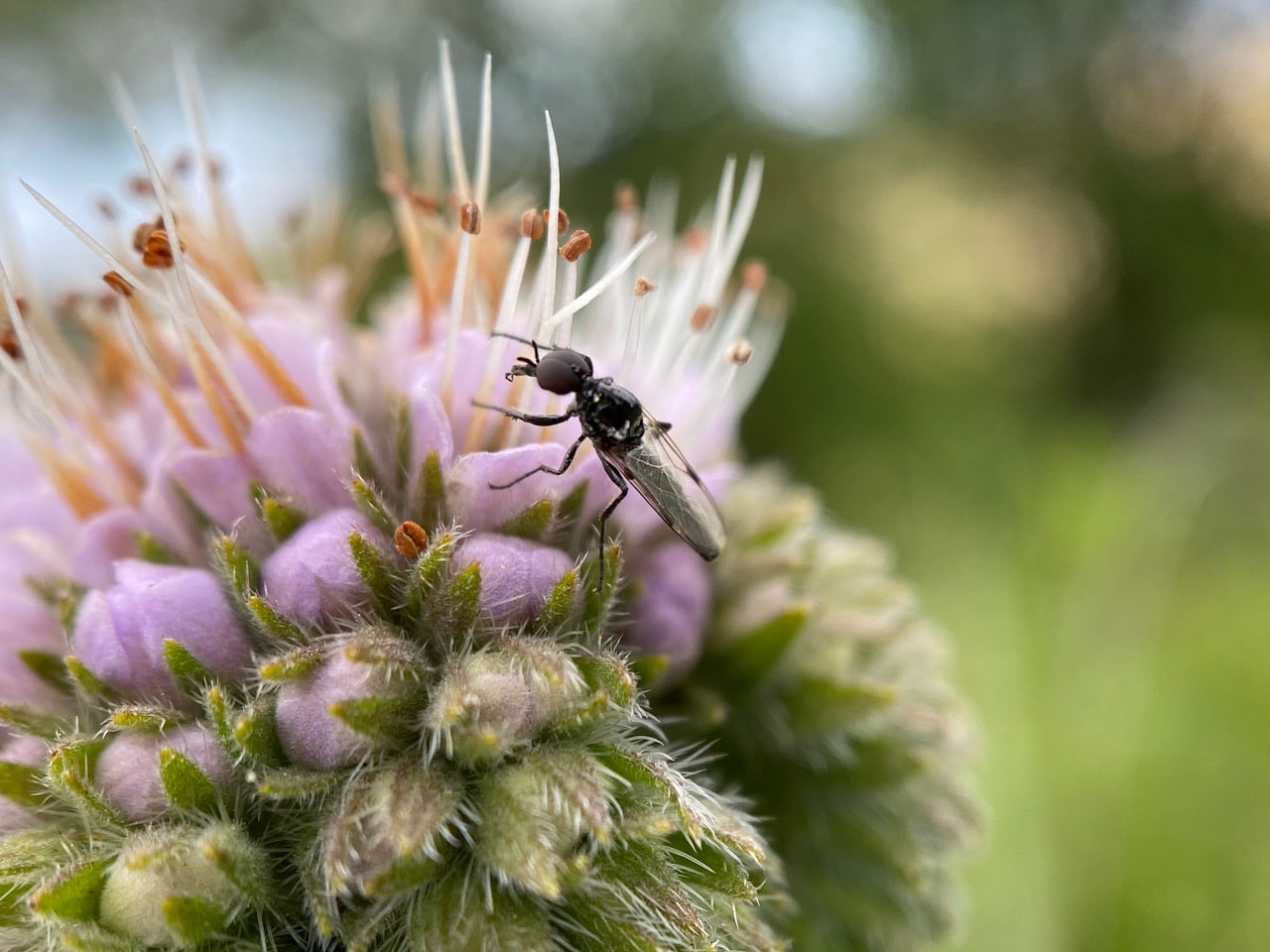
A male March Fly (family Bibionidae) is posing nicely on the phacelia flowers. Reviewing the photo on the big screen, I realize that it is dead! See the gaping hole on its thorax? What predator could cause this damage? Or internal parasitoids?


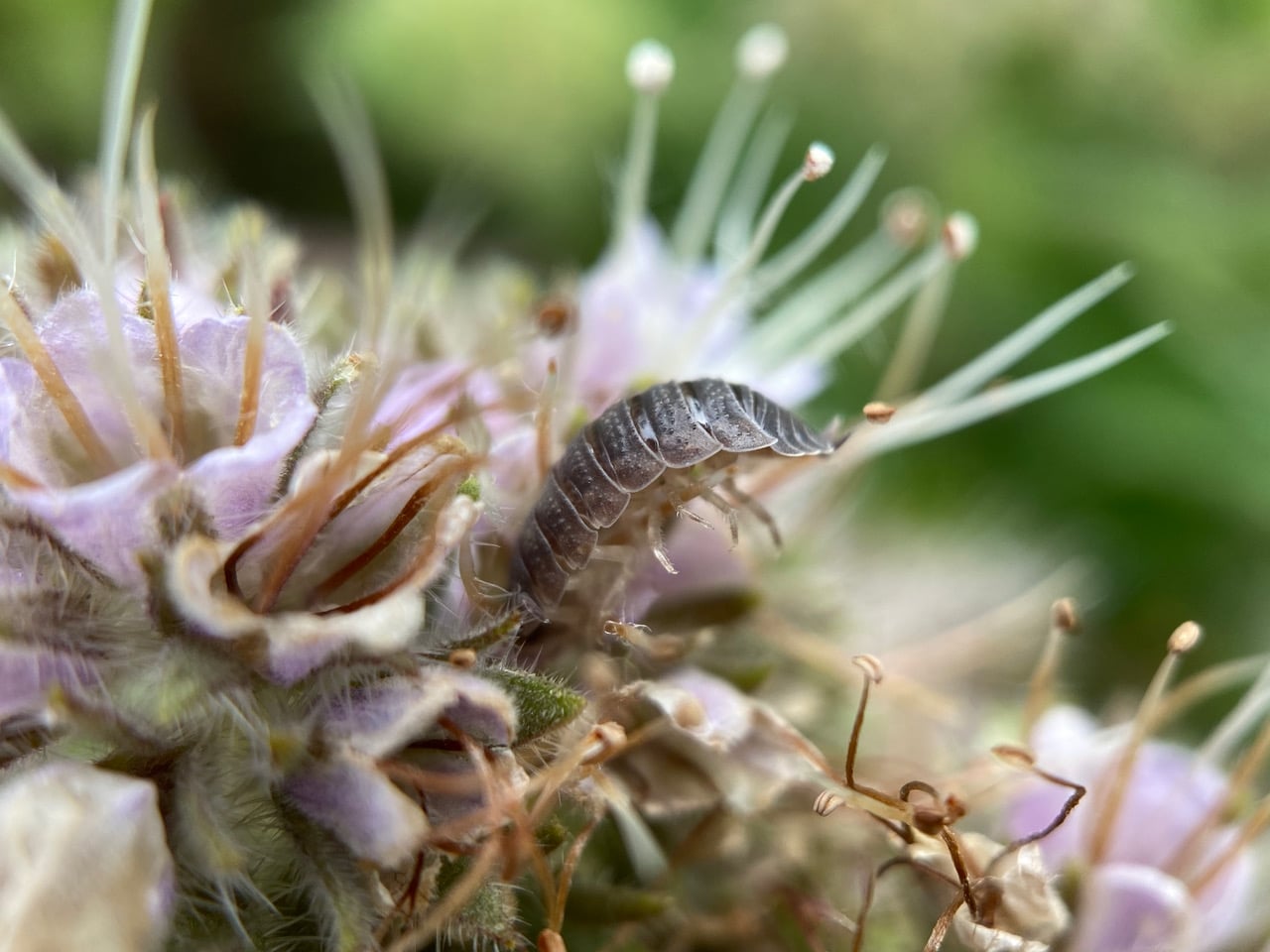


A Common Rough Woodlouse, Porcellio scaber (family Porcellionidae) is foraging among the flowers of California Phacelia. It is rather unusual to see these detritivores off the ground.
The species is native to Europe but now enjoys a cosmopolitan distribution. They are often found in large numbers, with many wildlife species (shrews, centipedes, toads, spiders and birds) preying on them. The dorsal (upper) surface of the woodlouse’s segmented exoskeleton is covered with a series of small tubercles, hence its common name. Each of the 7 segments of its thorax bears a pair of legs. The short abdomen consists of 6 segments. P. scaber loses water easily by diffusion through its permeable exoskeleton which lacks a waxy cuticle. Because of this, it often seeks out moist environments and dark habitats. P. scaber is a detritivore, feeding mainly on decaying plant matter, and possibly also on the bacteria and fungi on the detritus.
Unlike the “roller” species of woodlouse, such as Armadillidium spp., which are able to curl into a ball to defend themselves, P. scaber is a “clinger” and feigns death when threatened.
The woodlouse is diving deep into a phacelia flower, probably to drink nectar. I am tickled to see that it can hold its long, segmented body and hind legs up in the air.
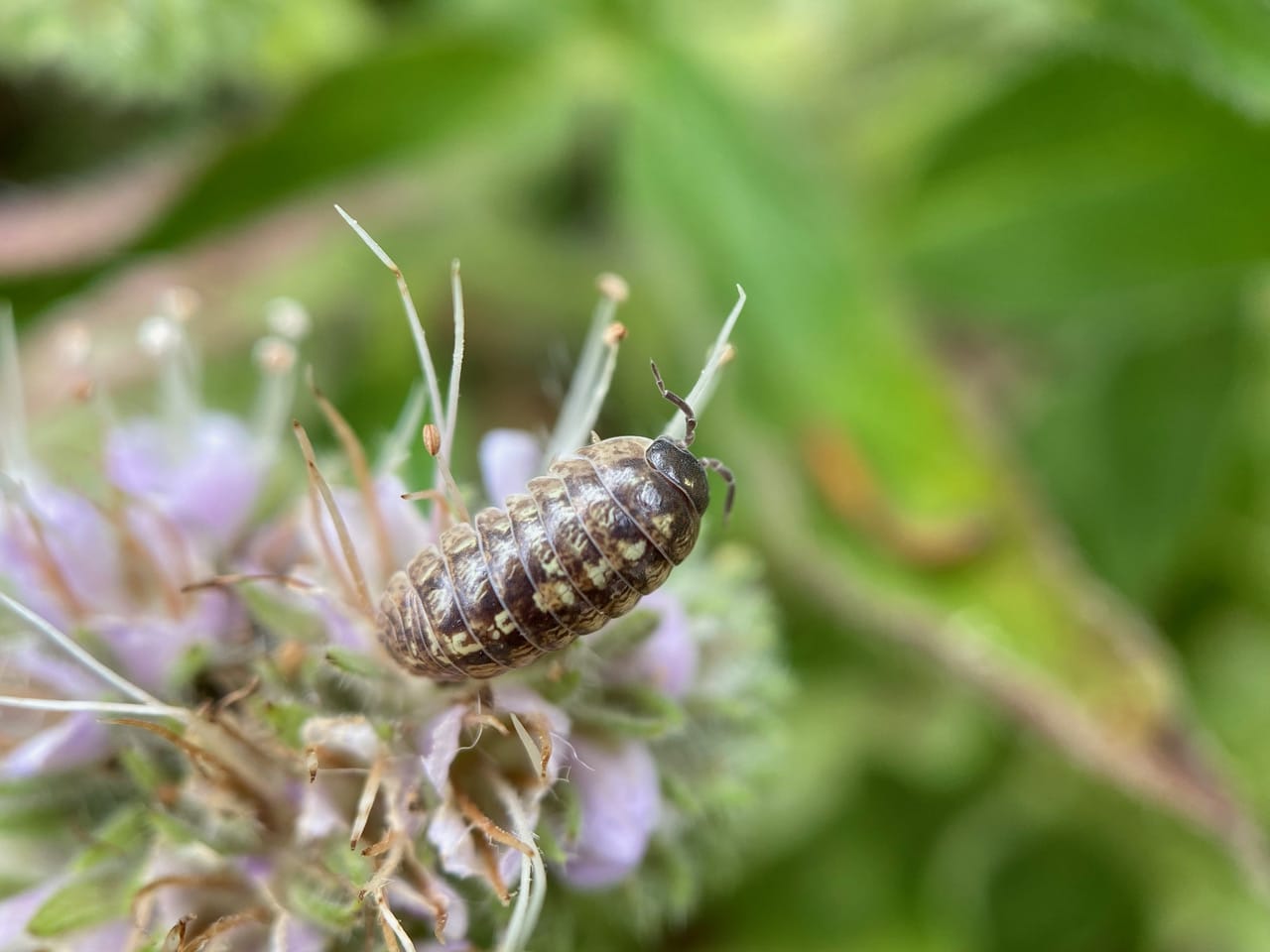
Just inches away, on a lower inflorescence, another species, the Versicolored Pill Woodlouse, Armadillidium versicolor (family Armadillidiidae) is holding on to Phacelia stamens. Is it feeding on pollen?
Most often seen on the ground, especially in leaf litter, pill bugs are usually thought of as scavengers and decomposers of organic matter. Actually pill bugs also eat living plants, especially in wet conditions, sometimes consuming leaves, stems, shoots, roots, tubers, and fruits. The crustaceans can be serious pests in certain agricultural systems, particularly in areas that are prone to heavy rains and flood conditions.
The Pillbug is an isopod, a type of non-insect arthropod also known as a terrestrial crustacean. It is sometimes called a roly-poly due to its ability to roll into a ball when disturbed. This defensive behavior makes it look like a pill, hence the name pillbug. Pillbugs are nocturnal, though they may be found during the day in the soil or under debris. Pillbug feed mainly on decaying plant leaves and other decomposing materials. They serve a vital function in the ecosystem as decomposers and recyclers.
Like crabs and other crustaceans, pillbugs tote their eggs around with them. Overlapping thoracic plates form a special pouch, called a marsupium, on the female’s underside. Upon hatching, the tiny juvenile pillbugs remain in the pouch for several days before leaving to explore the world on their own. When born, pillbug young have only six pairs of legs. They get the seventh pair following their first molt.
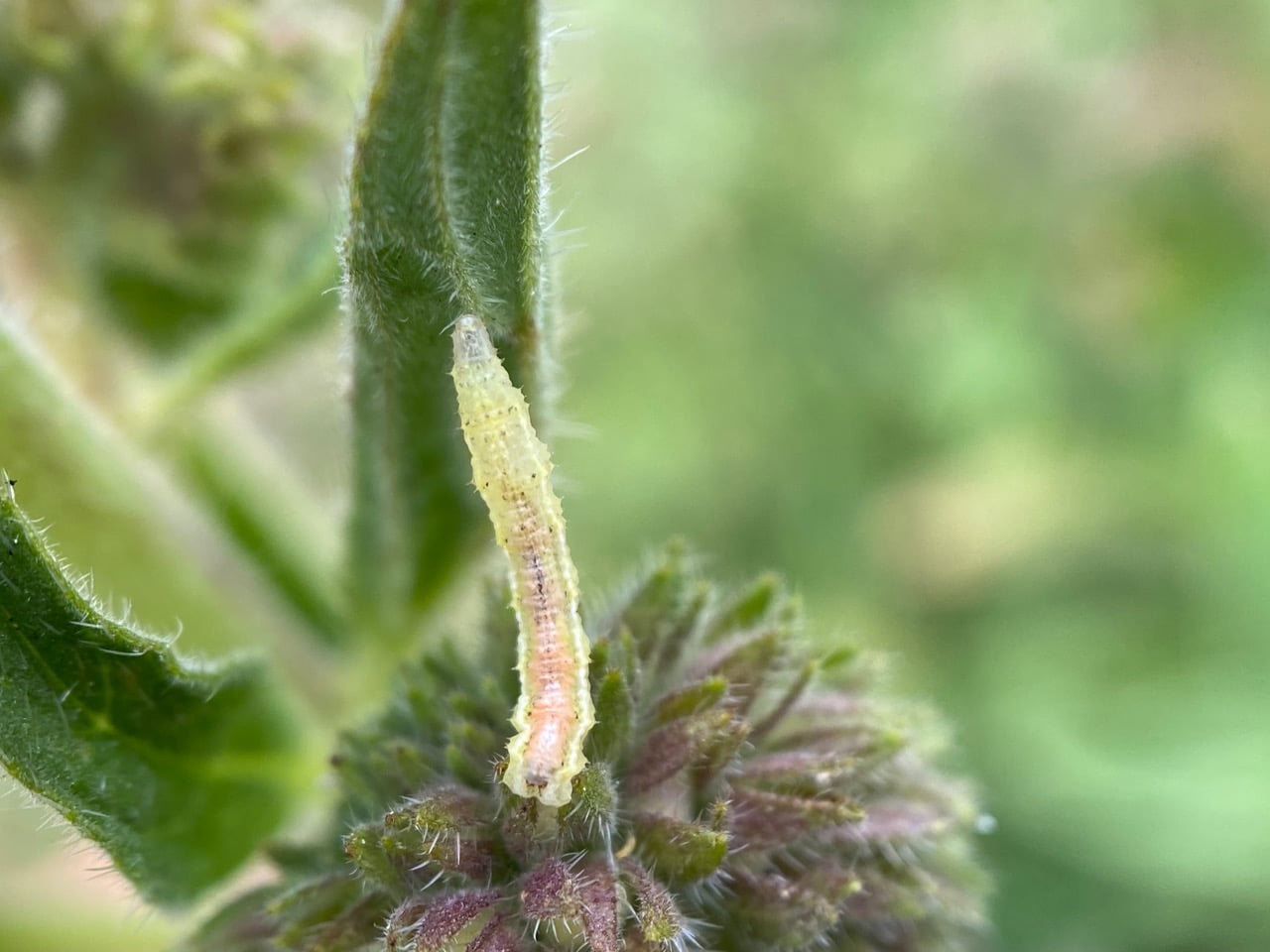
A tiny hoverfly larva is on the move on an immature inflorescence of California Phacelia. I am surprised that the creature could move on such a cold, windy day.
The larvae of most Syrphid Fly species are slug like and taper towards the head. Coloration is commonly brown, greenish, pink, or whitish. The Syrphid larvae lack true legs, but the creviced, segmented body can give the appearance of having appendages. They are blind, relying on their sense of touch to navigate and to catch prey. They feed on aphids and other insects and move around on the plants in search of prey. The larvae complete their development in two to three weeks while consuming
up to 400 aphids each.
I watch as the little sightless larva clambers onto a leaf. A Hoverfly larva moves around on a Phacelia plant. – YouTube The video is blurry because of the low light level and the wind.
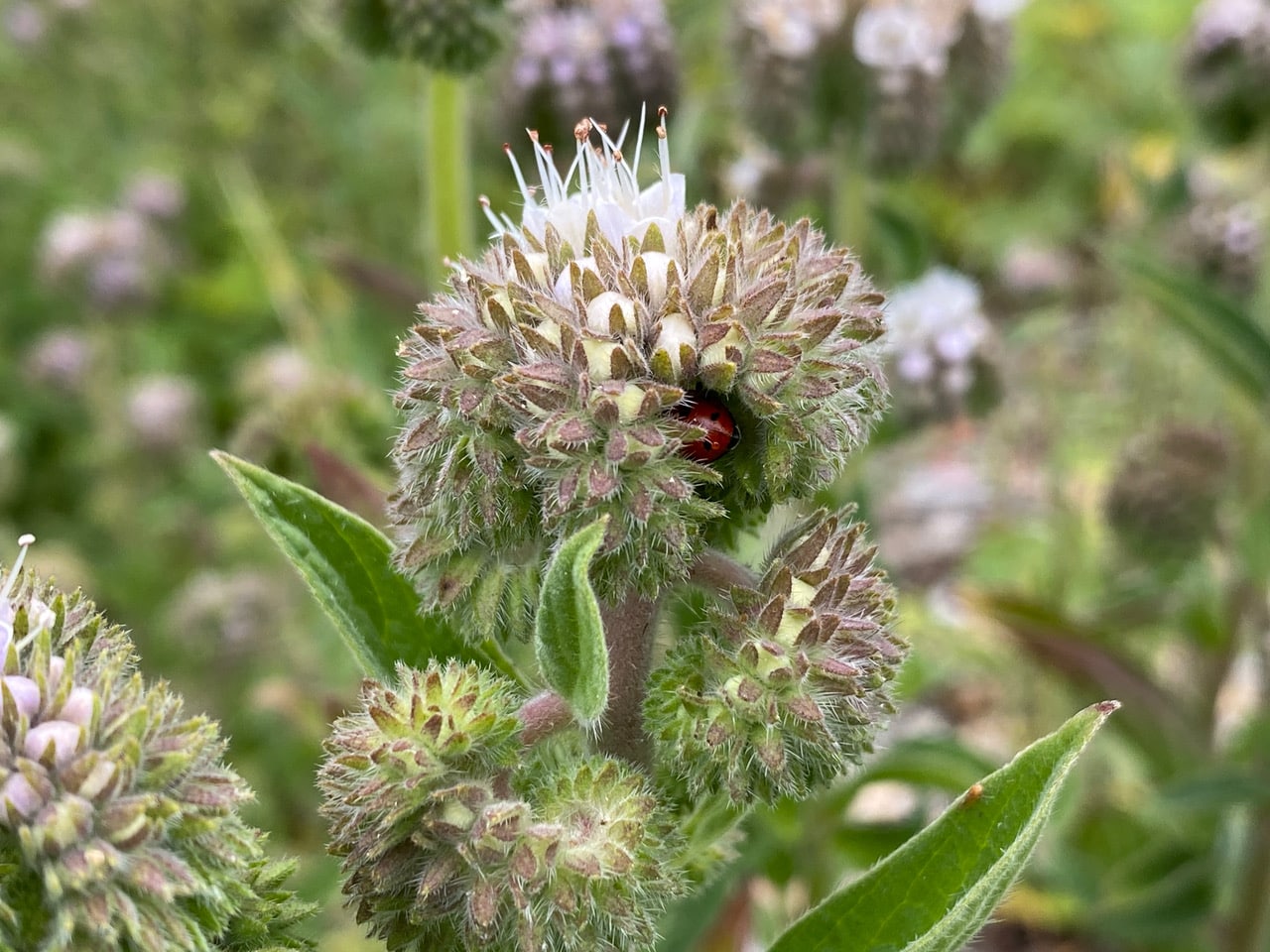
I wish I could shelter from the unrelenting winds like this Ladybeetle, snug as a bug!
A small wasp with red abdomen shelters from the winds under a low Phacelia inflorescence. It is a parasitoid wasp in the family Braconidae.
The Braconidae are a family of parasitoid wasps. After the closely related Ichneumonidae, braconids make up the second-largest family in the order Hymenoptera, with about 17,000 recognized species. Females often have long ovipositors to lay eggs on or in their hosts. The larvae of most braconids are internal primary parasitoids of other insects, especially the larval stages of Coleoptera, Diptera, and Lepidoptera. Generally, the braconid life cycle begins when the female wasp deposits her eggs in the host insect, and the braconid larvae develop in the host body, eating it from the inside out. When the wasp larvae are ready to pupate, they may do so in or on the host insect. The new generation of adult braconid wasps emerges from their cocoons and begins the life cycle again.
Braconid wasps use a remarkable weapon to disable the defenses of their host insects – a virus. These parasitic wasps coevolved with polydnaviruses (read poly-DNA-virus), which they carry and inject into the host insects along with their eggs. The virus attacks the host’s immune system and renders it unable to encapsulate the wasp egg; it also halts the host’s development, so it can’t pupate and transform into an adult. Amazingly, the “bracovirus” also changes the host’s metabolism so that it can survive longer without food or water – thus ensuring a nurturing environment for all the young wasps to come.
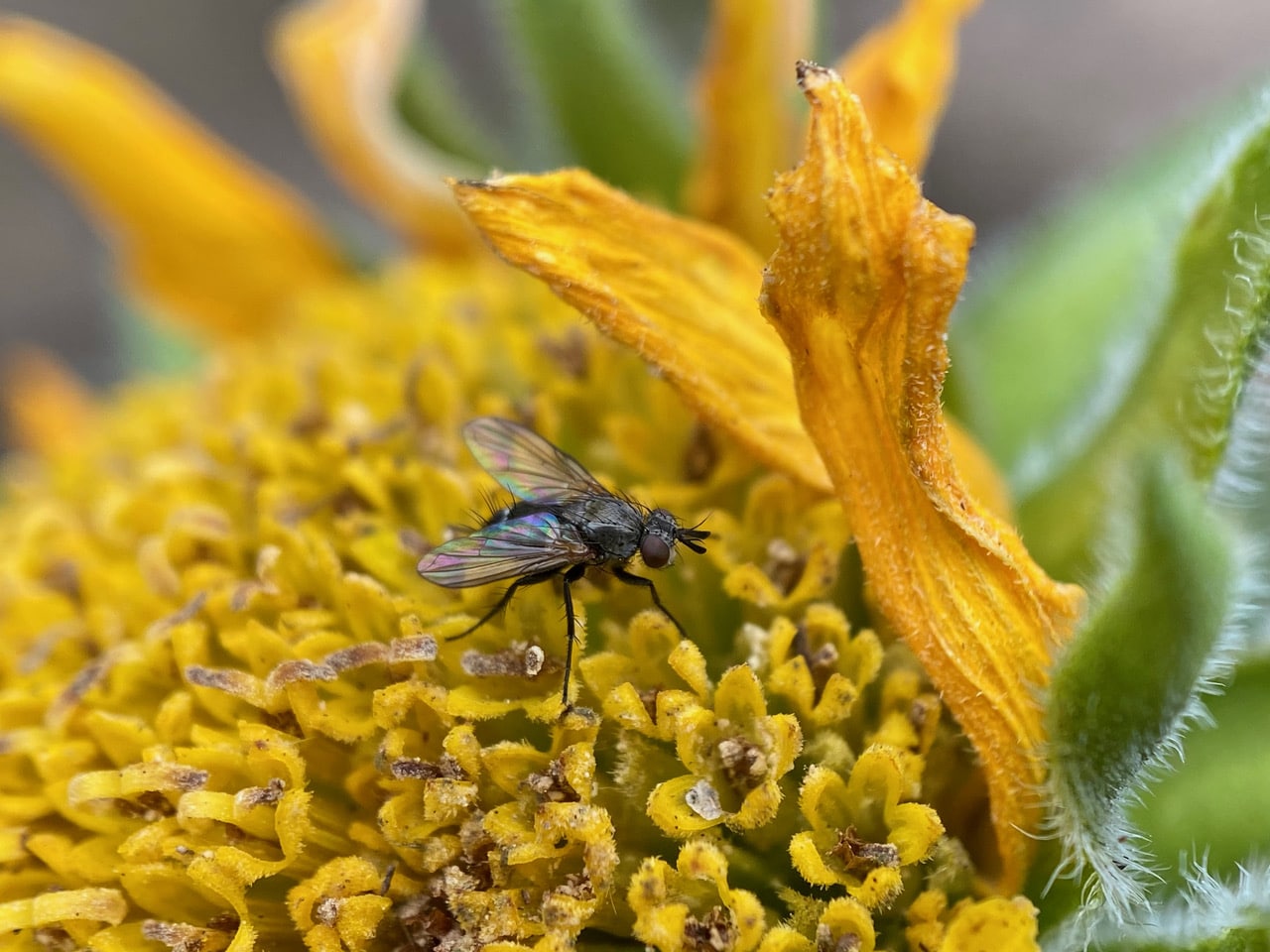
A small dark, bristly fly is sheltering from the winds on a fading flowerhead of the Mount Diablo Sunflower, Helianthella castanea.
It is a Woodlouse Fly, Stevenia deceptoria (family Rhinophoridae). These small, black, bristly flies are somewhat related to the Tachinidae. The larvae are mostly parasitoids of woodlice (pill bugs), beetles, spiders and other arthropods, and occasionally snails.

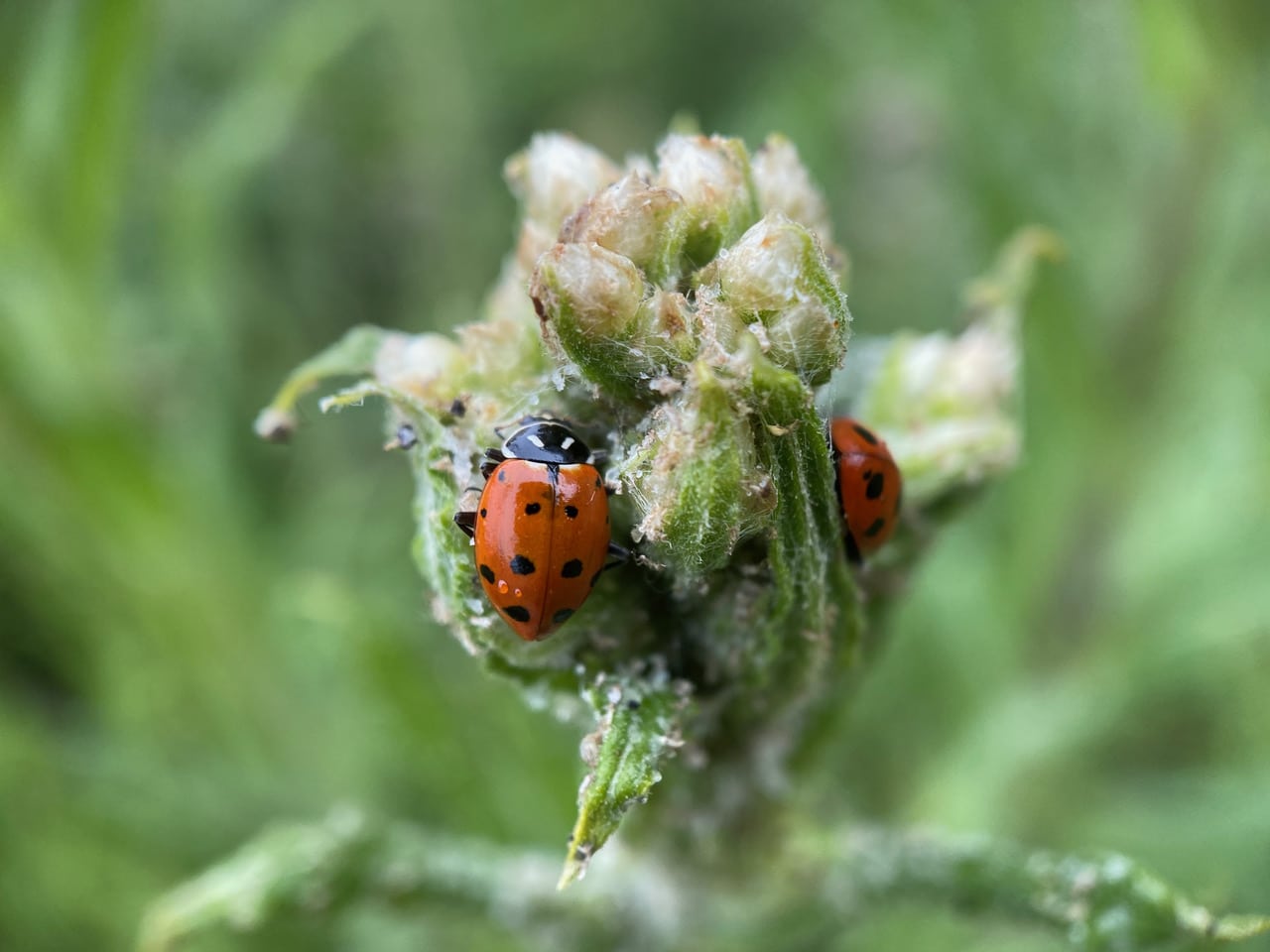
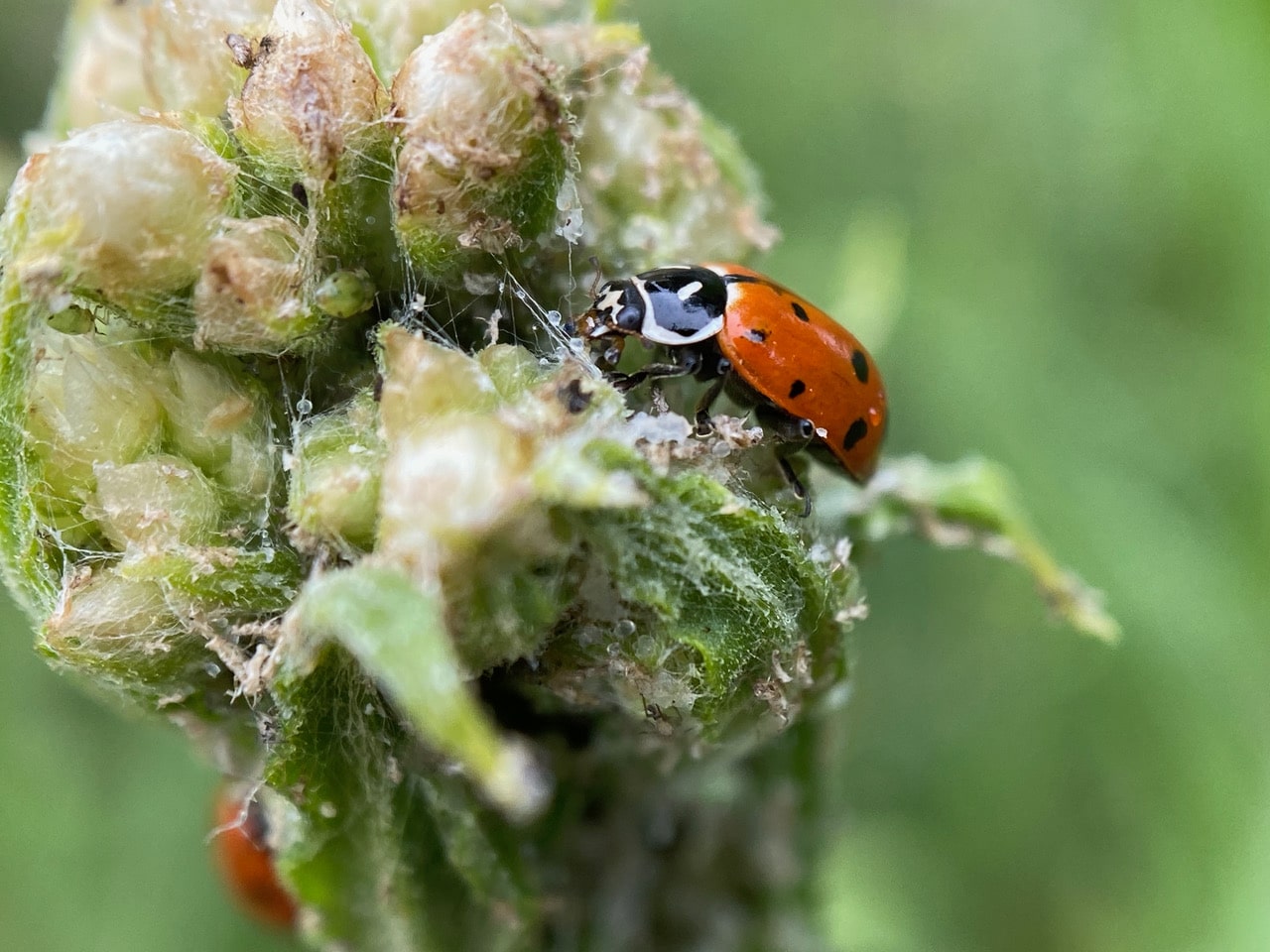
On this cold, colorless day, my eyes are instantly led to the three Convergent Ladybeetles, Hippodamia convergens (family Coccinellidae) on a flowerhead of California Everlasting, Pseudonaphalium californicum. Why are they here? There are signs of aphid infestation – milky white honeydew and aphid debris all over the flowerhead.
The third Convergent Ladybeetle is actively hunting aphids. If you squint hard enough, you might see the tiny green aphids among the flower buds.
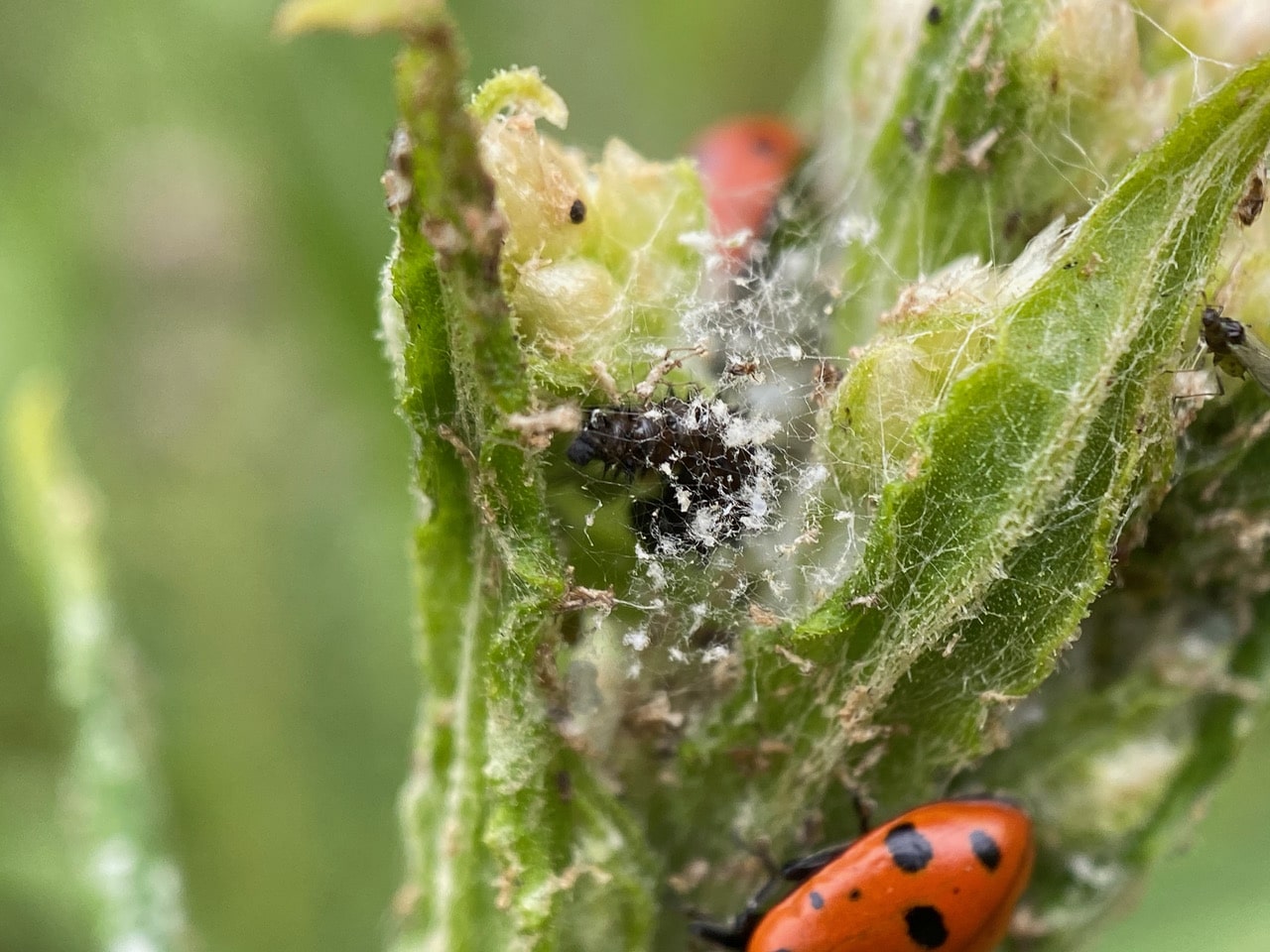
Ooh, that looks like the beginnings of a caterpillar retreat of the American Lady butterfly. You can even see the tiny black caterpillar behind the sparse silk webbing into which it has incorporated some of the fuzz from the leaves. The host plants for this species are plants in the sunflower family, notably the everlastings. The butterfly can produce 3-4 broods from May to November, overwintering as adults.