

Pollinator Post 5/21/24 (2)
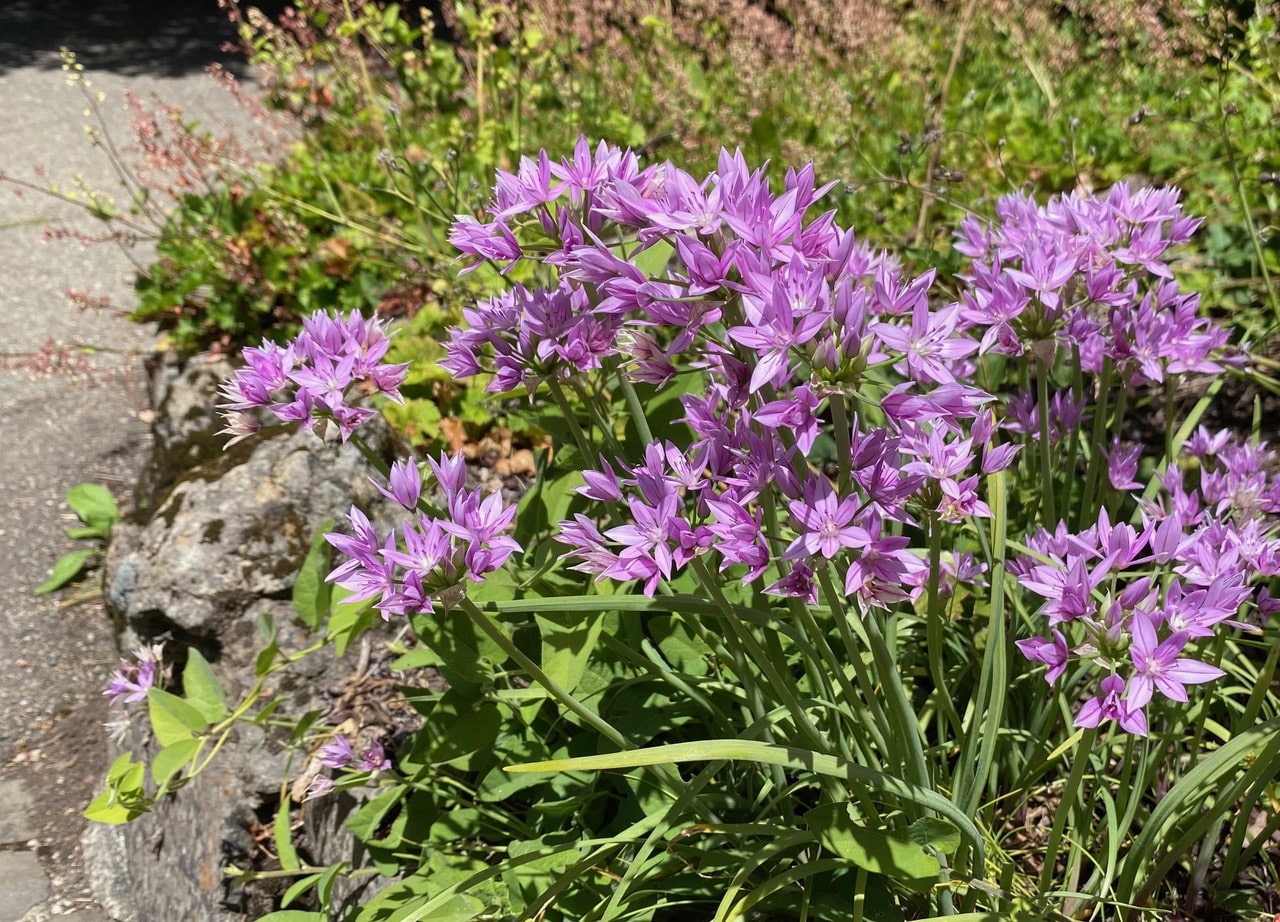
The Oneleaf Onion, Allium unifolium is blooming profusely at the garden.

A small bee lands on a flower of Oneleaf Onion.
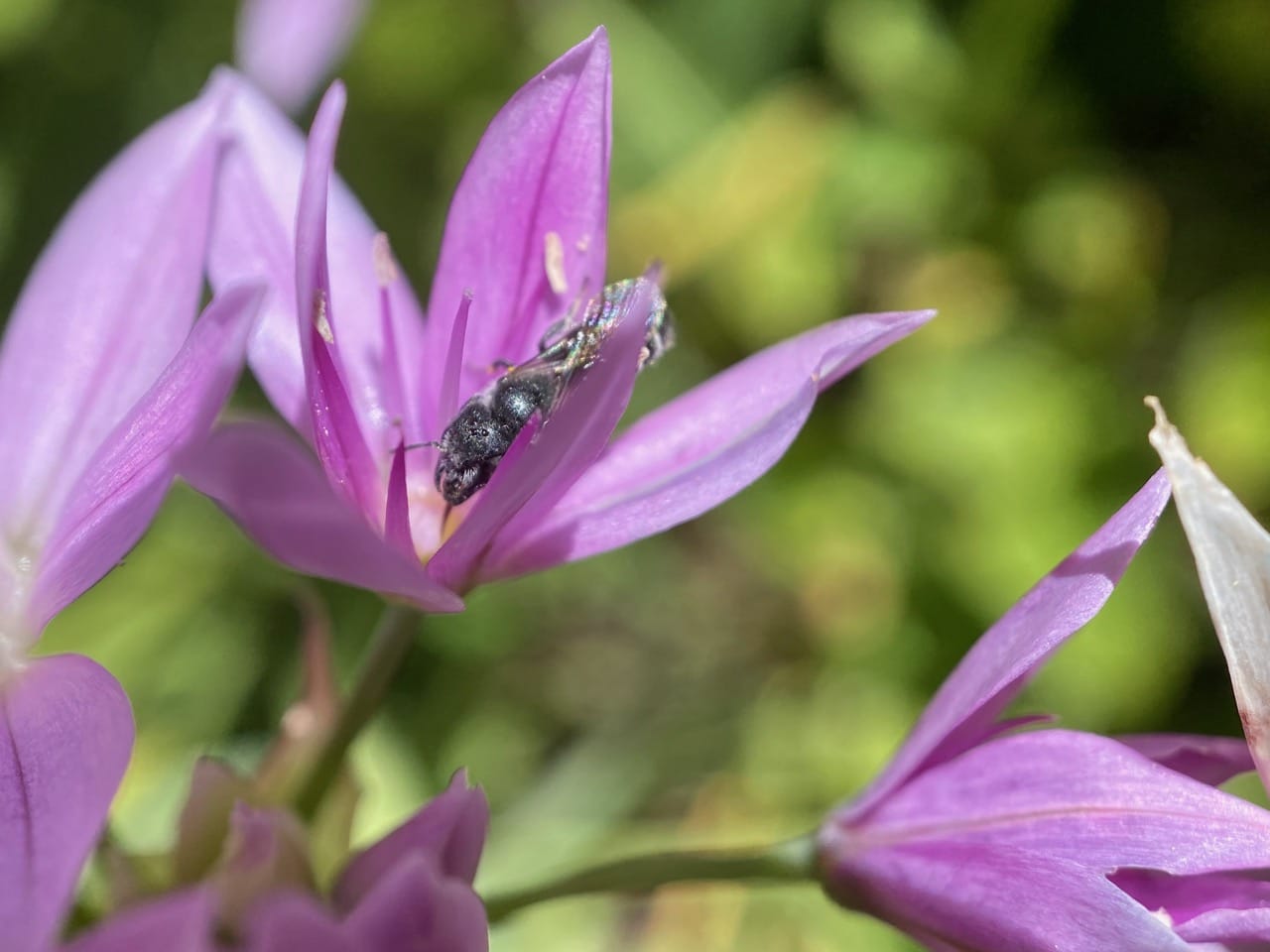
It seems to have large mandibles.
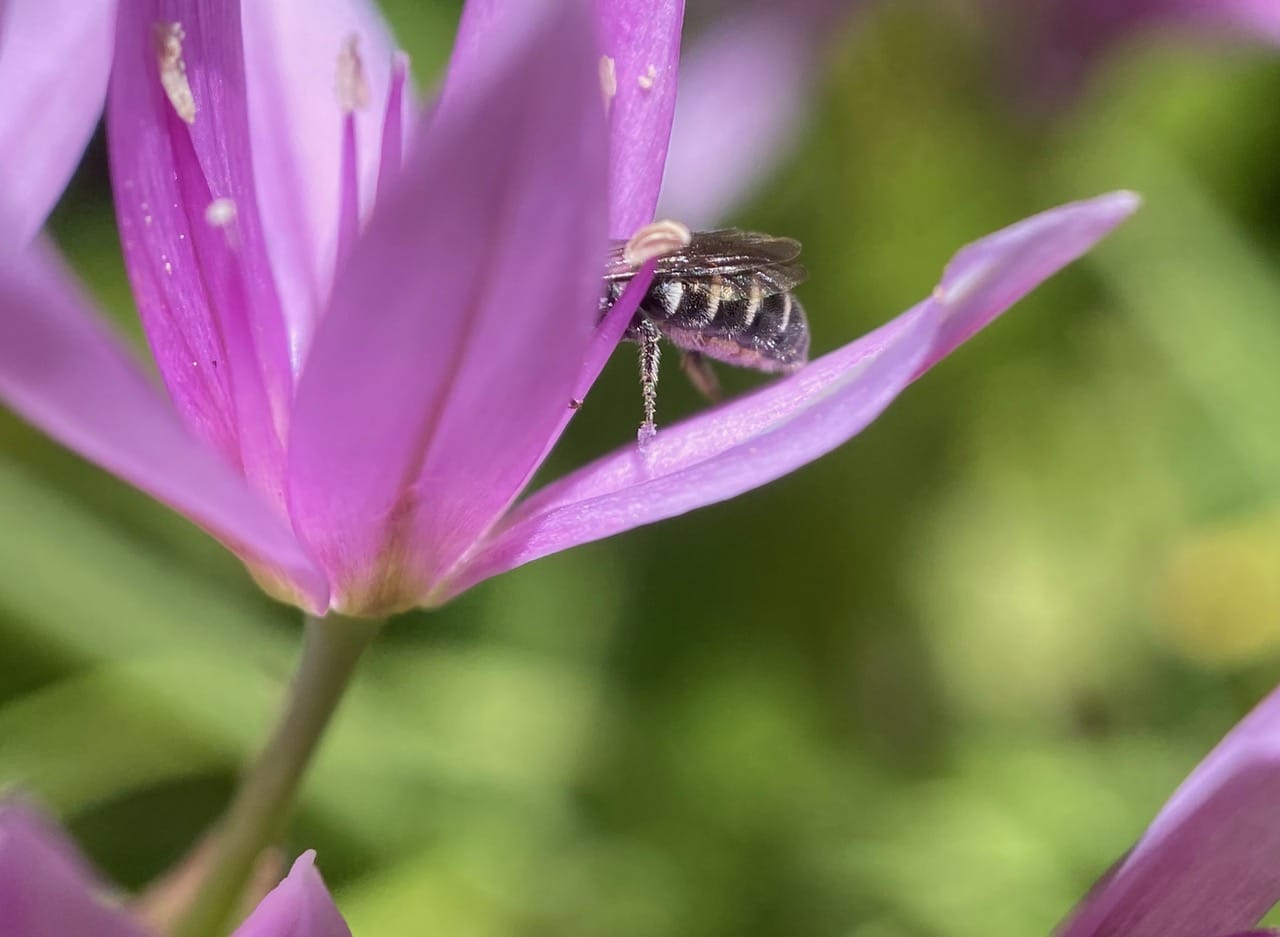
Ooh, I think the bee might belong to the family Megachilidae because it has no scopa on its hind leg, and instead the scopa (special pollen-collecting hairs) is located on the underside of its abdomen. Note the purplish pollen on the abdominal scopa.
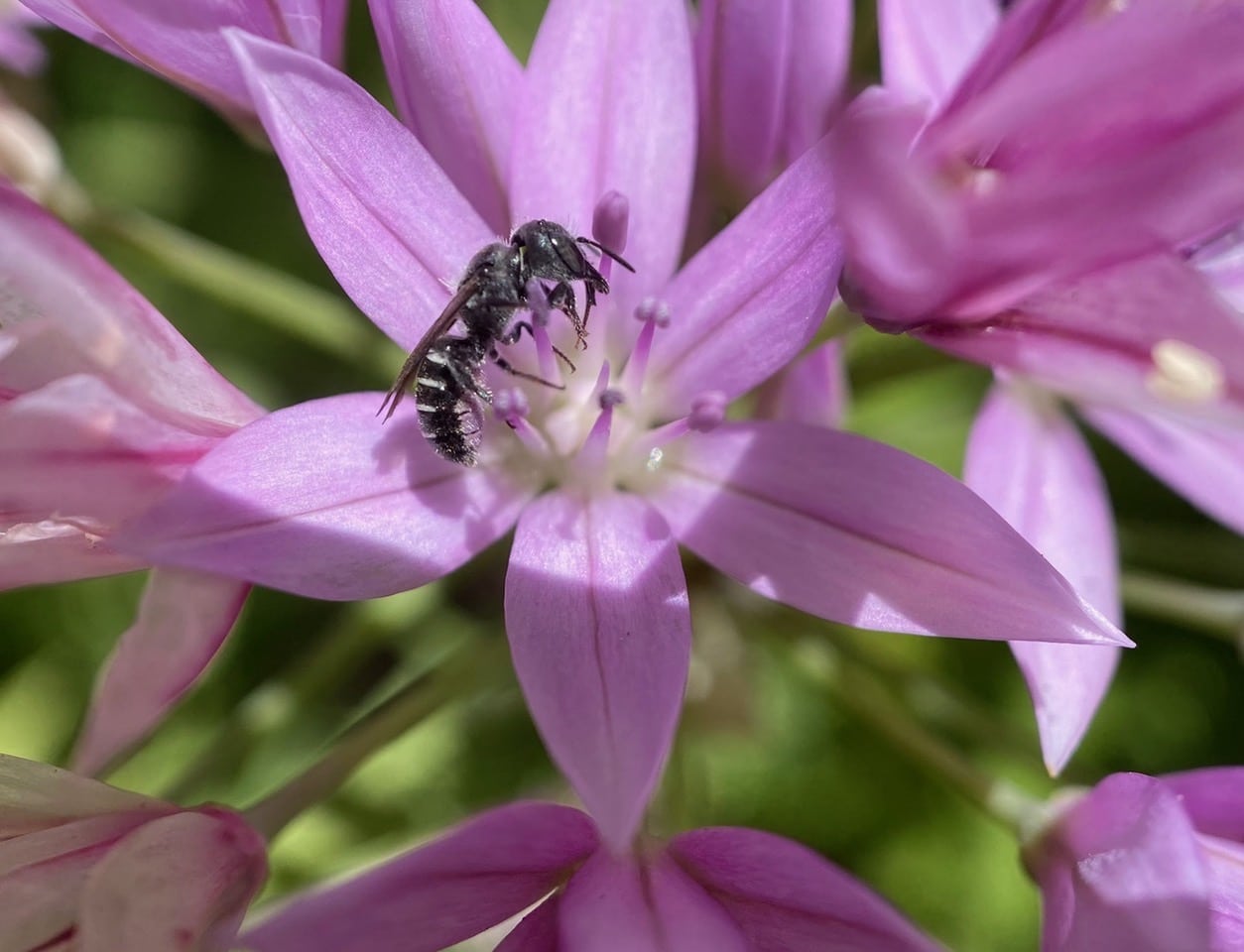
The bee is collecting pollen from the individual anthers one at a time. Note her large mandibles, purple pollen on the underside of her abdomen, and absence of scopa on her hind legs.
iNaturalist’s AI has identified the bee as an Armored-Resin Bee (family Megachilidae, genus Heriades, subgenus Neotrypetes). – a new one for me! Heriades is a genus of bees in the family Megachilidae. Fairly small and usually black, with abdomen curled under, they are found all over the world. Approximately 25 species are found in North and Central America, mostly in the western part of the continent. 11 spp. (all in subgenus Neotrypetes) are found in our area. Like other bees in the tribe Osmiini, these bees nest in cavities in wood excavated by other insects. They separate their nest cells with resin.
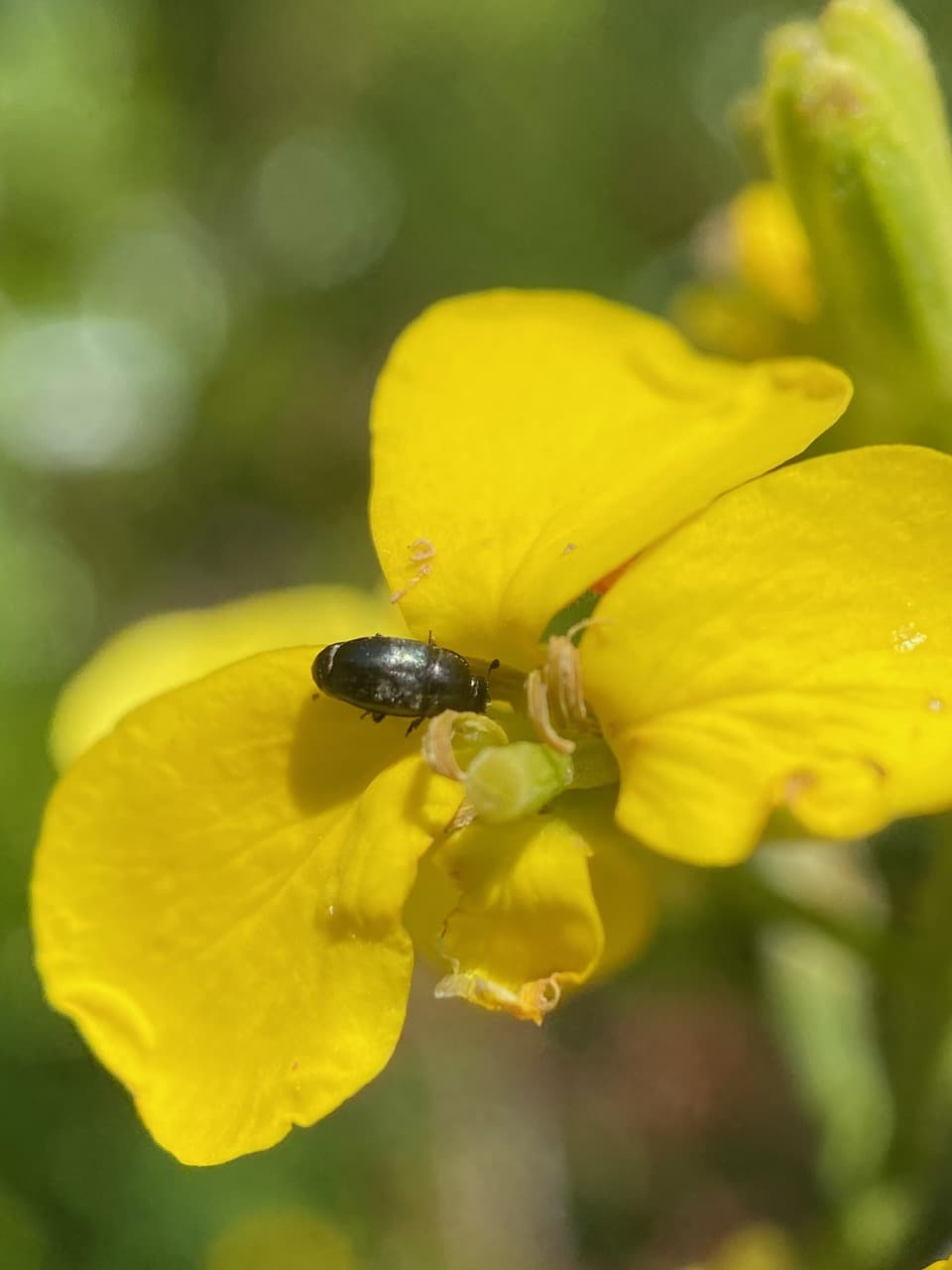
A Common Pollen Beetle, Brassicogethes aeneus (family Nitidulidae) is resting on a flower of Sand Loving Wallflower, Erysimum ammophilum.
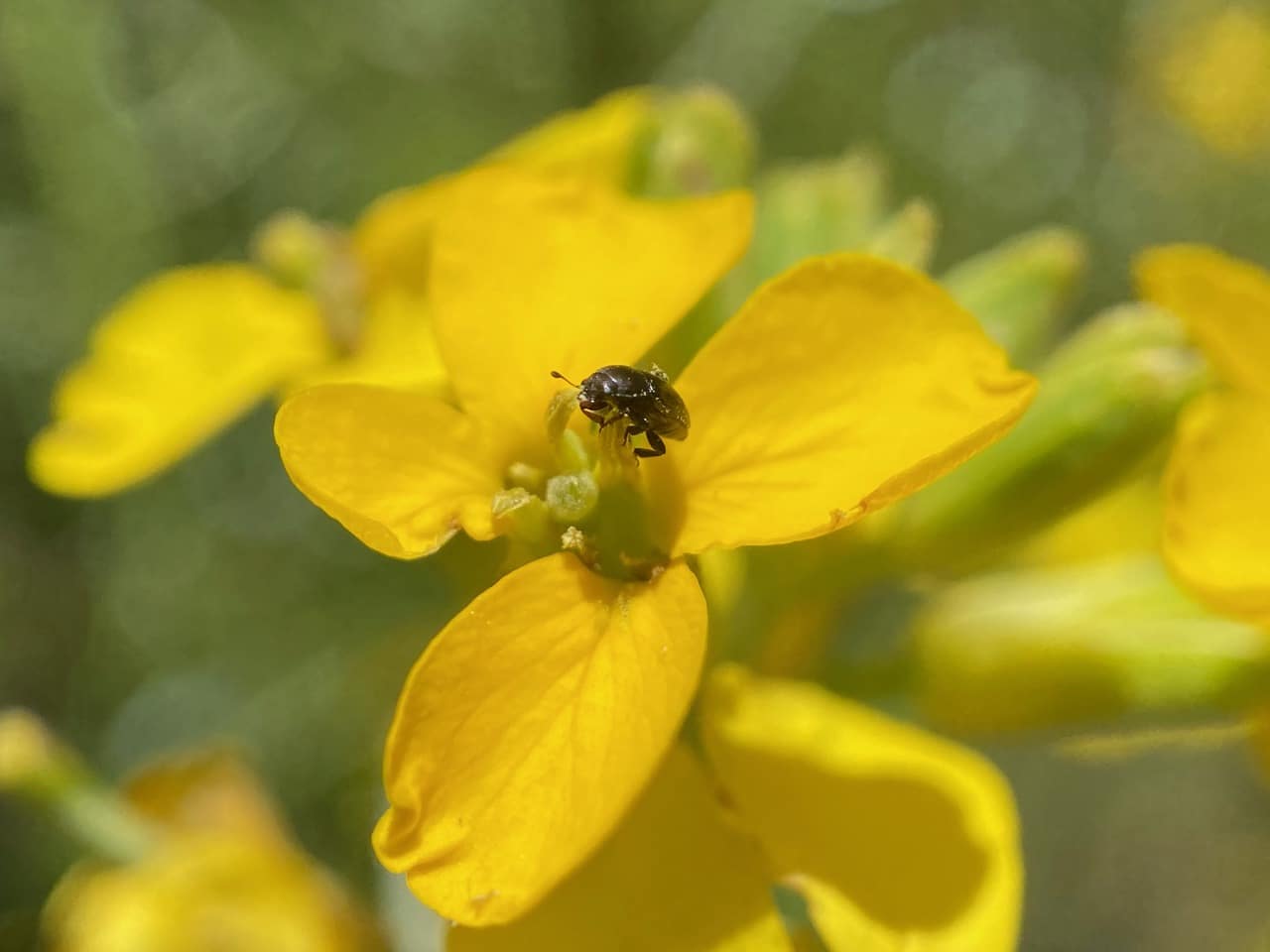
The Common Pollen Beetle, Brassicogethes aeneus (family Nitidulidae) is found in Europe, Northern Asia and North America. Adults are 2-3 mm long, black with a hint of metallic green, and have knobbed antennae. It is a known pest of oilseed rape. It is unclear whether the beetles contribute to the pollination of the crop. The female beetle lays its eggs in the flower buds of the host-plant and the larvae develop within the flowers. Both adults and larvae feed on the pollen and nectar in the flowers.
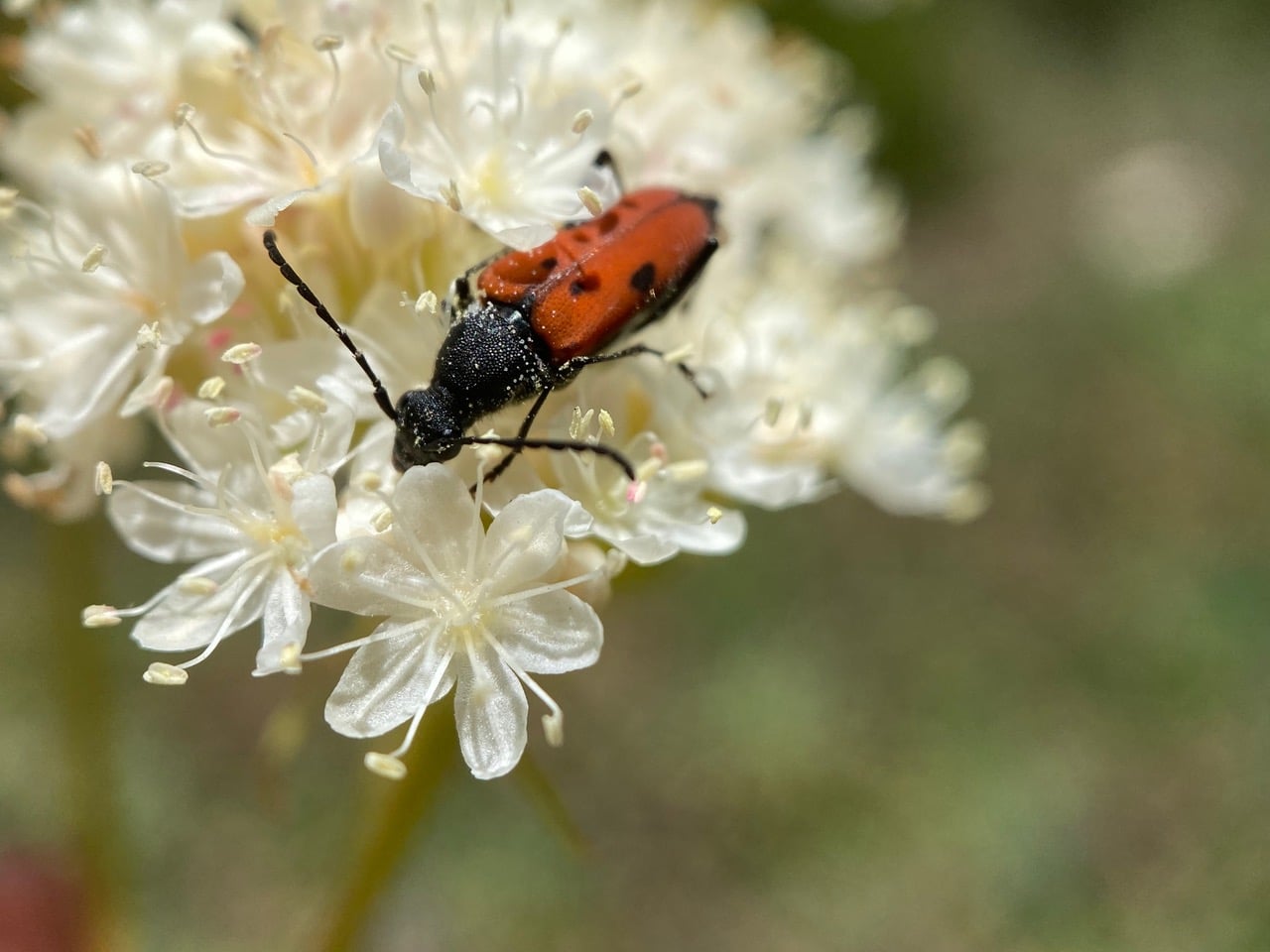
A female Dimorphic Flower Longhorn Beetle, Anastrangalia laetifica (family Cerambycidae, subfamily Lepturinae)is foraging on a flower umbel of Arrowleaf Buckwheat, Eriogonum compositum.
The flower Longhorn Beetles are usually found on flowers where they feed on pollen and nectar, and are considered pollinators. They have a particular affinity for the umbel flowers of the carrot family, Apiaceae. Most species of Flower Longhorn Beetles have a narrow body and very long legs. They also share the family trait with other Cerambycids of having very long antennae. The beetles spend their larval days as borers, just like other Cerambycids. However they are not considered pests, as they select trees that are stressed, dying, or dead.
The term “dimorphic” in the common name refers to the obvious visual differences between the sexes. Females are considerably larger, with 4 black spots on the bright red elytra, while the males are black or brown.
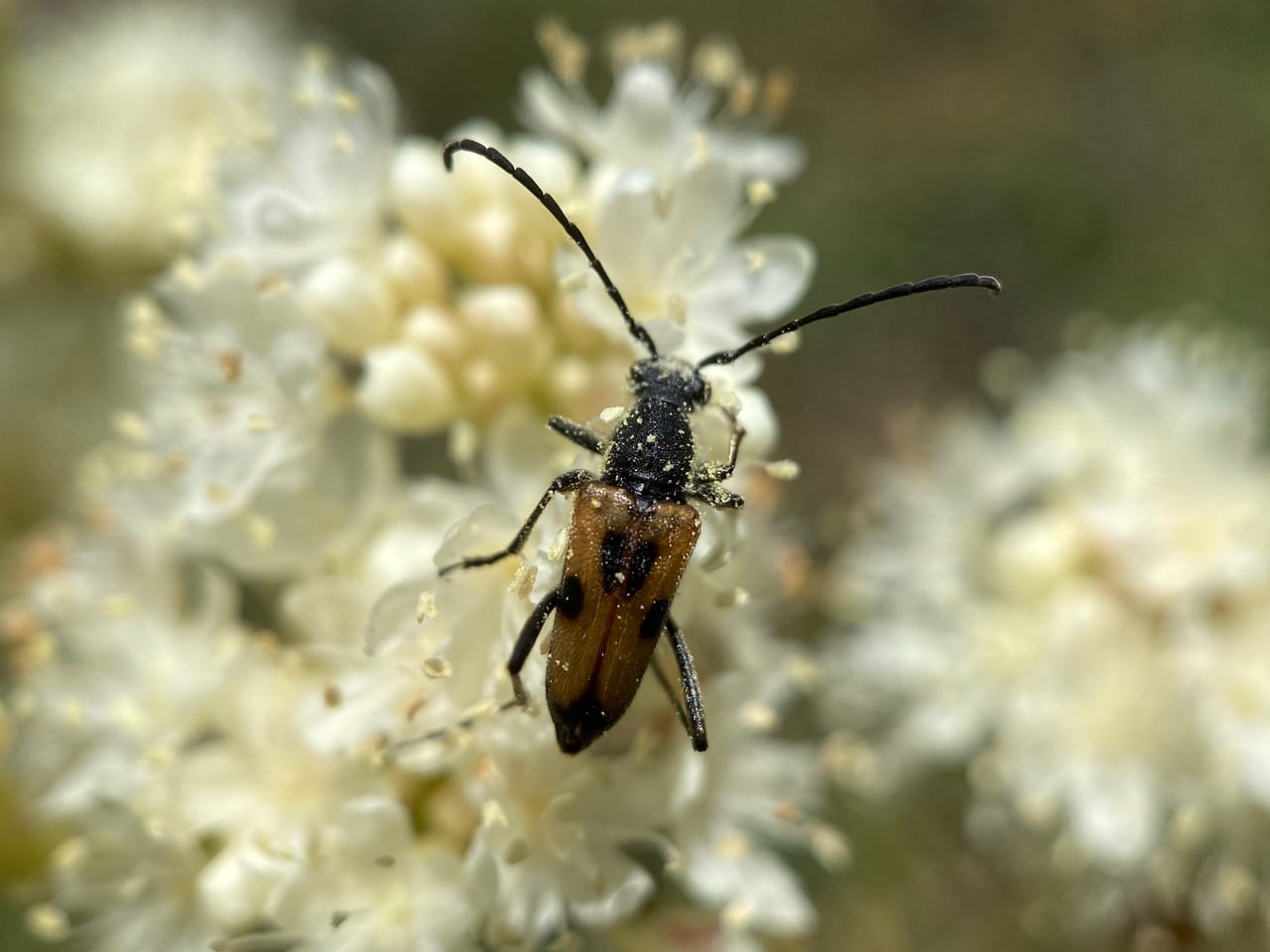
A male Dimorphic Flower Longhorn Beetle, Anastrangalia laetifica is foraging on an adjacent Arrowleaf Buckwheat, its body covered with pollen.
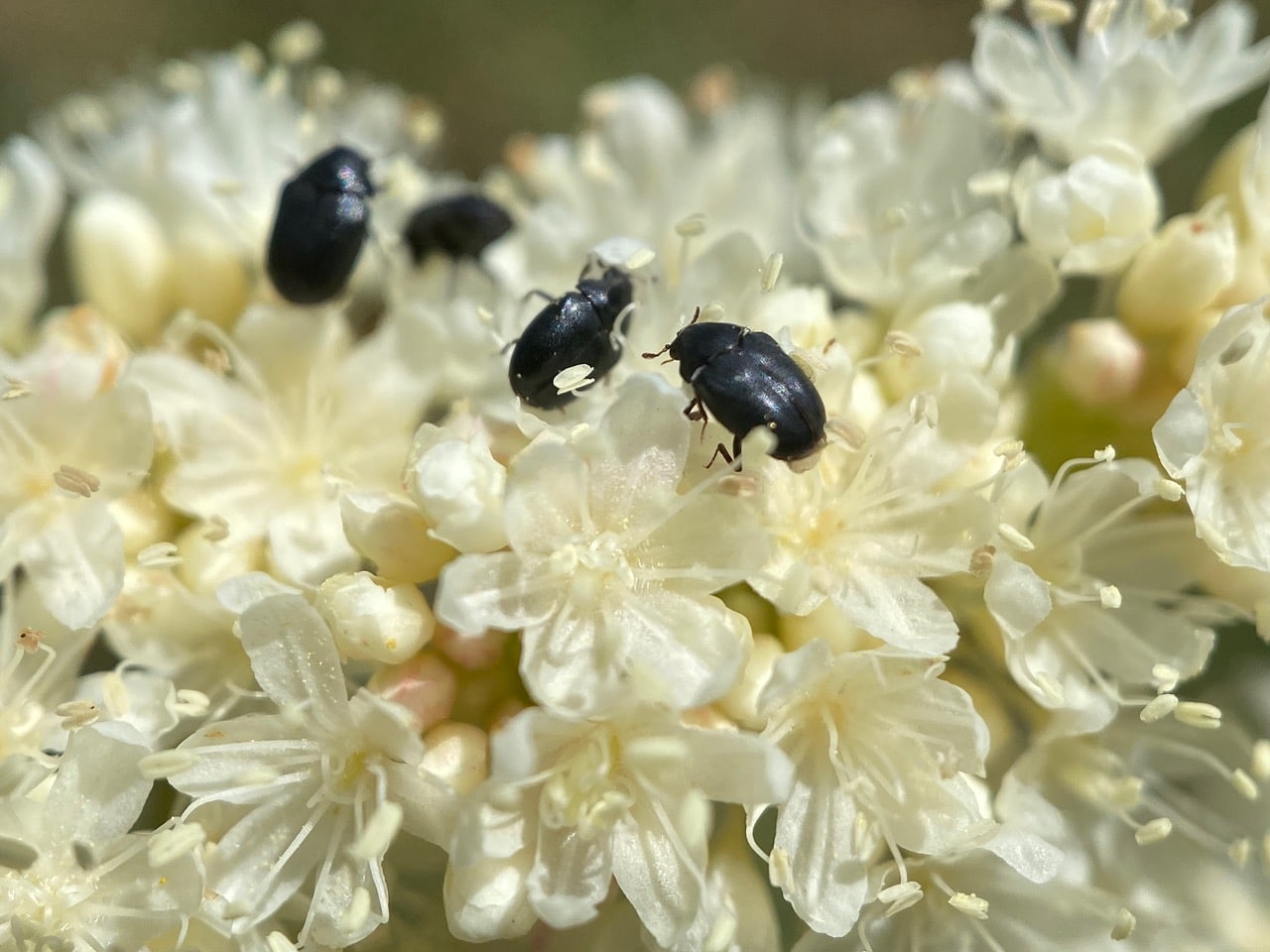
Numerous Dark Carpet Beetles, Orphilus subnitidus (family Dermestidae) are feeding on a flower umbel of Arrowleaf Buckwheat.
Dermestidae are a family of Coleoptera (beetles) that are commonly referred to as skin of carpet beetles. Ranging in size from 1 to 2 mm, the beetles typically have clubbed antennae that fit into deep grooves. Most Dermestids are scavengers that feed on dry animal or plant materials, such as skin or pollen, animal hair, feathers, dead insects and natural fibers. The larvae are used in taxidermy and by natural history museums to clean animal skeletons.
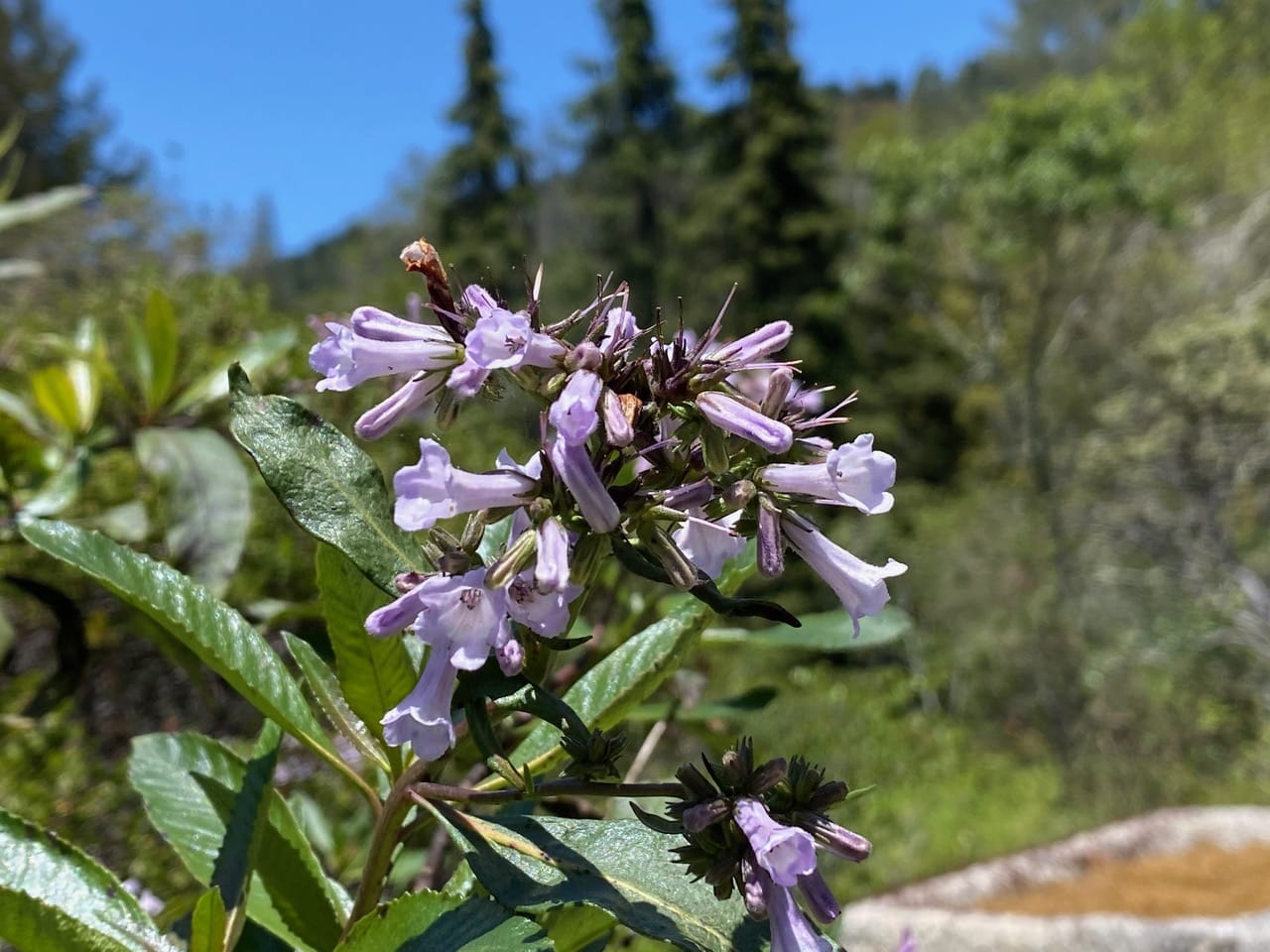
California Yerba Santa, Eriodictyon californicum is in bloom. The evergreen aromatic shrub in the family Boraginaceae is best known for its medicinal properties. The shrub is found in central to northern California and Oregon, where it grows in several types of habitat, including chaparral and forest. The inflorescence is a cluster of small, trumpet-shaped purplish flowers. Yerba Santa is a specific food and habitat plant for the Pale Swallowtail butterflies. It is a nectar source for various butterflies.
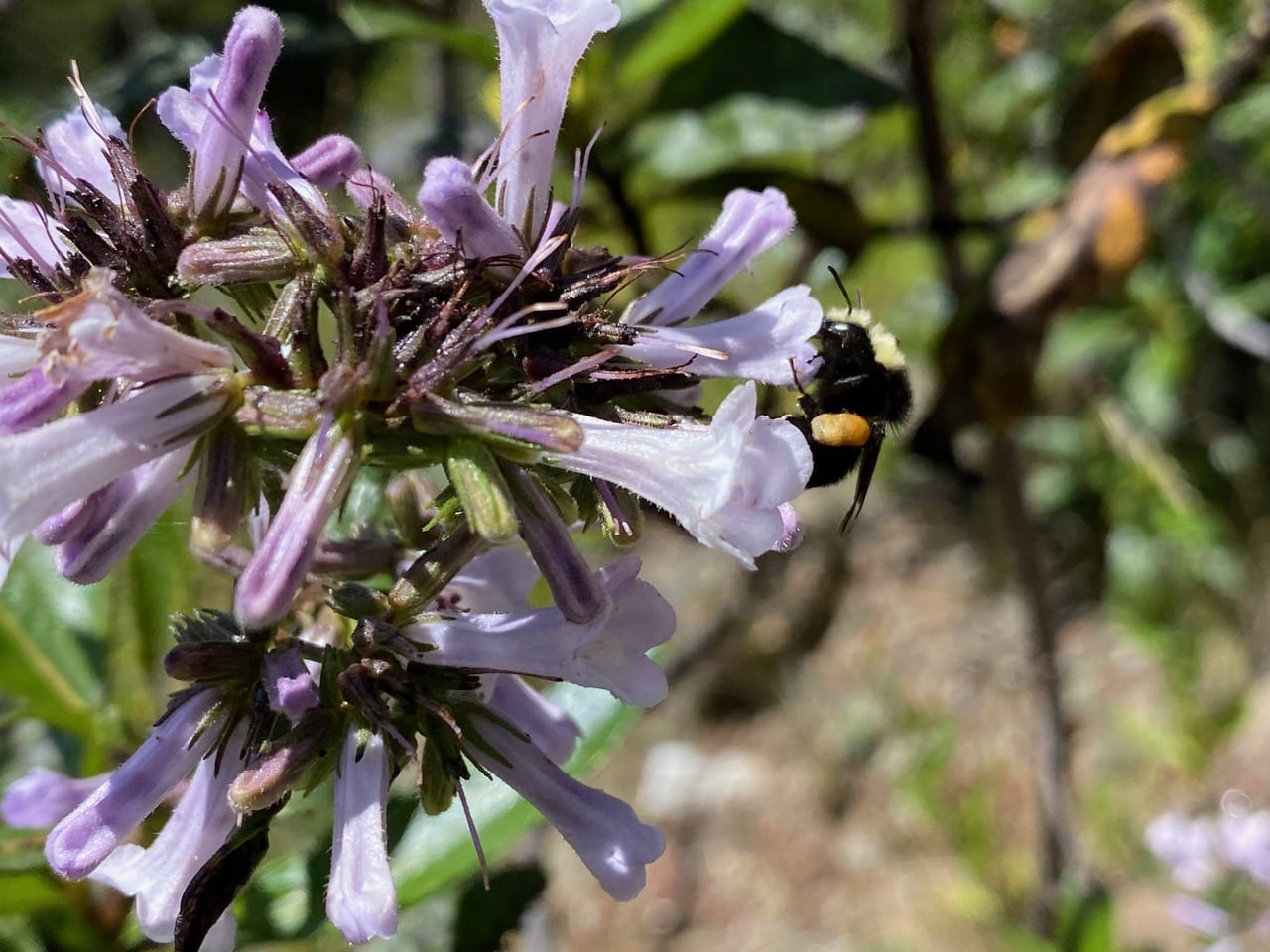
A Yellow-faced Bumble Bee, Bombus vosnesenskii (family Apidae) lands on a flower of Yerba Santa. Is her tongue long enough to reach the nectar at the base of the flower?

Apparently her tongue is long enough to reach the nectar of Yerba Santa. I watch in amazement as she probes several flowers, sticking her head through the flared opening. The reproductive parts of the flower are located where the tubular part of the flower ends. Pollen is probably dabbed on the bee’s head when it probes for nectar, and transferred to the next flower it visits.