

Pollinator Post 5/21/24 (1)
The bloom season at the Tilden Regional Botanic Gardens is progressing so fast I am always shocked by how much I have missed since the last visit.
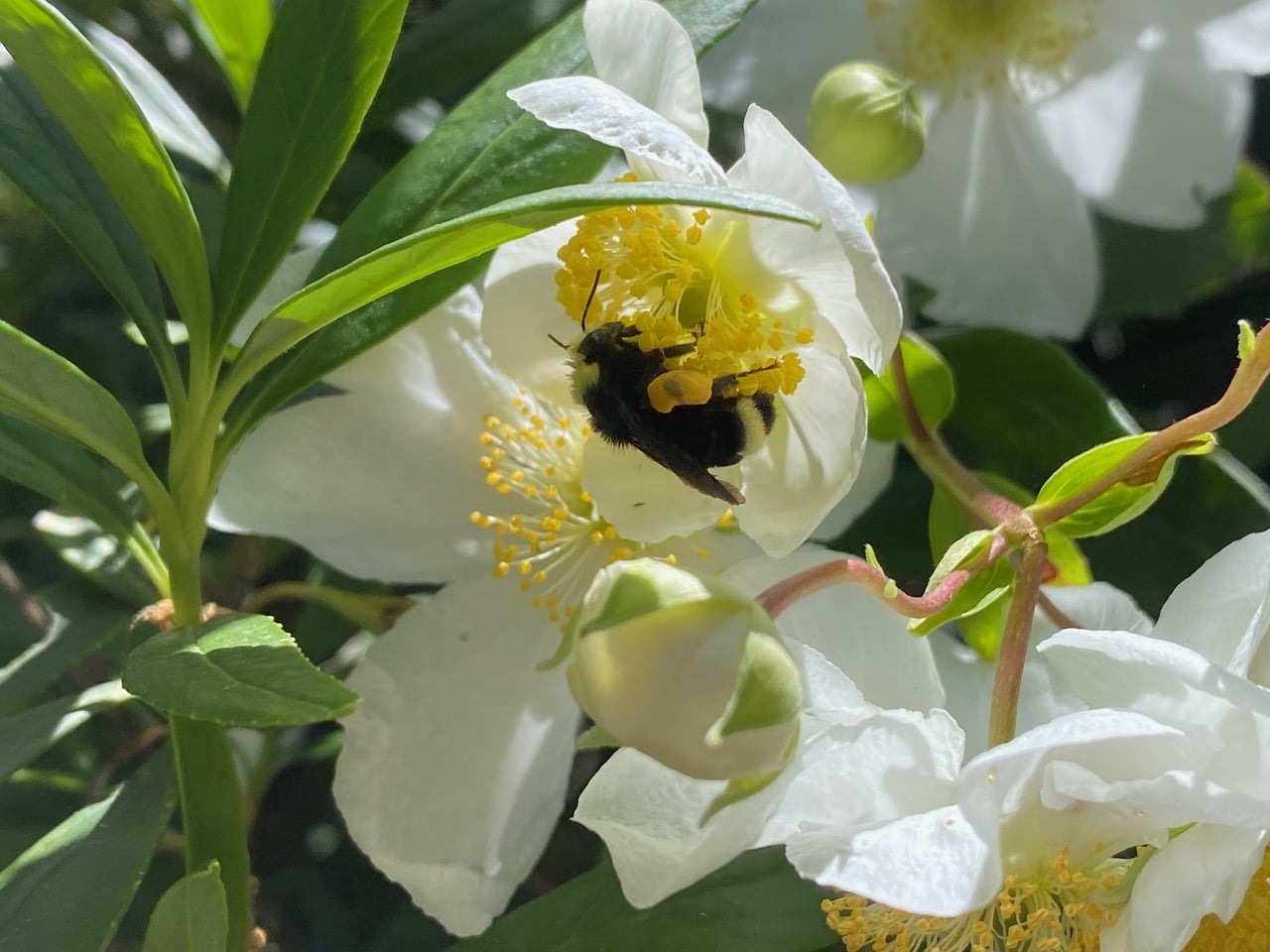
A Yellow-faced Bumble Bee, Bombus vosnesenskii (family Apidae) is collecting pollen from a flower of Bush Anemone, Carpenteria californica. There is so much pollen on those anthers on long filaments that all the bee has to do is run quickly through the stamens. The bee already has a sizable pollen load in her pollen baskets.
The pollen collecting apparatus in Apidae bees, which include honey bees and bumble bees, is commonly called a “pollen basket” or corbicula. This region is located on the tibia of the hind legs and consists of hairs surrounding a concave region. After the bee visits a flower, she begins to groom herself and brushes the pollen down toward her hind legs and packs the pollen into her pollen basket. A little nectar mixed with the pollen keeps it all together like putty, and the stiff hairs surrounding the pollen basket hold it in place. A honey bee can fly with a full pollen load that weighs as much as a third of her body weight.
.jpg)
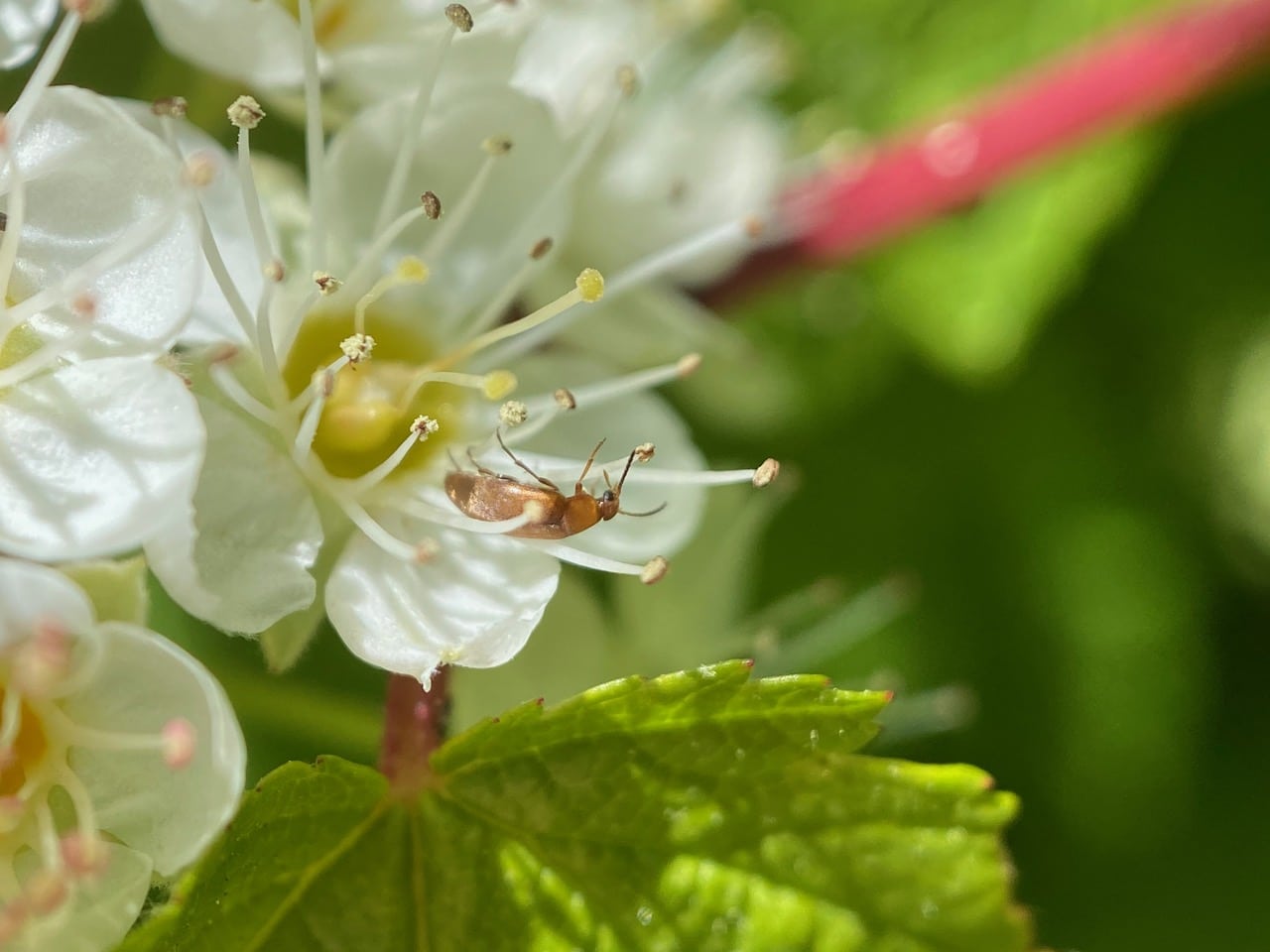
A False Flower Beetle (family Scraptiidae) is foraging for pollen on a flower of Pacific Ninebark, Physocarpus capitatus.
False Flower Beetles (family Scraptiidae) are commonly found in western North America. The adults are found on flowers, sometimes in large numbers, but are also found on foliage. The larvae are typically found under the bark of dead trees.
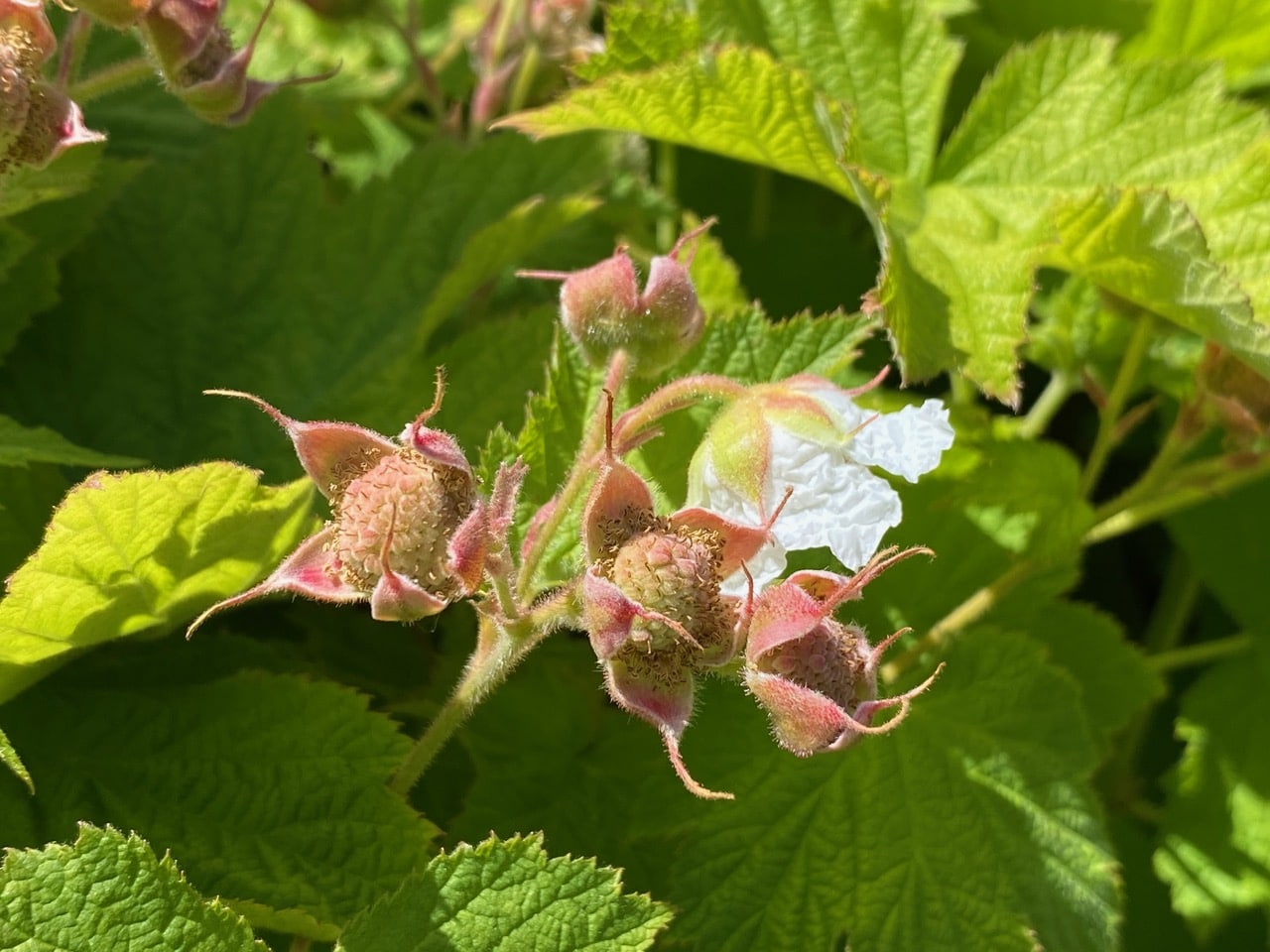
TheThimbleberry, Rubus parviflorus is approaching the end of its bloom. Most flowers are gone, replaced by pinkish fruits in darkening calyces.

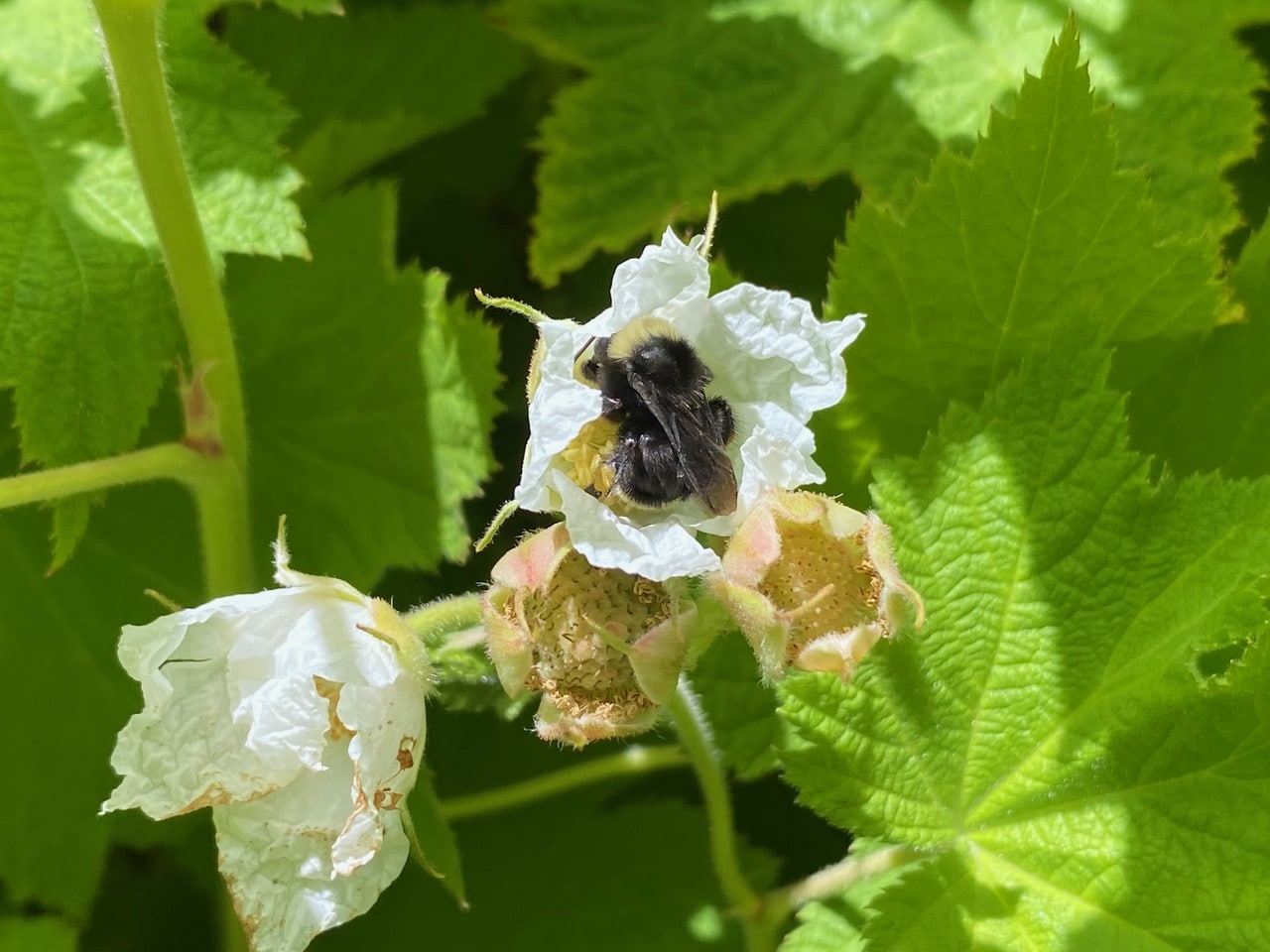
Yellow-faced Bumble Bees, Bombus vosnesenskii (family Apidae) are seeking out the last few flowers on the Thimbleberry.
Thimbleberry is native to western North America, typically found in forest clearings, appearing as an early part of the ecological succession in clear cut and forest fire areas.
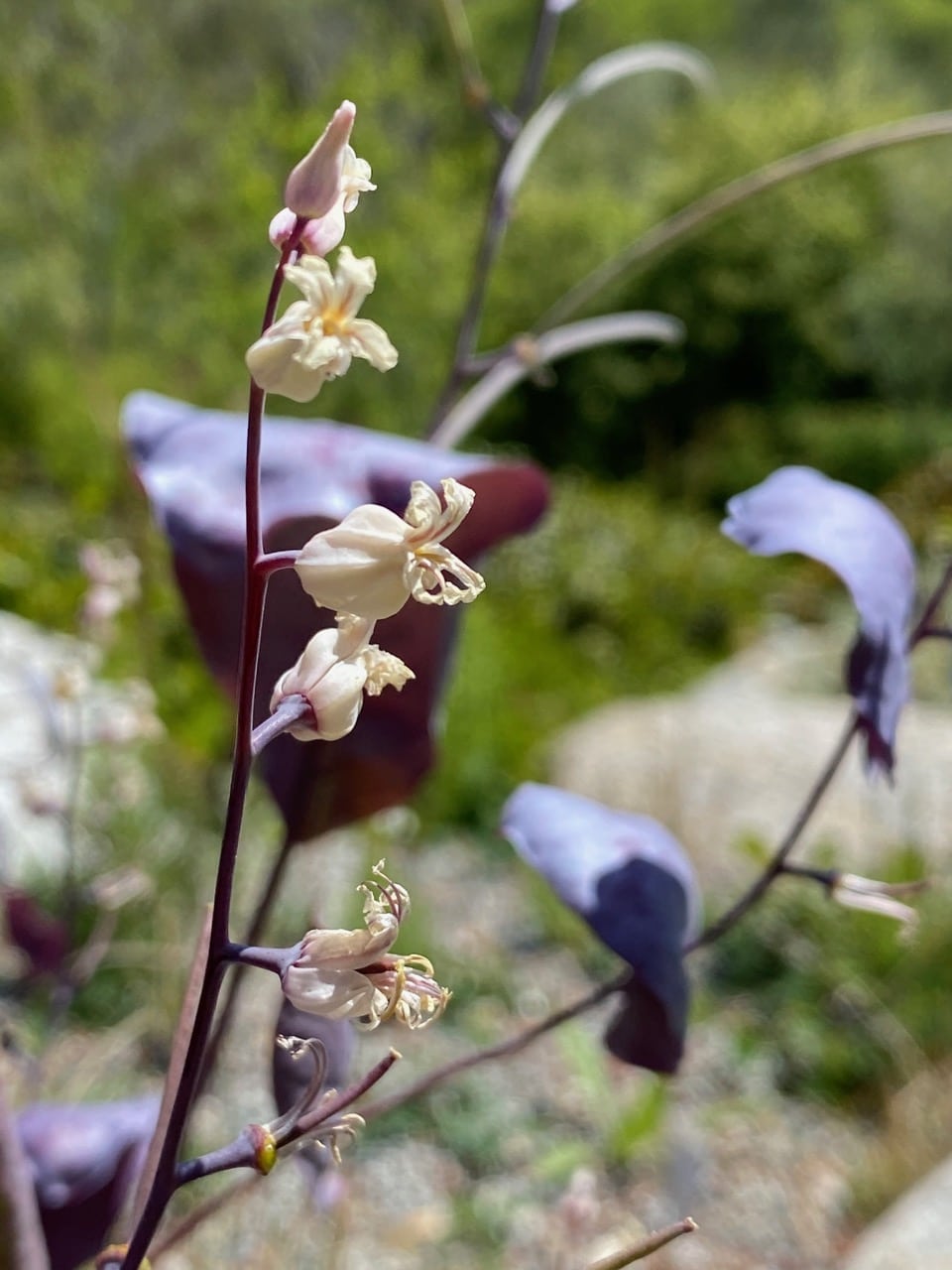
Bearing large, eye-catching purple bracts, the Farnsworth Jewelflower, Streptanthus farnsworthianus (family Brassicaceae) is in glorious bloom.
The species is endemic to California, where it is limited to the woodlands of the Sierra Nevada foothills. It is an annual herb producing a hairless, waxy, purple stem up to half a meter tall or more. Flowers occur at intervals along the upper stem with one or two purple bracts at the base of the raceme. Each flower has an urn-shaped calyx. Curling purple-veined white petals emerge from the tip of the calyx.
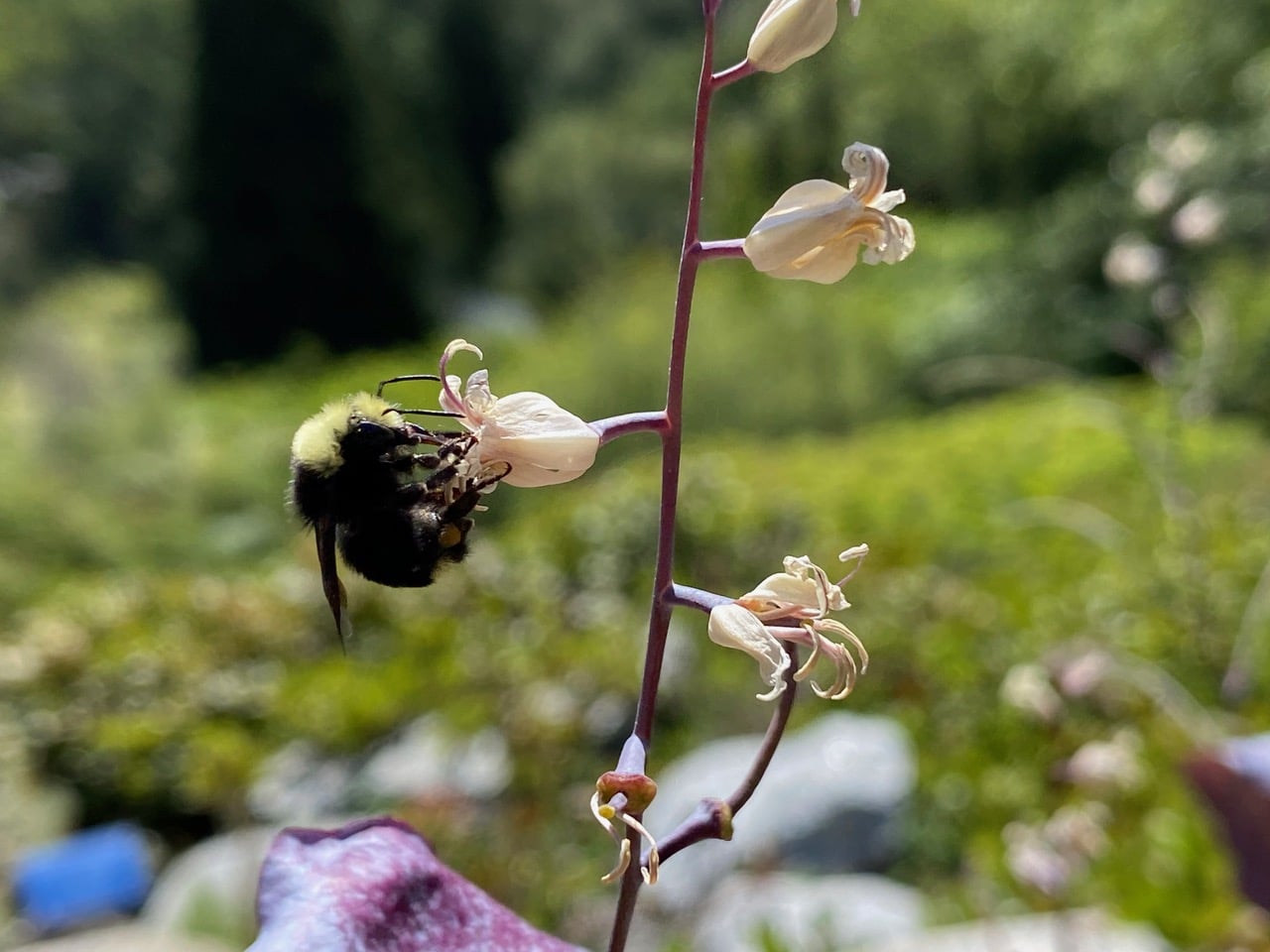
A Yellow-faced Bumble Bee lands delicately on the small flower of Farnsworth Jewelflower and probes for nectar with her long tongue. I wonder what other insects serve as pollinators for this flower in its natural habitat in the Sierra foothills.

What happened to the Blue-green Sharpshooter? There appears to be some injuries on its back, and the bug can’t fold its dark lower wings properly under its top wings.
The Blue-green Sharpshooter, Graphocephalus atropunctata (family Cicadellidae) is a hemipteran bug endemic to California. It is about 0.4 in long with blue or bluish-green color on the upper surface while the head, prothorax, legs and underside are lighter and yellow-green. Adult blue-green sharpshooters are long-lived. Both nymphs and adults share the peculiar habit of running sideways. There is usually only a single generation per year. The females mature during their first winter and lay eggs the following spring. The bugs can be found in the vegetation alongside streams and rivers, in locations with abundant soil moisture and some shade. They can be found on the leaves of native as well as cultivated ornamental plants and crops. More than 150 plants have been recorded as hosts.
The Blue-green Sharpshooter is known to be a carrier of Pierce’s Disease, a disease infecting grape vine, among other crops of economic importance. As the bugs feed, they inject plants with a bacteria that causes the disease, blocking the flow of water and nutrients through the xylem.
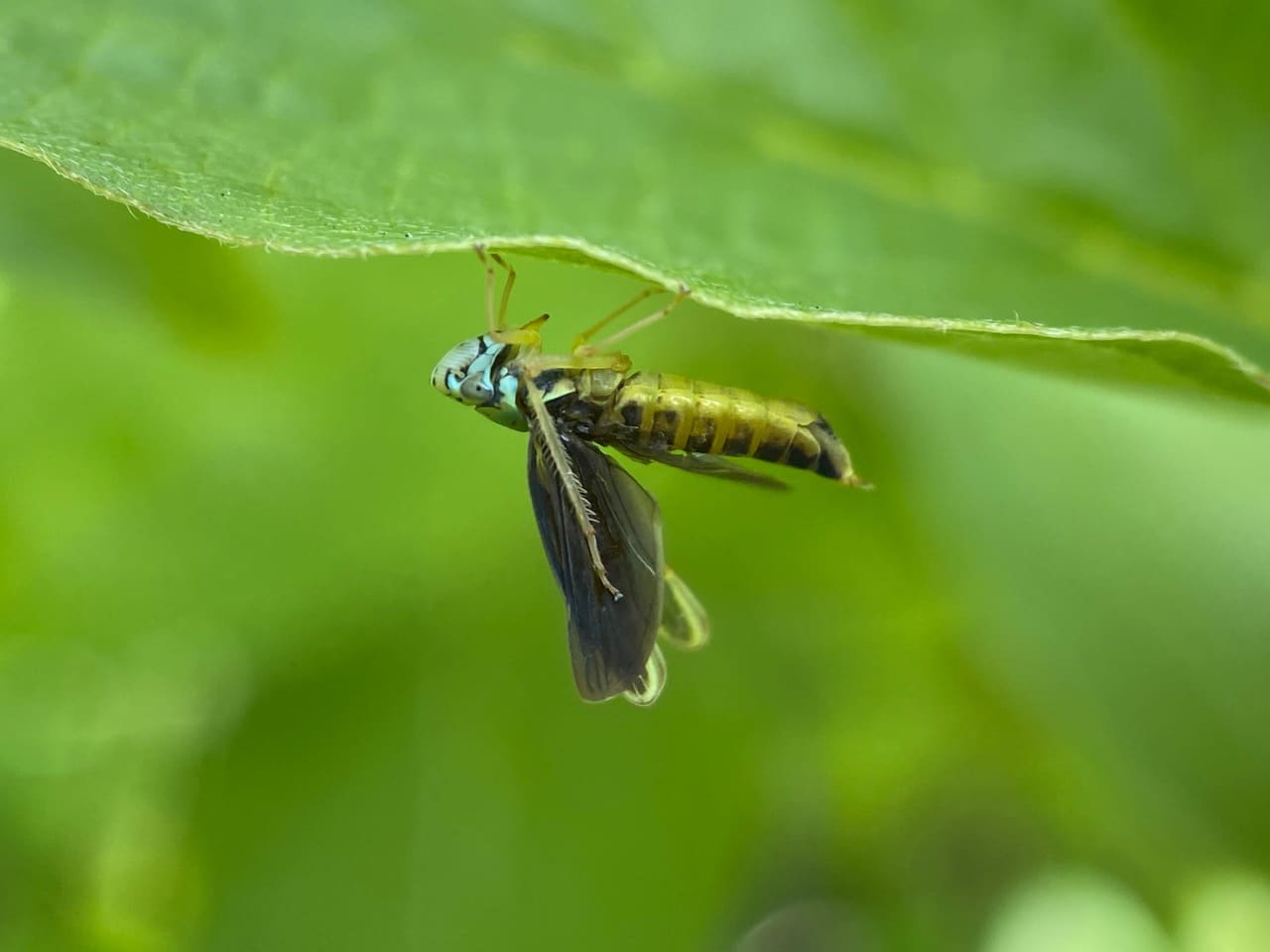
Moving over to the edge of the leaf, the Sharpshooter hangs upside-down and tries to groom and rearrange its wings using its long hind legs with the characteristic comb-like spines that define the family Cicadellidae.
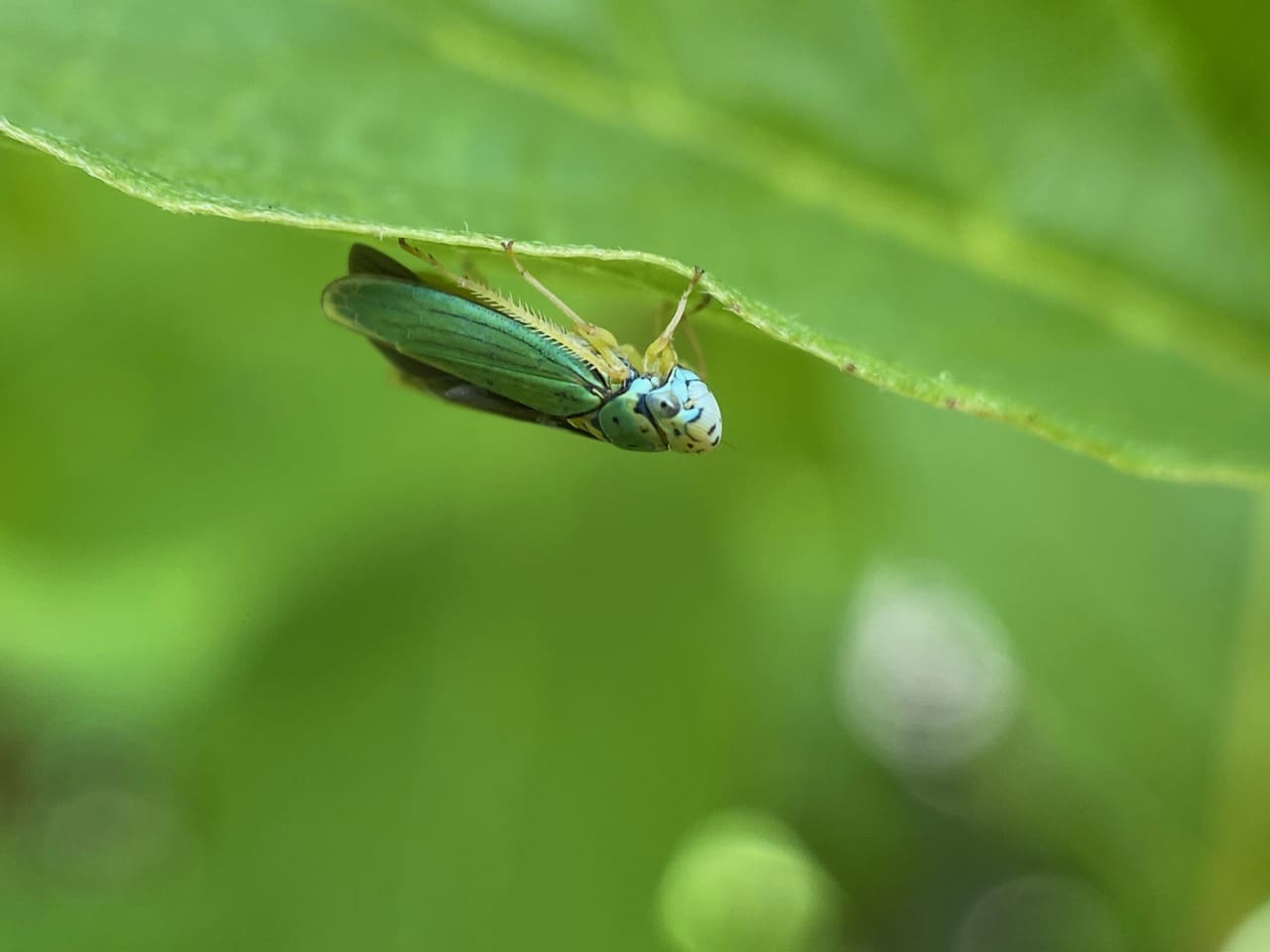
Leafhopper is the common name given to true bugs in the family Cicadellidae. The bugs are plant feeders that suck plant sap from grass, shrubs, or trees. Their hind legs are modified for jumping, and are covered with hairs that facilitate the spreading of a secretion over their bodies that act as a water repellent and carrier of pheromones. They undergo partial metamorphosis, and have various host associations, varying from very generalized to very specific.
While sucking the sap of plants, these insects excrete any extra sugar as a sticky liquid commonly called honeydew. This is a serious hazard for small insects, possibly sticking the insect to a leaf, or gluing its body parts together. Some bugs deal with this problem by shooting the waste away from their bodies at high speed. Leafhoppers have a unique solution – they make brochosomes, a proteinaceous material within a special gland in their guts, and secrete them by the billions in a milky anal fluid, and spread them over their bodies using their legs. When the fluid dries, the brochosomes form a powdery coating, and the leafhoppers spread them even further using comb-like hairs on their legs. The brochosomal coat is superhydrophobic, and acts as a water-repellent, non-stick coating protecting the leafhoppers from their own sticky exudates.
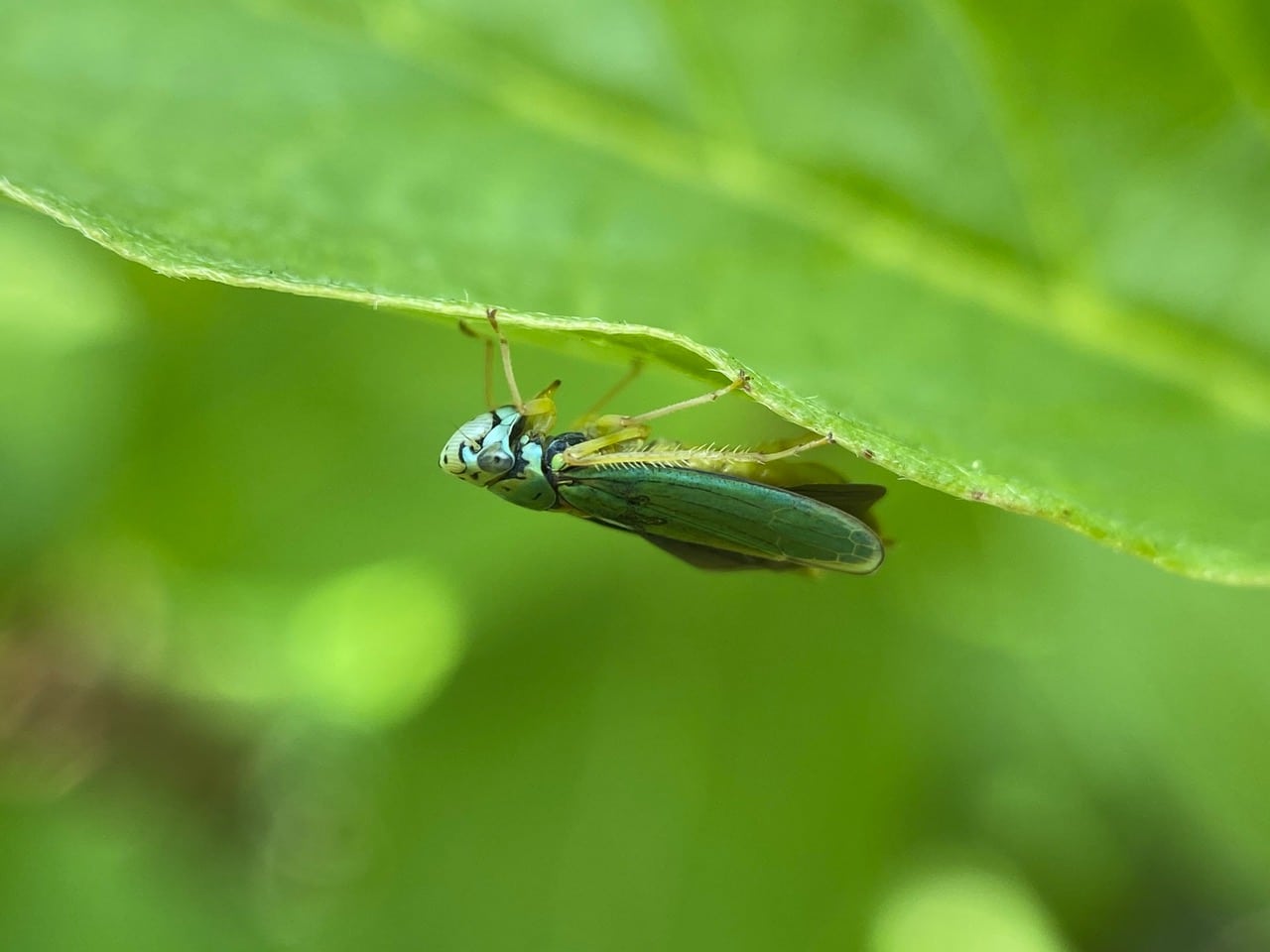
Sharpshooters feed on the plant’s xylem, extracting small amounts of nutrients in large volumes of water, forcing them to eliminate up to 300 times their body weight in liquid waste each day. To accomplish this, the sharpshooters employ an energy-efficient mechanism called super propulsion to expel their urine using an anal catapult.

The Sharpshooter continues to work vigorously on its damaged wings. Ooh, we can actually see its anal catapult at the tip of its abdomen!

The California Lady’s Slipper Orchid, Cypripedium californicum is in peak bloom, with oddly shaped flowers hanging like little white lanterns on erect stalks.
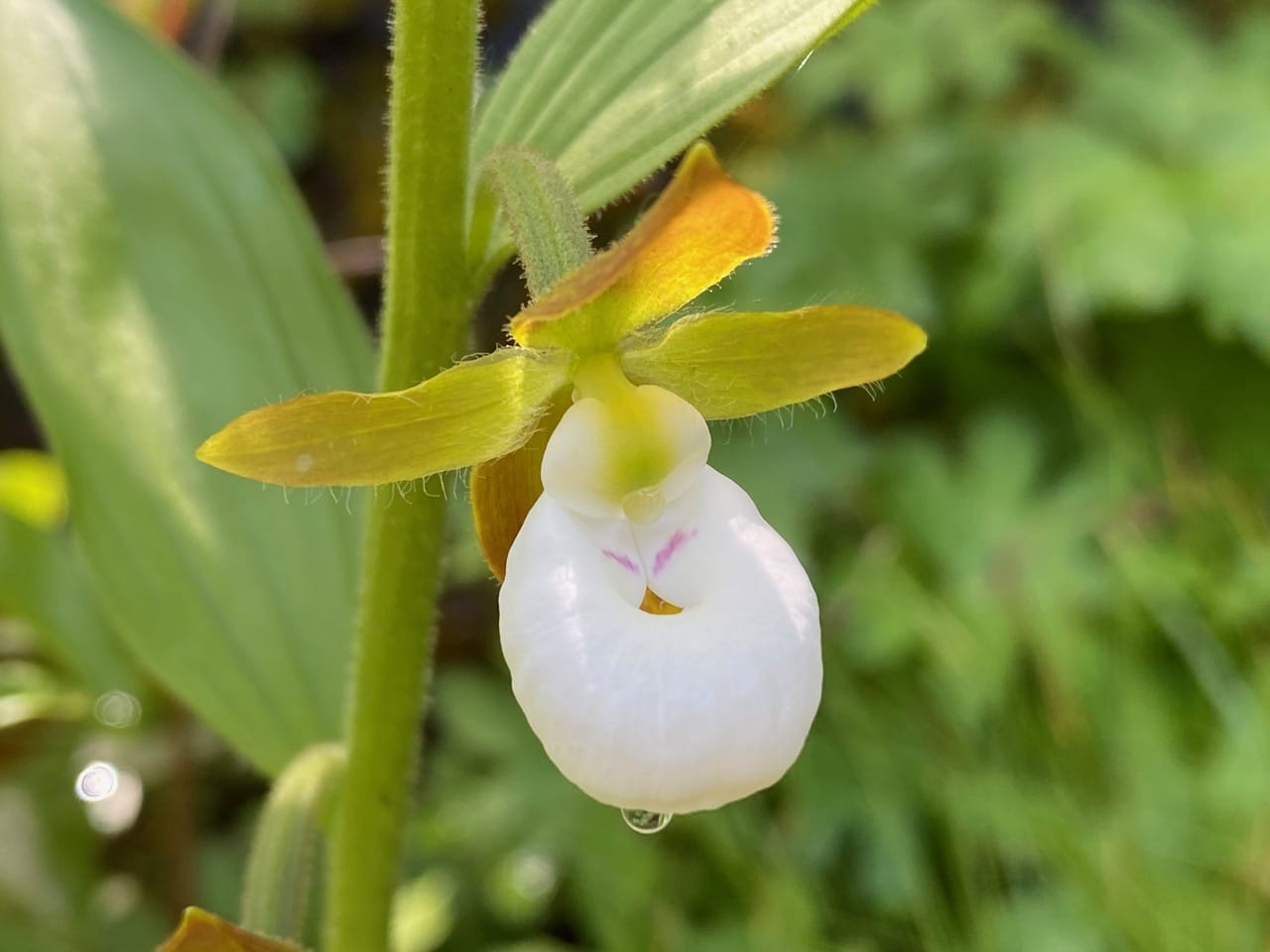
Each of the California Lady’s Slipper flower has 3 sepals – the lower two are united and the upper sepal is petal-like. There are 3 petals – two lateral petals are green to yellow-green. The bottom petal, called the “lip” is pouch-like, with occasional pink spots.
Like most orchids, lady’s slipper orchids engage in deceit pollination, offering no rewards (nectar) to their pollinators. Instead the flower sets up an obstacle course for its pollinator to navigate. The California Lady’s Slipper Orchid is pollinated by a native Small Carpenter Bee, Ceratina acantha (family Apidae). The flower attracts bees by scent and tricks them into entering a one-way door into its pouch. Once inside, and with no nectar reward, the bee must escape up through a tunnel at the back of the pouch where a row of hairs provides a “ladder” for the bee to climb out. A cap-like structure awaits there that scrapes off any pollen the bee is carrying from another flower. Further up there is an exit where the anthers are positioned to give the bee a parting gift of pollinium (packet of pollen). Orchid pollen is packaged into paired sacs called pollinia that come with a stalk and a sticky pad. These are planted firmly on the bee’s thorax as it flies out of the flower. The bee gains its freedom only to be lured by the irresistible fragrance of the next lady’s slipper.

Side view of a California Lady’s Slipper Orchid flower showing the overhanging cap-like structure above the pouch hiding an anther. This is the exit the confused little bee will take to escape from the flower. In the process it makes contact with the anther and inadvertently picks up a pair of pollinia.
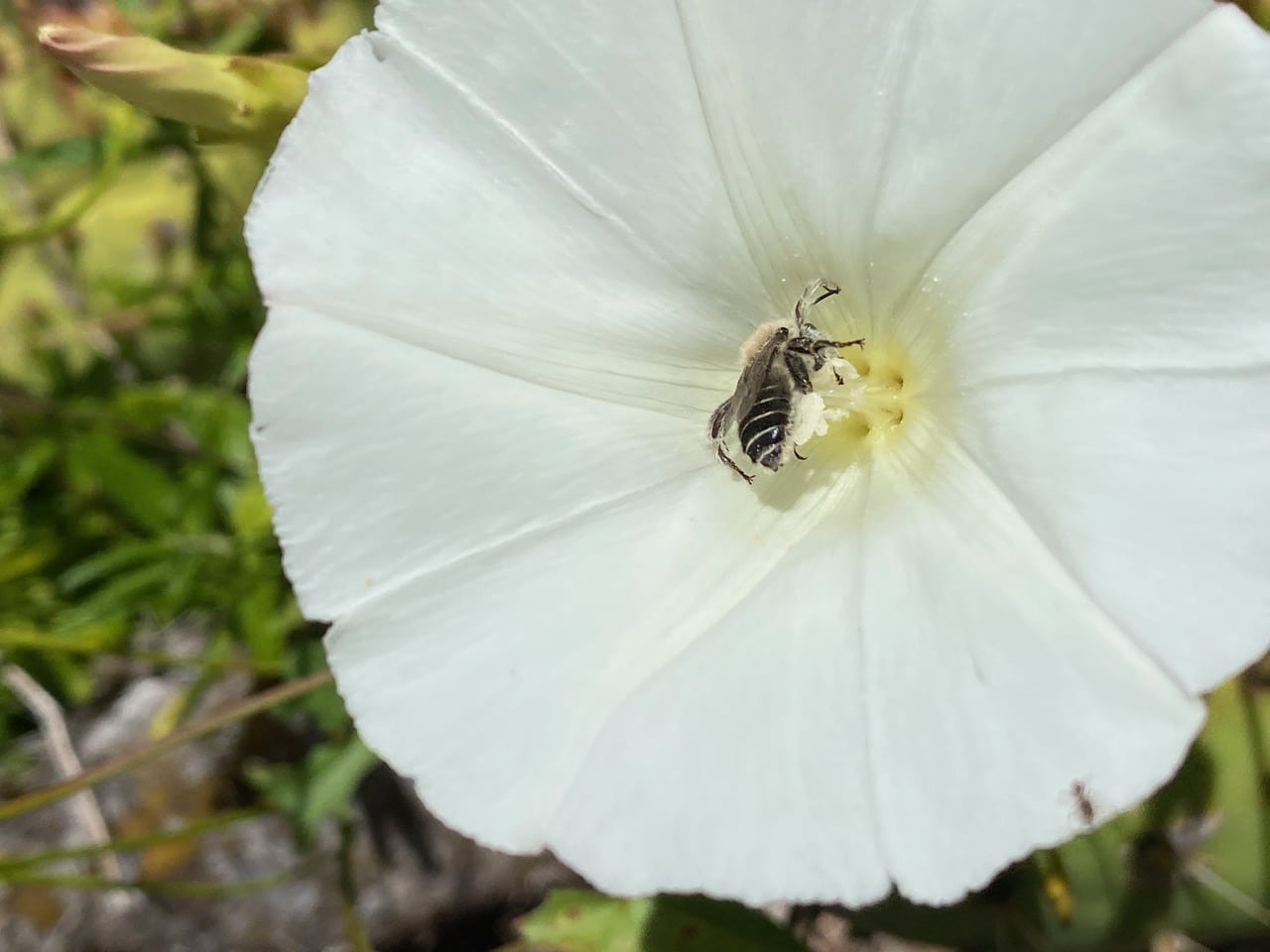
A few fast-flying bees keep coming back to the flowers of the Morning Glory. Waiting by a flower, I finally get a picture of one of them as she lands on the stamens.
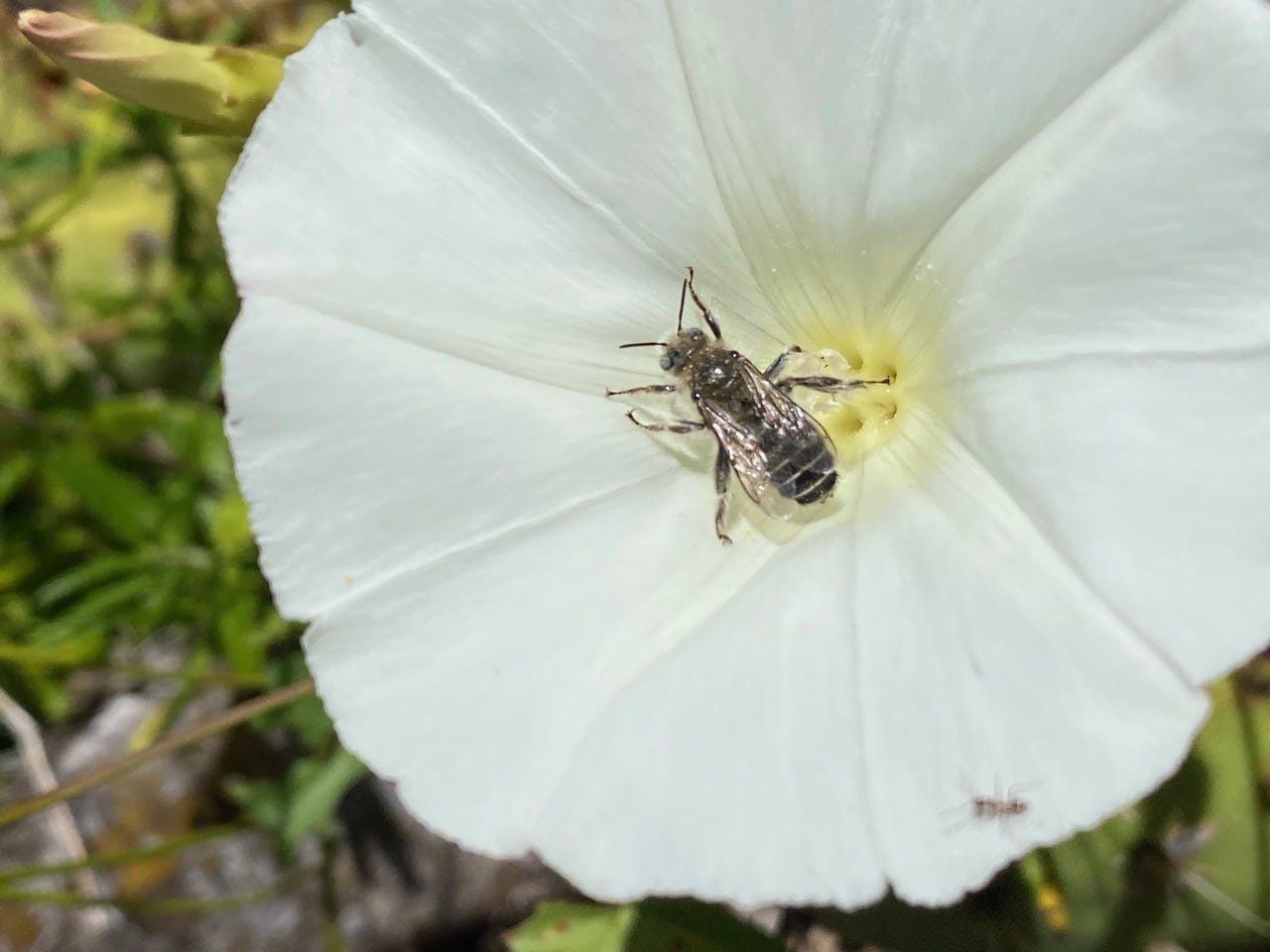
The bee does not look familiar to me. iNaturalist’s AI has identified it as the Bindweed Turret Bee, Diadasia bituberculata (family Apidae).
Diadasia is a genus of bees in the family Apidae. Species of Diadasia are oligolectic, specialized on a relatively small number of plant species. Their host plants include asters, bindweeds, cacti, mallows, and willowherbs. Diadasia bituberculata, also known as digger bees or chimney bees, are specialists on bindweed, commonly known as Morning Glory. The females use pollen only from one plant species and are active through the late spring and early summer. Native to California, the Bindweed Turret Bees dig underground nests, many with structures called turrets at the nest entrance. The females provision the nests with pollen from Bindweed, and then lay their eggs inside.

Its body dusted with pollen, Black-tailed Bumble Bee, Bombus melanopygus (family Apidae) crawls out of a Douglas Iris flower, Iris douglasiana.
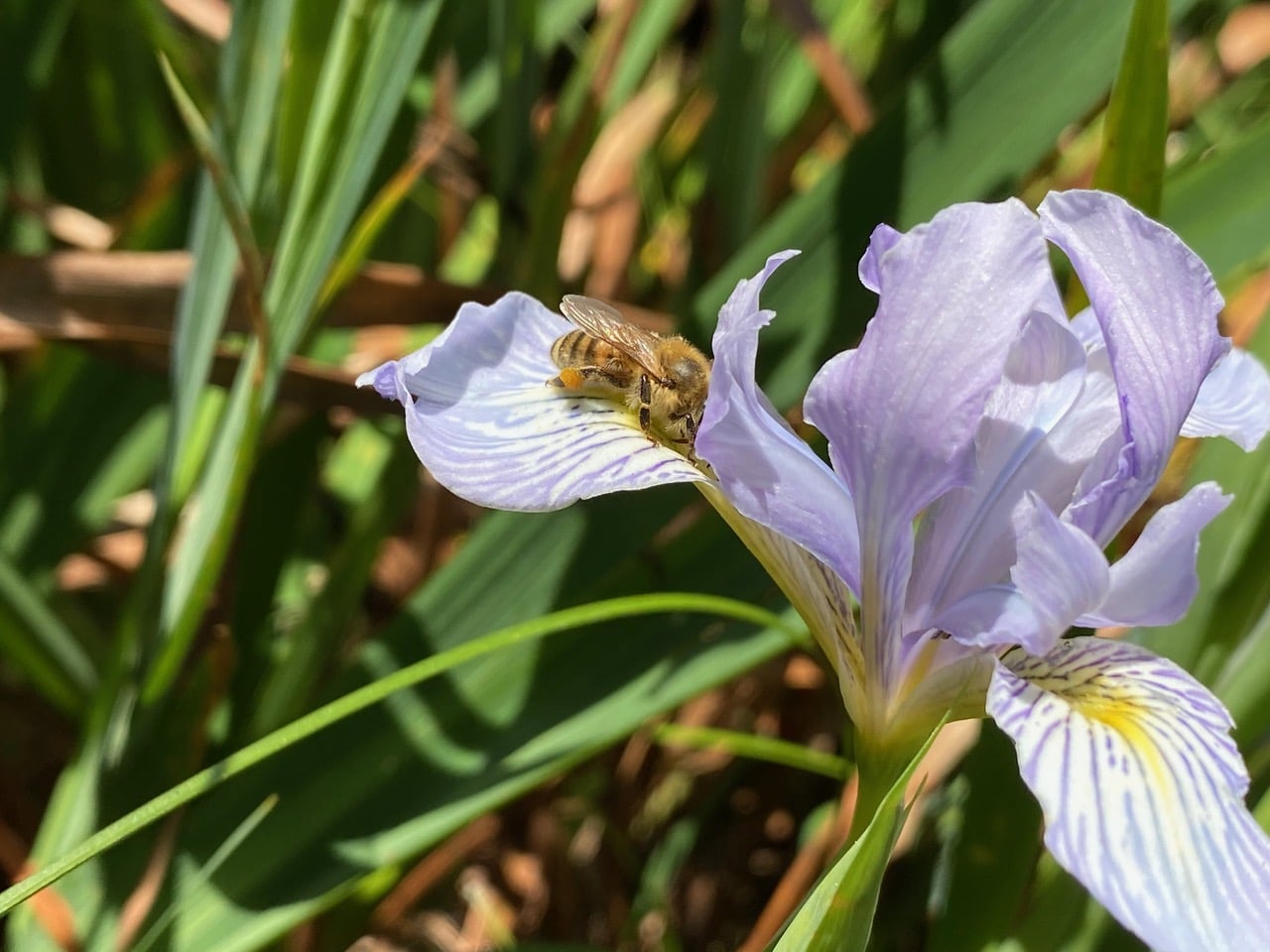
Guided by the nectar guides on a sepal of a Douglas Iris, a Honey Bee, Apis mellifera (family Apidae) is descending the corridor that is created by the sepal and the petaloid style above it. The petaloid style is a style that resembles a petal. So where is the stigma? It is situated on the style near the bee’s head in this picture.
 See the pointed, triangular piece of tissue that protrudes from the petaloid style? That is the flower’s stigma. As an insect enters the flower following the nectar guides on the sepal, its head or back is likely to brush against the overhanging stigma, depositing the pollen that it is carrying from a previously visited flower. As the bee backs out of the flower later, its back brushes against the overhanging stigma again, but this time on the other surface which is not receptive to pollen. This prevents pollination by the flower’s own pollen. Flowering plants go to great lengths to prevent self-pollination.
I lift up the petaloid style to reveal the pair of anthers that await the insect as it descends the corridor in search of nectar. As the insect lowers its head to sip nectar at the base of the flower, its head and back invariably rub against the anthers, picking up pollen. What a clever arrangement of flower parts to ensure efficient pollination!
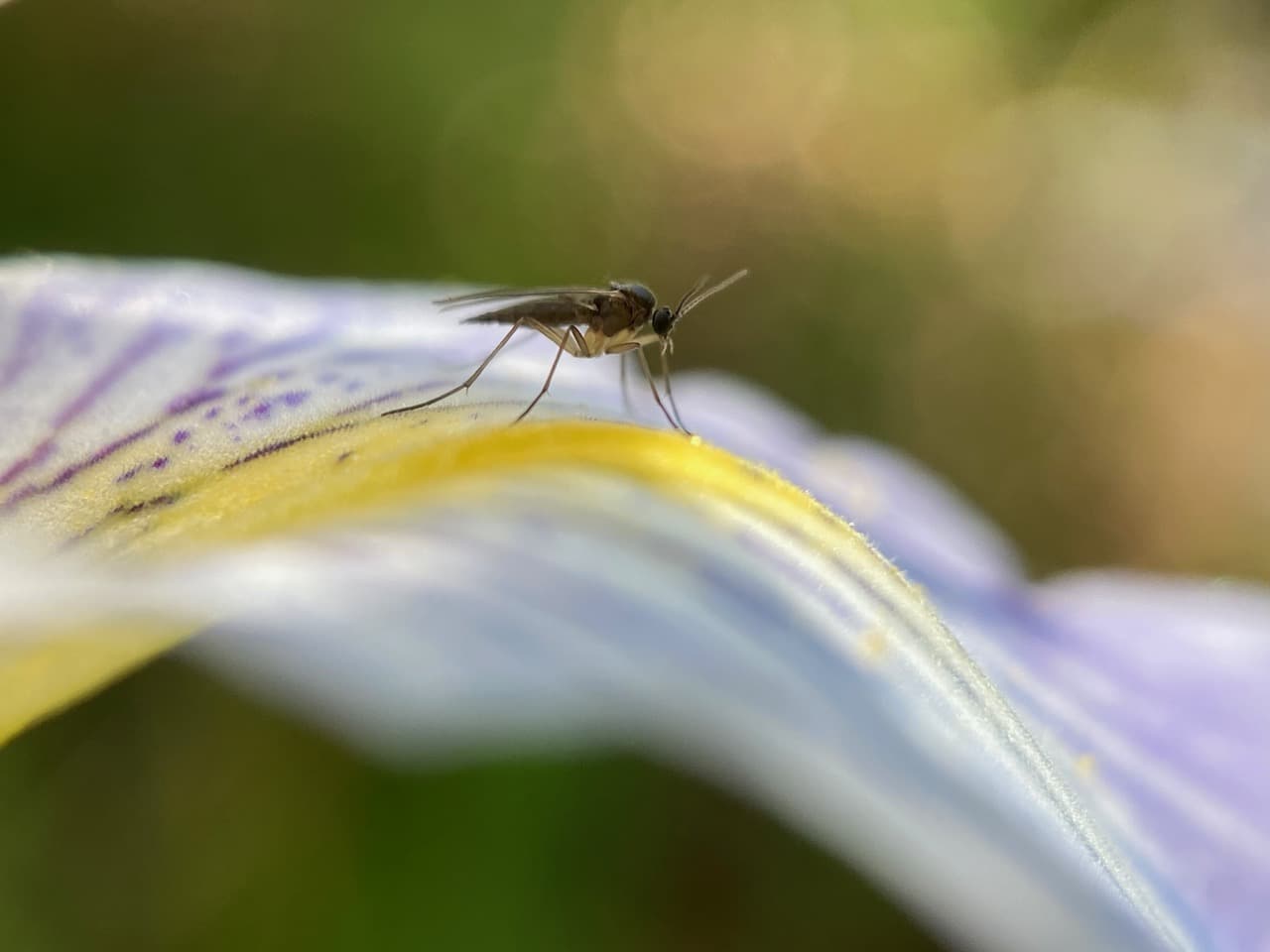
A Fungus Gnat (family Mycetophilidae) is perched on a sepal of Douglas Iris. Insects, including bees, that are too small to make contact with the stigma of the flower are not likely to pollinate it.
Fungus Gnats are so named because many species lay eggs in soil and other damp places where the larvae feed on fungi. They are most common during winter and spring in California when water is more available and cooler temperatures prevail.
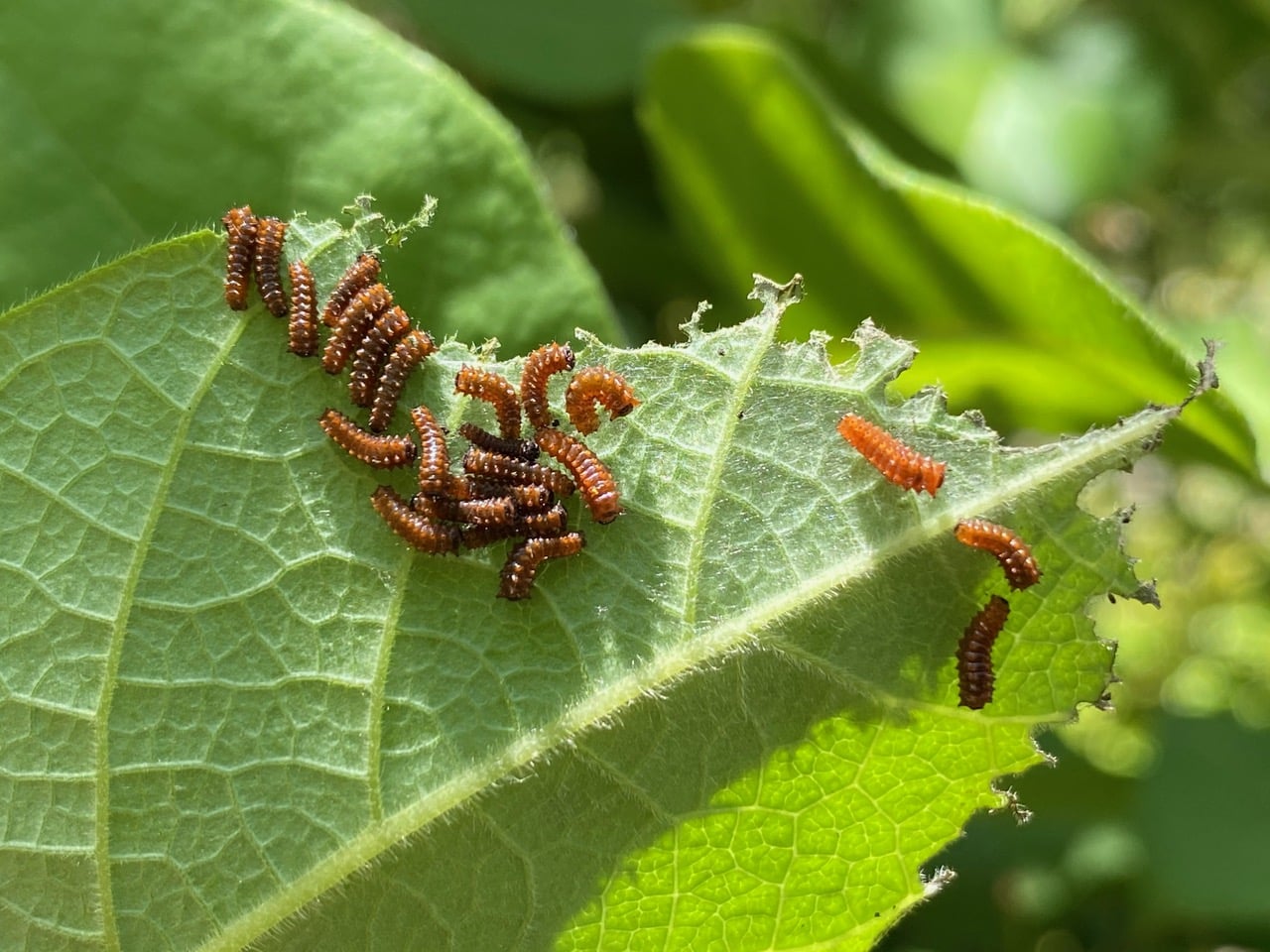
New batches of Pipevine Swallowtail eggs have hatched on underside of the leaves of California Pipevine, Aristolochia californica. The youngest caterpillars tend to feed in aggregations on the edges of the leaves.
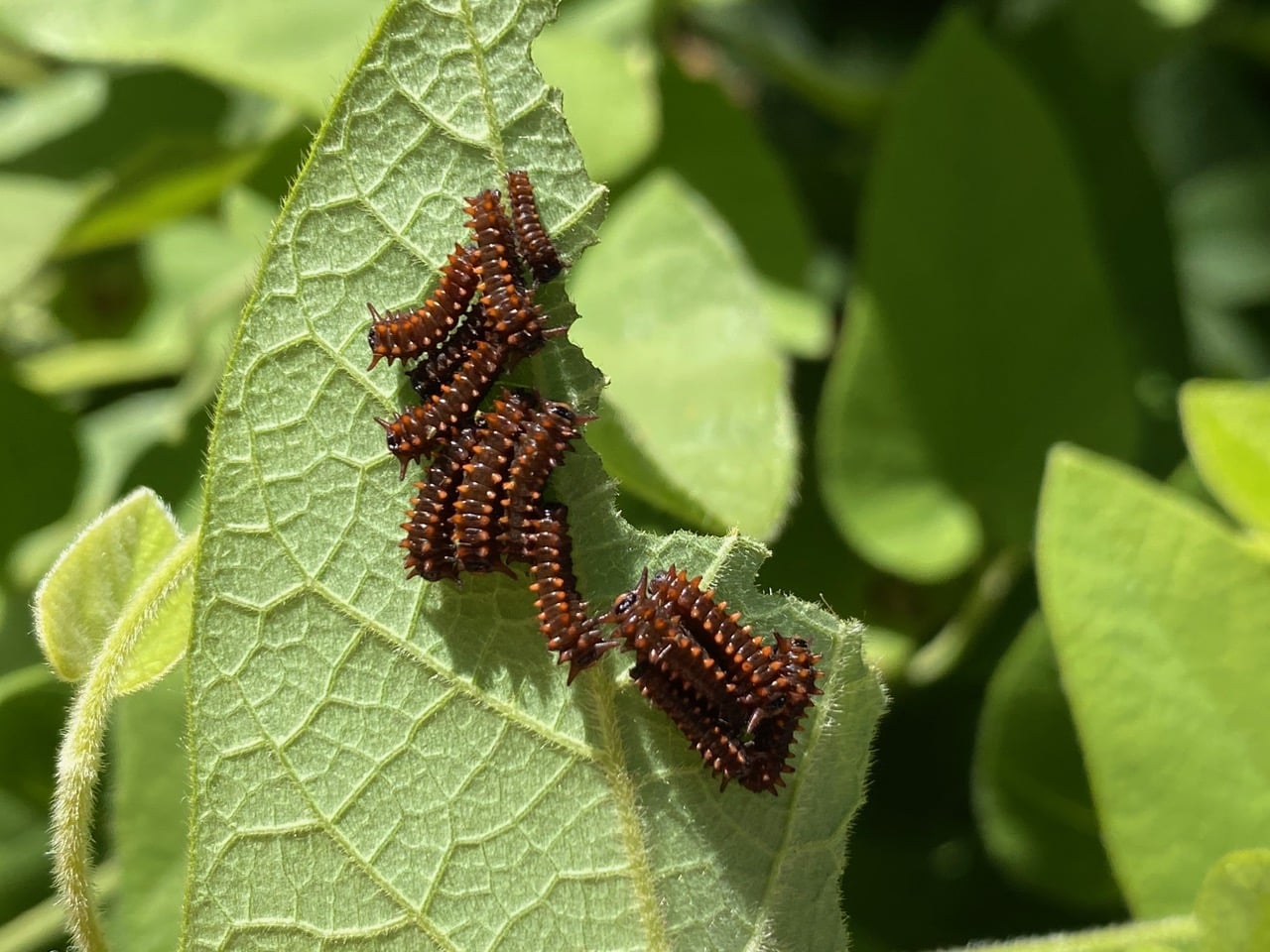
As the caterpillars grow, they assume a darker base color and brighter tubercles.
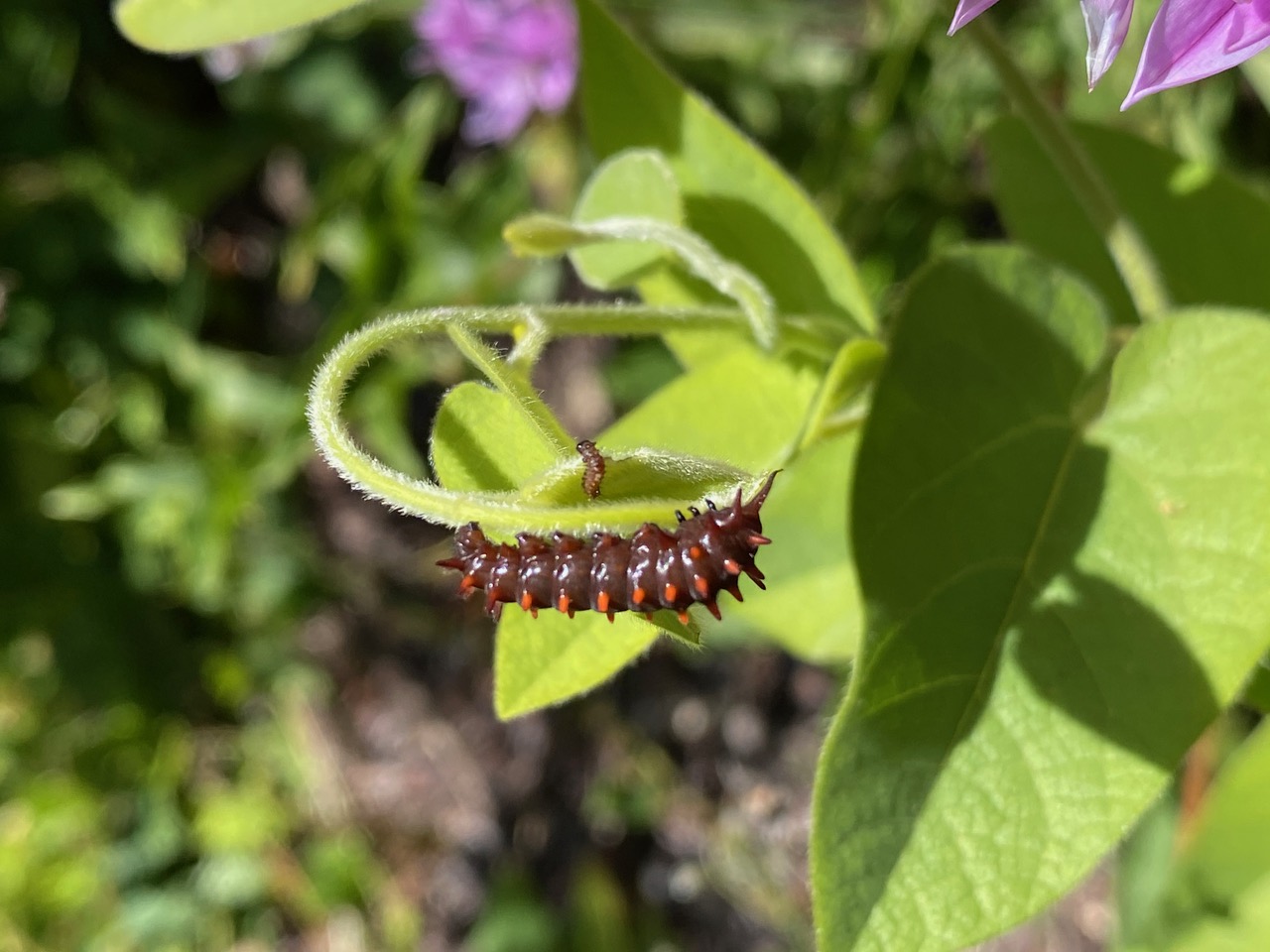
An older caterpillar is feeding on a terminal leaf of California Pipevine alongside a very young caterpillar. The size difference is remarkable.
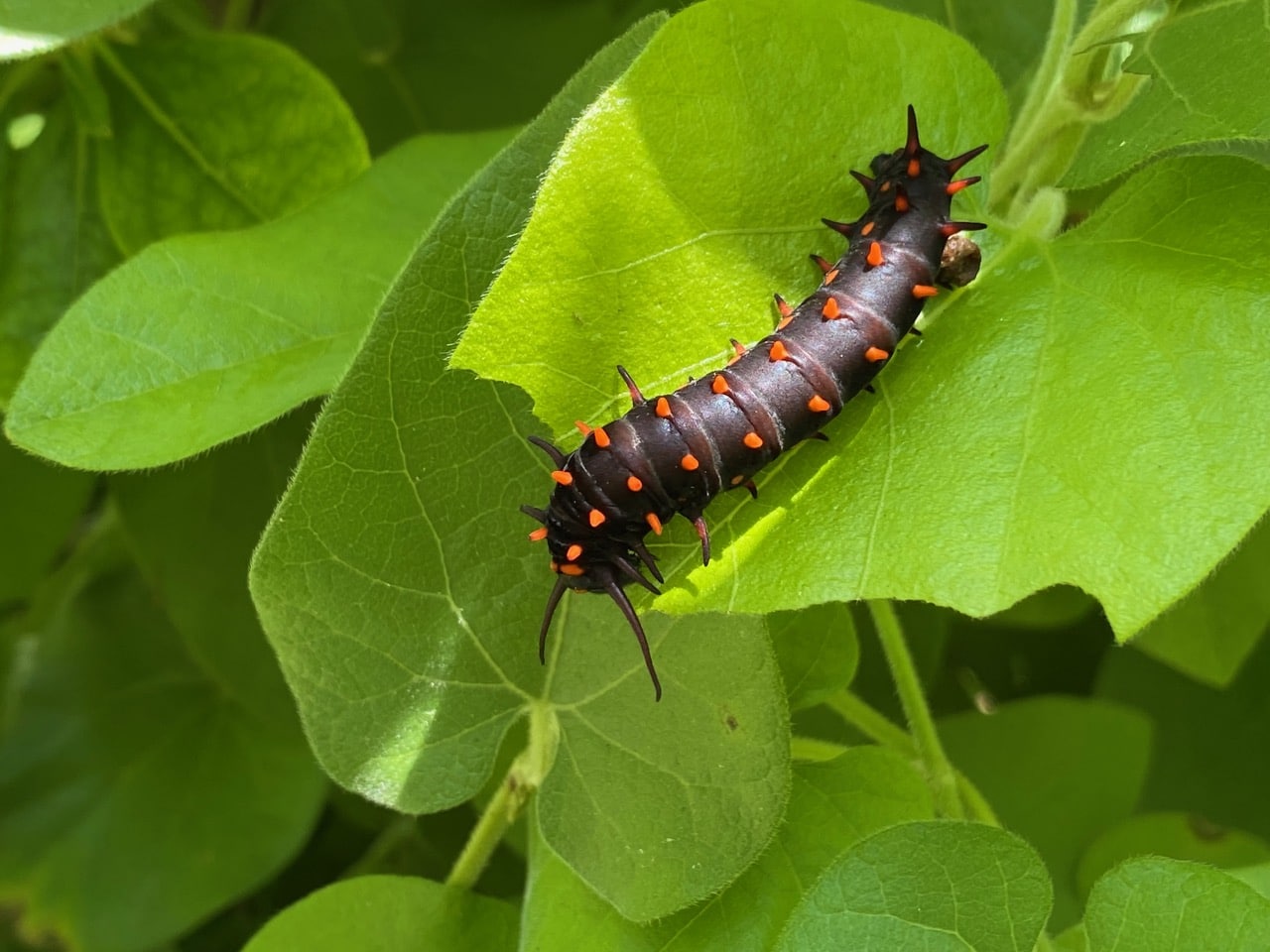
This caterpillar is so big and plump I think it might be ready to pupate soon.
The conspicuous contrasting colors of the caterpillar send a warning signal to any potential predators, “Eat me at your own peril!”. The leaves of California Pipevine that the caterpillars feed on contain aristolochic acid which is poisonous. The Pipevine Swallowtail caterpillars are immune to the poison, and they actually sequester the poison in their own bodies for self defense.