

Pollinator Post 5/19/23 (2)
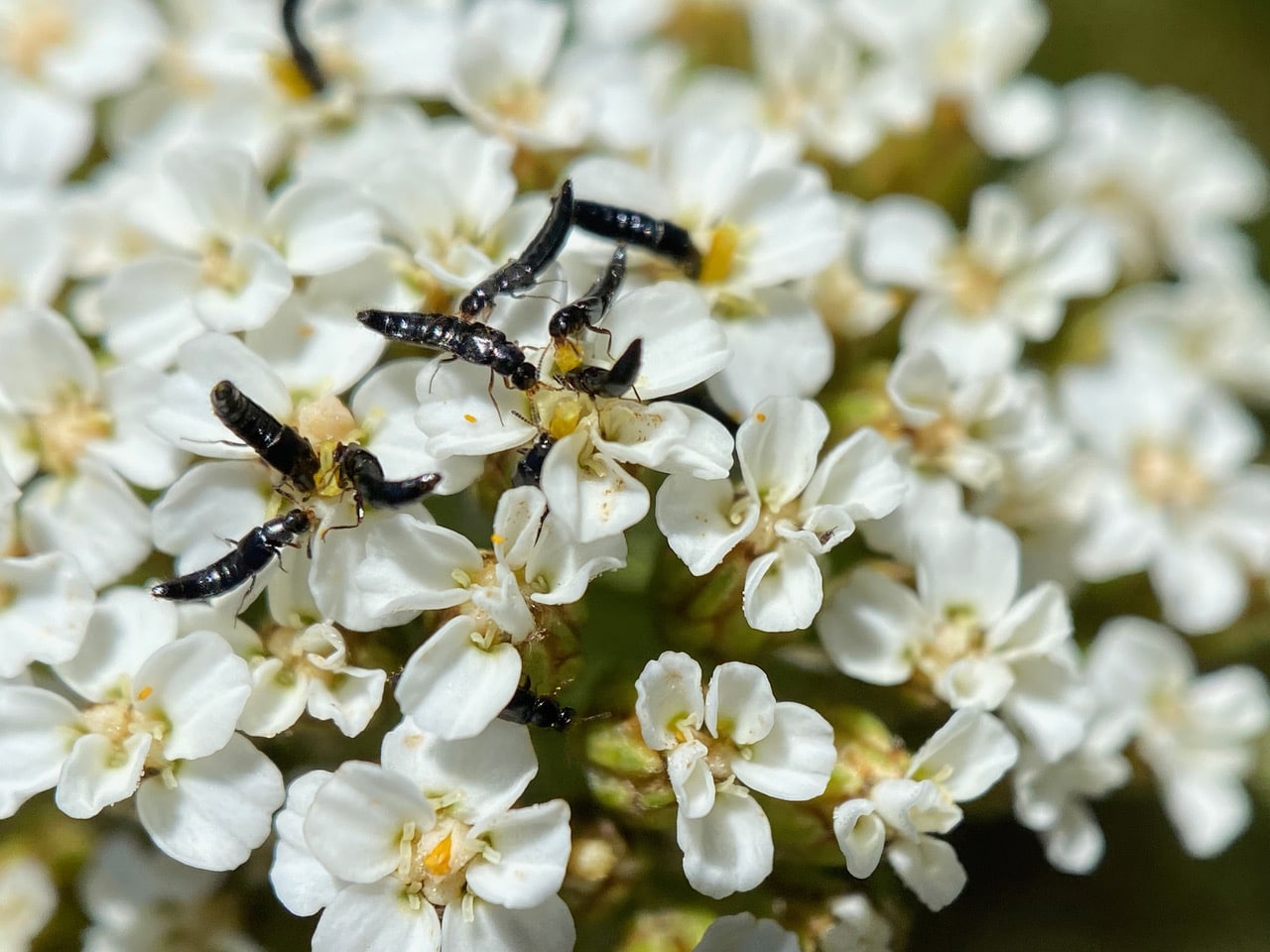
An inflorescence of Yarrow, Achillea millefolium seems to be writhing with what look like small, shiny black, elongated insects. They are very active and fast moving. It is difficult to see one clearly.
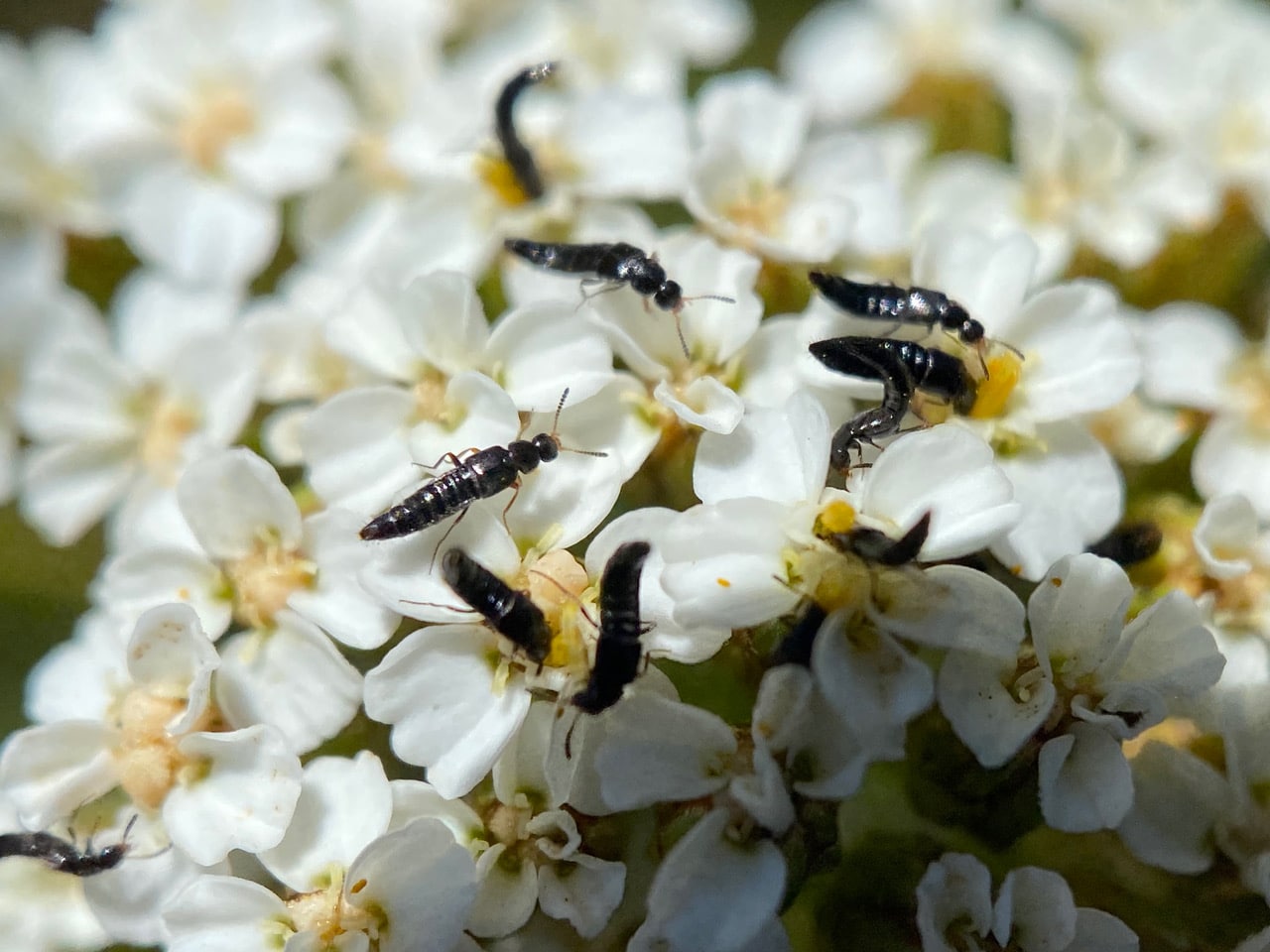
These are Rove Beetles (family Staphylinidae). The family Staphylinidae is the largest family of North American beetles, with about 4000 species. Most are small and of cryptic habits and although common, the group as a whole is not well studied. Most rove beetles are predators of insects and other invertebrates, living in forest leaf litter and similar decaying plant matter. Some species are predaceous as both adults and larvae; the larvae of some species are parasitoids; many others are probably scavengers.
Rove Beetles are easily recognized by their slender, usually black or brown body, shortened front wings (elytra) that may look like pads on the abdomen, and behavior of curling the tip of the abdomen upwards when disturbed or running. Adults are usually strong flyers. Most species are nocturnal, but a few are active during the day.
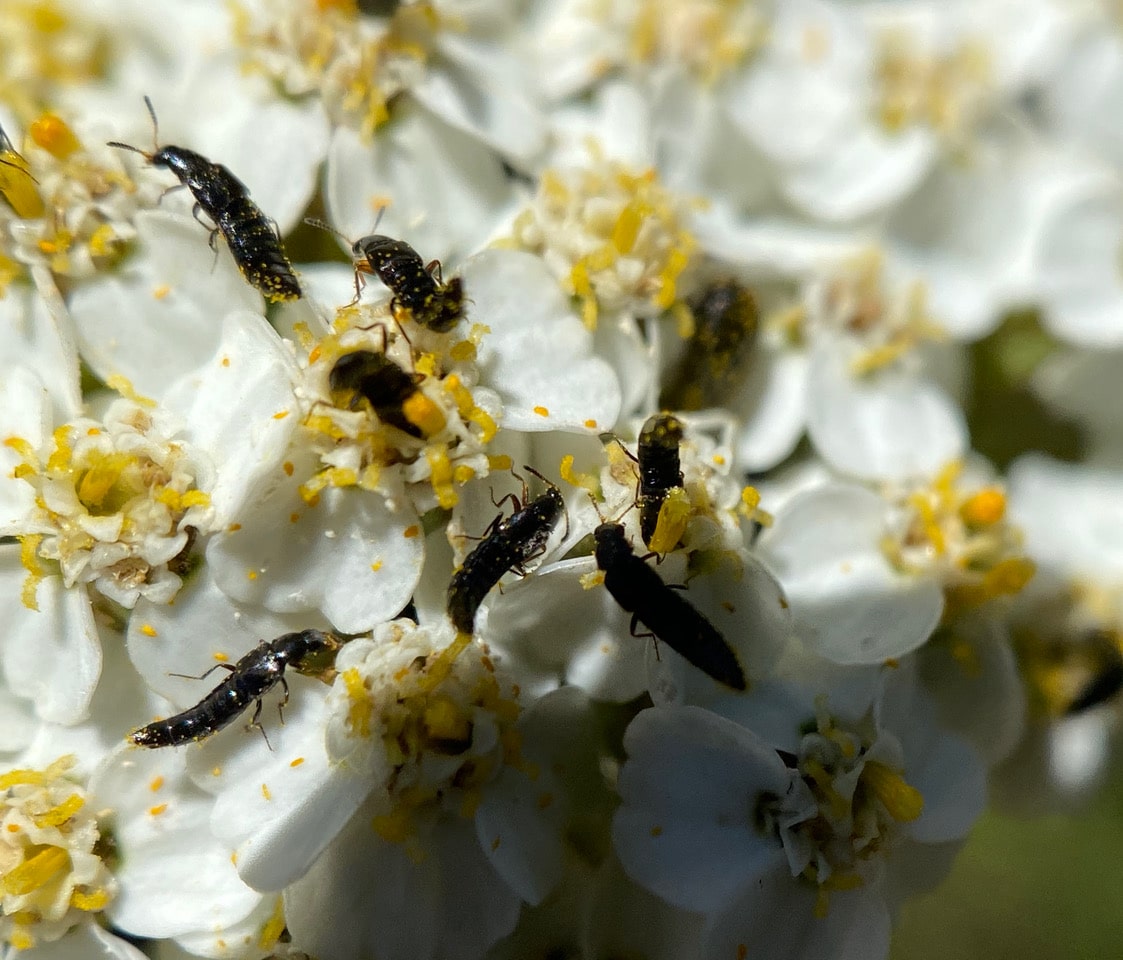
It’s hard to believe that these Rove Beetles are predators. They seem to be feeding on the pollen of Yarrow flowers. Or maybe they are hunting tiny mites among the flowers?
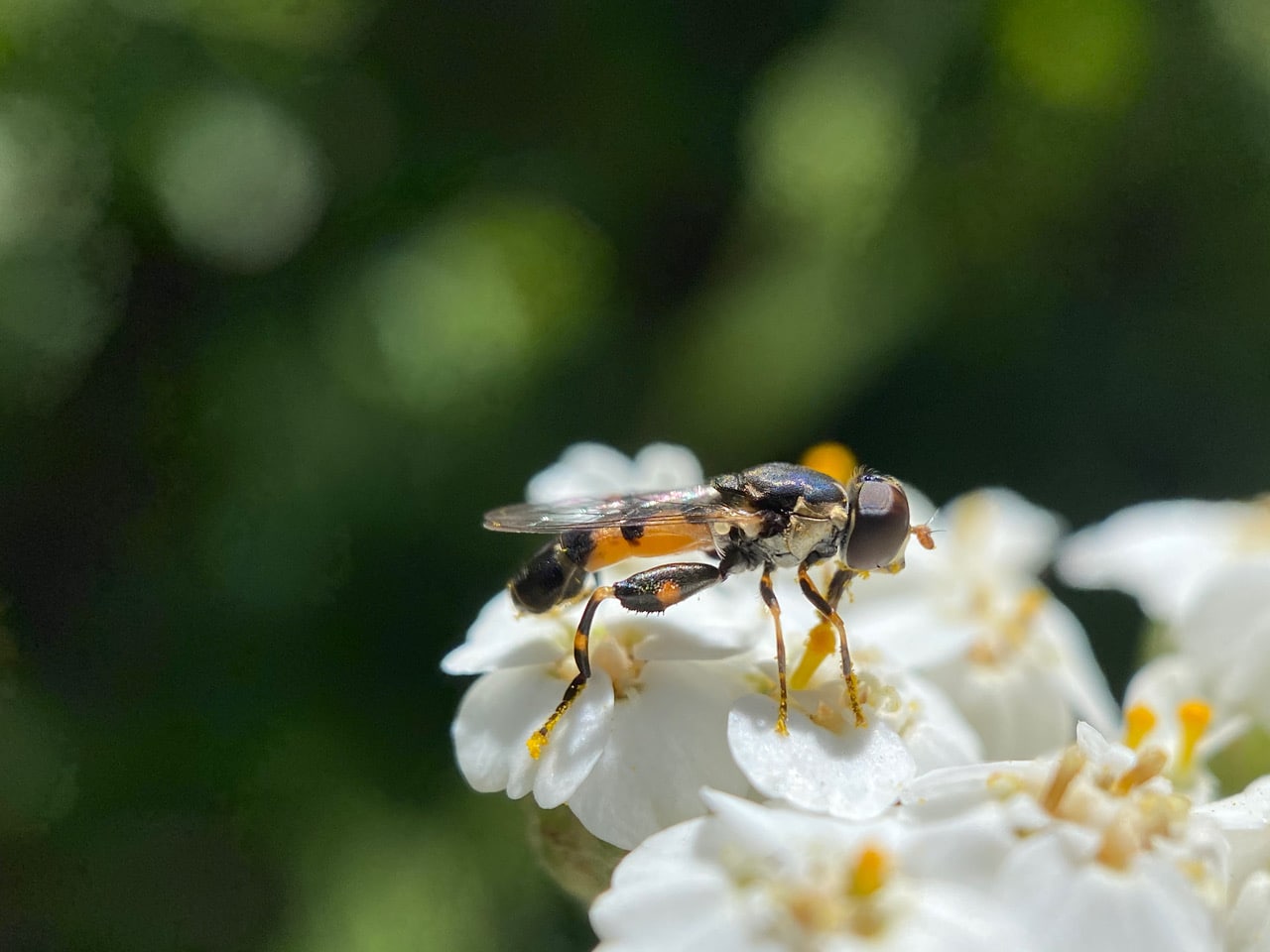
Oh, look who else is here on the yarrow inflorescence – a Thick-legged Hover Fly, Syritta pipiens (family Syrphidae).
Syritta pipiens originates from Europe and is currently distributed across Eurasia and North America. They are fast and nimble flyers, and their larvae are found in wet, rotting organic matter such as garden compost, manure, and silage. The flies are important pollinators for a variety of flowering plants.
The Thick-legged Hover Flies are often found on flowers, where the adult males primarily feed on nectar and adult females eat protein-rich pollen to produce eggs. The common name comes from the fly’s distinctively broad femora. The fly is about 6.5 -9 mm long. The species flies at a very low height, rarely more than 1 m above the ground. Males accurately track females, aiming to attempt forced copulation.

The Sticky Monkeyflower, Diplacus aurantiacus has started to bloom! What’s that tiny critter on the lower lip of the flower facing us?

Even on my camera/macro lens’ highest power, the insect still looks tiny. It is an Aeolothrips Predatory Thrips (order Thysanoptera).
Thrips (order Thysanoptera) are minute (mostly 1 mm long or less), slender insects with fringed wings and unique asymmetrical mouthparts. They feed mostly on plants by puncturing and sucking up the contents, although a few are predators. Some flower-feeding thrips pollinate the flowers they are feeding on, and some scientists believe that they may have been among the first insects to evolve a pollinating relationship with their host plants. A genus is notable for being the specialist pollinator of cycads. Thrips are likewise the primary pollinators of heathers in the family Ericaceae, and play a significant role in the pollination of pointleaf manzanita. Electron microscopy has shown thrips carrying pollen grains adhering to their backs, and their fringed wings are perfectly capable of allowing them to fly from plant to plant.
BTW, there’s no such thing as a “thrip”. It’s always “thrips”, singular or plural!
The predatory thrips are generally larger than the herbivorous thrips, about 1.5-2.5 mm long. Aeolothrips can be found whenever their prey occur. They are thought to be predaceous on small arthropods, such as plant-feeding thrips and spider mites. At least some species also feed on pollen and other arthropods, such as aphids and whiteflies.

A little Humped Trashline Orbweaver, Cyclosa turbinata (family Araneidae) sits in the middle of its web that glints in the sun.
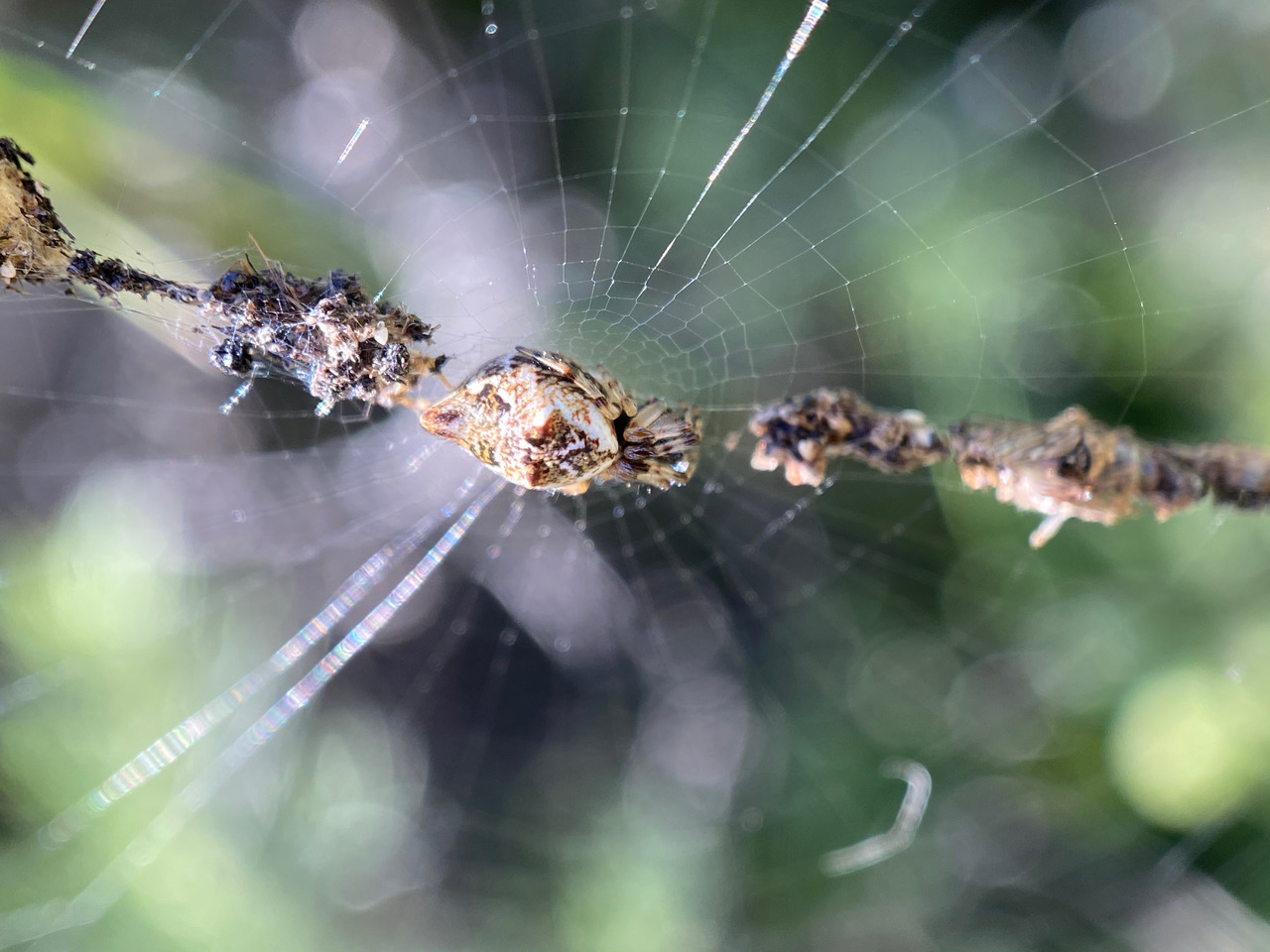
The spider is sitting head-down and covering its cephalothorax with its retracted legs.
Cyclosa turbinata is native to the continental United States. It is a small species, about 4-7 mm in length. Their color is a mix of browns, blacks, and whites, and their abdomen tapers to a rounded point. C. turbinate is distinguished from the others in the genus by the presence of two anterior dorsal humps.
Trashline spiders are so-called for their web decoration. Cyclosa create orb-shaped webs using both the sticky and non-sticky threads, mostly during times of complete darkness. Across its spiral wheel-shaped web, Cyclosa fashions a vertical “trashline” made of various components such as prey’s carcasses, detritus, and at times, egg cases. The trashline helps the spider to camouflage exceptionally well from predators. The spider sits in the web hub to conduct its sit-and-wait hunting, ensnaring prey at nearly any time of day; it only leaves its spot to replace the web prior to sunrise.
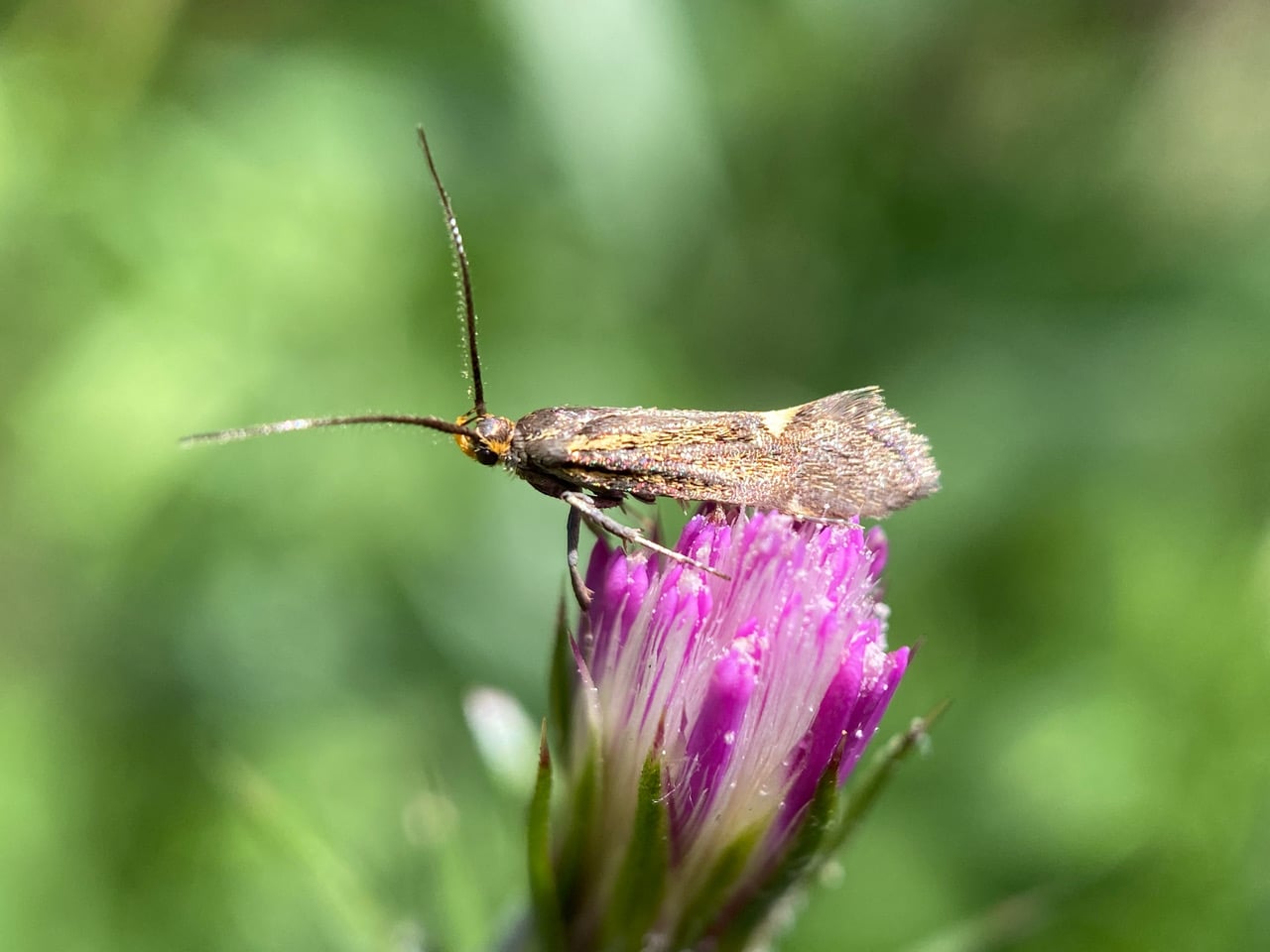
A small day-active moth, Sulphur Tubic, Esperia sulphurella (family Oecophoridae, or concealer moths) lands on a flowerhead of Italian Thistle.
The species is native to Europe, but has been introduced in California. Adults have a body length of 6-8 mm, are black with yellow markings. They are on wing in spring. Larvae are black and feed on dead wood.
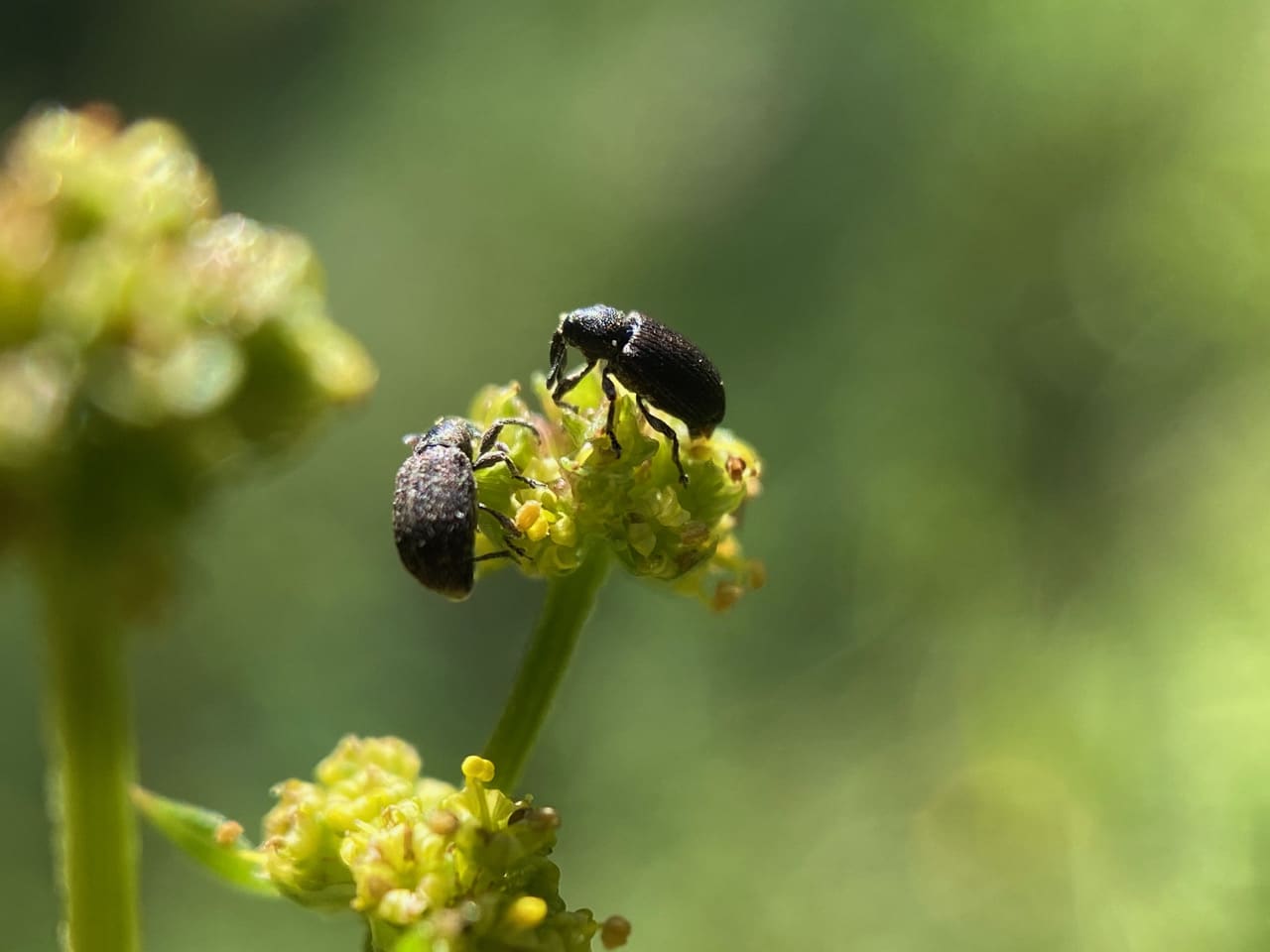
Two tiny black Weevils (family Curculionidae) are foraging on a cluster of flowers of Pacific Sanicle, Sanicula crassicaulis.
Weevils, family Curculionidae, are also called snout beetles. Curculionidae is one of the largest beetle families (about 40,000 species). Most weevils have long, distinctly elbowed antennae that may fold into special grooves on the snout. The snout is used not only for penetration and feeding but also for boring holes in which to lay eggs. The mouthparts are quite small and located at the end of the rostrum (snout), designed for chewing. Many weevils have no wings, while others are excellent fliers. Most are less than 6 mm in length. The majority of weevils feed exclusively on plants. The fleshy, legless larvae of most species feed only on a certain part of a plant – i.e., the flower head, seeds, fleshy fruits, stems, or roots. Many larvae feed either on a single plant species or on closely related ones. Adult weevils tend to be less specialized in their feeding habits. The family includes some very destructive agricultural pests.
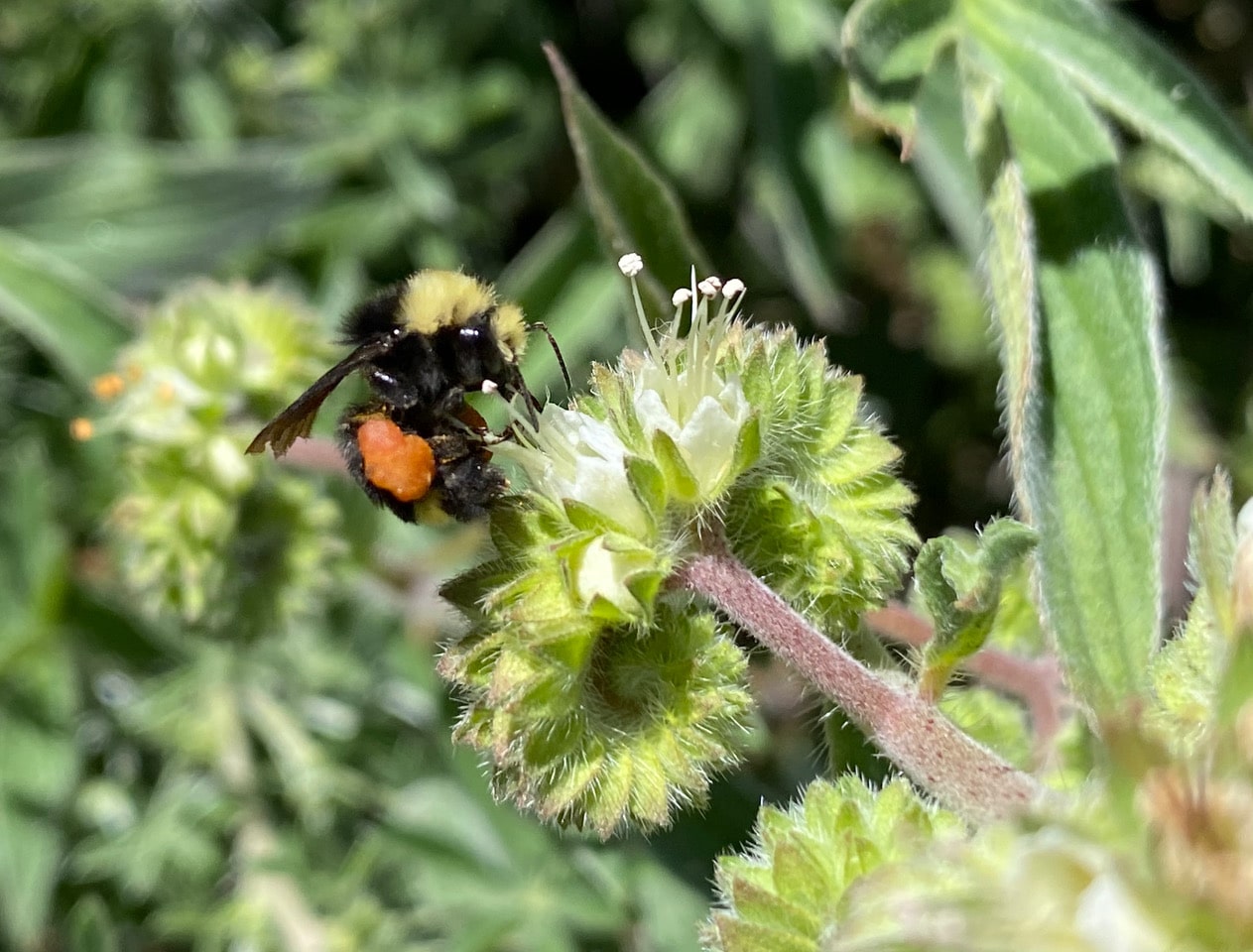
A Yellow-faced Bumble Bee, Bombus vosnesenskii is taking nectar from the flowers of Imbricate Phacelia, Phacelia imbricata. The huge load of orange pollen she is carrying in her pollen baskets is obviously not Phacelia pollen. She has probably collected it from California Poppy blooming close by. Pollen is protein-rich food, mainly fed to larvae, while nectar is an energy source both adults and larvae need.
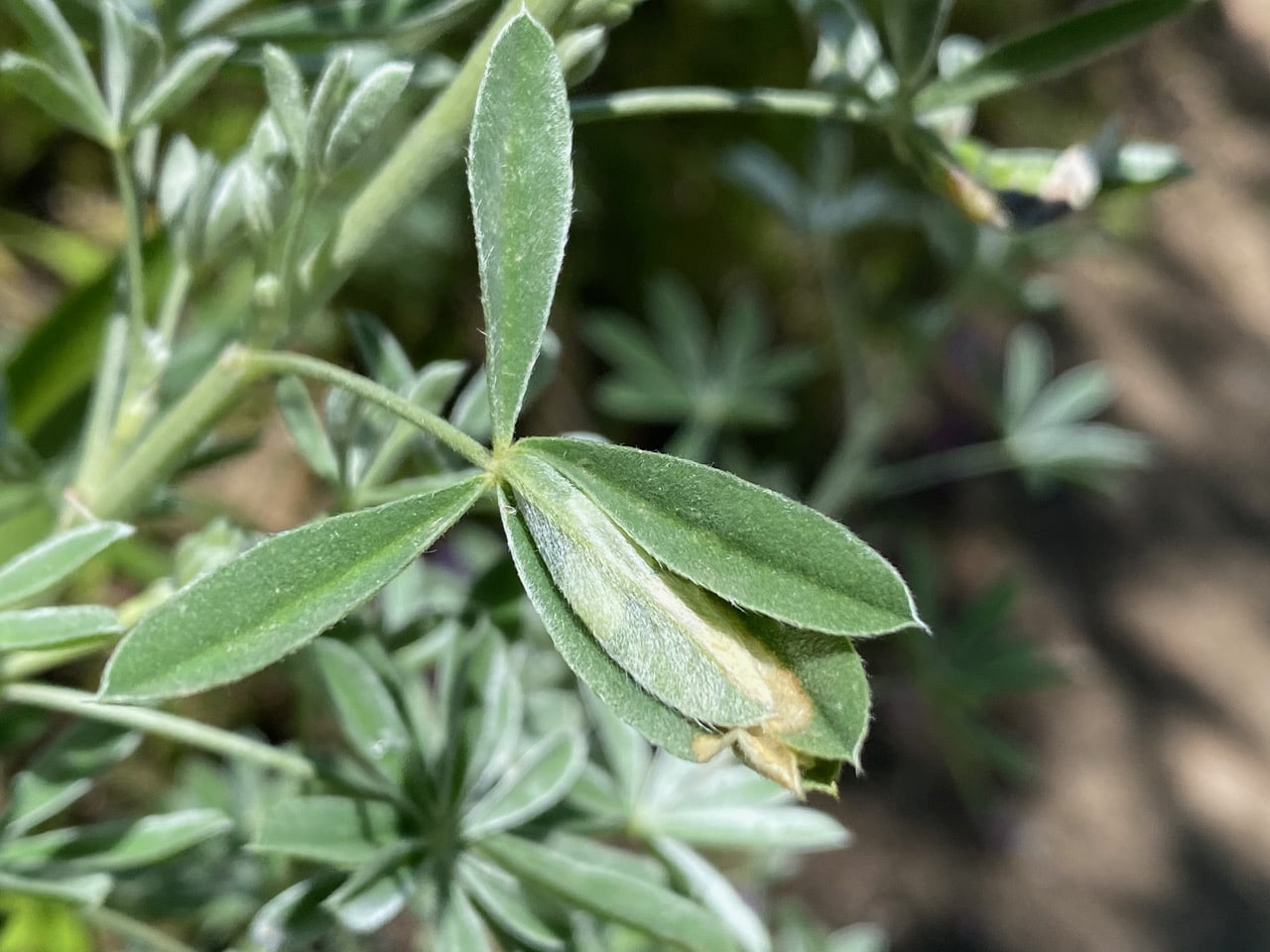
Four of the leaflets of this Silverleaf Lupine, Lupinus albifrons have been tied together with silk. The last leaf on top is invariably drawn from the opposite end of the compound leaf and flipped over the other leaves that are already bound together. The whitish discoloration reveals the feeding damage caused by the occupant hidden inside the shelter/retreat. Last year I have taken one of these retreats apart and found a tiny grayish-green caterpillar inside. Attempts at rearing the moth have not been successful.
Leaf shelter-builders, either leaf-tiers or leaf-rollers, do not manipulate leaves directly but use their silk to draw plant surfaces together. The caterpillars impart potential energy to their silk strands by stretching them beyond their equilibrium length as they are spun out. Axial retraction of the stretched strands then draws the bound plant surfaces together. Although a single stretched strand exerts only a minuscule force, the combined force generated by many such strands attached to the same opposable plant surfaces is substantial and allows the caterpillars to manipulate leaves many times their size and mass.
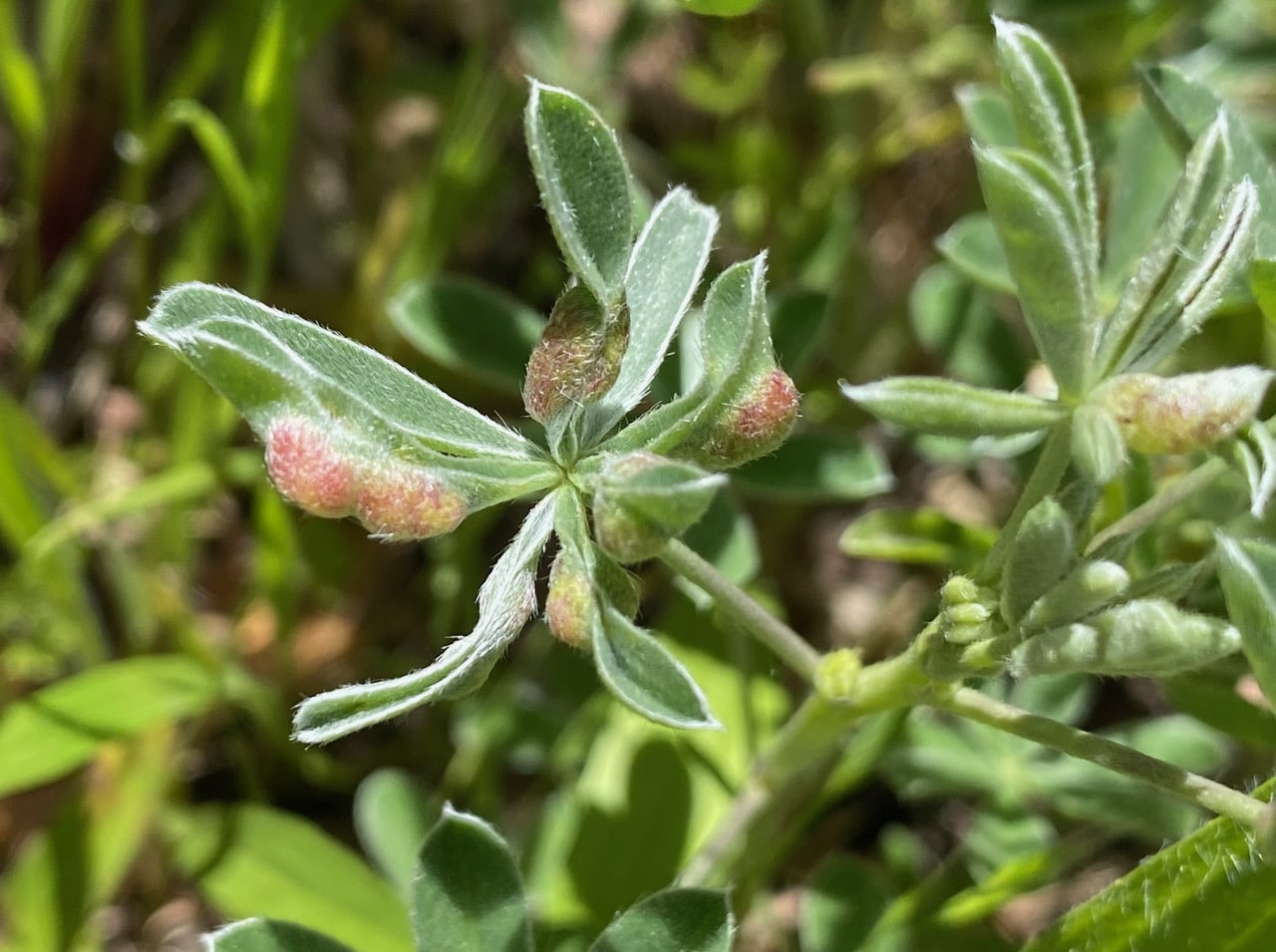
Irregular lumps can be seen on some of the lupine leaves that are also folded along the midrib. These tumor-like growths are induced by the Leaf-fold-gall Midge, Dasineura lupinorum, family Cecidomyiidae. Females lay their eggs on unopened leaflets in growing buds. Newly hatched larvae crawl between the closed halves of the leaflets and begin feeding, stimulating formation of the swollen galls. The galls slowly become reddish over time, and contain several larvae each. The larvae complete development inside the gall and remain there through pupation. The midge produces several generations per year.