

Pollinator Post 5/18/23 (3)
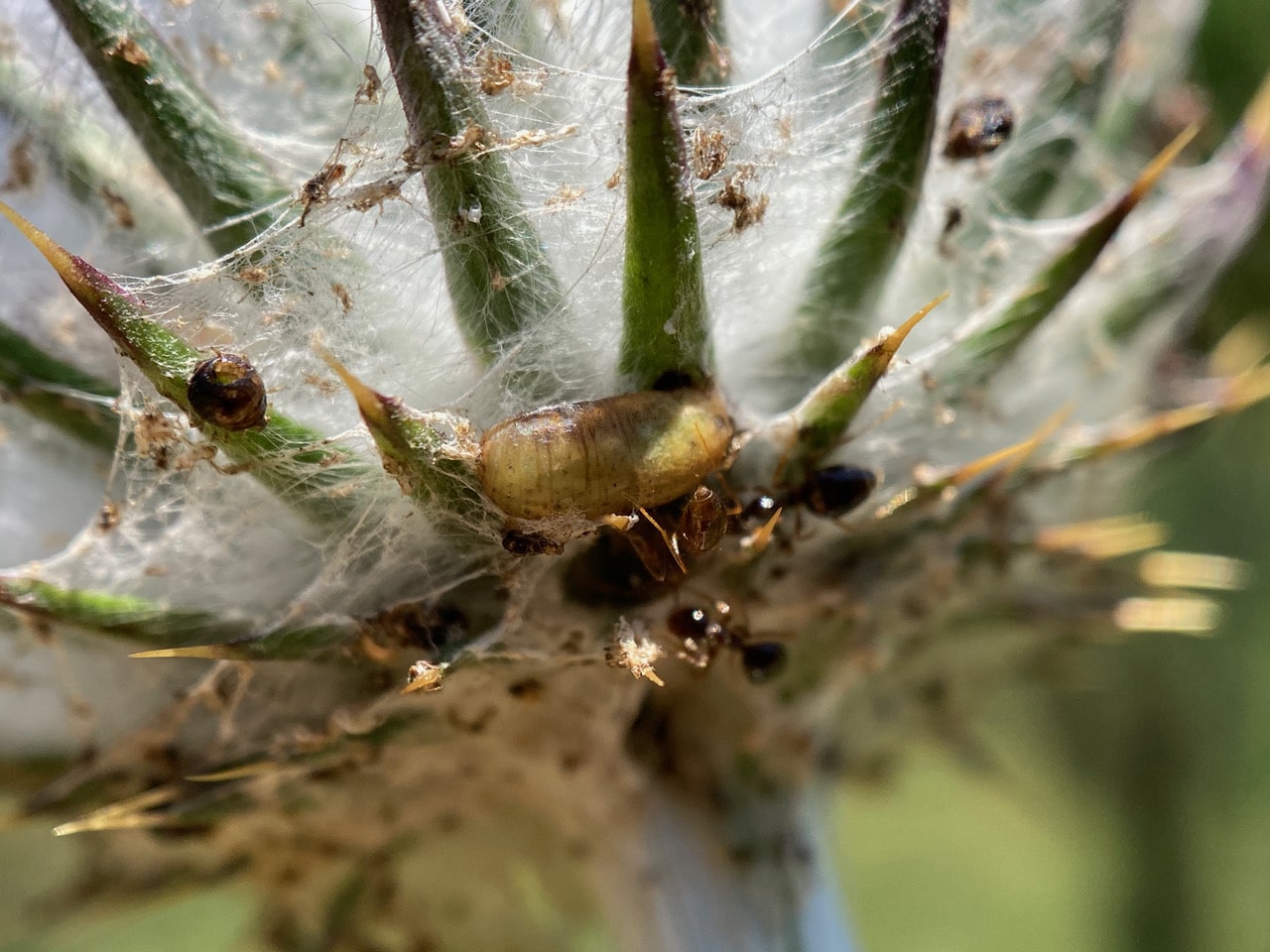
There is little insect activity on the Cobweb Thistle, Cirsium occidentale growing on the side of the road to the Water Tank. Not much has changed with the Syrphid pupa. The American Winter Ants are still occasionally checking on it.

A few ants are gathered at a lesion on the stem of the Cobweb Thistle. What are the ants so excited about?

Close to the entrance to the Water Tank, I am greeted by the sight of the giant Cobweb Thistle, Cirsium occidentale (family Asteraceae) blooming gloriously.

Checking closely, I find the plant completely clean. No more ants, aphids, and the associated predators (ladybeetles, soldier beetles, Syrphid larvae), and no aphid mummies. Wow! It’s becoming clear to me that in an intact, balanced ecosystem, the players take care of themselves and provide the necessary checks and balances to regulate each other’s population. In doing so, no one becomes dominant and wreak havoc in the community. Everyone thrives!

There are many thistle flowerheads in various stages of maturity, and I get to piece together their sequential development. As the young globular flowerhead opens up, the middle part becomes a somewhat flat surface, a stage, so to speak, for what’s to happen next.
Thistles are unusual members of the sunflower family Asteraceae. Thistle flowerheads are composed of only disc florets; there are no ray florets. You may review the basic floral structure of Asteraceae here: Asteraceae
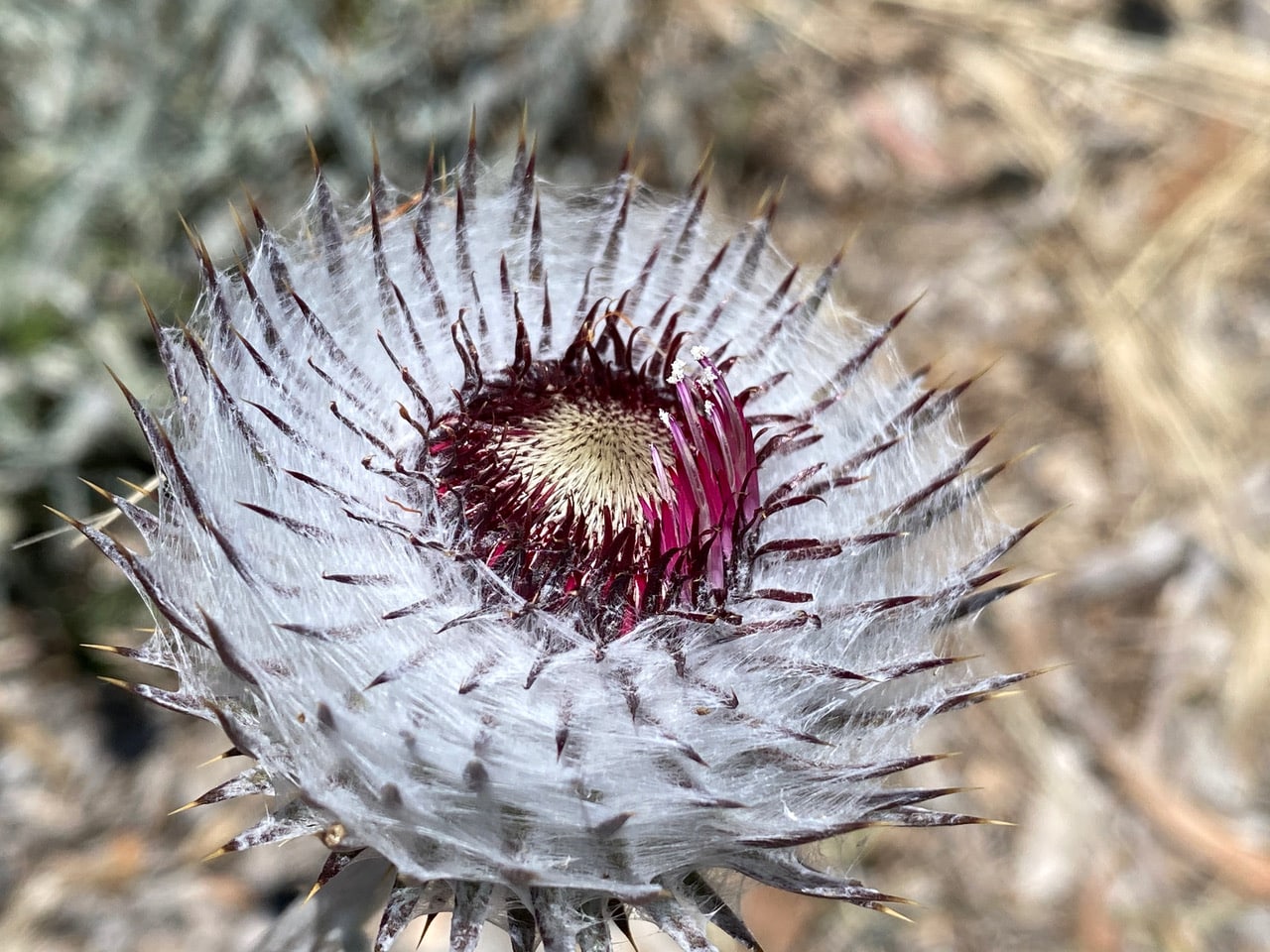
Out of that flat surface, the tiny flowers begin to emerge. As in the more familiar sunflower, the flowers begins to open up from the rim of the flowerhead. In this particular image, we can see the first red flowers on the edge have pushed up some white pollen on the tips of the long anther tubes. The pollen is presented when the styles extend from within the anther tube, by growth if not by a touch-elicited movement provided by a visiting insect.
My naturalist/writer friend David Lukas has recently written about this fascinating topic. Allow David to blow you away: Assembling a Composite
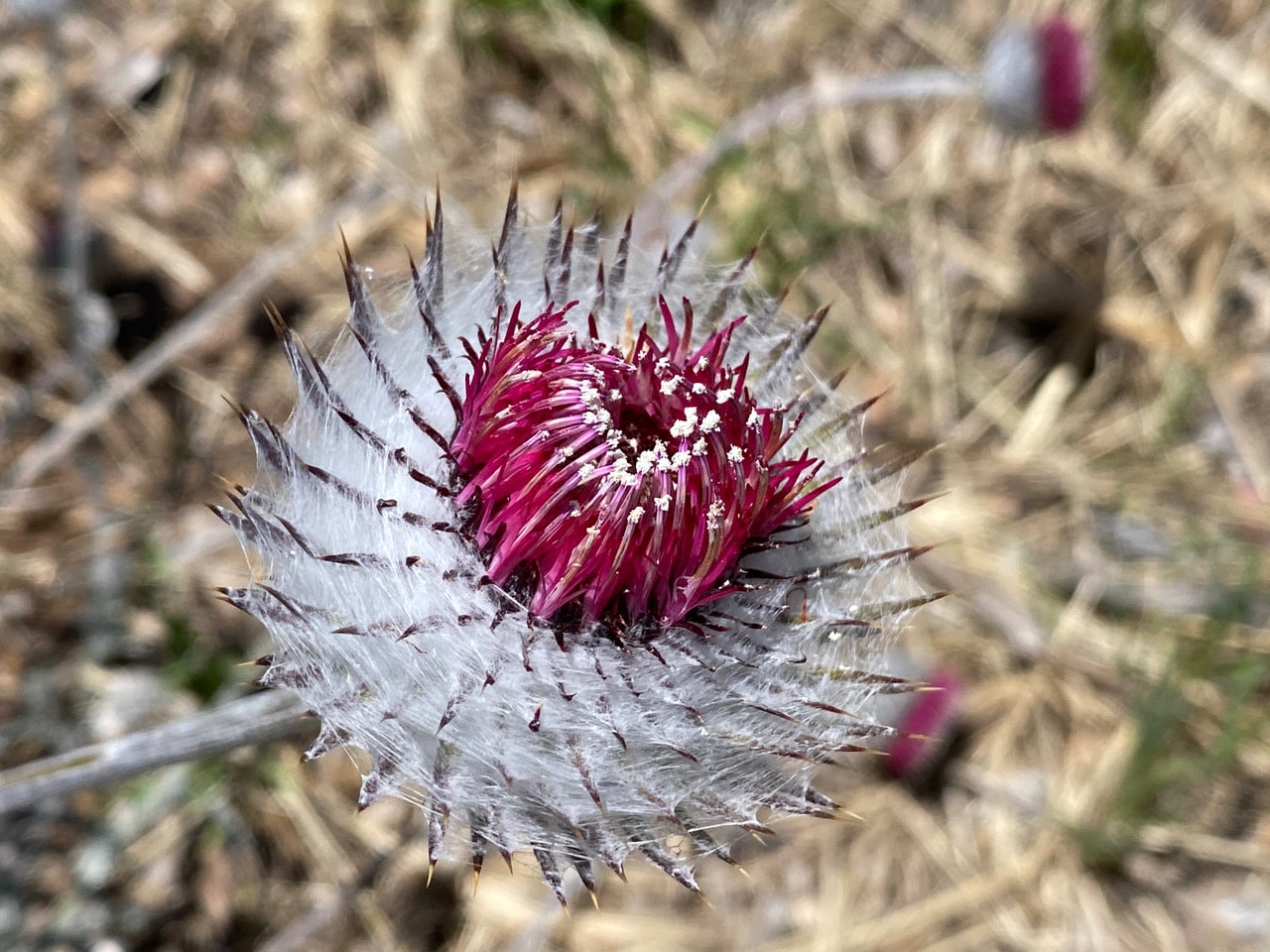
As the flowerhead matures, more and more flowers open up in the middle, presenting their white pollen.
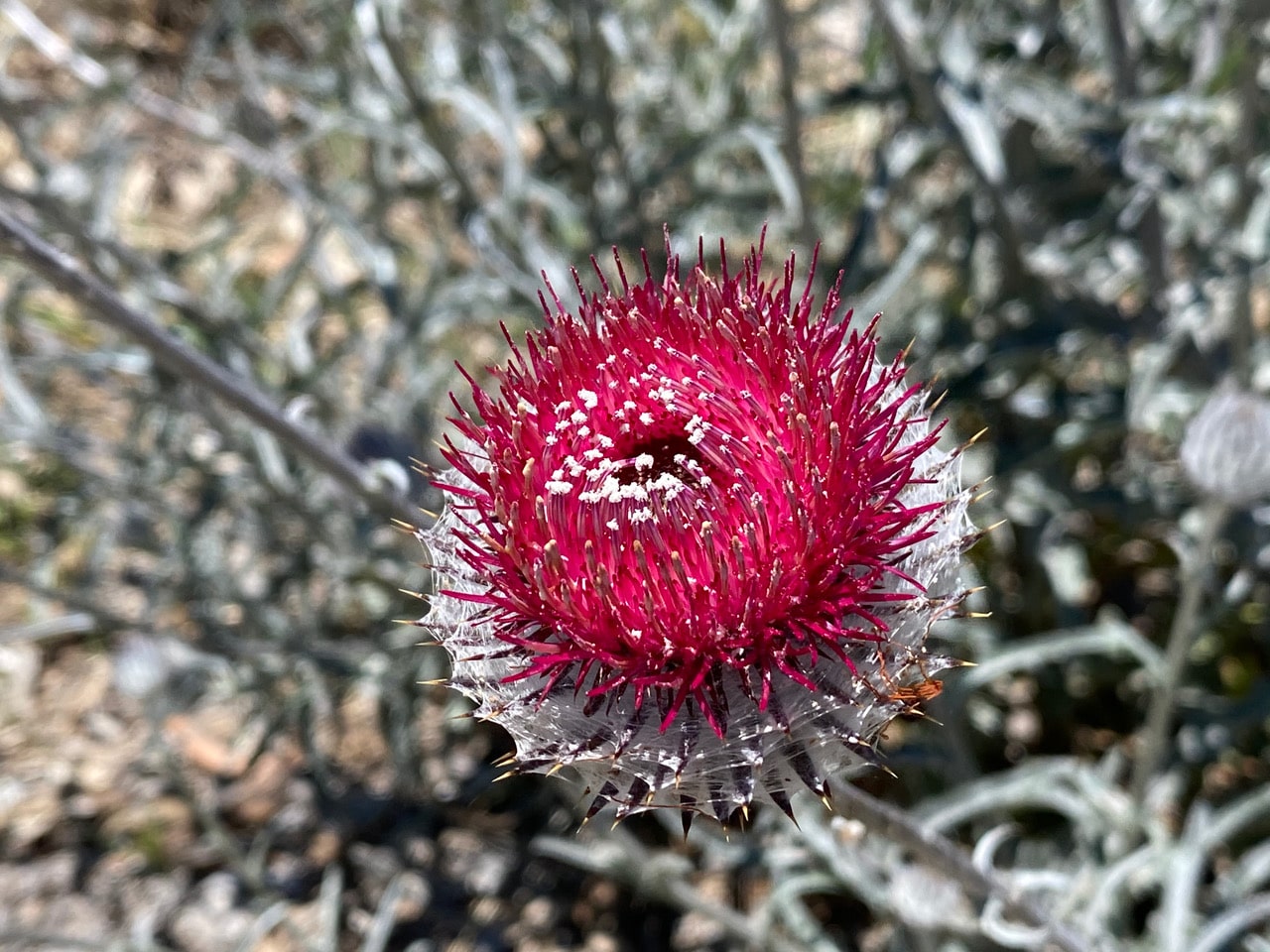
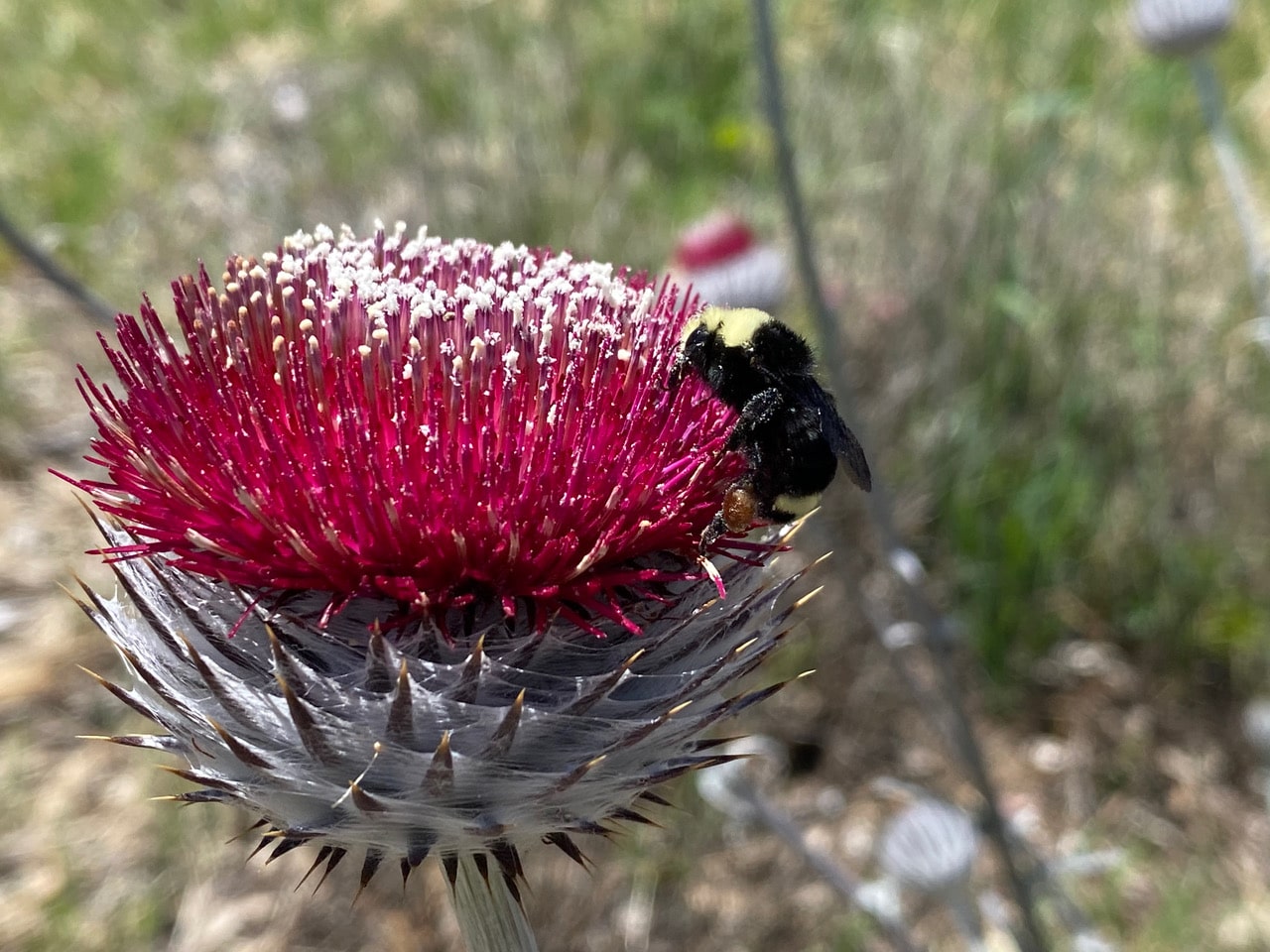
A Yellow-faced Bumble Bee, Bombus vosnesenskii lands on a fully opened Cobweb Thistle flowerhead to enjoy its abundance. She has her tongue out to sip nectar at the base of the florets. Another bee, probably a Digger Bee, Anthophora sp. is also visiting the thistle flowers while I am watching.

No more than 10 feet away from the giant Cobweb Thistle is another thistle of the same species, but much smaller. I have never found any aphids on this young plant previously, but look what’s on it today! An American Winter Ant is fussing over the crumpled wings of a winged Thistle Aphid, Brachycaudus cardui. It is likely that the alate (winged insect) has dispersed from the mother colony on the giant thistle. Next to the alate is a tiny baby aphid. So aphid reproduction has commenced on this plant! Is the ant responsible for the damage to the aphid’s wings? I have read that attending ants would sometimes break off the wings of the aphid alates to prevent them from flying away.
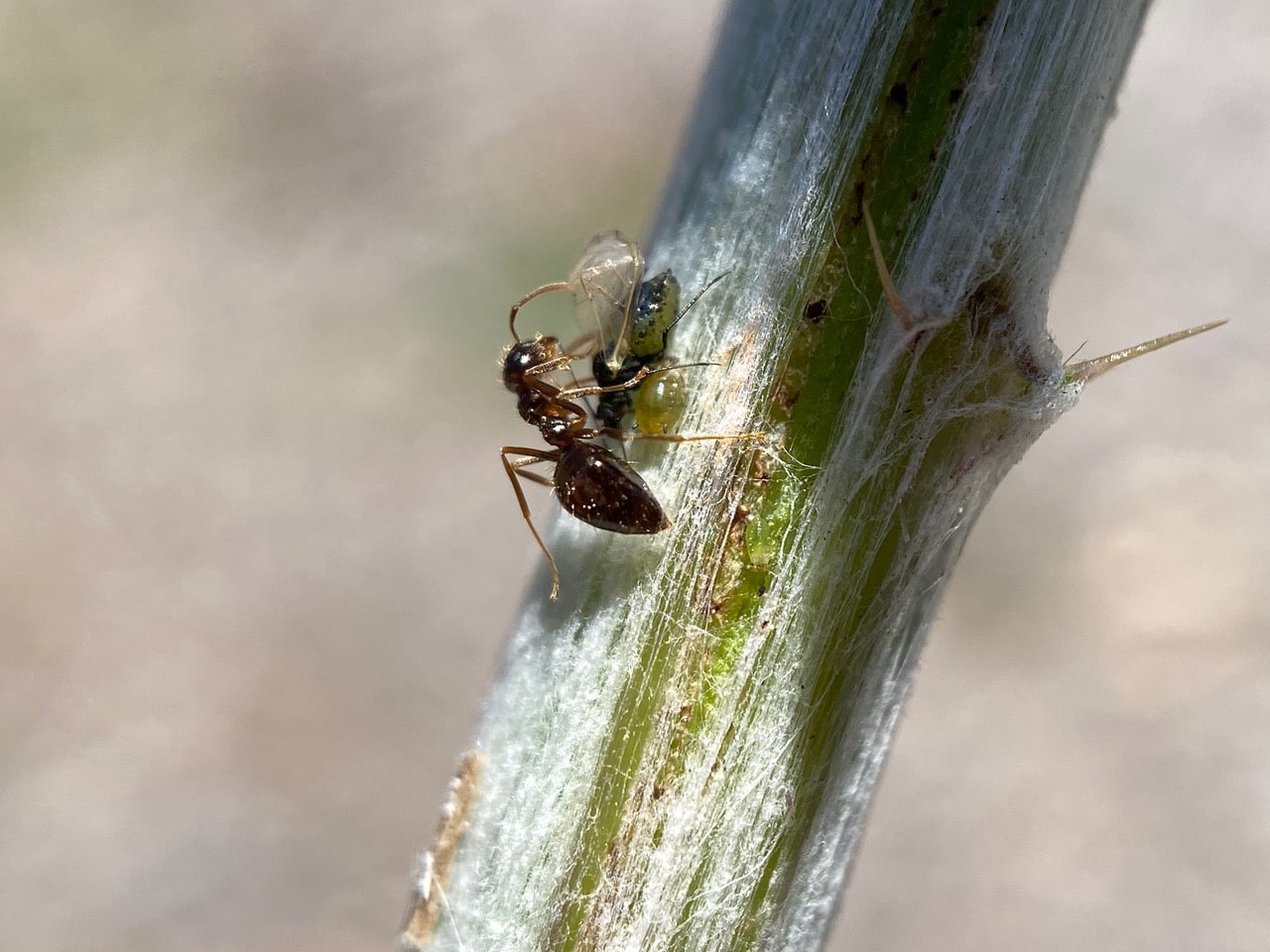
During the 15 minutes that I stand watching, the ant never leaves the aphids for long. Lots of fussing over the alate and the baby, but no solicitation of honeydew from them. No other ants can be found on the plant.
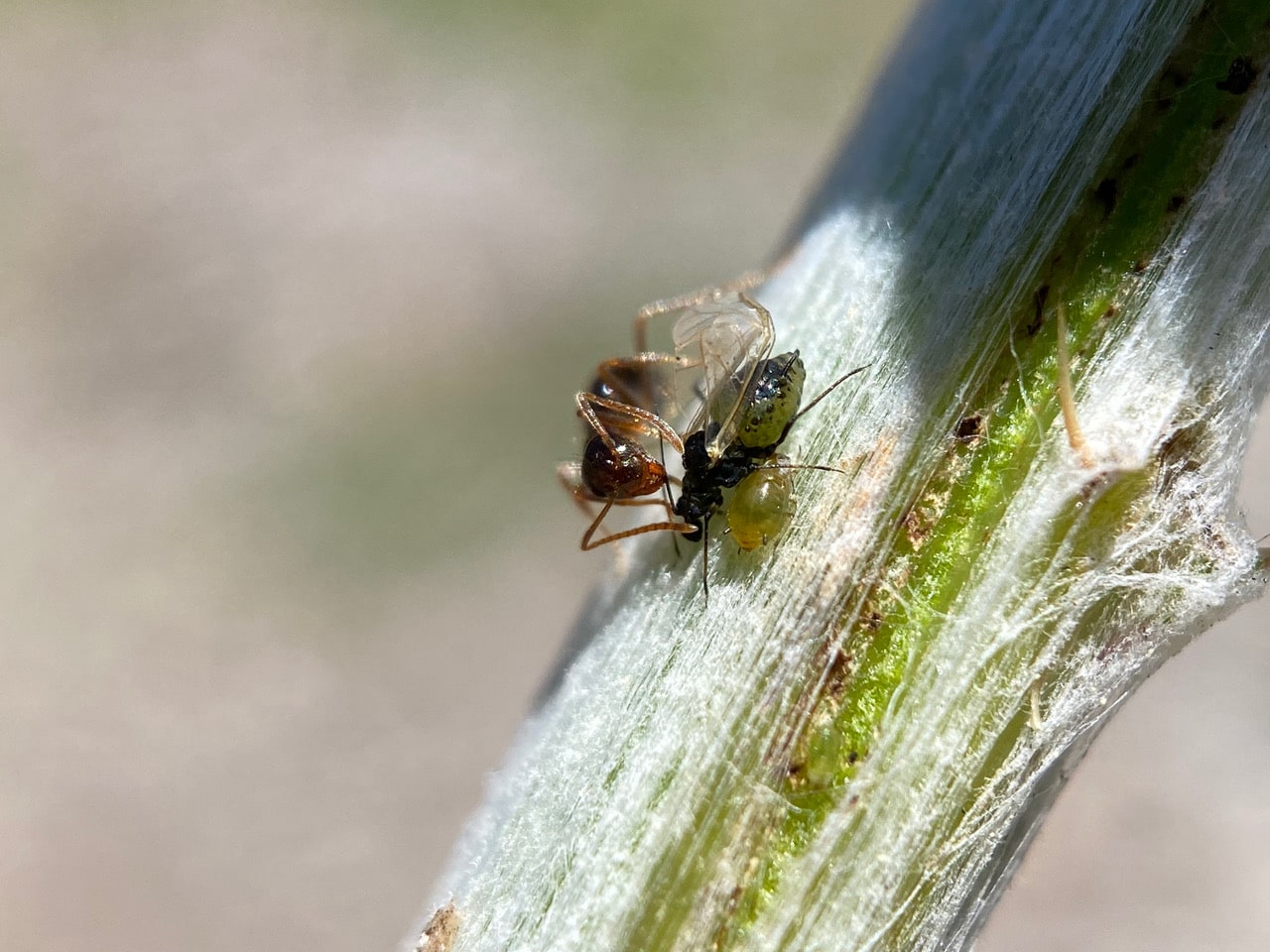
The ant keeps tapping the aphids with her antennae. Is this the start of another aphid-ant partnership and a burgeoning aphid colony?

Close to the thistles, a Spring Fieldcaps mushroom, Agrocybe praecox has emerged from the wood chip mulch. The cap has shallow cracks that form a beautiful pattern.
In spring and early summer these very variable fungi emerge in woods and gardens, often carpeting paths and flowerbeds that have been spread with wood chips. The fungus is saprobic on woody debris.
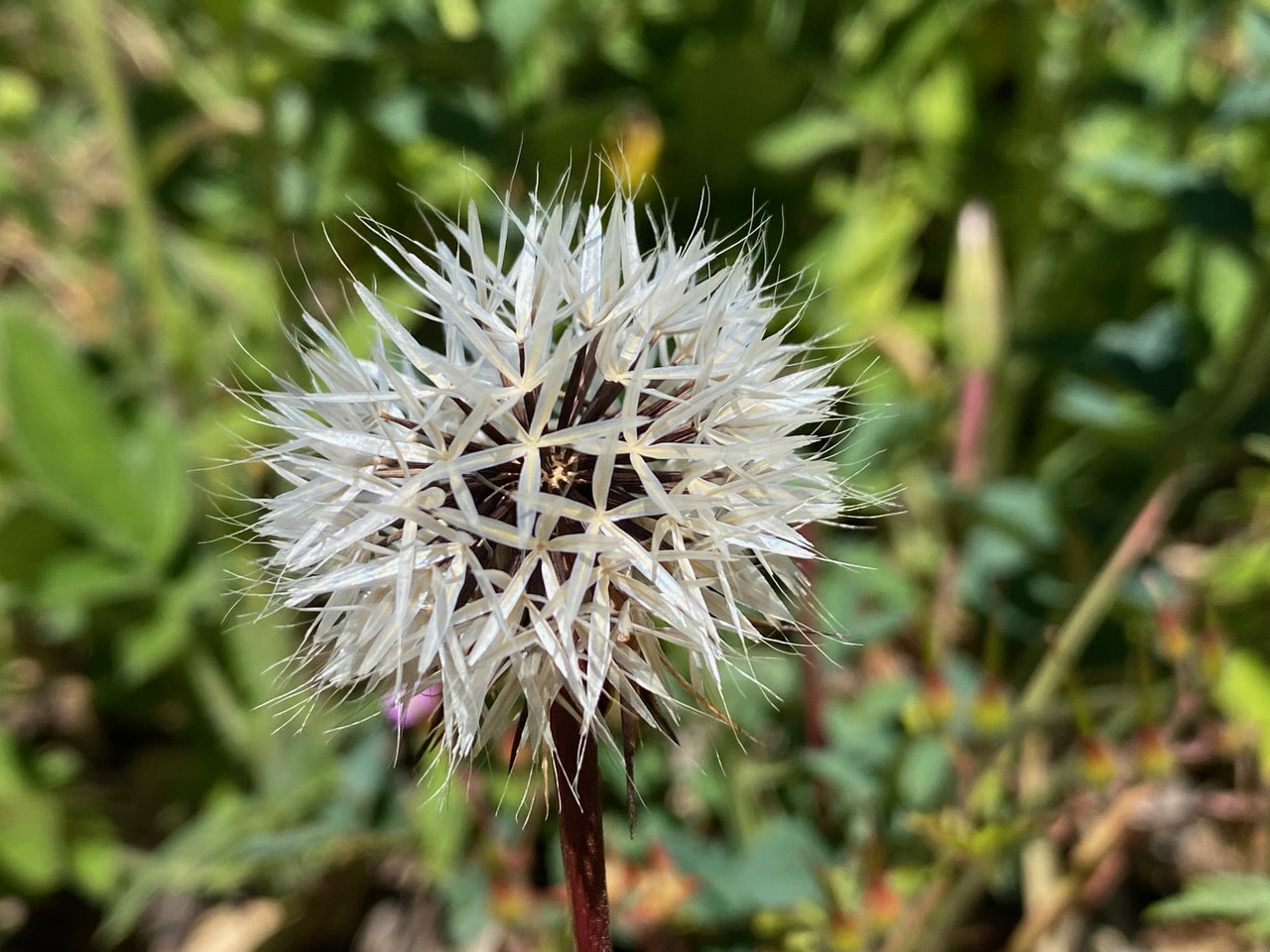
Before I even noticed their tiny, inconspicuous flowers on the side of the trail, the Blow Wives, Achyrachaena mollis has already produced their spectacular, shiny seed heads. The silky white scales will eventually catch the wind to disperse the single-seeded fruits.
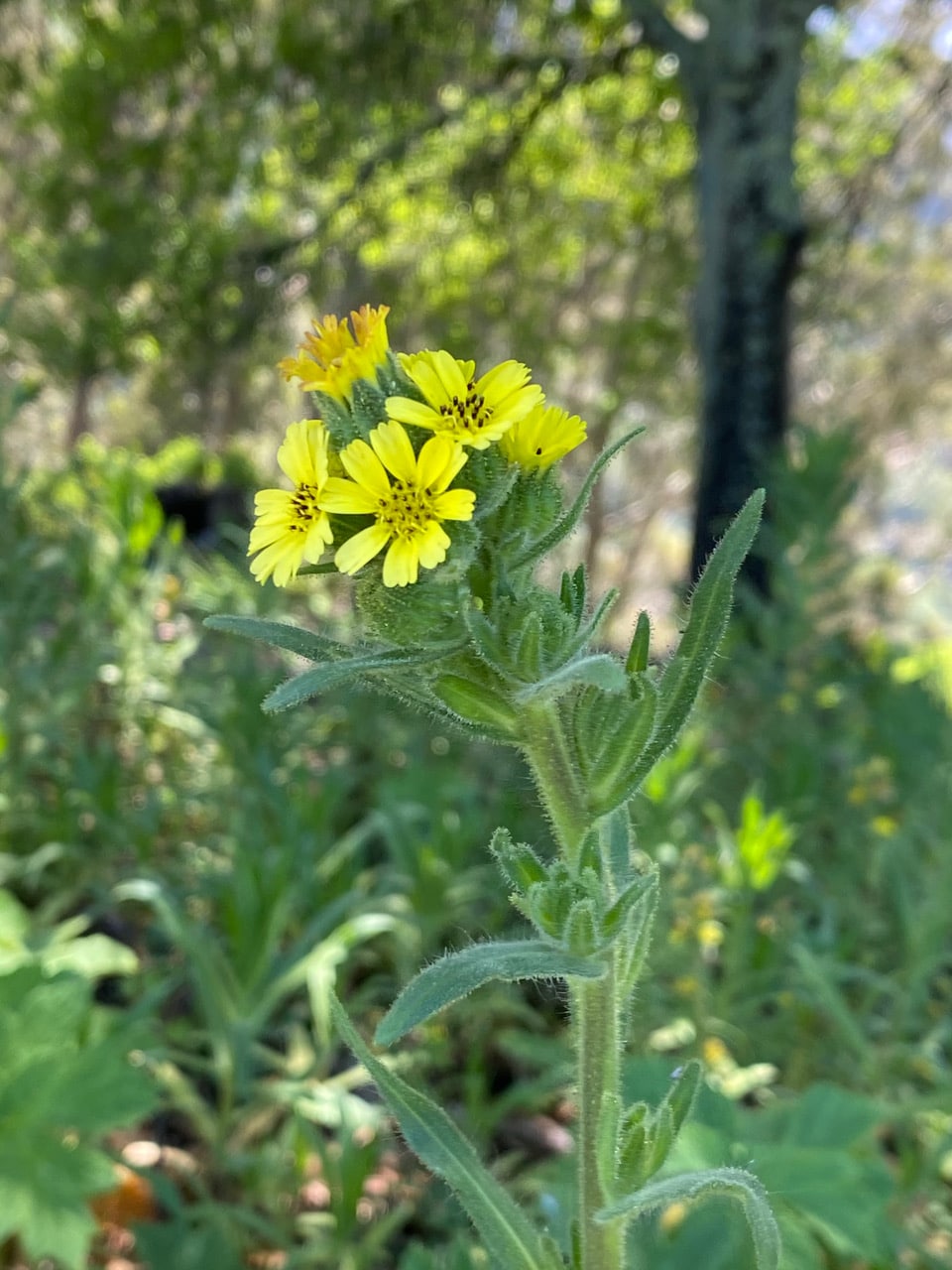
It is not even summer yet, but the Coast Tarweed, Madia sativa has started to bloom.