

Pollinator Post 5/18/23 (2)
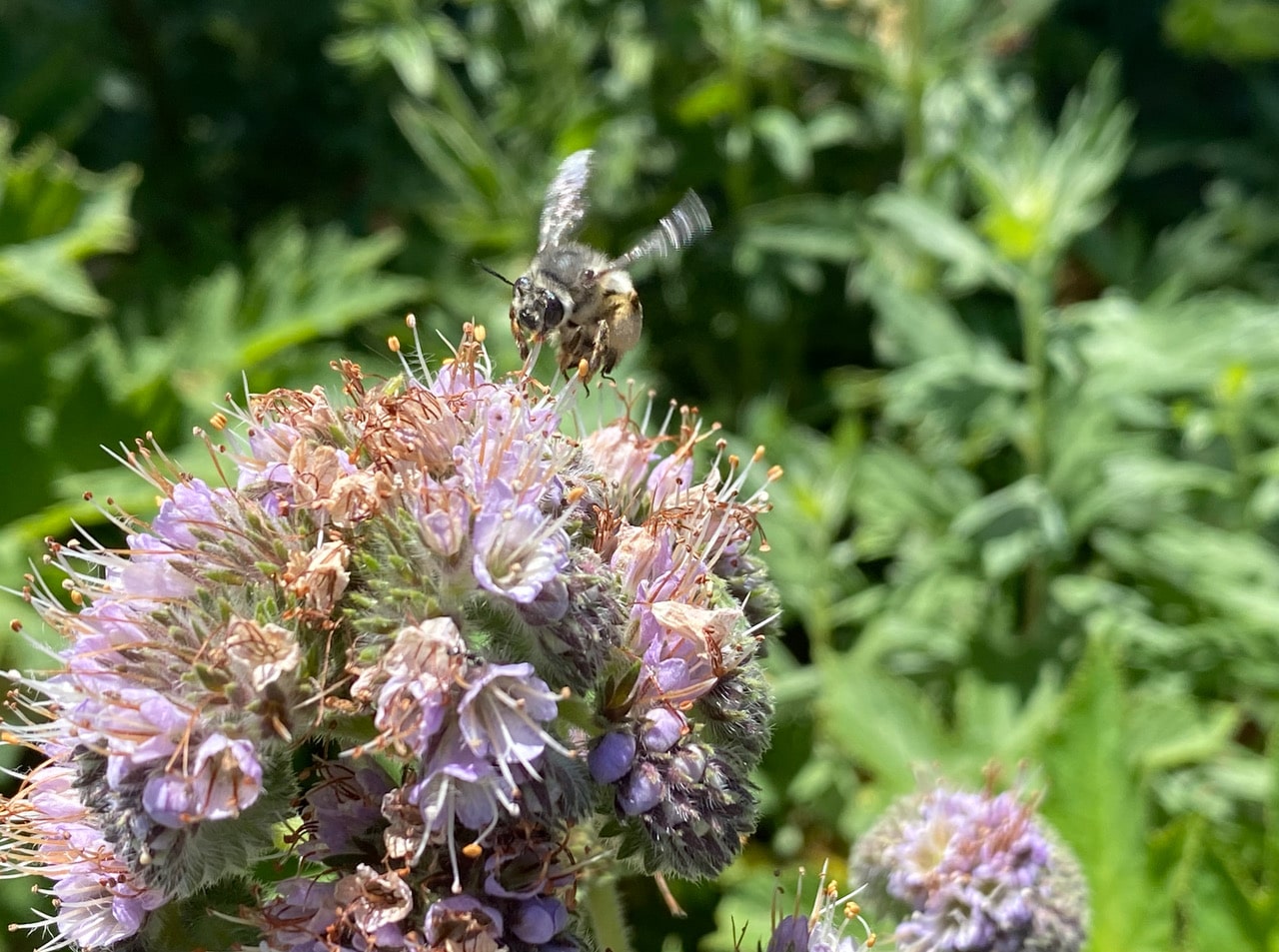
Hey, there’s a new bee in the garden! Fast and furious, it buzzes around the inflorescences of California Phacelia, Phacelia californica. Built like a bumble bee, it is chuncky, but is a plain gray-brown all over. It is a female, as she is carrying pollen on the scopae of her hind legs.
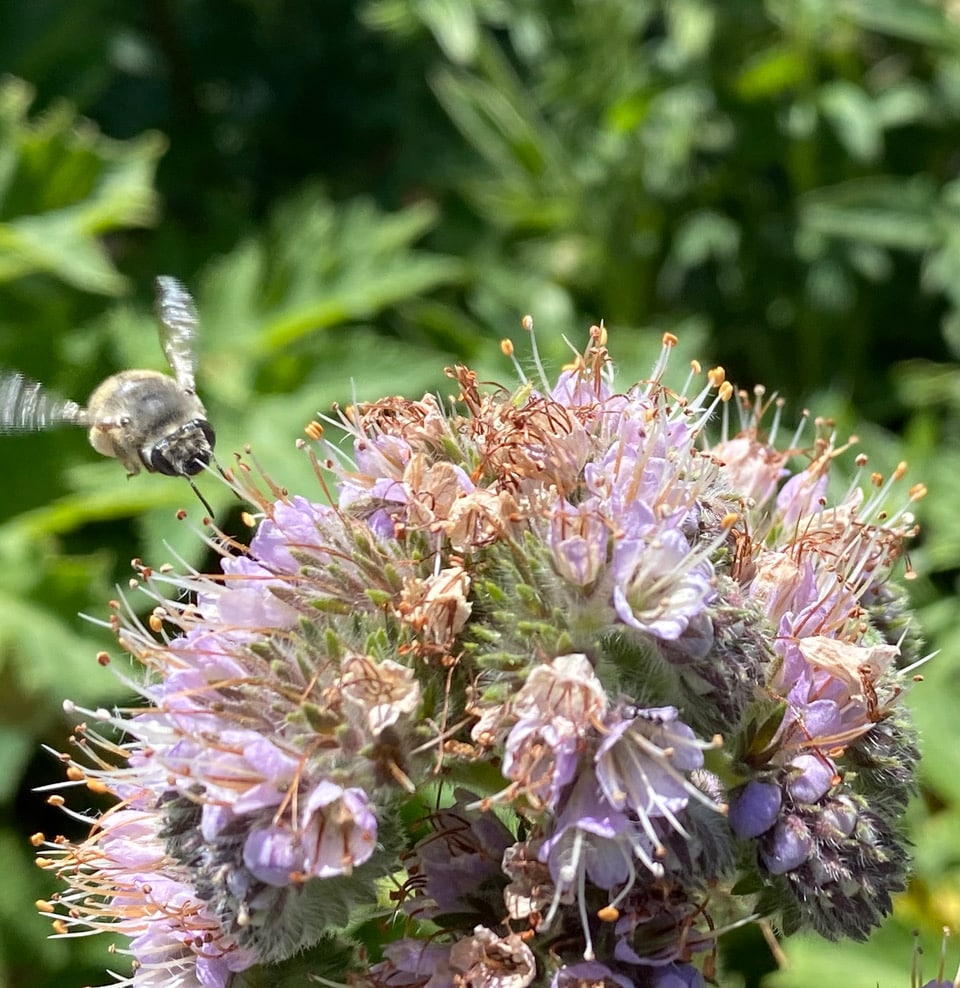
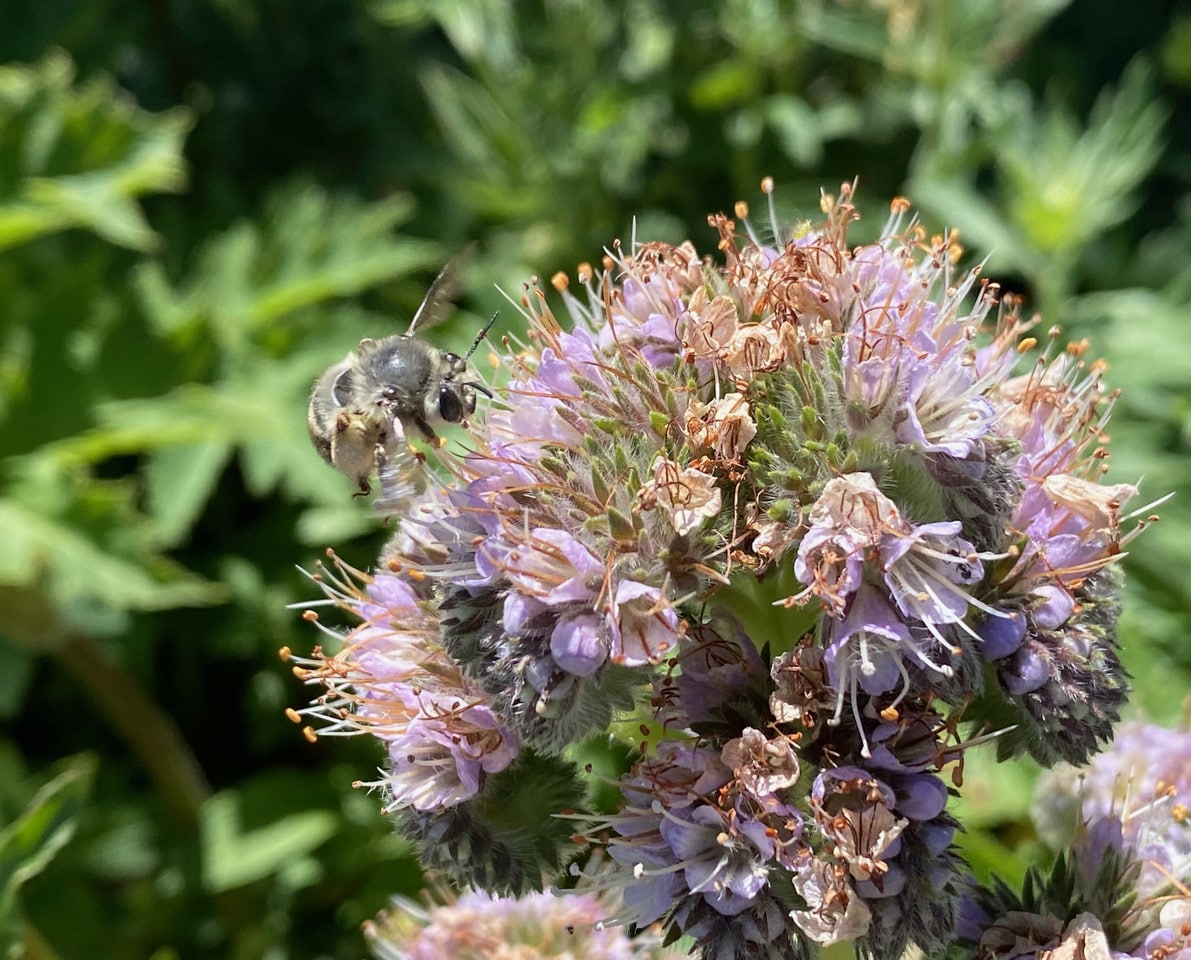
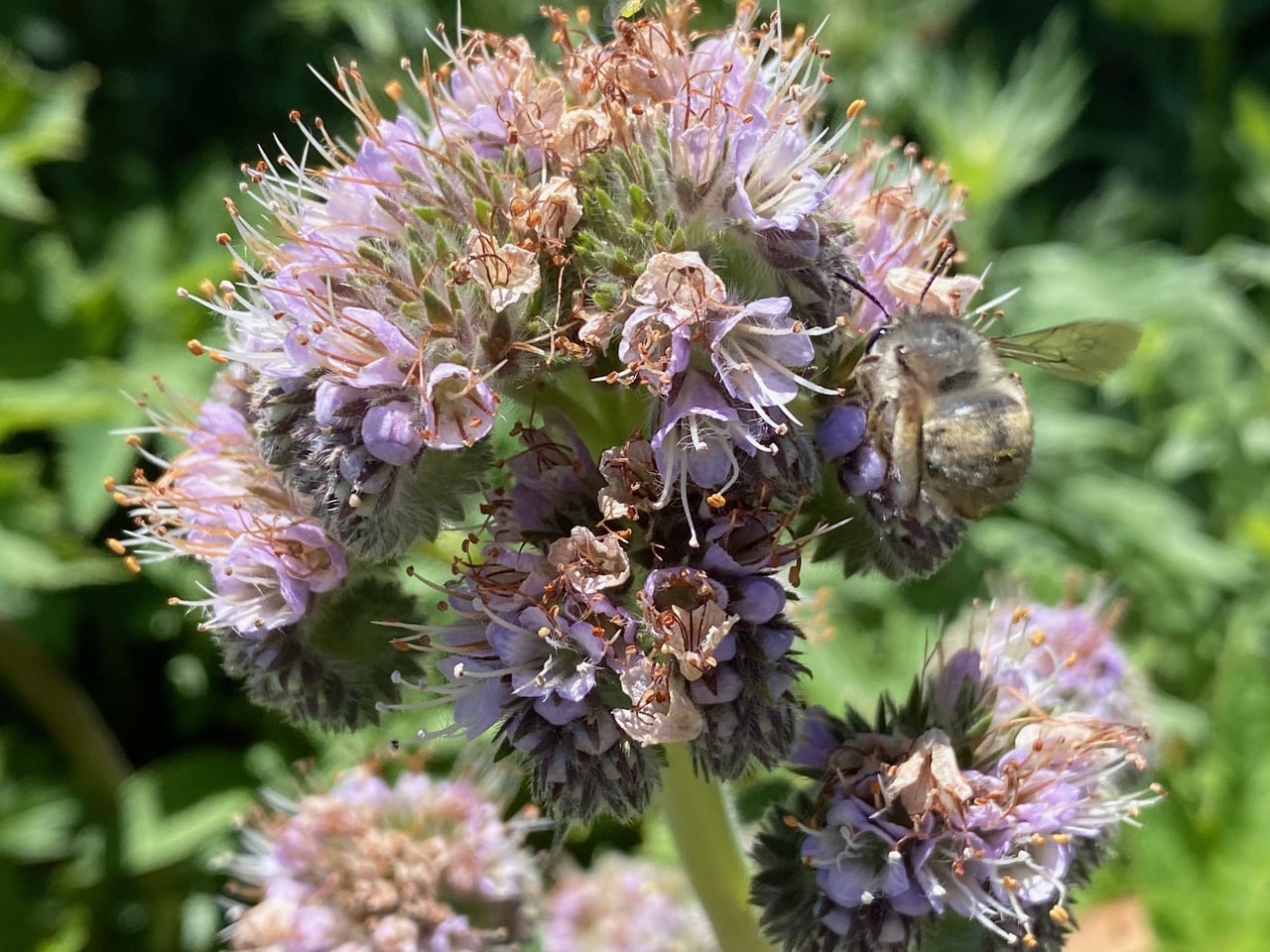
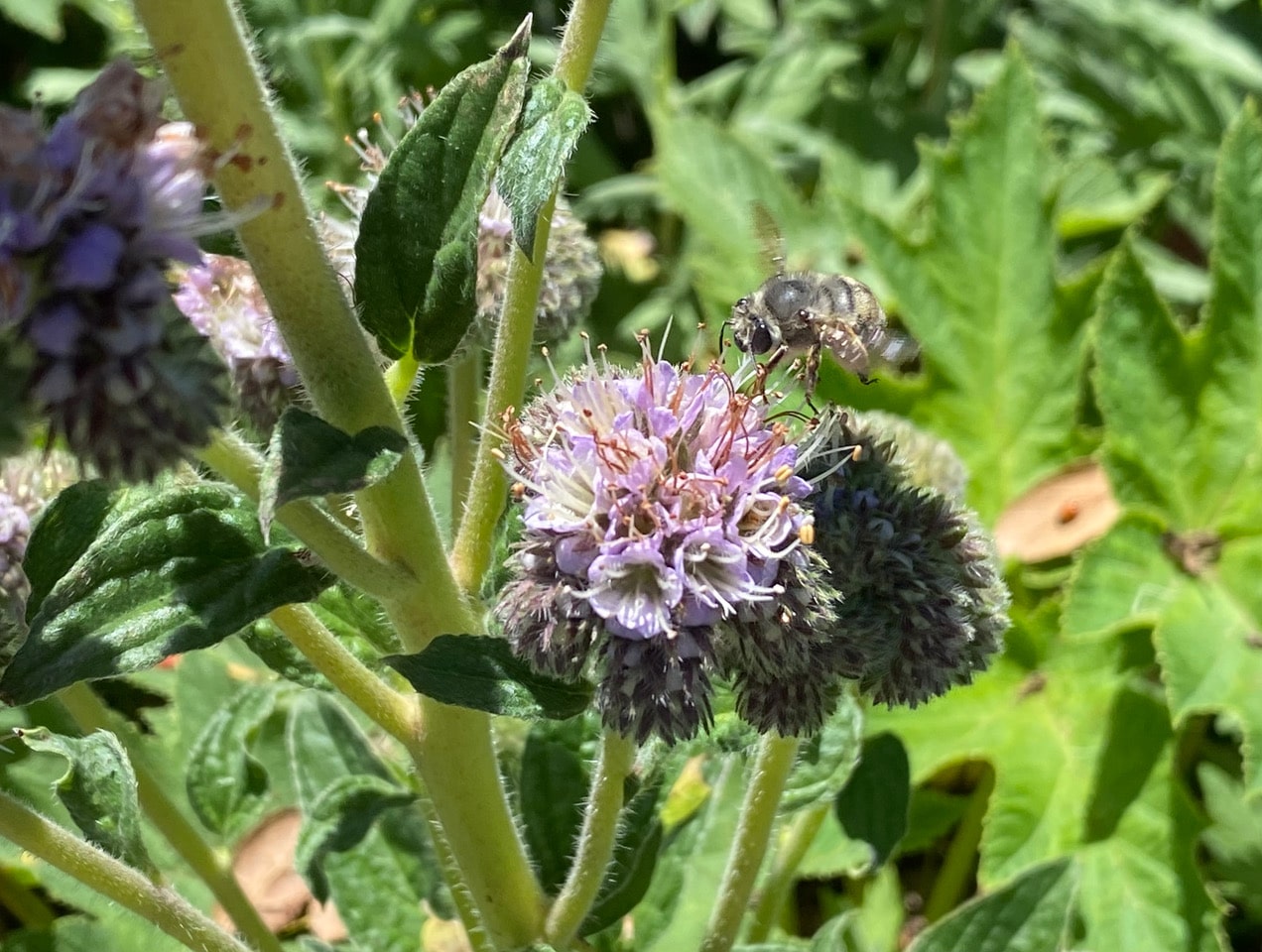

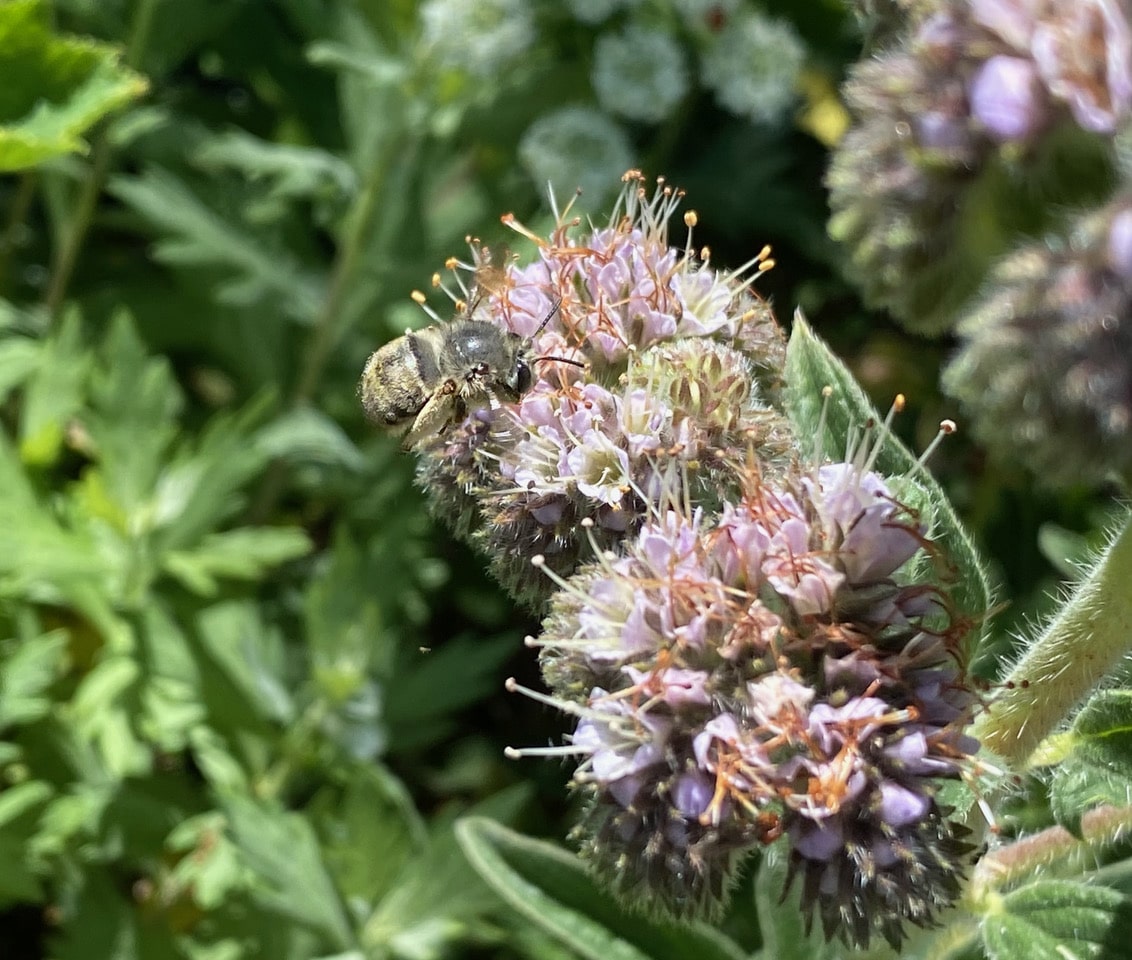
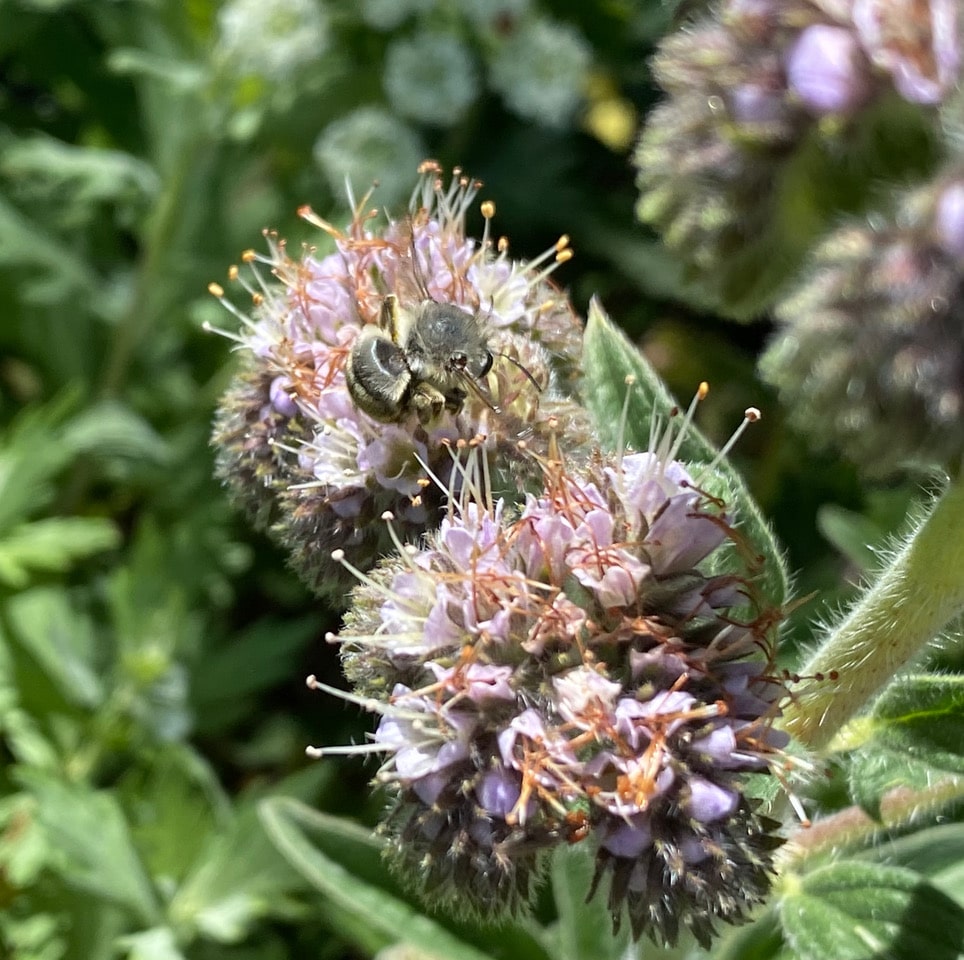




She’s finally landing!
From this sketchy assemblage of photos, iNaturalist has helped identify the bee as the California Mountain-Digger Bee, Habropoda depressa (family Apidae).
The California Mountain Digger Bee, Habropoda depressa (family Apidae) occurs mainly in western North America, nearly a third of them found only in Calfornia. The name Habropoda means “graceful or delicate foot”. It is a solitary, ground-nesting species. Adults are active from February to early June in California. The bees are generalists, visiting flowers from several plant families. Habropoda nest in the ground, often in aggregations of several hundred individuals. Habropoda make just one cell that encloses just one egg at the end of each nest. As with most bees, the male Habropoda emerge from the nest in which they developed earlier than the females. These males hang around the nest site, listening for the females to emerge, and will dig down to meet them. Often fights break out among the males vying to mate with a female; the bigger bee usually wins. Not all Habropoda larvae from the previous year emerge; instead, some individuals will stay in the nest for up to 7 years. Bees that wait for a few years before emerging are a mystery that scientists are still puzzling over.
A small dark, bristly fly is foraging on an umbel of Cow Parsnip, Heracleum maximum.
It is a Woodlouse Fly, Stevenia deceptoria (family Rhinophoridae). These small, slender, black, bristly flies are somewhat related to the Tachinidae. The larvae are mostly parasitoids of woodlice (pill bugs), beetles, spiders and other arthropods, and occasionally snails.

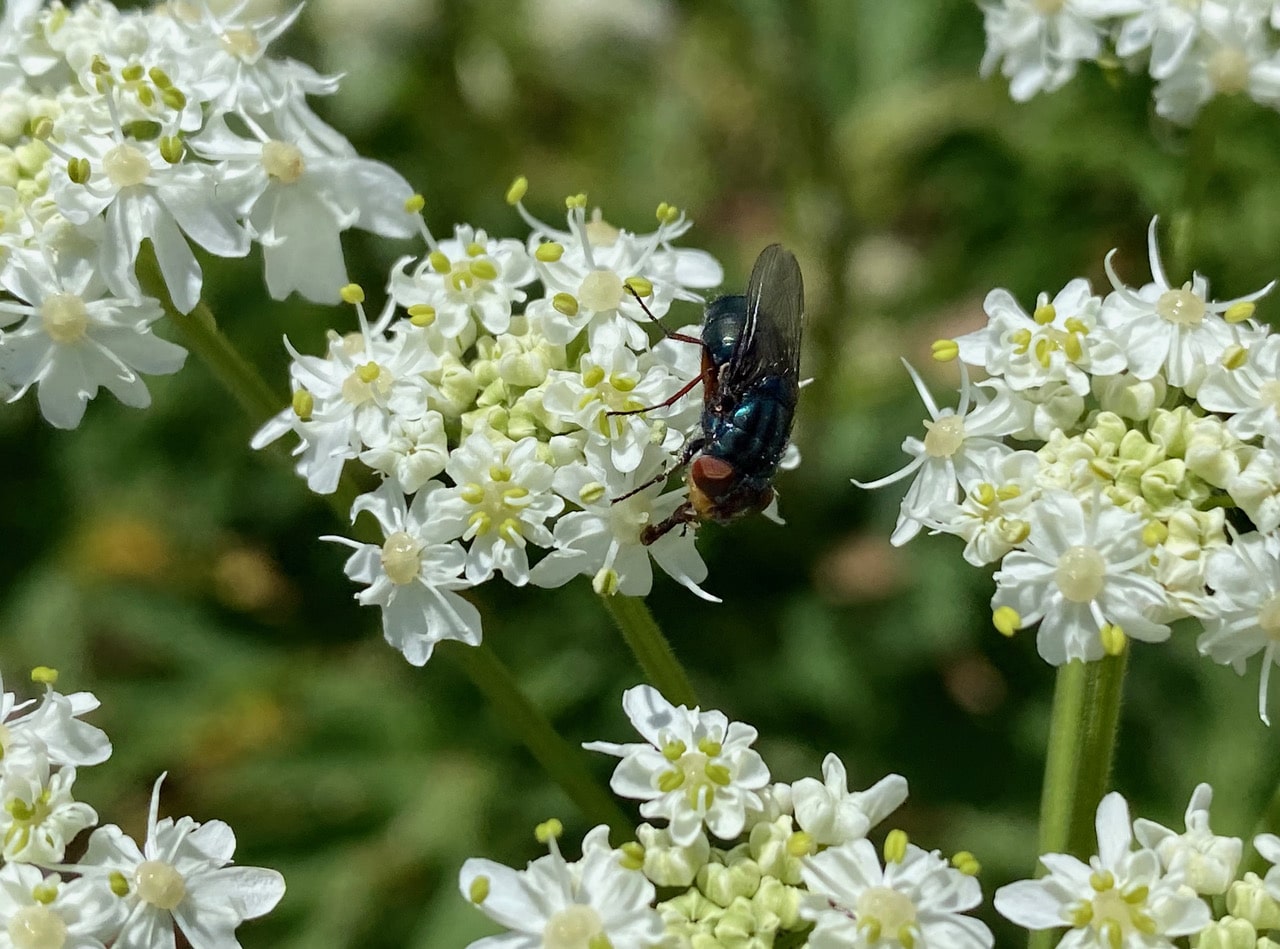
Its sponging mouthpart extended, a Secondary Screwworm Fly, Cochliomyia macellaria (family Calliphoridae) is taking nectar from a Cow Parsnip flower.
The Secondary Screwworm, Cochliomyia macellaria (family Calliphoridae, commonly known as blow flies) ranges throughout the United States and the American tropics. The body is metallic greenish-blue and characterized by three black longitudinal stripes on the dorsal thorax. Females are attracted to carrion where they lay their eggs. These screwworms are referred to as “secondary” because they typically infest wounds after invasion by primary myiasis-causing flies. While the flies carry various types of Salmonella and viruses, C. macellaria can also serve as important decomposers in the ecosystem. In a lifetime, a female may lay up to 1000 or more eggs. Females may also lay their eggs with other females, leading to an accumulation of thousands of eggs. The larval stage of C. macellaria is referred to by the common name of secondary screwworms; this is due to the presence of small spines on each body segment that resemble parts of a screw. The larvae feed on the decaying flesh of the animal that they have been laid on until they reach maturity. Eventually the larvae fall off the food source to pupate in the top layer of the soil. Adult females will continue to feed on tissues of animals; however, now they preferentially feed off of live tissues and tissue plasma. Adult males will no longer consume tissue, but instead will eat nearby vegetation and take nourishment from floral nectar.
Most of the insects gathered on the Cow Parsnip umbels are flies (order Diptera). The flowers are primarily fly-pollinated. What is the attraction? Probably its smell. The flowers do not smell sweet, like those that attract butterflies and bees. Some say the Cow Parsnip flowers smell like corn tortillas. The smell has also been likened to dirty socks. Whatever, the flies seem to like it.
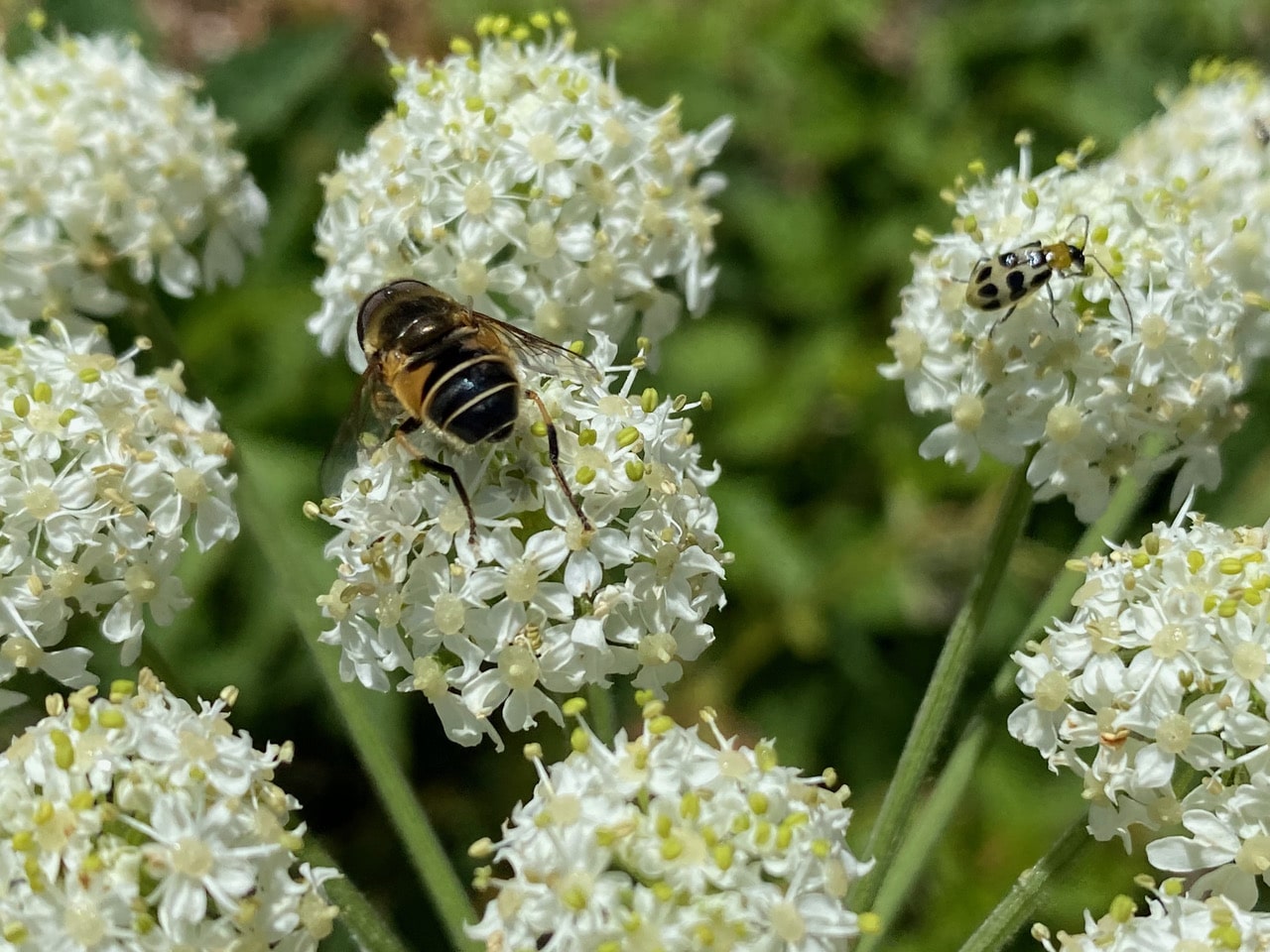
Here a Black-footed Drone Fly, Eristalis hirta (family Syrphidae) is feeding alongside a Spotted Cucumber Beetle, Diabrotica undecimpunctata (family Chrysomelidae).
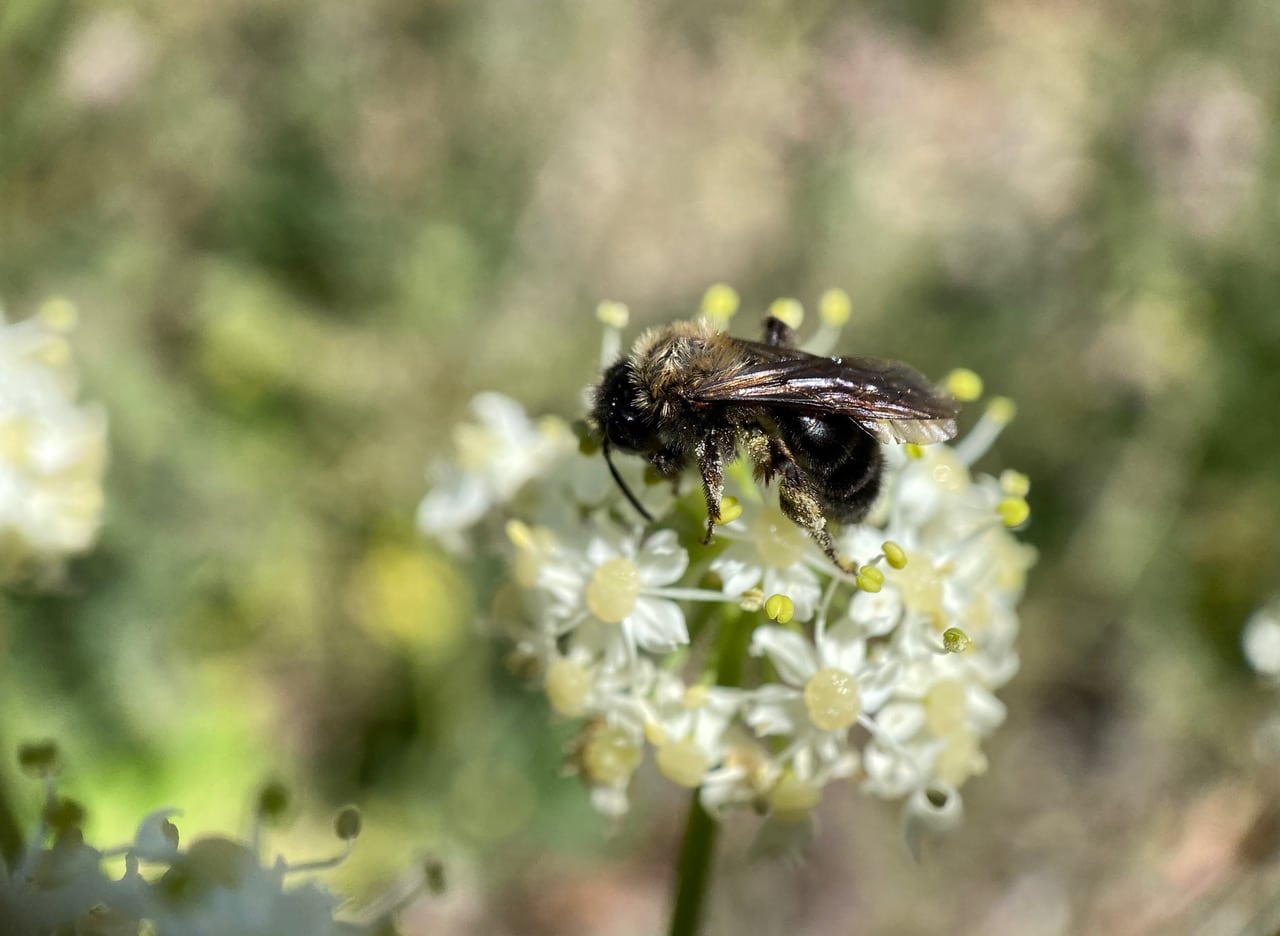
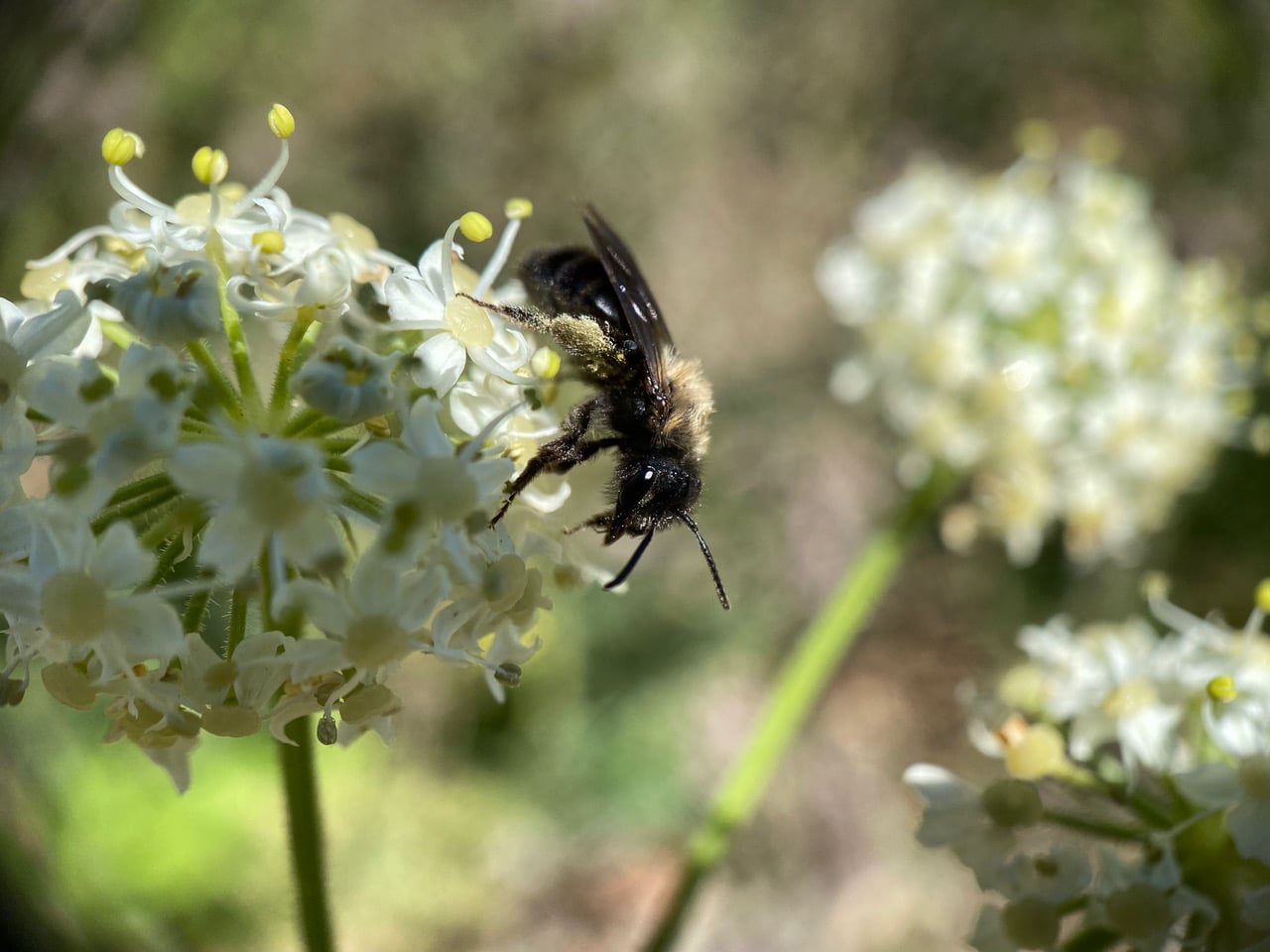
A tired, disheveled little bee is seeking nectar from Cow Parsnip flowers. Some pollen on her scopae seem to have fallen off.
The bee’s scopa seems to cover most of her leg, even extending to her “arm pit”.
It is a female Mining Bee, Andrena sp. (family Andrenidae).
Andrenidae is the largest of all bee families, with more than 4500 species in more than 40 genera. These bees are found worldwide, mostly in the western hemisphere. Sometimes called mining bees, Andrenidae nest in the ground. All Andrenidae line their nests with a waterproof substance secreted by the famale to protect her young from soil moisture and soil bacteria.
Andrena is one of the largest bee genera in the world. The floral preferences of Andrena species span the range of bee diets; some are broad generalists, and a number are strict specialists. Andrena are among the first bees to fly in the spring; their ability to withstand the chill is still a puzzle to scientists. The bees can’t fly until their body temperatures reach 50-60 F. They rely on the warmth of the sun to get them to speed, and it is not uncommon to see them warming up on leaves or rocks. This cold-hardiness makes Andrena excellent pollinators of early spring wildflowers and cultivated crops.
Green fruits are already replacing the white flowers on the Cow Parsnip umbels. Note the pair of persistent styles that remain atop the fruit like little horns after the petals are shed. The flattened fruit of Apiaceae consists of a cremocarp, a double unit which usually splits vertically into two separate mericarps when ripe. Dark colored resin canals called vitae (or simply, oil tubes) are embedded in the fruit wall and visible externally. The vitae contain essential oils. The resin ducts in the fruits have been shown to protect the seeds from insect predation and to have antimicrobial (including antifungal) properties. Cow Parsnip is generous to pollinators as flowers, but is not amenable to sharing its seeds!