

Pollinator Post 5/18/23 (1)
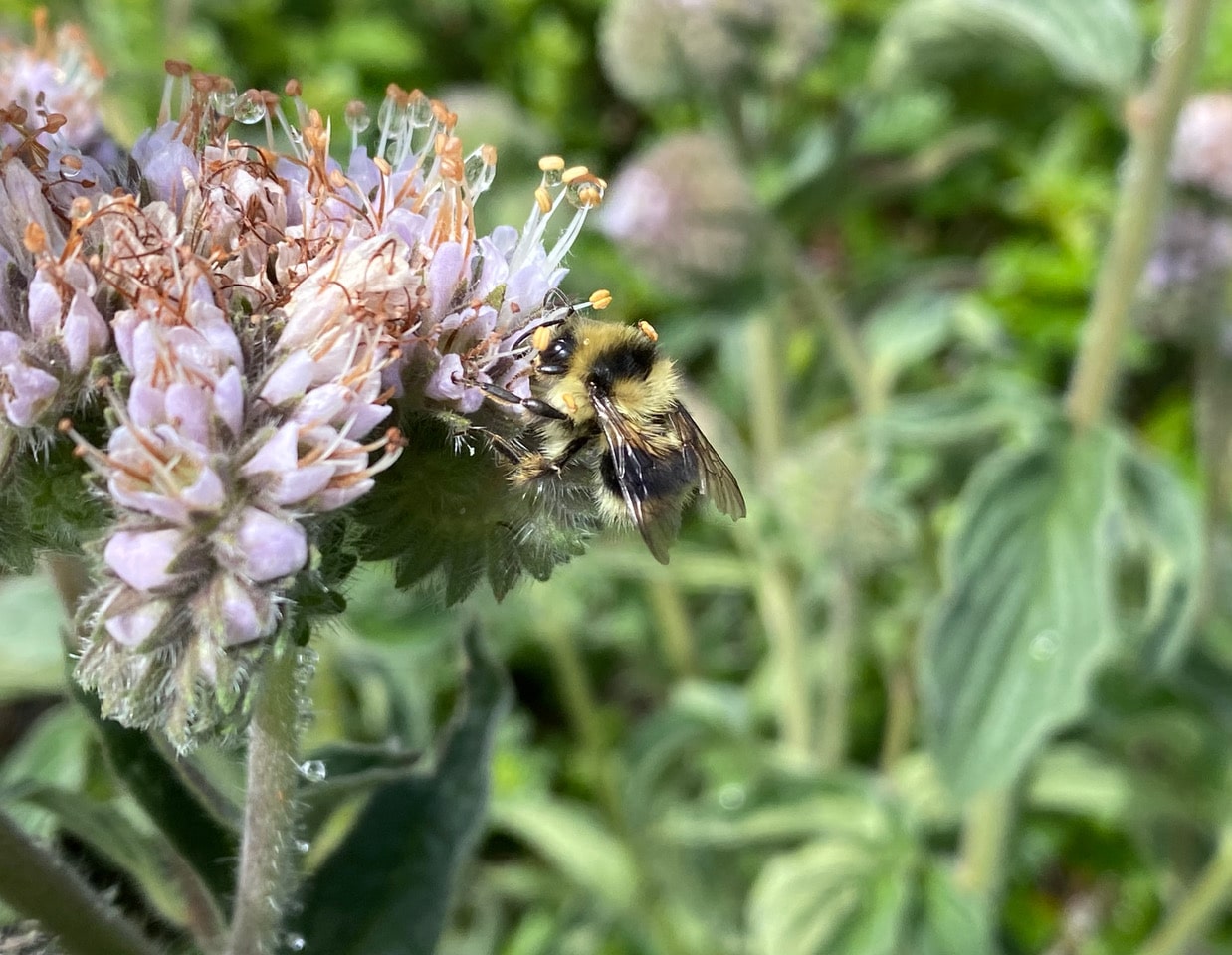
The Black-tailed Bumble Bees, Bombus melanopygus are usually the first species of bumble bees to appear in early spring in the Bay Area. They seem to persist much longer this year, with the decline of the other bumble bee species, the Yellow-faced Bumble Bees, Bombus vosnesenskii. Last year when the Yellow-faced are swarming over the Phacelia flowers in large numbers, the Black-tailed were no longer around. It is good to know that the plant is well taken care of by these alternative species of pollinators.
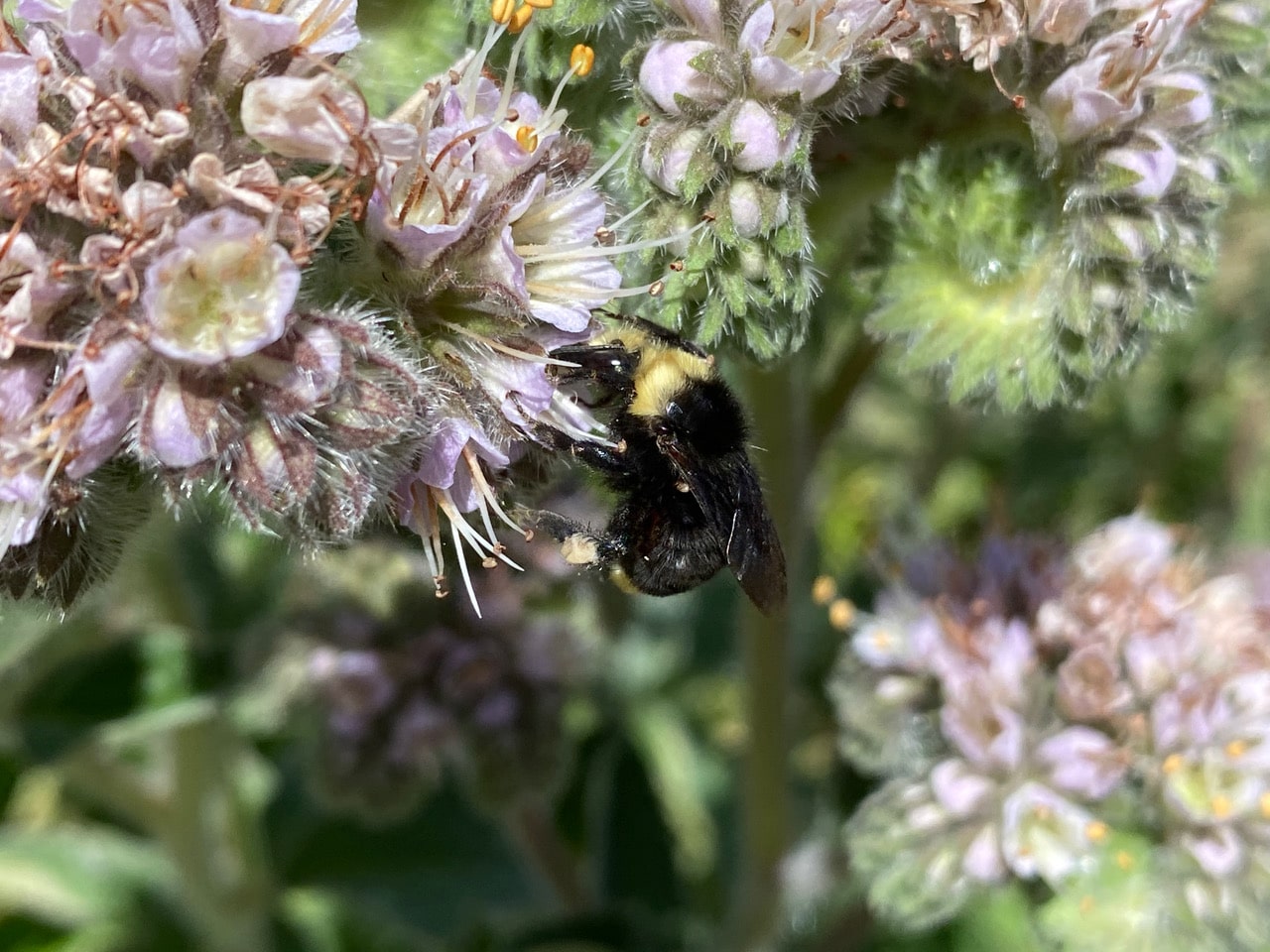





It is also gratifying that the Yellow-faced Bumble Bees are making a come back despite a weak showing in early spring. More and more are visiting the blooming Phacelia. I am still seeing some queen bumble bees searching for nest sites – it’s a late start for them, but they will have an easier time foraging as more flowers have come into bloom now.
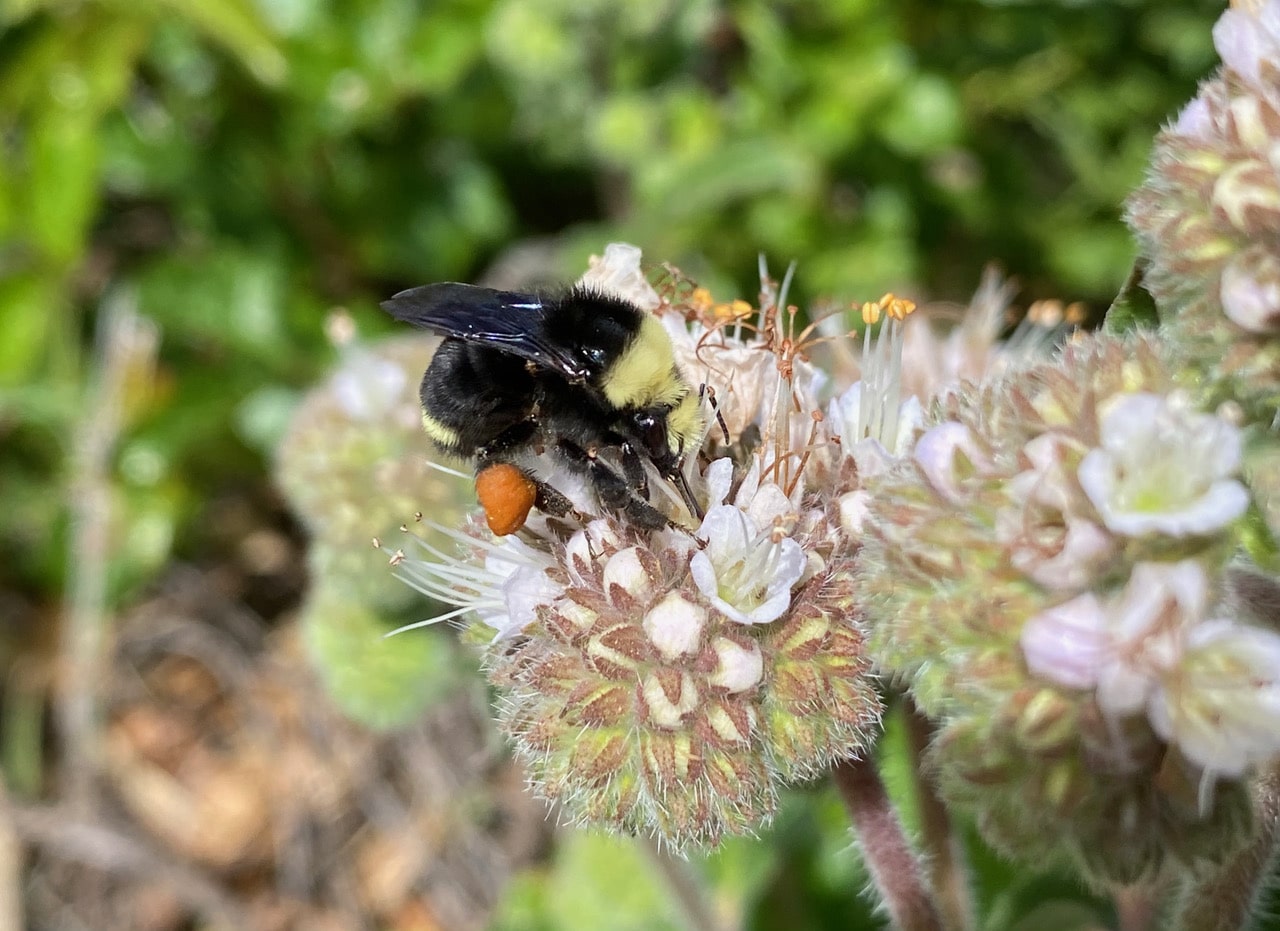
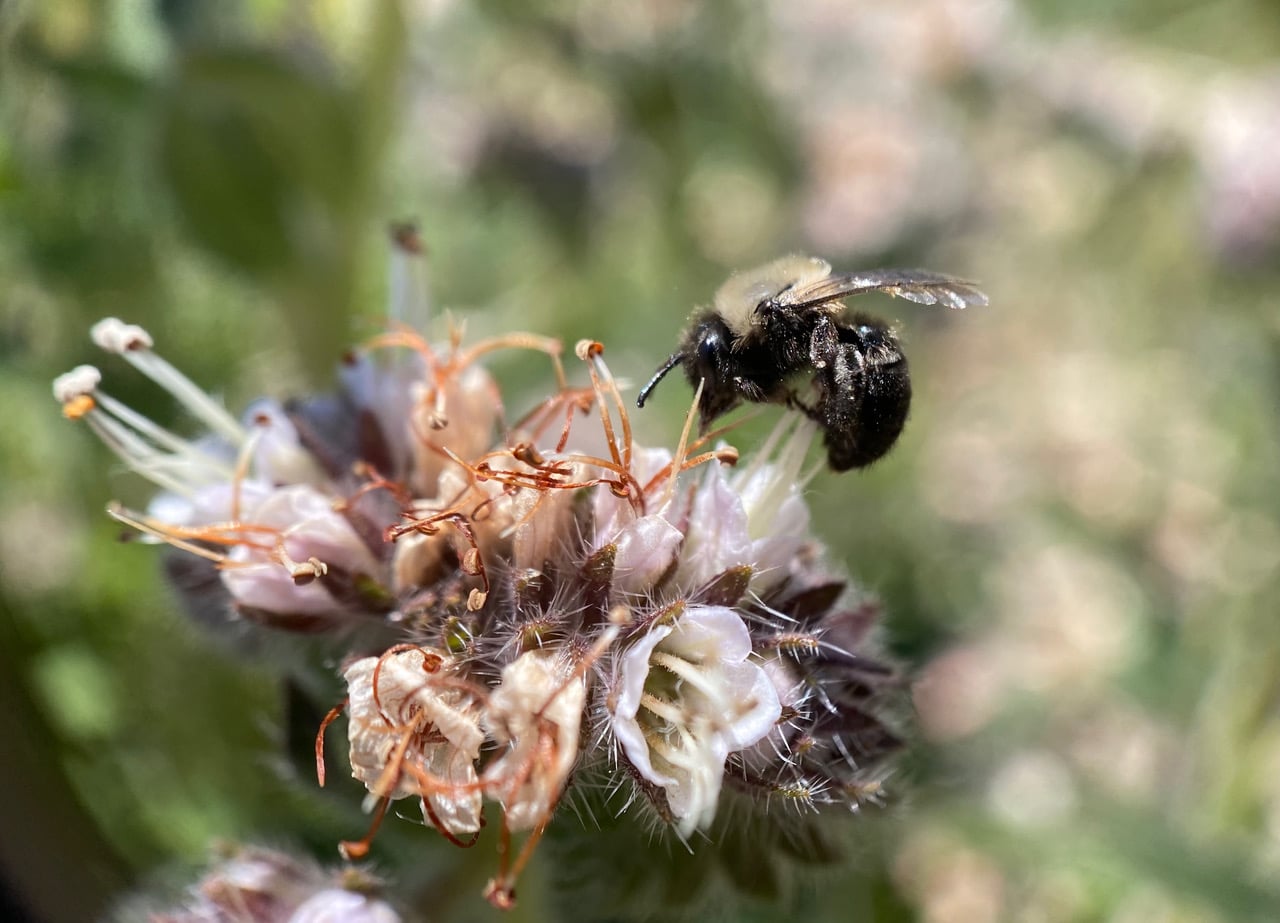
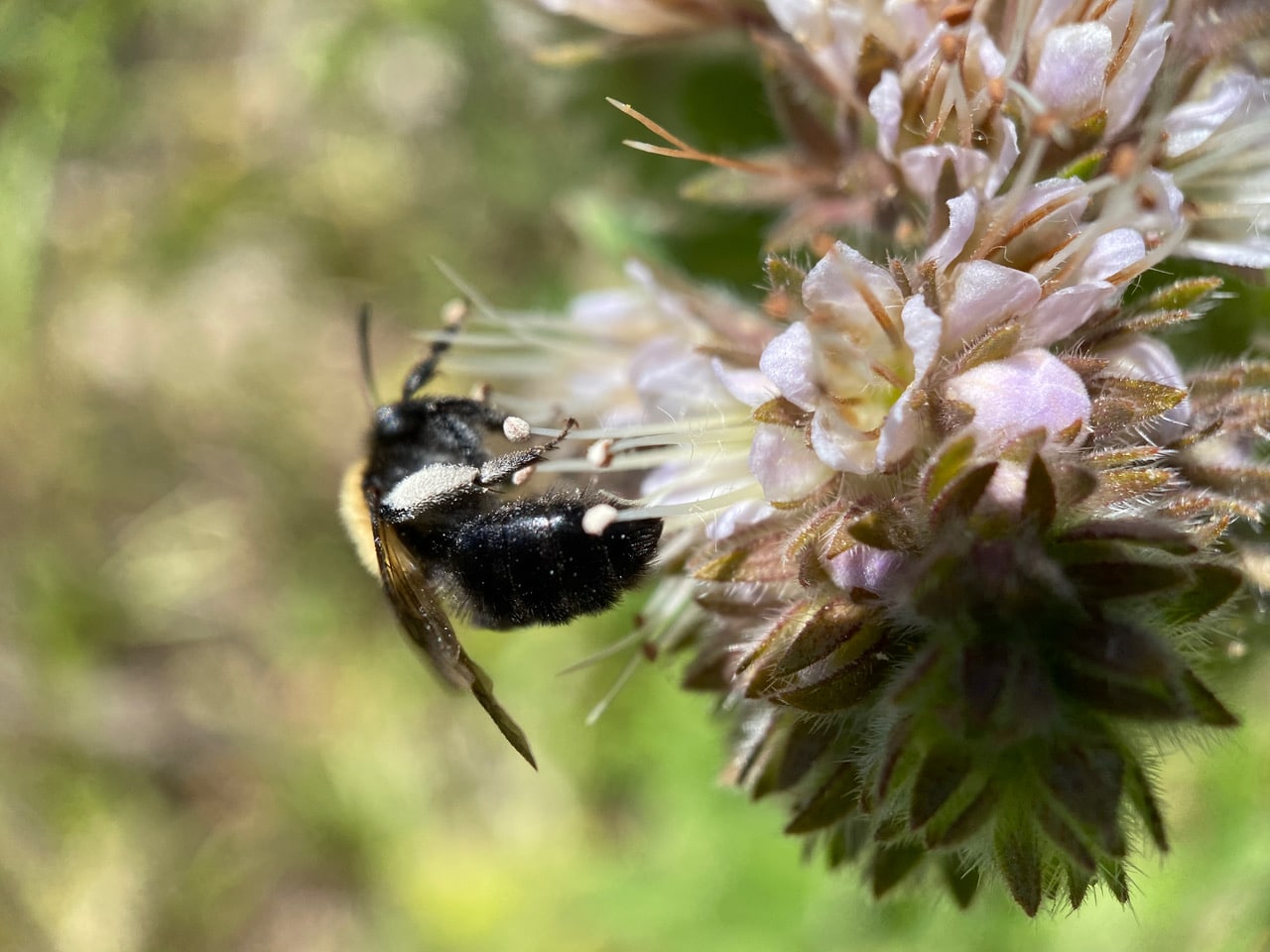
This Yellow-faced Bumble Bee is taking nectar from the Phacelia flowers. She has obviously been collecting pollen from some other flowers. Phacelia pollen is cream-colored.
This is probably an older bee. Her wings are tattered and the black hairs on her body are graying. Yet she has managed to gather a impressive load of pollen. Bees never cease to amaze me with their resilience and diligence.
The pollen collecting apparatus in Apidae bees, which include honey bees and bumble bees, is commonly called a “pollen basket” or corbicula. This region is located on the tibia of the hind legs and consists of hairs surrounding a concave region. After the bee visits a flower, she begins to groom herself and brushes the pollen down toward her hind legs and packs the pollen into her pollen basket. A little nectar mixed with the pollen keeps it all together like putty, and the stiff hairs surrounding the pollen basket hold it in place. Remarkably bees are able to fly while carrying up to a third of their body weight in pollen.
.jpg)
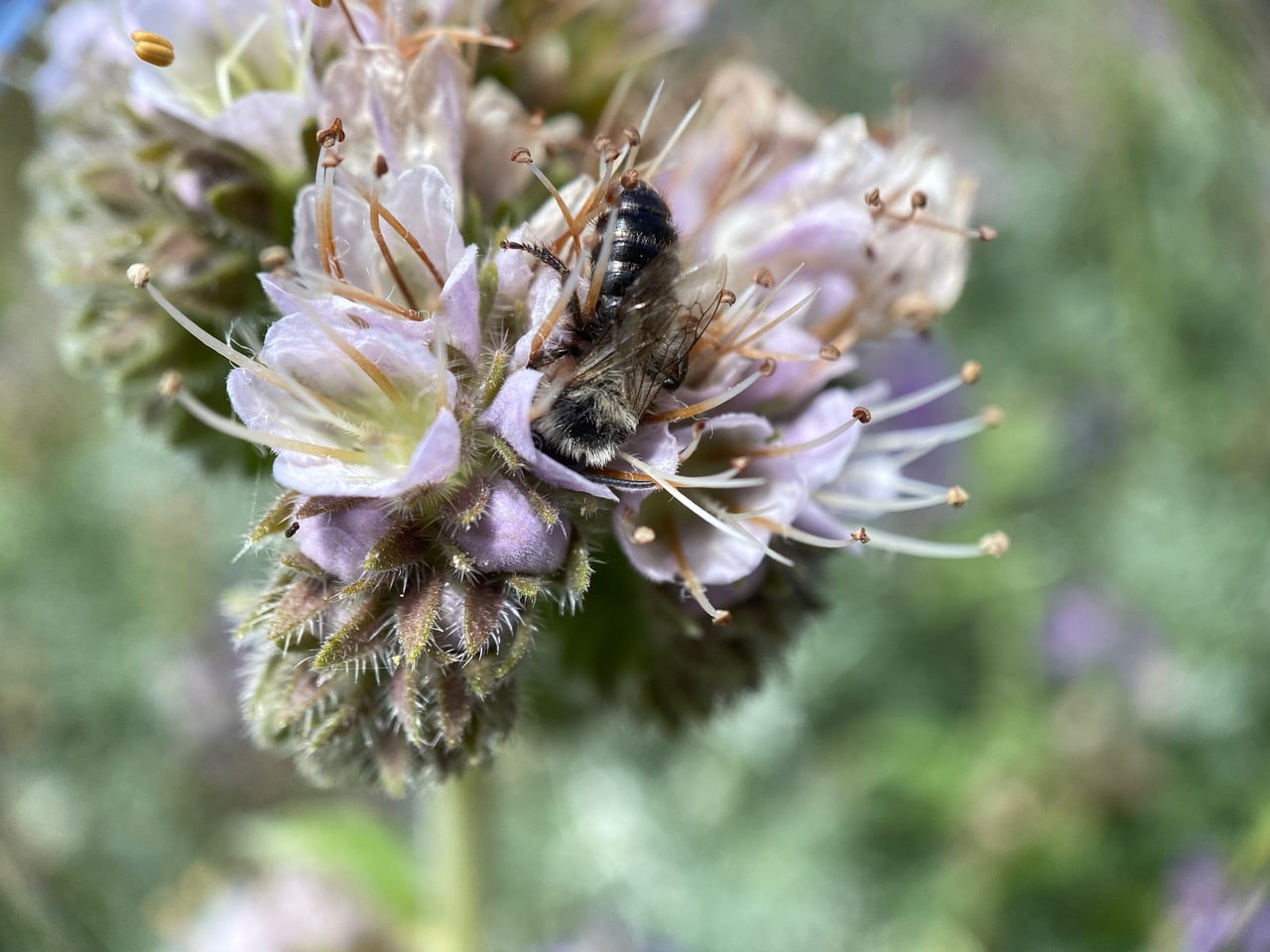
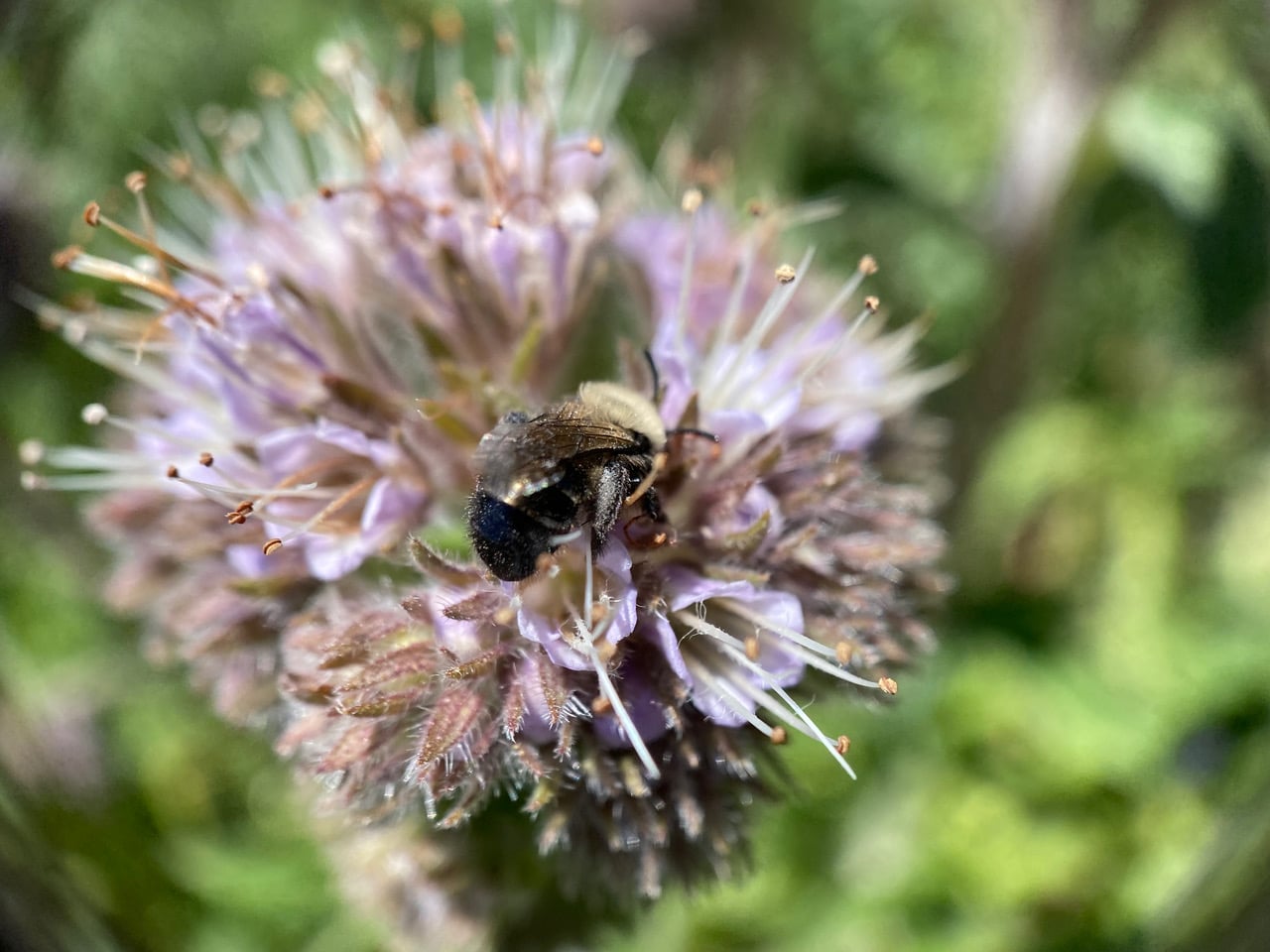
Here’s a little bee that amuses me endlessly. She is probably a Cellophane Bee, Colletes sp. (family Colletidae). One of the main characteristics of this family is their short tongues. I often see this bee with her whole head buried in the trumpet-shaped flowers of Phacelia, struggling to reach the nectar at the base of the flower.
Often the bee is seen upside-down probing for nectar.
The bee family Colletidae includes generalists and specialists, and they are likely important pollinators of many wildflowers. All Colletidae in North America are solitary ground nesters, but some species nest in large groups, called aggregations. There are two major genera of Colletidae in North America: the Masked Bees (genus Hylaeus) and Cellophane Bees (genus Colletes). The most obvious shared characteristics of Colletidae is also the hardest to see: their short tongue. The eyes of Colletes are angled (rather than being parallel), making the face slightly heart-shaped.
The genus name Colletes means “one who glues”, referring to their habit of applying a glue- or cellophane-like lining to the walls of nest cells, using their specialized tongues. This lining gives rise to their common names: cellophane bees, polyester bees, and plasterer bees. Colletes tongue is unique: short, flat, and forked at the tip. Colletes line their nests with a distinctive cellophane-like substance made from saliva and secretions from the Dufour’s gland on the abdomen. Using their specialized tongue, they paint the walls with saliva, then with secretions from the Dufour’s gland, they add a coat of varnish. This creates a clear covering that is strong, durable, and resistant to mold and water.
On another Phacelia inflorescence, a Colletes bee is gathering pollen, balancing on the stamens and working with her legs and whole body. It’s an endearing behavior that makes me smile.
Female Cellophane Bees in the genus Colletes do have scopae with short hairs on their hind legs to transport the pollen they have gathered.
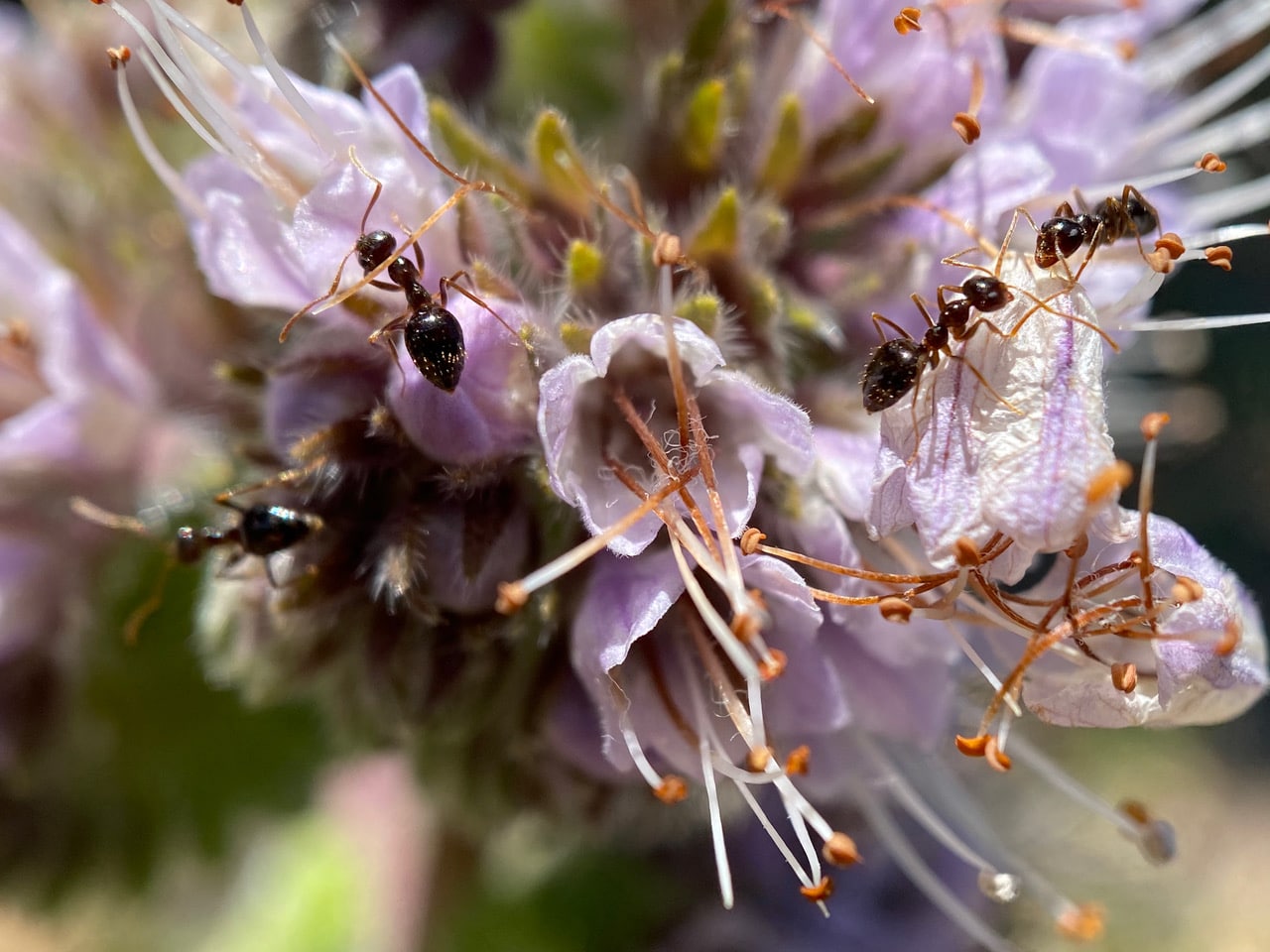
Numerous American Winter Ants, Prenolepis imparis can be seen on the California Phacelia inflorescence, actively seeking nectar, and perhaps other small insects to prey on. I wonder how much longer these ants will be active above ground. Surely our cool spring weather has been advantageous to them.
The American Ant, Prenolepis imparis is a widespread North American ant. A dominant woodland species, it is most active during cool weather, when most other ant species are less likely to forage. This species is one of a few native ants capable of tolerating competition with the invasive Argentine Ant, Linepithema humile. They are also aggressive toward other ants and produce abdominal secretions that are lethal to Argentine Ants. Prenolepis imparis is a generalist omnivore. Foragers are known for tending to aphids or scale insects from which they consume excreted honeydew, aggregating on rotting fruit, and exploiting protein-rich sources such as dead worms. The colony enters estivation (a hibernation-like state) and becomes inactive above ground for the warmer months, during which time eggs are laid and brood are reared. Reproductives overwinter and emerge on the first warm day of spring for their nuptial flight.
Those hairs on the filaments on the fresh Phacelia flowers have eluded me all this time! They are obvious only in good light, and on the stamens that are dispensing pollen! Are the hairs an aid to the small pollinators? A place for their legs to hold on while feeding or collecting pollen?
This Colletes bee is literally perched on the stamens…
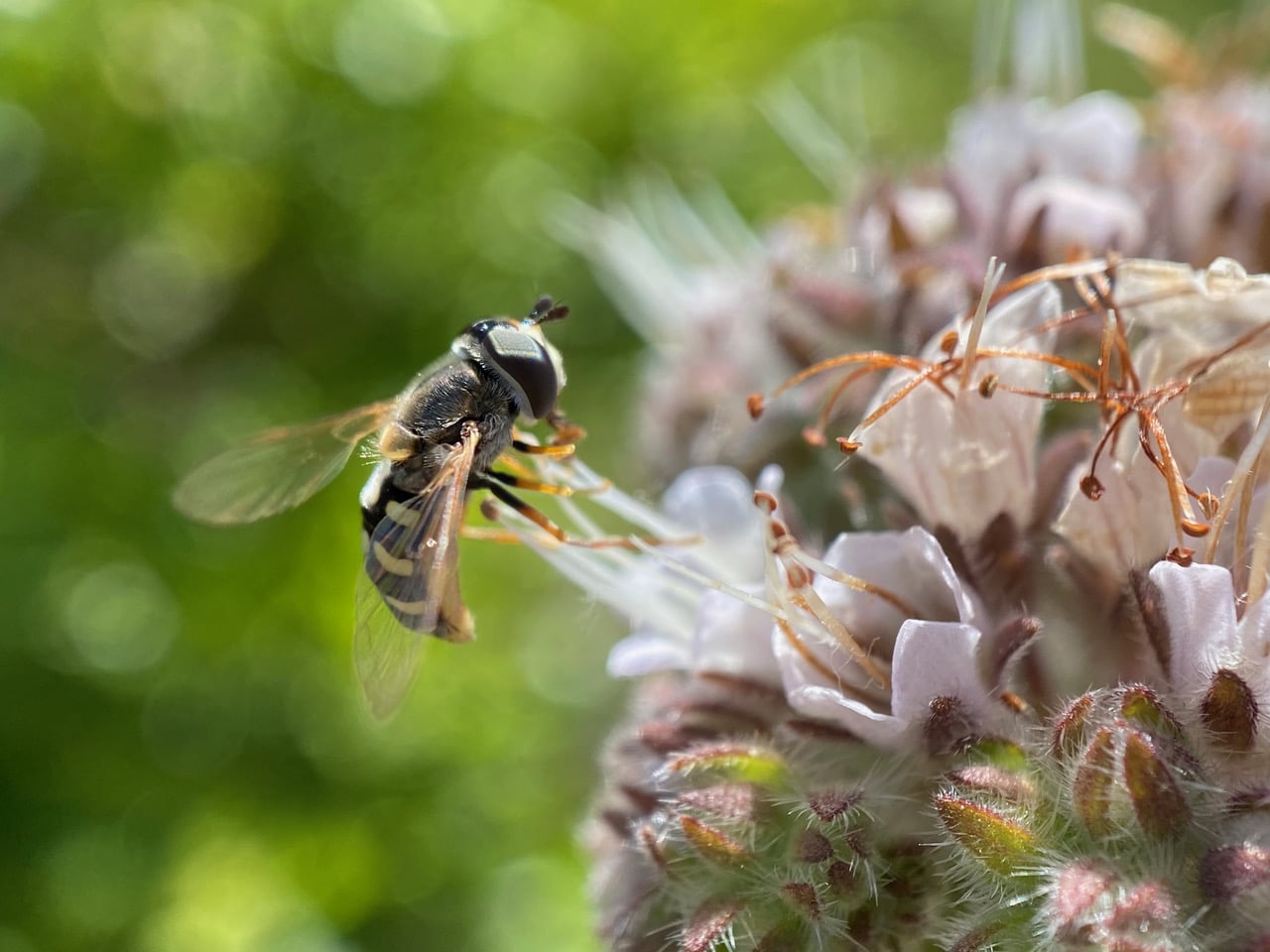
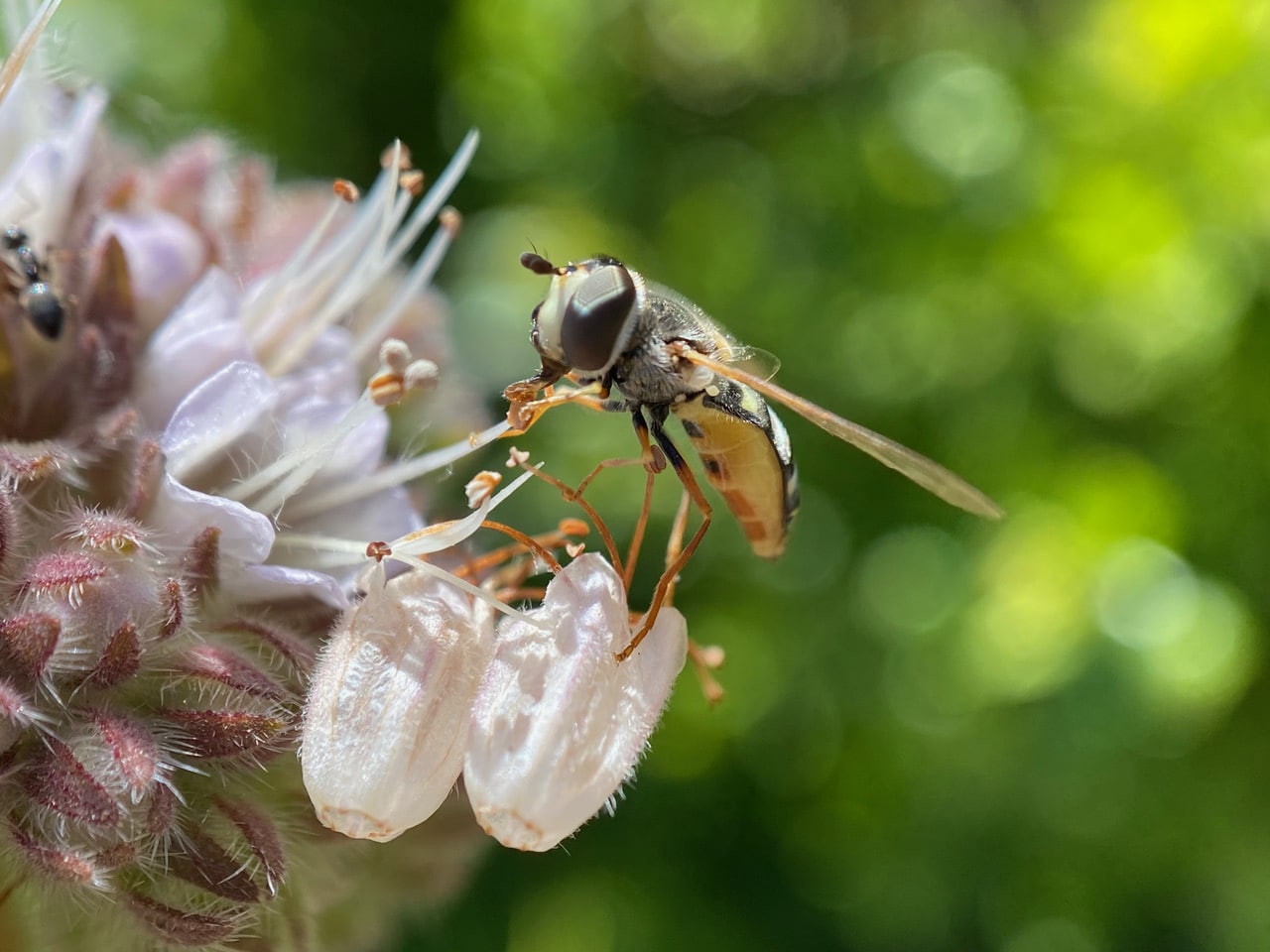
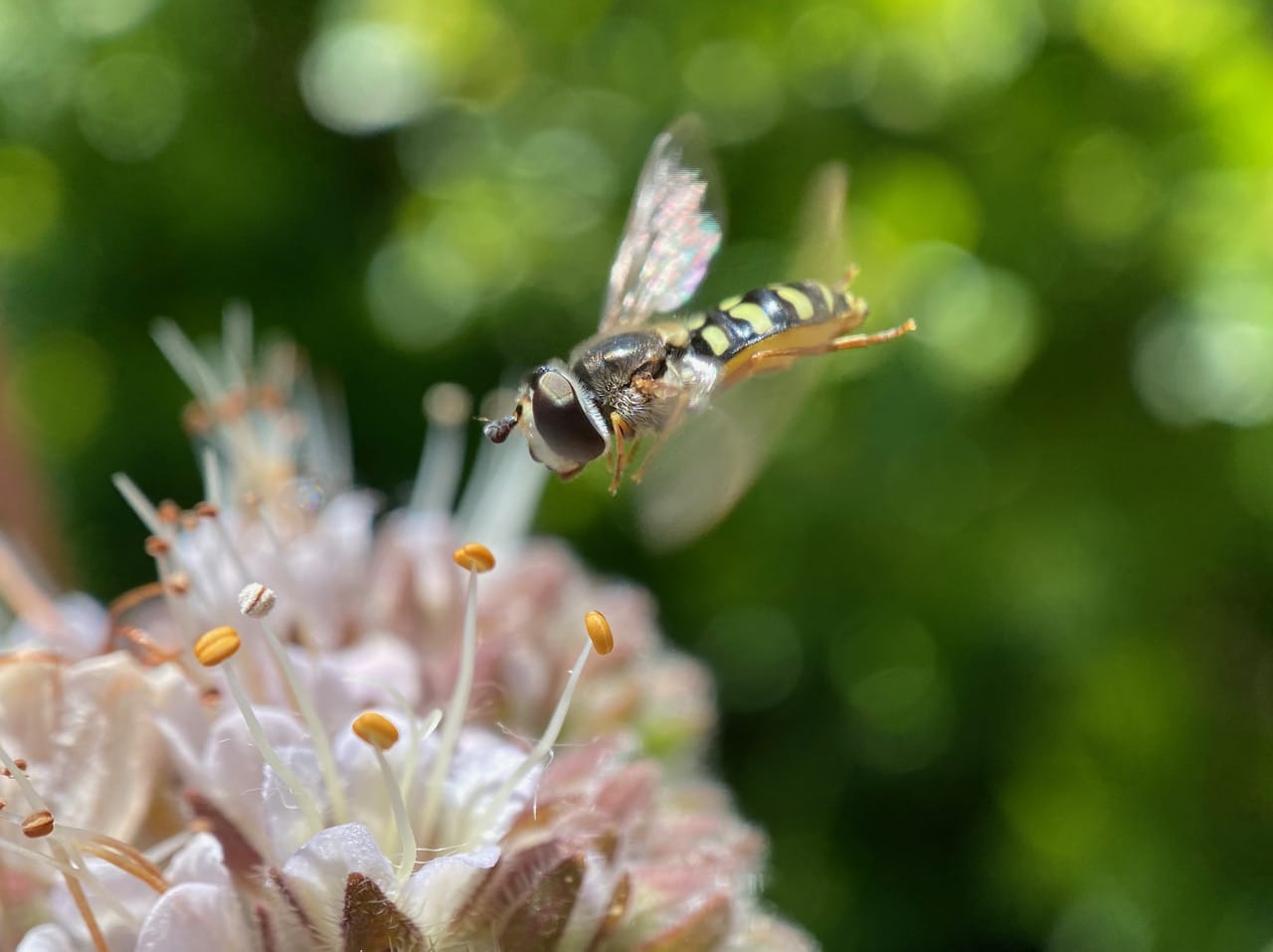
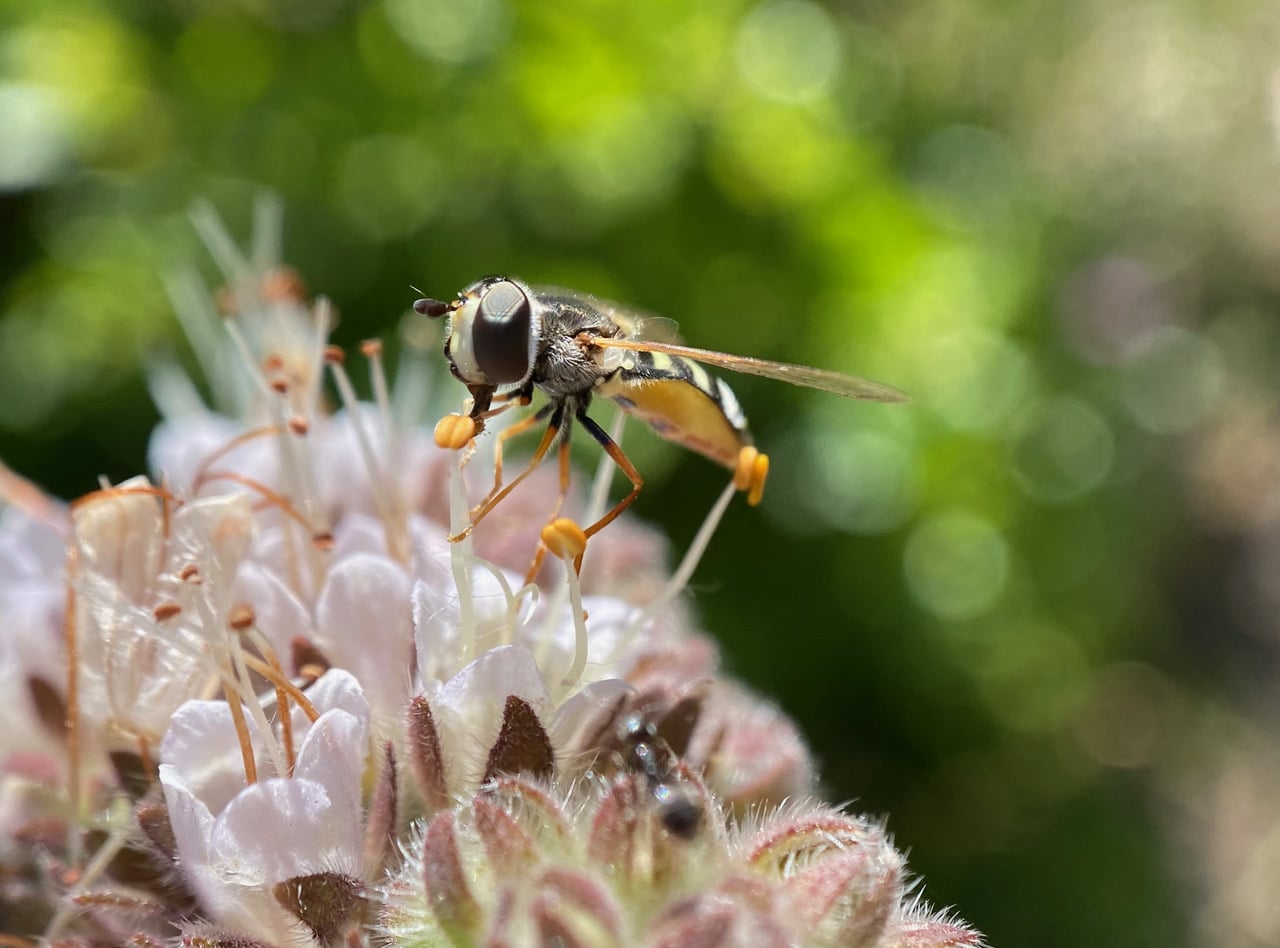
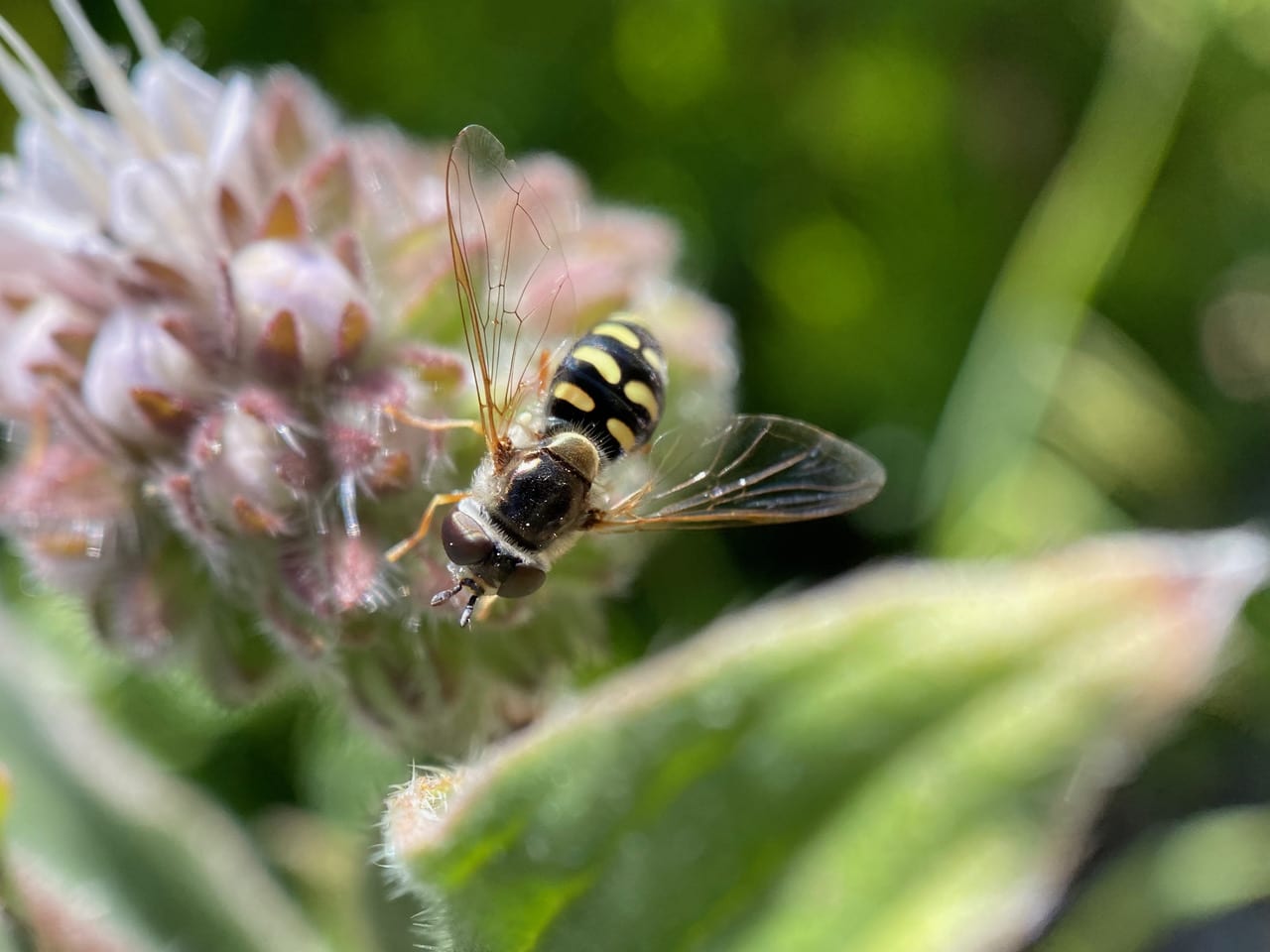
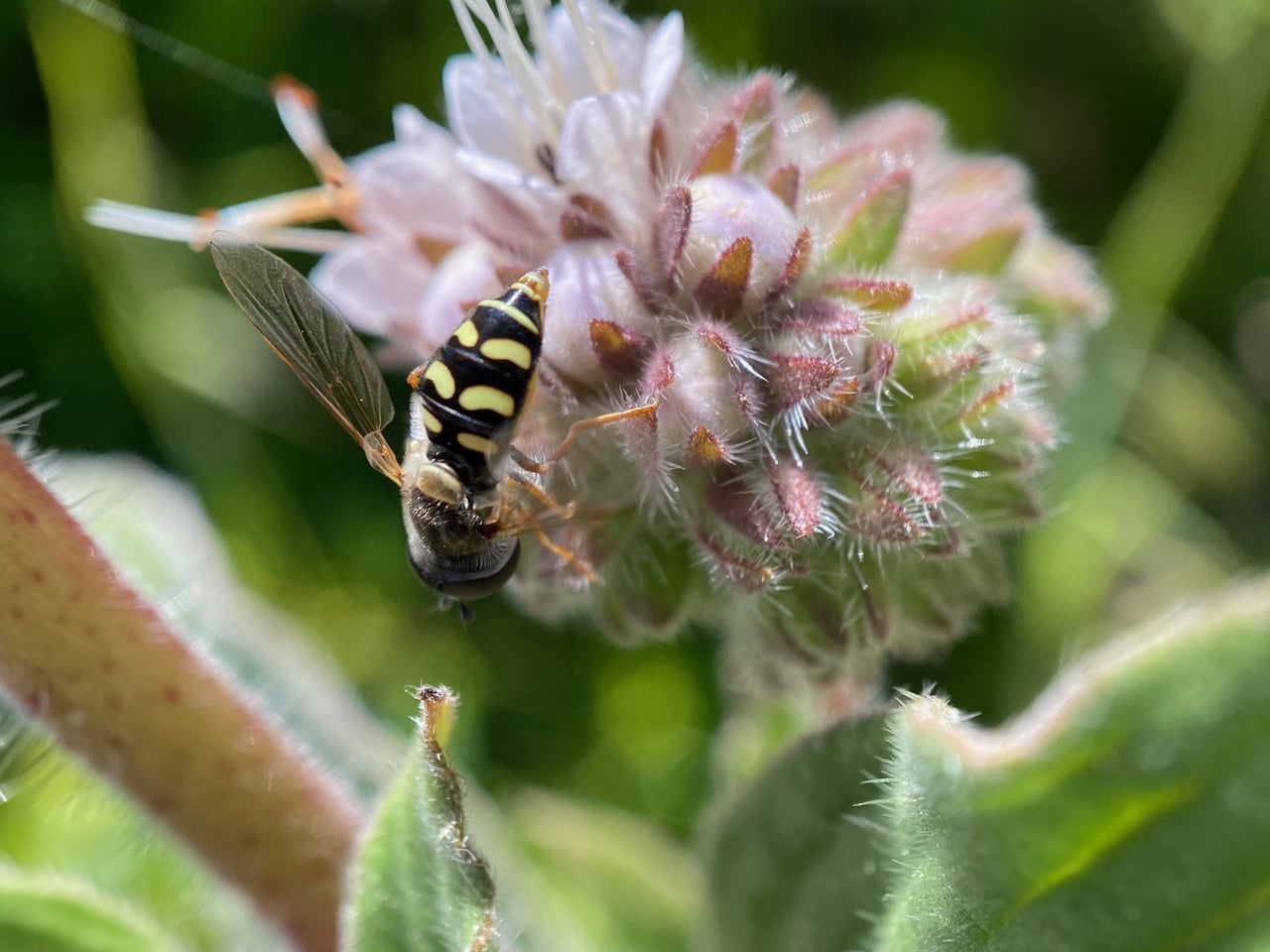
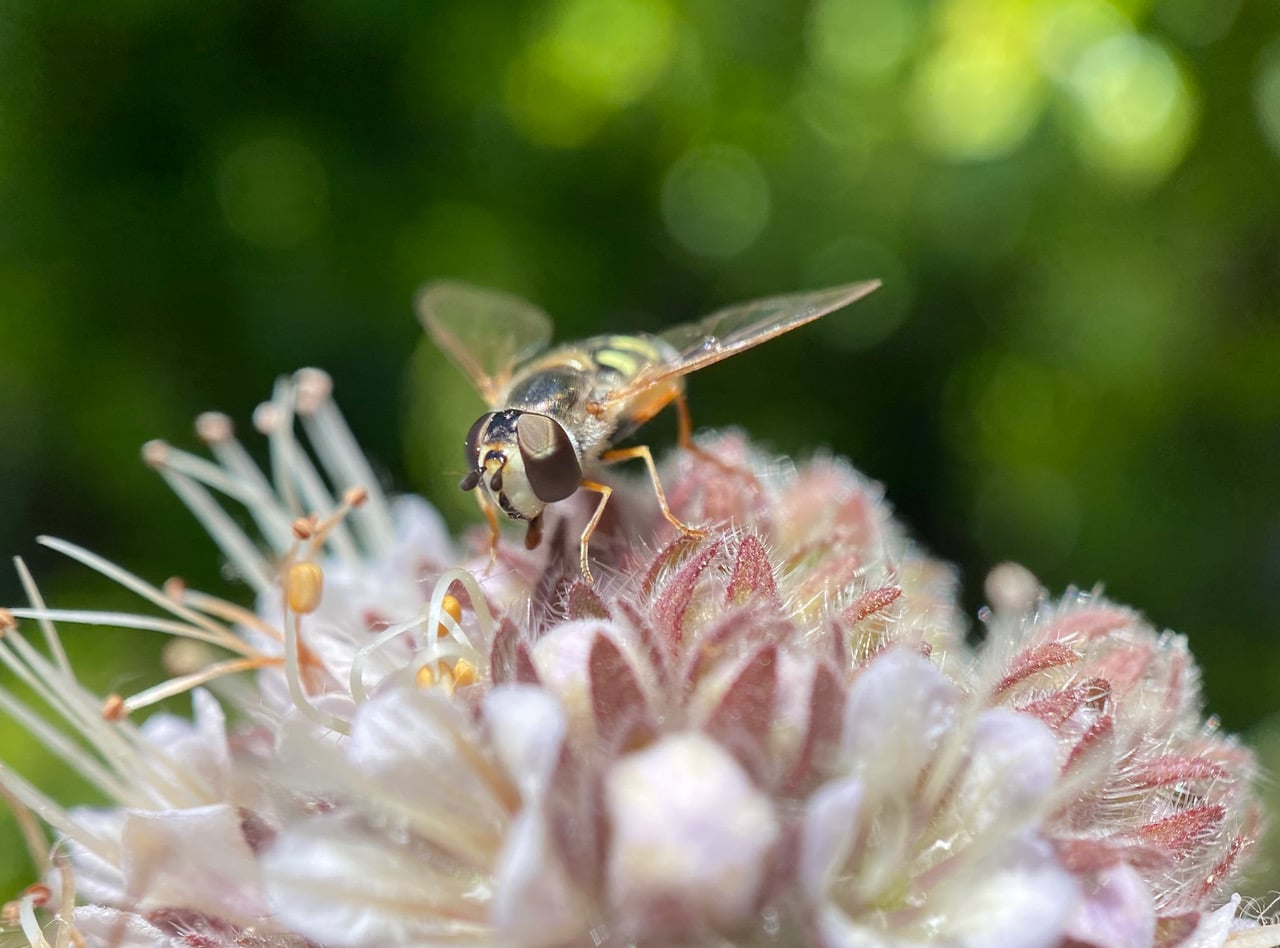
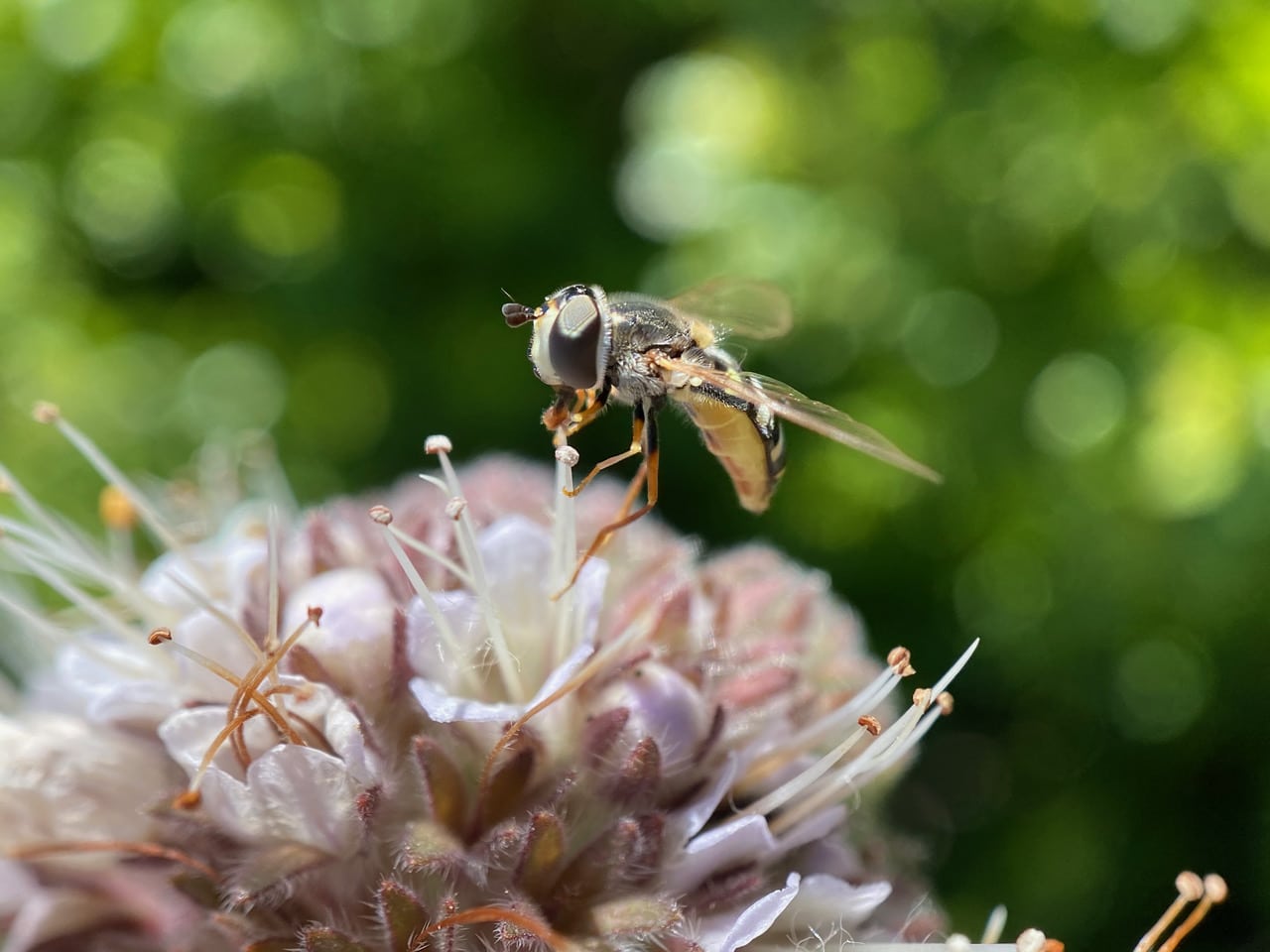
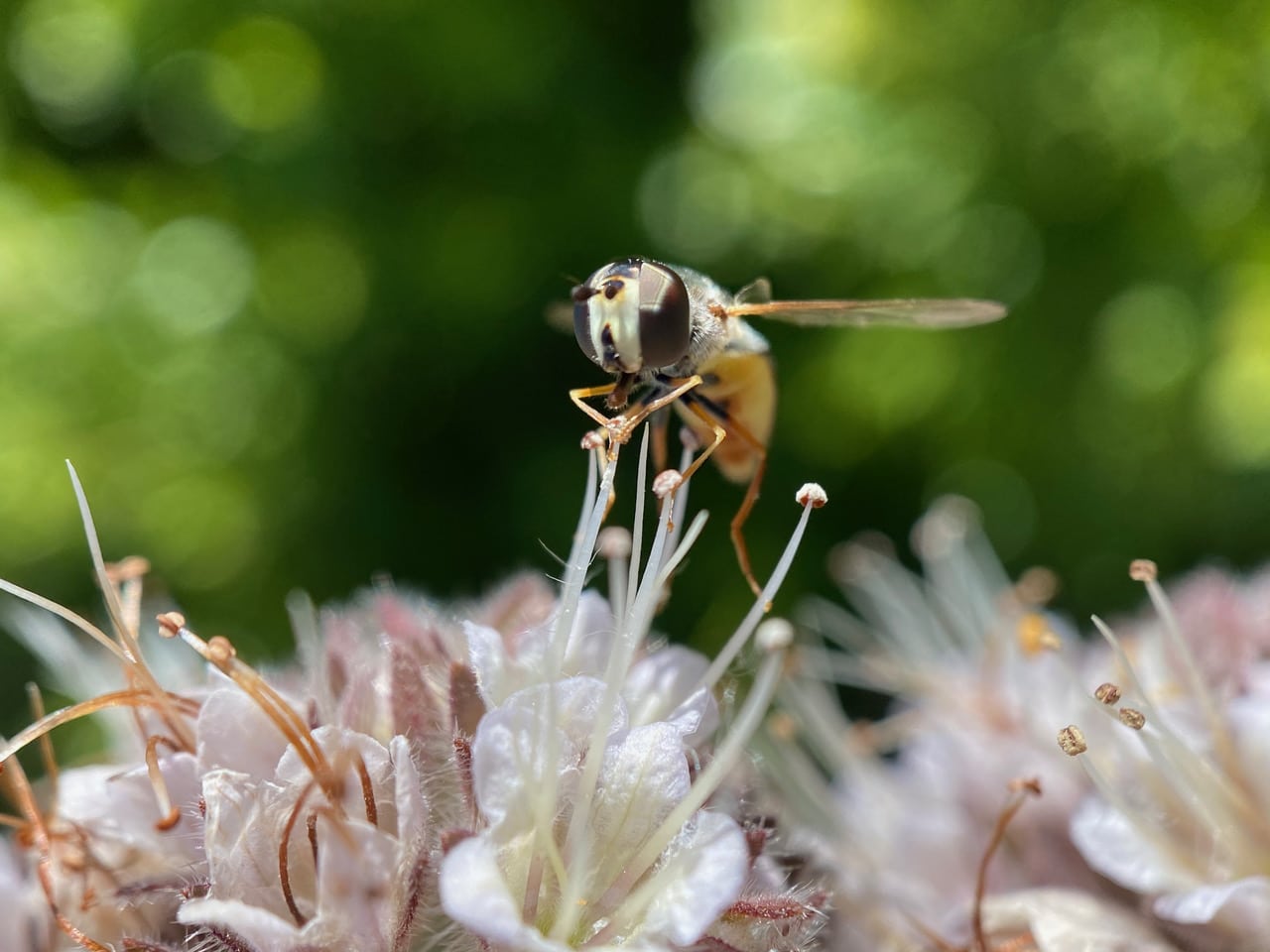
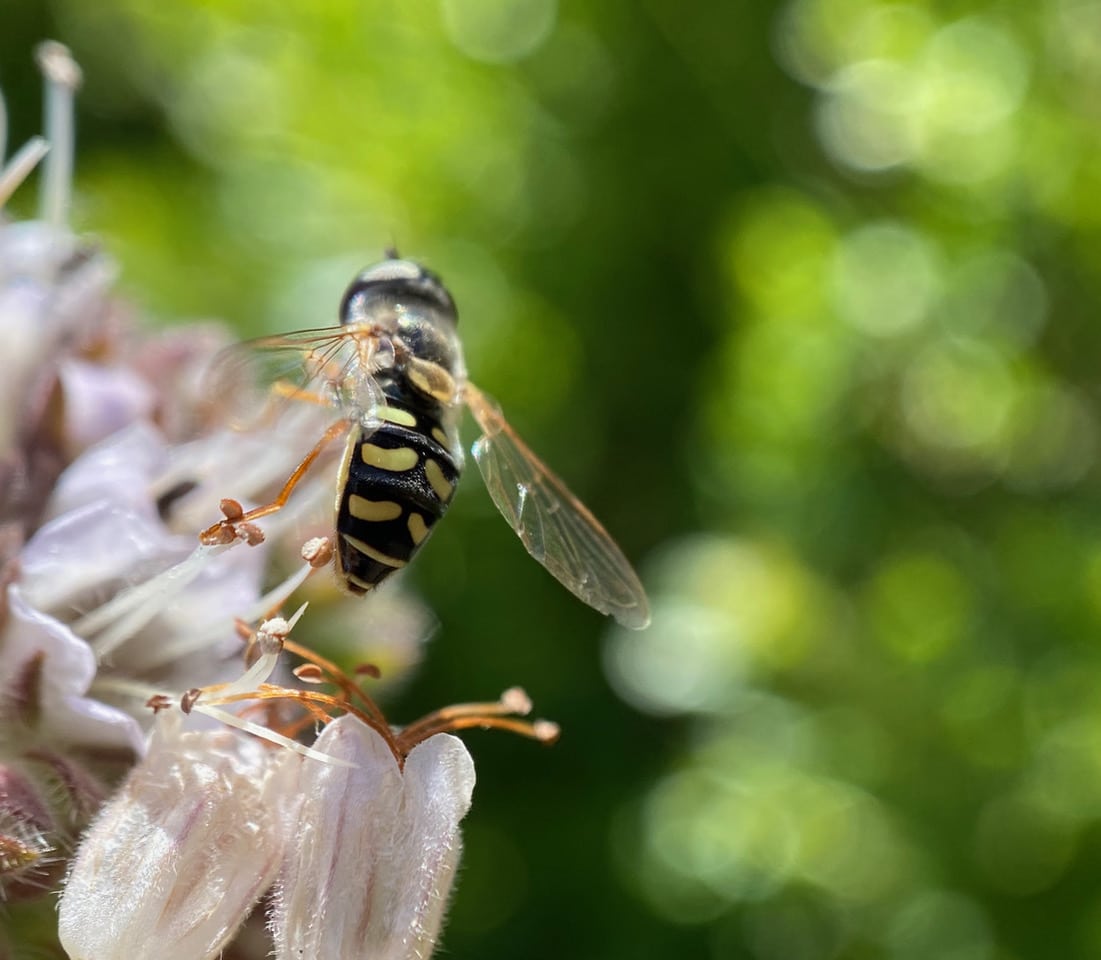
… so is this female Large-tailed Aphideater, Eupeodes volucris (family Syrphidae). The common name refers to the aphidophagous larvae. The adult flies visit flowers for pollen and nectar.
Her tongue extended, the hoverfly is feeding on pollen right off the individual anthers of the Phacelia flower.
What’s not to love about hoverflies?
Hover Flies, also called Syrphid Flies make up the insect family Syrphidae. They are often seen hovering or nectaring at flowers; the adults of many species feed mainly on nectar and pollen, while the larvae eat a wide range of foods. In many species, the larvae feed on aphids, thrips, and other plant-sucking insects. In some species, the larvae are saprotrophs, eating decaying plant and animal matter in the soil or in ponds and streams. Many Hover Flies are brightly colored, with spots, stripes and bands of yellow; due to this coloring, they are often mistaken for wasps or bees. They exhibit Batesian mimicry – the resemblance to stinging insects gives the hover flies some protection from predators.
Hover Flies are considered the second-most important groups of pollinators after wild bees. Most are generalists that visit a wide range of plant species. The feeding habits of Syrphid larvae further endear them to the gardeners, serving as pest control agents and recyclers of organic matter.
An unintentional lucky shot that shows the “spurious vein” on the wing of this hoverfly. Diagnostic feature of Syrphidae, the spurious vein is actually just a thickening of the wing rather than a true vein. It runs through the middle of the wing and is open (not attached to another vein) on both ends.
The“Large-tailed” in the common name refers to the rear end of the male of the species, Eupeodes volucris. A distinctive black cylindrical structure projects from the tip of the male abdomen.
The female hoverfly has eyes that do not meet on top of the head, unlike those of the males.
The fly uses her front legs to hold the stamens while feeding on the pollen
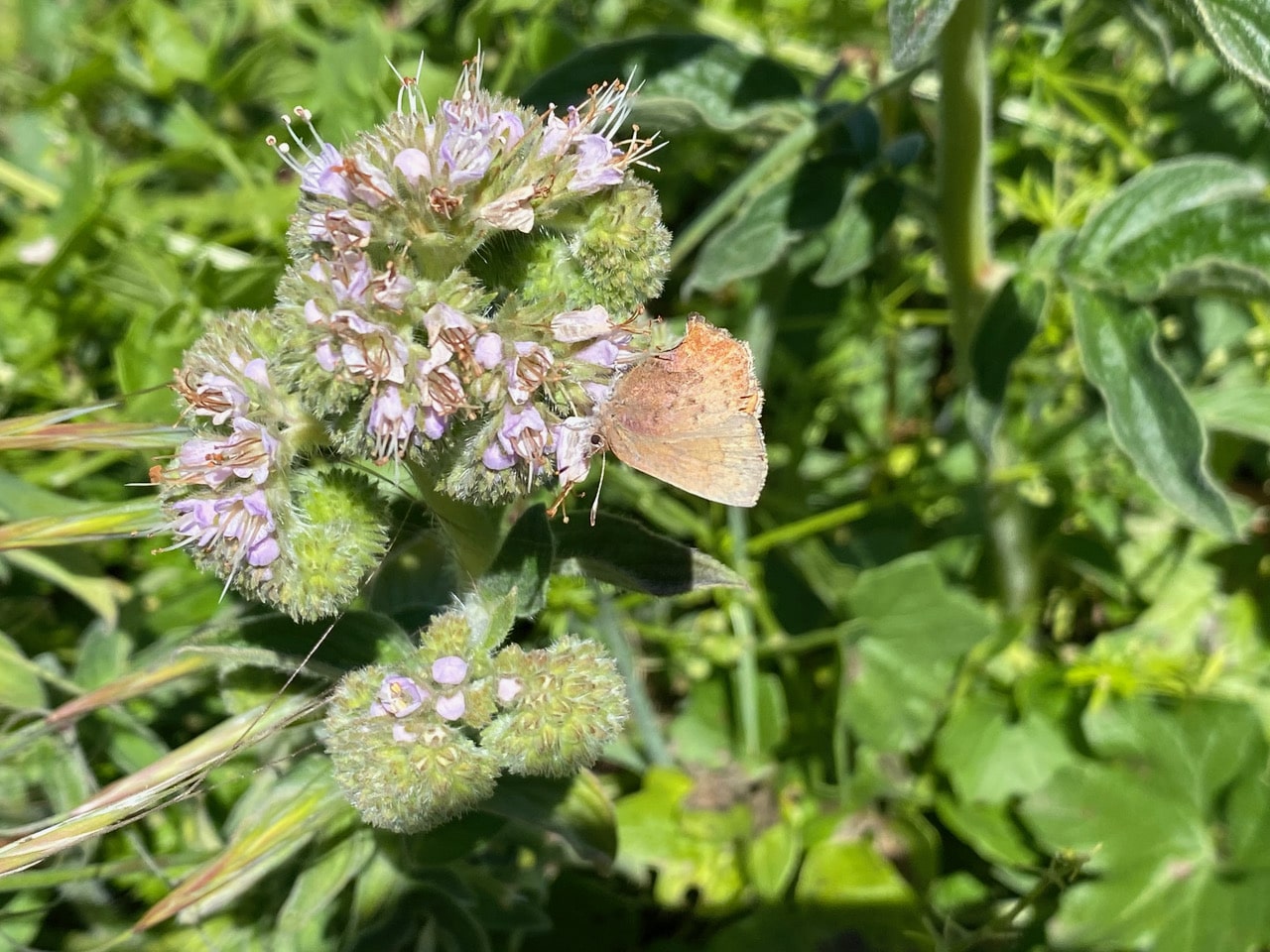
A Brown Elfin, Callophrys augustinus (family Lycaenidae) alights to feed on nectar from California Phacelia flowers.
The Brown Elfin is a butterfly in the family Lycaenidae. Its range is pretty much limited to North America. The wingspan is 22-29 mm. Adults are on wing from early May to early June in one generation. They feed on flower nectar from various species. The larvae feed on Ericaceae species such as manzanita, madrone, huckleberry. Also Cuscuta species (dodders).