

Pollinator Post 5/16/23
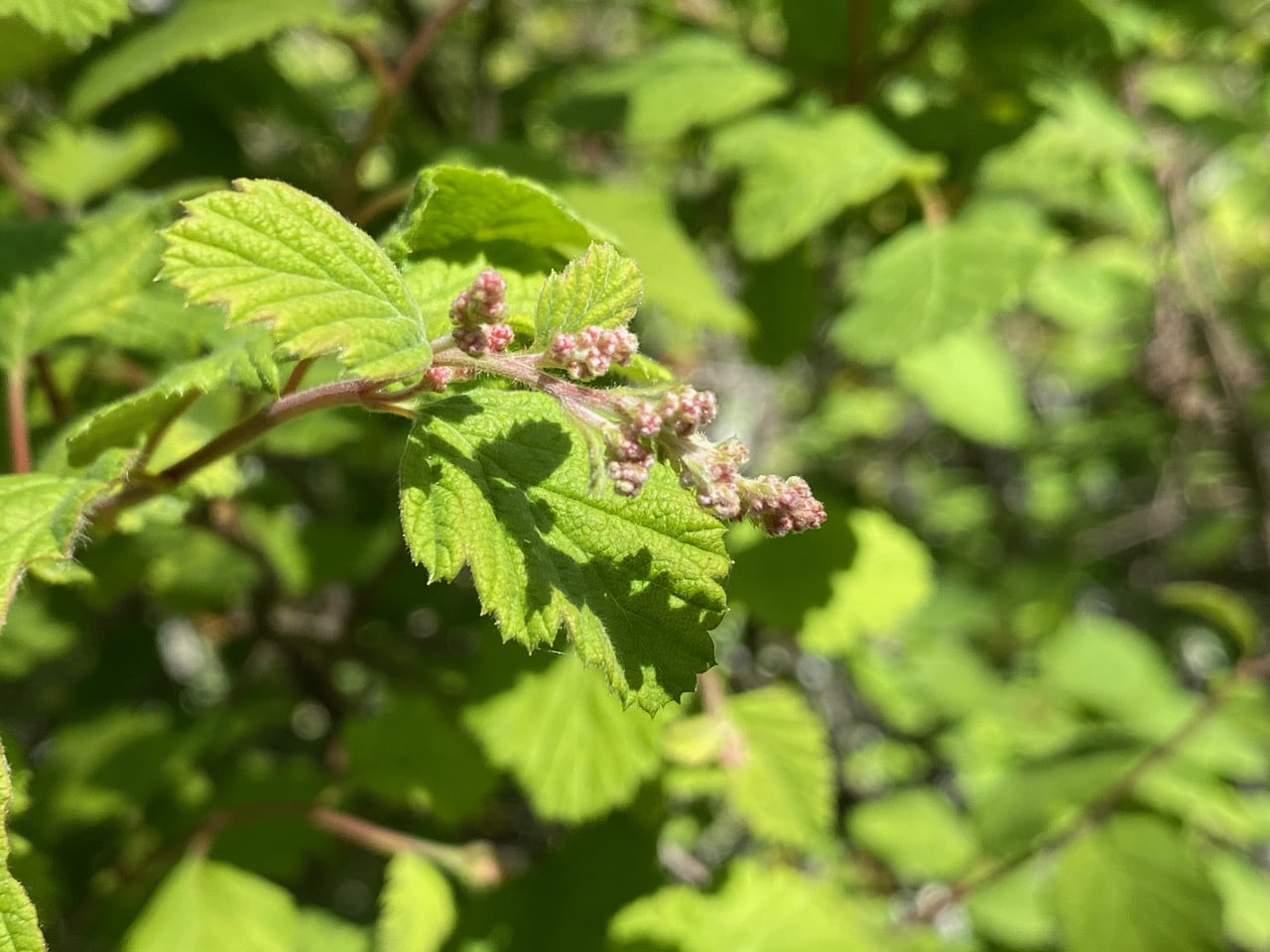
It is mid May – time to enjoy one of nature’s intriguing spectacles right in our local parks. On this warm day at 11am I walk on West Ridge Trail starting from the Skyline Gate Staging Area in the Oakland hills. In less than a quarter of a mile, I come upon a healthy stand of Ocean Spray, Holodiscus discolor flanking the trail.
Many of the Ocean Spray shrubs do not even have any flower buds. The ones that do show rather immature flower buds on the tips of their branches. Perhaps the cool, wet spring weather has delayed their development this year…
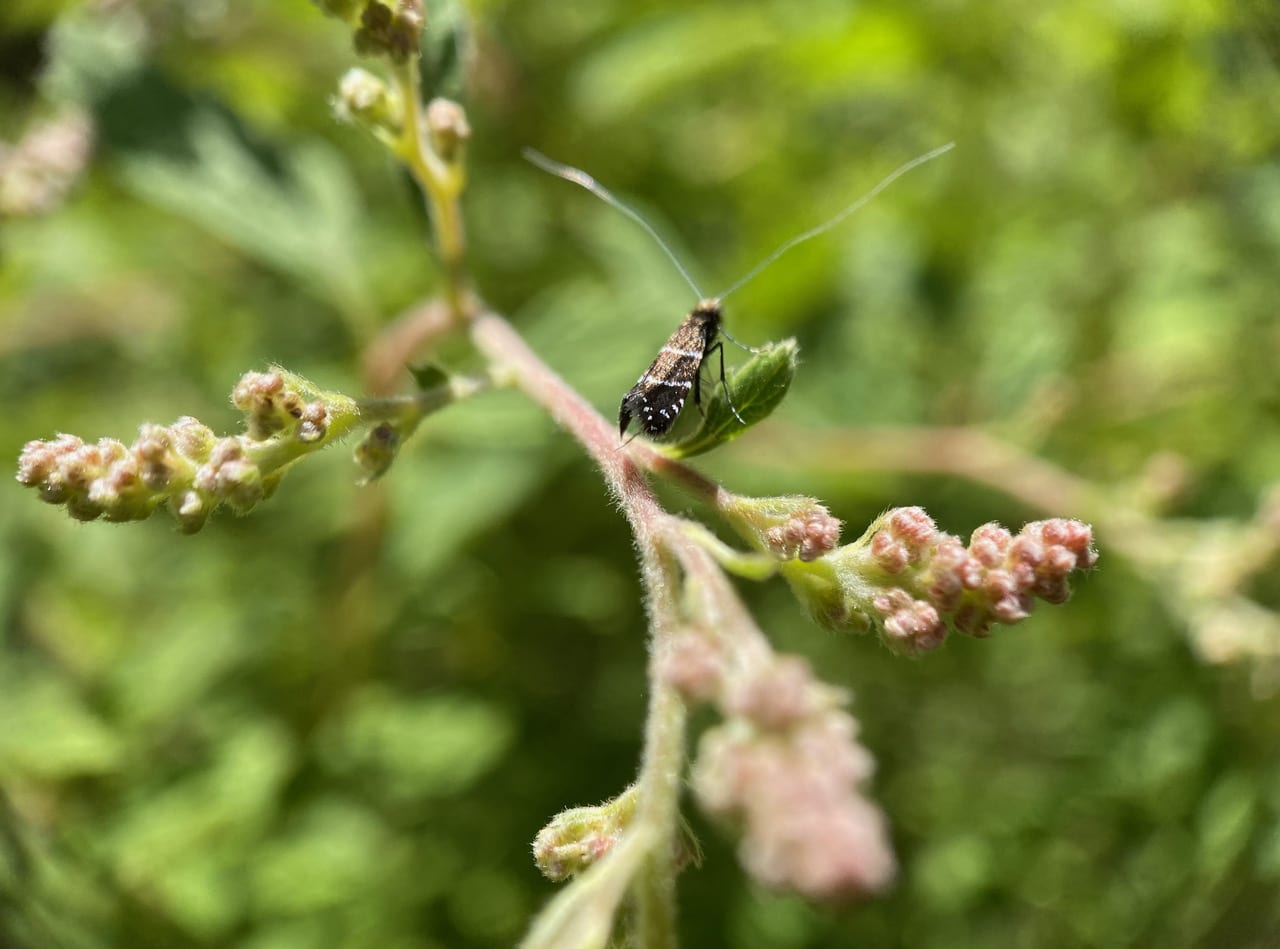
As my eyes adjust to the dappled shade, I begin to see them – the Fairy Longhorn Moths I have come to watch! The day is warming up at around noon, and the moths have gathered to perform their courtship dance in an up-and-down bobbing flight! Here’s a male with his extraordinarily long white antennae.
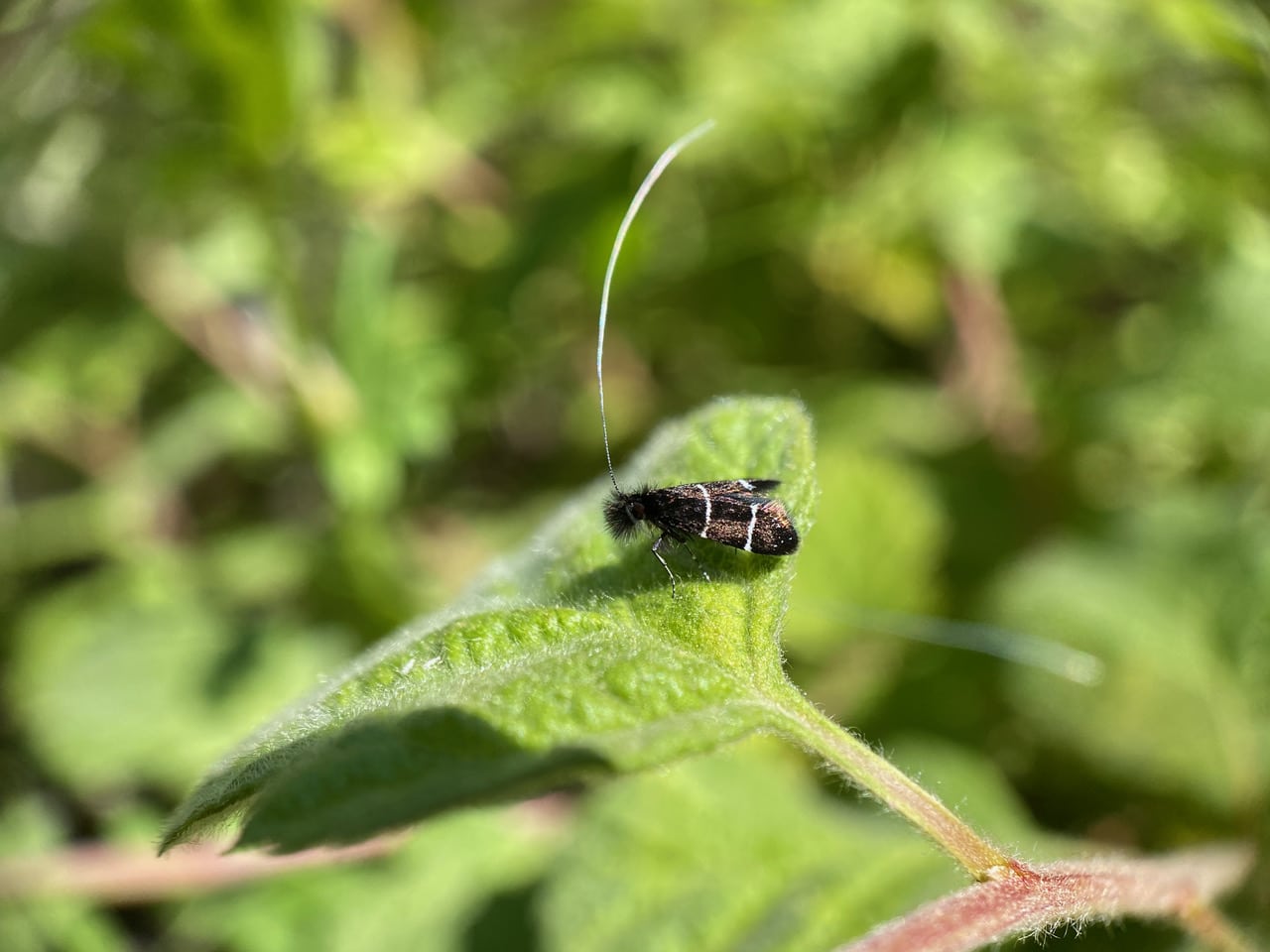
A few of the small moths are perched on the leaves, but not for long, as others will come to knock them off their perches.

The Ocean Spray Fairy Longhorn Moth, Adela septentrionella is a day-active moth in the family Adelidae. It is widespread from southern British Columbia and north-western Idaho to southern California. The length of the forewings is 4.5-5.7 mm. The forewings are purplish-black with two incomplete thin white bands. The antennae of the males are at least twice as long as the wings. Adults are on wing from mid April to mid July. The larvae feed on buds of Ocean Spray, Holodiscus discolor. Full-grown larvae overwinter in cases on the ground. Pupation takes place in late March or April.
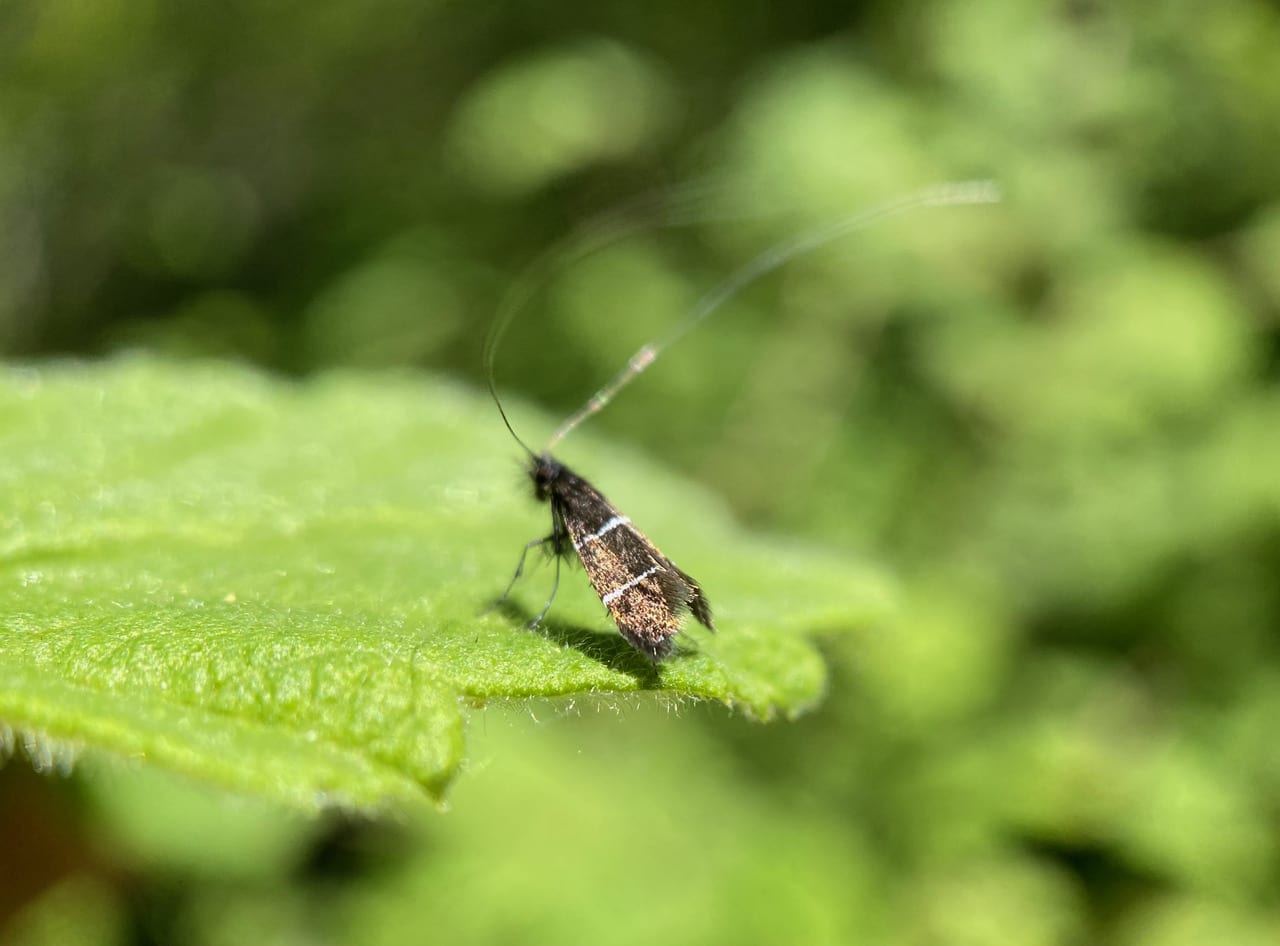
The scales on the wings are iridescent, sometimes giving a bronze flash depending on incident light.
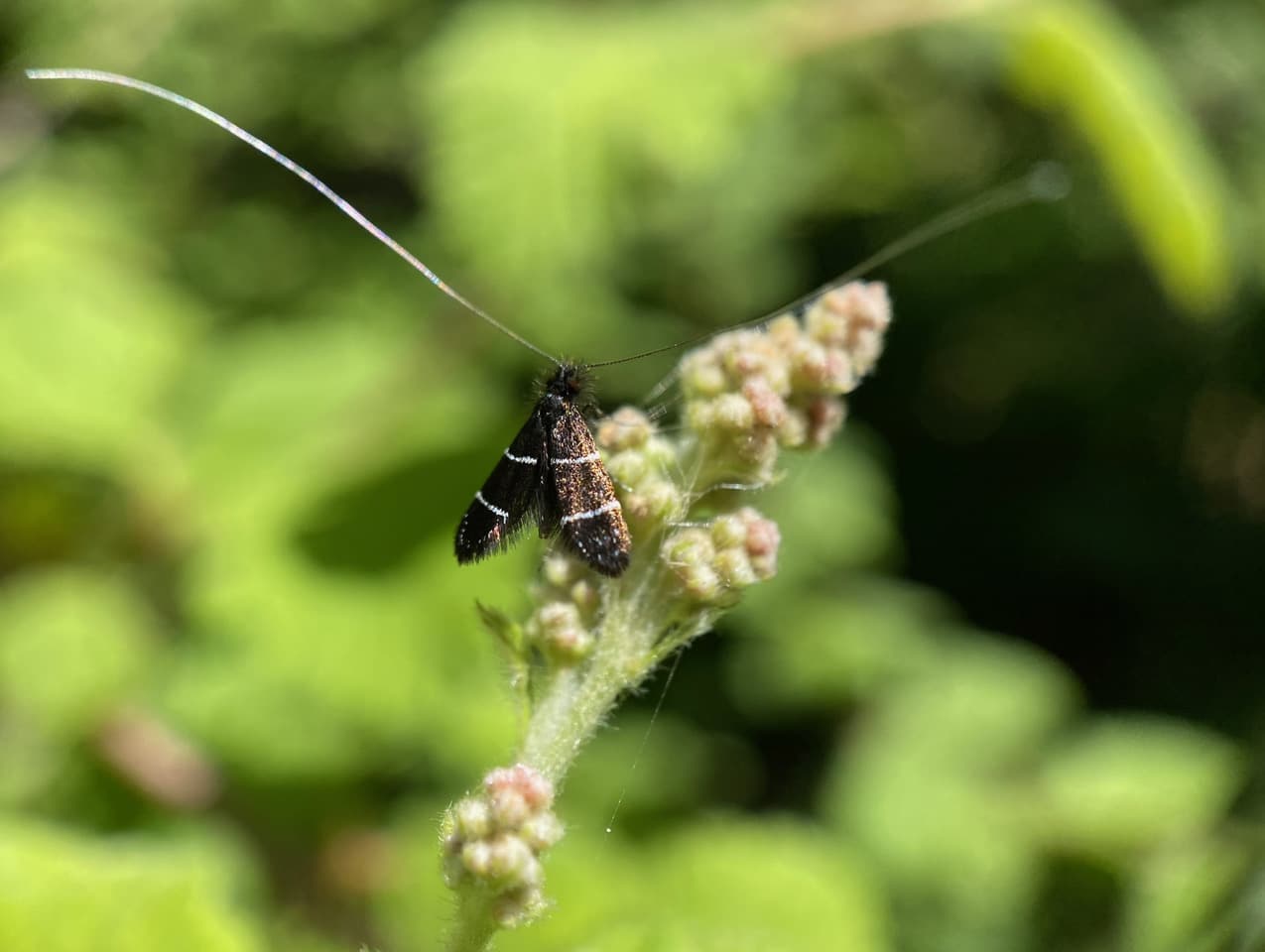
The most interesting thing about the Adelids is their mating system. It is a lekking system. A lek is an aggregation of males gathered to engage in competitive displays and courtship ritual to entice visiting females to mate with them.
In Adela septentrionella, males gather to perform courtship dances – bobbing flights above the branches of Ocean Spray about ready to burst into bloom. While the display may appear peaceful and romantic, studies have shown that males actually engage in combat using long tibial spurs during flight displays and while landed on leaves. They apparently attempt to fray one another’s wings and also kill rivals. Females, with orange hairdo and shorter antennae, watch the male displays, often upwind, from 15-20 feet away. Females may be releasing a pheromone that tells the males they are being watched and that intensifies male-male combat. Females eventually fly into the male swarm and engage in evasive flight; the least damaged male would be the most likely to capture her. Mating occurs below the mating swarm, in plain view, without interference. Fertilized females fight over the most sun-exposed Ocean Spray unopened flower inflorescences on which to lay their eggs.

Two males suddenly land unsteadily on a leaf close to me, probably after a tussle in the air. Note the spurs on the legs.

Uh-oh, what happened to this male’s right antenna? Injury from courtship combat?
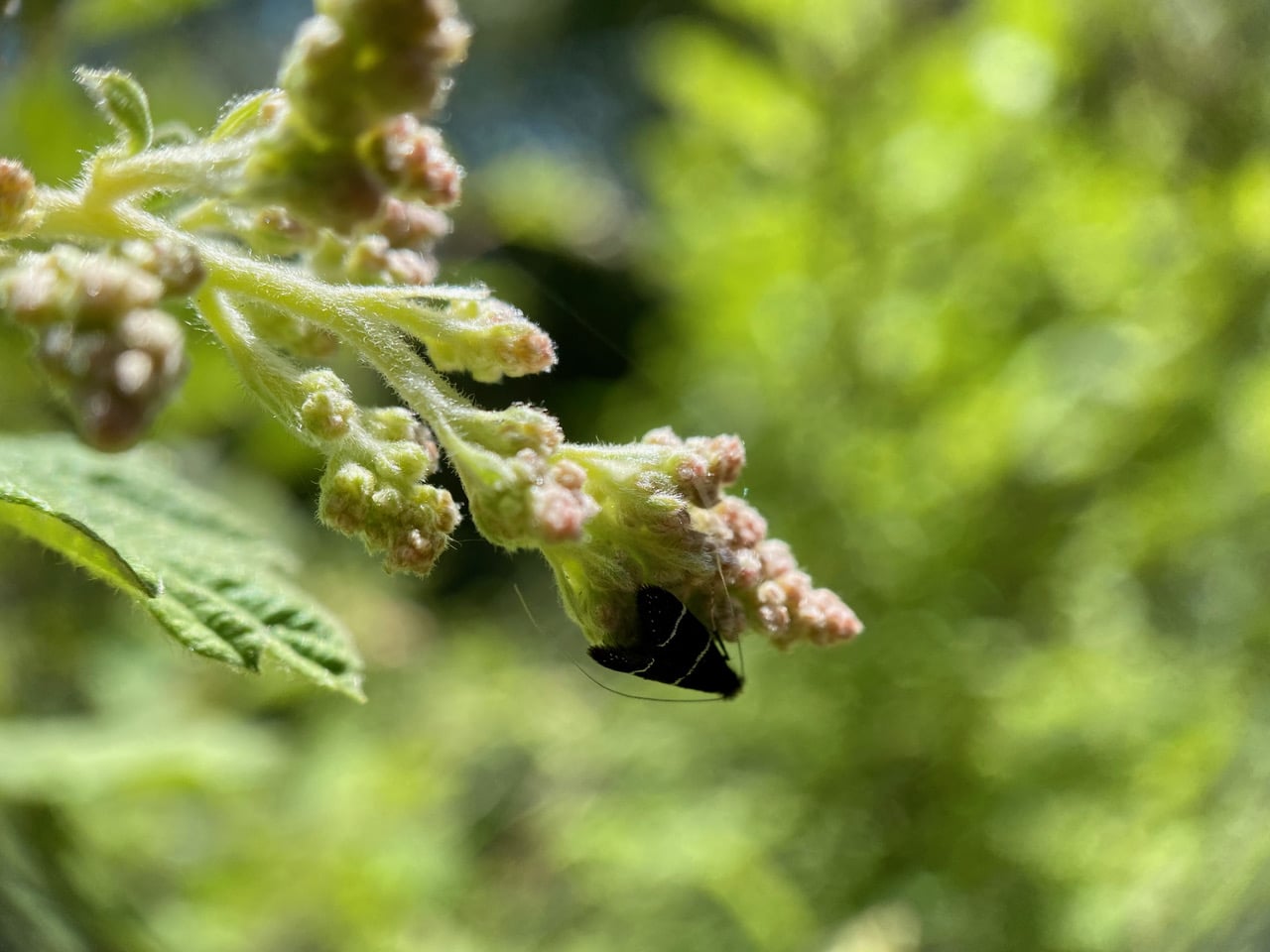
Then my eyes catch sight of some females quietly perched on or under the sprays of flower buds, not at all disturbed by what is happening in the air above them.

This female is laying eggs as she angles her sharp-tipped abdomen into the cluster of flower buds.
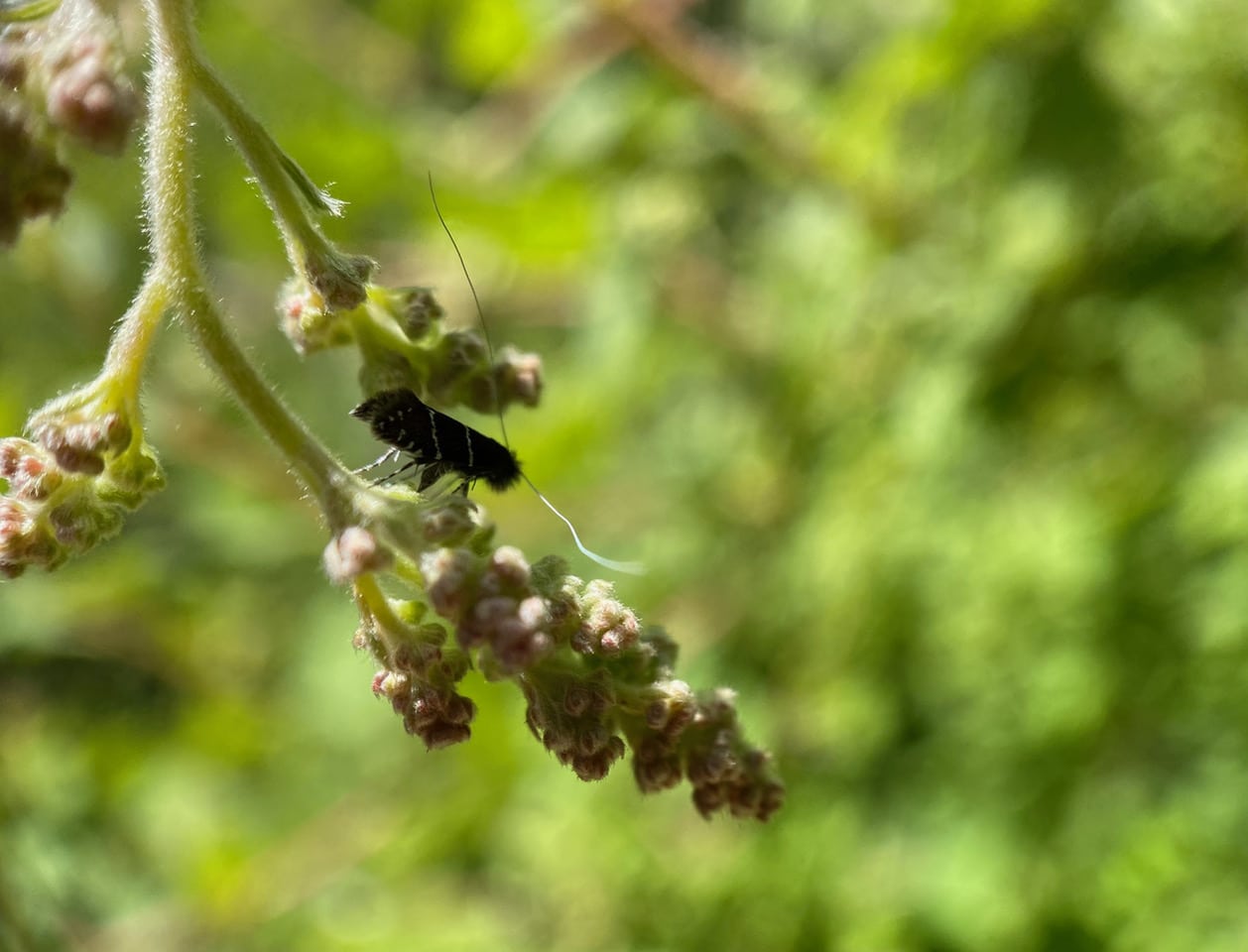
Here’s another female ovipositing on the Ocean Spray flower buds.

Instead of jet black mob of hairs, the females have a lighter, orangish hairs on their heads. The sexual dimorphism is hardly noticeable in the field as the moths are quite small and are constantly moving.
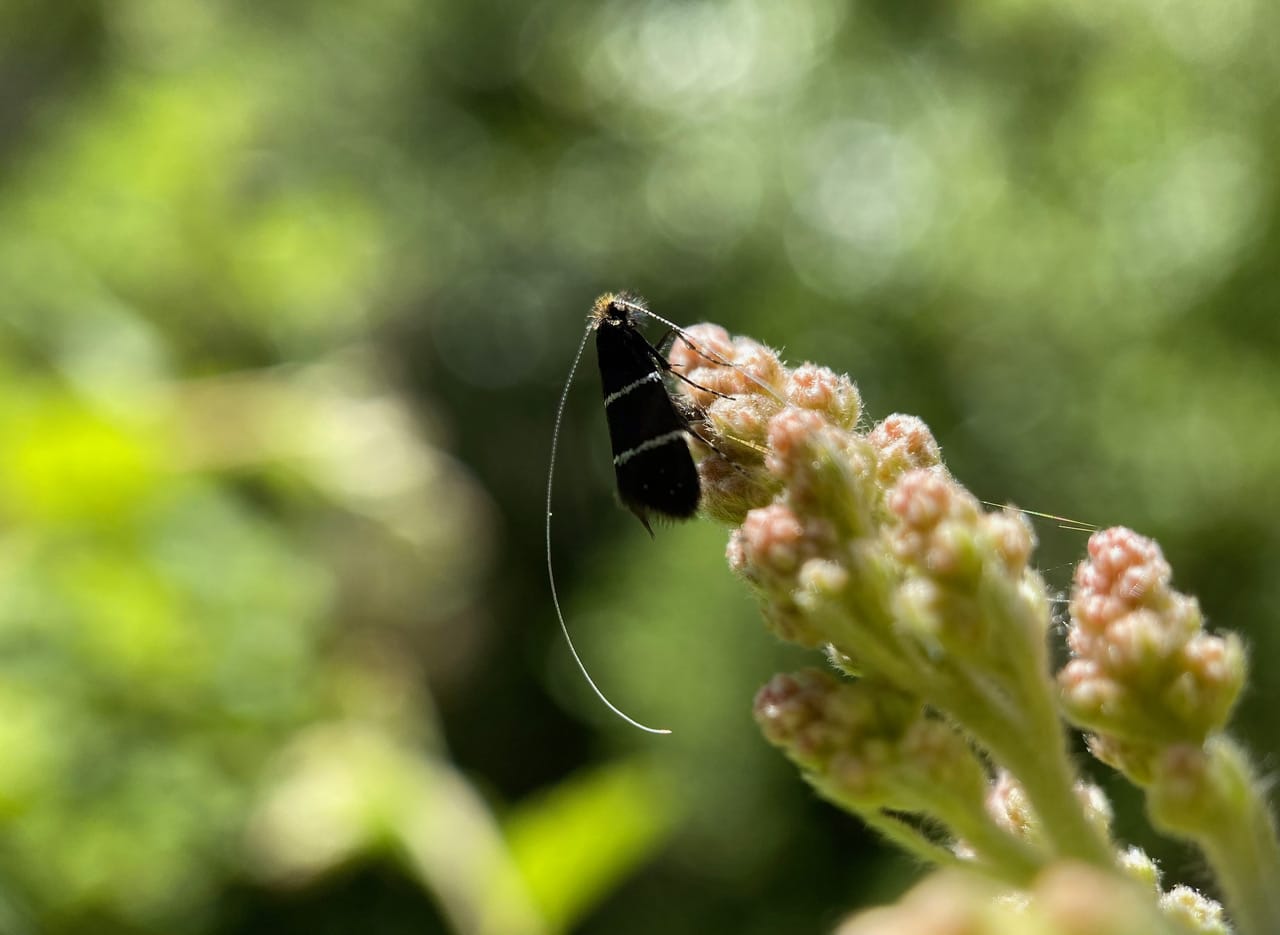
There, another female laying eggs. The hairs on her head are not black, like those of the males.
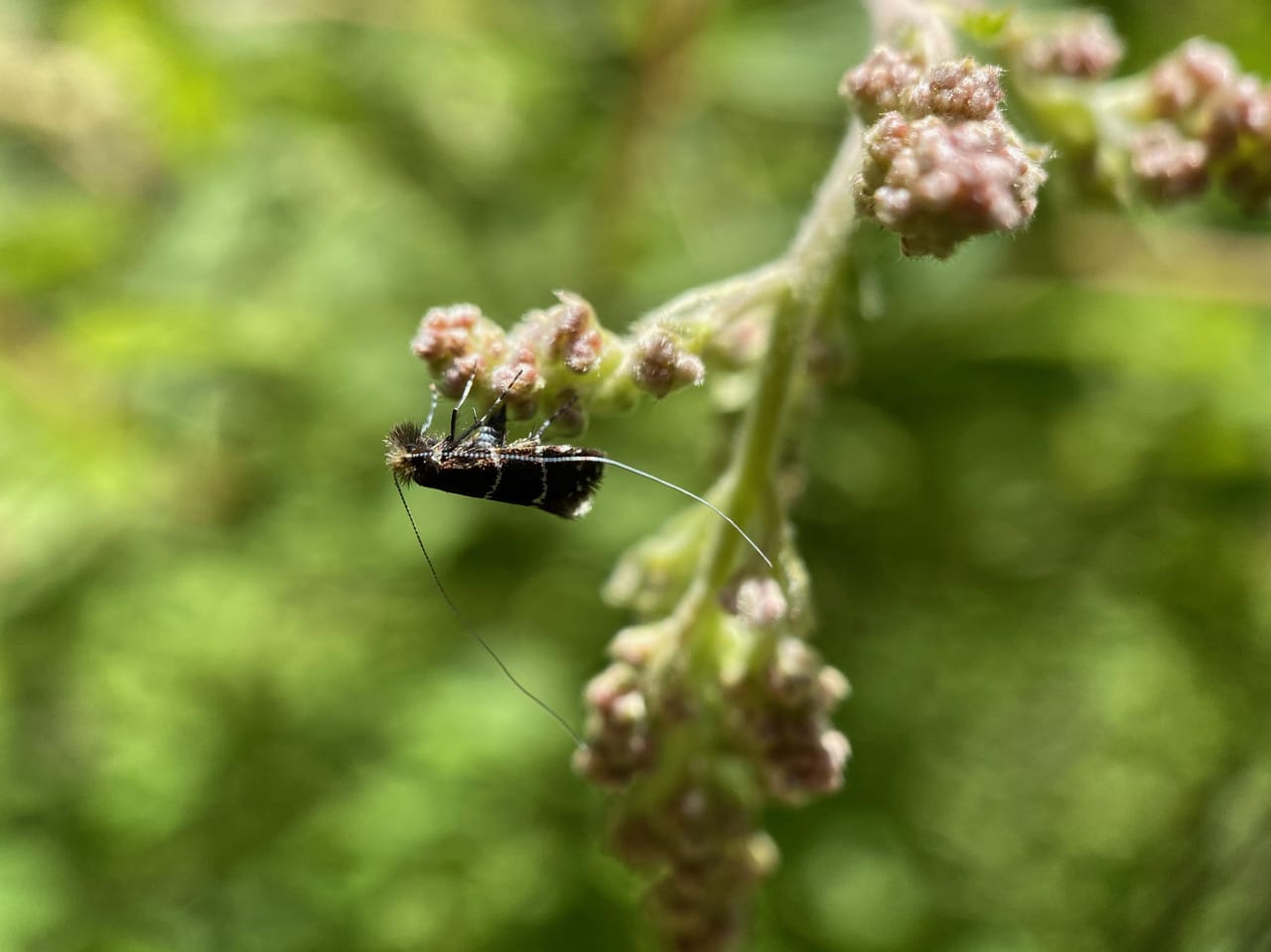
Another ovipositing female. They are much easier to photograph as they stay put for this activity.
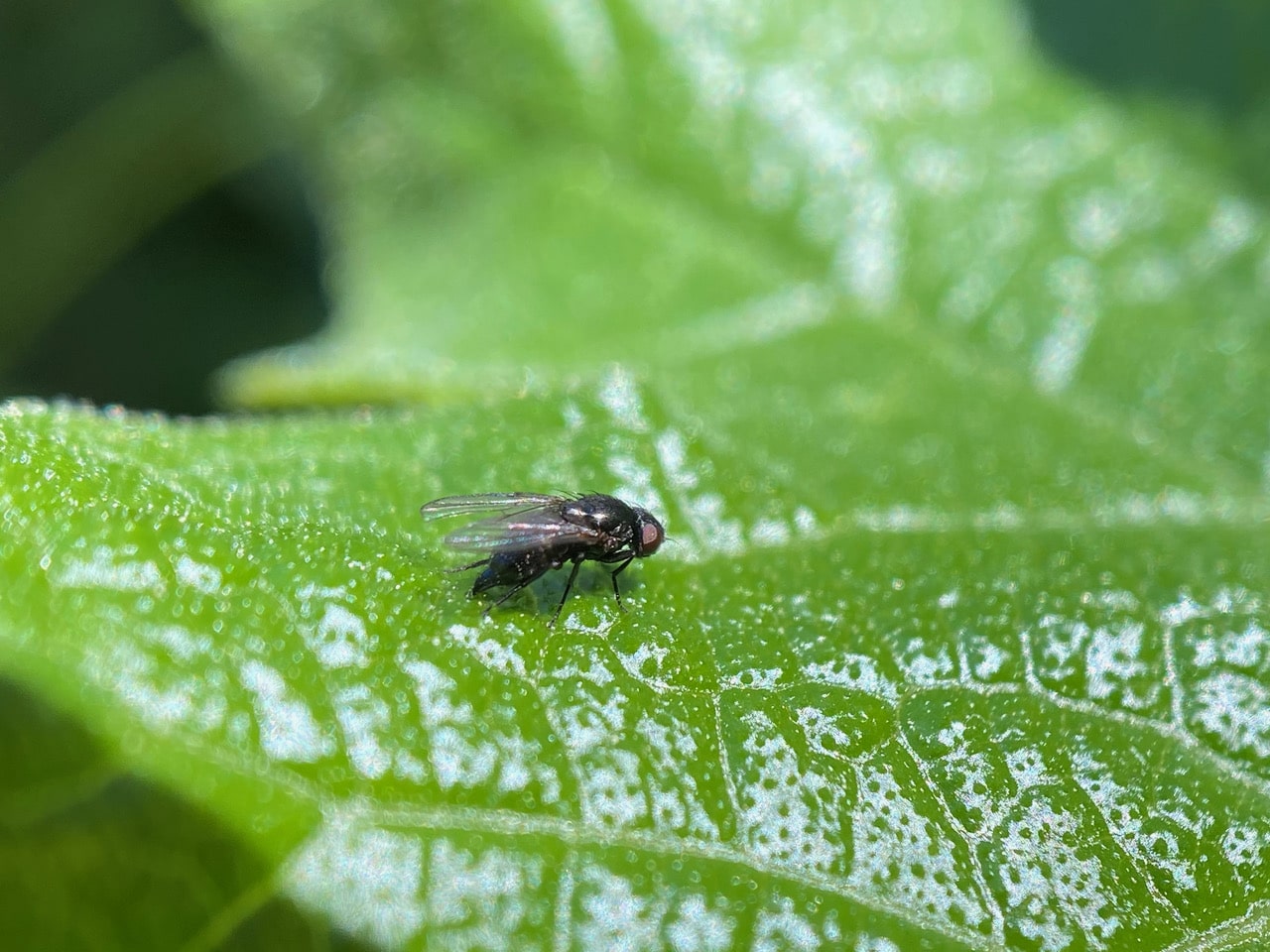
A tiny fly no more than 3 mm long is on a leaf of California Manroot, Marah fabacea. It is a female Leaf Miner Fly (family Agromyzidae). With her extruded ovipositor she is cutting a hole in the surface of the leaf.
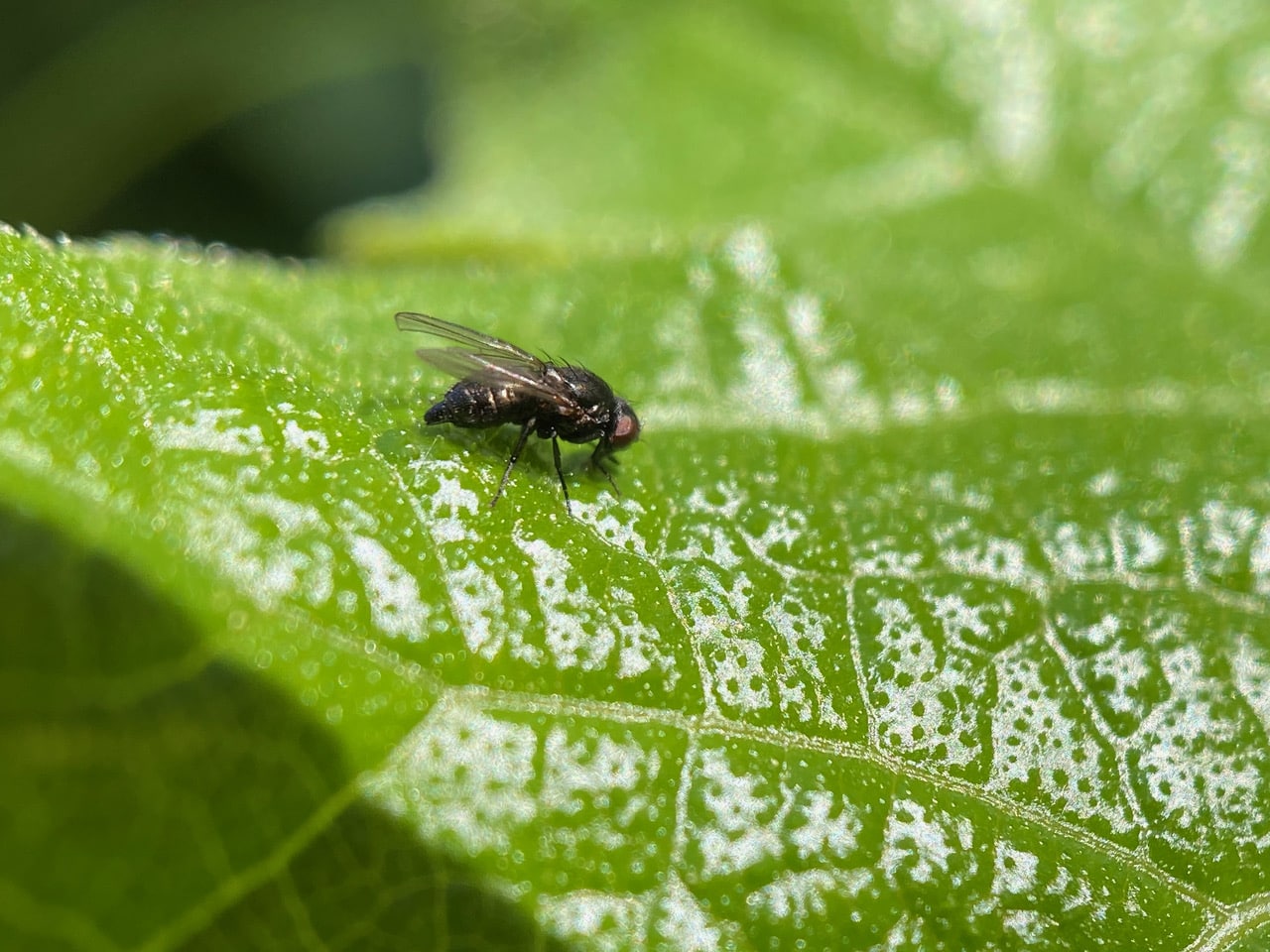
Then the fly puts down her proboscis to sample the sap oozing from the cut. This is typical Leaf Miner Fly behavior.
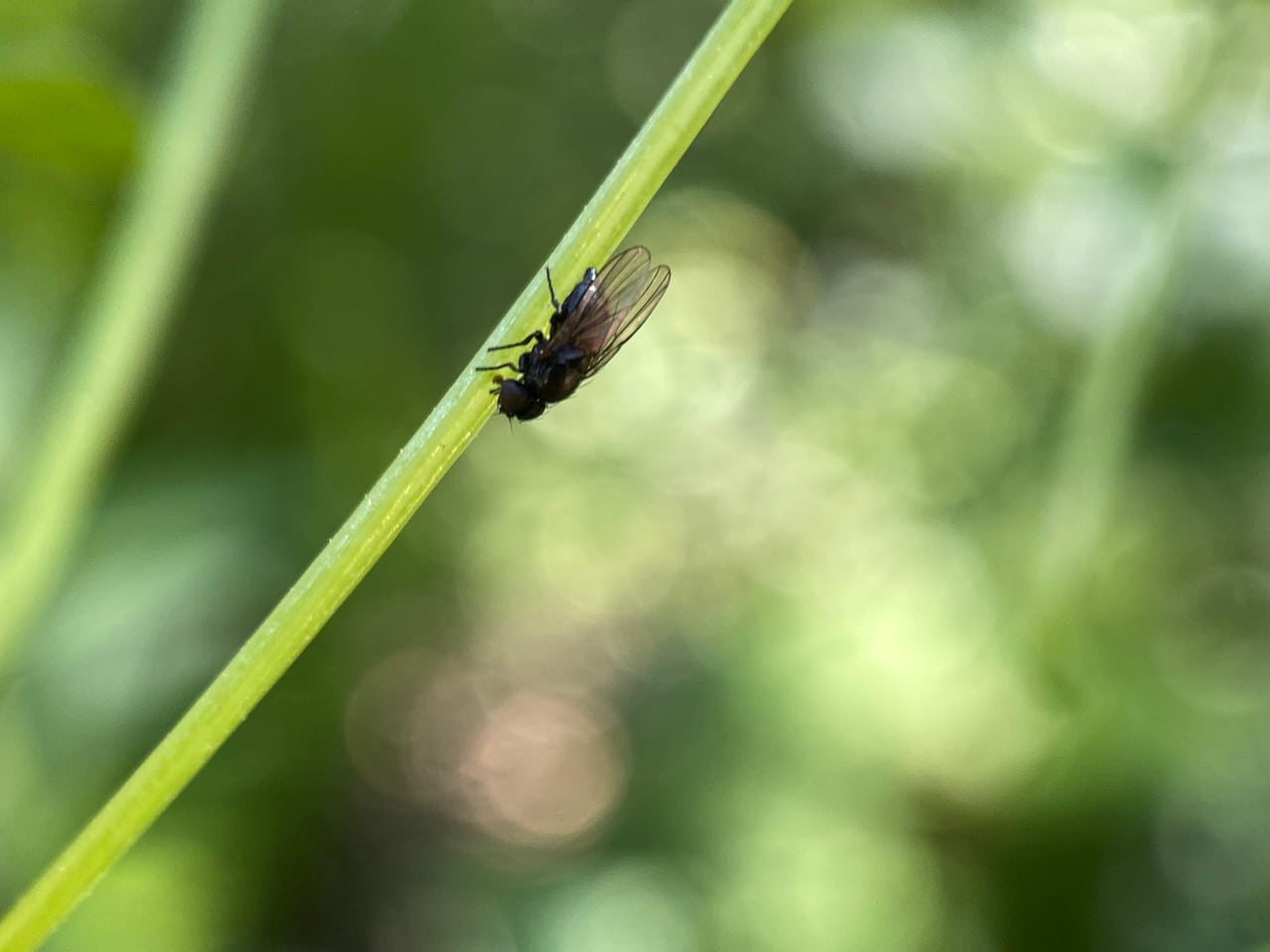
Here’s another Leaf Miner Fly, on a fresh tendril of the same California Manroot. It is doing the same thing – cutting, then sampling.
A leaf miner is any one of numerous species of insects in which the larval stage lives in, and eats, the leaf tissue of plants. The vast majority of leaf-mining insects are moths (Lepidoptera), sawflies (Symphyta), and flies (Diptera). Some beetles also exhibit this behavior. Leaf miners are protected from many predators and plant defenses by feeding within the tissues of the leaves, selectively eating only the layers that have the least amount of cellulose, and lowest levels of defensive chemicals.
The Agromyzidae are a family commonly referred to as the Leaf-miner Flies, for the feeding habits of their larvae, most of which are leaf miners on various plants. They are small flies, most species in the range of 2-3 mm. Agromyzidae larvae are phytophagous, feeding as leaf miners, less frequently as stem miners or stem borers. A few live on developing seeds, or produce galls. There is a high degree of host specificity. A number of species attack plants of agricultural or ornamental value, so are considered pests. The shape of the mine is often characteristic of the species and therefore useful for identification. Adults occur in a variety of habitats, depending on the larval host plants.
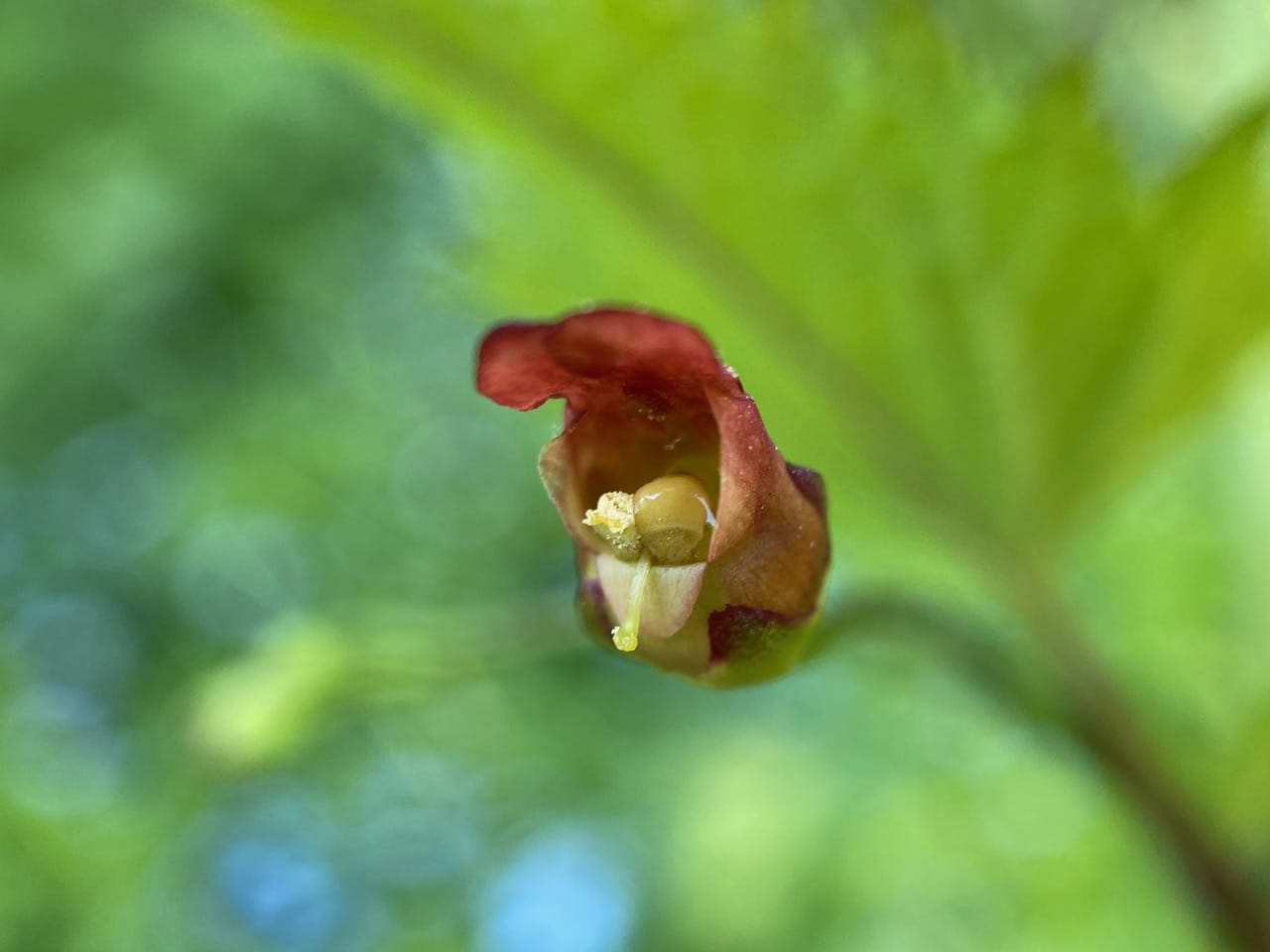
The California Bee Plant, Scrophularia californica is blooming along the shady sections of West Ridge Trail. These tiny, inconspicuous flowers tend to be overlooked, but they are an excellent source of nectar for wasps, hoverflies and bees.
Each flower is only about 1/4 in. in length, and displays bilateral symmetry, with two petals pointing up (like Micky Mouse ears) and three down; the latter sometimes appear as two petals to the sides and one down. There are 4 fertile stamens, more of less appressed to the lower portion of the throat and extending to the edge of the lower lobes. The fertile anthers are yellow. The infertile fifth stamen is dark red, and mostly fused to the upper throat. There is a single style with a capitate stigma. The style is appressed to the lower portion of the tube and extends beyond the corolla, bending downward. The flower is protogynous, meaning the female parts (pistil) mature before the male parts (stamen).
The flower pictured here is in transition between the female and the male phases. Two of the stamens have been rolled out to the front of the corolla, and the one on the left has started to release pollen. The pollen is easily accessible to visiting insects without having to enter the flower. By the time all four fertile stamens are releasing pollen, the stigma would have faded and angled away from the front. The temporal separation of the sexes ensures that the flower is not self-pollinated.

Three tiny bugs are roaming the terminal buds of a California Bee Plant, Scrophularia californica. They are Stink Bugs, Cosmopepla uhleri (family Pentatomidae). This species is easily recognizable – black with an orange transhumeral band with black spots. The bug uses Scropularia californica as a host plant.
Pentatomidae is a family of insects belonging to the order Hemiptera or “true bugs”. As hemipterans, the pentatomids have piercing-sucking mouthparts, and most are phytophagous, including several species that are severe pests on agricultural crops. Stink Bugs feed on plant fluids by inserting their needlelike mouthparts into stems, leaves or seed pods. While feeding, they inject materials into the plant to aid in digestion and sap removal. Penetration by the mouthparts can cause physical damage, much like stabbing the plant with a fine needle. Cosmopepla uhleri is so small that the damage is generally limited to fine stippling on the leaves of California Bee Plant.
All Pentatomids have 5-segmented antennae (hence their family name, Penta – five and tomos – section.) They generally have a large triangular scutellum in the center of the back. The adult is generally shield-shaped when viewed from above. The common name of Stink Bug refers to their ability to release a pungent defensive spray when threatened, disturbed, or crushed.
#/media/File:Heteroptera_morphology-d.svg)
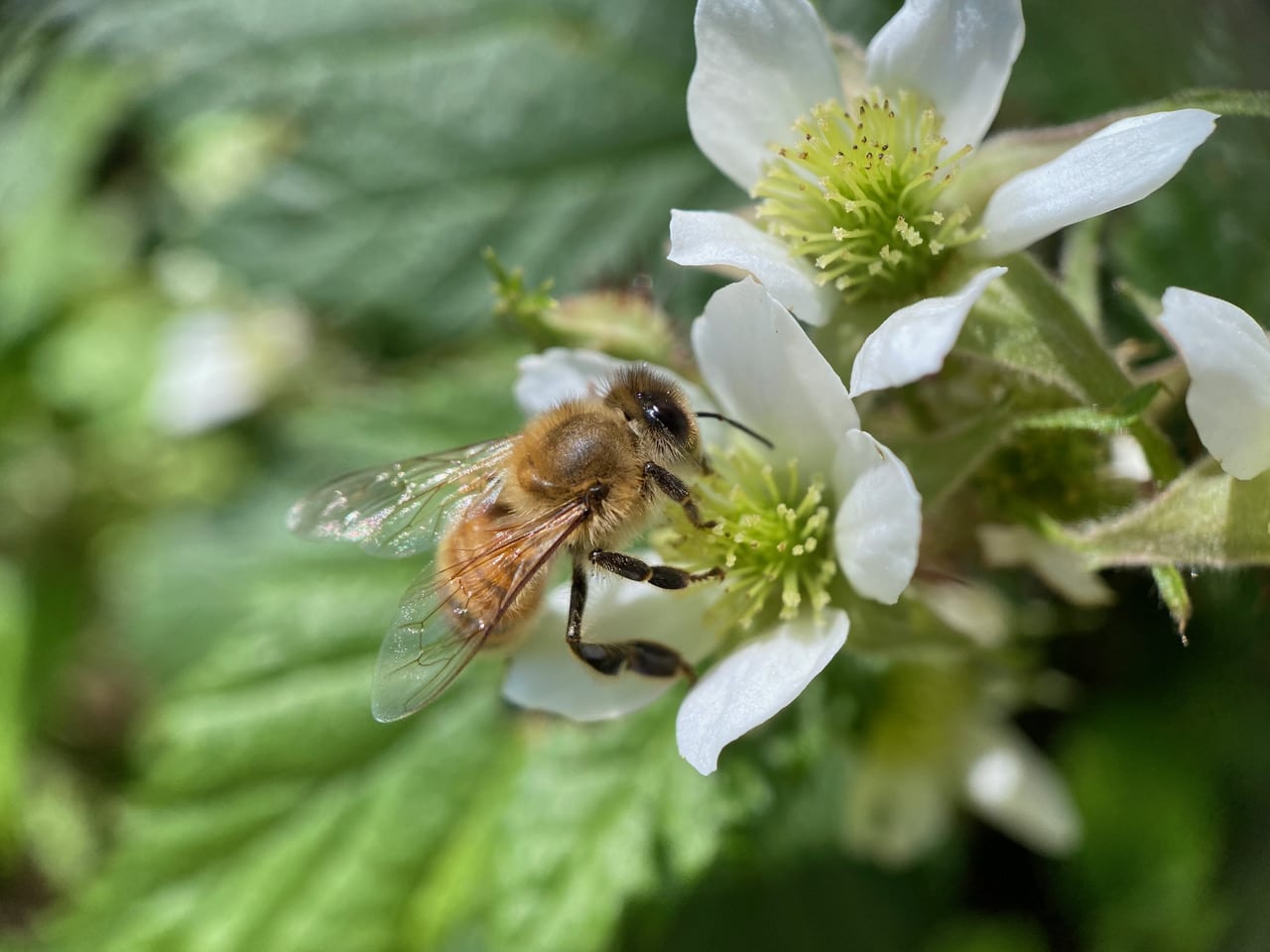
A Honey Bee, Apis mellifera visits a female flower of California Blackberry, Rubus ursinus. The plant is dioecious, meaning the male and female flowers are borne on separate plants. Insects visit the female flowers for nectar only as no pollen is produced. After pollination, female flowers will develop into the blackberries much cherished by wildlife.
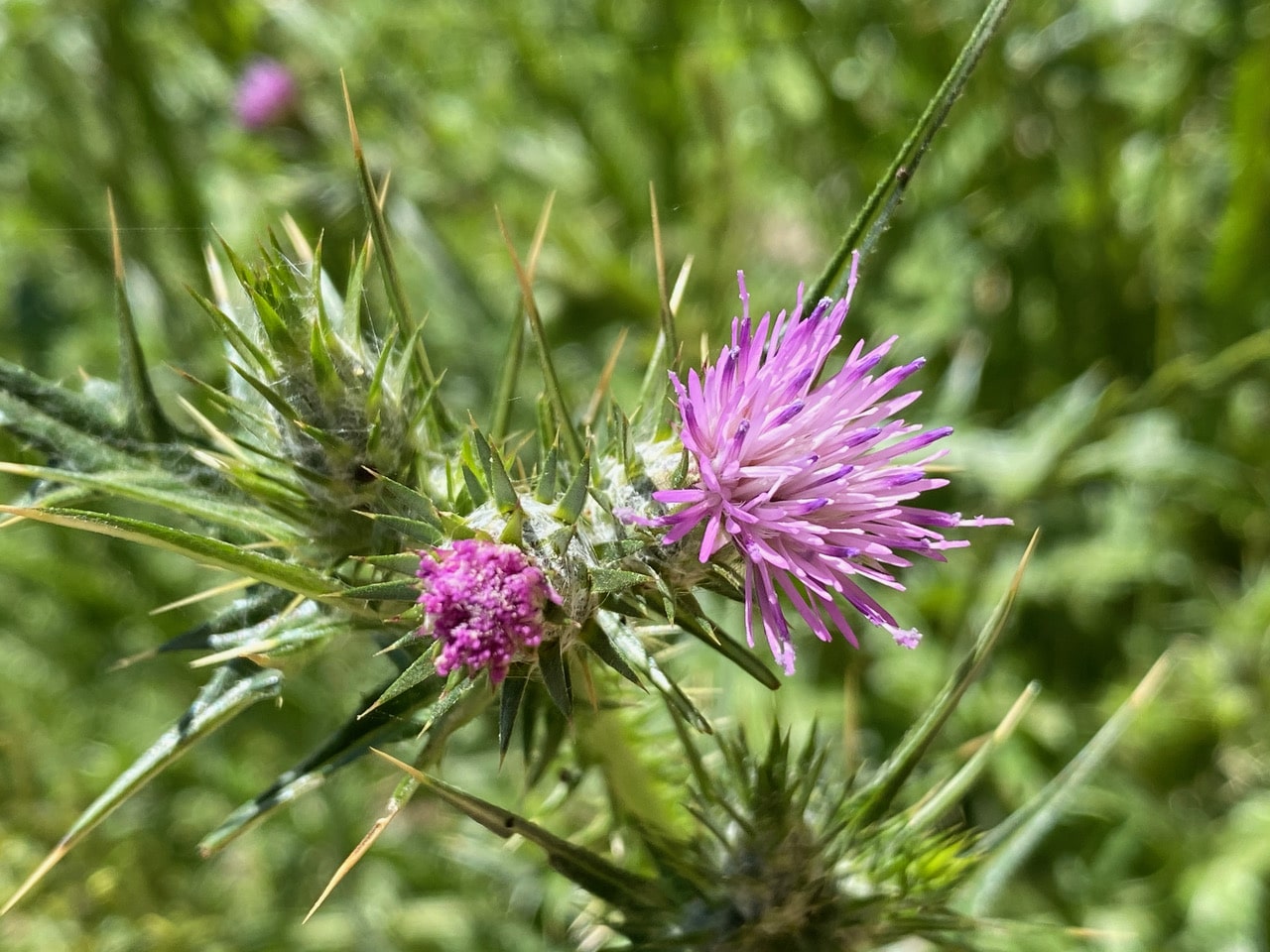
This section of the West Ridge Trail near the parking lot has seen major restoration activities last year, including the removal of old, dying Monterey Pines. Now the disturbed stretch is lined with weedy Italian Thistles (Carduus pycnocephalus) blooming gloriously.

Hello, who’s this hiding between the spiky bracts under an immature flowerhead of an Italian Thistle?
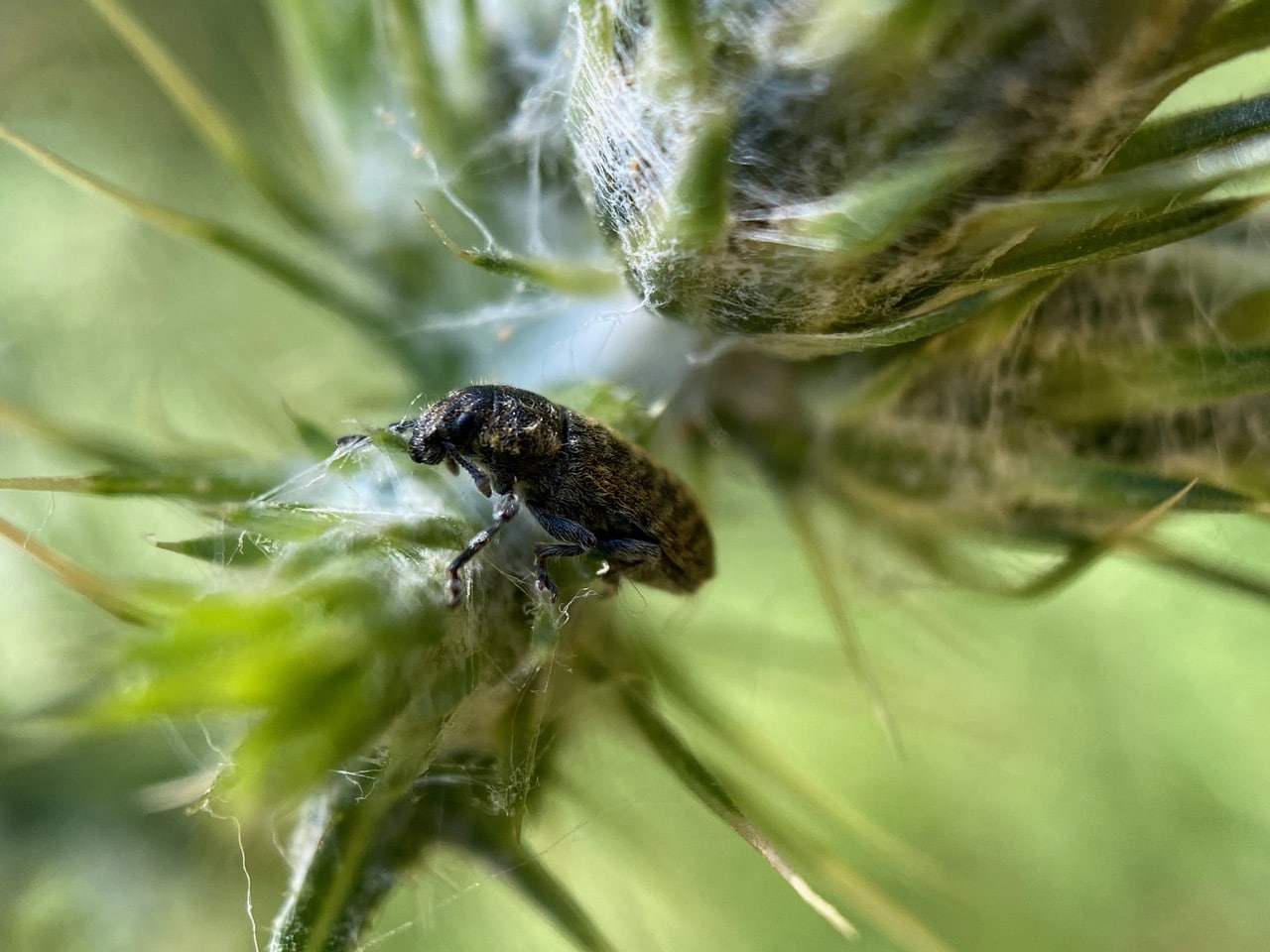
It is a Nodding Thistle Receptacle Weevil, Rhinocyllus conicus (family Curculionidae).
The adult weevil is black and covered with a thin black and yellowish mottled coat of hairs. It is a short-snouted beetle up to 6 mm long. Eggs are laid on or near the bracts of the thistle flower head. The larvae burrow into the flower head and feed on the flower parts and developing seeds. Adults cause damage as well when they feed on the foliage.
The weevil is native to Eurasia and North Africa. Introduced to the United States for thistle biocontrol in 1969, it is now widely established in the country. The weevil is found to be very effective in reducing the spread of invasive thistles, including Italian thistles. However, the weevil will also readily attack native thistles in the genus Cirsium, in some cases contributing to population decline. For this reason this weevil is no longer used for thistle biocontrol.