

Pollinator Post 5/14/23 (3)
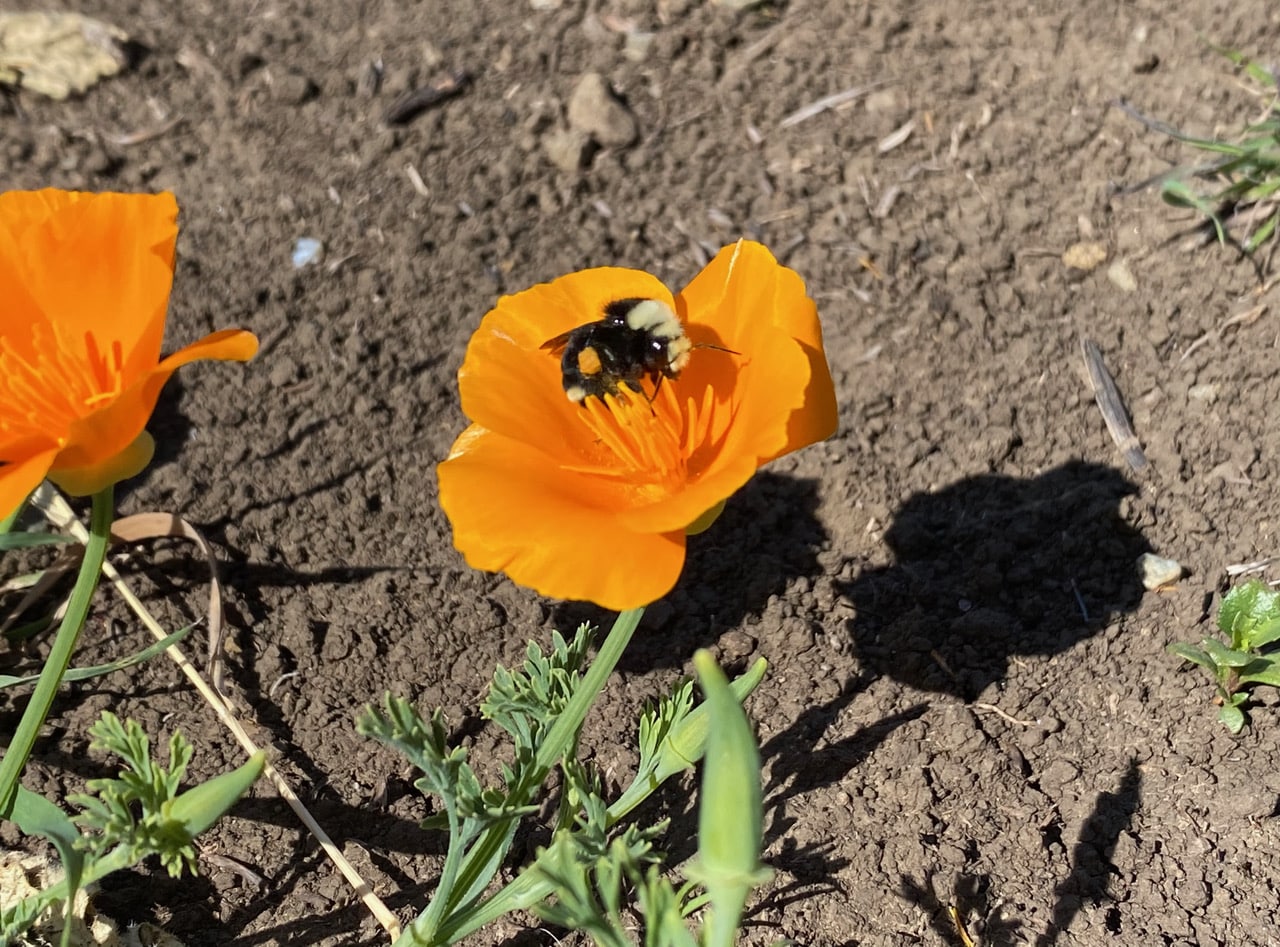
A Yellow-faced Bumble Bee, Bombus vosnesenskii drops in on a California Poppy, Eschscholzia californica.
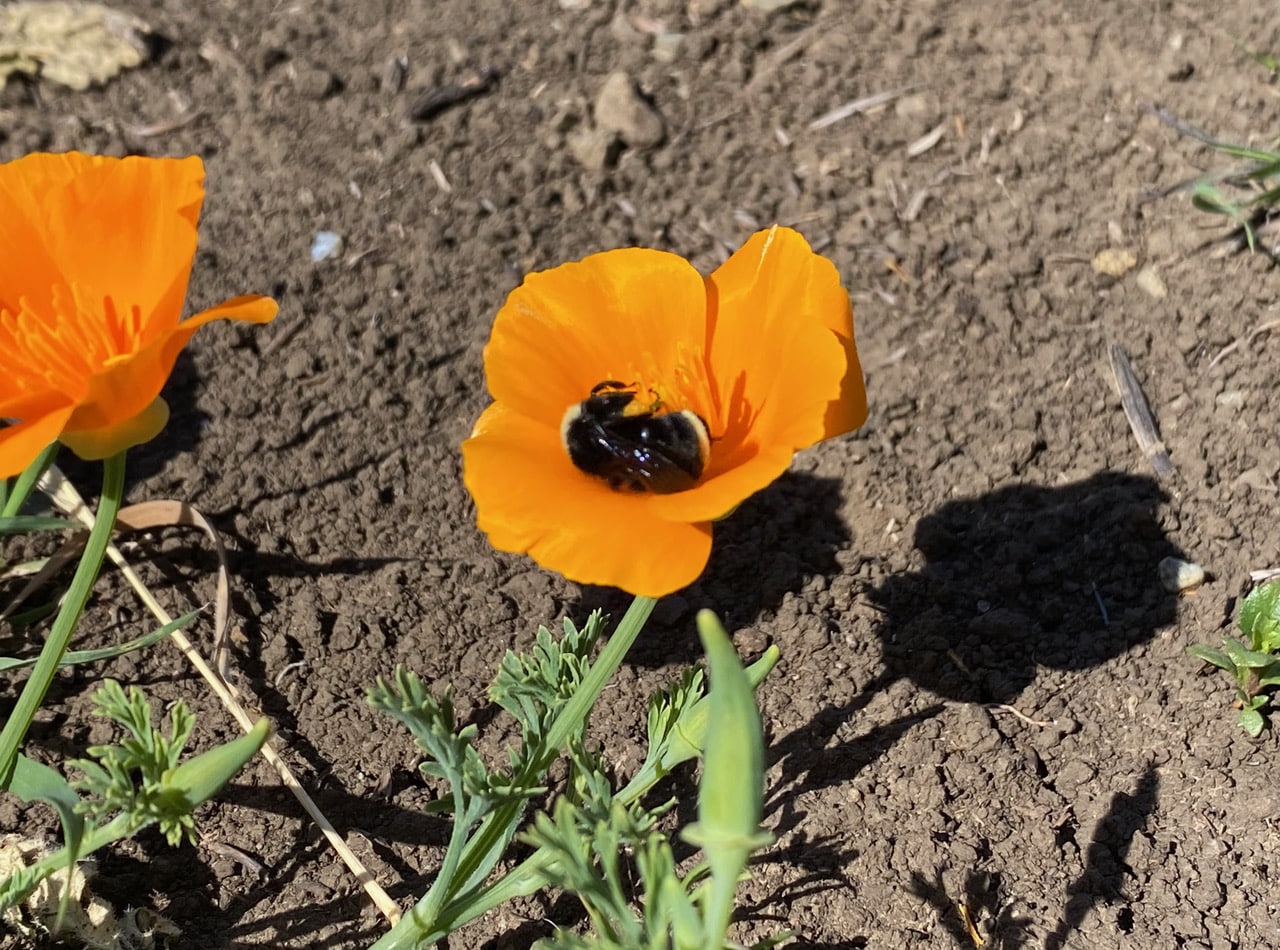
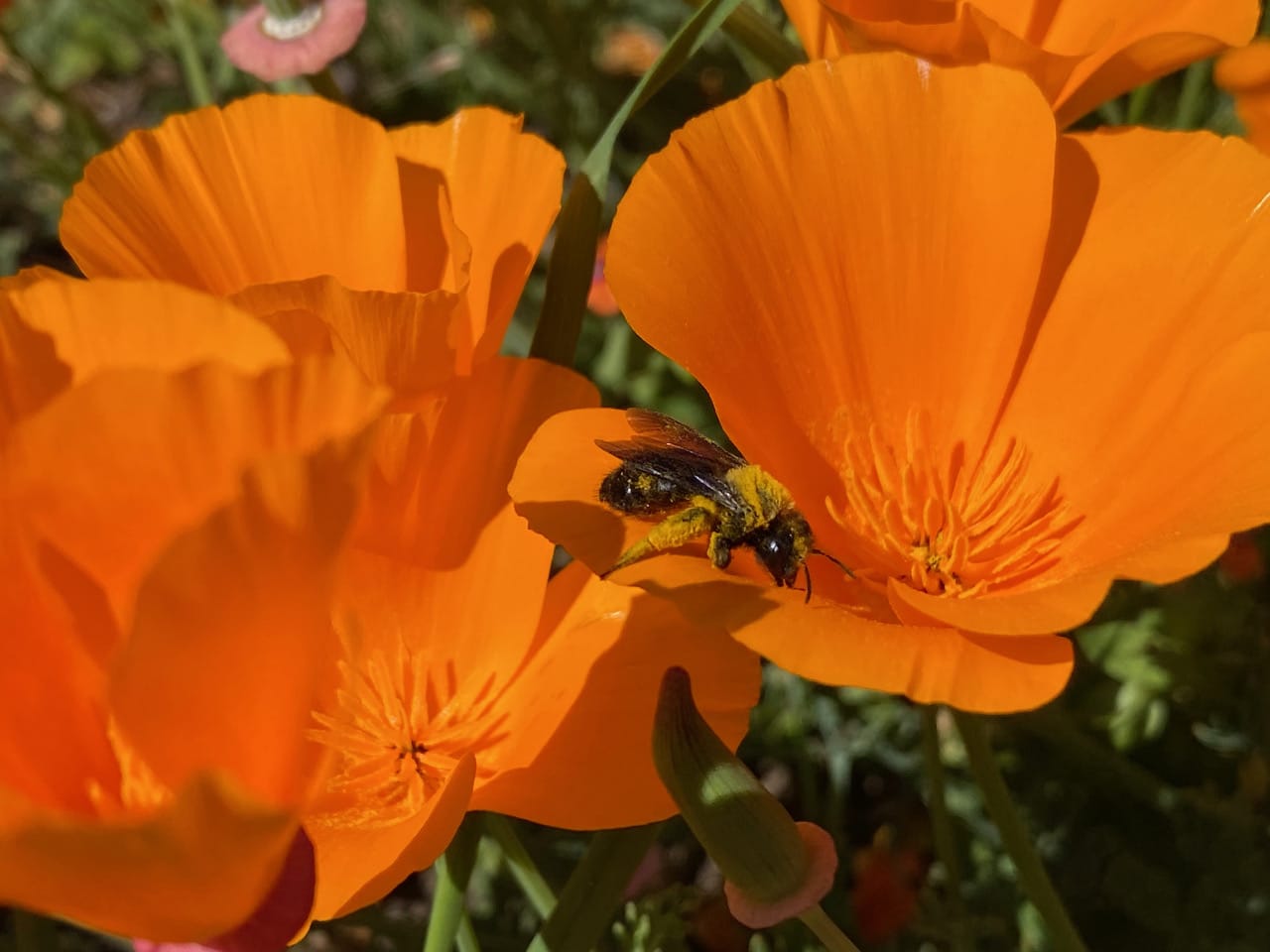


The bee immediately gets on her side to work on the numerous large anthers. She shimmies her body, occasionally giving off a high-pitched buzz to encourage the release of pollen. Poppy flowers do not produce nectar. The only reward a visiting insect gets is pollen, which the flower offers in abundance. The open bowl-shaped corolla is amenable to this type of pollen-collecting behavior termed “scrabbling”. I simply call it wallowing. Pollen is a rich source of protein, essential food for developing bee larvae.
The patch of California Poppy is so dense that a bee could easily walk from one flower to the next. Covered with pollen, a Mining Bee, Andrena sp. (family Andrenidae) is taking her sweet time foraging. Note that her scopa (special pollen collecting hairs) extends all the way to the upper part of her hind leg, seemingly to her “arm pit”. This is characteristic of the genus Andrena.
Most Andrena are solitary nesters, and they often nest in large aggregations. All Andrena nest in the ground; they often prefer sandy soil near or under shrubs. Brood cells are lined with a waxy material secreted by the female. These bees fly in the early spring. Some species emerge as early as March or April.
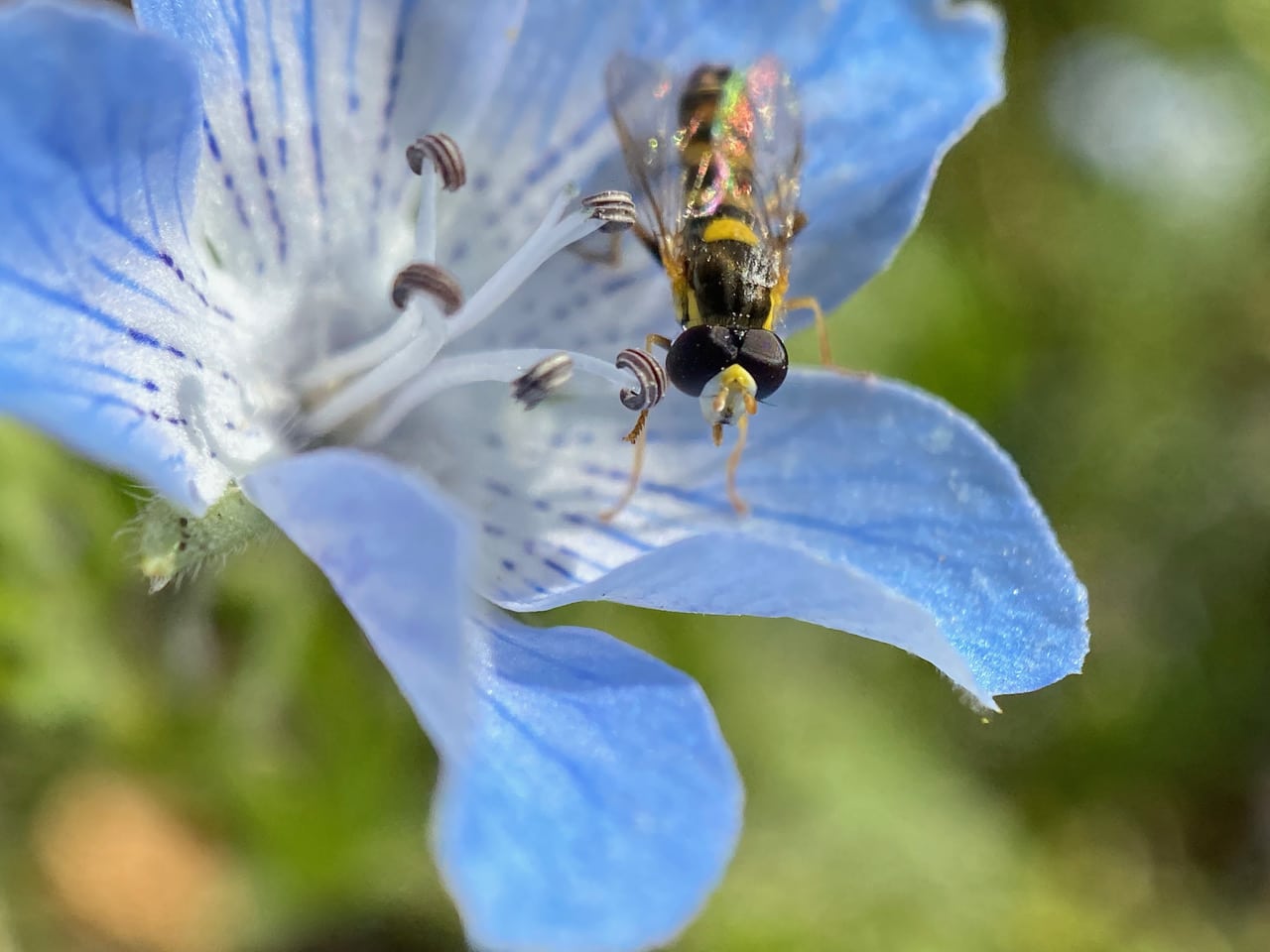
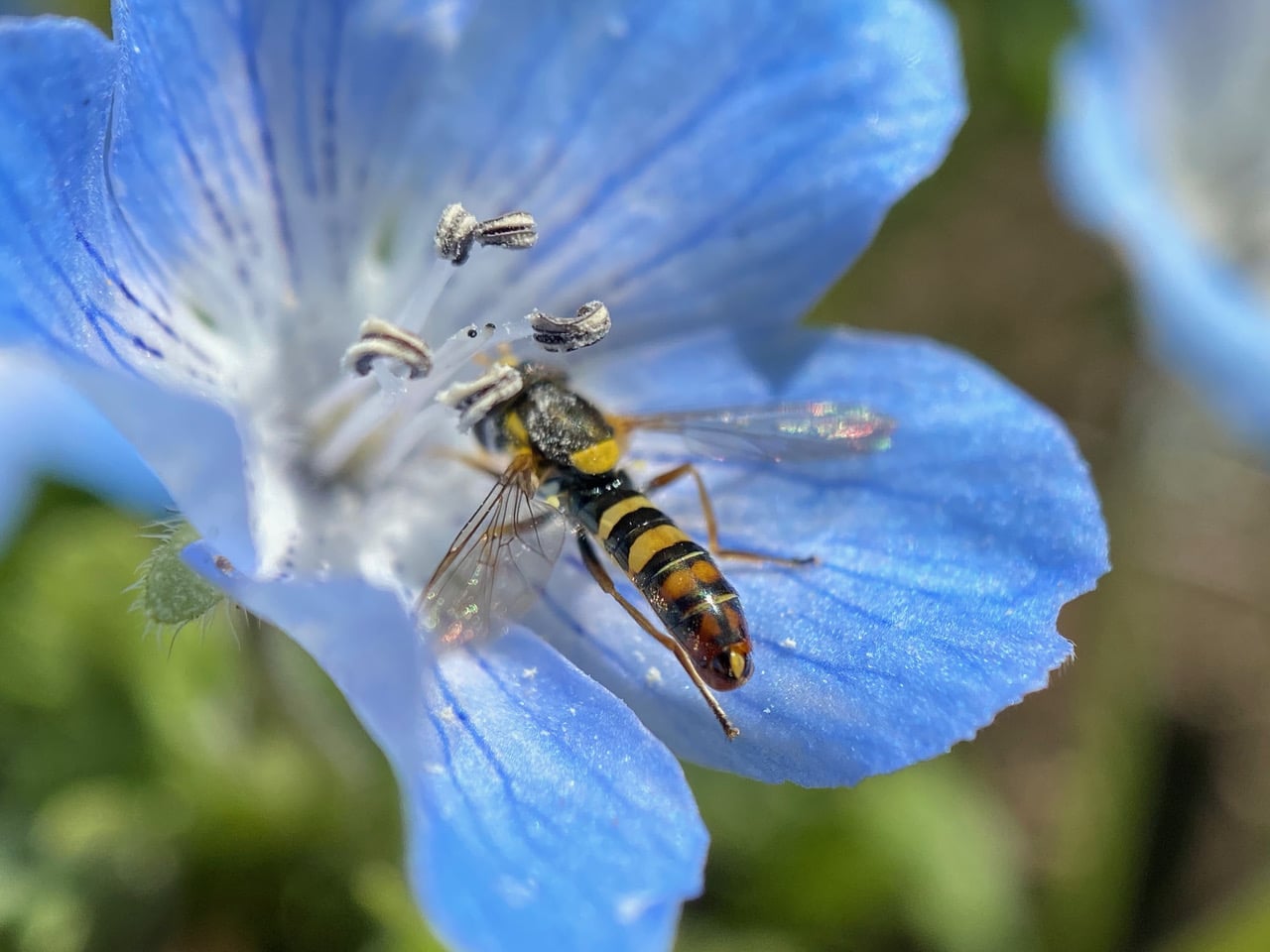
A male Globetail Hoverfly, Sphaerophoria sp. (family Syrphidae) is foraging on a Baby Blue Eyes flower, Nemophila Menziesii. Note his large, holoptic eyes that meet in a central line on top of his head. Females have eyes set apart. This gender difference is commonly seen in Syrphidae.
Actually an easier way to tell a male Globetail is his tail! Males have a slim, straight-sided abdomen that ends in a reddish tip with a globose genitalia curled under.
Females Globetails seek out aphid colonies to lay their eggs. Their larvae are voracious aphid predators.
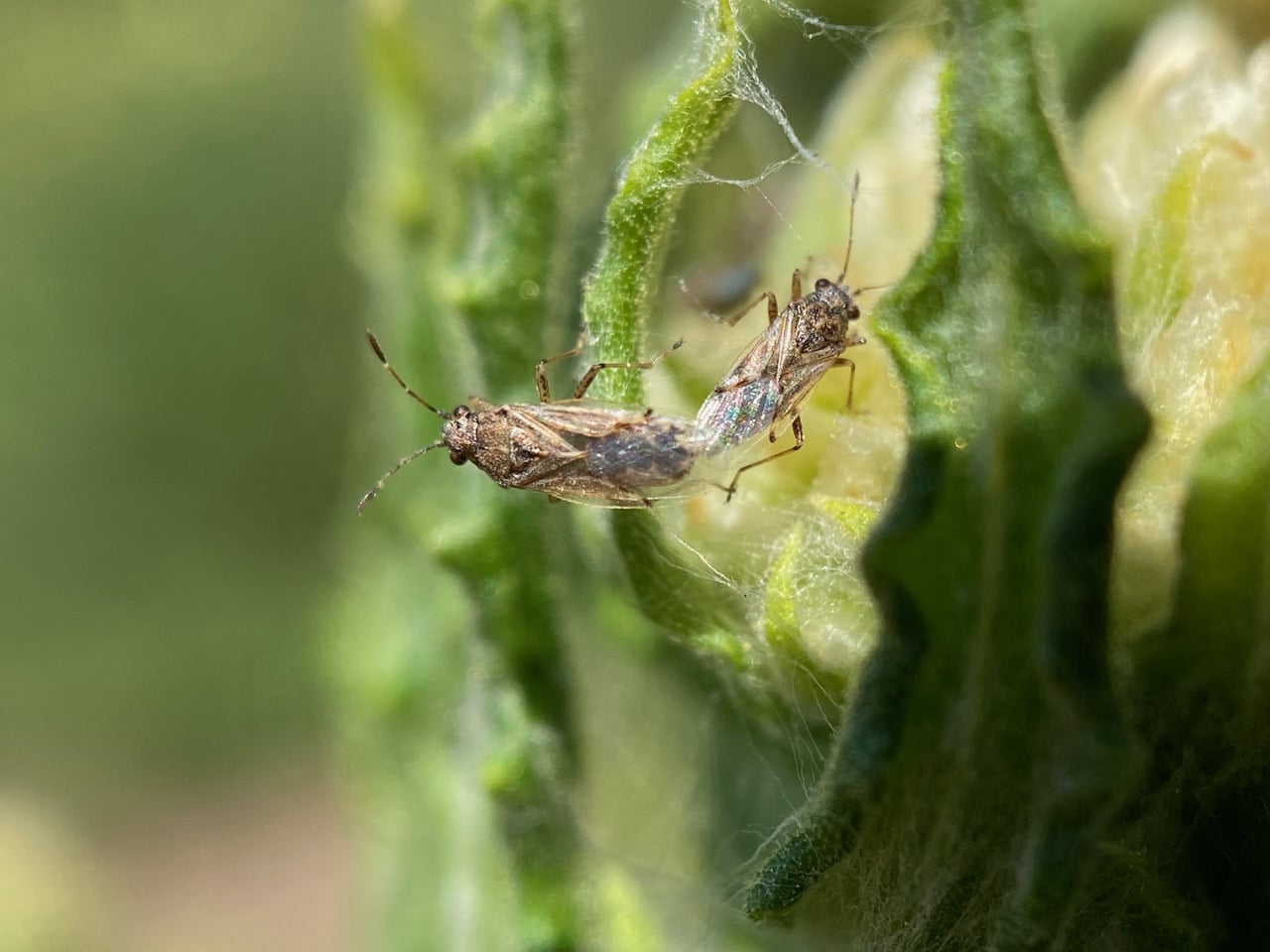
There seems to be a mating frenzy occurring on this California Everlasting, Pseudognaphalium californicum. Just about every False Cinch Bug, Nysius raphanus (family Lygaeidae or seed bugs) is in copula!
Adults are grayish-brown, slender, and about 1/8 to 1/6 in. long. Like many other insects in the order Hemiptera, their forewings are partly thickened and partly membranous so when folded, the tips of the wings overlap, forming a fairly well-defined X on the back of the body.
Nysius raphanus is commonly found within grassy or weedy fields, pastures, and foothills. Each spring, once the plants in these areas dry up, the False Cinch Bug migrates to find new places to feed. When populations are high in wet years, the bugs can become a nuisance for gardeners and farmers.
False Cinch Bugs spend the winter as nymphs and adults, usually in uncultivated areas beneath debris or in plants, often feeding on mustards or other winter annual plants. As new spring plant growth increases, so do the populations of False Cinch Bugs. Adults lay eggs in soil cracks or loose soil around plants. After hatching, nymphs feed on weeds, especially mustards, molt three times, and develop into adults in about three weeks. There can be several generations a year.
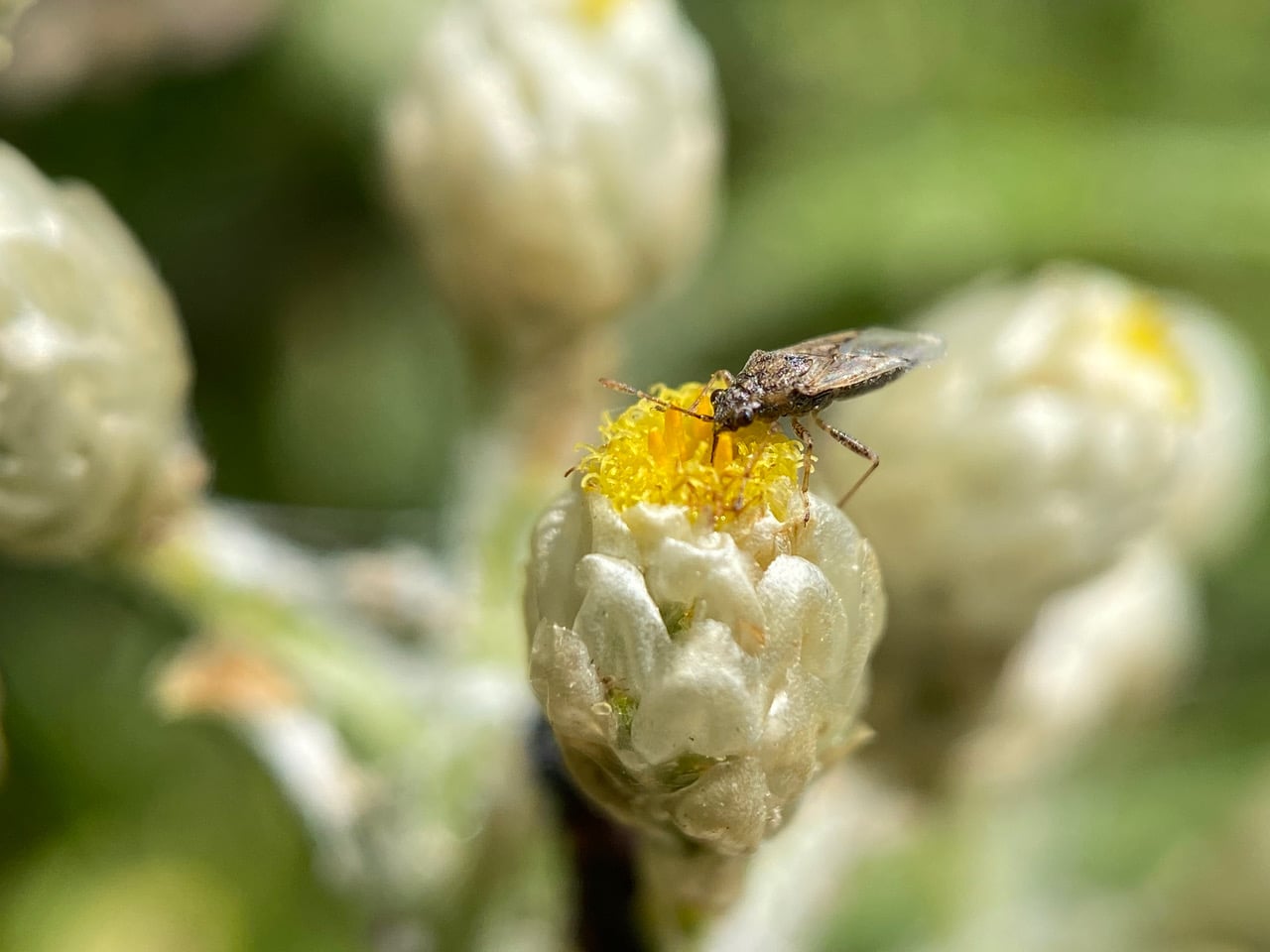
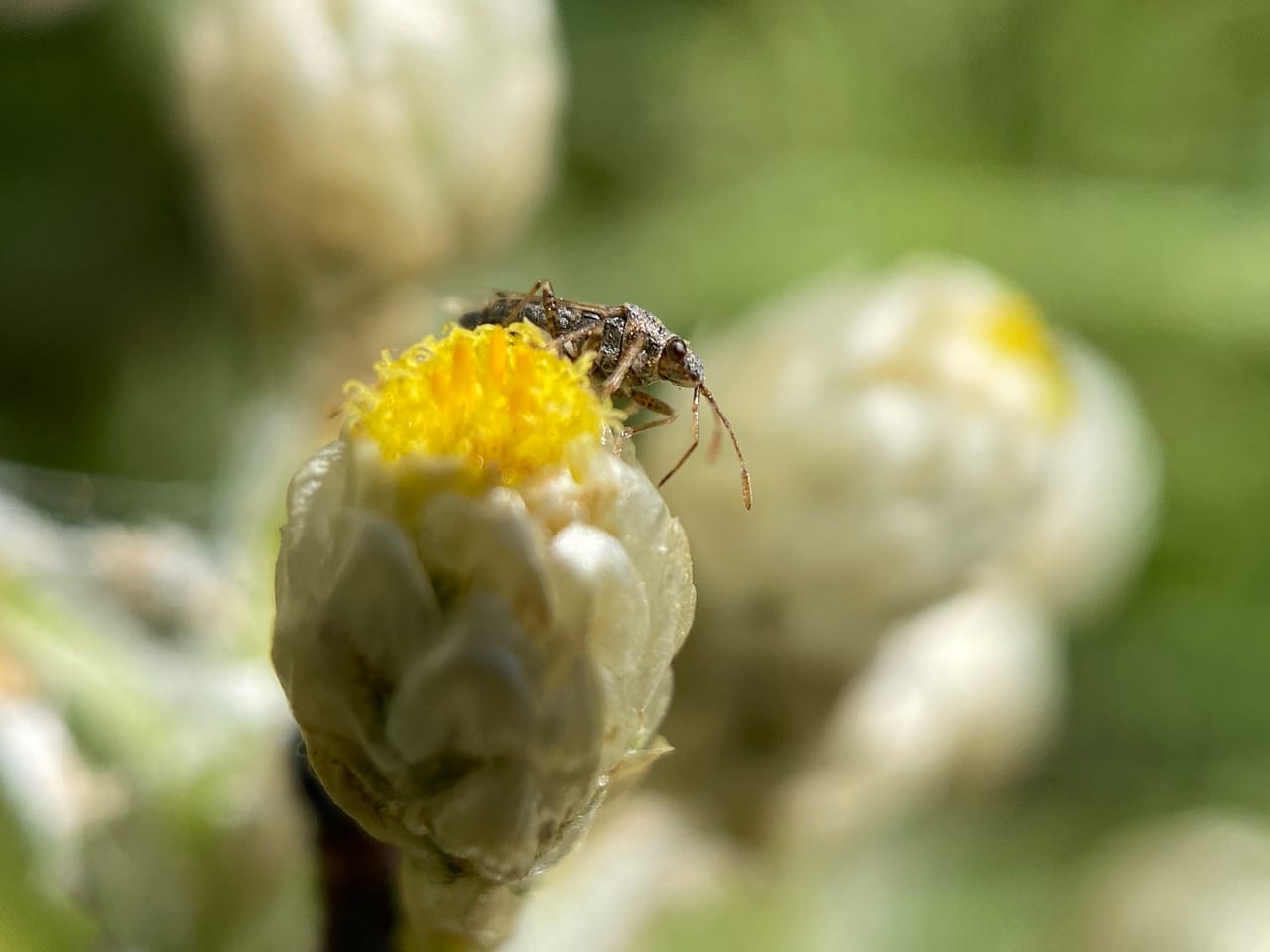
With its proboscis sunk into the open flowerhead of a California Everlasting, a False Cinch Bug, Nysius raphanus (family Lygaeidae, order Hemiptera) is feeding with its piercing-sucking mouthparts.
The defining feature of Hemipterans is their “beak” or rostrum in which the modified mandibles and maxillae form a “stylet” which is sheathed within a modified labium. The stylet is capable of piercing tissues and sucking liquids, while the labium supports it. The stylet contains a channel for outward movement of saliva and digestive enzymes, and another channel for the inward movement of pre-digested liquid food. The rostrum is usually folded under the body when not in use. Seed bugs are able to feed on seeds by injecting digestive juices into the seeds and sucking up the digested contents as a liquid. Both immature and adult chinch bugs feed on plants this way. This type of feeding can cause severe damage to plants that are unable to compensate for lost tissue and sap.

Another mating pair of False Cinch Bug.
A pair of False Cinch Bugs, Nysius sp. (family Lygaeidae) is mating among the immature flowerheads of California Everlasting. Note the proboscis that is folded under the body when not in use.
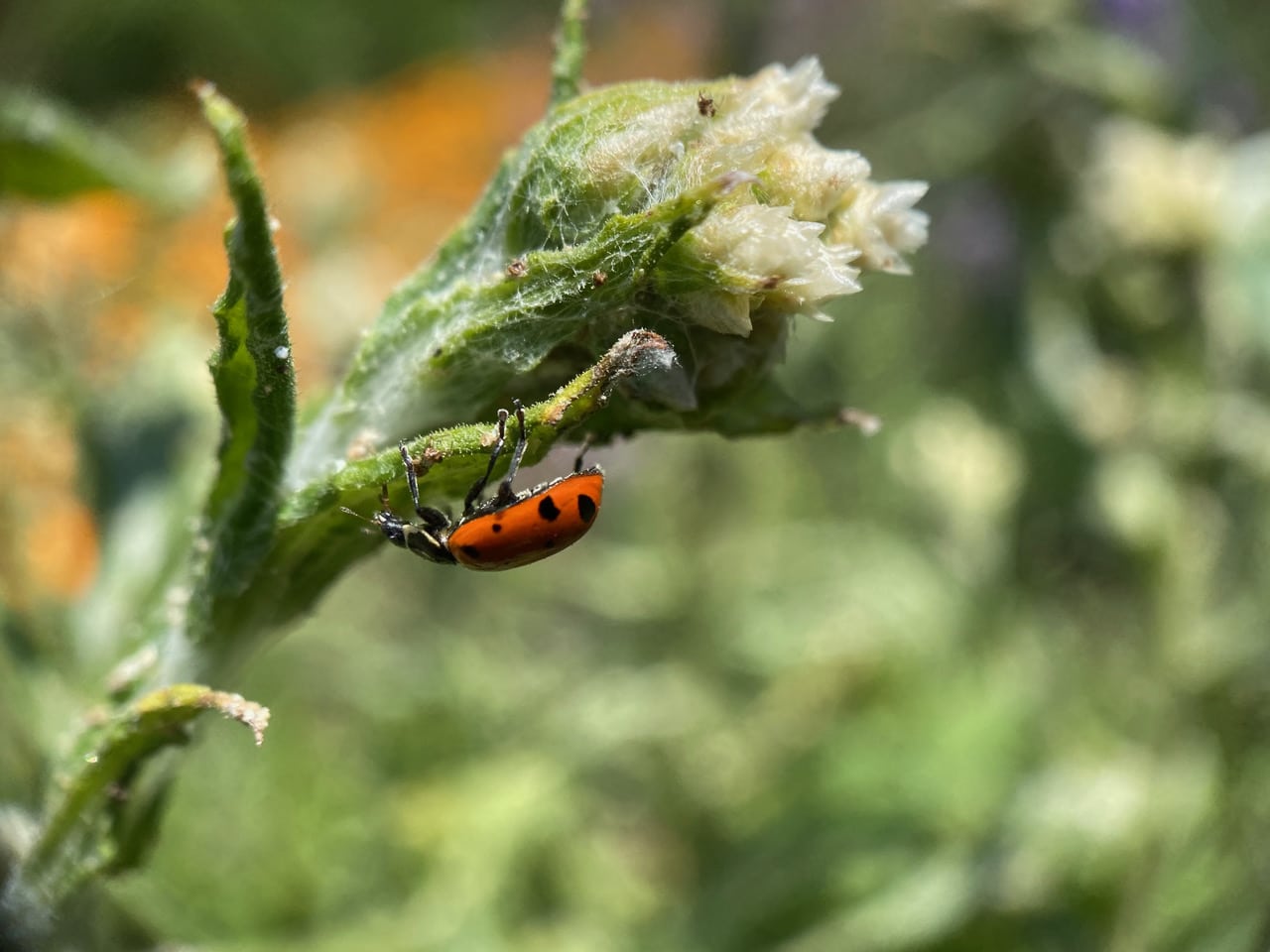
A Convergent Ladybeetle, Hippodamia convergens (family Coccinellidae) is patrolling a California Everlasting that I suspect is infested with minuscule, almost invisible aphids.
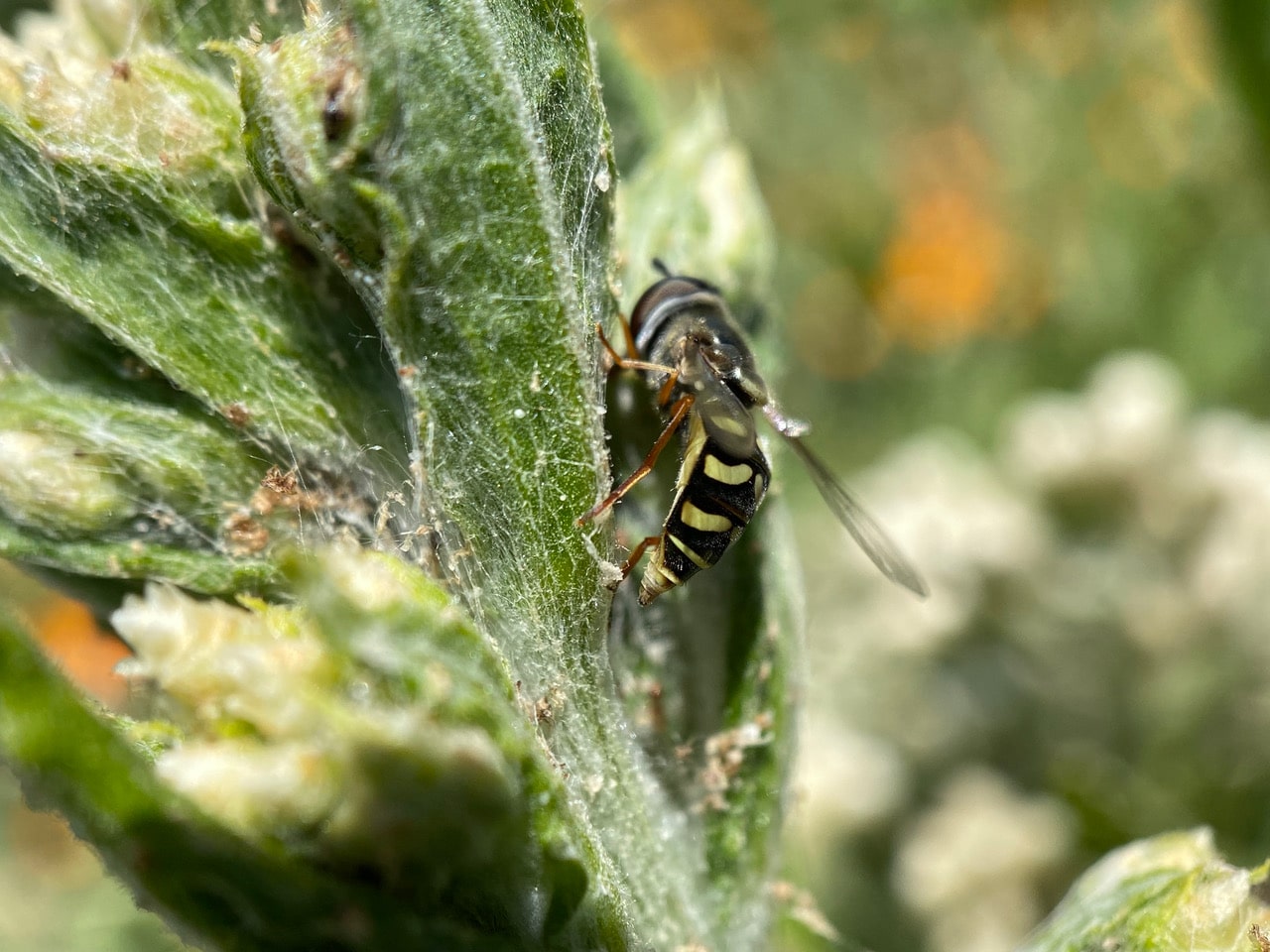
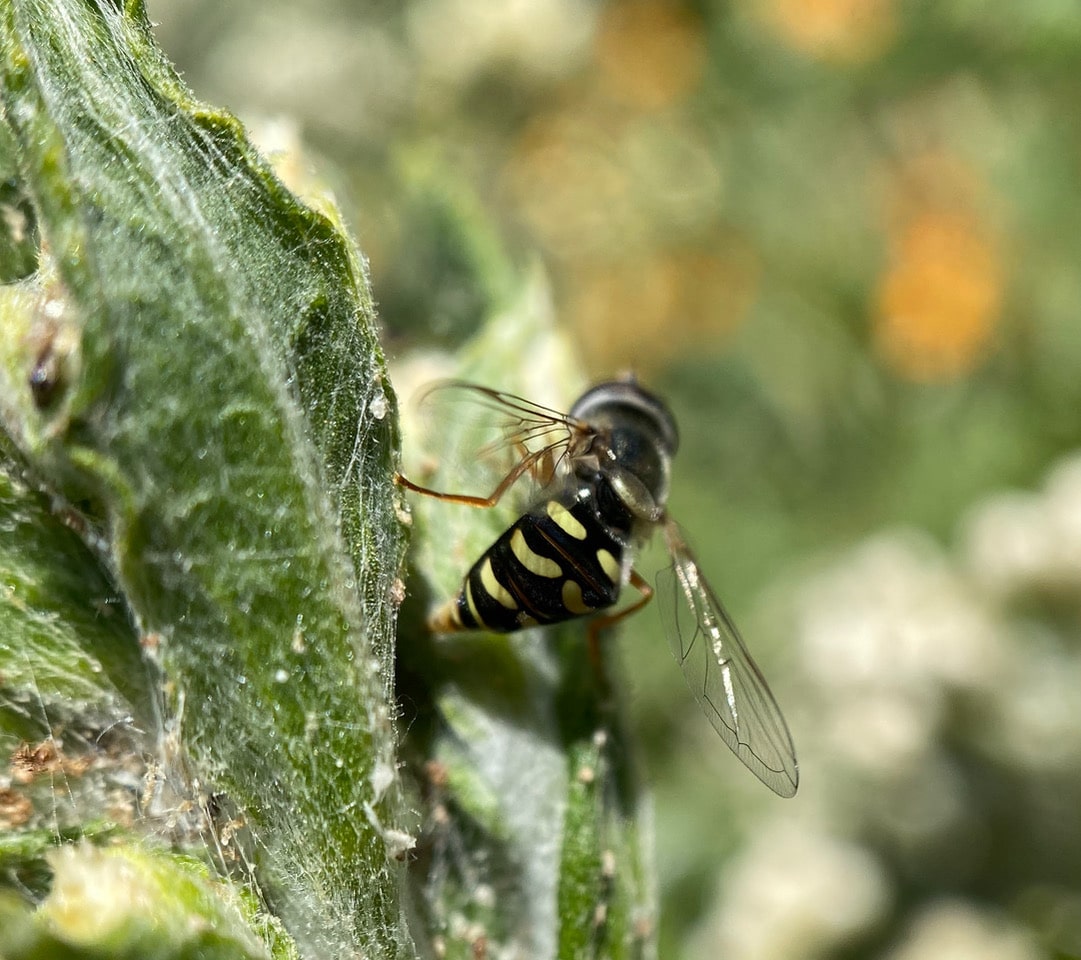
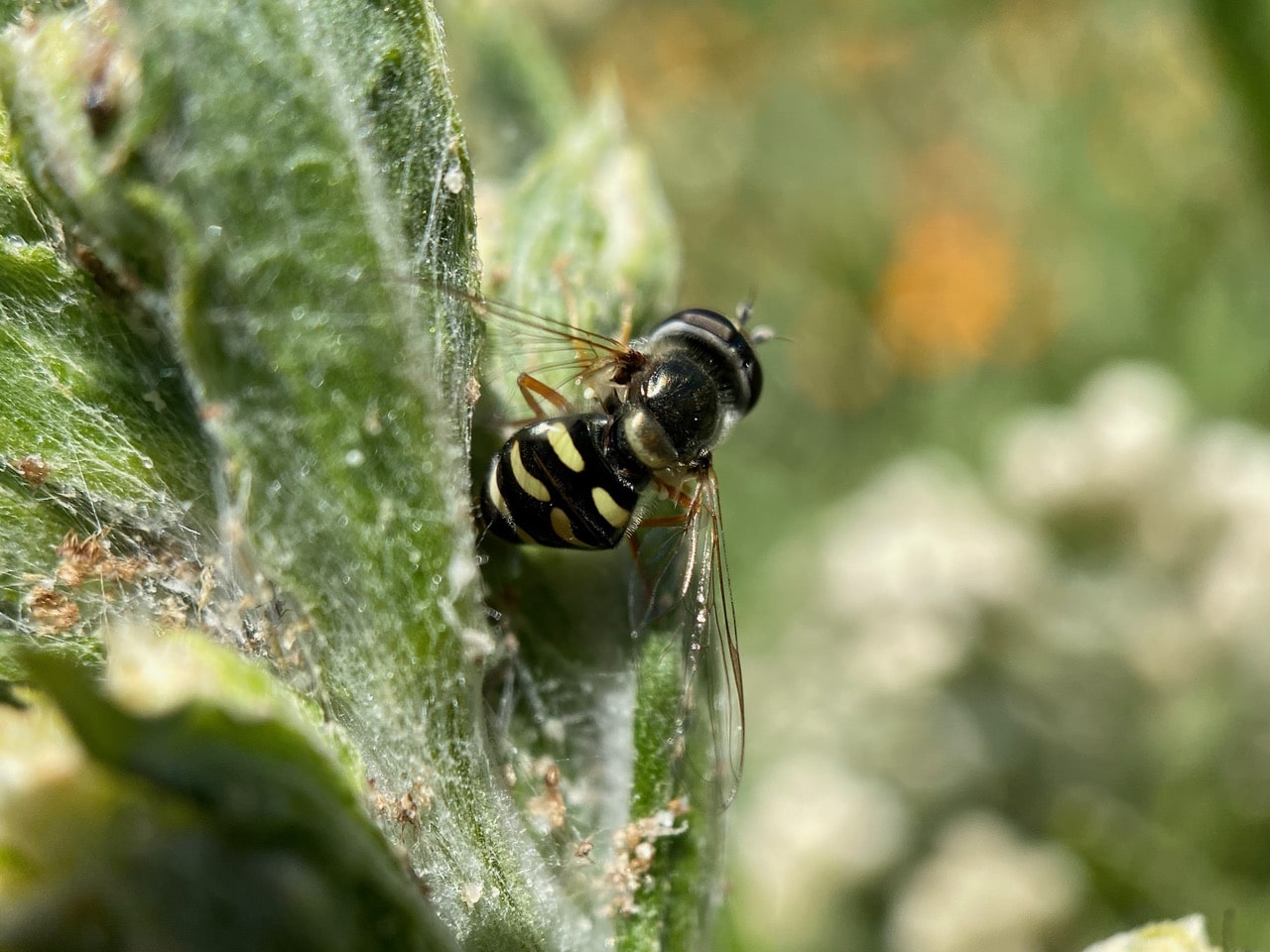
Here’s another sign that the plant is infested with aphids – a female Large-tailed Aphideater, Eupeodes volucris (family Syrphidae) is laying eggs on it! The larvae of this hoverfly species feed on aphids; females seek out aphid colonies in which to lay eggs. After flying around the tips of the plant several times, the female finally lands with the tip of her abdomen extruded, ready to oviposit. Note the aphid debris and waxy droplets on the plant.
She angles her abdomen forward in a typical egg laying posture.
There, I think she’s laying an egg now in that crevice between young leaves. Syrphid eggs are usually laid singly, so that the larvae won’t have to compete with each other for prey. Well done, mama hoverfly!
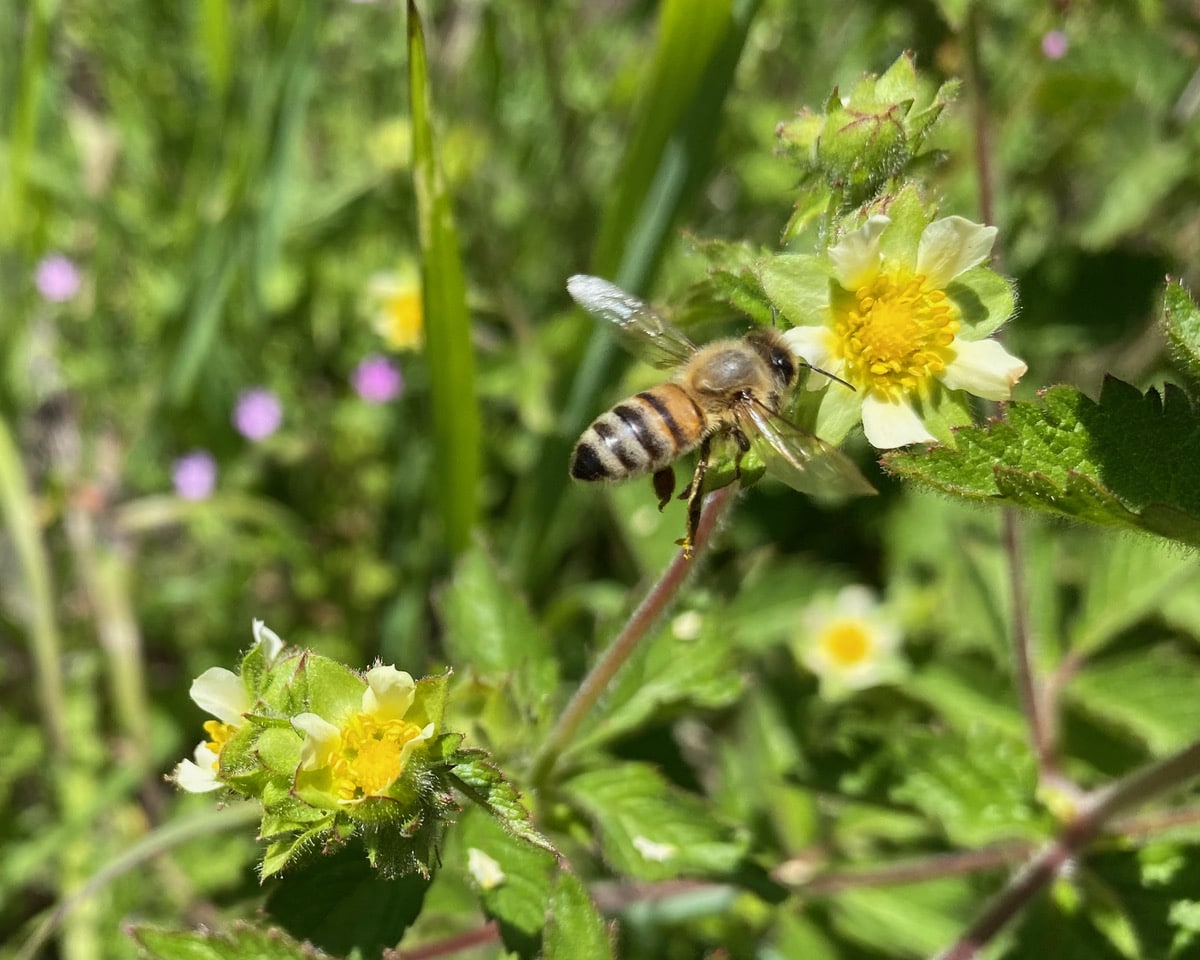
A Honey Bee, Apis mellifera (family Apidae) visits a flower of Sticky Cinquefoil, Drymocallis glandulosa.
I often find it difficult to get a good photo of a cinquefoil flower. The images often appear diffusely fuzzy. This might be caused by strong ultraviolet reflectance of the flower. While our eyes see the cinquefoil flower as uniformly white or yellow, photographs taken with UV-sensitive cameras reveal a bull’s eye effect. This pattern is known as a “nectar guide” and is thought to attract insect pollinators that can see in UV light.
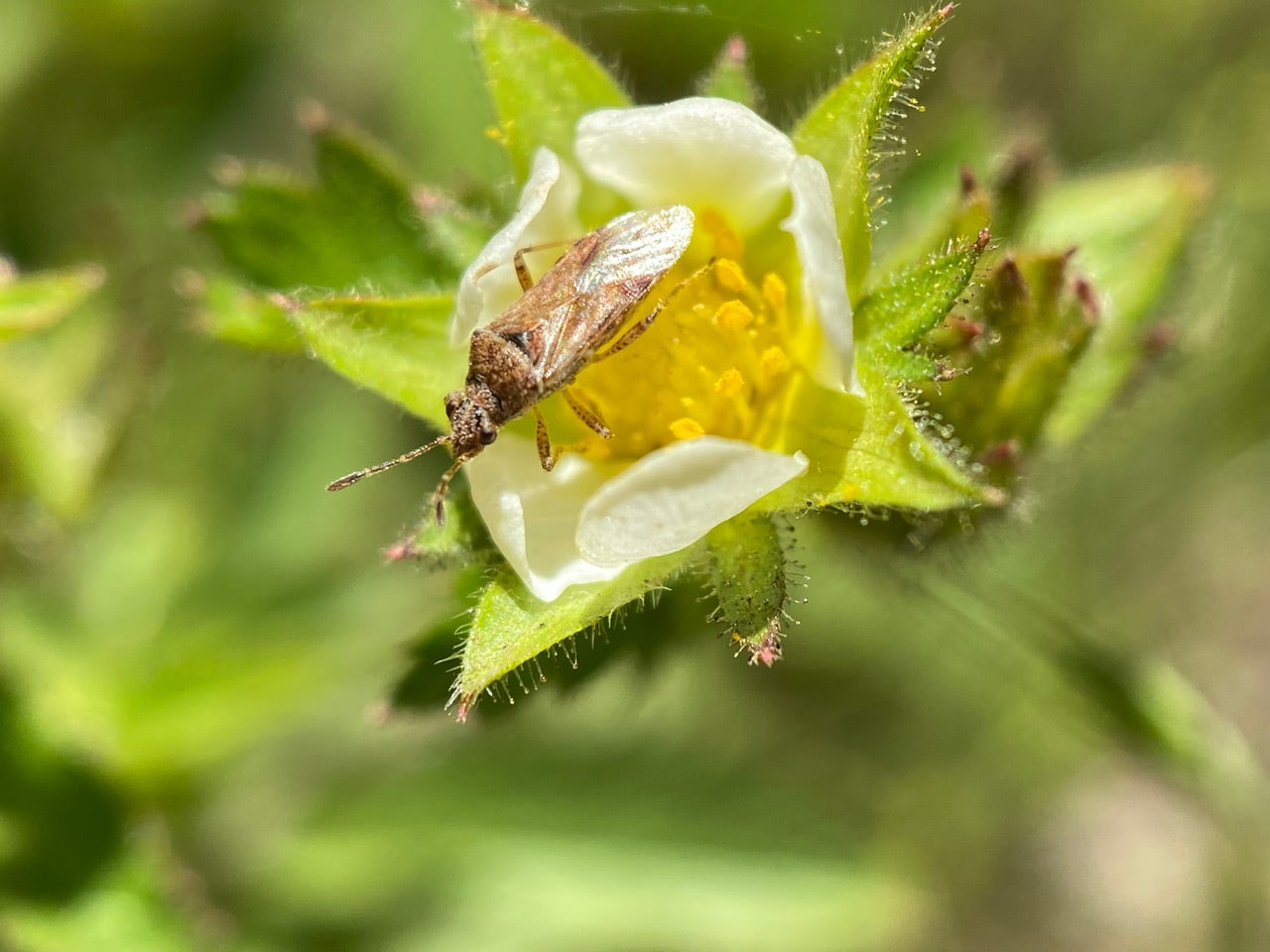
Here’s a bug that is commonly seen on the Sticky Cinquefoil flower, Drymocallis glandulosa. It is a member of the genus Arhyssus, the Scentless Plant Bugs (family Rhopalidae). Little information is available about these bugs, except that they lack well-developed scent glands, and that they feed on seeds of herbaceous plants.