

Pollinator Post 5/10/23 (2)

Several Cobweb Thistles, Cirsium occidentale have grown up along the paved road to the Water Tank. This tall, spindly plant is already bearing some impressive young flowerheads.
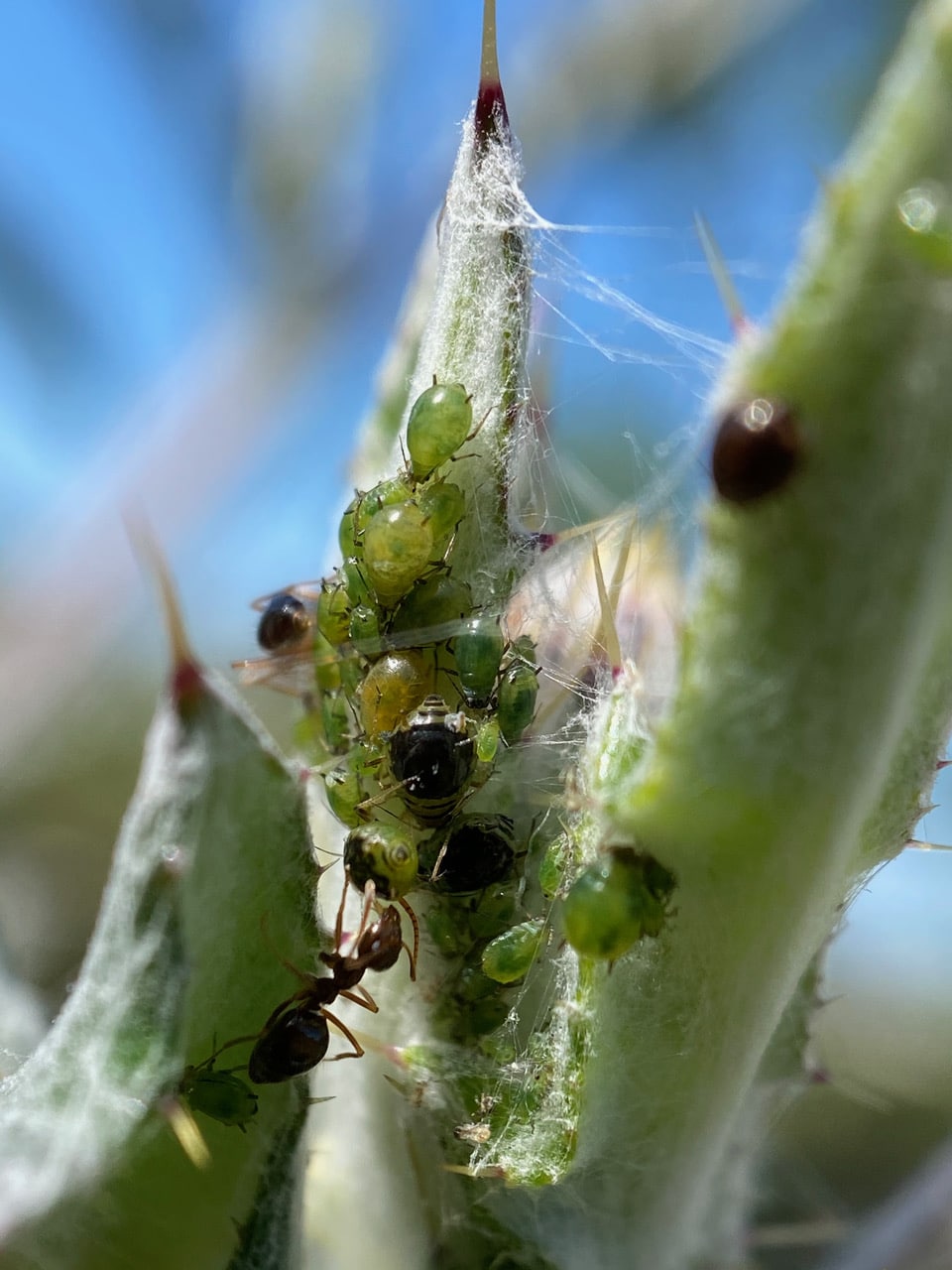

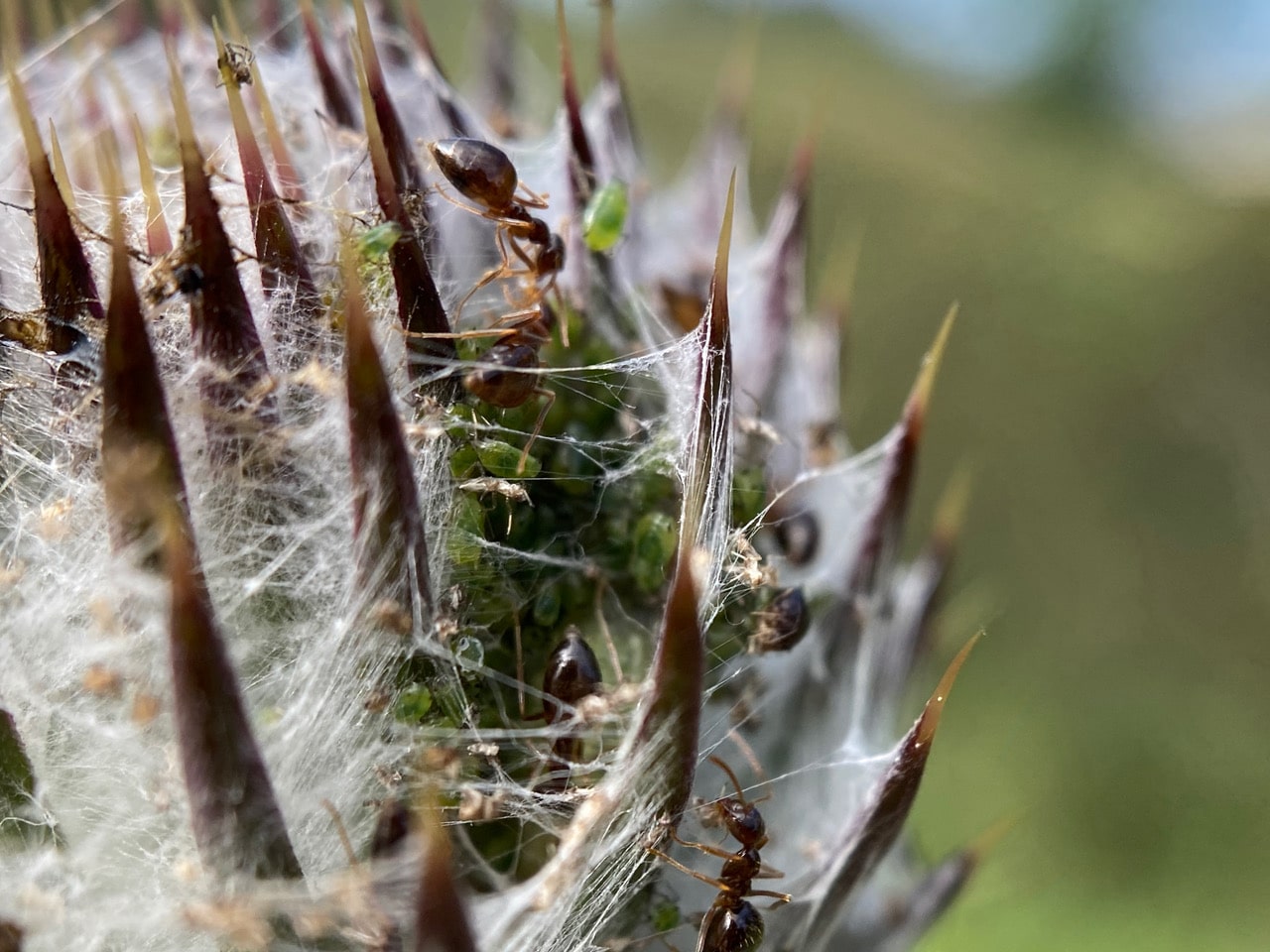
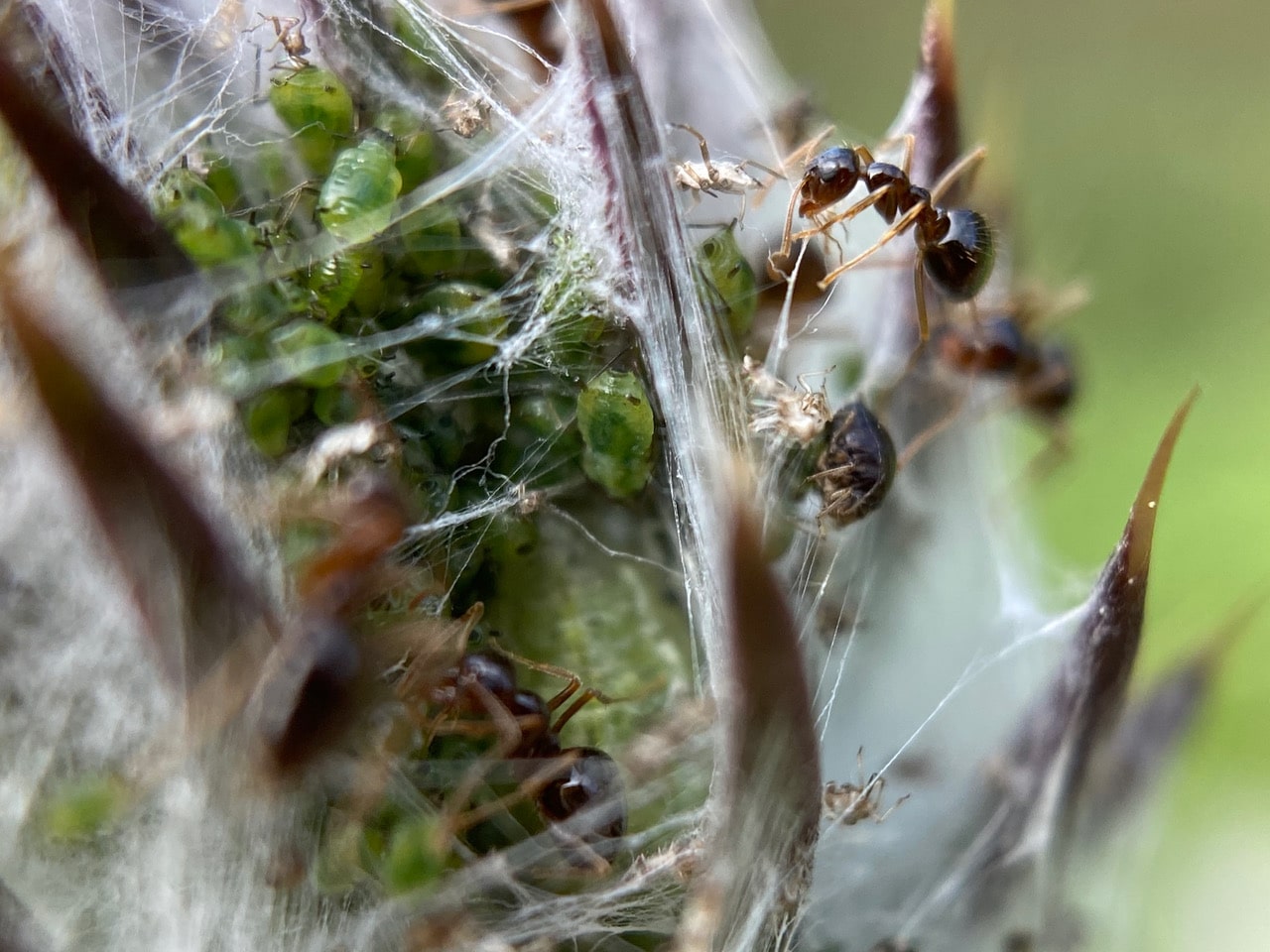

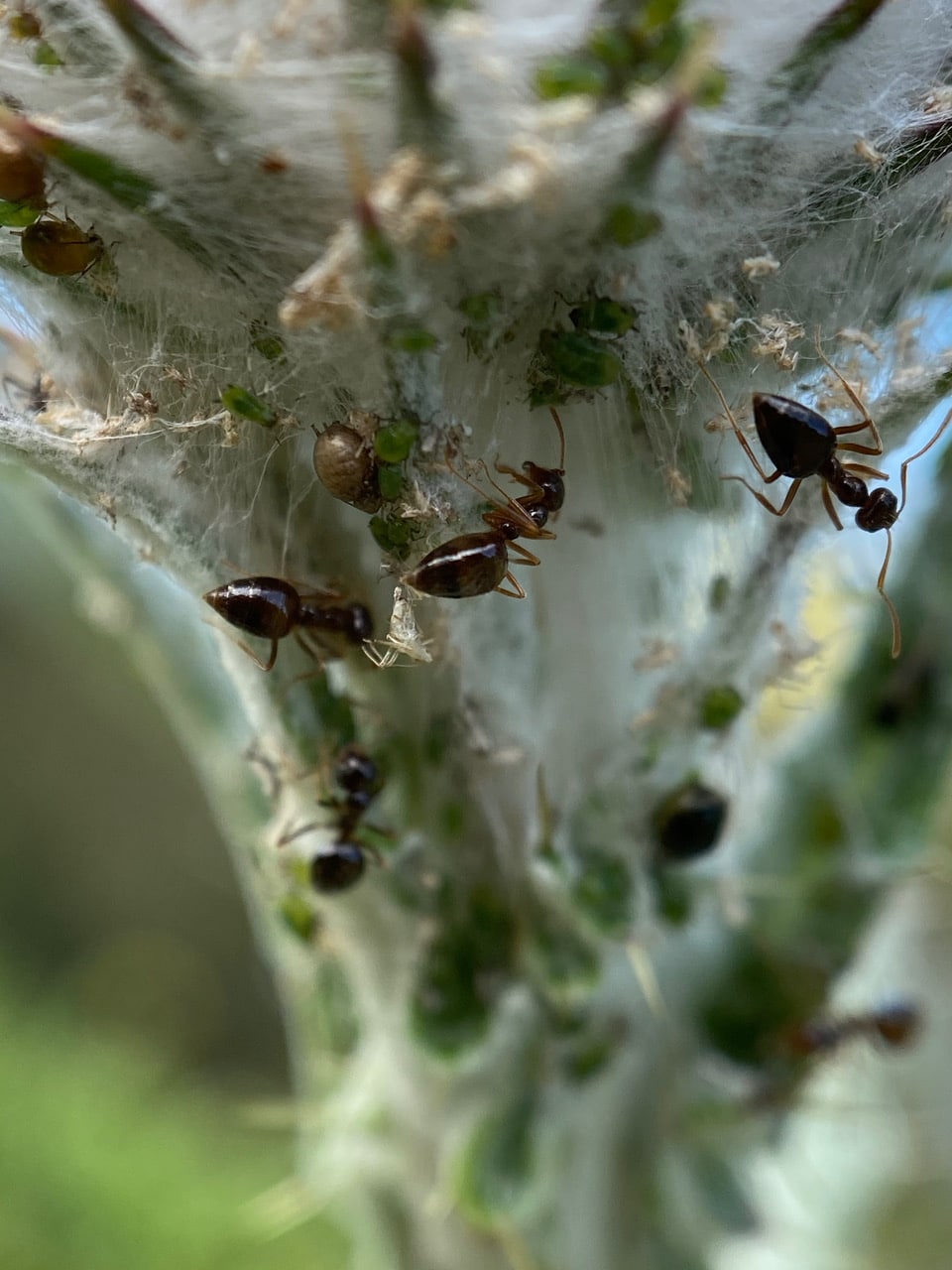
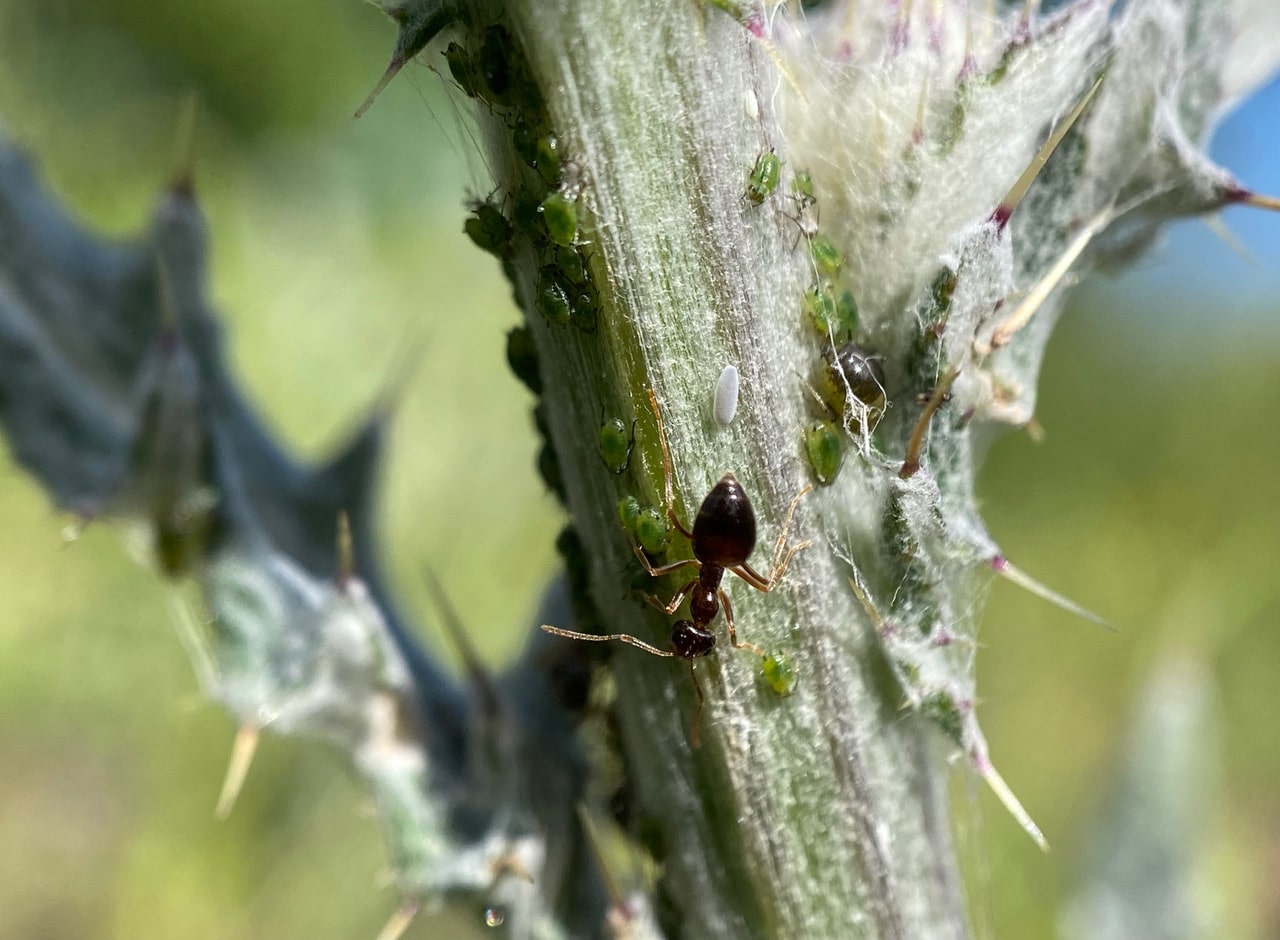

I check the plant for aphids, and am not disappointed. The plant is host to a thriving colony of Thistle Aphids, Brachycaudus cardui (family Aphididae) and they are well attended by the American Winter Ants, Prenolepis imparis. The young aphids are green, eventually acquiring a large black patch and some black stripes on the back as they mature.
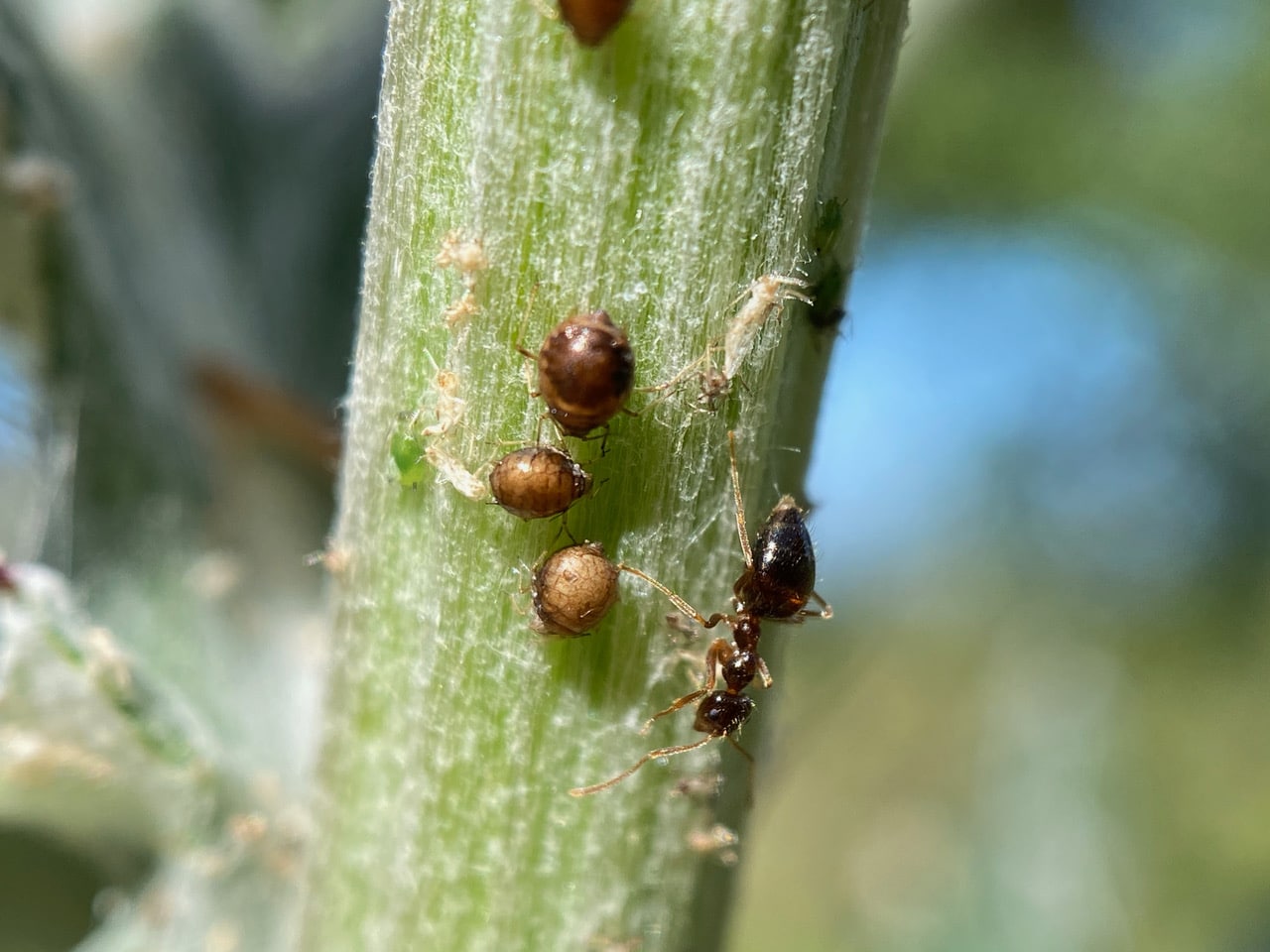
Wow, this immature thistle flowerhead is heavily infested with aphids. Note the adult aphid with the black back. The bloated brown or straw-colored ones are aphid mummies – aphids that have been parasitized by a parasitoid wasp. The female wasp has injected an egg into the aphid. The larva that hatches out feeds on the host from the inside. After pupation, the adult wasp emerges from the host by cutting a round exit hole on the host abdomen.
This thistle flowerhead is an aphid nursery well tended by the ants!
Ants and aphids share a well-known mutualistic relationship. The aphids produce honeydew, a sugary food for the ants; in exchange, the ants care for and protect the aphids from predators and parasites. Some ants will “milk” the aphids to make them excrete the sugary substance. The ants stroke the aphids with their antennae, stimulating them to release the honeydew. Aphid-herding ants make sure the aphids are well-fed and safe. When the host plant is depleted of nutrients, the ants carry their aphids to a new food source. If predatory insects or parasites attempt to harm the aphids, the ants will defend them aggressively. Some species of ants continue to care for aphids during winter. The ants carry the aphids to their nest for the winter months, and transport them to a host plant to feed the following spring.
Zooming in closer…. Wow, the flowerhead is chock full of aphids! Wait, I think there’s a predator hiding under the mass of aphids. See the white-lined green creature (not in focus) at the bottom? It is an Hoverfly larva, a voracious predator of aphids. Why haven’t the ants gotten rid of or destroyed the Syrphid larva? Why is it allowed to live among the aphids? How does the Syrphid larva protect itself from the ants?
Faintly visible through the silky webbing, two pale green Syrphid larvae are hunting aphids in this thistle flowerhead.
The underside of this thistle flowerhead is a metropolis of aphid and ant activity.
There are aphid mummies everywhere. I watch with bated breath for the ants’ reaction to the parasitized aphids. Several ants walk past this group of mummies, sometimes stopping to check them out, but all eventually lose interest and go away. Do the ants not sense that there’s danger lurking in the aphid mummies? Surely these mummies are no longer able to produce the honeydew that the ants crave? Are the parasitoid wasps inside the aphid mummies actually immune from the attacks of the attending ants?
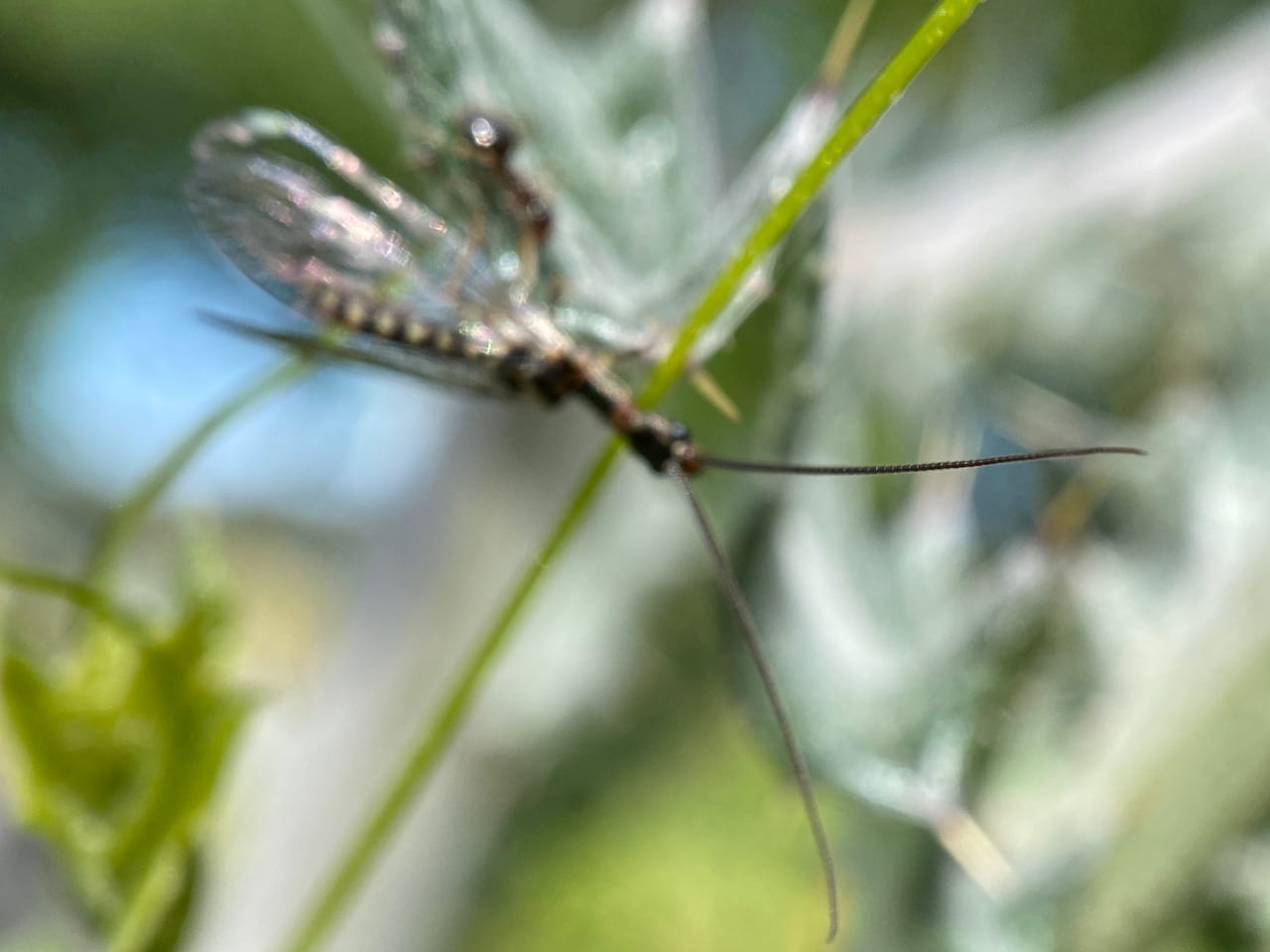
I am ready to snap a picture of an insect with an elongate body resting on a thistle leaf, when it suddenly leaps into the air.
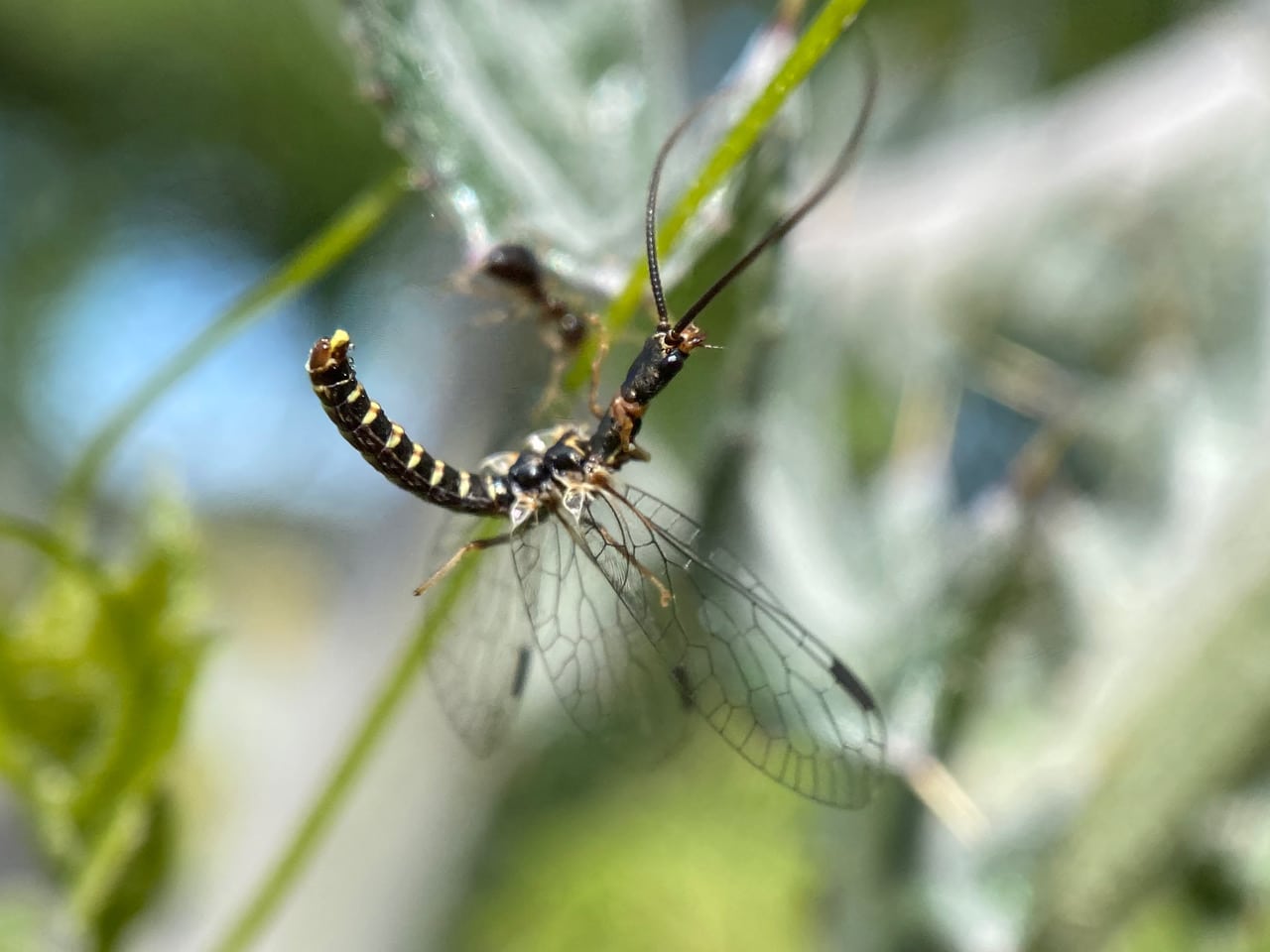
The insect seems contorted with pain. It has been attacked by an ant!
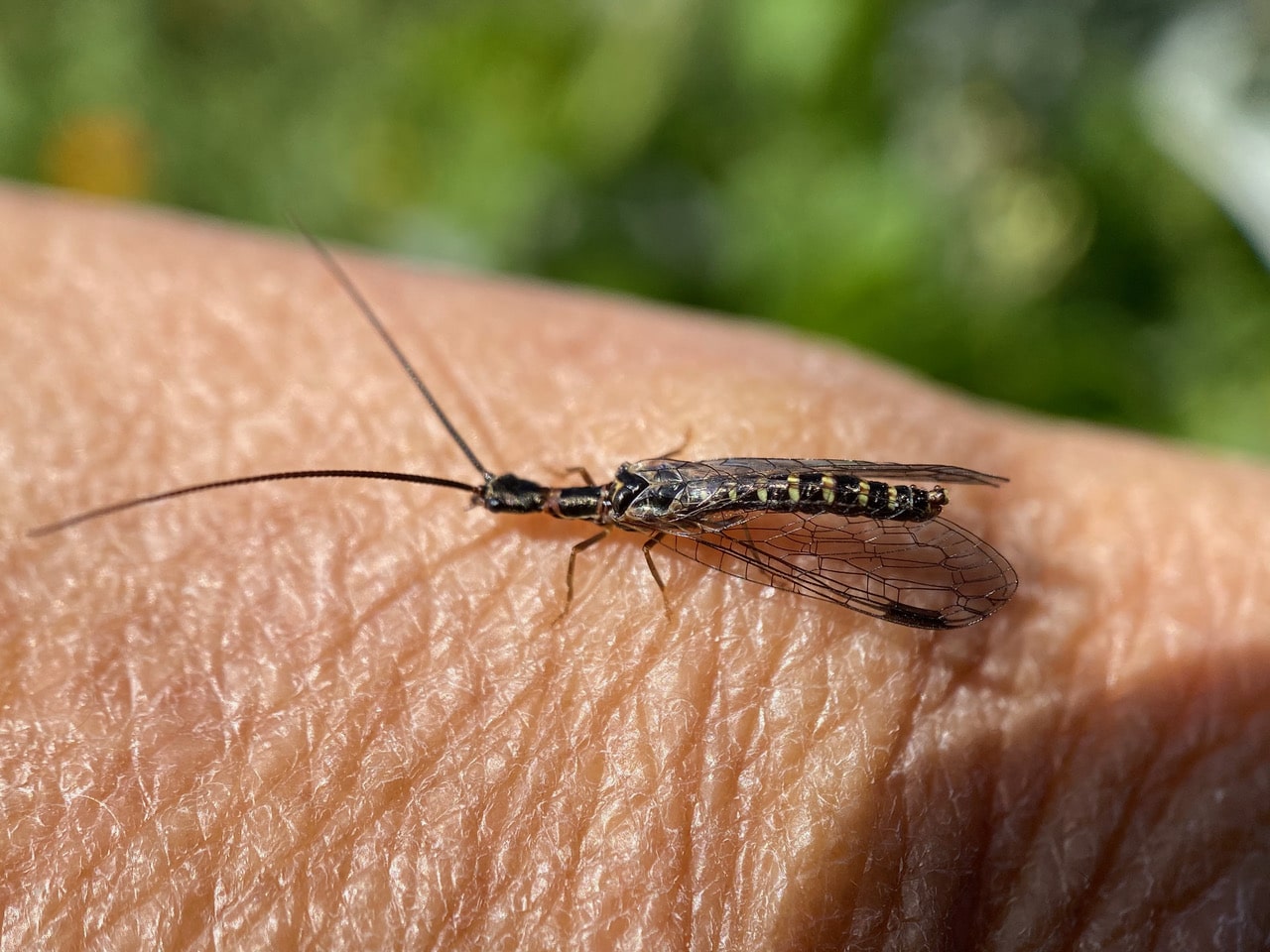
The Snakefly comes to rest on my hand, its wings drooping in misery. Will it survive the injury? The tip of the insect’s abdomen is oozing tiny drops of liquid – it’s probably where the ant has bitten it.
Snakeflies are predaceous, feeding on soft-bodied arthropods such as aphids and aphids and mites. It’s no wonder that the ants attacked it to protect their herd of aphids. This could also explain why there are no other obvious predators on this thistle, such as the Ladybeetles and Soldier Beetles.
I recall my observations on the large Cobweb Thistle by the Water Tank that was infested with aphids. When I first found the plant, it was free of ants. There were numerous predators – the ladybeetles, the Soldier Beetles, and the Syrphid larvae. There were also aphid mummies. When the ants eventually occupied the plant, the ladybeetles and the soldier beetles disappeared, but the Sryphid larvae remained. I am now seeing the same phenemenon on this thistle. It seems the ants would not tolerate the ladybeetles and the Soldier Beetles, but are oblivious to the danger posed by the Syrphid larvae and the aphid mummies with parasitoid wasps growing within them. Hmm….
Hey, do you see the Syrphid egg on the thistle stem, just above the ant’s abdomen? It looks like a grayish-white miniature grain of rice. There’s heavy ant traffic along the stem, but none of the ants pays attention to the Syrphid egg. So somehow the Syrphids, both eggs and larvae are immune to ant attacks. Why?
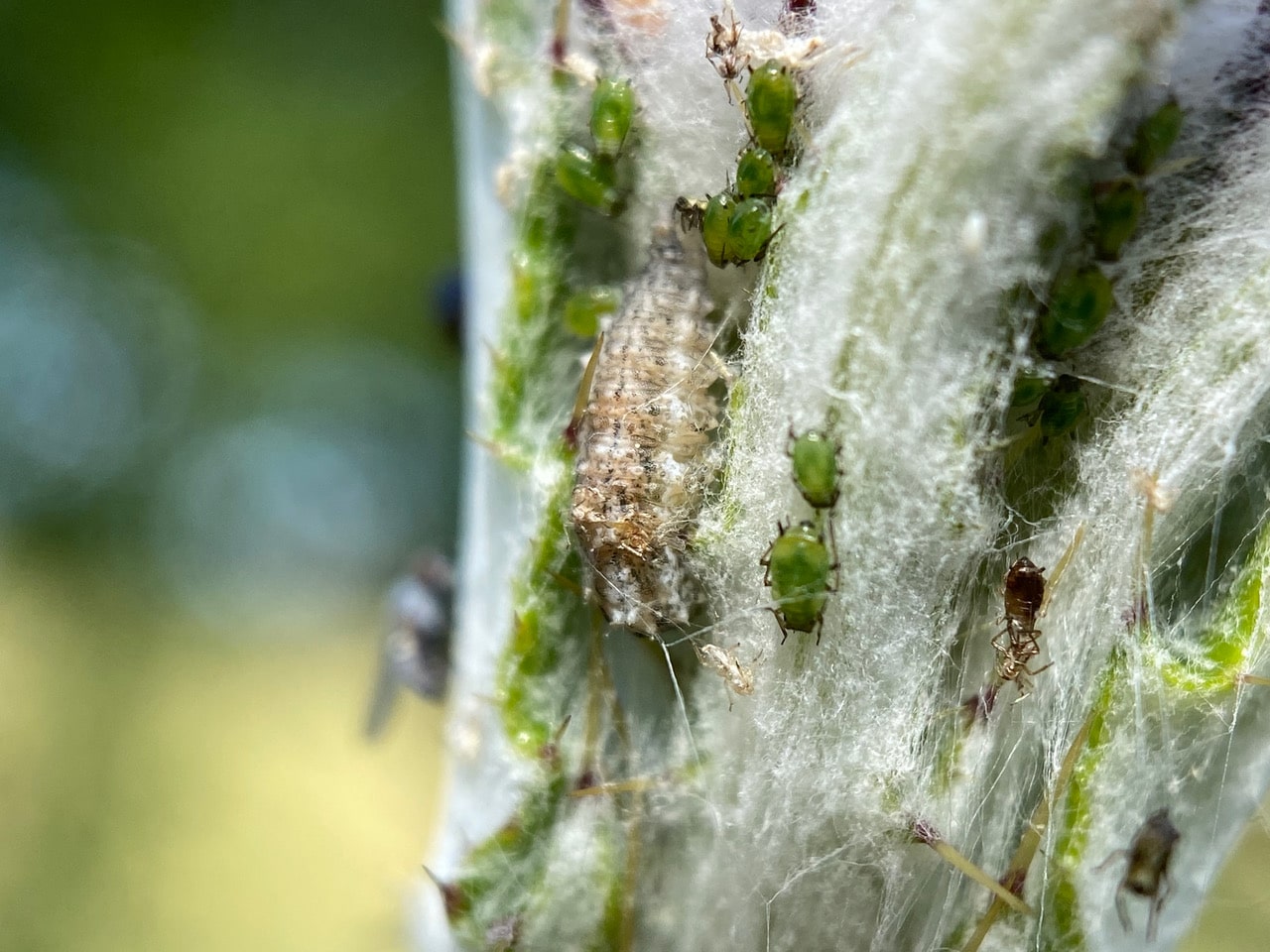
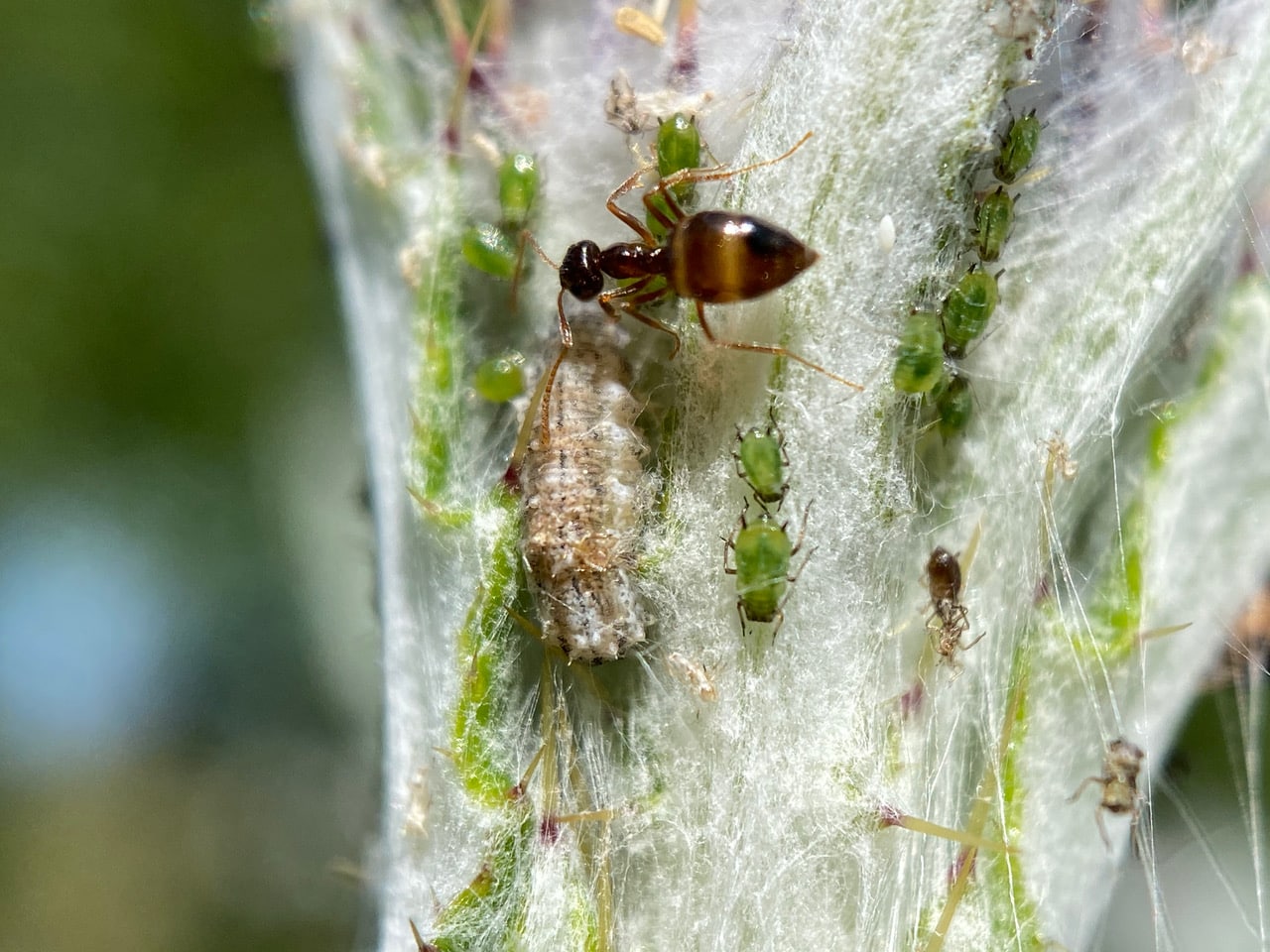
Here’s another case in point. A brown Syrphid larva ( Eupeodes sp.?) is lying amid young aphids. The blunt end is its rear end. At the other end, the larva is feeding on an aphid.
An ant comes by and checks on the Syrphid larva, even tapping it with its antennae. Then it goes on its way, leaving the larva without showing any sign of alarm.
Here’s a green Syrphid larva (Scaeva sp.?) hunting aphids on a thistle flowerhead. Why do the ants allow this, while attacking other predators of the aphids?