

Pollinator Post 4/9/25 (2)

At Sibley today, I decide to explore a path less traveled that leads from the main trail. A couple of years ago, I have tried this narrow path, and came upon a lone Native American chanting and drumming in a secluded meadow. Not wanting to disturb him, I had turned around. All is quiet today, and I have the whole place to myself.
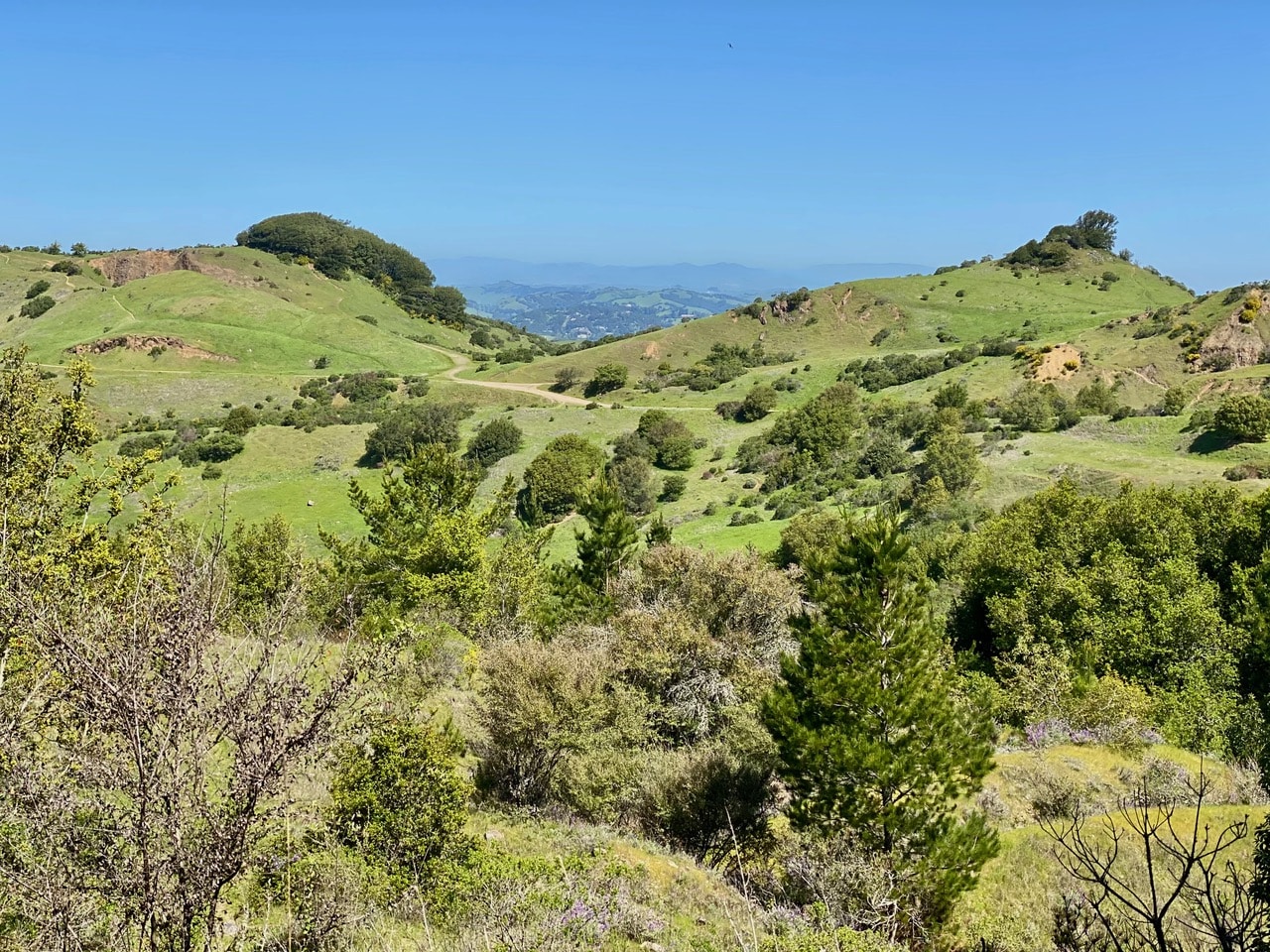 There is an expansive view of the surrounding green hills from up here.




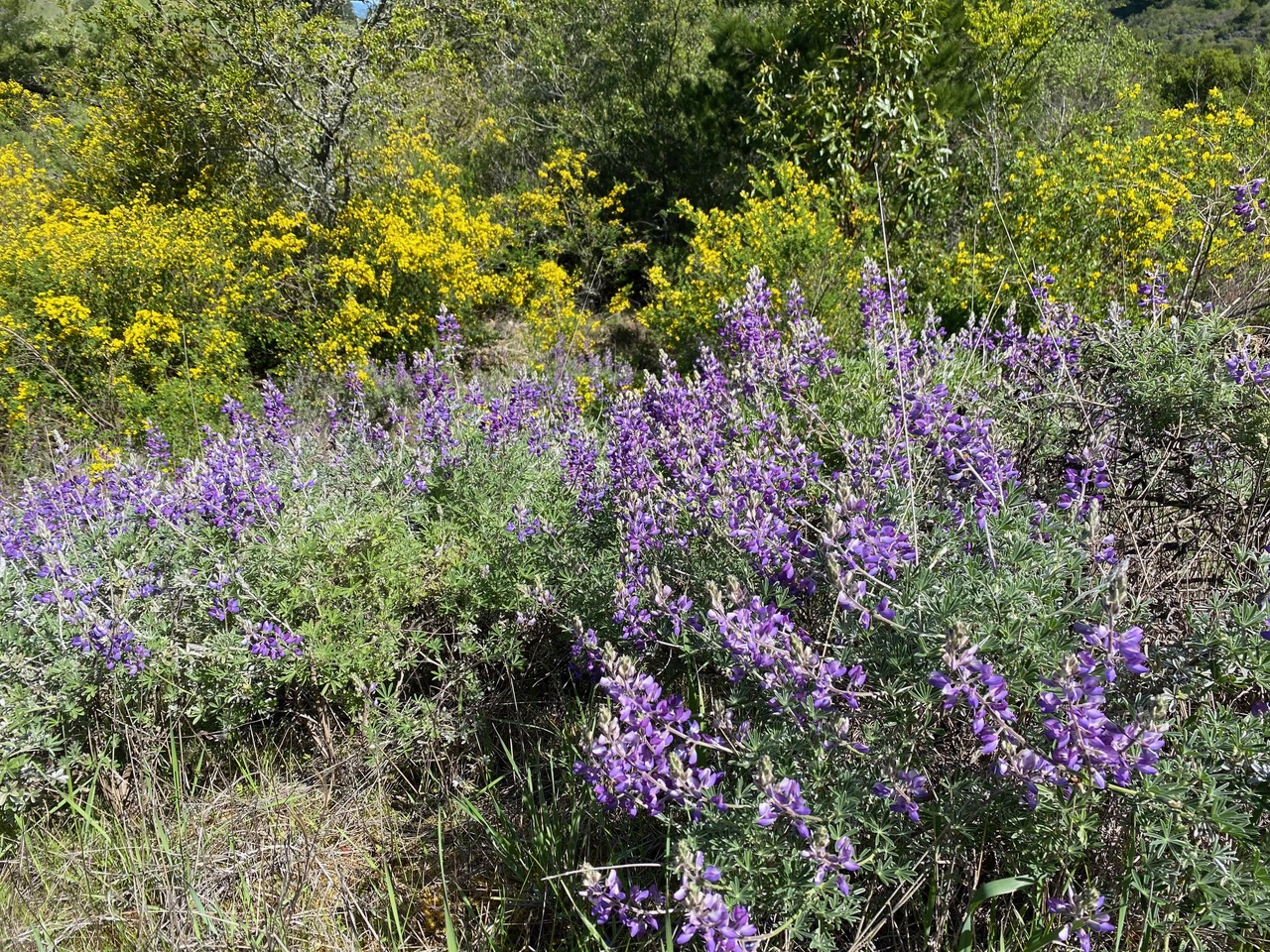
There is a nice stand of Silverleaf Lupine, Lupinus albifrons at the edge of a cliff, whose blue flowers contrast brilliantly against the yellow of
French Broom. Some bumble bees and Digger bees are foraging on the flowers, and I think a Northern Checkerspot butterfly as well.
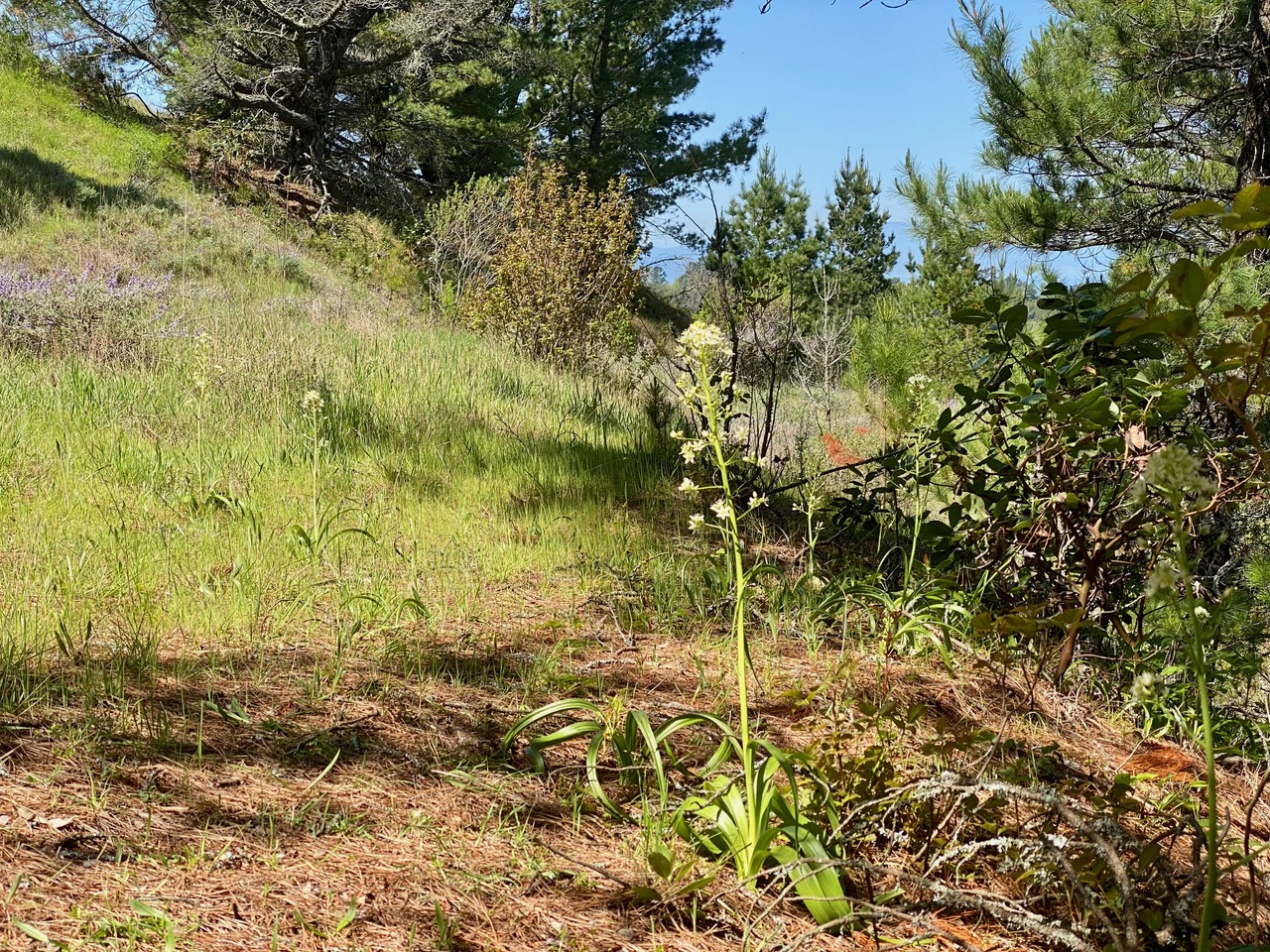
There is an expansive view of the surrounding green hills from up here.I come across a dozen Fremont’s Star Lily, Toxicoscordion fremontii growing in the dappled shade of some Monterey Pines, Pinus radiata.
I stop to take a break and to check for any insectst visiting the flowers of Fremont’s Star Lily.
Fremont’s Star Lily, Toxicoscordion fremontii (family Melanthiaceae), a perennial herb, is a west coast native that produces an attractive spike of cream colored flowers from an underground bulb. Together with several related plants, it is also called death camas, since all parts of the plant contains a toxic alkaloid.
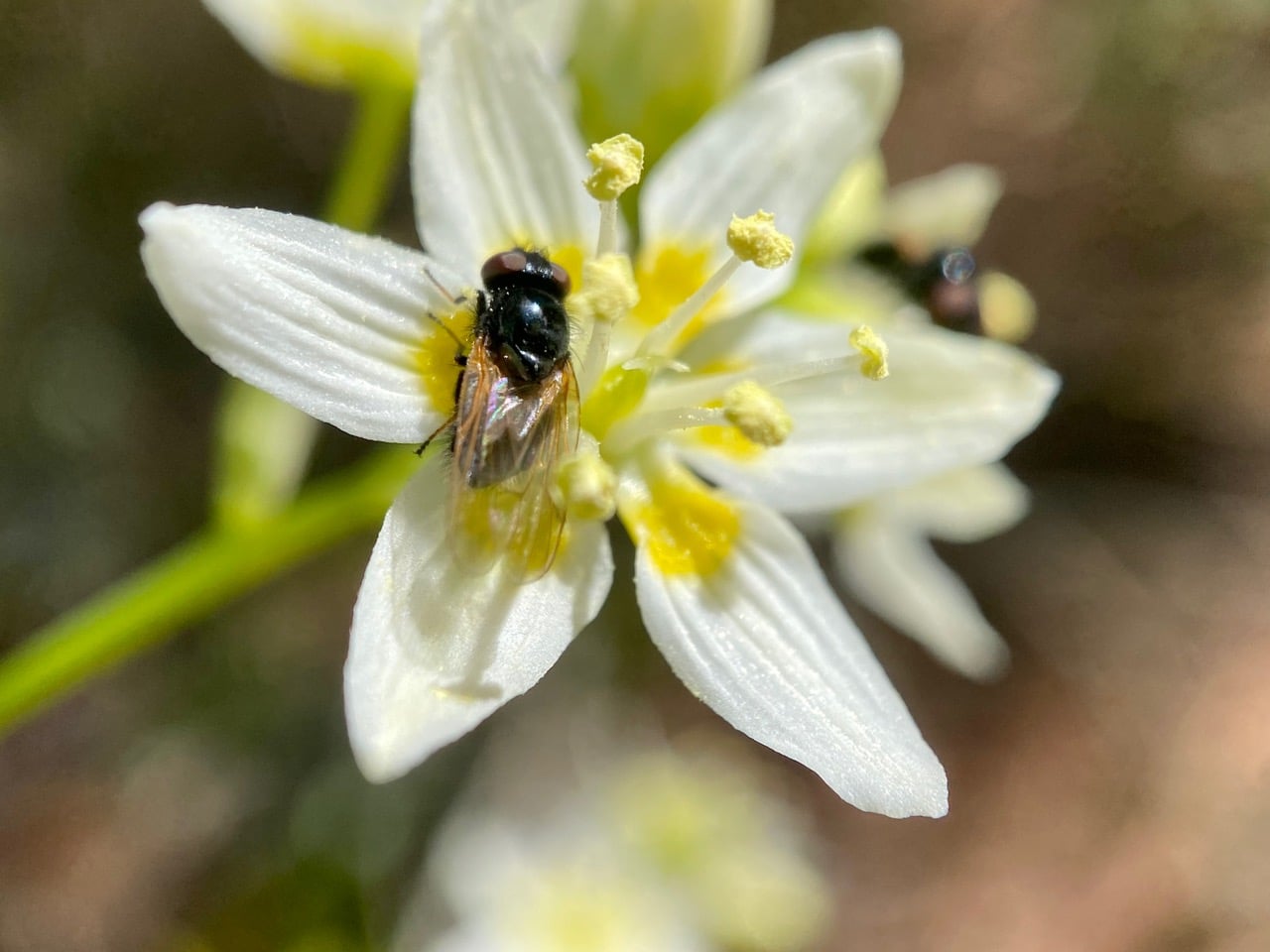
Flowers are borne in a branched cluster at the top of a single stem, which may reach 3 feet. Flowers open sequentially from the bottom upwards. The flower is radially symmetrical with 3 sepals and 3 similar petals (together called tepals). Petals are white or cream with conspicuous parallel veins. Each vein ends in a yellow nectary gland. Together the glands form a bright yellow eye near the center of the flower. It is the presence of these distinct glands near the base of the petals that distinguishes the star lilies (family Melanthiaceae) from true lilies. The 6 stamens have long filaments that spread apart slightly from the center of the flower. The single pistil has a superior, three-lobed, green ovary, three tapered styles with blunt stigmas.
It is believed that the toxicity of the plant may extend to the flower nectar, which would represent an ecological filter, limiting the species of insect pollinators that can avail themselves of the plant’s food resources. Pollination is thought to be accomplished by a variety of Syrphid flies and Stratiomyid flies, and solitary Andrenid bees.
I spot several small dark insects on the flowers. Closer examination reveals glossy, cobalt blue flies with large red eyes. There are distinct orange veins at the base of their wings. iNaturalist has helped identify them as Lance Flies, Lonchaea sp. (family Lonchaeidae).
The Lonchaeidae are a family of acalyptrate flies commonly known as Lance Flies. These are generally small, but robustly built flies with blue-black glossy or metallic bodies. They are found most commonly in wooded areas throughout the world. Most larvae live behind bark of dead trees; some live on decaying fruits or vegetables. They feed on dead or damaged plants, although some also feed on live, healthy plants. In several species adults form swarms near or above trees, hovering and milling around in the air. This behavior is common in several families of flies (midges, black flies, dance flies, etc.), but Lonchaeids are one of the few groups of “higher” flies that do it.
With its sponging mouthparts, this fly is feeding on nectar from the yellow nectar gland at the base of a tepal. Note that there is an anther directly above every nectary. Insects that come for nectar are likely to brush against the anthers and carry away pollen on their body.


Here’s another fly on a younger flower whose anthers have yet to release their pollen.
After posting the pictures on iNaturalist, I have received a response from a Lonchaeidae expert:
“These are very interesting – this is an “Earomyia” species which looks very similar to the recently described Earomyia melnickae – a species also associated with Toxicoscordion flowers. Is there any chance that you could catch a few so that I could examine them more closely under a microscope?”
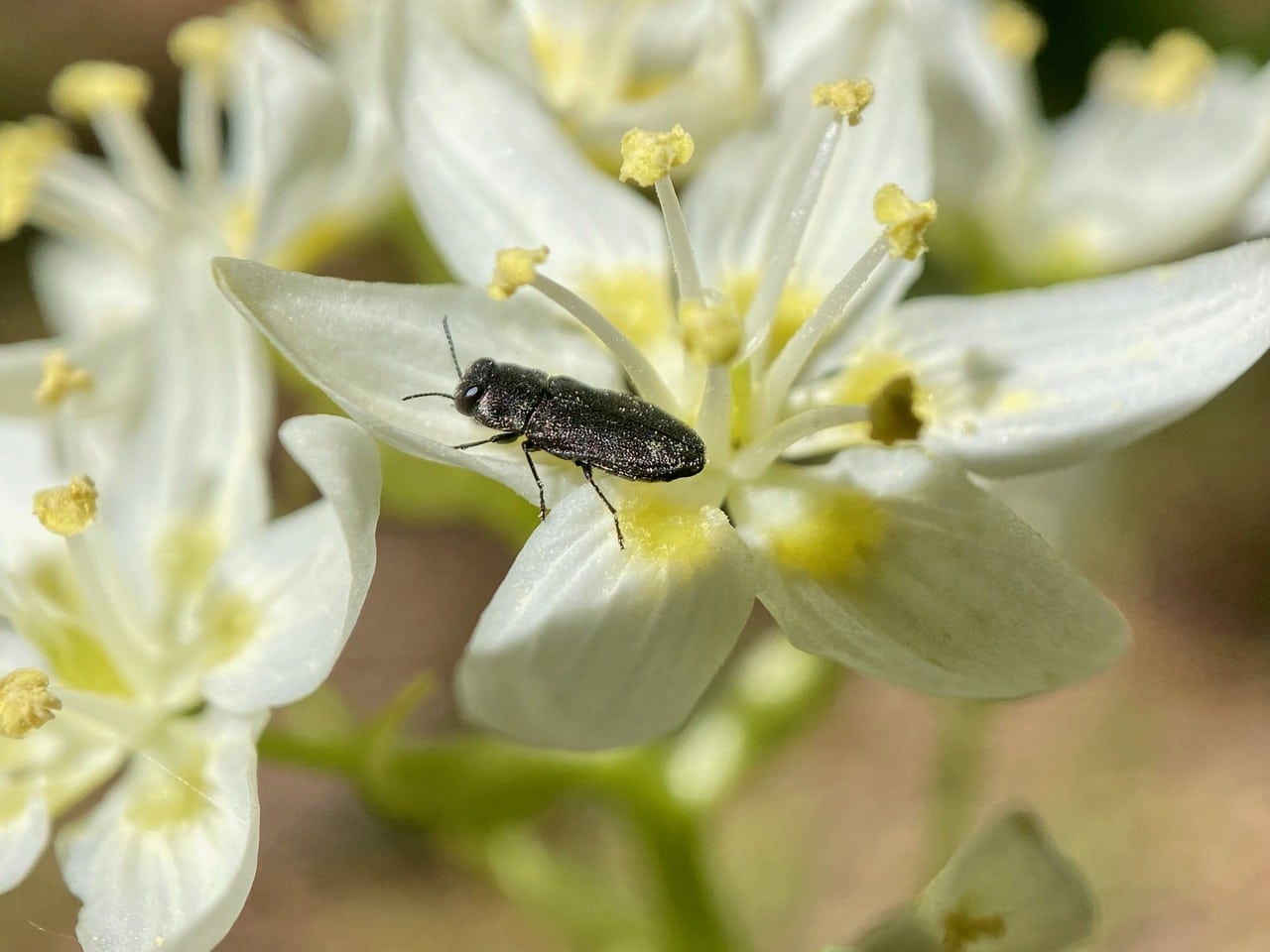
Hey, there are two different insects on that flower. The one on the right is a Lance Fly (family Lonchaeidae), and the one on the left is a Jewel Beetle, also known as the Metallic Wood-boring Beetle (family Buprestidae).
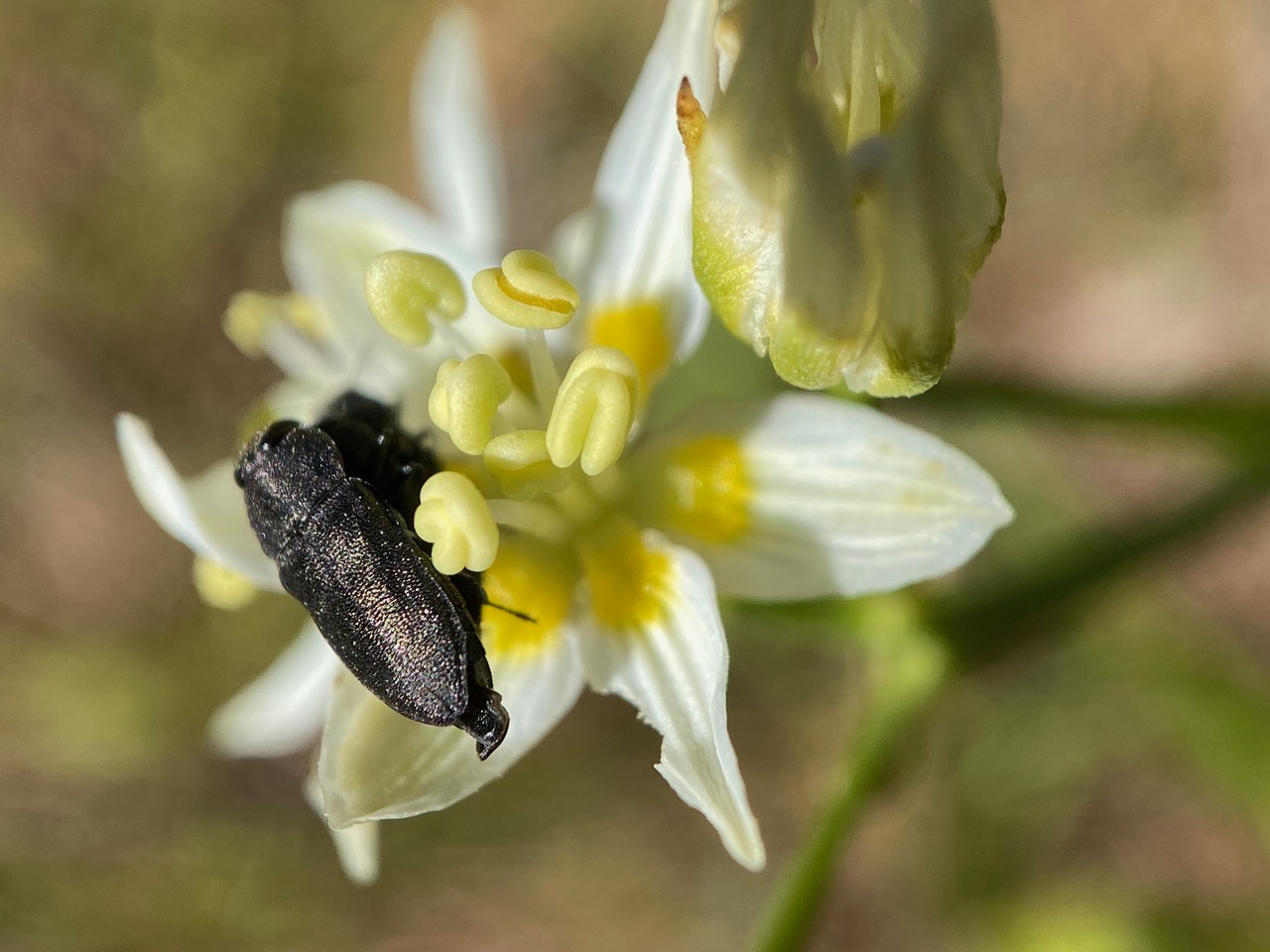
Buprestids are sometimes also called Jewel Beetles because of their glossy, iridescent colors. The larger and more spectacularly colored ones are highly prized by insect collectors. Their elytra have been traditionally used in beetlewing jewelry in some Asian countries. The iridescence common to these beetles is not due to pigments in the exoskeleton, but instead is caused by structural coloration, in which microscopic texture in their cuticle selectively reflects specific frequencies of light in particular directions. Buprestid larvae are known as flathead borers. They bore through roots, logs, stems, and leaves of various types of plants, ranging from trees to grasses. Adult jewel beetles mainly feed on plant foliage or nectar, although some species feed on pollen and can be observed visiting flowers.
Genitals locked, a pair of Metallic Wood-boring Beetles is mating on a flower of Fremont’s Star Lily. I look up just in time to see a Great Bee Fly taking nectar from an adjacent inflorescence. Quickly I switch my camera to video mode.
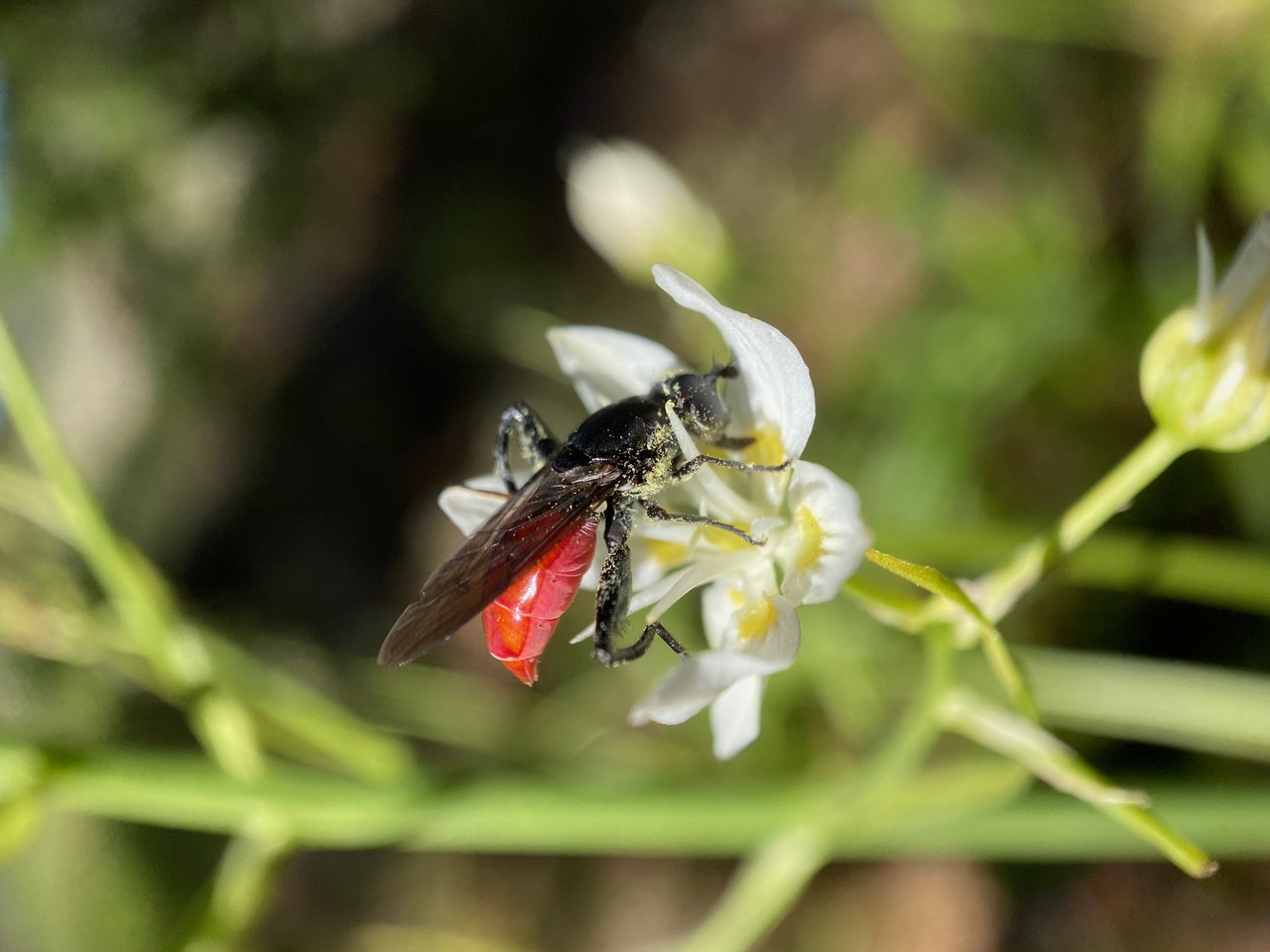
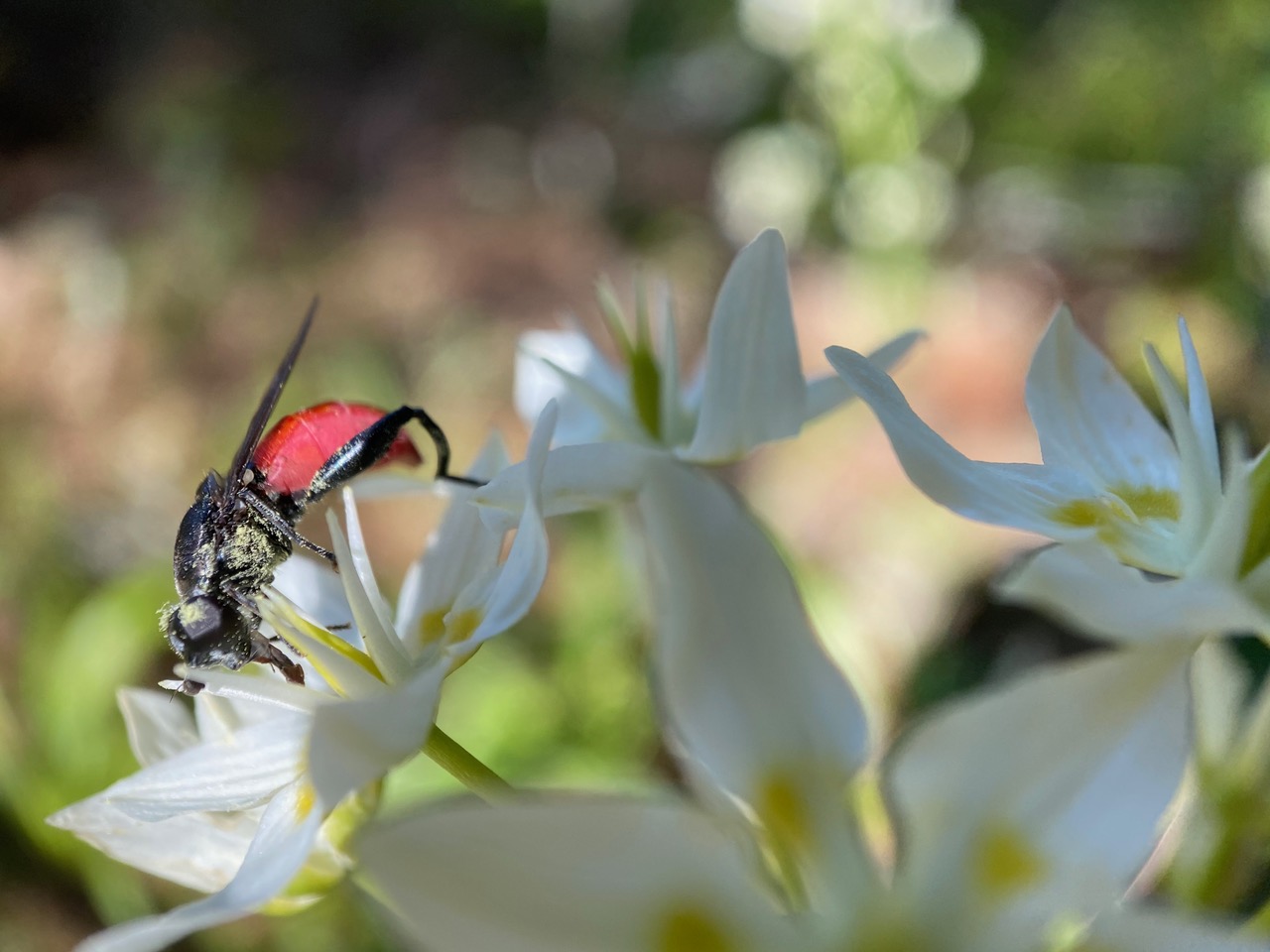
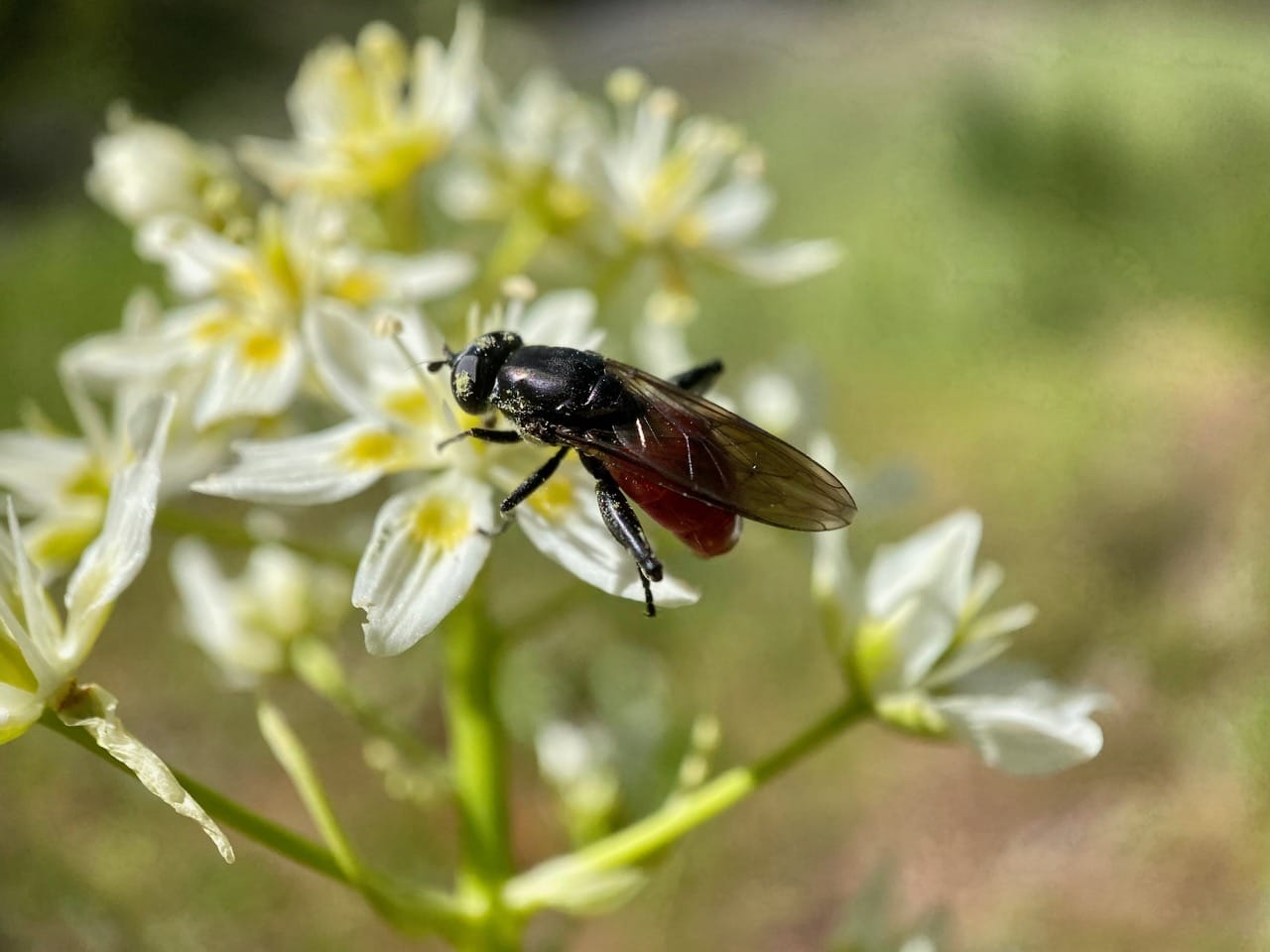
I visually follow a red insect in flight and suddenly lose sight of it when it lands on the trunk of a pine tree. As I approach to check, the insect takes flight again, this time landing on a flower of Fremont’s Star Lily. Ah, it is a fly with a bright red abdomen.
The fly has obviously been visiting flowers – its underside and eyes are covered with scattered pollen.
The fly holds its dark wings folded over its abdomen when not flying, concealing its red abdomen. An amazing disappearing act! iNaturalist has helped identify it as a Short-haired Leafwalker, Chalcosyrphus piger (family Syrphidae).
It is an uncommon species of hover fly found throughout North America and Europe. The adults have black thorax, legs and wings, enlarged femora, and a bright red abdomen. They are mimics of wasps, specifically Astata, a spider wasp. They visit flowers for nectar and pollen. The flies tend to move toward hilltops and other open, high areas for mating. Larvae have been identified from sappy hollows from Larix and Pinus.
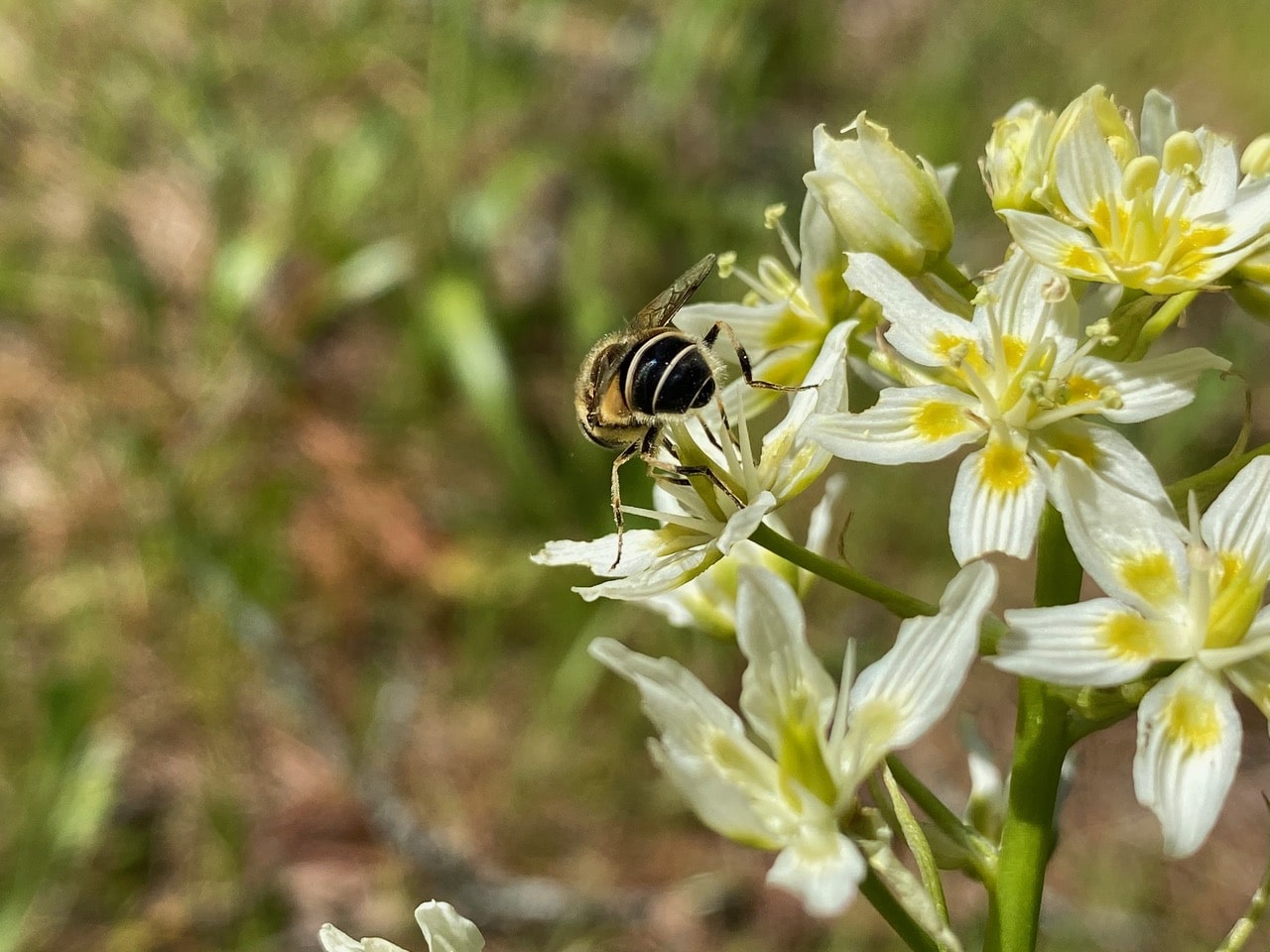
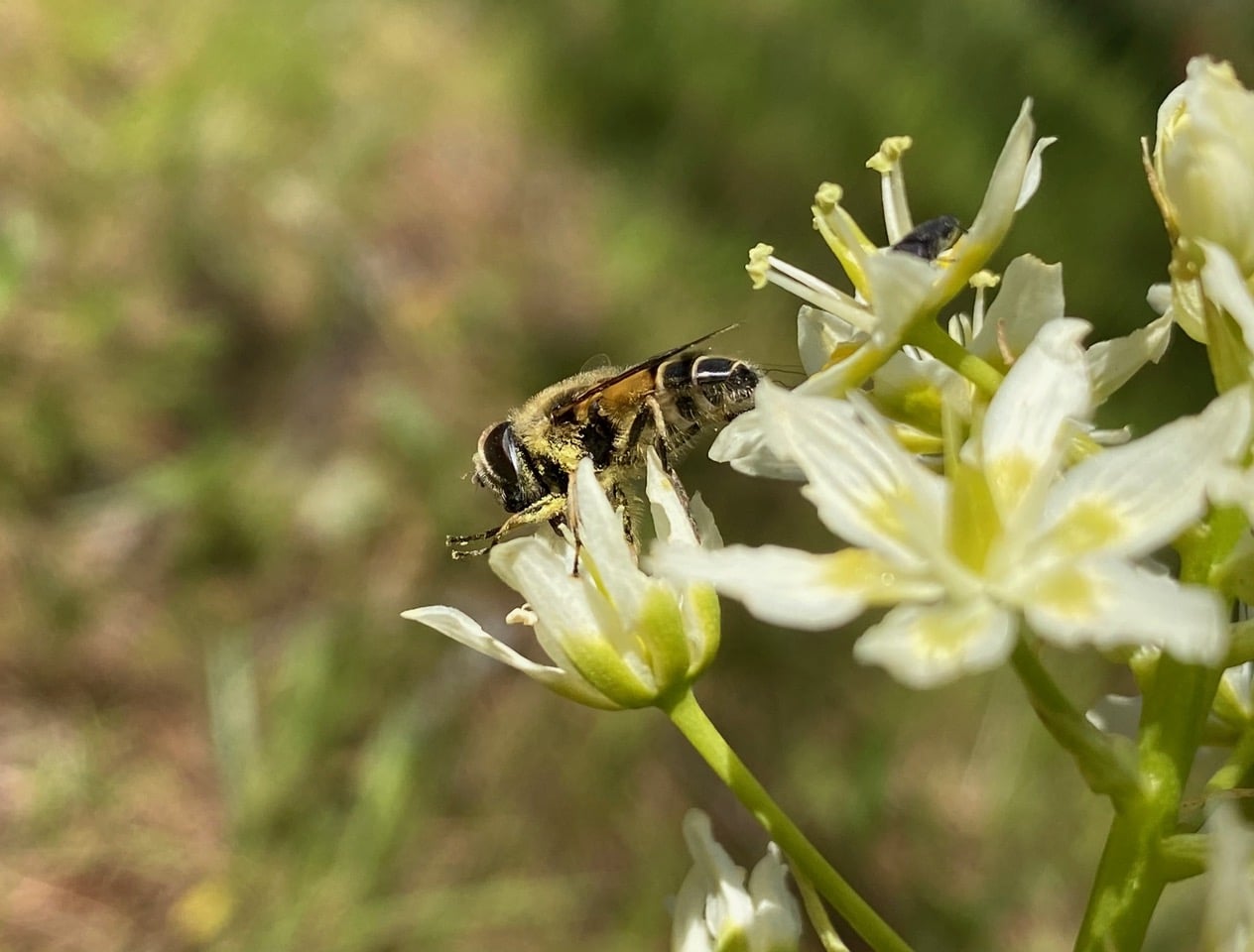
Its tongue extended, a different hover fly is foraging on the flowers of Fremont’s Star Lily.
It is a Black-footed Drone Fly, Eristalis hirta (family Syrphidae).
The Black-footed Drone Fly, Eristalis hirta (family Syrphidae) is a common Western North American species of hoverfly. The adults visit flowers for nectar and pollen. Larvae are aquatic filter-feeders of the rat-tailed type.
Mired in pollen, the fly attempts to clean its proboscis with its front legs.