

Pollinator Post 4/9/23 (1)
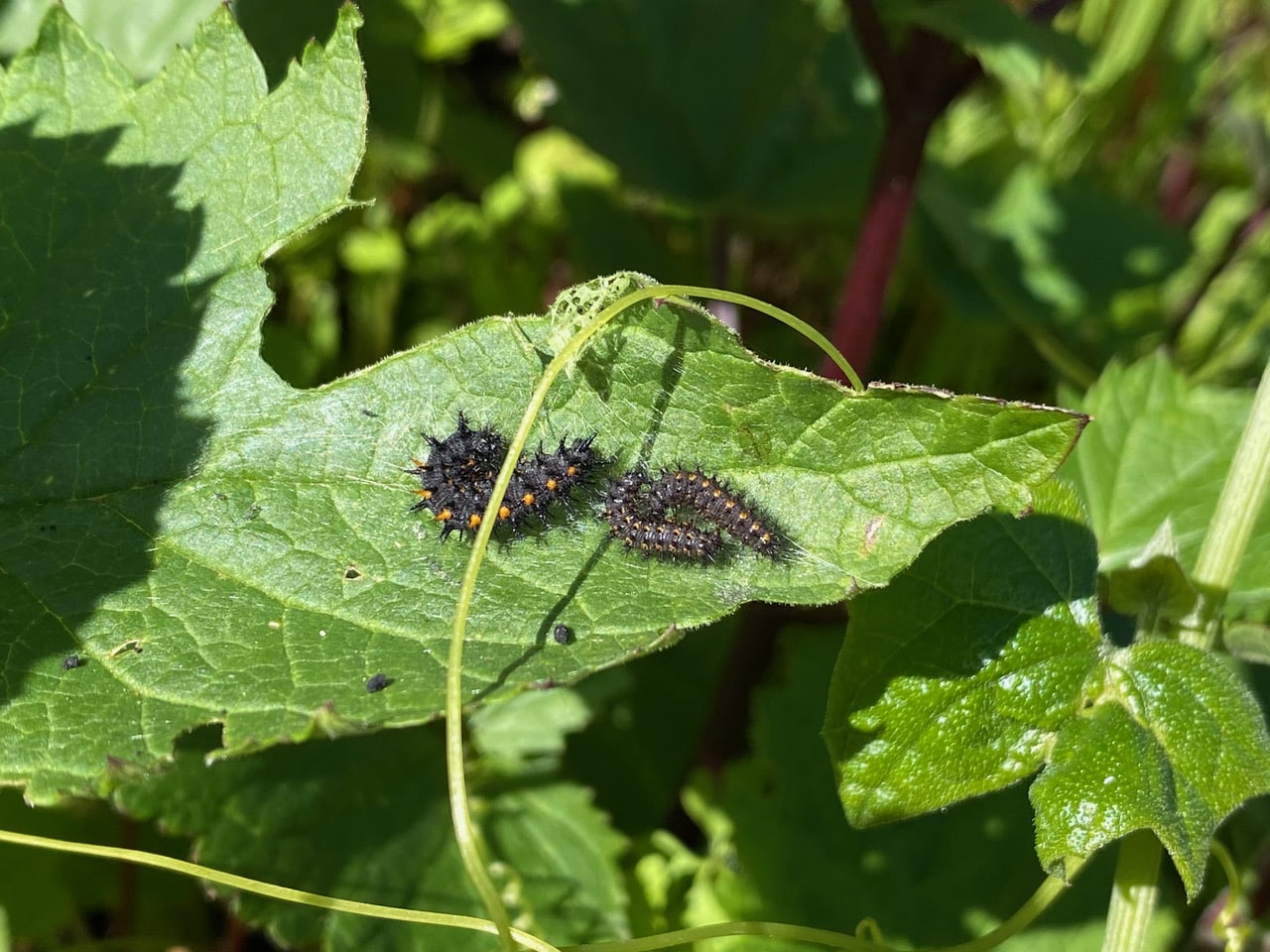
Three caterpillars of the Variable Checkerspot butterfly, Euphydryas chalcedon (family Nymphalidae) are basking on a leaf of California Bee Plant, Scrophularia californica. While the larvae of this species tend to feed in aggregation, it is rather interesting that these caterpillars are of different sizes. Did they hatch from the same batch of eggs laid by the same mother?
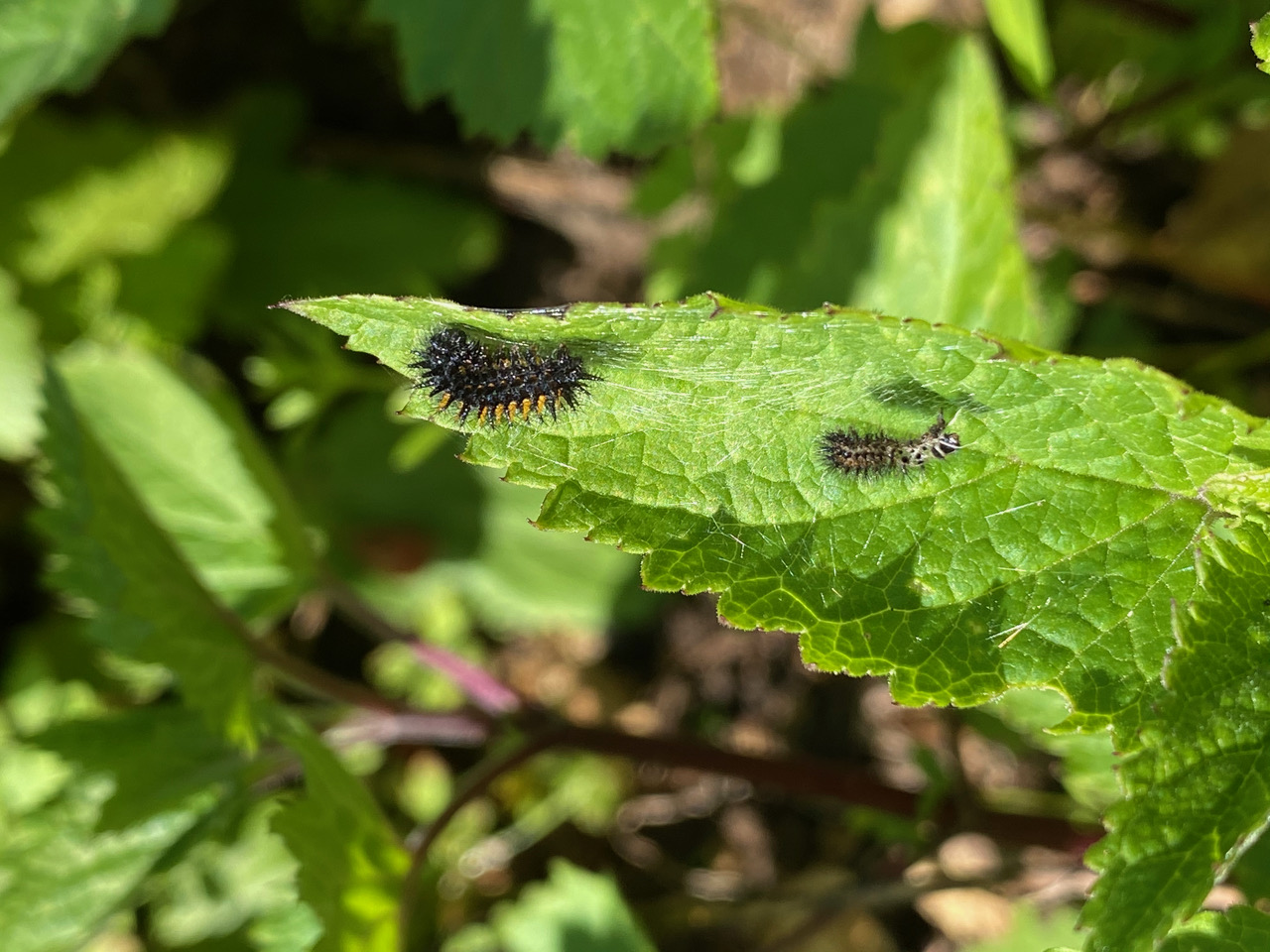
This Variable Checkerspot caterpillar has just molted, leaving its exuvia (shed exoskeleton) behind. Note that it has woven a carpet of silk threads on the leaf to secure itself.

The little caterpillar has done quite a job feeding on the leaf of California Bee Plant, and has moved over to rest on an adjacent Phacelia leaf. Why would it choose a leaf with prickly stiff hairs akin to a bed of nails? Well, the caterpillar itself is covered with spines!




I pause to admire the little Miner’s Lettuce blooming in the moist trail side
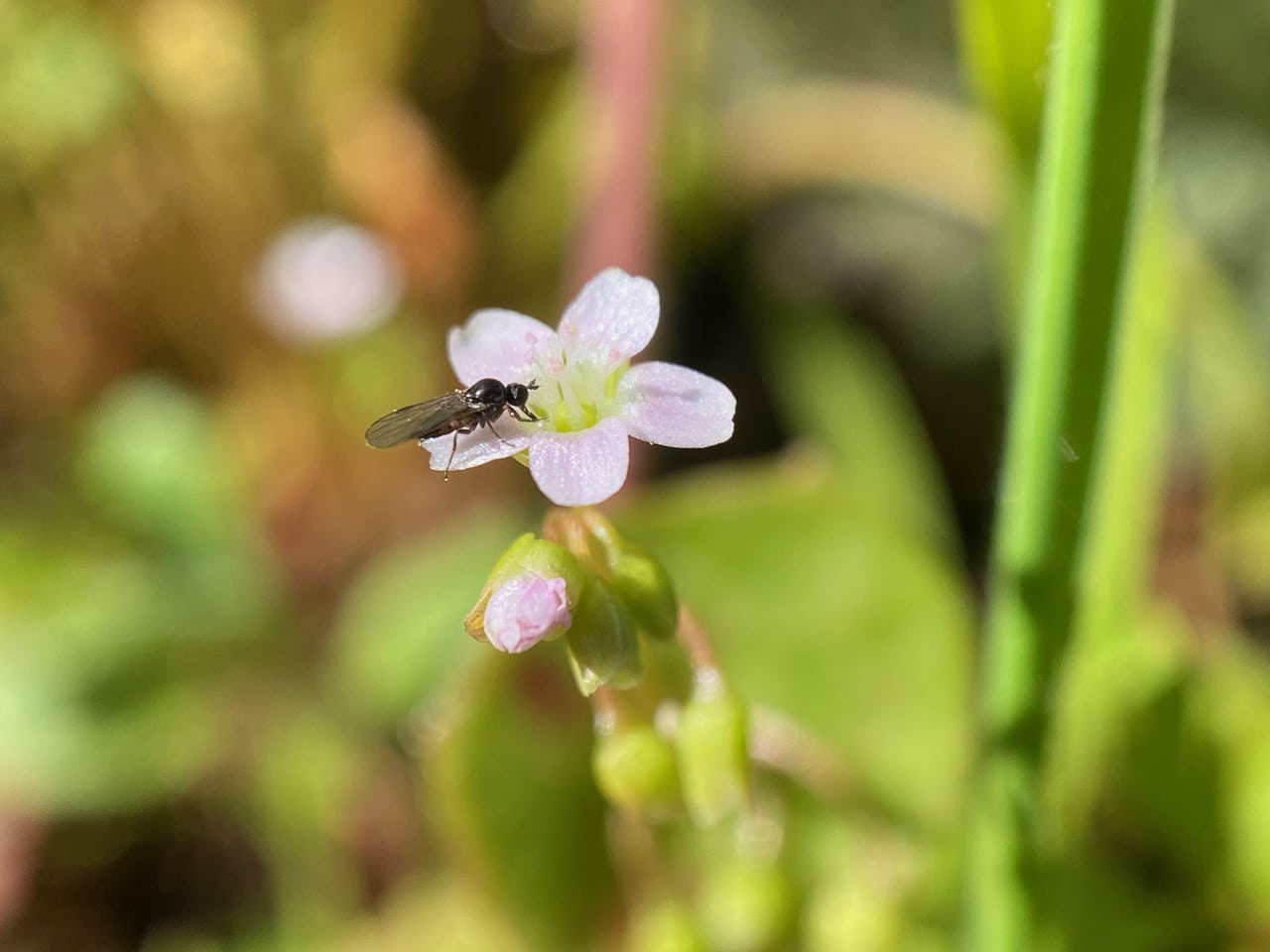
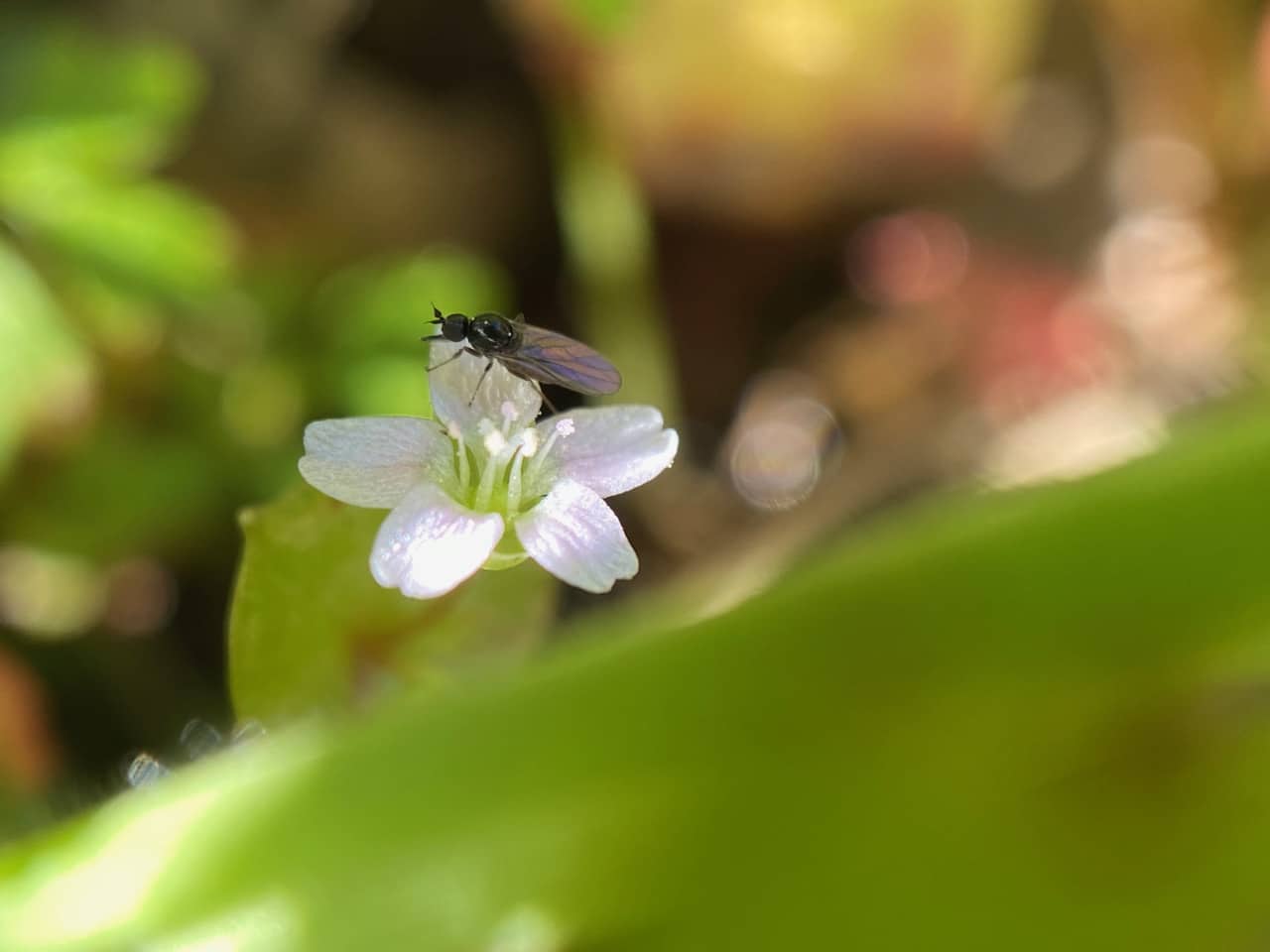

A tiny fly is feeding on the pollen of Miner’s Lettuce, Claytonia perfoliata.
Yet another one is on another Claytonia flower.
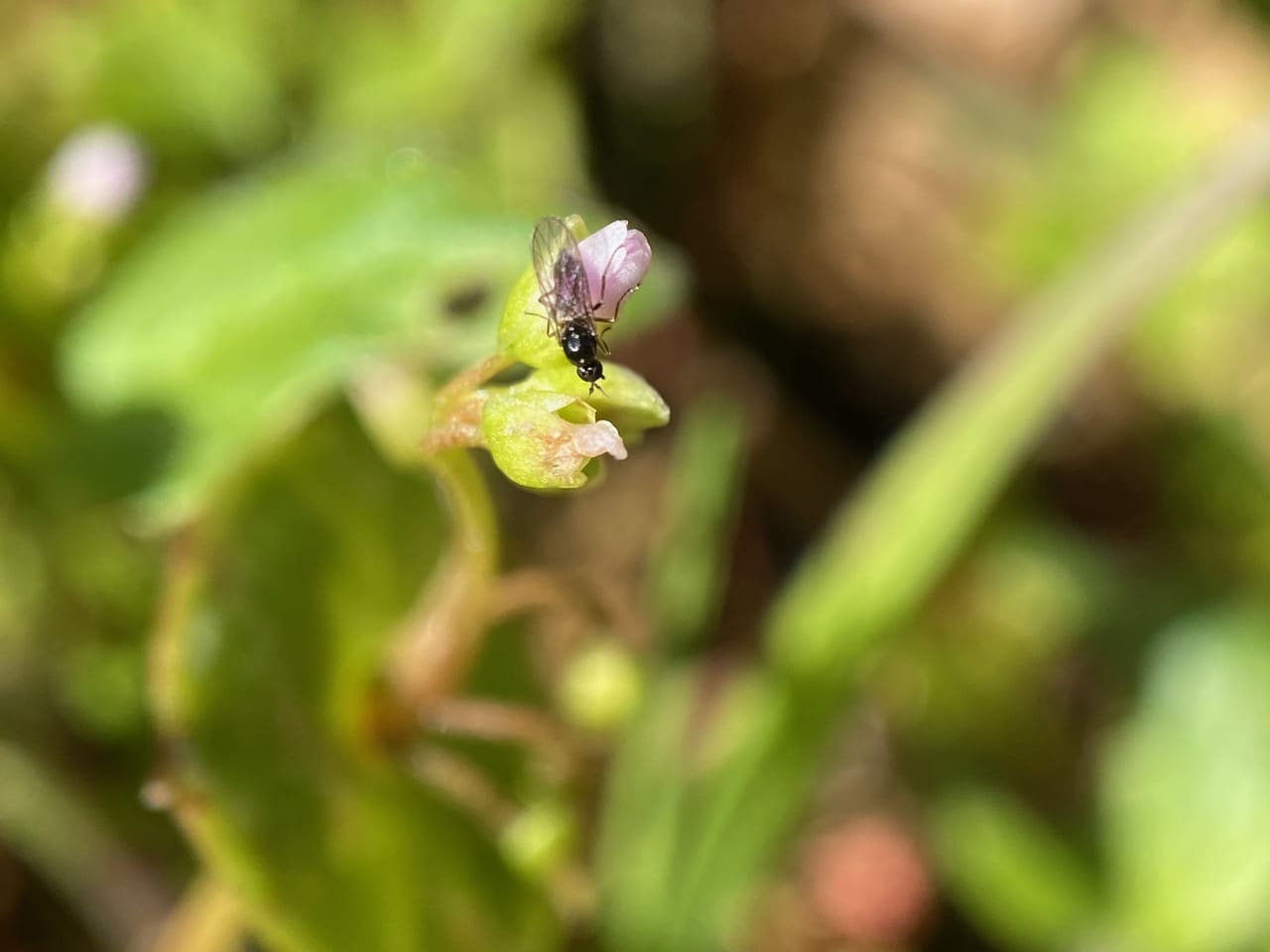
This one is exploring the flower buds of Claytonia. These flies seem to enjoy the pollen of Claytonia, and their diminutive size is well-matched for these flowers. Might the flies be pollinators for the plant?
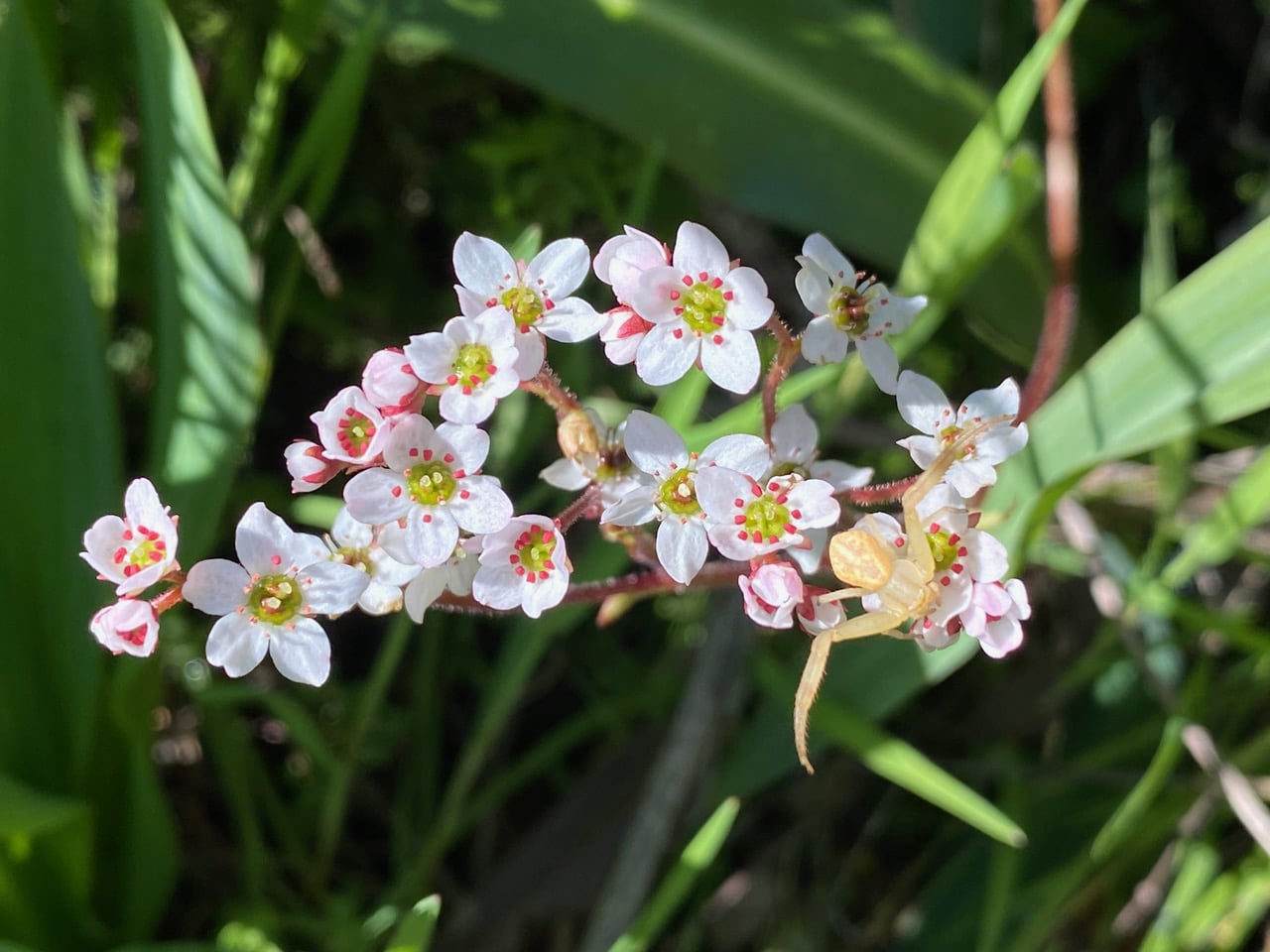
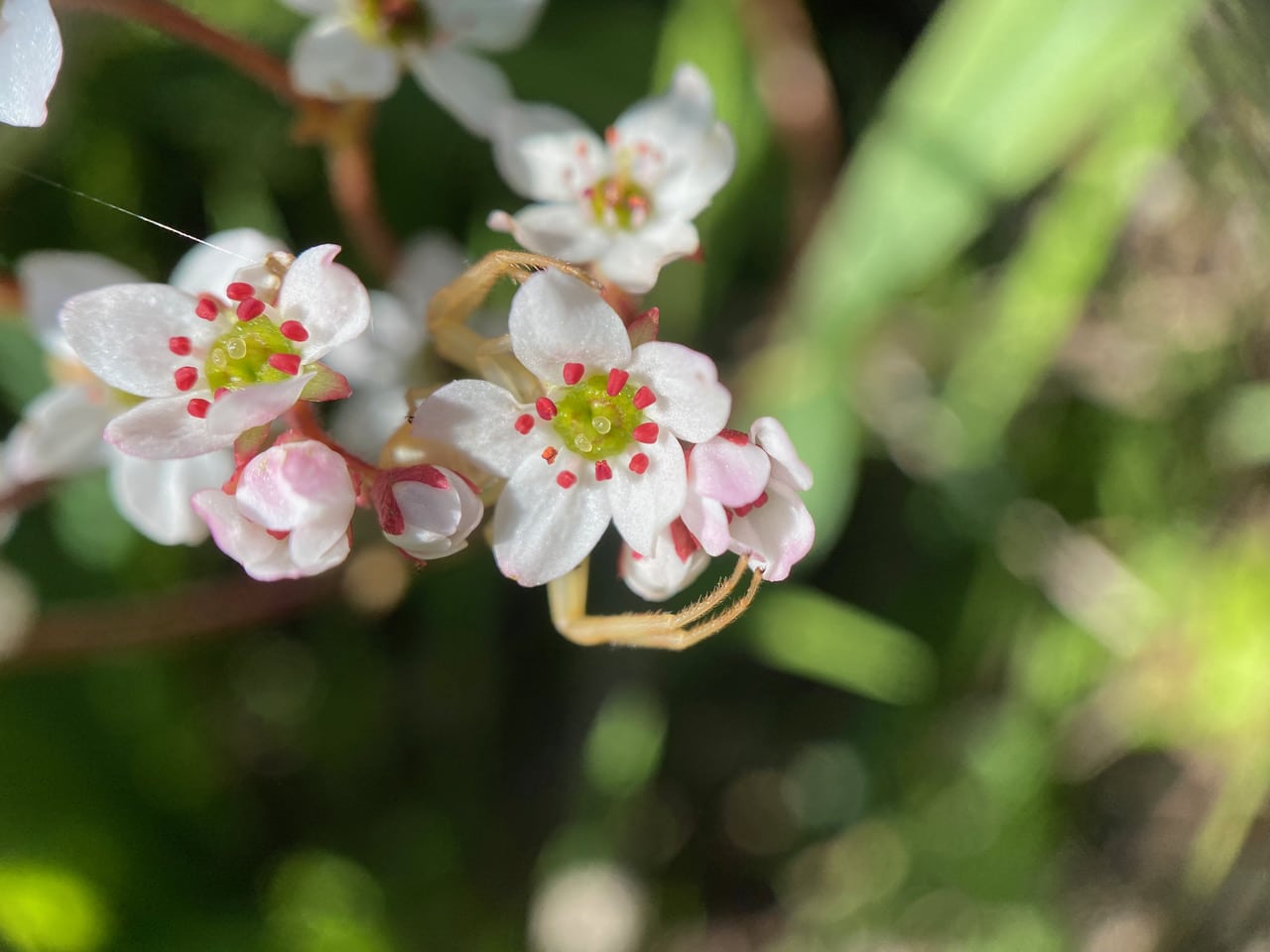
I haven’t even noticed the small Crab Spider (family Thomisidae) when I lean over to take a picture of the flowers of California Saxifrage, Micranthes californica. The spider is so pale it’s almost translucent. Perhaps it is newly molted and has yet to acquire its full complement of pigments?
Spiders in the family Thomisidae are called crab spiders due to their resemblance to crabs, the way they hold their two front pairs of legs, and their ability to scuttle sideways or backwards. Crab spiders do not build webs to trap prey, though some of them produce silk for drop lines and sundry reproductive purposes. Most are ambush predators, sitting on or beside flowers to grab visiting insects. Some species are able to change color over a period of some days, to match the flower on which they are sitting.
Sensing my intrusion, the spider scurries to hide behind the flowers. This is quite typical of Crab Spider behavior. After catching a prey, the spider often retreats to consume it in safety under an inflorescence.
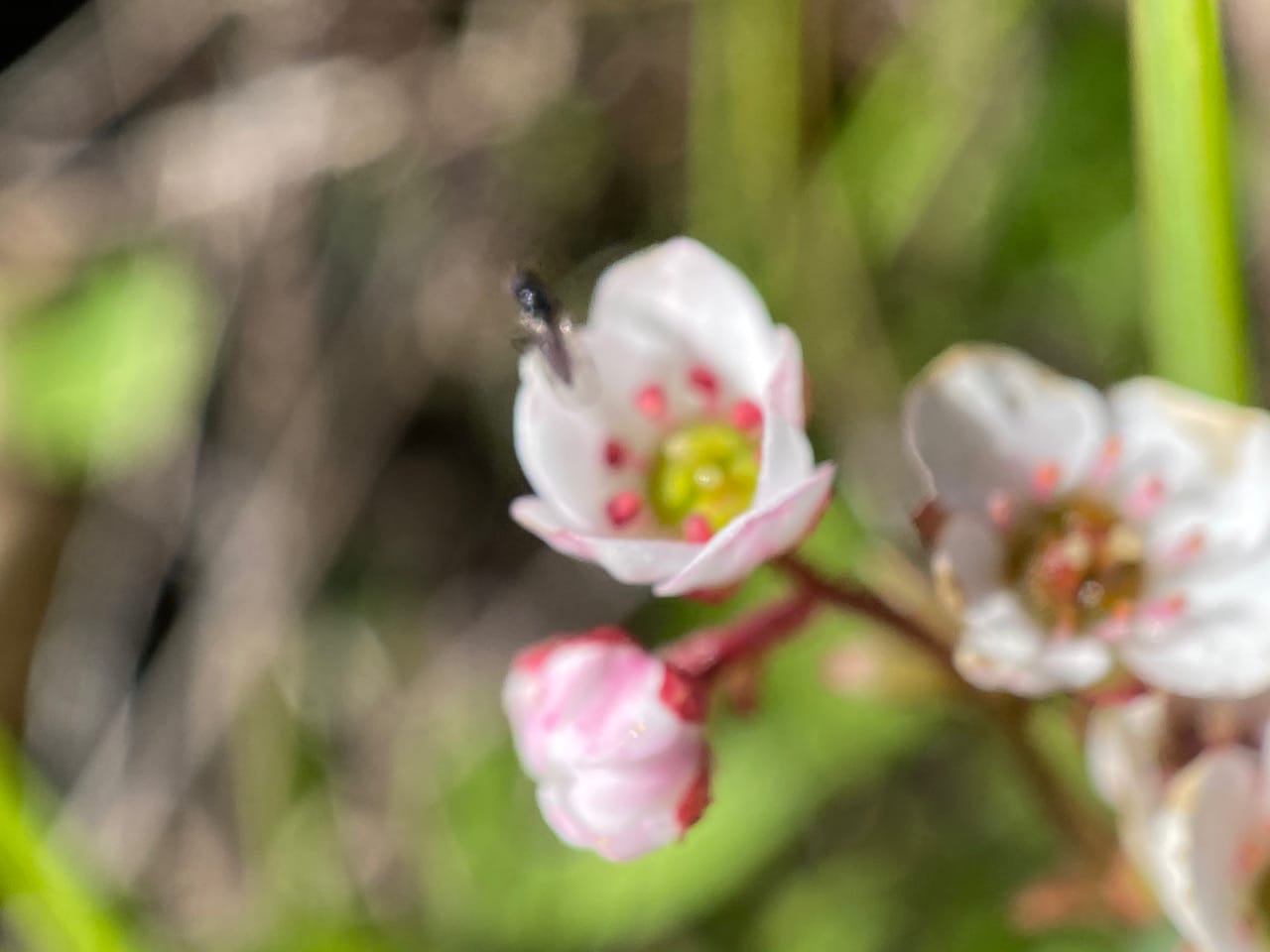
A tiny black insect is perched on a California Saxifrage flower, but it flies away before I could get a good photo.
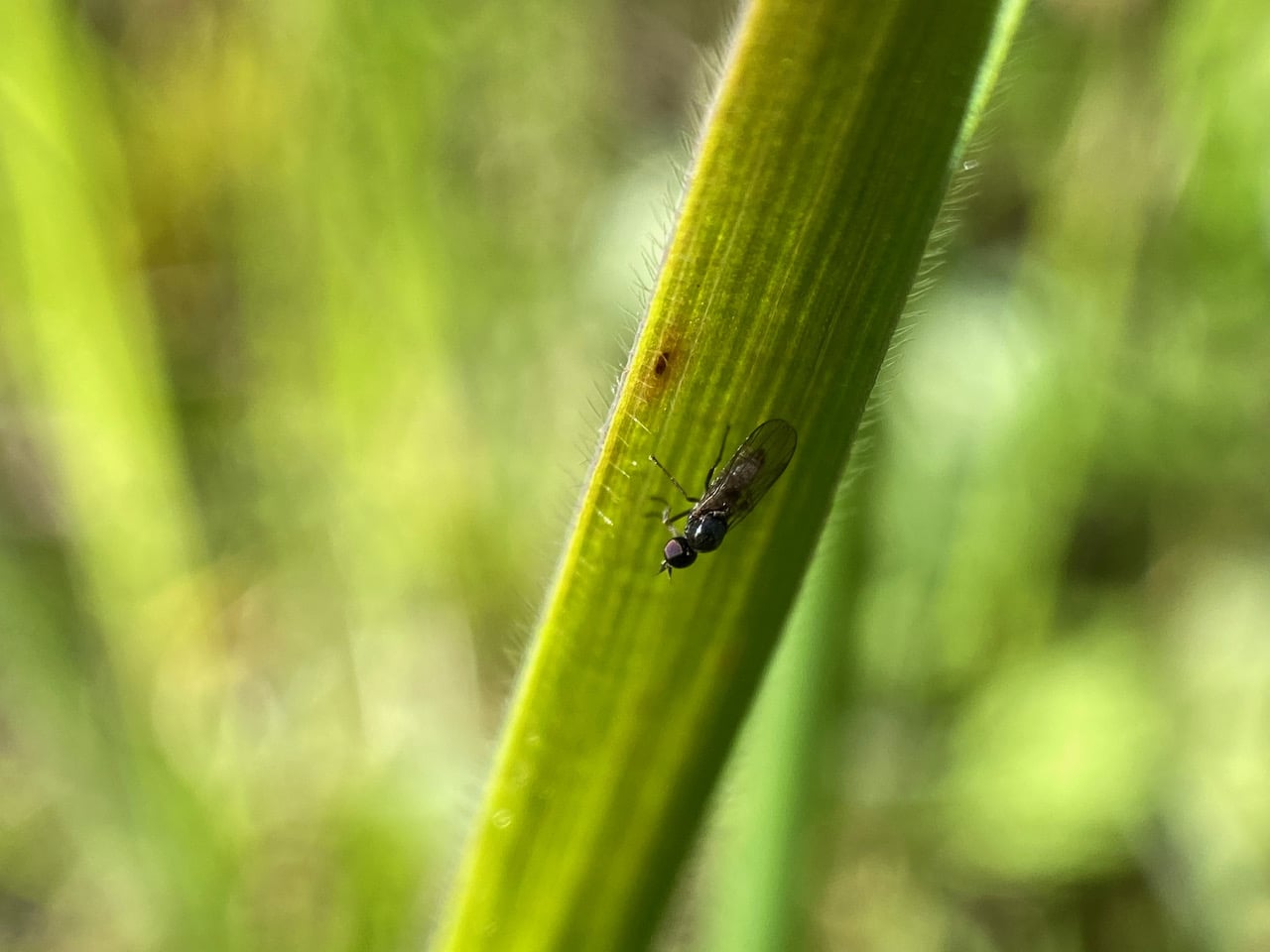
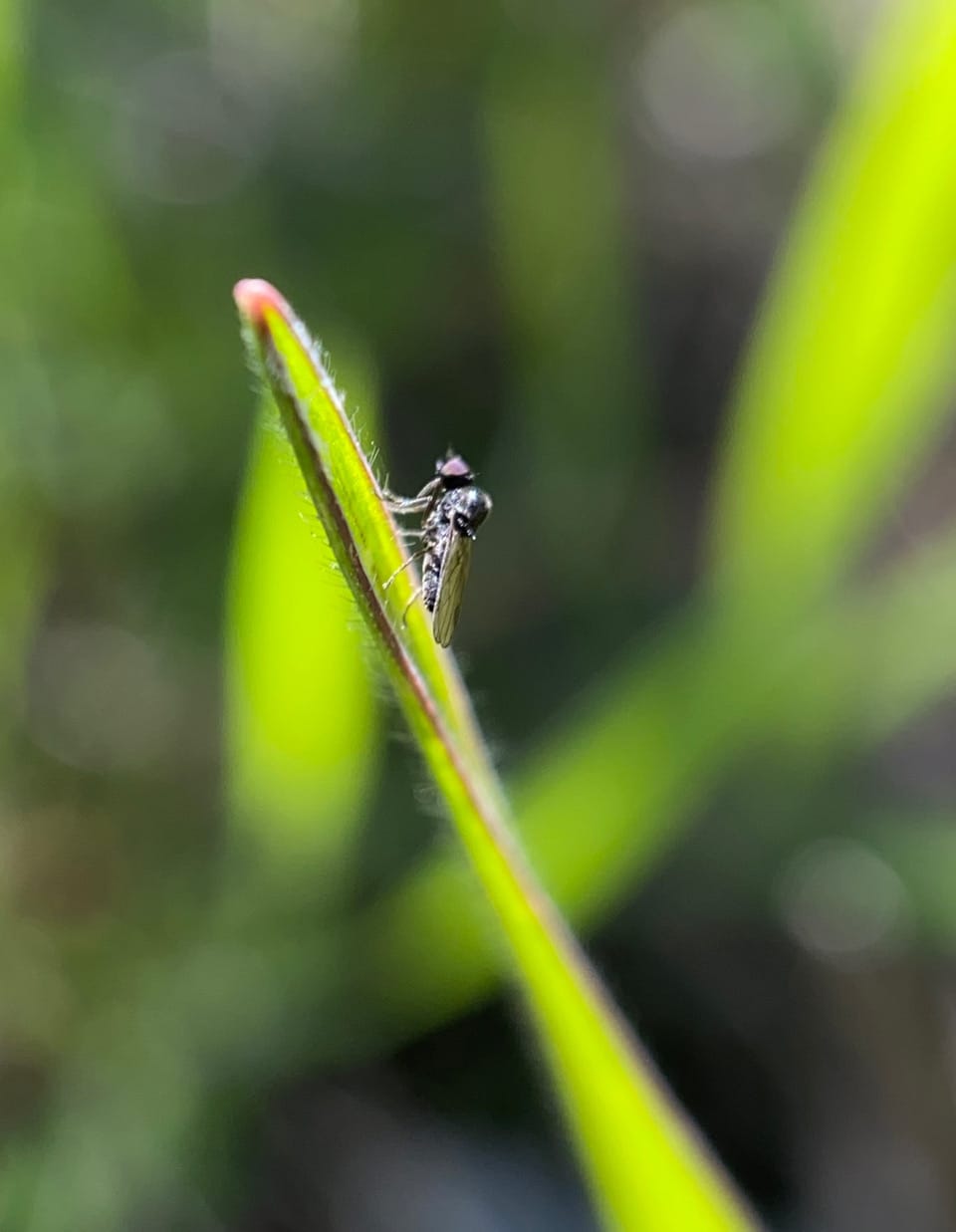
The fly lands on a blade of grass. It has a distinct humped thorax.
Profile of the fly against light. It has huge eyes that cover most of its head, interesting antennae, and a forward-pointing proboscis.
The same fly seen from the top. I think it’s the same fly as the one we saw earlier on the flowers of Miner’s Lettuce. Could these be Micro Bee Flies, family Mythicomyiidae?
Almost invisible among the grasses on the steep hillside, the tiny Fringe Pod, Thysanocarpus curvipes are already blooming and setting seeds.
Fringe Pod, Thysanocarpus curvipes is an annual herb in the mustard family Brassicaceae. It is native to North America from British Columbia to Baja California, where it grows in many types of habitat. The plant produces a slender branching or unbranched stem 10 to 80 cm tall. The inflorescence is a raceme of flowers with 4 white or purple-tinged petals and purple sepals. The fruit is a flattened, rounded or oval dislike capsule with a thin wing around the edge. The fruit is under a centimeter long and the wing is variable in appearance, flat or wavy, sometimes perforated.
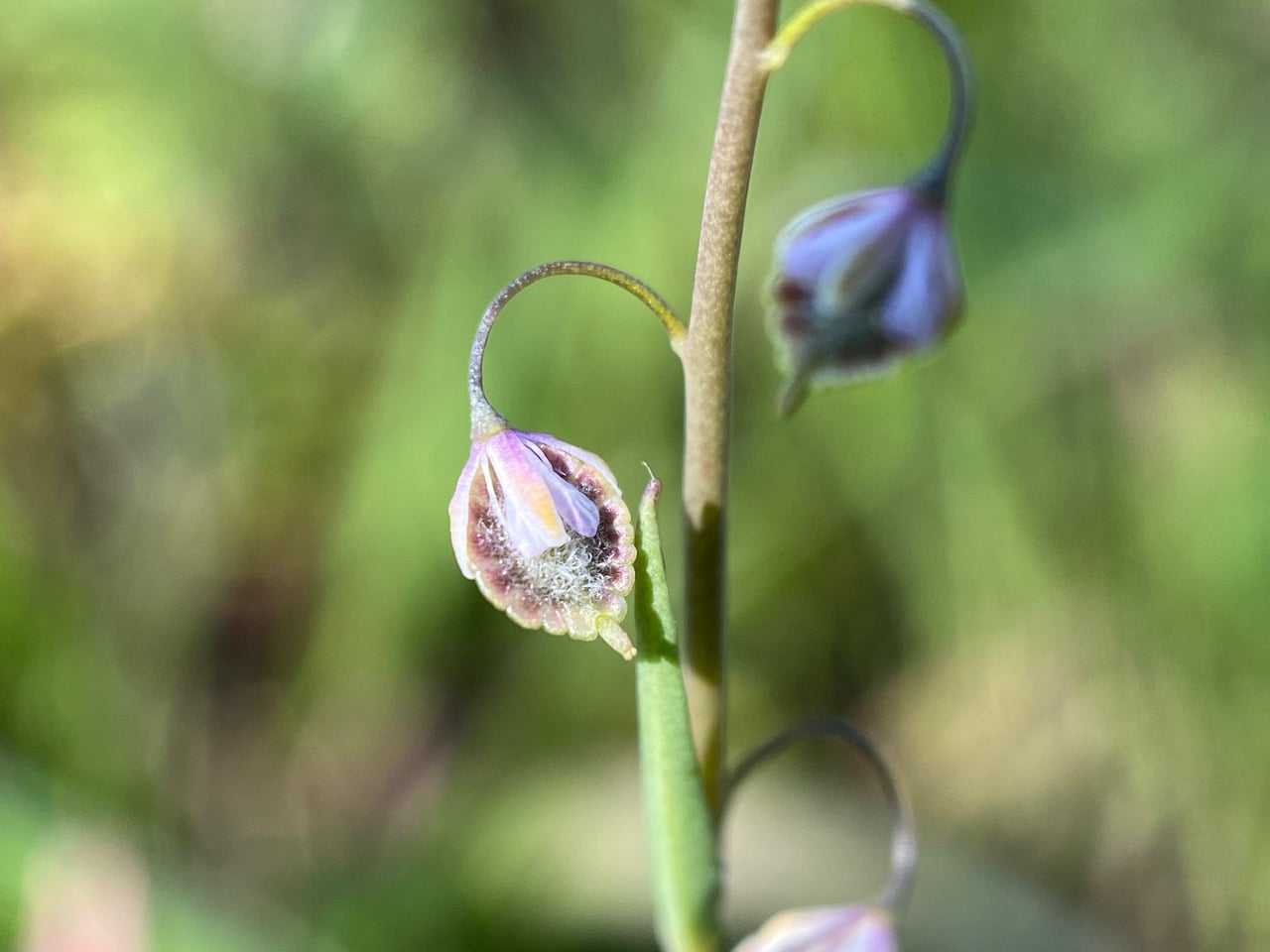
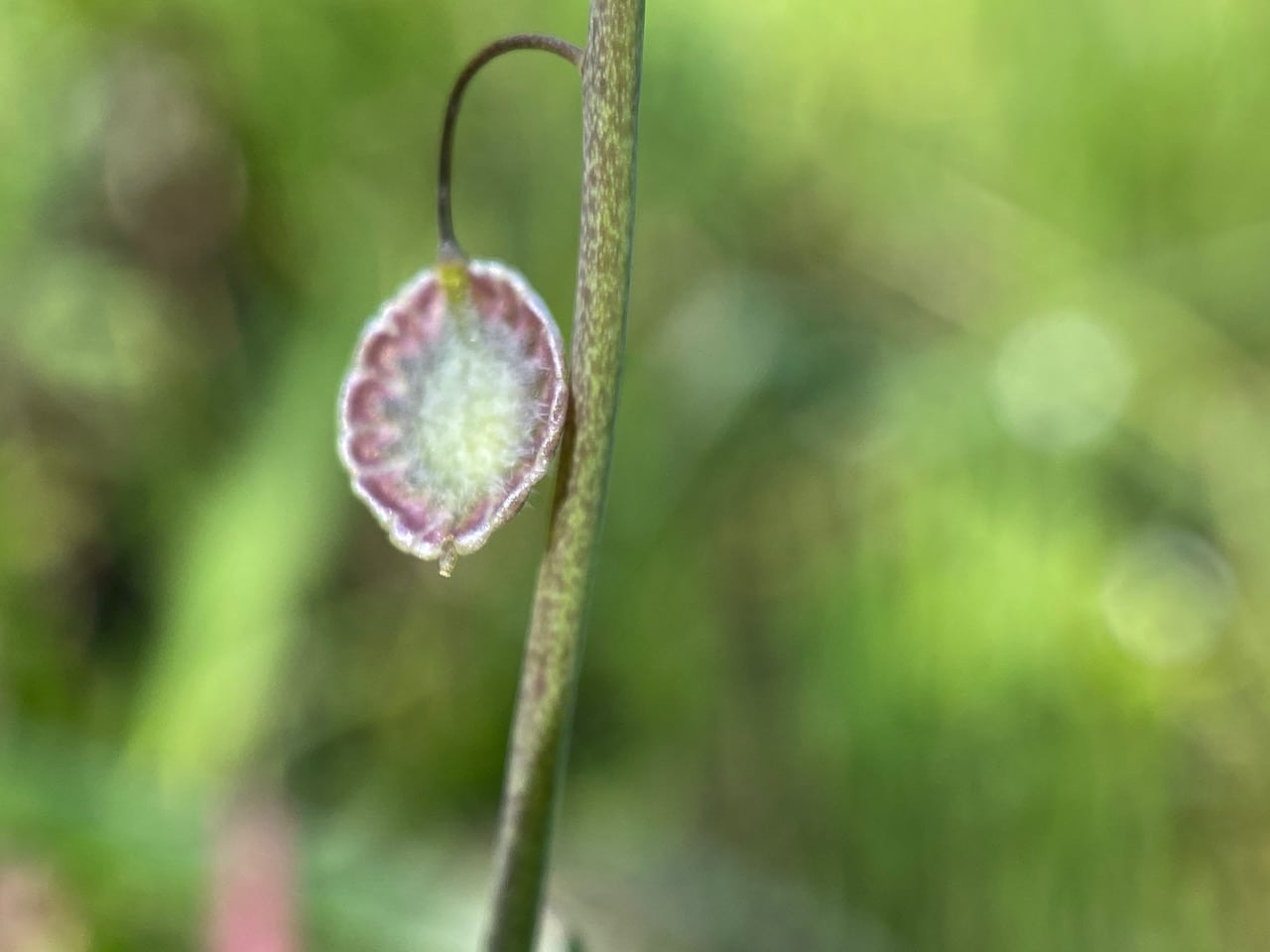
I have never seen a developing fruit at this stage, with petals and sepals still intact. As the flowers senesce, the pedicels curve downward, giving rise to the species name “curvipes”.
A more mature capsule of Fringe Pod, with hairs on the convex side of the flat disc.
The concave side of the disklike capsule.