

Pollinator Post 4/8/24 (3)
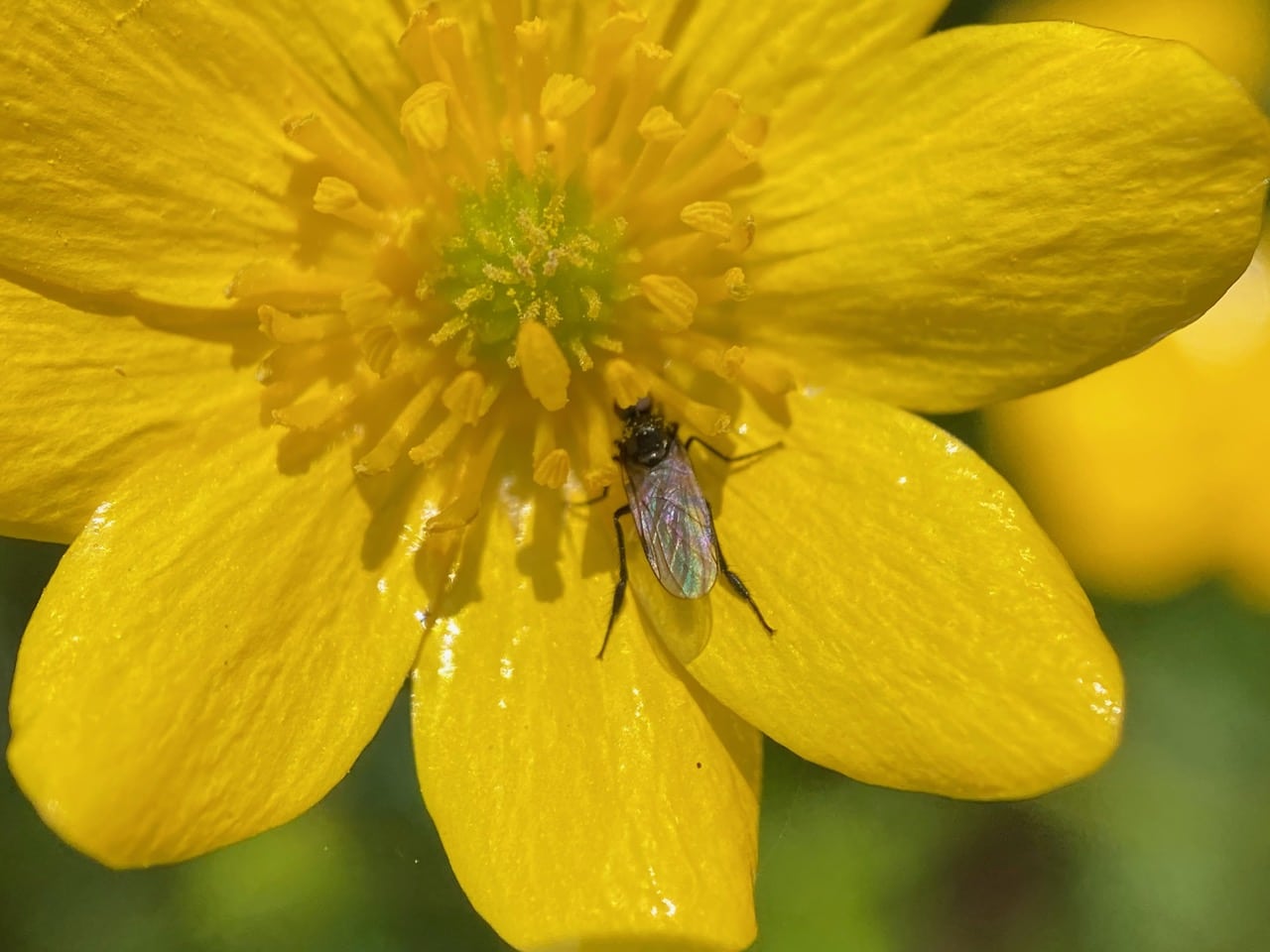
I walk back and forth along the short stretch of the trail where the California Buttercup, Ranunculus californicus grows the most abundantly. As the morning warms up toward noon time, insect activity on the Buttercups picks up in earnest. Here a dark, long-legged insect is reaching under the stamens, probably probing for nectar at the base of the petal.
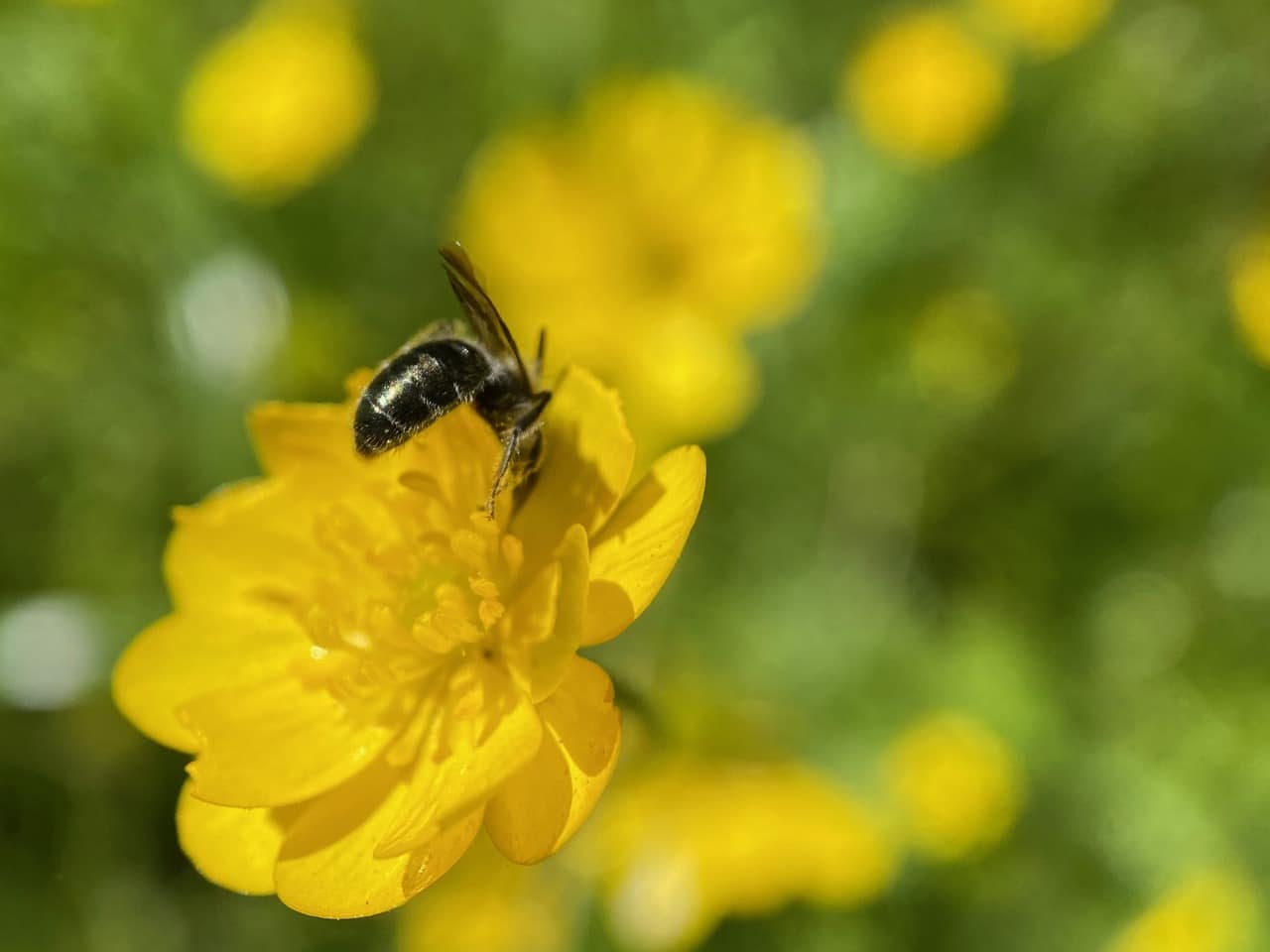
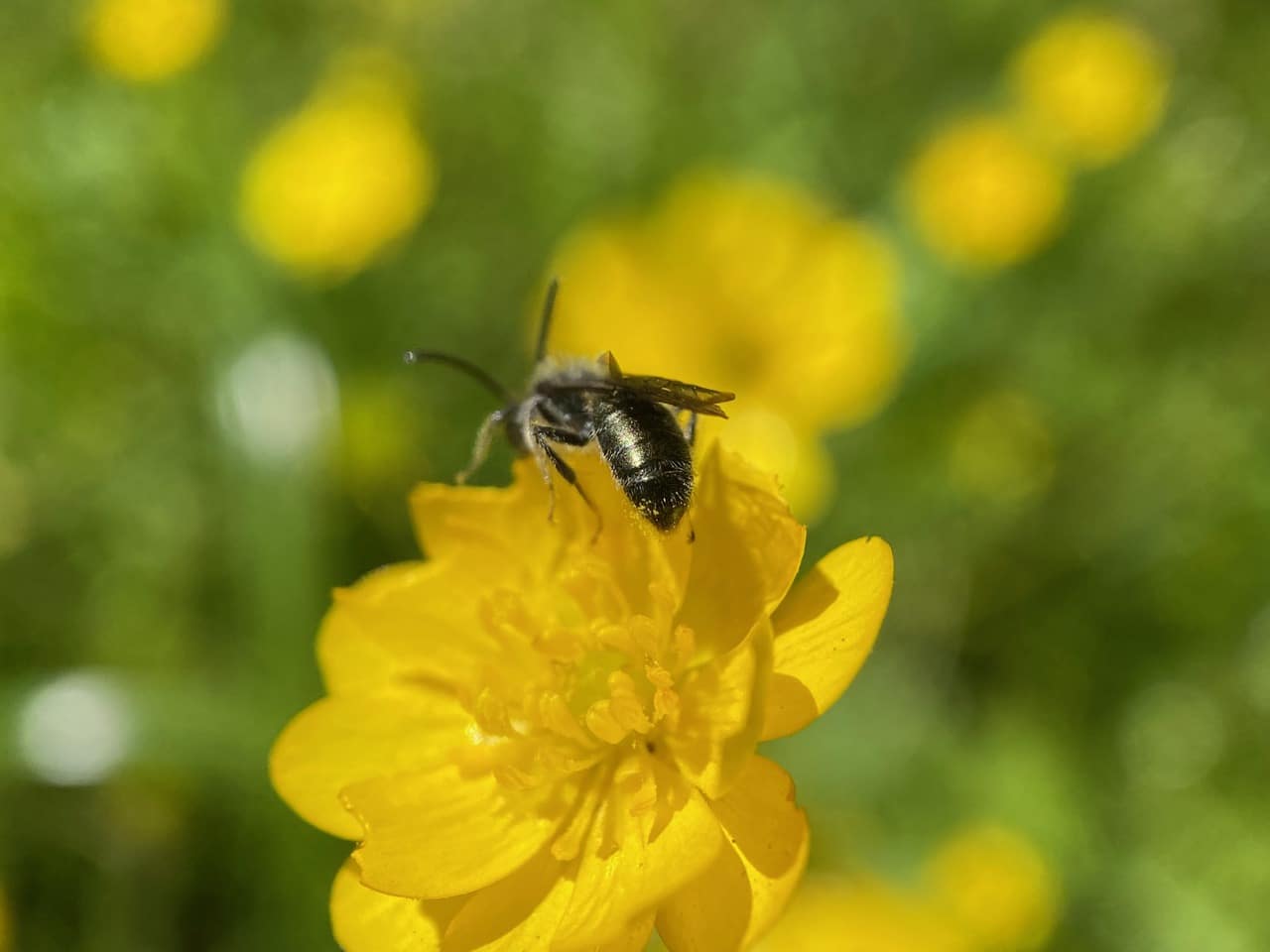
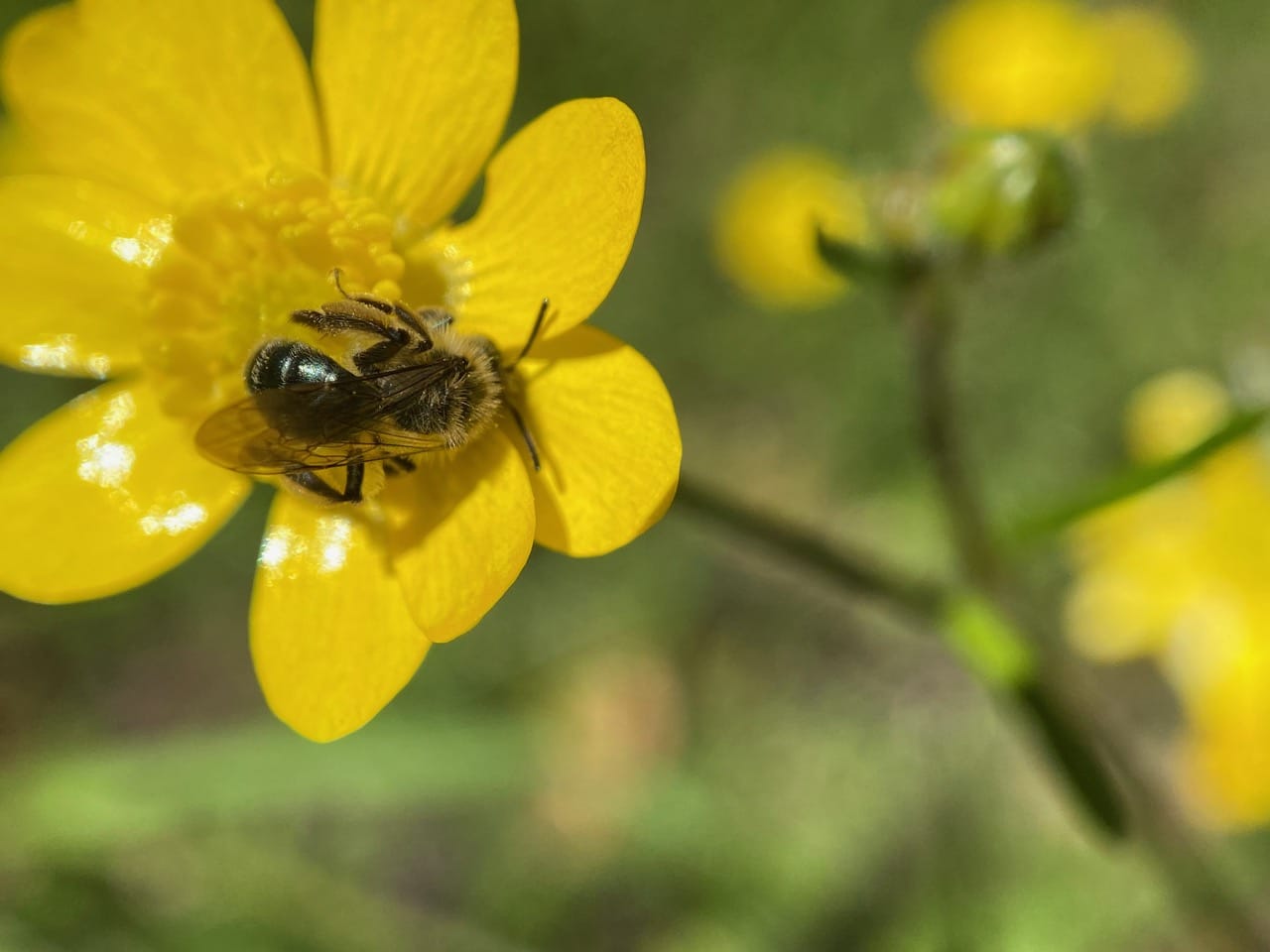
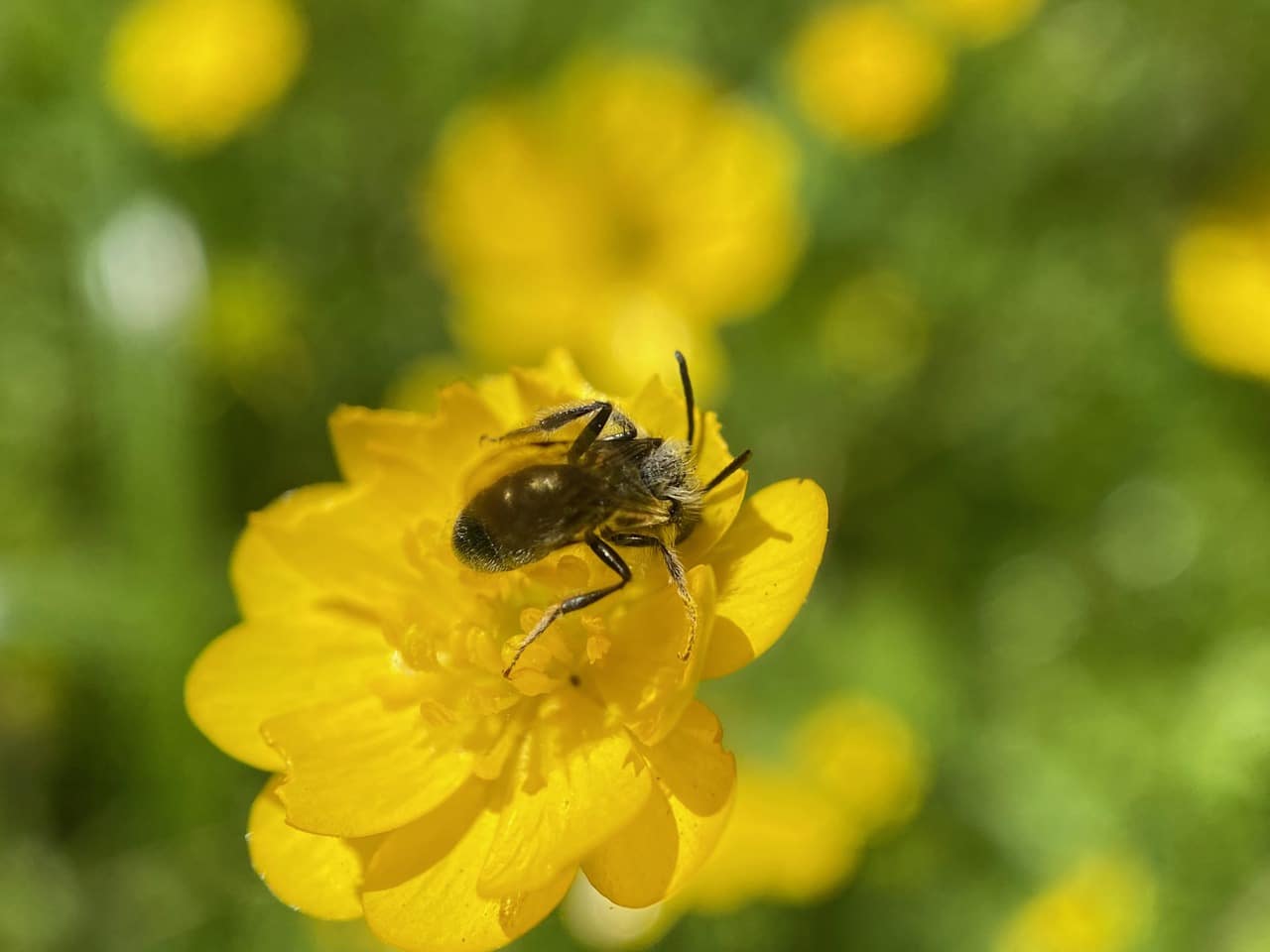 A male Mining Bee, Andrena sp. (family Andrenidae) is actively seeking nectar from a California Buttercup flower.




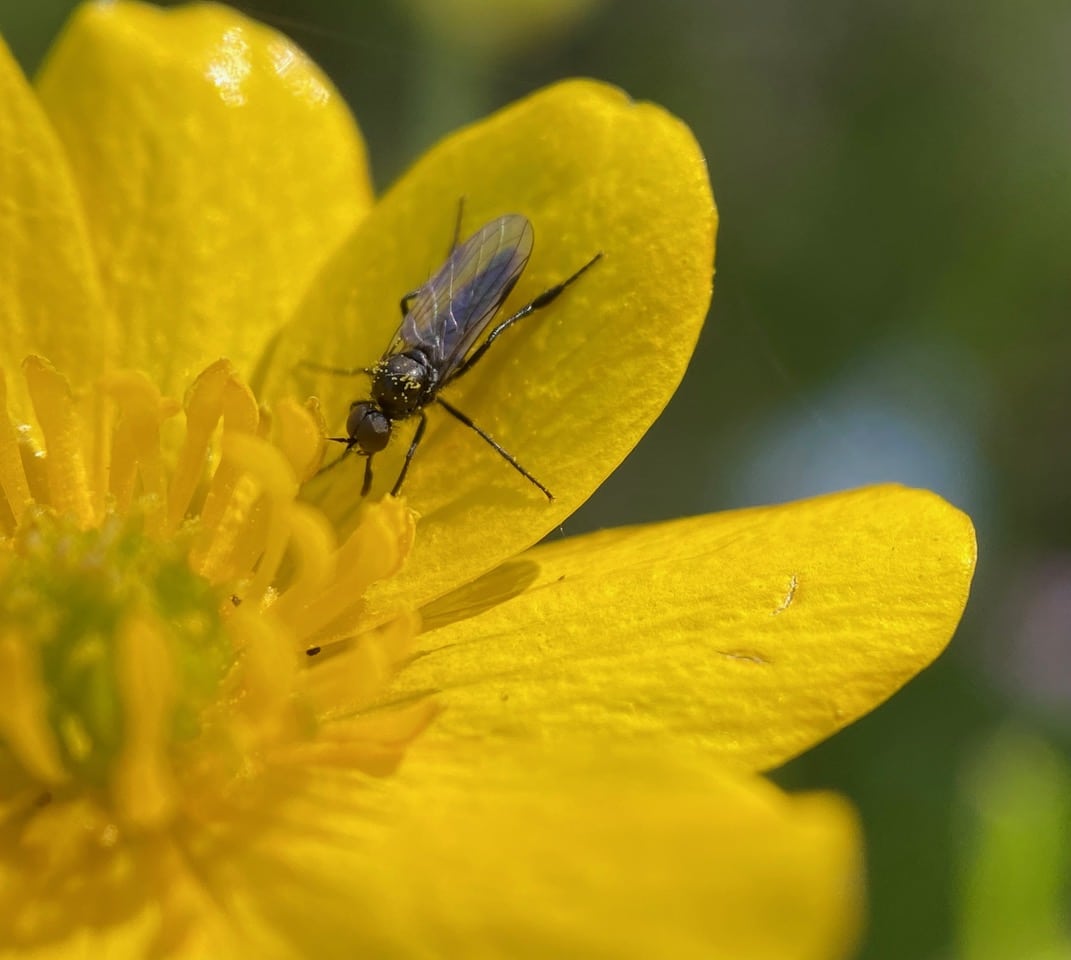
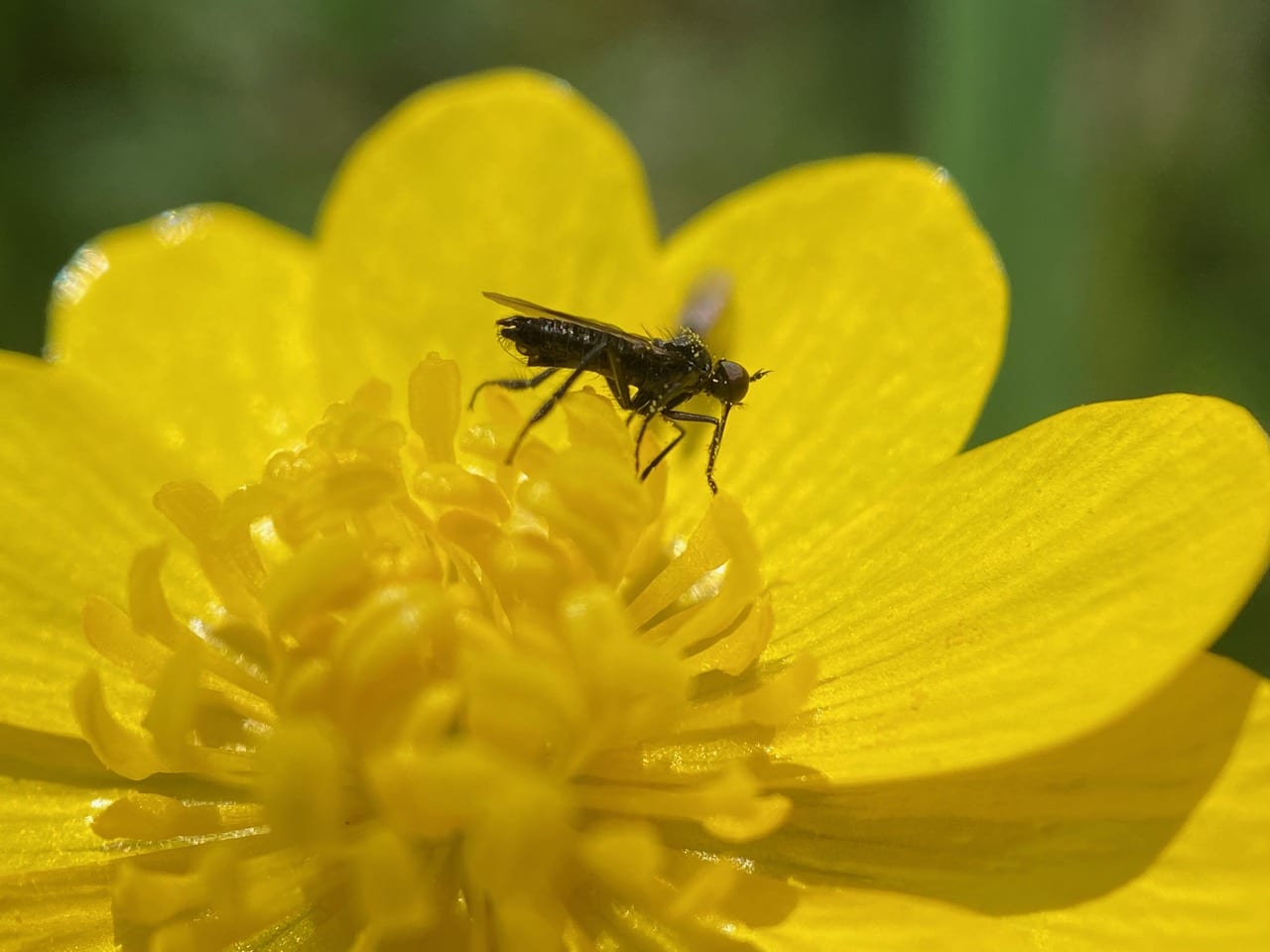
When the insect finally backs up, I see that it is a Empidid Dance Fly (family Empididae). Note that some pollen grains have adhered to its thorax. How clever of the Buttercup to arrange her nectaries so. Unlike most flowers that have a pool of nectar in a single nectary, the buttercup dispenses her sweet treats discreetly in small pockets called nectariferous spots at the base of each petal, ensuring that the visiting pollinator would probe meticulously and thoroughly around the flower, and get covered with her sticky pollen.
Dance Flies, in the family Empididae, get their name from the habit of males of some species to gather in large groups and dance up and down in the air in the hopes of attracting females. They are predominantly predatory and they are often found hunting for small insects on and under vegetation in shady areas. Both genders may also drink nectar. Male dance flies give their sweeties a nuptial gift to eat while they mate. The gift is thought to enable her to complete the development of her eggs. Males may wrap their gifts in balloons of silk or spit.
A male Mining Bee, Andrena sp. (family Andrenidae) is actively seeking nectar from a California Buttercup flower. The “bottoms up” pose of nectar-seeking insects is the most commonly seen behavior on the buttercup.
On to the next nectary! A bar-hopping male as he waits for a female to turn up.
A Convergent Ladybeetle, Hippodamia convergens (family Coccinellidae) is foraging on a buttercup flower. It might be hunting for aphids, or it might be feeding on pollen and nectar. Ladybeetles are known to rely on plant resources when prey is scarce.
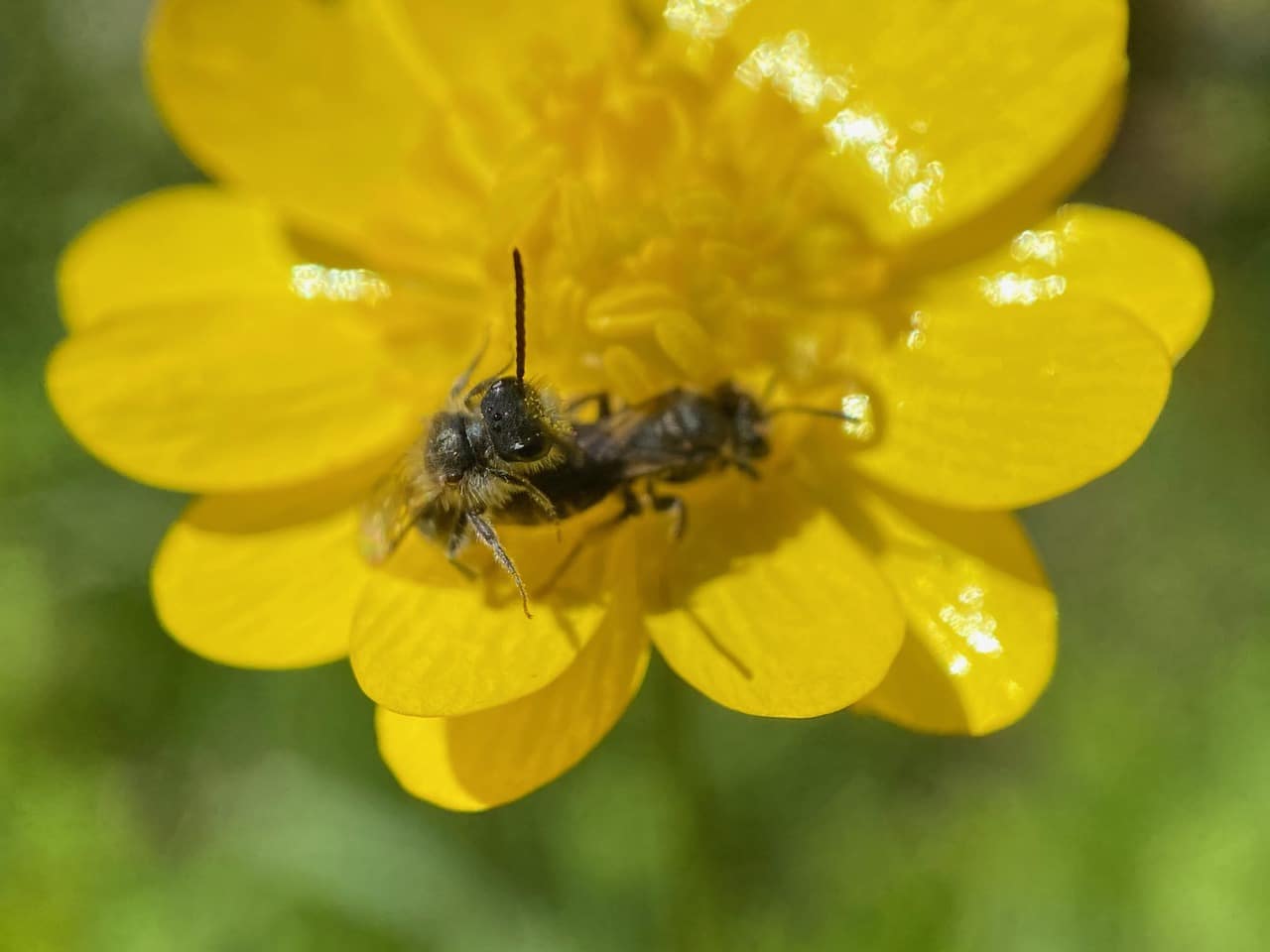
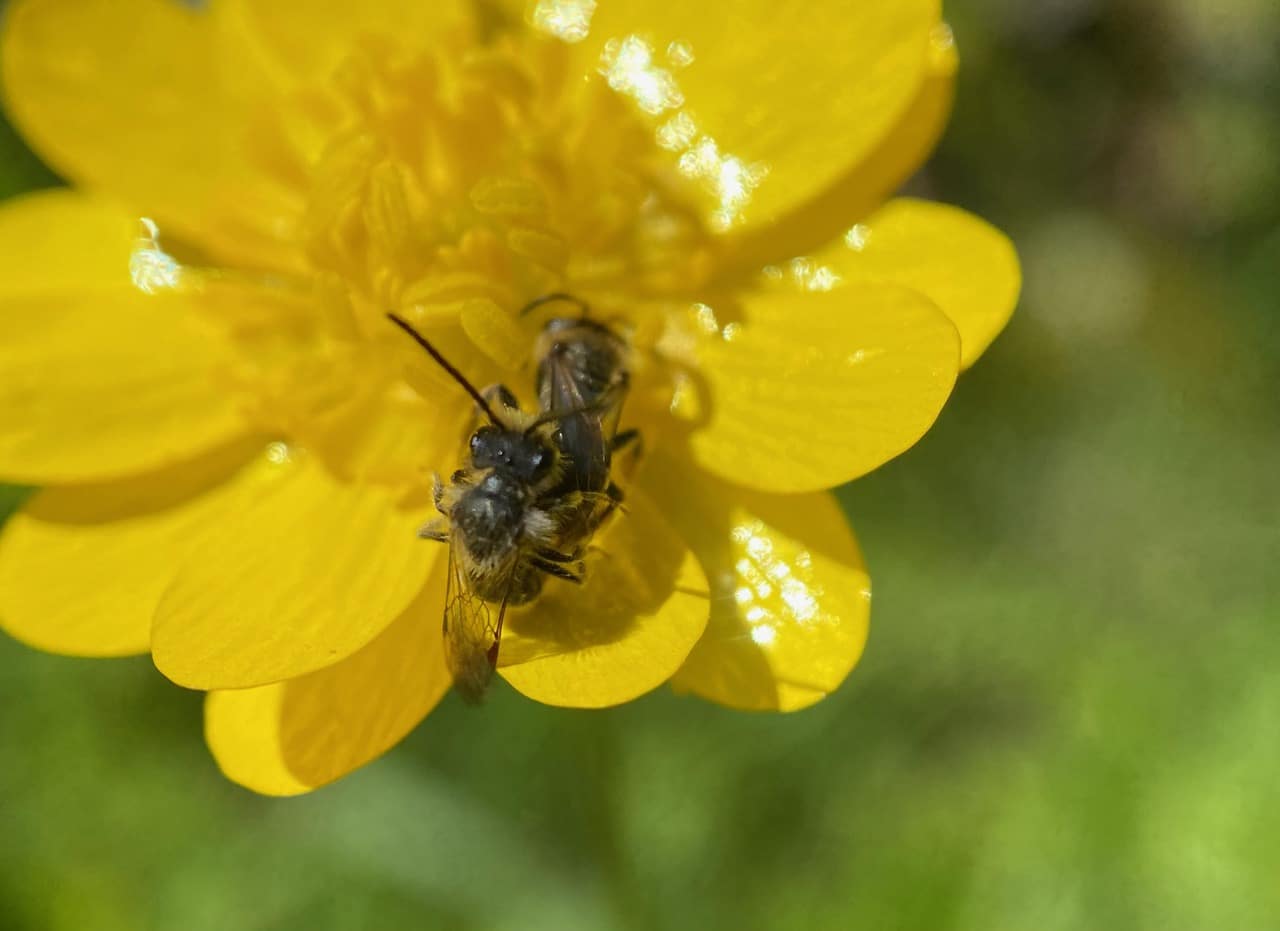
When I home in on what I thought was a large insect, it turns out to be a mating pair of Mining Bees!
The action is hot and heavy with lots of shaking, but it is over in a few seconds, with the pair tumbling down into the undergrowth. Wow, is that enough to ensure the propagation of the next generation?
Here’s a male Andrena seeking nectar on a buttercup flower.
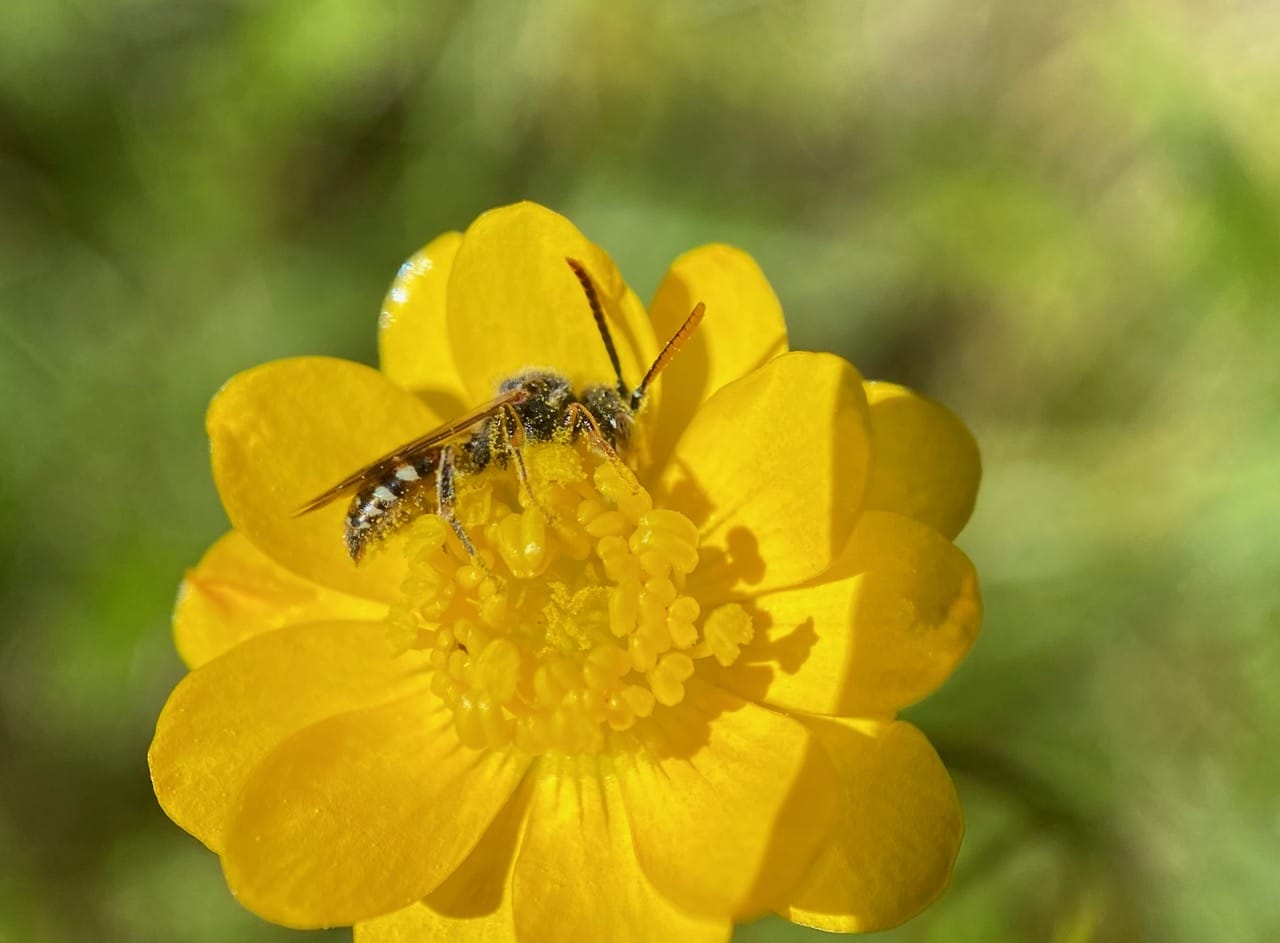
About the same size as the male Andrena, this wasp-like insect is distinct, with white markings on the pointed abdomen, bi-colored antennae and mottled eyes. Seeking nectar, it is covered with pollen. A Nomad Bee?
Nomad Bees in the genus Nomada is one of the largest genera in the family Apidae, and the largest genus of Cuckoo Bees. Nomada are kleptoparasites of many different types of ground-nesting bees as hosts, primarily the genus Andrena. They lack a pollen-carrying scopa, and are mostly hairless, as they do not collect pollen to feed their offspring. Adults visit flowers for nectar. The bees are extraordinarily wasp-like in appearance, often with yellow or white integumental markings on their abdomen.
Nomad Bees occur worldwide. All known species parasitize ground-nesting bees, and their habitats and seasonality correlate closely with their hosts. In early spring, females scout out their hosts, searching for nests to parasitize. The female Nomada sneaks into the host’s nest while the resident female is out foraging, then lays eggs in the nest. The parasite larva that hatches out kills the host offspring and feeds on the host’s provisions. This type of parasitism is termed brood parasitism. The parasites pupate in the host cell and finally emerge as adults the following season along with the hosts.
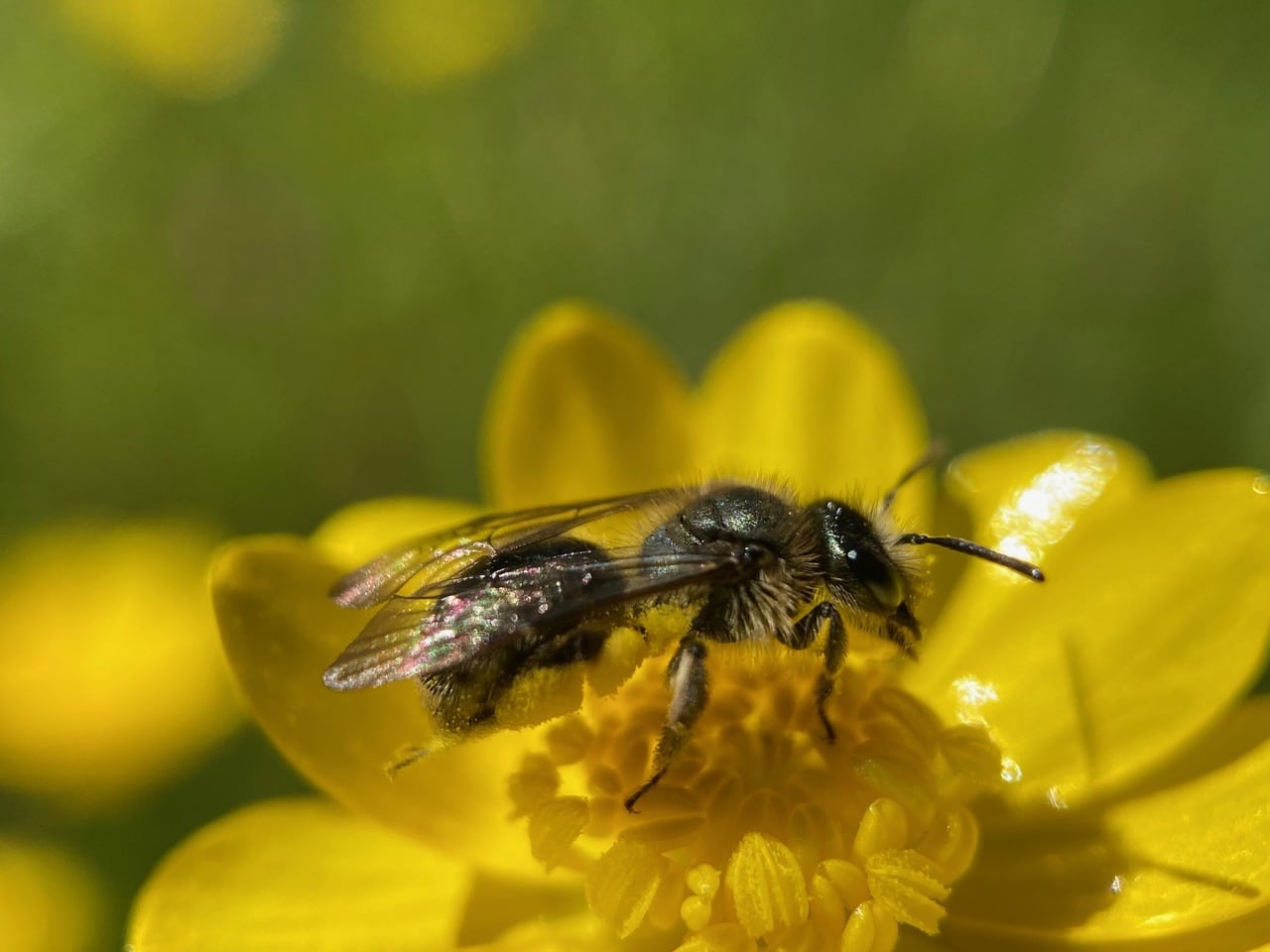
I have been seeing a few female Andrena out and about with pollen on their scopae, but they are wary and hard to photograph. Finally persistence pays off – this female is too busy collecting pollen to worry about my presence.
The female is performing some fancy footwork on the stamens of the buttercup flower. She is raking the anthers with her feet to loosen the pollen, then packing the pollen onto the scopae on her hindlegs. Her movements are so fast they appear as a blur.
Time to turn on the video!
Wow, what an extraordinary morning! I had some neat glimpses into the lives of the Mining Bees (family Andrenidae) that appeared to be intimately associated with the California Buttercup, Ranunculus californicus. I have observed the males sleeping on the flowers in the early morning. The males were seen seeking nectar from the buttercups as the day warms up. A female was observed collecting pollen on the flower. And unbelievably, a pair in copula on the flower! Last, but not least, I have also seen a Cuckoo Bee that most likely parasitizes the Andrenids.
Many insects are named for the plants on which they specialize, so on a whim, I googled for “Andrena ranunculus”. Out popped this: Andrena ranunculi · iNaturalist I am sure that this is the species I have been observing on the buttercup!
Soon after, I found this: Bees on Ranunculus – Andrena – BugGuide.Net
What an exciting journey this has been!