

Pollinator Post 4/8/24 (1)
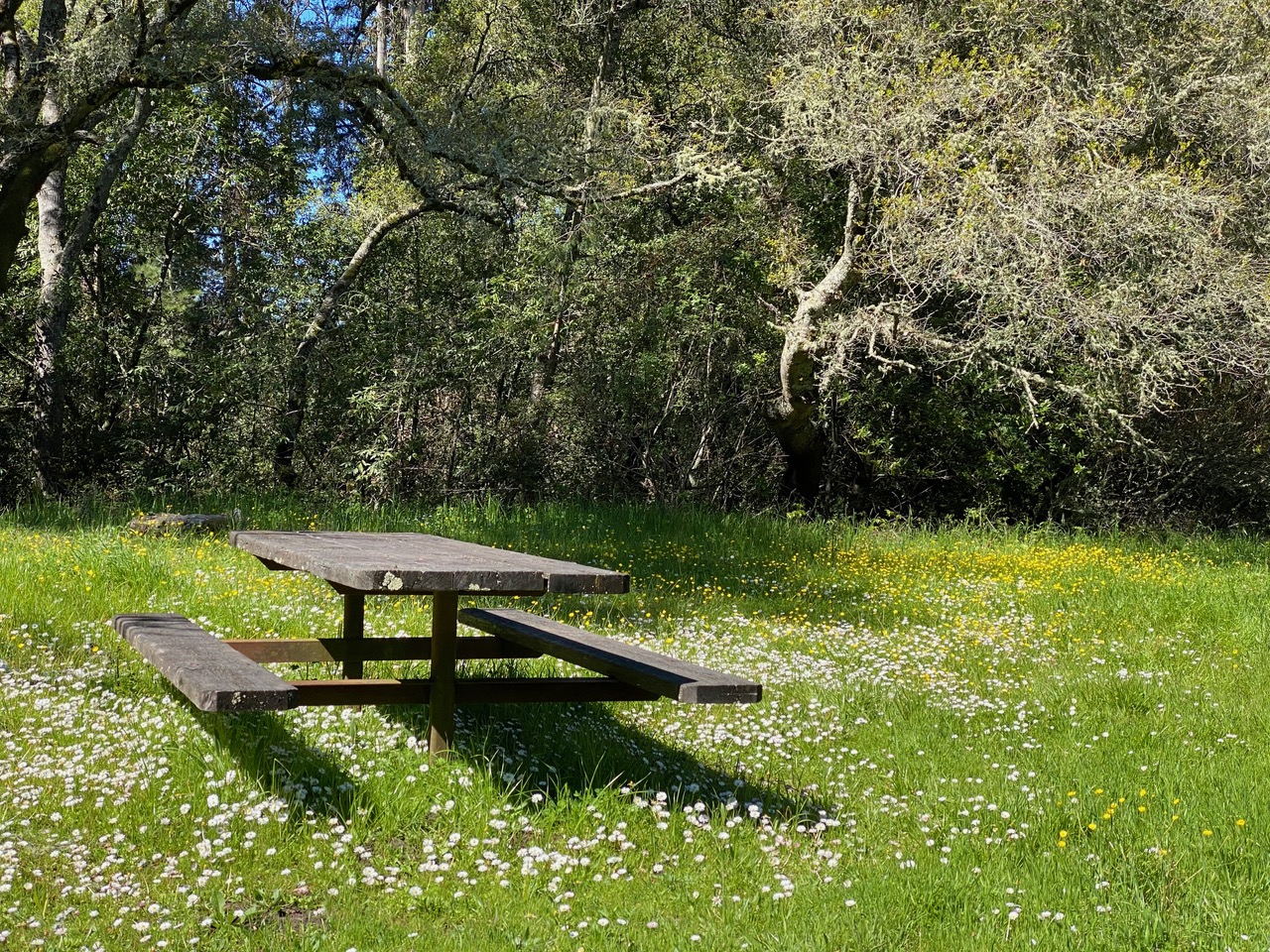
A friend who walks her dog in Tilden Park daily told me of “a trail that traverses a buttercup-covered knoll”. I decide I have to check it out today.
A picnic table at the Padre picnic area is surrounded by English Daisies and California Buttercup.
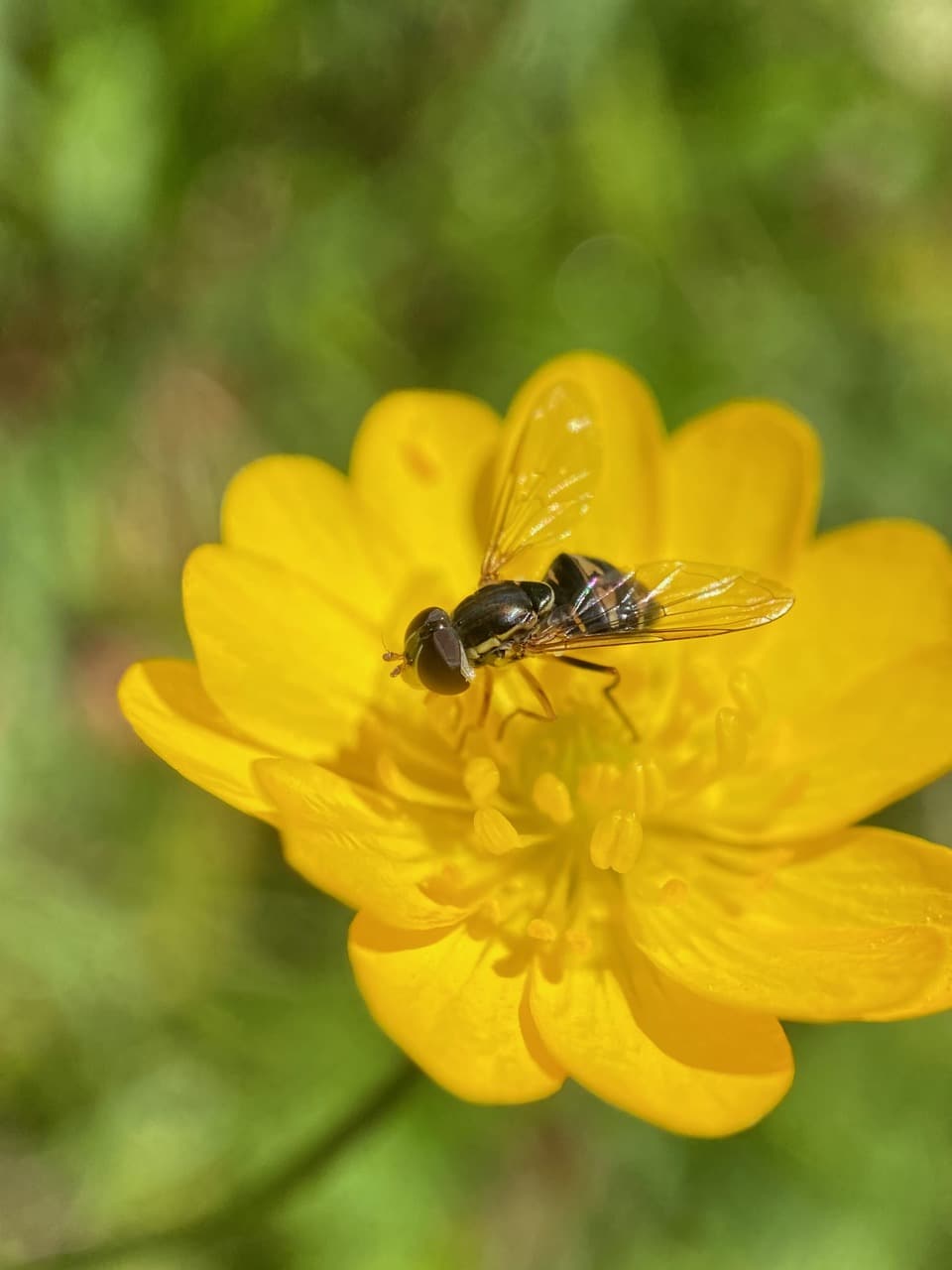





At 9:45 am, things are rather quiet. This diligent little hoverfly, the Western Calligrapher, Toxomerus occidentalis (family Syrphidae) is already out foraging on a California Buttercup flower.
The hoverfly is female, as evidenced by her distinctive shape and abdominal markings.
Toxomerus is a very large genus of Hover Flies. They are found in North and South America. The majority of species are only 6-9 mm in length. They are notable for their mimicry of stinging Hymenoptera to avoid predators. Their unique abdominal patterns are diagnostic at the species level within the genus. Most larvae feed on soft bodied insects, such as aphids; a few feed on pollen. Adults feed on the pollen of a wide range of flowers. A female can lay up to hundreds of eggs at a time and will place them where prey or pollen food sources are readily available. They can be found in a wide variety of habitats, often in dense ground cover.
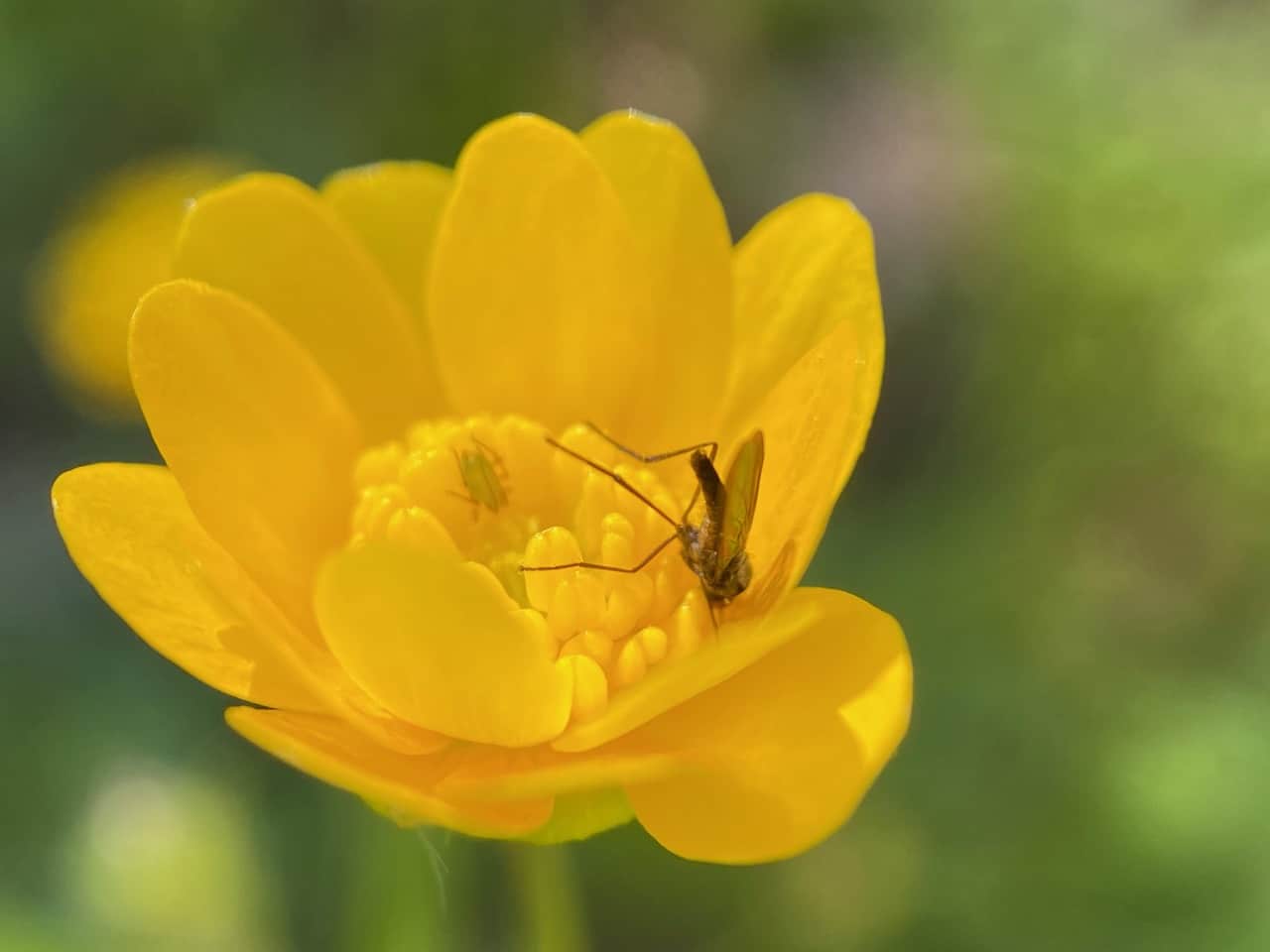
Much smaller is a mosquito-like insect. It is probing for nectar at the base of a petal. It has company on the flower – an aphid!
The insect goes around the periphery of the flower, stopping to probe every petal for nectar.
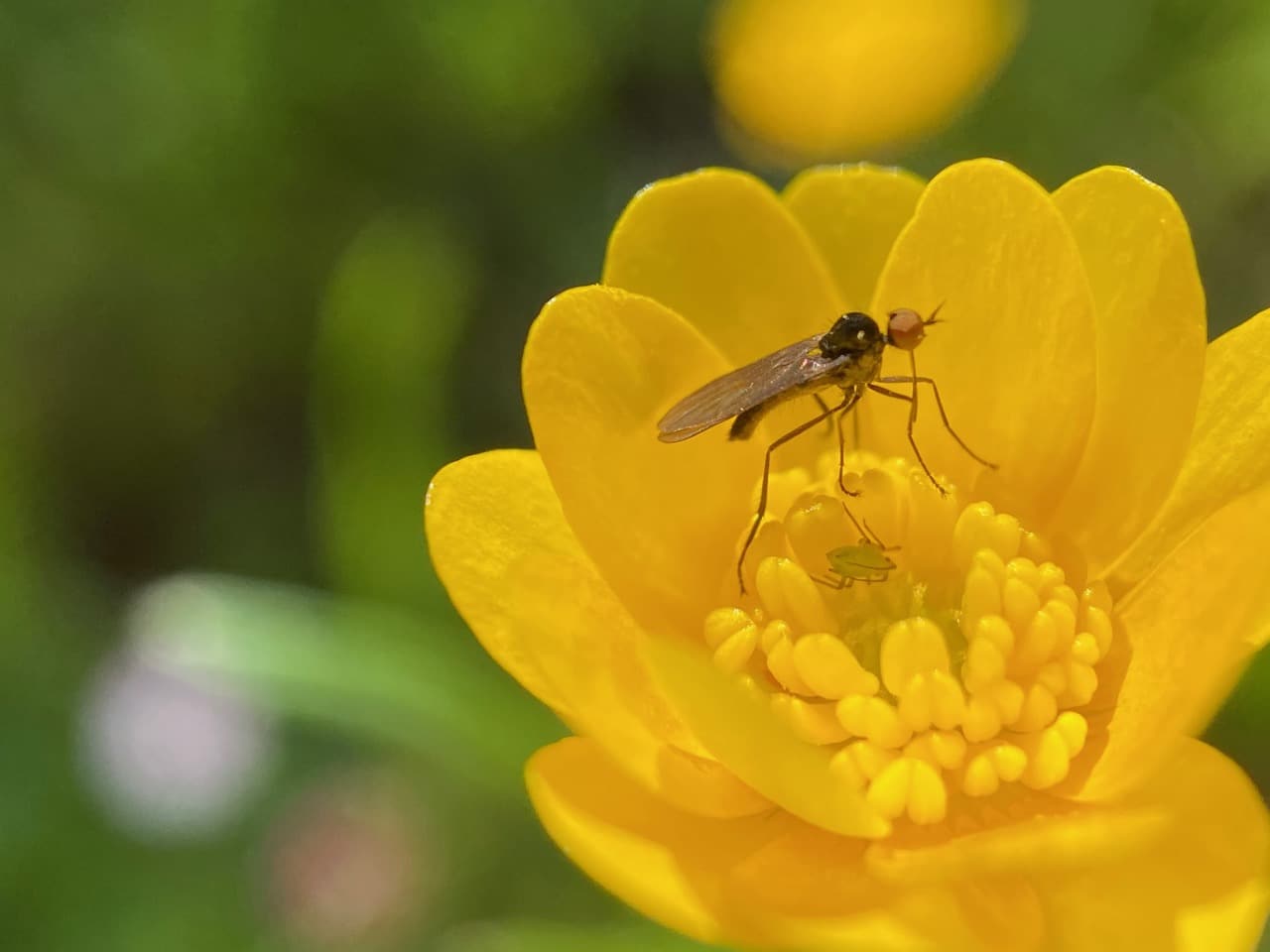
When it finally lifts its head, I realize that it is a Empidid Dance Fly (family Empididae).
Dance Flies, in the family Empididae, get their name from the habit of males of some species to gather in large groups and dance up and down in the air in the hopes of attracting females. They are predominantly predatory and they are often found hunting for small insects on and under vegetation in shady areas. Both genders may also drink nectar. Male dance flies give their sweeties a nuptial gift to eat while they mate. The gift is thought to enable her to complete the development of her eggs. Males may wrap their gifts in balloons of silk or spit.
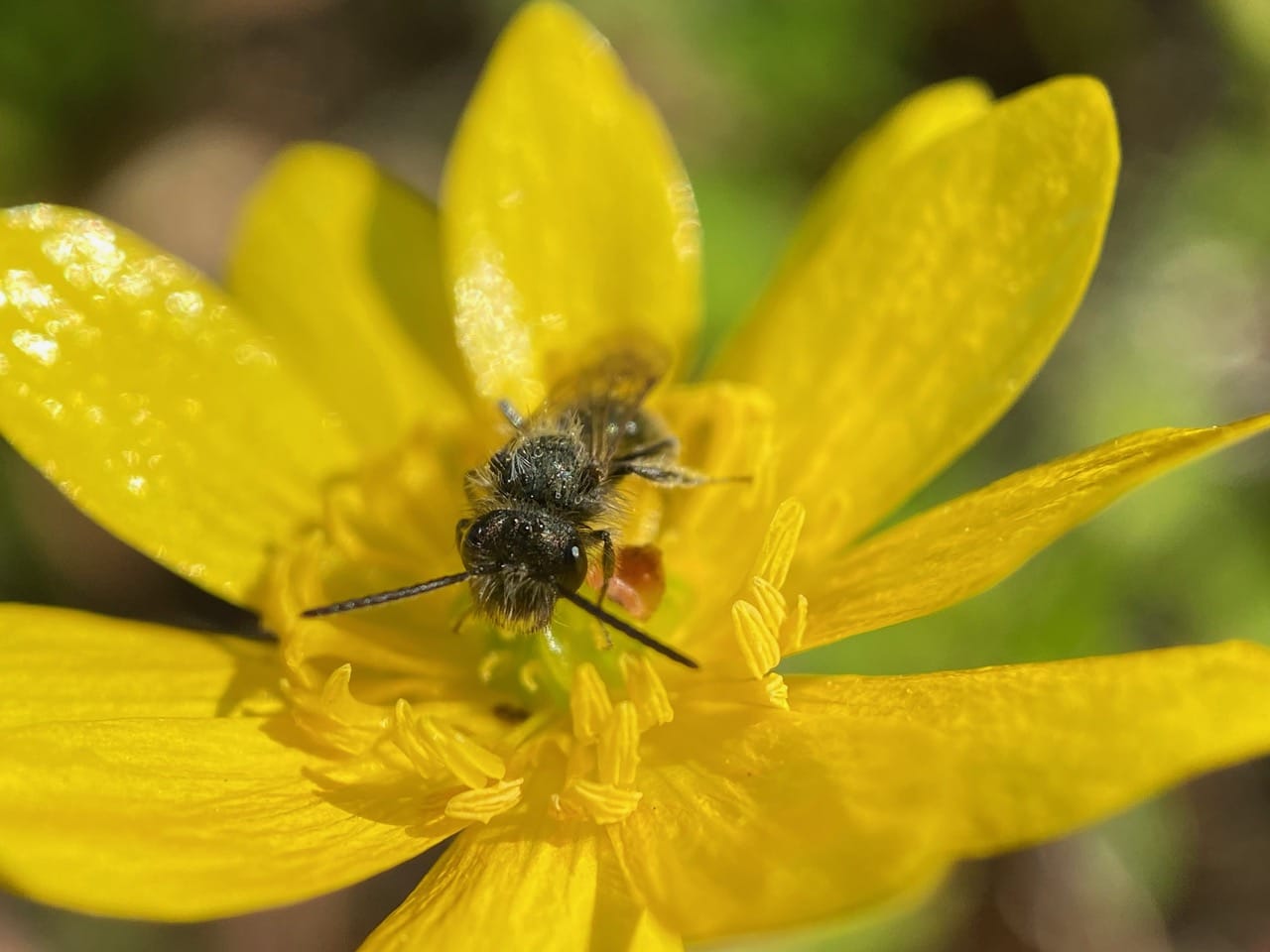
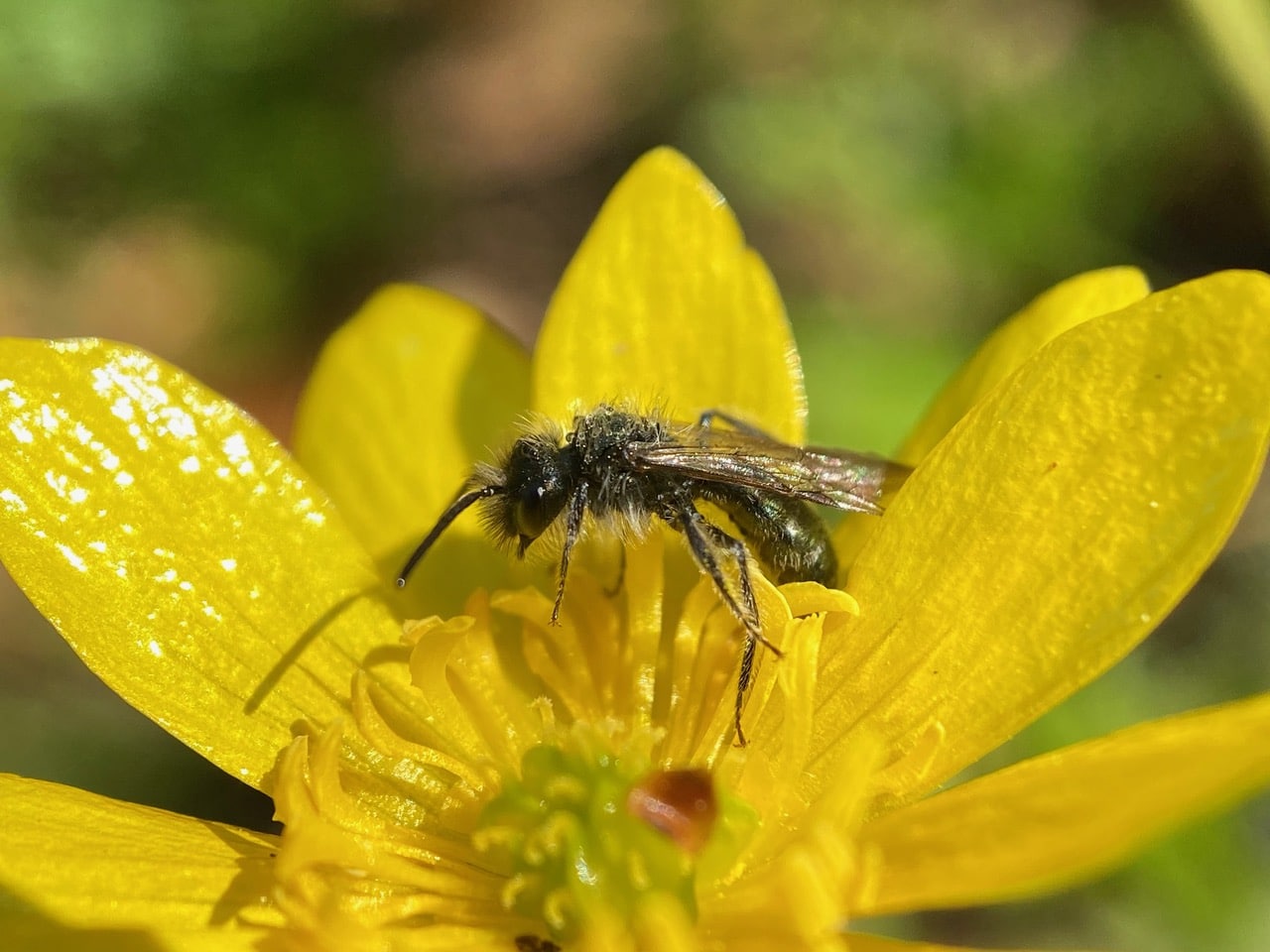
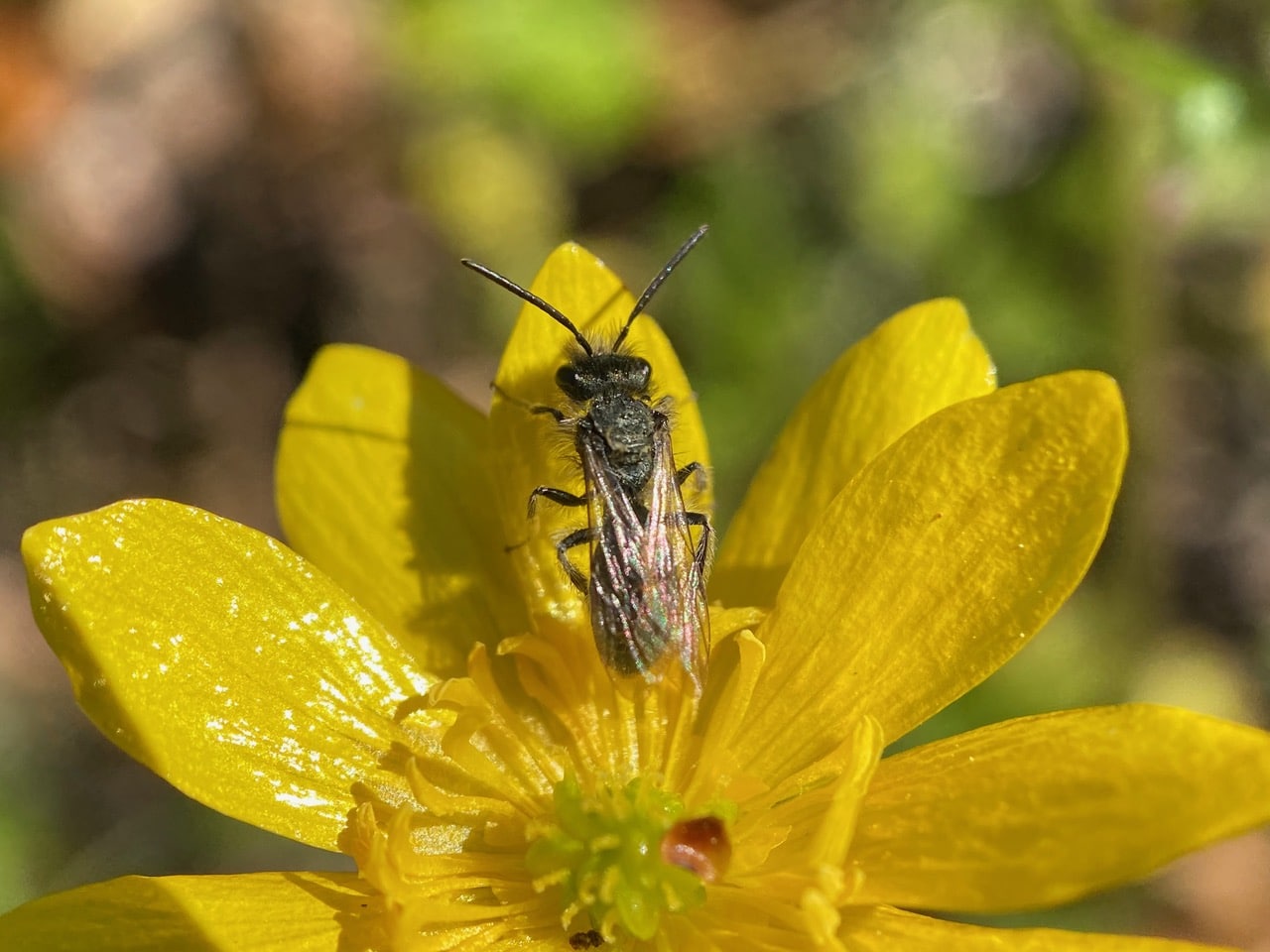
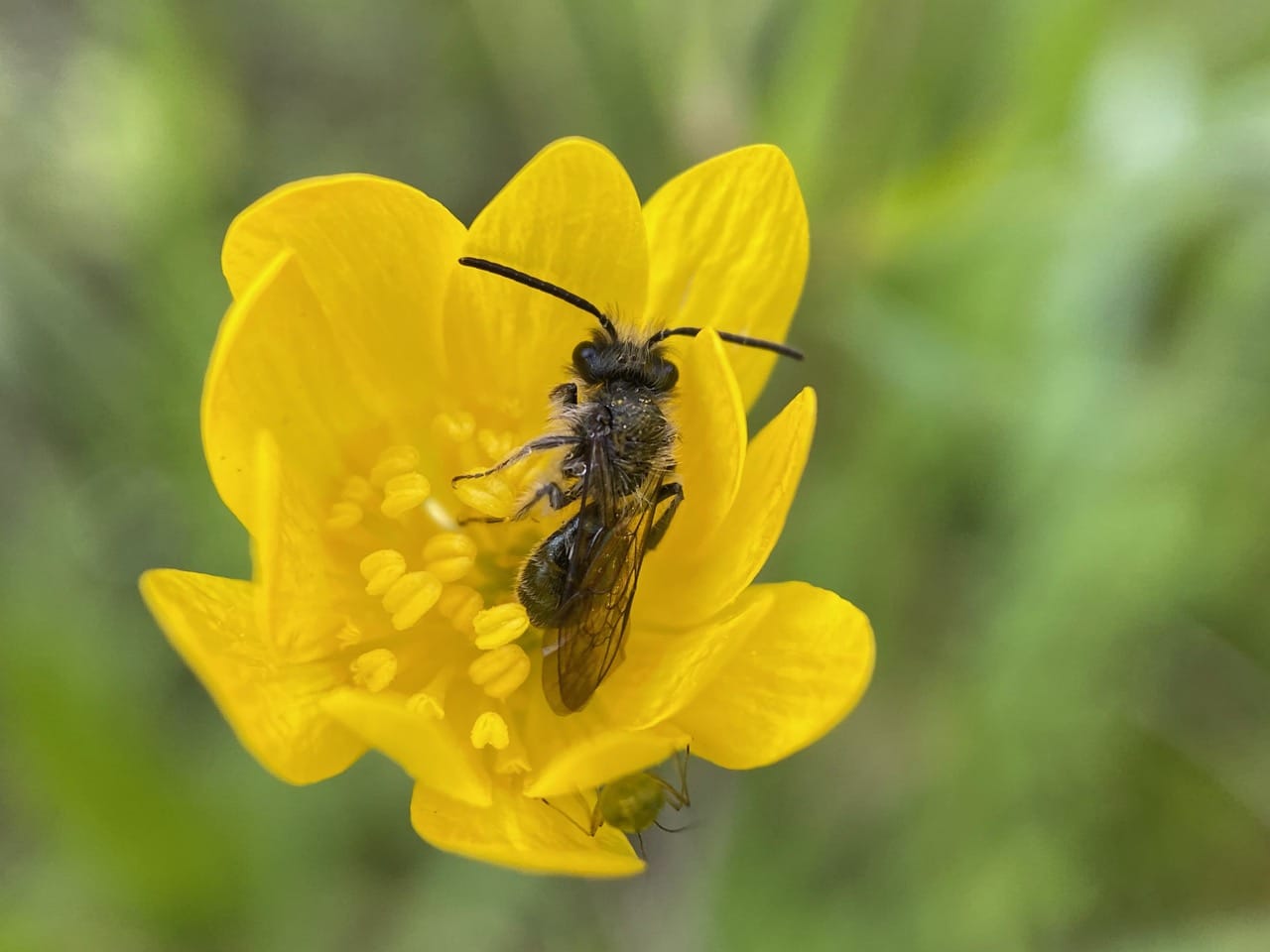
A male Mining Bee, Andrena sp. (family Andrenidae) is waking up, moving around ever so slowly on the flower.
The bee drags itself up…
… and leans against a petal to soak in some sun. Buttercup petals have some unique optical properties that facilitate light reflections, heating up quickly in the morning as the flower tracks the sun in the sky. The little bee is in good hands. With few exceptions, insects are exothermic – they do not keep a constant body temperature like mammals and birds, but instead their body temperature fluctuates with the temperature of their surroundings. They need to warm up their body to become active.
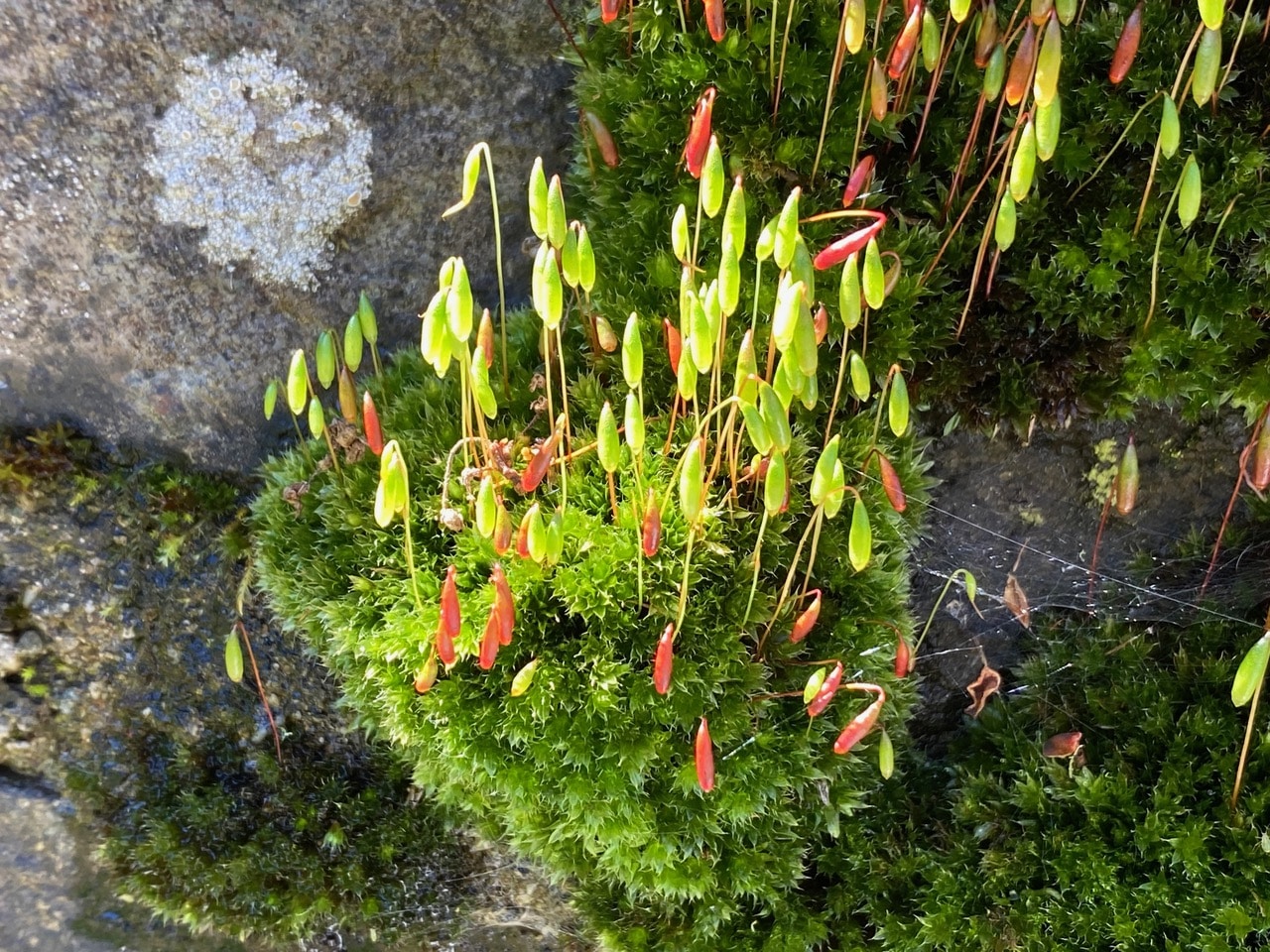
At the picnic site, there is a charming old-fashioned drinking fountain overgrown with mosses and English Daisies.
The lush mosses on the side of the drinking fountain have a forest of sporophytes with nodding capsules ready to release spores.
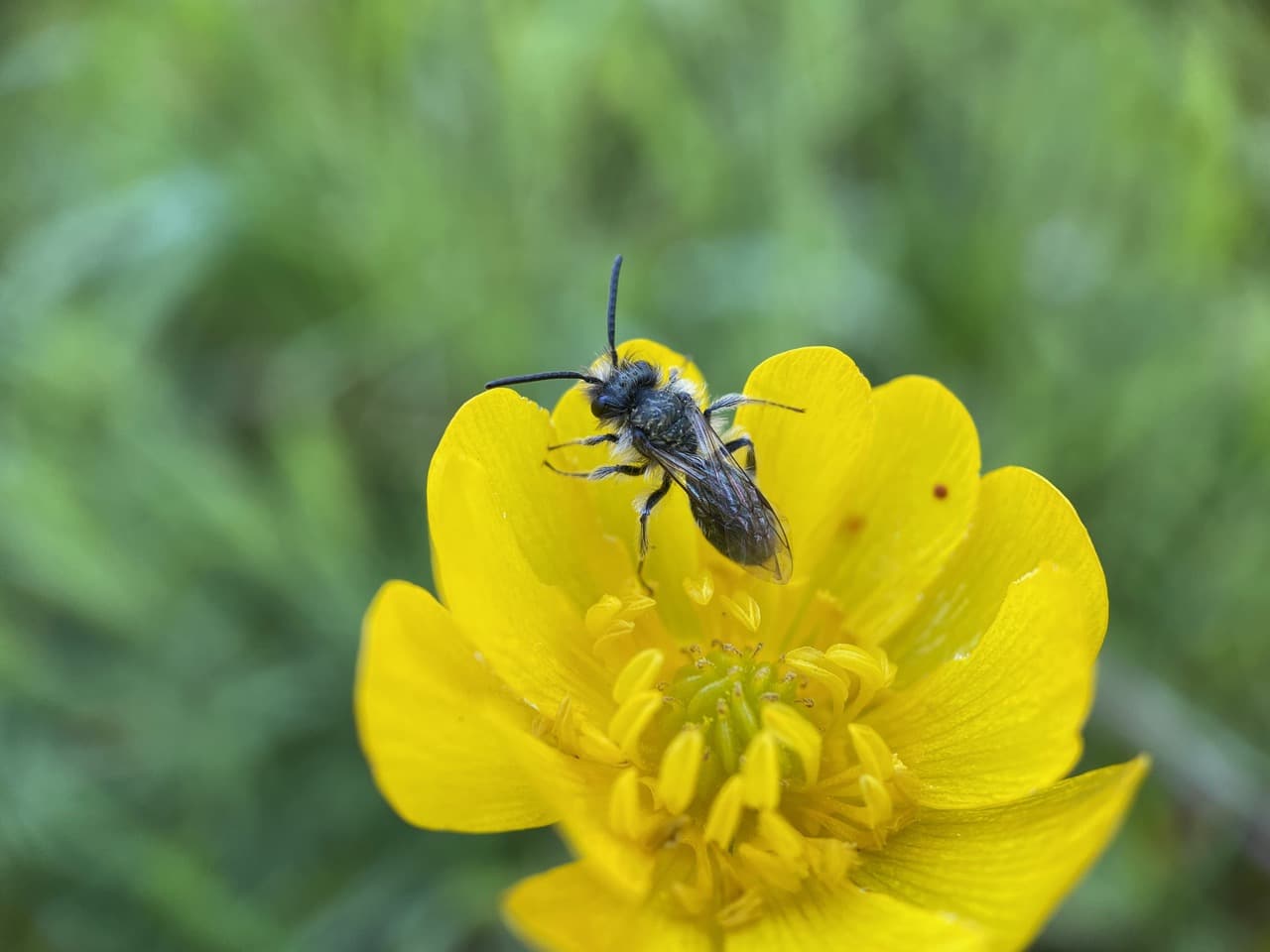
This little male Andrena is still fast asleep, covered with dew drops. His flower is in the shade and will take some time to warm up.
This one looks awake, but is not moving. It is hard to tell if an insect is asleep because insects do not have eyelids. I use the absence of movement as a sign of slumber.
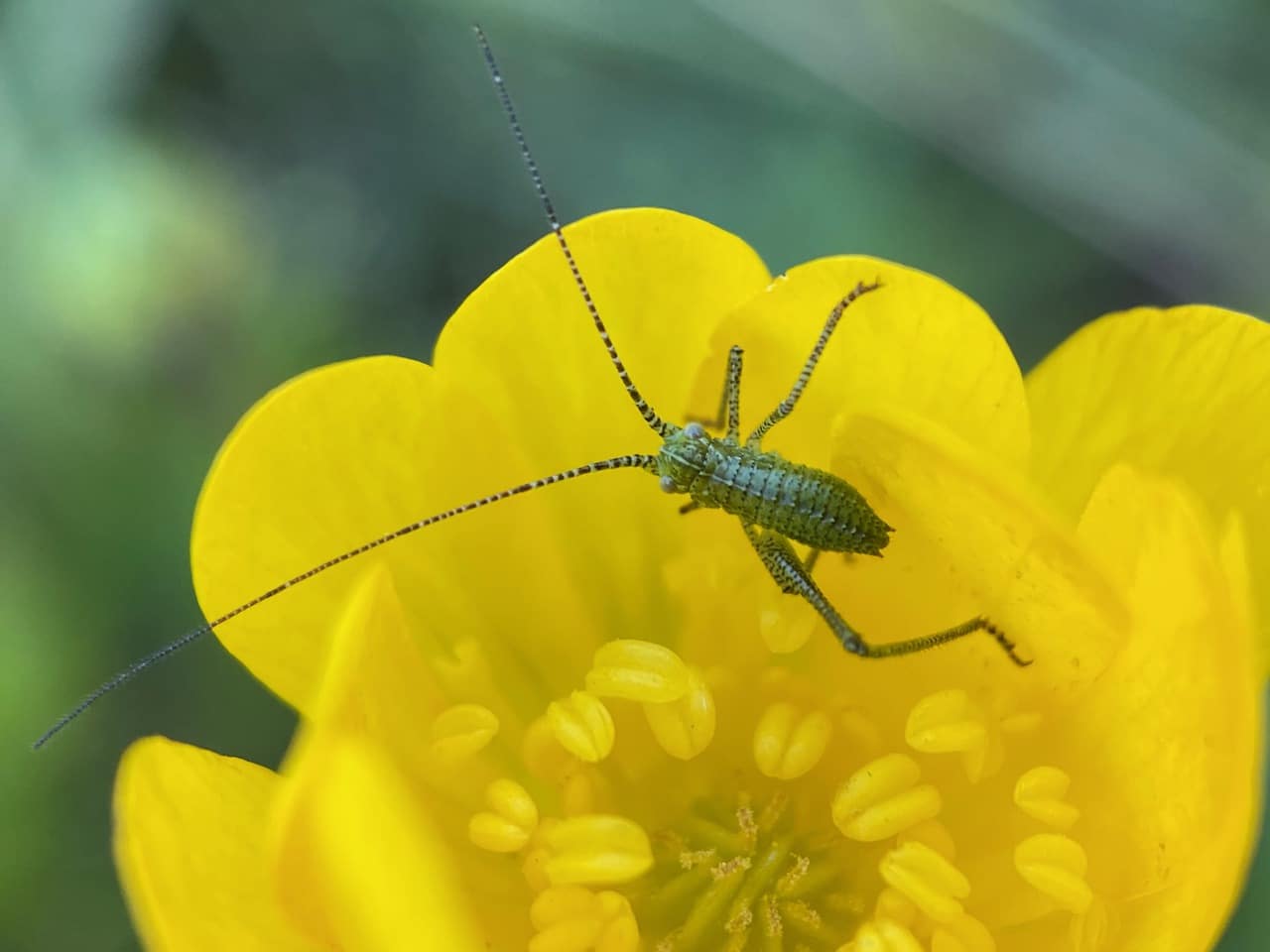
A tiny Katydid nymph (family Tettigoniidae) is clinging to the petals of a buttercup flowers. It is missing its right hind leg. Will it be able to regrow that limb?
Insects in the family Tettigoniidae are commonly called katydids or bush crickets. They are primarily nocturnal in habit with strident mating calls. Many species exhibit mimicry and camouflage, commonly with shapes and colors resembling leaves. The diet of most katydids includes leaves, flowers, bark, and seeds, but many species are predatory, feeding on other insects, snails, or even small vertebrates such as snakes and lizards. Some are considered agricultural pests.
Since the nymph is so young, it stands a good chance of regrowing its missing leg by the time it is an adult. There is a strong relationship between the larval/nymphal development stage and regeneration capacity in insects. Most adult insects are incapable of limb regeneration, as molting is involved in the process. Often, several molts are needed to complete limb regeneration. This means that the regeneration process will not be completed if amputation or loss occurs in relatively older instars.
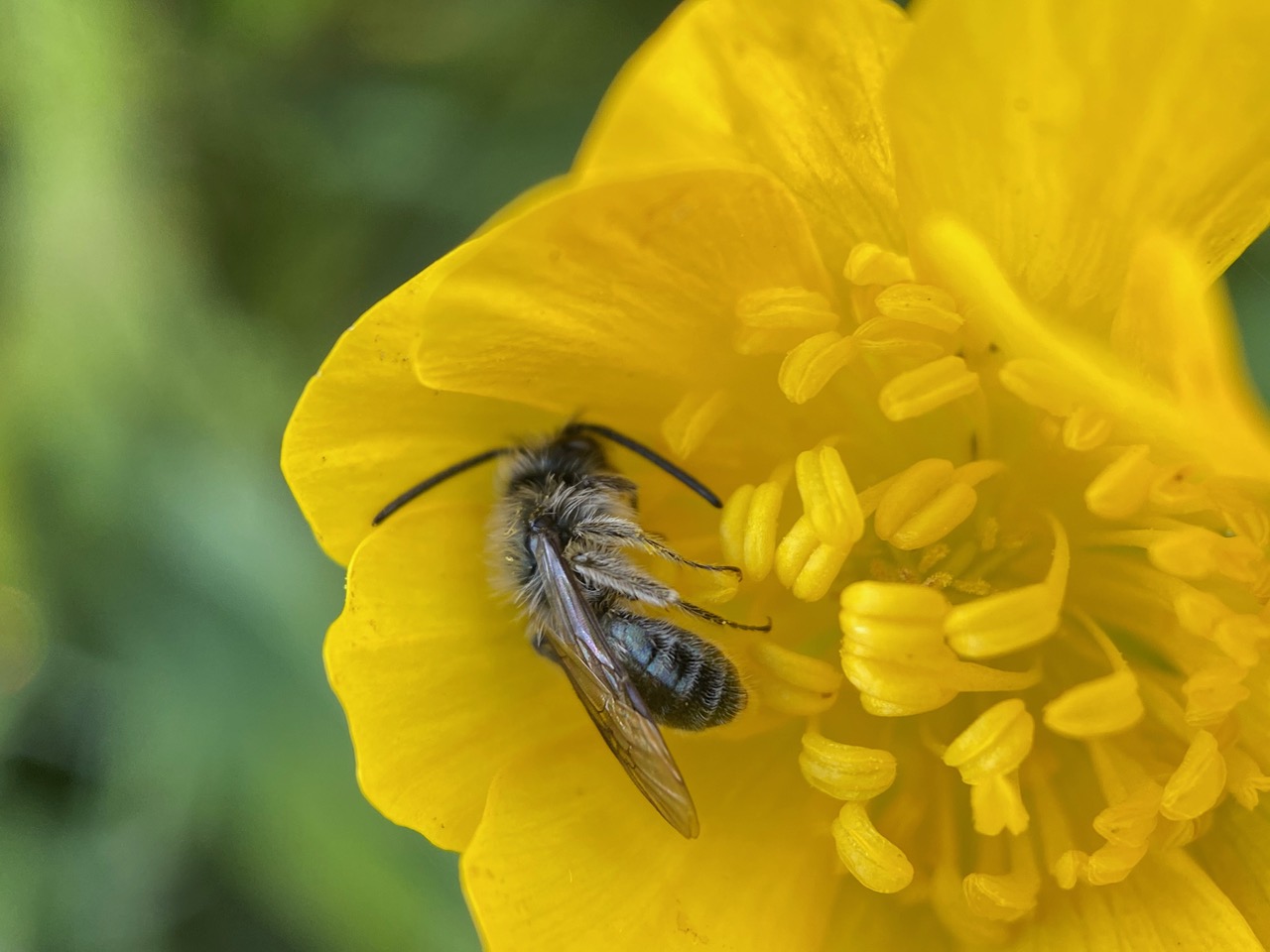
Another sleeping male Andrena in the shaded area near the picnic table.
Yet another sleeping male. In less than 20 minutes, I count a dozen of them.
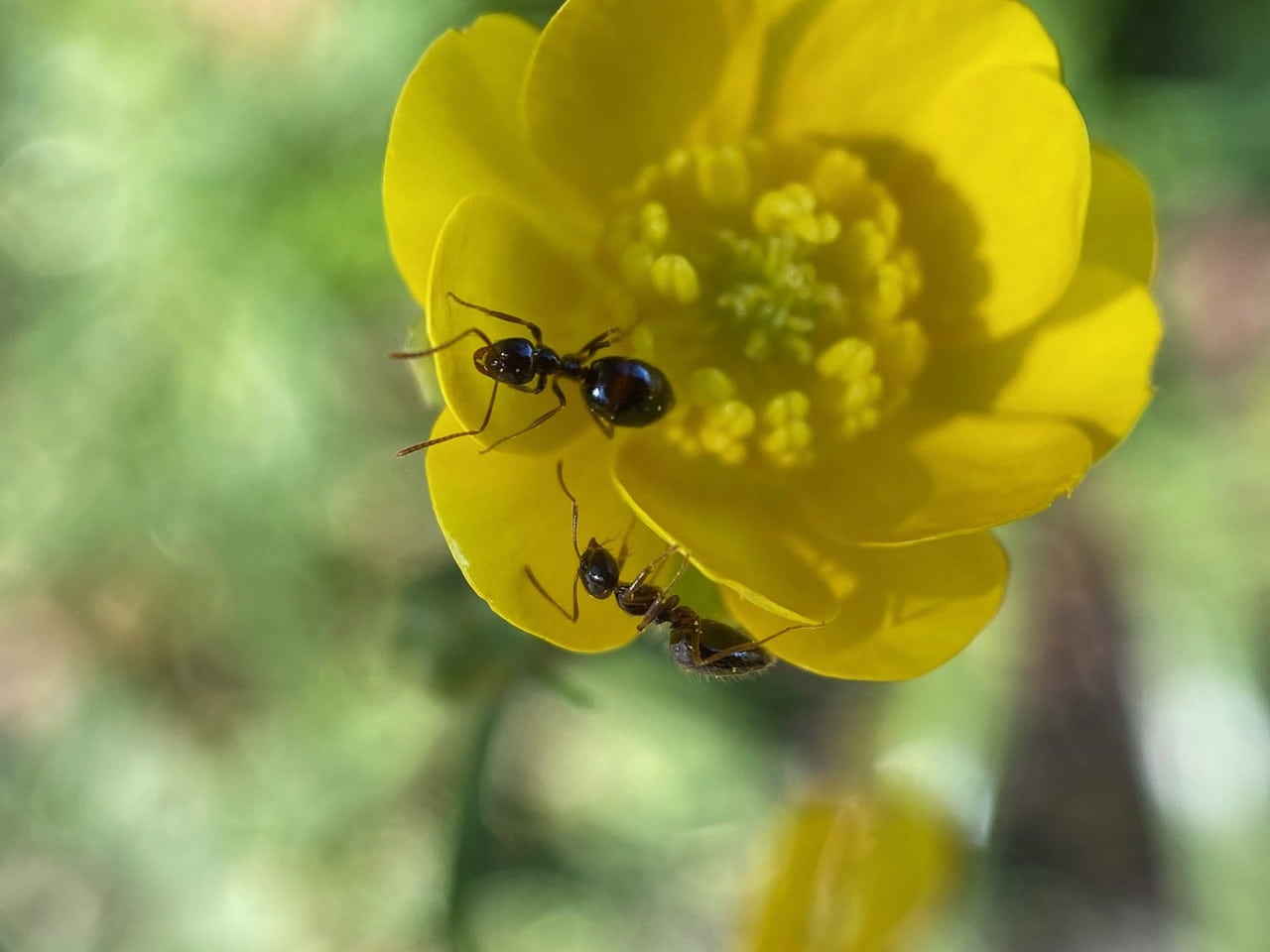
Two American Winter Ants, Prenolepis imparis (family Formicidae) are roaming a buttercup flower. These ants are cold-tolerant.
The American Ant, Prenolepis imparis is a widespread North American ant. A dominant woodland species, it is most active during cool weather, when most other ant species are less likely to forage. This species is one of a few native ants capable of tolerating competition with the invasive Argentine Ant, Linepithema humile. They are also aggressive toward other ants and produce abdominal secretions that are lethal to Argentine Ants. Prenolepis imparis is a generalist omnivore. Foragers are known for tending to aphids or scale insects from which they consume excreted honeydew, aggregating on rotting fruit, and exploiting protein-rich sources such as dead worms. The colony enters estivation (a hibernation-like state) and becomes inactive above ground for the warmer months, during which time eggs are laid and brood are reared. Reproductives overwinter and emerge on the first warm day of spring for their nuptial flight.
A Sedgesitter, Platycheirus sp. (family Syrphidae) is feeding on pollen on a buttercup flowers.
Platycheirus is found in grass and herb vegetation. Adults of many species feed on pollen of wind-pollinated plants, such as Salix, Plantago, Poaceae, Cyperaceae, but they visit other flowers also. Many stay active during cold and rainy weather. Larvae feed on aphids.