

Pollinator Post 4/8/23 (2)
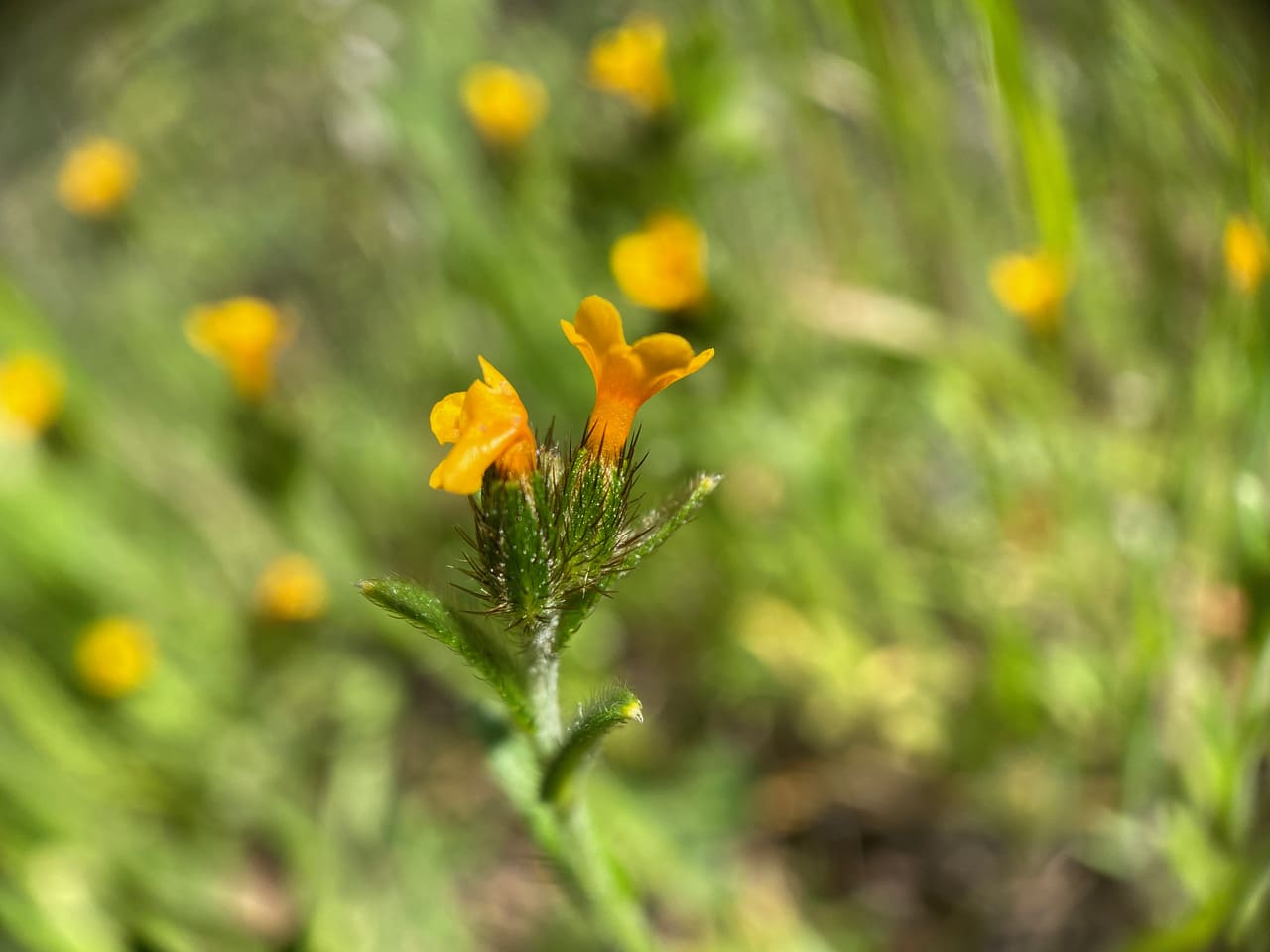
The five petals of of Common Fiddleneck, Amsinckia intermedia are fused into a tube for most of their length, then separating into broadly glaring, rounded lobes.
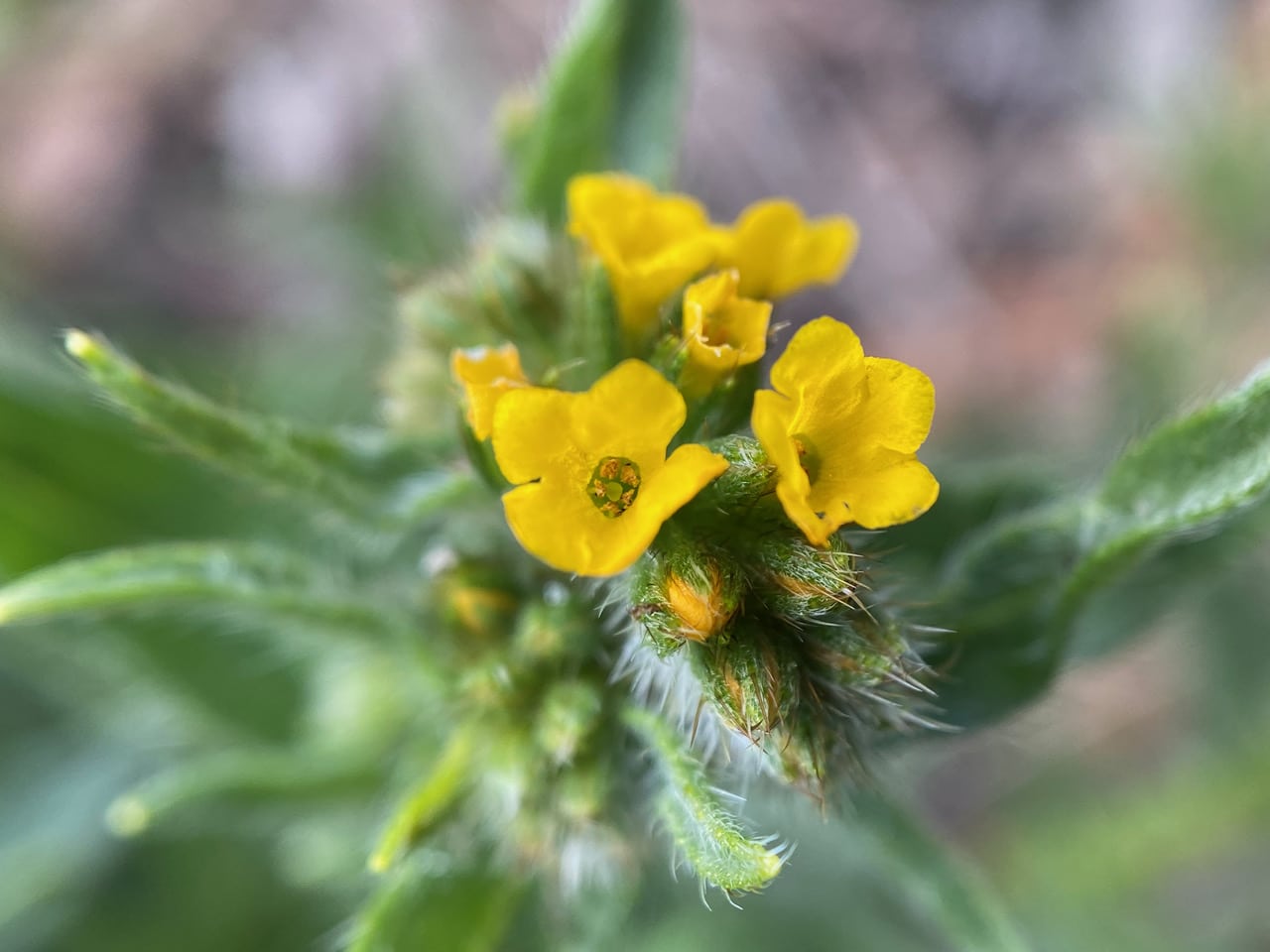
A bee fly’s eye view, looking down the throat of Common Fiddleneck flowers.
In the midst of swarming Winter Ants, Prenolepis imparis, a Greater Bee Fly buzzes through the patch of Common Fiddleneck, Amsinckia intermedia, carefully aiming its straight, long proboscis into each tiny flower to sip nectar. I manage to sneak close enough to take some video footage of its foraging behavior. While its wings continue to beat, its front legs grip the flower and its long proboscis is inserted to collect nectar.
Bombylius major, commonly known as the Greater Bee Fly is a parasitic bee mimic fly in the family Bombyliidae. It derives its name from its close resemblance to bumble bees. Its flight is quite distinctive – hovering in place to feed, and darting between locations. The species has long skinny legs and a long rigid proboscis held in front of the head. Bombylius major is easily distinguished from the other local species of Bombylius for having wings with dark leading edge, hyaline trailing edge with sharp dividing border. This feature is visible even as the fly is hovering. Adults visit flowers for nectar (and sometimes pollen) from a wide variety of plant families, excelling at small tubular flowers, and are considered good generalist pollinators. Often the pollen is transferred between flowers on the fly’s proboscis.
The bee fly larvae, however, have a sinister side. They are parasitoids of ground-nesting bees and wasps, including the brood of digger bees in the family Andrenidae. Egg deposition takes place by the female hovering above the entrance of a host nest, and throwing down her eggs using a flicking movement. The larvae then make their way into the host nest or attach themselves to the bees to be carried into the nest. There the fly larvae feed on the food provisions, as well as the young solitary bees.