

Pollinator Post 4/7/26 (2)

It’s almost noon when I amble into the large patch of Coastal Bush Lupine, Lupinus arboreus in the native plant garden at Crab Cove. The rising temperature has brought on good bee action. A Yellow-faced Bumble Bee, subgenus Pyrobombus (genus Bombus, family Apidae) is coming in for landing, her pollen baskets already packed with bright orange lupine pollen.
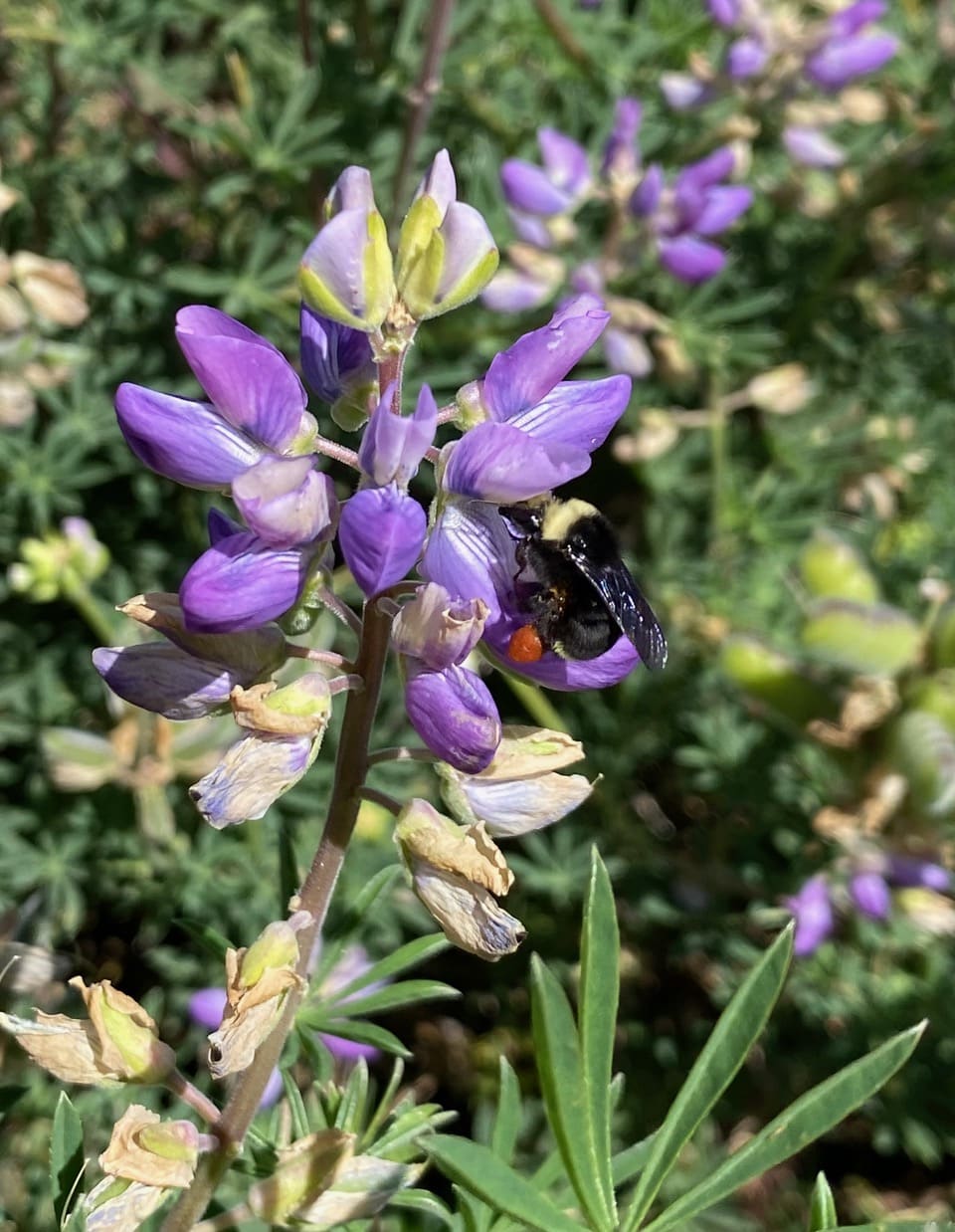
Guided by the purple lines (nectar guides) on the wing petals, she lands on the horizontal surface provided by the paired petals, depressing and parting them. Her weight causes the reproductive structures of the flower to spring up through the exposed keel beneath, dabbing pollen on the bee’s belly. The bee quickly grooms the pollen into the pollen baskets (corbiculae) on her hind legs.
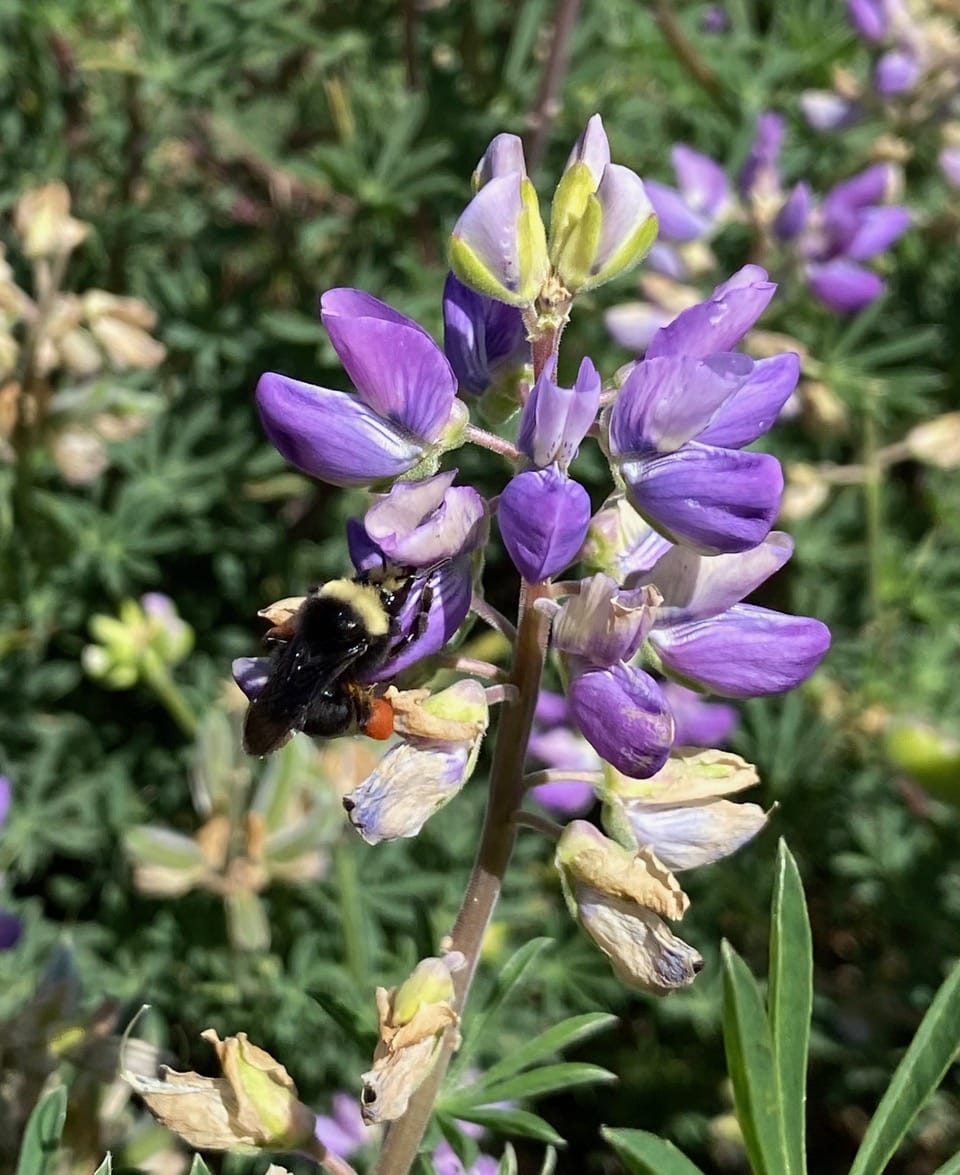
She repeats the same process on several flowers on the same spike, giving me a front-row seat to the pollination of lupine flowers.
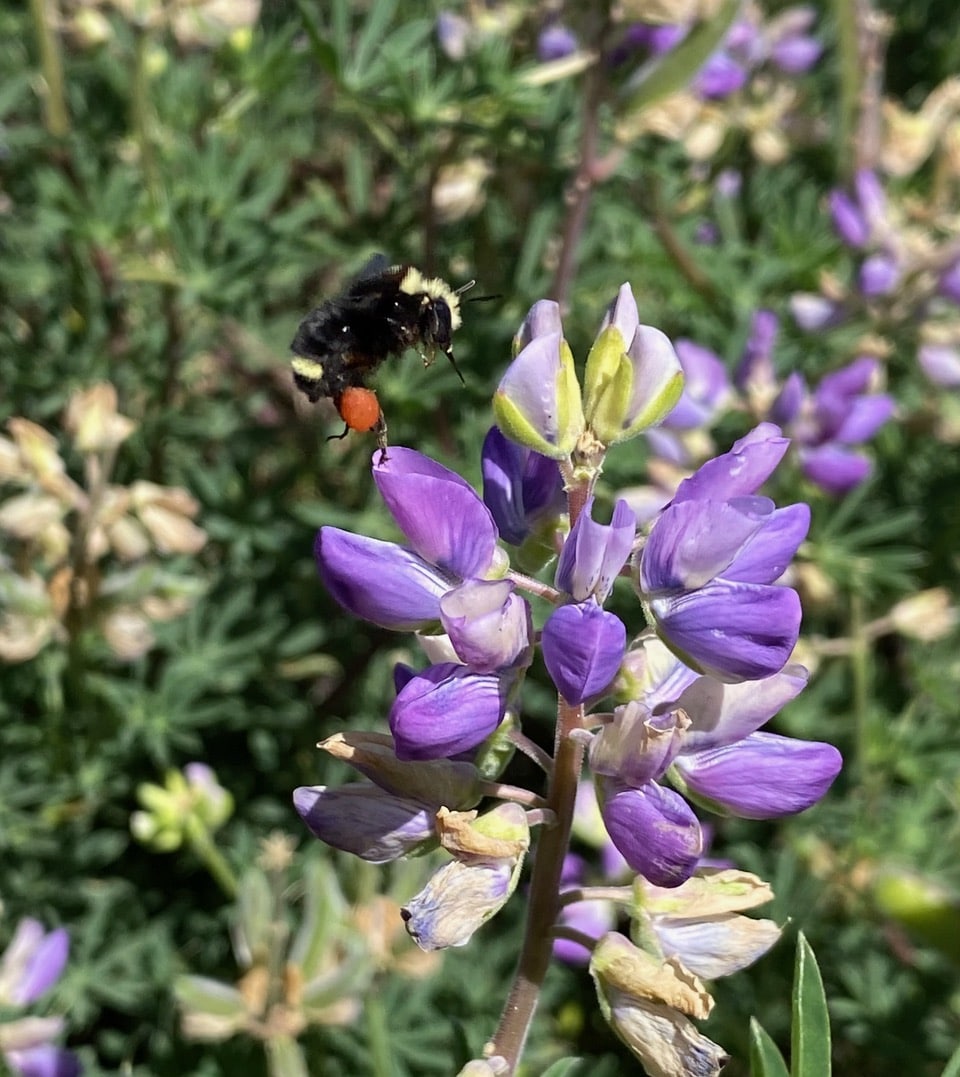
Time to return to the nest to deposit this load of pollen!
Bumble bee nests are small, annual colonies typically found in abandoned underground rodent burrows, grass tussocks, or cavity-filled areas, housing only 50-400 bees. Unlike honey bees, they produce minimal, non-commercial honey and use disorganized, wax-covered pollen clumps to house larvae. These colonies last only one season (2-6 months) and are established by a single queen in spring.

A California Lady Beetle, Coccinella californica (family Coccinellidae) is resting on a finely divided leaf of Fennel, Foeniculum vulgare.
The California Lady Beetle, Coccinella californica has a red elytra that is usually spotless. Pronotum is black with a white patch on each side. Head is black with two small white spots between the eyes. There is a black suture (where the wings meet, down the middle of the back). The species’ range is the coastal counties north of the Transverse Ranges. Both adults and larvae are voracious predators of aphids and other soft-bodied insects.

A Sandhill Skipper, Polites sabuleti (family Hesperiidae) is taking nectar from a flower of Cleveland Sage, Salvia clevelandii.
Skippers are a family, the Hesperiidae, of the order Lepidoptera (butterflies and moths). They are named for their quick, darting flight habits. Most have the antenna clubs hooked backwards like a crochet hook. They also have generally stockier bodies and larger compound eyes than the other butterflies. Their wings are usually small in proportion to their bodies. When at rest, skippers keep their wings usually angled upwards or spread out, and only rarely fold them up completely. Californian species are mostly brown or tan, with black, orange, or yellow markings.
Skipper caterpillars are usually green or brown, sometimes yellowish, never brightly colored. They have a distinctive “collar”, a narrow ring around the body right behind the head. Caterpillars are camouflaged and often hide during the day. Many species make nests of leaves and silk for additional protection. Most North American species feed on grasses, but some common species eat shrubs and trees, especially in the bean family. Most species are limited to a single group of food plants. Adult skippers are only active during the day, but Skipper caterpillars feed mainly when it is dark or partly light.
The Sandhill Skipper, Polites sabuleti is a small, variable butterfly found in Western North America. They frequently inhabit grasslands, lawns, and alkaline meadows, where they feed on nectar and rely on saltgrass (Distichlis) as a larval host.
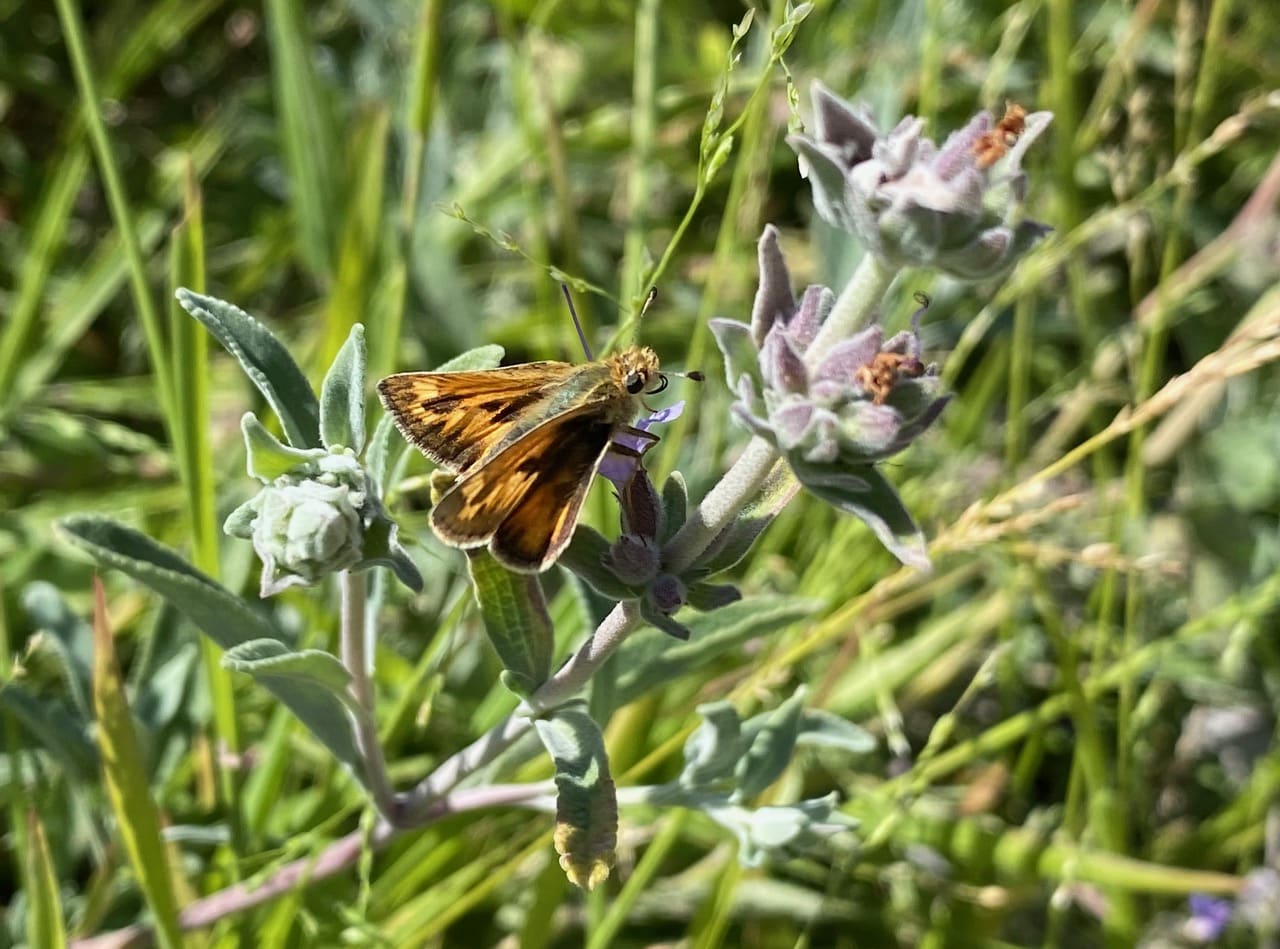
The same skipper flies to another spike of younger Salvia flowers, and begins to unroll its coiled proboscis under its head in anticipation of another nectar treat.
A tubular sucking organ, the proboscis enables a butterfly to extract sweet nectar from flowers, regardless of the shape of the blossom. When not in use, the proboscis is rolled up out of the way. Unlike caterpillars, adult butterflies do not have any chewing mouthparts, and therefore must obtain their nutrition from sipping liquids. Hydrostatic pressure extends the curled proboscis which is inserted deep into the tubes of flowers. At emergence from the chrysalis, the proboscis initially consists of two parts that appear like a forked tongue. Almost immediately the two tubes are “zipped” together to form the single tube. In addition to flower nectar, butterflies also use the proboscis to suck up moisture from puddles, liquids from fermenting fruits, rotting animal flesh or animal excrements.

Hey, there are two Sandhill Skippers on the same spike of Salvia flowers! Is this a courting pair?

The smaller skipper (male?) stays close, waiting politely on the lower whorl of flowers while the larger one continues to take nectar on the upper whorl.
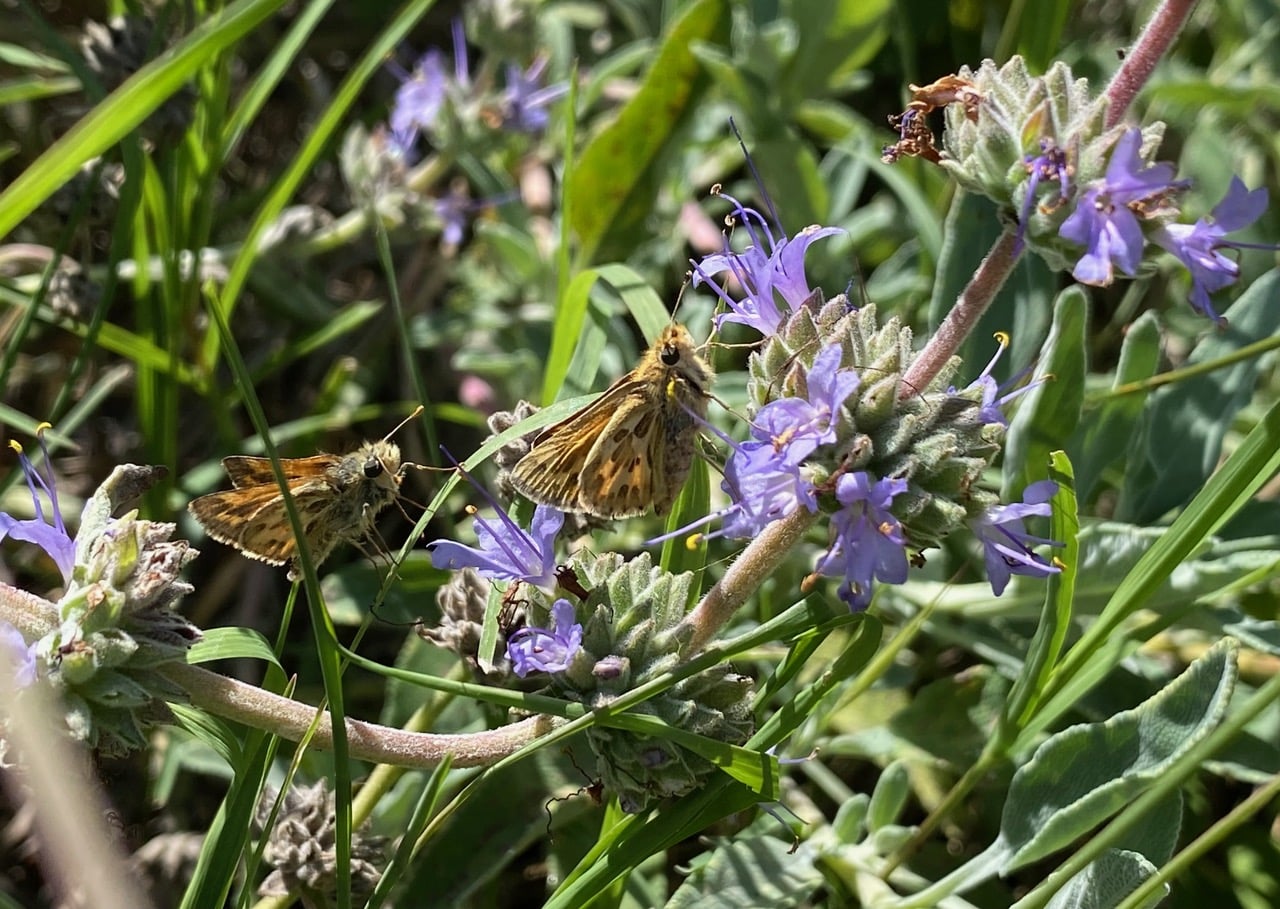
When the larger skipper flies to another spike of Salvia flowers, the smaller one follows faithfully, landing respectfully on a blade of grass close by.

Eventually the larger skipper closes its wings, and the smaller one behind it lifts off into the air. Has the female given her signal of rejection to the male? I can only guess, knowing little about the courtship etiquette of butterflies. Much of Lepidopteran courtship involves the release of pheromones, signaling chemicals which we can’t see. It’s fun to watch the interaction between the butterflies though.

The Bunchleaf Penstemon, Penstemon heterophyllus is blooming in profusion in the native garden.
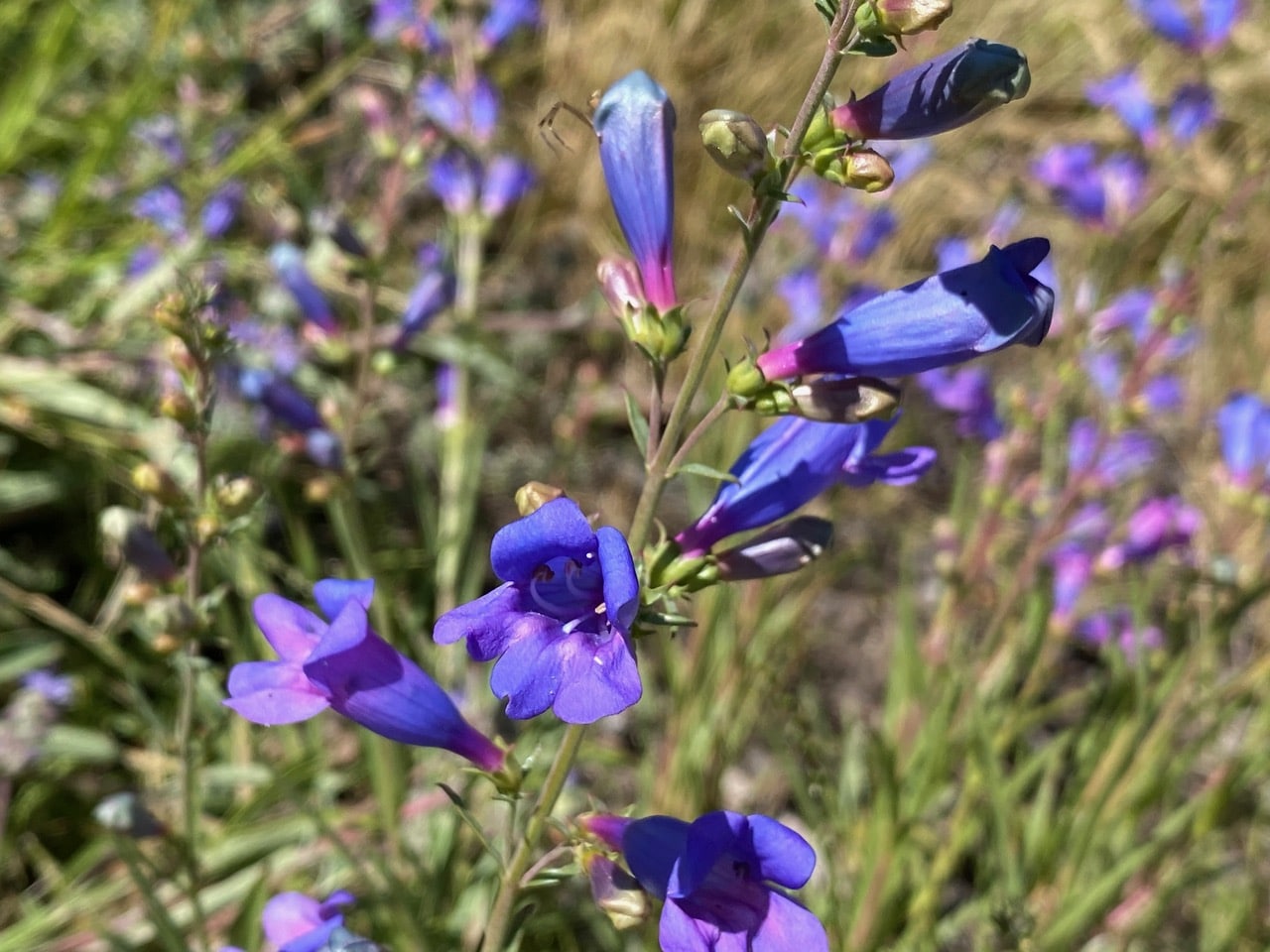
While trying to take a close-up picture of a Penstemon flower, I notice a Crab Spider on a bud above it. Do you see it?
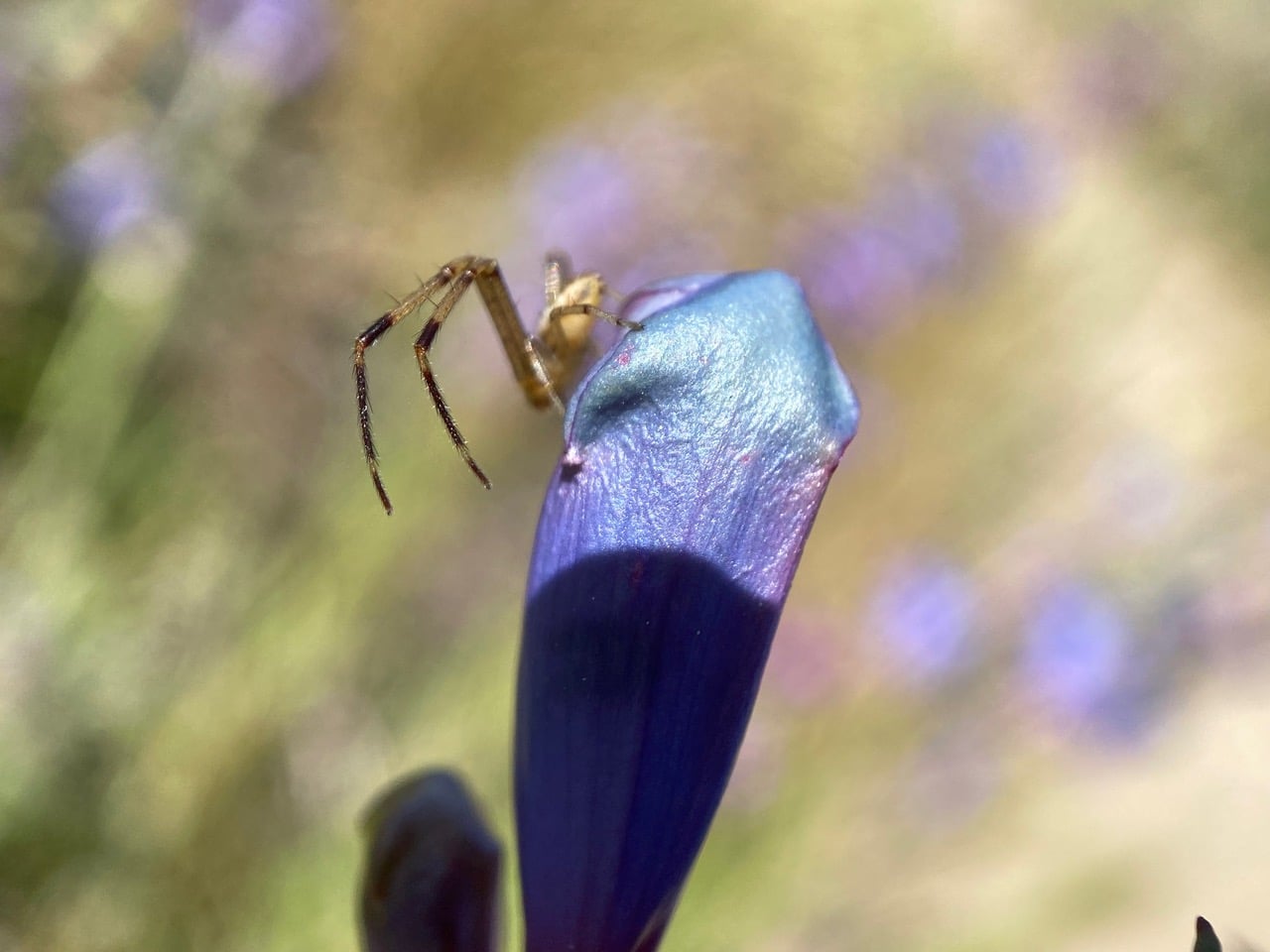
Those are the unmistakable long front legs of a male Crab Spider (family Thomisidae).
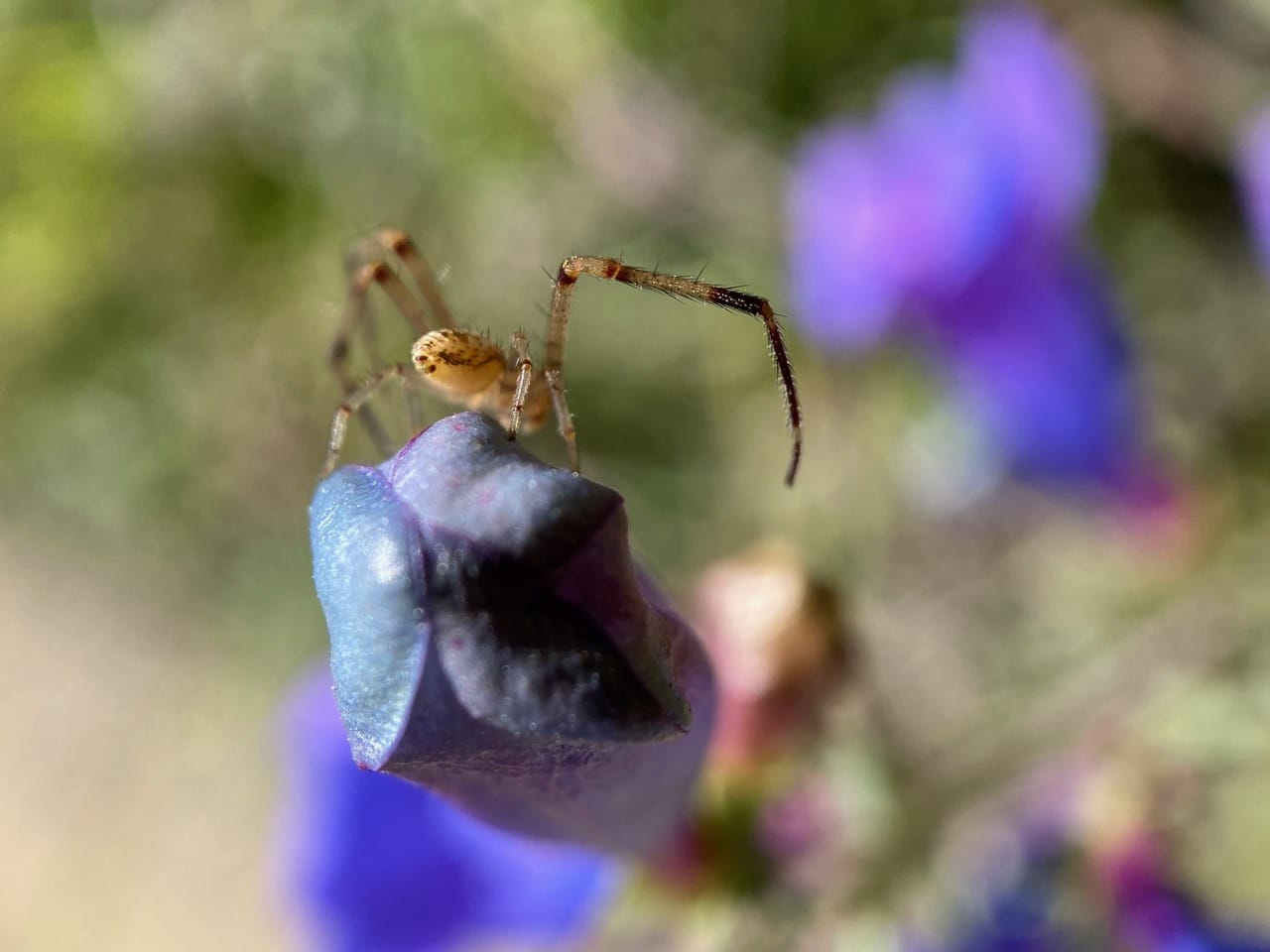
We are looking at the rear end of the male Crab Spider. He seems to be missing a right front leg.
Crab Spiders (family Thomisidae) are widely recognized for their crab-like appearance, side-to-side movement, and ambush hunting tactics, typically targeting pollinators like bees and flies. They do not build webs, but instead use camouflage to blend into flowers, bark, or foliage, often killing prey much larger than themselves. They have wide, flattened bodies with two pairs of long, strong front legs that are often held open to seize prey. As ambush predators, they wait motionless on flowers or vegetation for prey to arrive. Some species, such as the Goldenrod Crab Spider can change their color from white to yellow over several days to match their flower habitat.
Strong sexual dimorphism exists in the crab spiders, with females often 2-10 times larger than males. The males are darker, and more active than their female counterparts. They are characterized by long front legs for hunting and large, prominent pedipalps (“boxing gloves”) for mating. Unlike females, they do not change color to match flowers, as they roam vegetation searching for mates rather than lying in ambush. They travel across vegetation to locate mates by following silk draglines left by the females. Males are short-lived compared to females. While some may eat nectar or pollen when prey is scarce, they primarily feed on small insects.
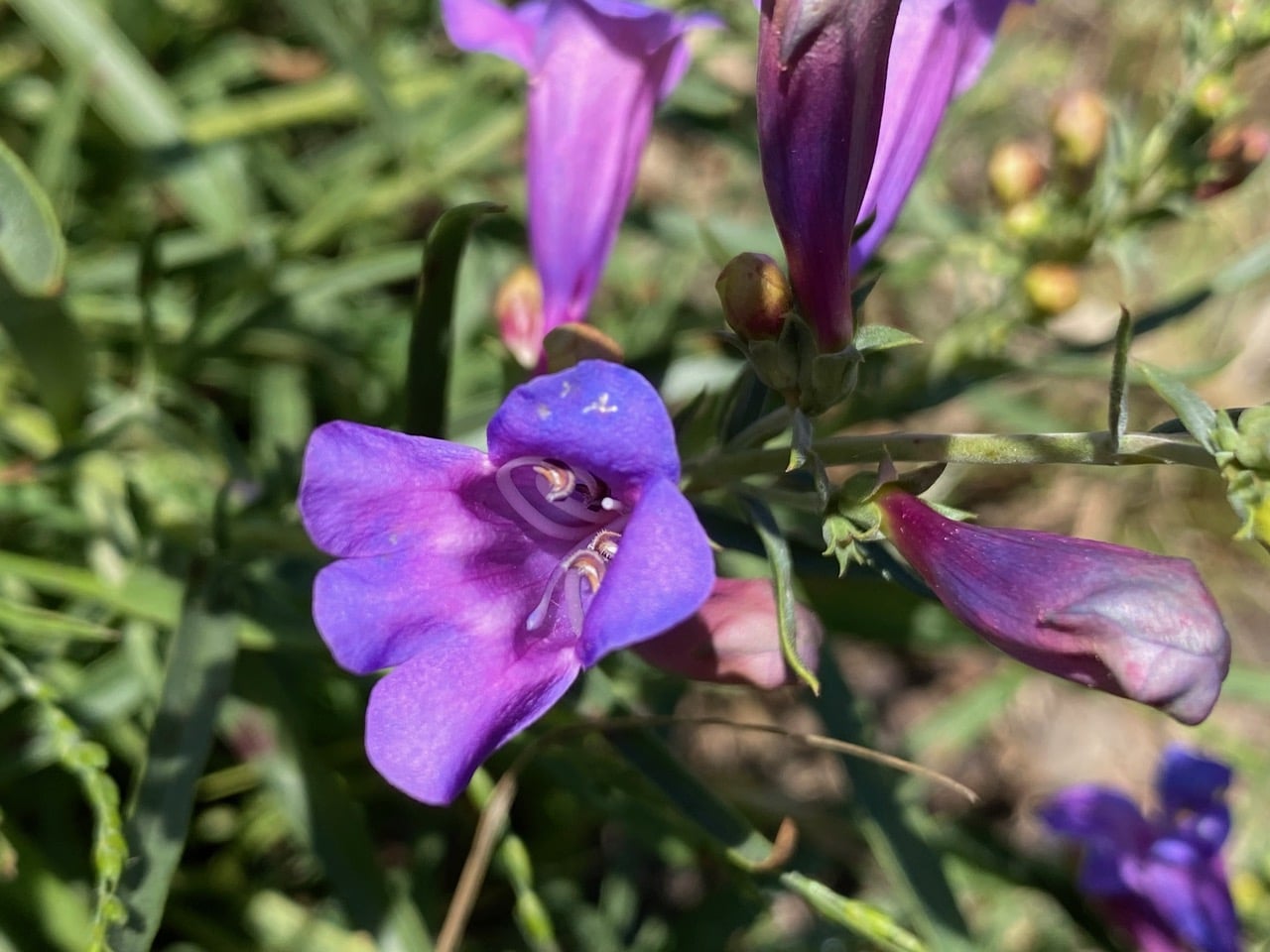 Penstemon flowers are tubular, two-lipped (bilabial) structures, typically featuring a 2-lobed upper lip and a 3-lobed lower lip that acts as a landing pad for pollinators. They are characterized by five stamens: four fertile ones that produce pollen and a prominent, often hairy, fifth sterile stamen known as the staminode or “beardtongue”. The arrangement of the floral parts is thought to prevent nectar theft by small insects that cannot reach deep into the tube.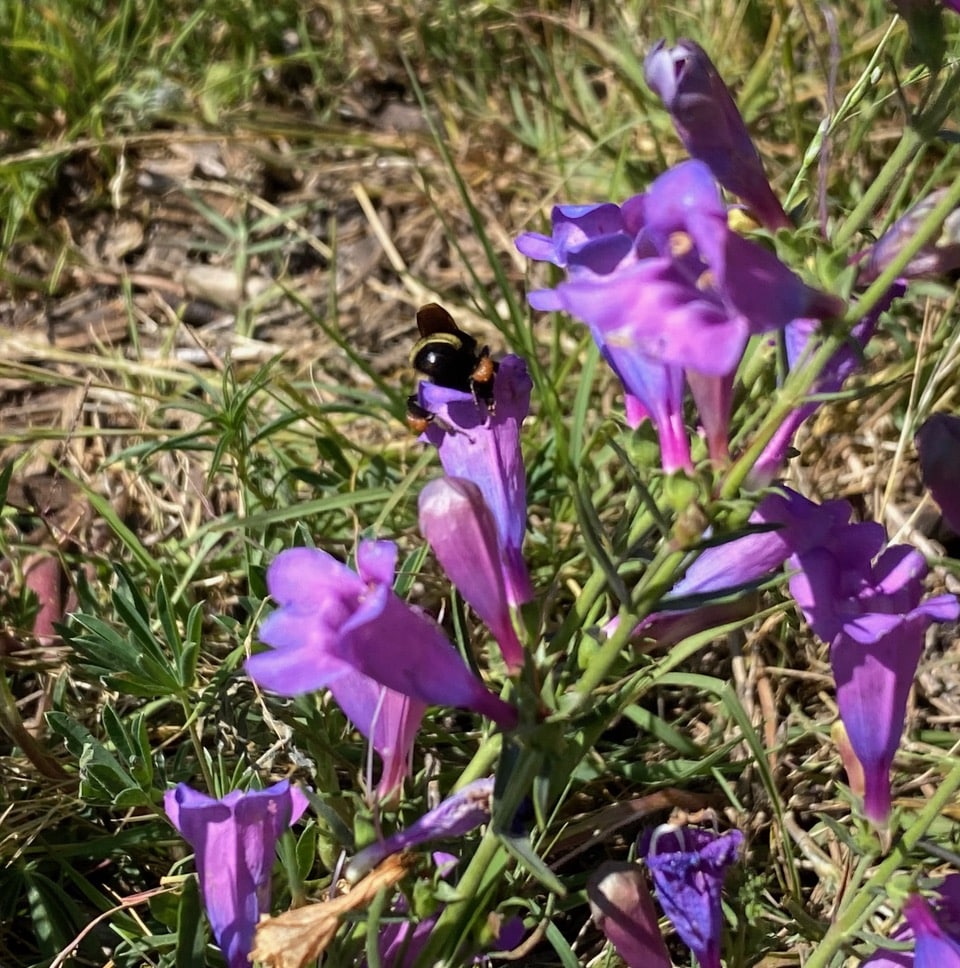
A Yellow-faced Bumble Bee, subgenus Pyrobombus (genus Bombus, family Apidae) has its rear end sticking out of the Penstemon flower while reaching for nectar at the base of the flower. Bumble bees have long tongues, so the bee might not have to enter the floral tube to access nectar.

Here’s another Yellow-faced Bumble Bee hanging upside down at the entrance of the Penstemon flower to reach the nectar inside. The head of the bee probably makes contact with the reproductive structures in the corolla, effectively pollinating the flowers. Some smaller worker bees can actually enter the floral tubes. I often hear a high-pitched buzz as the bee enters the flower – it is probably sonicating the anthers to shake loose the pollen.