

Pollinator Post 4/6/24
 Another cold morning sends me racing to the little park across from the Steam Train parking lot before the Mining Bees wake up. The sun is casting long shadows over the grassy slope as I approach the spot. The temperature gauge of my car registers 41F.
All seems to be silent as I scan each patch of buttercups. What happened to all the Mining Bees (family Andrenidae) that I saw on these flowers yesterday? Don’t the males sleep on the flowers?
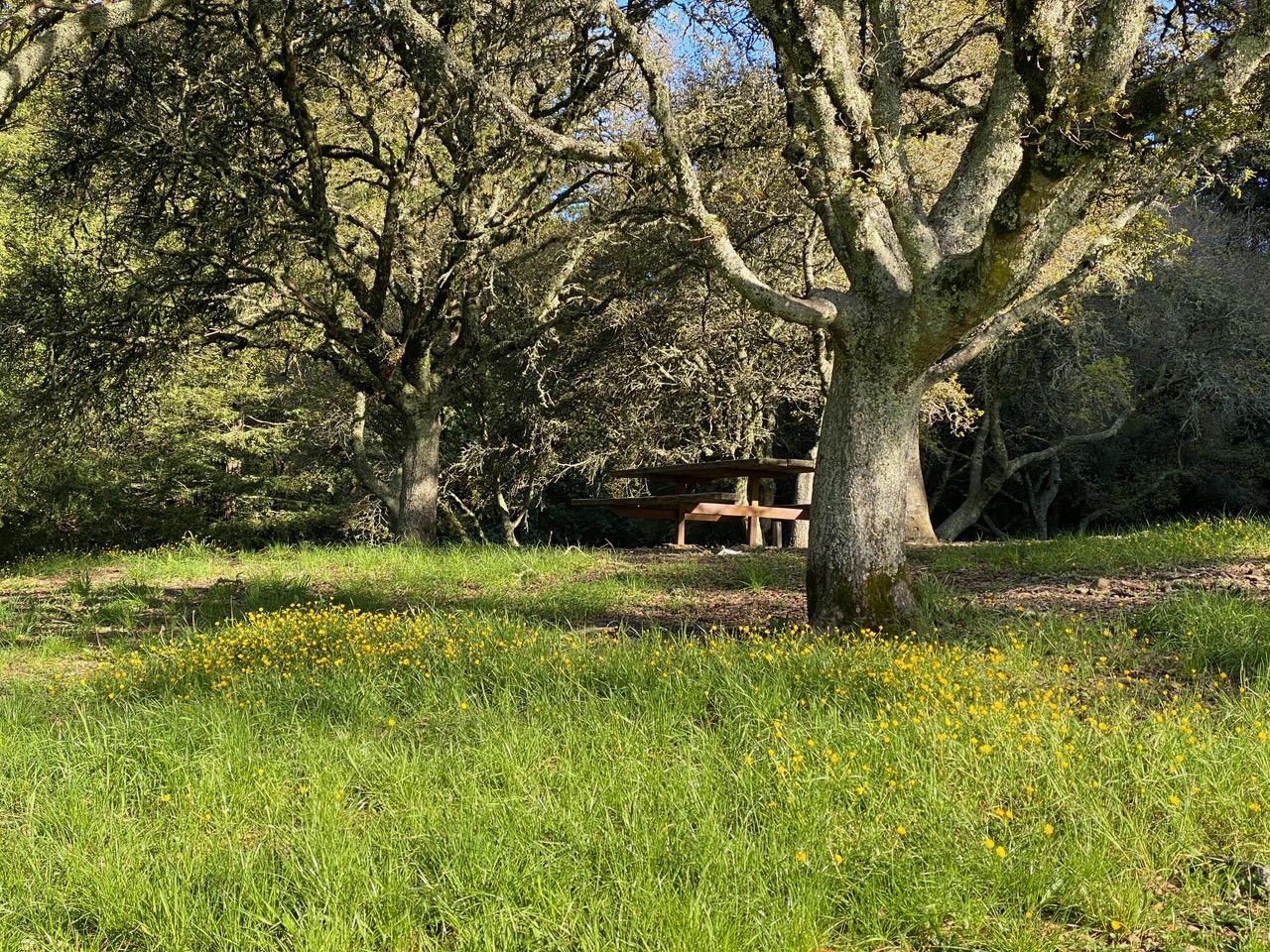
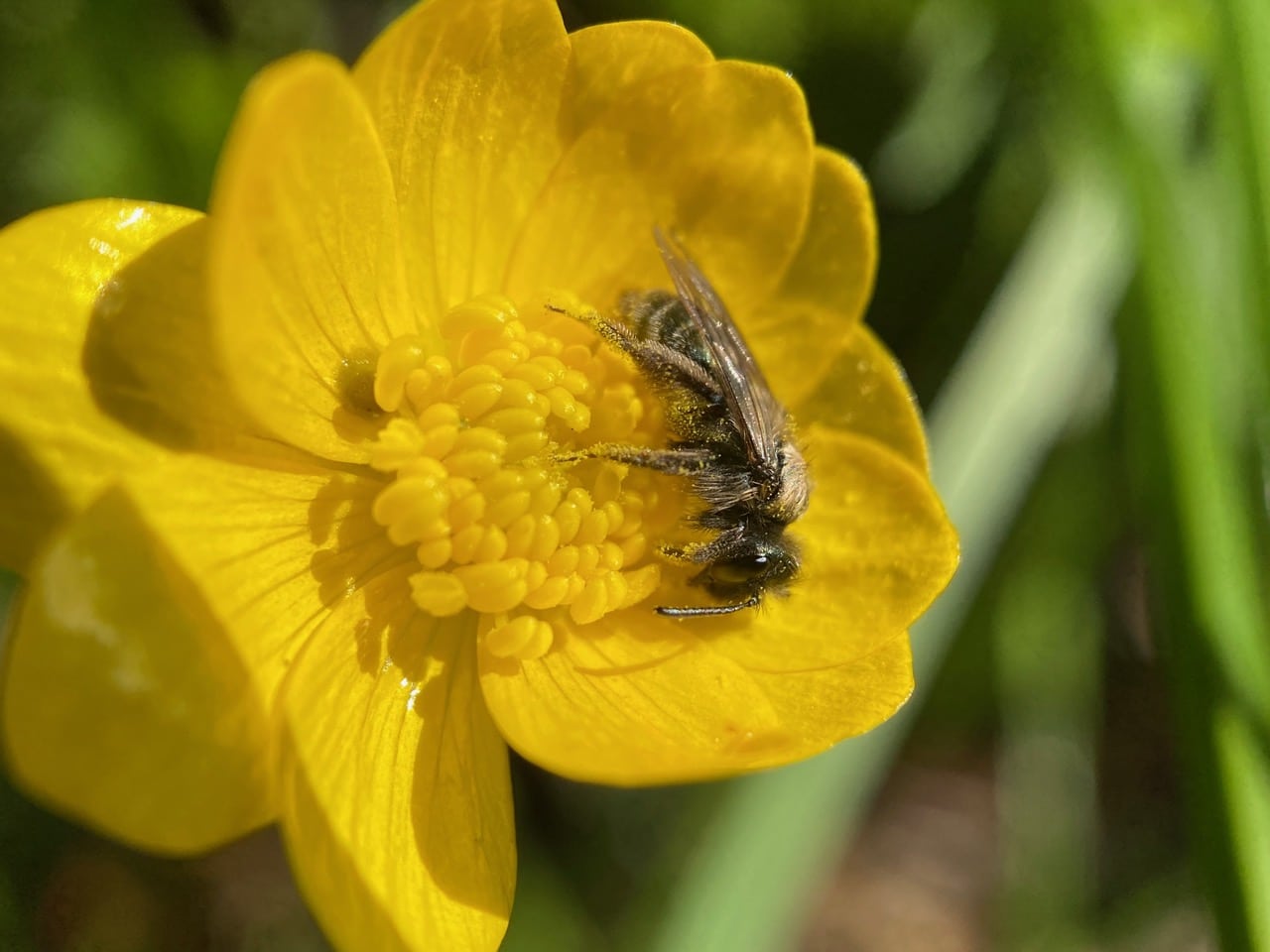
Finally, under an oak tree already illuminated by the low sun, I find a sleeping bee on a flower facing the east.

But it is not what I have expected – it is a female! I thought female solitary bees sleep in the nests that they construct, while the males (who do not build nests) sleep out in the open, often on vegetation?
Ah, what about newly emerged females who haven’t constructed any nests yet?
Note that the female bee is stouter than the males we have encountered. Her hindlegs are covered with a brush of long hairs, a structure called the scopa used for collecting pollen.
8:59 am As I watch, the bee lifts her head. She’s waking up! Note her short antennae, as compared to the males’.
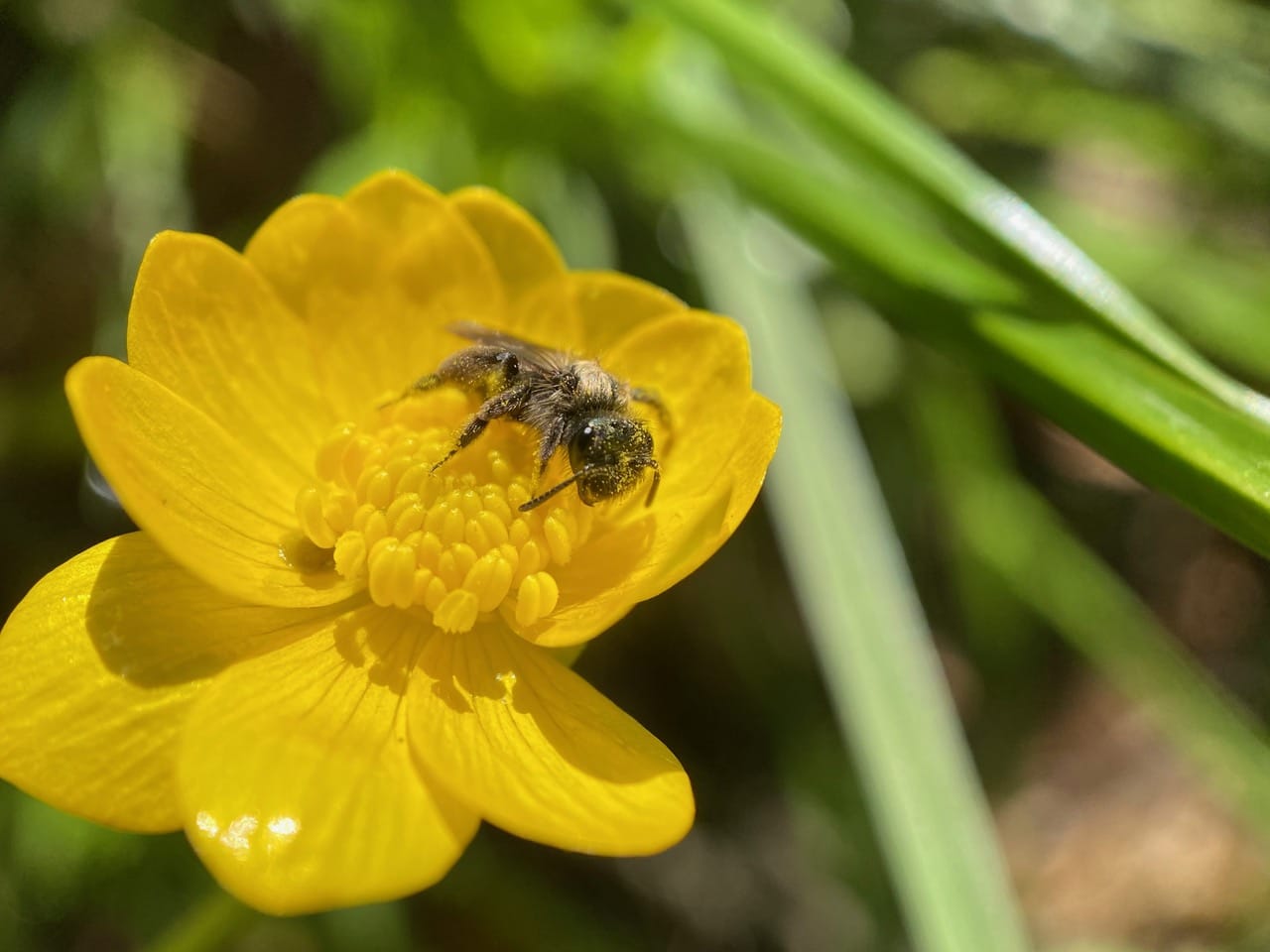
Her movements are slow and labored.
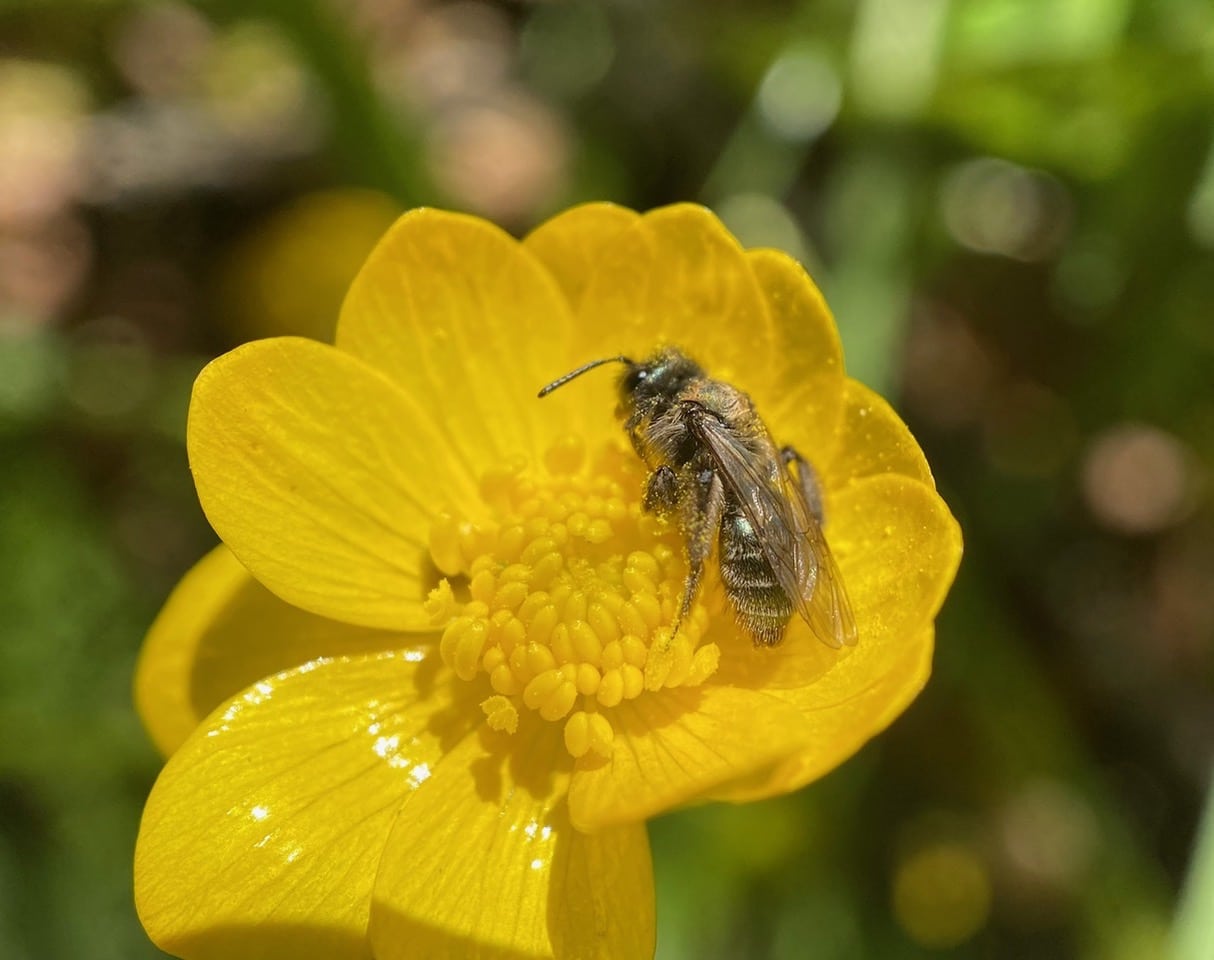
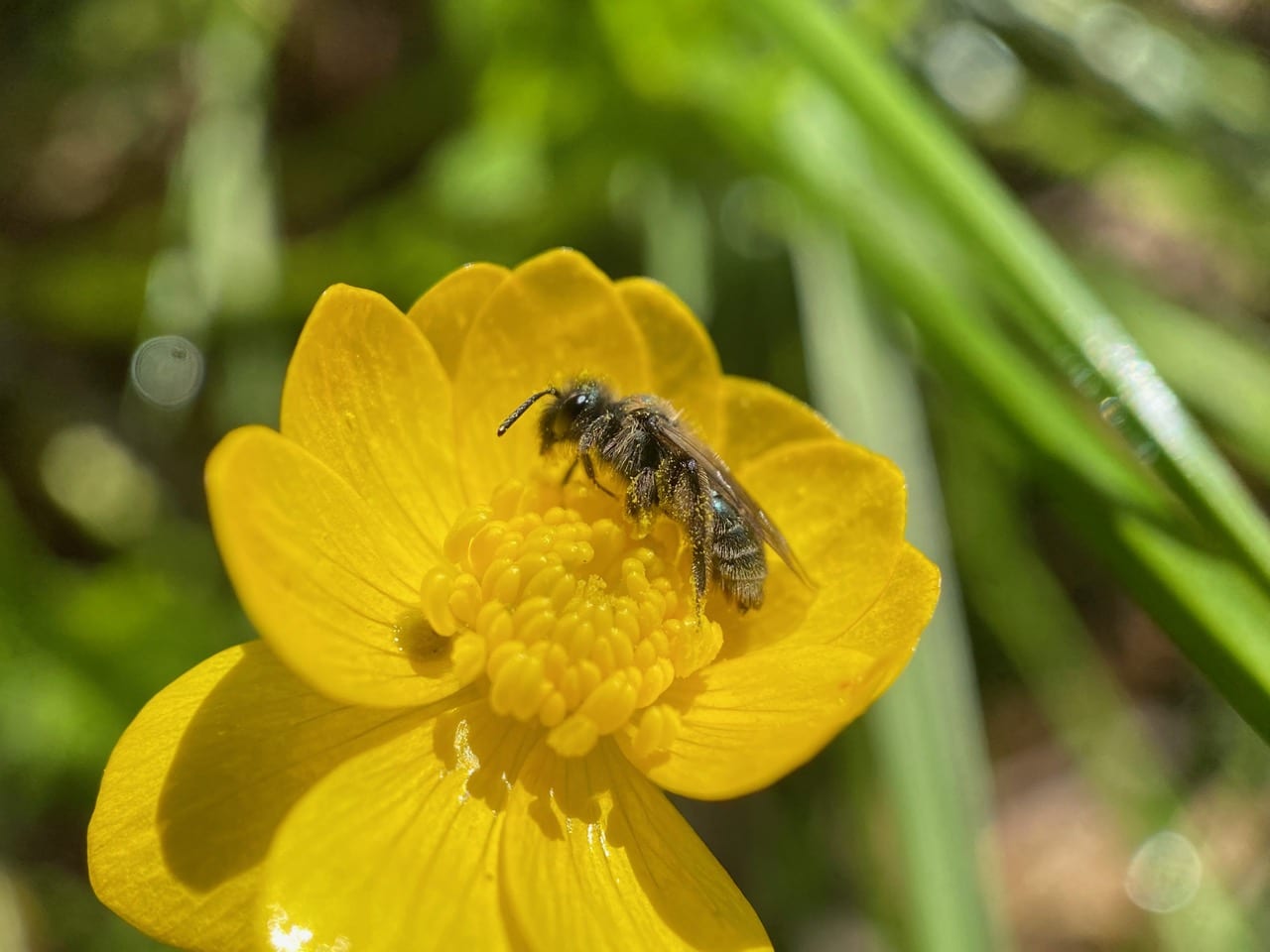
Then the bee starts to groom herself. The video camera rolls.
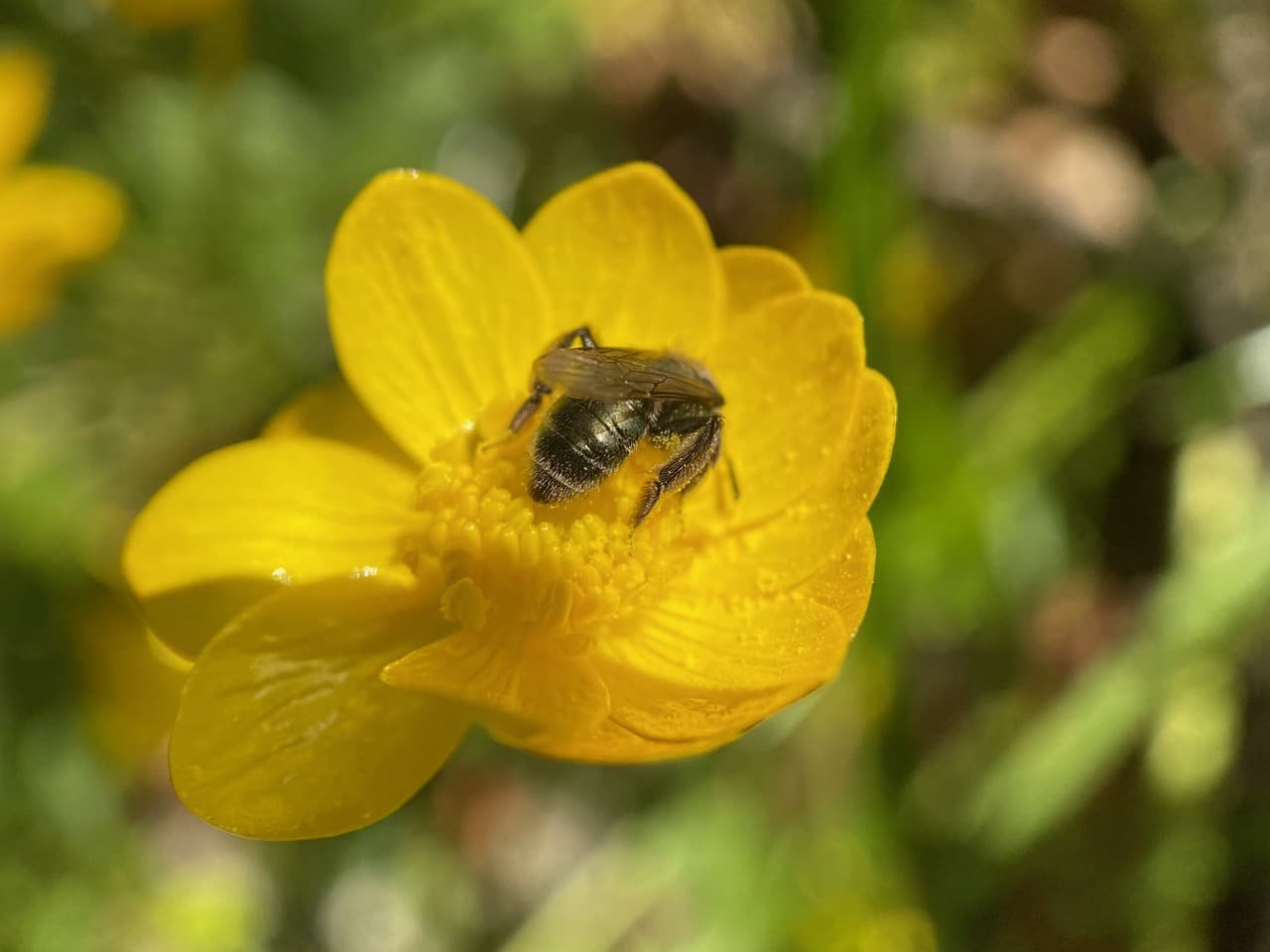
Turning around, the bee probes for nectar at the base of a petal.
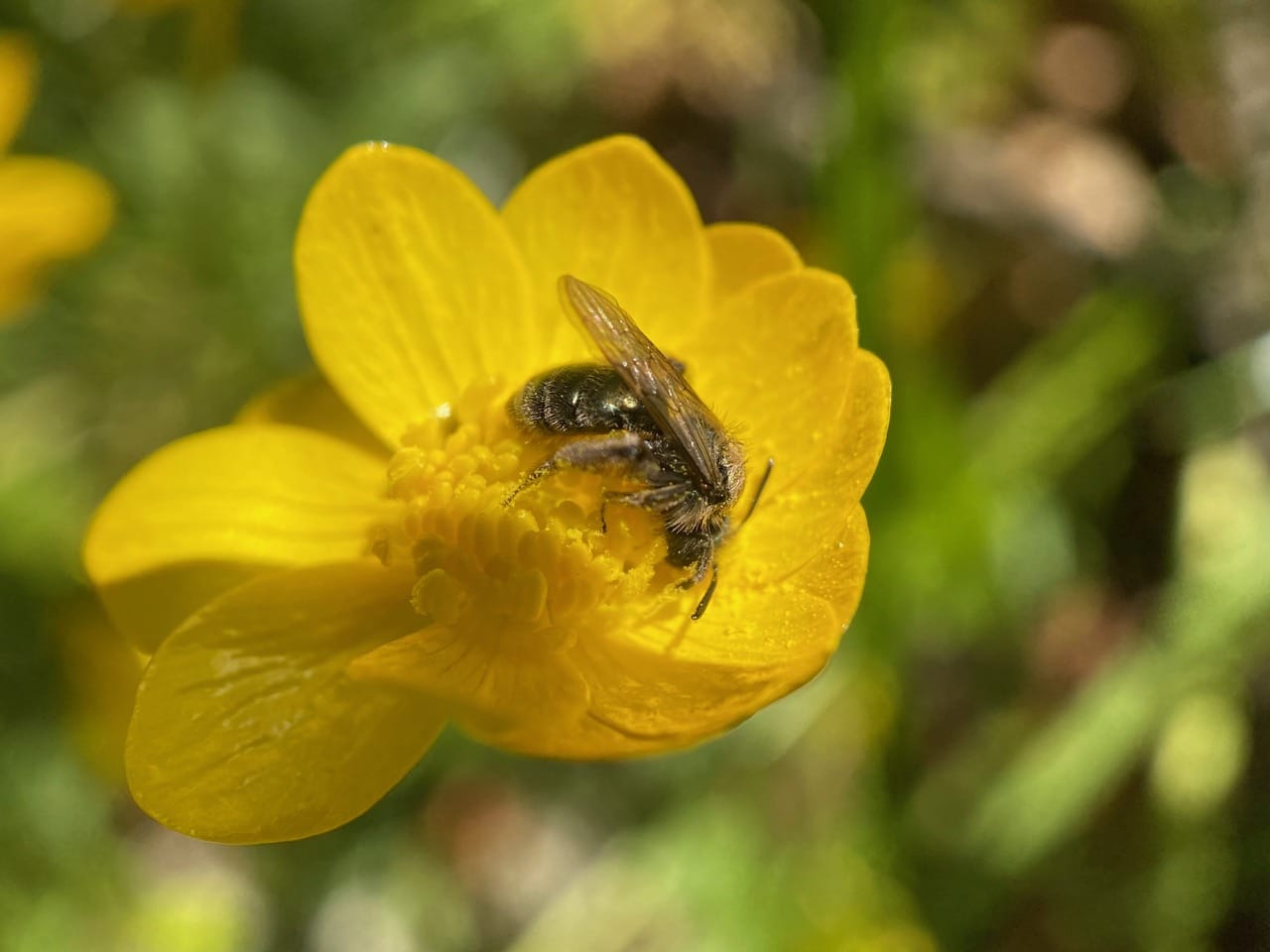
Then another petal.

Ah, I finally figure out what that beige-colored mass on the bee’s thorax is. It is probably a collection of adpressed hairs that have yet to be erected. Maybe this is the way young bees emerge from their pupae?
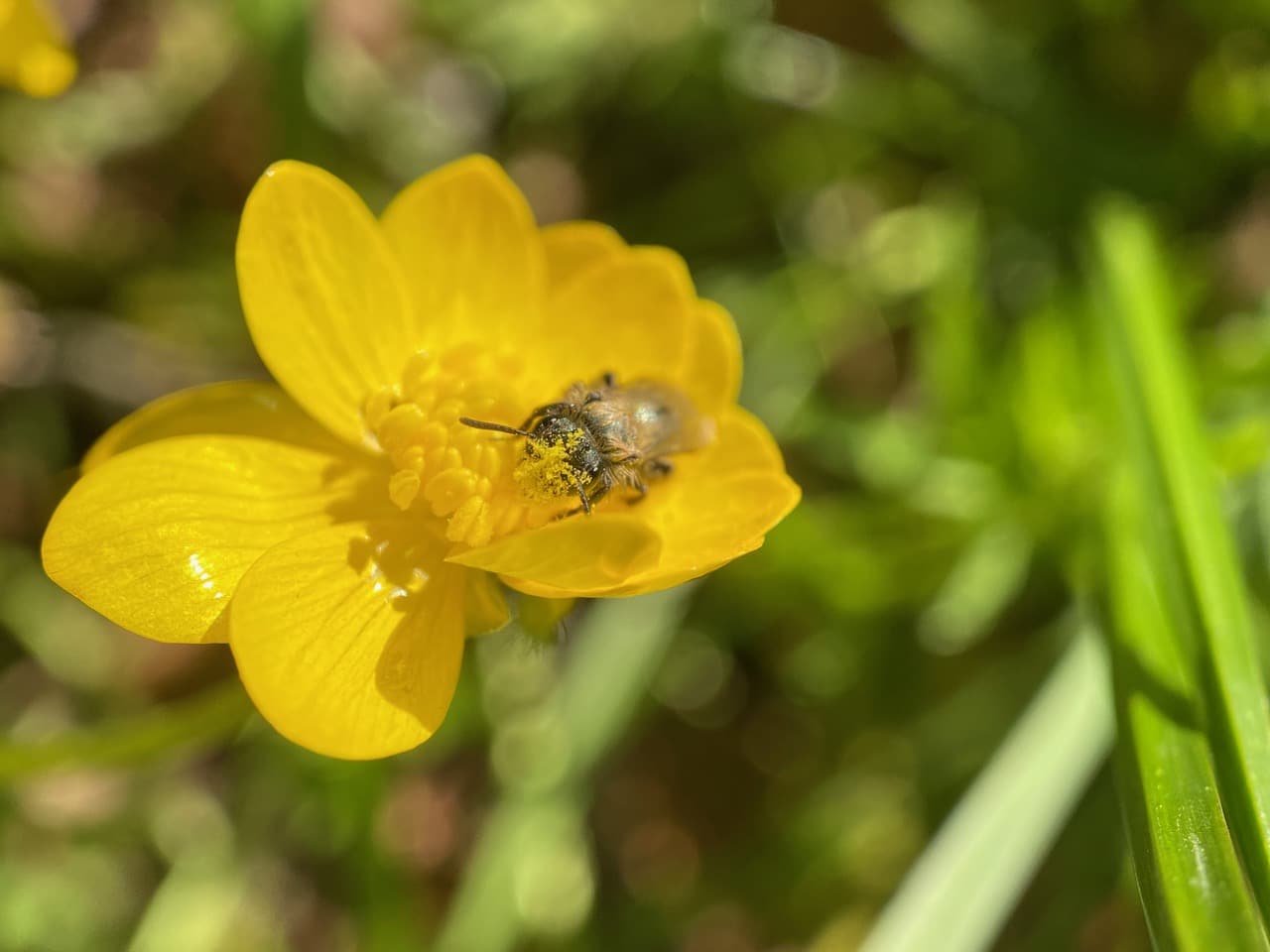
When the bee lifts her head, her face is covered with sticky pollen.
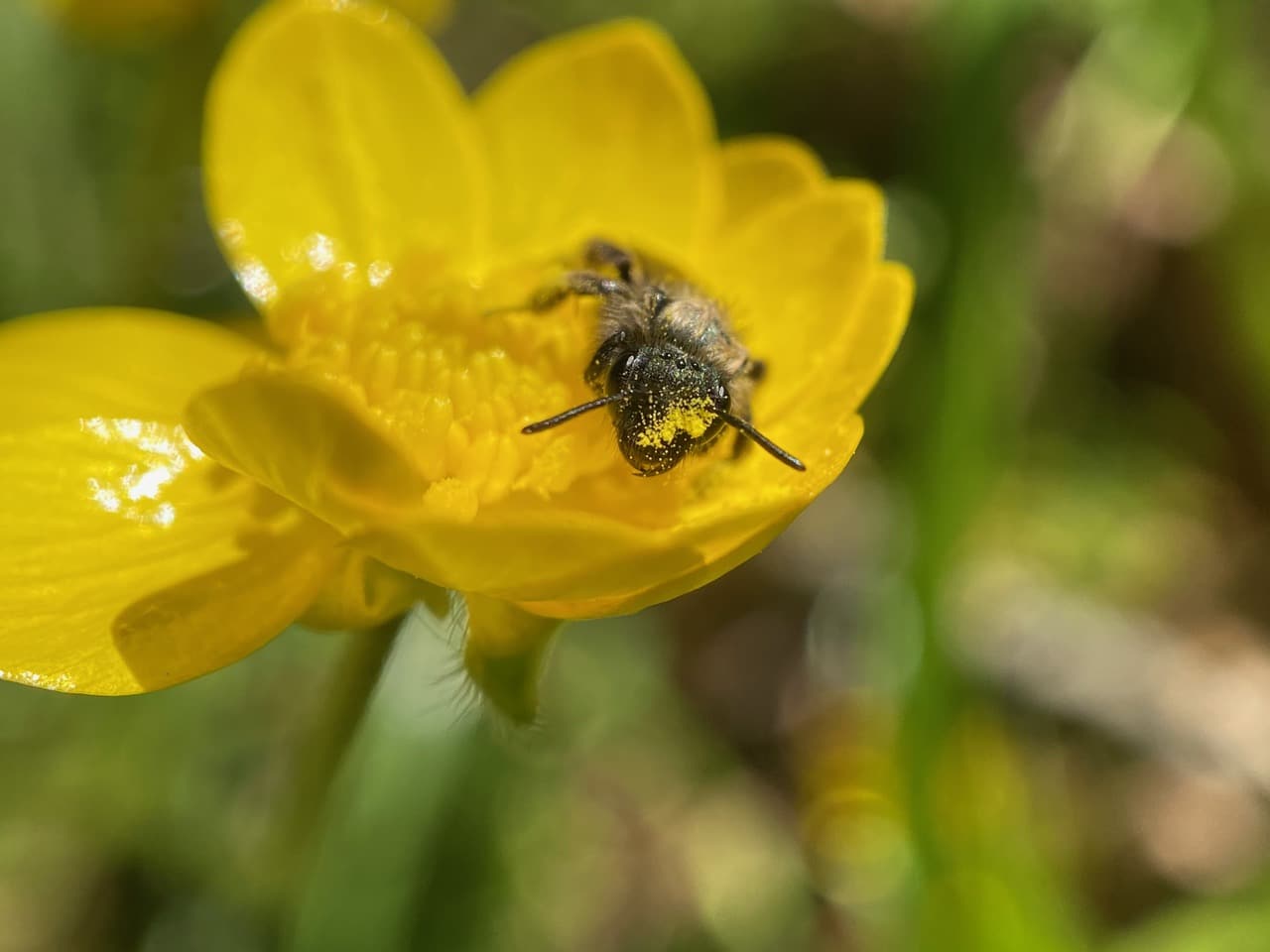
Ah, much better after wiping her face with her front legs. iNaturalist has confirmed that she indeed belongs to the genus Andrena (family Andrenidae)

After that bout of activity, the female Andrena settles down again, not moving at all.

I look around to see who else might be foraging on the California Buttercup flowers. Walking out from the stamens of a flower, a Hybotid Dance Fly (family Hybotidae) has sticky pollen stuck to its wings and antennae. It makes a lengthy attempt to clean off the pollen before flying away.
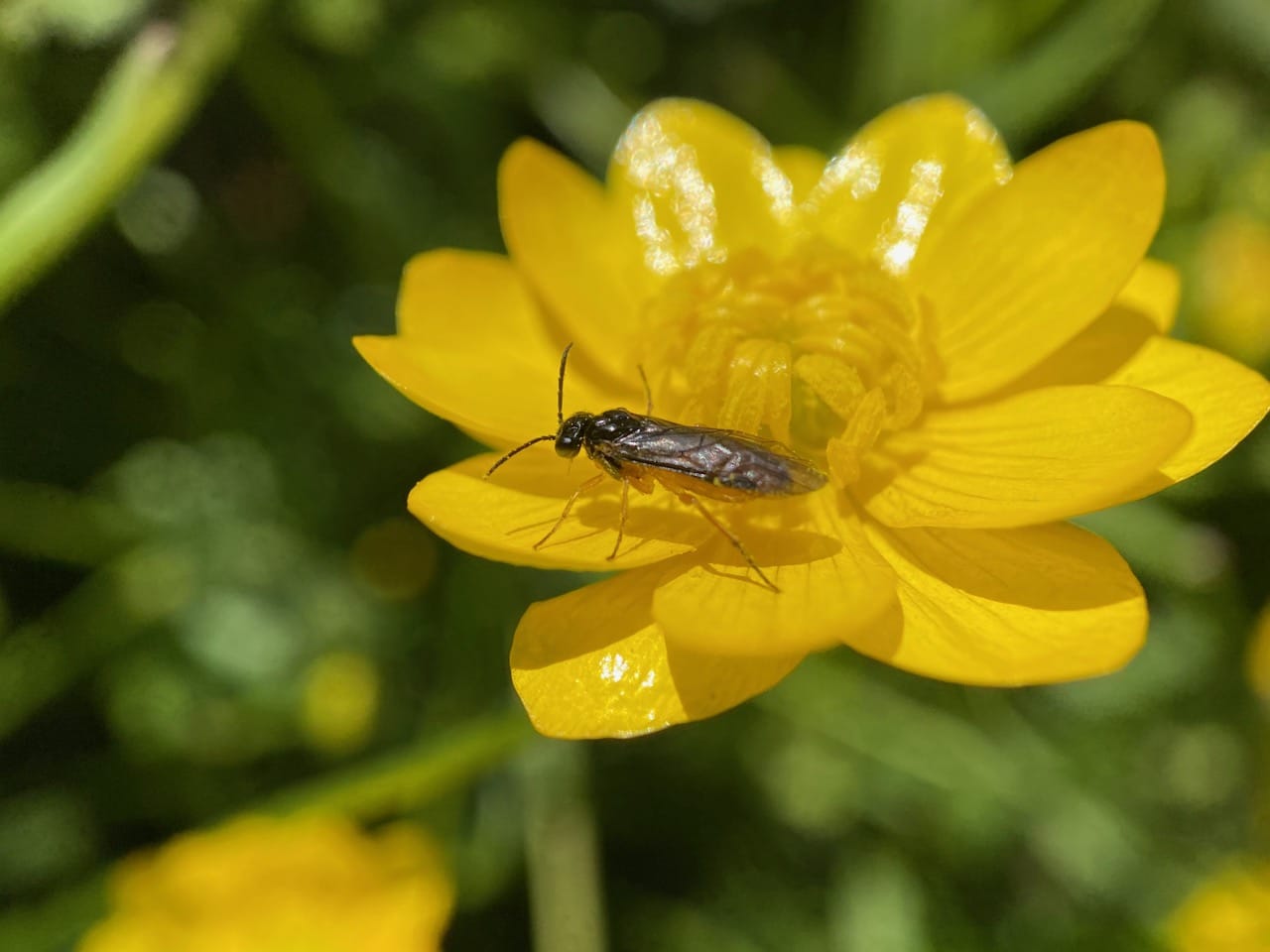 There’s a wasp-like insect with dark smokey wings on that flower.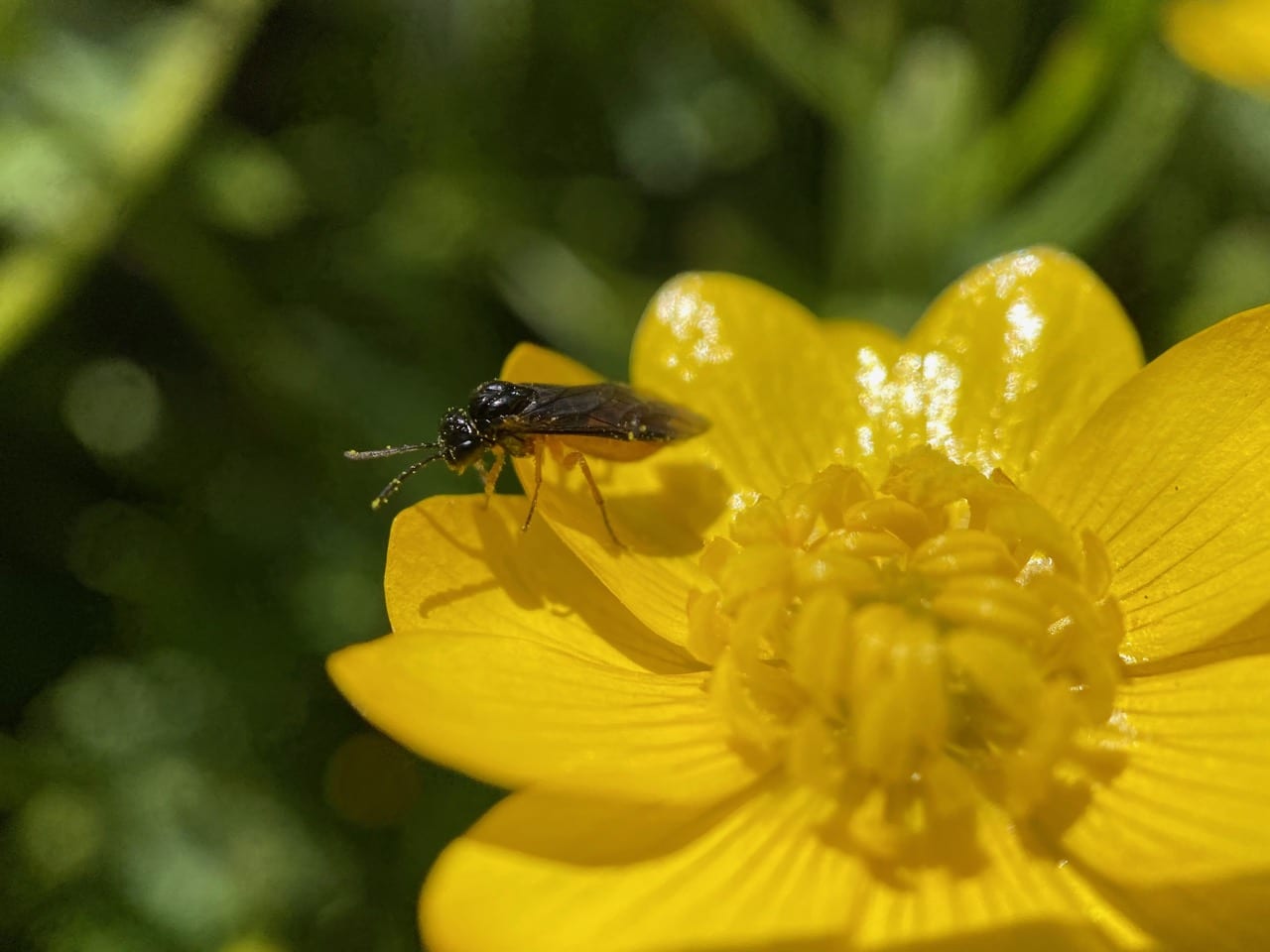
It too has pollen on its antennae.
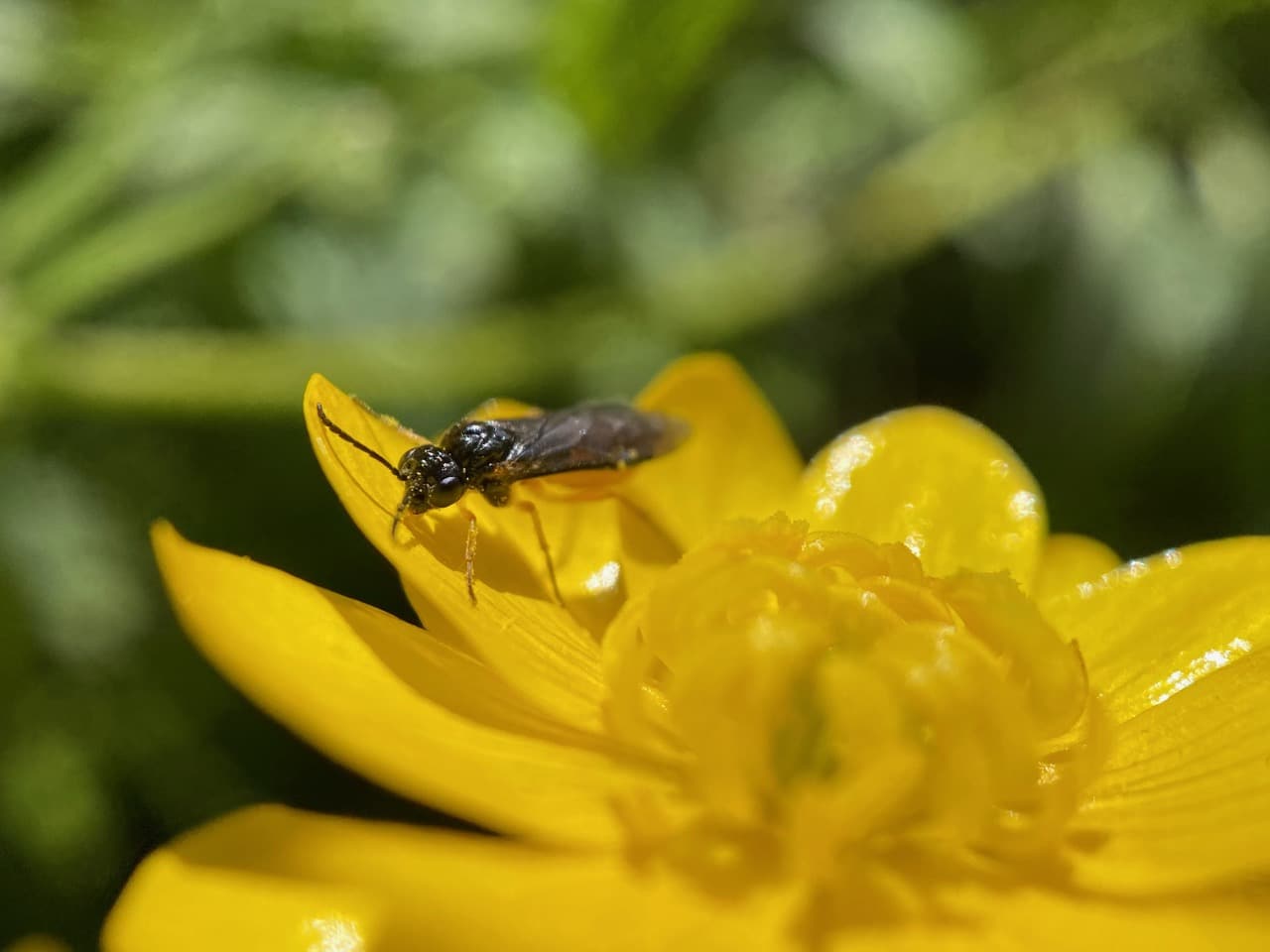
iNaturalist has helped identify the insect as the Bedstraw Sawfly, Halidamia affinis (family Tenthredinidae).
Sawflies are part of the insect order, Hymenoptera, together with bees, wasps and ants. They are considered to be the most primitive group and form the sub-order Symphyta. They differ from the bees, wasps and ants in not having a narrow ‘waist’ and in their wing venation. The common name comes from the saw-like ovipositor that the females use to cut into plant tissues to lay their eggs. Larvae are caterpillar-like and can be distinguished from lepidopteran caterpillars in that all body segments following the three bearing true legs have a pair of fleshy prolegs. Like the lepidopteran caterpillars, sawfly larvae walk about and eat foliage. In many species, the larvae feed in groups.
The Bedstraw Sawfly is native to Europe, but is now found throughout much of the US. Larvae feed on Bedstraw, Galium sp. The sawfly is parthenogenetic in the northern part of its range, reproducing without males.
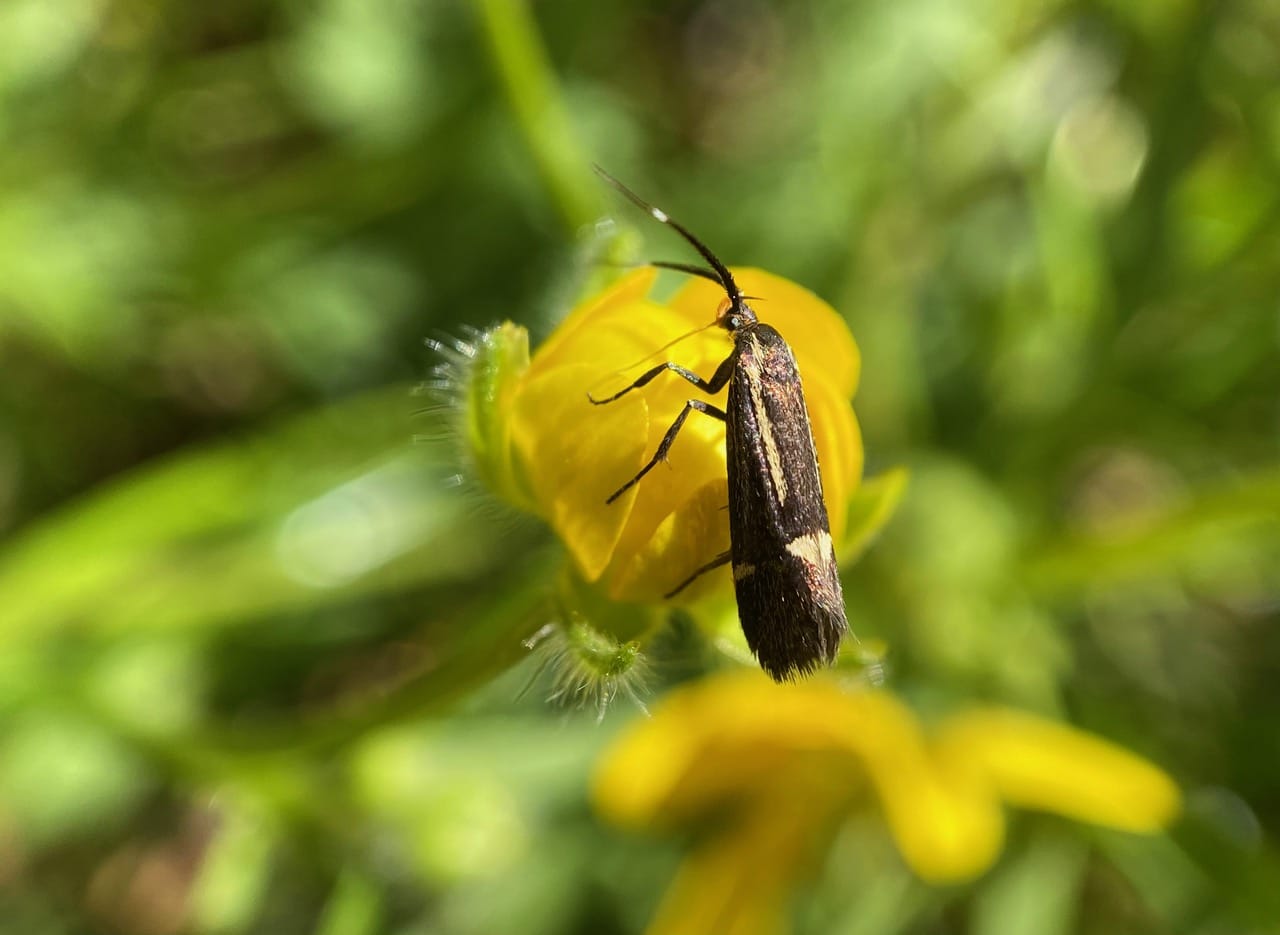 Its iridescent scales flashing in the sun, a small day-active moth, Sulphur Tubic, Esperia sulphurella (family Oecophoridae, or concealer moths) is taking nectar from a flower of a California Buttercup that is not even fully open. Note that its proboscis is not aimed at the center of the flower, but at the base of a petal where a nectary is located. How do these insects know where the hidden nectar is? By smell?
Front view of the Sulphur Tubic, Esperia sulphurella (family Oecophoridae, or concealer moths).
The species is native to Europe, but has been introduced in California. Adults have a body length of 6-8 mm, are black with yellow markings. They are on wing in spring. Larvae are black and feed on dead wood.

Dorsal view of the Sulphur Tubic. What elegant design and magnificent antennae!

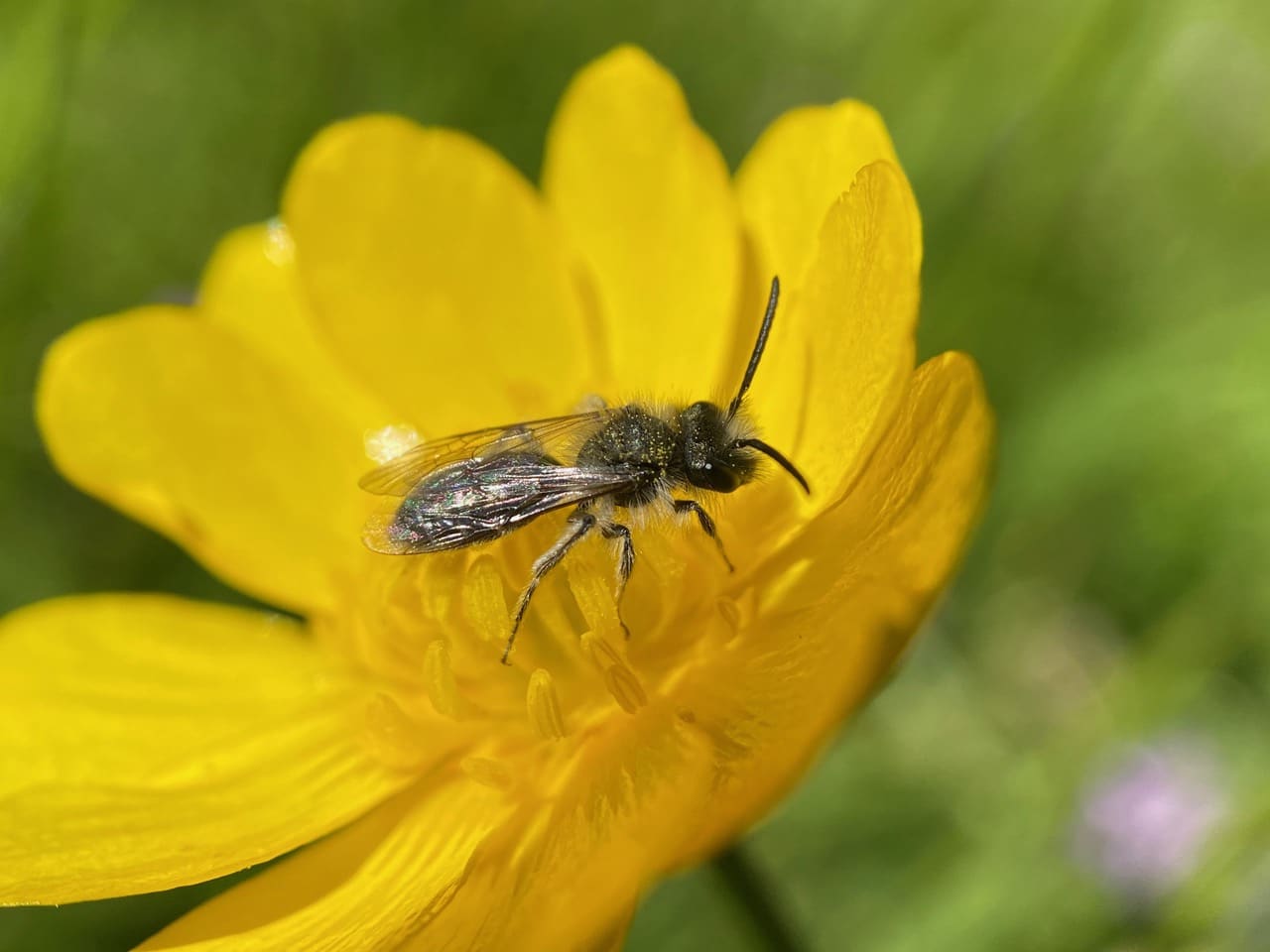
Close to 10 am I walk out onto the gentle slopes now in full sun, although the temperature is still in the 40s F. Some male Mining Bees (family Andrenidae) are already visiting the small patches of California Buttercups here. I walk from patch to patch, taking random pictures of the bees in their full glory.

They seem to be all males, and their numbers on the flowers seem to increase by the minute. Where do they come from?
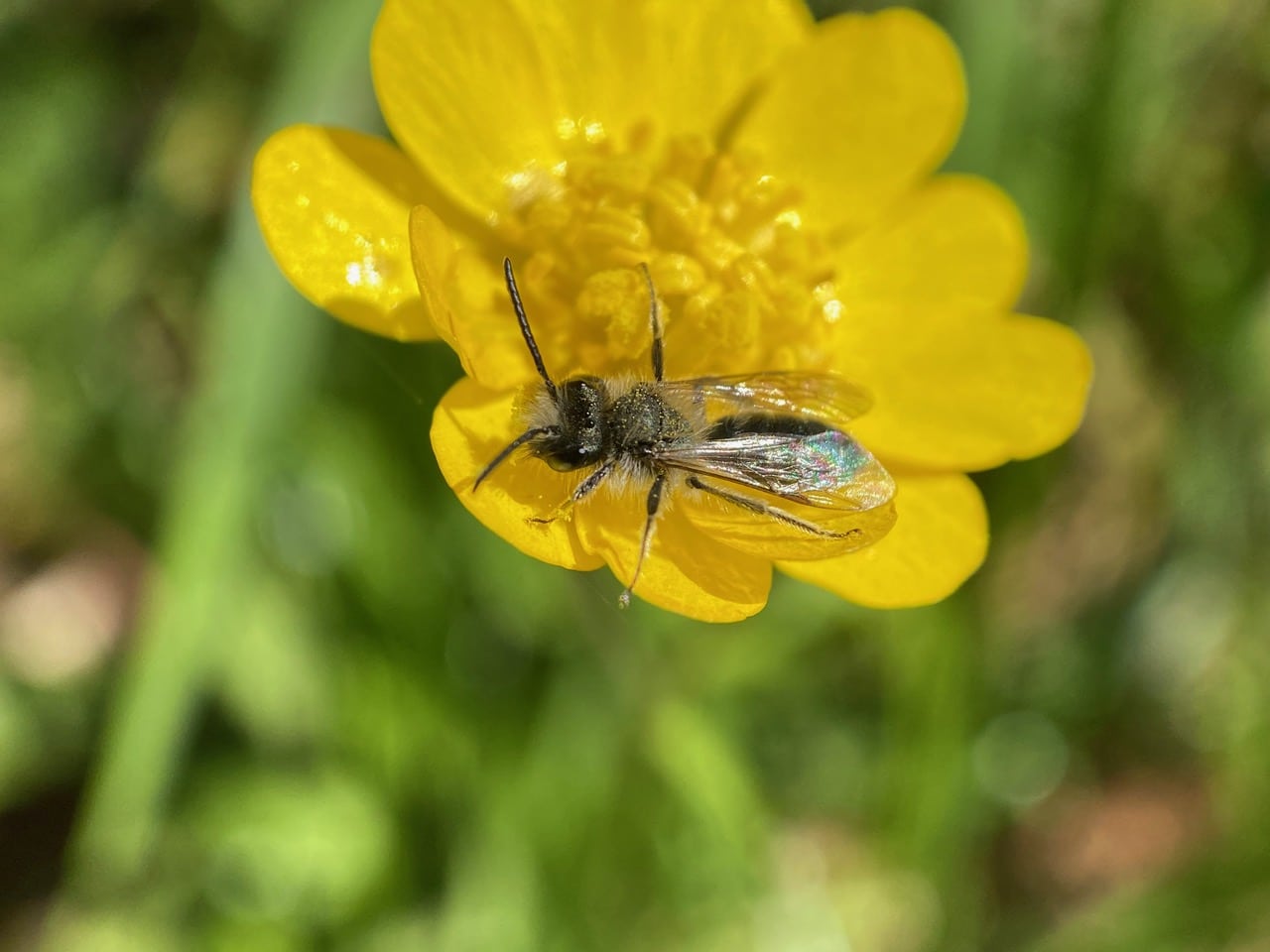
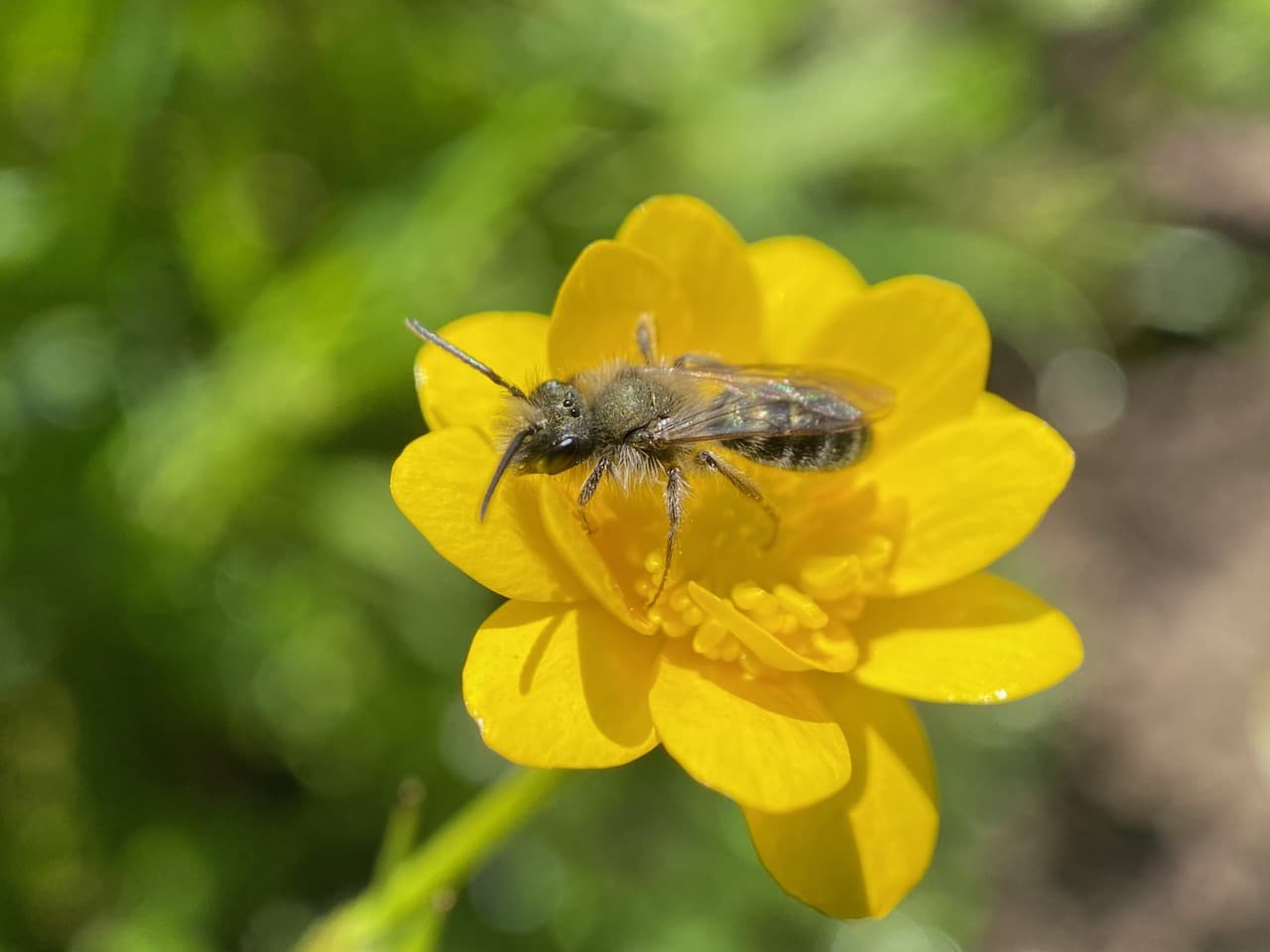
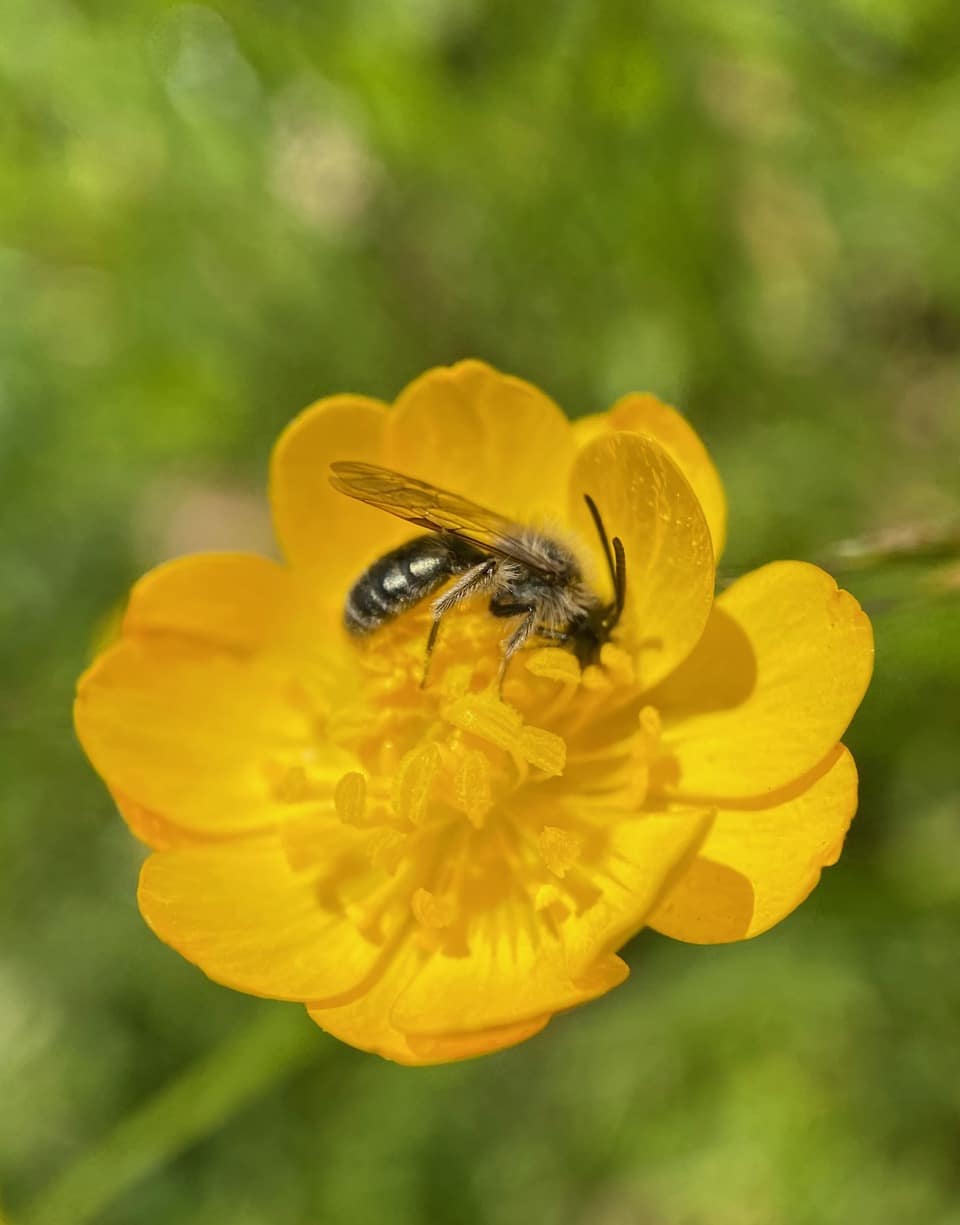
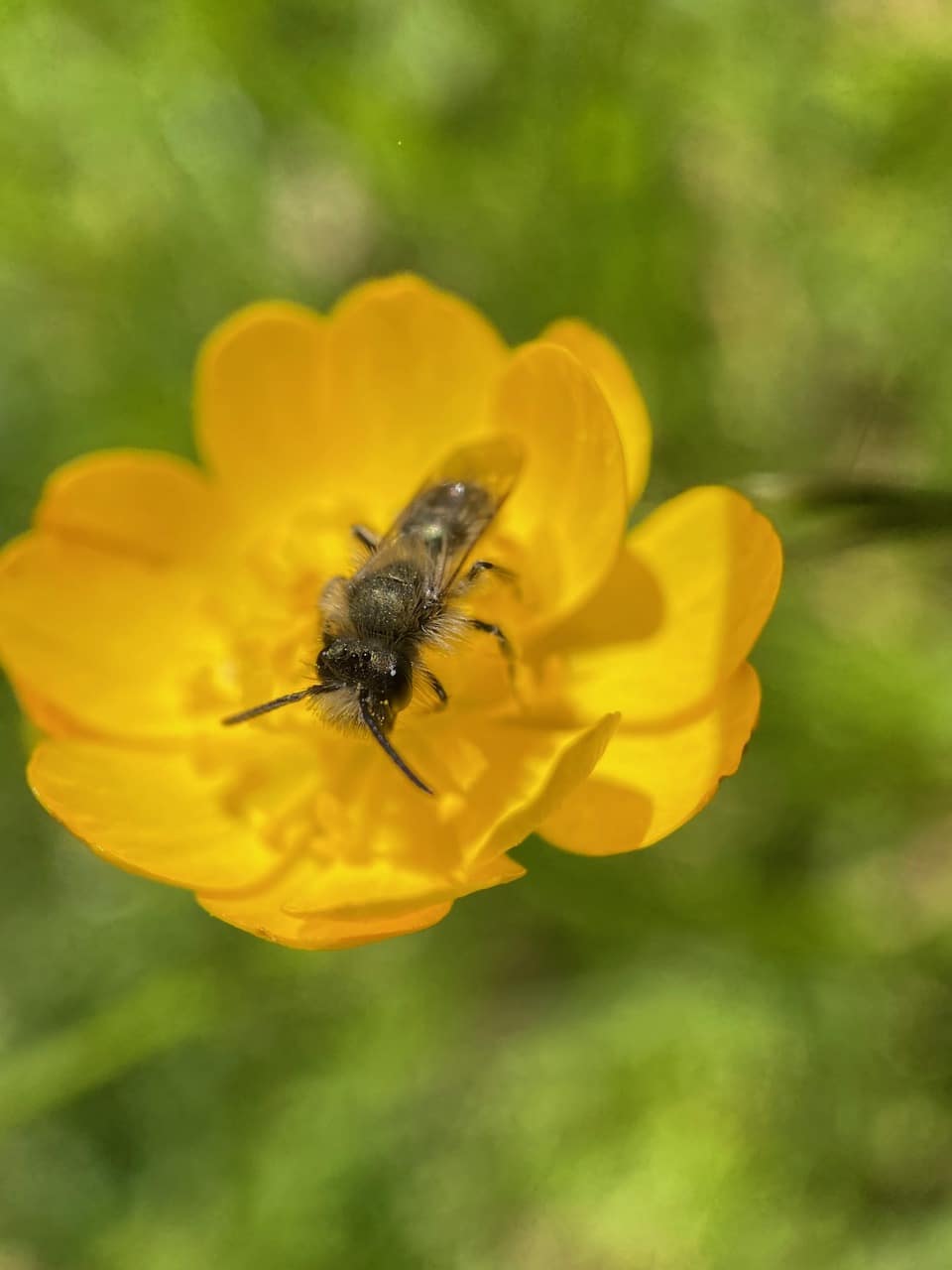

Note that the male has no scopae on his hindlegs, his slimmer build, and his long antennae. The antennae of male bees are often much longer than their female counterparts. Male antennae have an extra segment and the segments themselves are longer. This is because male antennae are specialized to pick up the subtle scent of female pheromones.
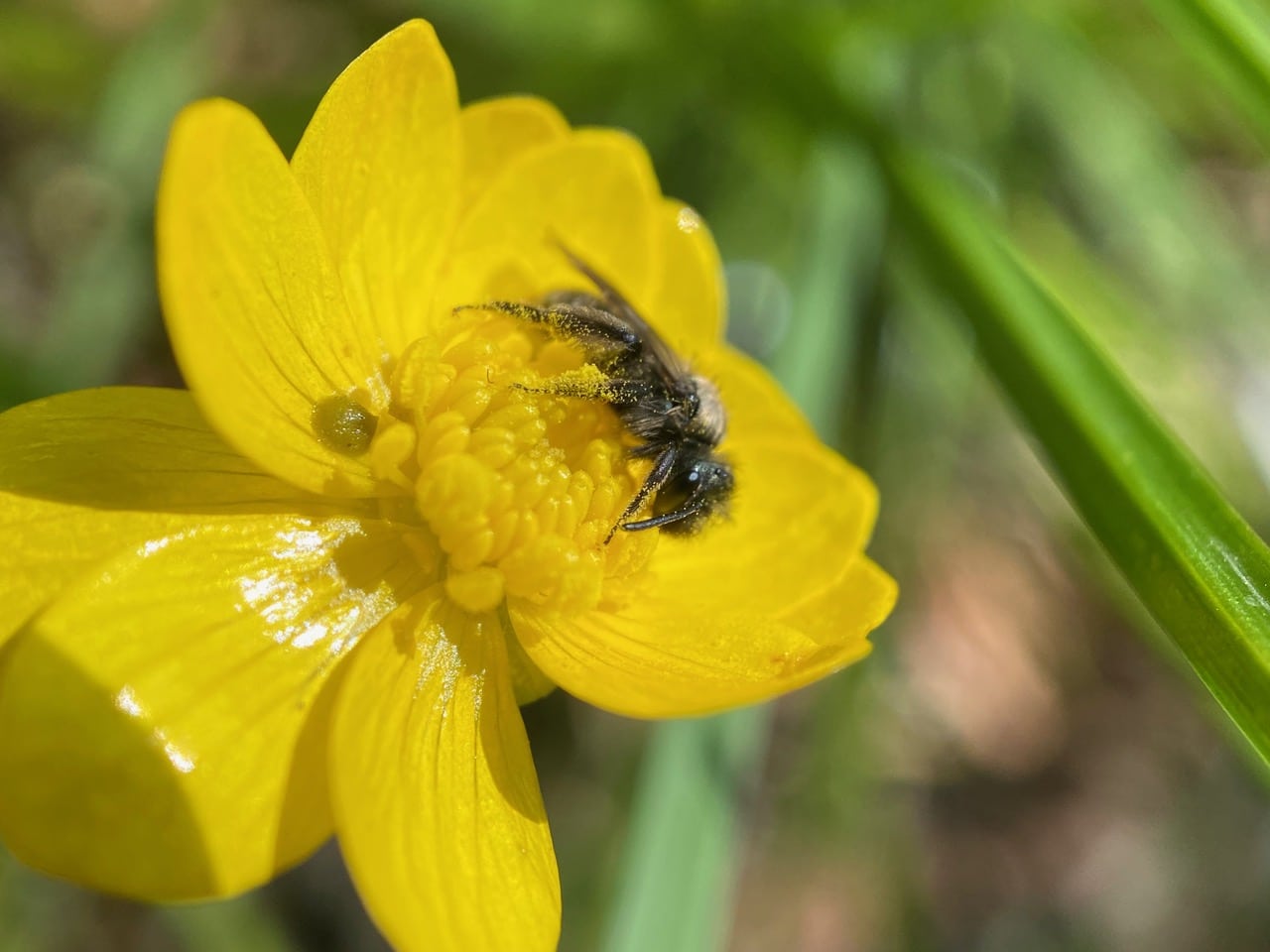 When I return to check on the female Mining Bee on her flower, she is still in her hunkered position. Has she gone back to sleep? I can’t hang around any longer. Across the road, the steam train has started to run, and families are arriving in droves. There’s too much going on here at the park on the weekend to do any insect observation. I’ll have to come back on a week day.
 When I return to my car at 10:30 am, its temperature gauge reads 45 F.