

Pollinator Post 4/6/23 (1)

Temperatures are in the high 40’s when I arrive at Siesta Gate this morning. The insects have not appeared on the California Barberry on the rocky hillock. Not distracted by pollinator activities, I spend some time trying to figure out the floral structure of the plant.
The California Barberry, Berberis pinnata (family Berberidaceae) is a curious plant, and its crowded flowers are hard to decipher.
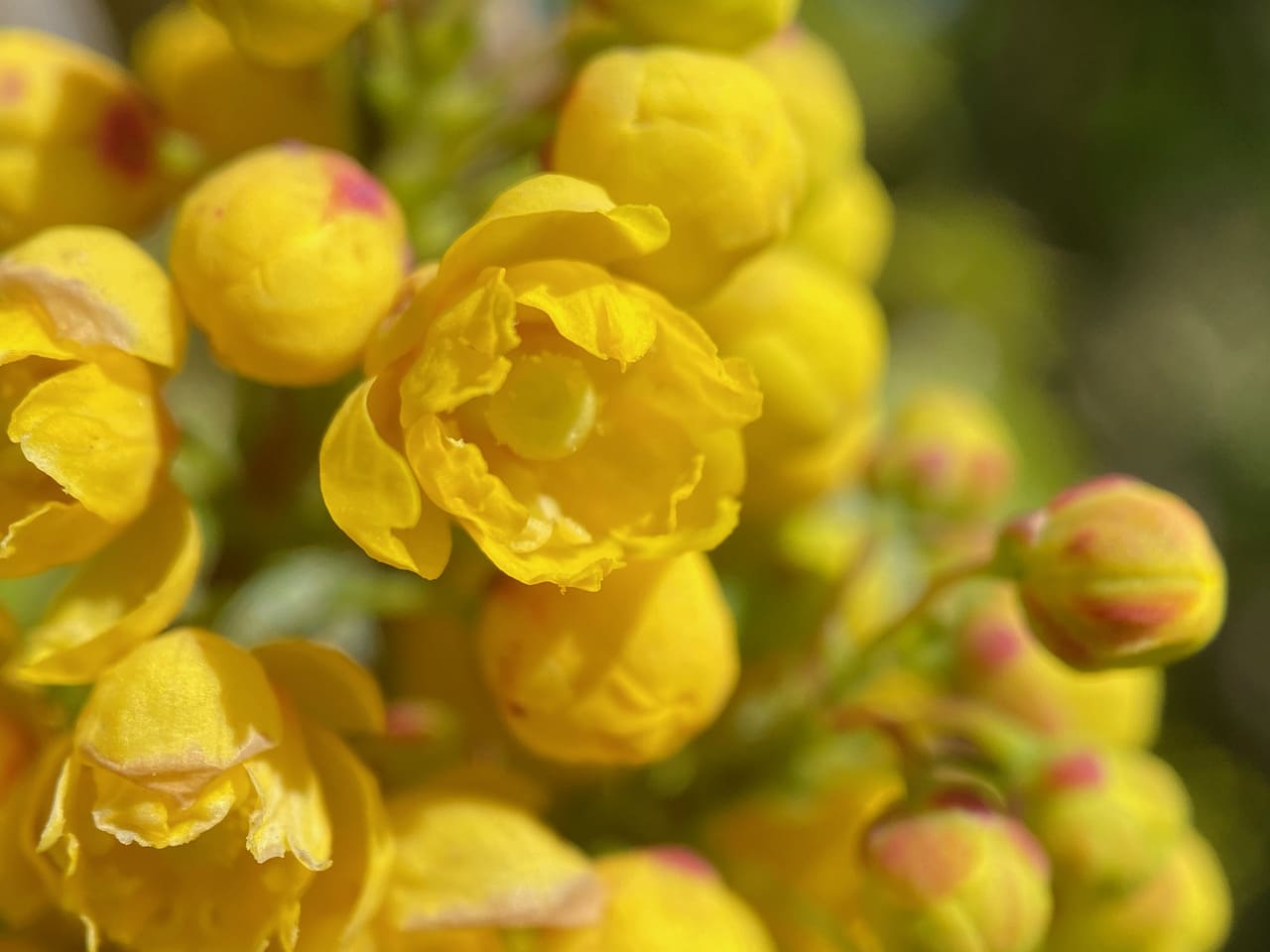
The flowers start off as red buds….

… opening up to yellow flowers.

If you find a dicot plant with evergreen, holly-like leaves and flower parts in multiples of three then it is likely a member of the Berberidaceae family. The small yellow flowers are clustered together in racemes and mature into purplish, sour berries.

Members of the Barberry family may have 2 or 3 small bracts masquerading as sepals on the back of the flower, but otherwise there are typically 6 true sepals and 6 petals that appear similar. There are 6 stamens, with anthers opening to release pollen by uplifting flaps (rather than longitudinal slits). The ovary consists of 2 to 3 fused carpels (syncarpous) forming a single chamber. It matures into a sour berry.
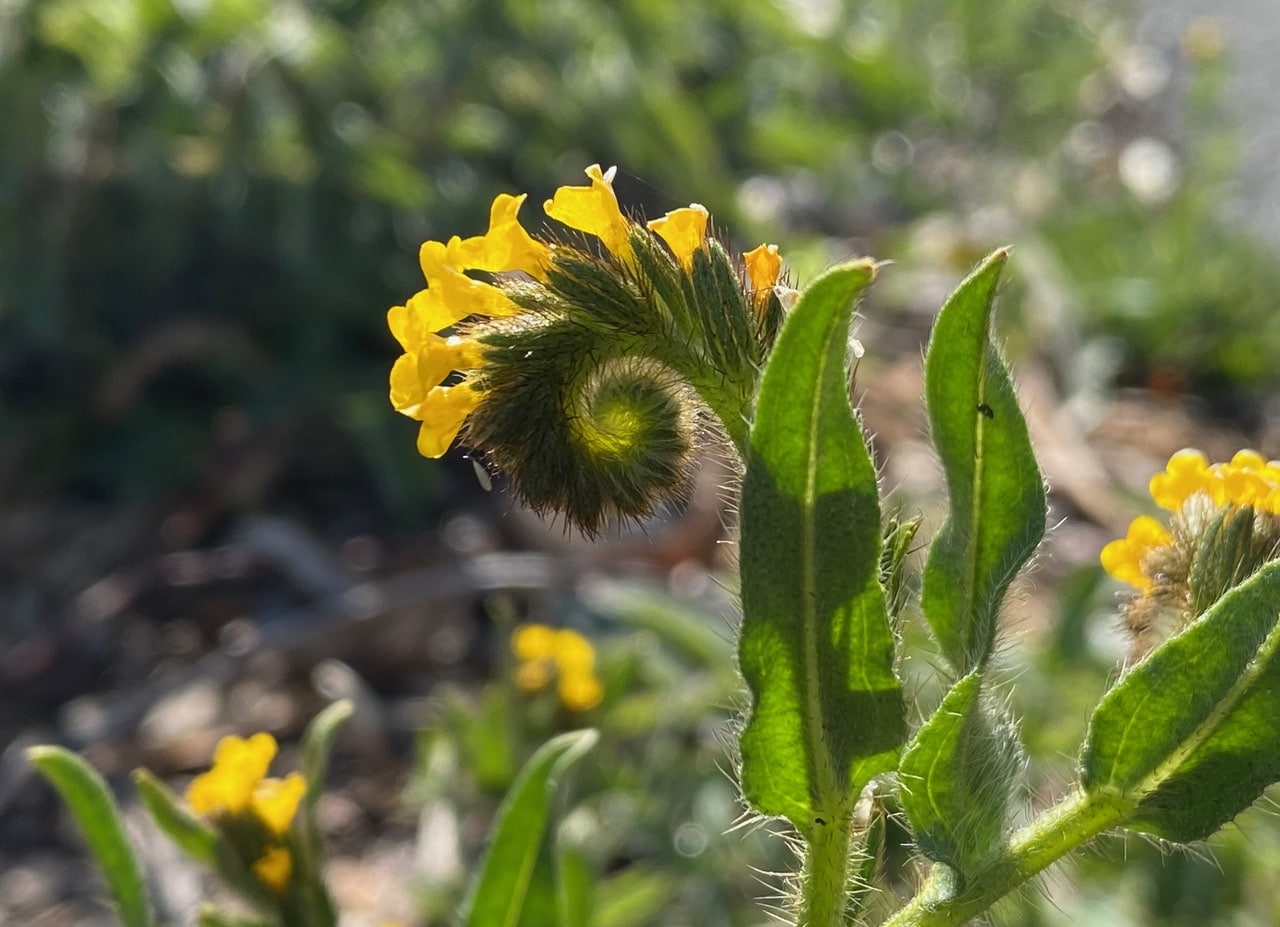
More Common Fiddleneck, Amsinckia intermedia have come into bloom along the paved road. Barely inches off the ground some of the plants are already displaying the beautiful scorpionoid flowerheads (coiled like a scorpion’s tail) characteristic of the Boraginacea family.
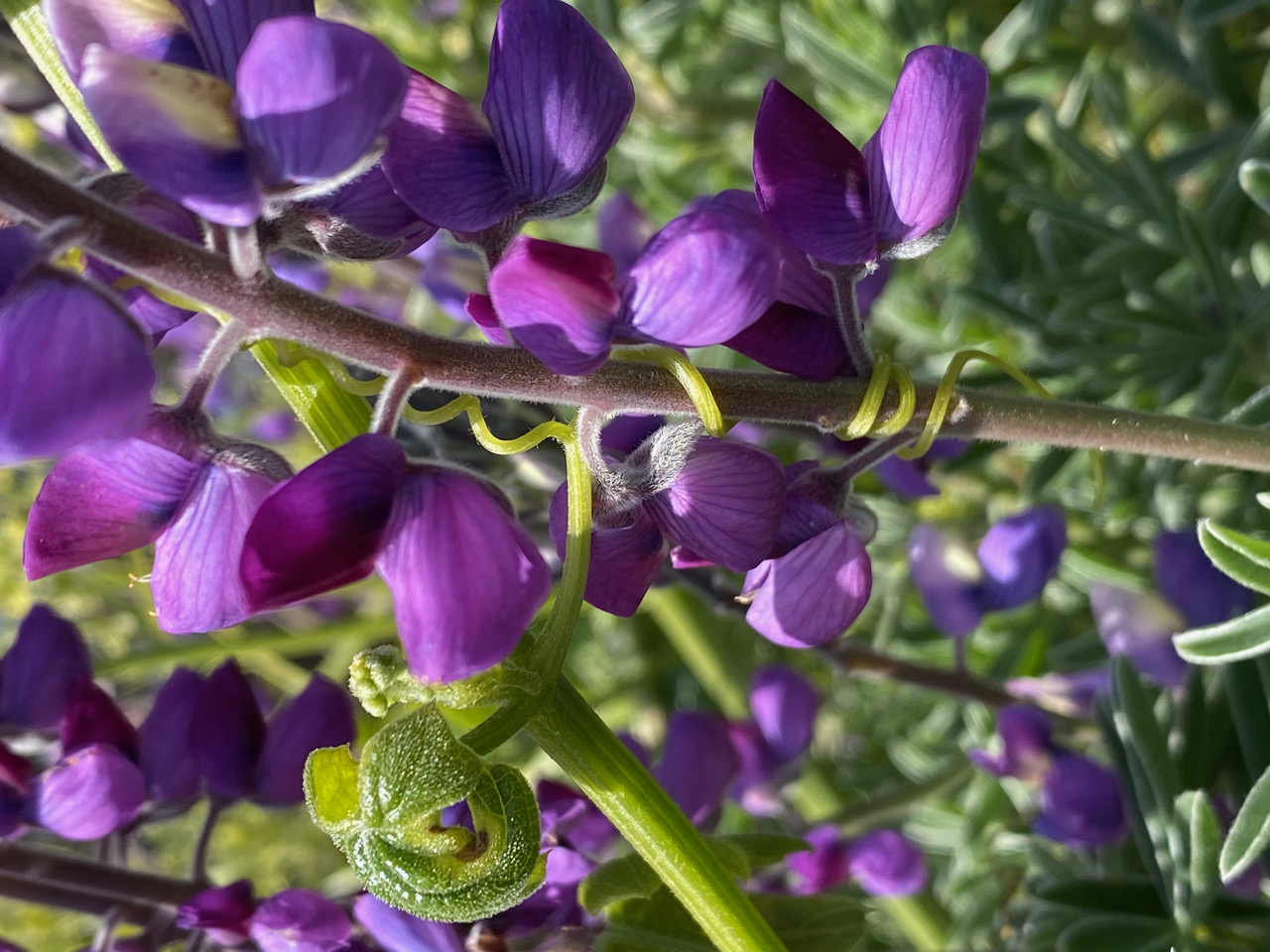
I stop by the big shrub of Silverleaf Lupine, Lupinus albifrons with a California Manroot growing through it. Even in this unseasonable cold, some bees are foraging on the lupine flowers. Tiny first-brood worker Yellow-faced Bumble Bees, Bombus vosnesenskii work hard at gathering pollen. These extra small bees have been raised single-handedly by their queen mom, and are likely to be undernourished when they were larvae. What they lack in stature they make up for in diligence. An occasional Black-tailed Bumble Bee, Bombus melanopygus and Pacific Digger Bee, Anthophora pacifica joins the work party.
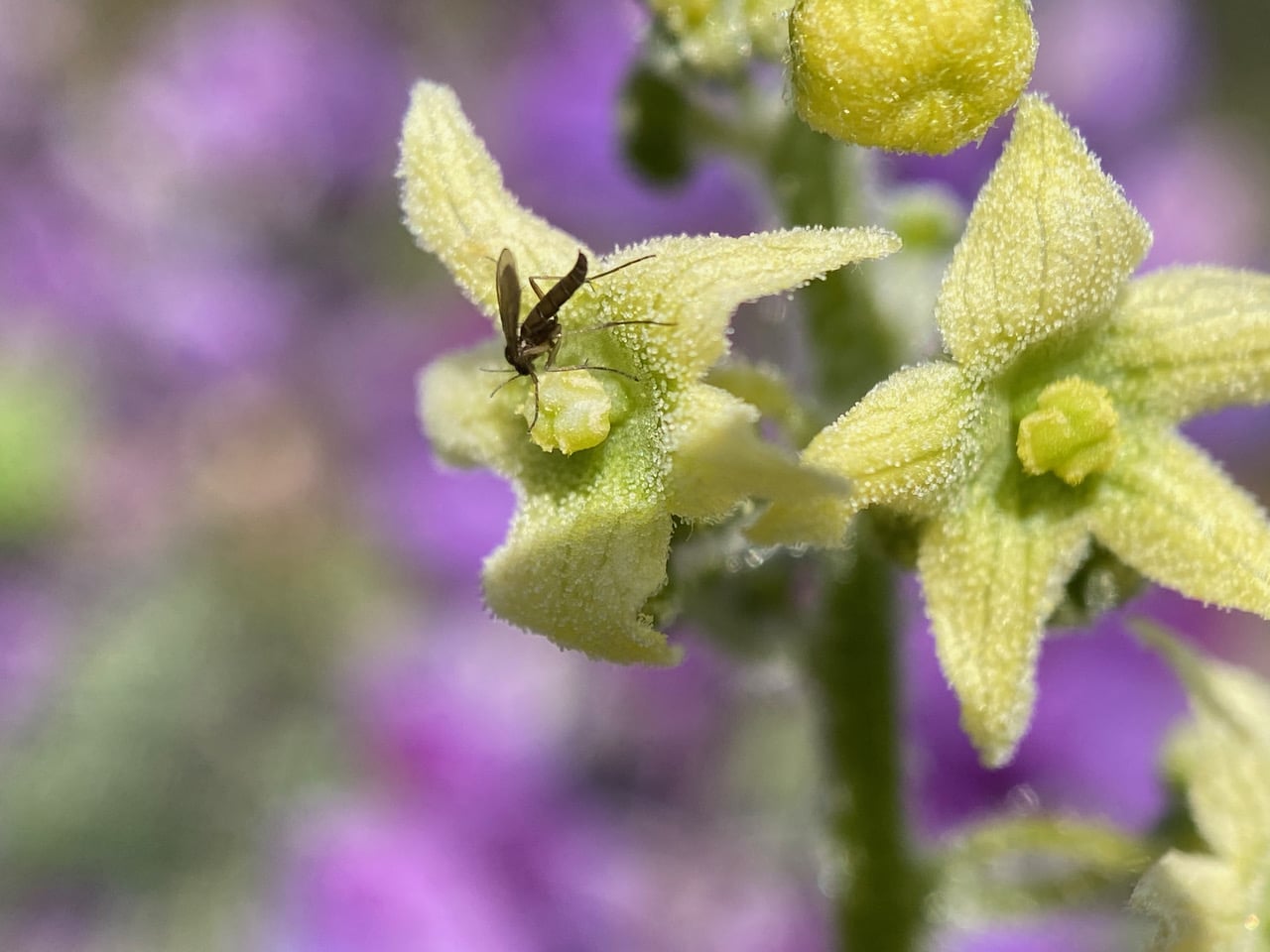
As my vision stabilizes, I begin to notice a swarm of tiny flies dancing over the shrub. One lands on a California Manroot flower, Marah fabacea.
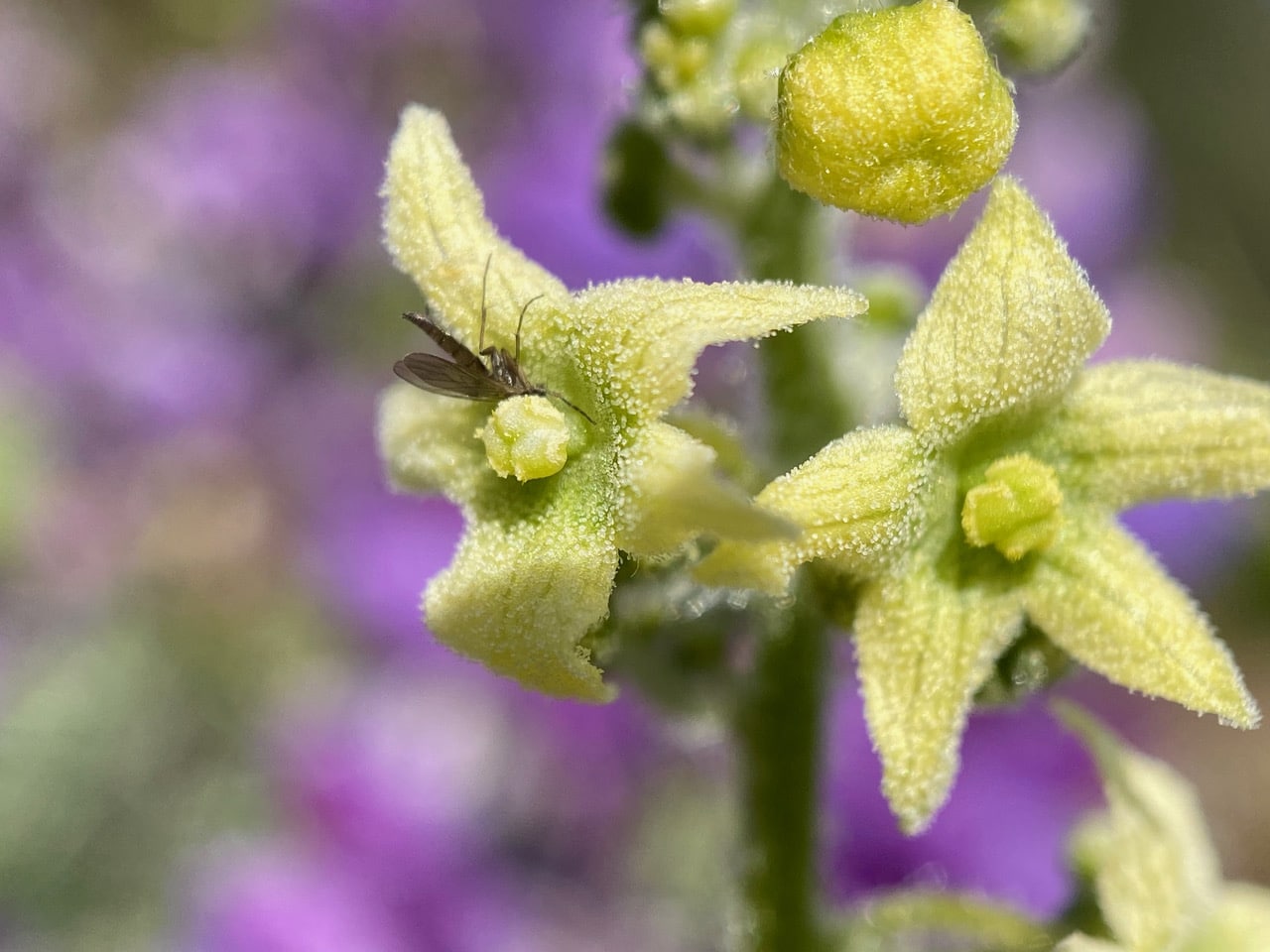
The tiny fly makes its way under the fused stamens of the male flower in search of nectar.

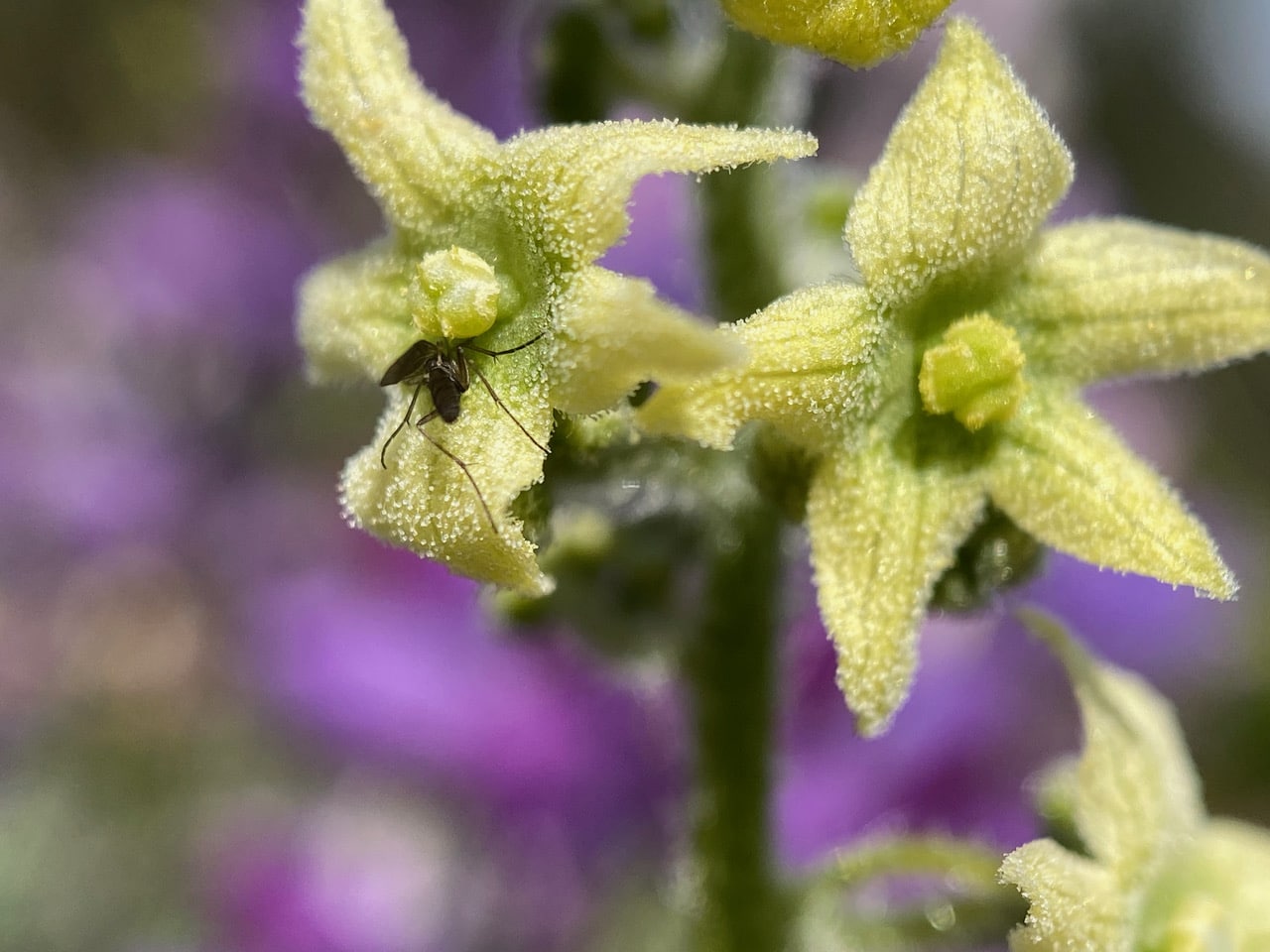
The midge makes several attempts getting to the nectar under the stamens.
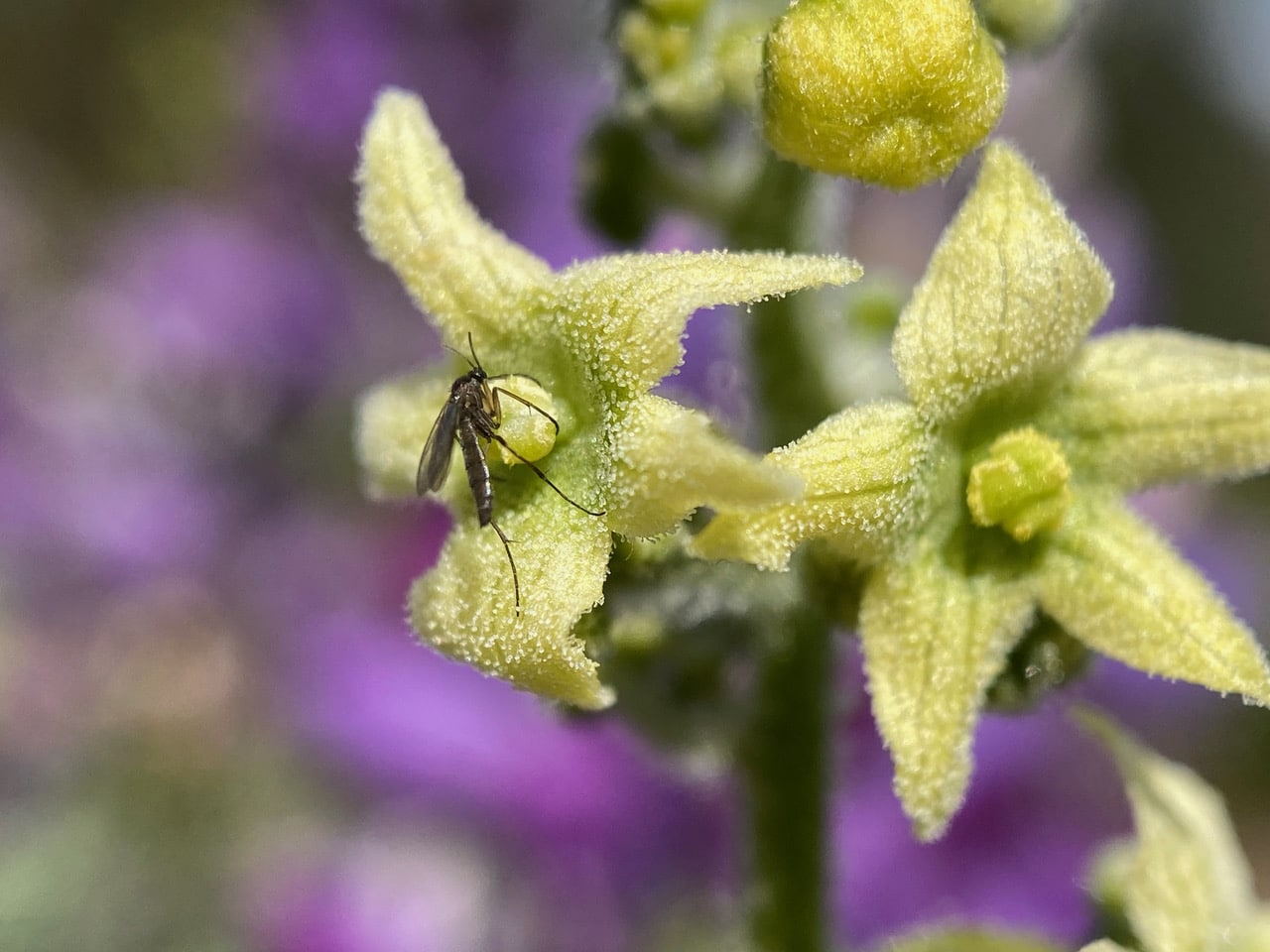
The fly appears to be a Fungus Gnat, family Mycetophilidae.
The Mycetophilidae are a family of small flies, often known by their common name of Fungus Gnats. They are generally found in the damp habitats favored by their host fungi and sometimes form dense swarms. The delicate-looking flies are similar in appearance to mosquitoes. Adults have slender legs with segmented antennae that are longer than their head. Adult fungus gnats do not damage plants or bite people. Larvae, however, when present in larger numbers, can damage roots and stunt plant growth. Females lay tiny eggs in soil or moist organic debris. Most of the fungus gnat’s life is spent as a larva and pupa in organic matter or soil. There may be many overlapping generations each year. They are most common during winter and spring in California when water is more available and cooler temperatures prevail.