

Pollinator Post 4/5/25 (2)

Andy, Jim and I make our way slowly along Skyline Trail from the Steam Train entrance, stopping to look at insects at every turn.
Cow Parsnip, Heracleum maximum has leafed out in a big way, but the inflorescences still have a way to go.
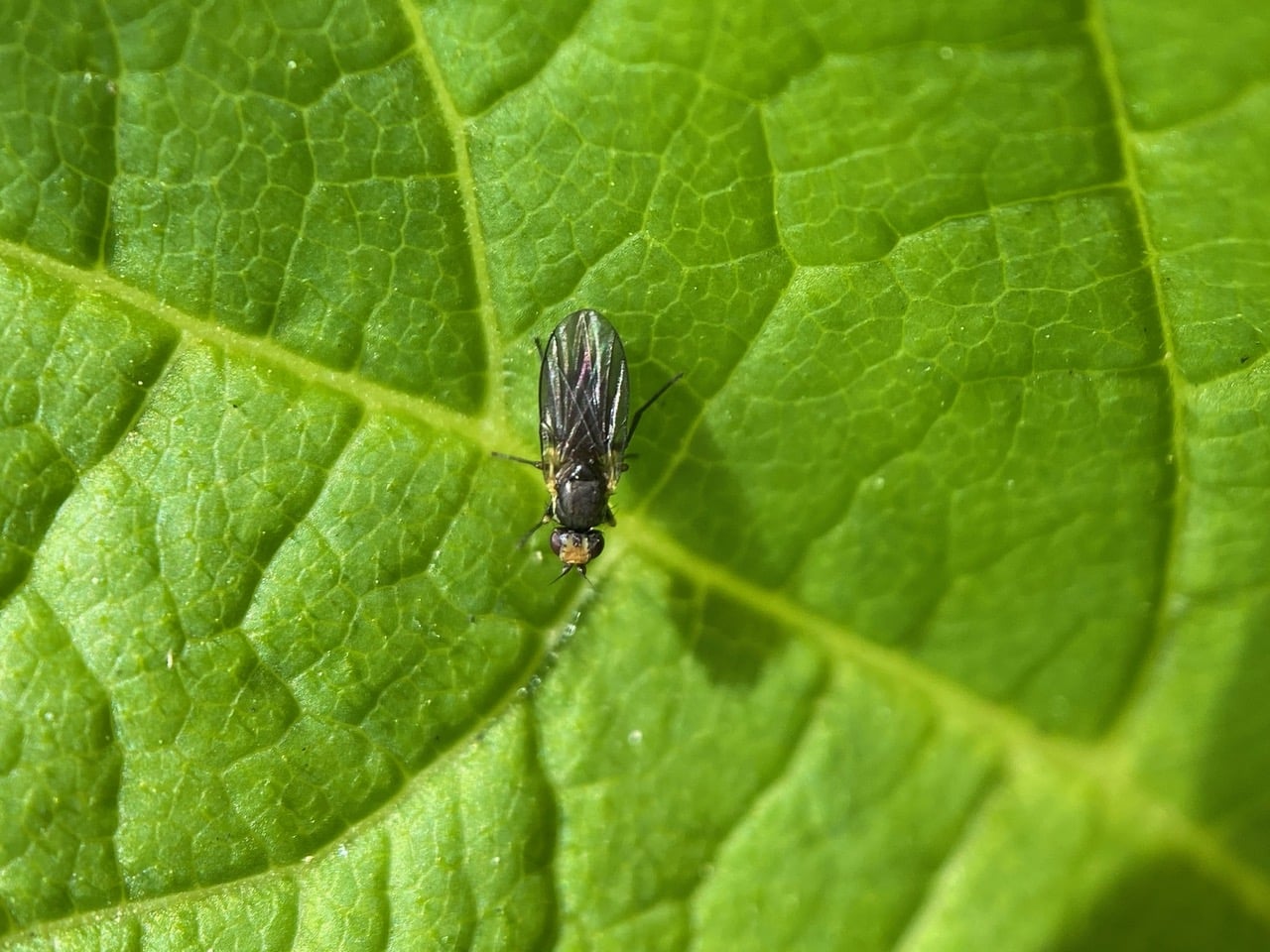
Ooh, I think that is a Leaf-miner Fly (family Agromyzidae) on the Cow Parsnip leaf. Is it here to lay its eggs? I often see sinuous lines on the leaves of Cow Parsnip made by the Agromyzid larvae.
The Agromyzidae are a family commonly referred to as the Leaf-miner Flies, for the feeding habits of their larvae, most of which are leaf miners on various plants. They are small flies, most species in the range of 2-3 mm. Agromyzidae larvae are phytophagous, feeding as leaf miners, less frequently as stem miners or stem borers. A few live on developing seeds, or produce galls. There is a high degree of host specificity. A number of species attack plants of agricultural or ornamental value, so are considered pests. The shape of the mine is often characteristic of the species and therefore useful for identification. Adults occur in a variety of habitats, depending on the larval host plants.
Phytomyza larvae, specifically Phytomyza chaerophylli (family Agromyzidae) make leaf mines on the leaves of umbelliferous plants (family Apiaceae) such as Cow Parsnip, which are visible as small, upper-surface galleries that sometimes form secondary blotches. The frass (insect poop) is in two untidy rows of isolated grains. Larvae leave the leaf through a semi-circular slit in the lower epidermis to pupate in the soil. These mines can be found throughout the year, with the first generation often appearing in April and May.

In about the same size range as the Leaf-miner Fly, a winged aphid (family Aphididae) is resting on another Cow Parsnip leaf.
Aphids (family Aphididae) are small sap-sucking insects in the order Hemiptera. Aphids usually feed passively on phloem of plants. Once the phloem vessel is punctured, the sap, which is under pressure, is forced into the aphid’s food canal. Aphids produce large amounts of a sugary liquid waste called “honeydew”. A fungus called sooty mold can grow on honeydew deposits that accumulate on leaves and branches, turning them black.
A typical life cycle involves flightless females giving live birth to female nymphs, – who may also be already pregnant, an adaptation called telescoping generations – without the involvement of males. Maturing rapidly, females breed profusely so that the population multiplies quickly. Winged females may develop later in the season, allowing the insects to colonize new plants. In temperate regions, a phase of sexual reproduction occurs in the autumn, with the insects often overwintering as eggs. The life cycle of some species involves an alternation between two species of host plants. Some species feed on only one type of plant, while others are generalists, colonizing many plant groups. Some ants have a mutualistic relationship with aphids, tending them for their honeydew and protecting them from predators.

A Woodlouse-Fly (family Rhinophoridae) has landed on a leaf of Wild Geranium.
These small, black, bristly flies are somewhat related to the Tachinidae. The larvae are mostly parasitoids of woodlice (pill bugs), beetles, spiders and other arthropods, and occasionally snails.


A Soft-winged Flower Beetle, Listrus sp. (family Melyridae, subfamily Dasytinae) is roaming the stamens of a California Buttercup, Ranunculus californicus.
Most species of Melyridae are various shades of brown or black and just 2 to 4 mm in length. They are sometimes very abundant in spring when there is an abundance of open flowers, particularly those with an abundance of pollen. In north America, dasytine beetles are hardly represented in the east, but are enormously diverse in the west, especially in California.
11 families of Coleoptera (beetles) are known to pollinate flowering plants. In western North America, the 300+ species of the beetle subfamily Dasytinae are commonly found on flowers, where adults feed on both nectar and pollen. Their dense setae (hairs) often trap pollen grains, which are transported to other flowers during the course of normal feeding. Many dasytine beetles form large feeding aggregations. Members of the genus Listrus are known to feed from 26 different families of plants.

Wow, what happened to these flowers of Giant Trillium, Trillium chloropetalum? This spectacular patch appears every spring at the same spot by the wet trail, but I have never seen their flowers and leaves so badly chewed. Are some beetles responsible for this damage?
I peek into several flowers, and find that most of the reproductive structures have remained intact. I wonder if the culprits who chewed the petals also help to carry pollen from flower to flower, pollinating them inadvertently?

Ooh, a Small Carpenter Bee, Ceratina sp. (family Apidae) is taking nectar on a flower of Woodland Strawberry, Fragaria vesca. Its long antennae tell me that it is a male. The antennae of male bees are often much longer than their female counterparts. Male antennae have an extra segment and the segments themselves are longer. This is because male antennae are specialized to pick up the subtle scent of female pheromones.

The Small Carpenter Bee genus Ceratina is closely related to the more familiar, and much larger Carpenter Bees (genus Xylocopa). Ceratina are typically dark, shiny, even metallic bees, with fairly sparse body hairs and a weak scopa on the hind leg. The shield-shaped abdomen comes to a point at the tip. Some species have yellow markings, often on the face.
Females excavate nests with their mandibles in the pith of broken or burned plant twigs and stems. While many species are solitary, a number are subsocial. Both male and female carpenter bees overwinter as adults within their old nest tunnels, emerging in the spring to mate. In the spring, this resting place (hibernaculum) is modified into a brood nest by further excavation. The female collects pollen and nectar, places this mixture (called bee bread) inside the cavity, lays an egg on the provision, and then caps off the cell with chewed plant material. Several cells are constructed end to end in each plant stem.

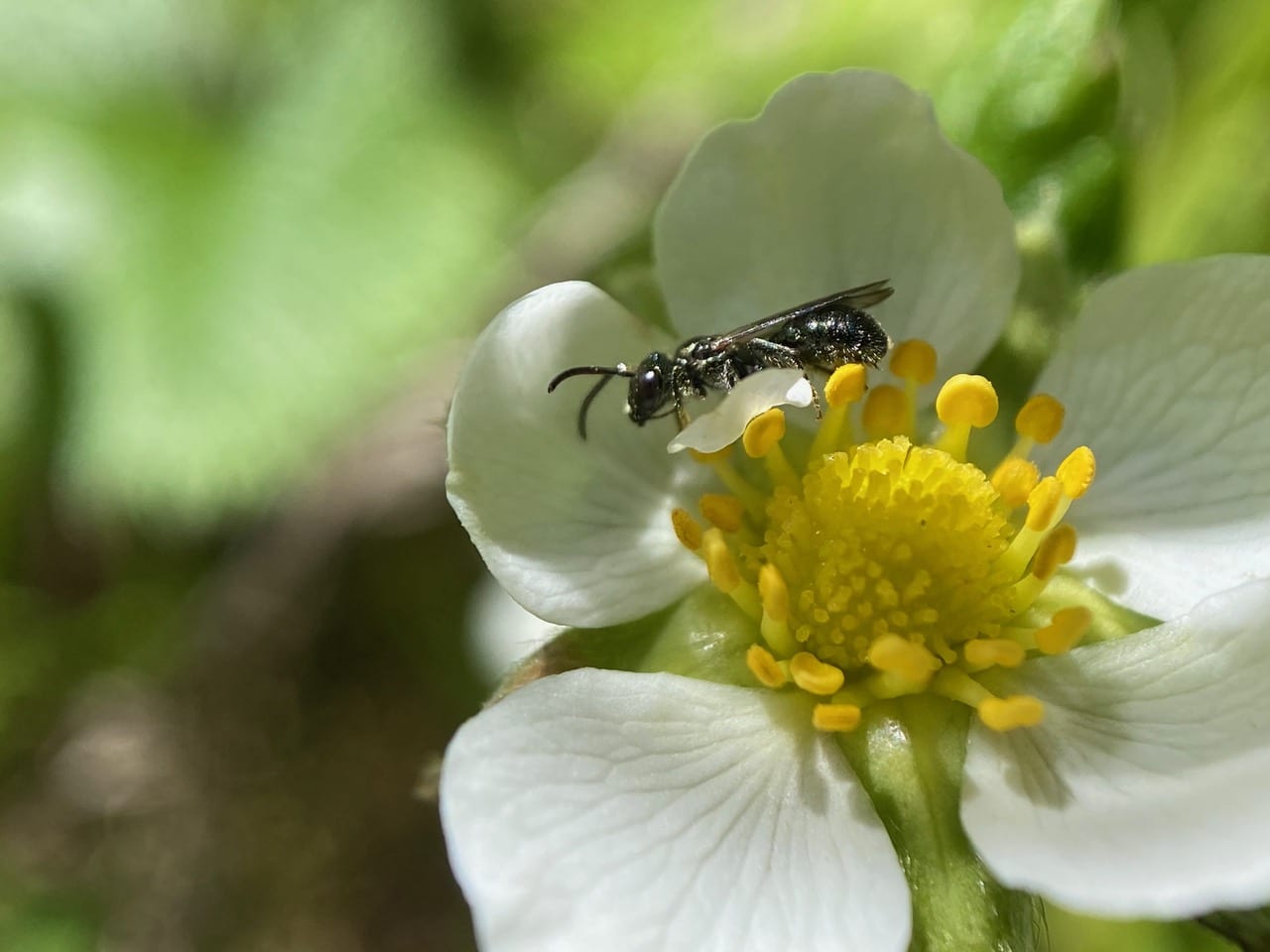
Although male bees do not intentionally collect pollen to provision the nest, they can be effective pollinators. Pollen often adheres to their body while they probe flowers for nectar.
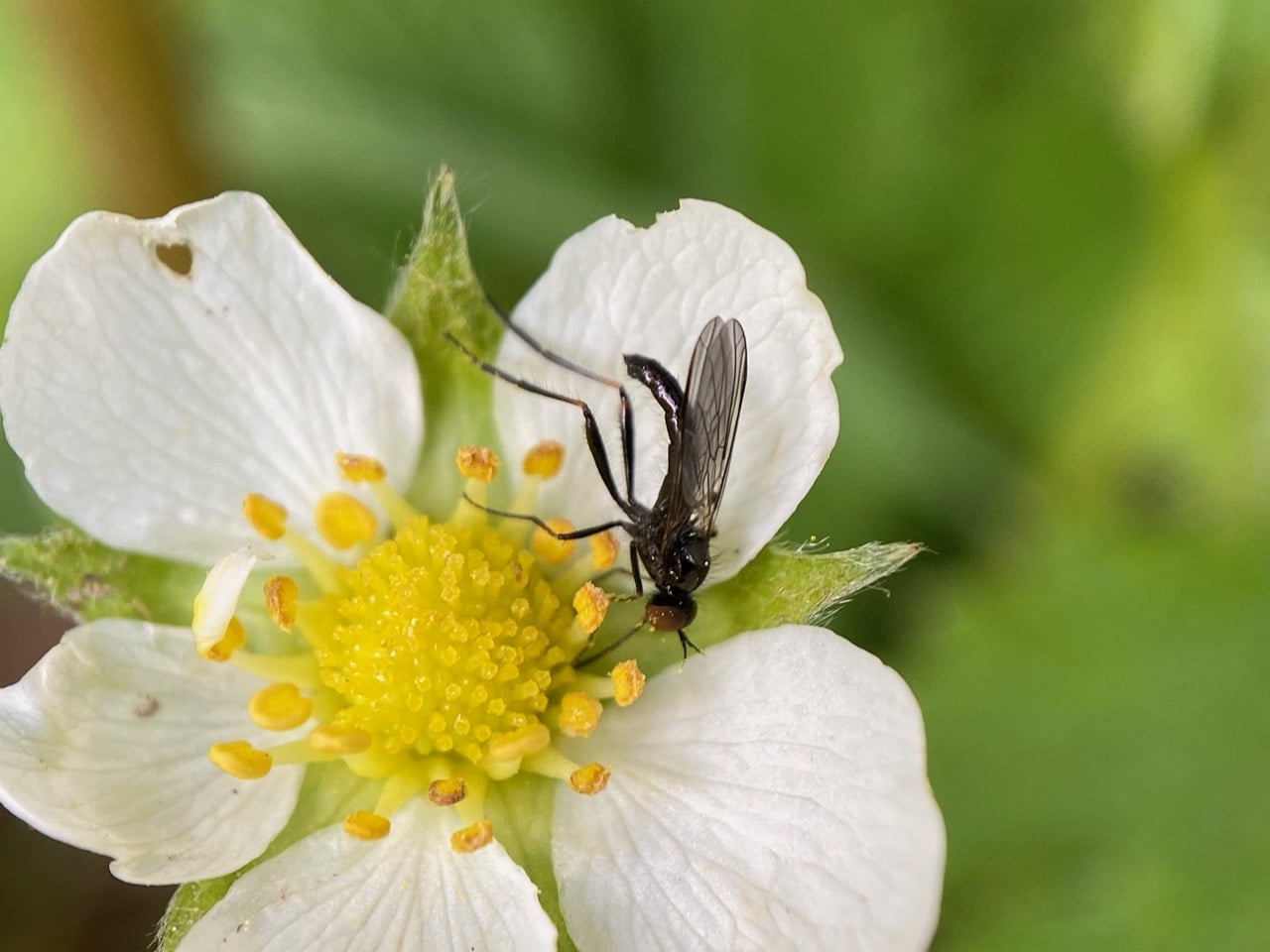
A Dance Fly (superfamily Empidoidea) is foraging on a Woodland Strawberry flower.
The Empidoidea are a very large, diverse group of flies consisting of over 11,000 described species worldwide. Most of these flies are predatory. Adults range in size from 1 mm to 15 mm, and are generally slender flies with long legs, beak-like predatory mouthparts, large compound eyes (sometimes covering the entire surface of the head). These flies tend to be associated with moist, temperate habitats. Some adult Dance Flies also visit flowers for nectar. At least a few groups obtain all their protein needs by feeding on pollen. Larvae are generally found in moist soil, rotten wood, dung, or in aquatic habitats and also appear to be predacious on various arthropods. Predaceous empidoid flies are important natural and biological control agents of various pest insects. Empidoids are commonly called Dance Flies for their “dancing” courtship behavior, with males often presenting prey to females as nuptial gifts.
Classification within the superfamily is still in a state of flux – many taxa require revision and few keys are available to distinguish species. Currently there are 7 recognized families, the main ones being the Empididae and the Hybotidae. Empidids normally have a thick beak pointing down. Hybotids have a thinner beak, or a thick beak pointing forwards or diagonally. The two families also differ in their wing venation.
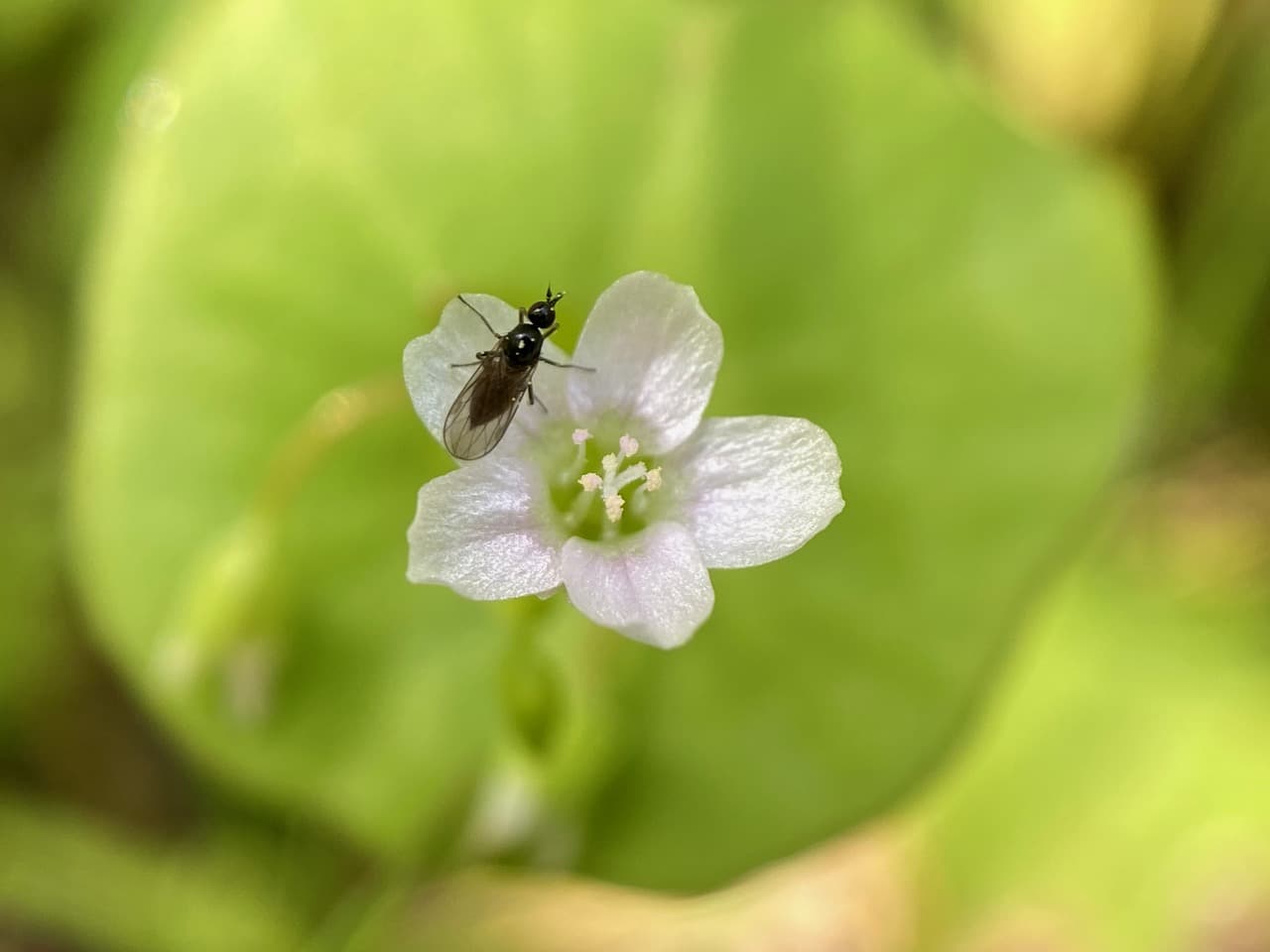
A tiny Dance Fly, Anthalia sp. (family Hybotidae) is perched on a flower of Miner’s Lettuce, Claytonia perfoliata.
The Hybotid Dance Flies belong to the superfamily Empidoidea and were formerly included in the Empididae as a subfamily. Empididae generally have a thick beak pointing down, while Hybotidae have a thinner beak, or a thick beak pointing forwards or diagonally. Some crucial wing venation further distinguishes the two families. Precious little is known about the life cycle and biology of Hybotids because they are not considered of economic consequence. Some Hybotids, such as the genus Anthalia are known to eat pollen and may aggregate in large numbers on flowers. I have seen Hybotids visit flowers for nectar and pollen, notably on Soap Plant, Miner’s Lettuce, California Saxifrage, Wild Geranium, Hound’s Tongue and Buttercups, and I believe they may contribute significantly to the pollination of these small wildflowers.
Why the name “dance fly”? This is derived from the mating swarms of males of many species. They gather in clouds over prominent objects, each individual seeming to bounce or “dance” in mid-air. Many other flies do this, notably midges, but the Empidids and the Hybotids got the moniker.
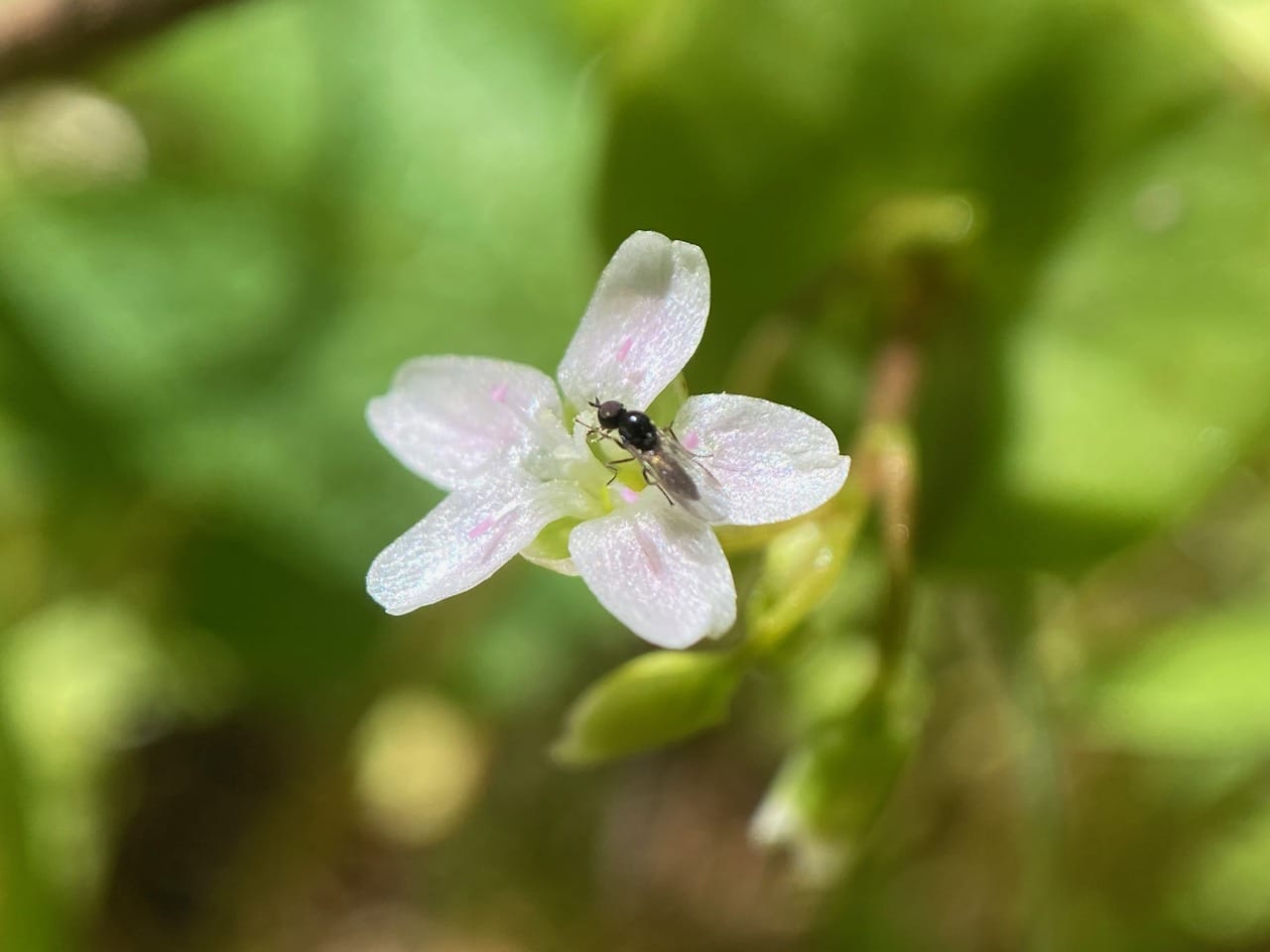
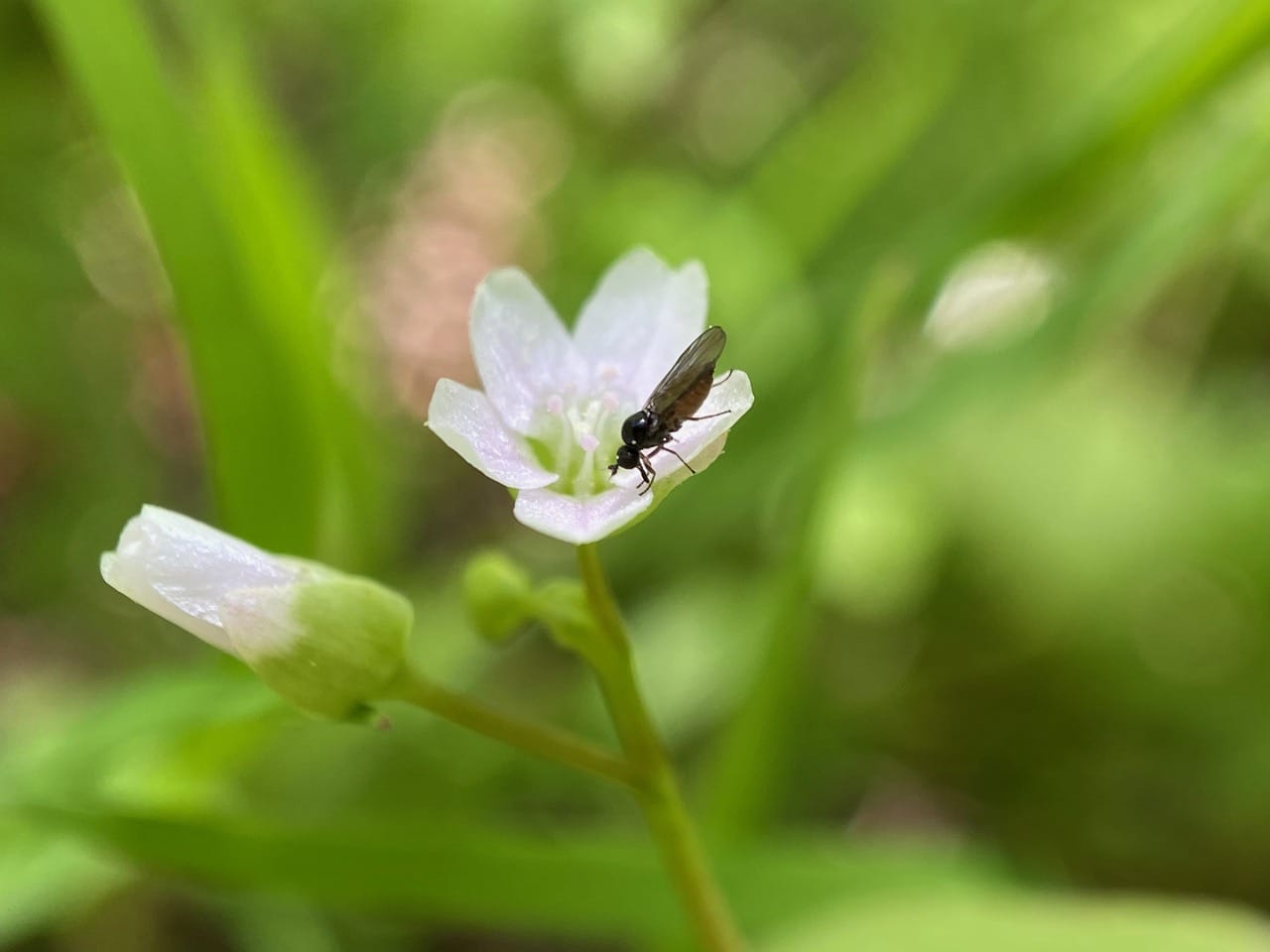
A gravid female Anthalia?
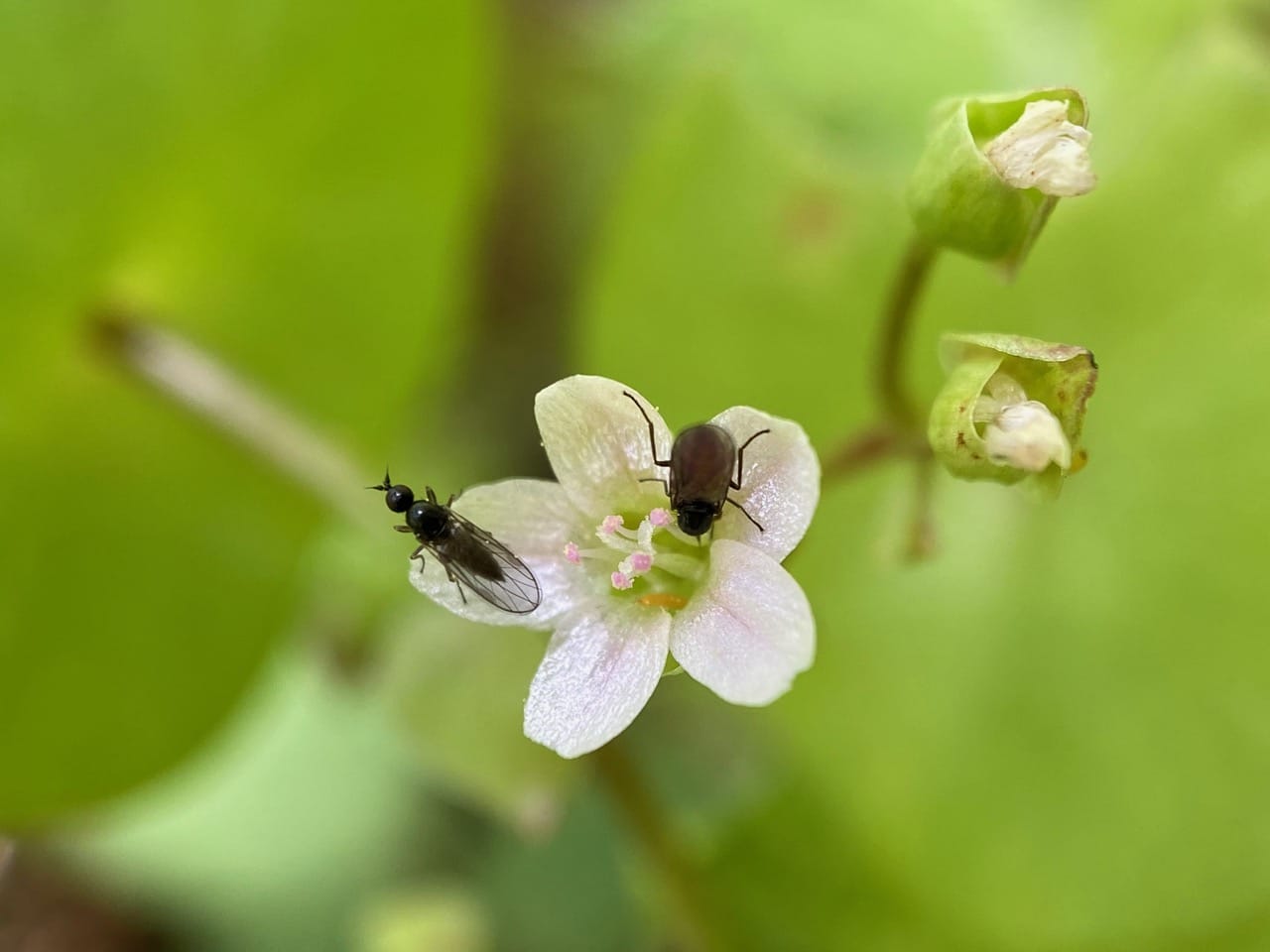
Two Dance Flies, Anthalia sp. (family Hybotidae) are on a flower of Miner’s Lettuce. The one on the right has lowered its head to access nectar at the base of the flower.

A Hybotid Dance Fly, Anthalia sp. (family Hybotidae) is eating pollen from a Miner’s Lettuce anther.
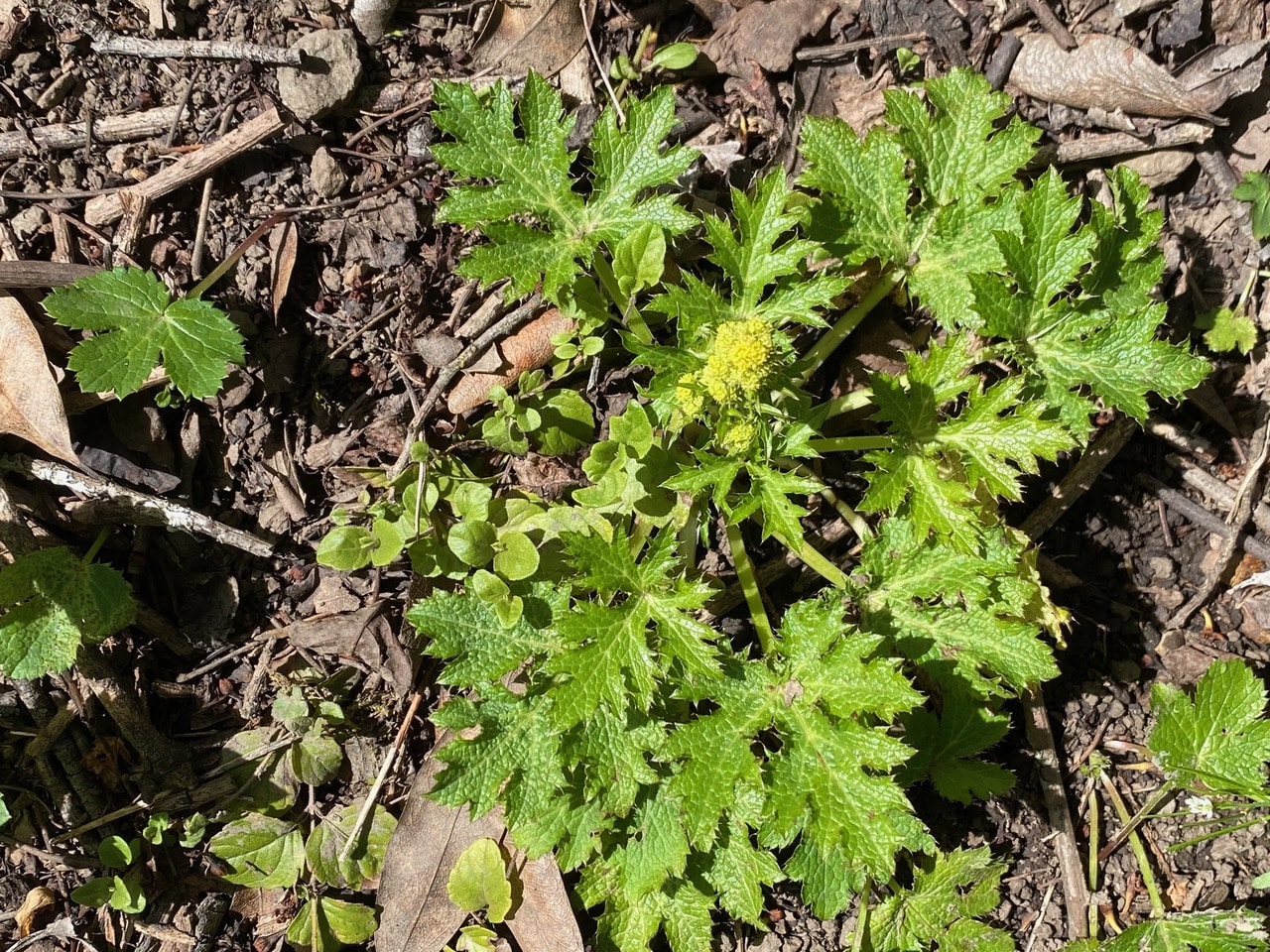
The Pacific Sanicle, Sanicula crassicaulis is probably the most common plant along this stretch of Skyline Trail. Less than 3 ft tall, the short-lived perennial is rather inconspicuous, except for its basal leaves. They are rounded and palmately lobed, with irregular, sharply-toothed margins.
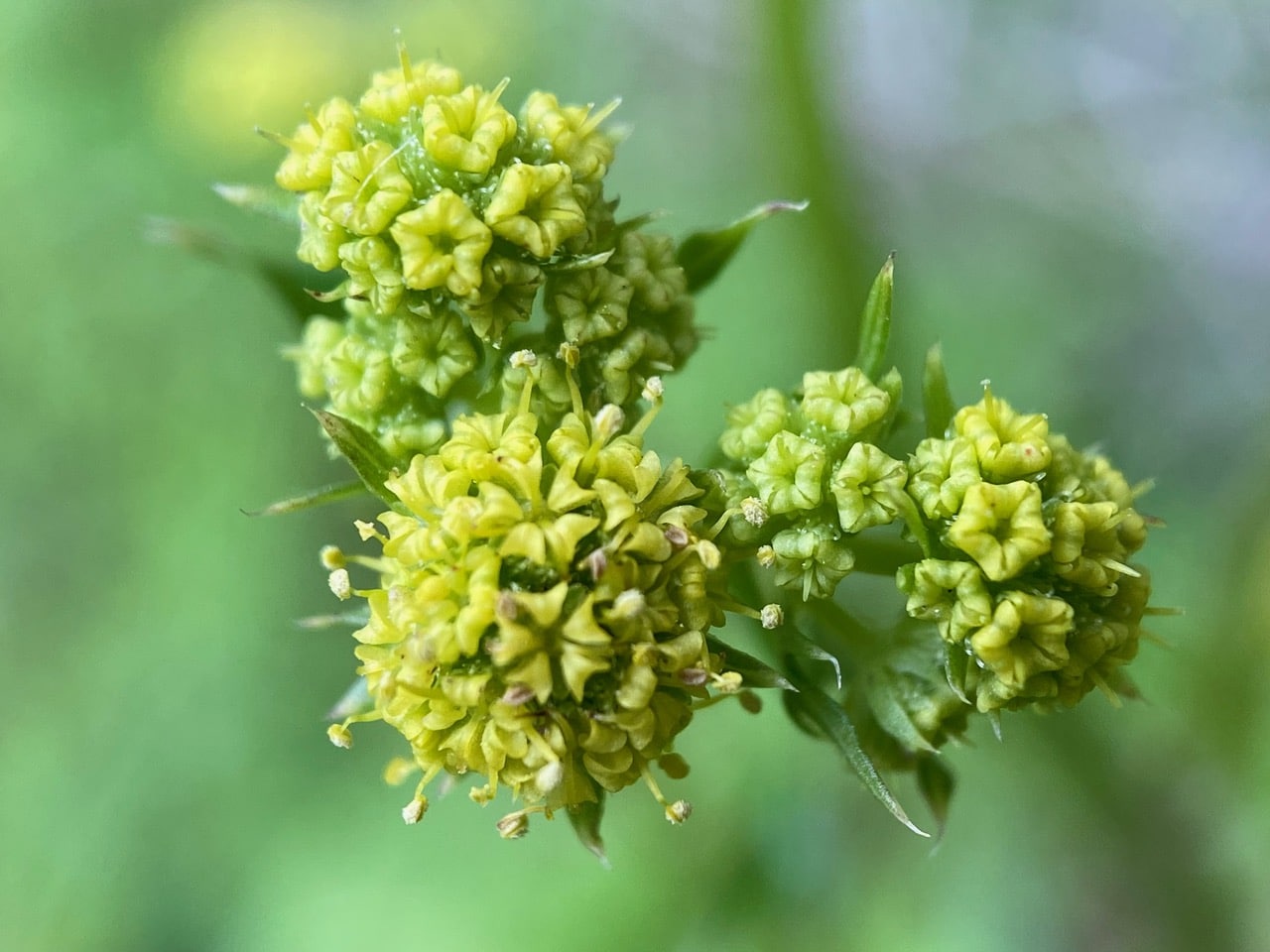
Pacific Sanicle blooms March through April. The flowers are clustered on a small, dense, spherical umbel less than 1/2 in. across, composed of up to 20 greenish-yellow flowers. About half of the flowers are bisexual, the rest male but the two types are difficult to distinguish without magnification. The five petals are heart-shaped but the tips curl inward disguising the basic shape. There are 3 pale yellow stamens that curl inward before maturity and extending well beyond the petals when mature. Bisexual flowers have one pistil, which in not developed in male flowers. The ovary is inferior and the two pale yellow styles extend slightly from the flower throat, diverging in a “V” shape. The bisexual flowers appear to be protogynous, with the styles (female parts) extended to receive pollen before the petals unfurl to let out the stamens (male parts).
The fruit consists of two dry, adjacent one-seeded halves, covered on the outside with sharp, hooked prickles.
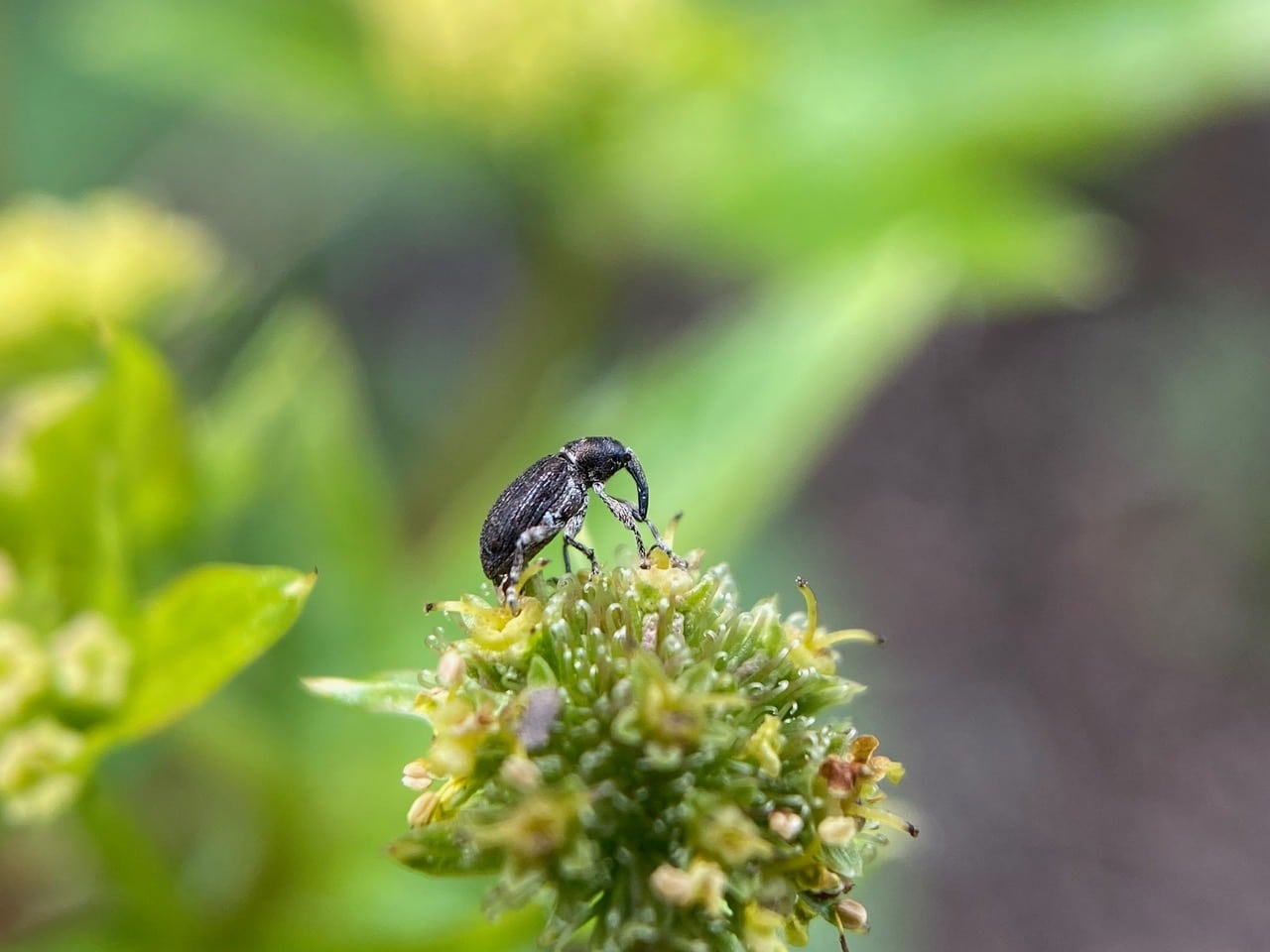
For a long while, a small weevil is sitting on its haunches on a fading inflorescence of Pacific Sanicle. Is it a female laying her eggs? If her larvae are seed eaters, this would be the right place to deposit her eggs.
Weevils, family Curculionidae, are also called snout beetles. Curculionidae is one of the largest beetle families (about 40,000 species). Most weevils have long, distinctly elbowed antennae that may fold into special grooves on the snout. The snout is used not only for penetration and feeding but also for boring holes in which to lay eggs. The mouthparts are quite small and located at the end of the rostrum (snout), designed for chewing. Many weevils have no wings, while others are excellent fliers. Most are less than 6 mm in length. The majority of weevils feed exclusively on plants. The fleshy, legless larvae of most species feed only on a certain part of a plant – i.e., the flower head, seeds, fleshy fruits, stems, or roots. Many larvae feed either on a single plant species or on closely related ones. Adult weevils tend to be less specialized in their feeding habits. The family includes some very destructive agricultural pests.

Hey, there’s a pair of weevils mating on the Pacific Sanicle inflorescence.

Here’s another pair of mating weevils. The female is moving along on the flowers nonchalantly, while the male on her back is holding on with all his legs. I wonder if the female will be laying her eggs among these flowers?

An Argentine Ant is probing a Pacific Sanicle flower for nectar.
The Argentine Ant, Linepithema humile (family Formicidae) is native to Northern Argentina, but it has been inadvertently introduced by humans to many countries, and is now an established invasive species in many Mediterranean climate areas worldwide. The success of the species can be attributed to their lack of aggression between the colonies. There is no apparent antagonism between separate colonies of its own kind, resulting in “super-colonies” that extend across hundreds or thousands of kilometers in different parts of the their range. Genetic, behavioral, and chemical analyses show that introduced Argentine Ants on separate continents actually represent a single global supercolony.
The Argentine Ants are ranked among the world’s worst invasive animal species. In its introduced range, the Argentine ant often displaces most or all native ants and can threaten native invertebrates and even small vertebrates that are not accustomed to defending against the aggressive ants. This can, in turn, imperil other species in the ecosystem, such as native plants that depend on native ants for seed dispersal, or lizards that depend on native ants for food.
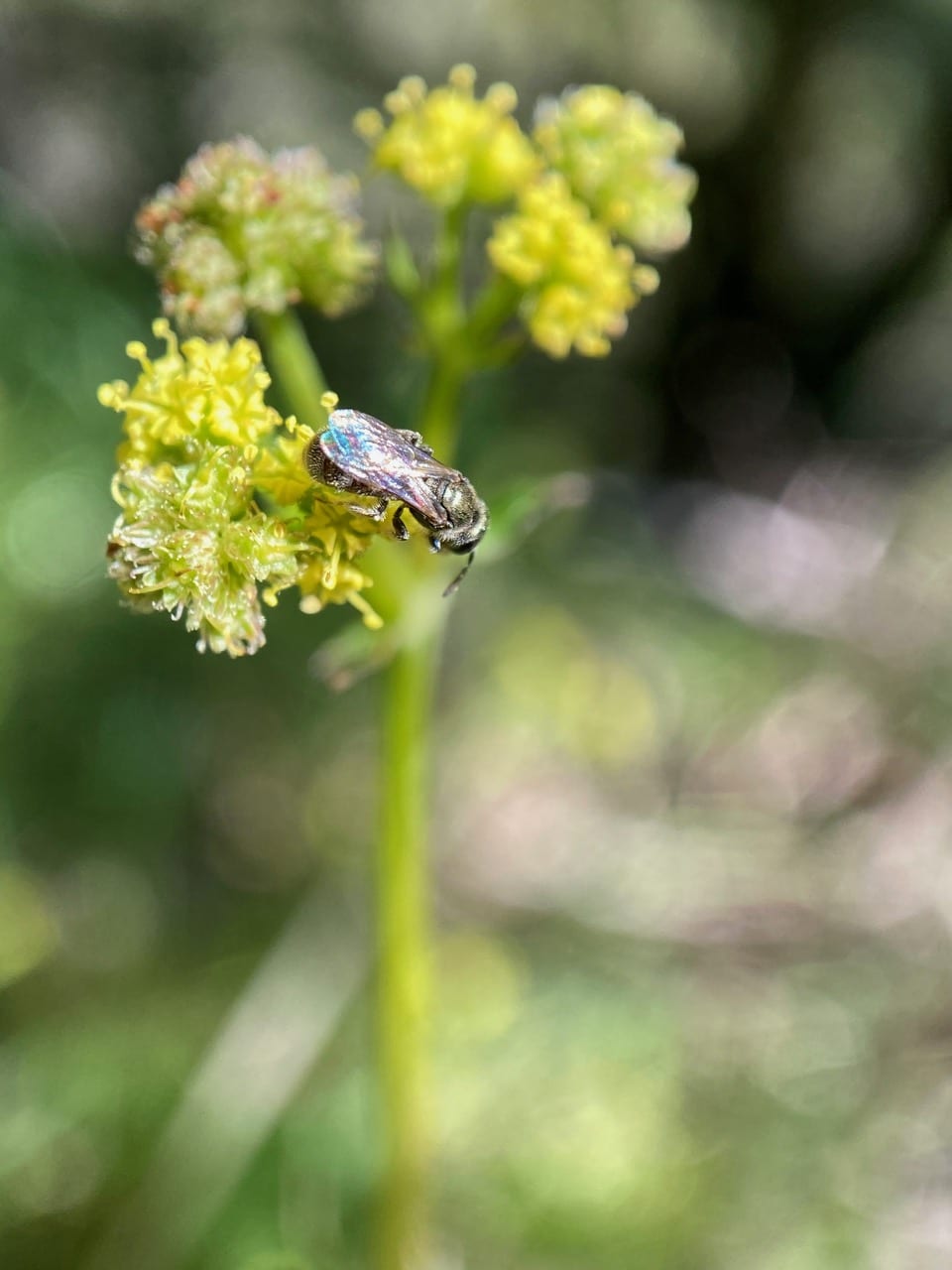
A small, shiny bee is foraging on the Pacific Sanicle flowers.

It appears to be a Metallic Sweat Bee, Lasioglossum (Dialictus) sp. (family Halictidae).
Lasioglossum are closely related to the genera Halictus and Agapostemon. These genera are commonly called “sweat bees” because of their attraction to human sweat, which they drink for its salt content. Lasioglossum are dusky black to brown slender bees with bands of hair on their abdomen. Female Sweat Bees (family Halictidae) carry pollen in the scopae on their entire hind legs and underside of their abdomen.
Lasioglossum species are found worldwide, and they constitute the largest bee genus. The subgenus Dialictus are the most likely to be seen in the U.S., with over 300 species of these tiny metallic bees. The majority of Lasioglossum are generalists. Because they are so abundant throughout the flowering season, the bees are often important pollinators. Their sheer numbers are enough to achieve excellent pollination of many wild flowers, especially of plants in the Asteraceae, which have shallow floral tubes that are easily accessed by these minute bees.
Lasioglossum exhibit a range of social behaviors; the genus includes solitary, communal, semi social, primitively eusocial, and even parasitic species. Almost all Lasioglossum in the U.S. nest in the ground. Generally these nests are built in the spring by fertilized females (called foundresses) that spent the winter in hibernation. In social species, the foundresses behave much like the queen bumble bees – they lay the first batch of eggs that develop into the first generation of female workers. The nest grows with each additional generation of bees. Later broods may consist of both males and females. They mate, and at the end of the season the fertilized females hibernate til the following spring, repeating the life cycle of the colony.
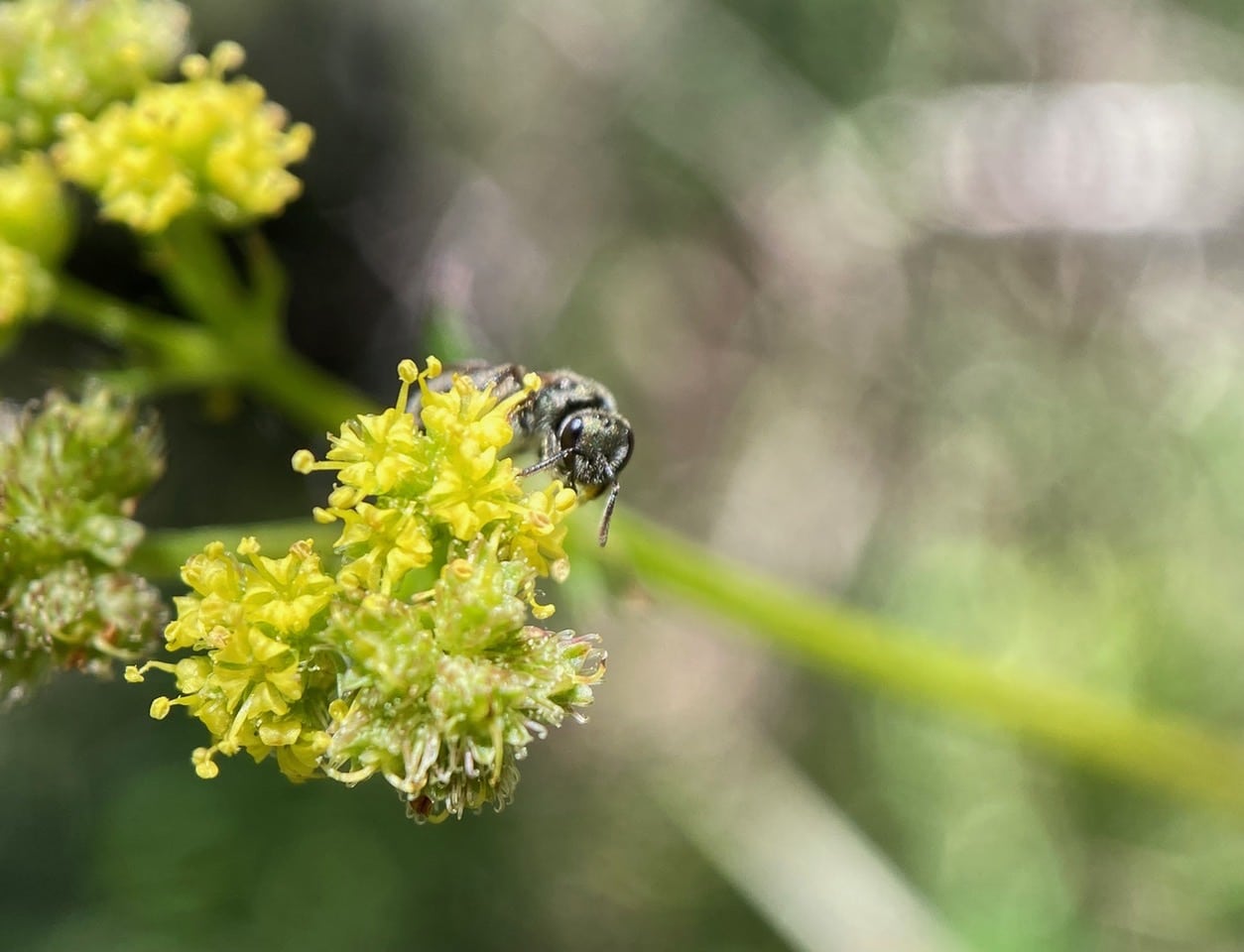
Dialictus is a subgenus of sweat bees belonging to the genus Lasioglossum. Most of the members of this subgenus have a metallic appearance. They are commonly found in the Northern Hemisphere and are found in abundance in North America. Members of this subgenus also have very diverse forms of social structure making them model organisms for studying the social behavior of bees.
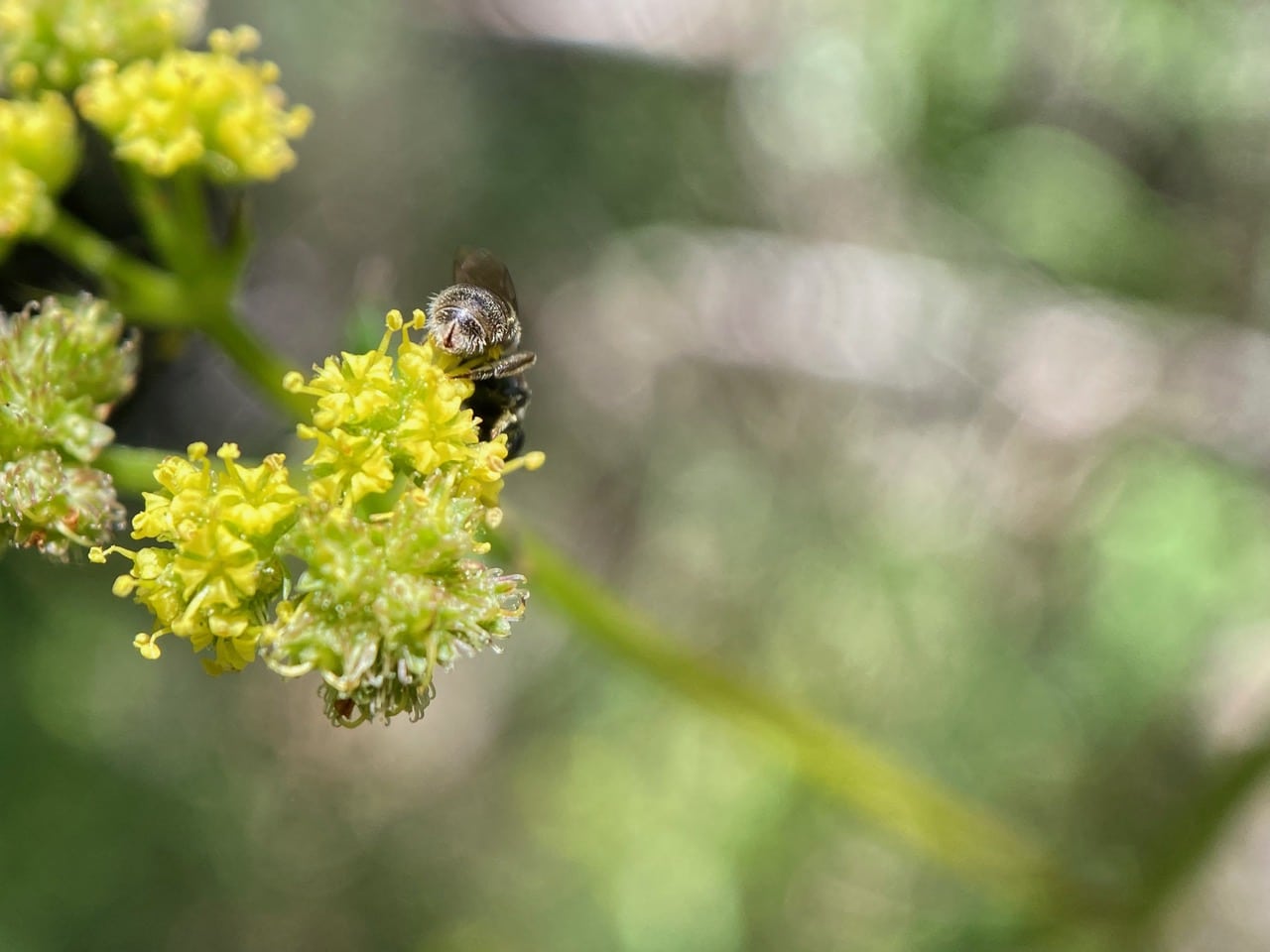
See the groove-like feature on the last abdominal segment of the bee? It is sometimes referred to as a “rima”.
The “rima” on furrow bees (sweat bees belonging to the genera Halictus and Lasioglossum) refers to a microscopically haired, median furrow (a groove) located on the last abdominal tergite (segment) of the female bee. This furrow is often densely haired, and is a key characteristic in identifying furrow bee species. The purpose of the rima is unknown, but since it occurs in females only, it is believed to be related to egg laying. The two genera of sweat bees can further be distinguished by the hair bands on their abdomen. In the Halictus, these are on the hind margin of each tergite, while in Lasioglossum they are at the front of each tergite, often partly covered by the hind edge of the preceding tergite.

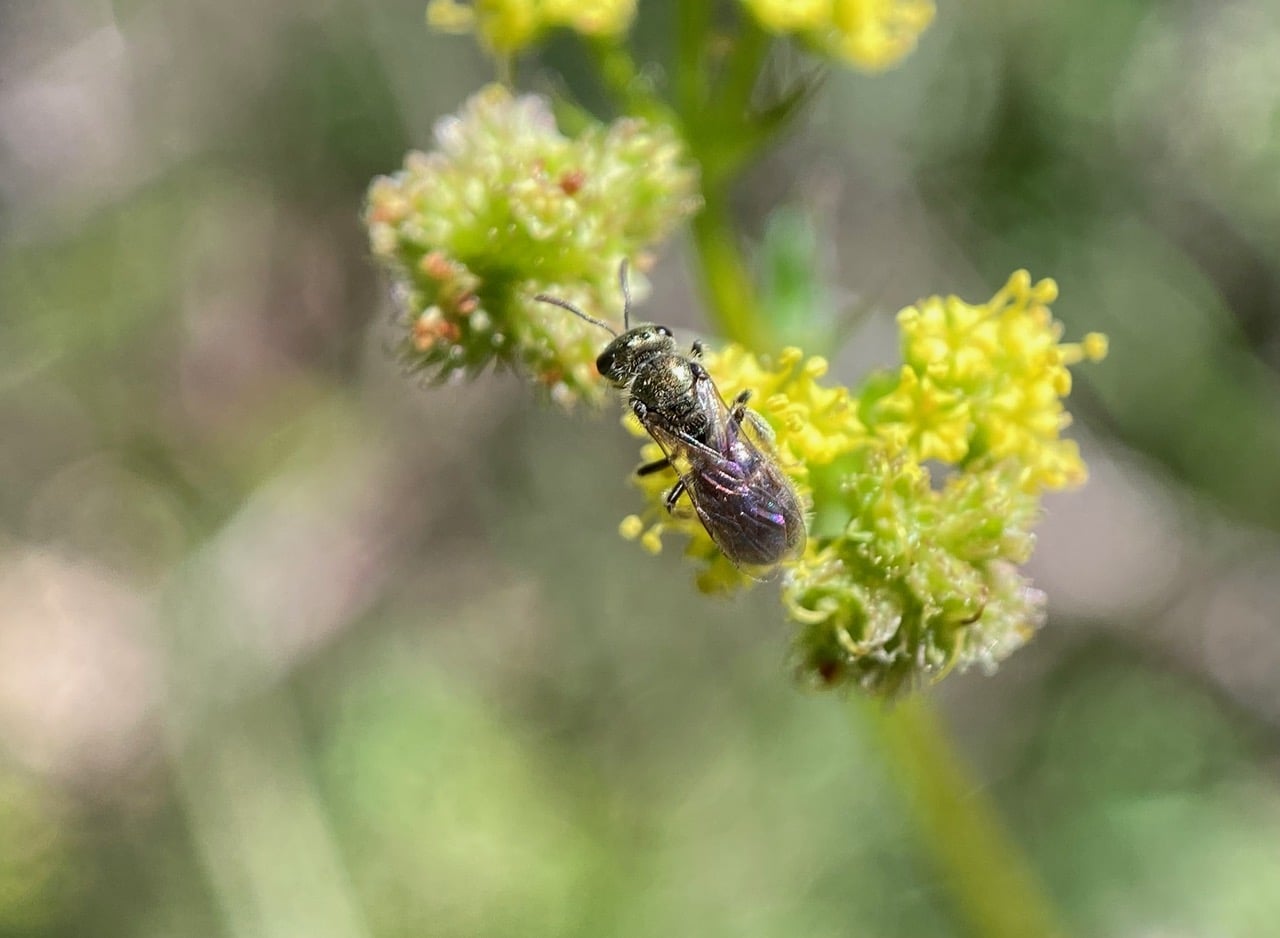
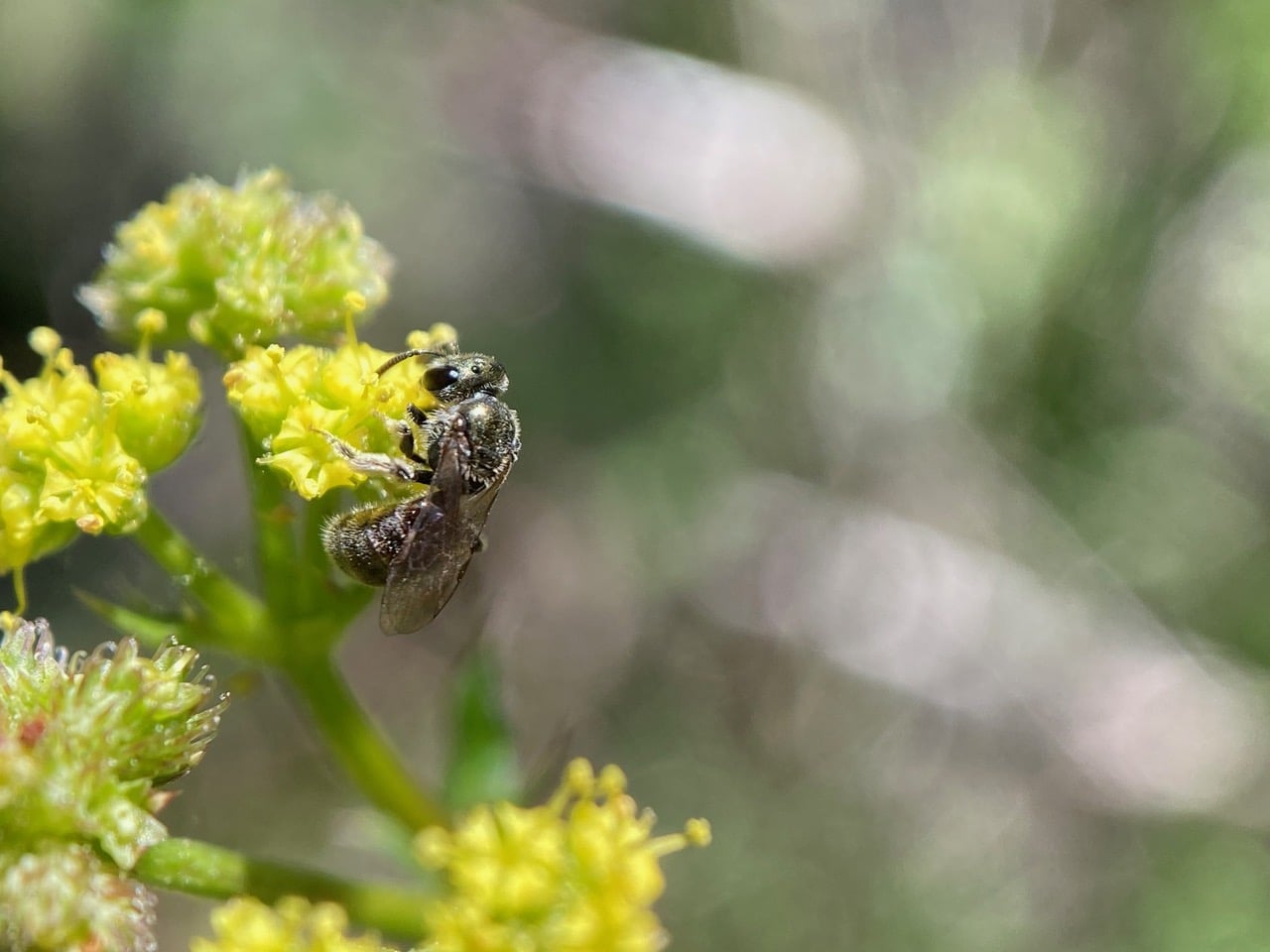
The female Sweat Bee does not seem to be collecting pollen – the scopae on her hind legs are empty. She is simply taking nectar from the Pacific Sanicle flowers.