

Pollinator Post 4/5/24 (2)
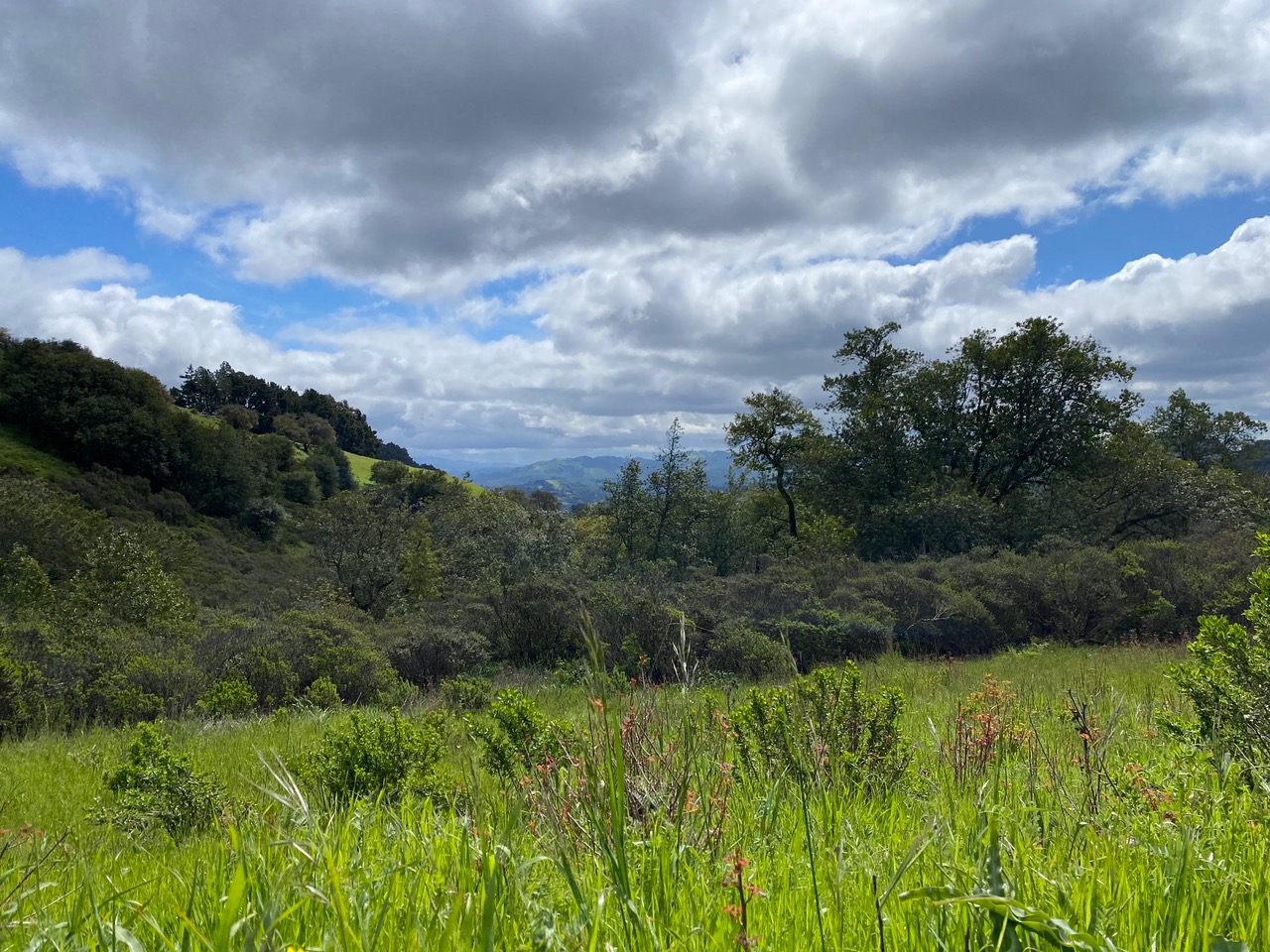
I decide to head home at 11:30 am.
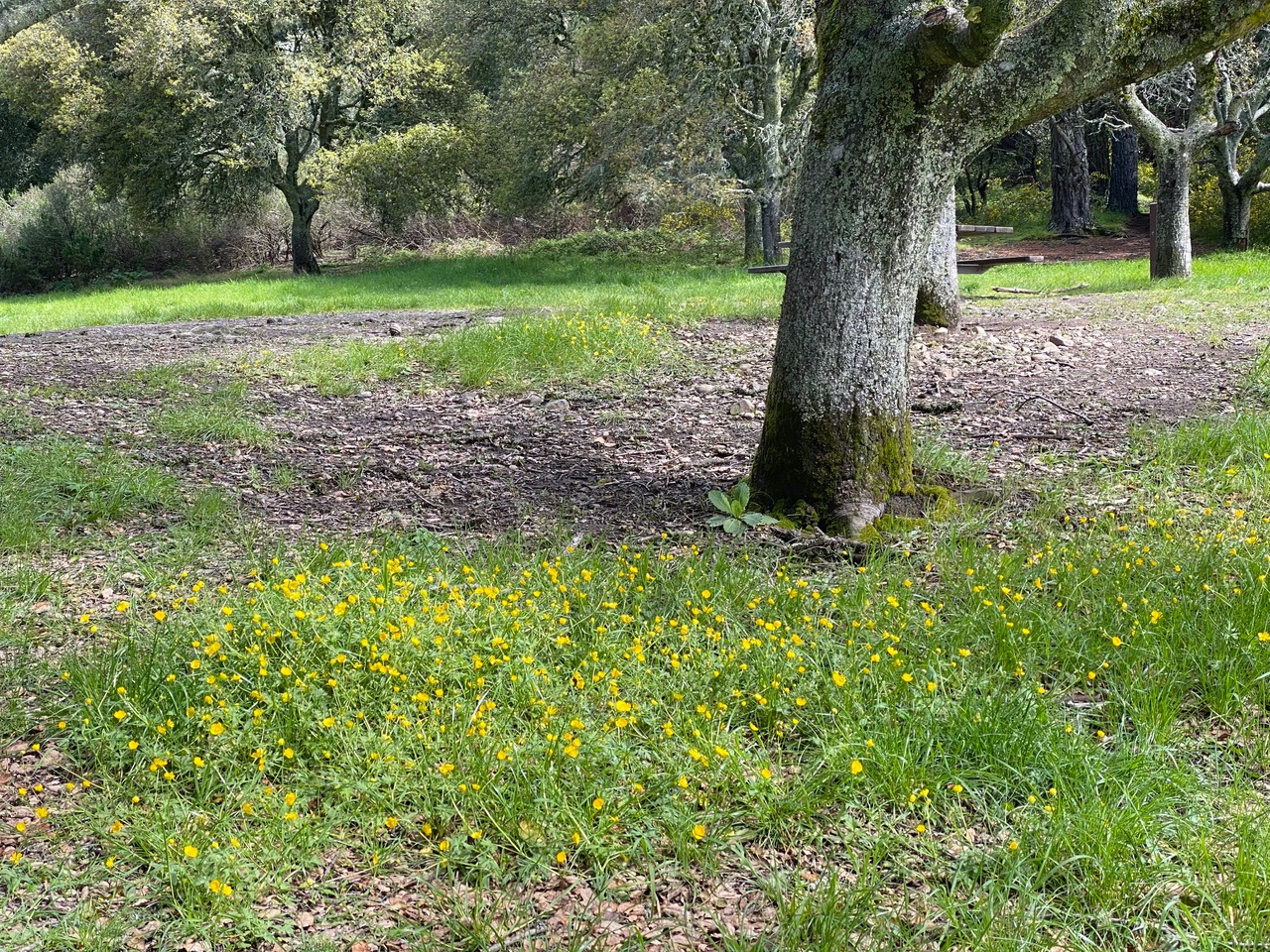
Passing the little park across from the Steam Train parking lot, I notice that the Buttercups are blooming gloriously here in small patches, under the oak trees and on the grassy slopes. I have never thought to look for insects here thinking that all the human activities have surely sent them packing.
 And here’s another one.

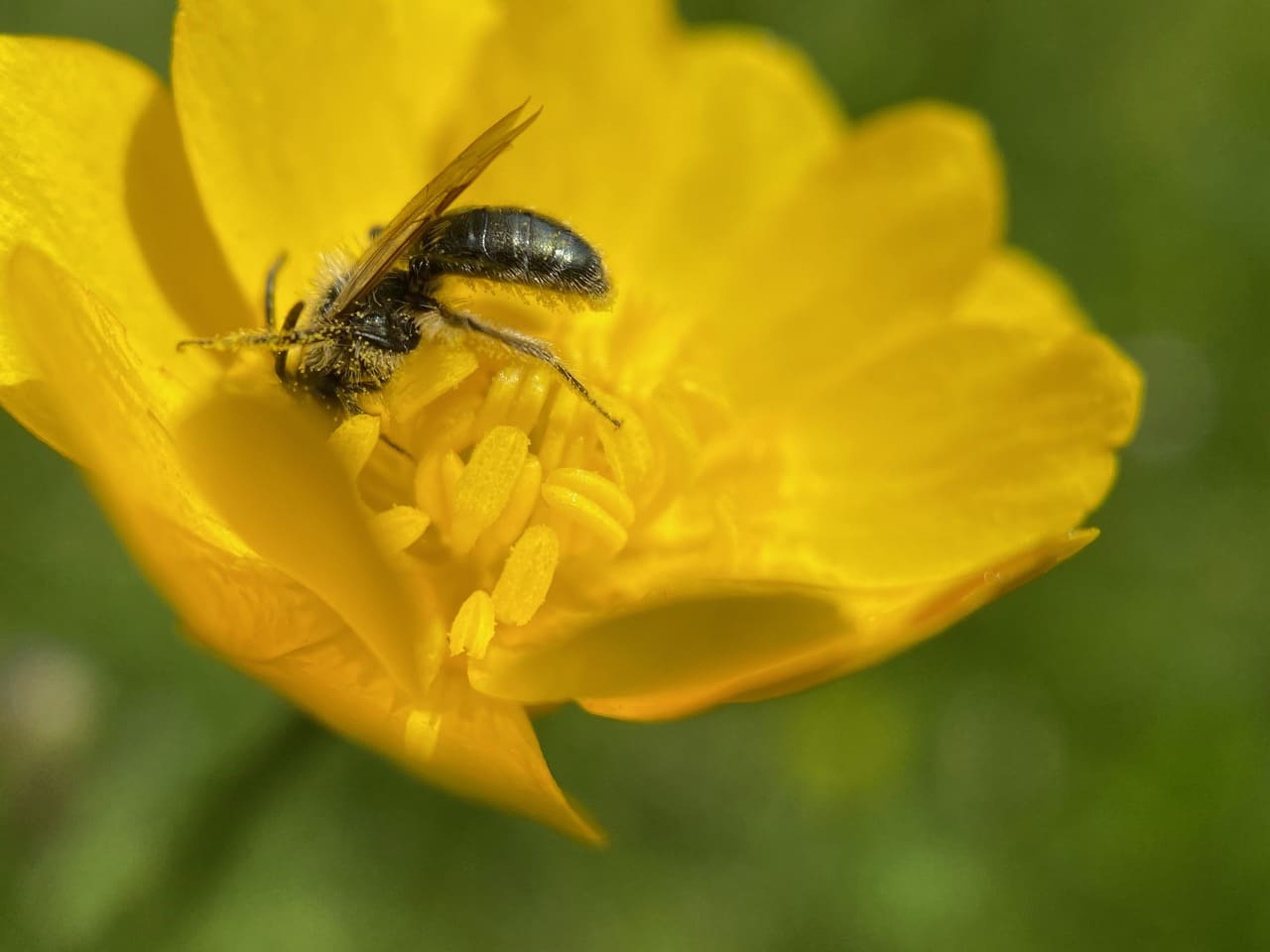
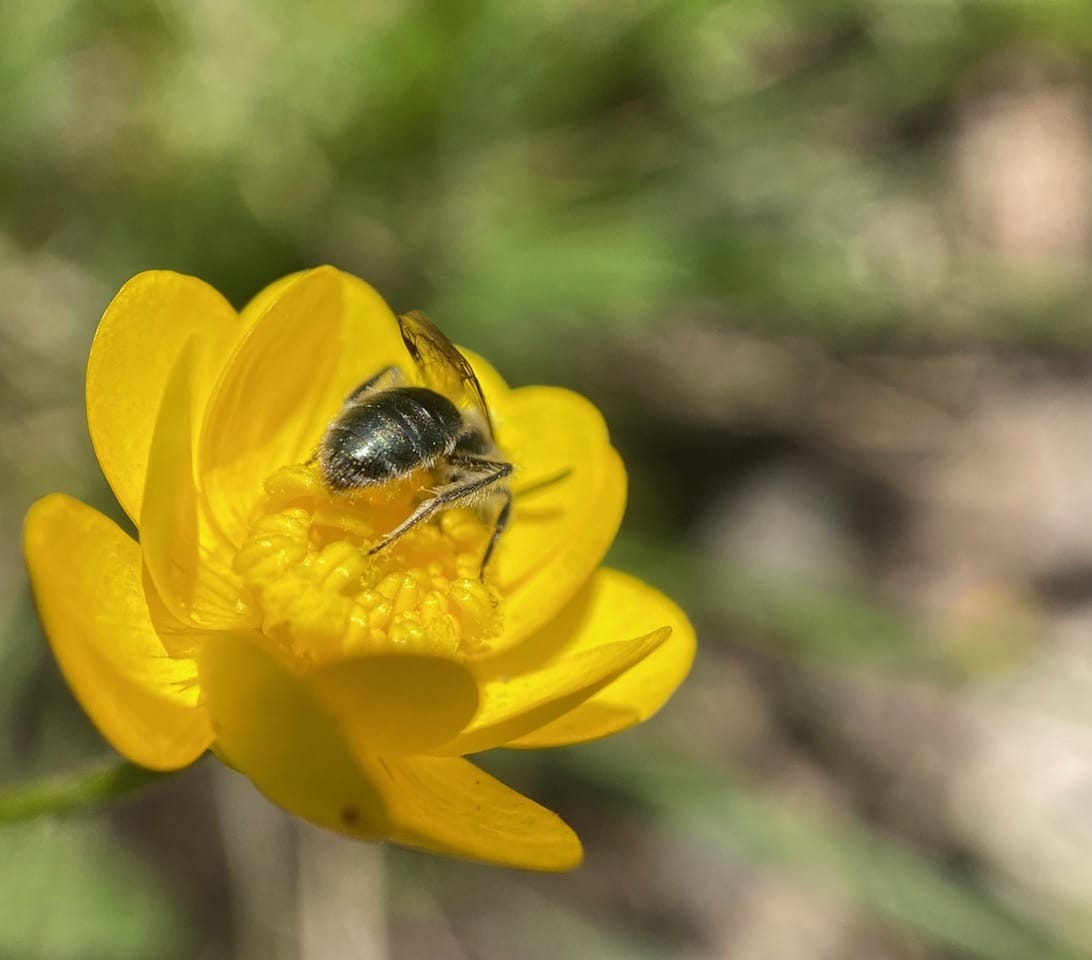
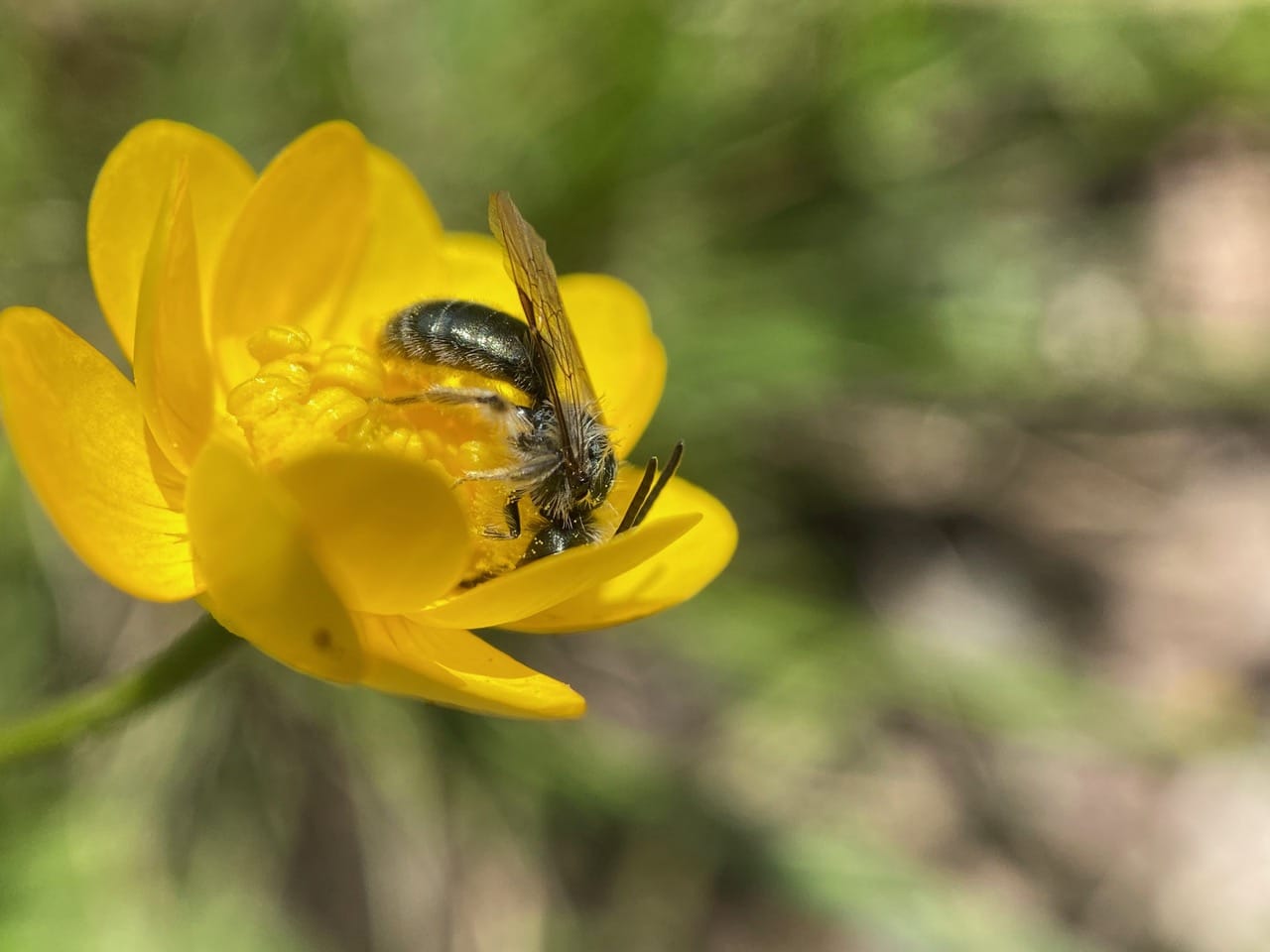 It is such joy to participate in their revelry. What better place to observe the Mining Bees on the buttercup flowers? There seems to be a healthy population of the bees and their host plant here. I have to return sometime while the buttercups are still in bloom to see if I can find some female Andrena.
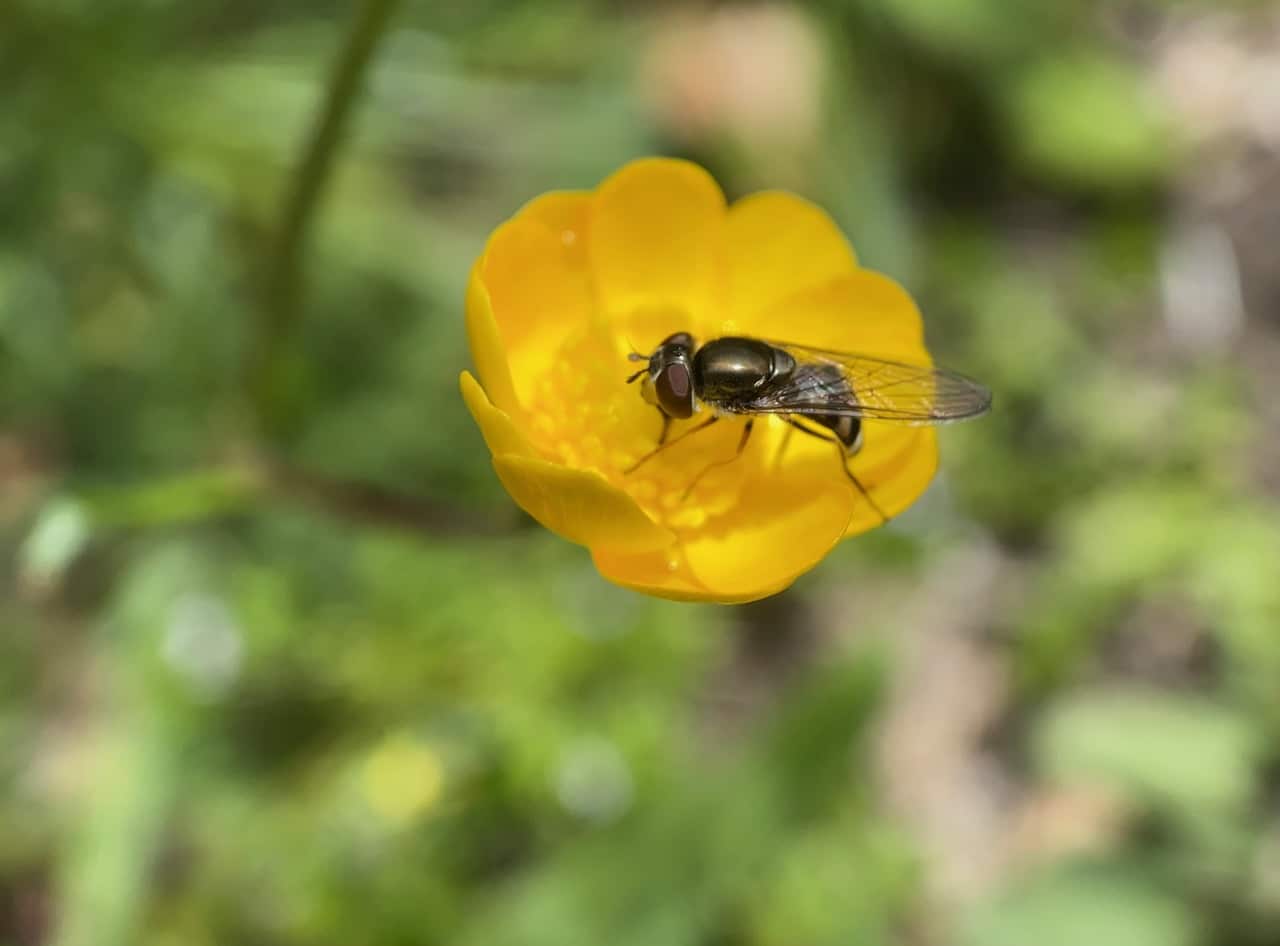
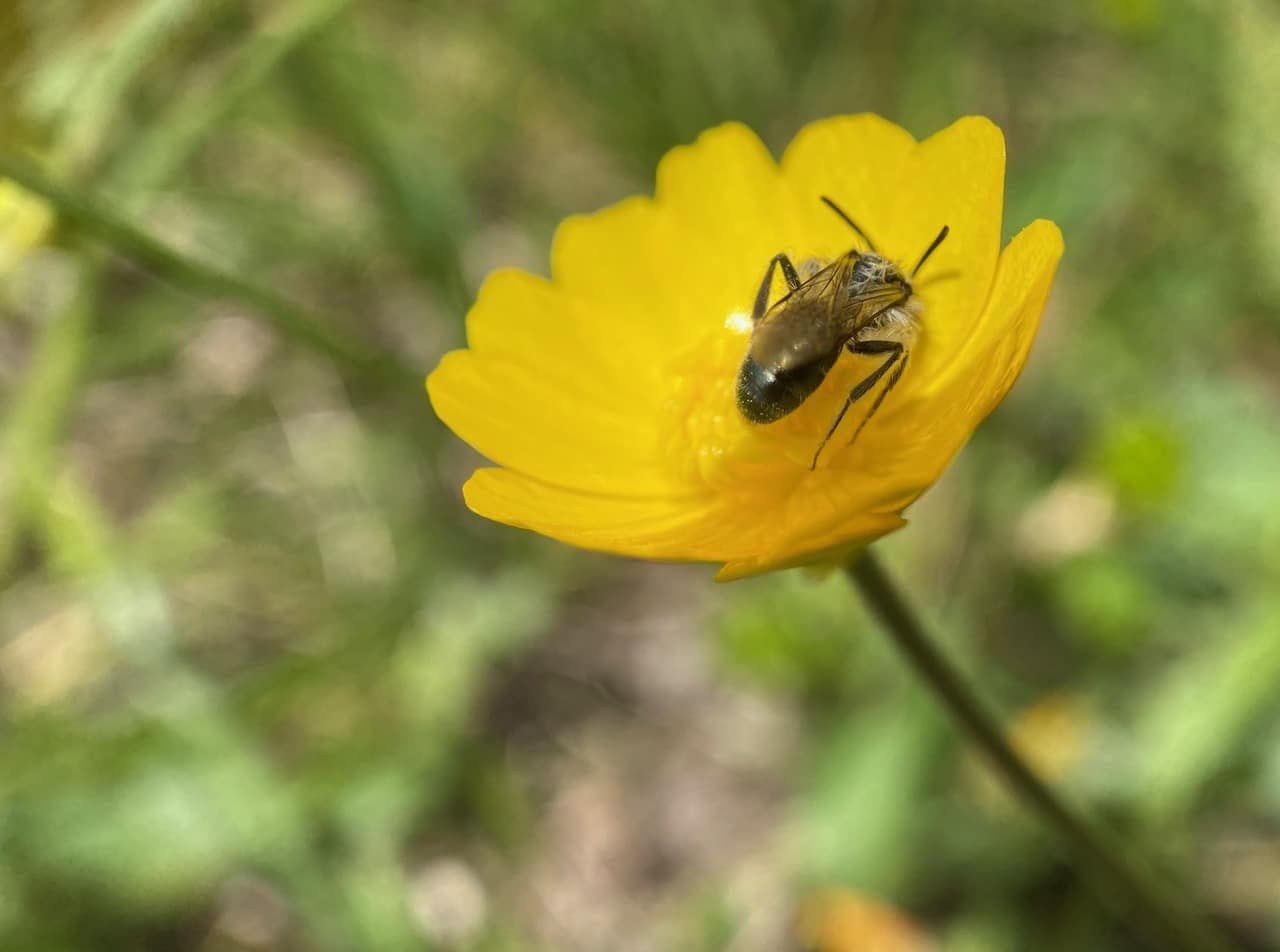
Hey, there’s a Sedgesitter, Platycheirus sp. (family Syrphidae) feeding on pollen from a California Buttercup flower.
Ooh, that looks like a bee, just like the Mining Bees I saw at Skyline Gardens minutes ago. And why not? This place is only about 300 yards from the spot I have been observing the bees.
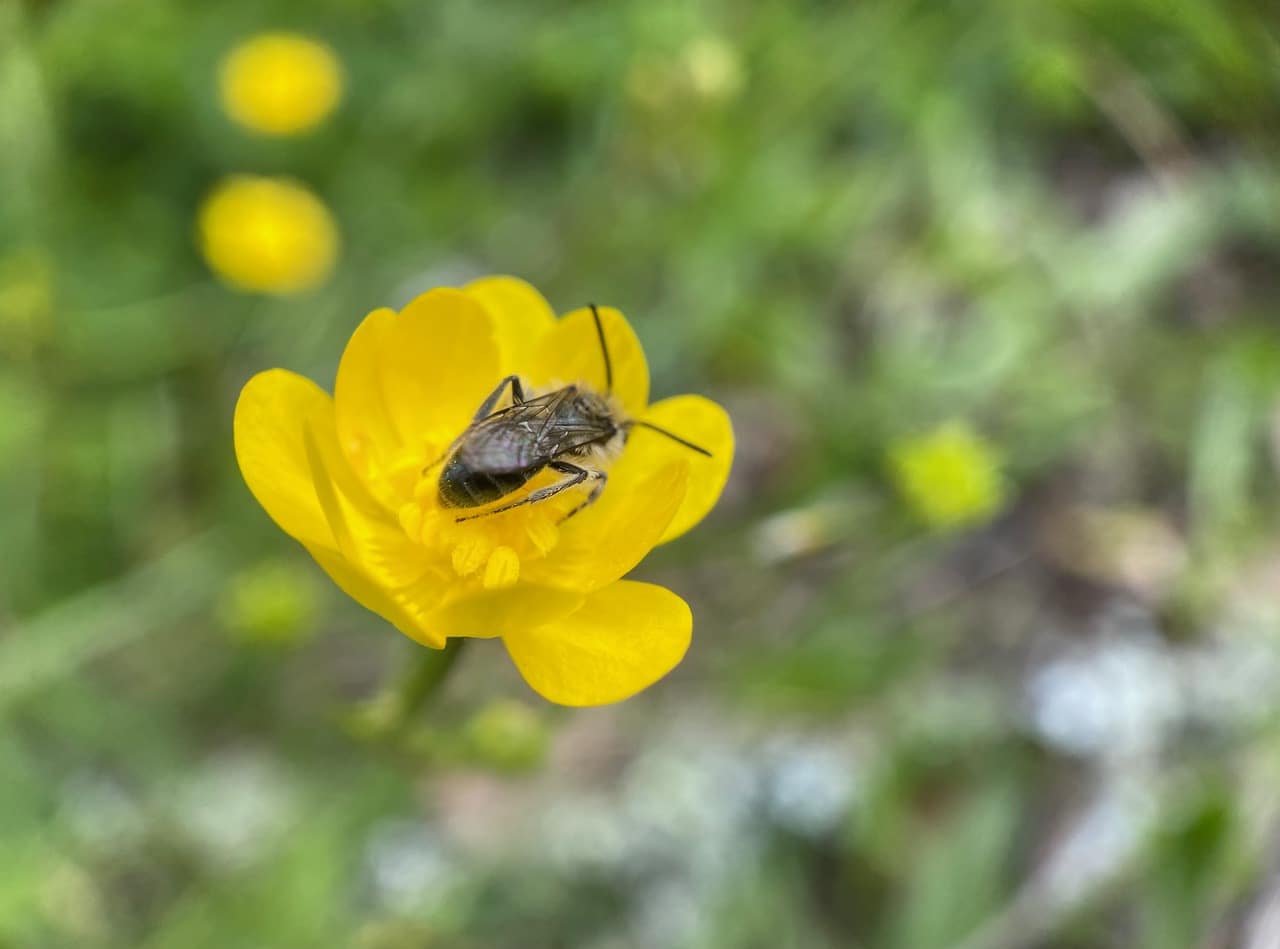
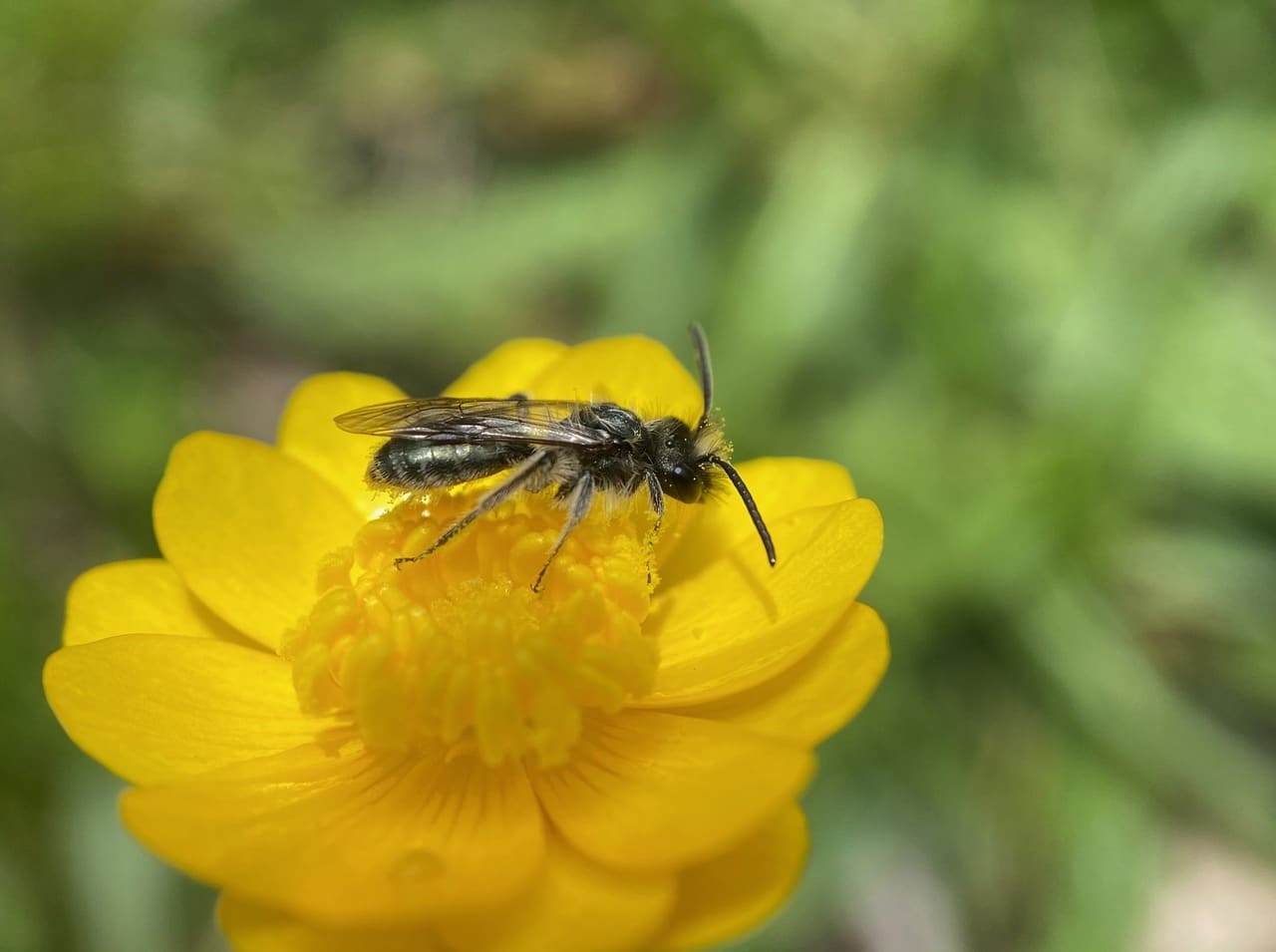
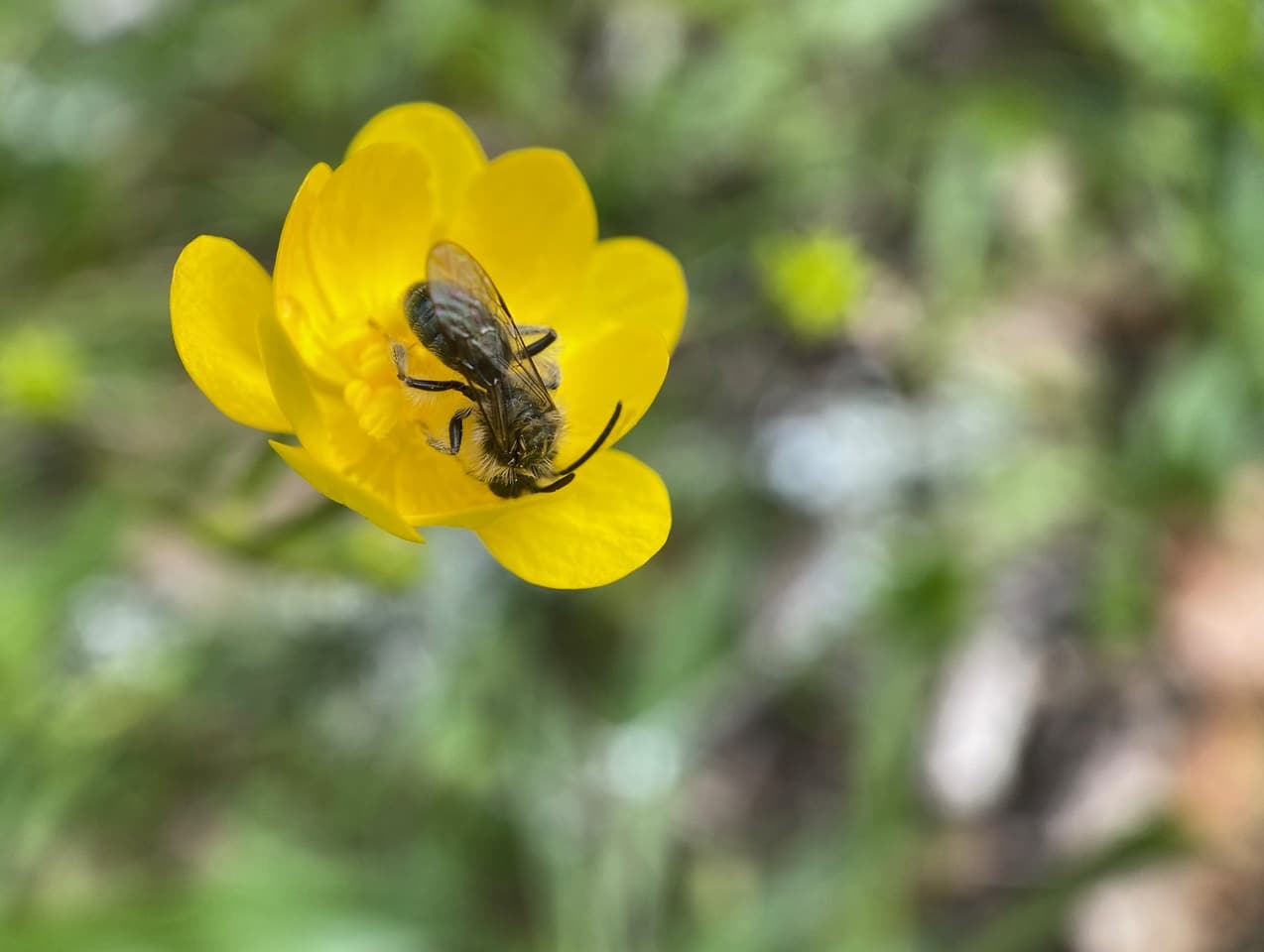
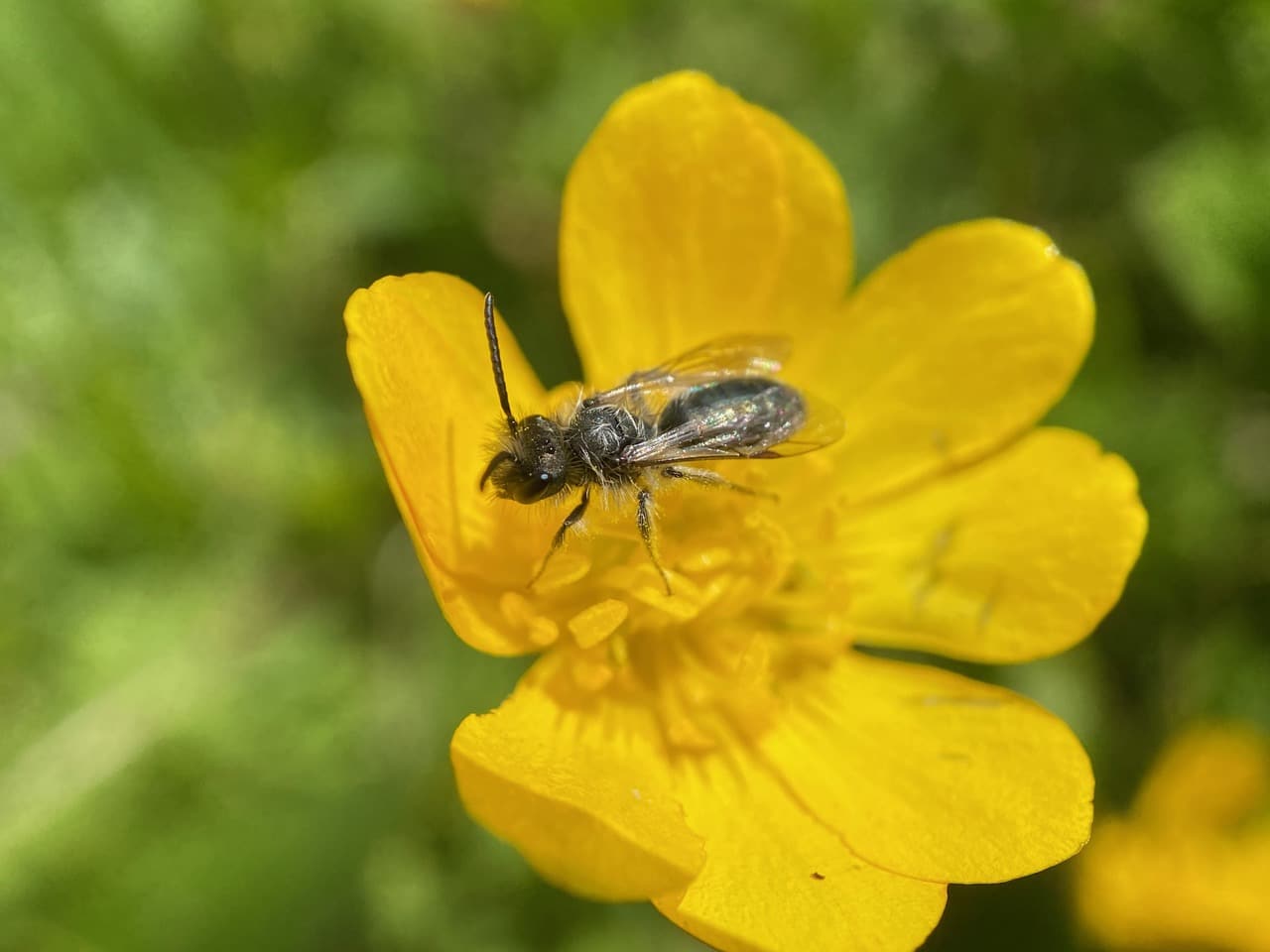
And here’s another one.Yes, the same Mining Bee, Andrena sp. (family Andrenidae) that loves the Buttercup flowers.
There are many more of the Andrenid Bees on the buttercup flowers in this little park than at the little patch at Skyline Gardens across the road. I see half a dozen of them swarm over a single plant with fresh blooms.
Elated, I walk around the park, stopping at various patches of buttercups to photograph the bees.
They seem to be all males, and they are actively seeking nectar.
The bees probe for nectar at the base of each petal, getting themselves covered with the sticky pollen.
It is such joy to participate in their revelry. What better place to observe the Mining Bees on the buttercup flowers? There seems to be a healthy population of the bees and their host plant here. I have to return sometime while the buttercups are still in bloom to see if I can find some female Andrena. Andrena is likely the largest and most species-diverse bee genus in California. It is one of the largest bee genera in the world. The floral preferences of Andrena species span the range of bee diets; some are broad generalists, and a number are strict specialists. Andrena are among the first bees to fly in the spring; their ability to withstand the chill is still a puzzle to scientists. The bees can’t fly until their body temperatures reach 50-60 F. They rely on the warmth of the sun to get them to speed, and it is not uncommon to see them warming up on leaves or rocks. This cold-hardiness makes Andrena excellent pollinators of early spring wildflowers and cultivated crops.