

Pollinator Post 4/4/23 (2)
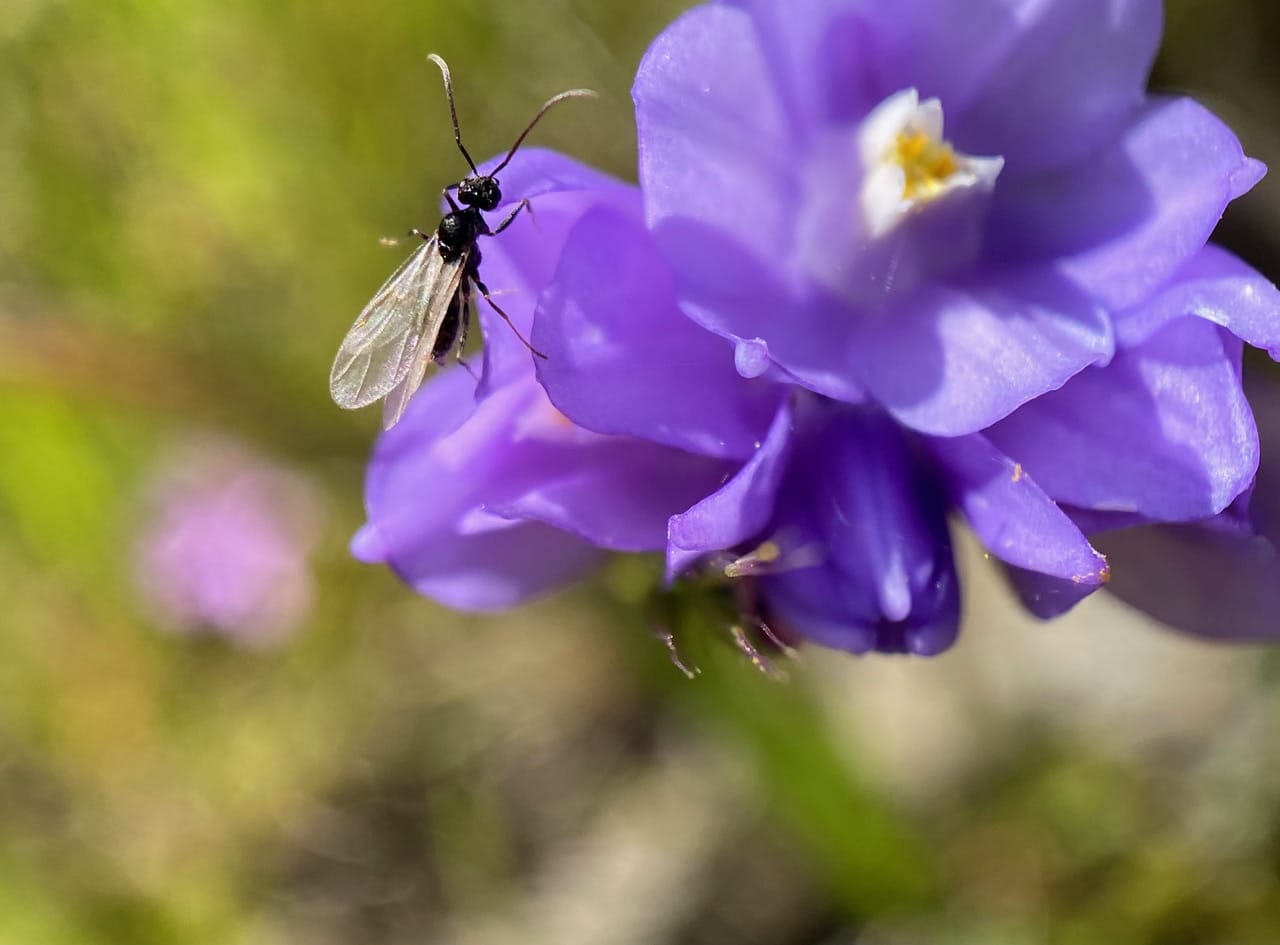
A male alate (winged reproductive) of the American Winter Ant, Prenolepis imparis is perched on a flower cluster of Blue Dicks, Dipterostemon capitatus at Diablo Bend. This is a second alate I have come across this afternoon. This must be an auspicious “Flying Ant Day” on which the winged queens and males emerge from the nest for their nuptial flight. It is an important event in the life of the colony – a chance at sexual reproduction and establishment of new colonies.
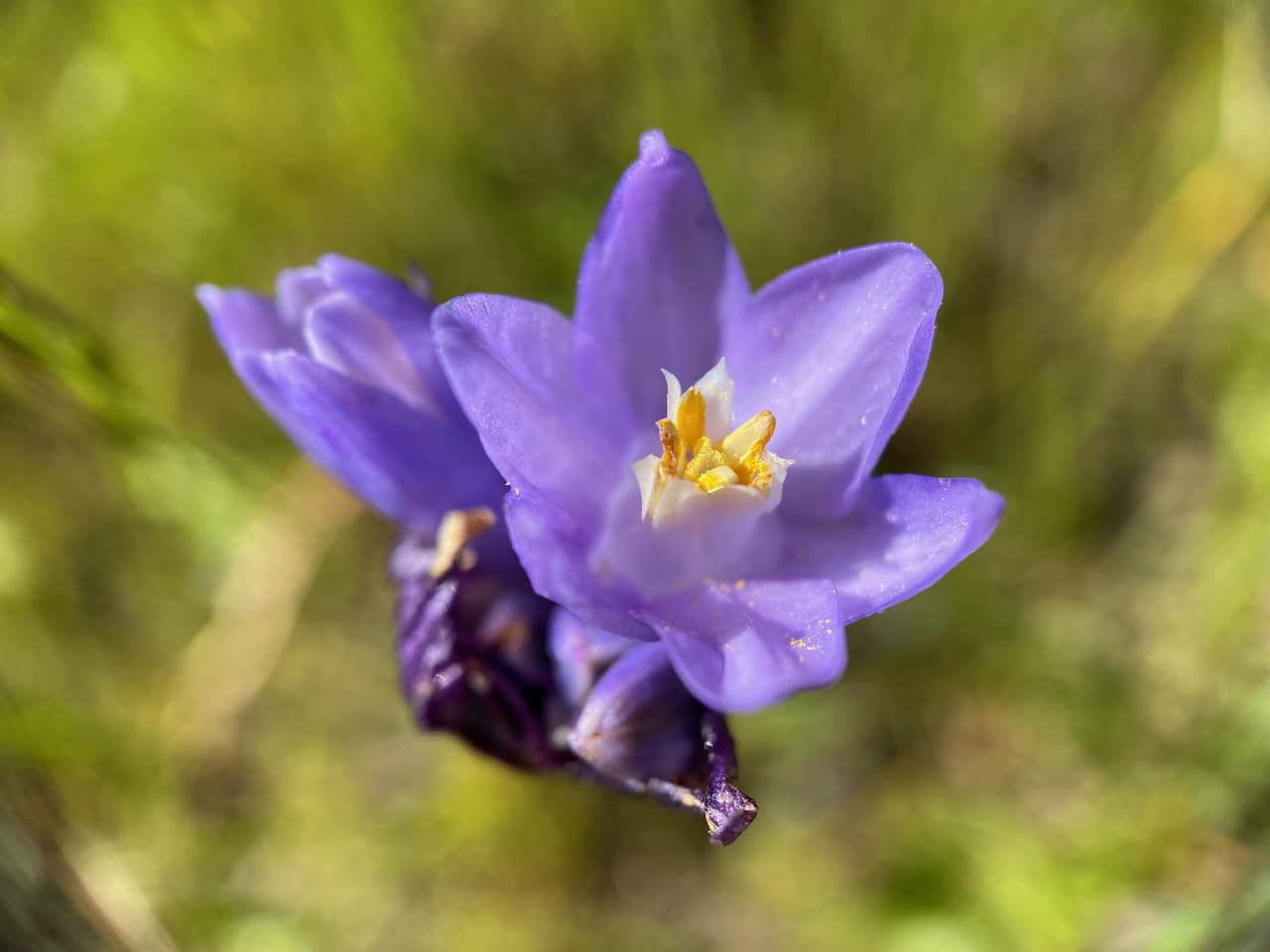
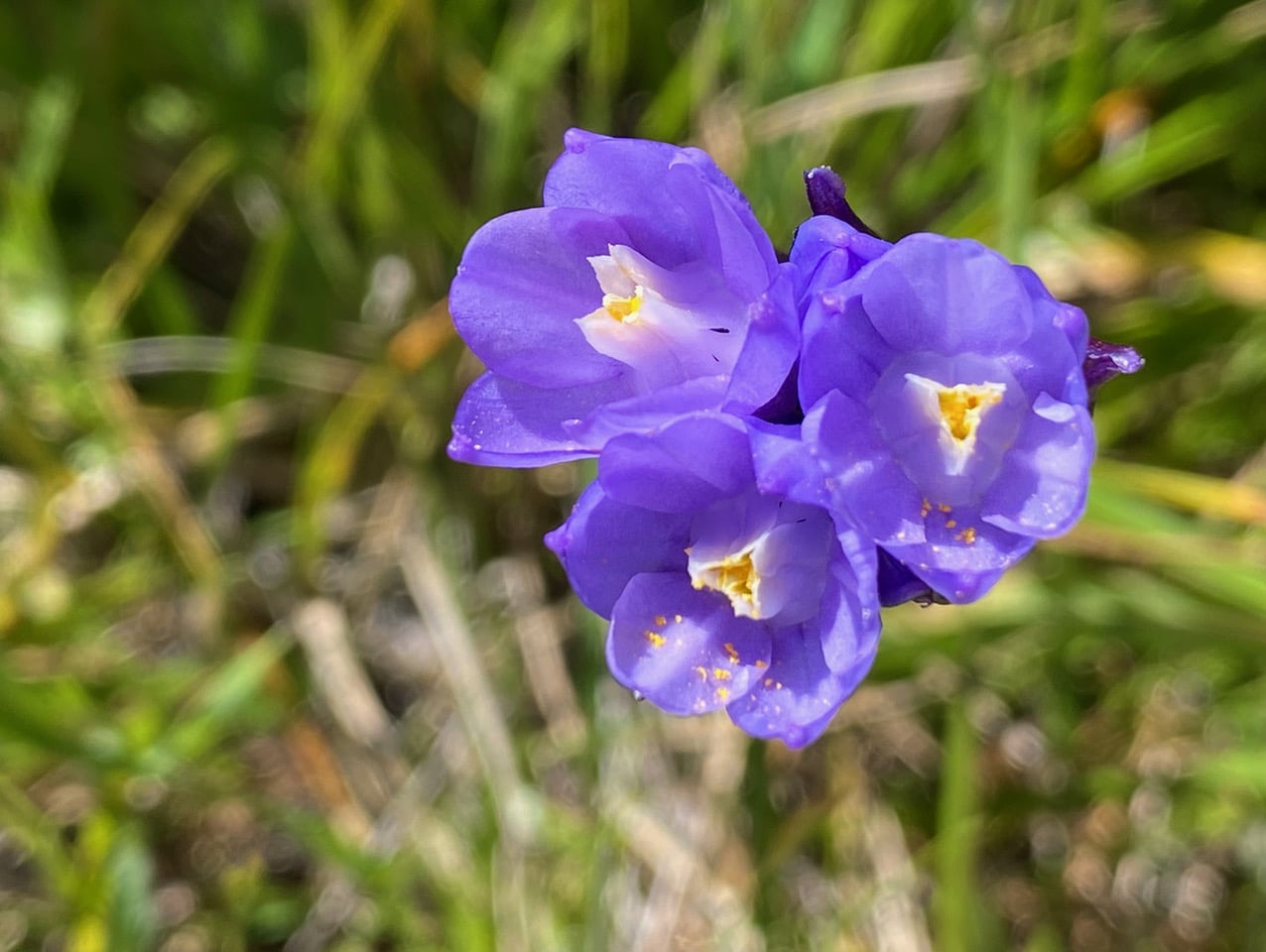
The Blue Dicks are blooming in between the Silverleaf Lupines at Diablo Bend, and getting lots of attention from the bumble bees and other insects. Today I am fortunate to capture a video of a Bee Fly visitation.
A Greater Bee Fly, Bombylius major (family Bombyliidae) visits a Blue Dicks flower, Dipterostemon capitatus for nectar. While its wings continue to beat, its front legs grip the flower and its long proboscis is inserted to collect the nectar.
Bombylius major, commonly known as the Greater Bee Fly is a parasitic bee mimic fly. It derives its name from its close resemblance to bumble bees. Its flight is quite distinctive – hovering in place to feed, and darting between locations. The species has long legs and a long rigid proboscis held in from of the head. Adults visit flowers for nectar (and sometimes pollen) from a wide variety of plant families, and are considered good generalist pollinators. Often the pollen is transferred between flowers on the fly’s proboscis. The larvae, however, have a seamy side. They are parasitoids of ground-nesting bees and wasps, including the brood of digging bees in the family Andrenidae. Egg deposition takes place by the female hovering above the entrance of a host nest, and throwing down her eggs using a flicking movement. The larvae then make their way into the host nest or attach themselves to the bees to be carried into the nest. There the fly larvae feed on the food stored, as well as the young solitary bees
Judging from the scattered pollen, these Blue Dicks flowers must have seen some serious insect action and are probably well-pollinated.
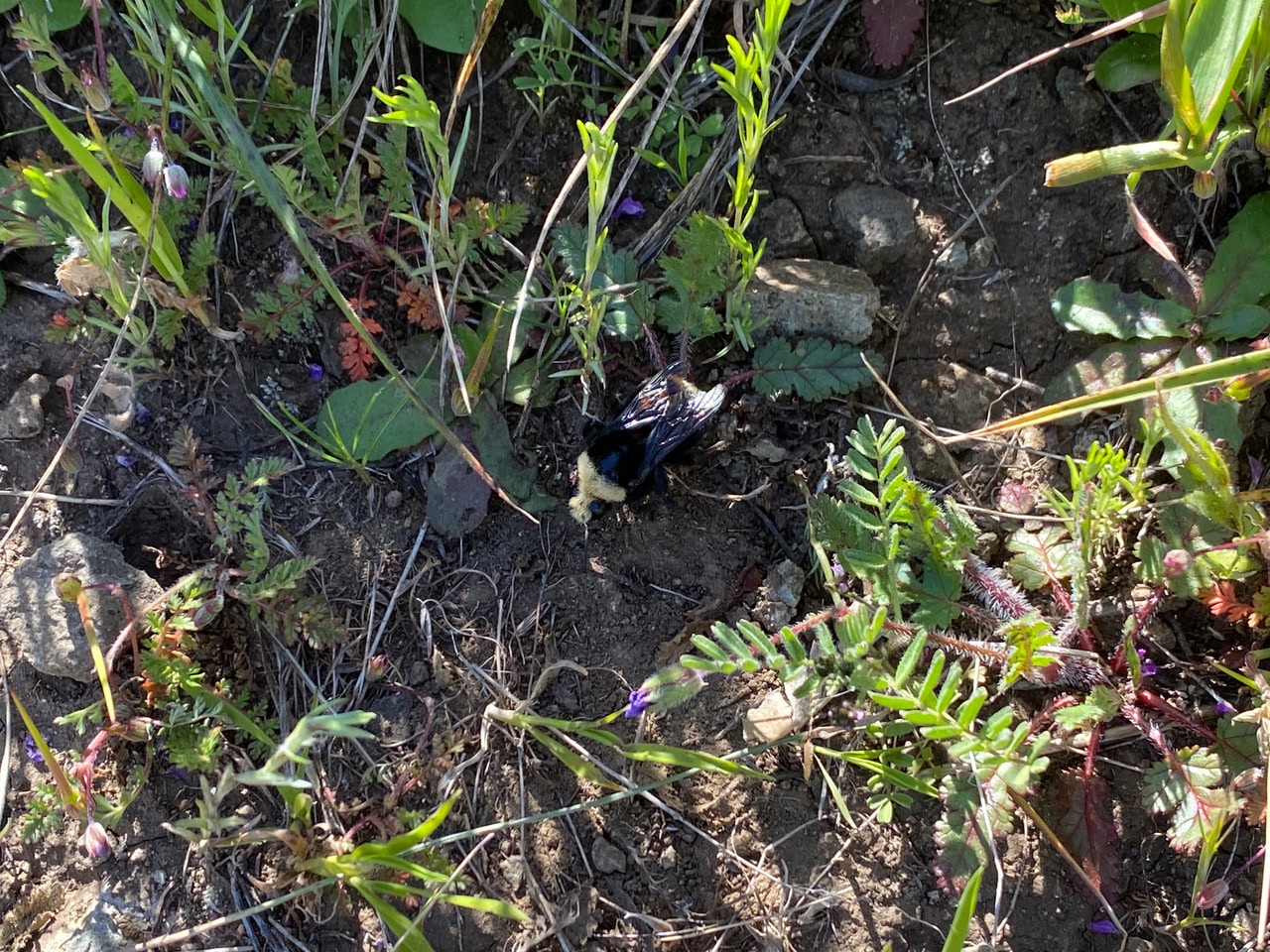
A queen Yellow-faced Bumble Bee, Bombus vosnesenskii flies low over the vegetation on the hillside, looking for a nesting site. She lands on the ground near me and investigates through the undergrowth on foot. She is probably following olfactory cues now using her sense of smell. Bumble bees often nest in abandoned rodent burrows.
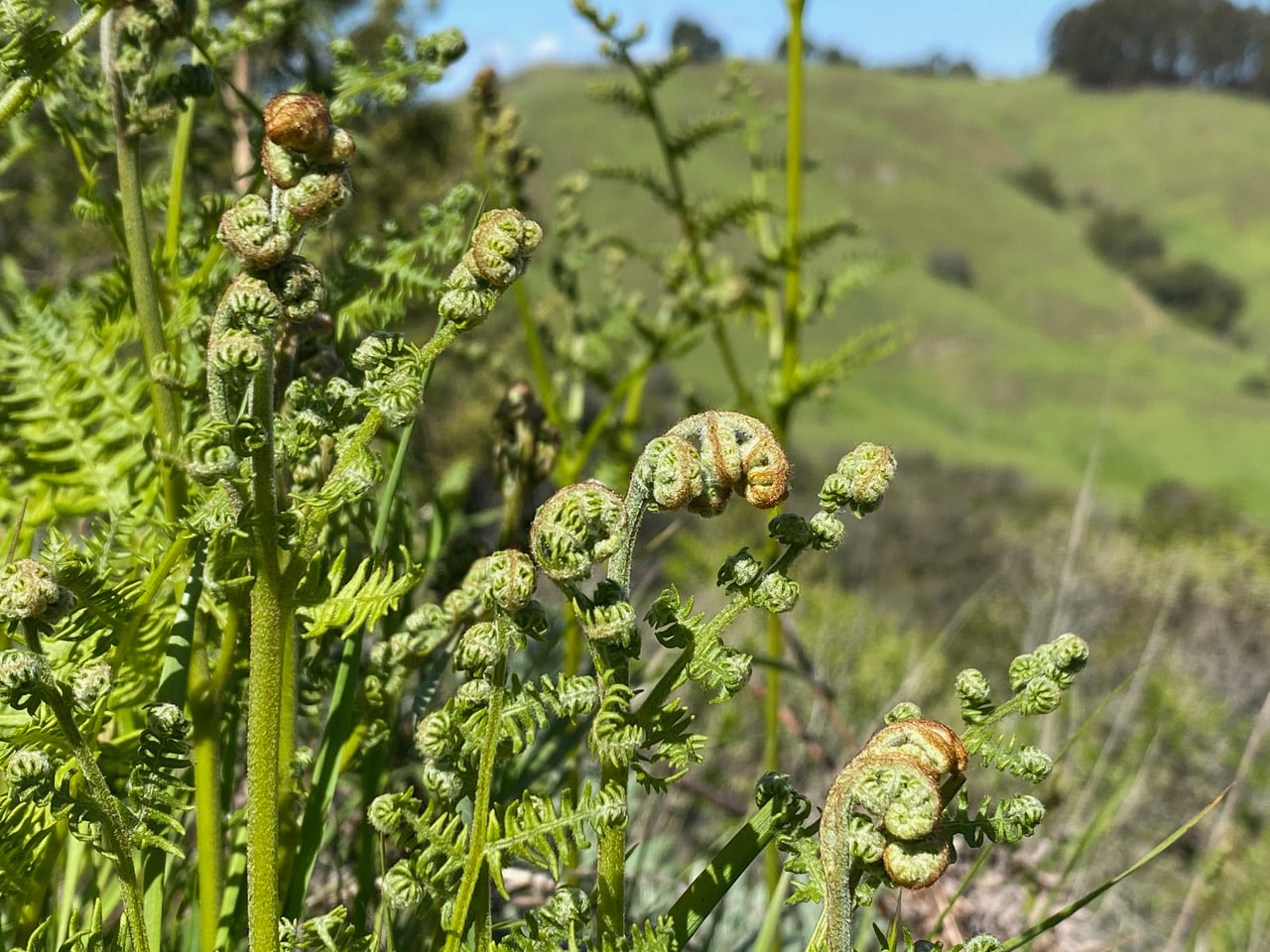
Western Bracken Fern, Pteridium aquilinum fiddleheads are unfurling at the edge of the cliff near Diablo Bend.
Bracken Fern, Pteridium aquilinum is found on all continents except Antarctica and all environments except deserts. The genus probably has the widest distribution of any fern in the world. Bracken is a well-adapted pioneer plant which can colonize land quickly at the expense of other plants and wildlife, sometimes presenting a threat to biodiversity.
Fossil evidence suggests that bracken fern has had at least 55 million years to evolve and perfect anti-disease and anti-herbivore chemicals. Bracken Fern is chemist extraordinaire. It produces bitter tasting sesquiterpenes and tannins, cyanogenic glycosides that yield hydrogen cyanide when munched by herbivores. It also produces two insect molting hormones, the ecdysones that cause uncontrollable, repeated molting in insects ingesting the fronds, leading to rapid death. It generates simple phenolic acids that reduce grazing, may act as fungicides, and are implicated in bracken’s allelopathic activity in suppressing neighboring plants.
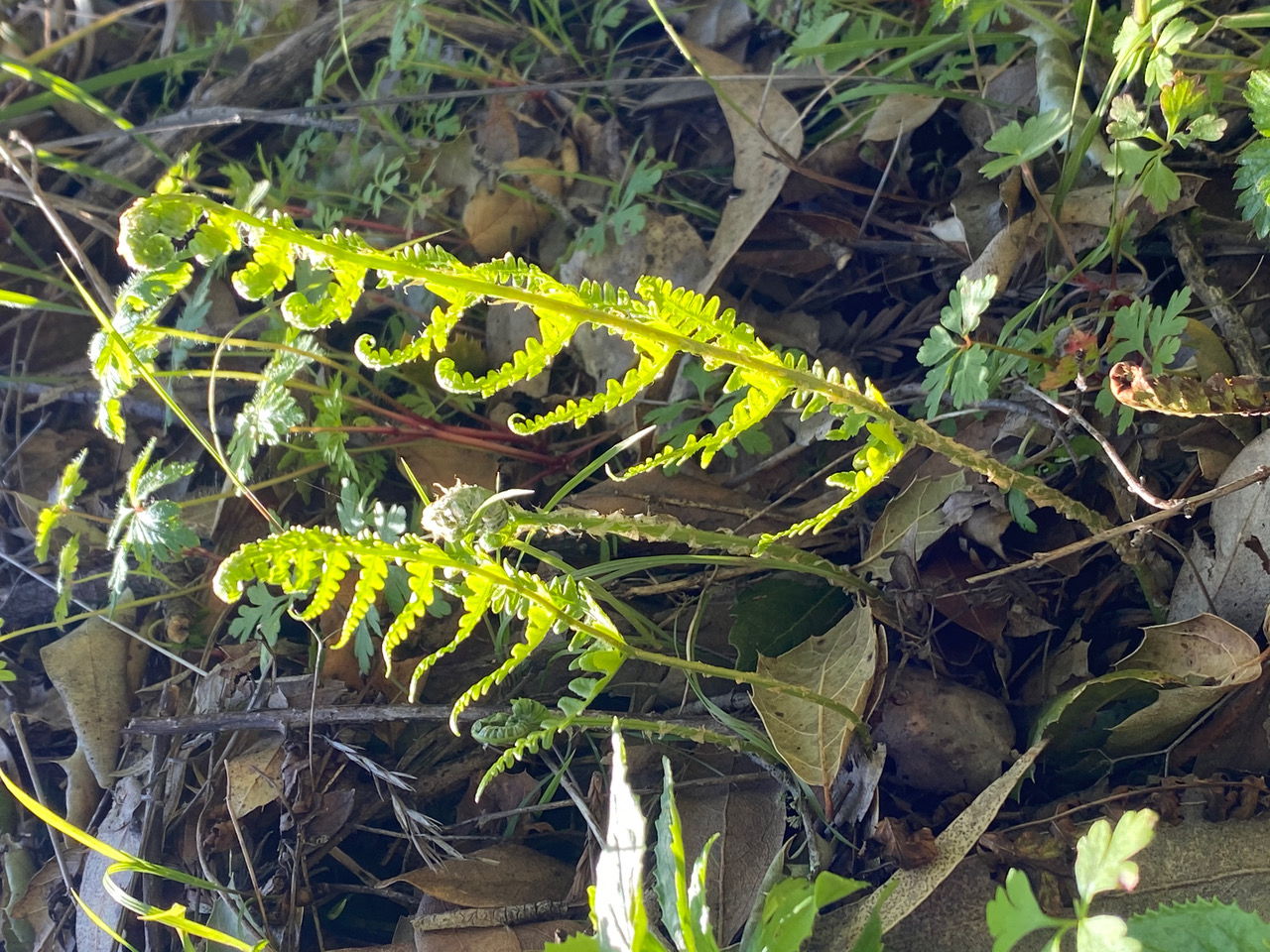
Lit by the afternoon sun, young fronds of Wood Fern, Dryopteris arguta glow neon green on the trail bank.
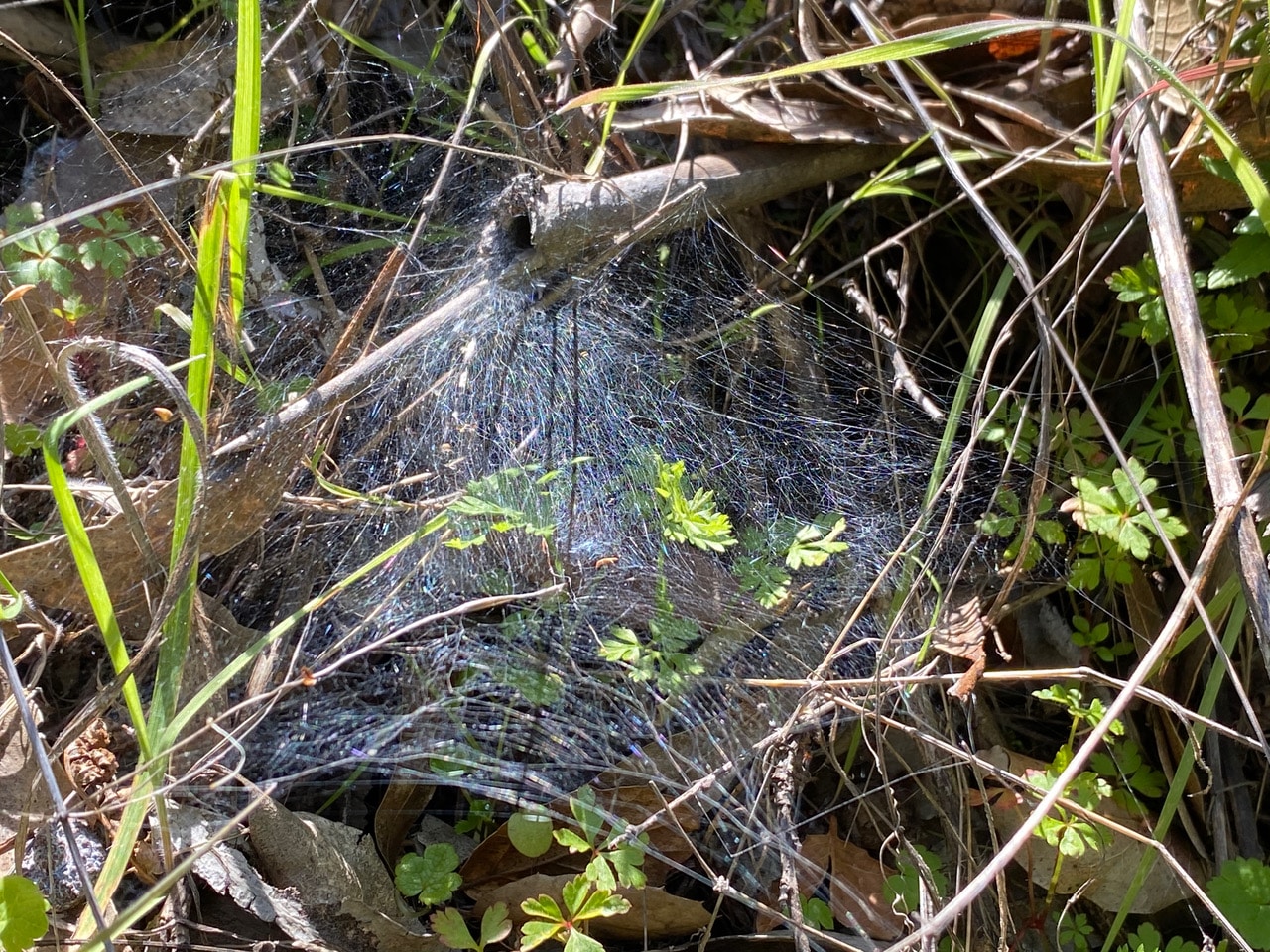
The low sun has rendered visible the lair of a Typical Funnel Weaver Spider (subfamily Ageleninae, family Agelenidae) on the trail bank. The fine silk mesh radiates from a hollow twig, presumably where the spider rests and lies in ambush.
A funnel-weaver is most easily identified by its web, which is constructed of a flat sheet of webbing that narrows into a funnel or tube shape in the back. The funnel often bottlenecks into a shrub, hollow crevice, or into the corners of a structure. Agelenids are not active predators, preferring to “sit-and-wait” in their funnel for unsuspecting prey to be intercepted by the web. Their webbing is not sticky. Rather, the spider relies on lightning fast speed to quickly dart from its hiding place to capture its prey. The spiders bite and paralyze their prey and often drag it back into the safety of the funnel to consume it.
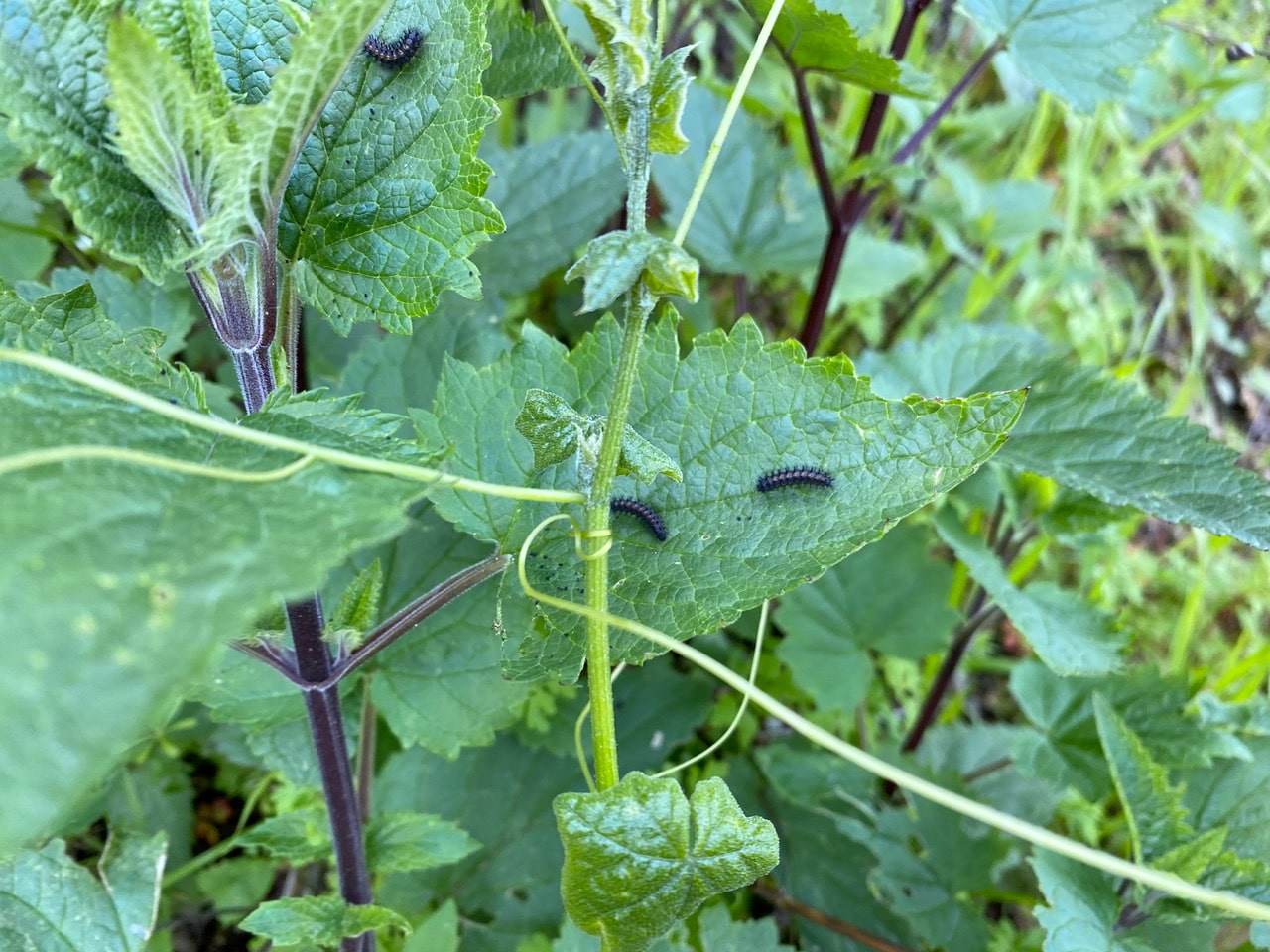
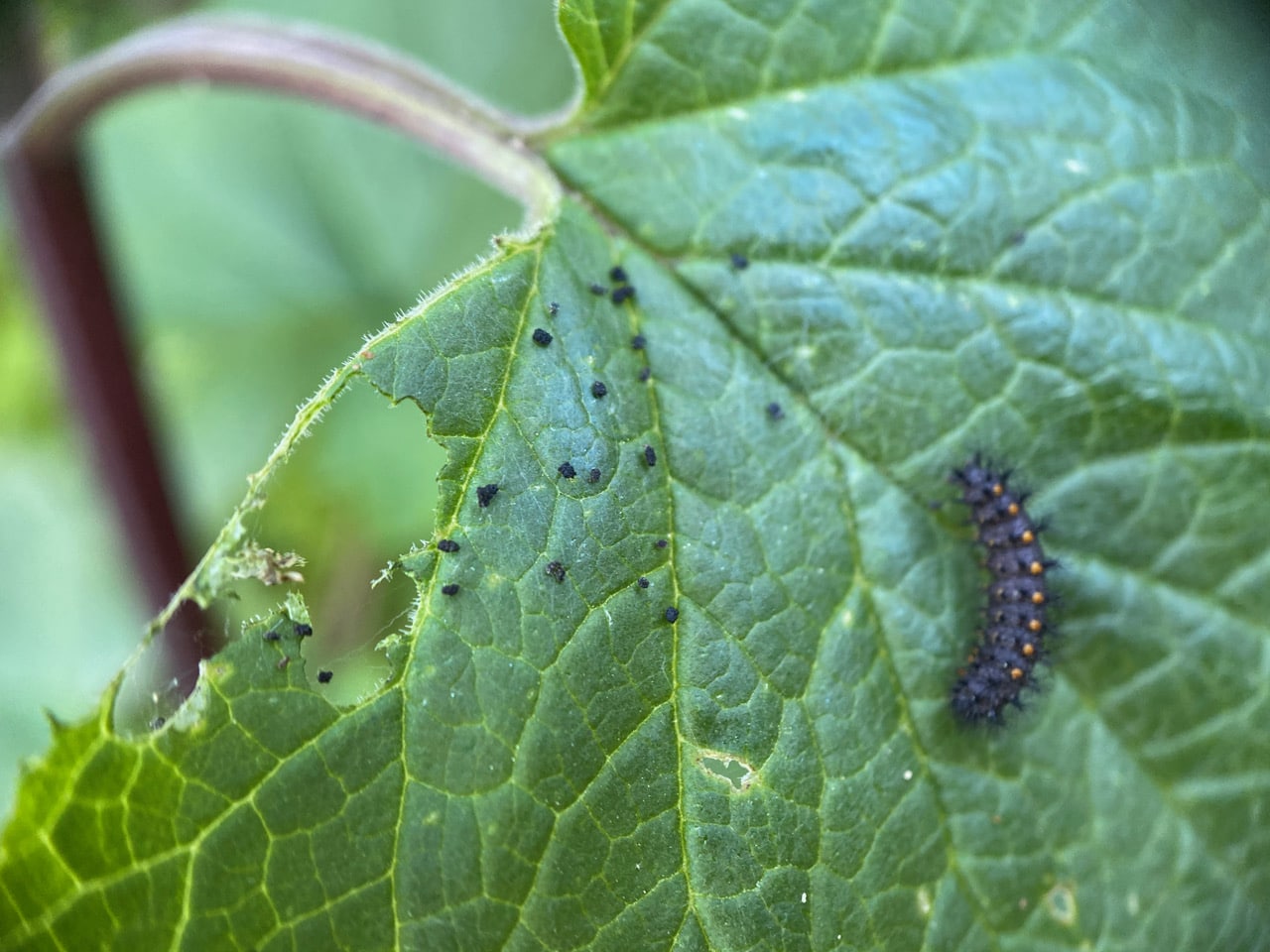
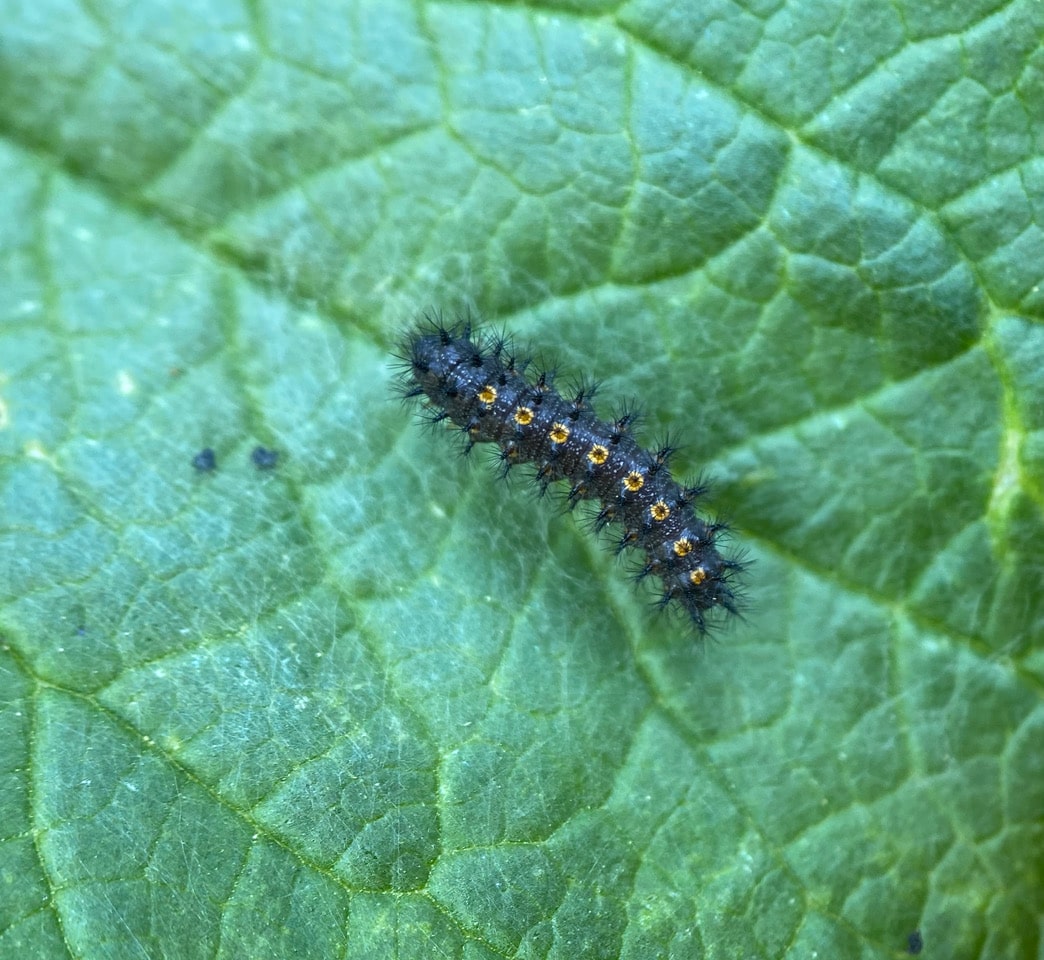
Passing the dense stand of California Bee Plant, Scrophularia californica, I spot some tiny black caterpillars on the leaves. There are about a dozen of them on three adjacent plants. I think these are the larvae of the Variable Checkerspot butterfly, Euphydryas Chalcedona (family Nymphalidae). Although the butterfly uses host plants from many families, I have found the caterpillars on the Bee Plant at Skyline Gardens in the past. The adults fly April-June in California.
Feeding scars and frass (caterpillar poop) left by the caterpillar.
Close-up of one of the little caterpillars of Variable Checkerspot butterfly.