It’s low tide at Crab Cove in Alameda this morning. A group of young children is on a tide-pooling adventure with their naturalist guide.
“I found Sponge Bob!”, a joyful voice rings from the beach.
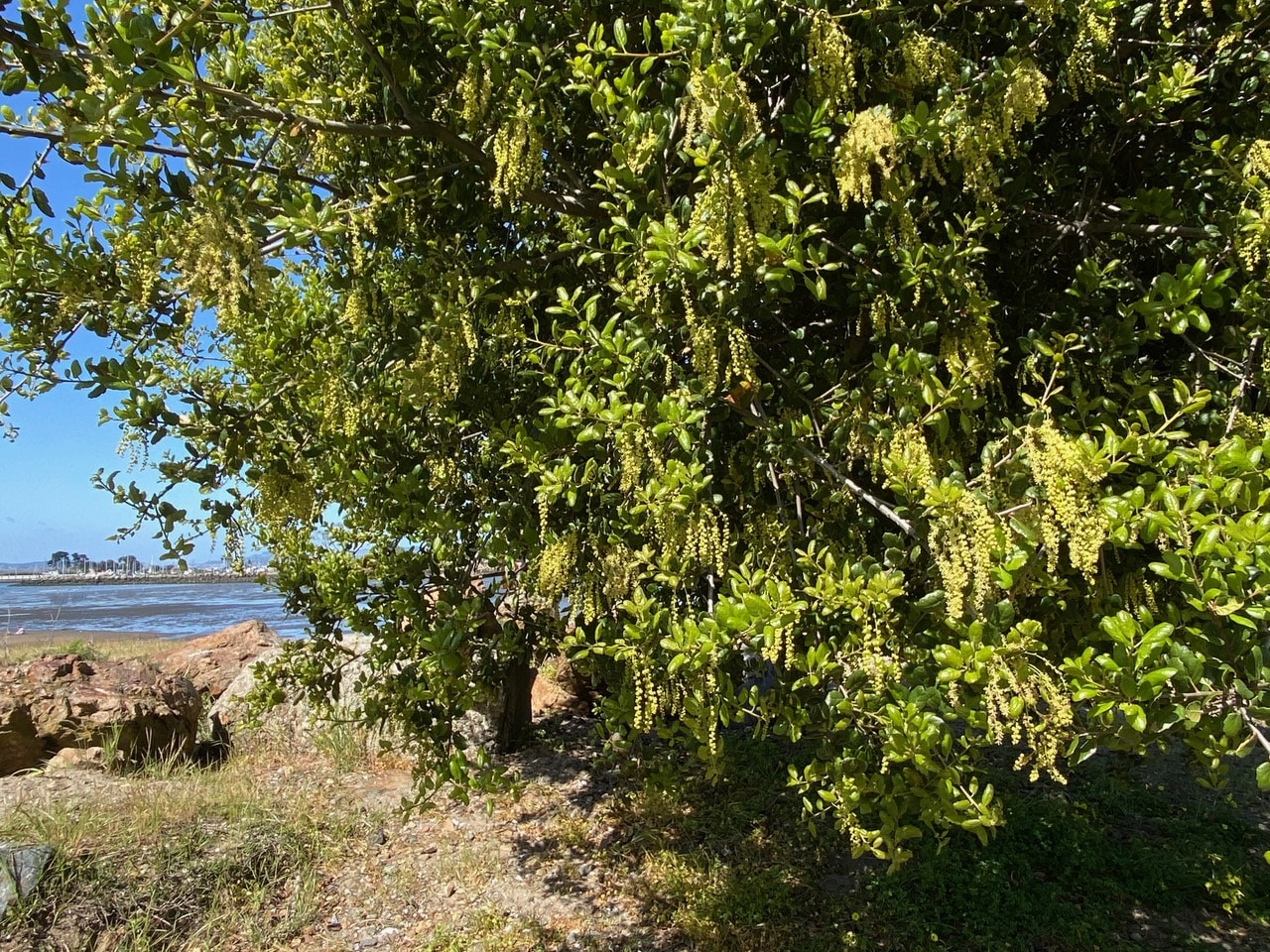
I waste no time locating the small Coast Live Oak, Quercus agrifolia by the beach. I am on a mission to find its female flowers! Since I posted about the male catkins, a friend has asked if I had any pictures of the female flowers. Nancy is working on a volunteer project restoring oaks trees in the Berkeley hills, and wonders if she could predict acorn crop ahead of time by the prevalence of female flowers in the spring. She is not sure how to identify or locate the flowers on the tree. If I were to find any flowers, this small tree at Crab Cove is my best bet. Its lowest branches are only about 3 feet off the ground, and I can photograph the flowers at eye level if they are there.
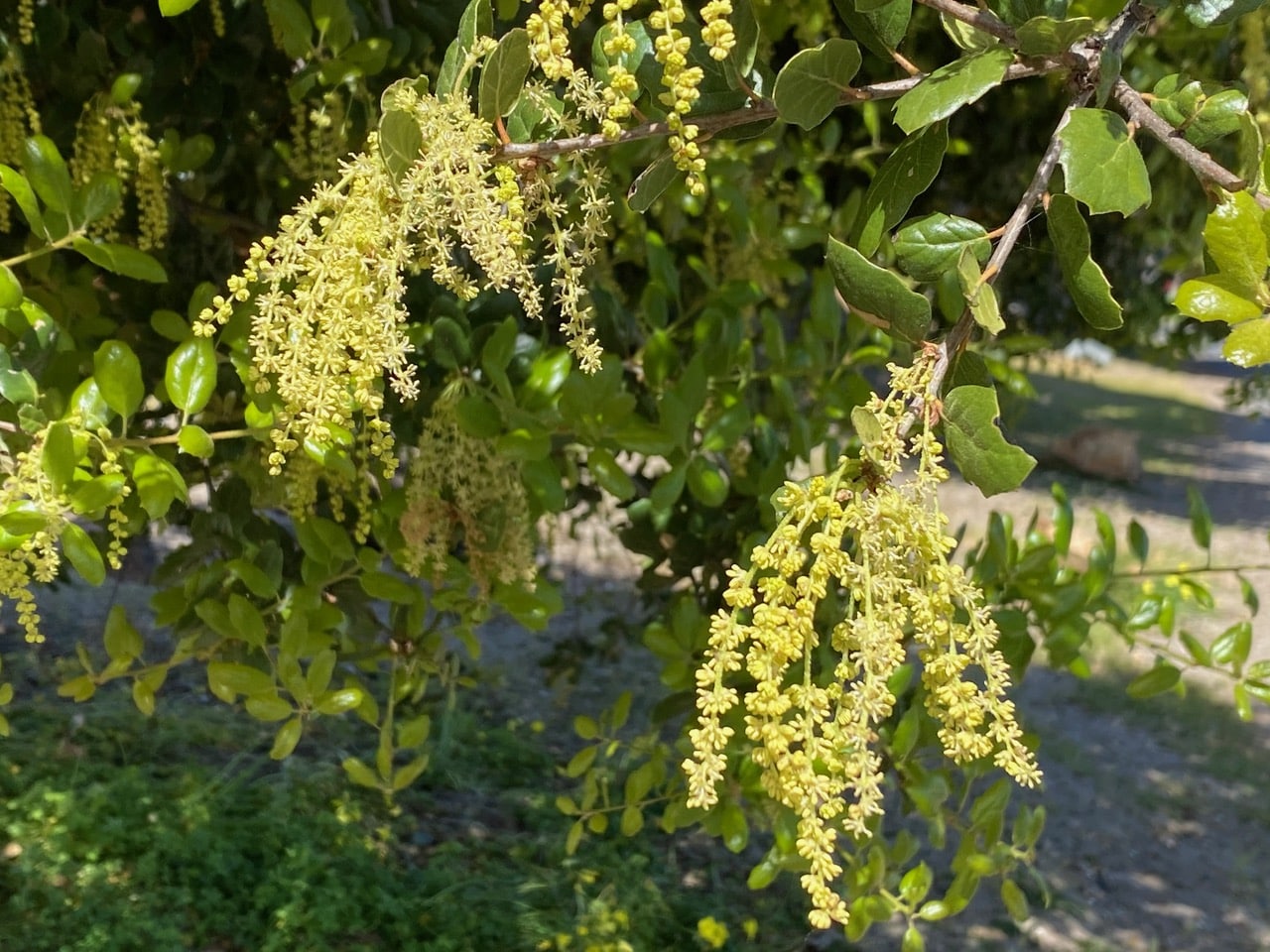
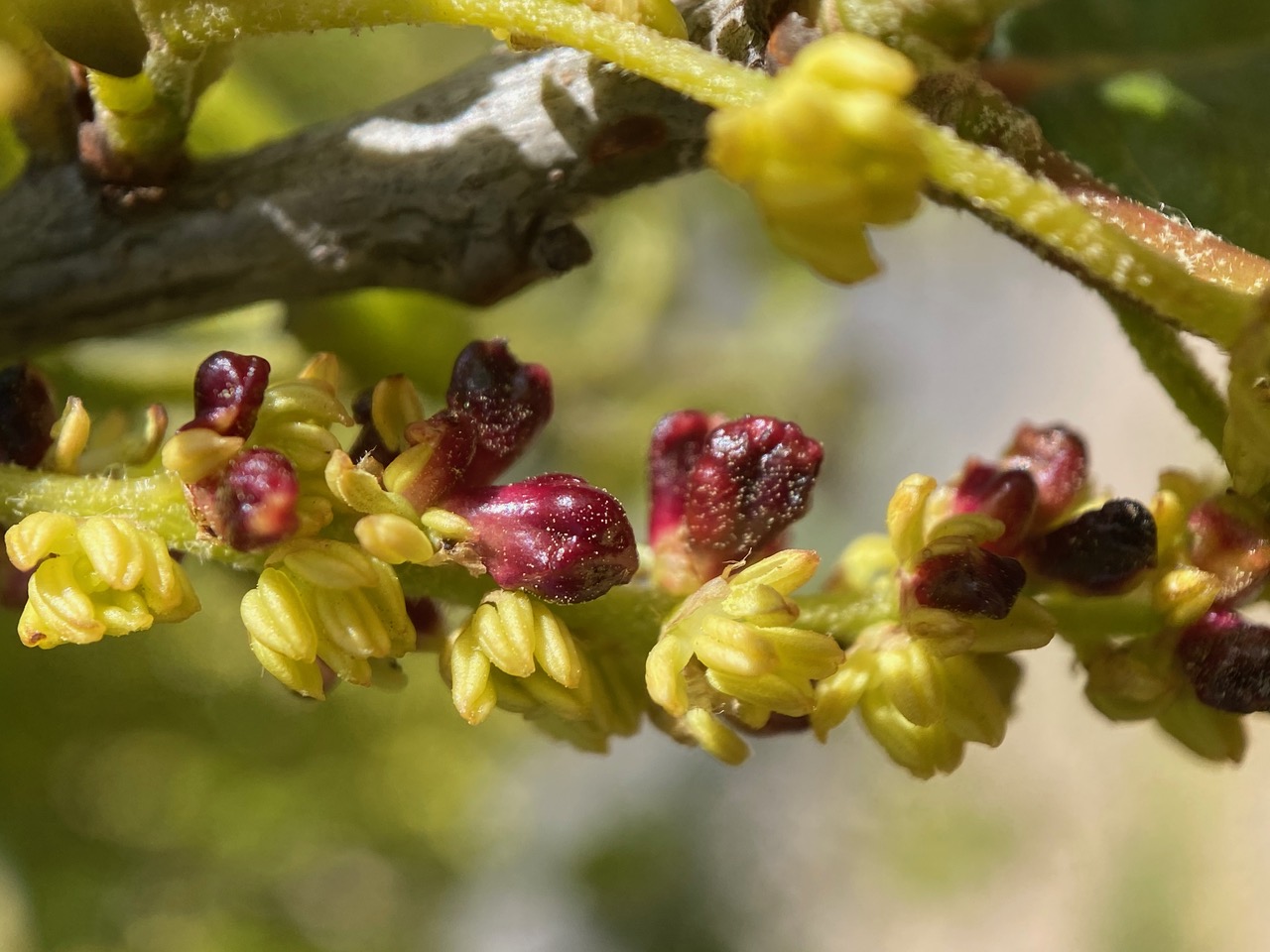
I notice that the male catkins have matured since I last saw them. About half of the catkins now have flowers that are spent, having released their pollen to the wind.
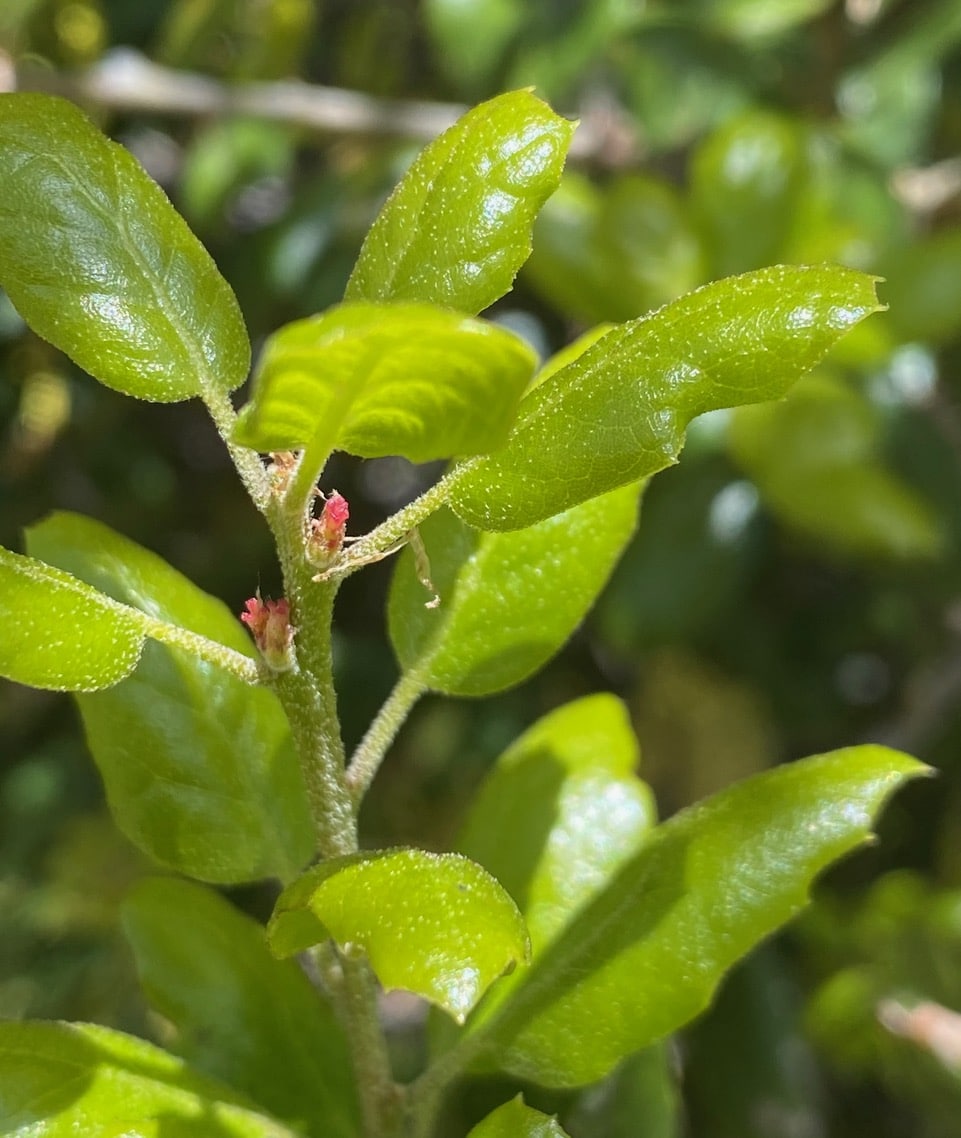
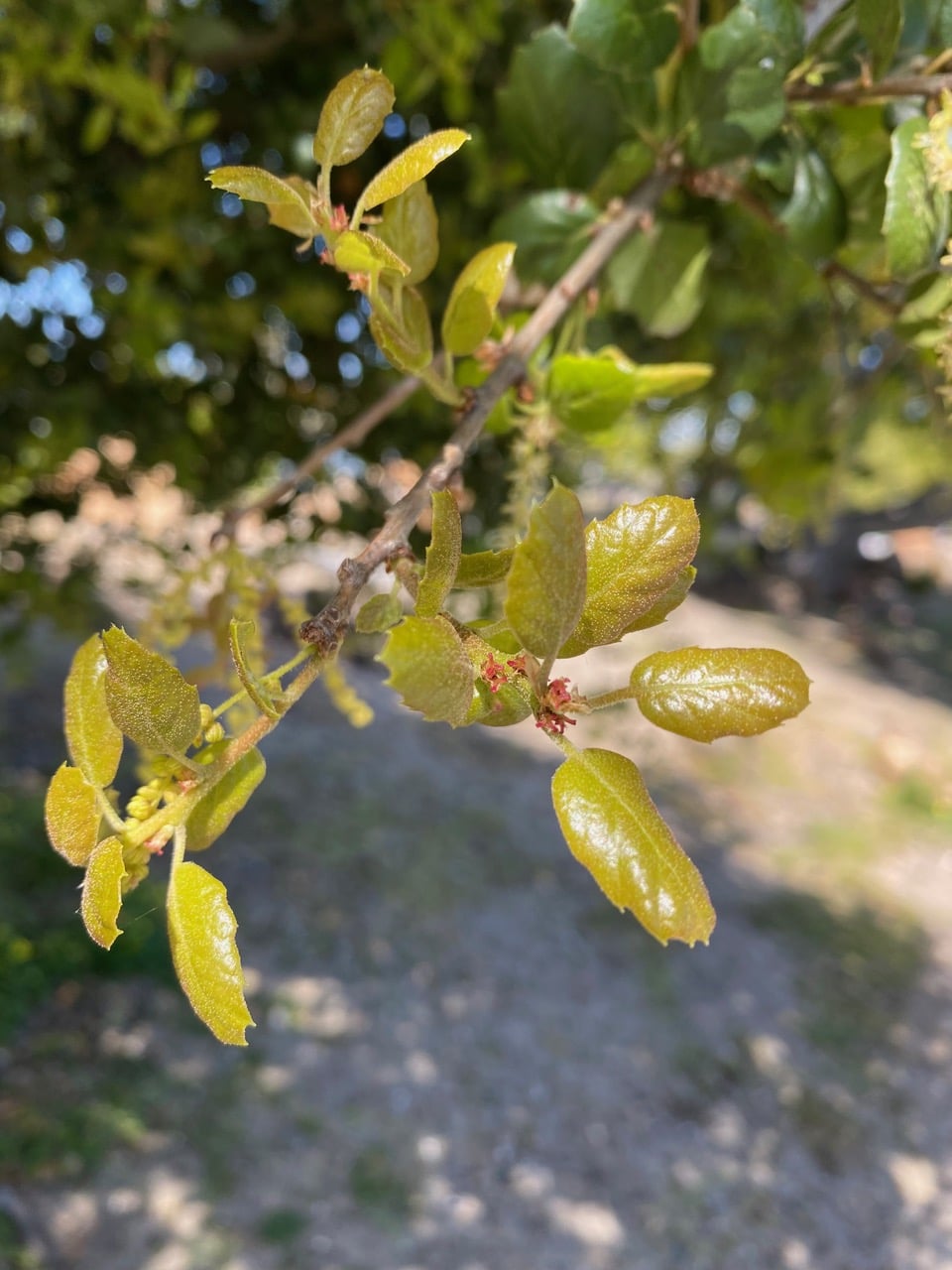
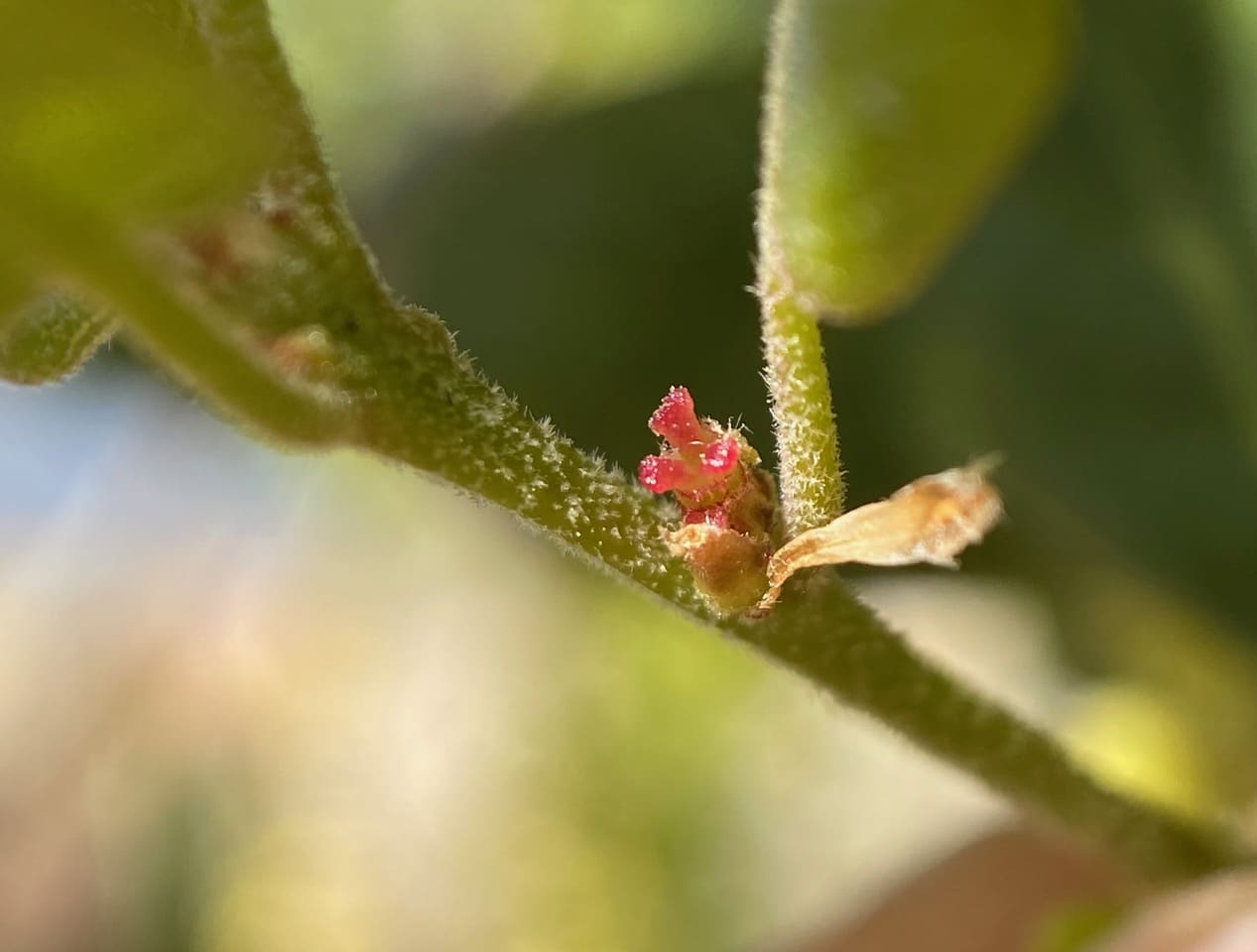
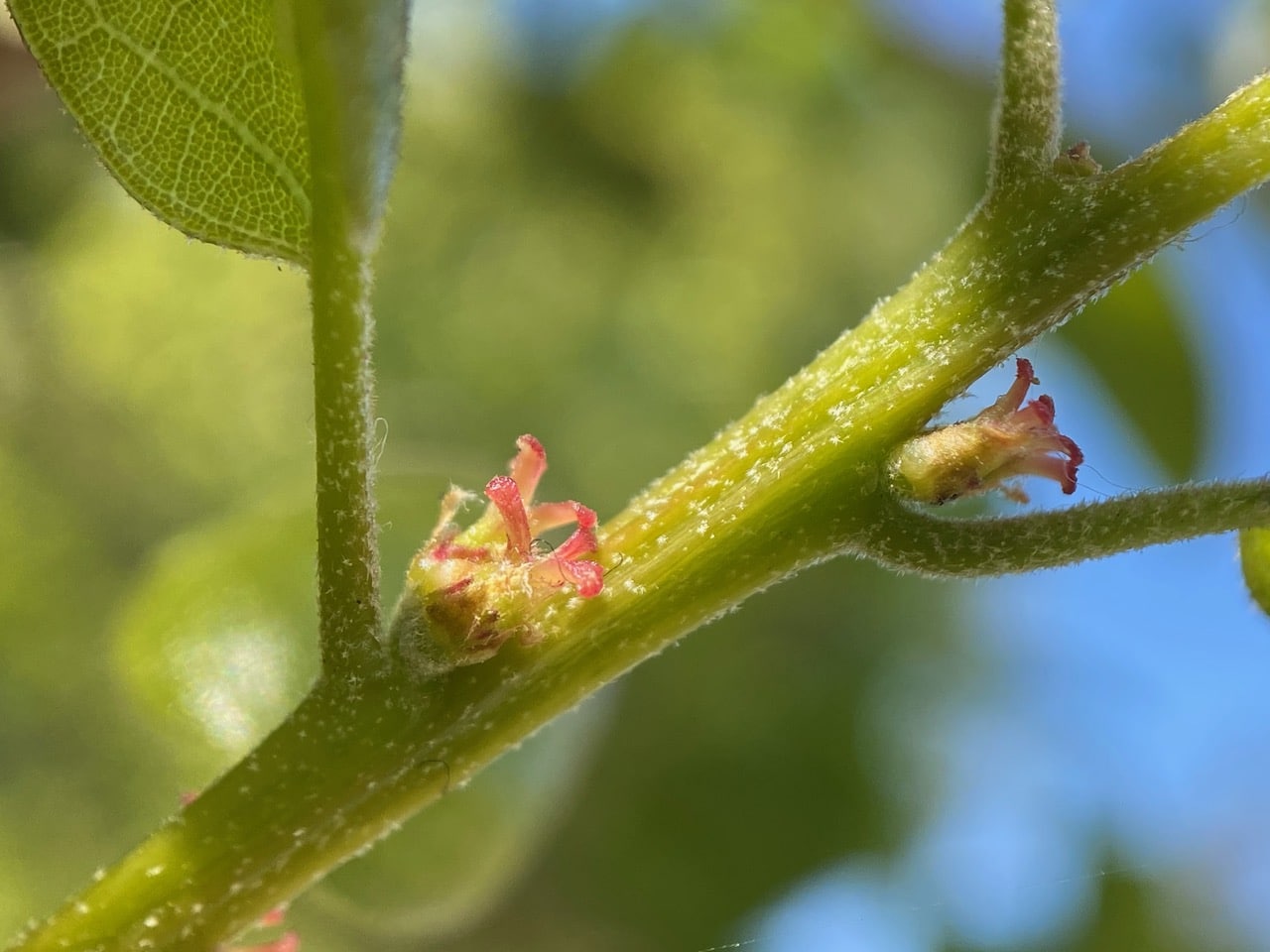
Ah, it doesn’t take much effort to find the tiny female flowers. Their red color helps tremendously. They are all located at the leaf axils of the tender young shoots growing beyond (distal to) the male catkins.
This young branch is loaded with female flowers.
I proceed to take some close-ups of the female flowers. Thankfully many are about my eye level. These pictures are taken at the highest magnification available to me – about 20x.

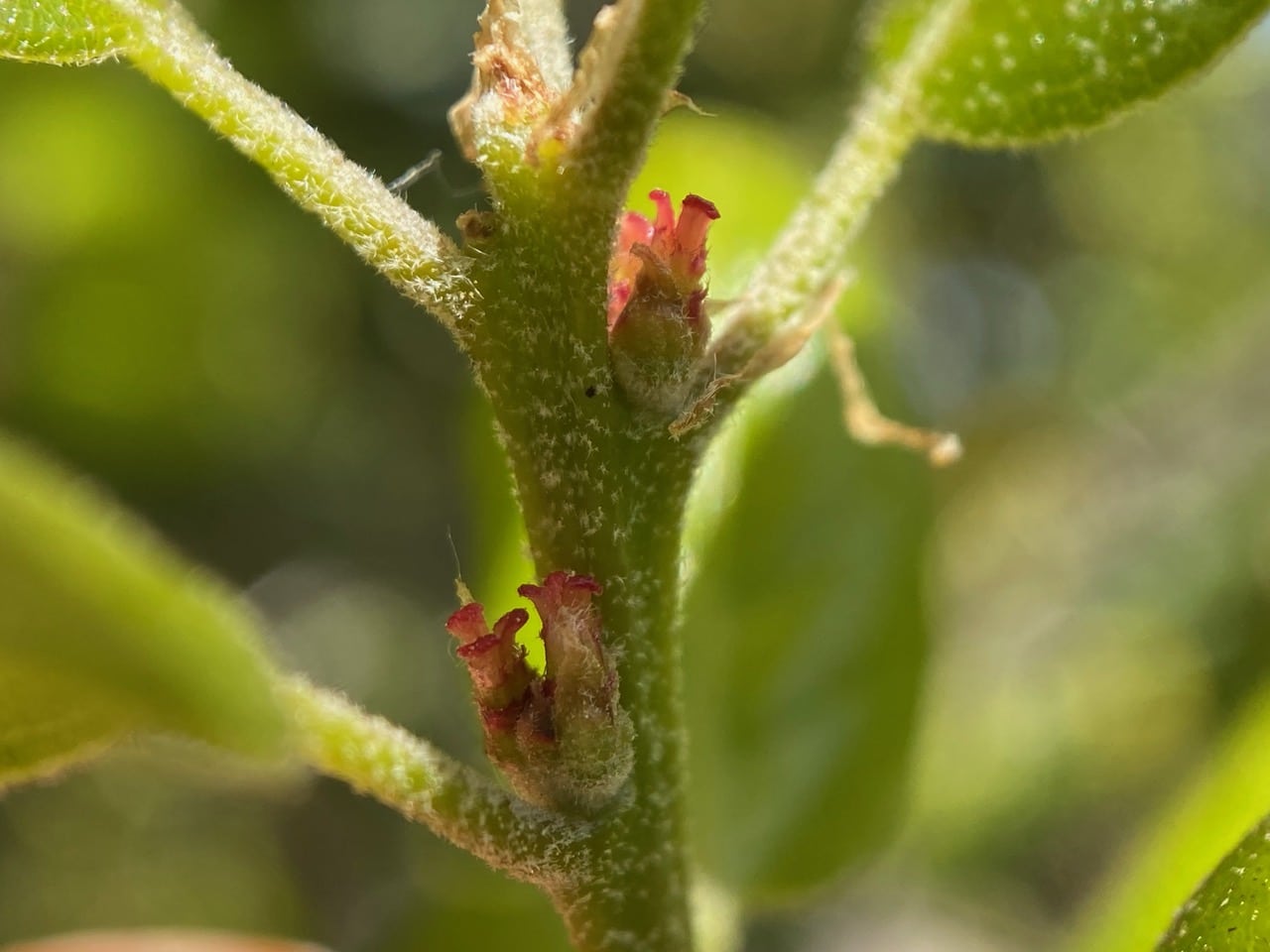
On this tree, many of the female flowers emerge in pairs in the leaf axils.

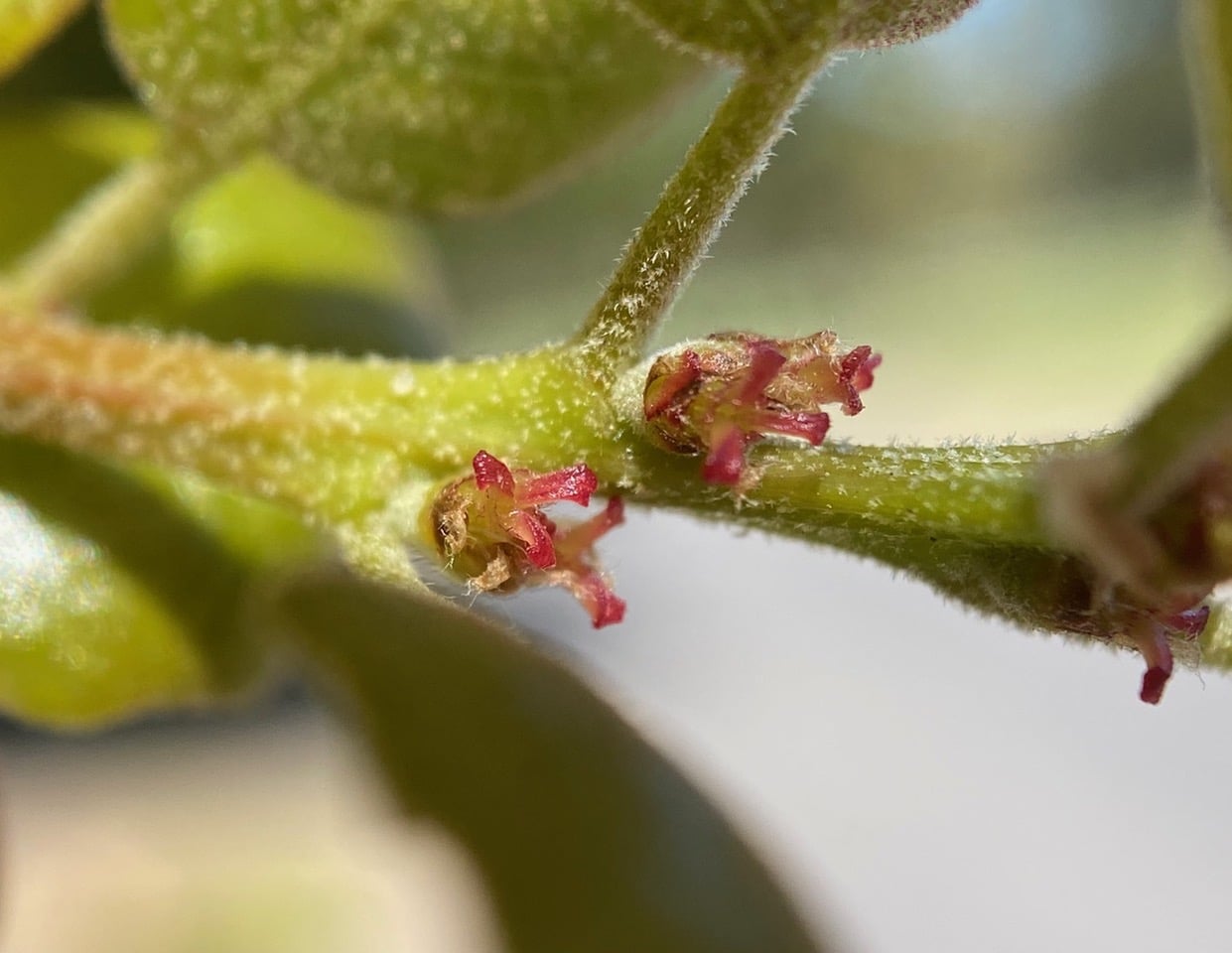
The female flowers of Coast Live Oak are tiny, barely 2-3 mm. They are without petals, essentially a reddish three- or four-parted stigma emerging from a hairy bud at the leaf axils. They appear succulent and sticky, ready to intercept wind-borne pollen shaken from the male catkins. Since these flowers do not depend on insects for pollination, why are they attractively colored red? I venture a guess that the red pigment, anthocyanin serves a protective function to shield the naked stigmas from the damaging ultraviolet light from the sun.
Nancy has arrange to visit Crab Cove with me to see these flowers for herself. What fun!
I next turn my attention to the galls I saw on the catkins last time. The Two-horned Oak Galls are no longer bright red, turning dark as they age.
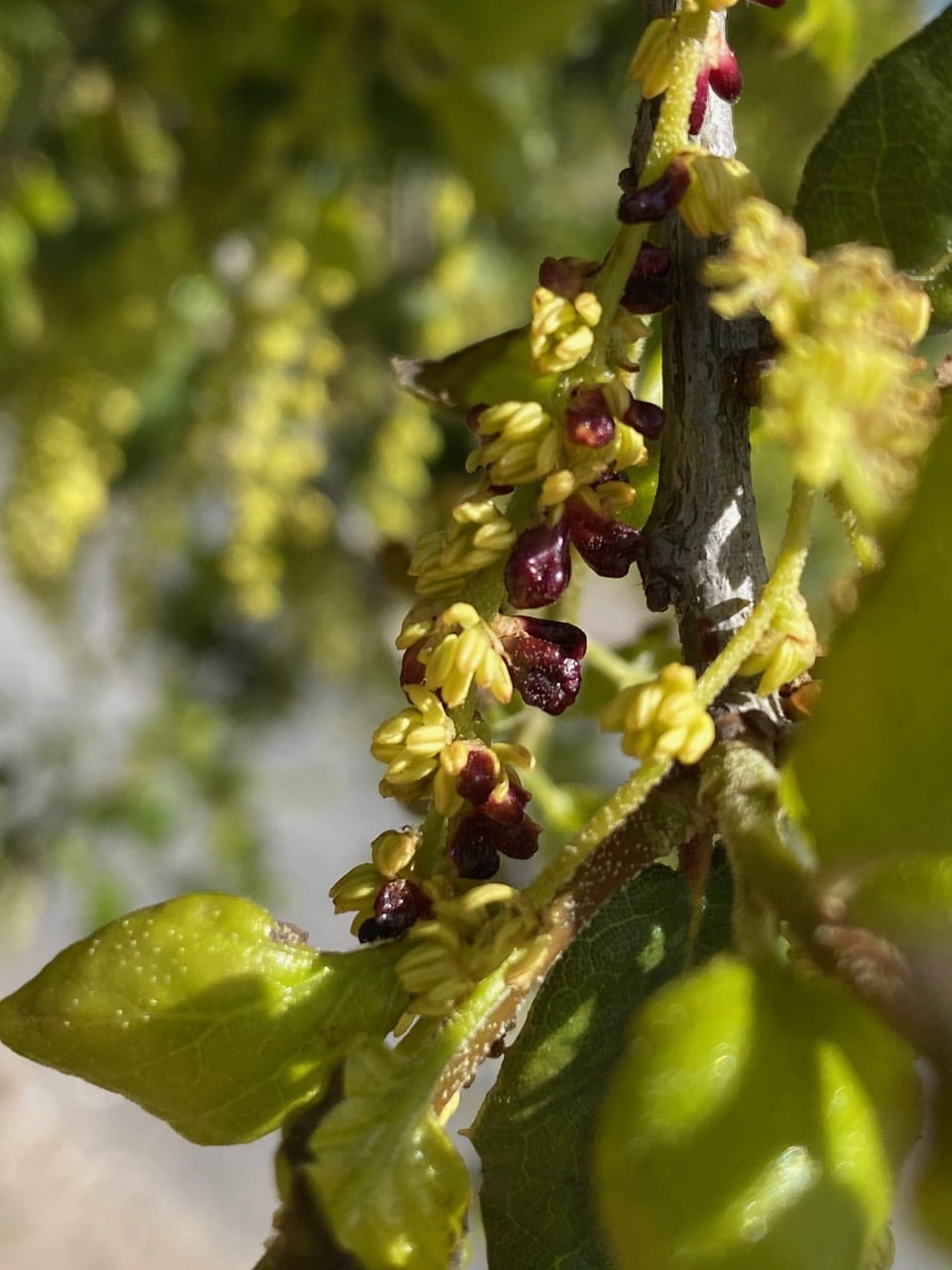

The Two-horned Gall Wasp, Dryocosmus dubiosus (family Cynipidae) induces glossy, reddish, monothalamous galls (one larva per gall) on the catkins of coast live and interior live oaks. These bisexual generation galls are 2 mm wide by 4-5 mm long. Occasionally two or more galls coalesce, creating what appears to be one large gall. Generally, they appear singly, or grouped together on a catkin or along the edges of new leaves. Adults emerge in late April and live for about 7 days.
Females ovipositor in the midrib and lateral veins on the underside of the leaves where the two-horned galls develop. Fresh galls are green and measure 3 mm long. Dozens of these galls can occur on a single leaf. As they develop on the veins, they appear to divert nutrients into the galls, depriving the surrounding leaf tissues of essential elements. This may result in the edges of the leaves turning brown. The galls of this unisexual generation can be found on the leaves well into fall, and often, through winter. The larvae overwinter and emerge the following spring when flower buds are developing. This Gall Wasp has an interesting competitive relationship with the California Oak Moth, Phryganidia californica which also depends on oak leaves. The oak moth caterpillar eats the leaves that the gall wasp requires for larval development. As a result of the competition, the insects keep each other’s population in check, and continue to thrive using the same host trees.
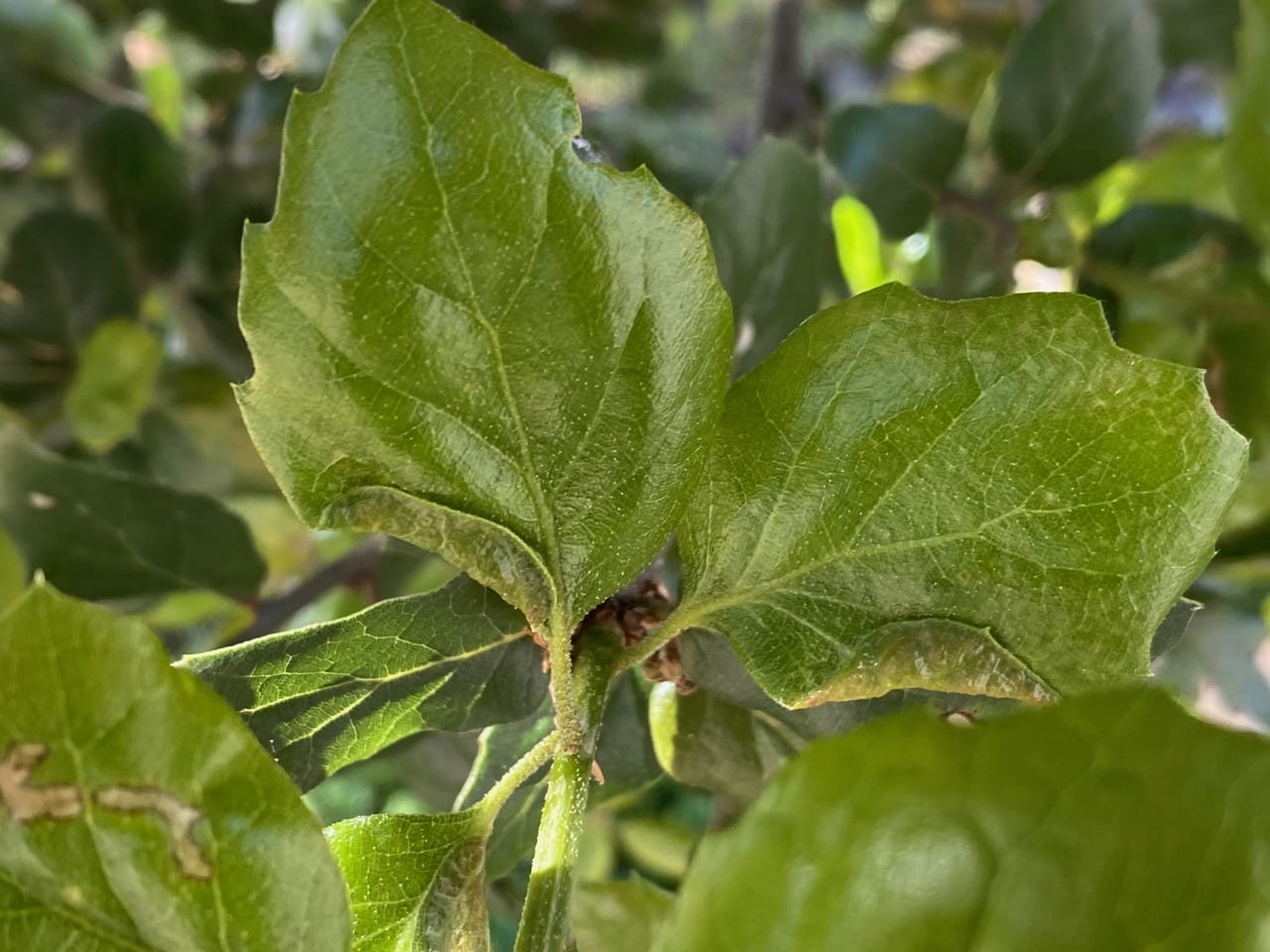
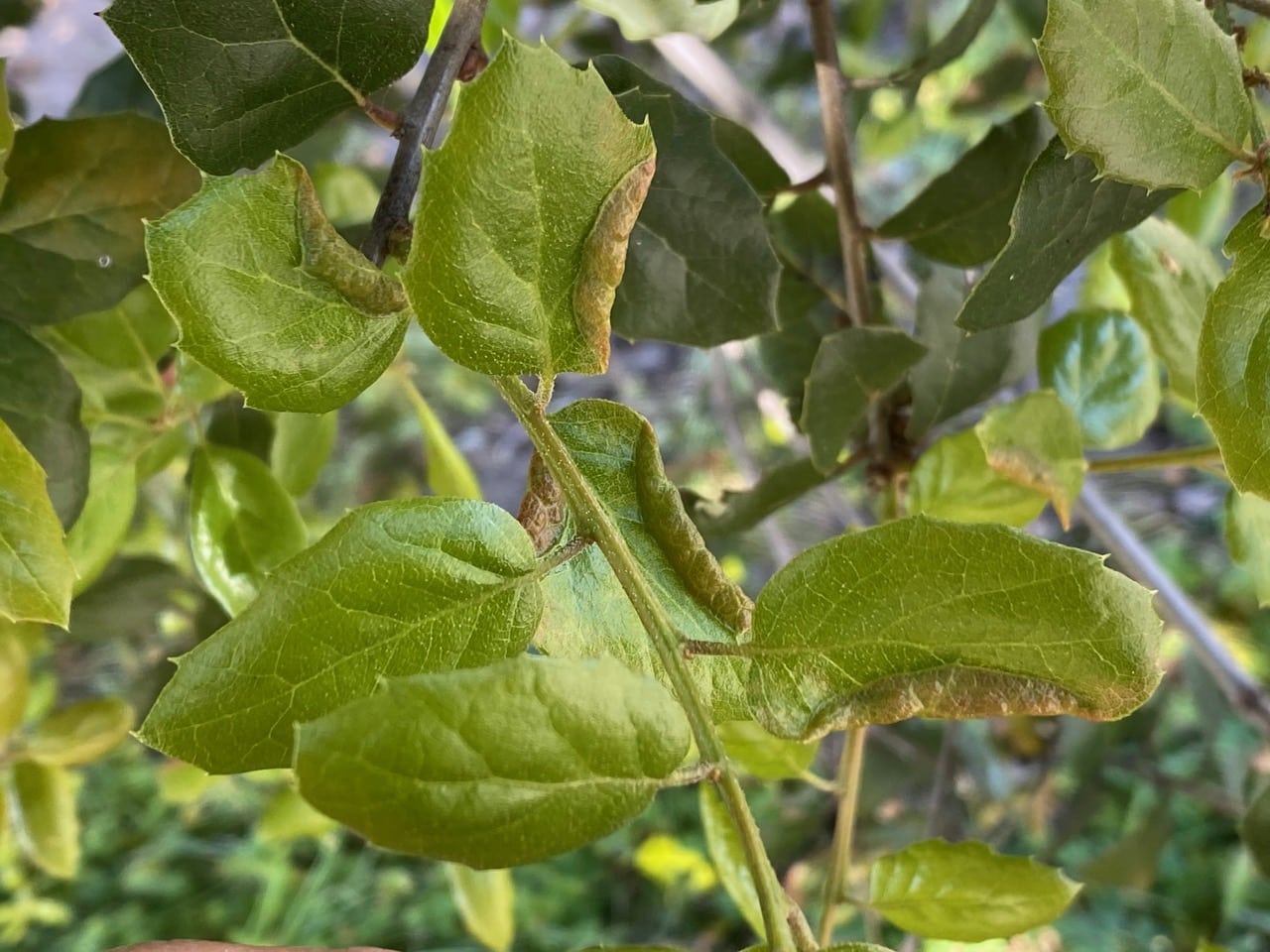
Then I find some leaf-fold galls on the tree. Most of the folds are on the upper surface of the leaves, but a few fold under. They remind me of the leaf-fold galls on manzanita induced by gall aphids. Are these oak leaves galled by aphids? There is no mention of this gall in Ron Russo’s field guide.
There are several of the leaf-fold galls on these young terminal leaves of the oak tree.
Severely pruned to the ground last fall, the resilient Fennel Foeniculum vulgare has sprouted new leaves in bush clumps. I look through the dense foliage hoping to find Anise Swallowtail eggs or larvae.
There’s someone in there – not a caterpillar, but a Lady Beetle larva!
Is this an adult of the same species? This is a California Lady Beetle, Coccinella californica (family Coccinellidae).
The California Ladybeetle, Coccinella californica (family Coccinellidae) is a species found in California, mainly in the coastal counties north of the Traverse Ranges. It has a red elytra that is usually spotless, and a mostly black thorax with two large white markings. A longitudinal black line is usually visible along the seam where the elytra meet. Both adults and larvae are voracious predators of aphids and other soft-bodied insects.
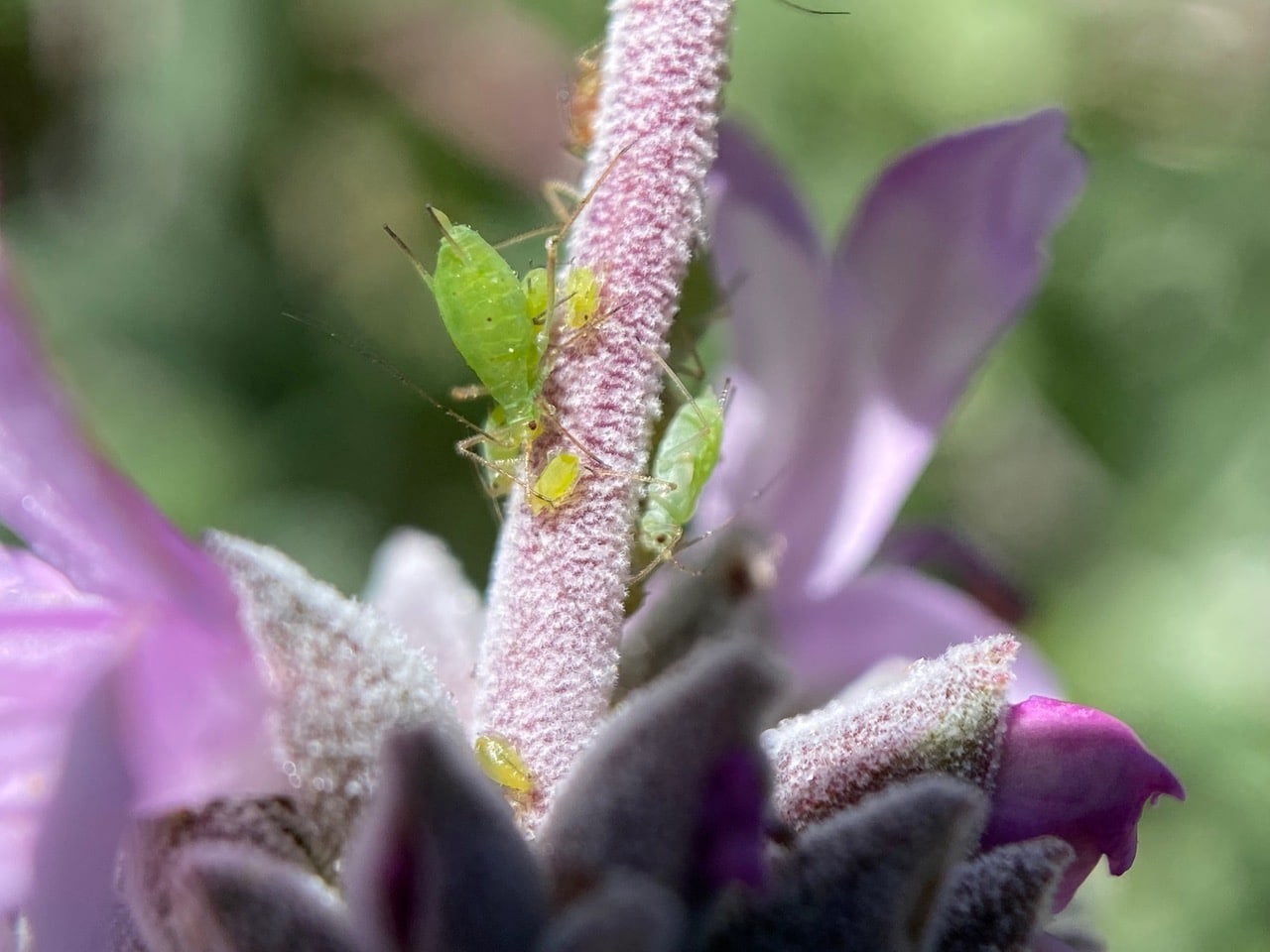
Returning to the parking lot, I briefly check on the colonies of aphids on the Sage, Salvia sp. by the entrance. Aww, a mama aphid, Macrosiphum sp. (family Aphididae) is surrounded by her daughters.
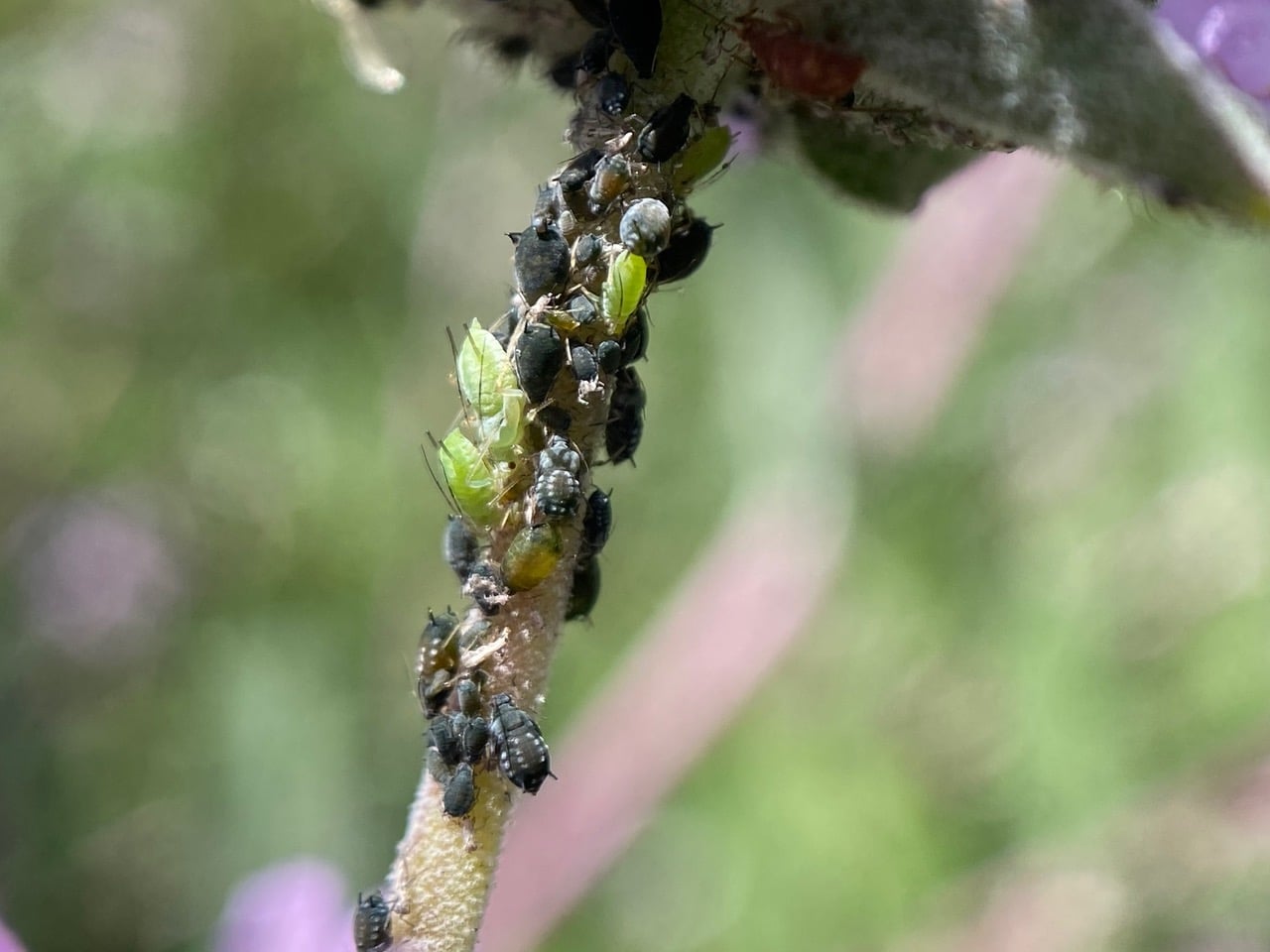 On another flower spike, the colony of a different aphid species now appears to have new members. The smaller, dark aphids have previously been identified by iNaturalist as belonging to the genus Aphis. Now there are three of the green Macrosiphum aphids among them. I didn’t know that aphids would live in mixed aggregations!