

Pollinator Post 4/3/24 (1)

It promises to be a cool, overcast day – perfect for checking on the Mining Bee(s) that might still be sleeping on the California Buttercup flowers in the morning at Skyline Gardens.
Arriving at the Steam Train entrance at 9 am, I am surprised to find the place shrouded in fog and cold. See the small yellow dots on the bottom right of the picture? Those are the buttercup flowers of interest. 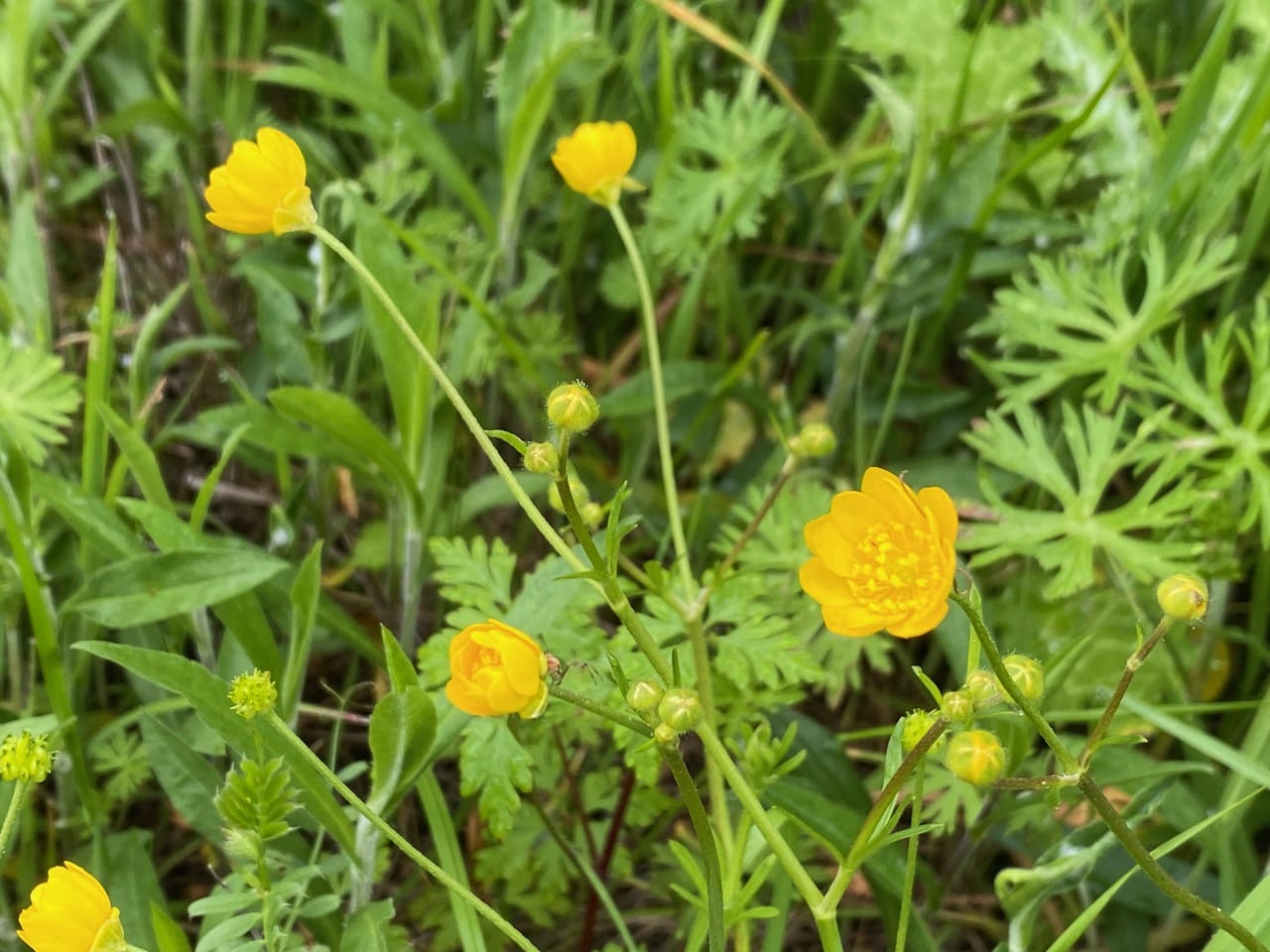
I have never known that buttercup flowers close up at night. This morning, most of them are still half closed at 9 am.
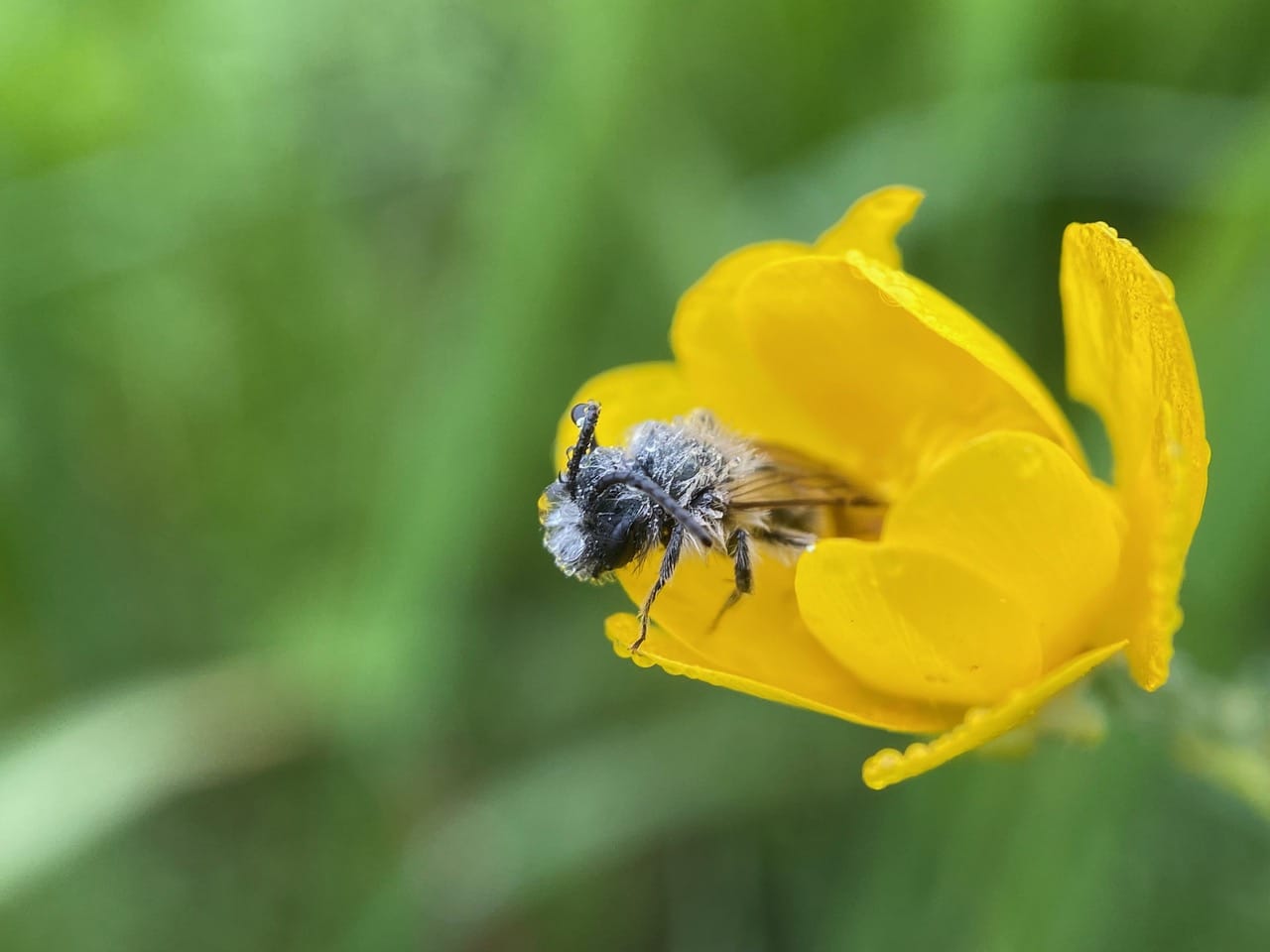
Hey, our little Sleepy Head is there in one of his favorite flowers. Of course I can’t be sure that it is the same male I have previously photographed sleeping in this patch of buttercups. The Mining Bee, Andrena sp. (family Andrenidae) looks quite different today, drenched in condensed fog. There are drops hanging from his antennae and the tuft of hair on his face. His flower has probably closed up last evening, affording him some measure of shelter from the elements through the night. Will the flower open up fully today without the sun, and will our little bee dry up and get active? It’s too cold to sit around and wait, so I walk further along the trail to see what I might find.
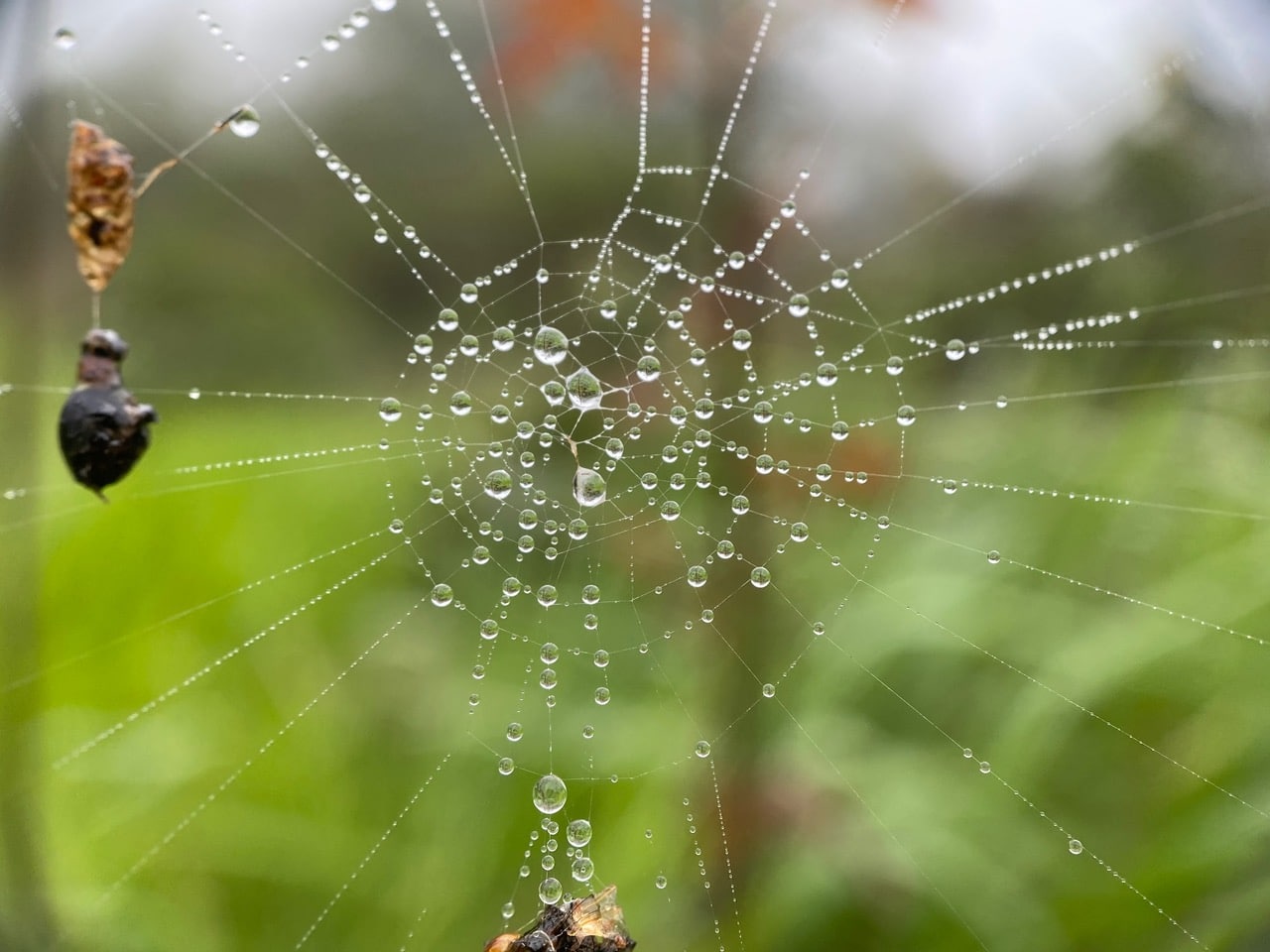
A spider web has gathered fog on its silk strands, the water joining into larger drops in the middle of the orb.

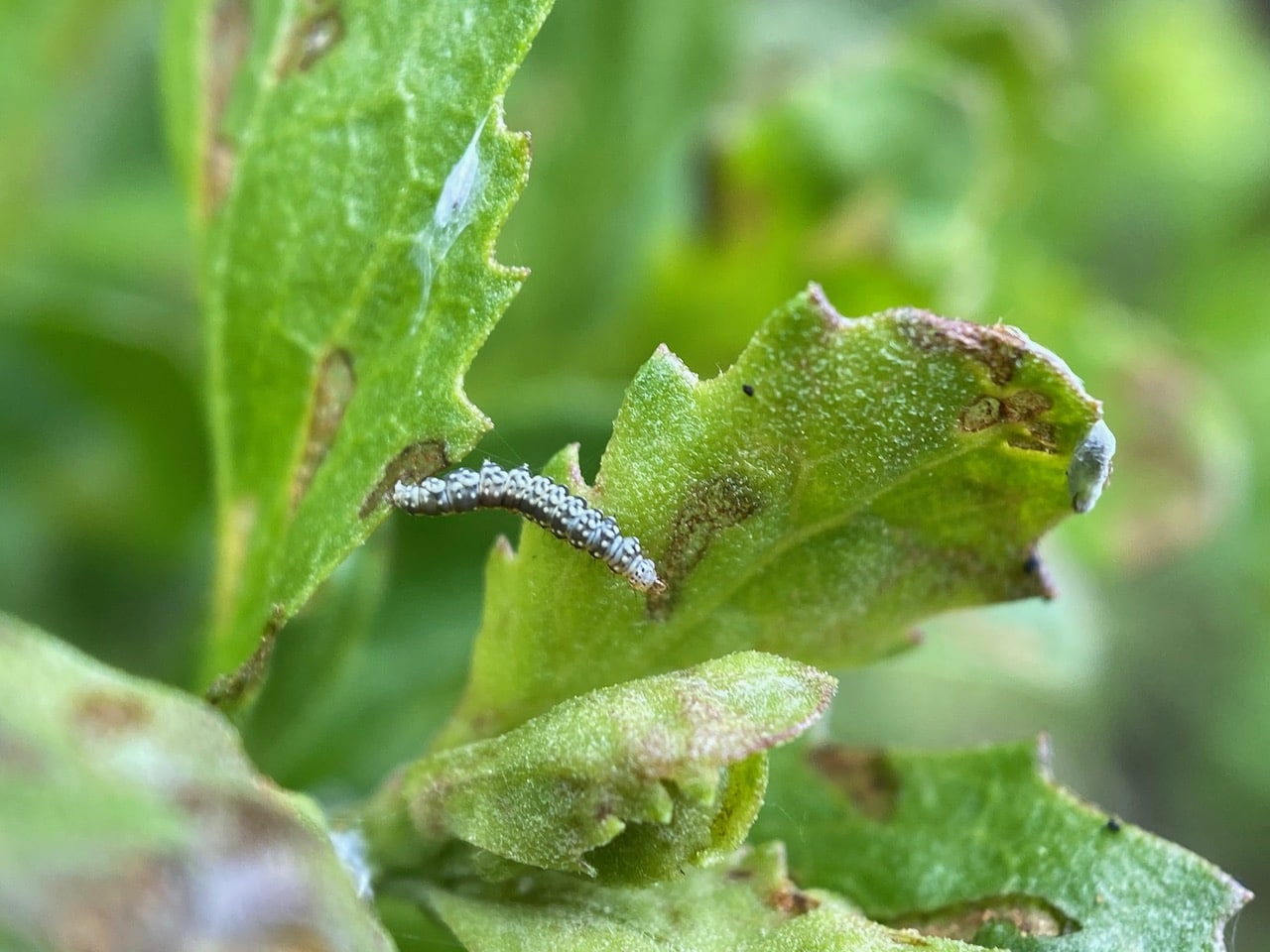
The leaves of the Coyote Brush, Baccharis pilularis along the northern end of Skyline Trail are riddled with feeding scars. I find some culprits today. This tiny caterpillar is feeding on a leaf, leaving shallow scars that do not perforate the leaf. I recognize the caterpillar as the kind that I found dangling from single silk threads from these plants a few days ago.
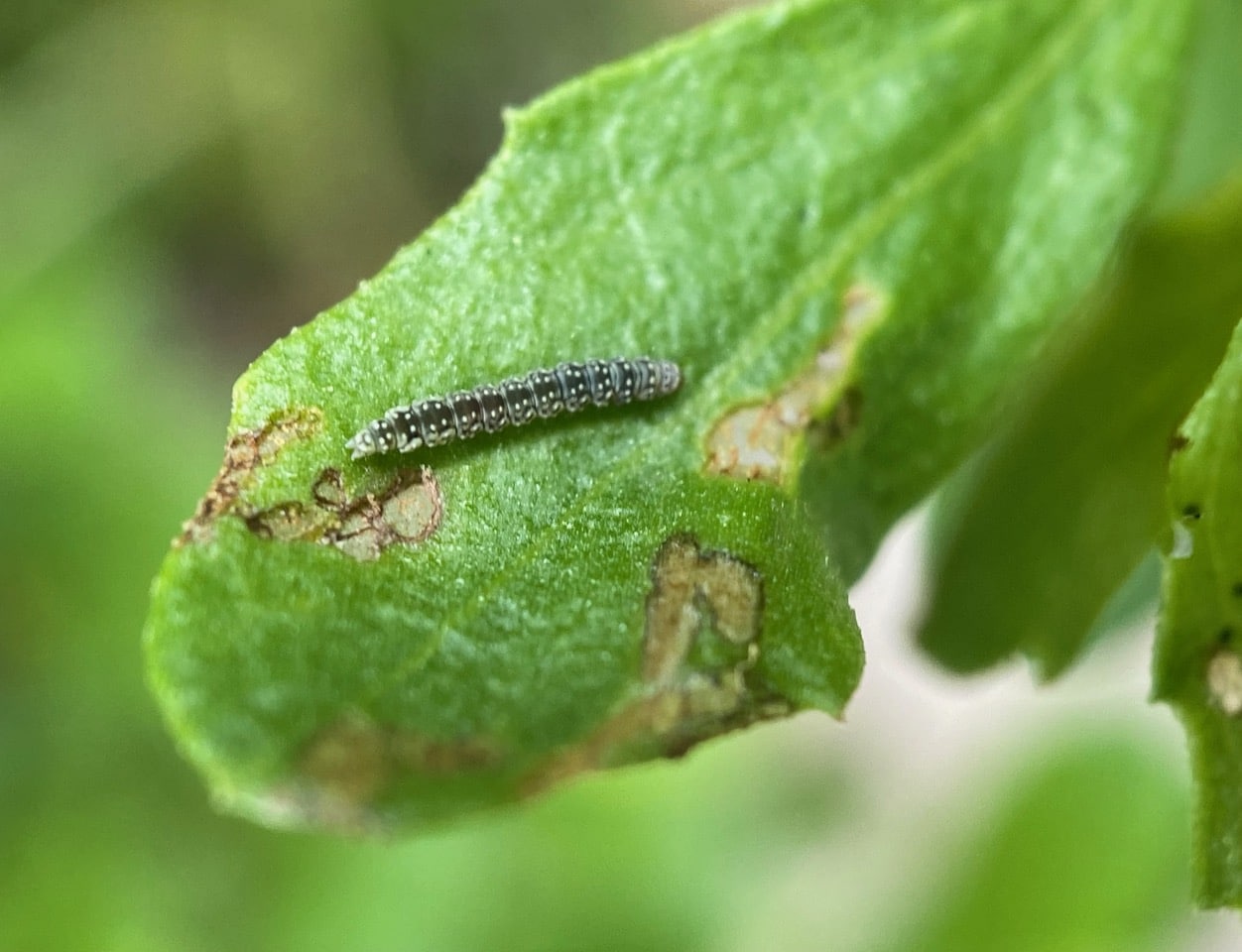
Coyote Brush, Baccharis pilularis is host plant to many species of moths. I will never know which one this is unless I rear the caterpillar to adulthood.

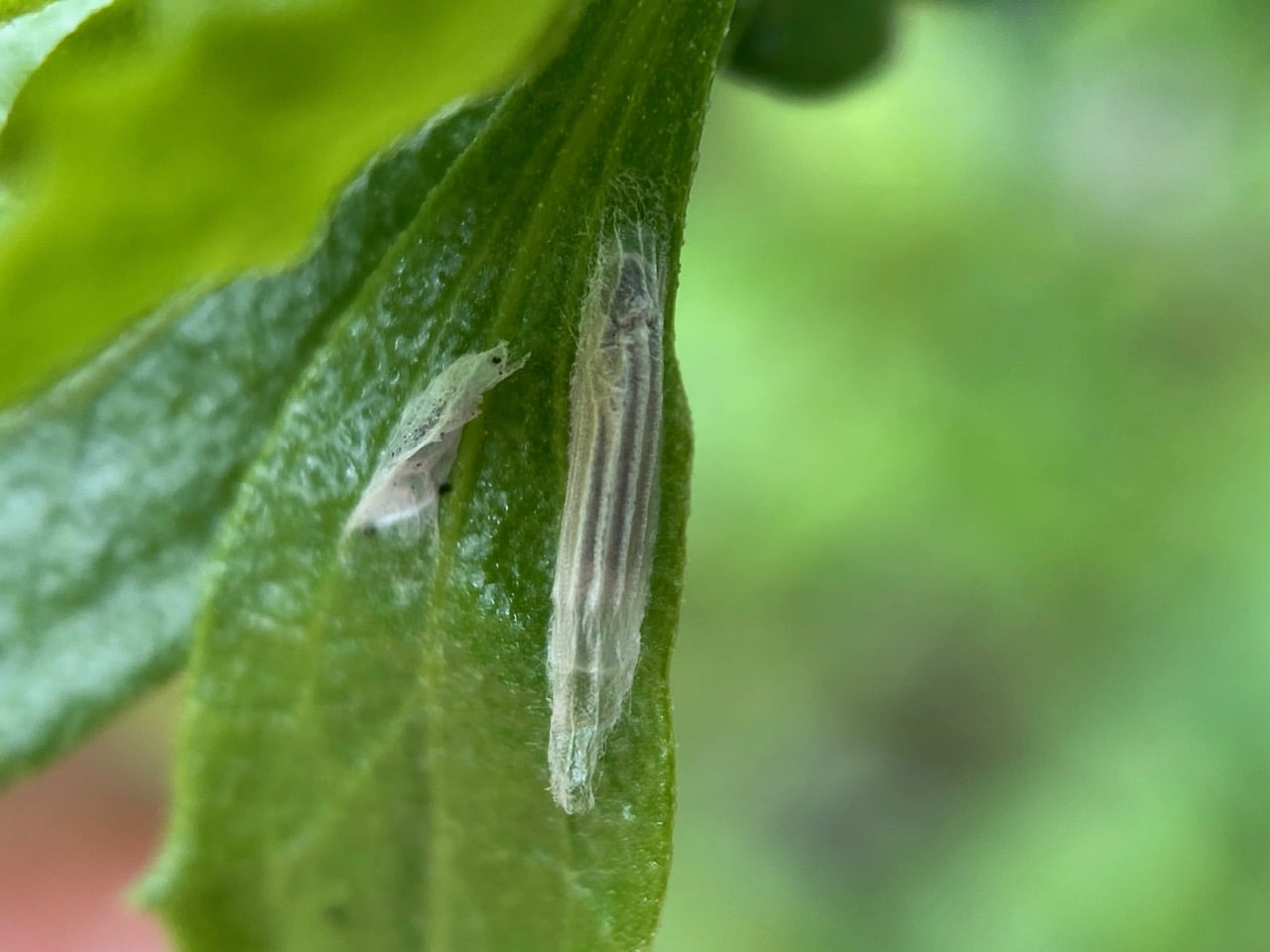
Hey, that’s a cocoon of a Ribbed Cocoon Maker Moth, Bucculatrix variabilis (family Bucculatricidae) attached to a leaf of Coyote Brush, Baccharis pilularis. The caterpillars feed on various plants in the genus Baccharis.
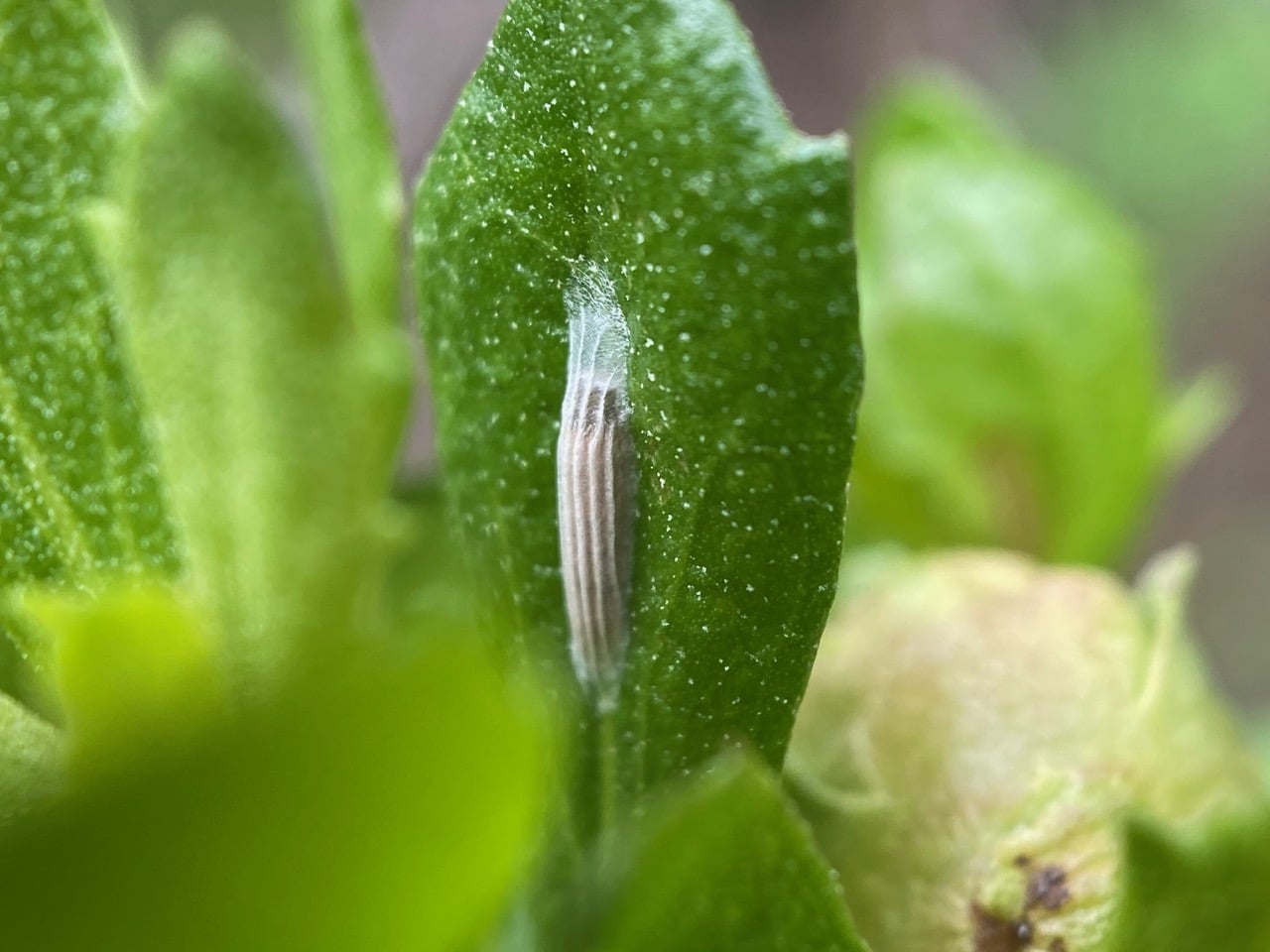
The small moth family Bucculatricidae (formerly Lyonetiidae) has representatives in all parts of the world. Adult moths are easily overlooked, being very small with narrow, lancelike wings wrapped around the body at rest, and short appendages. When small, the larvae are leaf-miners, forming distinctive brown blotches on leaves. When larger, they usually feed on the leaves externally. Many species have specific host plants. The larvae of nearly all species construct elaborate, elongate-oval cocoons with parallel, longitudinal ridges, hence the common name for the family, Ribbed Cocoon Makers. The pupal exuvium is protruded from the cocoon upon eclosure.
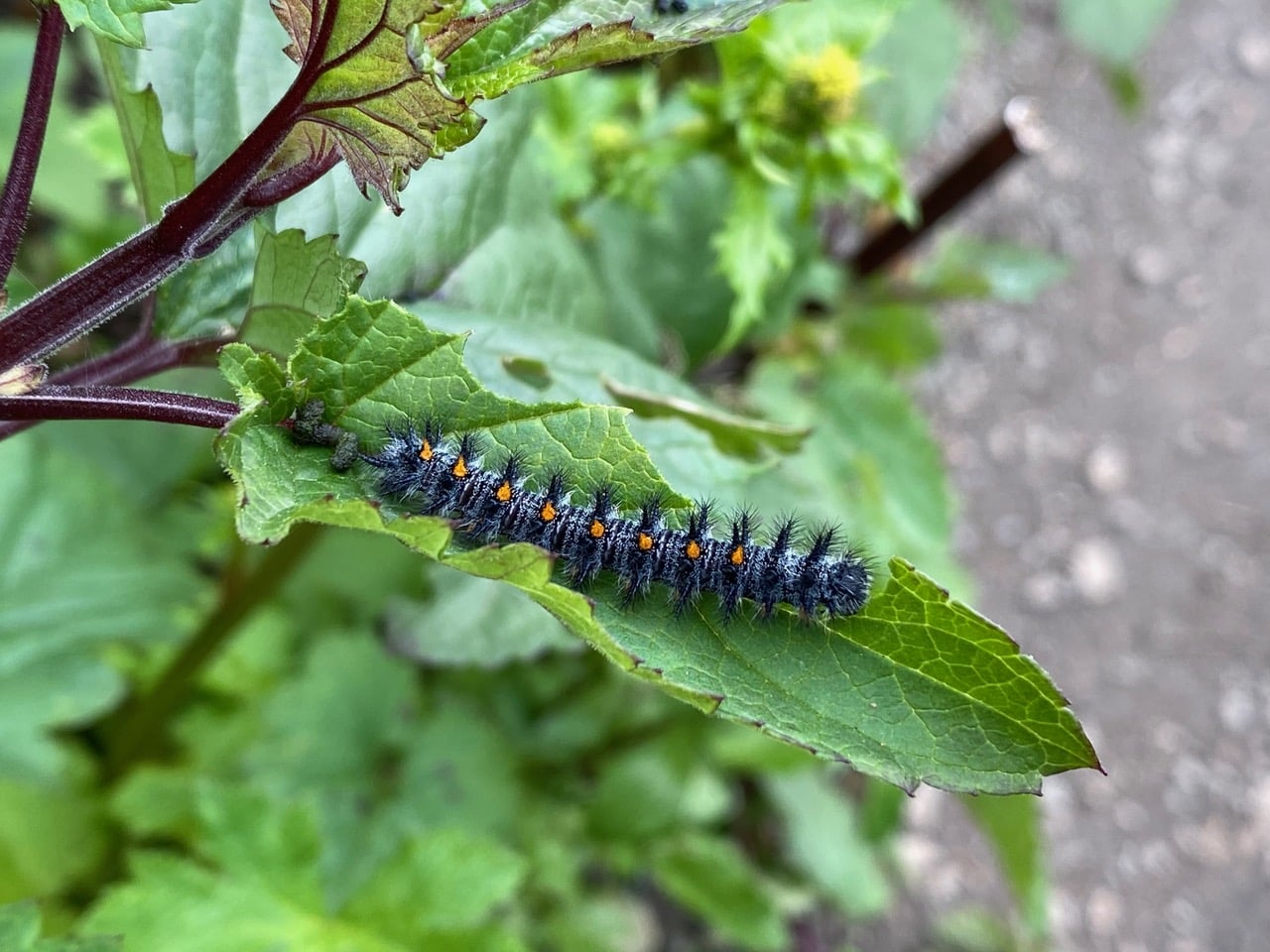
This seems to be a good year for the Variable Checkerspot butterfly. There is an abundance of the caterpillars on the California Bee Plant, Scrophularia californica. They are growing big and magnificent on their host plants. I will miss them when they wander off to pupate hidden from sight.

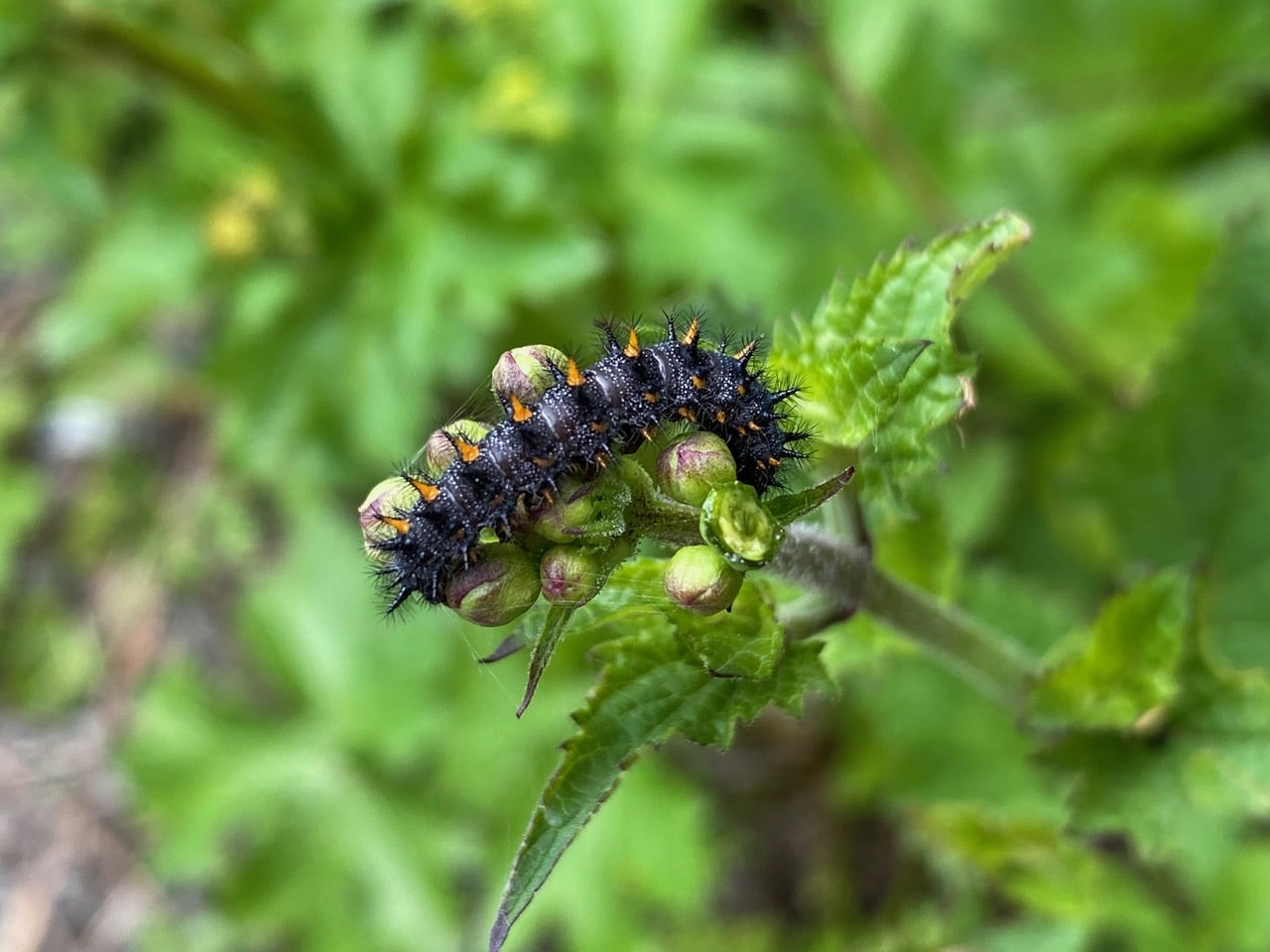
This caterpillar has spun some silk around a cluster of flower buds on an American Wintercress, not a known host plant for the butterfly.
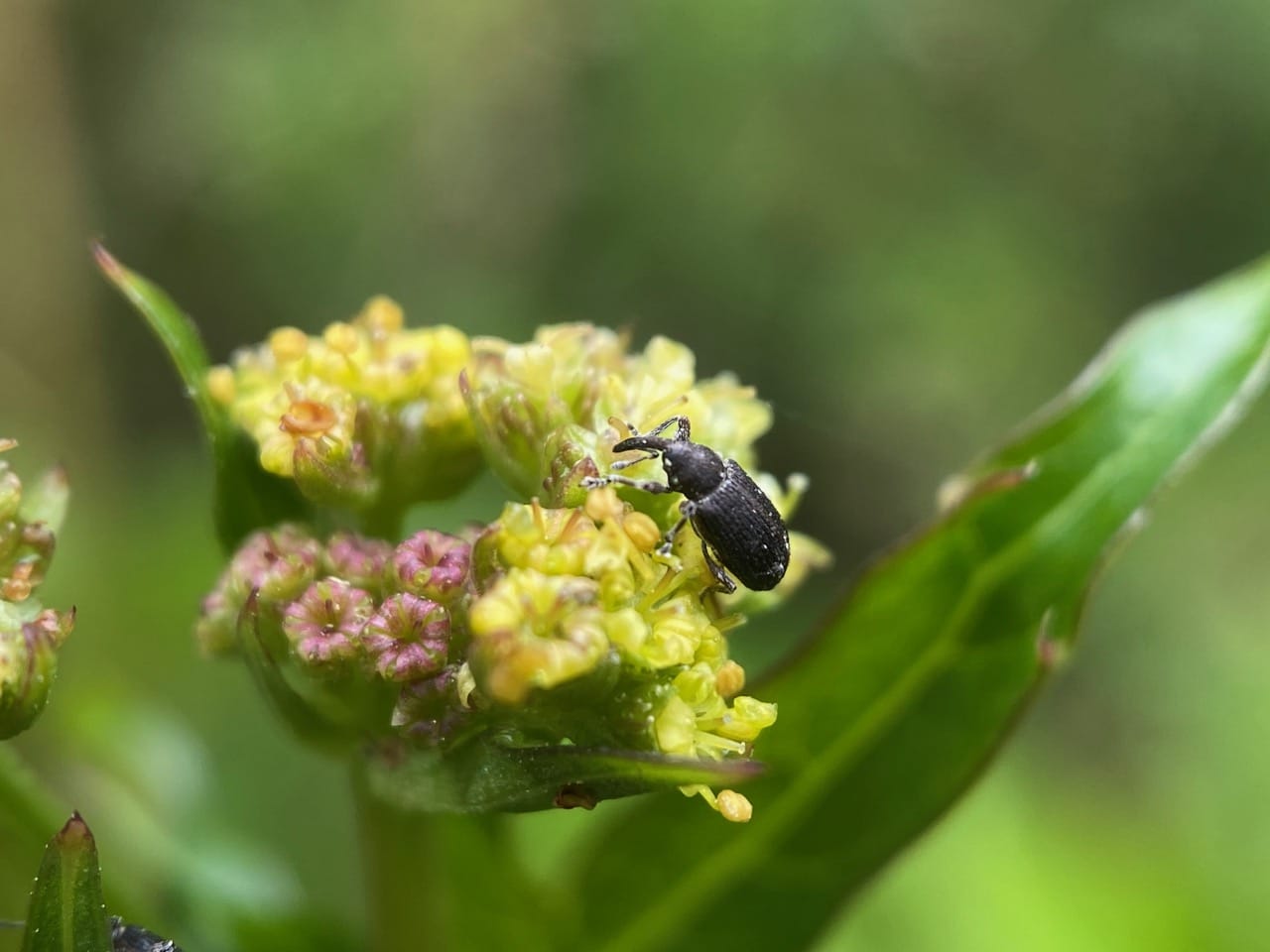
A tiny Weevil (family Curculionidae) is moving on a cluster of flowers of the Pacific Sanicle, Sanicula crassicaulis.
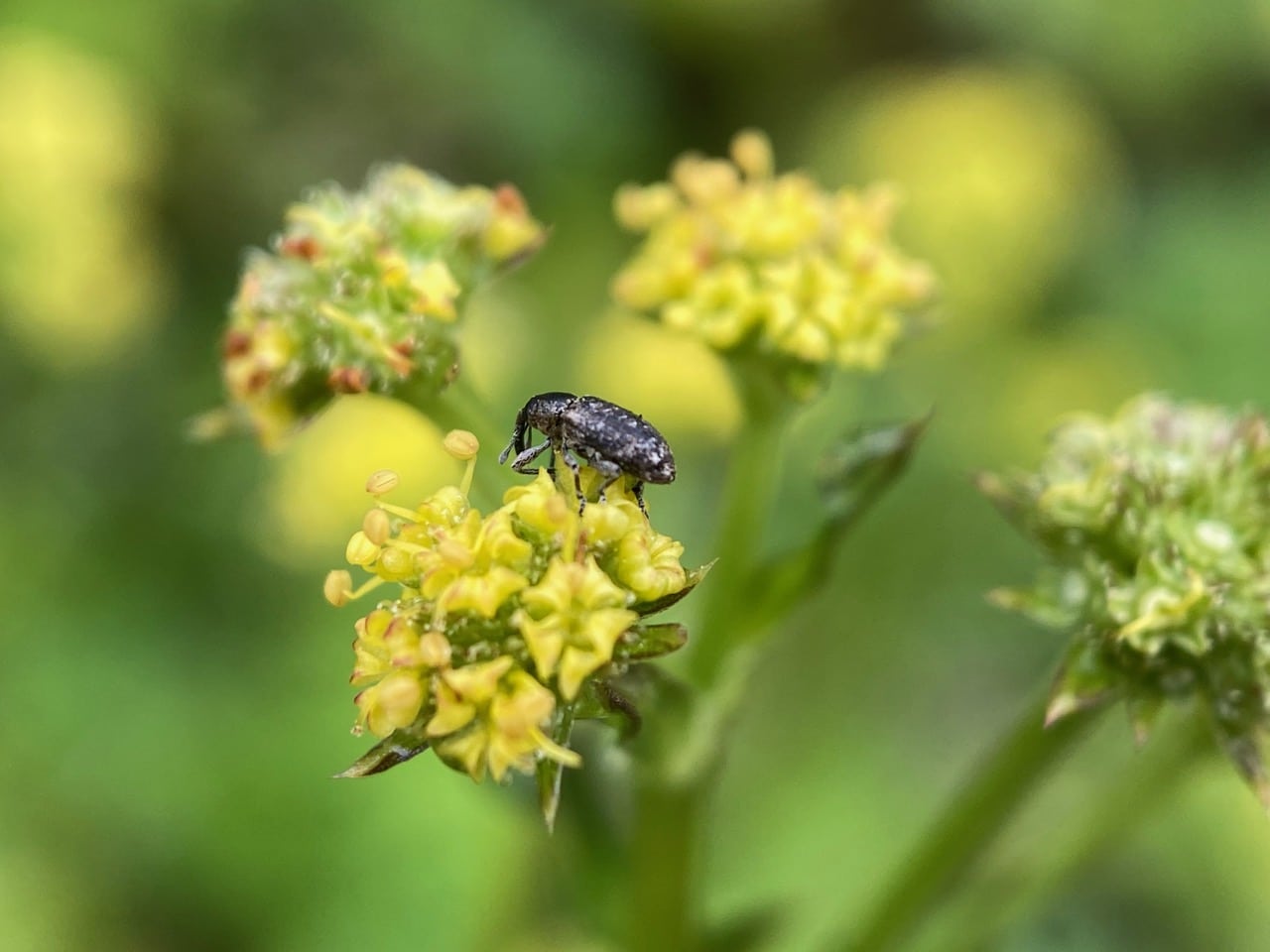
Weevils, family Curculionidae, are also called snout beetles. Curculionidae is one of the largest beetle families (about 40,000 species). Most weevils have long, distinctly elbowed antennae that may fold into special grooves on the snout. The snout is used not only for penetration and feeding but also for boring holes in which to lay eggs. The mouthparts are quite small and located at the end of the rostrum (snout), designed for chewing. Many weevils have no wings, while others are excellent fliers. Most are less than 6 mm in length. The majority of weevils feed exclusively on plants. The fleshy, legless larvae of most species feed only on a certain part of a plant – i.e., the flower head, seeds, fleshy fruits, stems, or roots. Many larvae feed either on a single plant species or on closely related ones. Adult weevils tend to be less specialized in their feeding habits. The family includes some very destructive agricultural pests.
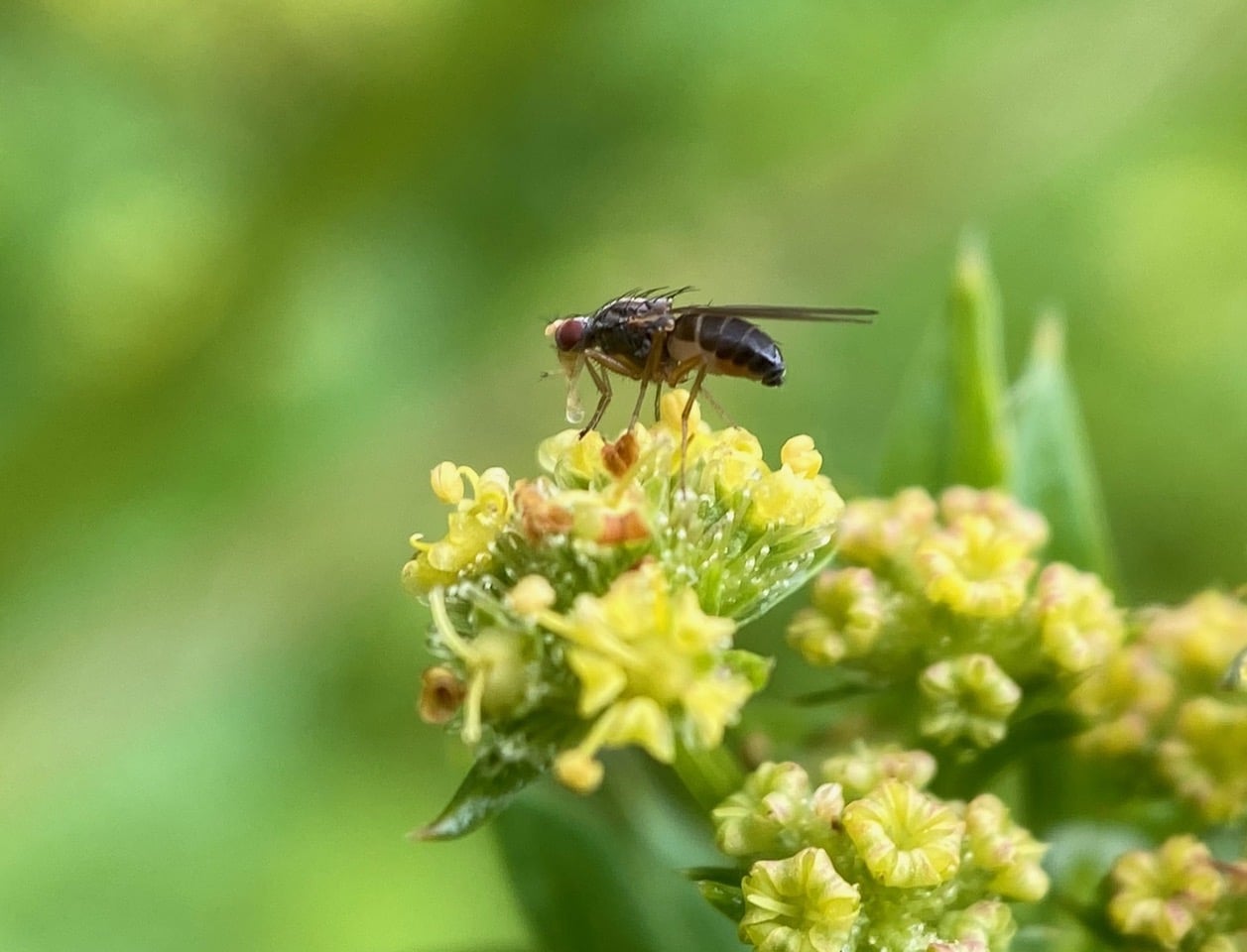
Ooh, the small fly is spitting into a flower of Pacific Sanicle.
Flies don’t have mouthparts for chewing food. To feed on solid food, they release some enzyme-rich saliva that helps dissolve the food, allowing them to suck up the resulting soup of digestive fluids and partially dissolved food.
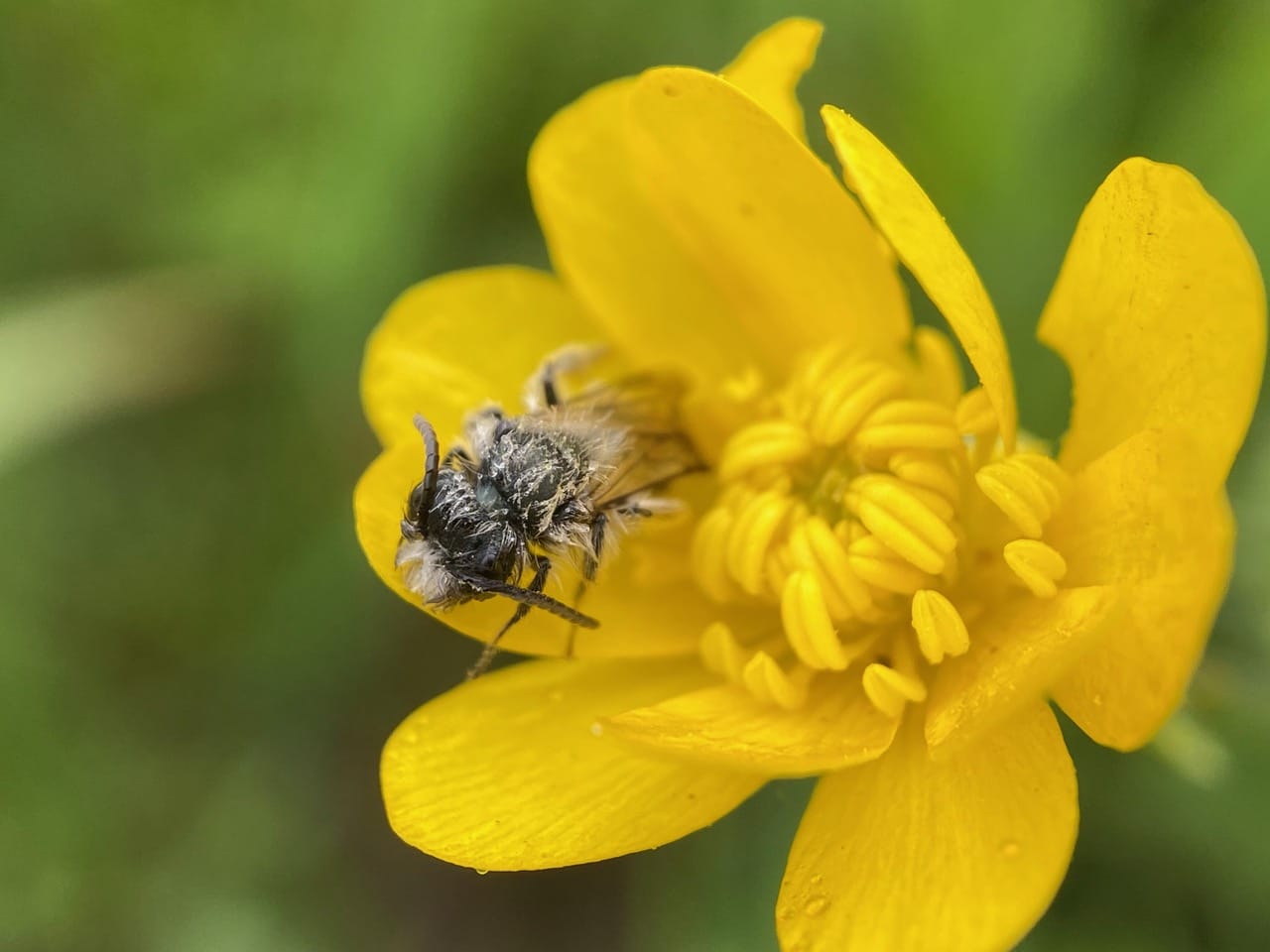
10:10 am. I return to check on little Sleepy Head. The buttercup flower has opened up a little more, but the bee still looks pretty wet. He has not moved.
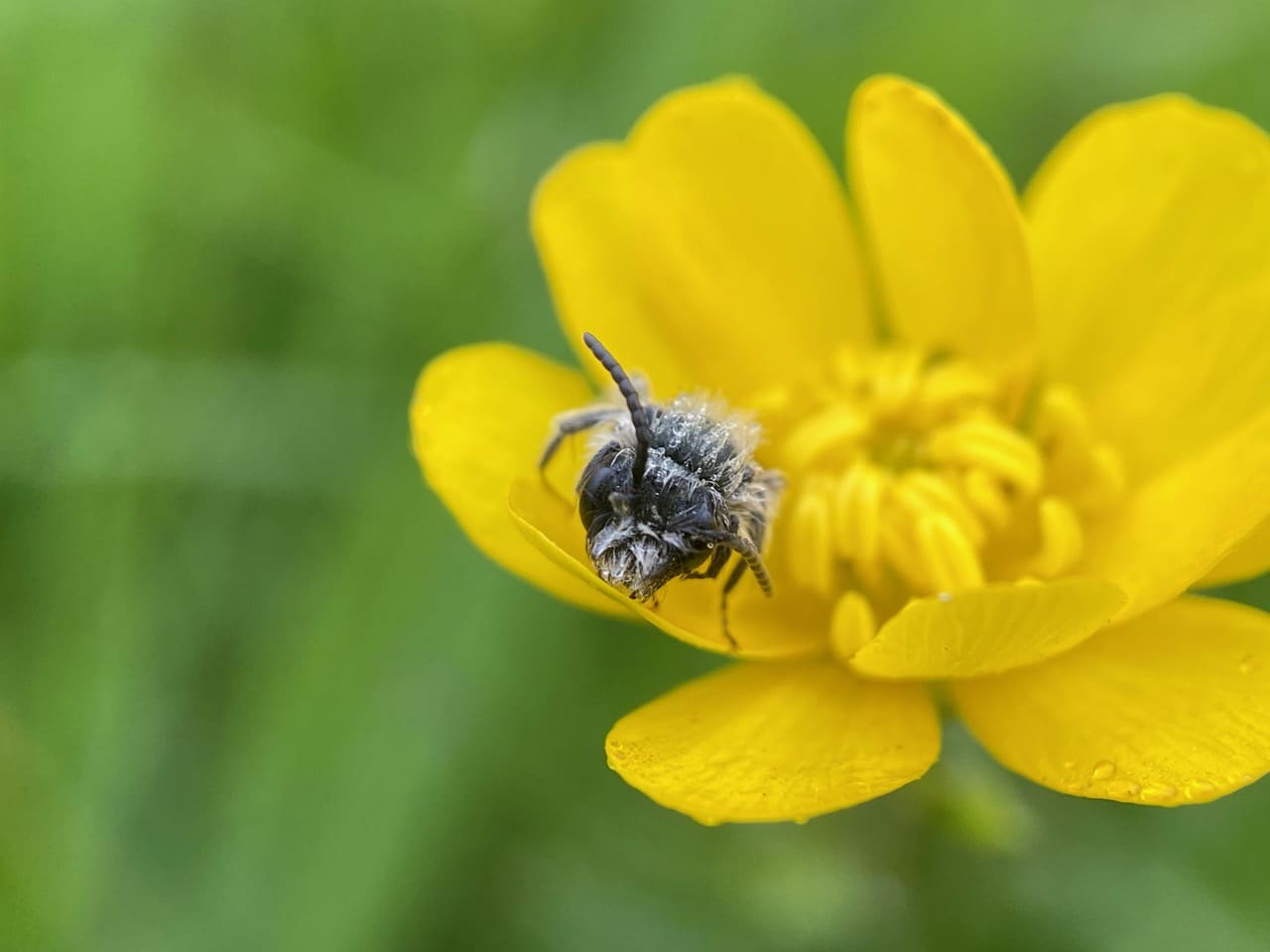
It must be terrible having to endure this kind of cold and wet through the night. How long will it take the beee to revive?
Why do male bees sleep out in the open at night? Male solilary bees do not participate in nest construction, nor do they gather pollen to provision for the young. They do not have a home to which they return at the end of the day, and instead sleep out in the open in the vegetation, sometimes on flowers. Many are creatures of habit, returning to the same roost every night, sometimes in aggregation with other males. It is one of those bee behaviors that I find most endearing.
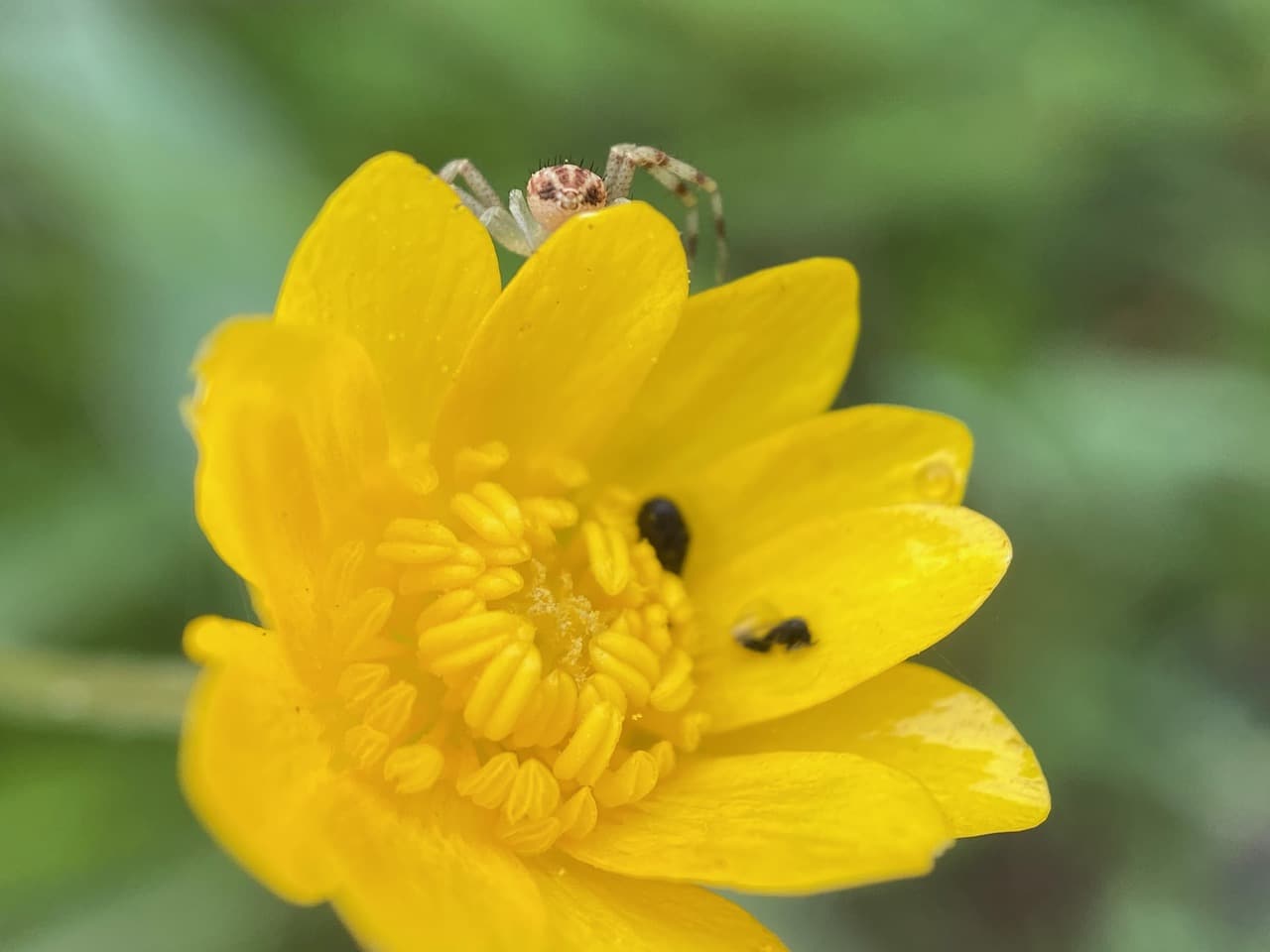
On an adjacent plant a small Crab Spider (family Thomisidae) is lurking behind a flower. There are a couple of dead insects in the flower, probably its former meals left behind. I wonder if Crab Spiders pose a serious risk for sleeping bees?
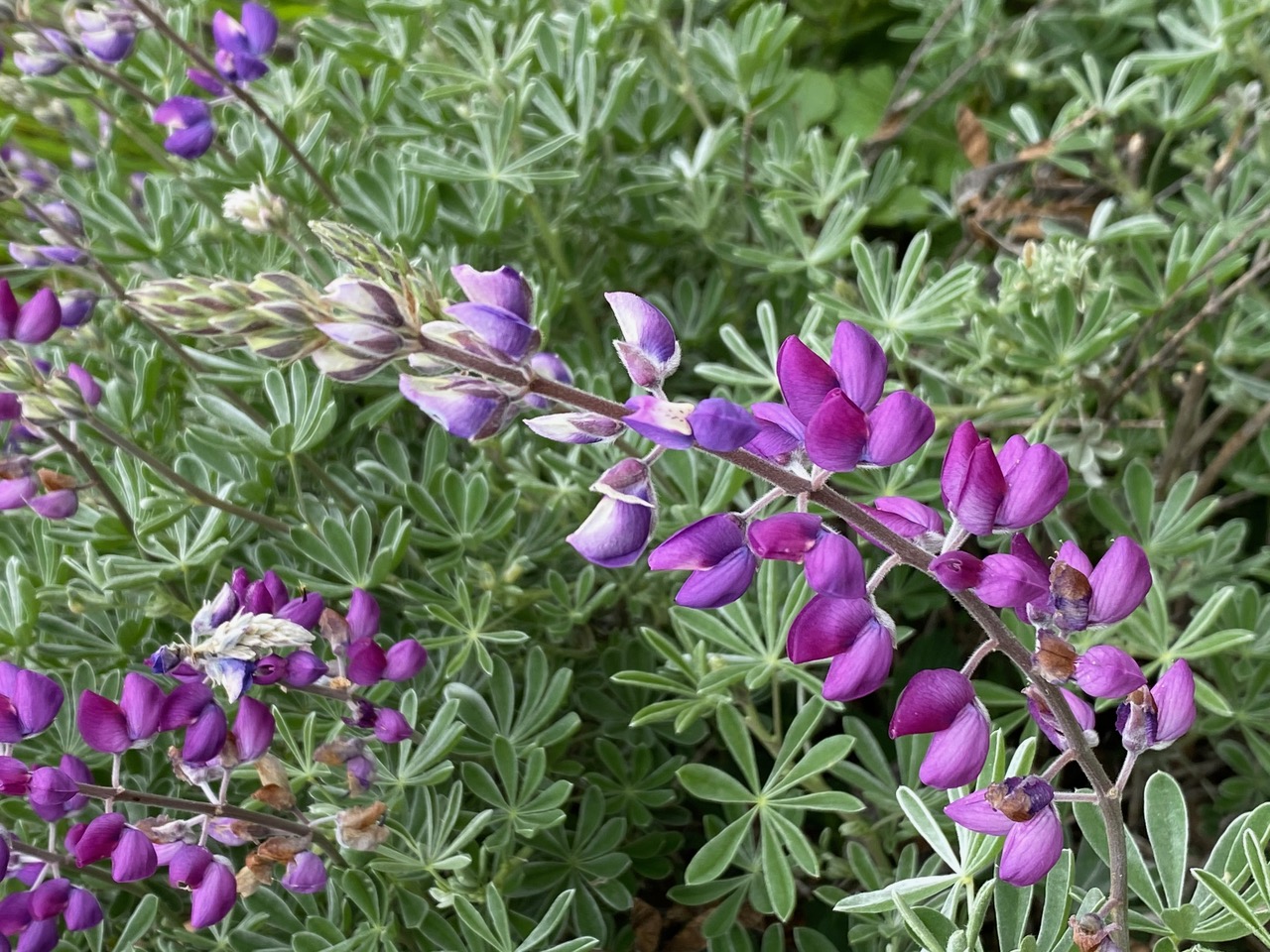
The Silverleaf Lupine, Lupinus albifrons near the Steam Train entrance are blooming beautifully, but the flowers don’t appear to have received much attention from pollinators. Lupine flowers depend primarily on Bumble Bees, Digger Bees and other heavy-bodied bees for pollination. These bees are capable of “tripping” the flowers to access the hidden nectar and pollen. Most flowers that have been visited by these pollinators often have their keels and reproductive parts exposed
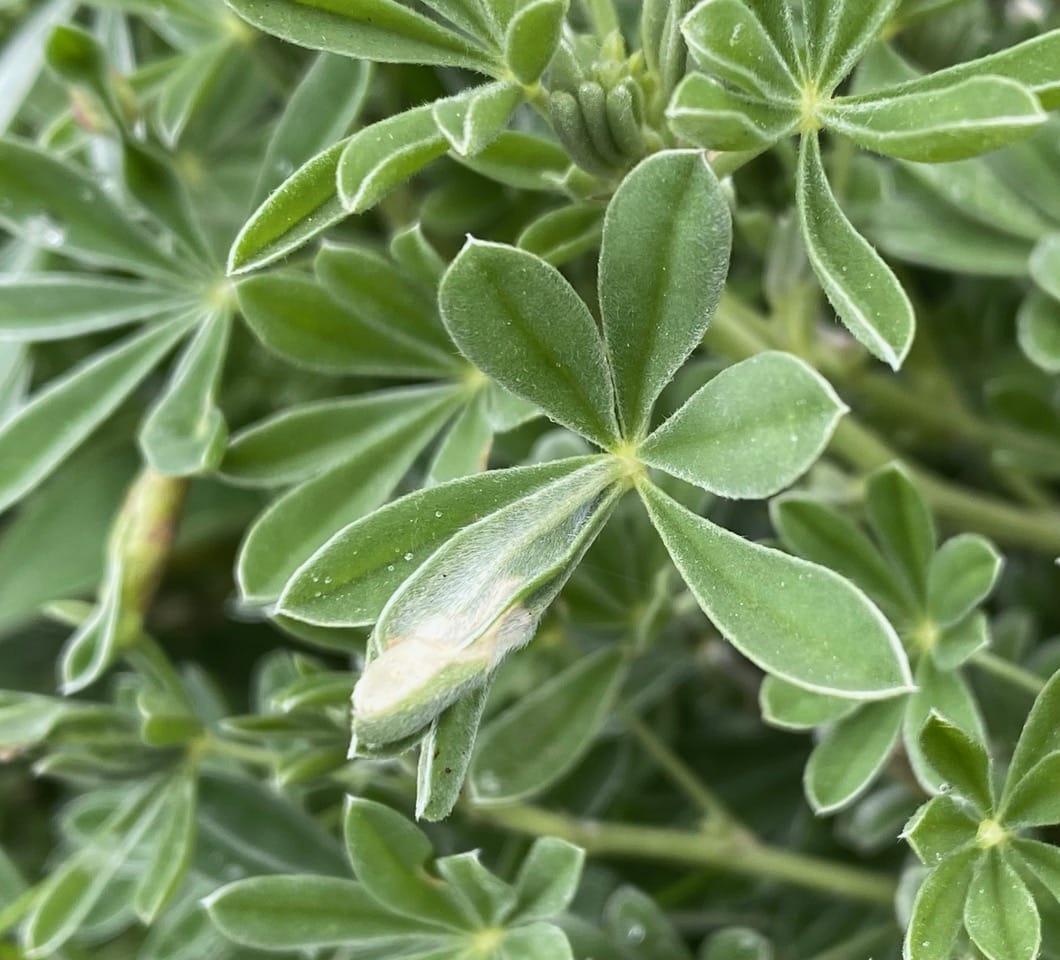
Look, someone has made a home by binding together the leaflets of a Silverleaf Lupine. It is likely the work of a caterpillar in the family Tortricidae, commonly known as tortrix moths or leafroller moths. Tortricid moths are generally small, with a wingspan of 3 cm or less. The typical resting posture is with the wings folded back, producing a rather rounded profile. Many species are drab and have mottled and marbled brown colors. Larvae of some species feed by boring into stems, roots, buds or seeds. Others feed externally and construct leaf rolls.
Leaf shelter-builders, either leaf-tiers or leaf-rollers, do not manipulate leaves directly but use their silk to draw plant surfaces together. The caterpillars impart potential energy to their silk strands by stretching them beyond their equilibrium length as they are spun out. Axial retraction of the stretched strands then draws the bound plant surfaces together. Although a single stretched strand exerts only a minuscule force, the combined force generated by many such strands attached to the same opposable plant surfaces is substantial and allows the caterpillars to manipulate leaves many times their size and mass.
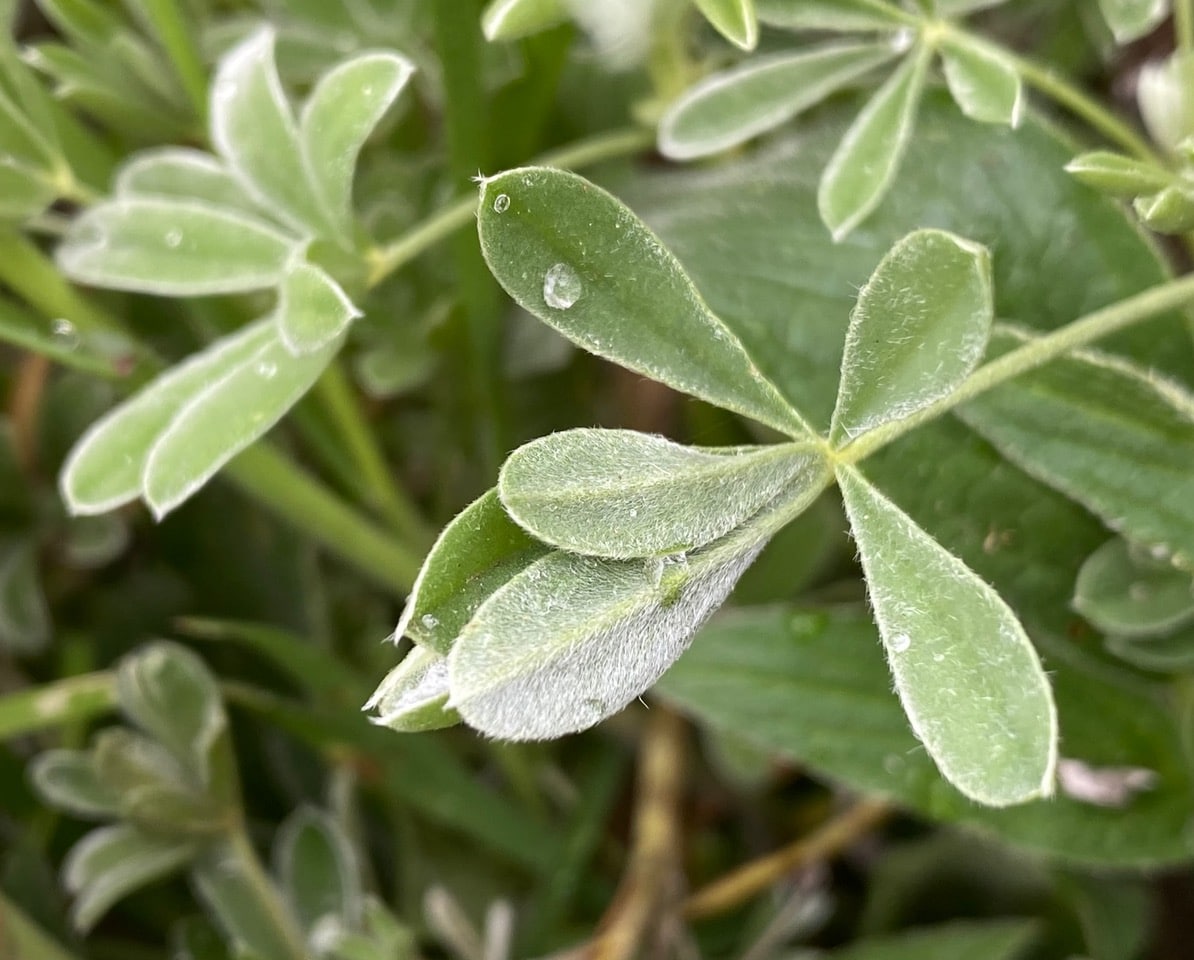
Here’s another caterpillar shelter. The architecture of the shelters on the lupine are amazingly consistent – usually three adjacent leaflets are loosely bound together, then a fourth leaflet is pulled over from the opposite side and tied roof-like over the other leaflets.
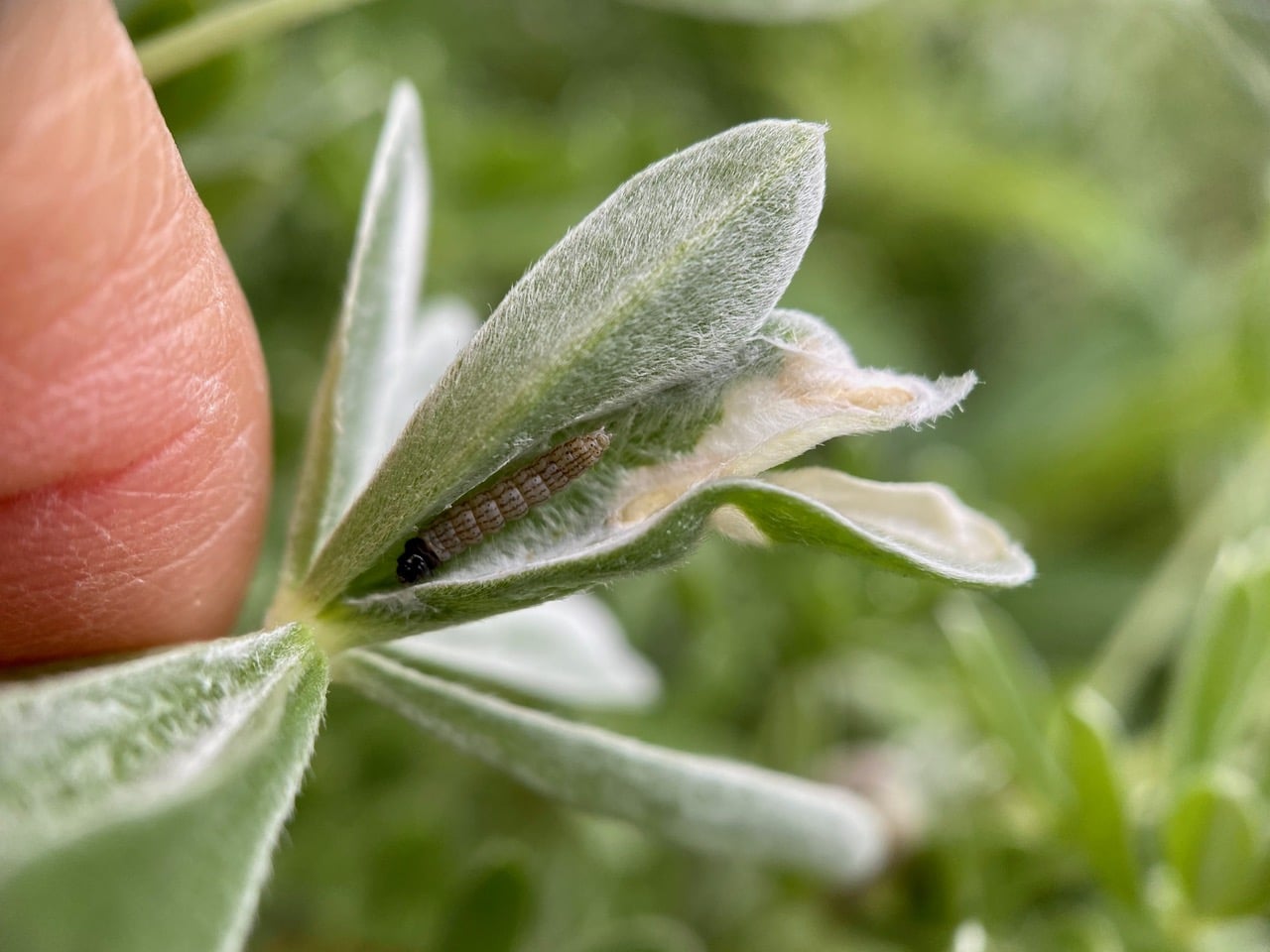
I gently pulled apart one of the leaflets of this shelter to reveal a little striped caterpillar inside with a black head. It immediately scoots forward in alarm. The whitish sections of the leaves are the parts that the caterpillar has been feeding on from the safety of its shelter.
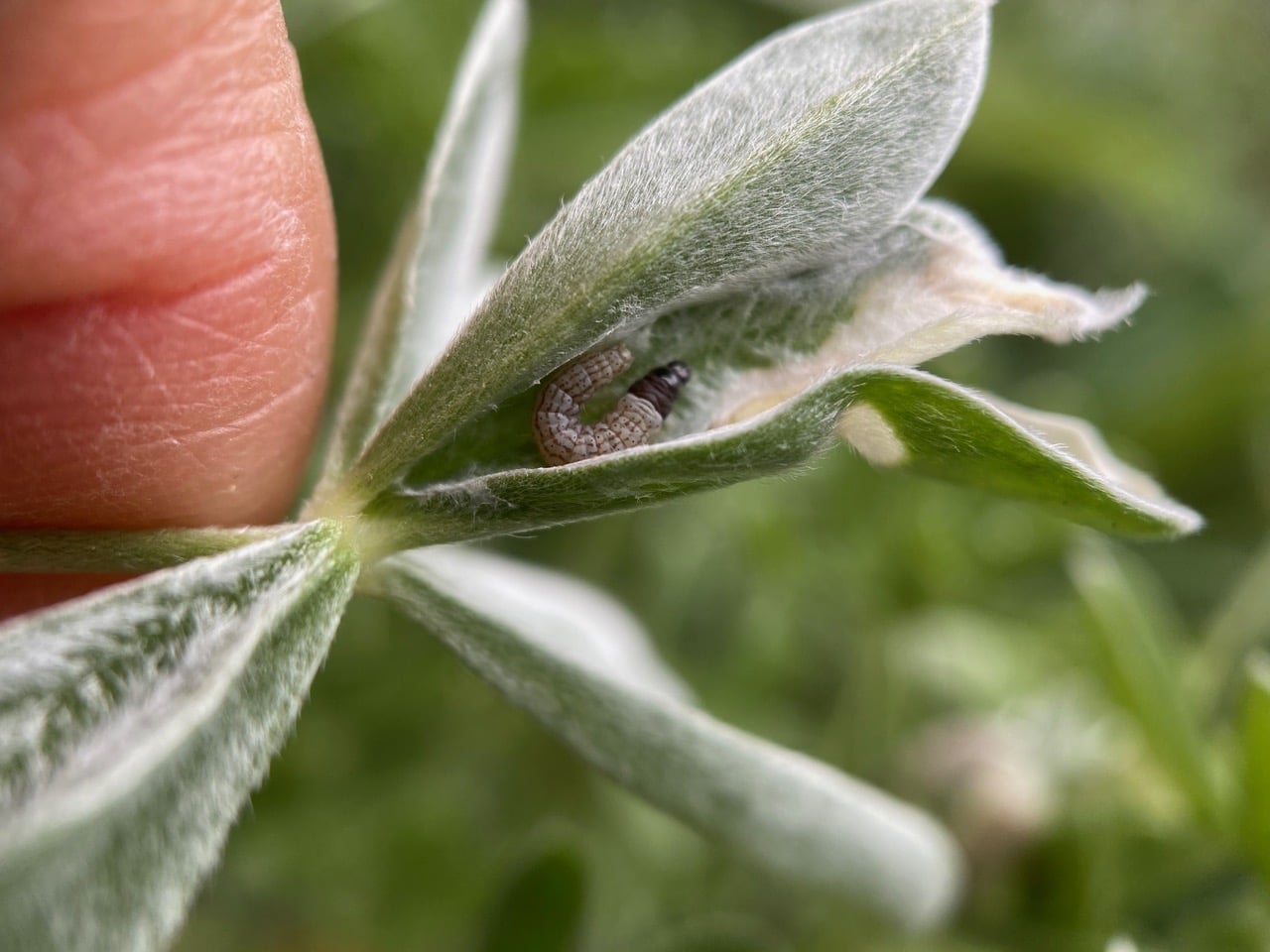
The caterpillar does a quick U-turn in the exposed shelter…
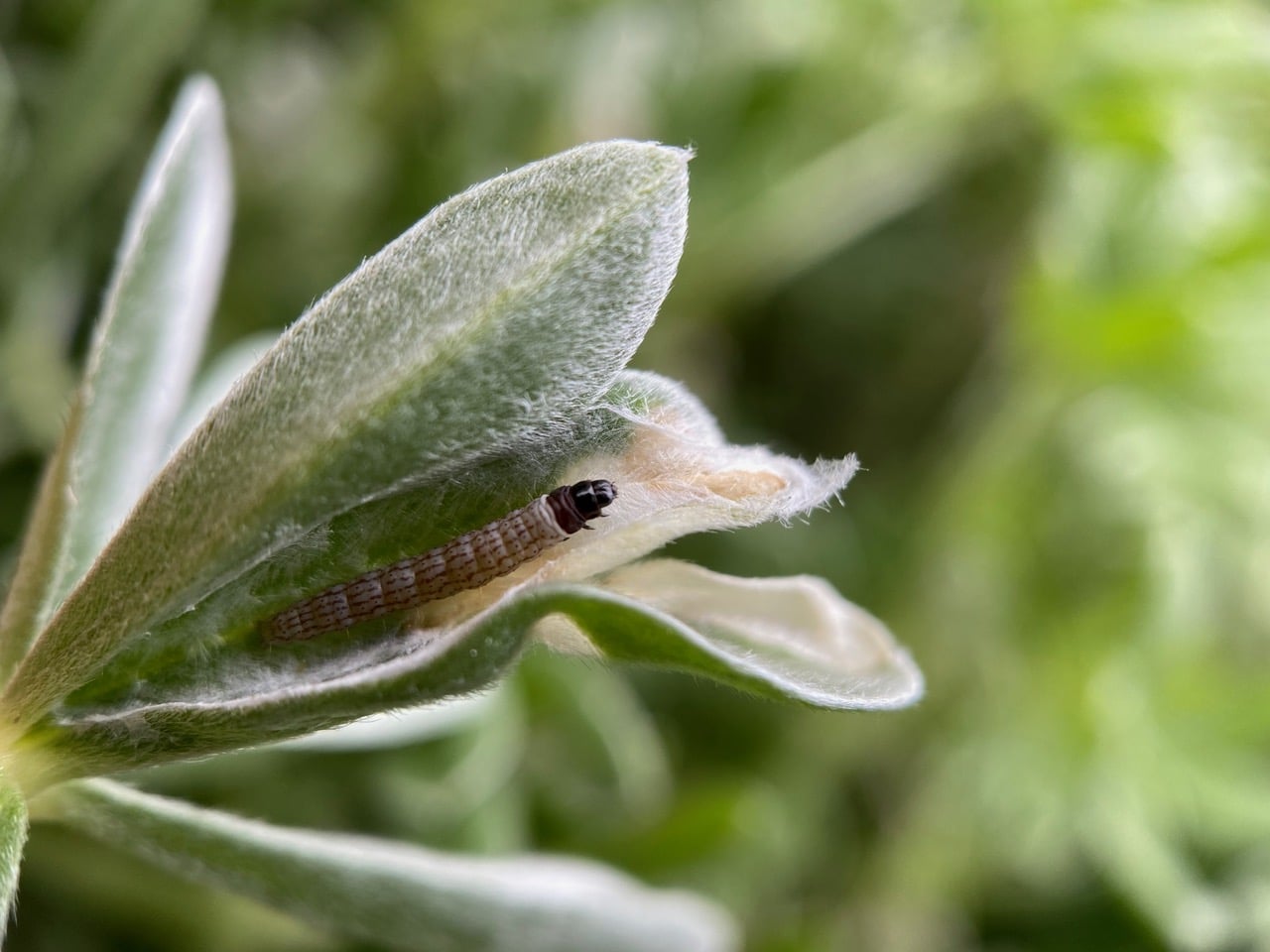
… and slowly crawls forward towards the opening of the shelter. I quickly release the leaflet that I am holding back, and hope that the caterpillar will be able to repair the damages.
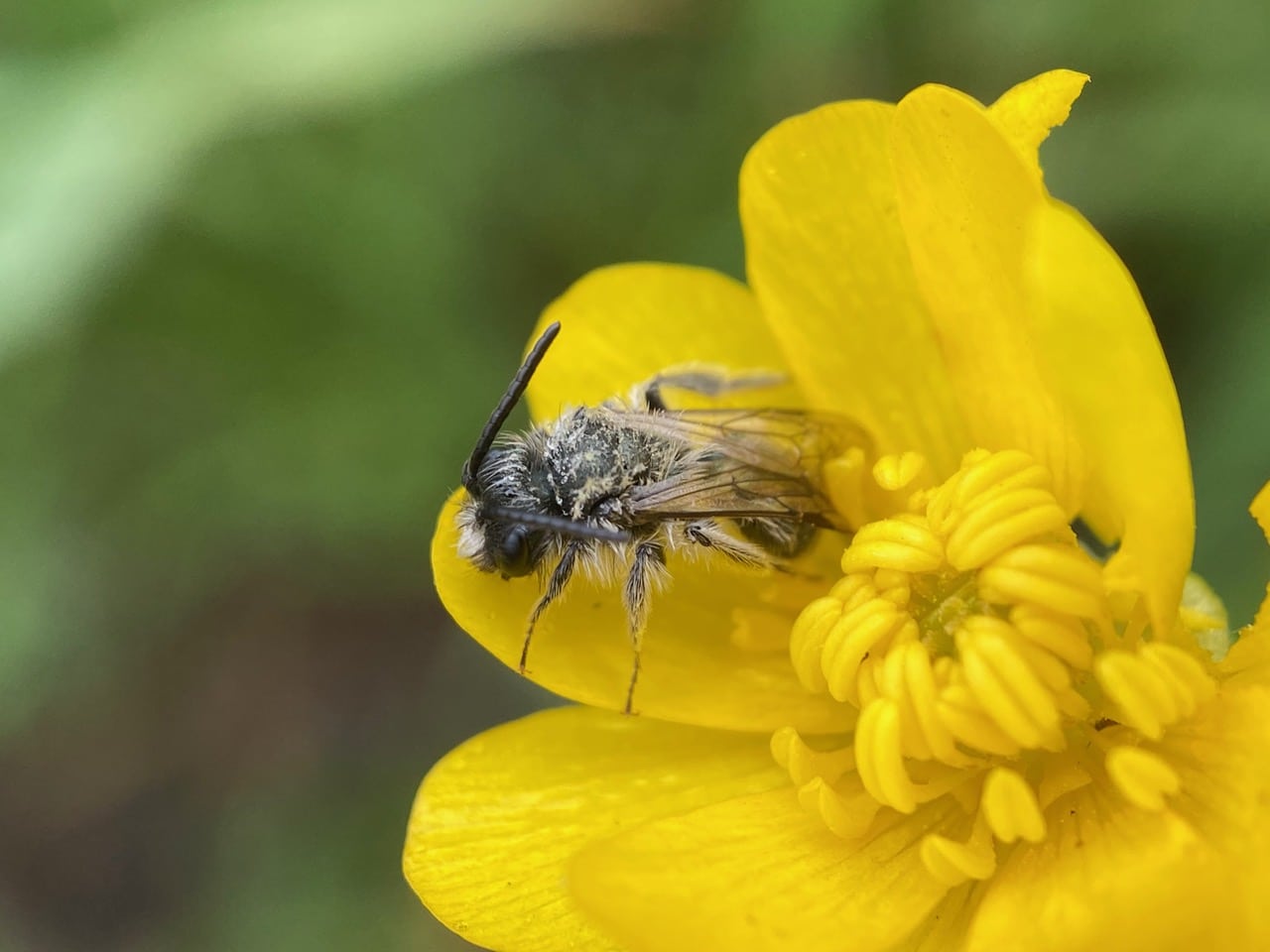
One last check on little Sleepy Head. He has dried out somewhat and his antennae are up, but he is still hunkered in the same position.
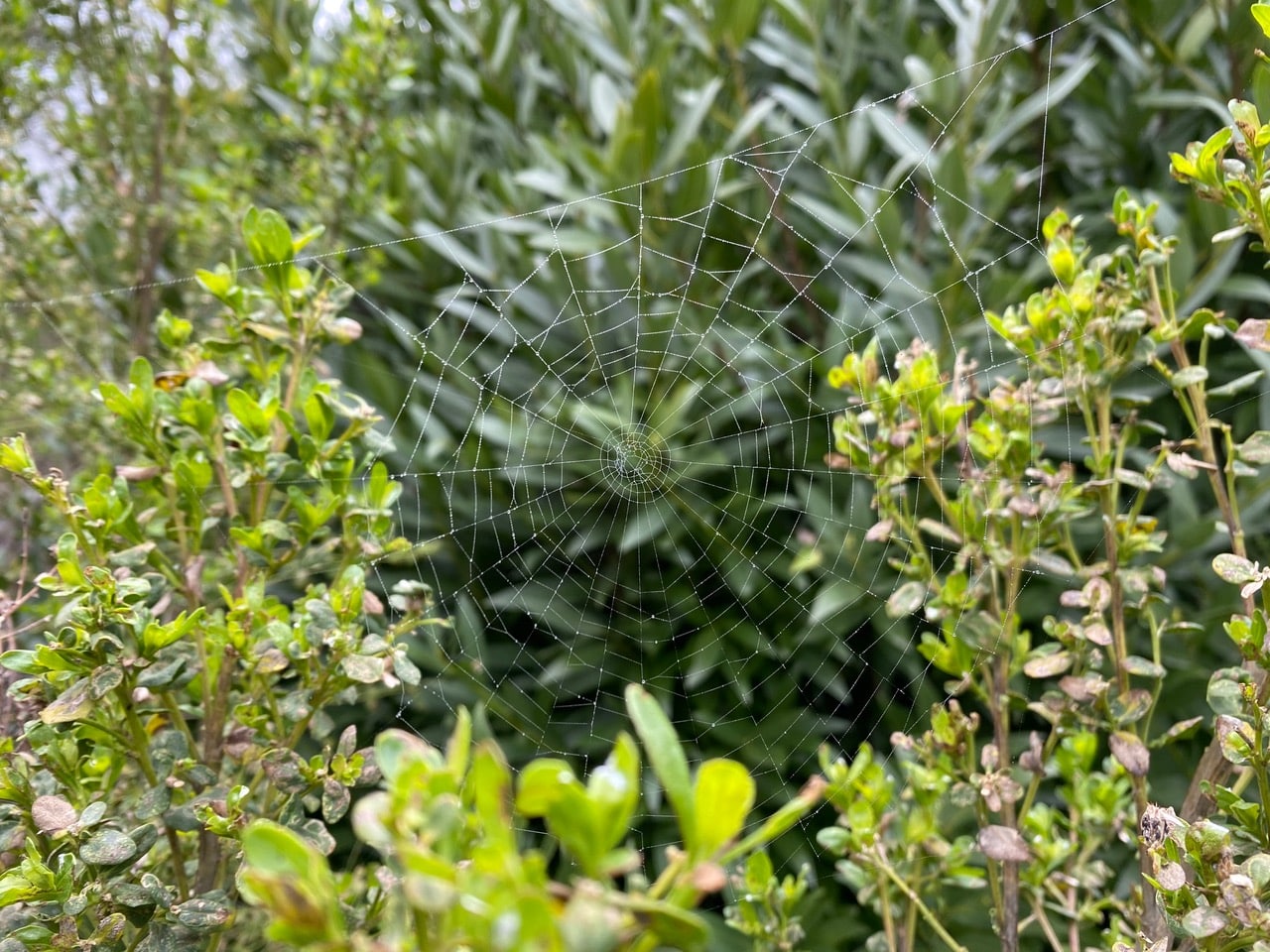
Fog has condensed on a large orb web that has been hung up between the branches of Coyote Brush near the Steam Train entrance. It is still cold and the fog has not let up by 10:30 am. My fingers are too cold to work the camera now – it’s time to go home.