

Pollinator Post 4/29/24 (1)

A tiny iridescent green wasp lands on a pea pod of Silverleaf Lupine, Lupinus albifrons. For a wasp that size, I suspect a parasitoid right away.
The wasp has been identified by iNaturalist as a Chalcidoid Wasp (superfamily Chalcidoidea, family Eulophidae, subfamily Entedoninae).
Most species of Chalcid Wasps are parasitoids of other insects, attacking the eggs or larval stage of their host, though many other life cycles are known. These hosts are to be found in at least 12 different insect orders including Lepidoptera (butterflies and moths), Diptera (true flies), Coleoptera (beetles), Hemiptera (true bugs), and other Hymenoptera, as well as two orders of Arachnida. When the host is itself a parasitoid, the wasps are referred to as hyperparasitoids. Generally beneficial to humans as a group, chalcidoids help keep various crop pests under control, and many species have been used as biocontrol agents.
Members of the subfamily Entedoninae are known to parasitize ants.

A Leguminous Seed Weevil, Tychius lineellus (family Curculionidae) is hiding among the pea pods of Silverleaf Lupine, Lupinus albifrons. The weevil species is found in North America.
Weevils, family Curculionidae, are also called snout beetles. Curculionidae is one of the largest beetle families (about 40,000 species). Most weevils have long, distinctly elbowed antennae that may fold into special grooves on the snout. The snout is used not only for penetration and feeding but also for boring holes in which to lay eggs. The mouthparts are quite small and located at the end of the rostrum (snout), designed for chewing. Many weevils have no wings, while others are excellent fliers. Most are less than 6 mm in length. The majority of weevils feed exclusively on plants. The fleshy, legless larvae of most species feed only on a certain part of a plant – i.e., the flower head, seeds, fleshy fruits, stems, or roots. Many larvae feed either on a single plant species or on closely related ones. Adult weevils tend to be less specialized in their feeding habits. The family includes some very destructive agricultural pests.

A tiny honey-colored beetle walks towards the tip of a California Phacelia leaf. iNaturalist has identified it as a Silken Fungus Beetle, Antherophagus sp. (family Cryptophagidae).
Cryptophagidae is a family of beetles found in all biogeographic regions. They are commonly called Silken Fungus Beetles as both adults and larvae appear to feed exclusively on fungi in a wide variety of habitats such as rotting wood, shed animal fur and feathers. These beetles vary from 1-11 mm long, and usually have an oval body shape with a slight “waist”.
At 3.3 to 5 mm, Antherophagus are the largest members of the family in our area. They occur across Canada and northern US south to Washington. Adults are found in bumble bee nests and flowers. Larvae apparently feed on organic detritus in bumble bee nests. Adults sometimes cling to the mouthparts/antennae/legs of bumble bees to be carried to the nests.

A Red-backed Jumping Spider, Phidippus johnsoni (family Salticidae) is moving along a blade of grass.
The species is one of the largest and most commonly encountered jumping spiders in western North America. Salticids are free-roaming hunters. They do not weave a web to catch prey. They stalk, then pounce on their prey. Just before jumping, the spider fastens a safety line to the substrate. It can leap 10-20 times their body length to capture prey. Their movement is achieved by rapid changes in hydraulic pressure of the blood. Muscular contractions force fluids into the hind legs, which cause them to extend extremely quickly.
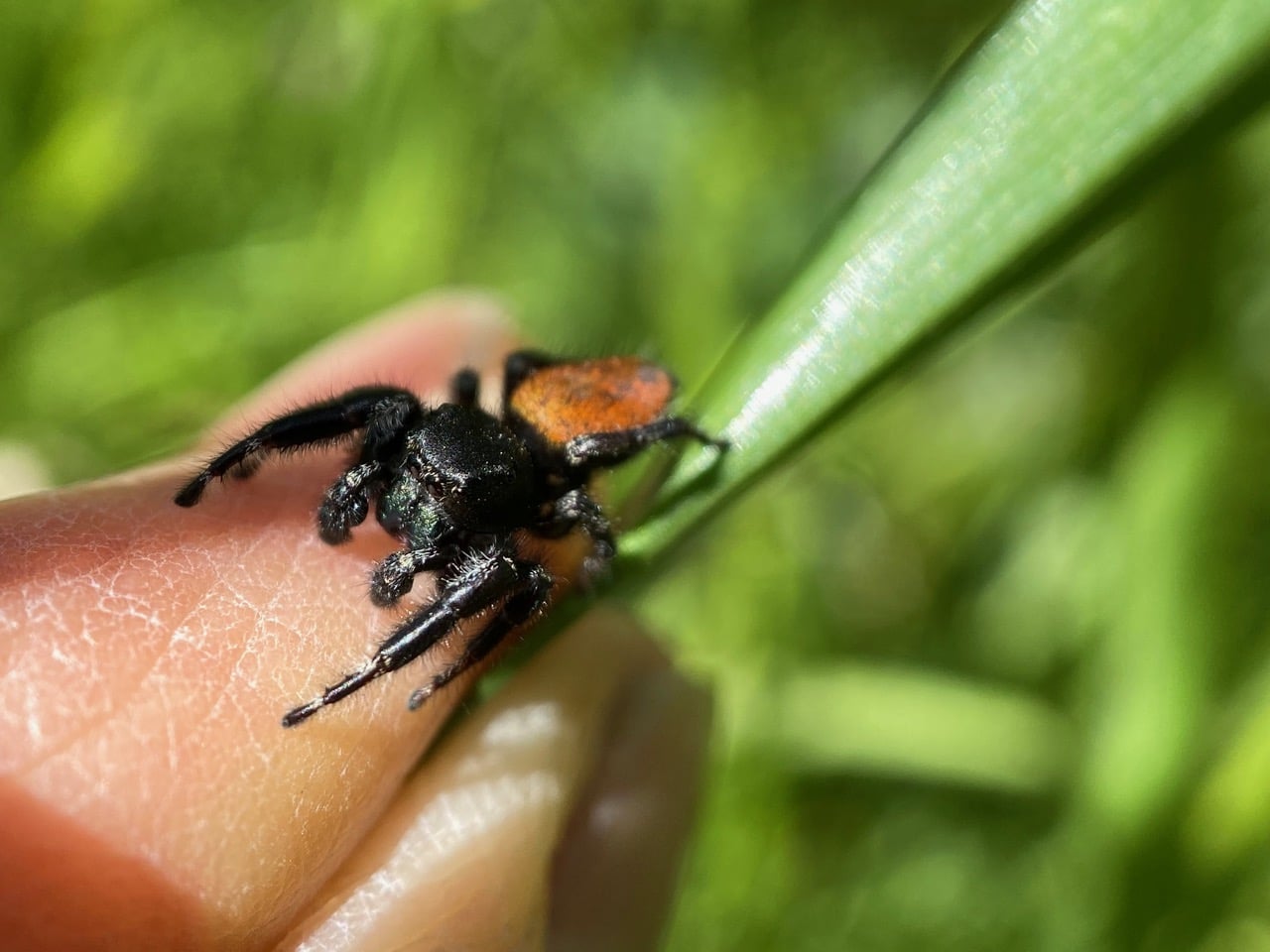
I hold the grass tip to steady it for a pictures of the spider. Phidippus promptly walks onto my finger!

Here’s a good look at the face of the Jumping Spider. It is shaking its pedipalps in front of the iridescent blue chelicerae excitedly, and staring at me straight on.
The chelicerae are articulated fangs that are hollow and contain venom glands, used to inject venom into prey. The pedipalps are jointed appendages, much like small legs. They are used by the spider to sense objects, shape their webs, and to aid in prey capture and feeding. In male spiders, the pedipalps are also used to deliver sperm during mating.
Jumping spiders have excellent vision, with among the highest acuities in invertebrates. The 8 eyes are grouped four on the face (the two big Anterior Median Eyes in the middle, and two smaller Anterior Lateral eyes to the side), and four on top of the carapace. The anterior median eyes provide high acuity but small field of view, while the other six eyes act like our peripheral vision, with lower resolution but broad field of view. Since all eight eyes are fixed in place and can’t pivot independently from the body like human eyes can, jumping spiders must turn to face whatever they want to see well. This includes moving their cephalothorax up and down, an endearing behavior.

 The spider appears to be a young female, with faint black and yellow markings appearing on its red abdomen. Males have an all-red abdomen.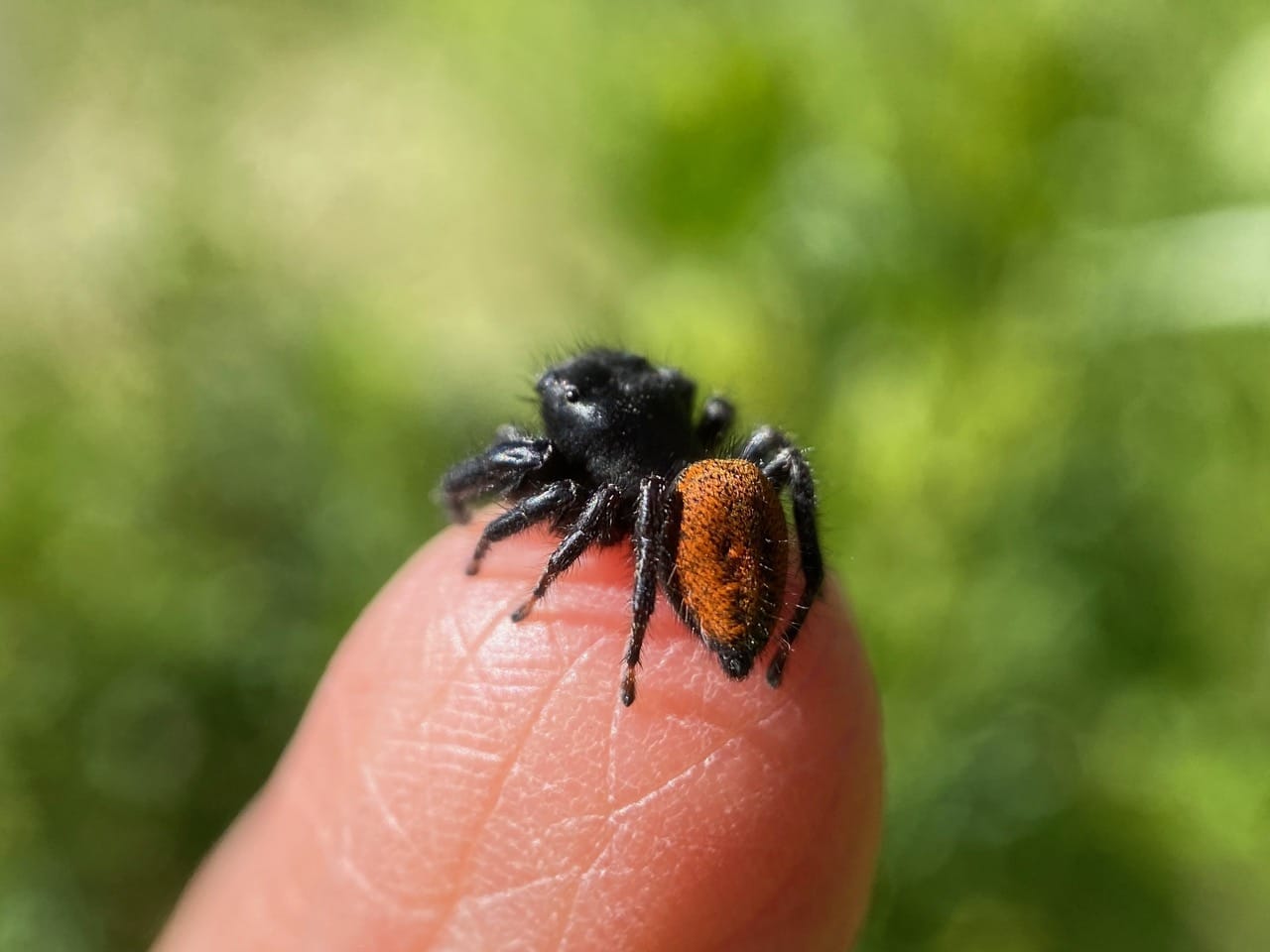
Getting ready to leap off my finger.

The small beetle among the Cow Parsnip flowers is easily recognizable from its serrated long antennae. It is a Fire-colored Beetle, Pedilus sp. (family Pyrochroidea).
Like all beetles, Fire-colored Beetles have chewing mouthparts and hardened front wings (elytra) that meet in a straight line down the back of the abdomen when closed. Most have dark elytra and many are marked with orange or red on the head, legs, or thorax. Some species are orange all over their bodies. Fire-colored Beetles have long, straight antennae, and many individuals (especially males of certain species) have distinct “pectinate” (comb-like) antennae.
Females lay eggs on decaying wood, where the larvae live underneath loose bark of decaying trees. The larvae are apparently fungivorous (feeding on fungi), sometimes becoming cannibalistic at high population densities. Adults visit flowers for nectar and pollen.
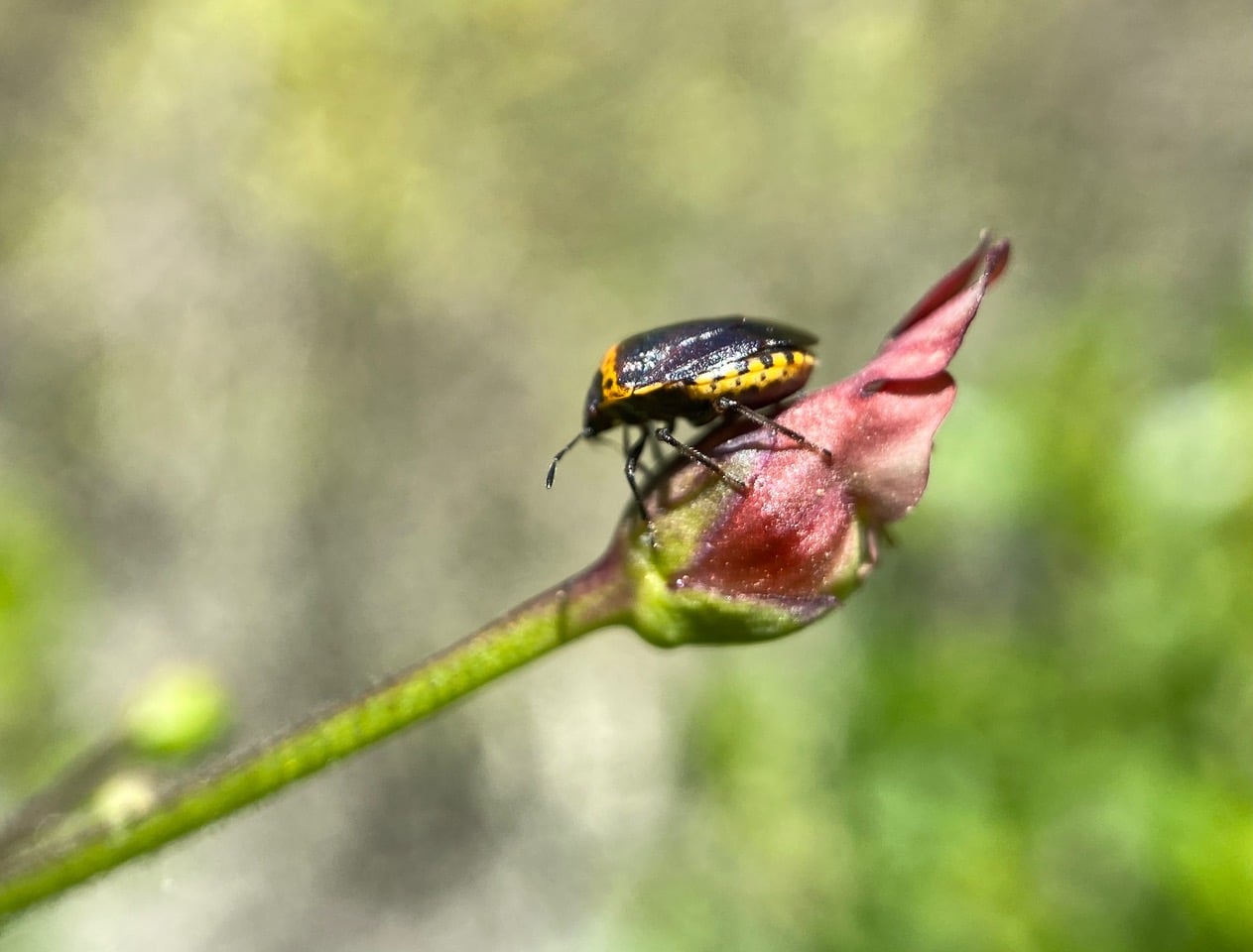 The little Stink Bug, Cosmopepla uhleri (family Pentatomidae) is by now a ubiquitous presence on the Bee Plant, Scrophularia californica along Skyline Trail. It is easily recognizable – black with an orange transhumeral band with black spots. The bug uses Scropularia californica as a host plant.
Pentatomidae is a family of insects belonging to the order Hemiptera or “true bugs”. As hemipterans, the pentatomids have piercing-sucking mouthparts, and most are phytophagous, including several species that are severe pests on agricultural crops. Stink Bugs feed on plant fluids by inserting their needlelike mouthparts into stems, leaves or seed pods. While feeding, they inject materials into the plant to aid in digestion and sap removal. Penetration by the mouthparts can cause physical damage, much like stabbing the plant with a fine needle. Cosmopepla uhleri is so small that the damage is generally limited to fine stippling on the leaves of California Bee Plant.
All Pentatomids have 5-segmented antennae (hence their family name, Penta – five and tomos – section.) They generally have a large triangular scutellum in the center of the back. The adult is generally shield-shaped when viewed from above. The common name of Stink Bug refers to their ability to release a pungent defensive spray when threatened, disturbed, or crushed.
#/media/File:Heteroptera_morphology-d.svg)

Reproduction is in full swing on the Bee Plant! The larger female on the right is actually feeding while mating, with her rostrum sunk into the flower bud.
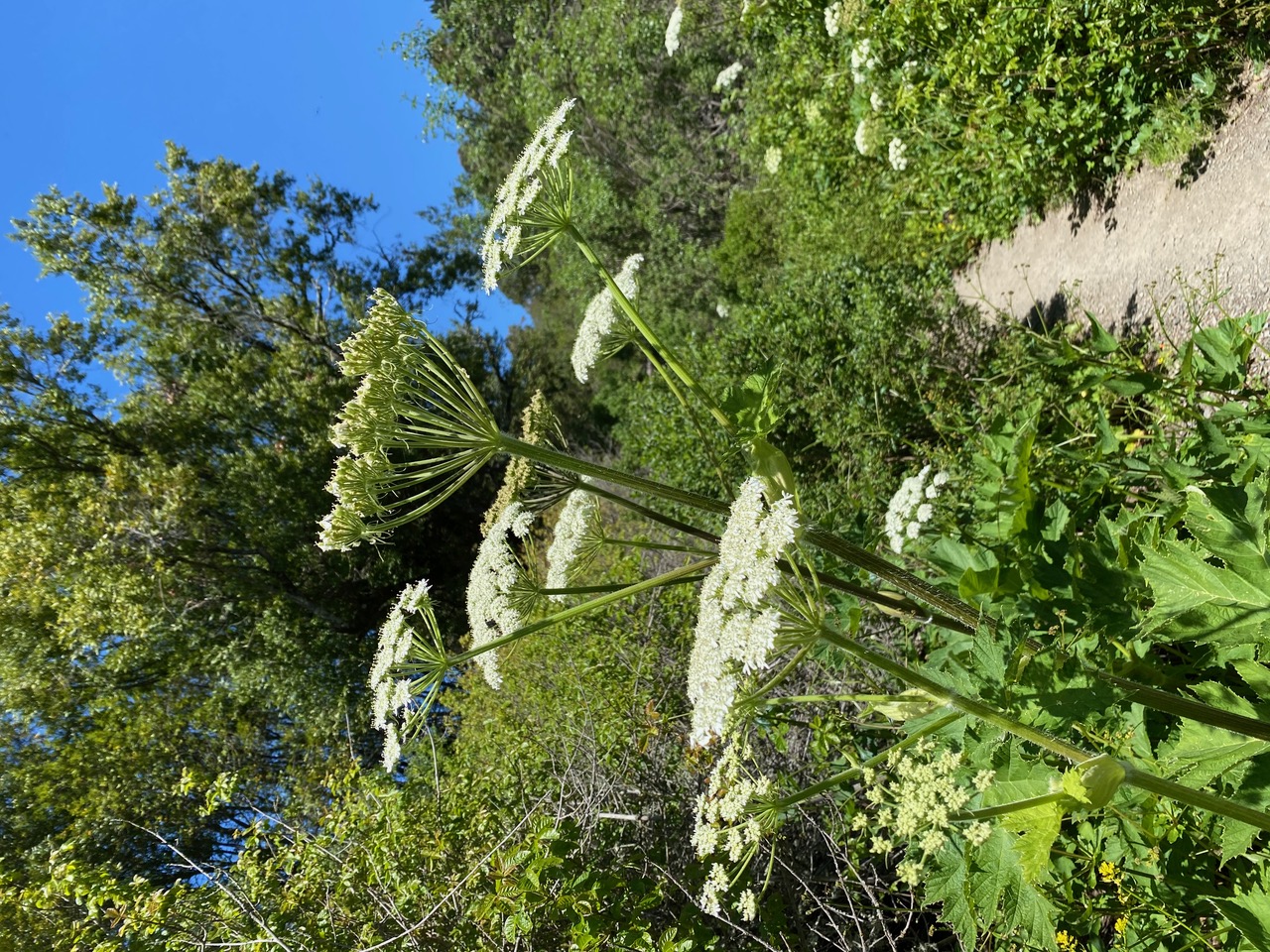
Cow Parsnip, Heracleum maximum is blooming gloriously, encroaching on the narrow path at the northern section of Skyline Trail.
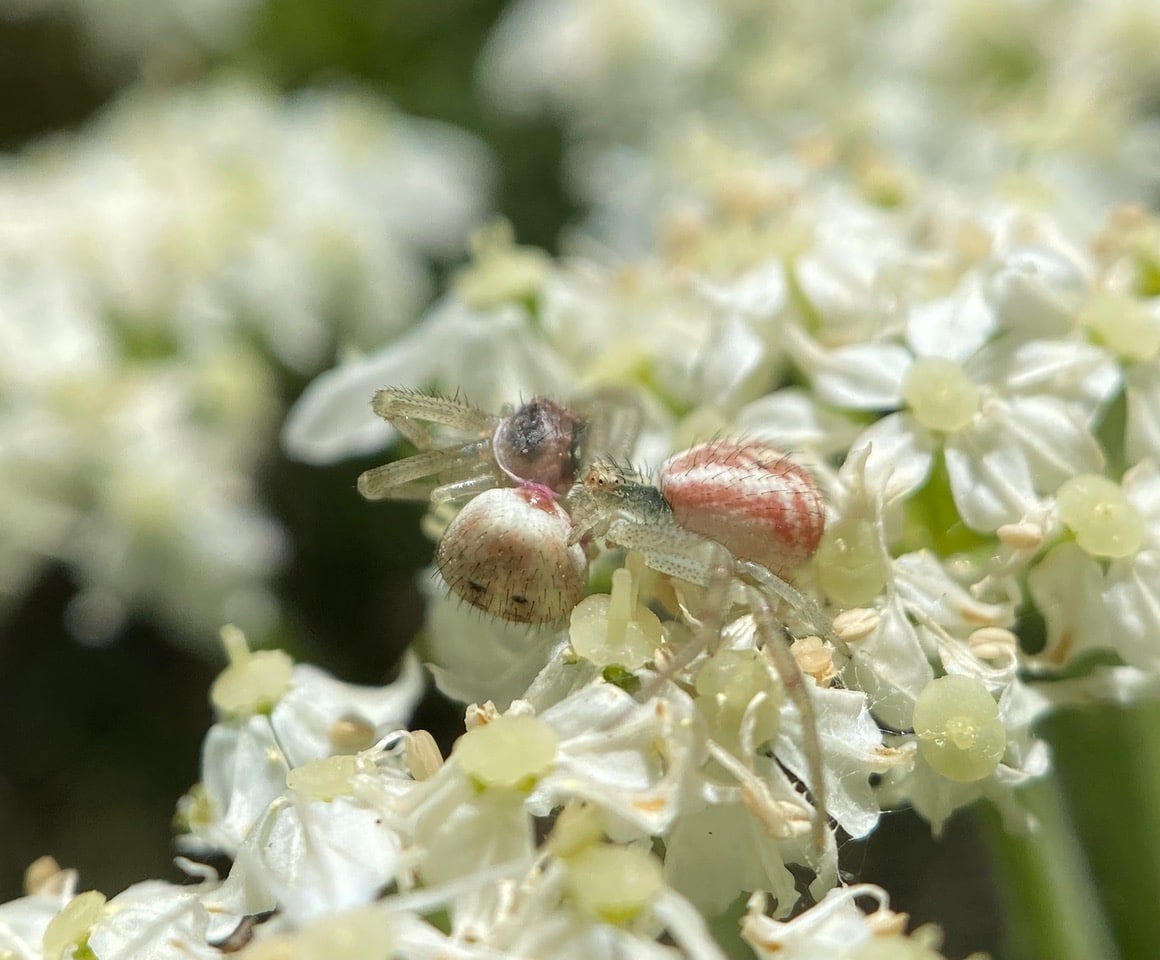
Ouch! It is always jarring to the senses to witness cannibalism. A Crab Spider, Mecaphesa sp.(family Thomisidae) is feeding on a conspecific on a flower umbel of Cow Parsnip. There are so many of these spiders on the plant, it is inevitable that this would happen. Cannibalism provides sustenance during food scarcity, while eliminating competition.
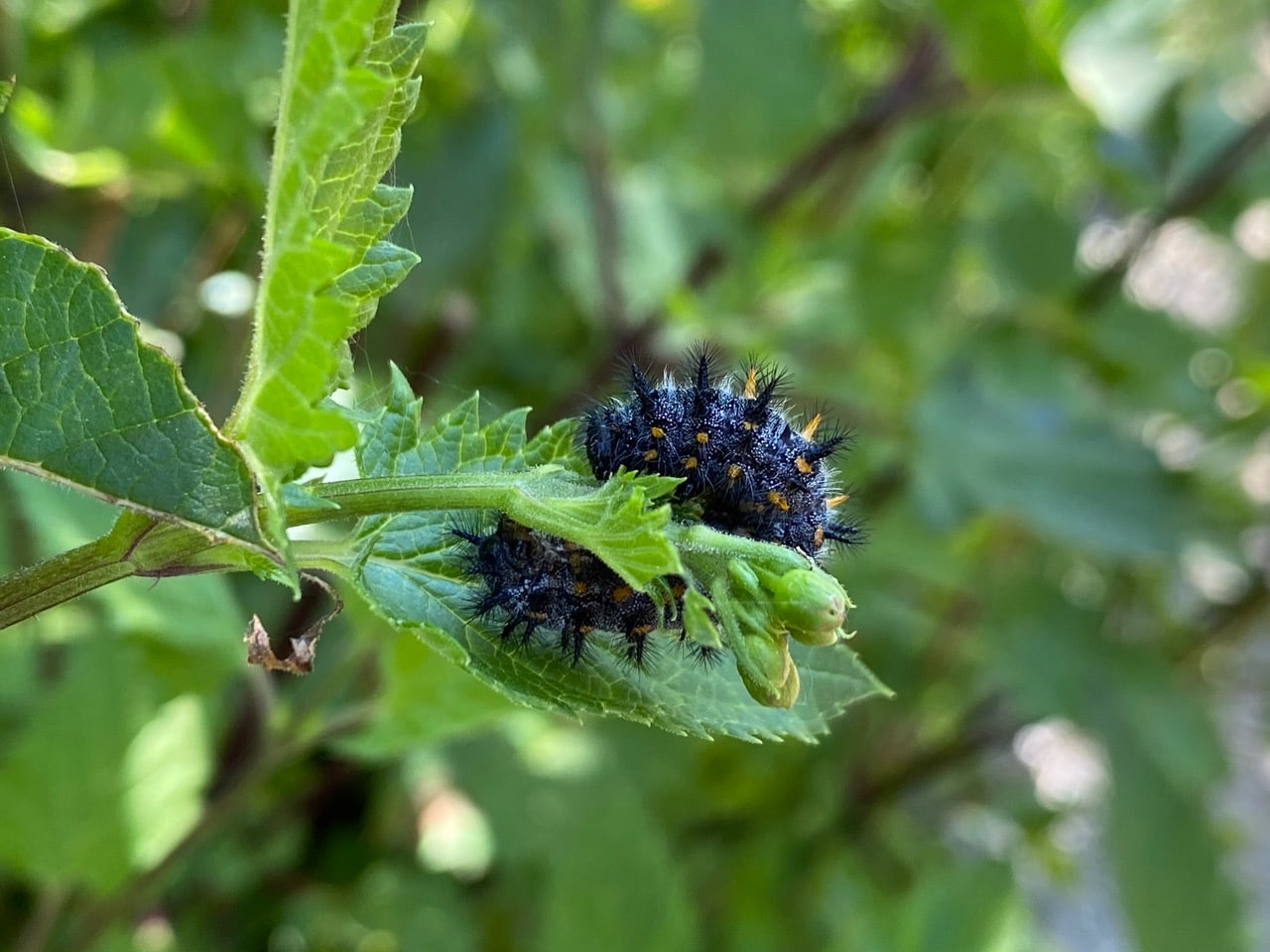
Curled around the terminal buds of a Bee Plant to feed, a large Variable Checkerspot caterpillar makes the branch tip droop.
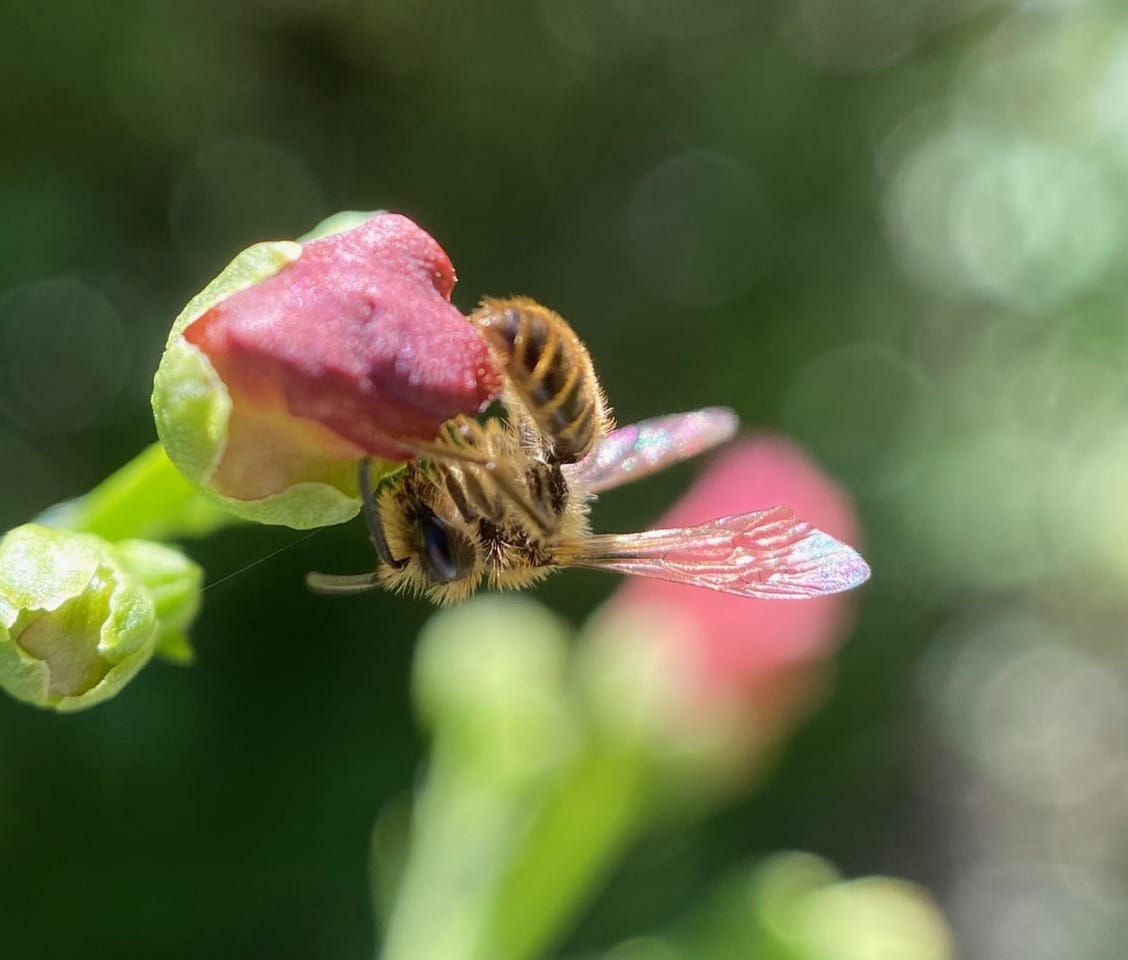
A Golden-haired Miner Bee, Andrena auricoma (family Andrenidae) is checking out a flower of Bee Plant, Scropularia californica. The bee is easily recognizable – it is covered in coarse, golden hairs.
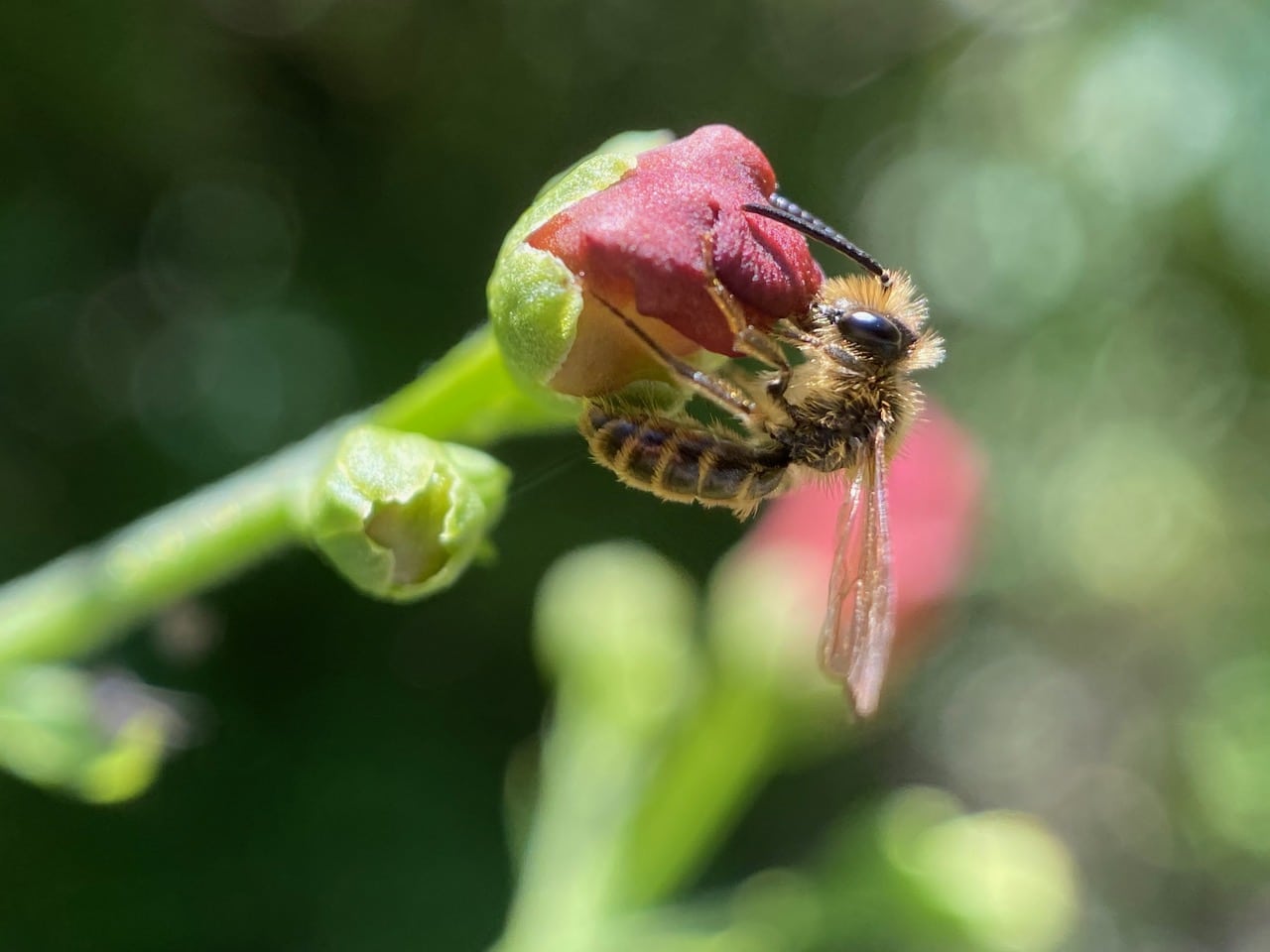
It is obviously a male, with long antennae and no scopa on the hind legs.
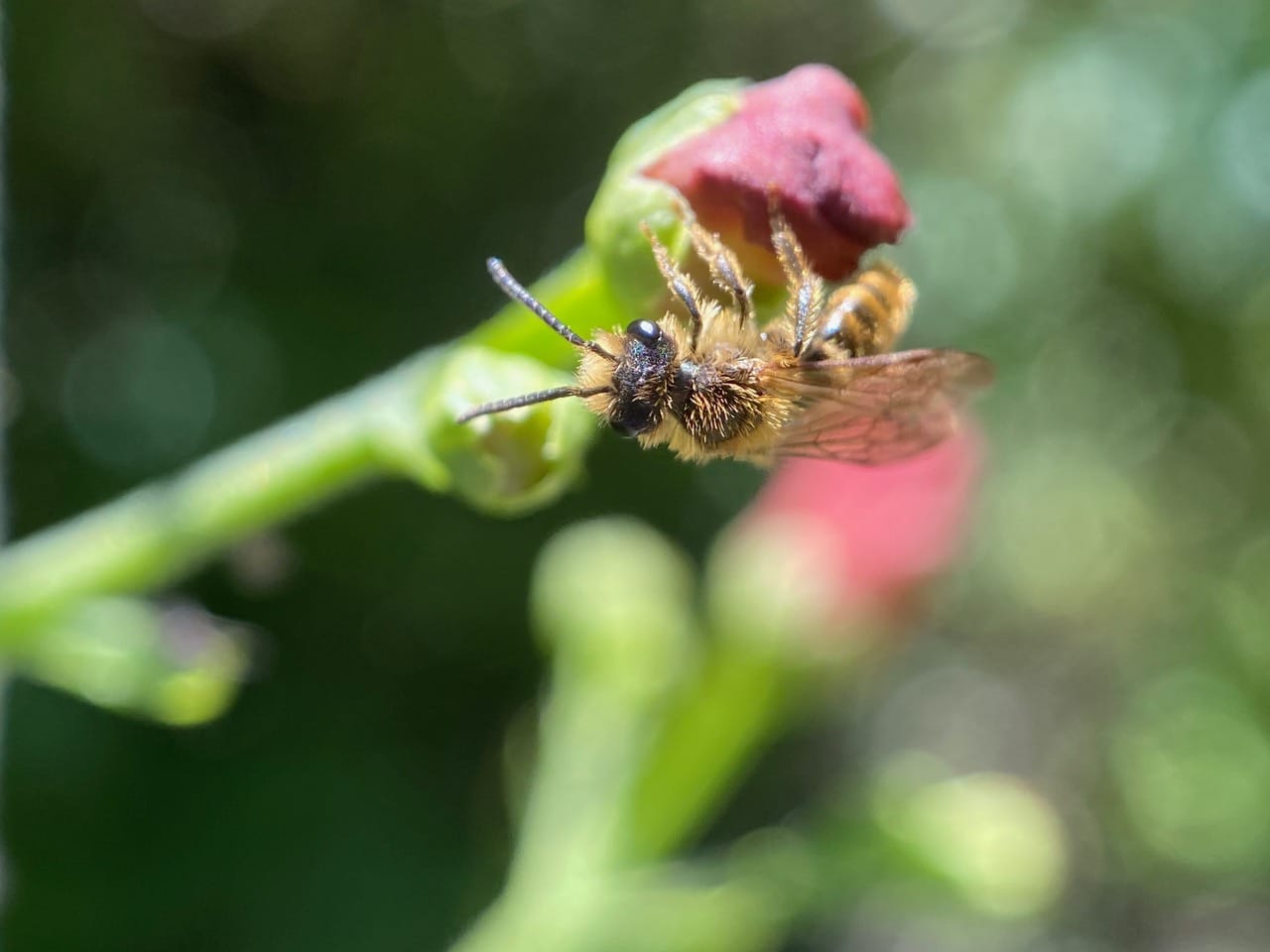
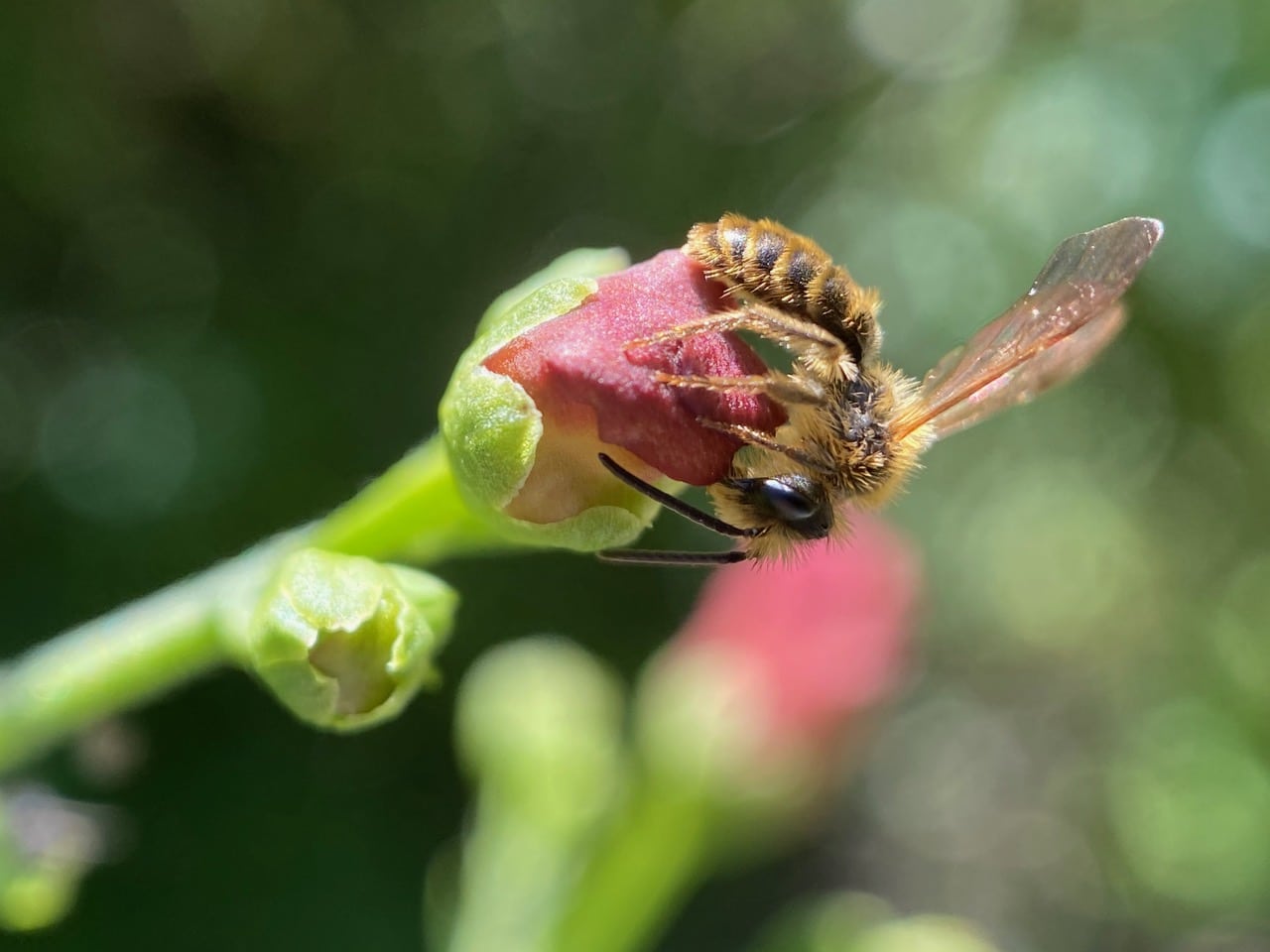
Male bees do not collect pollen, so his only interest here is the nectar. Bee Plant flowers are a good source of nectar, coveted by many pollinators.

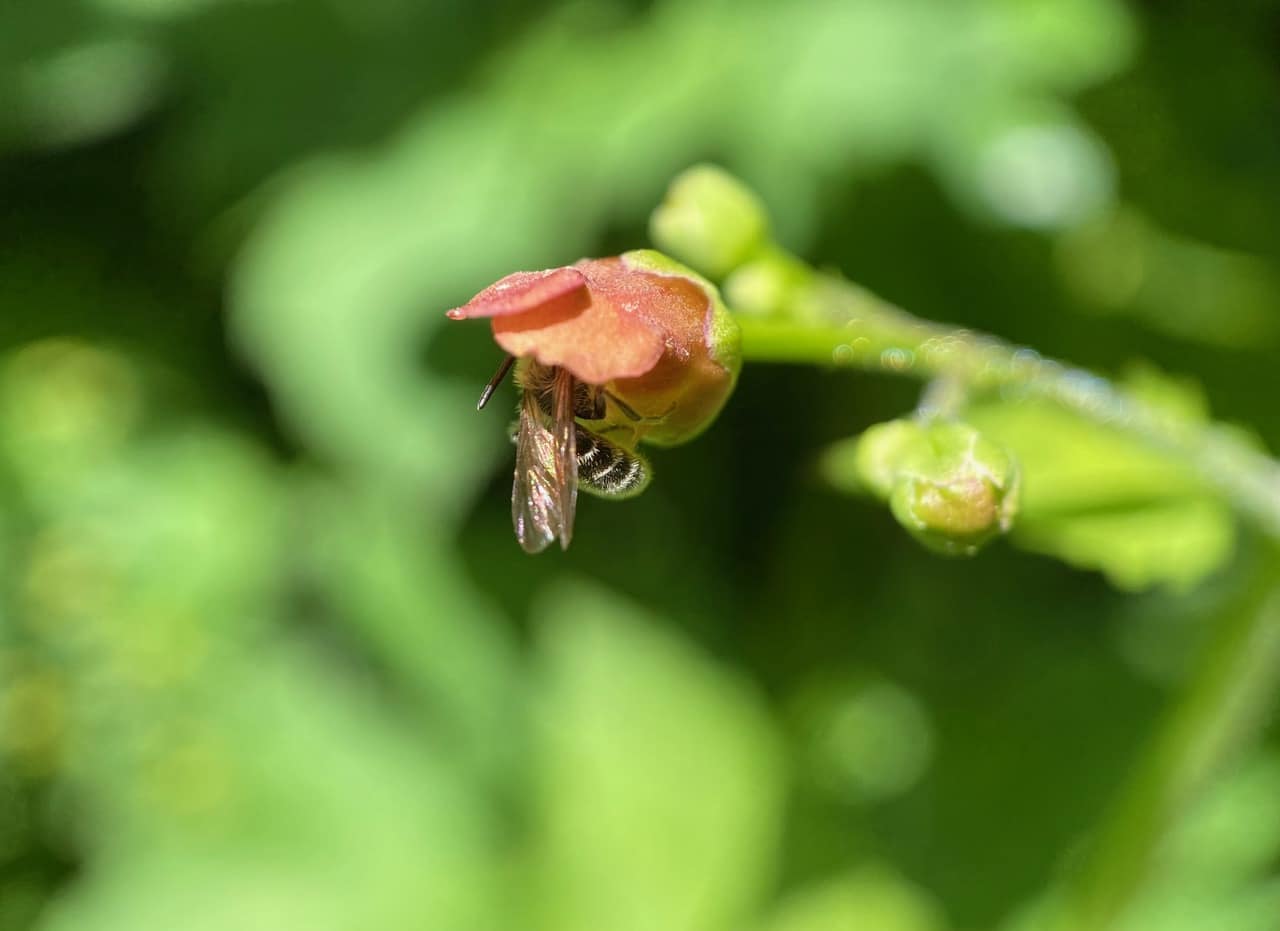
Hey, I think that is a different species of Andrenid bee. Its hairs are not golden, but white.

Attached to a cluster of faded flowers of Pacific Sanicle, Sanicula crassicaulis is an eerie sight. An Andrenid bee has been caught by a spider and wrapped in a silken shroud. Wow!

Of more immediate concern for myself is a tick questing on a leaf of Coyote Brush, Baccharis pilularis. It is an adult female Pacific Coast Tick, Dermacentor occidentalis.
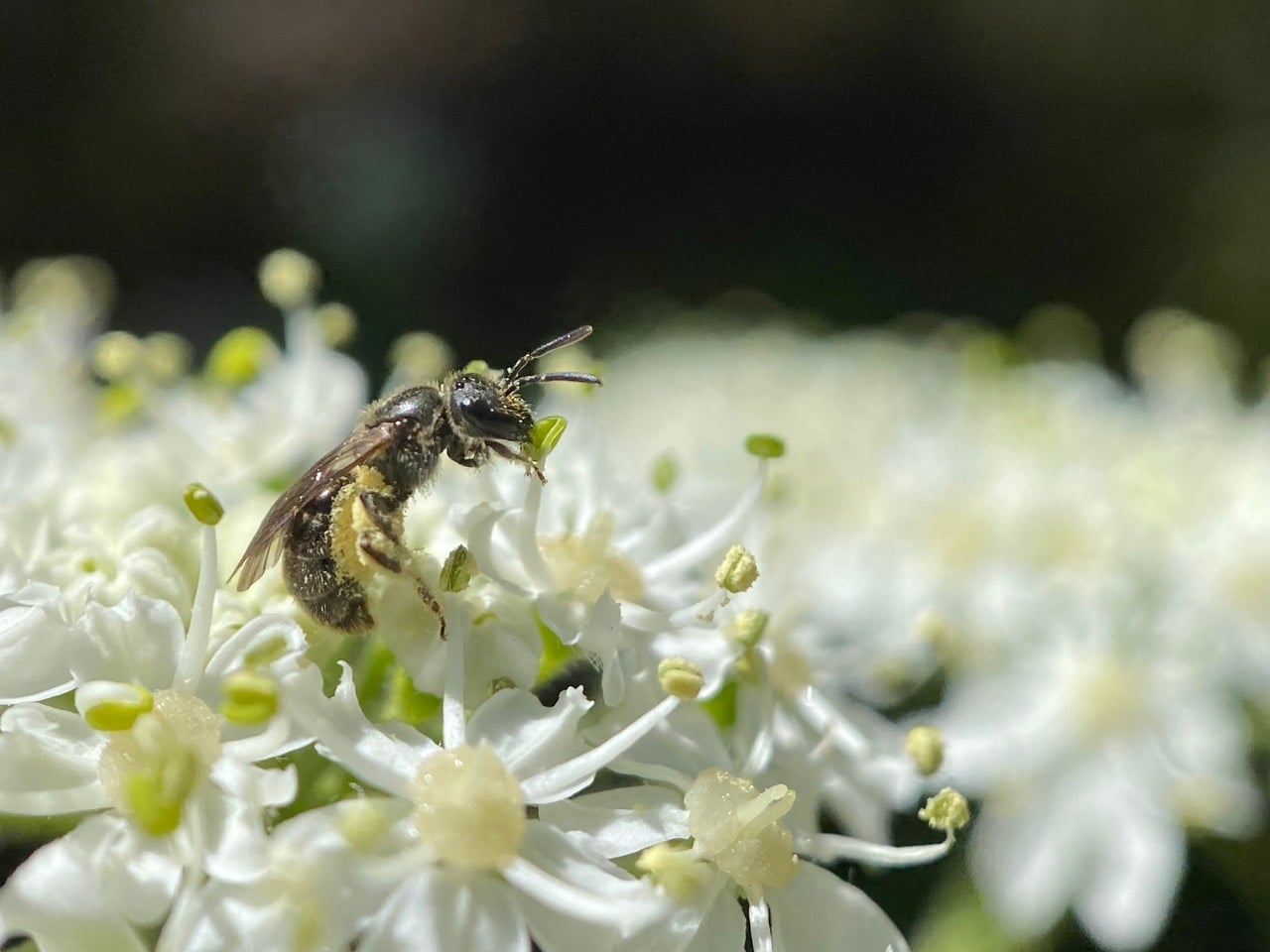
A small bee is collecting pollen from the anthers of the Cow Parsnip flowers. I think it is a Metallic Sweat Bee, Lassioglossum (dialictus) sp. (family Halictidae).
Lasioglossum are closely related to the genera Halictus and Agapostemon. These genera are commonly called “sweat bees” because of their attraction to human sweat, which they drink for its salt content. Lasioglossum are dusky black to brown slender bees with bands of hair on their abdomen.
Dialictus is a subgenus of Sweat Bees belonging to the genus Lasioglossum. Most of the members of this subgenus have a subtly metallic appearance, and are small, about 3.4-8.1 mm in size. They are commonly found in Northern Hemisphere and are found in abundance in North America. As in the other members of the family Halictidae, the bees have very diverse forms of social structure, making them model organisms for studying the social behavior of bees.
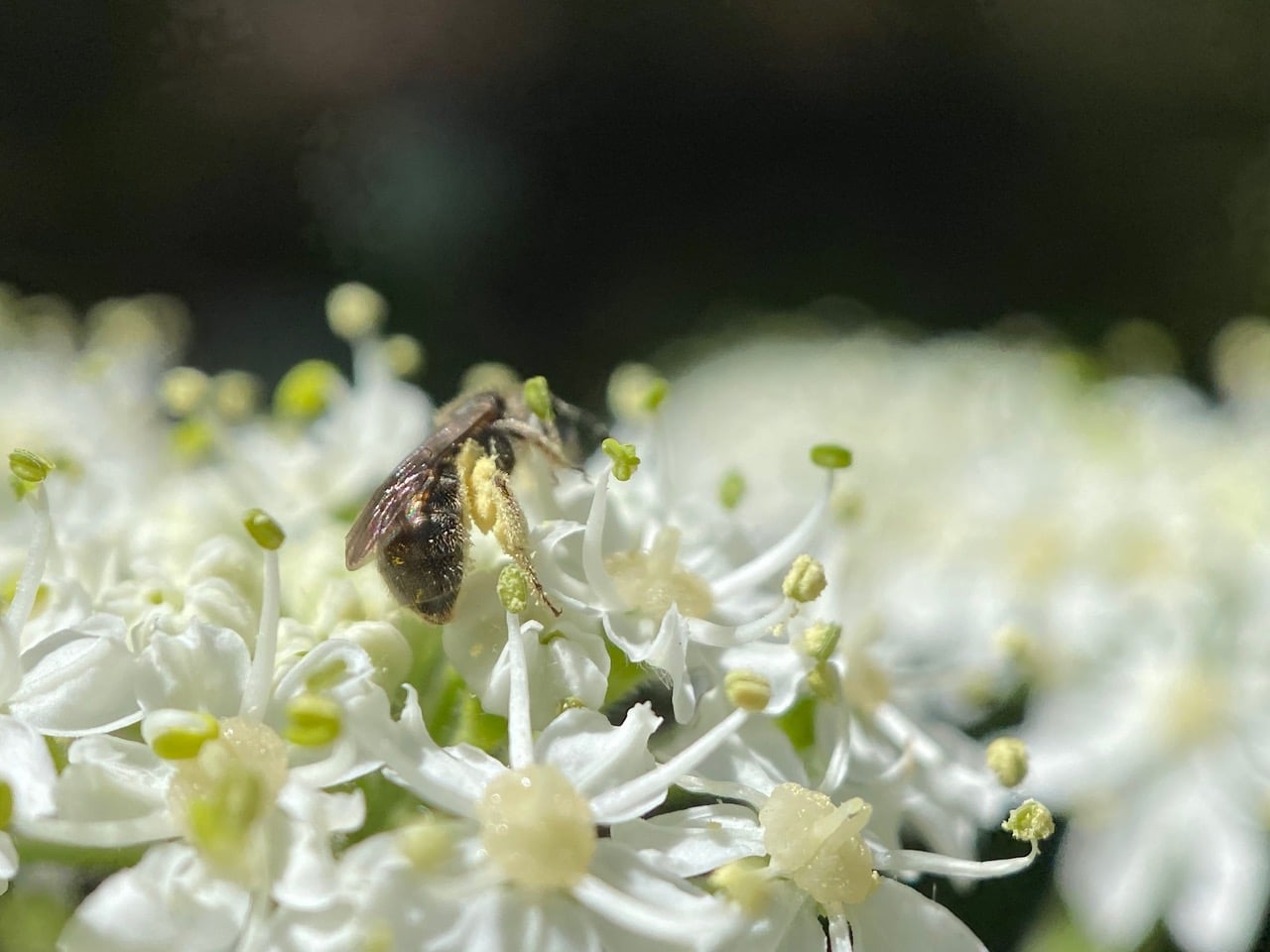
There are bands of short hairs on the abdomen of Dialictus sp.. Note where the bee has stowed away her pollen – on the scopae down the full length of her hind leg, as well as on the underside of her abdomen, typical of Sweat Bees.

A large Dragonfly whizzes past me along Skyline Trail. I follow it with my eyes until it finally lands on a Coyote Brush, perching vertically. Unfortunately there’s only poor lighting in this spot, and it is behind some Poison Oak branches. It is a female Blue-eyed Darner, Rhioaeschna multicolor (family Aeshnidae, order Odonata).
Dragonflies hunt small flying insects while on the wing. As the common name implies, the eyes of both males and females of the species are bright blue. (This is not obvious in my picture taken in the shade.) The males are distinctly more blue in their body markings than the females. The species is native to the western United States, occurring near a variety of water bodies in open rather than wooded areas. When not breeding it is more likely than most dragonflies to be seen far away from water. It is on the wing from spring to late in the year and may be migratory in California, as a large number of them seem to appear in the fall. After mating, females lay eggs among dense emergent water plants, and on floating stems and branches in open water, depositing the eggs both above and below the surface. Larvae are aquatic, and leads a predatory life in the water, hunting small invertebrates.
Blue-eyed Darners mating – Image Critiques – Macro-Close-up Critiques – Nature Photographers Network
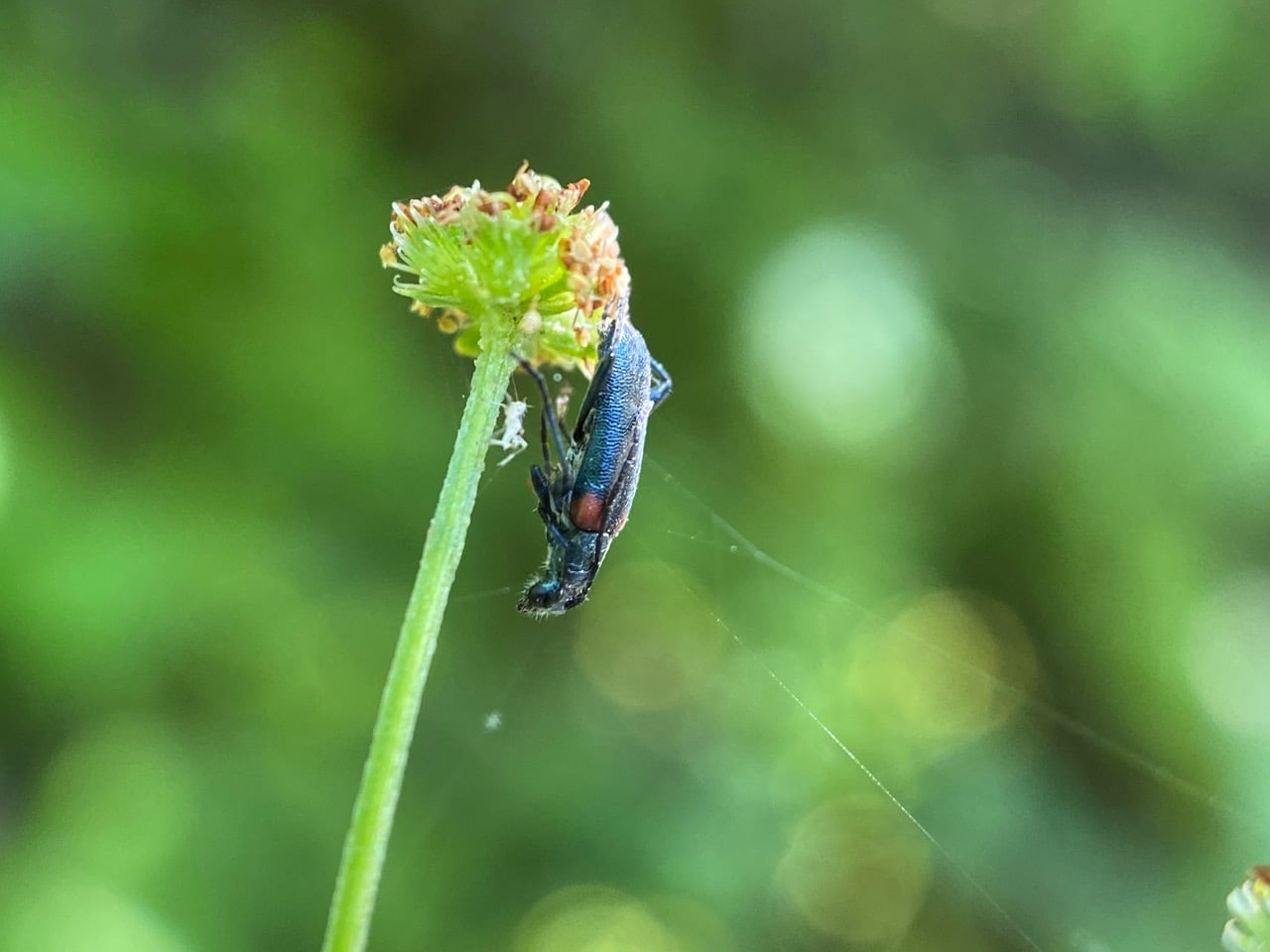
Ooh, another insect has fallen prey to a spider on Pacific Sanicle (family Apiaceae)! Though wrapped up in spider silk, it is still recognizable as a Flower Longhorn Beetle, Grammoptera militaris (family Cerambycidae, subfamily Lepturinae).
These beetles are found on flowers where they feed on pollen and nectar, and are considered pollinators. They have a particular affinity for the umbel flowers of the carrot family, Apiaceae.
Most species of Flower Longhorn Beetles have a narrow body and very long legs. They also share the family trait with other Cerambycids of having very long antennae. The beetles spend their larval days as borers, just like other Cerambycids. However they are not considered pests, as they select trees that are stressed, dying, or dead.