

Pollinator Post 4/25/23 (1)
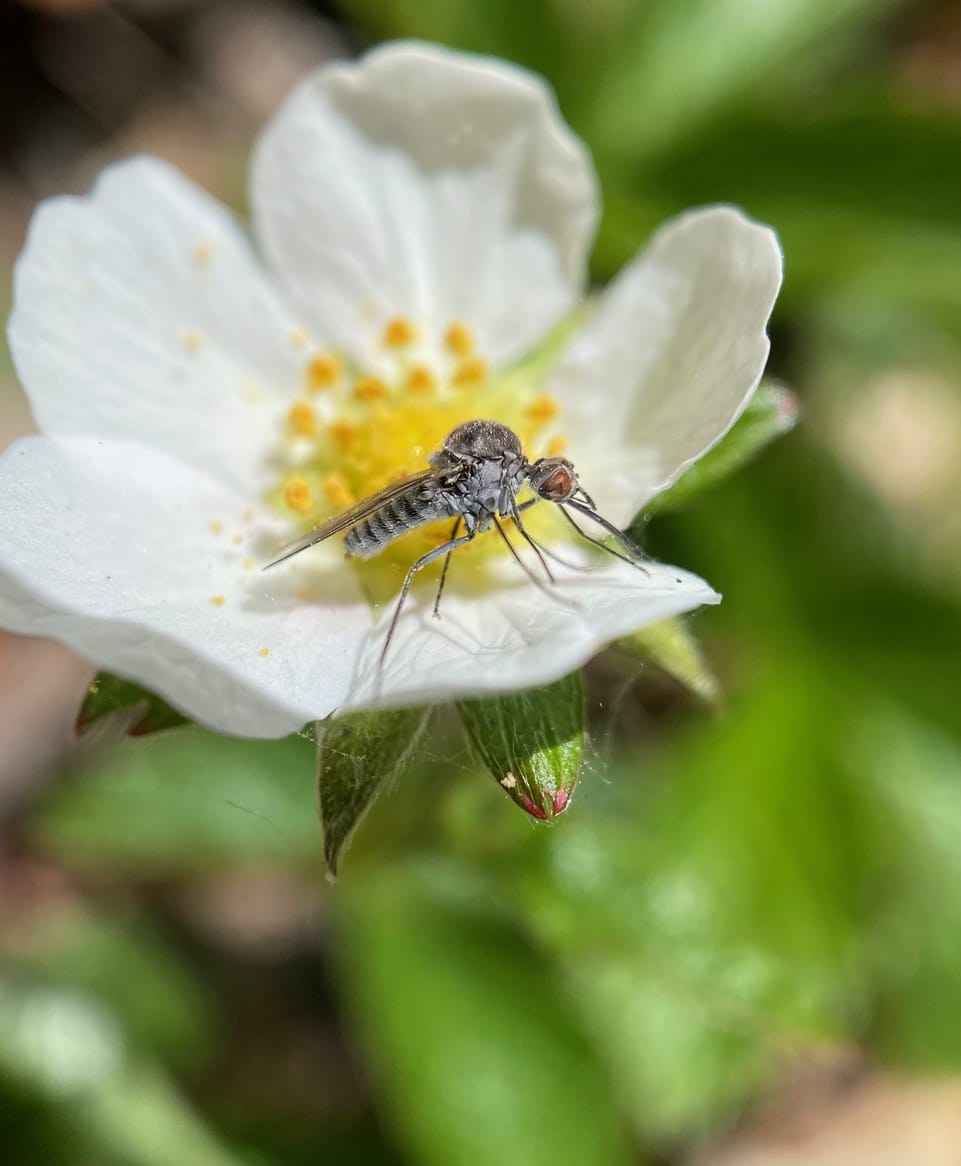
Ooh, is that the “old man” Bee Fly, Geron sp. (family Bombyliidae) on a Wood Strawberry flower? No, actually it’s a very similar-looking Bee Fly in the genus Apolysis. It lacks the shiny, golden pubescence of Geron, and its antennae are blunt-tipped, not pointed as in Geron.
Like many bee flies, Apolysis flies around with a long proboscis that cannot be folded up. Larvae are parasitoids of the immature stages (caterpillars) of various moths in concealed situations. Adults take nectar at flowers.

There’s a rapid movement on the paved road. A Field Ant, Formica sp. is dragging something much larger than itself along the ground, weaving up and down through leaf litter. Its prize cargo is a a weevil!
Why are ants so strong? Ant’s don’t have special muscles that give them super strength. Ants are super-strong on a small scale because their bodies are so light. Inside their hard exoskeletons, their muscles don’t have to provide much support, so they are free to apply all their strength to lifting other objects. What’s more, ants and other insects have a large surface area compared to their volume. And the muscle strength of an animal is closely related to surface area, not volume. Ants are strong, but only relative to their size.
A study has revealed that the real secret to the ant’s legendary strength may lie in its neck joint. Scientists have tested its moving parts and the materials it is made of. Each part of the head-neck-chest joint is covered in a different texture, with structures that look like bumps or hairs extending from different locations. These might regulate the way the soft tissue and hard exoskeleton come together, to minimize stress and optimize mechanical function. The interface between the soft material of the neck and the hard material of the head are graded, providing gradual transition between materials that gives enhanced performance.

The Common Fiddleneck, Amsinckia intermedia is setting fruit in earnest. As the flower fades, it falls off to reveal the four-lobed fruit that will eventually break into four one-seeded nutlets.

A tiny wasp with long antennae (superfamily Ichneumonoidea?) lands on the aphid-infested Common Fiddleneck and enters the tangle of hairy bracts at the base of an inflorescence. I wonder what it is doing there? Is it feeding on honeydew excreted by the aphids? The wasp is too big to be a parasitoid of the aphids.
The superfamily Ichneumonoidea comprises the two largest families within Hymenoptera: Ichneumonidae and Braconidae, both with a cosmopolitan distribution. Members of the two families are distinguished by wing venation. Ichneumonoids are solitary wasps, and the vast majority are parasitoids; the larvae feed on or in another insect, eventually killing it. In general, ichneumonoids are host specific, and only attack one or few closely related host species. Many species use polydnaviruses to suppress the immune systems of their host insects.
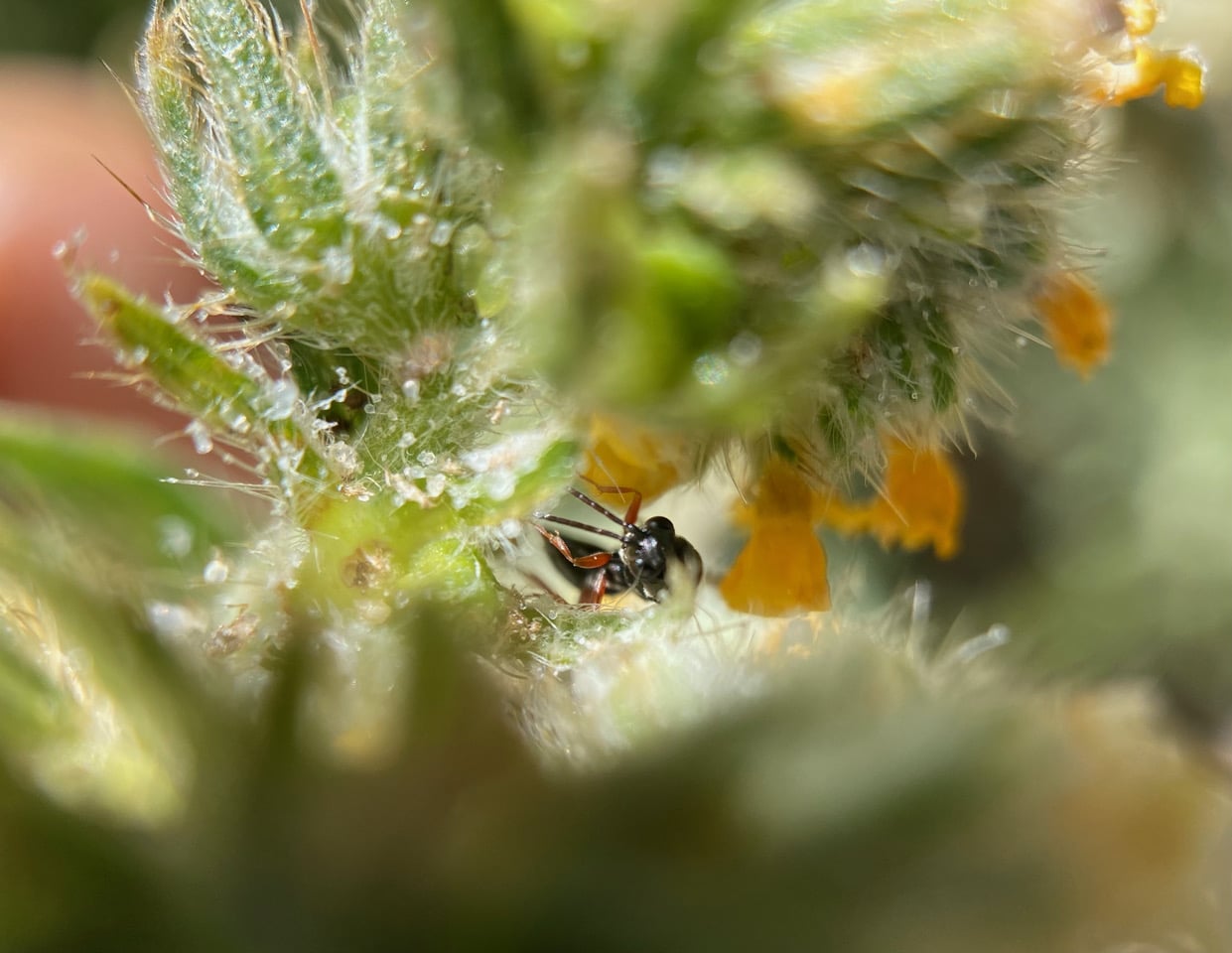
Another view of the wasp. It is hunched over with its abdomen curled forward, as if laying egg.
The female Ichneumonoid wasp finds a host and lays an egg on, near, or inside the host’s body. Upon hatching, the larva feeds either externally or internally, killing the host when it is ready to pupate.
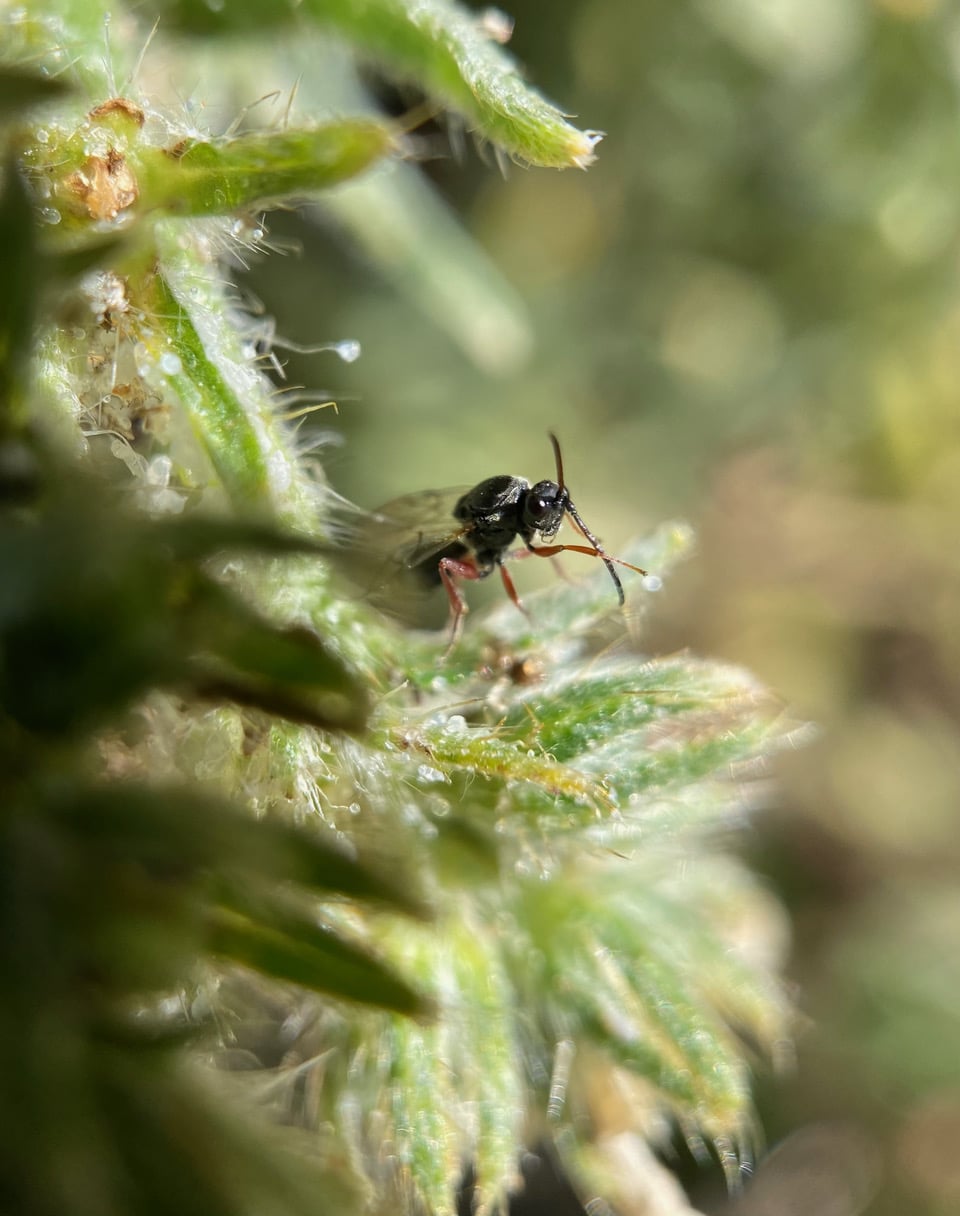
When it finally emerges, the wasp spends an inordinate amount of time grooming itself, especially its antennae. Enough of the sticky honeydew!
The wasp antenna cleaners, though not so well-finished as those of the bees, resemble them in structure. It is located in the bend of the fourth and fifth joints of each foreleg.
All bees have an antenna cleaner on each of their two forelegs. The antenna cleaners consists of two parts: a notch in the basitarsus, which is fitted with stiff hairs, and a corresponding spur on the tibia. To clean its antenna, the bee raises its foreleg over its antenna and then flexes it tarsus. The action allows the spur to close the notch, forming a ring around the antenna. The bee pulls each antenna through the bristles to clean it of debris such as pollen or dust which might interfere with the many sensory organs within the antenna. A bee’s antennae serve numerous functions: smell, taste, perceive humidity and temperature, feel, monitor gravity and flight speed and even detect sound waves to help guide the bee in its daily activities.
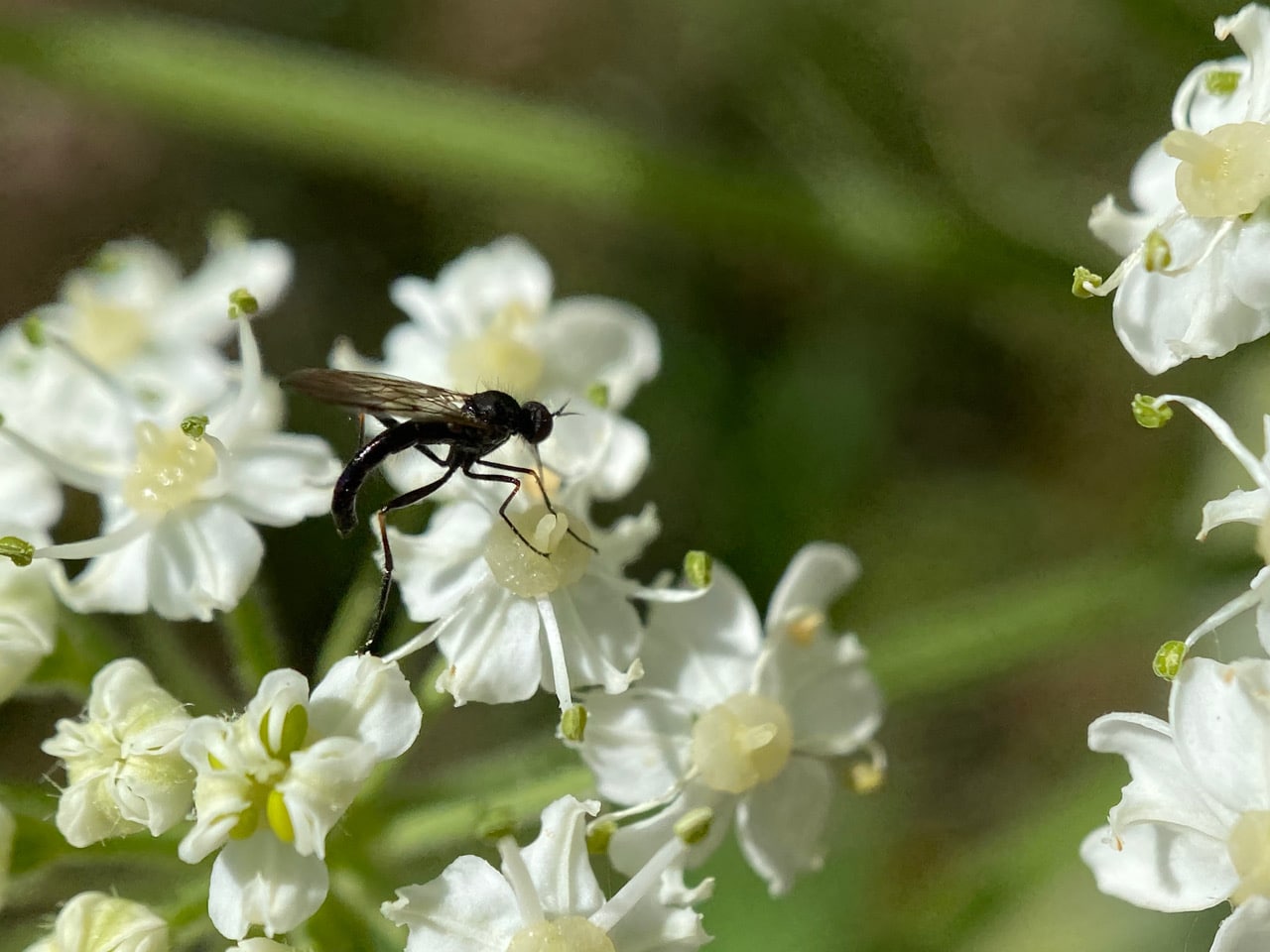
A Typical Dance Fly (family Hybotidae) is taking nectar on a a floral umbel of Cow Parsnip, Heracleum maximum. It belongs to the superfamily Empidoidea that includes Dance Flies and Long-legged Flies; Hybotidae is now considered distinct from the other Dance Fly family, Empididae. Most of these insects are predatory, often with large compound eyes (sometimes covering almost the entire surface of the head), and tend to be associated with moist, temperate habitats. Some adults visit flowers for nectar.
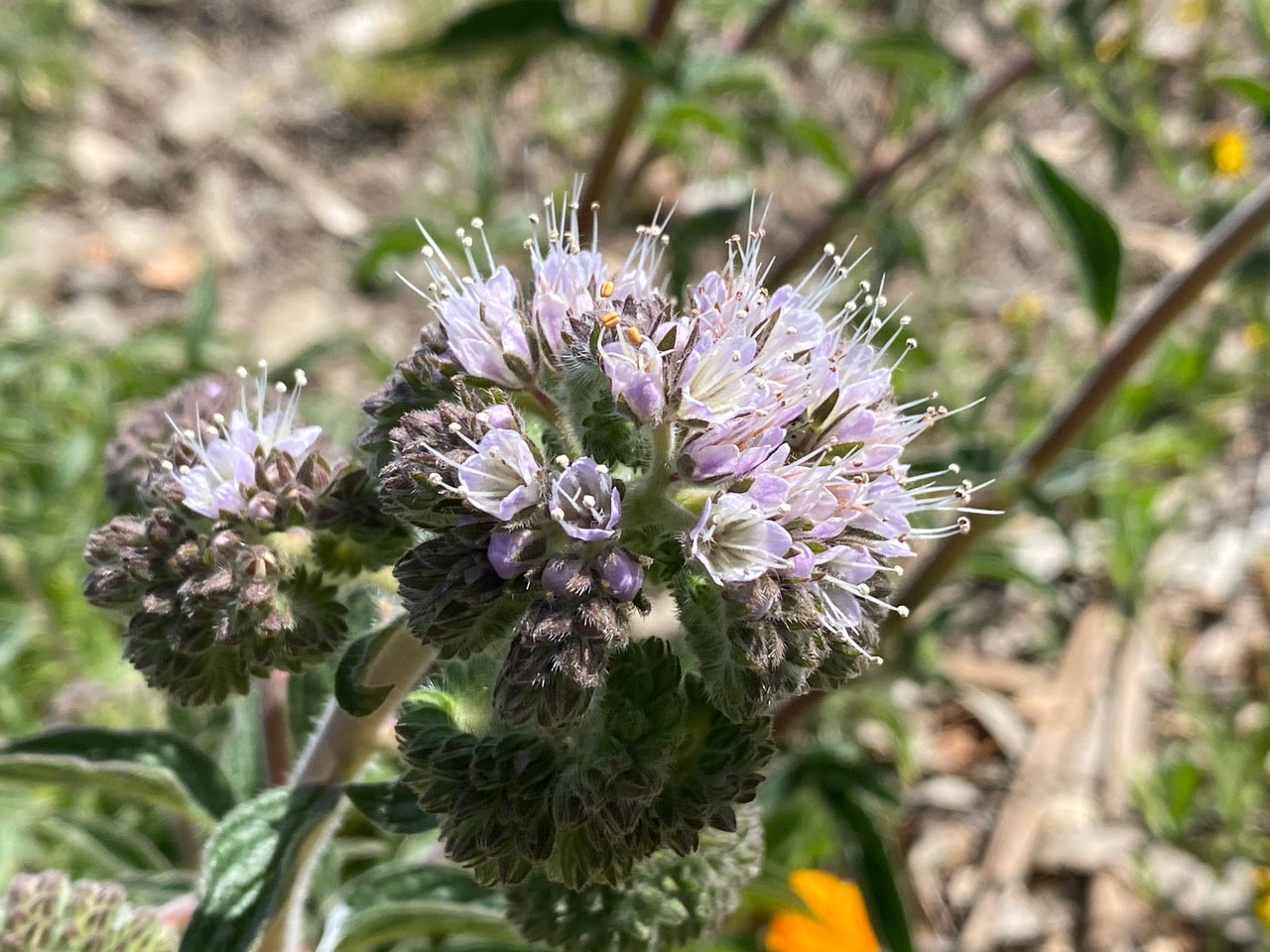
The much anticipated blooming of the California Phacelia, Phacelia californica has happened! It is one of the most common wildflowers at Skyline Gardens.
A member of the family Boraginaceae, Phacelia flowers are produced along a coiled stalk (a “scorpionoid cyme”) with developing buds in the center of the coil. As the stalk unfurls, new flowers open at the base of the coil while seedpods develop along the older stalk, often giving the stalk the appearance of a caterpillar. Lavender-colored, bell-shaped flowers are crowded into each cyme. The flowers are protandrous, the male parts maturing before the female parts. Each flower has five round petals and five stamens alternating between the petals and extending beyond the petals.
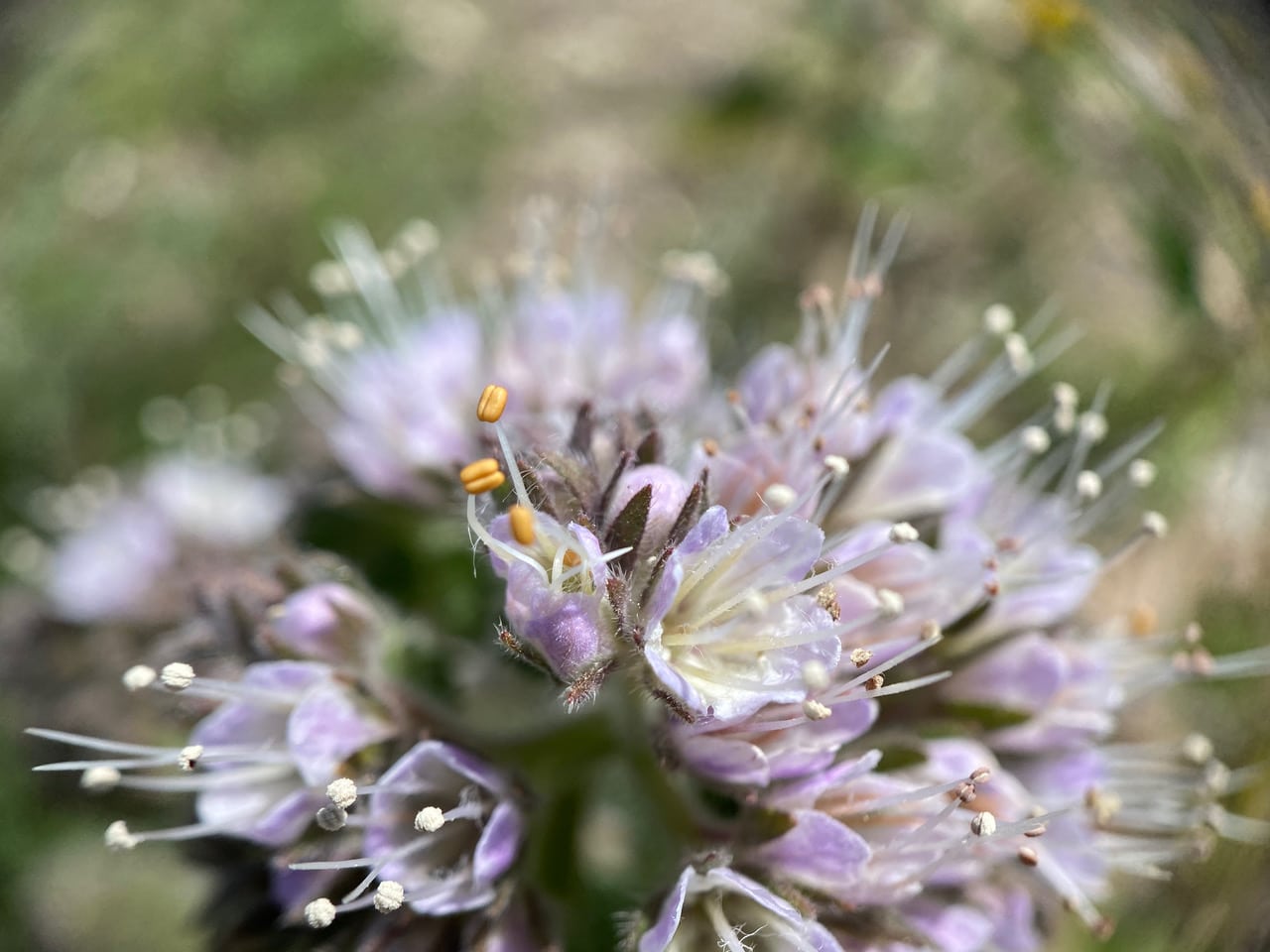
Prominent yellow anthers are borne on white filaments. Pollen is cream-colored. Together, the filaments and styles give the whole flower cluster a hairy appearance.
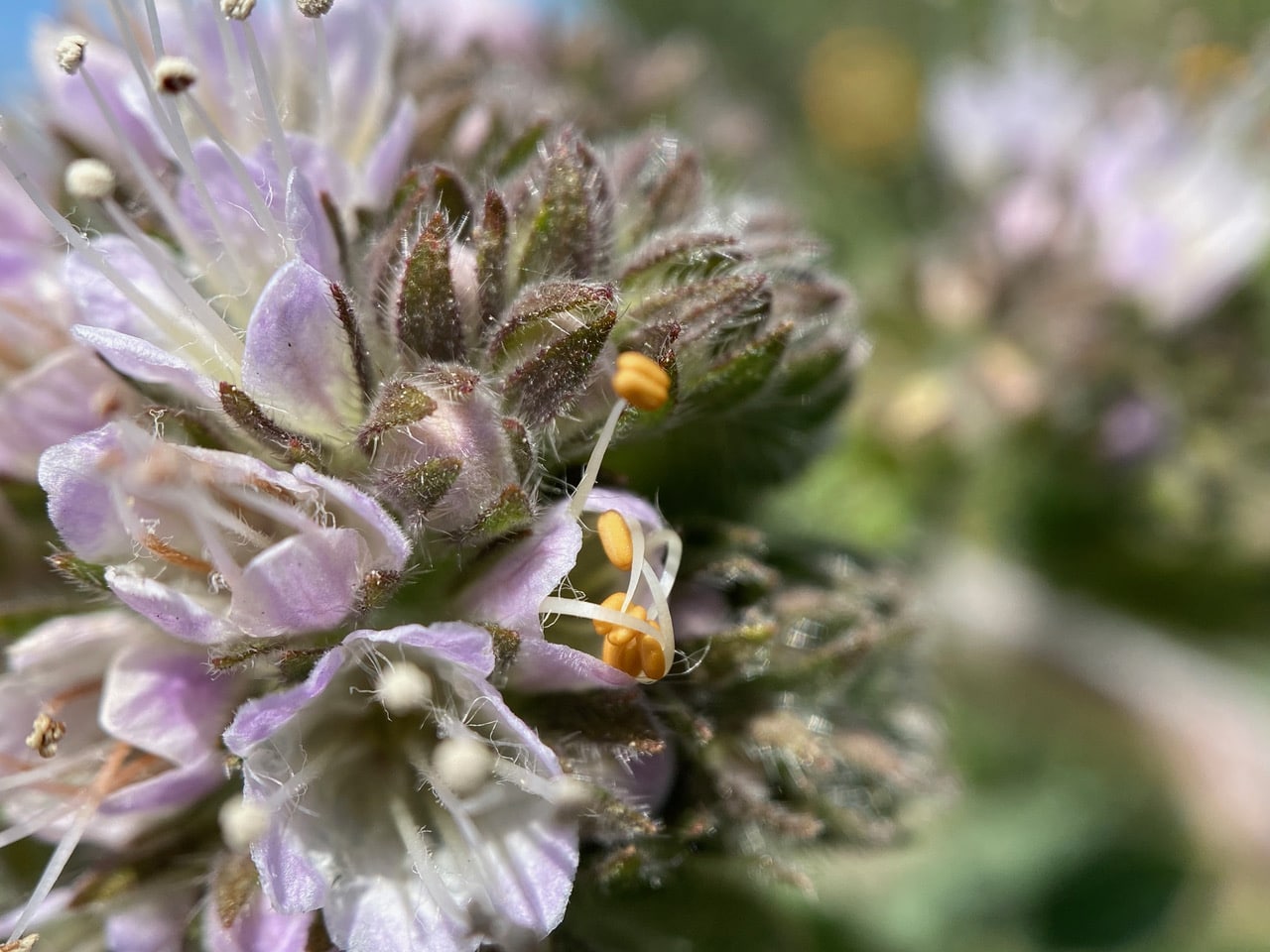
Yellow anthers are being unpacked from a flower bud of California Phacelia.
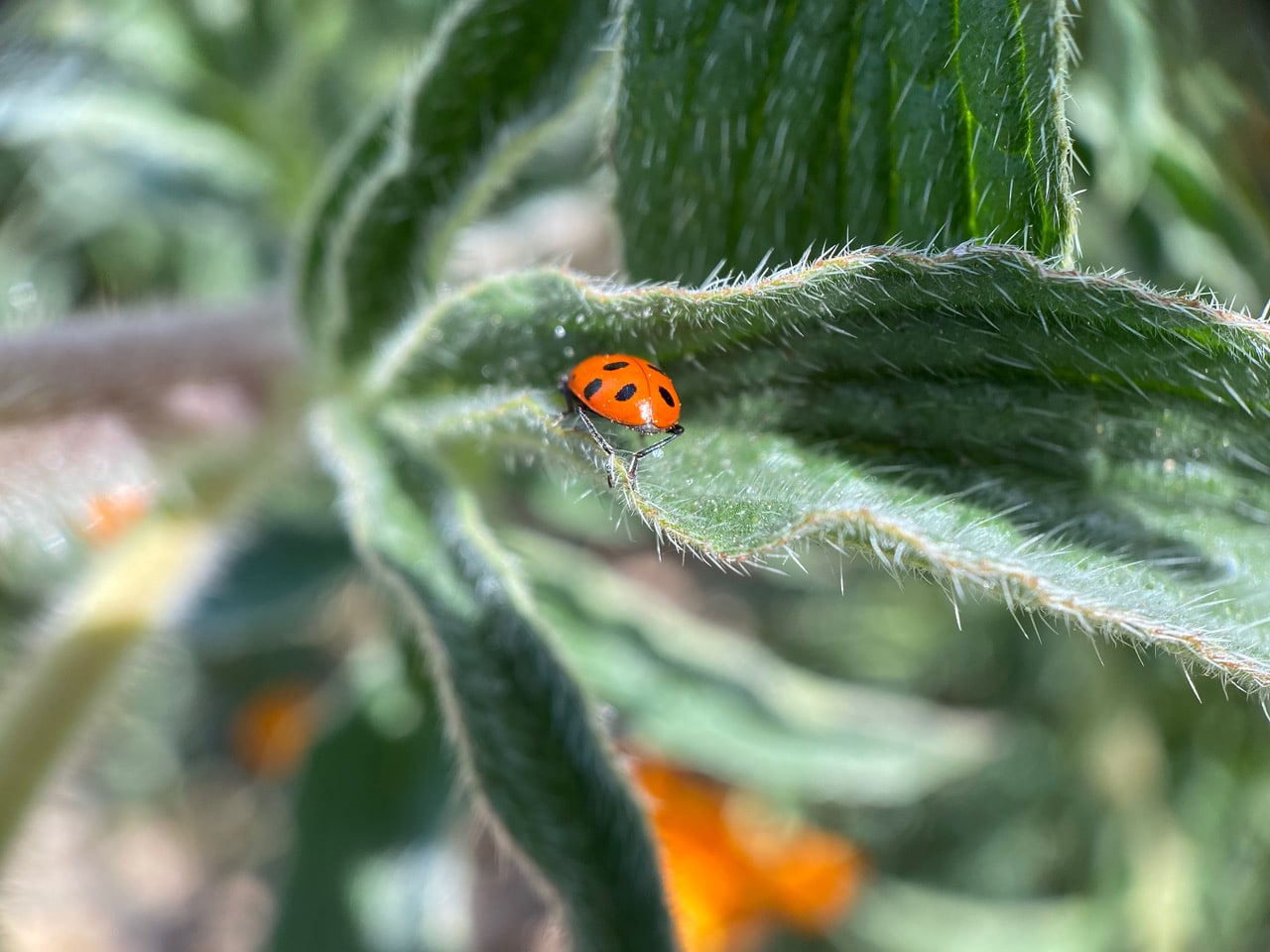
A Convergent Ladybeelte, Hippodamia convergens (family Coccinellidae) is hunting on a leaf of California Phacelia.
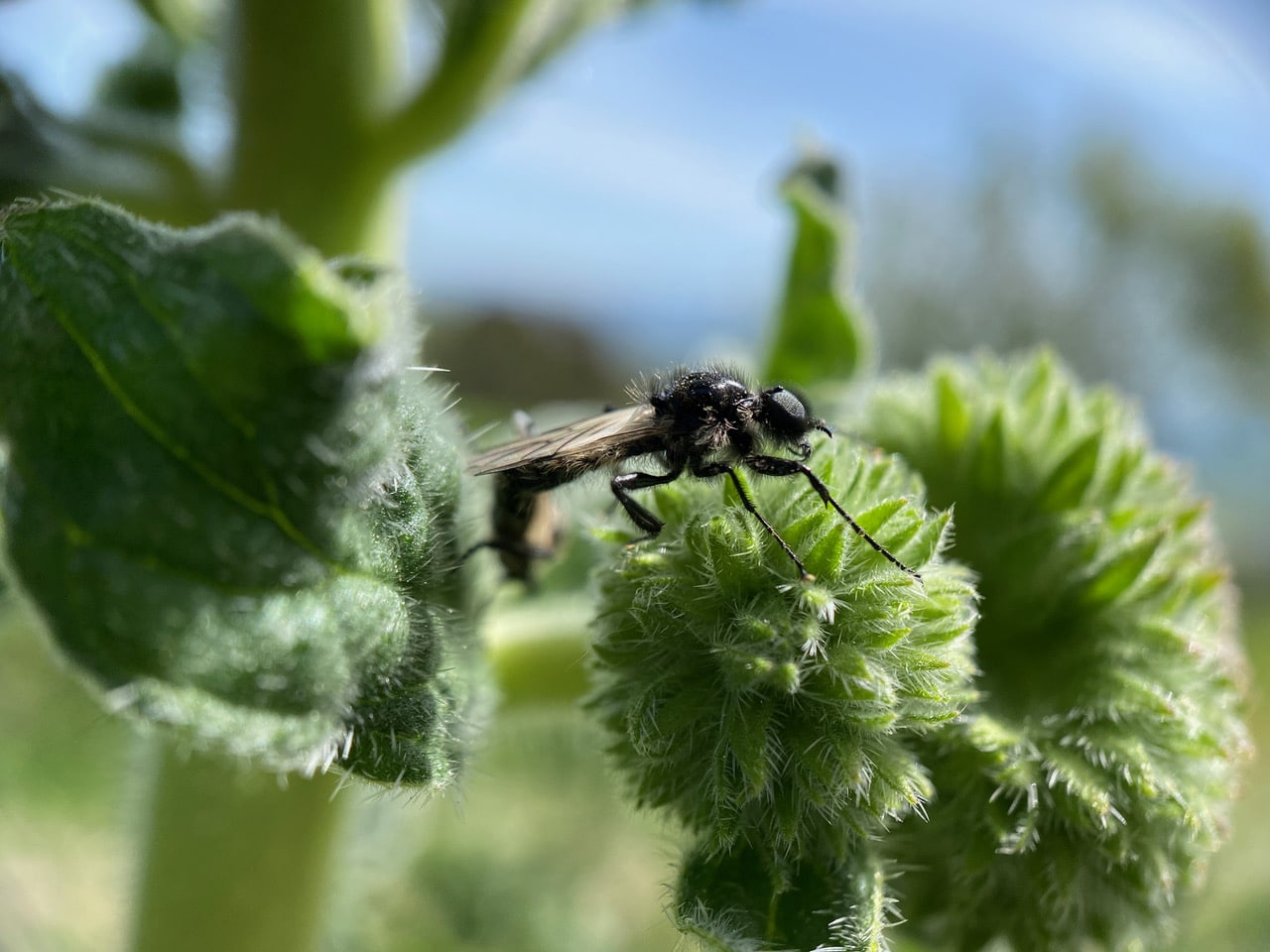
A pair of White-winged March Flies, Bibio albipennis (family Bibionidae) is mating on California Phacelia, moving around awkwardly on the plant while coupled. Here the focus is on the male. Note his huge, holoptic eyes. Holoptic eyes meet along a line on top of the head, and in many species nearly covering the surface of the head.
March Flies (family Bibionidae) generally live in wooded areas and are often found on flowers – adults of some species feed on nectar, pollen, and honeydew, while adults of other species don’t feed at all; and in either case, they are very short-lived. They are considered important pollinators. They are also important food for other insects and spiders. The larvae feed en masse on rotting organic materials like leaves, wood, compost, and rich soil. These tiny maggots are recyclers helping to unlock the nutrients in decomposing plants and returning them to the food web.

Not only do the male’s eyes touch in the middle on top of his head, they are split in half horizontally. Scientists speculate that the split makes it easier for them to see the other males that are above and below them in a mating swarm. Males gather in swarms that can blanket the ground and low vegetation. Female are attracted to the party and select mates in the frenzy of fly bodies.
The aerial ballet performed by March Flies consists mostly of males jockeying for position to capture a mate as female March Flies emerge from the soil. Bobbing, weaving, chasing other males, and intercepting females in flight are facilitated by the large compound eyes of the males. These bulbous eyes are actually divided horizontally, with the top eyes gathering information from above and the lower eyes watching what lies below – truly a case of four eyes. The upper eyes are the ones used to gauge pursuit of other March Flies and to differentiate potential mates from potential competing suitors.
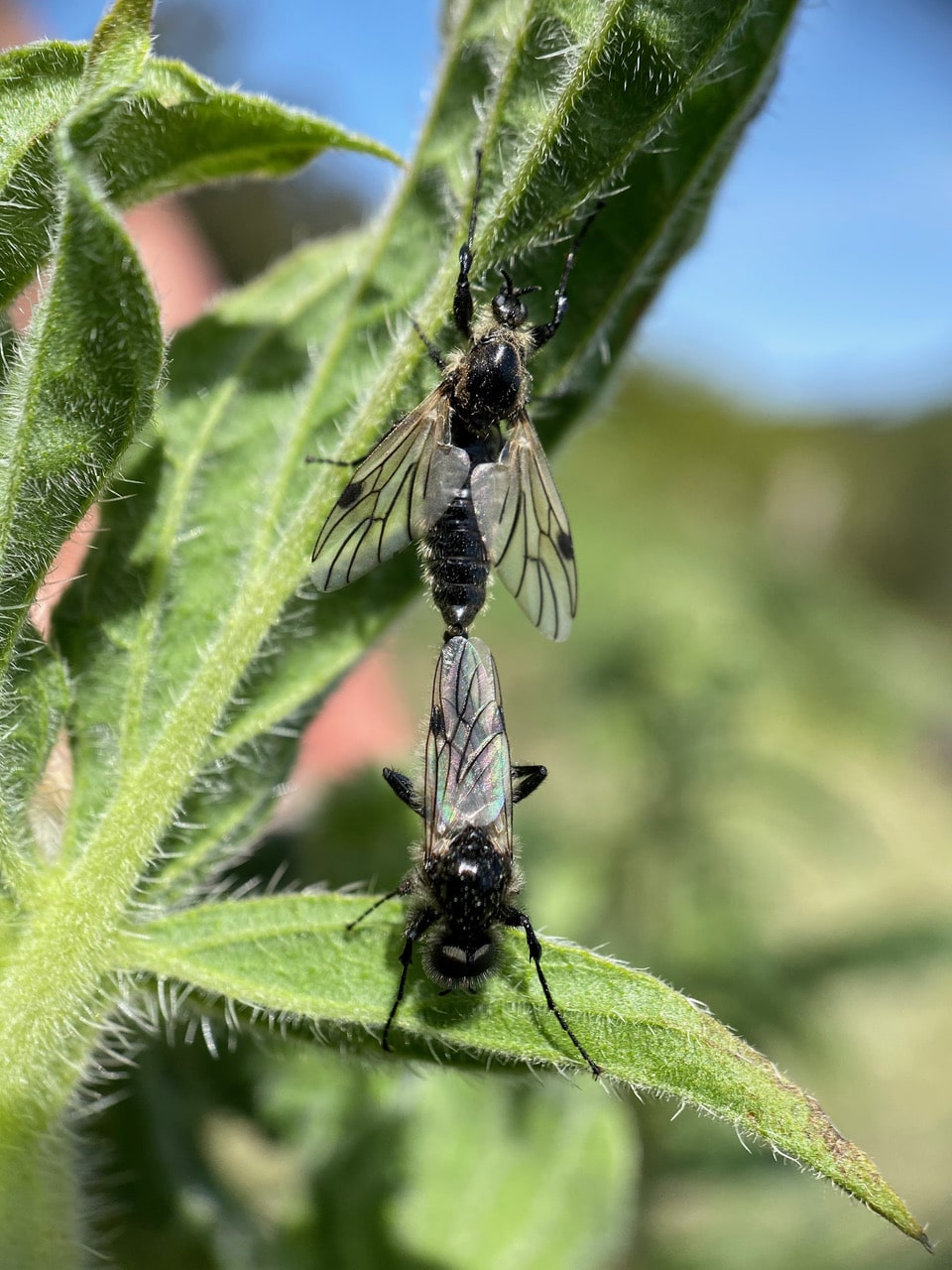
Aah, we finally get to see the female!
March flies exhibit extreme sexual dimorphism – the sexes are morphologically distinct. In contrast to the male, the female is usually more colorful, has small eyes on the sides of long, narrow head. After mating, females return to the soil and lay more than 100 eggs to complete the life cycle.
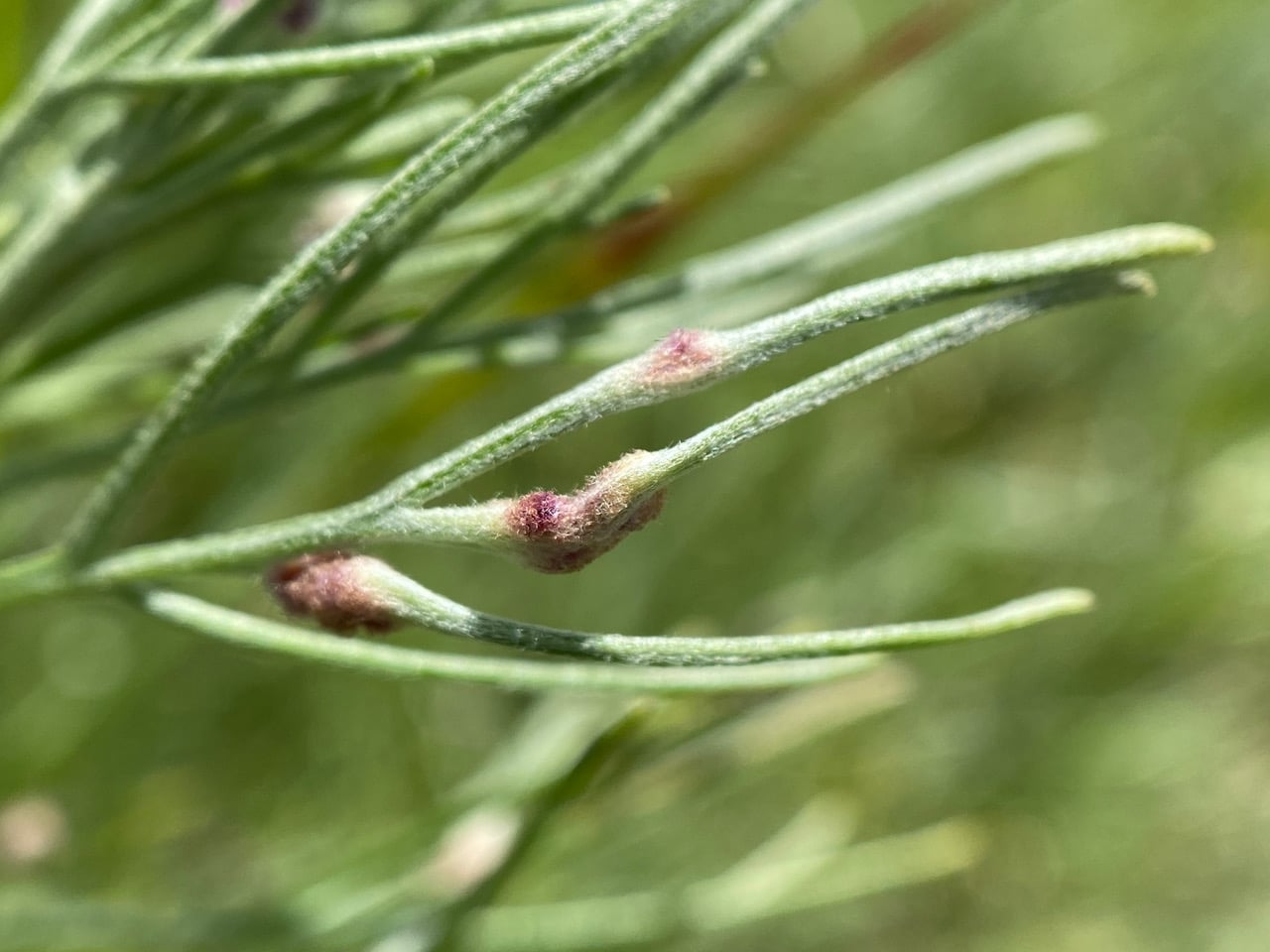
I bend down to sniff the fresh foliage of California Sagebrush, Artemisia californica, and spot these reddish-brown swellings on the needlelike leaves. These are leaf galls induced by the Sagebrush Gall Mite, Aceria paracalifornica. The round or irregular-shaped pit galls with erineum occur singly or in clusters in the middle of the thin leaflets, often distorting and bending them. Individual galls measure 2 mm in diameter. The center depression of the pit galls is usually lined with brown hairs. Mites attack the spring needles and remain in their erineum depressions throughout summer and fall. While little is known about the biology of this common mite, it likely overwinters as eggs among bud scales.
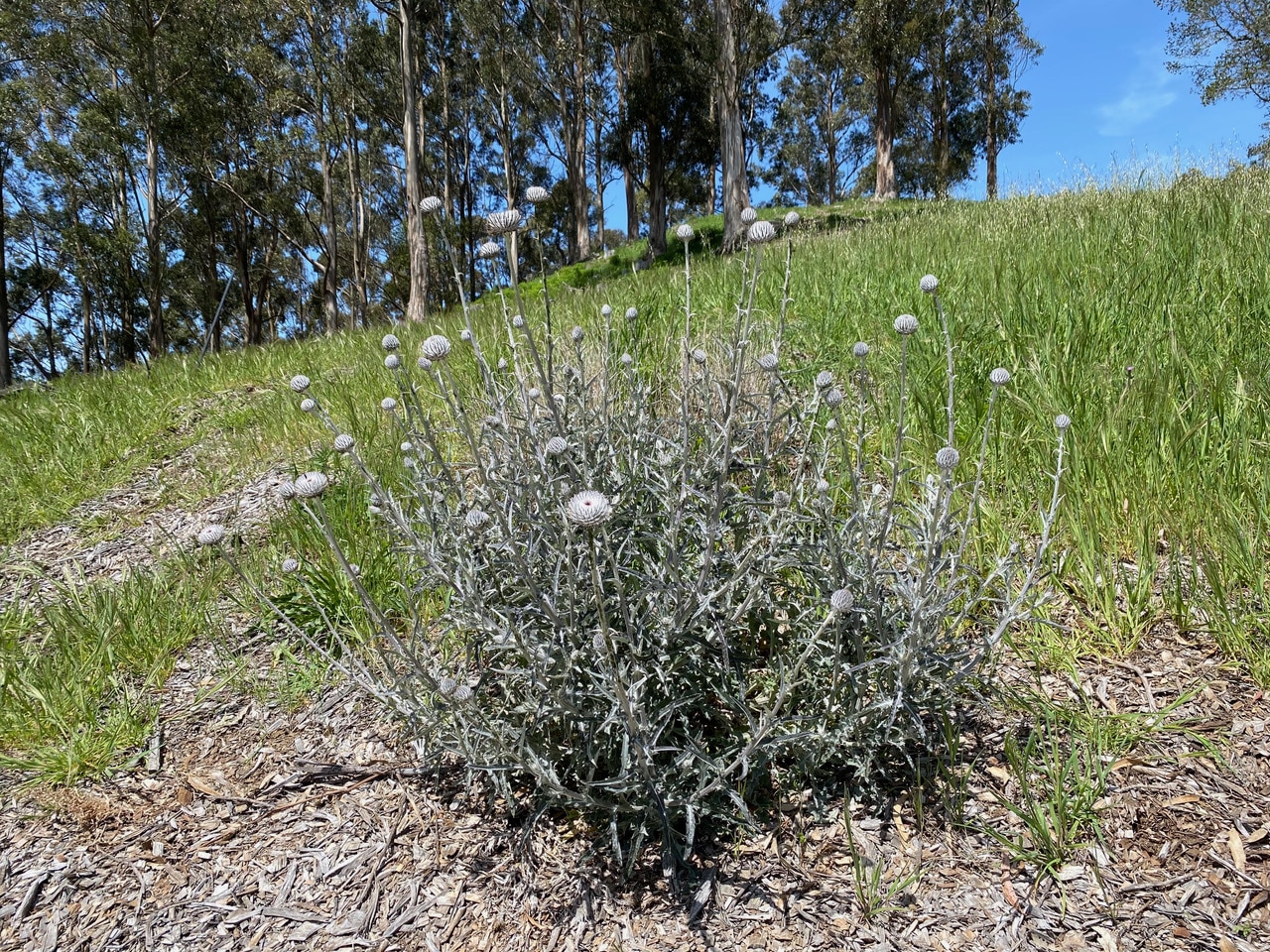
Near the entrance to the Water Tank, I walk to the end of a dirt path that splits from the paved road, and am surprised by the sight of this stunning Cobweb Thistle, Cirsium occidentale. It is the largest specimen of this species I have ever seen, and it is studded with immature flowerheads.
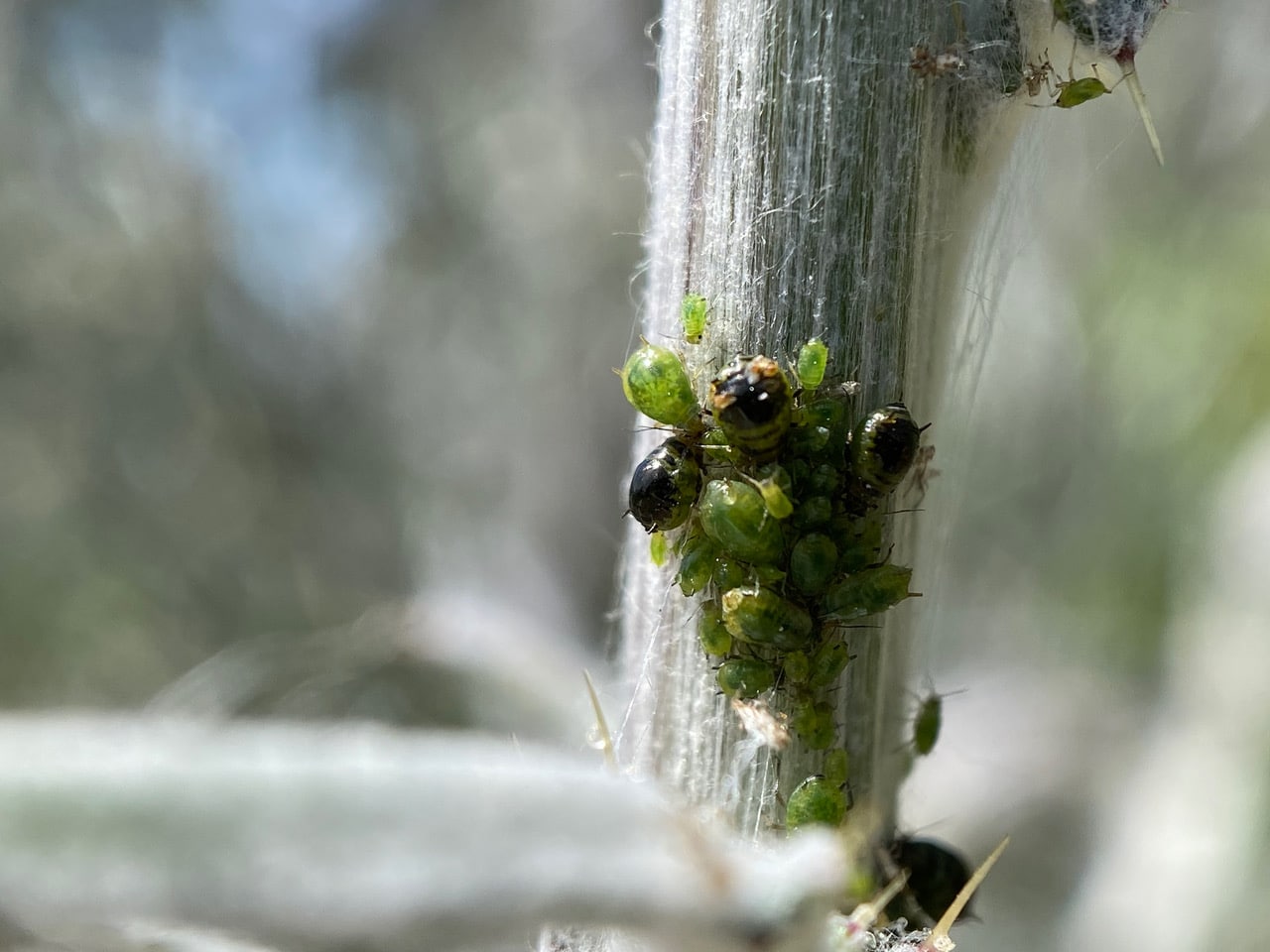
The plant is infested with the Thistle Aphids, Brachycaudus cardui (family Aphididae) which have a wide distribution in Europe, Asia, North Africa and North America. The primary host of this species is plum, cherry, apricot, or peach, but during the summer months it moves to a secondary host, often a thistle in the genera Carduus or Cirsium where it is commonly seen on the stems and flowerheads. The viviparous (live-bearing) wingless females of B. cardui have an oval or pear-shaped body and grow to a length of 1.8 to 2.5 mm. The colors varies from green, yellowing, reddish or brown. The abdomen has a dark, shining patch on the dorsal surface.

Wow, there are massive numbers of the aphids on the plant. Yet, much to my surprise, there are no ants to be seen on the plant, not a single one! Thistle aphids are commonly tended by ants that protect them in return for the honeydew that the aphids produced on demand. Where are those body guards? And yet the aphid colony seems to be thriving on this plant.
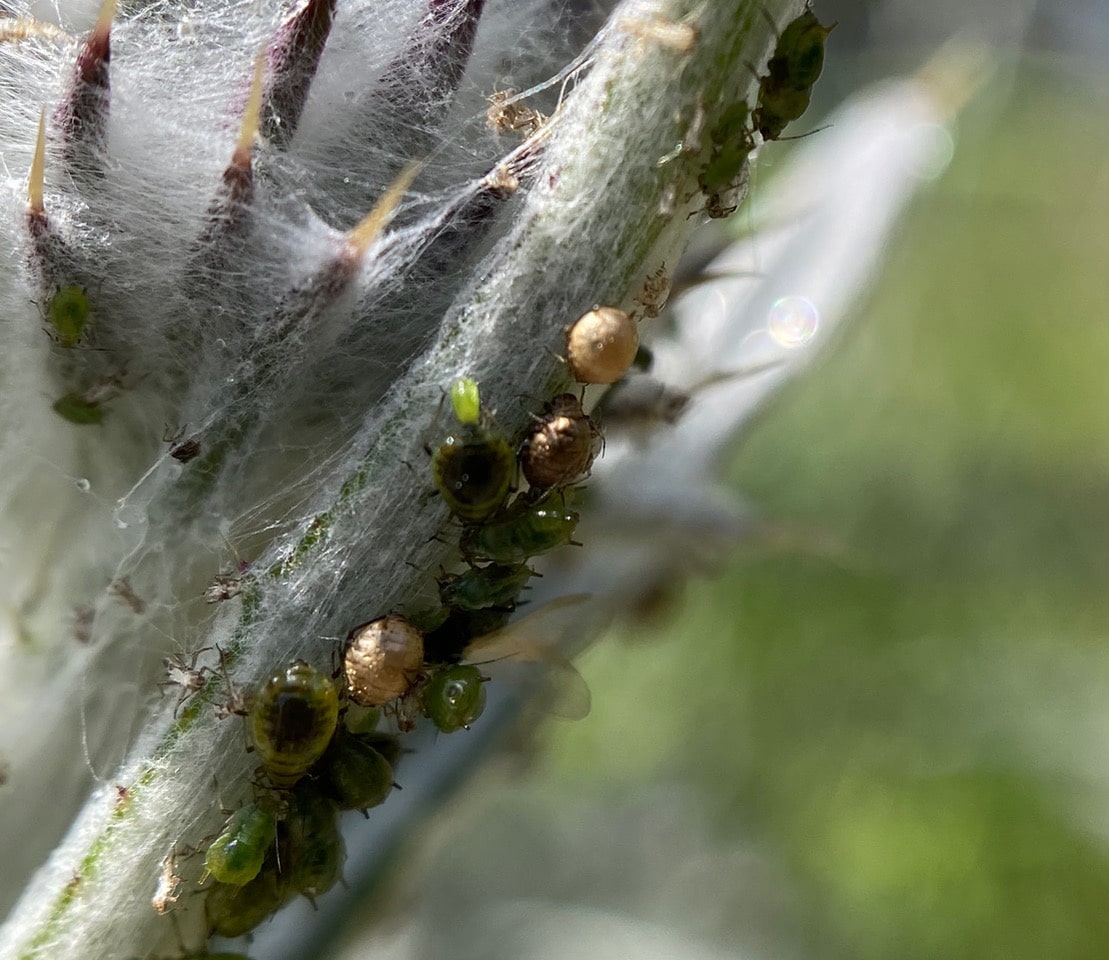
Ooh, there are aphid mummies within the colony! See those bloated, straw-colored aphids?
Aphids are often attacked by a tiny parasitoid wasp, Aphidius sp. (family Broconidae). The female wasp lays an egg in the aphid. When the egg hatches, the wasp larva feeds on the inside of the aphid. As the larva matures, the host dies and becomes slightly enlarged or mummified, often turning browner yellow. Complete metamorphosis occurs within the host. The adult parasite chews its way out of the mummy, leaving a round hole. The Aphidius wasps are often used for biological pest control of aphids on agricultural crops and home gardens.

These two aphid mummies still look intact. The parasitoid wasp growing within each of them has yet to emerge by cutting a round hole on the side of the host.
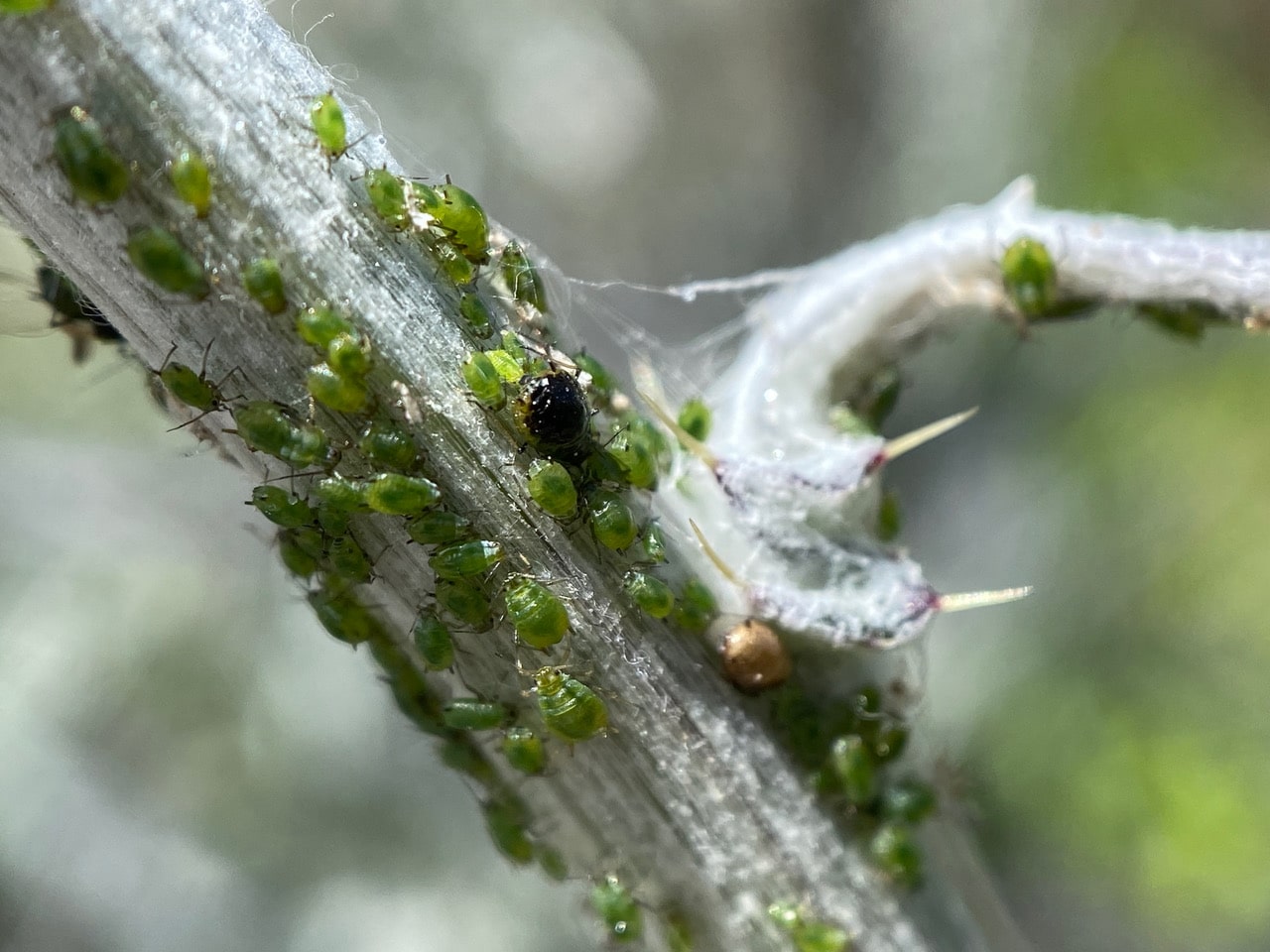
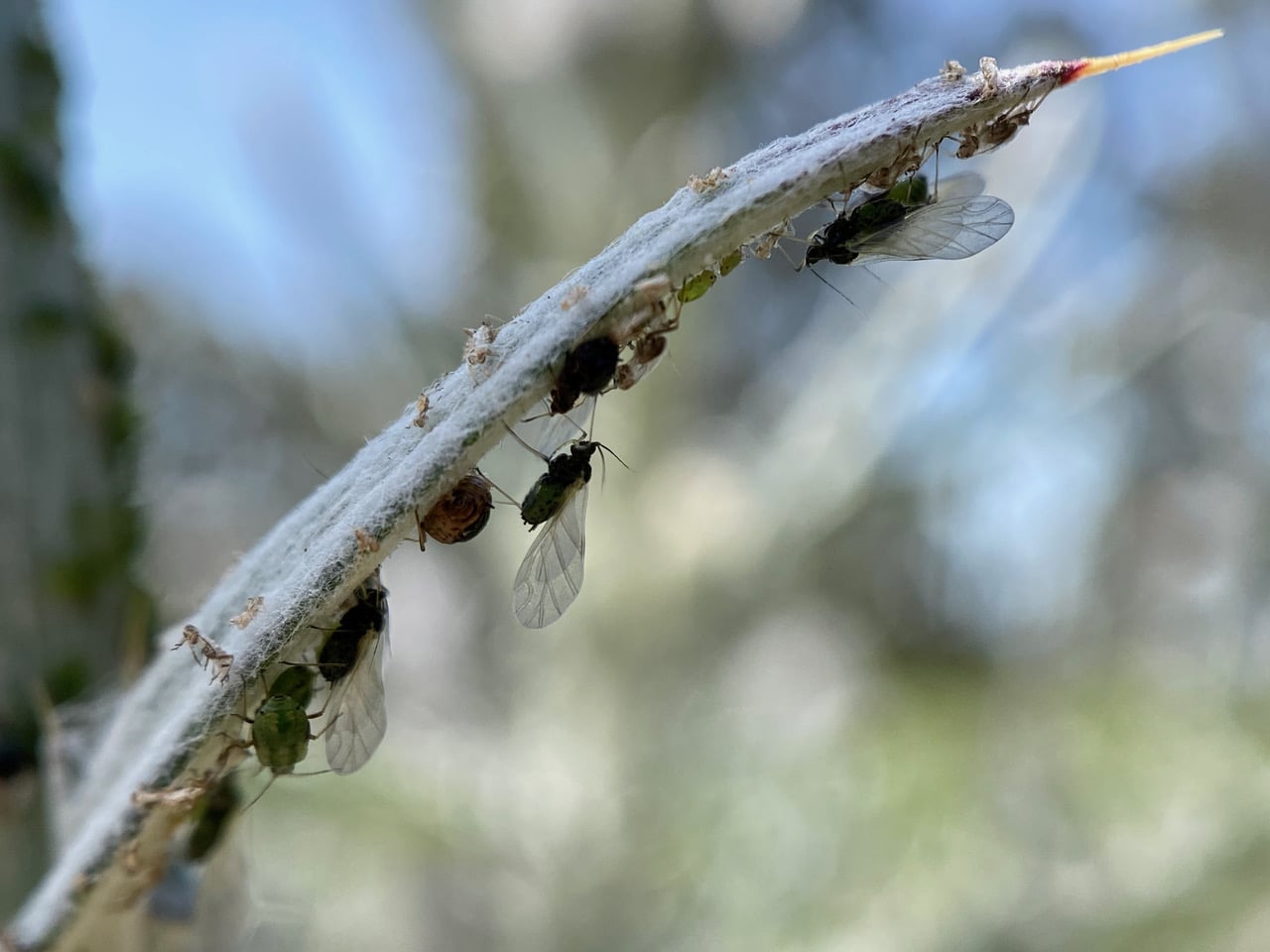
The aphid colony has produced alates (winged clones) for dispersal to new territories. Alates are produced when the aphid colony is overcrowded, when the food resources are dwindling, or when predation pressure is high.
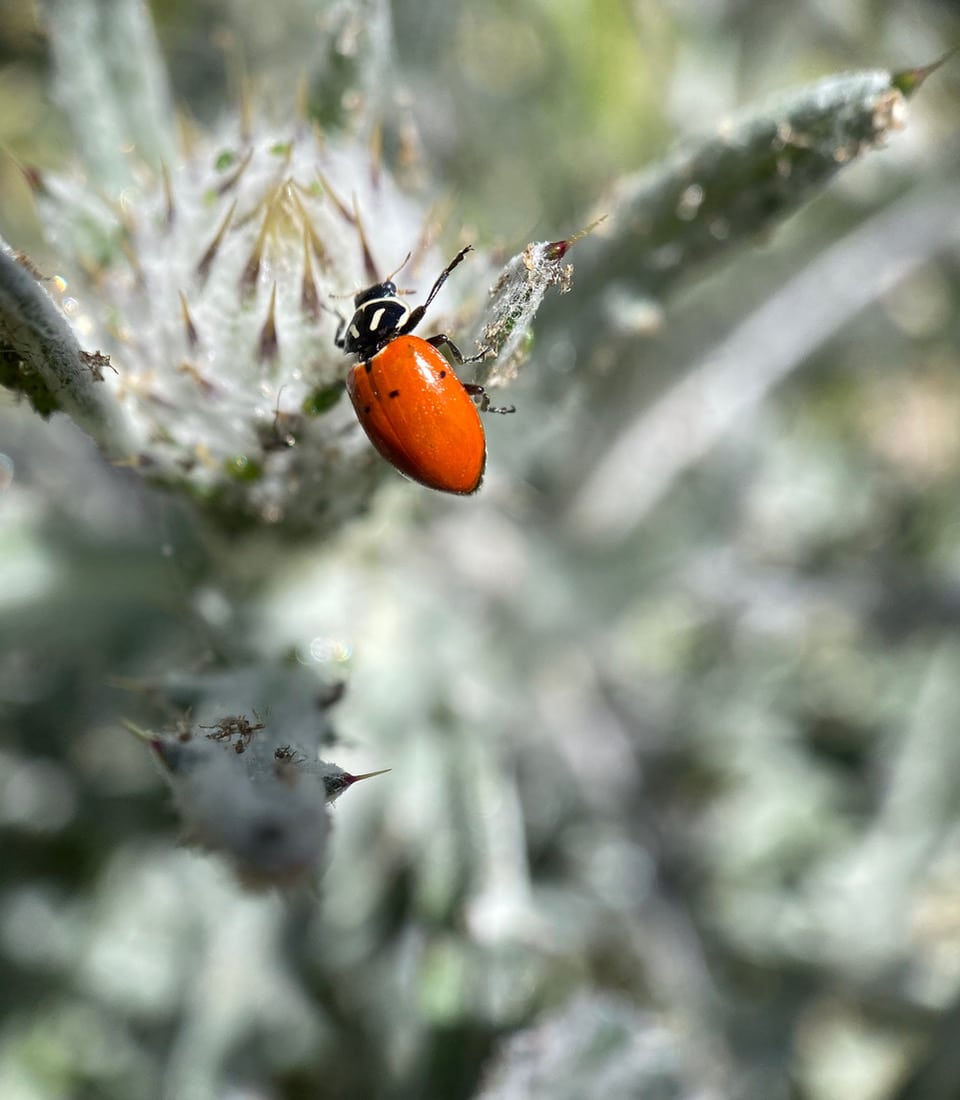
A Convergent Ladybeetle, Hippodamia convergens is hunting aphids on the Cobweb Thistle. Both adult and larval Ladybeetles are voracious predators of aphids.