

Pollinator Post 4/21/24

Feeling lethargic from the heat this afternoon, I return to my green sanctuary in the Tilden Regional Park.
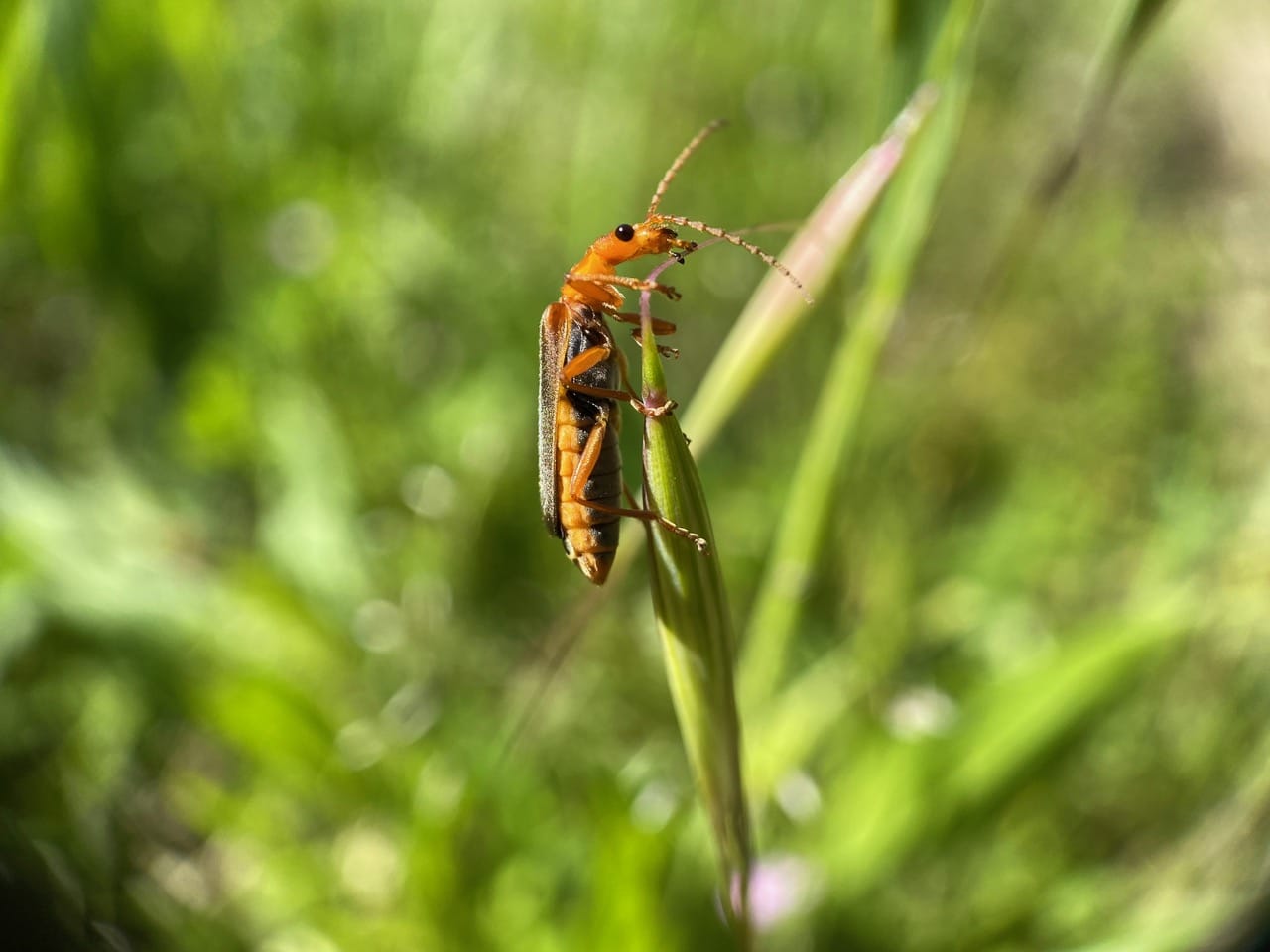
Soldier Beetles are everywhere among the grasses.
The Soldier Beetles, family Cantharidae are relatively soft-bodied, straight-sided beetles. One of the first described species has a color pattern reminiscent of the red coats of early British soldiers, hence the common name. They are also known commonly as Leatherwings because of their soft elytra. Soldier beetles often feed on both nectar and pollen as well as predating on other small insects. The larvae are often active, and feed on the ground, hunting snails and other small creatures. Soldier beetles are generally considered beneficial insects by gardeners.
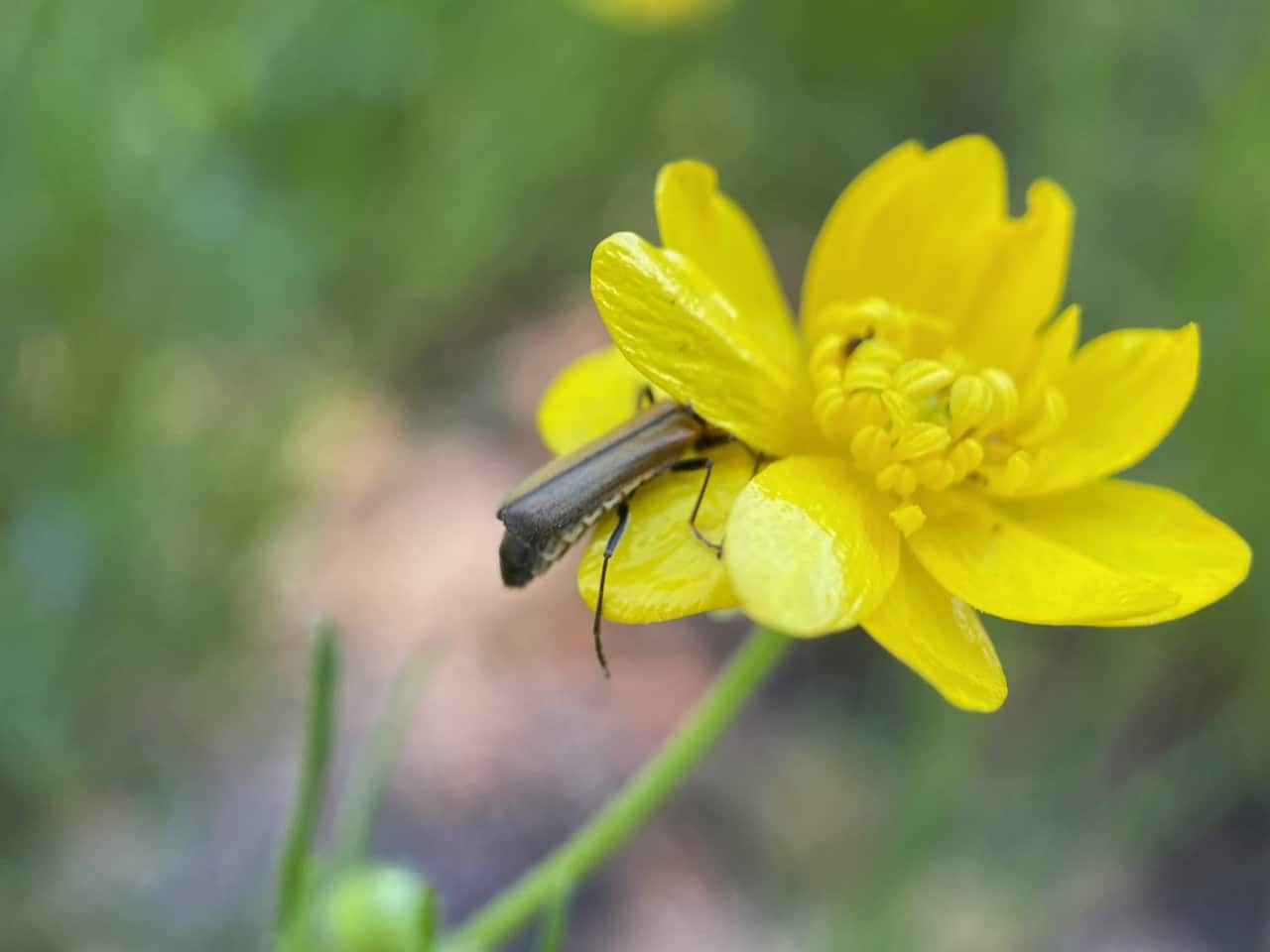
Is that a Soldier Beetle seeking nectar at the base of the Buttercup petal?
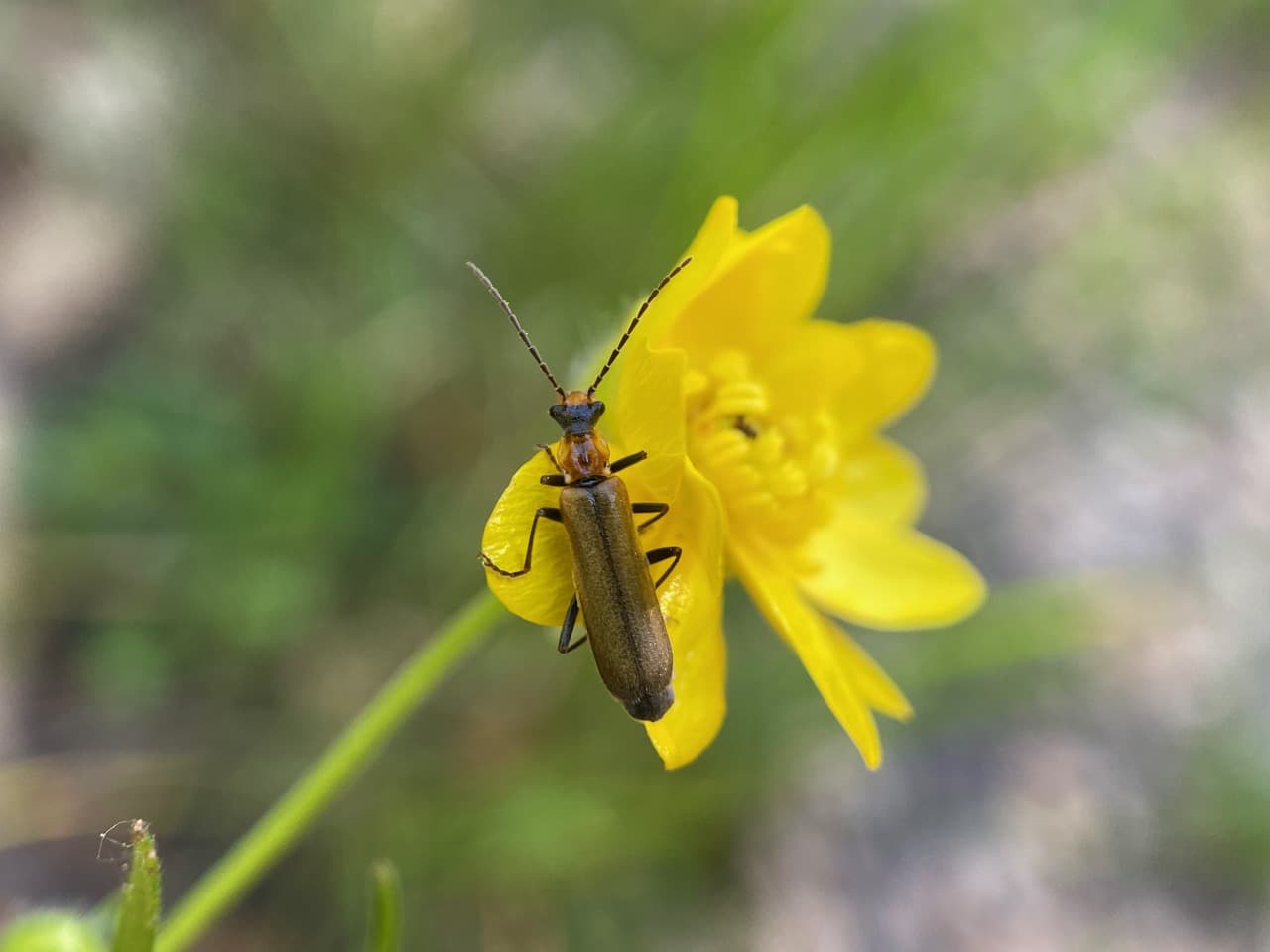
Ah, it is a Soldier Beetle, Dichelotarsus cavicollis (family Cantharidae). Its genus name has been changed from Podabrus. I like to call the beetle Zorro because it appears to be wearing a mask over its eyes.
The species is found in North America, commonly in prairies and meadows, sometimes apple orchards. They are mostly active from April through June.
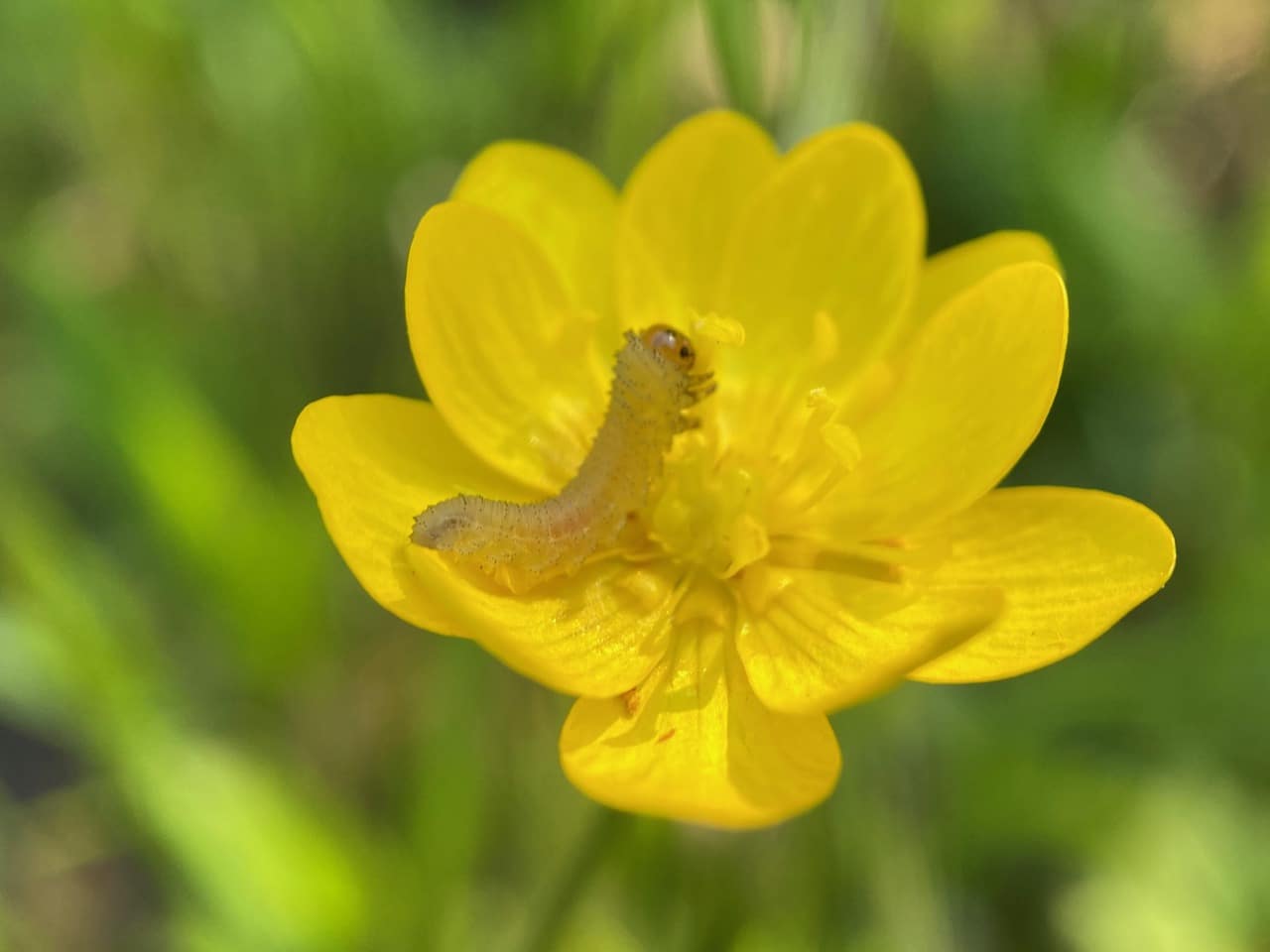
A translucent, jelly-like caterpillar is feeding on the stamens of a buttercup flower. I have come across several of these so far, always on buttercups. A kind of moth?
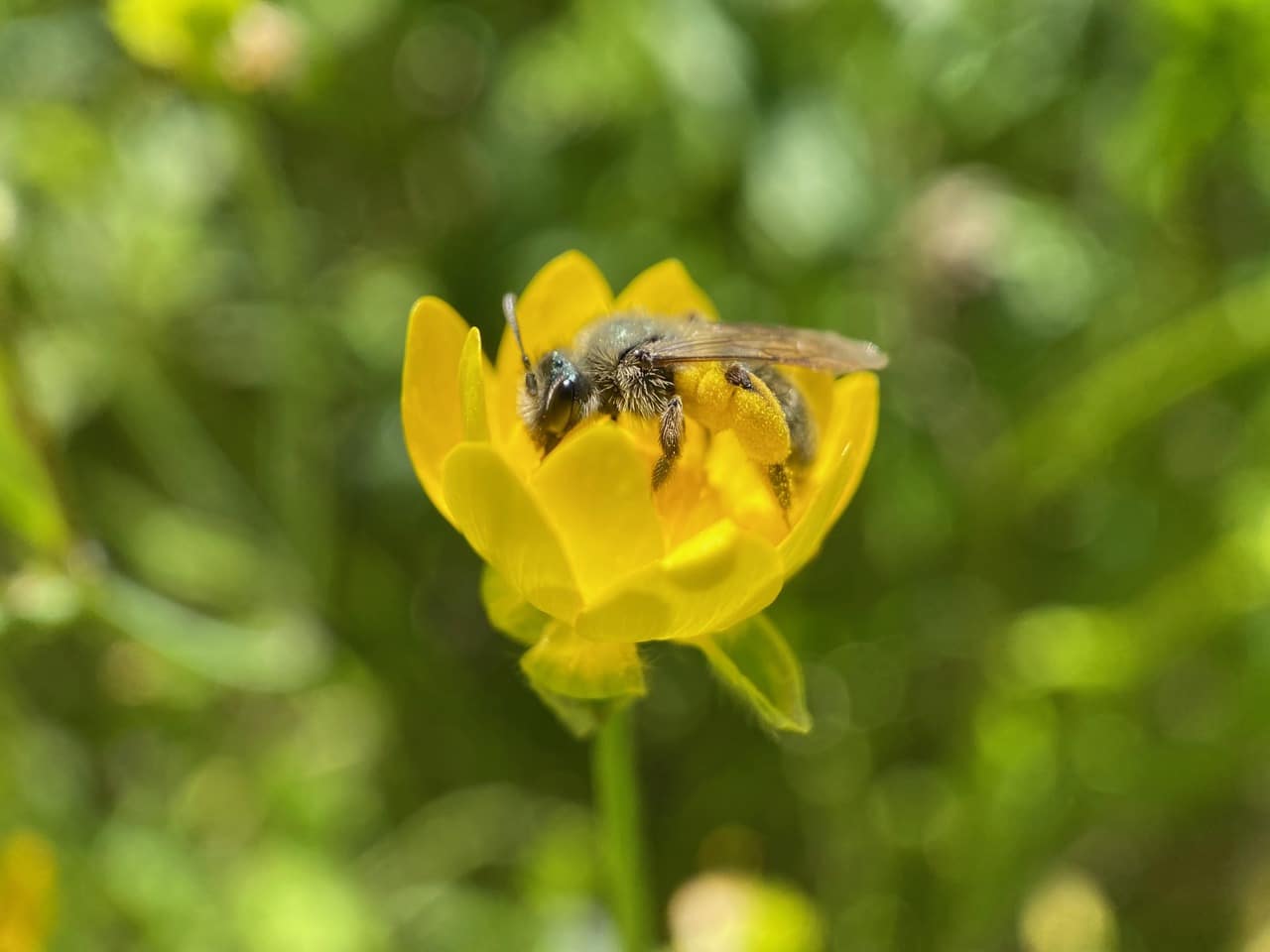
Already loaded with pollen, a female Mining Bee, Andrena sp. (family Andrenidae) lands on a fresh buttercup flower to collect more pollen. I am in awe of her diligence and endurance.
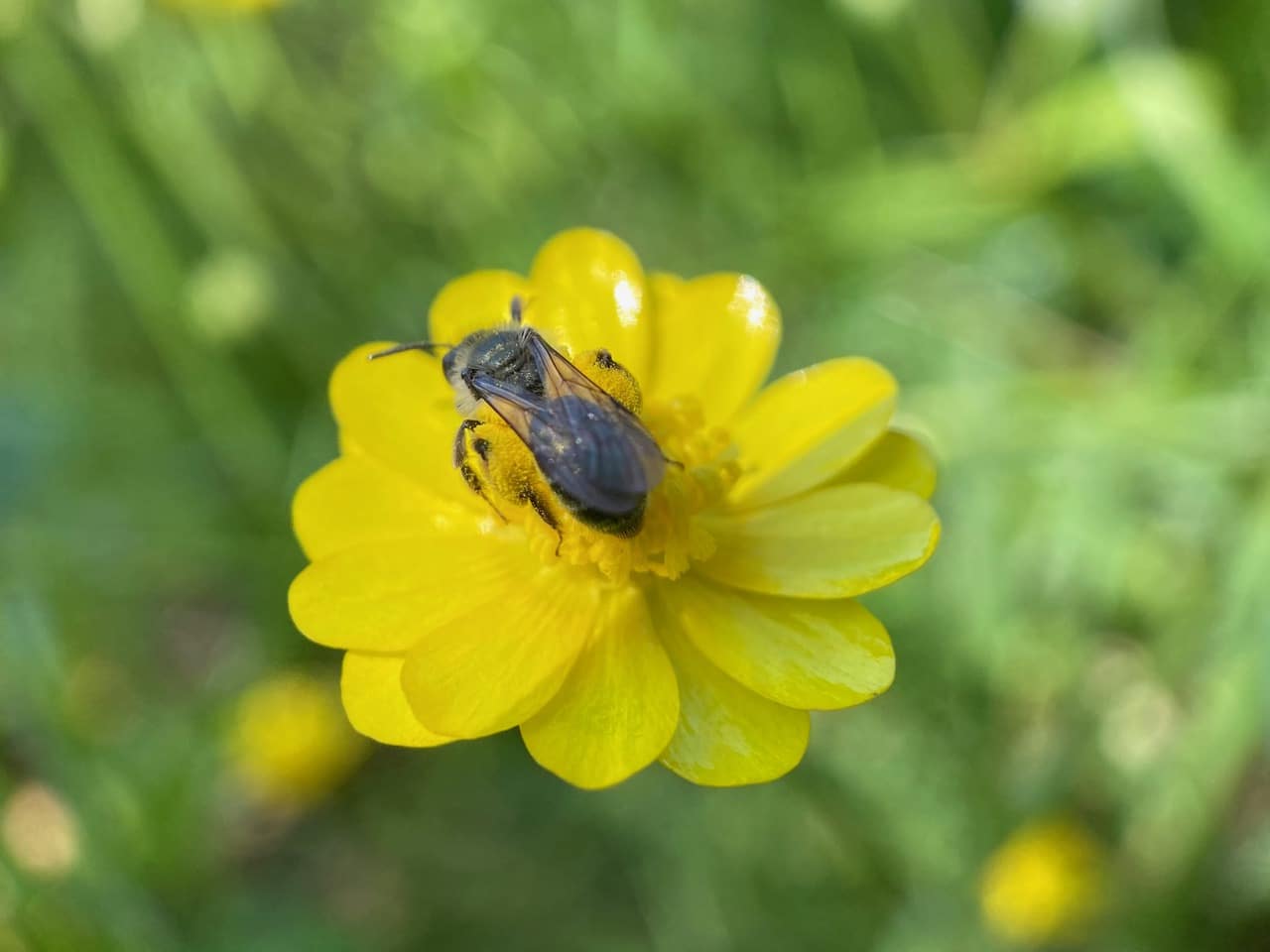
Another well-loaded female Andrena is collecting pollen on a buttercup. I turn on the video as her dark body shows her movements well against the yellow background.
As the female is already well-loaded with pollen, her movements are slowed down in comparison to the other foraging Andrena I have previously video-recorded. I can finally see what the bee is doing – she is raking the anthers with her front legs and jaws while her middle legs brush the pollen towards the hindlegs, and with some petting movements secure the pollen onto the scopae. It is a continuous full-body workout. Round and round she goes several times like a clock hand, then before she flies off, she does a full circle with her head between the stamens and the petals, apparently collecting nectar from the individual nectaries. Wow, such efficiency! And while this is happening, the pollen she has previously collected from other buttercups has plenty of time to fall onto the pistil (female part) in the center of this flower. Pollination accomplished!
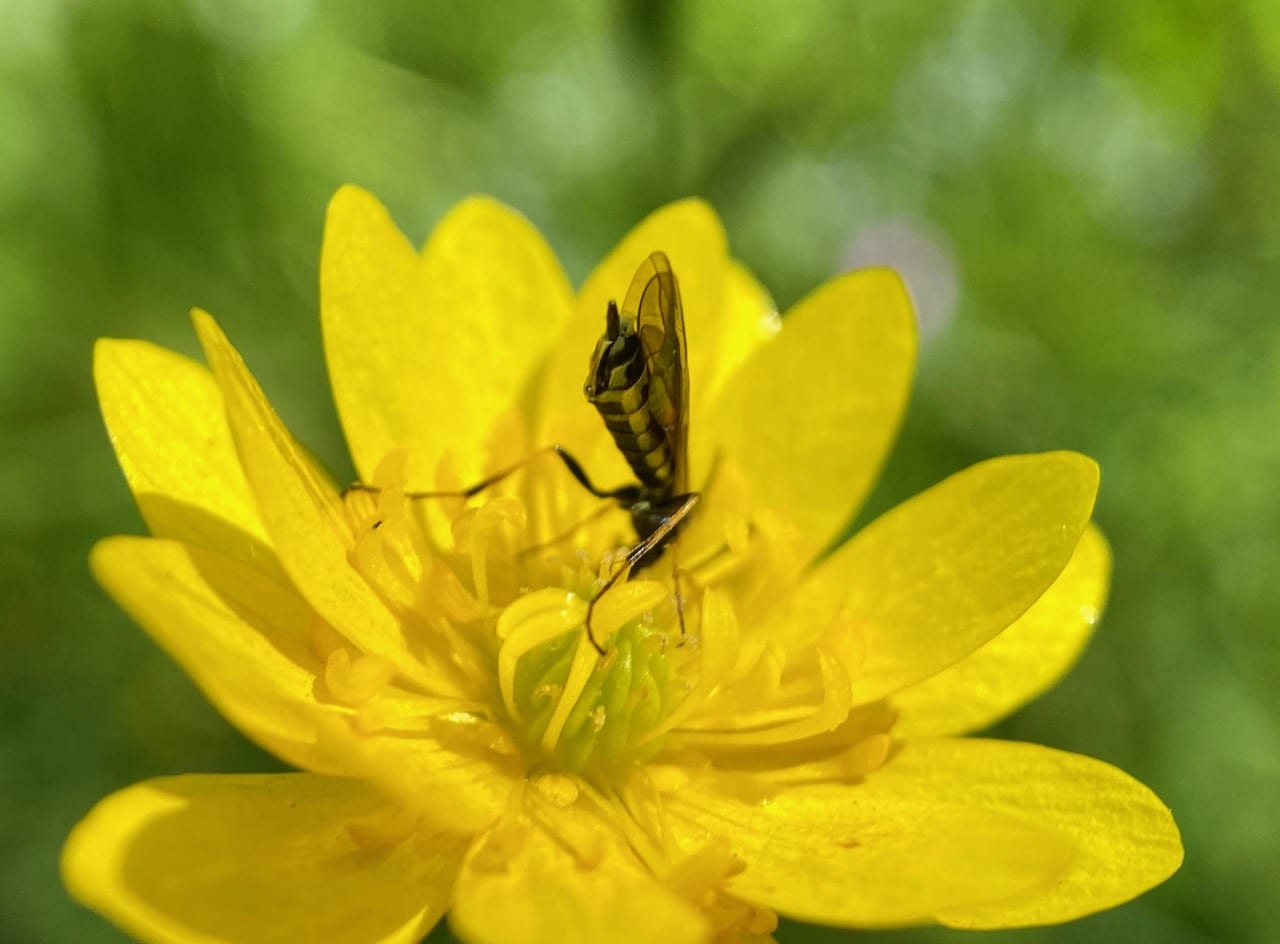
Hey, that’s a Stem Sawfly taking nectar on a buttercup flower. I photographed a male yesterday, but this one is a female. Note the pointed ovipositor that extends beyond the tip of her abdomen.
Sawflies are part of the insect order, Hymenoptera, together with bees, wasps and ants. They are considered to be the most primitive group and form the sub-order Symphyta. They differ from the bees, wasps and ants in not having a narrow ‘waist’ and in their wing venation. The common name comes from the saw-like ovipositor that the females use to cut into plant tissues to lay their eggs. Larvae are caterpillar-like and can be distinguished from lepidopteran caterpillars in that all body segments following the three bearing true legs have a pair of fleshy prolegs. Like the lepidopteran caterpillars, sawfly larvae walk about and eat foliage. In many species, the larvae feed in groups.
Stem Sawflies in the family Cephidae feed on grasses (including grain crops) and shrubs (including berries, roses, willows). The larvae bore in the stems. The genus Calameuta is found in western North America. Calameuta larvae are grass stem borers. Adults are commonly attracted to yellow flowers.
Ovipositor of female Sawfly, SEM – Stock Image – F011-8195 – Science Photo Library
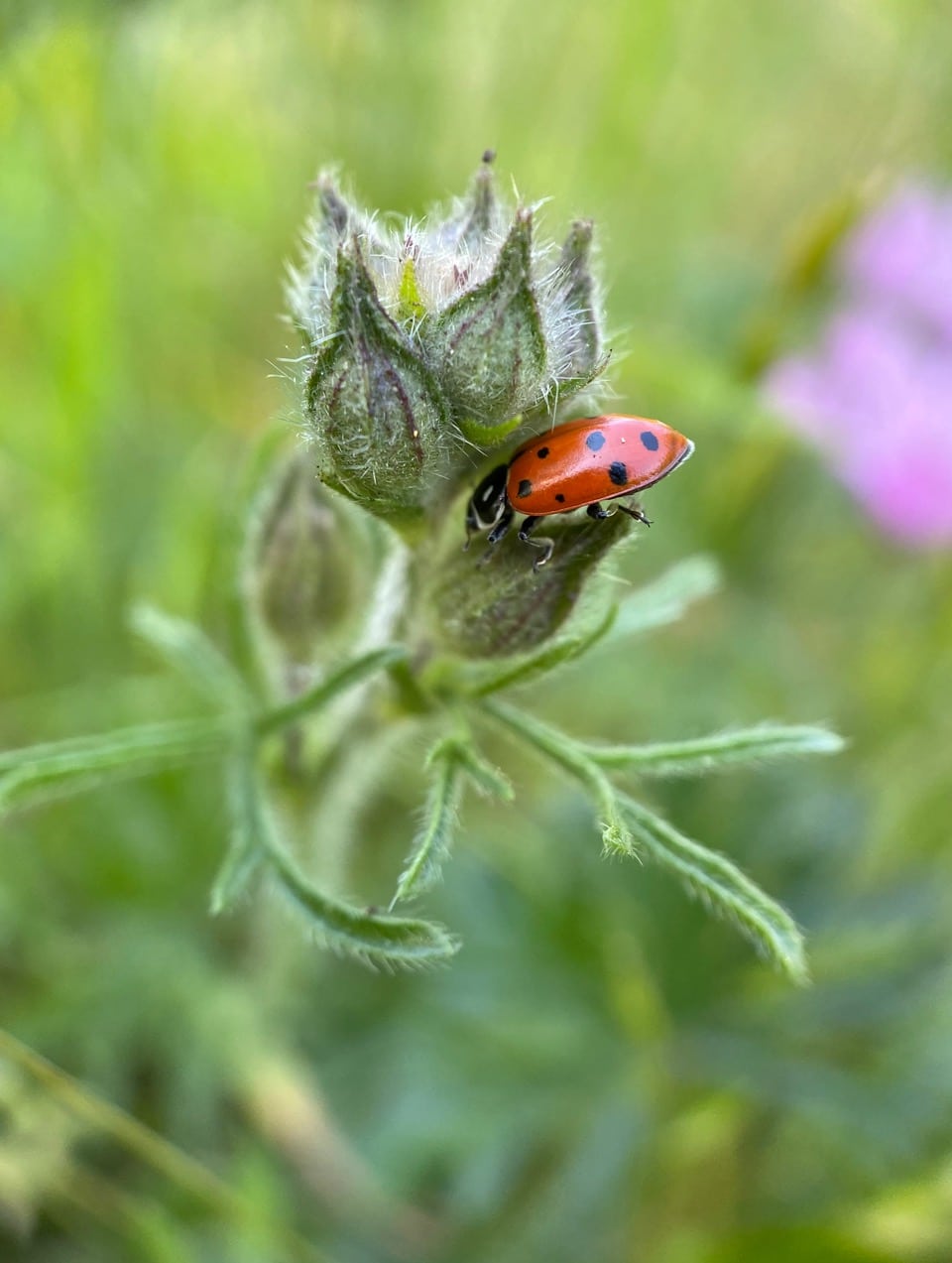
A Convergent Ladybeetle, Hippodamia convergens (family Coccinellidae) is resting between the flower buds of Checkerbloom, Sidalsia malviflora.

A little bee is poised unnaturally in an upright position on a buttercup flower. Taking a closer look, I discover that it is in the jaws of a well-camouflaged Crab Spider, Mecaphesa sp. (family Thomisidae). I recognize the bee – it is a female Andrena with pollen on her hindlegs. She is no longer struggling. Death must have come very swiftly for her, as the venom of Crab Spiders is potent and fast-acting. It is a sad moment, as I have grown rather fond of these hard-working Andrena bees whose life revolves around the buttercups. On the other hand, I do understand that risks and dangers are all part of the bee’s wild and glorious life. It is nature’s way. If only we could live so freely, fully and fearlessly!