

Pollinator Post 4/20/24 (2)
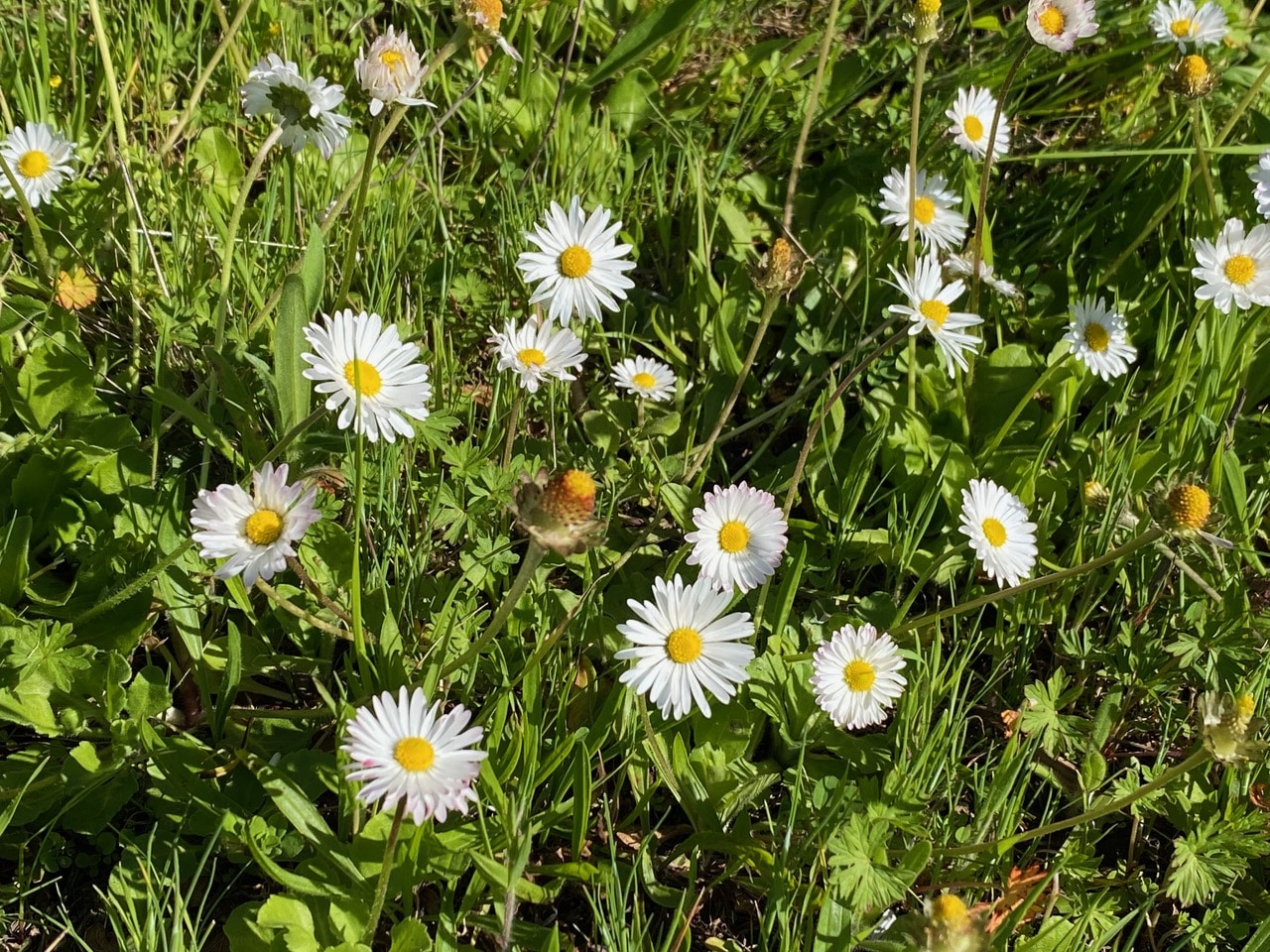 Back at the Padre picnic area, I see many insects visiting the English Daisies on the lawn around the picnic table.
Here’s an elusive little bee that looks like a wasp. A Cuckoo Bee in the genus Nomada (family Apidae)?
Cuckoo Bees are often mistaken for wasps because their slender body shape, and they are nearly hairless. They also lack the pollen collecting hairs that most females bees have on their legs because they do not collect pollen for their young. Cuckoo bees may be found wherever their host bees are, visiting a number of flowering plants not for pollen, but for nectar. Cuckoo bees are kleptoparasites, meaning the females lay their eggs in nests of other bee species. To find a host nest, the female cuckoo will hover near the ground to identify a particular odor emitted from the nest. She will wait for the host bee to leave, then enter and lay eggs. When her young hatch, they kill the host’s larva and feed on the pollen provision collected by the host. They remain in the nest until mature. The bee gets its name from the cuckoo bird, which leaves its eggs in a host’s nest for the host to raise.
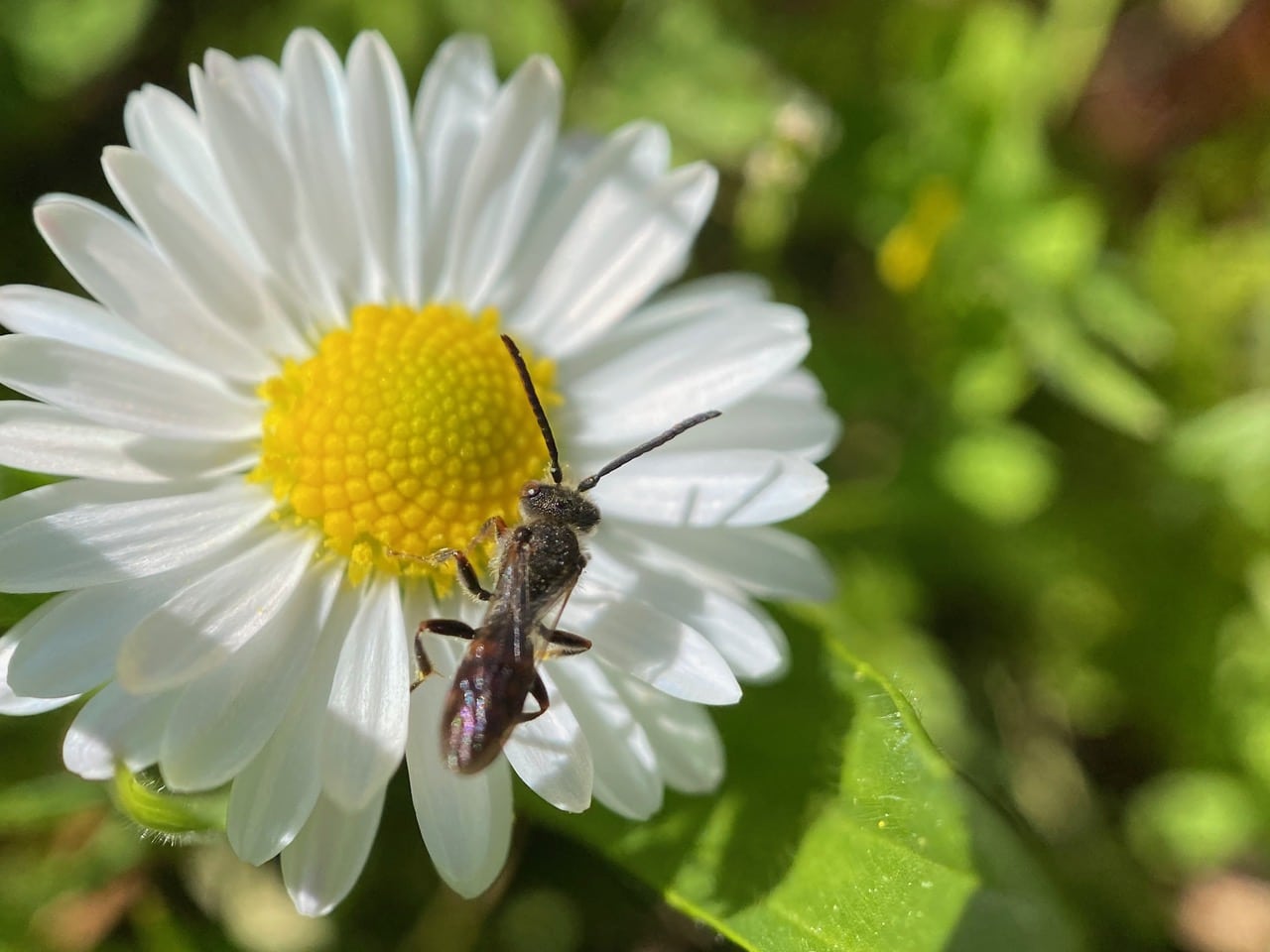
Here’s another bee that looks like a Nomad Bee, but colored differently. It is mostly chestnut brown, has thick antennae, and mottled eyes. Almost hairless, and no scopa on the legs.
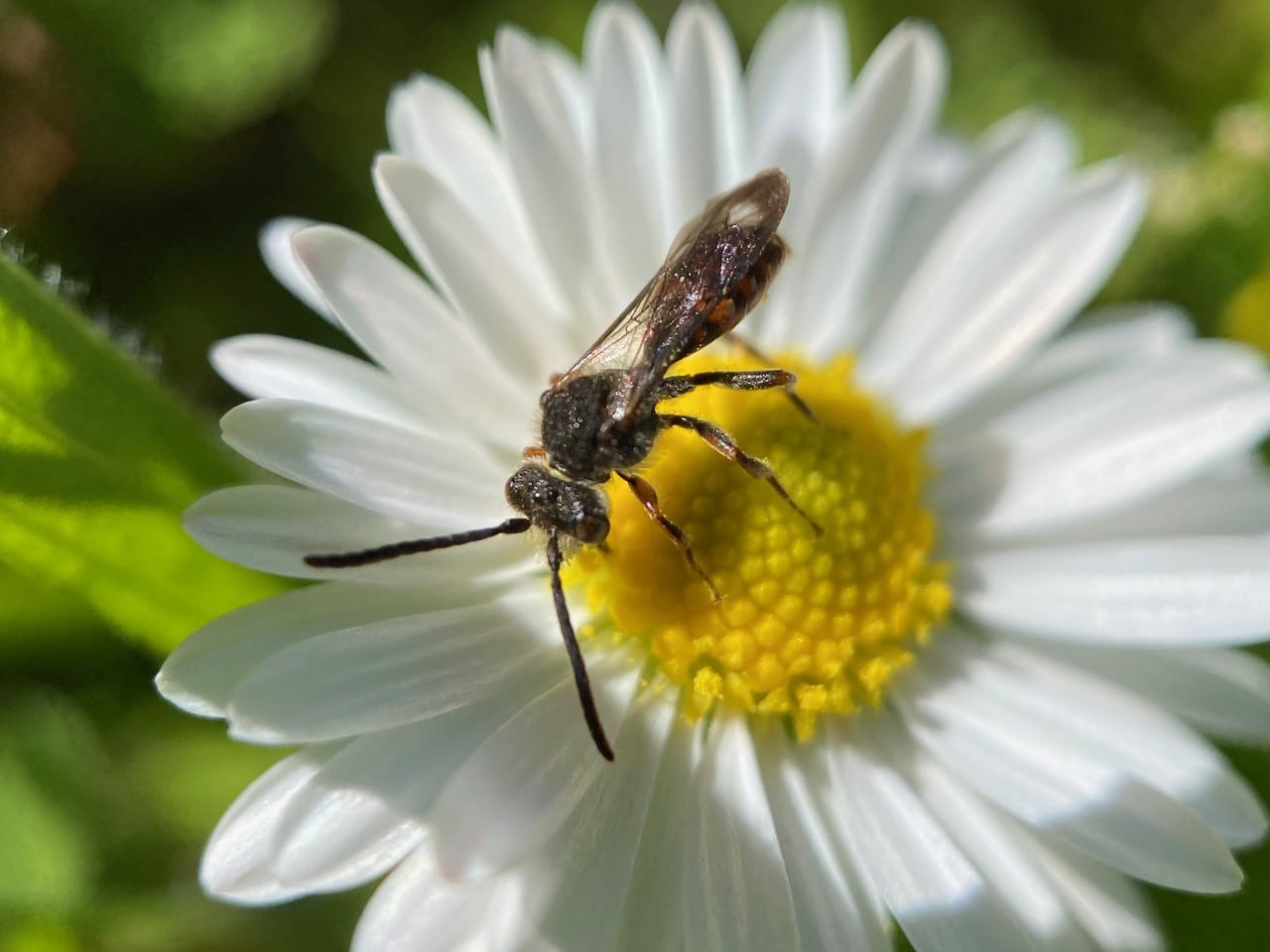
Although it is difficult to identify different species of Nomad Bees, most of them are wasp-like and moderate in size (0.1 – 0.6 in. long). They are red or black and show yellow or red integument coloring. Their antennae may be thicker than other bees and they have no pollen-carrying structures. Most Nomada species prefer to parasitize the nests of Andrena mining bees. They may lay up to four eggs in a single nest. The name Nomada comes from the Latin for “nomad” referring to the way these bees seemingly wander in search of host nests.
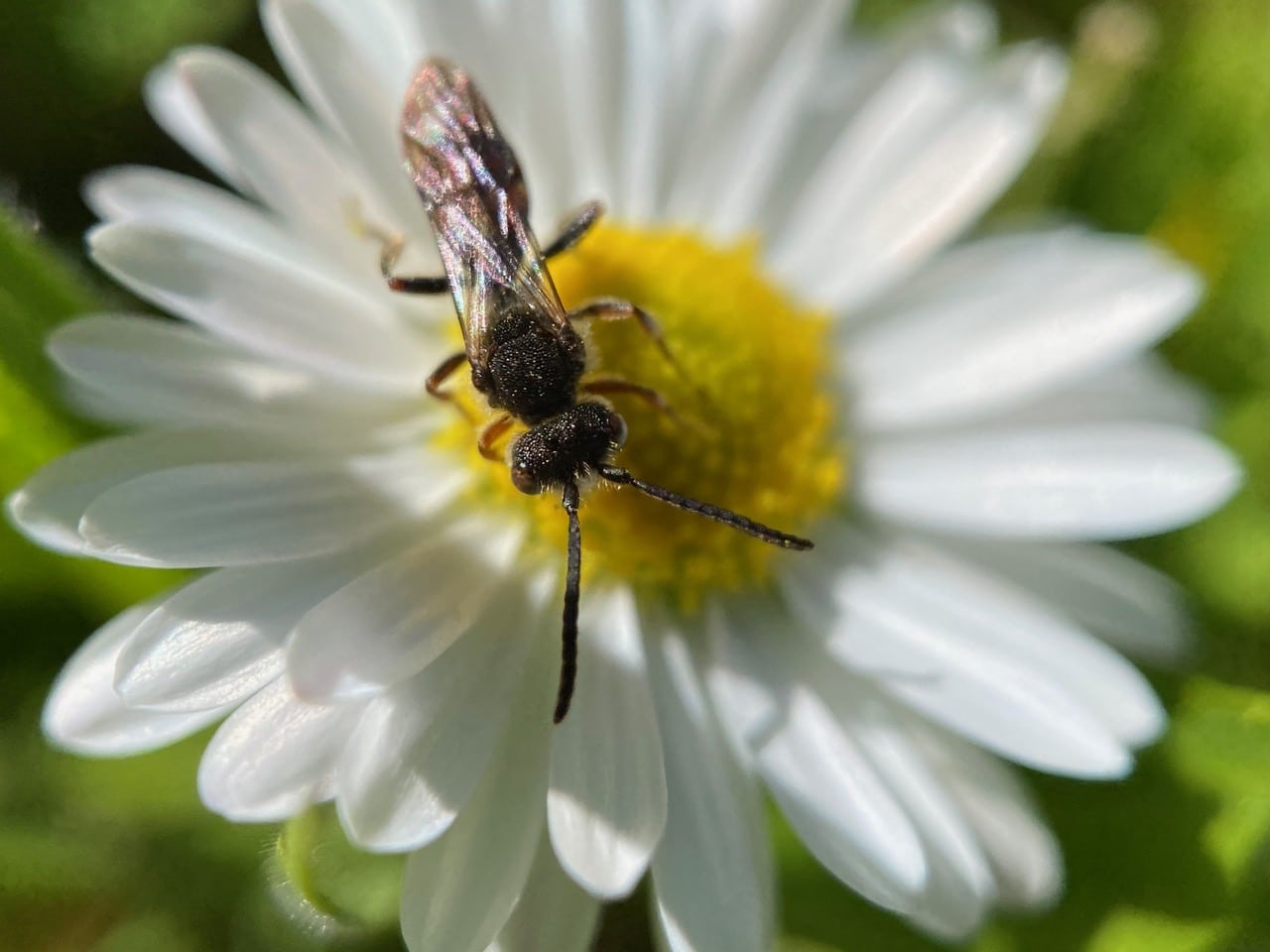
Close-up of the same bee, showing its thick antennae and mottled eyes.
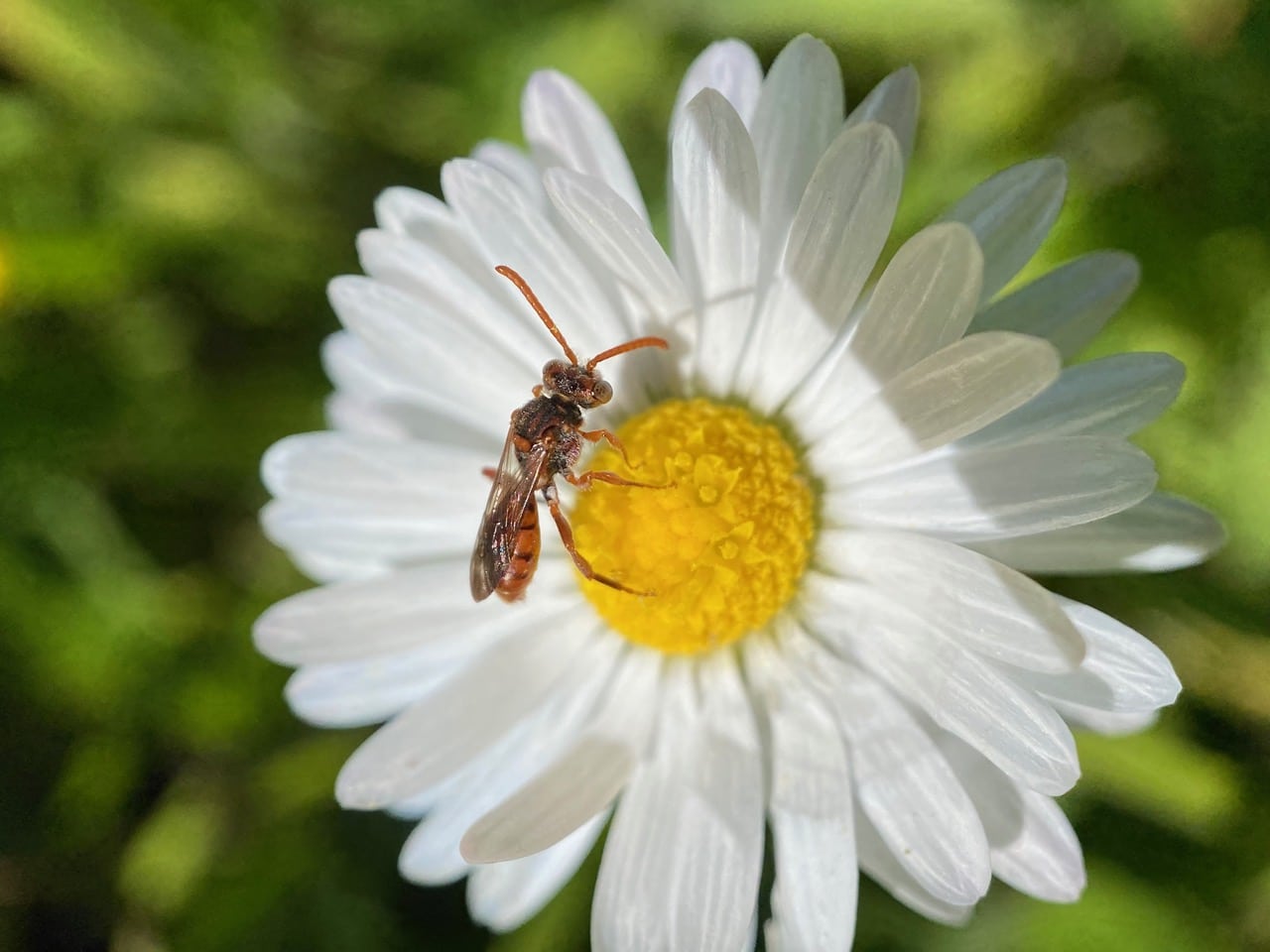
iNaturalist has identified this as a Nomad Bee, genus Nomada (family Apidae). The color is rather distinctive.
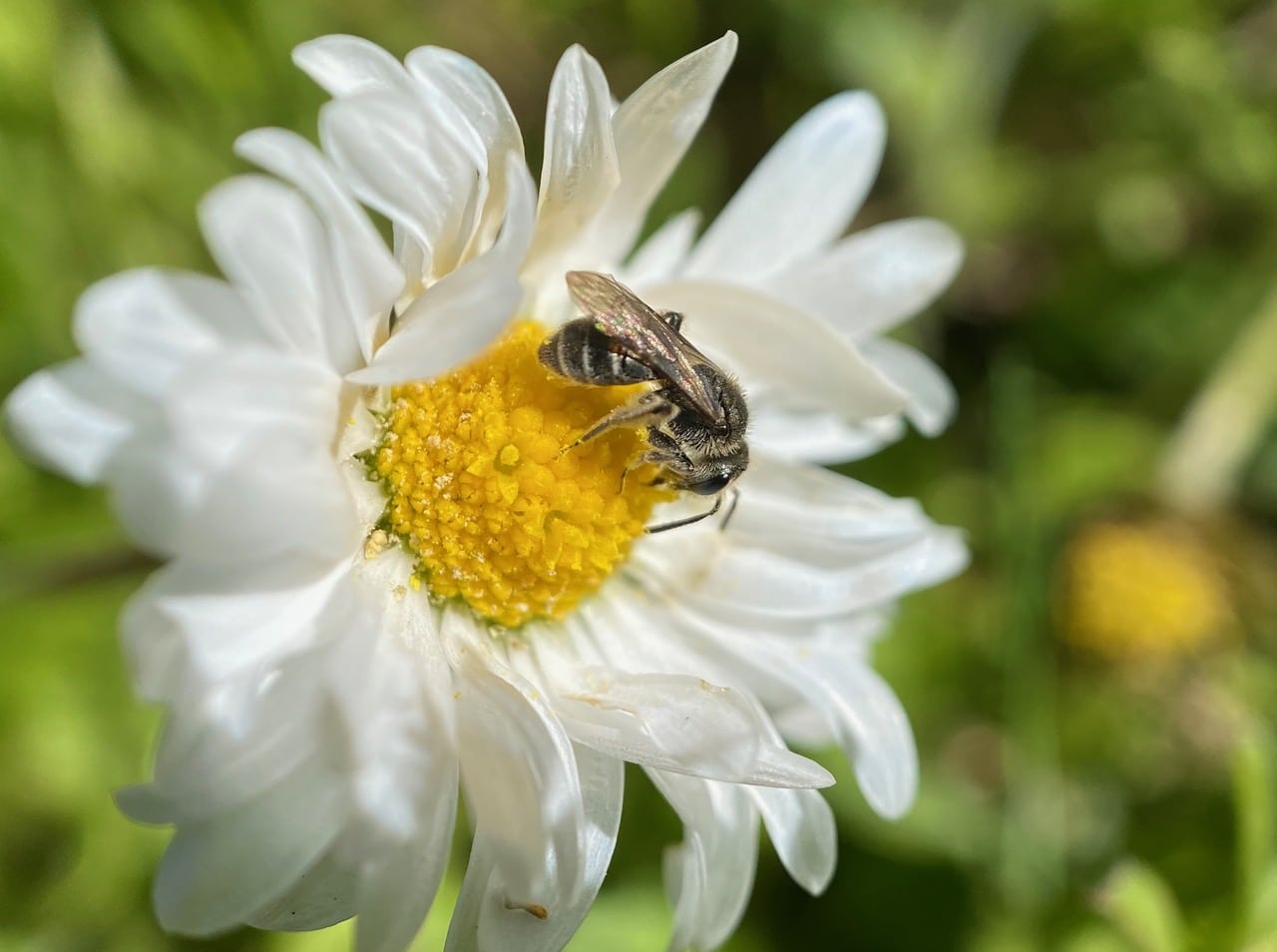
This might be a Sweat Bee, Halictus sp. (family Halictidae) or a Mining Bee (family Andrenidae).
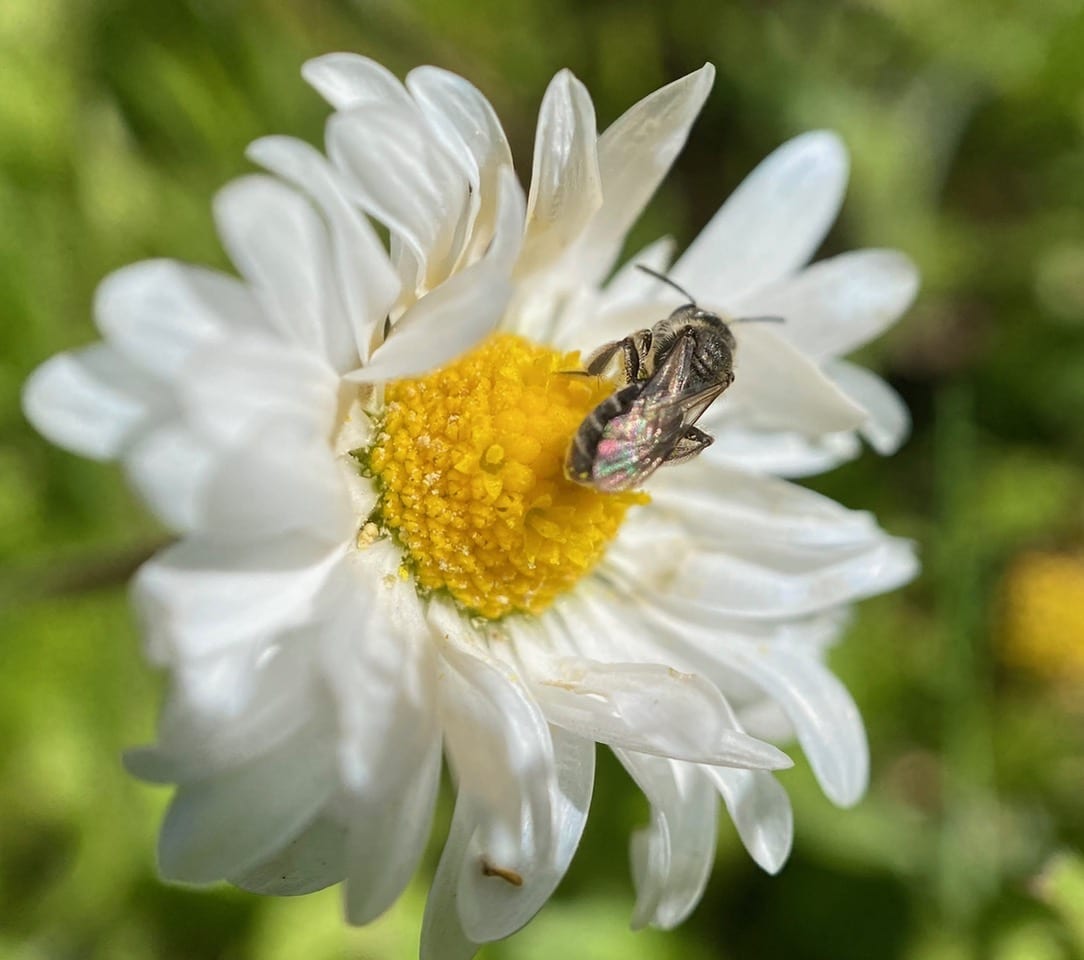
Females of both the sweat bees and the mining bees have scopa along the full length of the hindlegs….

I need a better look at other details tor identification. Trying to identify bees is a daunting and humbling pursuit!
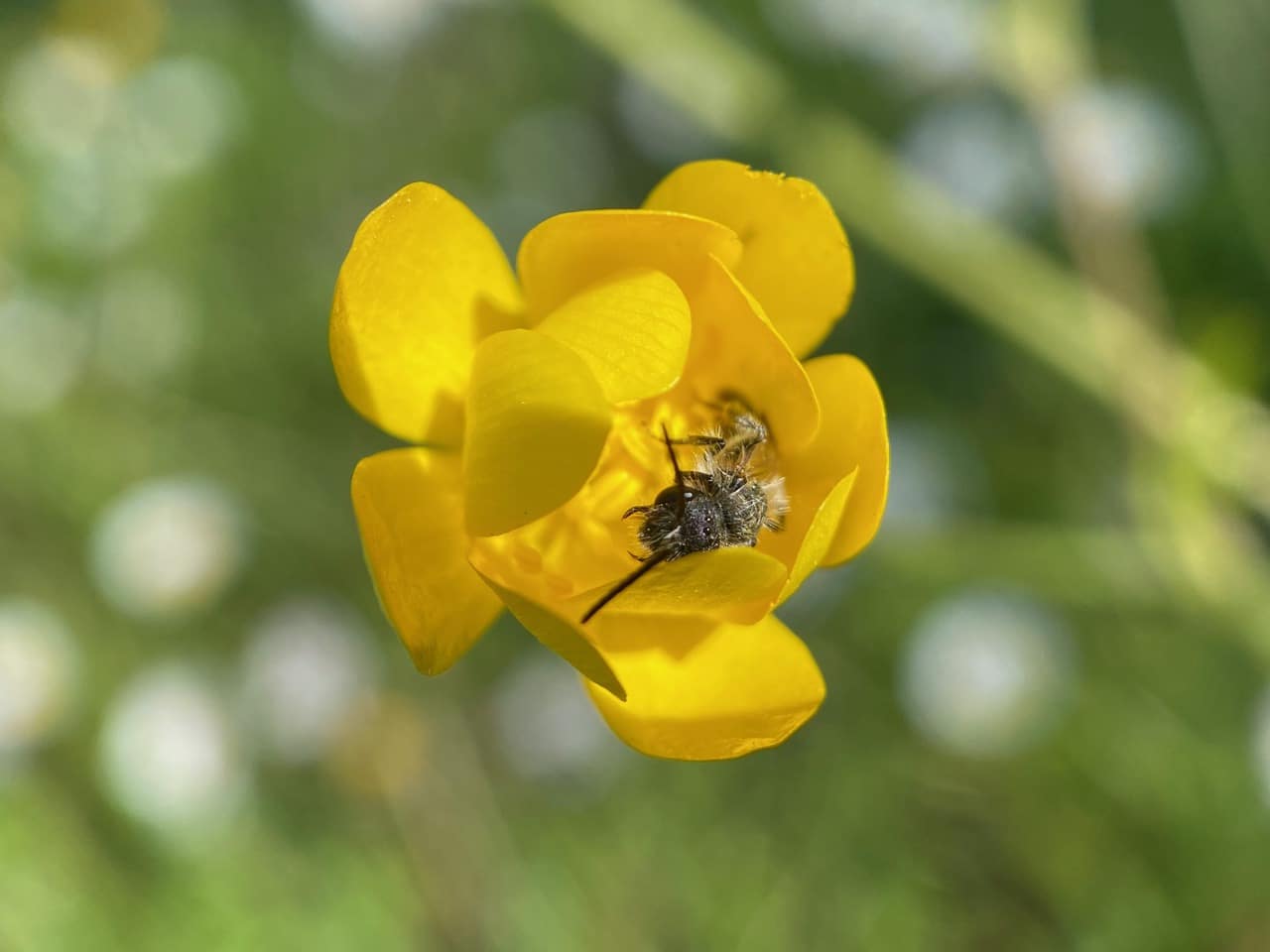
At 4:30 pm, I find a little bee tucked snugly into a young buttercup that is only half open.

It is a scruffy male buttercup-loving Andrena getting ready for the night! This reminds me of my first encounter with this phenomenon – of a male asleep on a buttercup flower on 3/21. That opened up a new world of the Mining Bees for me, sending me on a joyous journey following their progress through the season. Since the species seems to be monolectic, depending solely on the buttercups, their season will be short. I cherish every day that these bees and their beloved flowers are around.
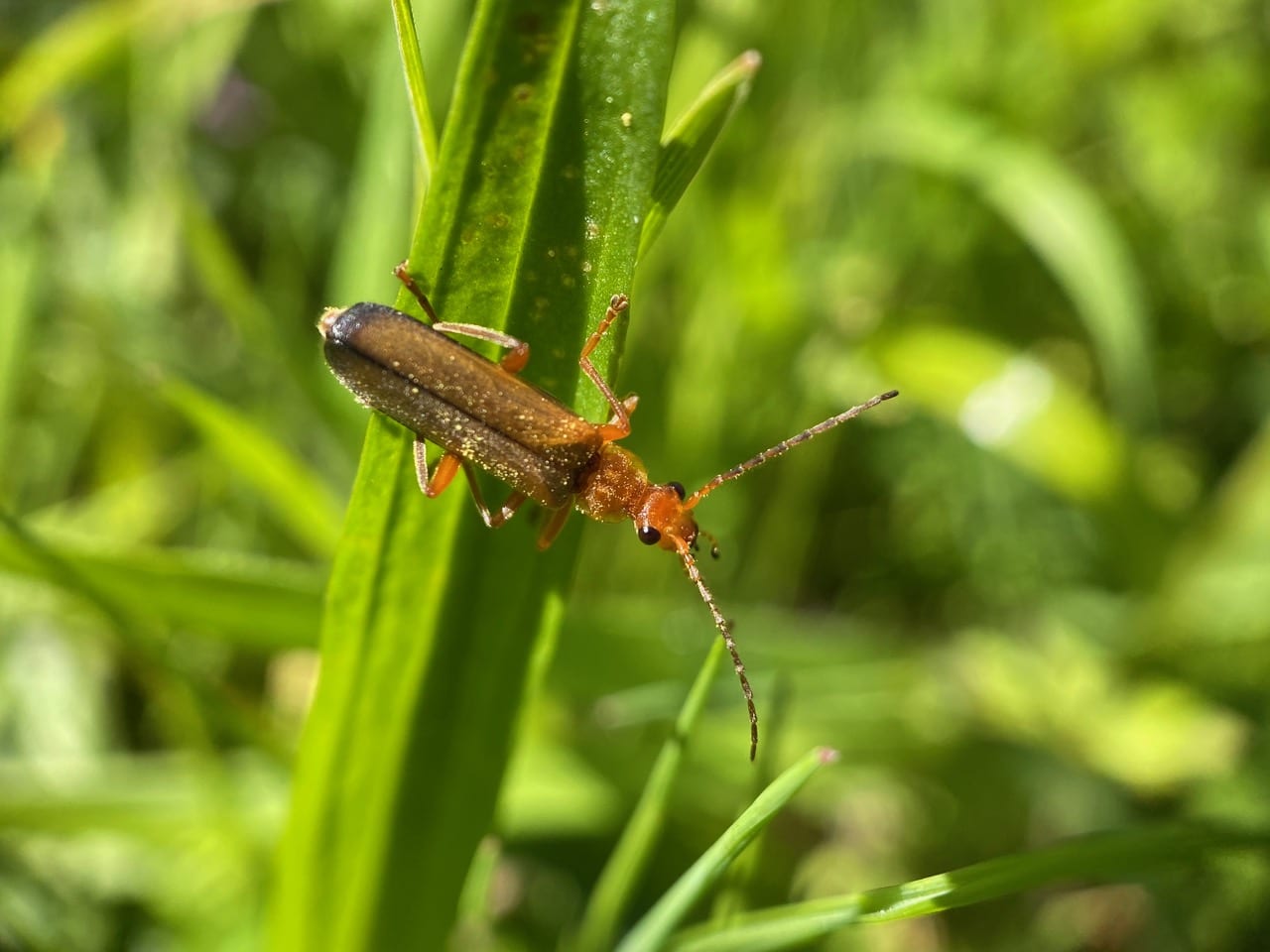
A Soldier Beetle is foraging in the undergrowth.
The wing covers of the Soldier Beetle are smooth to velvety, appearing soft and flexible, giving rise to the common name leatherwings. Adults are relatively short lived and usually are seen only in spring through early summer. Adult females lay eggs in a mass in organic litter or topsoil. Most of the life cycle is spent as ground-dwelling larvae, which can live 1 to 3 years. The larvae are mainly predators of eggs, larvae, and pupae of various arthropods. Adults are active during the day and usually observed on flowers or leaves infested with aphids or other honeydew-excreting insects. Adults of some species feed only on honeydew, nectar and pollen. In others, adults are also predaceous, preying on aphids and other soft-bodied plant-sucking insects.
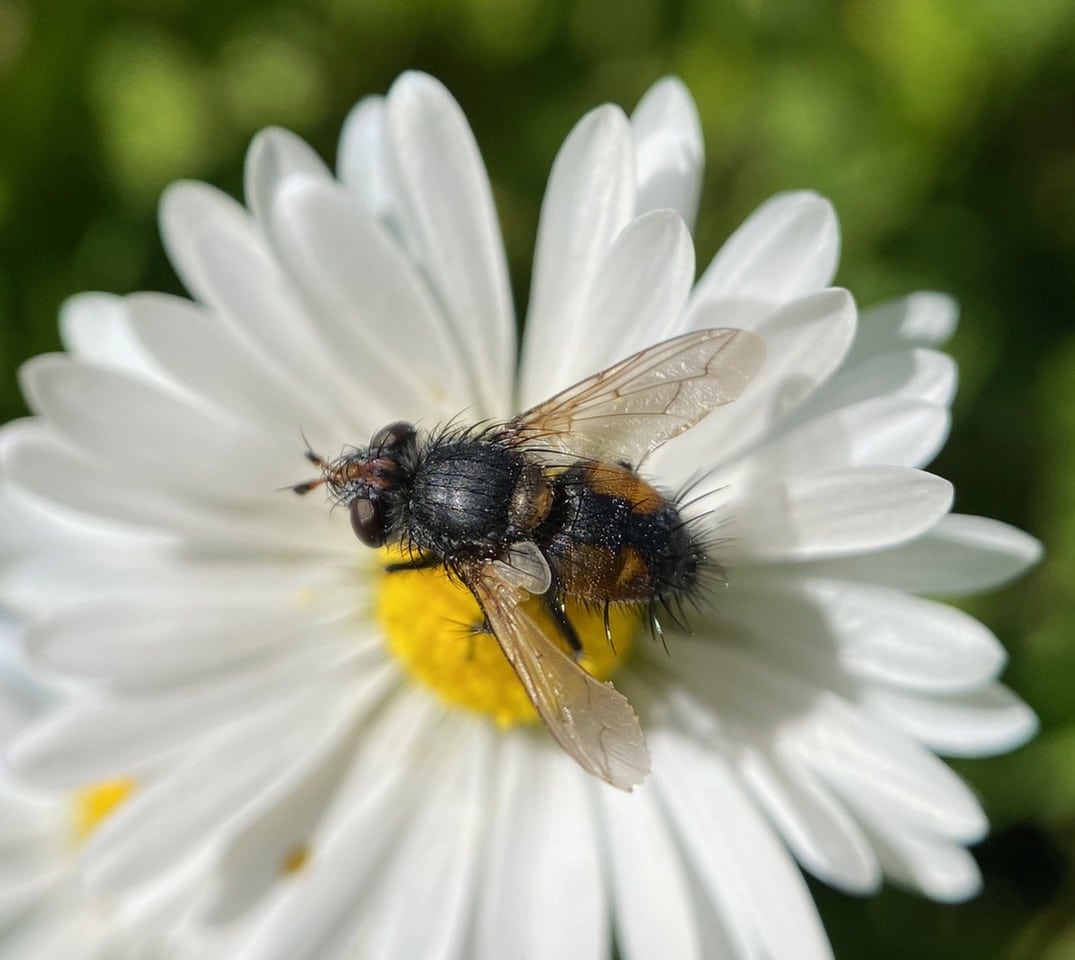
A ragged Bristle Fly (family Tachinidae) flits from one English Daisy flower to the next in search of sustenance.
The family Tachinidae is by far the largest and most important group of parasitoid flies. All species are parasitic in the larval stage. Most adults have distinct abdominal bristles, hence the common name. Adults feed on liquids such as nectar and honeydew. They can be found resting on foliage, feeding at flowers or searching for hosts.
Most tachinids attack caterpillars, adult and larval beetles, true bugs, grasshoppers, and other insects. Females lay eggs in or on the host. Tachinid larvae live as internal parasites, consuming their hosts’ less essential tissues first and not finishing off the vital organs until they are ready to pupate. The larvae leave the host and pupate on the ground. Tachinids are very important in natural control of many pests, and many have been used in biological control programs.

Rear end of the Bristle Fly.

Because of the way this little bee tends to hold its wings up like a wasp as it feeds, it has me running after it for a better look. Turns out it’s not a wasp after all, but a bee, most likely a Mining Bee (family Andrenidae).
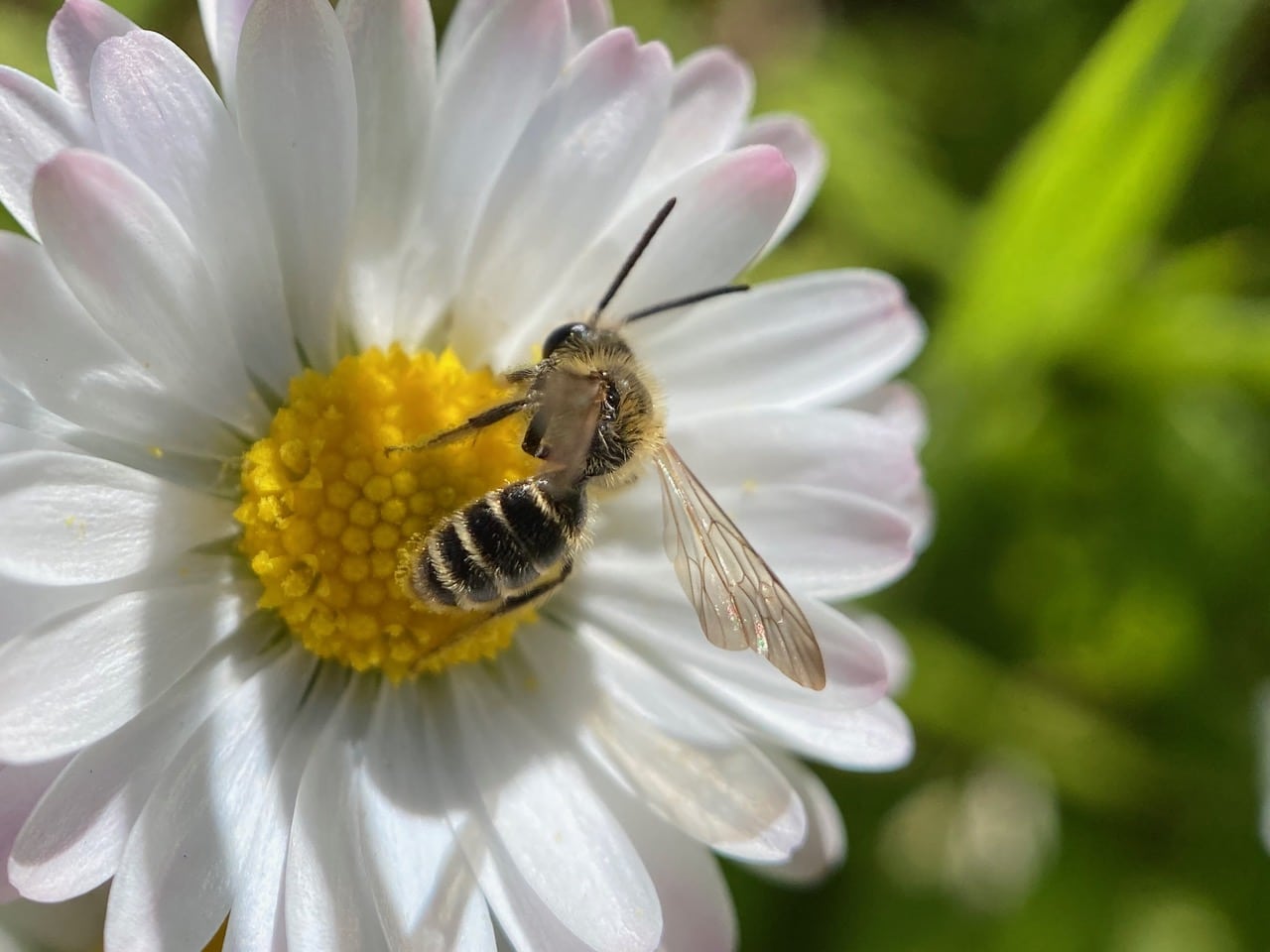
A wasp wouldn’t be so hairy. But why does this bee hold its wings up? To mimic a wasp?

Putting on the macro lens to look at a black spot on the disc flowers of an English Daisy, I almost can’t believe my eyes – the tiny thing is the smallest baby cricket I have ever seen! Most other Orthopteran nymphs I have encountered were green.
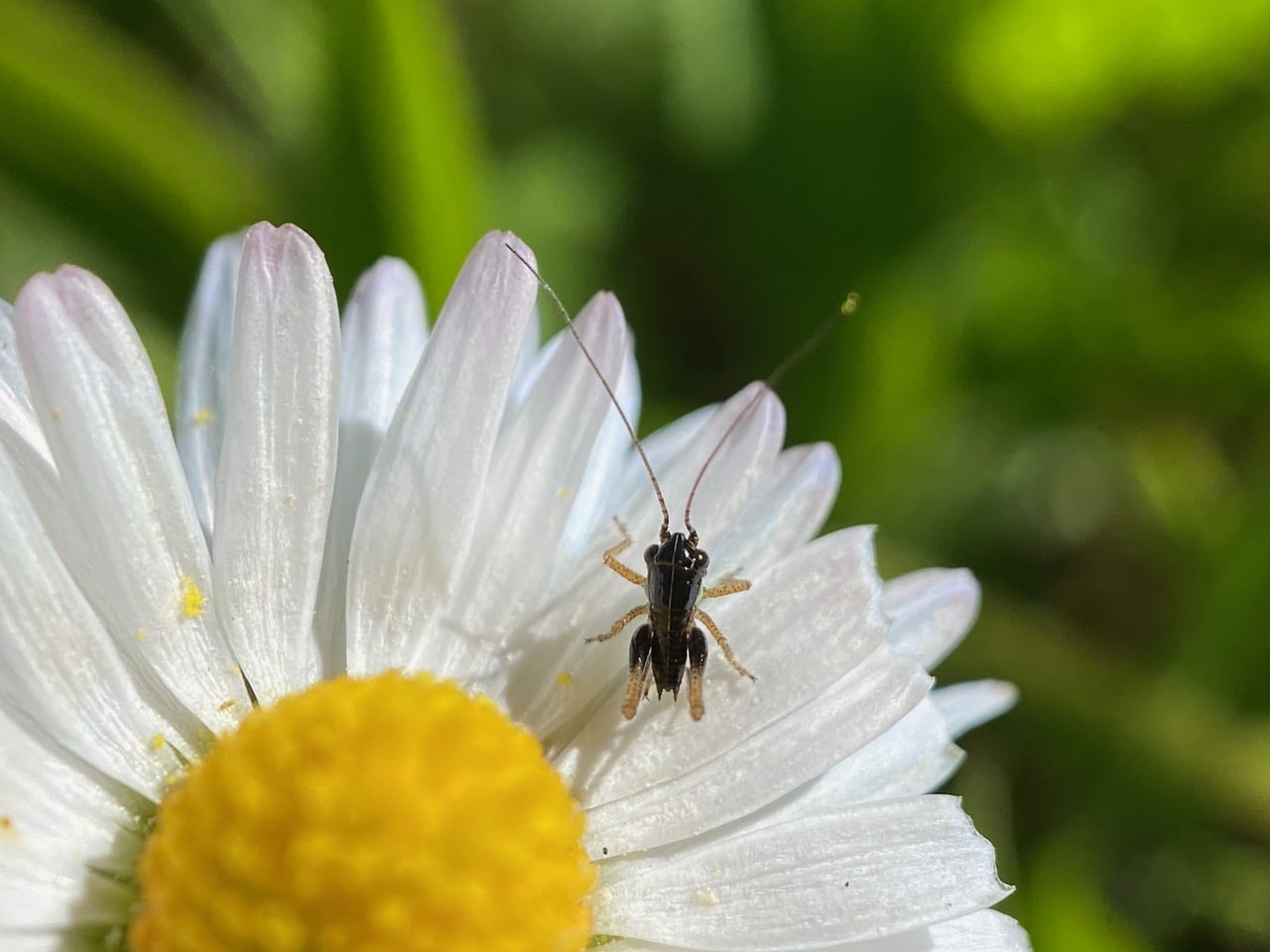
This exquisite creature shines like polished obsidian.

A baby Camel Cricket (family Rhaphidophoridae) ?